
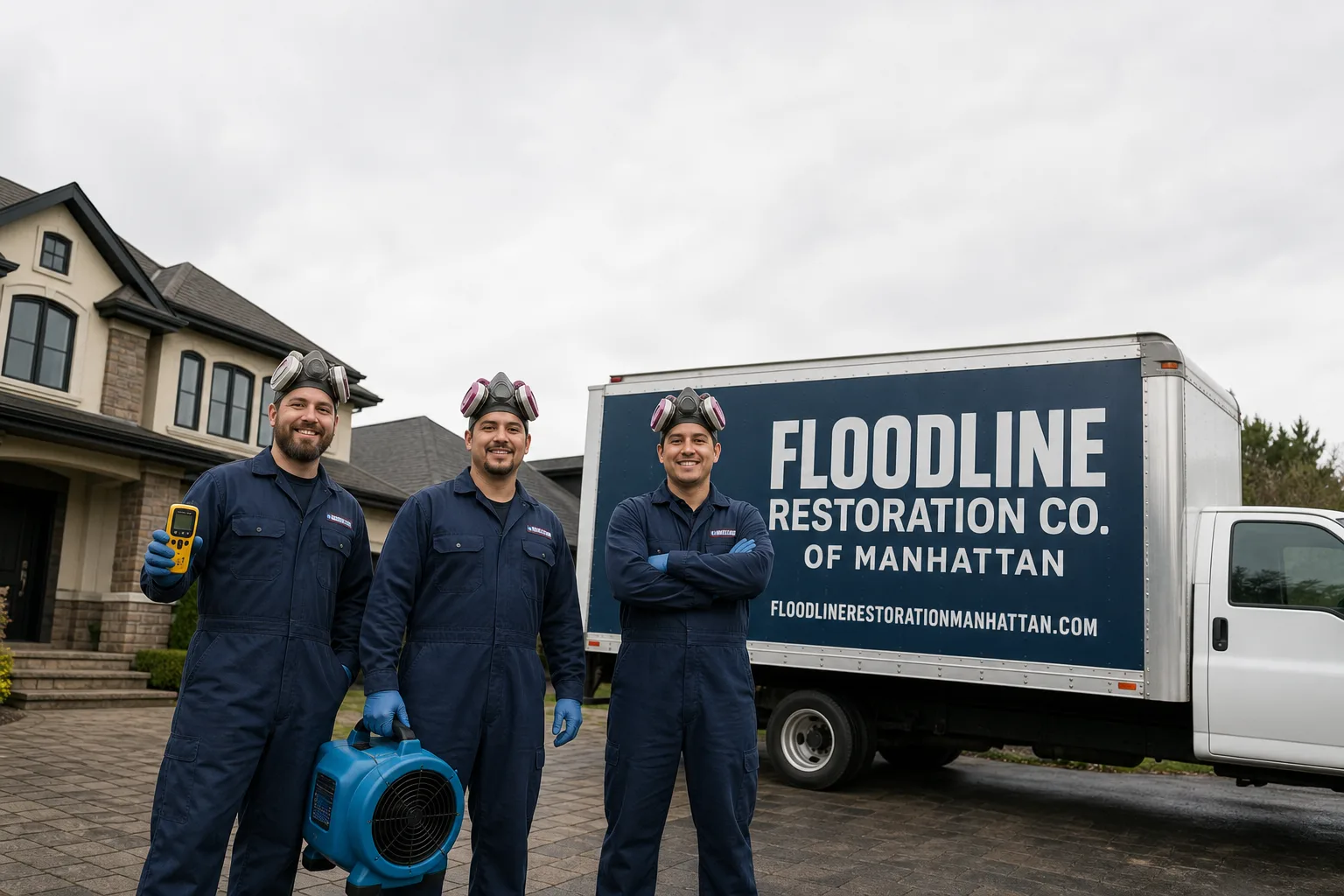
Free visual inspection and a written scope of work before any mitigation begins - photos, moisture readings, and drying logs go in your claim file
The scope we write is the scope we bill. Anything new gets shown to you, in writing, before we touch it.






 Before
 After
After Before
 After
After Before
 After
After24/7 Emergency Mold Remediation in Bedford Hills
Mold remediation in Bedford Hills typically runs $2,800-$6,900 depending on the size of the affected area and whether the colony has reached the horsehair plaster or fieldstone cavities common in this town’s older homes. We answer the phone live at (917) 924-4221 at any hour, and a certified crew can be dispatched to your street the same day. If you’ve found mold after a roof leak, a failed foundation wall, or a slow pipe leak you didn’t catch, the clock matters: mold colonizes shaded, damp wall cavities within 48 hours, and Bedford Hills’s tree canopy means those cavities stay damp longer than they do in more open towns. For larger water damage events, our Bedford Hills Storm & Disaster Restoration team can respond immediately. Call us, tell us what you’re seeing, and we’ll walk you through the first steps before the crew arrives. The visual inspection is free.
Understanding Mold Remediation Severity in Bedford Hills Properties
Mold doesn’t move at one speed, and the difference between a $1,500 cleanup and a $15,000 reconstruction here usually comes down to where the colony is feeding. In Bedford Hills, we classify mold work in three rough tiers based on what our moisture meters and thermal cameras show us. A surface bloom on painted drywall or trim, the kind you can see and wipe, is the smallest job: HEPA vacuuming, antimicrobial wiping, and a local containment tent. A cavity colonization, where mold is feeding on the horsehair binder inside a plaster-and-lath wall or the organic dust inside a fieldstone foundation cavity, is a different animal. That requires opening the wall, removing the affected material, negative-air containment with HEPA air scrubbing, and post-remediation clearance testing. The third tier is structural: a long-running leak inside a stone foundation wall that hasn’t been opened for decades in one of the pre-1900 farmhouses off Harris Road or Guard Hill Road. We’ve found sill plates reduced to crumble and floor joists soft to a screwdriver tip. Those jobs involve framing repair, period-appropriate material matching, and a scope of work written like a restoration contract, not a cleanup ticket. The age of Bedford Hills’s housing stock makes this third tier more common here than in neighboring postwar towns.
Why Bedford Hills Property Owners Choose Floodline Restoration Co. of Manhattan
- 45-minute response commitment: When you call from Bedford Hills, a live dispatcher confirms the crew’s ETA while you’re still on the phone. We don’t put you into a queue.
- 24/7 live answer: A real person picks up at 2 a.m. No recording, no answering service script. The dispatcher knows Bedford Hills and can route the nearest crew without calling you back.
- IICRC-certified crews: Our technicians hold IICRC certifications in Water Damage Restoration (WRT) and Applied Microbial Remediation (AMRT), plus RIA and IFA training. Background-checked and uniformed, every visit.
- Free visual inspection: We come out, map the moisture, find the source, and give you a written scope before any work starts. No high-pressure estimate games.
- Direct insurance billing: We handle the carrier, not you. Photo documentation, drying logs, and a line-item scope go to the adjuster from day one.
- One team from start to finish: Extraction, drying, remediation, and rebuild. The same crew that reads the moisture map on day one hands you the completion log at the end.
We’ve been doing this since 2010, founded by Curt Bowman around a dispatch board and a simple promise: if it’s not done right, we make it right. We put that in writing. It’s called the 90-Day Done Right Promise. No arguing, no paperwork battles. It’s the same standard we’d want on our own homes.
Our Mold Remediation Process
Inspection & Assessment
We start with thermal imaging and a hygrometer sweep to find moisture you can’t see. In Bedford Hills’s stone foundations and plaster walls, the mold you see is often the smaller part of the colony. We map every reading and take the time to show you what we found.
Containment & Source Repair
Before we open anything, we seal the affected area with 6-mil poly sheeting and establish negative air pressure with HEPA air scrubbers. Then we fix what fed the mold: a failed sill plate, a roof flashing, a foundation crack, a dehumidifier-sized humidity problem. No remediation holds unless the water source is stopped.
Drying & Dehumidification
We run Dri-Eaz LGR dehumidifiers and Phoenix or XPOWER air movers with daily moisture readings until wall cavities and stone cavities drop below 16% moisture content. In Bedford Hills’s shaded lots, this takes longer than average, and we don’t shut equipment off on a calendar. We shut it off on the readings.
Cleaning & Sanitization
HEPA vacuuming of all surfaces, wire-brushing of affected framing, and application of an EPA-registered antimicrobial. Any material that can’t be restored, including horsehair plaster with deep binder colonization, is removed and bagged for disposal per IICRC S520 standards.
Historic Material Treatment
For pre-1900 Bedford Hills homes, we write remediation scopes that preserve what can be saved. That means lime-mortar repointing on fieldstone, salvageable old-growth timber, and plaster patching that matches the original horsehair mix. Where replacement is unavoidable, we specify period-appropriate materials, not big-box modern sheets.
Repairs & Restoration
The same crew that opened the wall closes it. We rebuild to pre-loss condition, document every step, and hand you the 90-Day Done Right Promise in writing before we leave the driveway.
Need Emergency Mold Remediation in Bedford Hills Now?
Crews minutes away, answering live 24 hours a day. The sooner we start, the less it costs.
Working With Your Insurance Company
Most mold remediation claims in Bedford Hills hinge on whether the mold was caused by a covered water event. A burst pipe, a nor’easter-driven roof leak, a failed foundation wall after heavy rain: those typically have coverage. Long-running humidity, condensation on stone walls, or slow seepage that’s been ignored for years: that’s often not covered. Either way, the insurance company needs documentation, not adjectives. We photograph every affected room before work begins, log moisture readings every six hours during drying, and provide a line-item scope of work that matches the carrier’s estimating format. We also talk to the adjuster directly, so you don’t have to carry messages back and forth. Curt Bowman’s team has handled thousands of these files, and we know what a compliant claim looks like.
What We Provide Your Insurer
- Thorough documentation of the loss
- Photos of all damage, room by room
- Moisture readings and drying logs
- A detailed, line-item scope of work
- Direct coordination with your carrier
Built for Bedford Hills’s Loss Calendar
Bedford Hills gets hit by mold from a predictable pattern of seasonal events. January and February bring deep freezes that split supply lines in unheated stone basements and crawl spaces under the town’s older farmhouses. A pinhole leak behind a plaster wall in a stone cellar can run for weeks before anyone notices, and horsehair plaster draws that moisture upward like a wick. March and April bring snowmelt and spring rain that sit against fieldstone foundations on the town’s heavily wooded lots, where direct sun never reaches the north wall. May through August means humidity that doesn’t clear out of shaded crawl spaces, plus the occasional flash thunderstorm that overwhelms old gutters and sends water down interior foundation walls. September through November is nor’easter season: large-limb strikes on the 18th- and 19th-century homes near the Bedford Hills train station and along Route 117, followed by water intrusion at the roofline. Every one of these events turns into mold if the drying is incomplete. Our Mold Remediation team has responded to every pattern on this calendar, and we plan our drying strategy around Bedford Hills’s shade, not a national average.
Mold Remediation Across Bedford Hills’s Neighborhoods
Bedford Hills isn’t one housing type, and we route our crews accordingly. The historic district around the Bedford Hills train station and along Railroad Avenue holds some of the town’s oldest worker housing and converted carriage houses: tight rooms, low stone cellars, and plaster walls that hide water damage until the mold has a running start. Expect us to check behind baseboards and under window sills before we size the containment area. Up along Guard Hill Road and Harris Road, the lots open up into multi-acre estate homes from the 1700s and 1800s, mostly stone or fieldstone with slate roofs and interior horsehair plaster. Those jobs are about material matching and patient drying, not speed. The neighborhoods east of Route 117, closer to the Katonah line, mix mid-century colonials with some newer construction; those houses have drywall and modern framing, which means faster drying but also faster hidden spread inside wall cavities. And the condos and co-ops near the train station have their own constraint: shared walls, tight access, and cooperative board requirements around containment and debris disposal. Bedford Hills keeps us honest with its variety.
Specialized Mold Remediation Services We Offer in Bedford Hills
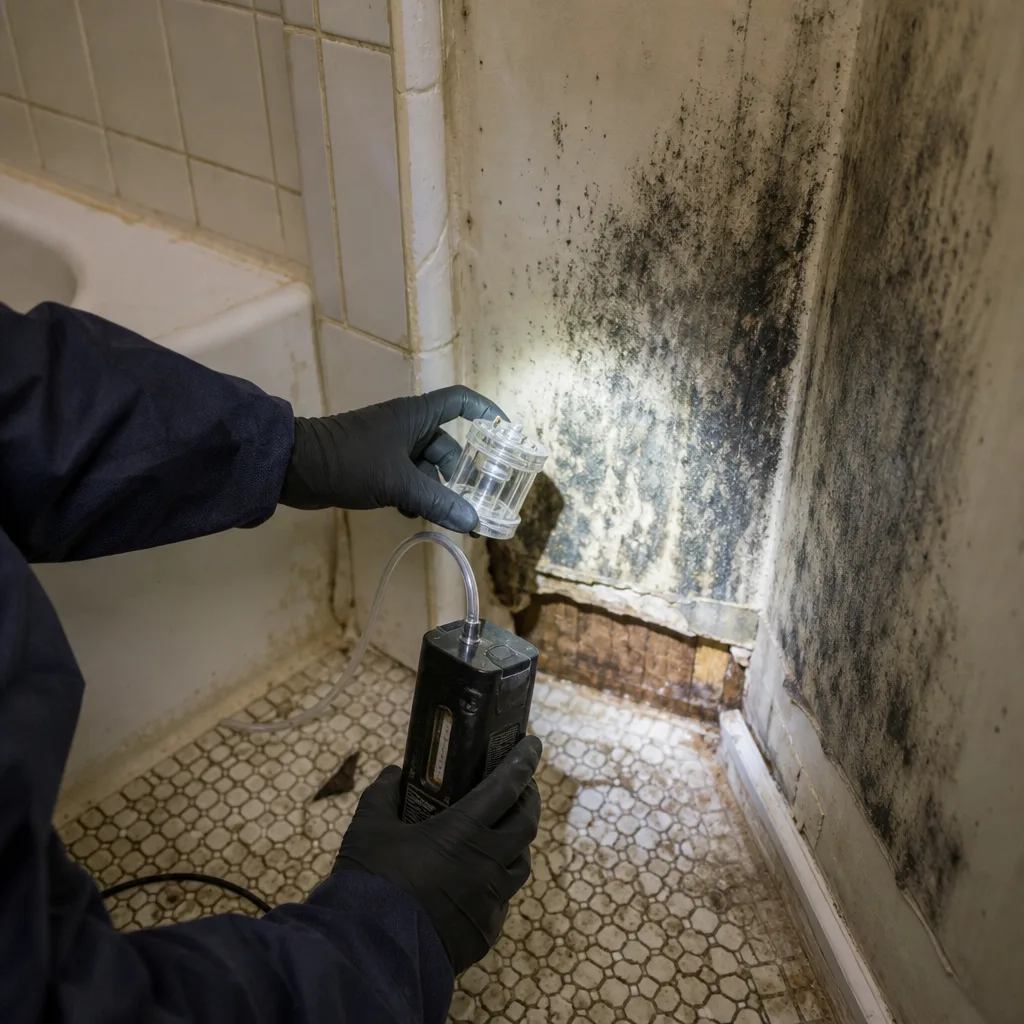
Mold Inspection & Testing
We don’t sell testing as a separate upsell. When you call with a suspected mold problem in Bedford Hills, our inspection includes moisture mapping, a visual sweep of wall cavities and foundation walls, and air sampling when the situation calls for it. We tell you what we found, what it means, and whether you need remediation at all. Sometimes you have a humidity problem, not a mold problem, and we’ll tell you that straight.
Mold Removal
For surface colonies on drywall, trim, or stored belongings, we remove and dispose of the affected material under containment, then HEPA-vacuum and antimicrobial-wipe the surrounding area. In Bedford Hills’s older homes, removal often runs into structural wood: sills, joists, studs. We wire-brush and treat what’s sound, and replace what’s not.
Black Mold Remediation
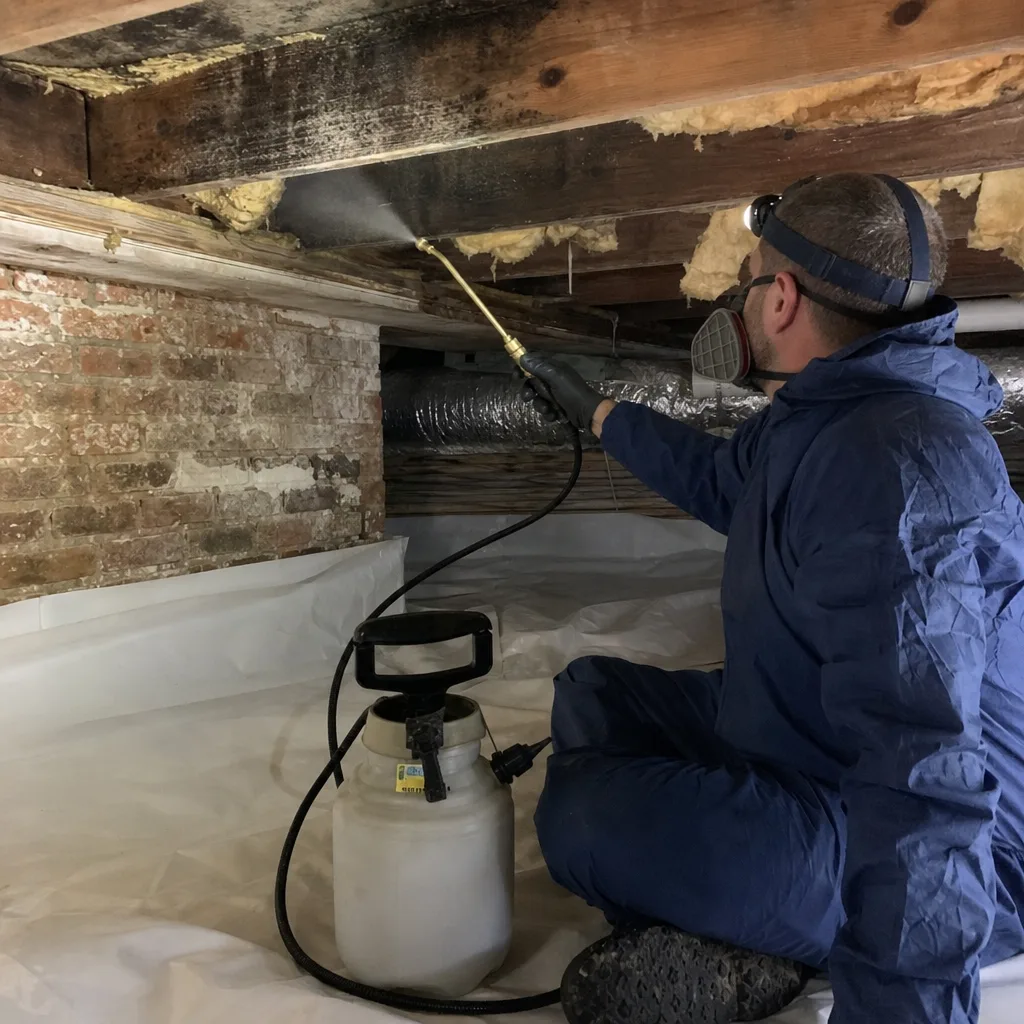
Stachybotrys, the “black mold” people ask about by name, grows on chronically wet cellulose: drywall, wallpaper backing, cardboard, ceiling tiles, and the horsehair binder in old plaster. We treat it with full containment, negative air, and post-remediation clearance testing. Every black mold job in Bedford Hills gets the same written scope and the same 90-Day Done Right Promise as any other job.
Air Quality Restoration
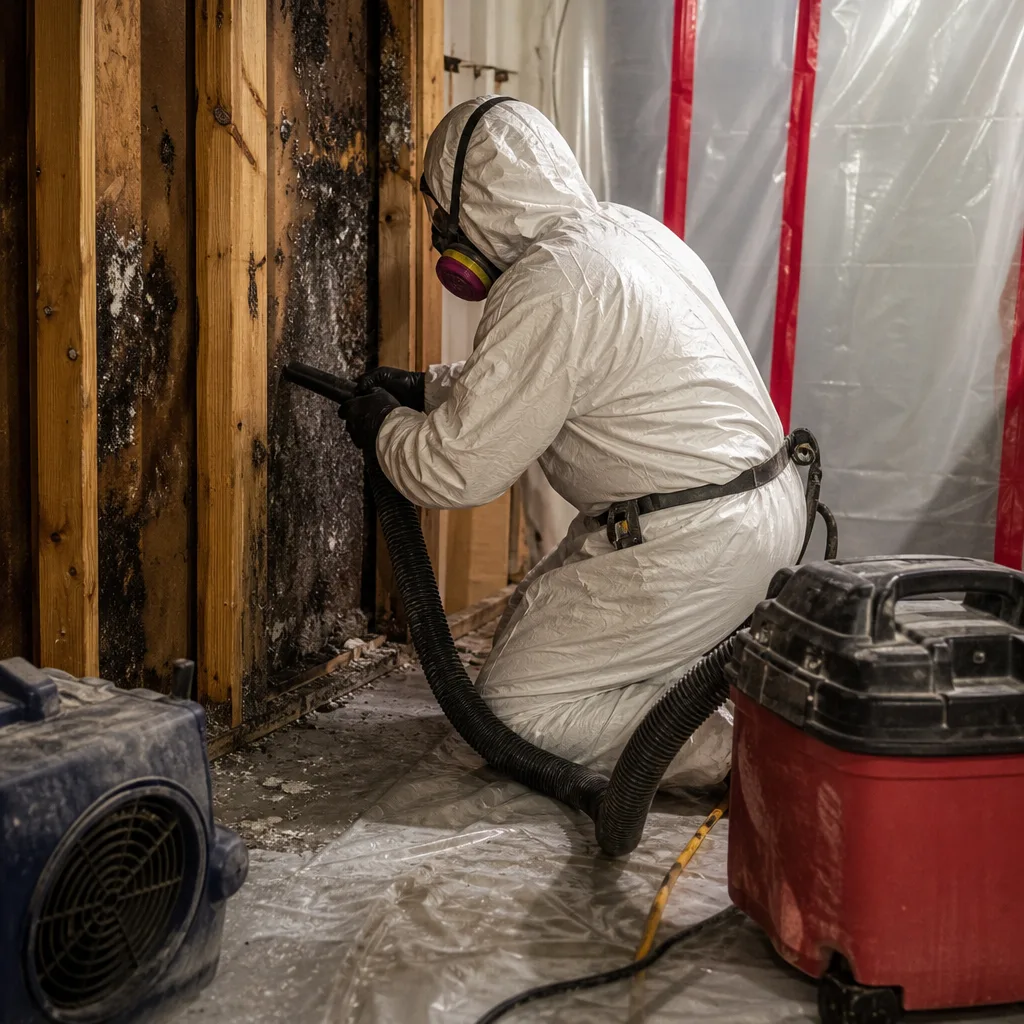
After remediation, we run HEPA air scrubbers until the air clears, then we sample. If the spore count is still elevated, we keep scrubbing. Bedford Hills homes with fieldstone basements tend to hold spores in the stone’s porous surface, so we often run an additional day of air scrubbing and re-test before we sign off.
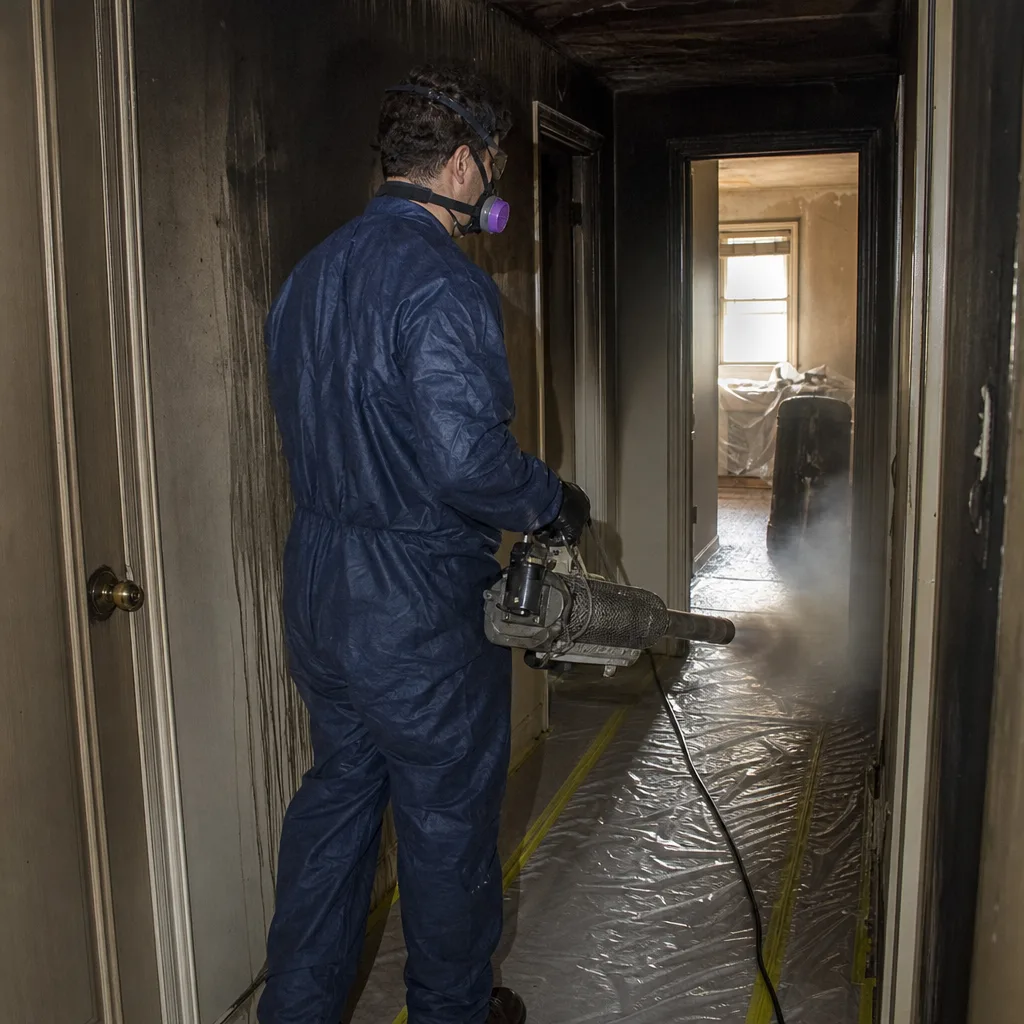
Crawl Space Treatment
Bedford Hills farmhouses and older colonials frequently have dirt-floor crawl spaces under a kitchen or rear addition. Those spaces breathe in whatever the ground releases, and on a shaded, damp lot, that means mold on floor joists and subflooring within a couple of seasons. We treat this with crawl space encapsulation, dehumidification, and joist remediation, not just a spray-and-pray fungicide pass.
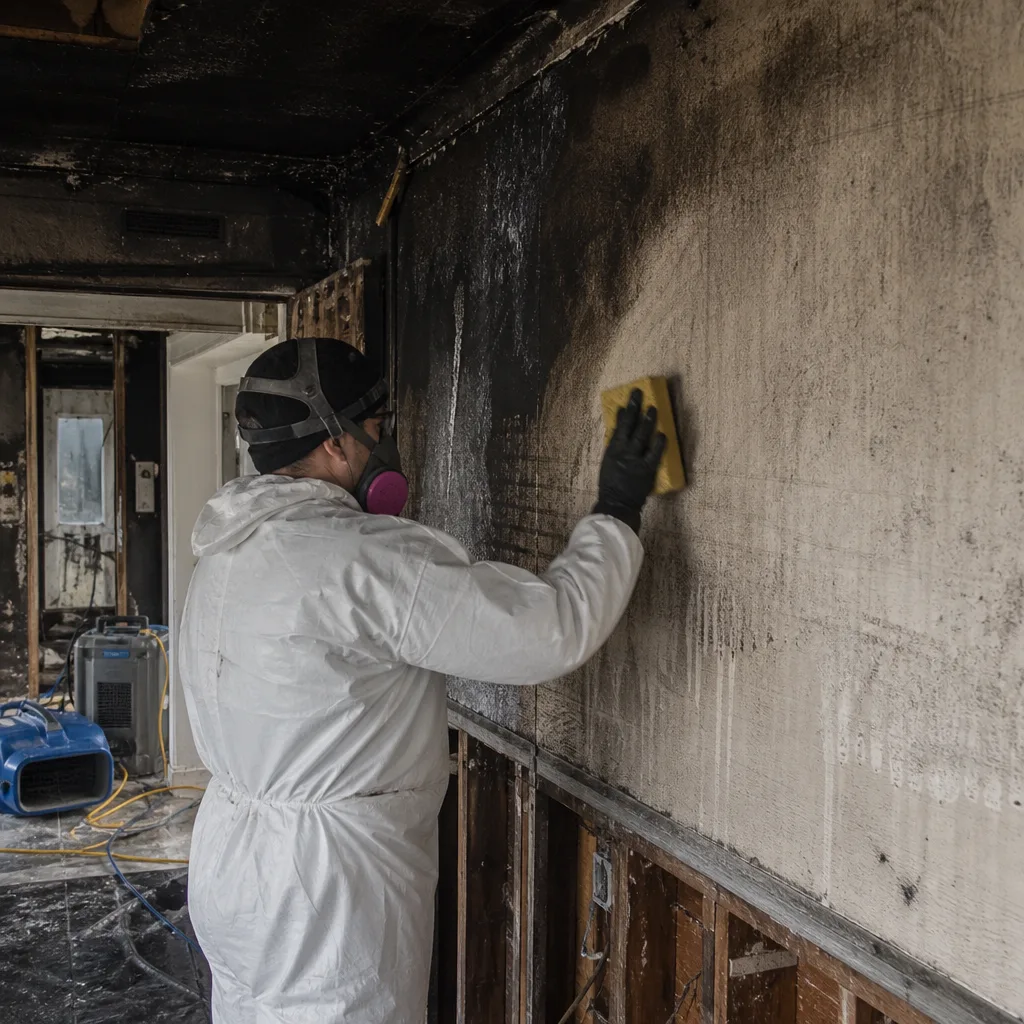
Moisture & Humidity Control
This is the upstream fix. Full basement dehumidification, crawl space vapor barriers, sump pump installation, and drainage corrections are all part of what we do in Bedford Hills. If the moisture problem isn’t corrected, the mold returns. Half our remediation scopes include a humidity-control component, because we’d rather hand you a dry basement than a repeat customer.
What happens when you call
- 1
A real person answersNo phone trees - you reach a local pro.
- 2
You get an upfront price rangeHonest numbers before anyone is dispatched.
- 3
A background-checked tech heads outLicensed & insured, dispatched right away.
- 4
You approve before work beginsNothing starts until you say go.
Mold Remediation Costs in Bedford Hills, NY
Mold remediation in Bedford Hills runs $2,800-$6,900 for a typical contained area, like a single bathroom wall, a foundation wall section, or a crawl space. A full basement with structural framing repair and reconstruction runs $8,000-$22,000. A small surface cleanup under 20 square feet, with no hidden spread, can come in around $900-$1,500. What moves the price: whether the mold is surface or inside a wall cavity, whether the wall is drywall or historic horsehair plaster, whether the foundation is modern concrete or 200-year-old fieldstone, and how long the drying equipment needs to run on a shaded Bedford Hills lot. Insurance typically covers the water event and the resulting mold work; pure humidity-driven mold often falls to the homeowner. The free inspection settles it. We hand you a written scope with a firm number before any work begins.
We Also Serve Cities Near Bedford Hills
Our crews cover the surrounding Westchester territory daily: Mold Remediation in Bedford Hills neighbors Katonah, Mount Kisco, Bedford, and Millwood. If you’re a few minutes down Route 117 or across the reservoir in Mount Kisco, the same team, the same equipment, and the same written guarantee apply.
Serving Bedford Hills, NY - Our Local Coverage Area
We’re based in the Bedford Hills area and know this community well. Use the map below to see our service coverage - if you’re nearby, we can almost certainly help.
Bedford Hills Mold Remediation Questions, Answered
Does mold remediation on a Bedford Hills property inside the Croton watershed require special handling for outdoor antimicrobial application?
Yes. Bedford Hills sits inside the New York City Croton watershed protection zone, so any outdoor application of antimicrobials, pressure washing runoff, or disposal of flood debris must follow NYC DEP watershed regulations on chemical runoff. We hold containment and runoff control on every exterior job, which neighboring towns outside the watershed boundary don’t require. It’s a compliance layer we handle so you don’t have to.
How do you dry a 200-year-old fieldstone basement without damaging the original lime mortar?
We dry it slowly and evenly. Aggressive heat or forced air against a lime-mortar fieldstone wall will crack the mortar joints and loosen the stone face. We use LGR dehumidifiers to pull moisture out of the air gradually, and we take moisture readings in the stone cavities themselves, not just on the surface. The key is patience: a fieldstone basement on a shaded Bedford Hills lot may need five to seven days of drying, and we don’t shut the equipment off early because a calendar says we should.
Can you save horsehair plaster walls after water damage from a burst pipe in a Bedford Hills colonial?
Often yes. If the plaster is still keyed to the lath and the binder isn’t mush, we can dry it in place, HEPA-vacuum the surface, and repatch with a horsehair-mix plaster that matches the original. If the mold has colonized the binder deep behind the lath, that section has to come out. We photograph everything and write the scope with explicit material-matching terms, because we know Bedford Hills clients and their insurers expect pre-loss condition, not a drywall shortcut. Call (917) 924-4221 for a free visual inspection before you make any decisions.
What’s different about crawl space mold remediation under a Bedford Hills farmhouse on a heavily wooded lot?
The difference is moisture that never leaves. Dirt-floor crawl spaces under shaded, wooded lots stay damp for months after any rain event, and the joists above them become mold food. We treat those jobs with encapsulation, vapor barrier installation, and a dehumidifier sized for the space, not just a spray-and-pray fungicide pass. Without the moisture fix, the mold comes back within a single season. Cost for a typical Bedford Hills crawl space cleanup runs $2,200-$5,500 depending on size and joist damage, and the free inspection gives you a firm number before we start.
Do I need to move out during mold remediation of a Bedford Hills historic home?
In most contained jobs, no. We seal the work area with 6-mil poly, maintain negative air pressure, and run HEPA air scrubbers continuously, so the living space stays safe. If the remediation area includes the main bedroom or the only bathroom, or if a family member has respiratory issues, we’ll recommend alternative arrangements and we’ll tell you that upfront, not after work starts.
How fast can you get to a Bedford Hills address?
Usually within 45 minutes for emergency water or flooding, and the same day for non-emergency mold inspections. We answer live 24/7 at (917) 924-4221, and the dispatcher gives you a firm ETA while you’re still on the phone.
What certifications do your mold remediation crews hold?
IICRC certifications in Water Damage Restoration (WRT) and Applied Microbial Remediation (AMRT), plus training to RIA and IFA standards. Every technician is background-checked and uniformed. The crews that work on Bedford Hills historic homes are the same senior technicians who’ve handled fieldstone basements and horsehair plaster for years.
What should I do in the first 30 minutes after I find mold in my Bedford Hills house?
Don’t disturb it. Don’t wipe it, don’t run a fan on it, don’t open the wall. Disturbing mold releases spores that weren’t airborne before. Shut the door to the room if you can, turn off the HVAC fan so the spores don’t circulate, and call us at (917) 924-4221. Take a photo with your phone before you call. We’ll walk you through the next step on the phone and schedule a free visual inspection.
If you’ve found mold in a Bedford Hills basement, bathroom wall, or crawl space, call (917) 924-4221. We’ll send a certified crew, do a free visual inspection, and hand you a written scope of work before anything gets opened. Done right, and backed in writing.
Written by Curt Bowman, Owner at Floodline Restoration Co. of Manhattan, serving Bedford Hills since 2010.