
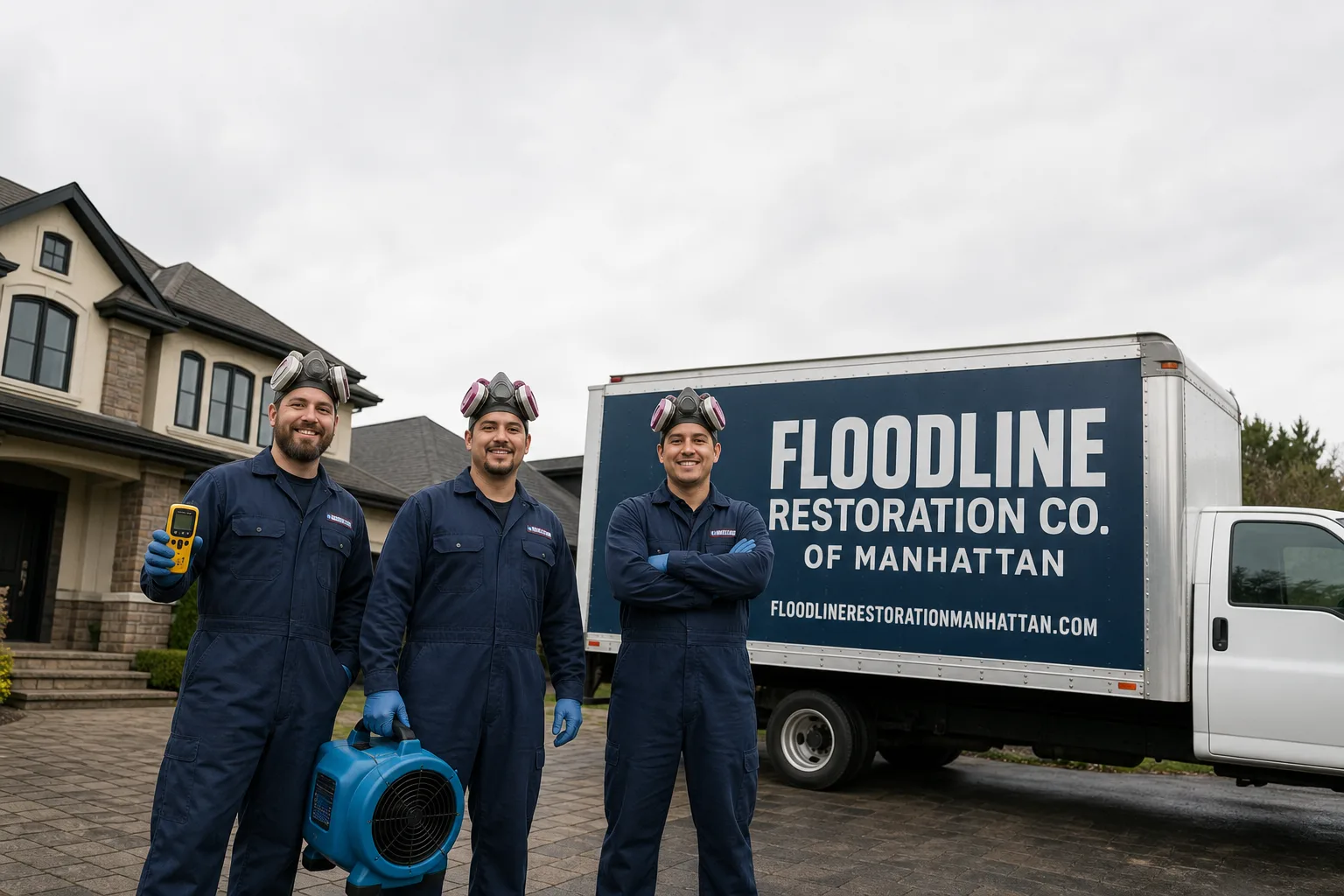
Free visual inspection and a written scope of work before any mitigation begins - photos, moisture readings, and drying logs go in your claim file
The scope we write is the scope we bill. Anything new gets shown to you, in writing, before we touch it.






 Before
 After
After Before
 After
After Before
 After
After24/7 Emergency Mold Remediation in Katonah
Mold remediation in Katonah typically runs $1,800 to $6,500 for a contained basement or crawl space job, and we can have a certified crew at your door within 45 minutes of your call. That’s not a sales pitch. It’s how we’ve run dispatch since Curt Bowman founded Floodline Restoration Co. in 2010, and it’s how we still run it today. Call (917) 924-4221 right now and a live person picks up. Not a recording. Not a callback queue.
Here’s the thing about mold in Katonah. The longer it sits behind a wall or under a crawl space, the more it costs to remove. Spores spread through balloon framing in older homes faster than most people think possible. The first hour is when we can contain the problem, stop the moisture source, and keep a $2,000 cleanup from becoming a $20,000 rebuild. We offer a free visual inspection. You’ll know what you’re dealing with before any money changes hands.
Understanding Mold Remediation Severity in Katonah Properties
Mold problems in Katonah split into three practical tiers. The first is surface colonization, usually on drywall or framing after a single leak, handled with HEPA vacuuming, antimicrobial treatment, and drying. The second is moisture-driven hidden growth, the kind we find behind original lime plaster walls in the 1890s and 1910s homes that make up much of the historic village core. Those houses were rebuilt in a compressed window after the original hamlet was relocated uphill for the New Croton Reservoir, so the construction is remarkably uniform. Chestnut framing. Cast-iron drains. Plaster that holds moisture differently than modern drywall.
The third tier is the one we see too often after Katonah storms: Category 2 or Category 3 water that’s backed up through a bulkhead or seeped through a foundation. That water carries contaminants, and by the time a homeowner notices the smell, the mold has usually colonized inside wall cavities. At that point you need full containment, negative air pressure, air scrubbing, and clearance testing before anyone should breathe the air in that room. A visual inspection by someone who knows what they’re looking at is the difference between a cleaning and a full remediation.
Why Katonah Property Owners Choose Floodline Restoration Co. of Manhattan
- 45-minute response commitment. We dispatch crews from the metro office to Katonah immediately. You’ll get a call when the truck is rolling, and we’ll be there when we say.
- A real person answers, 24/7. At 2 a.m. during a nor’easter, you reach a live dispatcher. That person has a dispatch board in front of them and the authority to send a crew. No answering service handing off messages.
- IICRC-certified crews. Technicians carry WRT (Water Damage Restoration Technician), FSRT (Fire and Smoke Restoration Technician), and AMRT (Applied Microbial Remediation Technician) certifications, plus RIA and IFA training. Background-checked and uniformed on every job.
- Free visual inspection. We’ll tell you what’s actually growing, where the moisture is coming from, and what it’ll take to fix it. If it’s a cleaning, we’ll say so. If it’s a full remediation, you’ll see the moisture readings yourself.
- Direct insurance billing. We bill your carrier directly and handle adjuster communication. You’re not the messenger between us and the insurance company.
- One team, start to finish. The crew that contains the mold is the crew that dries the structure and rebuilds what was removed. No mid-job handoff to a subcontractor you’ve never met.
Our Mold Remediation Process
Inspection & Assessment
We start with moisture mapping using thermal imaging and hygrometers. We need to know where the water is coming from before we touch the mold. In Katonah’s older homes, that often means checking behind plaster, inside crawl spaces, and along the foundation line where reservoir-fed groundwater pushes in.
Containment & Source Stabilization
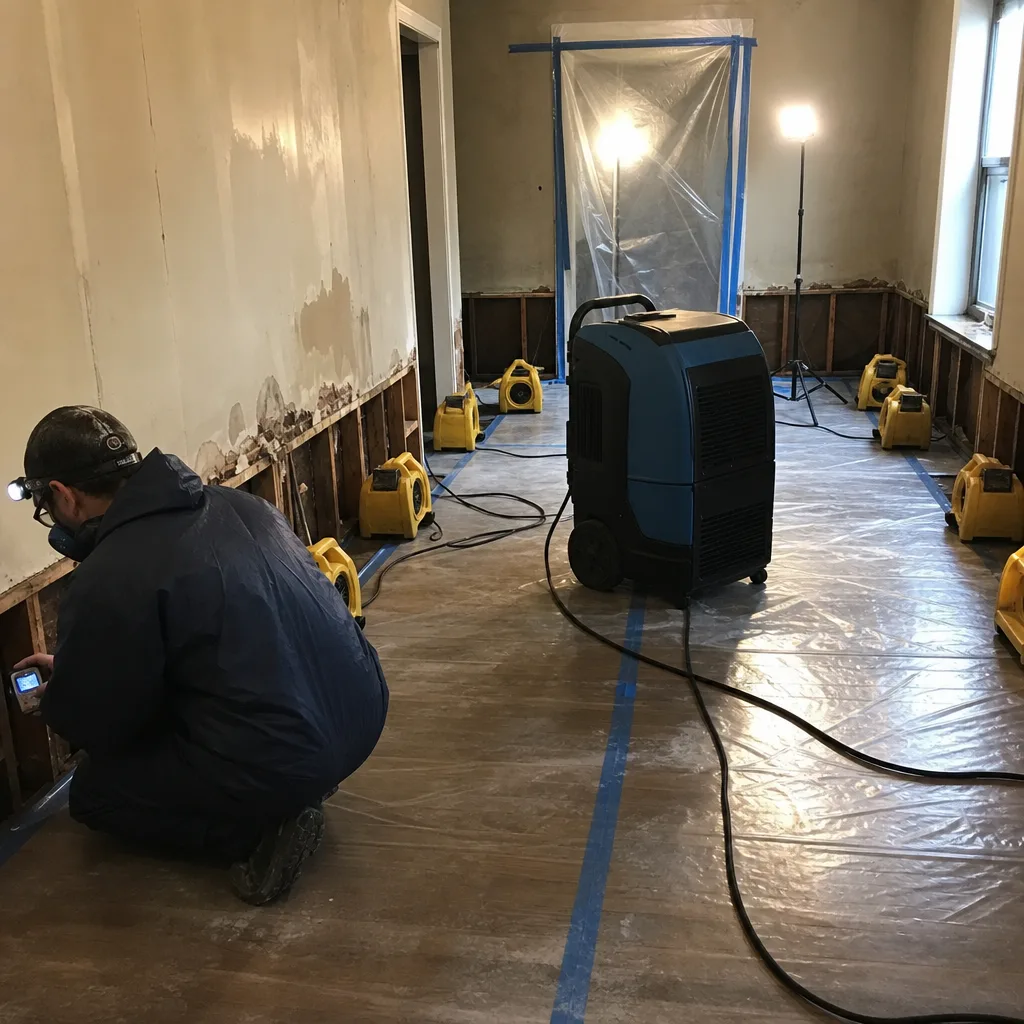
We stop the moisture source first. A failed bulkhead, a cracked foundation wall, a slow plumbing leak. Then we seal the affected area with negative air pressure so spores don’t spread through the rest of the house during removal. This is the step that keeps a basement mold problem from becoming a whole-house air quality problem.
Drying & Dehumidification
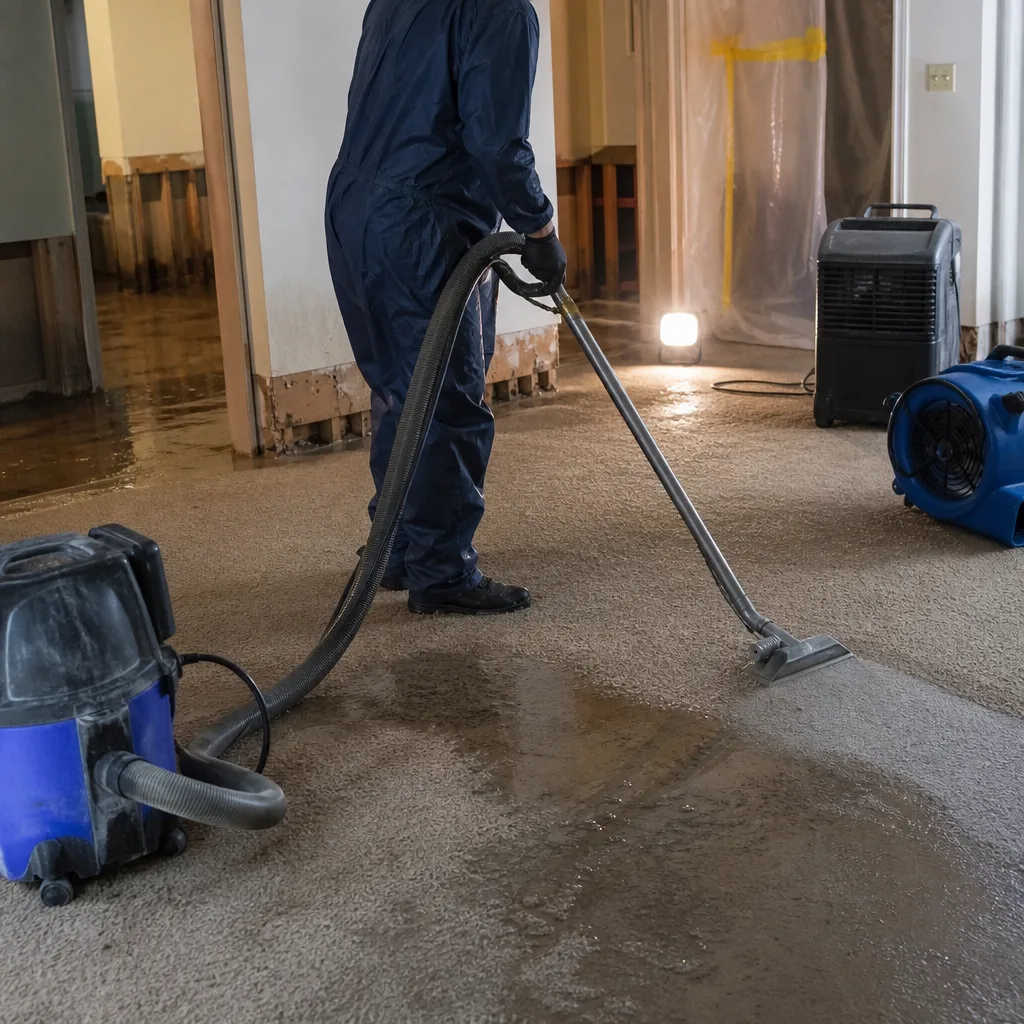
Dri-Eaz dehumidifiers and XPOWER air movers go in as soon as the affected materials are removed. We run daily moisture readings until the dry standard is met, and those readings go into a log that both you and your insurance carrier can see. No guessing. No “it feels dry.” Numbers.
Cleaning & Sanitization
HEPA air scrubbers run throughout the job. Affected surfaces get HEPA vacuuming and treatment with EPA-registered, watershed-compliant antimicrobials. In Katonah, everything we apply must be approved for use inside the NYC DEP Croton watershed. That’s a legal requirement, not a preference, and we plan every scope of work around it from day one.
Watershed-Compliant Specialty Treatment
Standard bleach and biocide sprays that restoration companies use in neighboring towns are restricted inside the Katonah watershed boundary. We use EPA-registered products that meet DEP watershed protection standards, and we document every chemical on the scope. Our techs are trained on the distinction, and your paperwork reflects it.
Repairs & Restoration
After clearance testing confirms the mold is gone, we rebuild. Drywall, trim, flooring, whatever was removed goes back in, and the same crew does the work. You get a moisture log, a clearance report, and the 90-Day Done Right Promise in writing.
Need Emergency Mold Remediation in Katonah Now?
Crews minutes away, answering live 24 hours a day. The sooner we start, the less it costs.
Working With Your Insurance Company
Most Katonah homeowners are surprised to learn that mold remediation is covered when the mold results from a covered peril, like a burst pipe or storm-driven water intrusion. What the carrier wants to see is documentation. Photos from day one. A moisture log with daily readings. A line-item scope of work that shows exactly what was done and why. We produce all of that as standard practice, and we send it directly to your adjuster. You shouldn’t have to argue with your insurance company about whether the drying was actually done. The numbers say what the numbers say, and we hand them over.
What We Provide Your Insurer
- Thorough documentation of the loss
- Photos of all damage, room by room
- Moisture readings and drying logs
- A detailed, line-item scope of work
- Direct coordination with your carrier
Built for Katonah’s Loss Calendar
Katonah’s mold season doesn’t follow one month. It follows the weather and the water table. Spring snowmelt pushes groundwater up against foundations in low-lying parcels near the Cross River and Muscoot Reservoir, and that’s when we see the first wave of basement mold. Summer thunderstorms drop inches of rain in an hour, overwhelming bulkheads and window wells. Nor’easters in fall and early winter bring tree damage that opens roofs and walls to water. January deep freezes burst supply lines in the 1890s-era homes along Valley Road and The Parkway.
The pattern we’ve seen over 15 years is that hidden mold shows up about three to six weeks after the water event. The smell is the first sign. The discoloration comes later, and by then the colonies inside the wall are larger than the visible patch. If water got in, mold is probably growing somewhere you can’t see. That’s not alarmism. It’s the biology of it. The sooner you call after a water event, the less remediation you’ll need.
Mold Remediation Across Katonah’s Neighborhoods
The historic core of Katonah, rebuilt between 1897 and 1903 after the village moved uphill, is its own animal. Homes along Katonah Avenue, The Parkway, and Valley Road sit on foundations that have been handling groundwater for over a century. We stripped a basement in that historic core off Valley Road after a spring snowmelt pushed Category 2 water through a failed bulkhead. Our techs set XPOWER air movers and Dri-Eaz dehumidifiers, then wrote a DEP-compliant scope of work replacing all antimicrobial treatment with EPA-registered, watershed-safe products before any sheetrock was opened. That job never would have happened that way in Mount Kisco, and the homeowners knew it.
Out toward Cherry Street and the parcels closer to the Katonah Memorial Park edge, we see more crawl space issues. Homes there sit lower to the water table, and crawl spaces become mold incubators after every heavy rain. The Bedford estate properties in the surrounding 10536 ZIP present a different challenge: large custom homes where matching historic millwork after remediation is part of the job, not an afterthought. In every one of these areas, the DEP watershed rules apply. The chemical you buy at the hardware store is likely not legal to use on your own walls here. We know the difference.
Specialized Mold Remediation Services We Offer in Katonah
Mold Inspection & Testing
We identify what’s growing, where it’s growing, and where the moisture is coming from. Testing includes air sampling and surface sampling when needed, and you get a report that says what we found. In Katonah’s older homes, we check behind original plaster and inside wall cavities, because that’s where the hidden colonies live.
Mold Removal
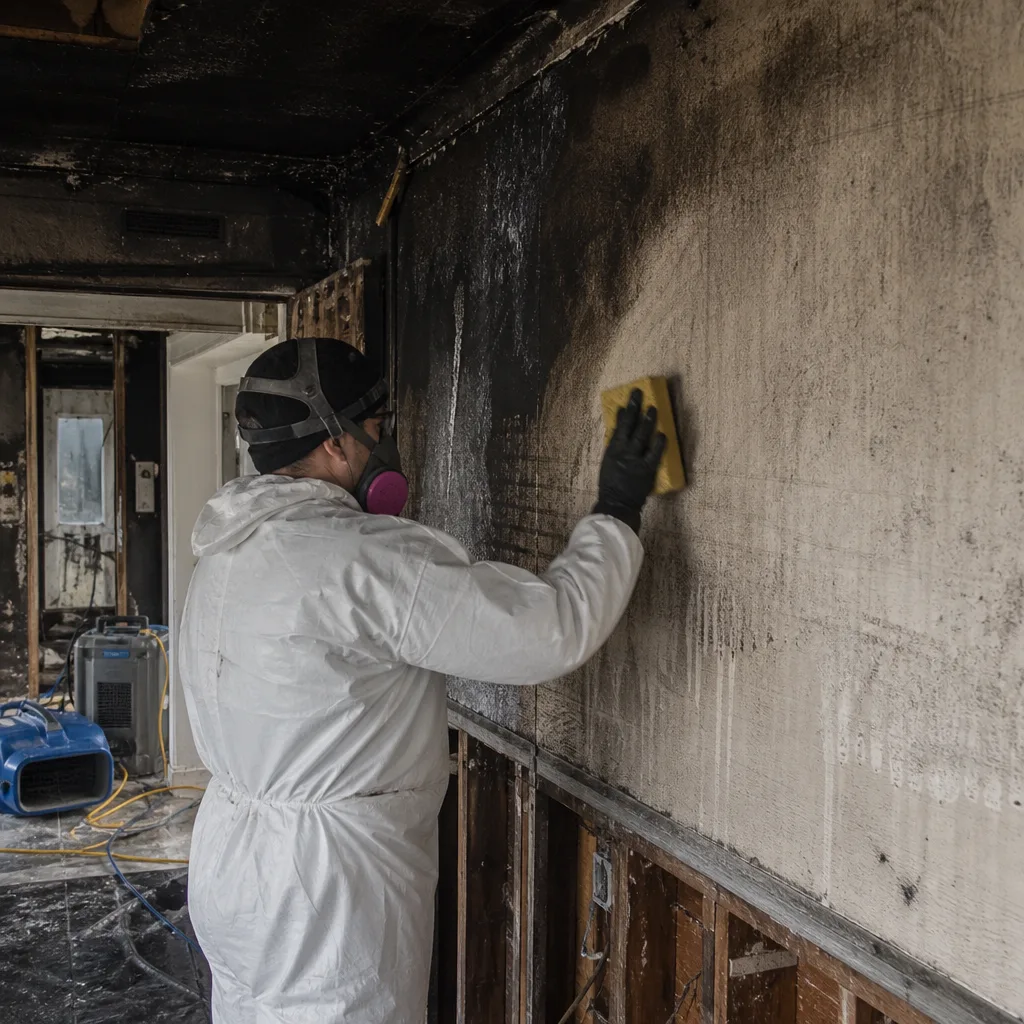
Containment, removal of affected materials, HEPA vacuuming, and treatment with watershed-compliant antimicrobials. We document every step with photos and moisture readings. The goal is not just removing what you can see. It’s removing what you can’t, and proving it’s gone.
Black Mold Remediation
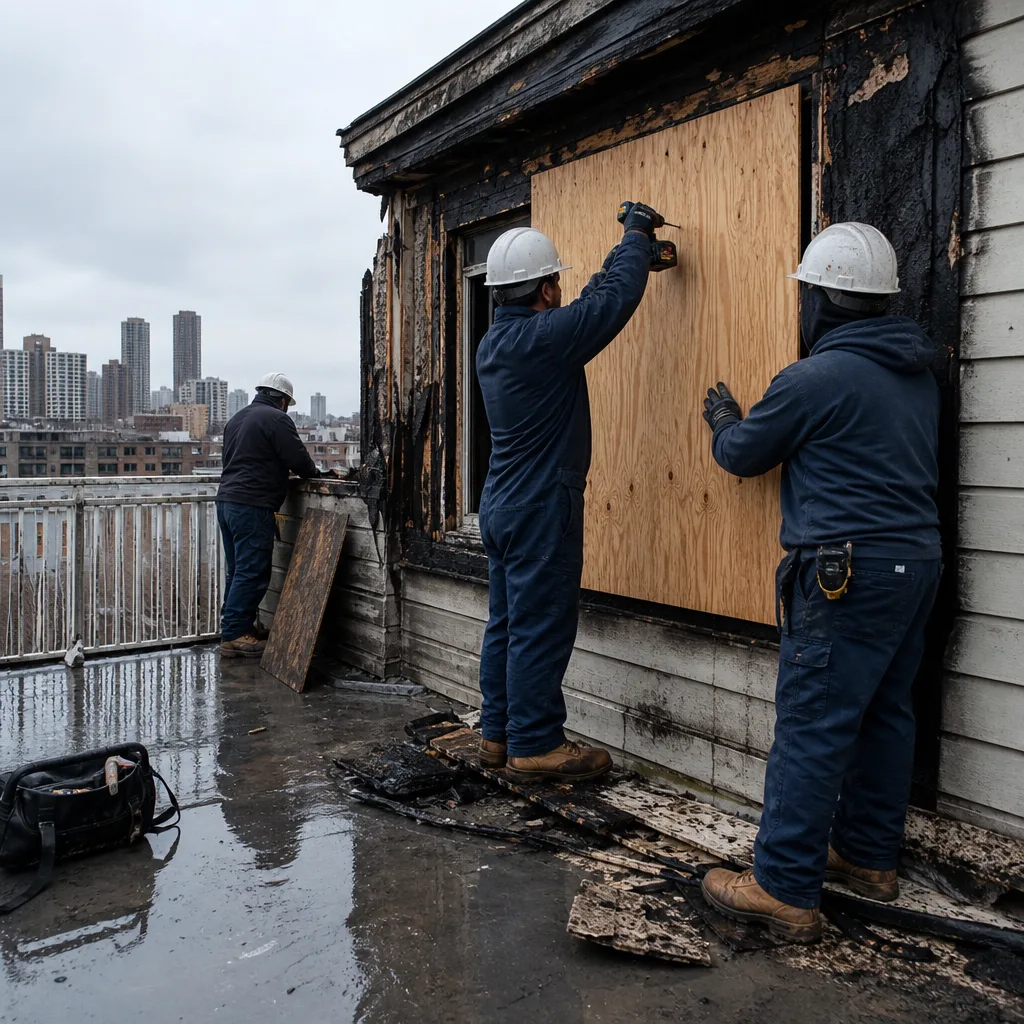
Stachybotrys, what most people call black mold, shows up after prolonged moisture exposure, especially on drywall and framing. It needs full containment and air scrubbing. We handle it with the same process, but with stricter containment protocols. The fact that it’s black doesn’t change the chemistry. It changes how careful we are about protecting the rest of your house.
Air Quality Restoration
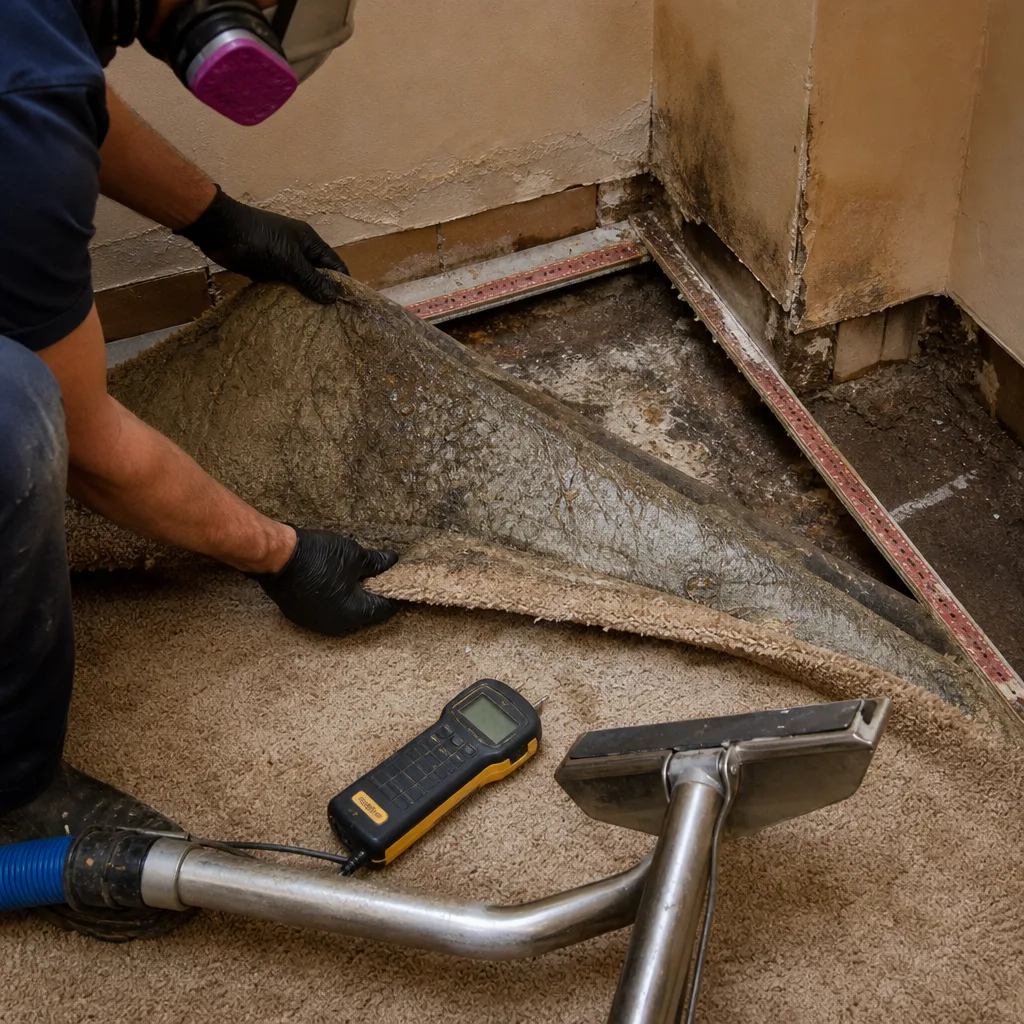
After remediation, we run HEPA air scrubbers until the air clears clearance testing. Then we test. You get a written report with the numbers. If the air in your Katonah home still smells musty after we leave, we come back. That’s the 90-Day Done Right Promise.
Crawl Space Treatment
Crawl spaces are where Katonah mold problems go to hide. We dry them, treat them with watershed-safe products, and install moisture barriers where needed. Sealing a crawl space after a storm without checking moisture readings behind the original walls is how mold ends up inside 19th-century walls. We check first.
What happens when you call
- 1
A real person answersNo phone trees - you reach a local pro.
- 2
You get an upfront price rangeHonest numbers before anyone is dispatched.
- 3
A background-checked tech heads outLicensed & insured, dispatched right away.
- 4
You approve before work beginsNothing starts until you say go.
Mold Remediation Costs in Katonah, NY
A visual inspection and mold test in Katonah typically runs $300 to $600. Surface mold removal from a single wall or ceiling patch runs $500 to $1,500. A contained basement remediation with full drying and treatment runs $1,800 to $6,500 depending on square footage and how much material has to come out. Crawl space mold remediation runs $2,000 to $8,000 when vapor barriers and structural drying are included. Black mold with significant wall cavity contamination runs $4,000 to $15,000.
What moves the price is what’s behind the walls. In Katonah’s older homes, that’s often lime plaster over chestnut framing, which means more labor per square foot and more care with the demolition. Insurance covers the work when the mold results from a covered water event. If it’s from long-term humidity, that’s usually out of pocket. The free visual inspection gets you a firm scope of work and a written price before any work starts. No surprises on the bill. That’s the square deal we’ve built the company on. Call (917) 924-4221 for an exact quote. Estimates are free.
We Also Serve Cities Near Katonah
Our crews handle Mold Remediation in Bedford Hills, Shenorock, Mount Kisco, and Yorktown Heights. Same 45-minute response commitment. Same live 24/7 dispatch. Same DEP watershed compliance standards wherever they apply. If you’re in a neighboring town and suspect mold, call the same number and ask for the Katonah crew. We’ll be there.
Serving Katonah, NY - Our Local Coverage Area
We’re based in the Katonah area and know this community well. Use the map below to see our service coverage - if you’re nearby, we can almost certainly help.
Katonah Mold Remediation Questions, Answered
Can mold remediation in Katonah use standard bleach or biocide sprays?
No. Because Katonah sits inside the NYC DEP Croton watershed, many antimicrobials and biocides that restoration crews use in neighboring Westchester towns are restricted or outright barred here. Every treatment plan we write for Katonah properties uses EPA-registered, watershed-compliant products, and we document every chemical on the scope of work. Off-the-shelf mold-killing sprays from the hardware store are also a compliance risk for homeowners, and using them can carry fines. Ask us what’s legal on your street before you spray anything.
Why do hidden mold problems show up so often in Katonah’s older homes after a storm?
Most of the historic village core was rebuilt in a compressed window between 1897 and 1903, after the original hamlet was relocated uphill for the New Croton Reservoir. Those homes share original chestnut framing and lime plaster, which hold moisture differently than modern drywall. Water moves through plaster slowly, so a storm leak can sit unnoticed for weeks while mold colonizes inside the wall cavity. By the time you see a stain, the colony behind it is usually larger than the visible patch.
What kind of water in Katonah basements is considered Category 2 or 3 and why does that matter for mold?
Category 1 is clean water from a supply line. Category 2 is water that’s been in contact with soil or building materials, like groundwater seeping through a foundation or a failed bulkhead. Category 3 is grossly contaminated water, like sewage backups or reservoir-fed floodwater that’s carried soil and organics into the basement. Several Katonah low-lying parcels back up with Category 2 or 3 water during snowmelt and heavy rain. That matters because Category 2 and 3 water carries the nutrients mold thrives on, and it means a full pack-out and antimicrobial treatment is required, not just drying. Call (917) 924-4221 and we’ll tell you which category you’re dealing with.
The mold is in my Katonah crawl space after a nor’easter. Can it be dried without removing the floor above?
Usually yes, if we get to it early. Crawl space mold can often be dried and treated from below using Dri-Eaz dehumidifiers, XPOWER air movers, and HEPA air scrubbing without touching the finished floor above. The catch is that we need moisture readings from behind the surrounding walls before we seal anything. In older Katonah homes, sealing a crawl space after a storm without checking moisture behind original lime plaster drives mold inside 19th-century walls. We check the numbers first, then recommend the least invasive route that actually works.
Does mold remediation in Katonah require local permits beyond the standard Westchester building permit?
Mold remediation itself doesn’t require a specific mold permit in Katonah. But the DEP watershed regulations act as a de facto permit layer because they restrict which chemicals can be applied and how contaminated materials must be disposed of. If the remediation involves structural repairs, standard Westchester building permits apply. We handle the compliance side on every job and can tell you before the first wall comes open whether your project triggers anything beyond standard permitting.
How fast can a mold remediation crew actually get to Katonah?
Within 45 minutes in most cases. Our dispatch is a live person, 24/7, and when you call (917) 924-4221, that person puts the truck in motion immediately. You’ll know the crew’s ETA before you hang up.
Will my homeowner’s insurance cover mold remediation in Katonah?
When the mold results from a covered peril, like a burst pipe, storm damage, or an appliance failure, most policies cover the remediation as part of the water damage claim. Mold from long-term humidity or deferred maintenance is typically not covered. We document everything from the first hour, bill your carrier directly, and work with your adjuster so you’re not stuck in the middle. If you’re unsure, call us with your policy number handy and we’ll help you figure out the likely path before any work is authorized.
What should I do in the first 30 minutes after finding mold in my Katonah home?
Don’t spray anything on it. Off-the-shelf mold sprays are often illegal inside the NYC DEP watershed and can make the problem worse by adding moisture. Turn off any fans or HVAC systems that could spread spores through the house. Close the door to the affected room if you can. Then call (917) 924-4221. We’ll walk you through what to do over the phone while the crew is en route. The first 30 minutes are about containment, not cleaning.
Written by Curt Bowman, Owner at Floodline Restoration Co., serving Katonah with certified crews and live 24/7 dispatch.