
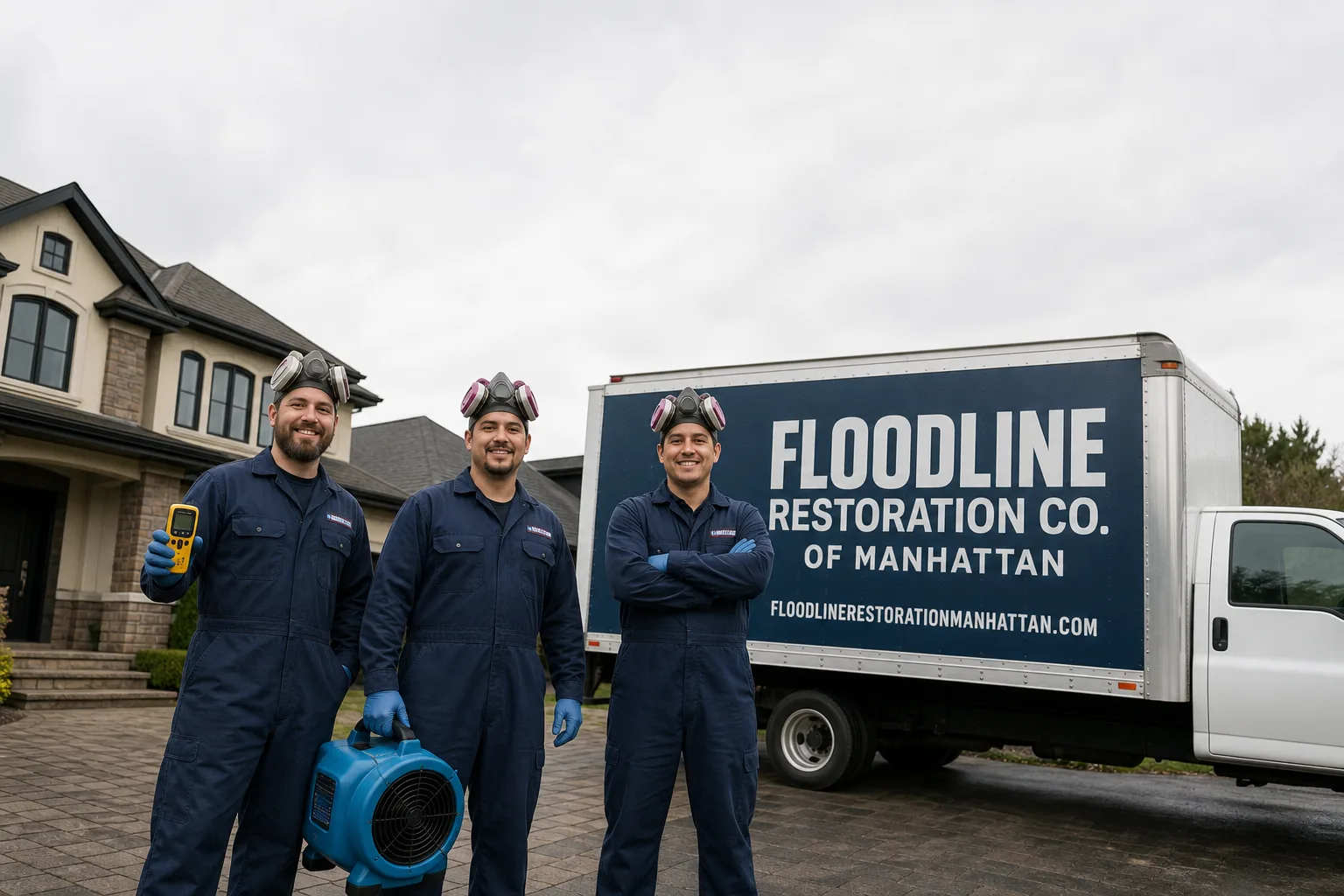
Free visual inspection and a written scope of work before any mitigation begins - photos, moisture readings, and drying logs go in your claim file
The scope we write is the scope we bill. Anything new gets shown to you, in writing, before we touch it.






 Before
 After
After Before
 After
After Before
 After
After24/7 Emergency Mold Remediation in Bedford-Stuyvesant
Mold remediation in Bedford-Stuyvesant typically costs $1,800-$6,500 depending on whether the contamination is isolated to one room or has traveled through a party wall into adjacent properties, and most jobs are scoped within 24 hours. If you’re staring at a spreading black patch on brownstone plaster this morning, call (917) 924-4221 right now. A live dispatcher answers around the clock, and a certified crew can be on your block inside 45 minutes.
Here’s what the first hour decides: whether horsehair plaster gets opened at the source, or whether moisture keeps migrating behind lath into old-growth heart pine. In Bed-Stuy’s row houses, mold rarely stays where you see it. The visible stain is usually the exit point, not the origin. We trace it back through the wall cavity, test the air, and start containment before it spreads to the next joist bay or the neighbor’s side of the wall. The free visual inspection is how we show you what’s actually happening before any work begins.
Understanding Mold Remediation Severity in Bedford-Stuyvesant Properties
Mold jobs in this neighborhood break into three practical tiers. Tier one is surface contamination: visible mold on plaster or drywall, no structural penetration, usually from a one-time event like a radiator overflow or a small roof leak. We can often handle this with containment, HEPA scrubbing, and antimicrobial treatment on the affected surface. Tier two is hidden migration: moisture has traveled through the wood lath, into joist bays, or behind baseboards. This is the most common scenario in Bed-Stuy, because horsehair plaster holds water longer than drywall and disguises the true boundary of contamination. We moisture-map every affected room with thermal imaging and penetrating meters before we open anything. Tier three is cross-address contamination: a roof drain failure or waste-stack break on one side of a shared party wall sends Category 2 or 3 water into the adjacent property. Both addresses need scoping, both owners need coordination, and in many cases the NYC Department of Buildings needs notification before full remediation can proceed.
In 1870s-1910s rowhouses, the material behavior changes everything. Horsehair plaster absorbs water like a sponge and releases it slowly. Old-growth heart pine floorboards cup and hold moisture between boards. Belleville brownstone facades are porous, and decades of mortar deterioration let exterior moisture into wall cavities that owners assume are dry. What looks like a small ceiling stain on one floor often maps to a moisture plume that started two floors up and crossed through a wall chase. If a crew trained only on modern drywall assemblies shows up, they’ll under-size the drying equipment, pull it too early, and hand you a recurrence in eight weeks.
Why Bedford-Stuyvesant Property Owners Choose Floodline Restoration Co. of Manhattan
- 45-minute response commitment to any Bed-Stuy address. From Stuyvesant Avenue to Malcolm X Boulevard, a dispatched crew is already in the area, not crossing a bridge.
- 24/7 live answer, every time. A real dispatcher picks up at 2 a.m. Not a recording. Not a call-back service. When you call, you reach a person who can route a crew immediately.
- IICRC-certified technicians trained to AMRT and WRT standards. Mold remediation and water restoration certifications matter here, because old building systems fail differently than new ones.
- Free visual inspection before any work is scoped. You get eyes on the actual moisture boundaries, not a phone quote based on square footage.
- Direct insurance billing. We send the carrier the scope, photos, and drying logs. You don’t play messenger between your adjuster and our crew.
- One crew from first cut to final patch. We open the wall, treat the mold, dry the structure, and restore the plaster. No mid-job handoff to a third-party contractor.
Our Mold Remediation Process
Inspection & Assessment
We start with thermal imaging and penetrating moisture meters across every affected room, not just the visible stain. In Bed-Stuy rowhouses, we check the party wall, the floor assembly, and the floor above before we open anything.
Containment & Stabilization
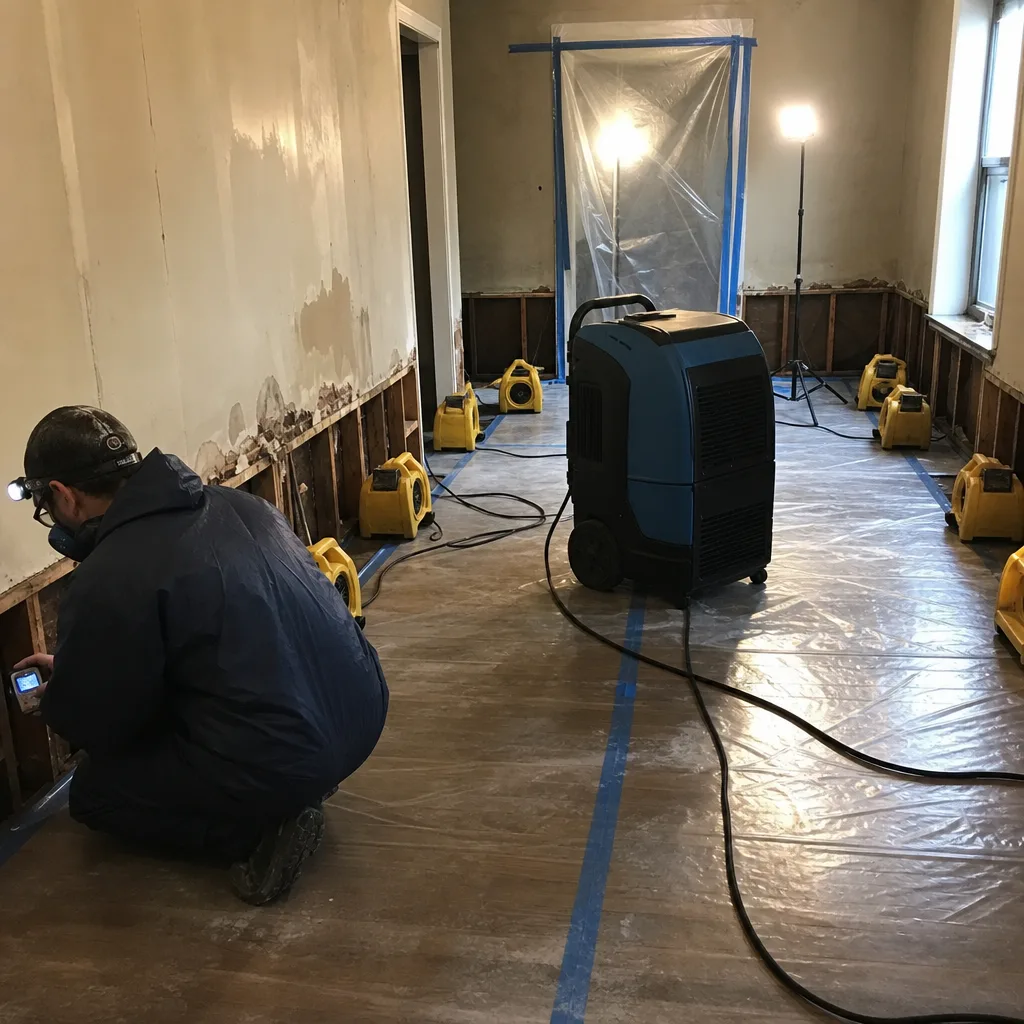
We set HEPA-filtered negative air containment at the affected boundary, including the shared wall when readings show migration. The goal is to keep spores out of your living space and out of the neighbor’s property.
Drying & Dehumidification
Phoenix desiccant dehumidifiers and XPOWER air movers run against the specific water-holding profile of horsehair plaster and heart pine, not a drywall assumption. Daily readings are logged until we hit the dry standard.
Removal & Cleaning
Contaminated plaster, lath, and trim are removed to the line of sound material. HEPA air scrubbers run throughout removal, and salvageable surfaces get antimicrobial treatment.
Air Quality Restoration
After removal and drying, we run post-remediation air sampling to confirm spore counts have returned to normal background levels for the structure. You get the clearance documentation for your records.
Repairs & Restoration
We rebuild what we opened: plaster repair, trim, paint match on period profiles. The same crew that cut the wall closes it, and the 90-Day Done Right Promise in writing says they’ll make it right if it’s not.
Need Emergency Mold Remediation in Bedford-Stuyvesant Now?
Crews minutes away, answering live 24 hours a day. The sooner we start, the less it costs.
Working With Your Insurance Company
Most Bed-Stuy mold claims trace back to a covered water event: a burst waste stack, a failed roof drain, a radiator line break. The mold itself may or may not be covered depending on your policy, but the water damage that caused it usually is. We document from hour one so the carrier has what it needs: photos of the source, moisture readings, and a written scope that separates the covered water work from any excluded mold treatment.
Curt Bowman built Floodline to handle what happens when two addresses and two carriers are involved. When a shared roof drain fails on a Bed-Stuy party wall, both insurance companies want the same thing: a clear record of what happened, what got wet, and what needs to be done. We send the same documentation to both adjusters and file the NYC DOB paperwork when the job requires it.
What We Provide Your Insurer
- Thorough documentation of the loss
- Photos of all damage, room by room
- Moisture readings and drying logs
- A detailed, line-item scope of work
- Direct coordination with your carrier
Built for Bedford-Stuyvesant’s Loss Calendar
Mold season in Bed-Stuy runs on two clocks. The first is the building clock: 15 to 20 freeze-thaw cycles a year work on the mortar joints of Belleville brownstone facades, and every cycle pushes a little more water into the wall cavity. By late winter, a facade that looked solid in October has been wicking moisture for months, and interior plaster on the upper floors starts showing the first bloom. The second clock is the weather clock: nor’easters in late winter and early spring, then summer thunderstorms that overwhelm century-old flat-roof drains and send water down through parapet cracks into top-floor ceiling assemblies.
What we see in Bed-Stuy follows a pattern. January and February bring frozen pipes in unheated cellar extensions and illegal subdivided units. March through May is when concealed winter moisture blooms on interior plaster as the building warms. June through August is roof drain season: a 20-minute downpour backs up an internal drain, and water goes through the roof deck and into the top-floor ceiling. Autumn is when owners finally look at the stain they noticed in June. Every one of these is easier to fix on day one than on day ninety, and the free inspection is how we tell you which one you’re looking at.
Mold Remediation Across Bedford-Stuyvesant’s Neighborhoods
Bed-Stuy is a big district, and the building stock changes block by block. Around Stuyvesant Avenue and the blocks east of it, we see mostly 1880s and 1890s brownstones with original horsehair plaster and rear extensions that were added before 1920. The rear extension roofs are a chronic problem: low slope, old membrane, and drains that clog with leaves from the tall London planes on the street. When those drains fail, water runs down the interior wall and pools in the top-floor ceiling before anyone notices. Around Malcolm X Boulevard and the blocks approaching Broadway, the stock is a mix of 1900s brick rowhouses and later-frame additions. The brick rowhouses share the same party-wall issues, but the frame additions dry faster and hide mold longer, because the water runs into a cavity wall and sits against the sheathing. Along the northern edge toward Broadway and near the G train corridor, many rowhouses were subdivided decades ago, and we regularly find improvised plumbing branches with improper venting. A waste stack that was split three ways in 1972 and never vented right is a standing invitation for sewer gas and slow leaks inside walls.
The blocks closest to the elevated J/M/Z line see more vibration-related settling than other parts of the district, and that settling opens hairline cracks in old plaster that let humid air reach the lath beneath. No two Bed-Stuy blocks are the same, but the common thread is that the mold you see started somewhere else. Our job is to find that somewhere else.
Specialized Mold Remediation Services We Offer in Bedford-Stuyvesant
Mold Inspection & Testing
On a brownstone block off Stuyvesant Avenue, our crew arrived for what the owner called a small ceiling stain. Moisture mapping showed water had migrated from a failed upper-floor waste stack through the party wall into the neighbor’s plaster, and readings were over 25% across two joist bays. We set containment at the shared wall, pulled the horsehair plaster in the affected bays, treated the framing with antimicrobial, and installed Phoenix desiccant dehumidifiers and XPOWER air movers. Drying logs documented return to pre-loss condition in nine days. That’s what inspection means here: finding the true boundary of moisture before cutting.
Mold Removal
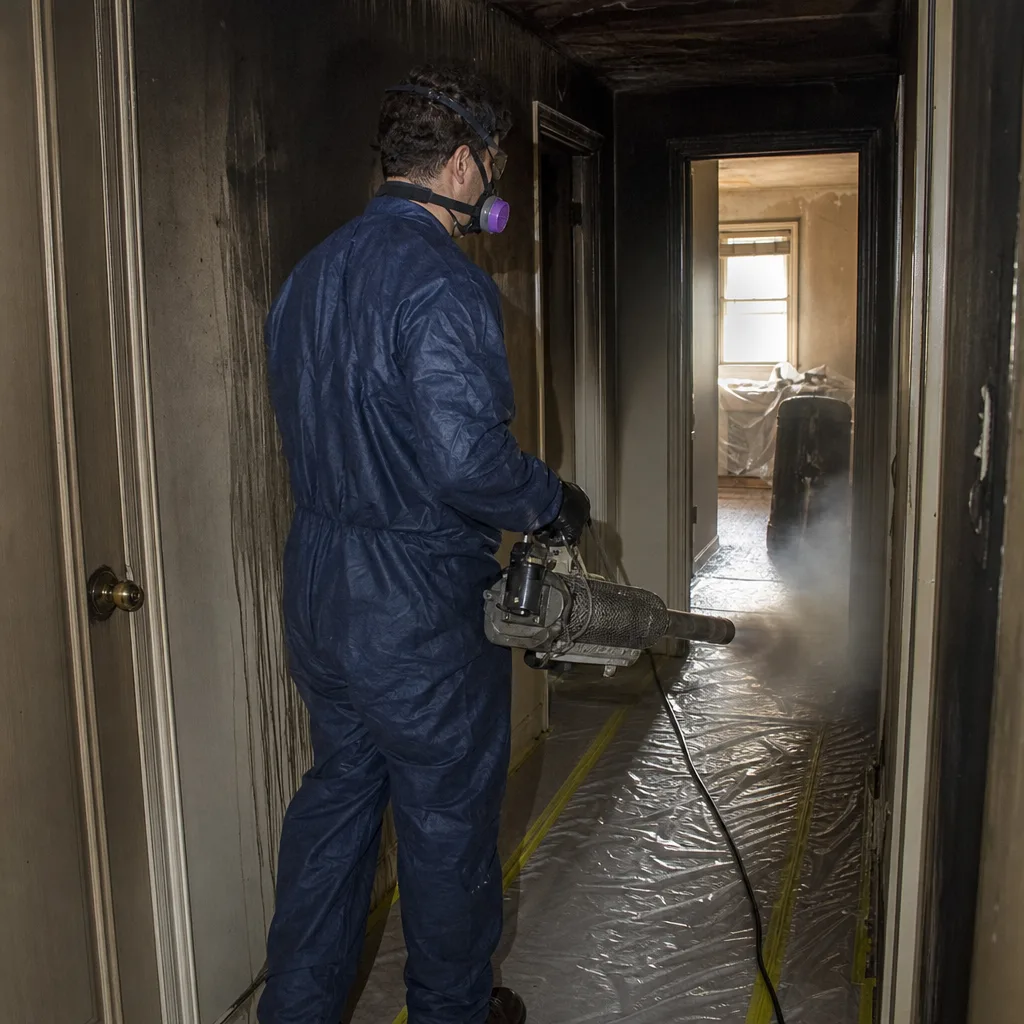
Removal in a Bed-Stuy rowhouse means cutting to the line of sound material in horsehair plaster and wood lath, not just wiping the visible surface. We remove the contaminated material, HEPA-vacuum the framing, and treat the cavity. If we don’t, the mold reestablishes as soon as the humidity rises again.
Black Mold Remediation
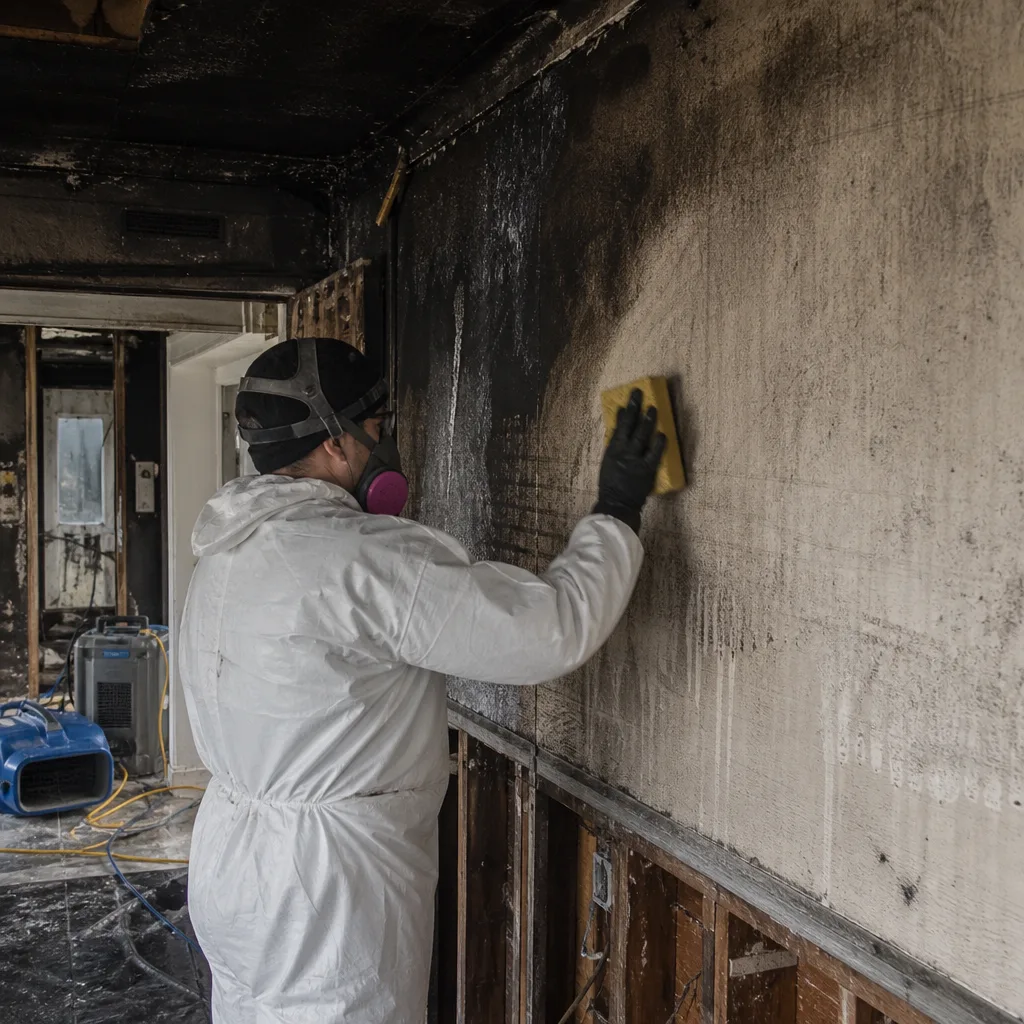
Black mold in a rowhouse party wall deserves full containment and air scrubbing before removal begins. Stachybotrys and similar toxigenic species need constant negative pressure so spores don’t migrate through gaps in the brick party wall into the adjacent home. We treat the affected cavity, not just the visible surface.
Air Quality Restoration
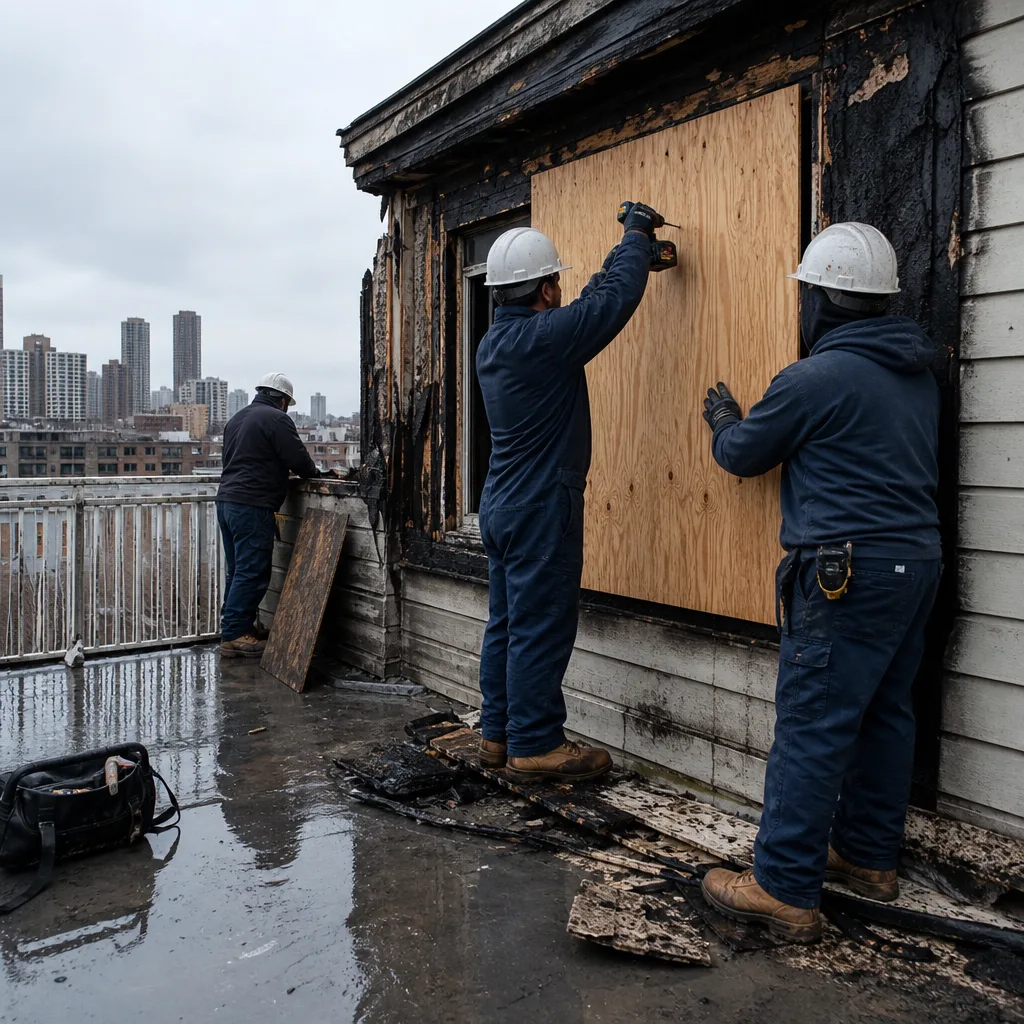
Post-remediation clearance testing tells you whether the air inside your home has returned to normal background levels. In old rowhouses with shared basement air and unsealed party-wall penetrations, clearance testing is the only way to know the job actually worked. We run air samples with a third-party lab and give you the results.
Crawl Space Treatment
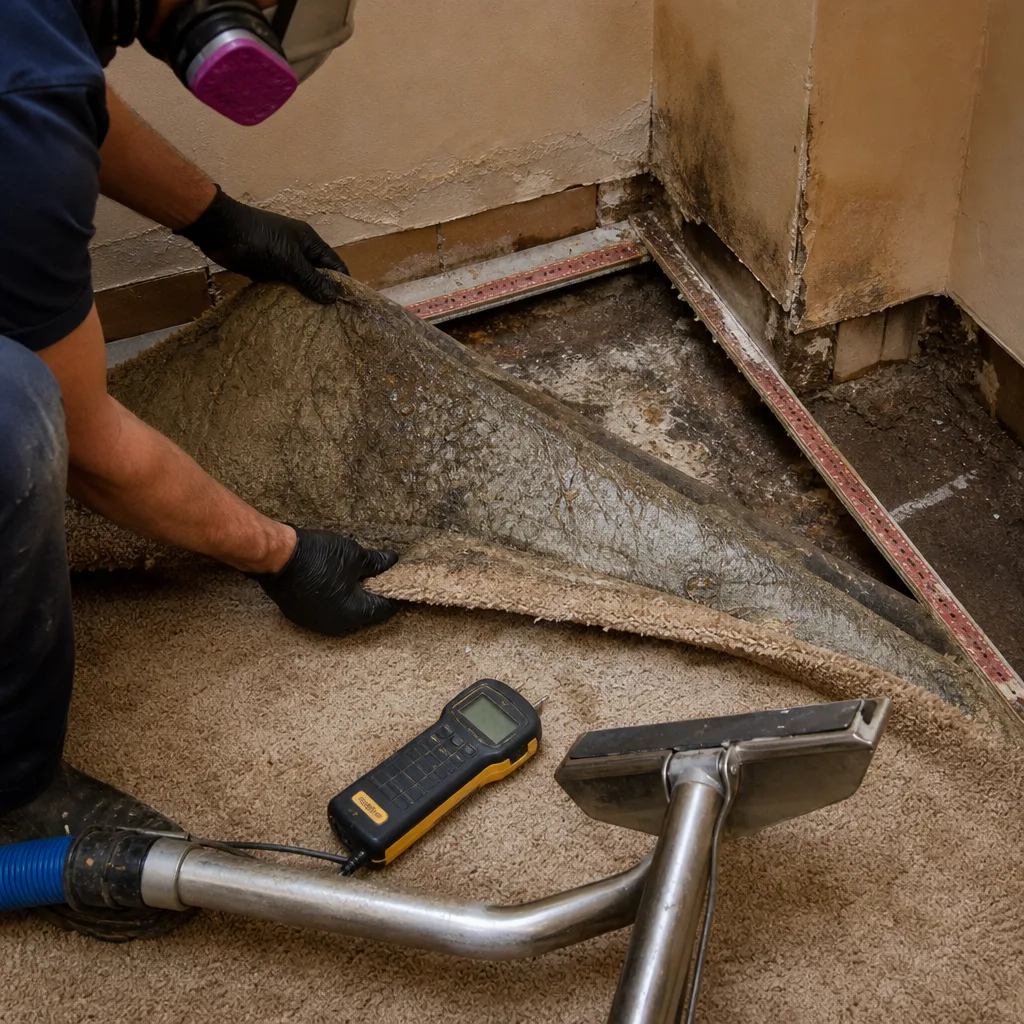
Many Bed-Stuy brownstones have shallow crawl spaces under rear extensions. Dirt floors, limited ventilation, and decades of organic debris create a mold reservoir that migrates upward through the floor assembly. We treat the crawl with antimicrobial, install vapor barrier, and dry the space properly before it can colonize the joists above.
What happens when you call
- 1
A real person answersNo phone trees - you reach a local pro.
- 2
You get an upfront price rangeHonest numbers before anyone is dispatched.
- 3
A background-checked tech heads outLicensed & insured, dispatched right away.
- 4
You approve before work beginsNothing starts until you say go.
Mold Remediation Costs in Bedford-Stuyvesant, NY
A small isolated mold job in one ceiling bay in Bedford-Stuyvesant runs $1,800 to $3,200. That covers containment, removal of the affected plaster, antimicrobial treatment, and drying. A full room remediation where moisture has spread through multiple joist bays runs $3,500 to $6,500. Cross-address jobs, where the mold originated on one side of a party wall and traveled to the other, typically run $6,000 to $12,000 depending on how many levels are involved and whether both carriers are paying for their share. Mold inspection and air testing as a standalone service runs $350 to $750, and that fee is credited toward remediation if we do the work.
Three things move the price in Bed-Stuy specifically. First, horsehair plaster and wood lath take longer to dry than drywall, so equipment runs longer and drying logs stay active for more days. Second, party-wall jobs always cost more because two addresses need containment and documentation. Third, older plumbing stacks in subdivided rowhouses often mean the source repair and the mold remediation happen in the same opening, which is more work but ultimately cheaper than doing them separately. Our Mold Remediation team provides a written scope with line-item pricing before any work starts, so you know the number before the first cut.
We Also Serve Cities Near Bedford-Stuyvesant
Our crews cover all of Bedford-Stuyvesant and the surrounding area, including Fairview, Harrison, East Bronx, and Hunts Point. If you’re in one of those neighborhoods and dealing with mold in a pre-war building, the same 45-minute response and free visual inspection applies. Call (917) 924-4221 and a live dispatcher will route a crew to you.
Serving Bedford-Stuyvesant, NY - Our Local Coverage Area
We’re based in the Bedford-Stuyvesant area and know this community well. Use the map below to see our service coverage - if you’re nearby, we can almost certainly help.
Bedford-Stuyvesant Mold Remediation Questions, Answered
Why does mold remediation in Bed-Stuy often require opening up to the party wall, even when the visible mold is only on one side?
Because in contiguous rowhouses, water runs through the shared structural wall the same way it runs through a floor. A leak on one side can saturate the brick party wall and migrate into the neighbor’s plaster before it ever shows on the side where you see it. We open to the party wall when moisture readings show more than surface-level saturation, because the mold boundary rarely matches the stain boundary in these buildings.
How does the age of Bed-Stuy’s horsehair plaster and wood lath affect the drying and remediation timeline compared to modern drywall?
Horsehair plaster holds more water per inch than drywall and releases it more slowly, which means drying equipment runs longer in a rowhouse than it would in a modern frame home. A typical drywall cavity dries in three to four days. Horsehair plaster on wood lath can take six to ten days to hit the dry standard, and pulling equipment too early is the most common cause of recurrence in Bed-Stuy mold jobs.
When Bed-Stuy mold is caused by a shared roof drain or party-wall pipe, who is responsible for the remediation between the two addresses?
Responsibility depends on where the source is and how the building’s ownership is structured. If the roof drain serves both addresses, both owners typically share responsibility. If the pipe is on one side of the wall, that owner’s insurance usually covers the source and the direct damage, but the adjacent property’s carrier may need to pay for the secondary mold remediation. We document both properties so both adjusters have a clear record, and we file the NYC DOB paperwork when shared infrastructure is involved. Call (917) 924-4221 if you’re the neighbor facing this.
What is the difference between Category 1, 2, and 3 water in a Bed-Stuy brownstone mold job, and why does it matter for what gets removed?
Category 1 is clean water from a supply line or radiator. Category 2 is grey water from a washing machine, dishwasher, or sump that contains some contamination. Category 3 is black water from sewage, a failed waste stack, or outside flooding. The category determines what gets removed: Category 3 water means any porous material it touched, including horsehair plaster and floorboards, comes out. Category 1 water may allow for drying in place. In subdivided Bed-Stuy rowhouses with improvised plumbing, what starts as a clean leak often hits a Category 2 or 3 pipe leak before it’s found, so the material removal scope changes.
Why do Bed-Stuy gut renovations often reveal concealed mold that was not visible before the renovation started?
Because decades of deferred maintenance between roughly the 1950s and 2000s left slow, concealed moisture working in wall cavities and floor assemblies. Many recent gut rehabs opened walls for the first time in fifty years and found mold that had been quietly growing behind horsehair plaster. When a rowhouse sat with a failing roof drain or a leaking waste stack for years, the moisture migrated into the joist bays and stayed there. A renovation doesn’t create the mold; it reveals what was already in the walls, often masked by old paint and wallpaper.
How fast can someone actually get to my Bed-Stuy address?
Within 45 minutes in most cases, because our crews are dispatched from the New York City office and are already working in the Bedford-Stuyvesant area. Call (917) 924-4221 and a live dispatcher routes the nearest available certified crew to your block. For mold, the first hour matters because it’s when we can contain the spread before it travels further through the wall assembly.
Will my insurance cover mold remediation?
It depends on the policy and the cause. If the mold resulted from a covered water event like a burst pipe or a roof drain failure, the water damage portion is typically covered. Some policies cap or exclude mold treatment itself. We document everything from the first hour and work directly with your adjuster to separate the covered work from any excluded portion, so you’re not stuck negotiating alone.
Can we stay in the house during remediation?
For isolated jobs where we set negative air containment and the living space is separated from the work area, yes. For larger jobs where the mold has traveled through multiple rooms or a party wall, we may recommend temporary relocation, especially if you have respiratory sensitivity. We’ll tell you honestly either way, and the free visual inspection gives you the information before you make the call.
If you’re looking at a stain that’s growing, a smell that won’t leave, or a renovation that just opened a wall to something you didn’t expect, call (917) 924-4221. A live person answers, and a certified crew can be at your Bedford-Stuyvesant address within 45 minutes. The free visual inspection and written scope mean you’ll know exactly what you’re facing before any work starts. Mold Remediation in Bedford-Stuyvesant is what we do, and we’ve been doing it long enough to know that the job isn’t done until the wall is closed, the air tests clean, and the paperwork is in your hand.
Written by Curt Bowman, Owner at Floodline Restoration Co. of Manhattan, serving Bedford-Stuyvesant and the surrounding area.