
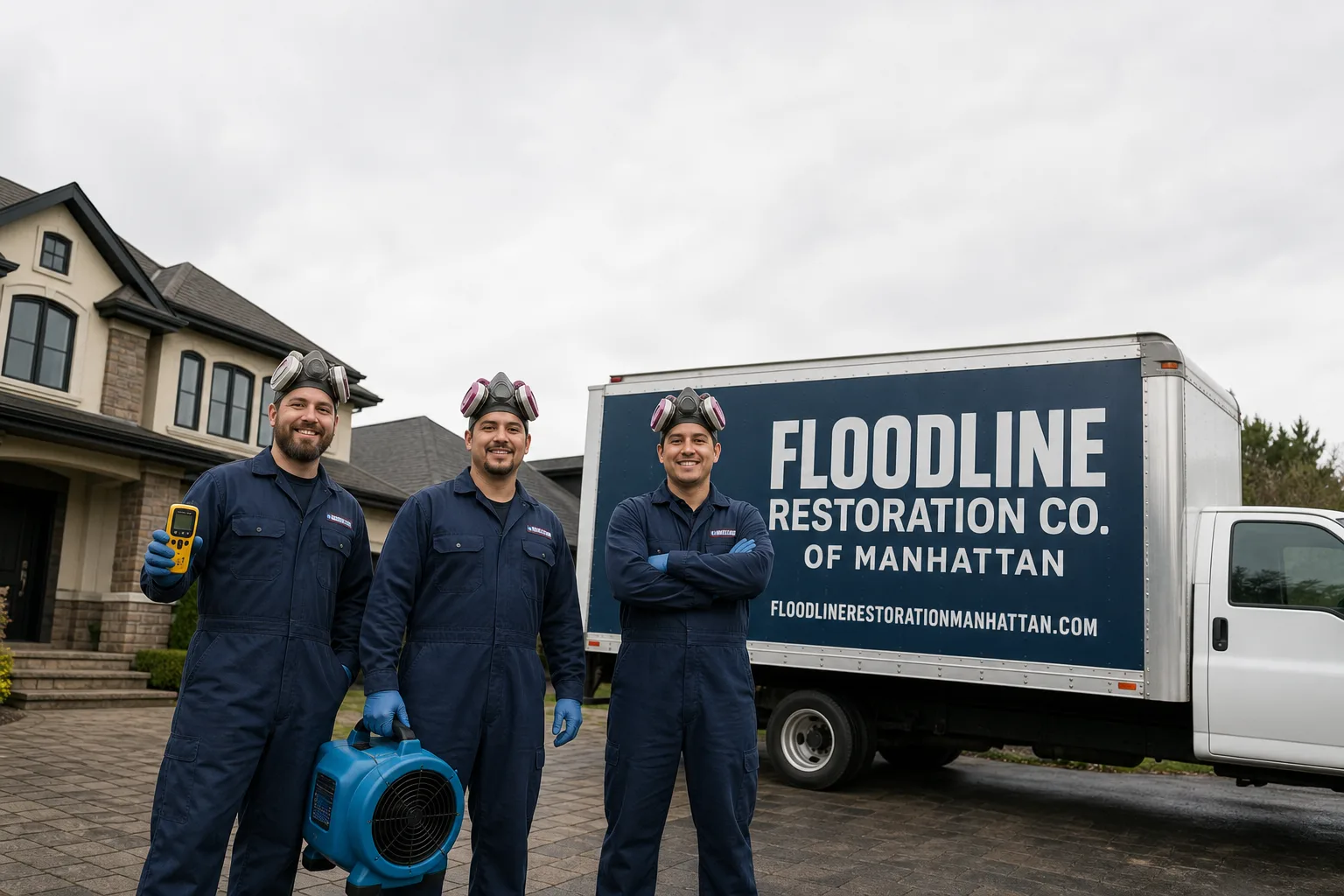
Free visual inspection and a written scope of work before any mitigation begins - photos, moisture readings, and drying logs go in your claim file
The scope we write is the scope we bill. Anything new gets shown to you, in writing, before we touch it.






 Before
 After
After Before
 After
After Before
 After
After24/7 Emergency Mold Remediation in Bellerose Terrace
Mold remediation in Bellerose Terrace typically costs between $1,800 and $6,500 depending on how far the colony has spread and whether structural drying is required. A crew can reach most homes near the Cross Island Parkway corridor within 45 minutes, and we answer the phone live at (917) 924-4221 around the clock. The first hour matters: mold that is disturbed without containment sends spores into the HVAC system, and a 10-square-foot patch in a basement can become a 100-square-foot problem through wall cavities within days. We do a free visual inspection the same day, set up containment that same visit, and write the scope in plain English before any equipment is plugged in.
Understanding Mold Remediation Severity in Bellerose Terrace Properties
Mold in Bellerose Terrace homes tends to run in the same pattern generation after generation: water enters through porous parged concrete block basement walls, wicks upward behind original plaster-on-lath, and feeds colonies that never dry fully because Nassau County’s clay-heavy till holds groundwater against the foundation. Most houses here were built between the late 1940s and early 1960s, before vapor barriers were standard, and many still have cast-iron drain stacks that rust through in hidden wall cavities and drip for years without anyone noticing. We classify severity by square footage and material type, not panic. A small discoloration under a basement window is usually superficial, but any colony larger than 10 square feet, any mold on porous surfaces like plaster or insulation, and any moisture source that suggests category 3 water loss (sewage, groundwater intrusion) requires full containment, negative air, HEPA air scrubbing, and clearance testing after treatment. The original plaster-on-lath construction common here holds moisture three times longer than modern drywall, which means drying targets must be read with a moisture meter, not a calendar.
Why Bellerose Terrace Property Owners Choose Floodline Restoration Co. of Manhattan
We have served communities across the New York metro for over 42 years, and Bellerose Terrace homeowners call us for one reason: the job is not finished until the permit is closed and the moisture log is on the kitchen table. Here is what that means in practice:
- 45-minute response commitment from the Cross Island Parkway corridor - a certified crew is dispatched the moment you call, not after a callback from a sales rep.
- Live answer at (917) 924-4221, 24 hours a day - a person picks up at 2 a.m., not a voicemail tree. The same person stays your point of contact through the whole job.
- IICRC, RIA, and IFA certified crews - background-checked, uniformed technicians trained to AMRT (Applied Microbial Remediation Technician) and WRT (Water Restoration Technician) standards, not subcontract labor.
- Free visual inspection with moisture mapping - we find the source before we touch the mold, because treating the visible colony without stopping the water is a waste of your money.
- Direct insurance billing - we bill your carrier, we talk to your adjuster, and we hand you and the insurer the same line-item scope so no one is guessing.
- One team from first extraction to finished reconstruction - no mid-job handoff to an unknown crew, no scope fight between the remediation company and the rebuild company.
Our Mold Remediation Process
Inspection & Assessment
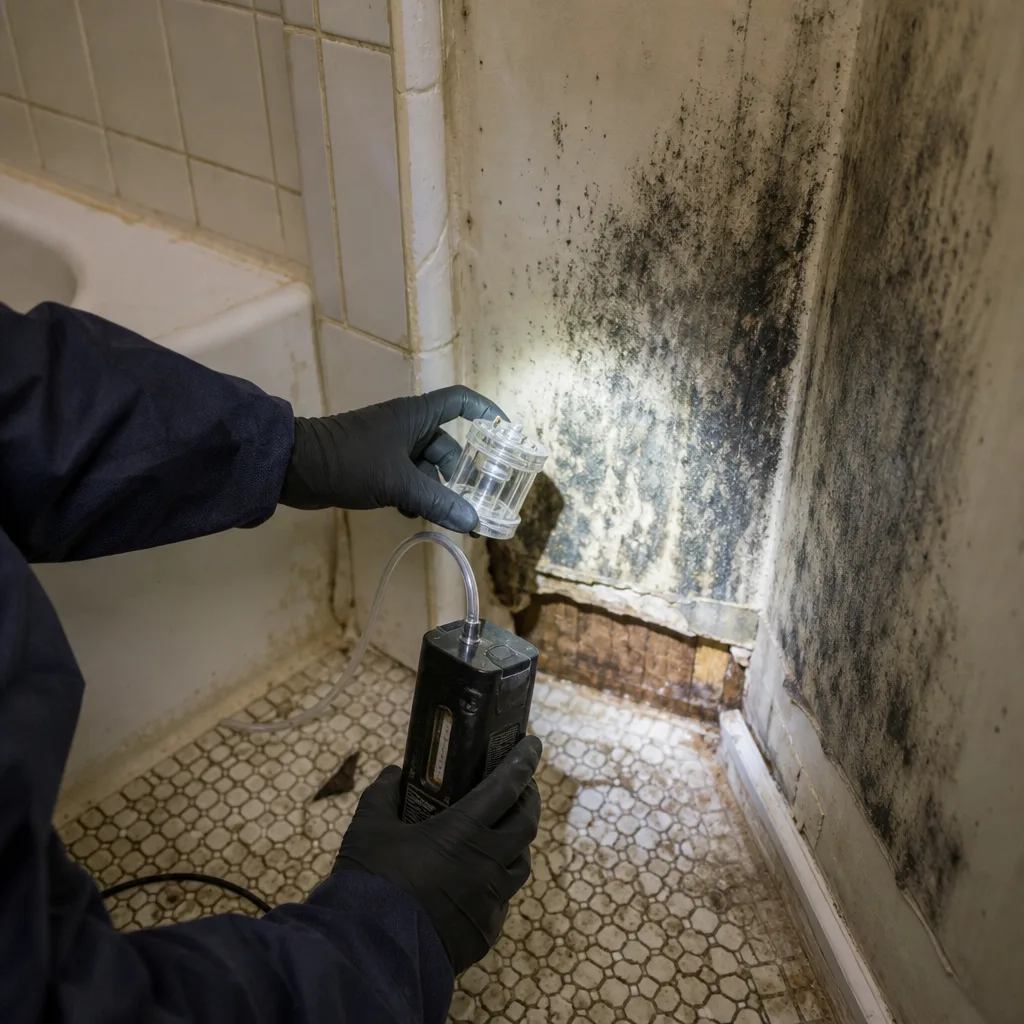
We inspect the full property, not just the visible stain. Thermal imaging and moisture meters map the water source, including the interior of plaster-on-lath walls that look bone-dry from the outside.
Containment & Source Control
Before removing anything, we seal the affected area with 6-mil polyethylene, establish negative air pressure with HEPA-filtered air scrubbers, and stop the water source, whether it is a leaking drain stack, a foundation crack, or groundwater wicking through block walls.
Drying & Dehumidification
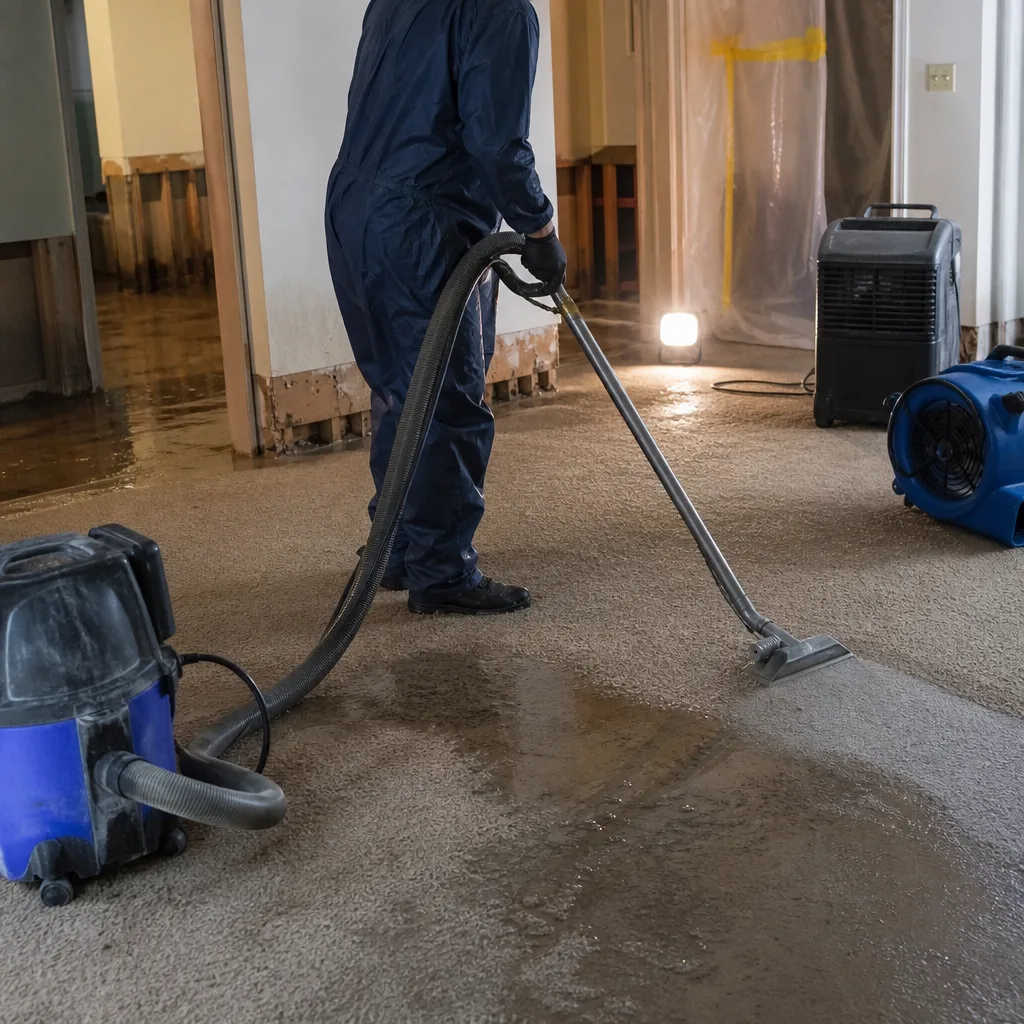
Dri-Eaz and Phoenix dehumidifiers paired with XPOWER air movers pull moisture down to the dry standard, typically below 15% moisture content on every mapped surface. Daily readings are logged and given to you and your carrier.
Cleaning & Antimicrobial Treatment
Colonized porous material is removed under containment and bagged. Remaining surfaces are HEPA-vacuumed, scrubbed, and treated with antimicrobial agents rated for the specific mold species identified during inspection.
Clearance Testing & Verification
Independent or third-party air sampling confirms spore counts have returned to baseline before we remove containment. You get the numbers in writing, not a verbal reassurance.
Repairs & Restoration
The same certified crew replaces what was removed: drywall, plaster repair, drain stacks, flooring, paint. If the permit required Town of Hempstead drawings or inspections, we close that out and hand you the paperwork.
Need Emergency Mold Remediation in Bellerose Terrace Now?
Crews minutes away, answering live 24 hours a day. The sooner we start, the less it costs.
Working With Your Insurance Company
Mold claims in Bellerose Terrace get scrutinized differently depending on whether the source is sudden (a burst pipe, storm-driven intrusion) or chronic (groundwater wicking, slow leaks). We photograph everything before containment goes up, because the adjuster cannot argue with a thermal image showing moisture inside a wall cavity. We write estimates in the format insurers expect, not in our own shorthand, and we talk directly to your adjuster so you are not relaying messages. The moisture log we hand you at the end is the same one your carrier receives. That transparency moves claims faster and reduces denials. If your policy has a mold cap or exclusion, we tell you that before the scope is signed, and we show you exactly what is covered and what would be out of pocket. No surprises on the bill, in other words.
What We Provide Your Insurer
- Thorough documentation of the loss
- Photos of all damage, room by room
- Moisture readings and drying logs
- A detailed, line-item scope of work
- Direct coordination with your carrier
Built for Bellerose Terrace’s Loss Calendar
Bellerose Terrace mold problems follow a seasonal rhythm, and the worst ones happen when two seasons collide. Late winter brings deep freezes that crack supply lines in unheated crawl spaces and exterior walls, and the leak is not discovered until the thaw releases a week of water into the framing. Spring is the groundwater season: the Hempstead Plain’s flat glacial outwash and clay-heavy till drain poorly even in dry years, and after a wet March the water table sits high enough to push through basement floors and parged block walls for weeks. Summer thunderstorms hit hard and fast, and the same topography that made this land cheap to build on in 1950 means ponding water around foundations after every heavy cell. Nor’easters in the fall and early winter raise the shallow Nassau County water table the same way Sandy did in 2012, and homes that had a “one-time” basement flood that year are usually on their third or fourth event by now. Every one of those events left mold behind if the drying was not done to standard. That is why we treat mold remediation as a moisture problem first and a cleaning problem second.
Mold Remediation Across Bellerose Terrace’s Neighborhoods
Bellerose Terrace is not large, but the response routes and building patterns change block to block. Homes nearest the Cross Island Parkway along the western edge tend to be 1950s brick-clad colonials where road-salt spray from the parkway accelerates rusting on cast-iron drain stacks, and we routinely find hidden mold in the walls near original plumbing stacks in those houses. The blocks north of the LIRR Hempstead Branch line run toward older Cape Cods with semi-finished basements, and those parged concrete walls wick groundwater every time the water table rises, making a mold colony that keeps coming back unless a vapor barrier and drainage solution are part of the scope. The area around Commonwealth Boulevard and the commercial strip has a mix of small apartment conversions above storefronts, and those need containment staged through rear entrances with negative air held longer because shared wall cavities can move spores into multiple units. South toward Jamaica Avenue the lots sit a little lower, and after any rain heavier than two inches we see ponding water pushing against foundation walls on the low side of nearly every block. That groundwater-driven mold is the most common type in Bellerose Terrace, and it is exactly the kind that comes back if the drying target and the source correction are not both done right.
Specialized Mold Remediation Services We Offer in Bellerose Terrace
Mold Inspection & Testing
A mold inspection in Bellerose Terrace should start with the foundation, not the stain on the drywall. We use moisture meters and thermal imaging to trace the water source, then collect air and surface samples where the history of the house says to look: behind baseboards on the low side of the lot, around original plumbing stacks, and inside the plaster-on-lath walls common to 1950s construction here. Testing tells you the species and spore load, which matters when the clearance standard from your insurer depends on baseline numbers.
Mold Removal
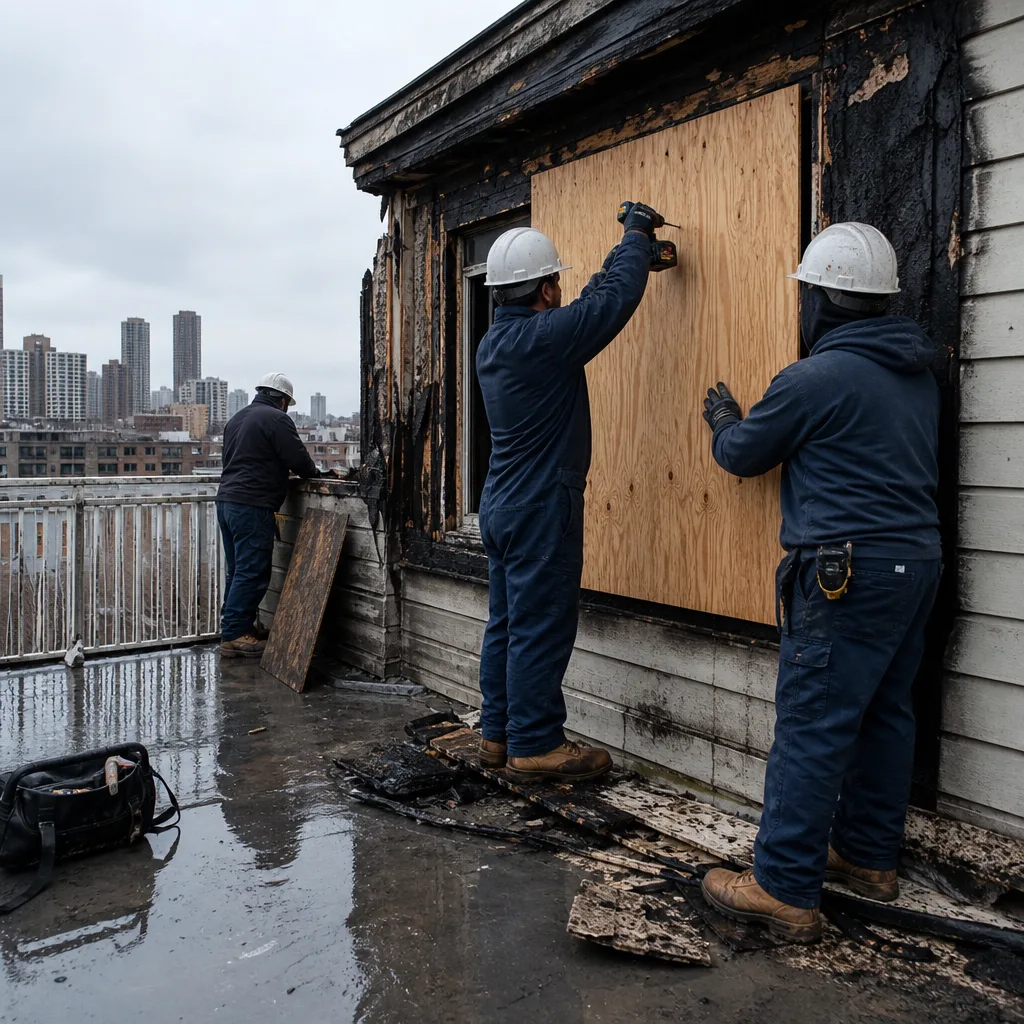
Removing mold without fixing the moisture source is repainting a rusted fender. In Bellerose Terrace that source is usually groundwater wicking through the basement walls or a decades-old drain stack leaking inside a wall cavity. We remove colonized material under containment, dry the structure to the target moisture content, and then correct the source so the colony does not return after the first nor’easter.
Black Mold Remediation
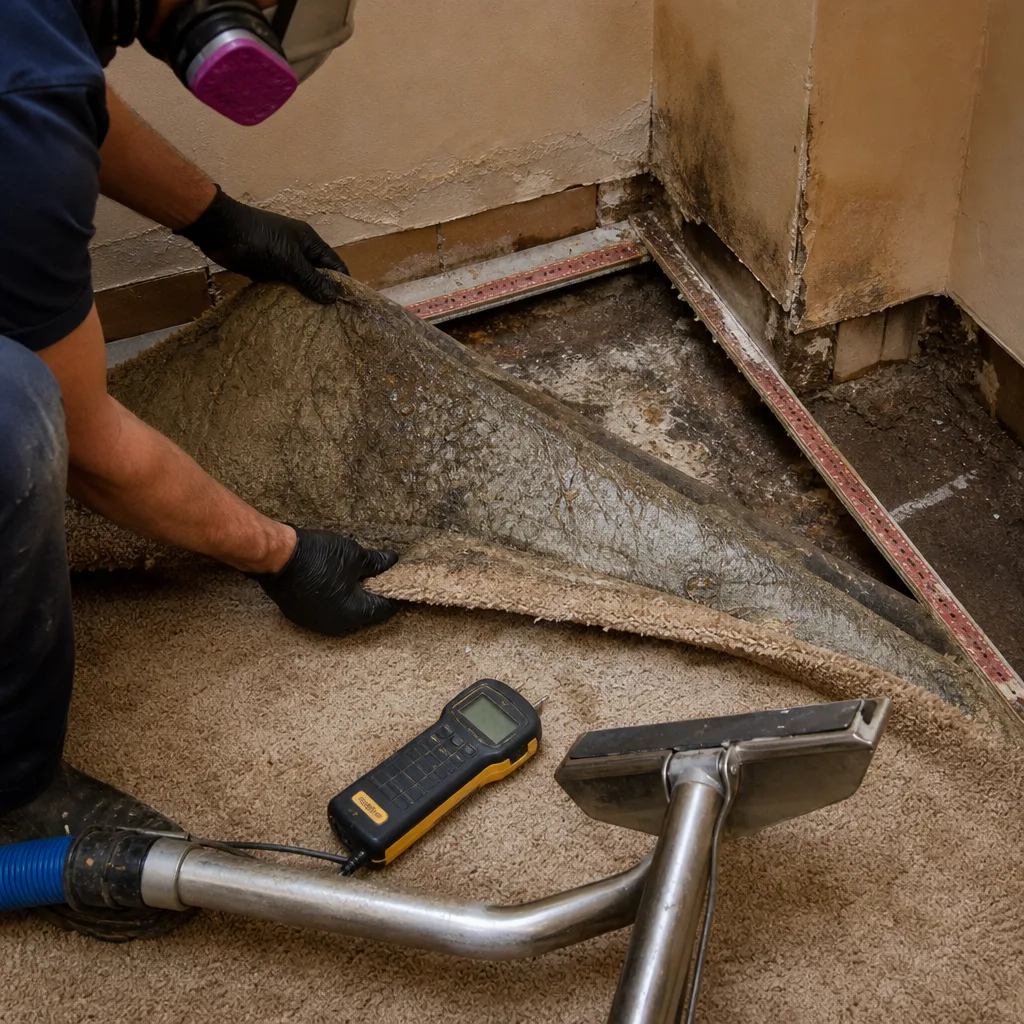
Stachybotrys chartarum gets the most attention, and Bellerose Terrace has the conditions it thrives in: chronic moisture, organic material like paper-backed drywall or plaster lath, and low airflow in sealed basements. Black mold remediation here requires stricter containment and longer drying cycles than surface mold, and clearance testing after the job is not optional. Our crews treat black mold with full negative air and HEPA air scrubbing from day one.
Air Quality Restoration
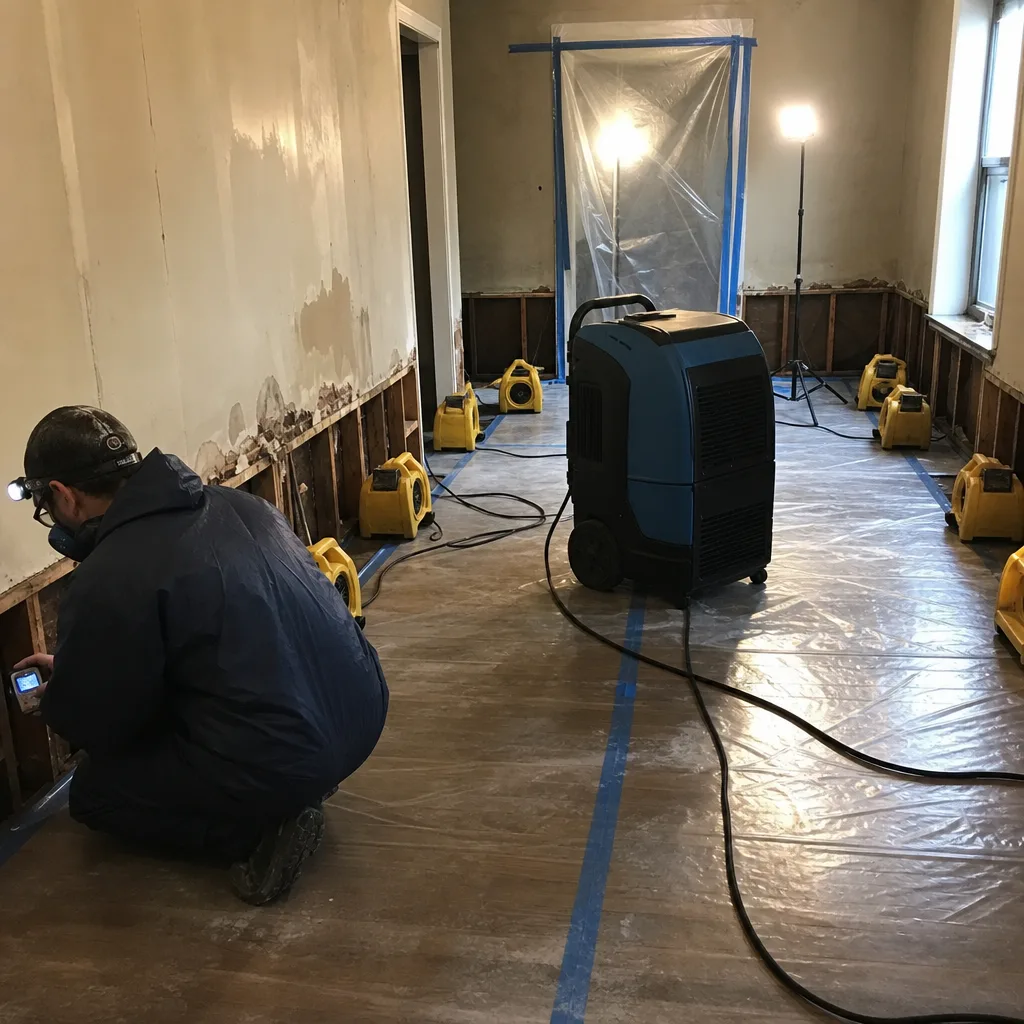
The air inside a Bellerose Terrace basement is usually the worst air in the house, and unless the HVAC system is cleaned and the spore load is brought back to baseline, the musty smell returns. We run HEPA air scrubbers throughout the job, replace contaminated ductwork where needed, and provide before-and-after air sampling numbers so you can see the improvement in writing.
Crawl Space Treatment
Many of the Cape Cods in Bellerose Terrace sit over shallow crawl spaces that were never sealed or insulated. Humid outside air meets cold foundation walls and condenses, which feeds mold on the floor joists above. We remove colonized insulation, treat the framing, install a vapor barrier where the space allows, and route any groundwater to a drain so the crawl space becomes a dry, stable part of the house instead of a mold incubator.
What happens when you call
- 1
A real person answersNo phone trees - you reach a local pro.
- 2
You get an upfront price rangeHonest numbers before anyone is dispatched.
- 3
A background-checked tech heads outLicensed & insured, dispatched right away.
- 4
You approve before work beginsNothing starts until you say go.
Mold Remediation Costs in Bellerose Terrace, NY
What you pay depends on the square footage, the material, and whether structural repairs have to be resequenced around Town of Hempstead permits. Here is what we actually see in Bellerose Terrace:
| Scope | Typical Bellerose Terrace Range |
|---|---|
| Mold inspection with moisture mapping | $250-$450 |
| Small isolated colony (under 10 sq ft), no structural damage | $1,800-$3,200 |
| Full basement remediation with plumbing stack replacement | $4,800-$8,500 |
| Crawl space encapsulation and mold treatment | $6,500-$14,000 |
| Whole-house remediation with reconstruction | $12,000-$30,000+ |
The biggest cost driver in Bellerose Terrace is hidden moisture behind original plaster walls, which extends drying time and can double containment days. The free visual inspection gives you a firm line-item scope before any work is approved, so the number you sign is the number you pay. Insurance coverage depends on the source of the moisture; a sudden pipe burst is often covered, while chronic groundwater wicking may not be. We will tell you which category you are in before you commit to anything. Call (917) 924-4221 and we will have a technician and a moisture meter at your door the same day.
We Also Serve Cities Near Bellerose Terrace
Our crews cover the surrounding Nassau County and Bronx corridor from the same dispatch desk: Bellerose Terrace is the center of our service area, and we respond daily to Fairview, Harrison, East Bronx, and Hunts Point. Same live answer, same 45-minute response commitment, same written scope before work begins.
Serving Bellerose Terrace, NY - Our Local Coverage Area
We’re based in the Bellerose Terrace area and know this community well. Use the map below to see our service coverage - if you’re nearby, we can almost certainly help.
Bellerose Terrace Mold Remediation Questions, Answered
How do Town of Hempstead permit rules change a mold remediation scope in Bellerose Terrace compared to nearby Queens?
Any mold remediation in Bellerose Terrace that involves structural repair, the removal of load-bearing framing, or finished-surface demolition at a level requiring inspection must pull permits from the Town of Hempstead Building Department in Hempstead village, which enforces Nassau County energy and mechanical codes. A crew working on the Queens side of the county line three blocks away follows NYC DOB rules. On the Bellerose Terrace side, the wrong assumption means a stop-work order, scope rewrite, and wasted days with containment running. We sequence the permit step into the initial inspection so the remediation and the inspection schedule work together, not against each other. Call (917) 924-4221 and we will tell you whether your specific scope triggers a permit before we quote the job.
Why does mold keep returning in my Bellerose Terrace basement after I’ve cleaned it?
Because the water is still coming in. Nearly every basement in Bellerose Terrace that has recurring mold sits low on its lot with parged concrete block walls and poor surface drainage. Cleaning the visible mold removes the symptom; the groundwater wicking through the blocks, the clogged perimeter drain, or the leaking cast-iron stack inside the wall is the disease. Until a vapor barrier is installed on the wall or a drainage path is redirected, the moisture condition returns and so does the mold. We find the source with moisture mapping and thermal imaging before we touch a colony.
What’s different about drying a 1950s plaster-on-lath wall in Bellerose Terrace versus modern drywall?
Plaster and lath hold moisture far longer than gypsum board, and the lath acts like a sponge that releases water slowly over days. A modern drywall wall can hit the dry standard in 36 to 48 hours under good airflow. A plaster-on-lath wall from 1952 may take four to six days of continuous dehumidification before the moisture content drops below 15% across the entire surface. Cutting the drying short is how a “cleaned” Bellerose Terrace wall blooms again three weeks later. We read the wall with a moisture meter on day one, day three, and day five, and we log the numbers.
Can I stay in my Bellerose Terrace home during mold remediation?
For most jobs, yes. Containment with negative air keeps the affected area isolated, and HEPA air scrubbers run continuously to keep spore counts near baseline outside the work zone. If the colony is extensive, if you have a respiratory condition, or if the mold is inside the HVAC system, we may recommend temporary relocation during the most active removal days. We will tell you exactly what we would do in your situation, and we will not spend your money on a hotel unless the air quality numbers say you should not be there.
How long does a typical mold remediation take in Bellerose Terrace?
A contained removal of a moderate basement colony with drying runs three to six days from setup to clearance. In Bellerose Terrace, plaster-on-lath walls and slow groundwater drainage stretch most jobs toward the longer end of that range. If a drain stack must be replaced or a vapor barrier installed, add one to three days depending on whether Town of Hempstead inspection is required. A whole-house scope can run two to three weeks including reconstruction. The free visual inspection gives you a day-by-day timeline in writing.
How fast can someone actually get here?
45 minutes to most Bellerose Terrace streets from the Cross Island Parkway corridor, day or night. A live person answers at (917) 924-4221 and dispatches a crew on that call, not after a return phone call. If you have visible mold spread or standing water, we treat it as an emergency and start containment on the first visit.
Will my insurance cover mold remediation in Bellerose Terrace?
It depends on the source. Sudden and accidental water loss, like a burst supply line or storm-driven intrusion, is typically covered up to the mold limit on your policy. Chronic seepage through foundation walls, which is common in Bellerose Terrace because of the clay-heavy till and high water table, may be excluded or subject to a much lower cap. We photos documented everything from the first hour, write the estimate in standard insurance format, and coordinate directly with your adjuster so the claim moves without you acting as messenger.
Do I really need full mold remediation or just a cleaning?
If the colony is under 10 square feet and on a non-porous surface, a cleaning with proper HEPA vacuuming and antimicrobial treatment may be enough. If the mold is on drywall, plaster, insulation, or inside wall cavities, full containment and removal are required because the colony has already grown into the material. The free inspection tells you which category you are in, with photos and moisture numbers, before any money is spent.
We have been doing Mold Remediation in this region long enough to know that Bellerose Terrace is not a generic suburb. The town line is not a formality; it changes what we can do, when we can do it, and how the inspector wants it documented. The groundwater is not a rumor; it is in your basement walls. And the 1950s construction is not a style choice; it is a drying problem that national franchises usually get wrong. We get it right because we live in the same climate, work under the same Town of Hempstead codes, and stand behind the job with the 90-Day Done Right Promise in writing. If mold is in your Bellerose Terrace home, call (917) 924-4221 now. A live person answers, and a crew is on the road in minutes. Done right, and backed in writing.
Written by Curt Bowman, Owner at Floodline Restoration Co. of Manhattan, serving Bellerose Terrace and the surrounding Nassau County corridor for over 42 years.