
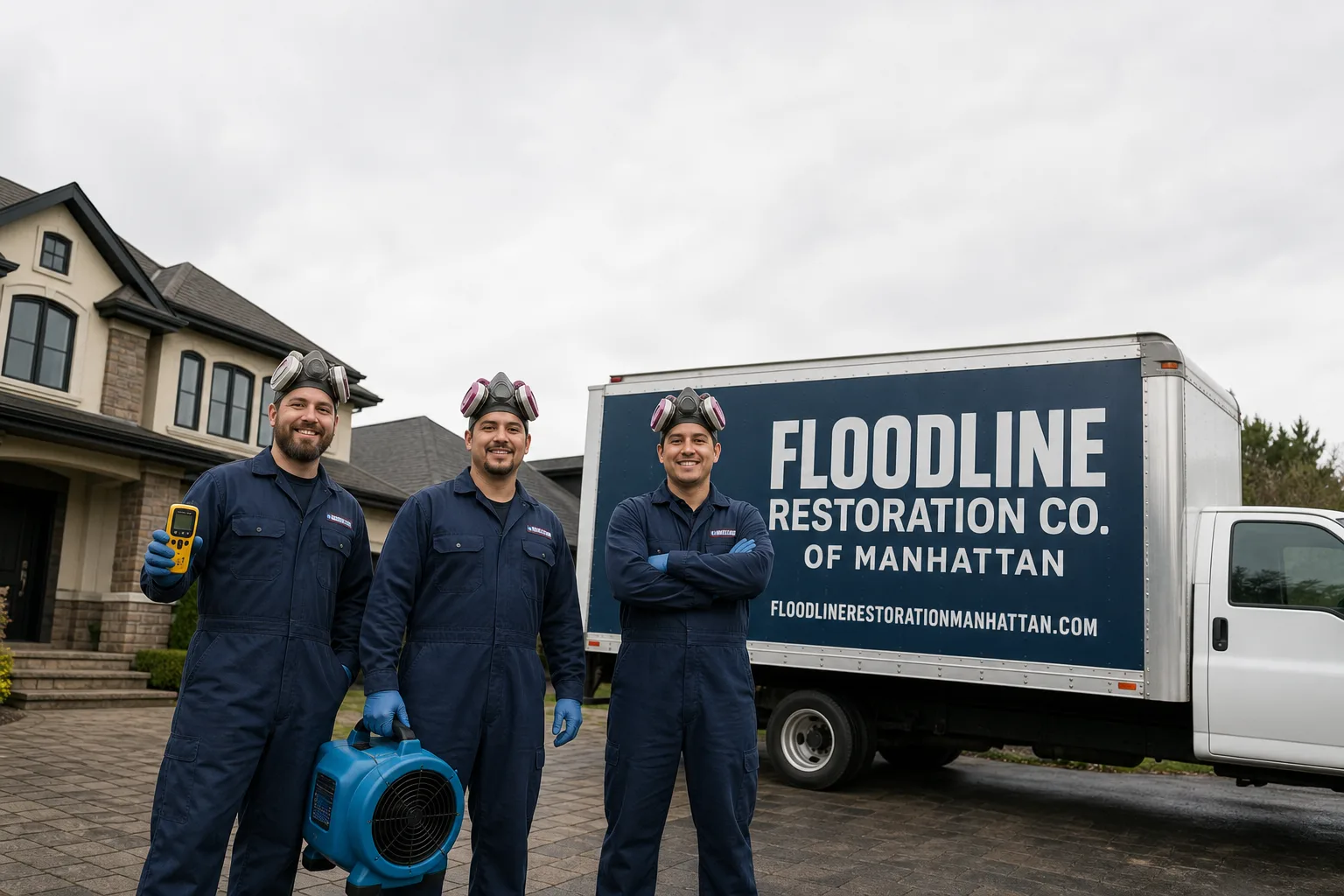
Free visual inspection and a written scope of work before any mitigation begins - photos, moisture readings, and drying logs go in your claim file
The scope we write is the scope we bill. Anything new gets shown to you, in writing, before we touch it.






 Before
 After
After Before
 After
After Before
 After
After24/7 Emergency Mold Remediation in Closter
Mold remediation in Closter starts with a direct answer: if you see dark spotting on drywall, smell mustiness, or have standing water in a finished basement, call (917) 924-4221 right now. Our crews reach Closter properties within 45 minutes of your call, day or night, because a live dispatcher answers every line. The first hour matters more than most homeowners realize, especially in this borough. Groundwater intrusion behind finished walls turns a damp patch into a full-blown colony in 48 to 72 hours, and clay-heavy Closter soil keeps wicking moisture upward long after the puddle disappears. We do free visual inspections, we tell you exactly what we found, and we do not pad the scope. That’s how we hold onto a borough for decades.
Understanding Mold Remediation Severity in Closter Properties
Mold in Closter is not a surface problem. The borough’s 1950s and 1960s housing stock, center-hall colonials, cape cods, split-levels with finished basements, was built with drywall pressed directly against block foundation walls. That was standard practice then. It is a liability now. When groundwater moves through clay-saturated soil and reaches the foundation, the drywall soaks it up like a sponge, and mold colonizes the hidden cavity behind the wall. By the time you notice staining on the finished side, the colony is often weeks old. Severity breaks into three practical tiers we assess on every Closter job: Level 1 is surface growth under 10 square feet, typically from condensation or a minor leak, where containment and localized removal suffice. Level 2 is 10 to 100 square feet, usually from a failed sump, silted French drain, or a supply-line leak that sat too long, where we establish full containment, run HEPA air scrubbers, and remove affected drywall and insulation. Level 3 is anything over 100 square feet or any growth inside HVAC ducts, which in Closter often traces back to a Tenakill Brook flood event or a multi-day groundwater intrusion. Each tier changes the containment protocol, the equipment count, and the clearance testing we run before we hand the home back. What does not change is the written scope you sign before we start, so you know what you’re paying for and why.
Why Closter Property Owners Choose Floodline Restoration Co. of Manhattan
- 45-minute response commitment for Closter calls, with a live dispatcher who knows the borough and routes crews from the nearest available unit.
- 24/7 live answer. A real person picks up at 2 a.m. No recording, no answering service that calls you back.
- IICRC-certified crews trained to WRT and AMRT codes, background-checked and in uniform on every job.
- Free visual inspection with photo documentation and a written scope before any work begins.
- Direct insurance billing to your carrier, including adjuster coordination and a line-item estimate they can actually process.
- One team from first extraction to finished rebuild. We have been doing full-cycle restoration since Curt Bowman founded the company in 2010, and no Closter homeowner gets handed off to a stranger.
Our Mold Remediation Process
Inspection & Assessment
We walk the Closter property with thermal imaging and moisture meters, mapping the intrusion source and the full extent of hidden growth. You get a written findings report and a fixed scope before any work starts.
Extraction & Stabilization
If standing water is present, we extract category 1, 2, or 3 water by classification and remove any saturated materials that cannot be dried. For mold, stabilization means sealing the affected zone with containment barriers before air movement begins.
Drying & Dehumidification
We set Dri-Eaz dehumidifiers and XPOWER air movers based on the moisture map, not on guesswork, and we run daily readings until every surface falls under 12% moisture content. You get the drying log, and so does your carrier.
Cleaning & Sanitization
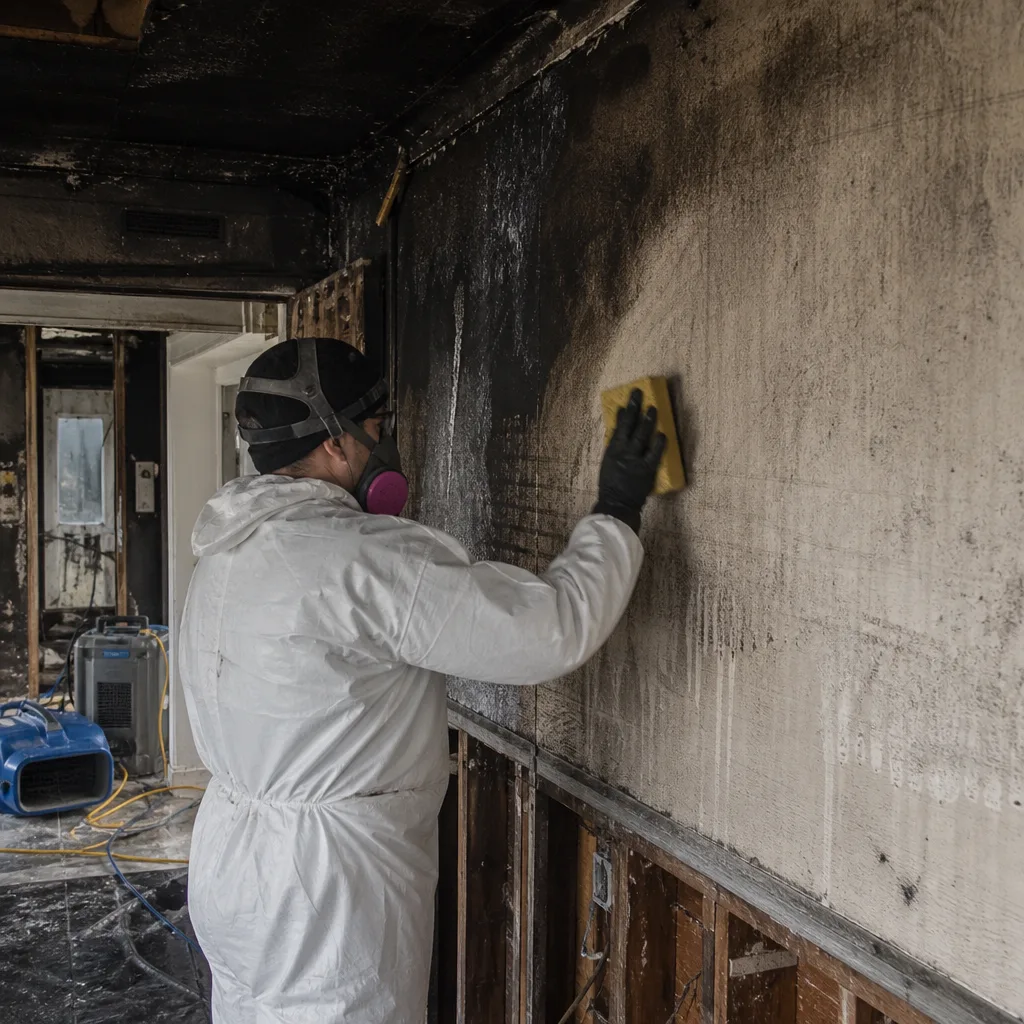
HEPA air scrubbers run throughout active remediation to capture airborne spores. Affected drywall and insulation are bagged and removed under negative pressure, then surfaces are cleaned and treated with professional-grade antimicrobial where appropriate.
Crawl Space & Humidity Treatment
In Closter’s clay-soil conditions, we address the root driver: crawl spaces and basement perimeters get vapor barrier installation, rim joist sealing, and humidity control recommendations specific to your home’s drainage profile.
Repairs & Restoration
We rebuild what was removed, from drywall and insulation to flooring and trim, with the same crew that ran the remediation. The job is not done until the 90-Day Done Right Promise is in your hands, in writing.
Need Emergency Mold Remediation in Closter Now?
Crews minutes away, answering live 24 hours a day. The sooner we start, the less it costs.
Working With Your Insurance Company
Mold claims in Closter succeed or fail on documentation. Carriers need proof that the water event was sudden and accidental, not long-term neglect, and that the remediation scope matches the damage. We build that file from the first hour. Photo documentation, room by room, before we touch anything. Moisture readings from the day of the loss and every day after until the dry standard is met. A line-item scope of work that your adjuster can process without kicking it back for questions. We do not promise coverage that does not exist, and we do not leave you to argue with a carrier on your own. Our team handles adjuster communication directly, and we have done so for Closter homeowners around Tenakill Brook, along Durie Avenue, and across every neighborhood in this borough.
What We Provide Your Insurer
- Thorough documentation of the loss
- Photos of all damage, room by room
- Moisture readings and drying logs
- A detailed, line-item scope of work
- Direct coordination with your carrier
Built for Closter’s Loss Calendar
Closter’s mold season does not follow a single season. Bergen County receives 48 to 50 inches of precipitation a year, spread across every month, and the borough’s clay-heavy glacial soils hold that water against foundation walls for weeks. January and February bring freeze-thaw cycles that crack foundation walls and burst supply lines in uninsulated crawl spaces. When a cast-iron pipe lets go in a 1960s split-level, the water pools, sits, and the humid crawl space becomes a mold incubator within days if no dehumidification or air movement is deployed. March and April bring spring thaw, when saturated ground pushes water through any crack in the block foundation. Summer thunderstorms can drop several inches of rain in hours, overwhelming original sump systems and silted French drains. And nor’easter season from October through February delivers the multi-day groundwater events that put Tenakill Brook over its banks and water into dozens of finished basements. We see all of it. The common thread in Closter is not the storm, it is the age of the drainage systems and the finished lower levels that hide mold until it has spread.
Mold Remediation Across Closter’s Neighborhoods
Closter is a borough of roughly 8,500 people, and the housing stock changes depending on which side of Tenakill Brook you call home. The neighborhoods along Durie Avenue and Harrington Avenue hold many of the 1950s and 1960s split-levels and capes with original French drains, the homes we most often find with hidden mold behind finished basement drywall. Off Closter Dock Road, the homes tend to sit closer to the brook corridor, and the FEMA flood zone mapping changes what insurance covers and what remediation requires. Near Memorial Field and the center of town, the original post-war construction is tight to the street, with clay soil pressing against foundation walls from all sides. The properties east of Knickerbocker Road, toward the Demarest border, mix newer construction with older homes, and the crawl spaces there face the same high water table, but with different drainage profiles. We route our responses by neighborhood because we have learned where the failures happen. A home in the Durie Avenue corridor with a finished basement needs a different initial assessment than a newer home on a slab off Harrington Avenue, and we plan for that before the truck rolls.
Specialized Mold Remediation Services We Offer in Closter
Mold Inspection & Testing
Not every musty smell in Closter is mold, and not every mold problem requires full remediation. We run moisture mapping and visual inspection first, then collect air and surface samples when the scope requires it. Our inspection reports are written for homeowners and adjusters alike, with clear language and specific numbers.
Mold Removal
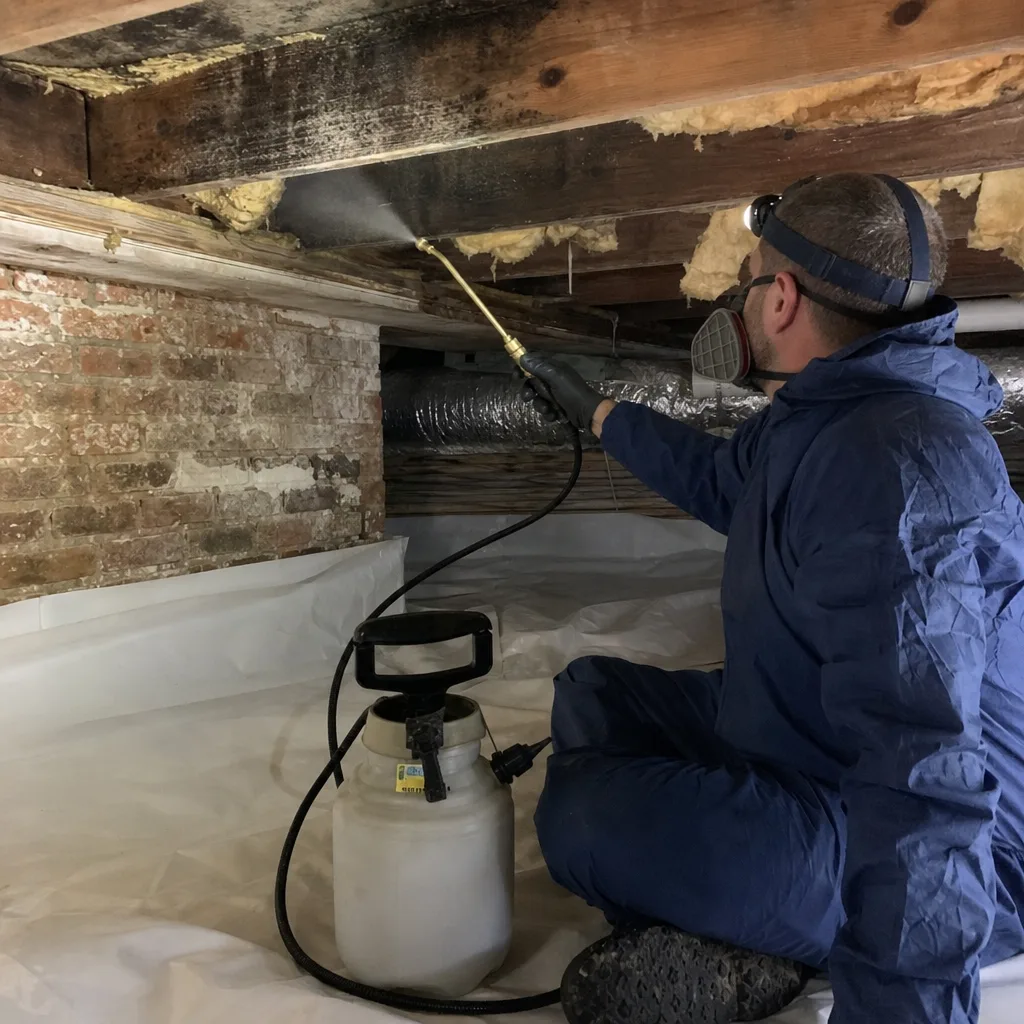
Removal in Closter usually means cutting out drywall and insulation that have wicked groundwater through clay-saturated soil. We contain the affected zone, run HEPA air scrubbers, remove the material under negative pressure, and treat the framing. This is a job for trained professionals, never a DIY bleach approach, because mold on drywall penetrates the gypsum core and surface cleaning does not stop the colony.
Black Mold Remediation
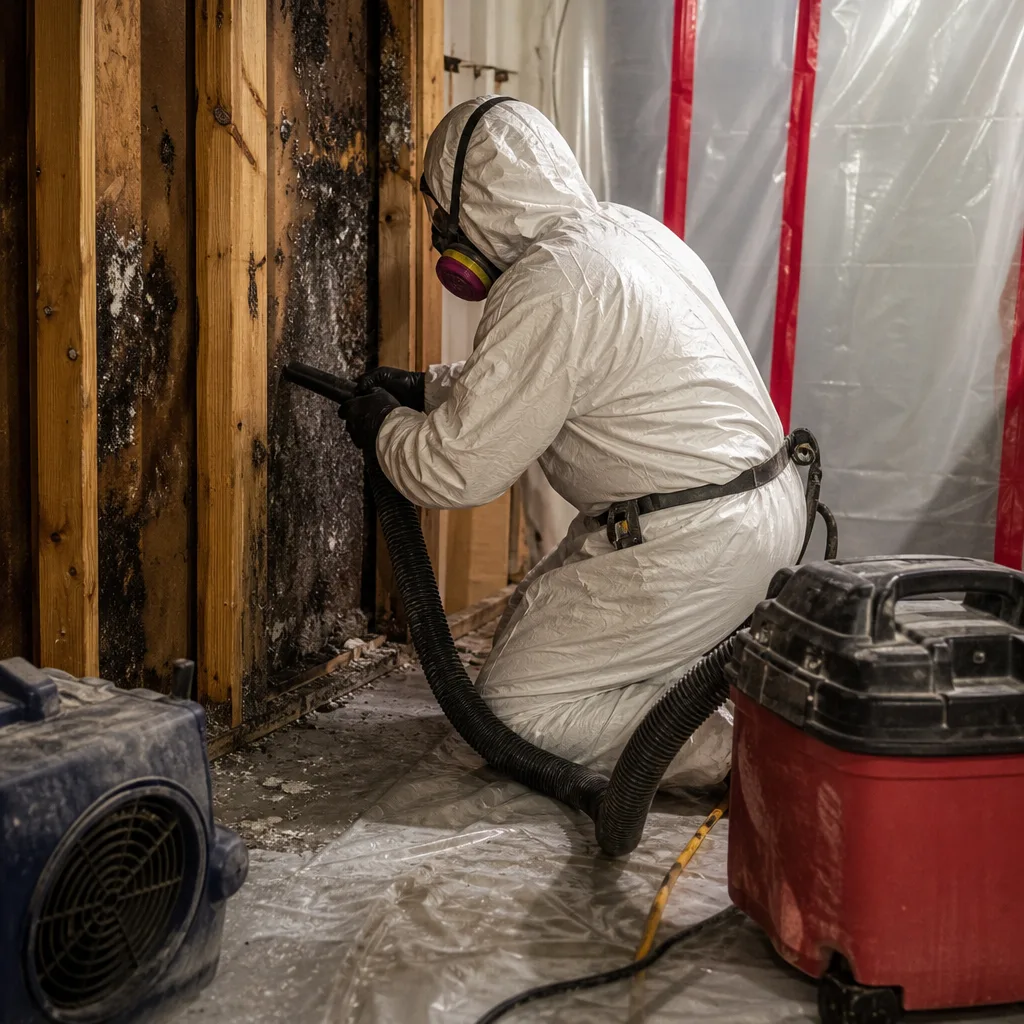
When Stachybotrys is present in a Closter home, typically from chronic moisture rather than a one-time event, the containment and clearance standards tighten. We follow IICRC S520 guidelines for this work, run daily spore counts, and do not clear the space until post-remediation verification passes. Our Mold Remediation team handles these jobs from first assessment to final clearance with the same crew throughout.
Air Quality Restoration
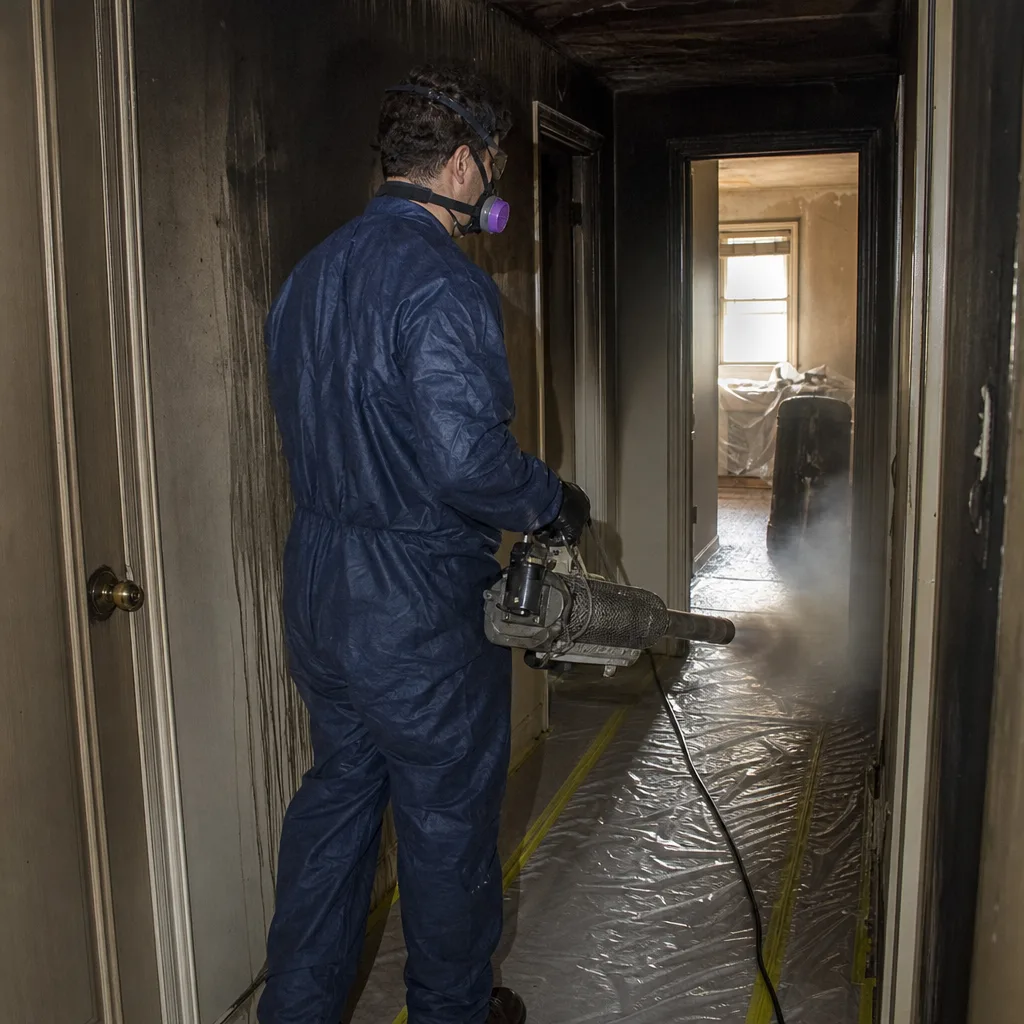
Mold spores spread before you see them. After containment and removal, we run air scrubbers with HEPA filtration to pull airborne spores down to acceptable clearance levels, then retest. For Closter homes with HVAC ducts, we inspect and clean the supply and return runs if spores migrated into the system.
Crawl Space Treatment
Bergen County’s clay soil holds water against crawl space walls year-round. We install vapor barriers, seal rim joists, address grading where possible, and set dehumidification where the humidity load demands it. A treated crawl space is the difference between a one-time mold job and a recurring one. The same applies to basement perimeters and any space below grade.
What happens when you call
- 1
A real person answersNo phone trees - you reach a local pro.
- 2
You get an upfront price rangeHonest numbers before anyone is dispatched.
- 3
A background-checked tech heads outLicensed & insured, dispatched right away.
- 4
You approve before work beginsNothing starts until you say go.
Mold Remediation Costs in Closter, NJ
Honest numbers for Closter, based on our own job history in this borough. A basic inspection with moisture mapping runs $250 to $450. Minor surface mold under 10 square feet, with containment, cleaning, and antimicrobial treatment, typically runs $900 to $1,800. Full mold remediation in a finished Closter basement, removing the bottom two feet of drywall and insulation, setting containment and HEPA scrubbers, and running structural drying, runs $3,500 to $8,000 depending on square footage. Black mold remediation with clearance testing and HVAC cleaning runs $6,000 to $15,000 and up. Crawl space treatment with vapor barrier installation runs $1,800 to $4,500. The variables are the size of the affected space, the category of water involved, the condition of the original drainage, and whether Bergen County permit requirements add inspection and timeline costs, which they do on structural drying and rebuild work. The free visual inspection is how you get a firm number. Call (917) 924-4221 and we will walk the space with you before any work is priced or scheduled.
We Also Serve Cities Near Closter
Our crews handle mold remediation in Closter and every surrounding town: Demarest, Norwood, Haworth, Harrington Park, and the rest of the Northern Valley. Same 45-minute response commitment, same live dispatch, same written guarantees, wherever you call from.
Closter Mold Remediation Questions, Answered
How does the Tenakill Brook flood zone affect mold remediation scope in Closter?
Homes in FEMA flood zones along Tenakill Brook face mold from contaminated groundwater, not just category 1 water, so remediation requires full containment, air scrubbing, and clearance testing rather than surface cleanup. If your property is in a mapped flood zone, we coordinate with your carrier from the first hour, because the water category changes what insurance covers. Call (917) 924-4221 after any brook-corridor water event, even if the damage looks minor.
Why is mold remediation in a Closter split-level so different from a newer home?
Closter’s 1950s and 1960s split-levels were built with drywall directly against block foundation walls and original French drains that have long since silted up. Groundwater wicks through the clay soil into the drywall cavity, mold grows behind the finished wall unseen, and by the time you spot it, the colony is established. Newer homes have capillary breaks and modern drainage, so the hidden-cavity risk is far lower.
Do I need a permit for mold remediation in Closter?
Bergen County enforces strict permit requirements on structural drying, remediation, and reconstruction work, so many jobs that would be permit-exempt across the border in Rockland County require full inspections in Closter. We pull the permits, schedule the inspections, and build the timeline so you are not waiting on paperwork while mold sits behind your walls.
What category of water from Closter’s sump failures causes the worst mold problems?
Category 2 water, from sump failures and groundwater intrusion, carries significant contamination and feeds mold far faster than clean category 1 water. When an original cast-iron sump in a 1960s Closter home fails, the water sits in the finished basement, drywall wicks it upward, and mold colonizes within 48 to 72 hours if no dehumidification is deployed immediately.
How do you handle mold behind finished basement walls in older Closter colonials?
We contain the affected zone, remove the bottom two feet of drywall and insulation to expose the foundation wall, dry the framing to under 12% moisture content with daily readings, and treat the exposed surfaces with professional-grade antimicrobial. Then we address the drainage or foundation issue that caused the intrusion, because cutting out mold without fixing the water source just buys you a repeat job in a few months. Estimates are free; call (917) 924-4221.
How fast can you actually get to a Closter property?
Our commitment is 45 minutes from your call. A live dispatcher answers at (917) 924-4221, routes the nearest available crew, and the truck is rolling, not scheduled for tomorrow. For mold from standing water, those first hours change the entire scope.
Can we stay in our home during mold remediation?
For most Level 1 and Level 2 jobs, yes, as long as the containment barrier is in place and HEPA air scrubbers are running. Level 3, black mold, or HVAC contamination often means staying elsewhere until clearance testing passes. We tell you honestly at inspection, before work starts.
What should a Closter homeowner do in the first 30 minutes after finding mold?
Shut off the water source if you can, do not disturb the growth or run fans over it, and call (917) 924-4221. Spores spread the moment you disturb them, and a box fan in a moldy room is the fastest way to contaminate the rest of the house.
Serving Closter, NJ - Our Local Coverage Area
We’re based in the Closter area and know this community well. Use the map below to see our service coverage - if you’re nearby, we can almost certainly help.
Contact Floodline Restoration Co. of Manhattan
If you are seeing mold or smelling must in your Closter home, call (917) 924-4221 for a free visual inspection. A live person answers, any hour, any day. We will walk the space with you, show you what we find, and put it in writing before any work starts.
Written by Curt Bowman, Owner at Floodline Restoration Co. of Manhattan, serving Closter with full-cycle mold remediation, water damage restoration, and reconstruction.