
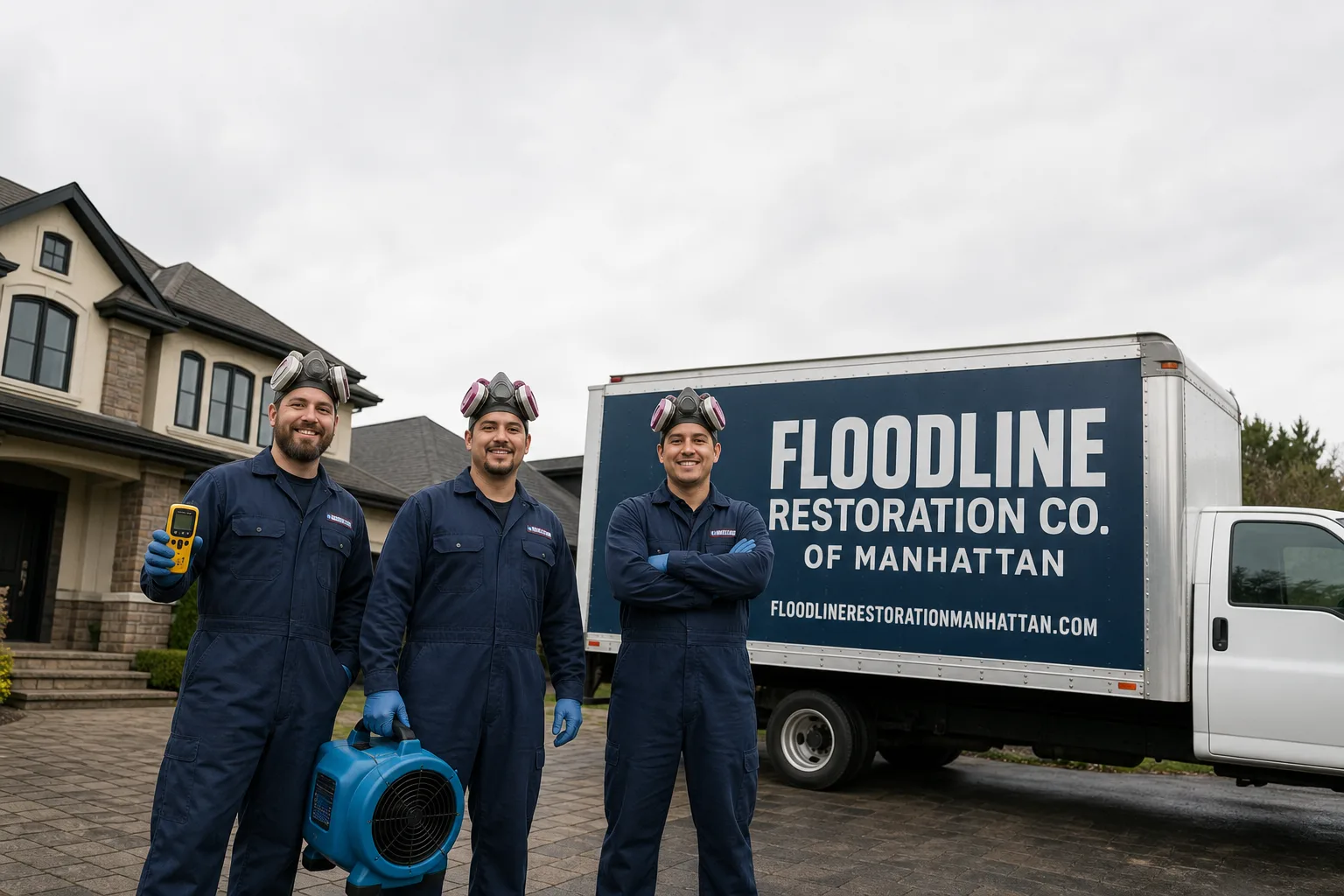
Free visual inspection and a written scope of work before any mitigation begins - photos, moisture readings, and drying logs go in your claim file
The scope we write is the scope we bill. Anything new gets shown to you, in writing, before we touch it.






 Before
 After
After Before
 After
After Before
 After
After24/7 Emergency Mold Remediation in Harrington Park
Mold remediation in Harrington Park typically costs $1,400-$4,200 for a standard basement or crawlspace job, and our crews can be on your street within 45 minutes of your call. Harrington Park’s Pascack Brook floodplain means mold here rarely shows up alone: it comes with repeat water intrusion, wicking slab foundations, and insurance paperwork that needs to be right the first time. Call (917) 924-4221 any hour, any day. A live person answers. A free visual inspection gets you answers before you spend a dollar.
We run 24/7 because mold doesn’t wait for business hours in a humid Bergen County summer, and because a flooded crawlspace at 2 a.m. off Elm Street can’t sit until morning. The first hour matters. The faster we contain the affected area and start pulling moisture out, the less tear-out you’re looking at and the lower the final bill. That’s not marketing language; it’s how mold works in a 1950s ranch with original block walls that wick water back even after the standing water’s gone.
Understanding Mold Remediation Severity in Harrington Park Properties
The severity of a mold job in Harrington Park depends less on what’s visible and more on what’s behind it. Category 1 water from a supply line break dries fast if caught early. Category 2 water, the kind that sits after the Pascack Brook overflows or a sump pump fails, carries contaminants and feeds mold in 48 to 72 hours. By the time homeowners see staining on sheetrock or smell that musty crawlspace odor, the colony has usually been working for days, sometimes weeks, behind original 1950s and 60s paneling.
Harrington Park’s housing stock makes severity worse in predictable ways. Ranch and split-level homes from 1950 to 1975 often have slab or block foundations with no exterior waterproofing by modern standards. Older vapor barriers, or none at all, mean ground moisture migrates up constantly during humid summers. We see Category 2 basement floods that started as Category 1 clean water because the slab wicks groundwater back after the original intrusion was extracted. Mold assessment here has to account for the concrete as much as the drywall.
We approach every Harrington Park job with moisture mapping first, not demolition first. Thermal imaging and hygrometer readings tell us how far water migrated through building materials before anyone swings a hammer. That matters because the repeat-flood history of homes along the brook corridor means pre-existing damage has to be documented carefully, separate from the current loss. Bergen County insurers know these addresses. We do too. The Mold Remediation work has to stand up to adjuster scrutiny and repeat-loss claim review.
Why Harrington Park Property Owners Choose Floodline Restoration Co. of Manhattan
- 45-minute response commitment. When you call about mold or water in a Harrington Park basement, a crew is on the road within 45 minutes, not a callback someone promises for tomorrow.
- A real person answers, 24/7. Our dispatch is live every hour of every day. You’ll never leave a voicemail and hope. At 2 a.m. with water still rising, you’ll talk to someone who can move a crew now.
- IICRC-certified crews. Our technicians hold WRT, FSRT, and AMRT certifications through the IICRC and train to RIA and IFA standards. They know what a wicking slab in a 1960s raised ranch does, because they’ve dried dozens of them.
- Free visual inspection. Before any work starts, we walk the damage with you and explain what we’re seeing. No charge. No pressure. Just a straight read on your situation.
- Direct insurance billing. We bill your carrier directly and handle adjuster communication from day one. You’re not the messenger between Floodline and the insurer.
- One team from start to finish. The same certified crew that sets up containment and air scrubbers also handles drying, daily moisture readings, and the rebuild. No mid-job handoff to an inherited crew you’ve never met.
Our Mold Remediation Process
Inspection & Assessment
We start with a full visual inspection and moisture mapping using thermal imaging and hygrometers. In Harrington Park homes, we pay special attention to crawlspaces, slab edges, and any wall that’s ever shown water staining.
Containment & Stabilization
Before any mold is disturbed, we set up containment barriers and negative air pressure with HEPA filtration so spores don’t spread through the rest of the house. This is standard practice, not an add-on.
Drying & Dehumidification
We run professional-grade Dri-Eaz dehumidifiers and high-volume air movers until materials hit the dry standard. In Harrington Park’s humid summers, this can take longer than average, and we log readings daily, not weekly.
Cleaning & Sanitization
Affected materials get antimicrobial treatment after source removal. We clean what’s salvageable and remove what isn’t. The goal is restoration that doesn’t leave a mold food source behind.
Crawl Space & Moisture Control Treatment
For Harrington Park’s repeat-flood homes, drying the air isn’t enough. We treat the source: failed vapor barriers, wicking block walls, and poor ventilation in the crawlspaces so common under mid-century ranches here.
Repairs & Restoration
The same crew that pulled water and ran dryers rebuilds what was removed. Ceilings, drywall, flooring, trim. The 90-Day Done Right Promise covers the whole job, in writing, with no fine print battles.
Need Emergency Mold Remediation in Harrington Park Now?
Crews minutes away, answering live 24 hours a day. The sooner we start, the less it costs.
Working With Your Insurance Company
Harrington Park homes in and near the Pascack Brook floodplain are addresses insurers know. Some have flooded multiple times in one decade. That means your claim gets scrutinized harder than a one-time loss, and the documentation has to be right from the first hour. We’ve handled repeat-loss claims in Bergen County long enough to know what adjusters need: clear photos, moisture logs, and a line-item scope that separates pre-existing conditions from the current loss.
Our team handles adjuster communication directly. You don’t chase your carrier, and you don’t translate technical findings into insurance language. We do. If your policy covers mold remediation, we bill the carrier directly and keep you informed at every step. If it doesn’t, we give you honest numbers up front so you can decide with a firm price, not an open-ended estimate.
What We Provide Your Insurer
- Thorough documentation of the loss, including repeat-flood history for your address
- Photos of all damage, room by room, with pre-existing conditions noted
- Moisture readings and daily drying logs until the dry standard is met
- A detailed, line-item scope of work with no vague categories
- Direct coordination with your carrier and adjuster from day one
Built for Harrington Park’s Loss Calendar
Mold in Harrington Park follows a seasonal rhythm, and homeowners who’ve lived here twenty years recognize it. January and February bring deep freezes that burst supply lines in uninsulated crawlspaces and exterior walls of 1950s ranches. The water sits, the heat kicks on, and by the time a homeowner notices a warm spot on the floor, mold’s already colonized the subfloor. March and April thaw the snow and push groundwater up against the same block foundations that froze two months earlier, producing the basement seepage we see every spring along the brook corridor.
Summer is when Harrington Park’s mold problems accelerate. Hot, humid Bergen County air settles into poorly ventilated crawlspaces. Any moisture from a June thunderstorm or a leaking water heater becomes a mold bloom within 48 hours. We run more dehumidifiers in July and August than any other time of year, often in crawlspaces under the same split-levels we dried in the spring. Fall’s nor’easter season brings the last wave: heavy rain, overwhelmed sump pumps, and the first Category 2 water of the season. The pattern’s consistent enough that we plan equipment staging around it. That’s not generic restoration talk; it’s the reality of working in a borough where the Pascack Brook has shaped the flood map for generations.
Mold Remediation Across Harrington Park’s Neighborhoods
The homes along Elm Street, Harrington Avenue, and the streets that slope toward the Pascack Brook share a common challenge: they sit low. LaRoche Avenue and the blocks around Highland Field aren’t in the official floodway, but the water table’s high enough that basements stay damp through the wettest months. We’ve dried raised ranches off Bogert Road where the crawlspace never fully dries between storms, and split-levels near the borough’s northern edge where ice dams form on shallow-pitch roofs every January.
What changes from street to street is the foundation. The original slab homes clustered south of Harriot Avenue tend to wick ground moisture up through the concrete, which means mold can return even after a textbook remediation if the vapor barrier isn’t addressed. The block foundation homes north of the brook, particularly the 1960s builds, move water differently: through the cores of the block and into the sill plates. Our moisture-mapping process accounts for that difference before we touch a wall. A crew that treats every Harrington Park home the same way is going to miss something. We don’t.
Response routes matter too. Coming in from the south or west, we reach homes near Highland Avenue quickly. The streets off Elm and Bogert are tighter, and we stage equipment accordingly. None of this appears on a national franchise’s dispatch screen. It’s what you get when the crew actually knows the borough, not just a ZIP code.
Specialized Mold Remediation Services We Offer in Harrington Park
Mold Inspection & Testing
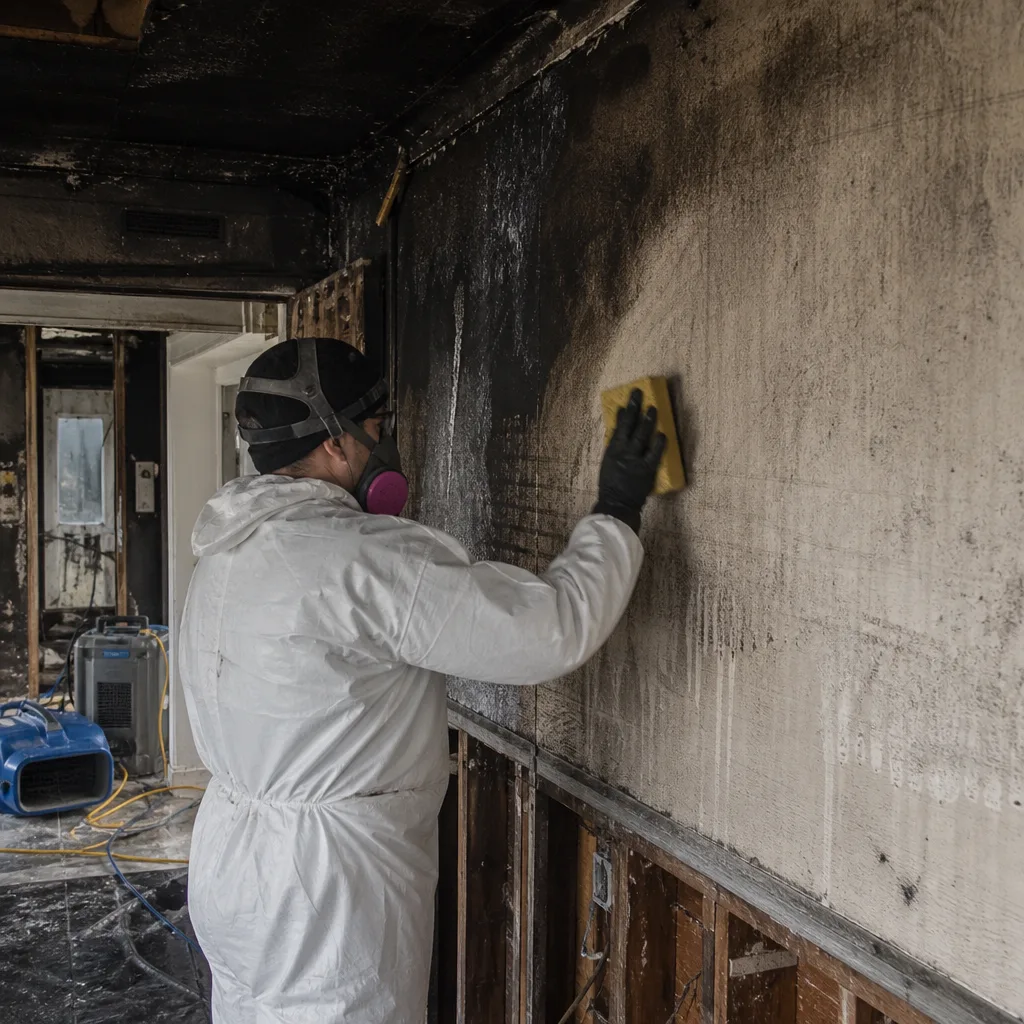
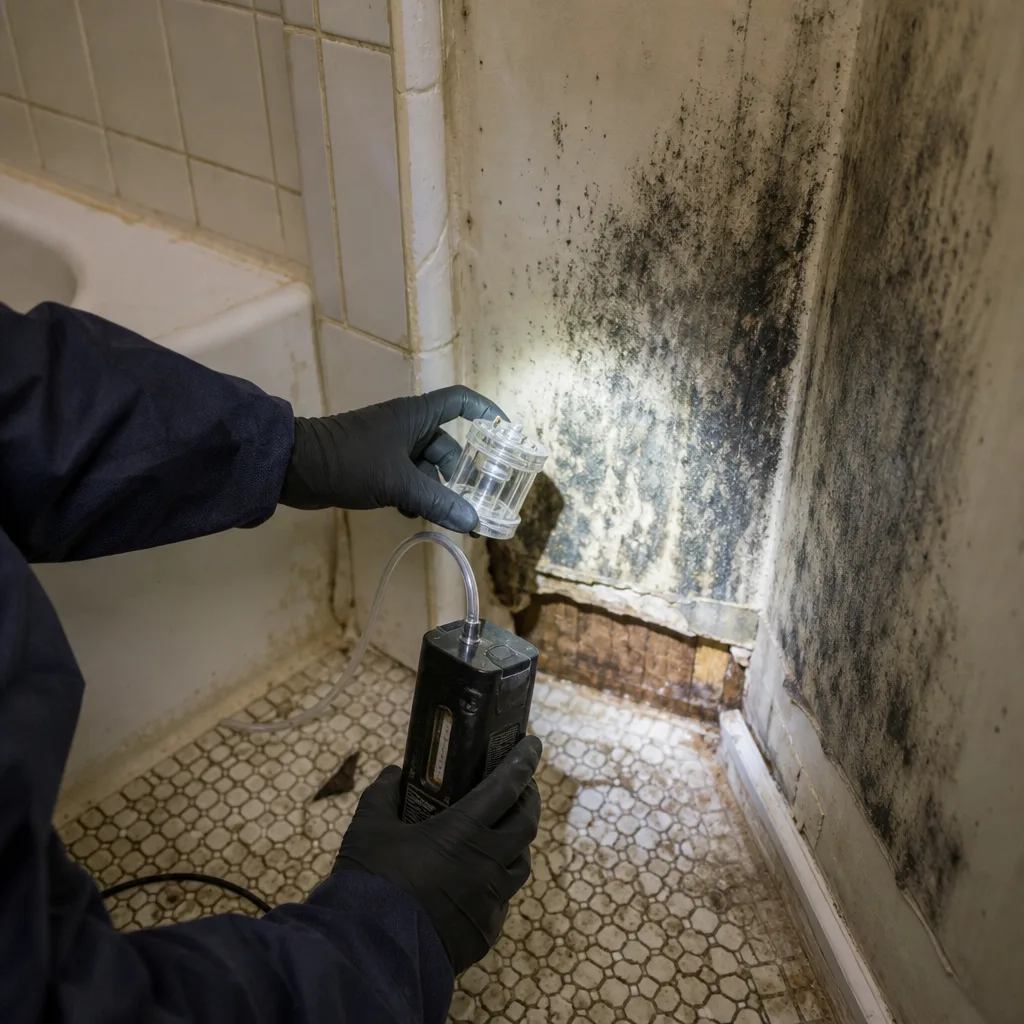
Before any remediation starts, you need to know what you’re dealing with. Our inspection includes moisture mapping, visual assessment, and air or surface sampling when it’s warranted. In Harrington Park’s repeat-flood homes, we document everything carefully, because the pre-loss condition of your basement or crawlspace often matters as much to your insurer as the current mold.
Crawl Space Treatment
Harrington Park’s mid-century ranches and split-levels were built when vapor barriers were plastic sheeting that failed within a decade. We find failed or absent barriers in most crawlspaces we enter here. Treatment includes removing contaminated insulation, addressing the moisture source, installing proper vapor protection, and conditioning the space so it doesn’t become a mold incubator again.
Moisture & Humidity Control
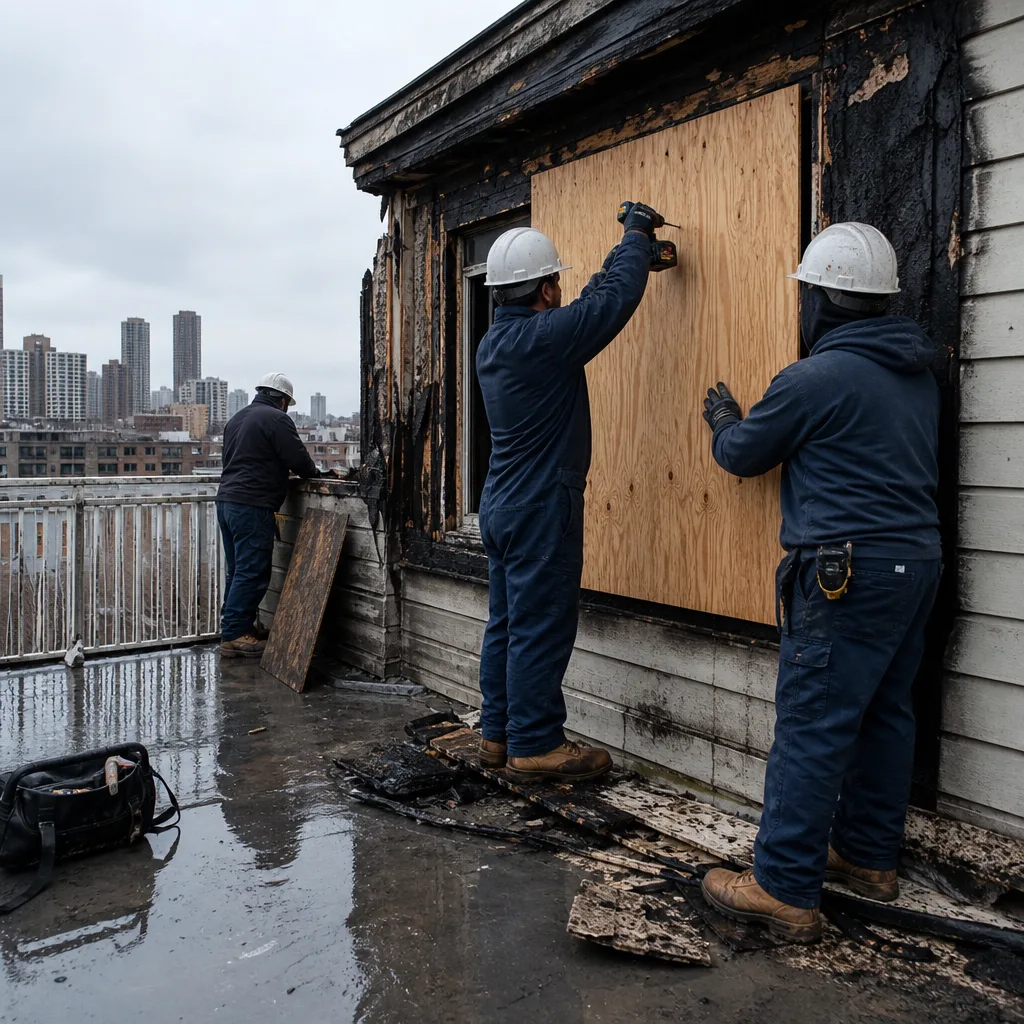
Mold can’t grow without moisture. In Harrington Park’s humid summers, that means controlling relative humidity in basements and crawlspaces year-round, not just after a flood. We install and service dehumidification systems sized for the square footage and the specific moisture load of your foundation type.
Black Mold Remediation
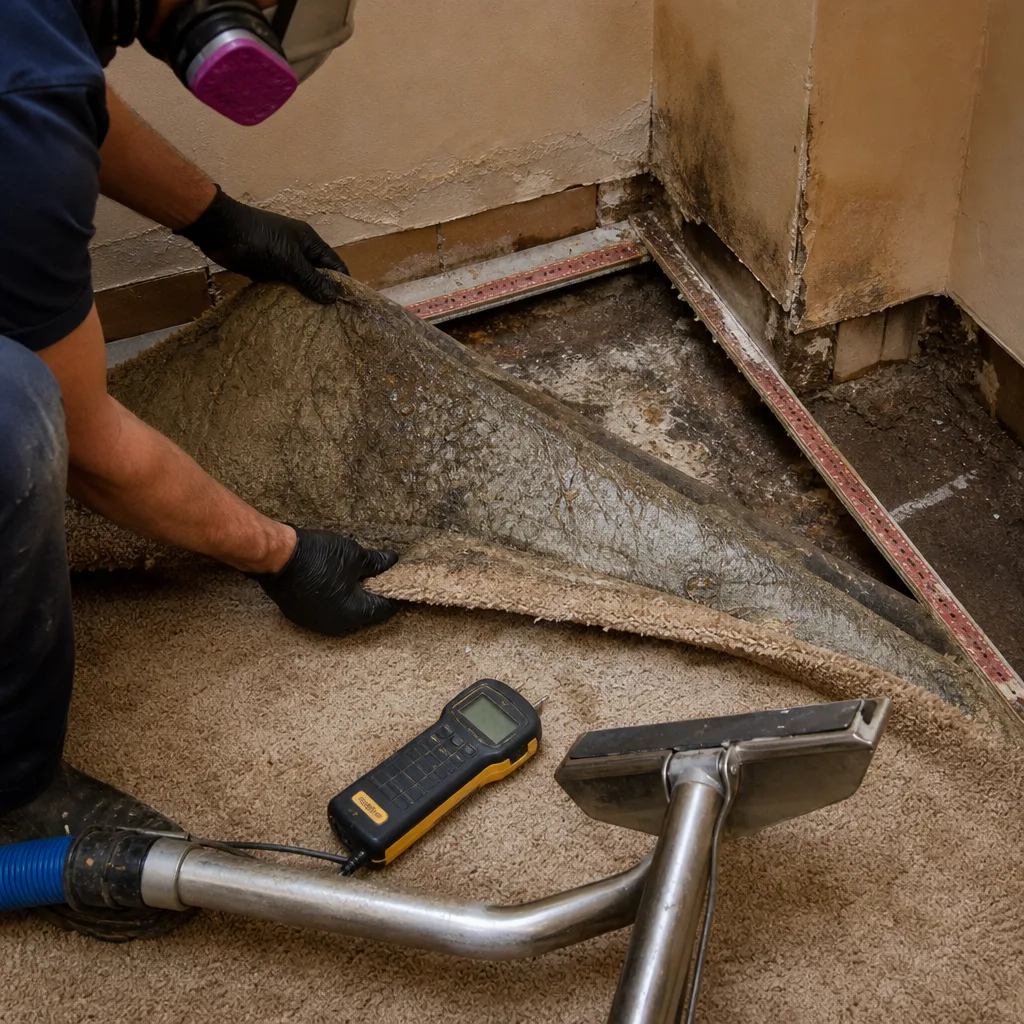
Stachybotrys, the mold people usually mean when they say black mold, needs consistent moisture and cellulose to grow. In Harrington Park homes, that’s usually drywall, ceiling tiles, or subflooring that’s been wet repeatedly. Full containment, HEPA air scrubbing, and careful removal are standard on these jobs, no exceptions.
Mold Removal
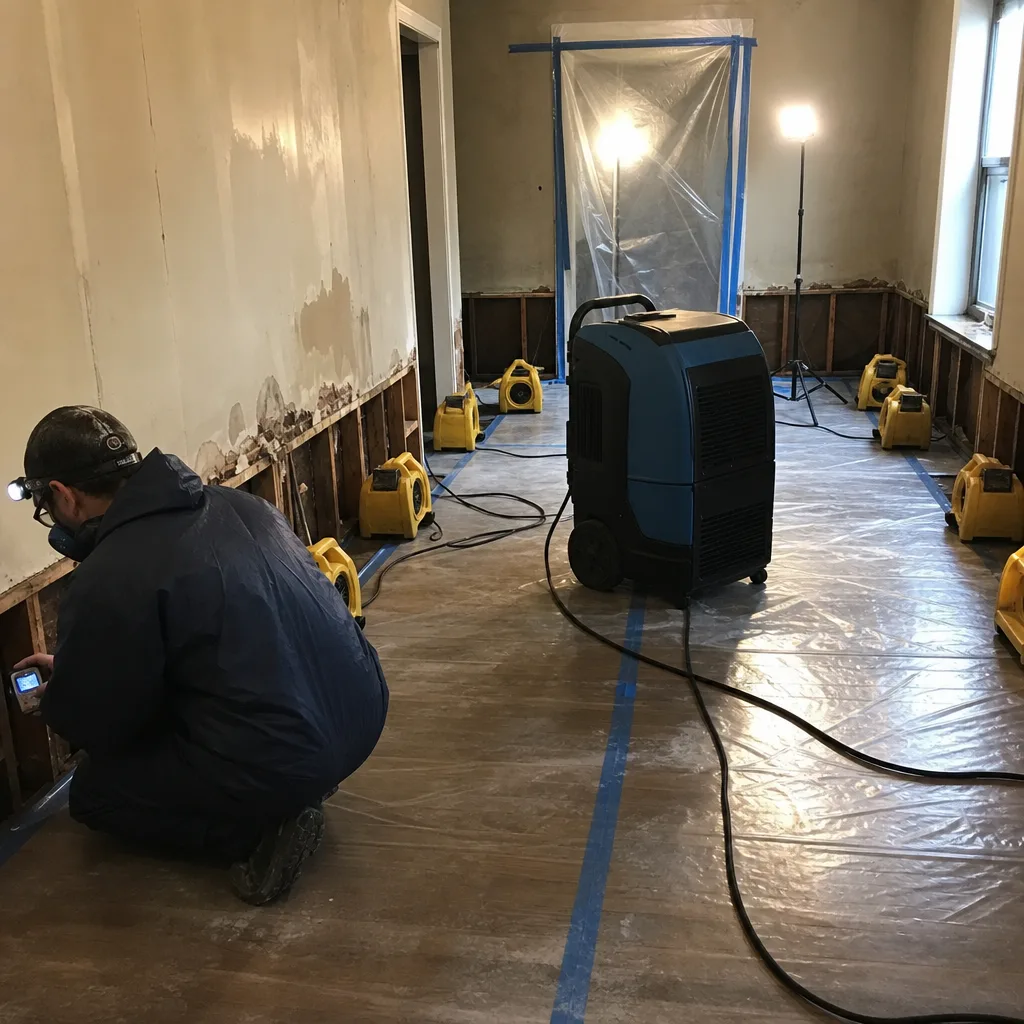
Removal means physically taking out the contaminated material, not spraying something on the surface and calling it done. We remove drywall, insulation, carpet, and trim that can’t be salvaged, then clean and treat the framing and concrete behind it. In a 1960s split-level with original paneling, that often means opening walls further than the homeowner expected. We’ll tell you why before we do it.
Air Quality Restoration
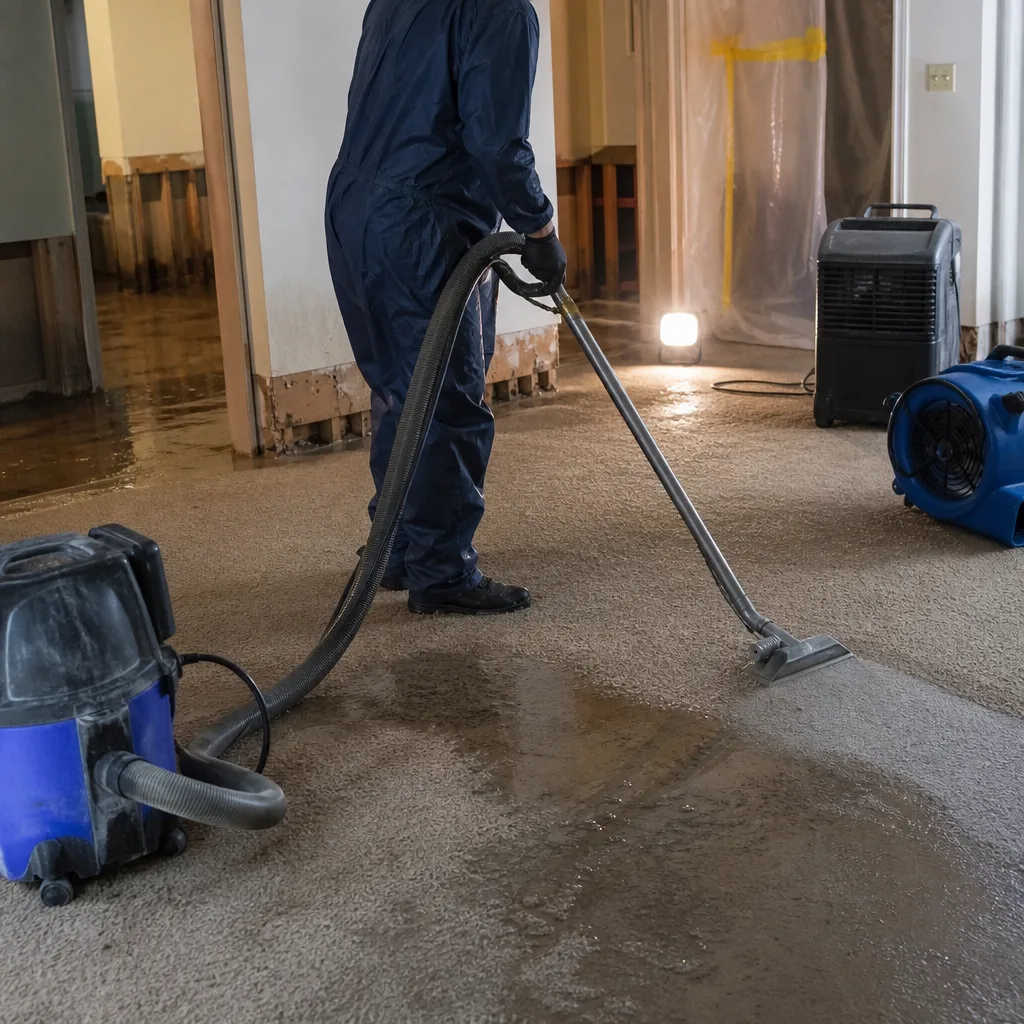
After the mold is removed and the structure is dry, the air in your home still carries spores until it’s been filtered. We run HEPA air scrubbers during remediation and can perform clearance testing afterward to confirm the spore count has returned to acceptable levels. For homeowners with respiratory concerns, this step isn’t optional.
What happens when you call
- 1
A real person answersNo phone trees - you reach a local pro.
- 2
You get an upfront price rangeHonest numbers before anyone is dispatched.
- 3
A background-checked tech heads outLicensed & insured, dispatched right away.
- 4
You approve before work beginsNothing starts until you say go.
Mold Remediation Costs in Harrington Park, NJ
Here are honest numbers for this market. A contained bathroom mold removal in Harrington Park runs $600-$1,200. A standard basement remediation, including containment, removal, drying, and treatment, typically lands between $1,800 and $4,200. A full crawlspace job with vapor barrier replacement, insulation removal, and dehumidification can hit $5,000-$9,000 depending on square footage and access. Repeat-flood homes near the Pascack Brook often run higher because documentation, containment, and insurance coordination take longer.
What moves the price: how far water migrated, whether the crawlspace or slab is involved, how much drywall and insulation has to come out, and whether clearance testing is required. Insurance-covered jobs depend on your policy’s mold provisions. The free visual inspection gives you a firm, line-item scope before any work starts. Call (917) 924-4221 for an exact quote. You won’t get a vague range and a surprise invoice later. That’s not how we work.
We Also Serve Cities Near Harrington Park
Our crews serve Harrington Park and the surrounding Pascack Valley communities, including Norwood, Westwood, Closter, and Haworth. If you’re in any of these towns and dealing with mold or water damage, the same 45-minute response commitment and 90-Day Done Right Promise apply.
Harrington Park Mold Remediation Questions, Answered
How do you handle mold in a Harrington Park crawlspace that’s been flooded more than once by the Pascack Brook?
We treat it as a repeat-loss property, which means documenting pre-existing conditions first, then addressing the ongoing moisture source before any mold removal. That usually means failed vapor barrier replacement, foundation treatment, and humidity control, not just drying the space and walking away. Without fixing the wicking source, mold returns in the next wet season. Call (917) 924-4221 and we’ll inspect your crawlspace for free.
Does Harrington Park’s repeat-flood status change how you document mold remediation for insurance?
Yes. Bergen County insurers know which addresses near the Pascack Brook have filed before. Our documentation separates the current loss from pre-existing water staining and prior damage, with photos and moisture logs from day one. That’s the difference between a claim that gets approved and one that gets denied for pre-existing conditions. We handle adjuster communication directly.
What type of water is common in Harrington Park basement floods, and how does it affect mold cleanup?
Category 2 water is the norm near the brook. It’s contaminated with soil bacteria and organic matter, not clean like a burst supply line. That means remediation requires antimicrobial treatment after extraction, not just drying. We treat every brook-corridor flood as Category 2 unless testing shows otherwise. Call (917) 924-4221 for a free assessment.
Why do 1950s Harrington Park homes get mold so fast after a leak?
Three reasons: original slab or block foundations that wick moisture, poorly ventilated crawlspaces, and original vapor barriers that failed decades ago. Add Bergen County’s humid summers and mold growth starts within 48 hours of a leak. These homes need moisture control, not just mold removal, or the problem repeats.
Can you dry out a raised ranch after an ice dam without tearing out the ceiling in Harrington Park?
Sometimes, if we get there before the ceiling materials become saturated and bowed. We use thermal imaging to see how far water migrated through the insulation, then run Dri-Eaz dehumidifiers and Phoenix air movers targeted at the wet cavities. If the drywall’s already failed or mold’s present, tear-out is cheaper than trying to dry dead material. We’ll show you the readings and explain the call.
How fast can you actually get to a Harrington Park address?
Within 45 minutes in most cases. We stage crews and equipment for the borough’s flood season, so spring and summer nor’easter response is just as fast as January pipe breaks. The dispatch number is live 24/7. Call (917) 924-4221 and a real person answers.
Are your technicians certified for mold work?
Yes. Our crews are background-checked, uniformed, and trained to IICRC standards including AMRT for mold remediation. They also train to RIA and IFA standards and use professional-grade Dri-Eaz and Phoenix equipment. The team that starts your job is the team that finishes it.
What should I do in the first 30 minutes after I find mold or water in my Harrington Park home?
Shut off the water source if you can do it safely, turn off power to affected areas, move valuables out of the wet zone, and call (917) 924-4221. Don’t run fans from the hardware store, don’t disturb the mold by scrubbing it, and don’t wait until morning. The first hour determines how much material we can dry versus replace. We’ll be there fast.
Serving Harrington Park, NJ - Our Local Coverage Area
We’re based in the Harrington Park area and know this community well. Use the map below to see our service coverage - if you’re nearby, we can almost certainly help.
Mold That Keeps Coming Back: The Harrington Park Reality
Here’s what we know from working this borough for years: most mold remediation in Harrington Park isn’t a one-time event. It’s the second or third go-round for a homeowner whose house sits low, whose foundation wicks, and whose insurer is watching closely. The big franchises treat mold like a standalone service: remove it, dry it, done. That works in a dry suburban house with a one-off leak. It doesn’t work off Elm Street when the crawlspace never truly dries.
On a raised ranch near the Pascack Brook, our techs arrived to find Category 2 water in a crawlspace where the original 1960s vapor barrier had disintegrated. The block foundation was wicking groundwater up through the cores, and mold had colonized the subfloor insulation. We set containment, applied antimicrobial treatment, then ran Dri-Eaz dehumidifiers and XPOWER air movers for six days, logging moisture readings daily until the slab hit pre-loss condition. Then we replaced the vapor barrier, not with what was there before, but with a system that would hold. That homeowner called us three years later, not for mold, but to say the crawlspace stayed dry through two more spring floods.
That’s the standard. Not a sales promise. A documented, measured result. Done right, backed in writing. The 90-Day Done Right Promise means if something fails within 90 days of completion, we make it right without arguing. No paperwork battles. No “that’s not covered.” It’s the Keystone Standard our company was built on, tied to the K.E.Y.S. values code: Krafted right, Every time, Your home first, Standing behind it. Curt Bowman founded Floodline Restoration Co. in 2010 around a dispatch board and a simple rule: answer the phone and stand behind the work. That’s still how we run.
If you’ve got mold in a Harrington Park basement, crawlspace, or wall cavity, call (917) 924-4221. A live person answers, day or night. We’ll do a free visual inspection, give you a firm written scope, and handle your insurance carrier directly. The line the water left is where we start. We know these homes, these foundations, and this borough. We’ll be there when we say.
Written by Curt Bowman, Owner at Floodline Restoration Co., serving Harrington Park and the Pascack Valley with mold remediation, water damage restoration, and full rebuild services.