
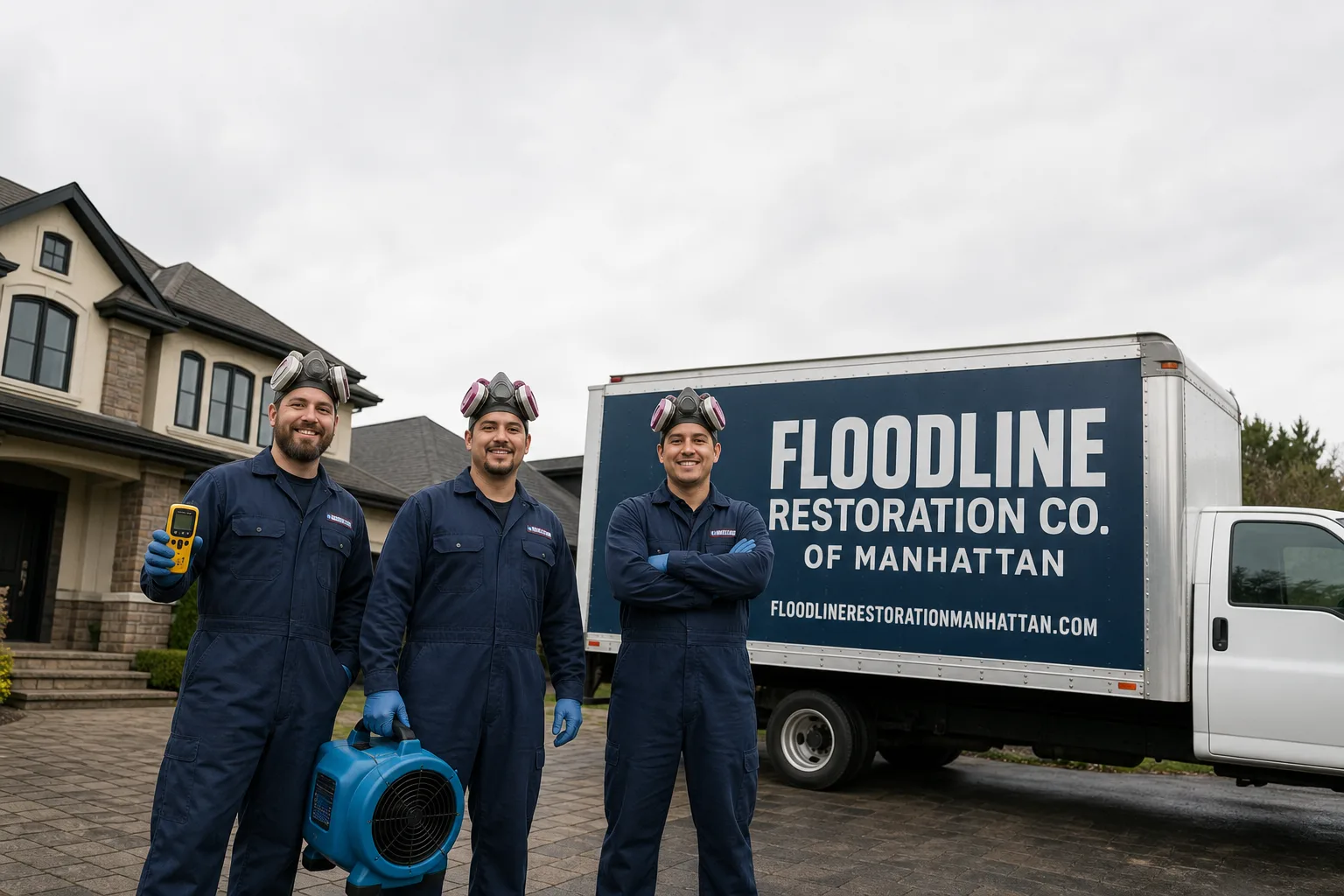
Free visual inspection and a written scope of work before any mitigation begins - photos, moisture readings, and drying logs go in your claim file
The scope we write is the scope we bill. Anything new gets shown to you, in writing, before we touch it.






 Before
 After
After Before
 After
After Before
 After
After24/7 Emergency Mold Remediation in Corona
Mold remediation in Corona typically costs $800-$4,500 depending on square footage, containment needs, and whether the source is chronic groundwater or a one-time event like a sewage backup. A live dispatcher answers at (917) 924-4221 around the clock, and a uniformed crew can be at a Corona address within 45 minutes. The first hour matters because mold keeps feeding on wet drywall, plaster, and framing long after the standing water is gone. We do free visual inspections, so you know what you’re dealing with before a dollar is spent.
Corona’s older row houses hide water where you can’t see it. The kind of moisture that starts behind a plaster wall off 108th Street or creeps up from a cellar floor near Flushing Meadows doesn’t announce itself until the musty smell sets in or someone’s breathing changes. That’s why we respond fast, inspect thoroughly, and never start work without a written scope agreed to first.
Understanding Mold Remediation Severity in Corona Properties
Most Corona mold jobs fall into one of three severity levels. Level one is surface growth on non-porous materials: tile, painted block, a section of drywall under a bathroom sink. Level two involves porous materials that have wicked moisture: drywall, plaster-and-lath, insulation. Level three is structural and air quality contamination, which is what we see most often in Corona’s below-grade cellars after Category 2 or Category 3 water events.
The building age drives what we find once we open a wall. A 1927 brick row house on 111th Street will have different framing, different plaster chemistry, and different drainage than a newer construction. Corona’s attached brick rows were built tight to the lot line, sharing party walls. Moisture travels laterally through common brick, not just vertically through floors. We containment a work area with poly sheeting and negative air scrubbers before touching anything, because mold spore disturbance without containment just spreads the problem across the property. Clearance testing confirms the air inside is cleaner than the air outside before we call the job done.
Why Corona Property Owners Choose Floodline Restoration Co. of Manhattan
- 45-minute response commitment to any Corona address, day or night. We do not put you on a callback list.
- 24/7 live answer. A real person picks up at (917) 924-4221 at 2 a.m. Not a recording.
- IICRC-certified crews trained to WRT, FSRT, and AMRT standards. Background-checked and uniformed.
- Free visual inspection for any mold concern in Corona. No charge to look and tell you the truth.
- Direct insurance billing. We talk to your adjuster, submit the documentation, and you don’t play messenger.
- One crew from start to finish. Extraction, drying, mold remediation, and rebuild, no mid-job handoff.
Led by Curt Bowman, Floodline Restoration Co. has been answering calls and dispatching from New York City since 2010. We built the company around a dispatch board, not a sales desk. When a Corona homeowner calls at midnight, the person on the phone is someone who can actually send a truck, not someone reading a script in another state.
Our Mold Remediation Process
Inspection & Assessment
We start with a visual inspection, moisture meter readings, and thermal imaging. In Corona cellars, we’re specifically looking for hydrostatic pressure through foundation cracks, old cast-iron drain stack failures, and the telltale signs of chronic dampness that predate any single storm.
Containment & Source Control
Before anything is disturbed, we set up containments, kill the water source, and address any Category 1, 2, or 3 water that is still feeding the growth. For below-grade spaces near Flushing Creek, source control often means sump pump work and crack injection alongside remediation.
Drying & Dehumidification
We put Dri-Eaz dehumidifiers and XPOWER or B-Air air movers in, but only after moisture mapping shows us where the water actually is. Daily readings get logged. We don’t stop until the dry standard is met, not when the numbers look close enough.
Cleaning & Sanitization
HEPA air scrubbing clears airborne spores. Hard surfaces get treated with antimicrobial solutions appropriate to the material. We’re careful with old plaster and original woodwork; there’s a difference between cleaning and destroying what’s worth keeping.
Crawl Space & Subgrade Treatment
Corona row houses often have shallow root-cellar-style crawl spaces or full cellar basements. We treat joists, sills, and ground-contact surfaces with moisture-resistant protocols and recommend vapor barriers where groundwater keeps intruding.
Repairs & Restoration
From replacing rotted floor joists to rebuilding a finished cellar, the same crew sees it through. If asbestos pipe insulation is found, we stop, coordinate abatement, and document everything for your carrier.
Need Emergency Mold Remediation in Corona Now?
Crews minutes away, answering live 24 hours a day. The sooner we start, the less it costs.
Working With Your Insurance Company
Mold claims in Corona are complicated. Carriers want to know the mold was not a pre-existing condition from years of neglect. That’s why we document everything from the first hour: photos, moisture readings, the condition of the cast-iron stacks, the water category, and the timeline of every step. We write estimates in industry-standard format, speak directly to your adjuster, and submit drying logs that establish the loss was sudden and accidental, not deferred maintenance. When the claim is legitimate, we push it through without you ever having to explain hydrostatic pressure to an adjuster who’s never been to Queens.
What We Provide Your Insurer
- Thorough documentation of the loss
- Photos of all damage, room by room
- Moisture readings and drying logs
- A detailed, line-item scope of work
- Direct coordination with your carrier
Built for Corona’s Loss Calendar
Corona’s mold problems follow a pattern that hasn’t changed much in decades. January and February bring cold snaps that freeze pipes in unheated cellars and crawl spaces. March and April bring spring rain, but more importantly, snow melt saturating the earth around foundations. The relative low elevation of Corona, tucked in the Flushing Creek drainage basin, means that saturated ground pushes water through foundation cracks and up through cellar floors even when it isn’t raining hard.
Summer thunderstorms come fast and the storm sewers along 108th Street and Northern Boulevard can’t keep up. Water sheets off flat rowhouse roofs, backs up through floor drains, and finds the low point, which is almost always the cellar. The real crisis calendar marker came with Hurricane Ida in September 2021, when multiple residents died in below-grade units in Corona. That night changed how every restoration contractor operating here scopes below-grade spaces. We don’t treat a flooded Corona cellar as a simple drying job anymore. We treat it as a life-safety mold prevention job, every time.
Mold Remediation Across Corona’s Neighborhoods
Corona is not one neighborhood; it’s a few dozen blocks of attached brick rows with different water pressures and different failure patterns. Down by Flushing Meadows, the water table sits close to the surface, and we see cellars that have never been fully dry. Up toward Elmhurst, the grade rises slightly, but the original clay sewer laterals are older and more prone to backflow. Along Northern Boulevard, commercial storefronts with residential units above share drainage lines with kitchens that have been renovated six times in eighty years.
On 108th Street, our techs scoped a three-family brick row house after a sewage backflow through a cracked cast-iron stack. We set containment in the cellar, moisture-mapped saturated plaster-and-lath, and found Category 3 water had wicked into an illegal sleeping unit. We locked down the site with a Dri-Eaz HEPA 500, pulled pack-out, and gave the landlord drying logs to substantiate scope of work, but the city’s vacate order meant no one could move back until structural drying and antimicrobial treatment were complete. That’s the reality of Mold Remediation work in Corona right now.
The blocks east of Junction Boulevard have a high concentration of row houses with cellars converted to rental units decades ago. Many were built before 1938, which means lead paint and asbestos pipe insulation are live possibilities inside every wall. That changes how we open a wall and how long the job takes. Around LeFrak City, the construction is different, concrete and brick with different drainage profiles, and mold there tends to concentrate around window units and bathroom exhaust failures rather than groundwater.
Specialized Mold Remediation Services We Offer in Corona
Mold Inspection & Testing
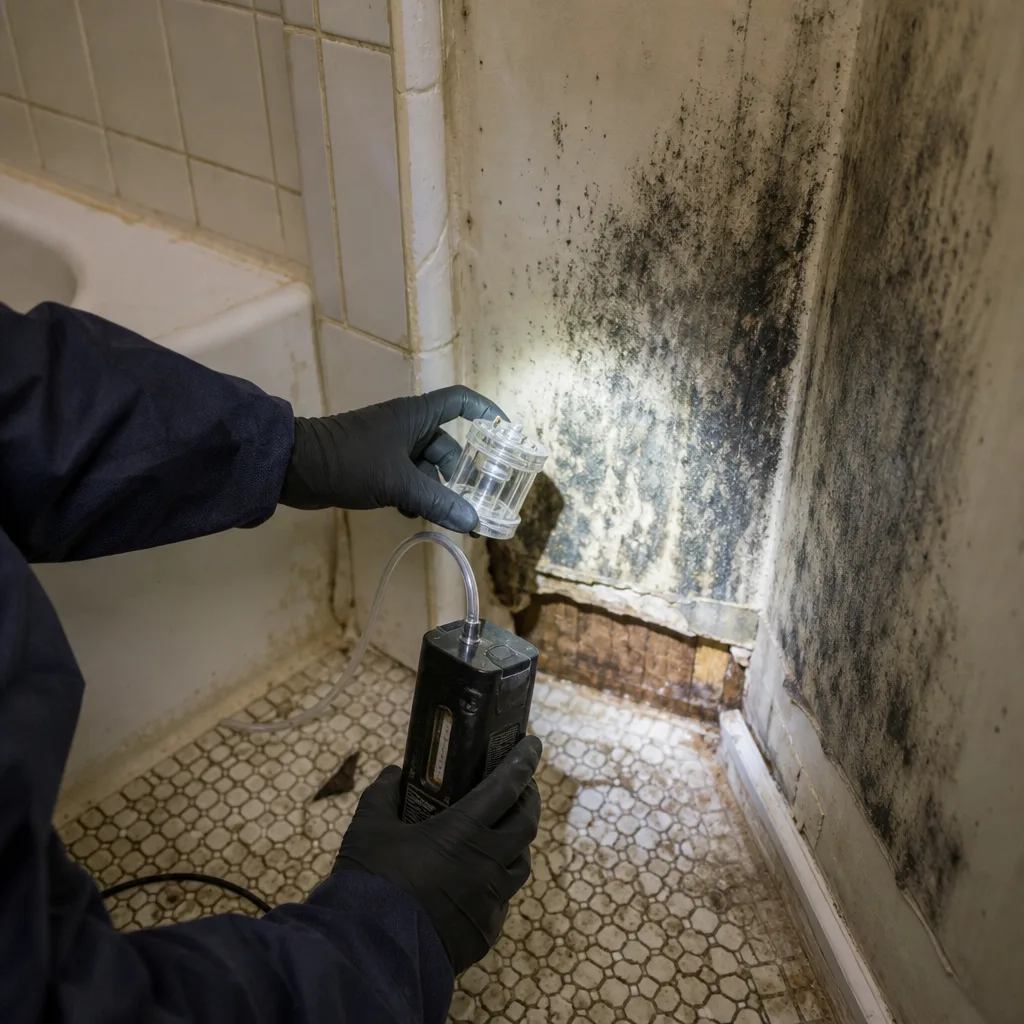
A proper mold inspection in a Corona row house includes visual assessment, thermal imaging, and moisture mapping. We don’t just swab visible spots; we trace the water source, check behind baseboards, and test air samples where there’s no visible growth but someone in the house is sick. Testing without source tracing is wasted money.
Mold Removal
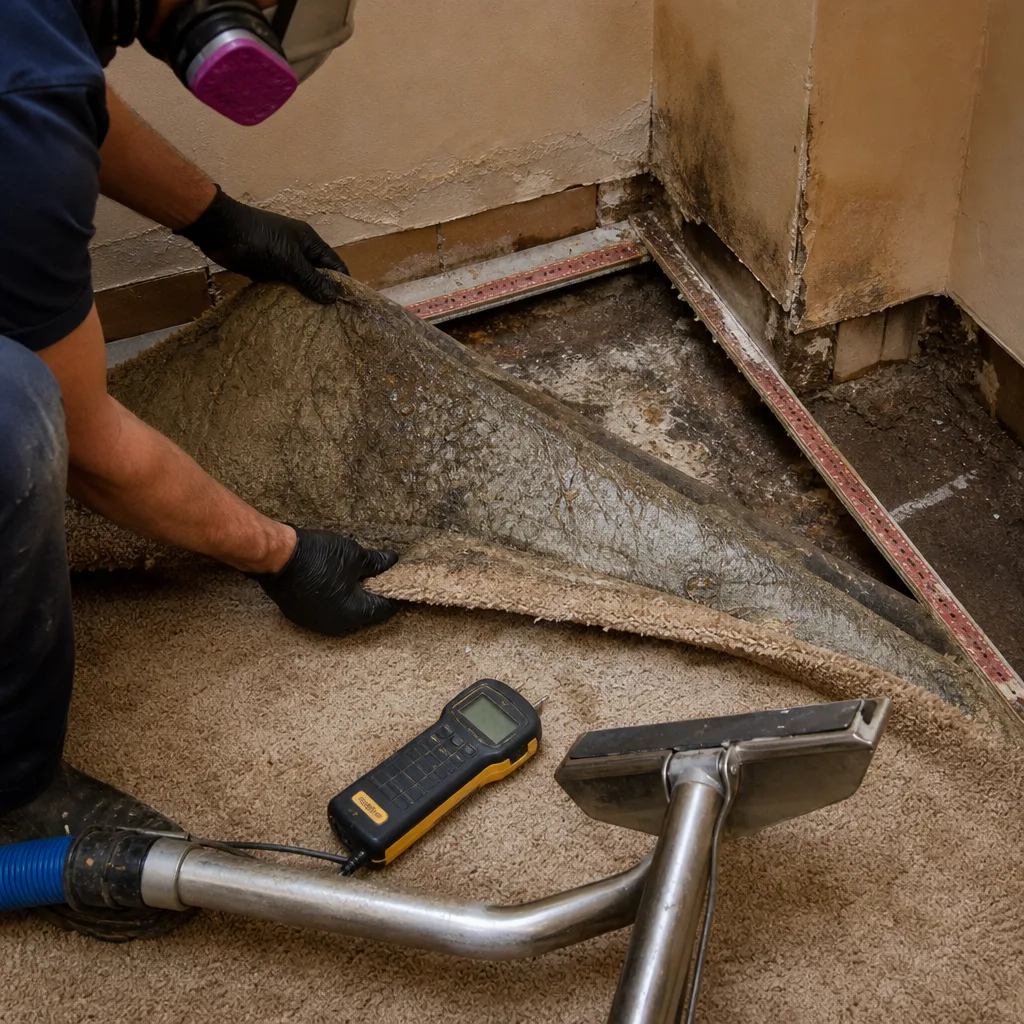
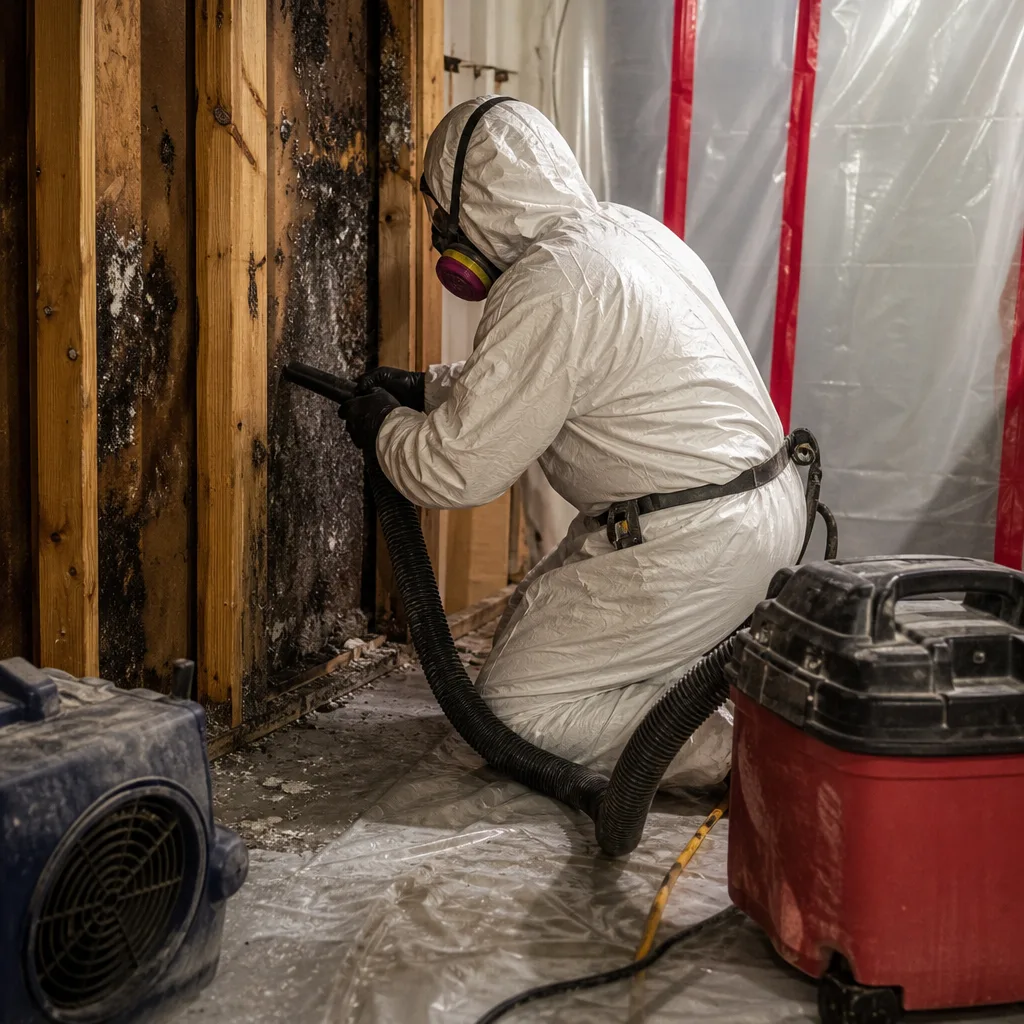
Removal means physical remediation, not just spraying something over the growth. We bag and dispose of contaminated materials, HEPA-vacuum surfaces, and run air scrubbers until clearance testing passes. In Corona homes with original plaster, we often save the plaster itself and remediate the framing behind it, which cuts cost and keeps the house’s character.
Black Mold Remediation
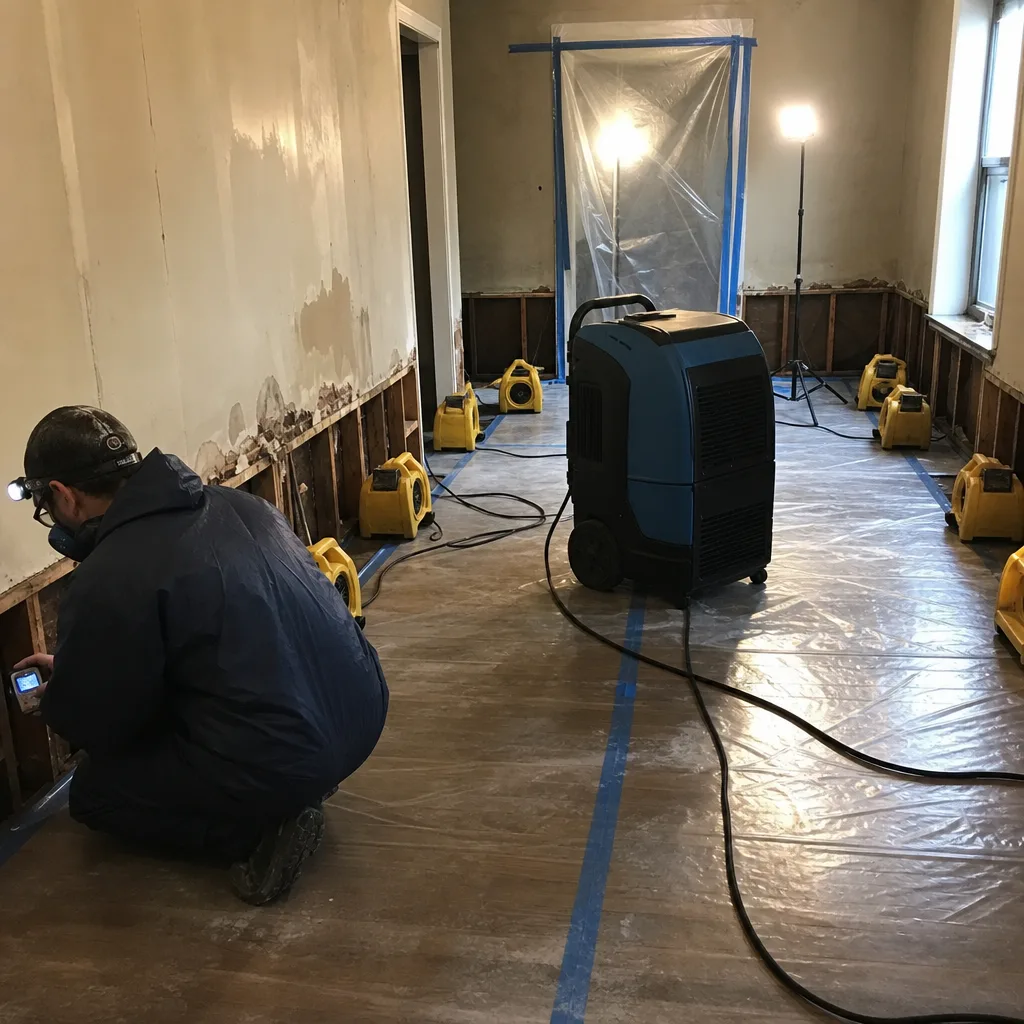
Stachybotrys gets the attention because it’s dark and scary, but the honest answer is that all mold in a chronically wet Corona cellar needs the same protocol: kill the water source, containment, removal, and drying to standard. Black mold in a below-grade converted apartment usually means the water source was never addressed to begin with.
Air Quality Restoration
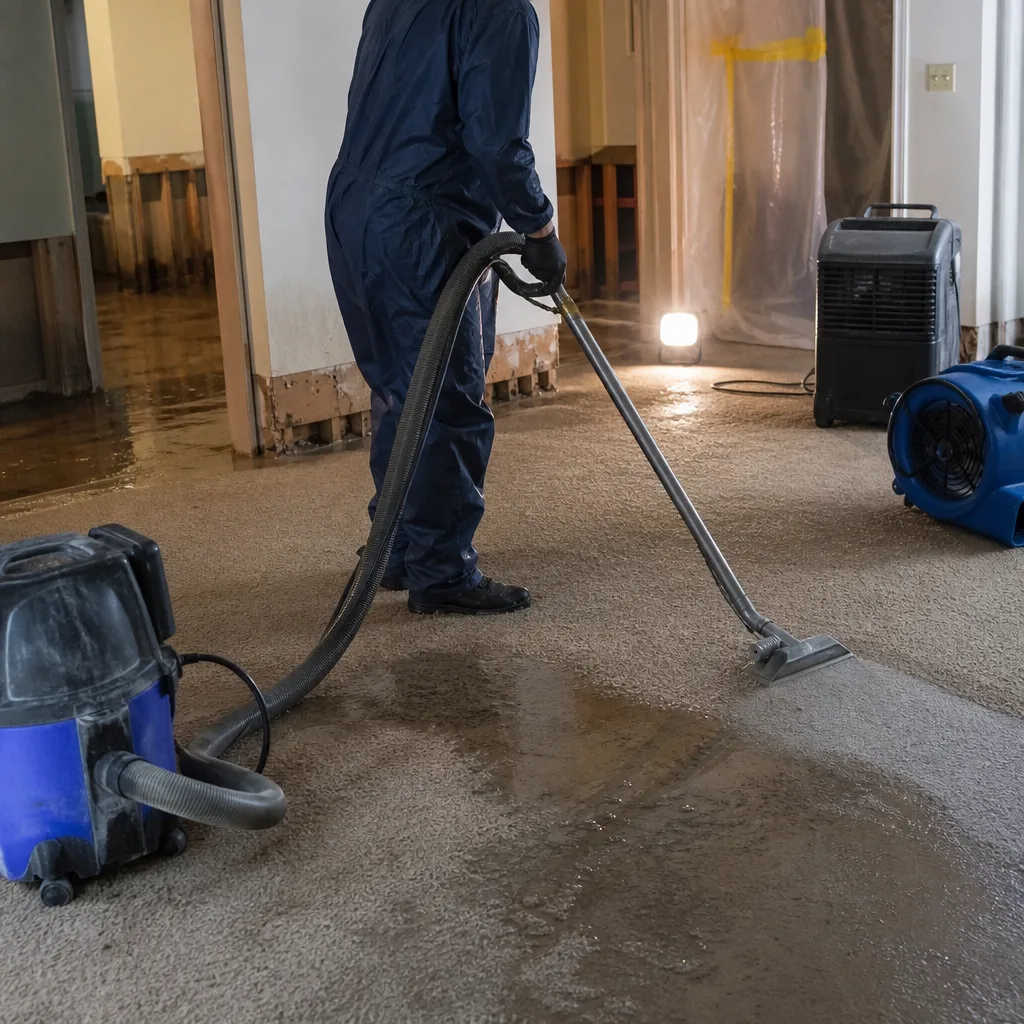
Mold spores settle into ductwork, carpet fibers, and furniture. Air quality restoration after a large remediation means HEPA scrubbing, surface cleaning, and often post-remediation verification testing to prove the space is safe before occupancy. That last step matters when a city agency or a tenant’s doctor is asking questions.
Crawl Space Treatment
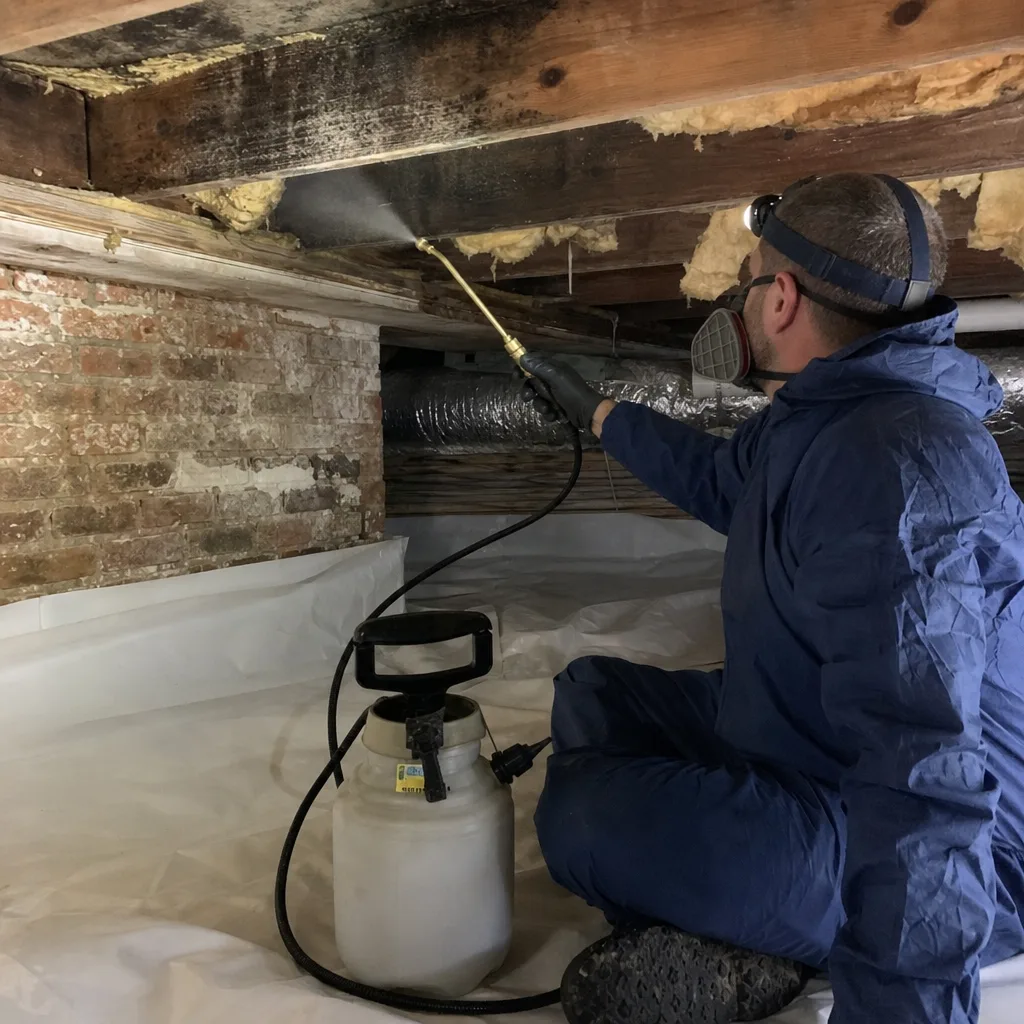
Corona’s attached row houses often have shallow crawl spaces over dirt floors. Moisture rises from the soil, wets the joists, and mold follows. We lay vapor barriers, seal foundation vents where appropriate, and treat the framing. A wet crawl space in the house next door will cross a party wall if the conditions are right. Treatment on one side often means talking to the neighbor.
Moisture & Humidity Control
Basement humidity above 60% is an open invitation in Corona. We install dehumidifiers, recommend drainage corrections, and seal cracks. Hydrostatic pressure through foundation walls never stops on its own. Our moisture and humidity work is designed to keep the cellar consistently dry, not just dry after a storm.
What happens when you call
- 1
A real person answersNo phone trees - you reach a local pro.
- 2
You get an upfront price rangeHonest numbers before anyone is dispatched.
- 3
A background-checked tech heads outLicensed & insured, dispatched right away.
- 4
You approve before work beginsNothing starts until you say go.
Mold Remediation Costs in Corona, NY
A small, contained mold job in a Corona bathroom or closet runs $800-$1,500. A full cellar remediation with containment, HEPA scrubbing, material removal, and drying typically lands between $2,800 and $4,500 in this market. Black mold throughout a finished below-grade apartment, with pack-out, abatement coordination, and rebuild, can run $6,000-$12,000. What moves the price: square footage, whether asbestos or lead raises abatement costs, access constraints on narrow Corona lots, and whether the source is a municipal sewer backflow or a slow foundation seep that has been feeding growth for months.
Insurance covers mold remediation when the moisture source is a covered peril, like a burst pipe or storm-driven water intrusion. It typically does not cover gradual seepage or deferred maintenance. The free visual inspection is the path to a firm number. We look, we map the moisture, we tell you what it costs, and you decide before any work begins.
We Also Serve Cities Near Corona
Our Corona crews regularly handle mold jobs in Elmhurst, Rego Park, Jackson Heights, and East Elmhurst. The housing stock is similar, the drainage issues are similar, and the protocols travel well. When you call from one of these neighborhoods, you’re still getting a local crew that knows Queens construction.
Serving Corona, NY - Our Local Coverage Area
We’re based in the Corona area and know this community well. Use the map below to see our service coverage - if you’re nearby, we can almost certainly help.
Corona Mold Remediation Questions, Answered
How does an illegal basement conversion affect mold remediation in Corona?
An illegal cellar conversion changes the entire job scope because the unit cannot legally be restored to pre-loss occupancy. We must check NYC Department of Buildings records before demolition or rebuild, and if a vacate order was issued, the owner cannot legally re-rent the space even after remediation is complete. We coordinate with DOB, the landlord, and the carrier to keep the project moving while staying code-compliant.
Why does mold keep coming back in Corona basements even after remediation?
Because the water source was never actually stopped. Corona’s low elevation and dense clay soils create constant hydrostatic pressure against foundation walls. If the remediation only dries the visible surfaces and the contractor does not address the crack, footing drain, or sump system feeding the moisture, the mold returns within months. We moisture-map to find what’s actually feeding the growth before we remove it.
Can you remediate mold in a Corona row house without tearing out old plaster?
Often, yes. Plaster-and-lath can be dried in place, HEPA-vacuumed, and treated with antimicrobial solution when the moisture content responds to structural drying. We only remove plaster when it is delaminating, crumbled, or hiding saturated insulation to the point of no return. We prefer to save original plaster; it’s cheaper for you and better for the building.
What should I do if my Corona cellar flooded during Ida and now smells musty?
Call for a free inspection first. Don’t paint over it and don’t open walls yourself. A musty smell a few years after a flood almost always means moisture is still present, usually behind a wall or under a floor. We bring moisture meters and thermal imaging, find the pocket of wet material, and scope the remediation from there. The longer it sits, the bigger the job gets. Call (917) 924-4221 and we’ll look within 45 minutes.
Do you handle black mold in Corona houses with original cast-iron drains?
Yes, and the cast-iron is usually part of the story. Original stacks from the 1920s-1940s crack, rust through, or get blocked, and sewage or gray water backs up into the cellar. That Category 3 water feeds mold rapidly. We remediate the mold, document the stack failure for your insurer, and coordinate the drain repair so the source is closed before we finish.
How fast can you actually get to a mold job in Corona?
Our commitment is 45 minutes for emergency water or sewage-driven mold situations. We answer live 24/7, and dispatch from our New York City office to all of Corona. For non-emergency inspections, we schedule at your convenience, often same-day or next-morning.
Will insurance cover mold remediation on a Corona row house?
It depends on the source. Sudden events like pipe bursts, sewage backflows, and storm intrusion are usually covered, including the mold remediation that follows. Chronic seepage through foundation walls or neglect of a known leak is typically denied. We document everything and communicate directly with your adjuster, so the claim is built correctly from the first hour.
Do I need full remediation or just a cleaning?
If the mold is on non-porous surfaces and covers less than 10 square feet, a cleaning with proper disinfectant may be all you need. If it’s on drywall, wood, or insulation, or it covers a larger area, full remediation with containment and air scrubbing is the only honest approach. A free visual inspection settles it. We won’t sell you a full remediation if a cleaning is all the job calls for.
Floodline Restoration Co. of Manhattan stands behind every Corona mold job with the 90-Day Done Right Promise, our Keystone Standard, in writing. No arguing, no re-inspection games. If it’s not done right, we come back and make it right. That’s the square deal, whether you’re a homeowner on 104th Street or a landlord managing three converted cellars near Northern Boulevard.
Call (917) 924-4221 now for a free estimate. A live dispatcher answers, day or night. We’ll be there when we say.
Written by Curt Bowman, Owner at Floodline Restoration Co. of Manhattan, serving Corona with full-cycle restoration since 2010.