
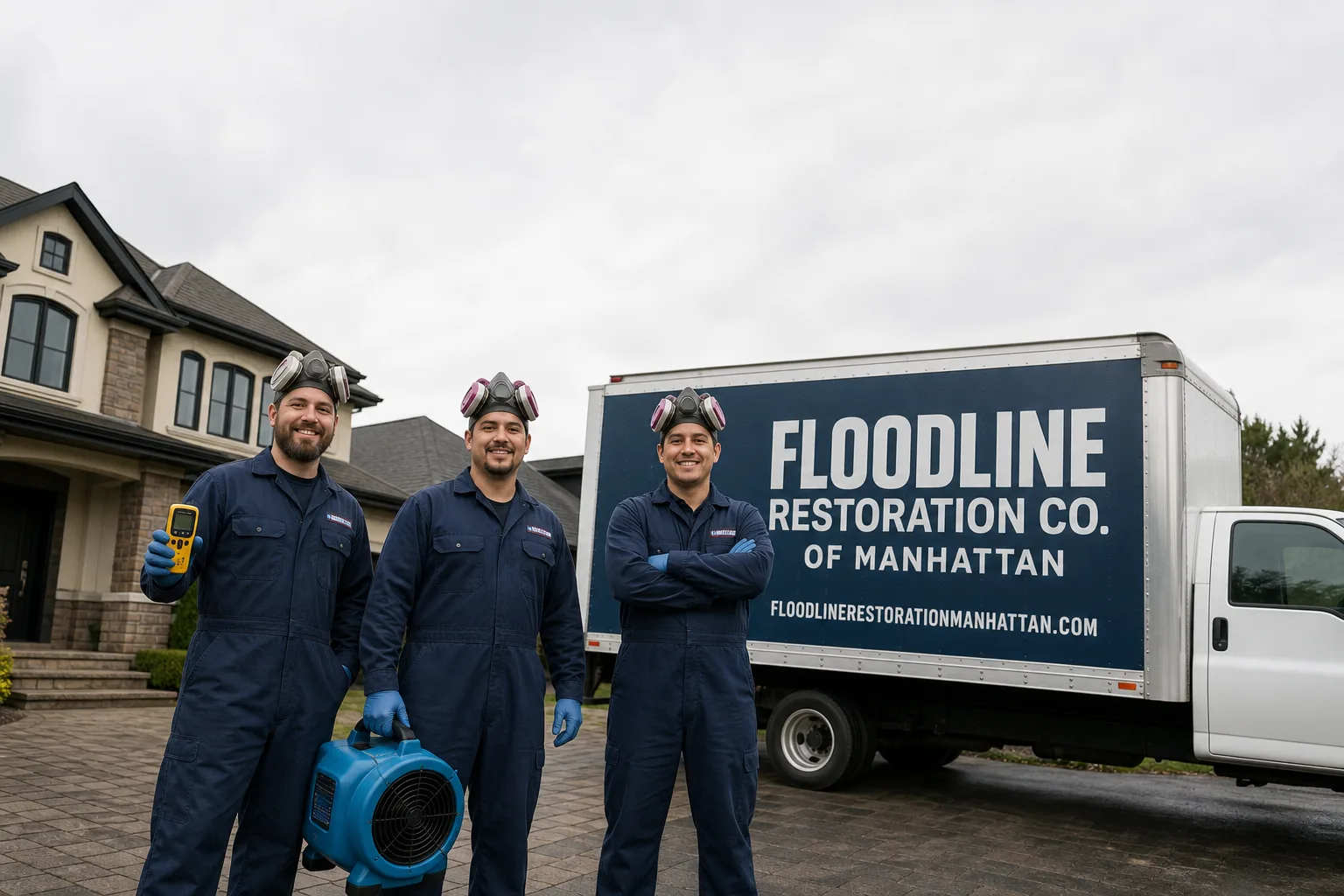
Free visual inspection and a written scope of work before any mitigation begins - photos, moisture readings, and drying logs go in your claim file
The scope we write is the scope we bill. Anything new gets shown to you, in writing, before we touch it.






 Before
 After
After Before
 After
After Before
 After
After24/7 Emergency Mold Remediation in Fort Lee
Mold remediation in Fort Lee typically runs $1,800-$6,500 depending on how far the growth has traveled through walls, slab assemblies, and HVAC pathways. Our crews reach Fort Lee within 45 minutes, day or night, because a live dispatcher answers (917) 924-4221 around the clock and sends a certified team the moment you call. In Fort Lee’s stacked condominium towers, mold does not wait politely. Spores move through floor penetrations, plumbing chases, and the gap between the drywall and the concrete slab, meaning a small bathroom bloom on the 12th floor can become a building problem by morning. We start with a free visual inspection, set up containment the same visit, and give you a written scope before any work begins.
Understanding Mold Remediation Severity in Fort Lee Properties
Mold severity in Fort Lee breaks along the borough’s building type: high-rise condominium towers. These are not suburban basements. In a 1970s-era tower with original cast-iron drain stacks and galvanized supply lines, water leaks travel vertically through the concrete slab assembly, not outward where you can see them. That means the visible mold on your bathroom ceiling is often the trailing edge of a hidden reservoir that began one or two floors above you. We classify the job by water category, the extent of moisture migration through the slab, and whether spores have entered the shared ventilation or elevator shaft. A Category 1 supply-line leak behind a vanity is usually contained within one unit. A Category 2 laundry overflow that sat overnight soaks base plates, gypsum, and the concrete itself. A Category 3 sewage backup from a failed cast-iron stack demands full containment, antimicrobial treatment, and air scrubbing across every affected floor. Moisture mapping with thermal imaging and hygrometers tells us exactly where the water went, and daily moisture readings tell us when the dry standard is met and clearance testing can proceed. In Fort Lee, that mapping almost always crosses unit lines.
Why Fort Lee Property Owners Choose Floodline Restoration Co. of Manhattan
- 45-minute response commitment for Fort Lee calls: When a live dispatcher takes your call, a crew is rolling within the hour. Mold doubles in 24-48 hours; early containment saves demolition.
- 24/7 live answer, never an automated system: A real person picks up at 2 a.m., takes the address, and dispatches. No phone tree, no “leave a message,” no waiting until business hours.
- IICRC-certified crews trained to WRT and AMRT standards: Water damage restoration and applied microbial remediation certification means the crew knows Fort Lee’s stacked-occupancy variables, not just the textbook.
- Free visual inspection with a written scope before work starts: You’ll see the plan, the line items, and the price before a single piece of equipment runs. No surprises on the bill.
- Direct insurance billing with adjuster coordination: We document every square foot, photograph everything, and talk to your carrier directly so you don’t play messenger between the condo board, the insurer, and the contractor.
- One team from first extraction to finished rebuild: The same certified crew that sets containment handles the drying, the antimicrobial treatment, and the reconstruction. No mid-job handoff, no inherited subcontractor.
Our Mold Remediation Process
Inspection & Assessment
We start with a visual inspection plus moisture readings across the affected unit and adjacent spaces. In Fort Lee towers, that often means checking the unit above and below yours, because the slab assembly transmits moisture. We identify the water source, the category, and the full footprint before we touch anything.
Containment & Source Control
We seal off the affected area with negative air pressure and polyethylene barriers so spores don’t travel into hallways or neighboring units through floor penetrations. If the source is still active, we stop it first. A running leak makes drying impossible.
Extraction & Bulk Removal
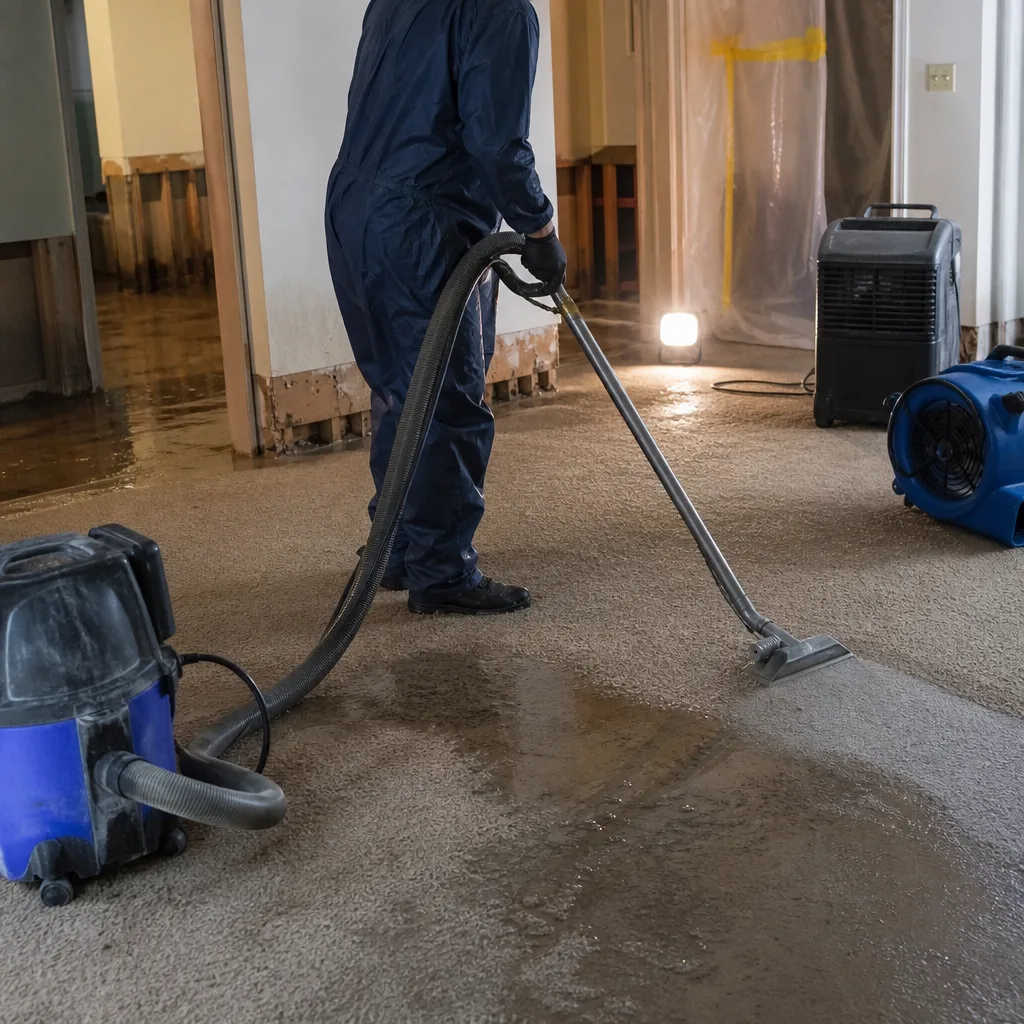
Standing water comes out with extractors. Mold-damaged material that cannot be salvaged, such as saturated drywall, baseboards, or carpet, is cut out and bagged under containment before removal. We never dry material that is already colonized beyond saving.
Drying & Dehumidification
Professional-grade Dri-Eaz and Phoenix air movers and dehumidifiers run against a moisture map we update daily. We track drying with hygrometers and thermal imaging until the concrete slab and framing hit the dry standard. In Fort Lee’s concrete towers, slab drying is the slowest piece and the one amateurs skip.
Cleaning, Sanitization & Air Scrubbing
We clean every surface inside containment, HEPA-vacuum the framing, and run HEPA air scrubbers while the area is sealed. Antimicrobial treatment goes on remaining structural surfaces. Air quality restoration includes a post-remediation clearance with third-party verification when your scope calls for it.
Repairs & Restoration
The same crew that removed the mold rebuilds the wall, repaints the ceiling, and reinstalls cabinetry. Because we handle the entire job, the moisture log, the containment record, and the final invoice all tell one continuous story for your insurer and your condo board.
Need Emergency Mold Remediation in Fort Lee Now?
Crews minutes away, answering live 24 hours a day. The sooner we start, the less it costs.
Working With Your Insurance Company
Fort Lee mold claims get complicated fast because they frequently involve multiple unit owners, a condo association policy, and separate individual policies. We understand that environment. From the first hour, we document everything: the source of the water, the scope of the damage, the moisture readings before and after drying, and the exact materials removed or treated. We write industry-standard estimates your adjuster recognizes, and we talk to the carrier directly. You should not be relaying claims questions between your neighbor, the condo board, and an insurance desk. If the mold originated from a covered water loss, we make sure the claim reflects the full remediation, not just the visible patch.
What We Provide Your Insurer
- Thorough documentation of the loss, including the water source and category
- Photos of all damage, room by room, with containment in place
- Moisture readings and drying logs, updated daily until the dry standard is met
- A detailed, line-item scope of work matched to industry pricing
- Direct coordination with your carrier, including adjuster calls and reinspection support
Built for Fort Lee’s Loss Calendar
Fort Lee’s mold season tracks the weather patterns on the Palisades ridge. Nor’easters from October through April drive wind-driven rain into aging curtain-wall joints and deteriorating window glazing seals on the borough’s 1970s-era towers. That chronic facade infiltration re-wets the same drywall in the same units after every storm, and if the moisture isn’t pulled out completely, mold follows within weeks. January and February bring deep freezes that burst original galvanized supply lines inside the building envelope, sending water down pipe chases and into the concrete slab. Spring thaw and heavy rain expose roof membrane failures on exposed parapet walls and mechanical rooms. Summer brings humidity that concentrates inside poorly ventilated bathroom and kitchen cores near original plumbing stacks. The pattern is consistent: Fort Lee’s older housing stock develops mold from inside the walls, not just on them. We know the failure points because our Mold Remediation team sees them on a weekly basis across Bergen County.
Mold Remediation Across Fort Lee’s Neighborhoods
The Palisade Avenue corridor, from Main Street down toward the George Washington Bridge approach, runs through the borough’s densest concentration of 1960s and 1970s high-rises. We regularly respond to vertical water migration there, where a single failed supply line on an upper floor affects three, four, five units below. Horizon House on Anderson Avenue is one we know well. Its original cast-iron waste stacks age differently than the copper supply lines, and when they go, the Category 3 water travels through the slab before anyone sees a stain. Down along Center Avenue and in the Coytesville section near the northern edge, we see the same mid-century construction but with more walk-up and garden-complex layouts, where crawl space treatment and humidity control matter more. The neighborhoods around Lemoine Avenue and the Bluff side near Abbott Boulevard face the Hudson Valley wind corridor directly, so facade-driven moisture is the recurring culprit there. If you live in Fort Lee, we’re already familiar with the building’s mechanical age and likely failure mode before we even walk through the door. That saves hours on the front end. The Fort Lee building stock has a rhythm to it, and we’ve learned to read it.
Specialized Mold Remediation Services We Offer in Fort Lee
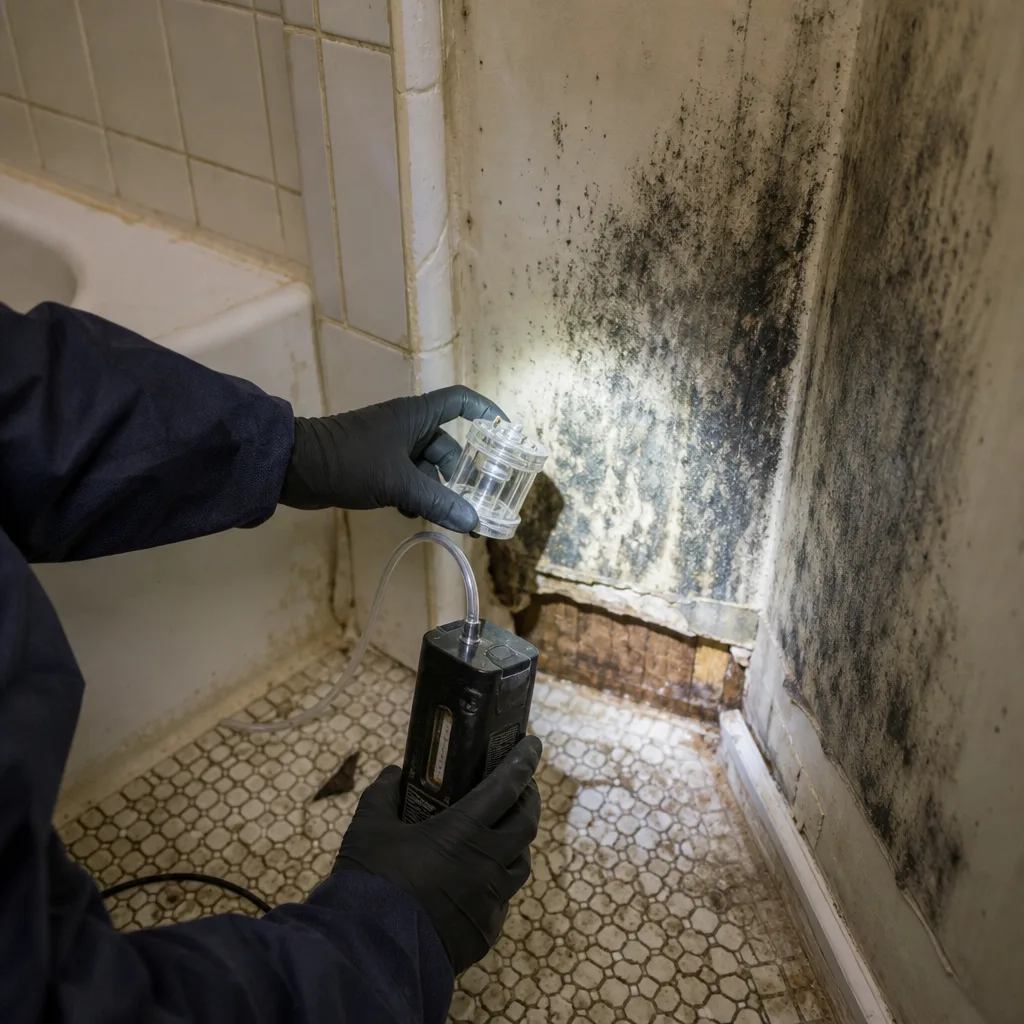
Mold Inspection & Testing
We inspect the full moisture history of the unit, not just the visible growth. In Fort Lee condos, that means checking the unit above, the unit below, the common plumbing chase, and the hallway side of the demising wall. Air sampling and surface swabs are run as needed to identify spore type and concentration before and after remediation.
Mold Removal
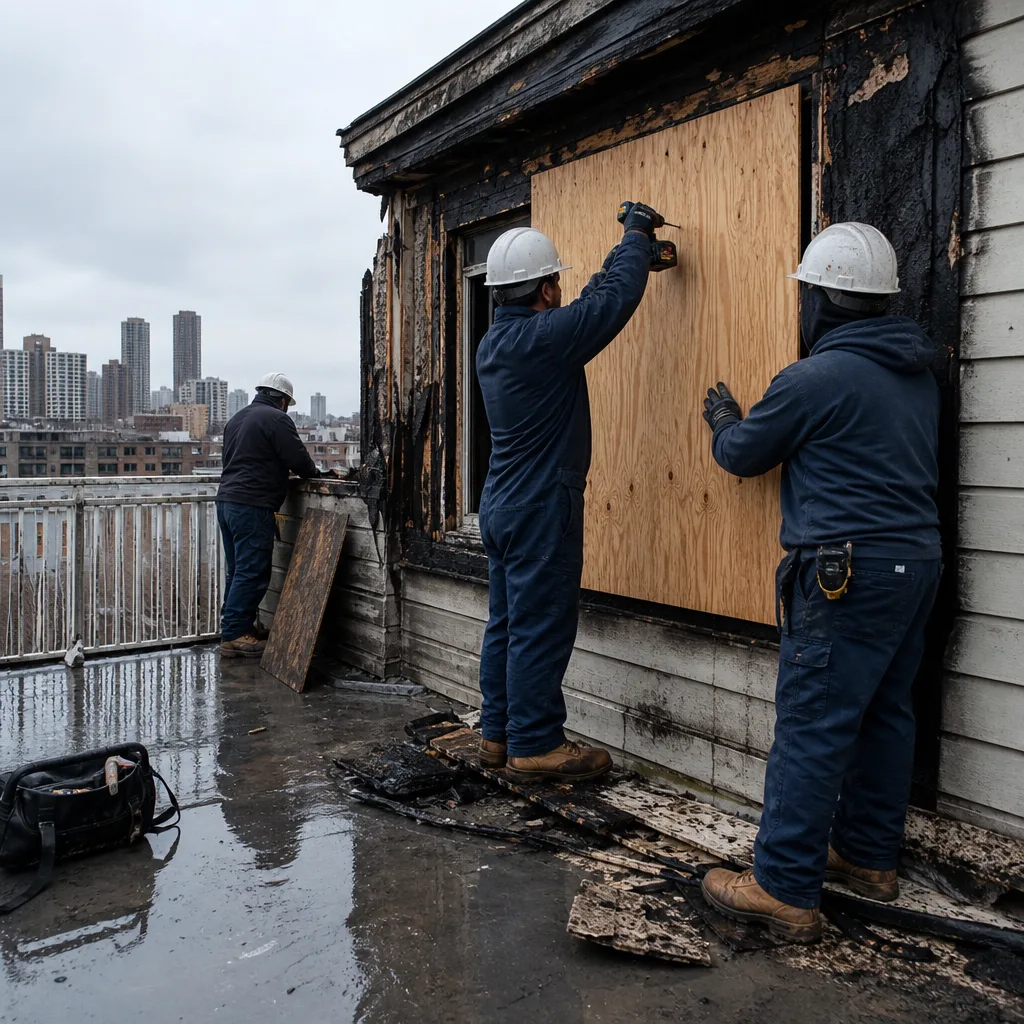
Physical removal of colonized drywall, baseboards, carpet, and insulation under negative air containment. We cut the affected material out, bag it inside the containment, and remove it through designated routes so spores never enter the hallway or the elevator car. Removal is governed by a written scope, not a handshake.
Black Mold Remediation
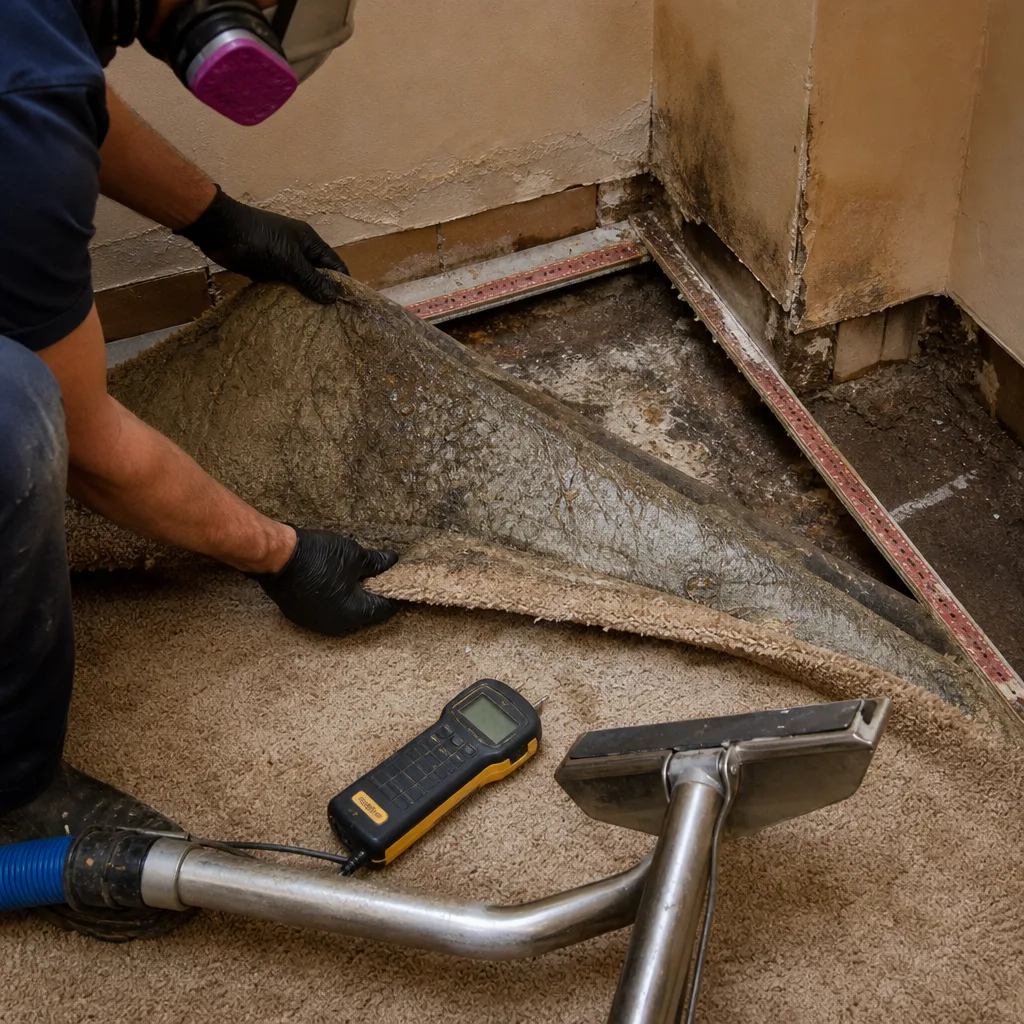
Stachybotrys and other toxigenic molds grow where water sat long enough. In Fort Lee’s slabs, that often means behind a wall where a slow drain leak persisted for months. We treat black mold with full containment, HEPA air scrubbing, antimicrobial application, and post-remediation verification before any rebuild.
Air Quality Restoration
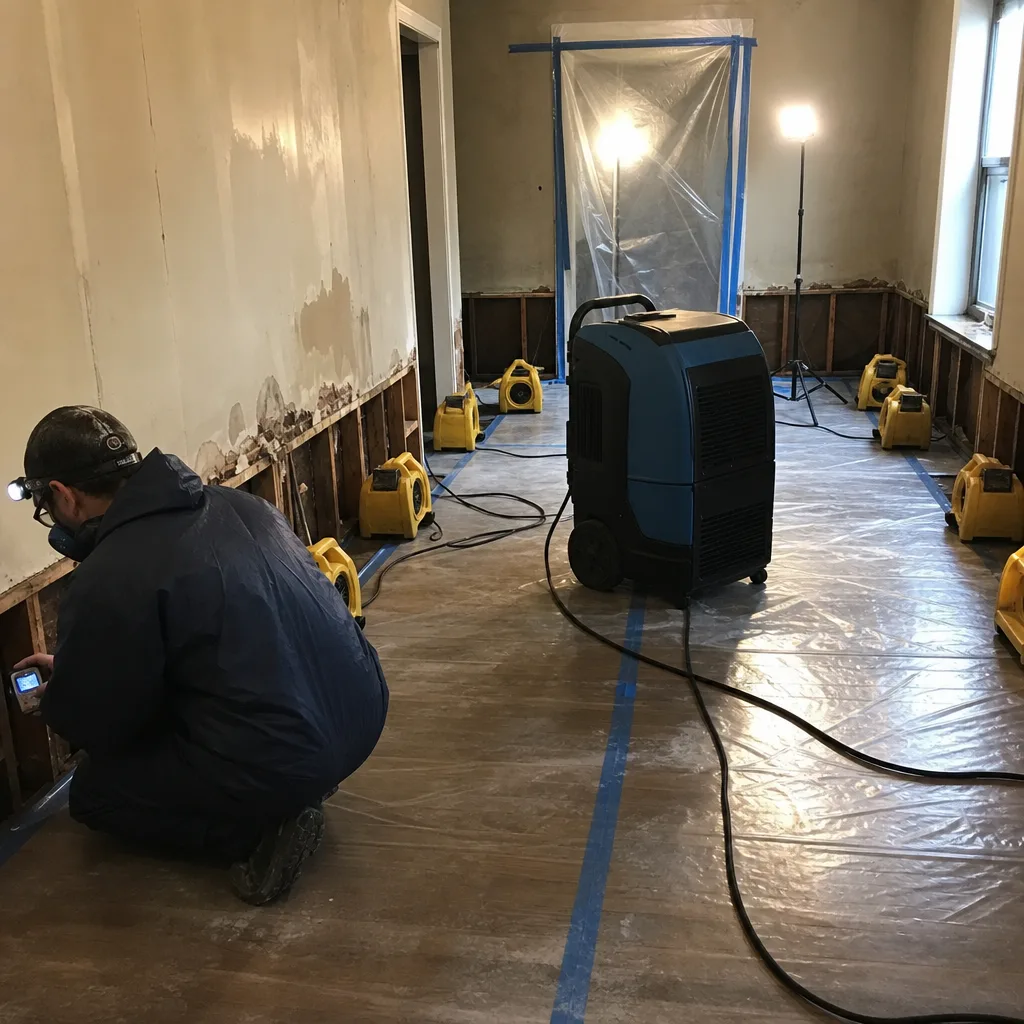
After physical removal, we scrub the air inside containment and run exterior exhaust so the unit under negative pressure pulls clean air in, not contaminated air out. We take post-remediation air samples and compare them to baseline readings. In multi-unit buildings, we can also sample the hallway and adjacent units to confirm spores didn’t migrate.
Crawl Space Treatment
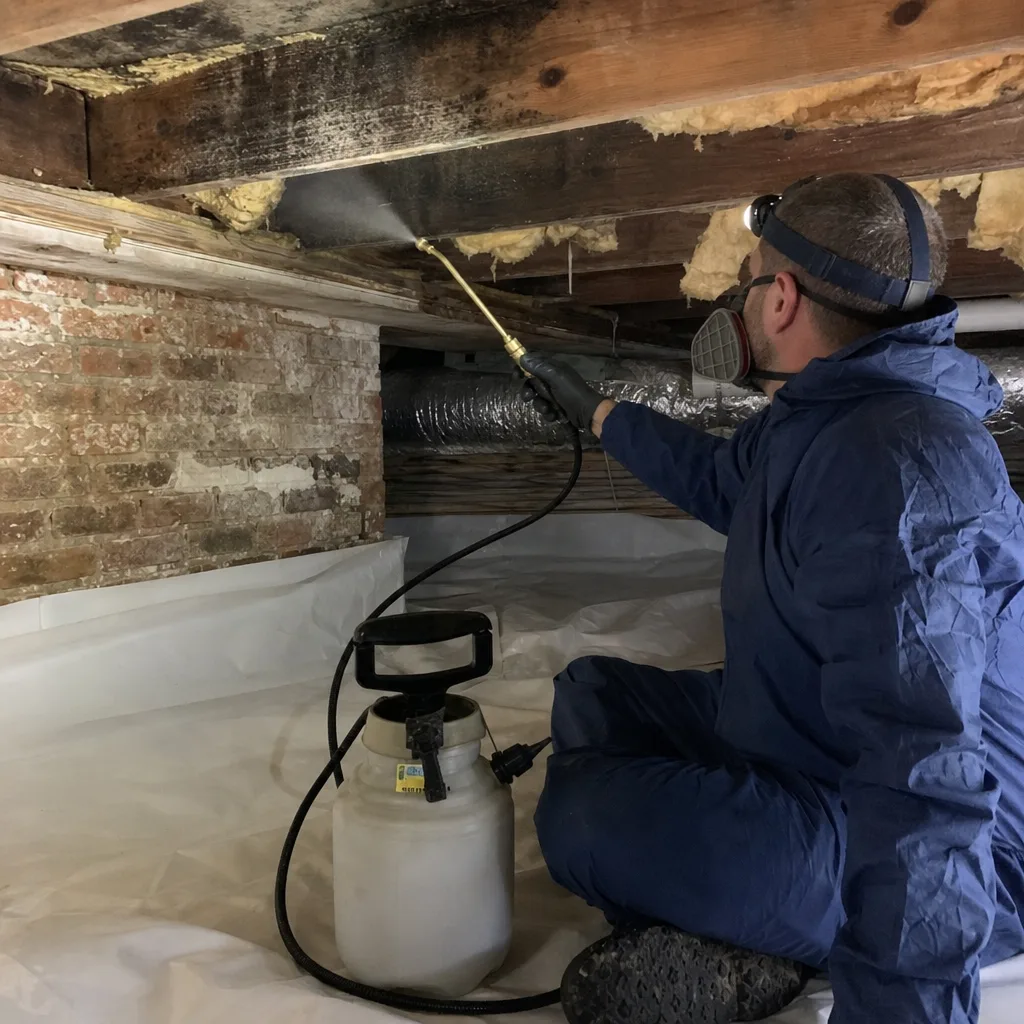
Fort Lee’s garden complexes and townhouse sections have crawl spaces that trap humidity against the first-floor framing. We install vapor barriers, seal penetrations, and dry the space to stop the moisture source. A crawl space that reads 70% relative humidity in July is actively feeding mold into the unit above it.
Moisture & Humidity Control
The long-term answer in Fort Lee’s high-rise stacks is controlling the moisture that feeds the mold. We map humidity through the slab and wall assemblies, identify the condensation points, and recommend dehumidification, ventilation, or exterior sealant repair depending on the source. If the facade gaskets are leaking, we tell you and coordinate the exterior work with building management.
What happens when you call
- 1
A real person answersNo phone trees - you reach a local pro.
- 2
You get an upfront price rangeHonest numbers before anyone is dispatched.
- 3
A background-checked tech heads outLicensed & insured, dispatched right away.
- 4
You approve before work beginsNothing starts until you say go.
Mold Remediation Costs in Fort Lee, NJ
Mold remediation in Fort Lee usually lands between $1,800 and $6,500 for a typical single-unit job. A contained bathroom mold removal behind an original 1970s vanity with drying and rebuild runs $2,500-$4,500. A multi-unit vertical migration through the slab, with containment on two or three floors, pack-out, and full structural drying, commonly runs $8,000-$18,000 or more depending on how many units are affected and what the condo board covers through the building policy. Inspection and testing alone is typically $350-$800. Crawl space encapsulation and humidity control runs $2,000-$6,000 depending on square footage. What moves the price: the number of affected units, whether the slab itself holds moisture, whether pack-out is needed, and who authorizes the work. Insurance covers mold when it stems from a covered water loss, but the way the claim is documented matters enormously. We provide the free visual inspection first, give you a firm line-item scope, and then you decide. No one starts swinging a hammer without your signature.
We Also Serve Cities Near Fort Lee
Our crews serving Fort Lee also respond across the immediate area: Leonia, Palisades Park, Edgewater, and Ridgefield. Same 45-minute dispatch commitment, same live answer at (917) 924-4221, same written scope before work starts. If you’re in a neighboring borough and the mold is spreading through the wall, call now.
Serving Fort Lee, NJ - Our Local Coverage Area
We’re based in the Fort Lee area and know this community well. Use the map below to see our service coverage - if you’re nearby, we can almost certainly help.
Fort Lee Mold Remediation Questions, Answered
If my Fort Lee condo has mold from a leak in the unit above, who authorizes the mold remediation work-my neighbor, the condo board, or my insurance?
The authorization chain in Fort Lee condos is usually: your insurer authorizes work inside your unit, the unit above’s insurer authorizes work triggered by their leak, and the condo board or building management authorizes work in common areas like pipe chases, hallways, and the slab assembly itself. We handle that coordination for you. We document the source, identify which parties are responsible, and talk to each of them directly so the work doesn’t stall while moisture keeps migrating. Call (917) 924-4221 and we’ll start the process today.
How do you dry mold safely in a Fort Lee high-rise without spreading spores into the hallway or other units?
Containment comes first. We seal the affected unit with polyethylene barriers and establish negative air pressure using HEPA-filtered exhaust, so air flows into the containment from the rest of the building rather than out of it. We bag and seal mold-damaged material inside the containment before removal. In Fort Lee towers, we also check floor penetrations around pipes and electrical conduits, because those gaps are how spores move between floors. Drying happens inside a sealed envelope, with daily moisture readings until the slab and framing hit the dry standard.
Can you remove black mold from behind the original 1970s bathrooms in Fort Lee without ripping out the plaster?
No, and you shouldn’t want a contractor who says otherwise. Black mold colonizes the back of wallboard and plaster, and no surface cleaning removes it. The affected material has to come out. What we can do is remove only the colonized section, preserve original tile and fixtures where possible, and rebuild to match. In Fort Lee’s 1970s-era bathrooms with original cast-iron stacks, the mold is often behind the wall where the stack runs, meaning the stack itself needs inspection and possibly replacement while the wall is open. We’ll give you a straight answer after the visual inspection.
How do you handle pack-out and cleaning when mold affects multiple units in a Fort Lee condo building?
We run each unit as its own containment zone with its own drying plan and its own documentation file, while coordinating the overall sequence with building management. At the Horizon House tower on Anderson Avenue, we arrived after a Category 3 sewage backup from a failing cast-iron stack. We ran moisture mapping across three stacked units, set up containment on each floor, and coordinated pack-out of the lower two condos while building management withheld roof access. We completed structural drying and antimicrobial treatment only after the super authorized common-area work, which prevented mold from spreading into the concrete slab. The sequence matters, and waiting for multiple authorizations without starting mitigation is how small mold problems become demolition jobs.
How do you know if a Fort Lee mold issue is coming from a facade leak instead of a pipe?
We trace the moisture pattern. Pipe leaks usually start at a fixture, a supply line, or a drain stack and follow the plumbing chase downward. Facade leaks in Fort Lee towers come through curtain-wall joints or window gaskets and appear on exterior-facing walls, often on multiple floors at the same stud bay, and worsen after nor’easters. Moisture mapping with thermal imaging shows which side of the wall is wet and how far the water has traveled. If it is a facade leak, interior remediation without exterior sealant repair just invites the mold back after the next storm. We’ll tell you which one it is and what the fix requires.
How fast can you actually get to a Fort Lee address?
Within 45 minutes, any time of day or night. Our dispatch is live around the clock and crews are positioned to serve Fort Lee directly. For a mold call, the first visit includes visual inspection, containment if needed, and the start of moisture mapping. You’ll get a written scope before any remediation work begins. Call (917) 924-4221 and a person answers immediately.
Will insurance cover mold remediation in a Fort Lee condo?
Generally yes, when the mold results from a covered water loss, like a burst supply line or an appliance overflow. The coverage is better when the documentation is better. We photograph everything, record daily moisture readings, and write a line-item scope your adjuster can use. In Fort Lee condos, the claim often spans multiple policies: your unit policy, the neighbor’s policy if the leak originated there, and the building policy for common areas. We coordinate with all three so you don’t have to. Call (917) 924-4221 for a free inspection and we’ll help sort out who covers what.
Can we stay in our condo during mold remediation?
Depends on the scope. A small contained bathroom job usually allows you to stay, though we seal the area and run air scrubbers. A larger multi-room remediation with high spore counts typically means relocating for safety, especially if you have respiratory conditions or young children. In Fort Lee high-rises, if the containment shares a demising wall with a neighbor, we may recommend temporary relocation for them too. We tell you straight before work starts, not after.
If you’ve got mold moving through your Fort Lee condo, the floor above is wet, or the building super just told you to “air it out,” call (917) 924-4221 now. A live person picks up, a crew gets dispatched, and a written scope comes before anything else. Done right, and backed in writing.
Written by Curt Bowman, Owner at Floodline Restoration Co. of Manhattan, serving Fort Lee and the surrounding Bergen County area.