
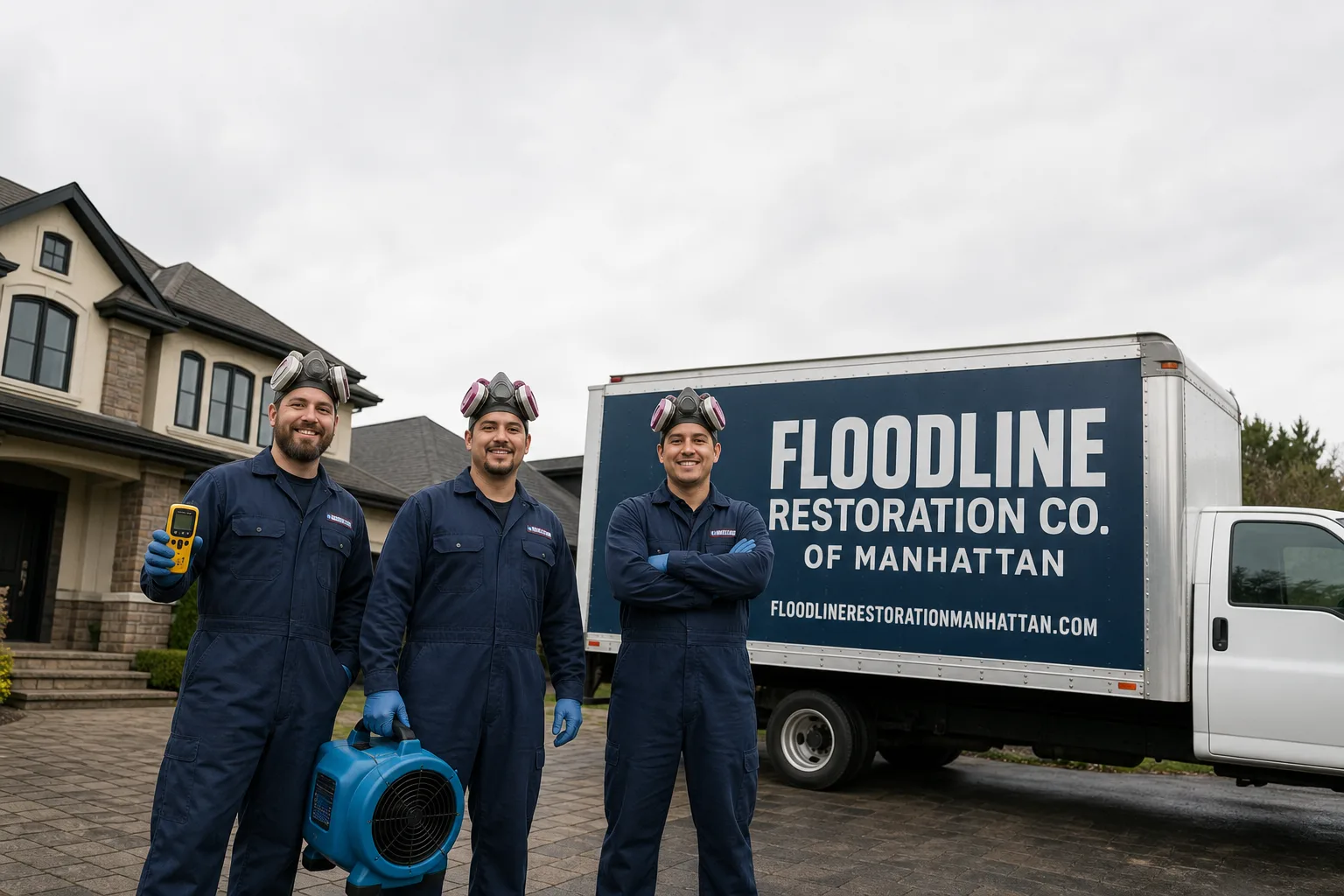
Free visual inspection and a written scope of work before any mitigation begins - photos, moisture readings, and drying logs go in your claim file
The scope we write is the scope we bill. Anything new gets shown to you, in writing, before we touch it.






 Before
 After
After Before
 After
After Before
 After
After24/7 Emergency Mold Remediation in Harlem
Mold remediation in Harlem typically costs $1,800-$6,500 depending on how far the growth has spread behind plaster walls and whether party-wall containment is required. Most jobs we handle in the neighborhood are underway within 45 minutes of your call. If you’ve spotted staining, a musty smell, or had a recent water leak, call (917) 924-4221 and a live dispatcher will pick up, day or night. Our crews work block by block through Harlem, from Sugar Hill down to Central Harlem, and the first hour matters because mold in pre-war plaster cavities spreads sideways through shared party walls faster than most homeowners realize. We arrive, assess the visible and hidden moisture, and give you a clear scope before any wall comes open.
Understanding Mold Remediation Severity in Harlem Properties
Harlem’s housing stock changes the math on mold. Most brownstones and tenements here date from the 1890s through the 1920s, built with plaster-and-lathe over wood lath nailed to balloon-framed studs. Those cavities hold moisture differently than modern drywall. Water from a steam pipe leak or roof membrane failure wicks into dense plaster and can sit for weeks without visible staining on the surface. By the time you see it, the colonization behind the wall has often crossed two or three stud bays. Severity in Harlem comes down to three things: the water source category, the age of the wall assembly, and whether the cavity connects to a neighboring property. A Category 1 water loss from a supply line in a detached house is often a contained event. In a Harlem brownstone with shared walls, the same leak becomes a cross-address problem requiring containment on both sides of the party wall, negative air pressure, and clearance testing before anyone reoccupies the space. We don’t guess. We moisture-map with thermal imaging, run air scrubbers inside full containment, and log readings daily until the dry standard is met and verified.
Why Harlem Property Owners Choose Floodline Restoration Co. of Manhattan
- 45-minute response commitment. When you call about mold or water in Harlem, we have crews staged in the area and a dispatch board that moves fast. You’re not waiting on a national call center routing a truck from New Jersey.
- 24/7 live answer, always a person. The phone is answered by a live dispatcher at 2 a.m., not a recording. Floodline Restoration Co. of Manhattan runs a dispatch desk, not a sales desk.
- IICRC-certified crews. Our technicians hold IICRC certifications including WRT and AMRT, trained to the standards that matter for mold and water loss in occupied buildings.
- Free visual inspection. We’ll look at the visible staining, check moisture levels in surrounding cavities, and tell you honestly whether you need full remediation or a targeted cleaning. No charge for the assessment.
- Direct insurance billing. We bill your carrier directly and coordinate with your adjuster. You don’t play messenger between us and the insurance company.
- One team from extraction to reconstruction. The same crew that sets containment and removes mold-laden material handles the rebuild. No mid-job handoff to an unfamiliar subcontractor.
Our Mold Remediation Process
Inspection & Assessment
We start with a visual inspection and moisture mapping using thermal imaging and hygrometers. In Harlem’s pre-war buildings, we check beyond the visible staining, especially along shared party walls and floor joists where hidden spread is common.
Containment & Source Control
Before any wall opens, we set full containment with 6-mil poly and establish negative air pressure using HEPA air scrubbers. This prevents mold spores from moving into occupied rooms or neighboring units through shared wall cavities.
Material Removal
Mold-laden plaster, lath, and insulation are removed under controlled conditions. In buildings covered by NYC Local Law 1 and Local Law 55, we coordinate any required lead and asbestos testing before disturbing 1920s-era wall assemblies.
Drying & Dehumidification
Dense plaster-and-lathe dries slowly. We use Dri-Eaz dehumidifiers and Phoenix air movers with daily moisture readings logged until the dry standard is met. Rushing this step in a Harlem brownstone means regrowth within 30 days.
Cleaning & Air Quality Restoration
We HEPA-vacuum every exposed surface, wipe down framing with antimicrobial treatment, and run air scrubbers throughout the containment period. A clearance air sample confirms the indoor air is acceptable before we close the walls.
Repairs & Restoration
We rebuild what we removed: new lath and plaster or drywall, trim, paint. If the original issue was a steam pipe leak or roof problem, the repair is addressed before we close the wall so you’re not remediating the same cavity twice.
Need Emergency Mold Remediation in Harlem Now?
Crews minutes away, answering live 24 hours a day. The sooner we start, the less it costs.
Working With Your Insurance Company
Mold claims get scrutinized. Carriers want to know the water source, the timeline, and whether the growth was sudden or long-standing. We document from the first hour: photos of the original staining, thermal images showing hidden moisture, containment setup, and daily drying logs with actual moisture readings. Our estimates use industry-standard line-item formatting that adjusters recognize, which reduces back-and-forth. Most importantly, we talk to your adjuster directly. You don’t carry messages. If your carrier pushes back on a line item, we explain the necessity in terms specific to your building’s construction. A party-wall containment line makes sense to an adjuster when you can show the neighboring cavity is wet on the thermal image. Floodline handles that conversation. The company is led by Curt Bowman, who built the business around a simple rule: the homeowner gets a square deal and a clear paper trail.
What We Provide Your Insurer
- Thorough documentation of the loss
- Photos of all damage, room by room
- Moisture readings and drying logs
- A detailed, line-item scope of work
- Direct coordination with your carrier
Built for Harlem’s Loss Calendar
Harlem’s mold season doesn’t follow a single pattern. Summer humidity settles into steam-heated tenements with poor ventilation, and condensation behind plaster walls colonizes slowly, often unnoticed until August. January and February bring freeze-thaw cycles that crack the flat and low-slope roofs on pre-war brownstones, letting ice-dam water run down interior wall cavities. Spring thaw saturates basement foundations along Lenox Avenue and Adam Clayton Powell Jr. Boulevard, where century-old fieldstone and rubble foundations weep moisture into crawl spaces. One-pipe steam systems add their own rhythm: radiator air vents fail throughout the heating season, and when a vent sticks open, it can dump steam condensate into a wall cavity every cycle. By the time the floor baseboard shows a stain on a parlor floor near Strivers’ Row, that cavity has been wet for weeks. The local reality is that most Harlem mold calls are not sudden events. They’re slow leaks in old systems that finally show themselves. Our job is to find the full extent, not just the visible patch.
Mold Remediation Across Harlem’s Neighborhoods
Harlem is not one building type. Sugar Hill holds grand pre-war co-ops and townhouses along Convent Avenue and Hamilton Terrace, many with ornate plaster ceilings and walls that complicate containment. Central Harlem around Lenox Avenue and Malcolm X Boulevard runs heavy to five-and-six-story tenement walkups where mold travels vertically through floor joists as well as horizontally through party walls. East Harlem near 116th Street sits on the Harlem River floodplain historically, and basement units there carry chronic humidity problems tied to the water table. Strivers’ Row on West 138th and 139th Streets between Adam Clayton Powell Jr. Boulevard and Frederick Douglass Boulevard has some of the finest brownstone architecture in the city, and also some of the most challenging access: narrow service alleys behind the houses require our crews to hand-carry Dri-Eaz dehumidifiers and Phoenix air movers in stages, no truck access. Hamilton Heights, with its limestone row houses on West 140s, shares the same party-wall realities as the rest of Harlem. Each area demands the same core discipline: assess the wall assembly, test the cavity, contain the spread, and dry to the standard before you rebuild.
Specialized Mold Remediation Services We Offer in Harlem
Mold Inspection & Testing
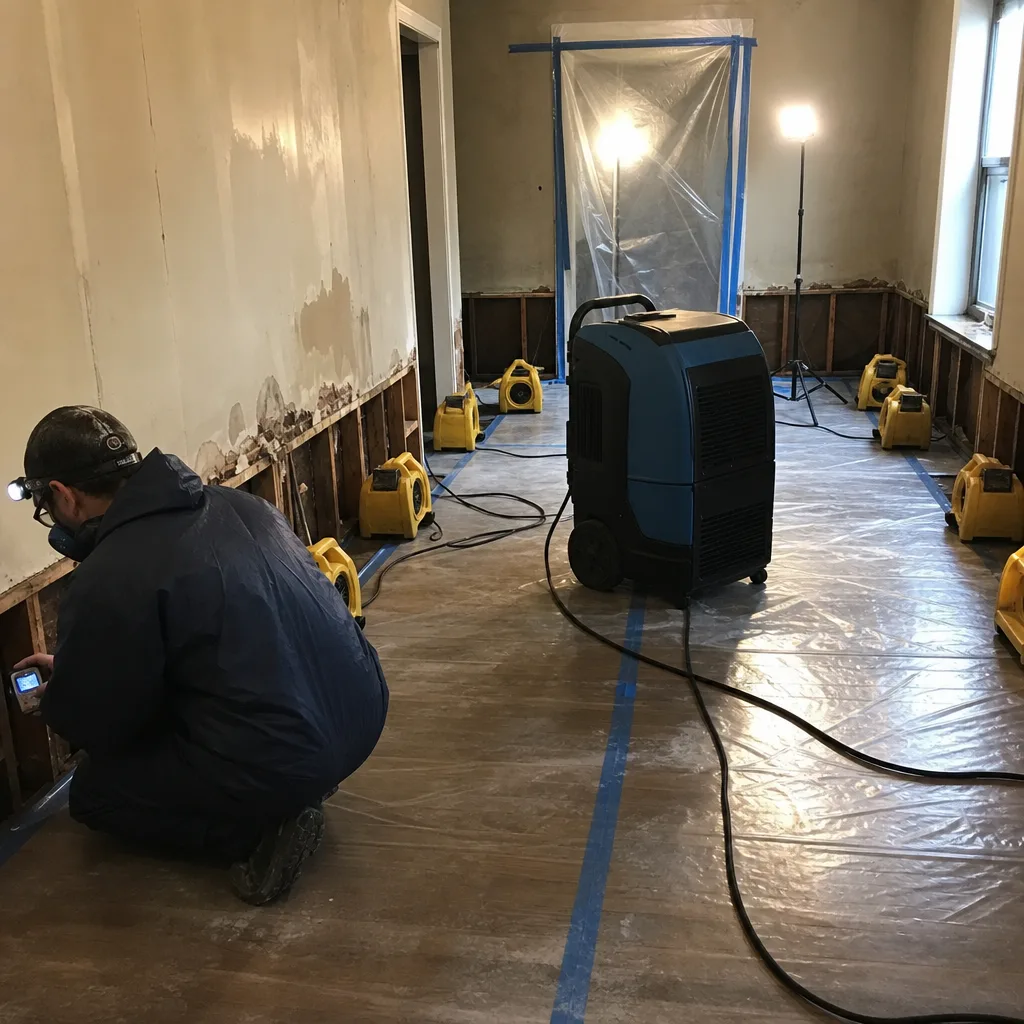
A thorough inspection in Harlem means checking beyond the visible. We use thermal imaging to find temperature differentials that indicate hidden moisture, and moisture meters to map saturation through plaster and lath. If you need air sampling, we take it before and after remediation and send it to an independent lab. The goal is a written record: what’s wet, where it is, and what the air quality looks like now.
Mold Removal
Removal in a Harlem brownstone is different from removal in a modern sheetrock house. The mold is rarely on the surface material itself. It’s in the cavity behind the plaster, supported by old lath and insulation. We remove the affected material under full containment, treat the framing, and ensure the moisture source is addressed. Our Mold Remediation team handles material removal and rebuild as one continuous job.
Black Mold Remediation
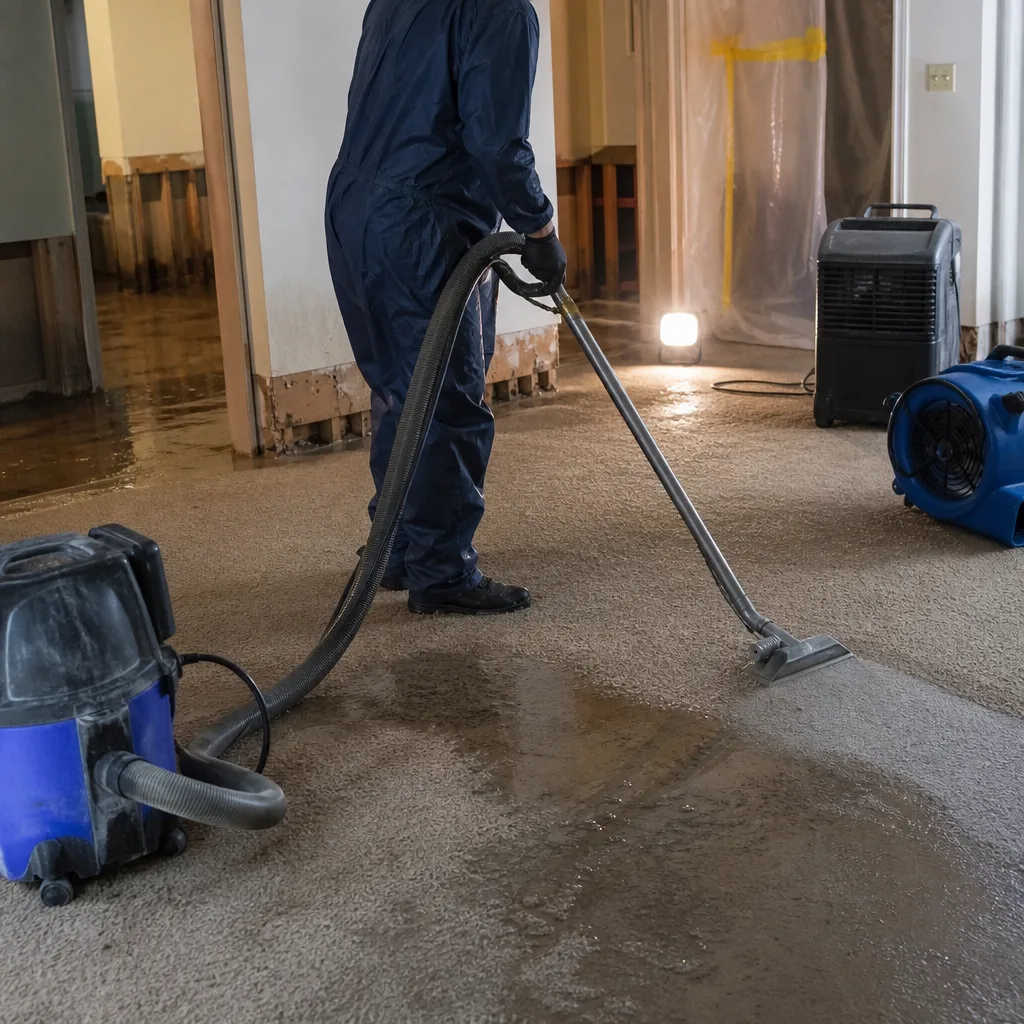
Stachybotrys, the mold commonly called black mold, grows where water has sat against organic material for extended periods. In Harlem, that typically means behind a plaster wall fed by a slow steam pipe leak or roof drip. We don’t alarm you with photos or sell you protocol you don’t need. We test, contain, remove, and clean to the clearance standard. Then we show you the before and after numbers.
Air Quality Restoration
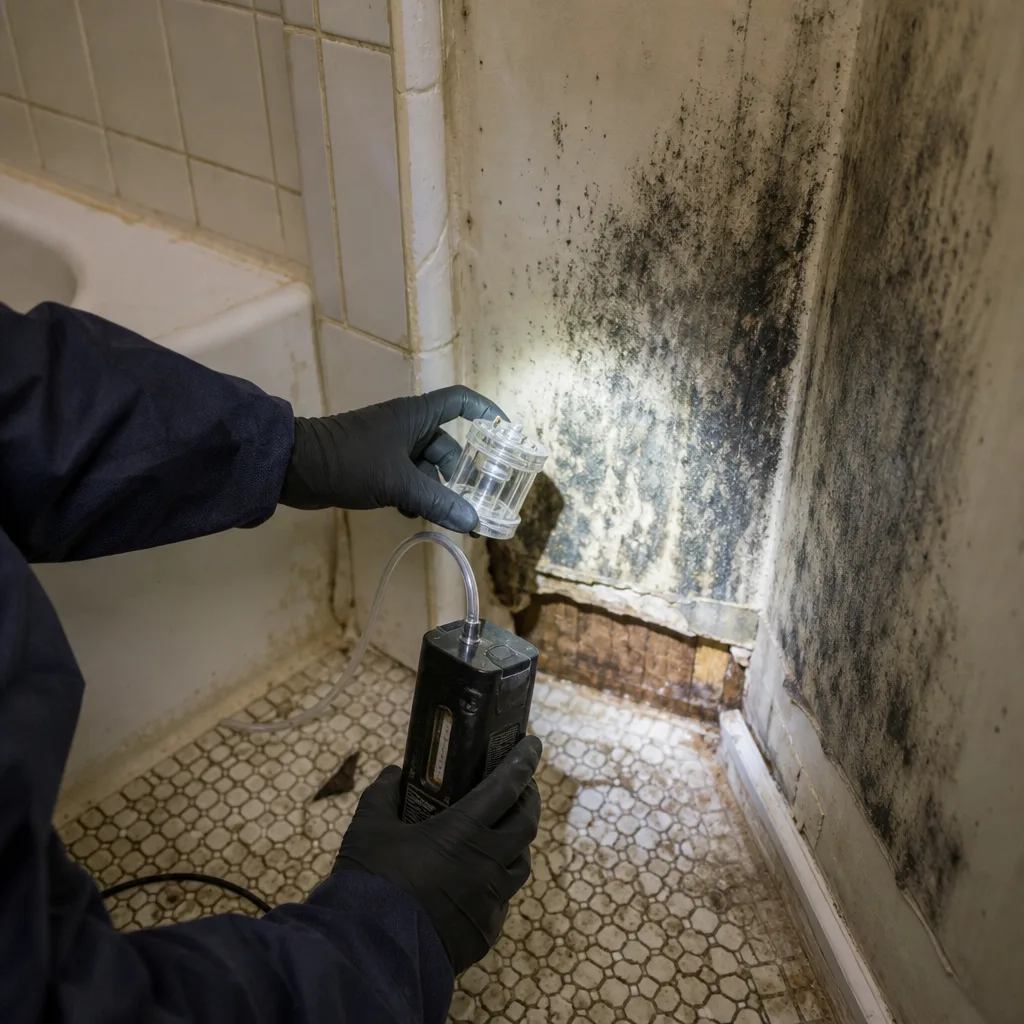
After any significant mold job, we run HEPA air scrubbers and take post-remediation air samples to confirm the indoor environment is acceptable. For Harlem apartments, this matters because the air you breathe moves through shared wall cavities and duct work. A clearance sample gives you and your co-op board or landlord a written record that the space was restored properly.
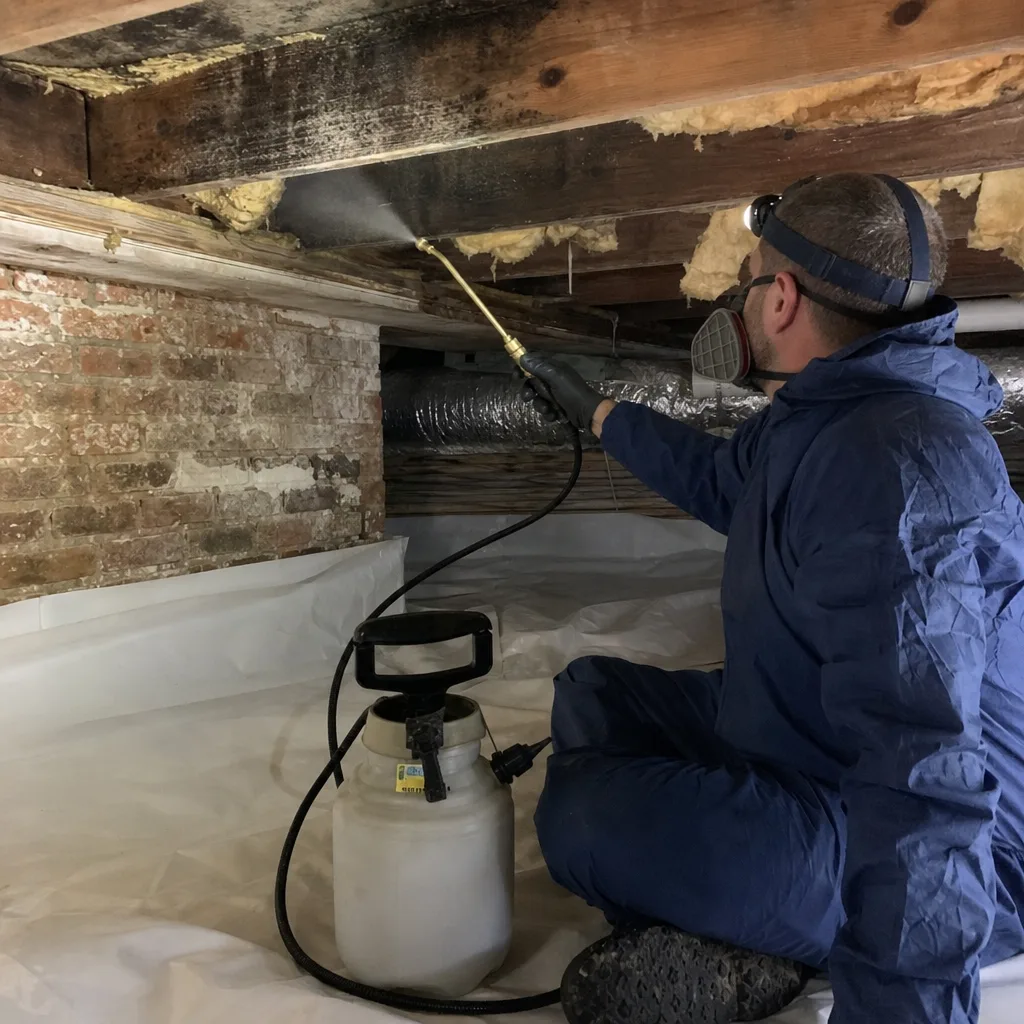
Crawl Space Treatment
Many Harlem basements are open crawl spaces or shallow cellars with fieldstone walls. Those spaces hold humidity year-round, and that moisture migrates upward into ground floor parlors. We treat the source: vapor barriers where appropriate, dehumidification, and structural drying of soil and stone. The fix is not just spraying the joists; it’s changing the moisture load in the space.
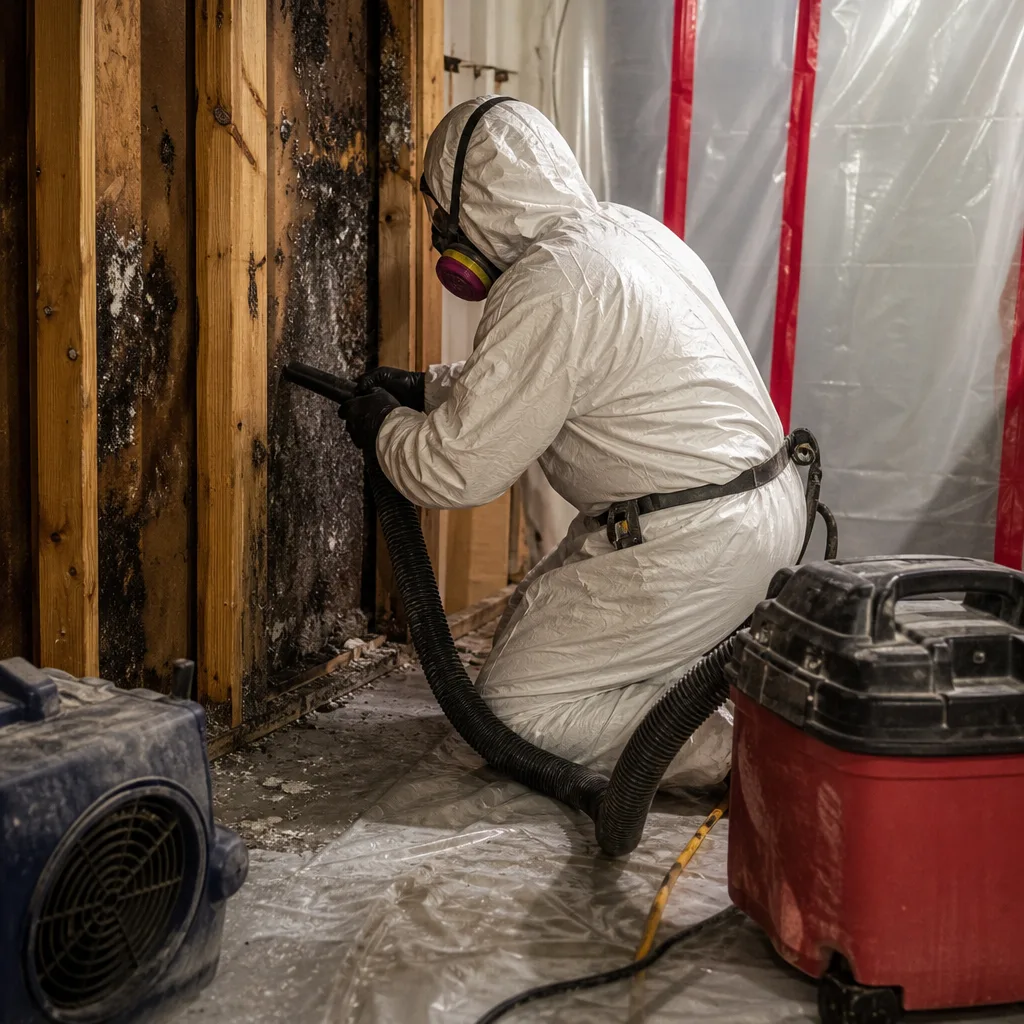
Moisture & Humidity Control
Steam heat plus summer humidity creates a persistent moisture problem in Harlem apartments. We assess the building’s air flow, identify condensation points, and recommend mechanical ventilation or dehumidification where it will actually help. This service pairs well with remediation: once the mold is gone, the humidity problem that fed it needs an answer.
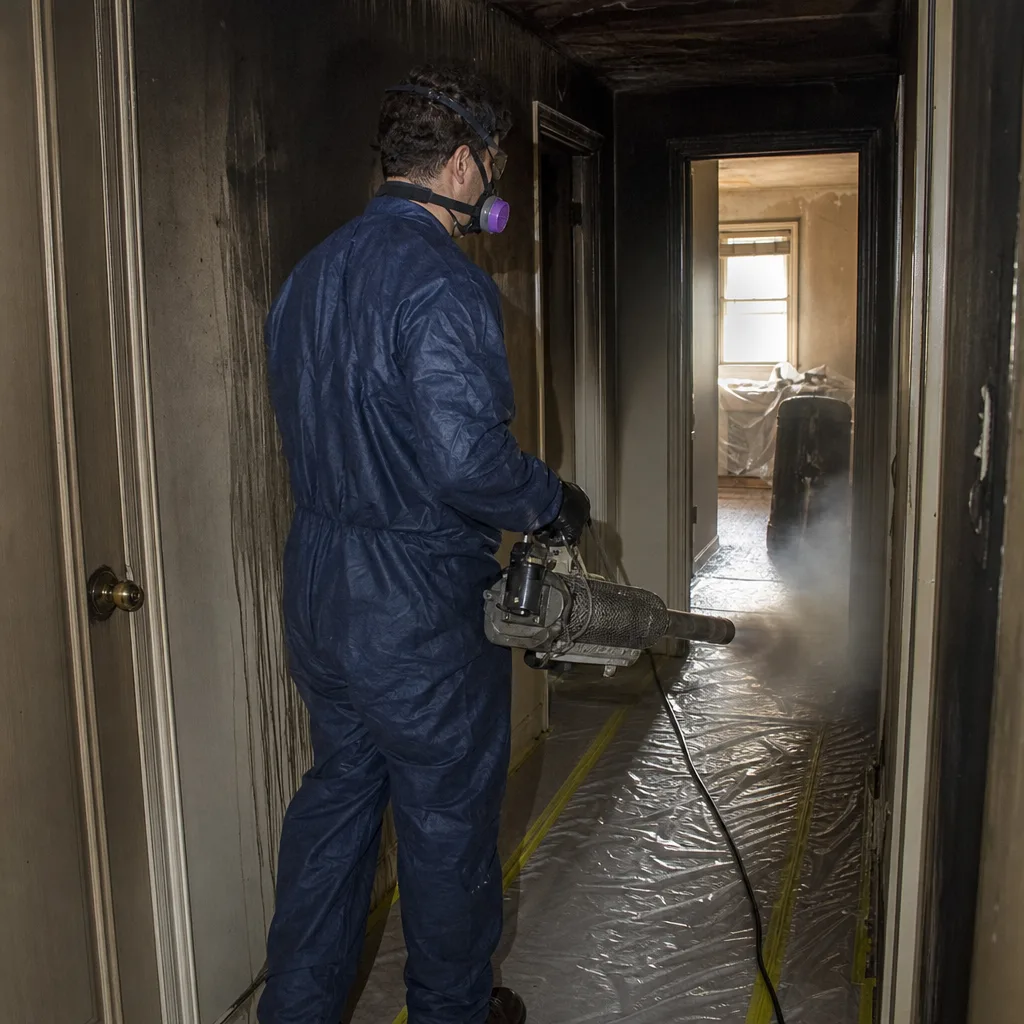
What happens when you call
- 1
A real person answersNo phone trees - you reach a local pro.
- 2
You get an upfront price rangeHonest numbers before anyone is dispatched.
- 3
A background-checked tech heads outLicensed & insured, dispatched right away.
- 4
You approve before work beginsNothing starts until you say go.
Mold Remediation Costs in Harlem, NY
Expect mold remediation in Harlem to run between $1,800 and $6,500 for most single-room jobs. A straightforward bathroom remediation with containment and drying might cost $1,800-$2,800. A full parlor-level cavity that has crossed into a party wall and requires two-address containment runs $4,500-$6,500. If crawl space treatment or air quality restoration is needed, add $1,200-$3,000 depending on square footage. Black mold remediation, where clearance testing and extended drying are standard, sits at the higher end. The biggest variable in Harlem is access: walk-up buildings with no elevator and narrow service alleys add labor hours that don’t appear in suburban pricing. Insurance covers mold when it results from a sudden covered water loss, but not when it’s deemed long-standing. We give you a written scope and a firm price after the free visual inspection, before any work begins. Call (917) 924-4221 and we’ll walk you through it.
We Also Serve Cities Near Harlem
Our crews dispatch into Harlem and the surrounding neighborhoods daily. We also handle mold remediation in Fairview, Harrison, East Bronx, and Hunts Point. If you own property across upper Manhattan or the nearby Bronx, you can call one number and reach a live dispatcher for any of those locations. Same free inspection, same written scope, same Harlem standards applied across the area.
Serving Harlem, NY - Our Local Coverage Area
We’re based in the Harlem area and know this community well. Use the map below to see our service coverage - if you’re nearby, we can almost certainly help.
Harlem Mold Remediation Questions, Answered
Does Harlem’s NYC Local Law 55 change what a landlord can order for mold removal in a pre-war brownstone?
Yes, Local Law 55 requires landlords to inspect and remediate mold in common areas and apartments when it’s reported, under specific protocols, and it applies to most of Harlem’s rental housing including pre-war brownstones. The law establishes minimum standards for assessment and abatement, requires certified workers in many cases, and mandates that landlords document the work. For a tenant, this means mold in a Harlem rental is not a discretionary cleanup. For an owner, it means the remediation must meet the law’s documentation and clearance requirements, which is exactly how we scope and report every job. Call (917) 924-4221 if you need a Local Law 55-compliant assessment.
My co-op board says the mold in my bathroom is from my own humidity, not a pipe leak. Can you tell the difference?
Yes, we can differentiate condensation-driven mold from water-loss-driven mold with moisture readings, thermal imaging, and cavity inspection. Condensation mold tends to stay on surface materials and appears in predictable spots: around the shower ceiling, on cold exterior walls, behind a toilet that sweats. A leak behind the wall shows elevated moisture in specific cavities and often wicks downward along framing. In a Harlem co-op, the distinction matters because a pipe leak inside the wall is a building responsibility under most proprietary leases. We document our findings in writing so you and your board have a factual basis for deciding who pays.
How do you remove mold from plaster without disturbing lead paint in a Harlem brownstone?
We follow NYC Local Law 1 lead-safe work practices and Local Law 55 mold protocols simultaneously. That means testing for lead before disturbing any 1920s-era painted surface, using HEPA vacuums and wet methods for removal, and containing the work area to prevent dust migration. The plaster is removed under negative pressure, and any painted surfaces in the containment zone are treated as lead-bearing until testing says otherwise. This dual protocol adds steps and cost, but skipping it is illegal and dangerous. We don’t skip it.
The mold is in the wall behind my radiator - can you dry the plaster in place without tearing out the whole wall?
Sometimes, but not always. If the mold is the result of a recent steam leak and the plaster is still sound, we can dry the cavity with injection drying equipment and re-test for mold activity. Injectidry and similar systems push dry air into the wall cavity without opening the plaster. But if the mold has colonized the paper face of the lath or the insulation is saturated, the material must come out. We’ll tell you which scenario you have after the inspection, and we’ll show you the moisture readings that support the call.
Does the mold category of the water source change how you remediate a Harlem apartment?
Yes. The IICRC categorizes water by contamination level: Category 1 is clean supply water, Category 2 is grey water with some contamination, and Category 3 is sewage or flood water carrying pathogens. That classification changes the containment level, the PPE our crews wear, the disposal method for removed materials, and the antimicrobial treatments applied to framing. A Category 1 steam-condensate leak behind a radiator is a different job than Category 3 water from a backed-up building waste line. We determine the category before we open the wall, so the scope is correct from the start.
How fast can someone actually get to my Harlem apartment?
We commit to a 45-minute response in the Harlem area during active water or mold emergencies, and most of our crew dispatches beat that. The team is staged across Manhattan and the dispatch board is live 24 hours a day. You call (917) 924-4221, a person answers, and a truck rolls. No automated menu, no call-back from a sales office.
Will insurance cover mold remediation in my Harlem brownstone?
Coverage depends on the source and your policy language. If mold follows a sudden, covered water loss like a burst supply line or storm damage, most policies include some mold remediation coverage, often with sub-limits. If the mold is from long-standing humidity or a slow leak that was never reported, carriers generally deny the claim. The single most important thing you can do is report the issue immediately and document it. Early reporting turns a chronic problem into a sudden one in the carrier’s eyes, and our direct insurance billing and adjuster communication makes the process straightforward.
What should I do in the first 30 minutes after I find mold in my Harlem apartment?
Stop the water if there’s an active source, avoid disturbing the mold by wiping or scrubbing it, and call us at (917) 924-4221. Don’t run fans or open windows to air it out, because that spreads spores into adjacent rooms. Don’t paint over it, don’t bleach it, and don’t cover it with furniture until we’ve assessed it. Photos on your phone are helpful, but the meaningful documentation comes from our moisture mapping and thermal images. Then, if you haven’t already, notify your insurance carrier and your co-op board or landlord in writing. We’ll provide the technical record to support the claim.
Written by Curt Bowman, Owner at Floodline Restoration Co. of Manhattan, serving Harlem with certified mold remediation and full-cycle restoration.