
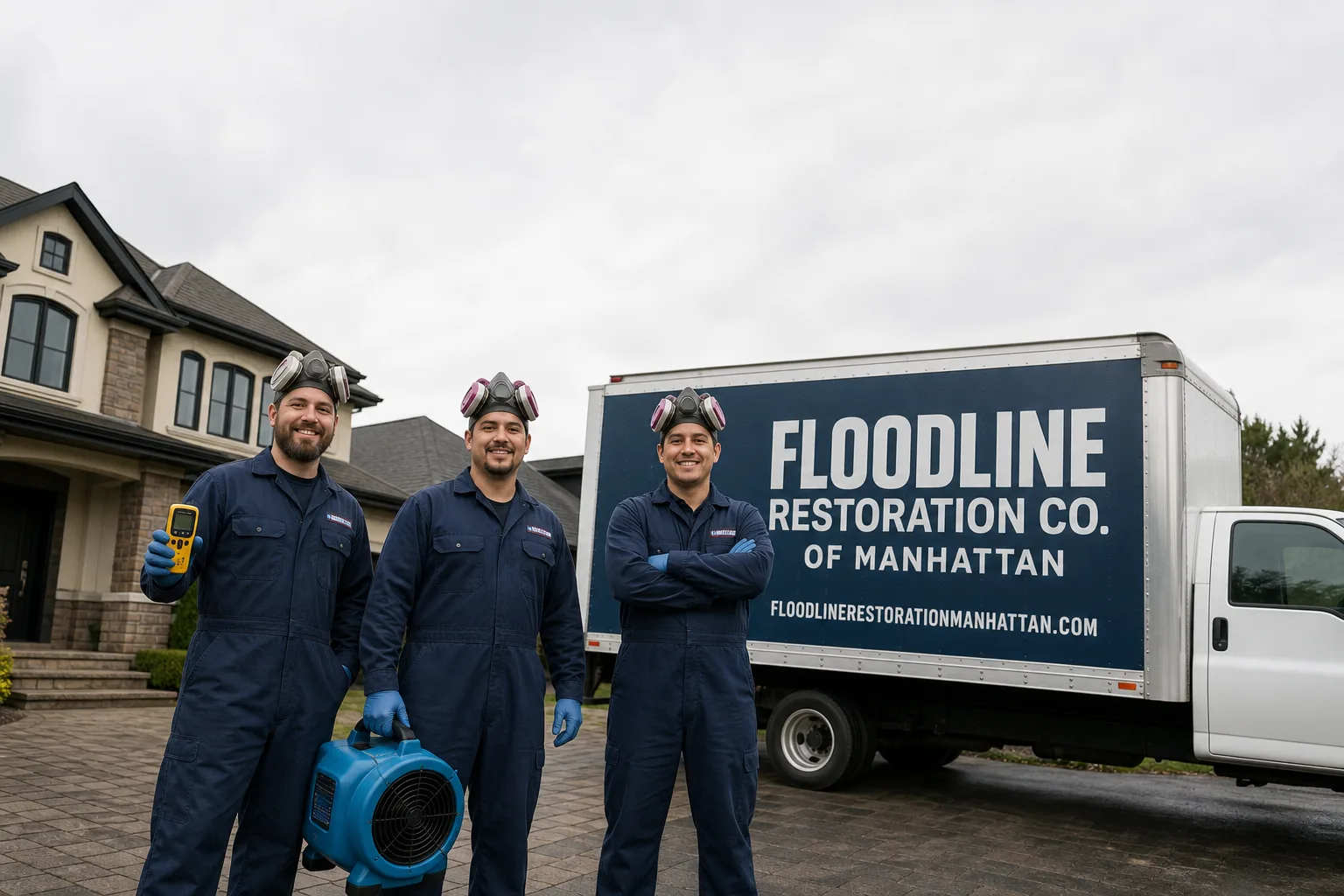
Free visual inspection and a written scope of work before any mitigation begins - photos, moisture readings, and drying logs go in your claim file
The scope we write is the scope we bill. Anything new gets shown to you, in writing, before we touch it.






 Before
 After
After Before
 After
After Before
 After
After24/7 Emergency Mold Remediation in Harrison
Mold remediation in Harrison costs between $1,800 and $6,500 for a typical basement or bathroom job, and a crew can usually be on site within 45 minutes when you call (917) 924-4221. We answer live at 2 a.m. because mold doesn’t wait for business hours, and neither do the nor’easters that push the Mamaroneck River over its banks into Harrison basements. The first hour matters: standing moisture inside wall cavities starts colonizing into visible mold within 48 to 72 hours, but the damage behind the plaster begins long before you see the black spots.
Our crews dispatch from the New York City office and serve Harrison locally, with trucks already staged near the village center and Purchase during storm season. Call (917) 924-4221 and a live dispatcher picks up, not a recording. We’ll walk you through what to shut off, what to photograph, and what to leave alone until our certified techs arrive. The visual inspection is free, and you’ll get a written scope before any work starts.
Understanding Mold Remediation Severity in Harrison Properties
Mold in a Harrison colonial is not the same animal as mold in a Purchase estate. Older village homes built before 1960 carry original plaster walls, galvanized supply lines, and drainage systems that were never designed for the flash-flood volumes the Mamaroneck River watershed now delivers. When Category 2 water (rain-driven floodwater with contaminants) saturates sill plates and wicks up plaster, the drying standard is different from a clean-water pipe break. You need moisture mapping, not guesswork. You need containment, negative air pressure, and HEPA air scrubbing so spores don’t migrate into the living space while drying runs.
Purchase properties add another layer. A flooded master bath with hand-cut stone floors or custom Venetian plaster cannot be scoped with standard line items. Those materials absorb water differently, dry slower, and cost more to match if they need replacement. Our techs carry thermal imaging cameras and hygrometers on every job, and we log moisture readings daily until the structure hits the dry standard. That log goes to you and your insurer, in writing. No soft claims. Numbers.
Why Harrison Property Owners Choose Floodline Restoration Co. of Manhattan
- 45-minute response commitment: Our Harrison crews stage during storm watches and freeze events, so a certified tech reaches your door fast when waiting means more damage.
- 24/7 live answer, always a person: Call at 2 a.m. and a dispatcher answers. Not a phone tree. Not a callback. We’ve run a dispatch board since 2010, not a sales desk.
- IICRC-certified crews: Our techs hold WRT (Water Damage Restoration Technician), FSRT (Fire & Smoke Restoration Technician), and AMRT (Applied Microbial Remediation Technician) certifications, trained to IICRC, RIA, and IFA standards.
- Free visual inspection: We assess what’s actually growing, measure moisture behind walls, and give you a firm scope in writing before any tool comes off the truck.
- Direct insurance billing: We work your carrier, submit the documentation, and you never play messenger between us and the adjuster.
- One team, first visit to final repair: The same certified crew that sets containment handles the drying, the antimicrobial treatment, and the reconstruction. No mid-job handoff to a stranger.
Our Mold Remediation Process
Inspection & Assessment
We start with thermal imaging and moisture meters to find water you can’t see, then test air and surface samples to identify the mold type and spore count. You get a report that tells you exactly what’s growing, where, and what it’ll take to fix it.
Containment & Source Correction
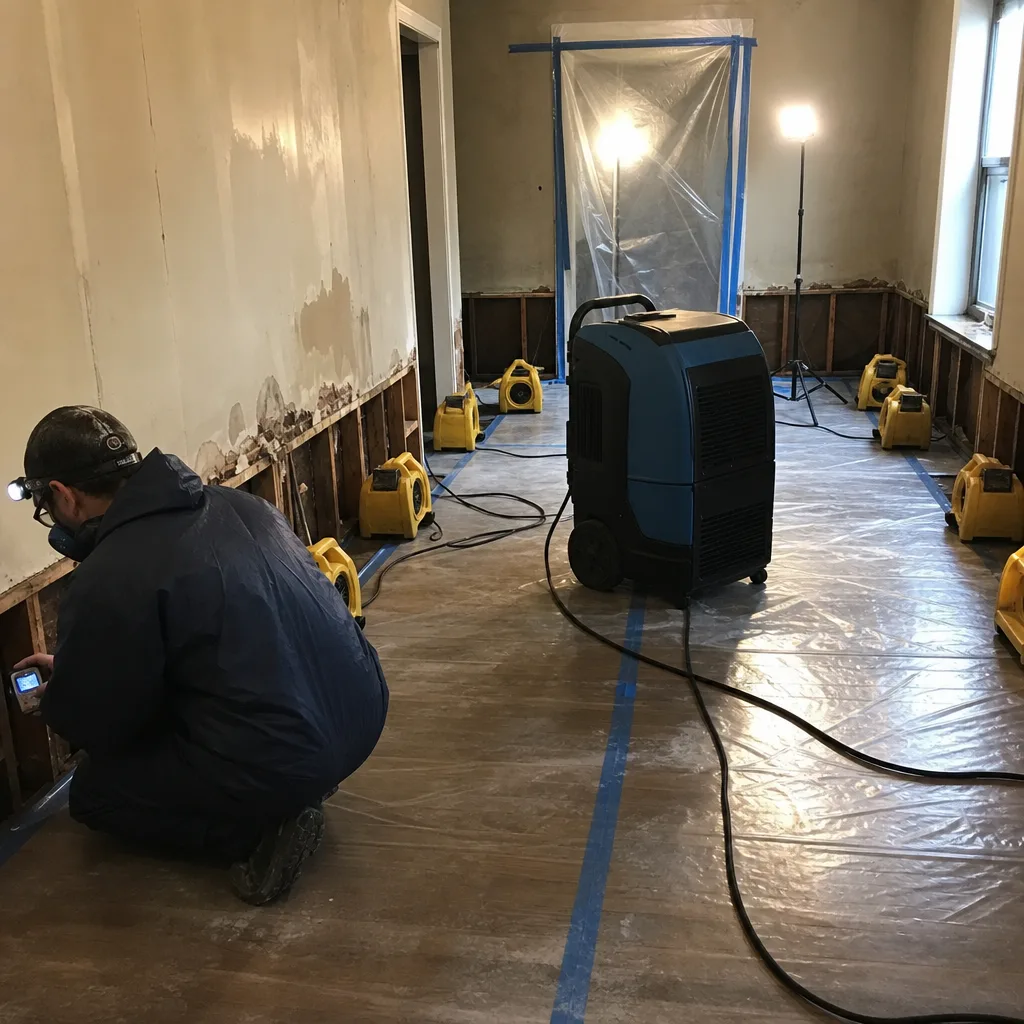
We seal the affected area with 6-mil polyethylene, establish negative air pressure, and fix the moisture source first. Treating mold without stopping the water is a wasted invoice. In Harrison, that often means correcting drainage or sealing foundation cracks near the watershed corridor.
Drying & Dehumidification
Dri-Eaz LGR dehumidifiers and high-velocity air movers pull moisture from plaster, framing, and subfloor until our hygrometers confirm the dry standard. Daily readings get logged and shared with you and your carrier.
Cleaning & Sanitization
HEPA air scrubbers run throughout the job, and all salvageable surfaces get antimicrobial treatment and HEPA vacuuming. Contaminated porous materials that can’t be cleaned are removed under containment so spores don’t spread.
Crawl Space & HVAC Treatment
Harrison homes with crawl spaces hold hidden mold colonies that recirculate through the ductwork. We treat crawl spaces, clean or replace contaminated insulation, and sanitize HVAC components to stop spore drift into bedrooms and living areas.
Repairs & Restoration
Once the structure is dry and clean, we rebuild what came out: drywall, plaster, trim, flooring. For Purchase homes with custom finishes, we match Venetian plaster and hand-cut stone through our luxury-trade supplier relationships, so the repair doesn’t announce itself.
Need Emergency Mold Remediation in Harrison Now?
Crews minutes away, answering live 24 hours a day. The sooner we start, the less it costs.
Working With Your Insurance Company
Most Harrison homeowners don’t realize their mold remediation may be covered if it stems from a sudden, covered water event like a burst pipe or storm-driven flooding. Your carrier will want documentation from the first hour, not a cleanup crew’s word. We photograph everything before we touch it, log moisture readings daily, and write a line-item scope that speaks the adjuster’s language. Our team handles direct coordination with your carrier, so you get straight answers without the runaround. The same crew that extracts sends the photos, the drying logs, and the final clearance test results. When your adjuster calls us, they get technical answers from the people who did the work, not a call center.
What We Provide Your Insurer
- Thorough documentation of the loss
- Photos of all damage, room by room
- Moisture readings and drying logs
- A detailed, line-item scope of work
- Direct coordination with your carrier
Built for Harrison’s Loss Calendar
Harrison’s mold season runs on two tracks. The first is the nor’easter season, late fall through early spring, when heavy rain pushes the Mamaroneck River and its tributaries over low ground near the village center. Basements in the older streets off Harrison Avenue and Webster Avenue take on water, and if that water sits for more than two days, mold colonizes the plaster and framing above the waterline. The second is the January-through-March freeze-thaw cycle. Ice dams form on roofs over older colonial attics, meltwater seeps into wall cavities, and by April, hidden mold blooms inside walls with no visible leak. We also see summer thunderstorm burst events in early evening that overwhelm older drainage and send sheet water into split-levels near North Street. Every one of those patterns shows up in our dispatch logs year after year.
Mold Remediation Across Harrison’s Neighborhoods
Harrison splits into two service realities, and we plan routes accordingly. The village core, running from around the Metro-North station up toward Harrison Elementary School and the municipal complex, holds pre-war and mid-century colonials with original plaster and aging drainage. Calls there are typically basement mold after heavy rain, crawl space contamination, and wall-cavity mold behind original lath. Response time matters because streets are tight and parking during school hours is a problem we know how to work around.
Out in Silver Lake and along North Street toward Purchase, the lots open up and the houses change. These are larger colonials and newer builds with finished basements and French drains that should work but often don’t when the watershed is stressed. Then you reach Purchase itself, where estate properties demand containment setups that protect imported stone and custom millwork. We run those jobs with a slower, more deliberate protocol: full containment before any demo, specialty material matching, and adjuster documentation that reflects real replacement costs, not generic line items. The dual-market reality of Harrison means we carry different equipment loads and crew configurations depending on which side of town we’re serving.
Specialized Mold Remediation Services We Offer in Harrison
Mold Inspection & Testing
Before any remediation, you need to know what you’re dealing with. We collect air and surface samples in Harrison homes, send them to an independent lab, and give you a report showing spore counts, mold types, and whether the indoor levels exceed outdoor baseline. In older village homes, we often find hidden colonies behind original plaster that air testing alone would miss, so we pair sampling with thermal imaging and moisture mapping.
Mold Removal
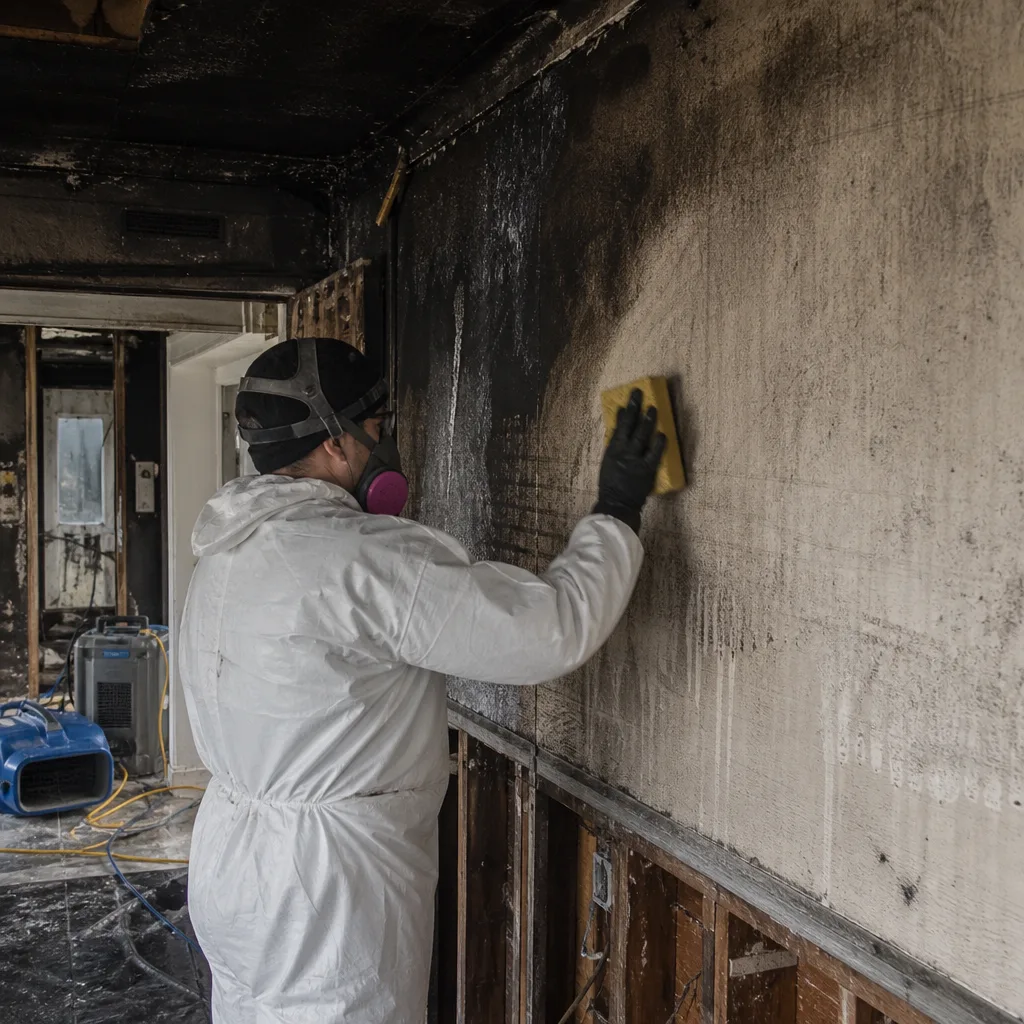
Removal means removing contaminated materials under containment, not painting over the stain. In Harrison colonials, that frequently means cutting out saturated plaster and lath in basements and first-floor walls, disposing of contaminated insulation, and treating framing with antimicrobials before rebuilding. On Purchase estates, removal is more surgical: we cut out only what’s unsalvageable and preserve custom finishes wherever the drying data supports it.
Black Mold Remediation
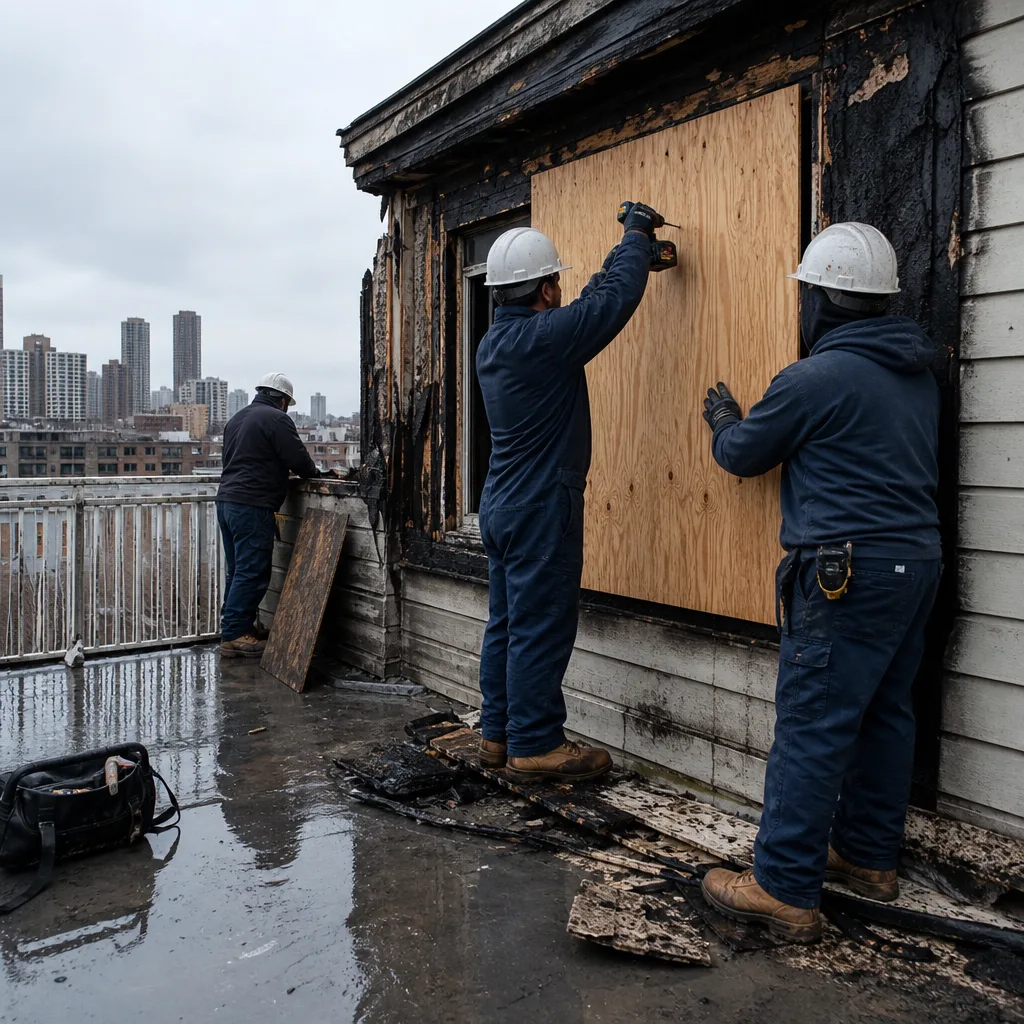
Stachybotrys, the mold people call black mold, grows on cellulose materials that have stayed wet for days or weeks: drywall backing, wood framing, paper-faced insulation. Harrison homes with chronic drainage problems or hidden ice-dam moisture are prime candidates. Containment for black mold jobs is stricter, with negative air pressure and HEPA scrubbing running from setup through final clearance.
Air Quality Restoration
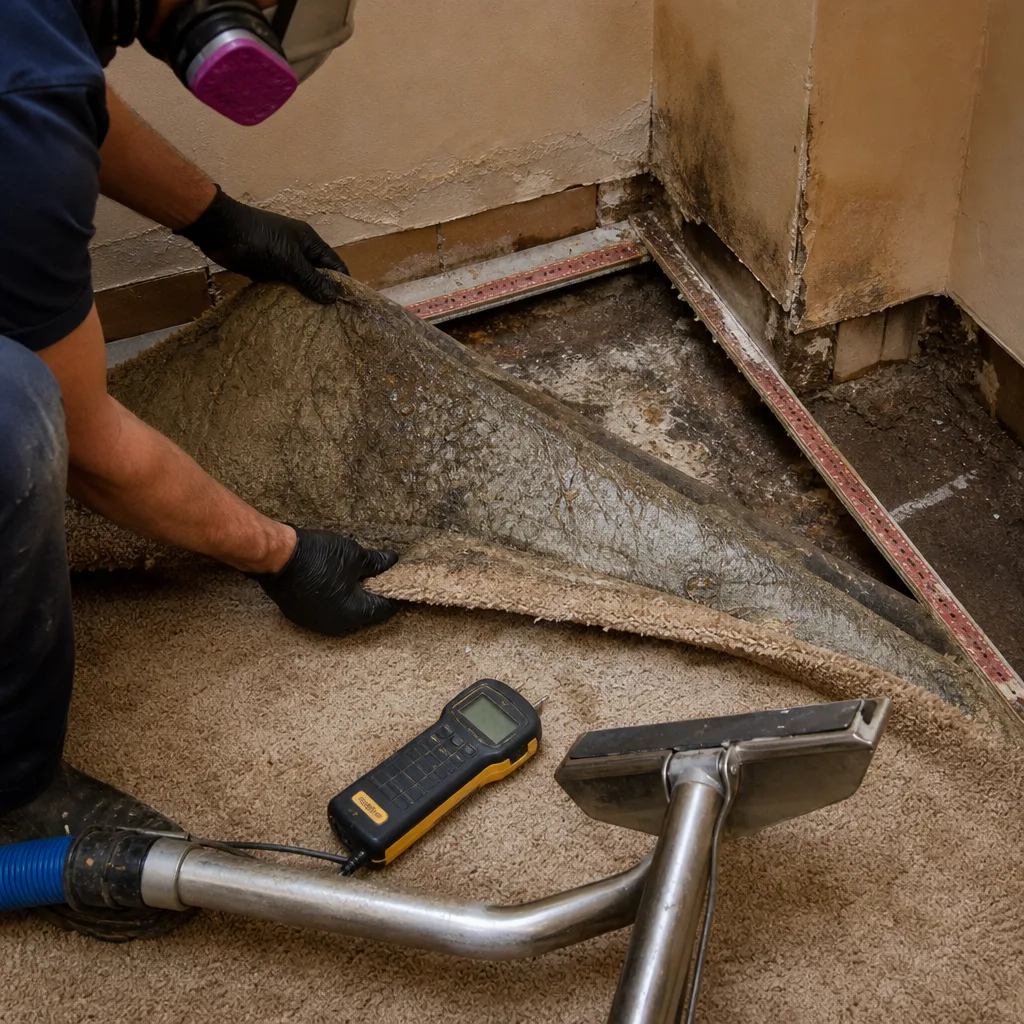
After remediation, the air inside a home can still carry spore loads that keep occupants coughing or wheezing. We run HEPA air scrubbers during the job and, where necessary, clean or replace contaminated HVAC components so the system stops recirculating mold. In Harrison’s older homes, ductwork installed decades ago often holds construction debris and decades of dust alongside active spores.
Crawl Space Treatment
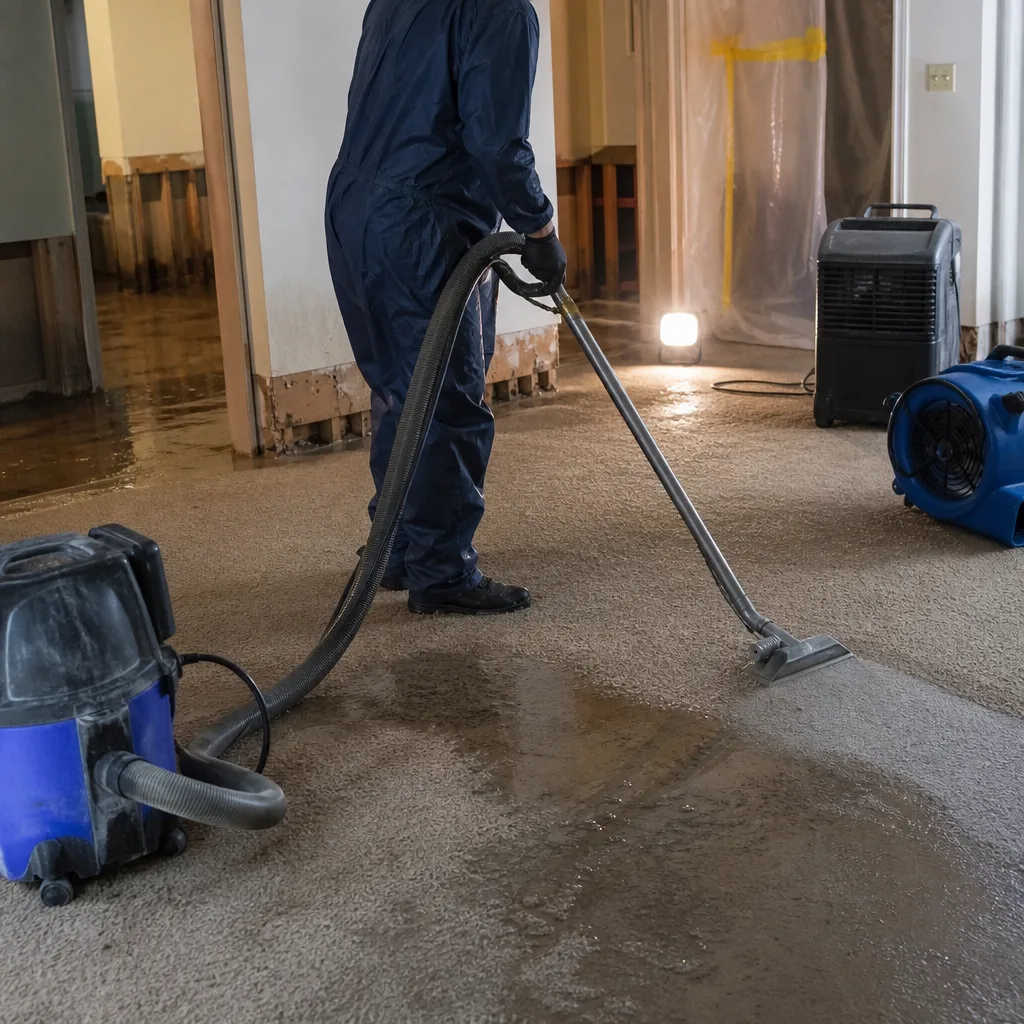
Crawl spaces are where Harrison’s mold problems hide. Standing water from poor drainage, coupled with organic debris and dark conditions, creates a mold factory that sends spores up through floorboards. We remove contaminated insulation, treat exposed framing with antimicrobials, install vapor barriers, and improve ventilation so the space stays dry. For homes near the watershed corridor, we often recommend a sump pump and drainage correction before we call the crawl space finished.
What happens when you call
- 1
A real person answersNo phone trees - you reach a local pro.
- 2
You get an upfront price rangeHonest numbers before anyone is dispatched.
- 3
A background-checked tech heads outLicensed & insured, dispatched right away.
- 4
You approve before work beginsNothing starts until you say go.
Mold Remediation Costs in Harrison, NJ
A typical basement mold remediation in Harrison runs $2,200 to $5,500 depending on the square footage, how far the mold climbed, and whether original plaster or drywall needs replacement. A crawl space treatment with vapor barrier typically lands between $1,800 and $3,800. Purchase estate jobs cost more, often $6,000 to $15,000 or more, because containment protocols are stricter and custom materials like Venetian plaster or hand-cut stone require specialty matching. What moves the price most in Harrison is whether the moisture source is fixed: a failed sump pump or clogged French drain has to be addressed or the mold returns, and any honest scope includes that cost. The free visual inspection leads to a written line-item scope, so you know the number before we start. Senior and veteran homeowners get a 5% discount, always, and a $50 credit applies to any repair over $250. Call (917) 924-4221 for an exact quote, estimates are free.
We Also Serve Cities Near Harrison
Our Harrison crews also cover Harrison neighbors in Kearny, North Arlington, Jersey City, and Lyndhurst. If you’re just over the town line and dealing with mold, call the same number: (917) 924-4221.
Serving Harrison, NJ - Our Local Coverage Area
We’re based in the Harrison area and know this community well. Use the map below to see our service coverage - if you’re nearby, we can almost certainly help.
Harrison Mold Remediation Questions, Answered
How does the Mamaroneck River watershed flooding affect mold risk in Harrison homes near the village center?
Homes near the watershed corridor see more frequent basement saturation during nor’easters and heavy summer downpours, which means repeated moisture exposure creates ideal conditions for mold colonization behind plaster and beneath flooring. If your home has flooded more than once, the mold risk is constant, not occasional, because the moisture never fully leaves the sill plates and framing between events.
Do Harrison’s older colonial homes with original plaster require different mold remediation than newer homes?
Yes. Original plaster wicks moisture upward far beyond the visible waterline, so our drying protocol includes moisture mapping at multiple heights and longer drying times than a drywall home would need. We also treat the plaster rather than automatically replacing it, which preserves the home’s original character and saves you thousands in unnecessary demolition.
Why do Purchase estate mold jobs cost more and take longer than typical Harrison remediation?
Purchase homes with custom Venetian plaster, hand-cut stone, and imported tile need specialty containment to protect those finishes and specialty suppliers to replace them if removal is unavoidable. Standard Xactimate line items don’t cover custom material matching, so the scope is larger, the adjuster negotiation takes longer, and the work itself is slower and more exacting. We have those supplier relationships, which is why we complete those jobs when other firms walk away.
What role does the freeze-thaw cycle play in mold issues in Harrison’s older housing stock?
January through March, ice dams form on roofs over older attics. Meltwater seeps into wall cavities along exterior walls and sits there, hidden, warming slowly. By spring, mold has colonized the inside face of the drywall or plaster, and the homeowner sees no visible leak, only a musty smell or sporadic symptoms. We find these with thermal imaging and moisture meters, often on the north side of a home where the sun never melts the ice dam fully.
Can you remediate mold in a Harrison home without tearing out original plaster walls?
Often yes. If the drying data shows the plaster is structurally sound and the mold is confined to the surface or the top layer of the paper face, we can clean, treat with antimicrobials, and dry in place. The key is catching it before the mold penetrates the plaster keys or the lath behind. In our experience on Harrison Avenue, we saved a 1950s colonial’s original plaster that had wicked moisture four feet up the wall by drying and treating rather than tearing out.
How fast can someone actually reach my Harrison home?
Our commitment is 45 minutes to Harrison addresses during normal conditions. During storm events, we stage crews in the area, so response times often run shorter. Call (917) 924-4221 and a live dispatcher confirms the ETA while you’re still on the phone.
Will insurance cover mold remediation in Harrison?
Coverage depends on the source of the moisture. Mold from a sudden, covered event like a burst pipe or storm flooding is more likely to be covered than mold from long-term condensation or neglected leaks. We document everything from the first hour and work your carrier directly, which improves the odds of a fair settlement regardless of the cause.
What should a Harrison homeowner do in the first 30 minutes after discovering mold?
Don’t disturb it. Don’t spray bleach on it. Don’t run fans that might spread spores. Close the door to the affected room if possible, shut down the HVAC to avoid circulation, and call (917) 924-4221. The faster we assess and contain, the less area the mold colonizes, and the lower the final bill.
Last fall, our crew was called to a 1950s colonial on Harrison Avenue after a nor’easter drove flash flooding from the nearby Mamaroneck River watershed into the basement. The original plaster walls had wicked moisture up to four feet, and our moisture mapping showed Category 2 water had saturated the sill plates. We set containment, deployed Dri-Eaz LGR dehumidifiers and air movers, and logged moisture readings daily until we reached pre-loss condition, no demolition of the original plaster needed, just targeted antimicrobial treatment and structural drying. That’s the difference between knowing Harrison’s buildings and guessing at them. Our Mold Remediation team works the same steady, documented process whether we’re in a village colonial or a Purchase estate. Call (917) 924-4221 for a free visual inspection and a written scope, because done right and backed in writing is how we’ve operated since 2010, and how we’ll still be operating thirty years from now.
Written by Curt Bowman, Owner at Floodline Restoration Co. of Manhattan, serving Harrison and the surrounding communities.