
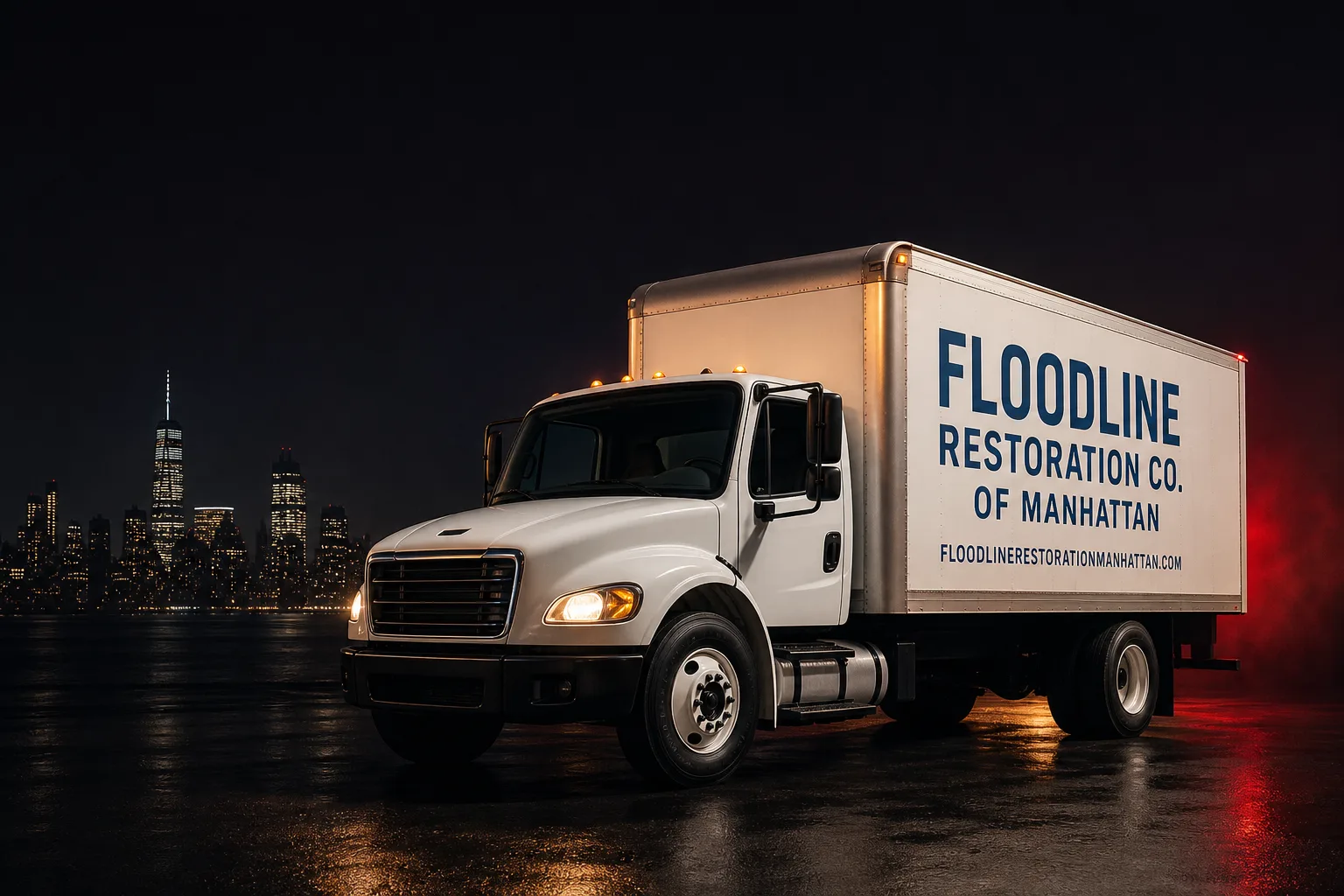
Free visual inspection and a written scope of work before any mitigation begins - photos, moisture readings, and drying logs go in your claim file
The scope we write is the scope we bill. Anything new gets shown to you, in writing, before we touch it.






 Before
 After
After Before
 After
After Before
 After
After24/7 Emergency Mold Remediation in Lower Manhattan
Mold remediation in Lower Manhattan typically costs $1,800-$6,500 for a standard contained removal, with black mold and multi-room jobs running $4,000-$12,000. If you’ve got visible mold growth or persistent musty odors in a Battery Park City condo, a TriBeCa loft, or a Financial District commercial conversion, call (917) 924-4221 now. We answer live around the clock and dispatch crews into the Lower Manhattan area the same visit. The first hour matters more here than almost anywhere else in the city: thick 19th-century masonry walls hold moisture for weeks, and salt-laden storm surge from nor’easters speeds fungal growth in ways a generic mold crew won’t catch.
Every hour mold sits in a damp sub-grade basement or behind a cast-iron facade, spores colonize deeper into plaster, drywall, and timber joists. We’ll send a background-checked, uniformed technician for a free visual inspection to map the moisture source, not just the visible bloom. You’ll get a straight read on what we found and what we’d do about it. That’s how Floodline Restoration Co. of Manhattan has worked since Curt Bowman founded the company in 2010: a dispatch board, not a sales desk, with a live person picking up at 2 a.m. when you call.
Understanding Mold Remediation Severity in Lower Manhattan Properties
Lower Manhattan’s building stock makes mold problems worse than the square footage would suggest. Most residential stock here falls into three groups that all trap water: 19th-century masonry warehouse conversions in TriBeCa and SoHo with load-bearing brick that wicks moisture like a sponge; 1980s-90s Battery Park City towers built on Hudson River landfill where the water table sits just feet below the sub-grade parking decks; and pre-war mid-rise co-ops and condos with legacy plumbing chases that never dry fully after a leak. Add the neighborhood’s geometry as a low-elevation tidal peninsula, and you get one constant: water finds its way into places it should not be, and it stays there.
We classify mold work by the source water’s contamination level, because that drives the containment and sanitary protocols. Category 1 is clean water from a burst supply line. Category 2 carries contaminants from washing machine overflow or sump pump failure. Category 3 is black water from sewage backup or storm surge, and here in Lower Manhattan that’s a regular reality when a nor’easter pushes the harbor into the Financial District’s sub-grade levels. Category 3 work requires full containment with HEPA air scrubbers running negative pressure, antimicrobial treatment on every affected surface, and clearance testing before we pull down the barriers. Skipping those steps in a Battery Park City basement that took in harbor water is not a shortcut. It’s a public health risk for the whole building.
Why Lower Manhattan Property Owners Choose Floodline Restoration Co. of Manhattan
- 45-minute response commitment for emergency calls within Lower Manhattan. Our dispatchers route the nearest available certified crew the moment your call comes in, and we give you a real arrival window, not “sometime today.”
- Live answer, 24/7/365. You will never sit through a phone tree or leave a voicemail at 2 a.m. A dispatcher answers and starts moving a crew. That’s been the rule since day one.
- IICRC-certified crews. Our technicians hold IICRC AMRT and WRT certifications to standards set by the IICRC, RIA, and IFA, and they arrive in uniform with background checks already on file.
- Free visual inspection. We assess the scope before you commit to anything. You’ll see the moisture map and understand exactly what we found, where the source is, and what the plan looks like.
- Direct insurance billing. We bill the carrier directly and handle the paperwork ourselves. You are not the go-between for your adjuster. You’ll get the claim started faster and with better documentation behind it.
- One team from first extraction to finished rebuild. We do Mold Remediation and we do reconstruction. No handoffs to a subcontractor who never saw the containment plan. The crew that reads the moisture map on day one is still on the job when the baseboards go back on.
Our Mold Remediation Process
Inspection & Assessment
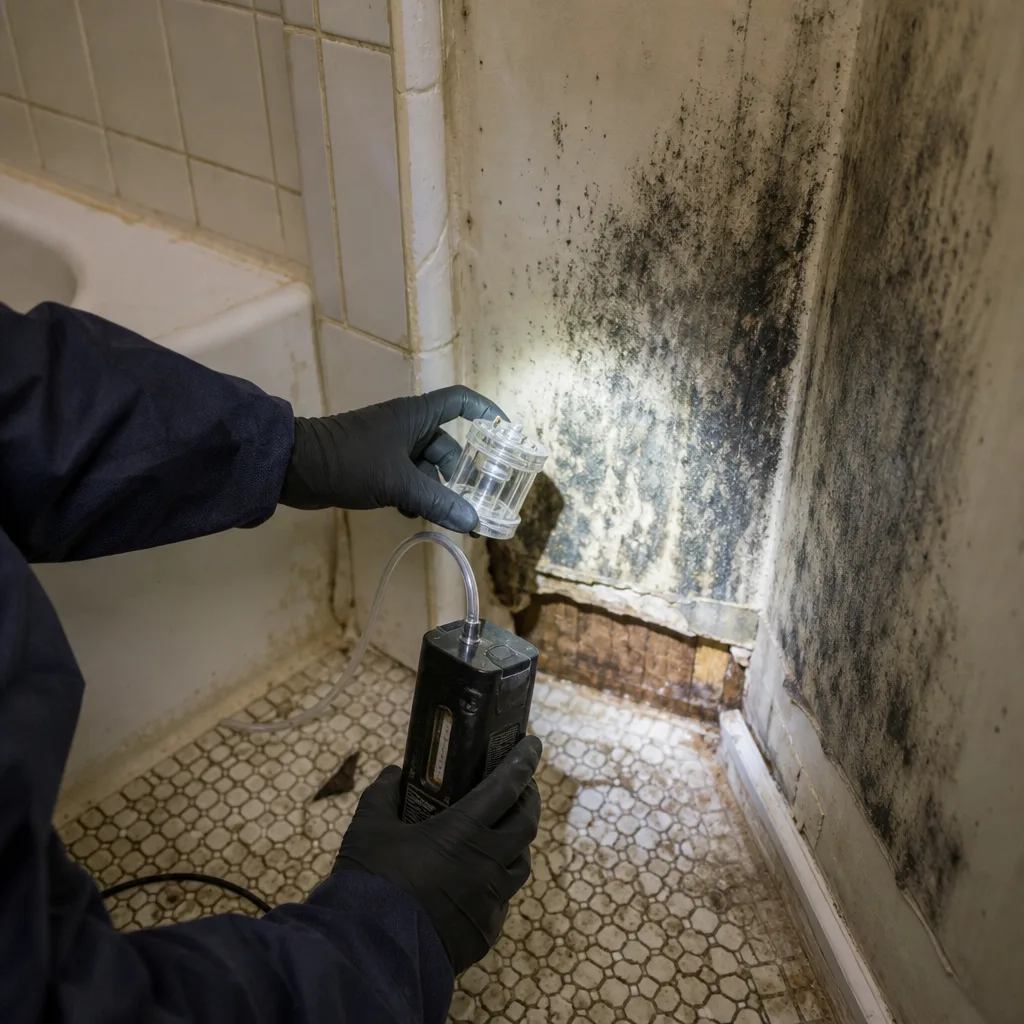
We start with a full visual inspection and moisture mapping using hygrometers and thermal imaging. In Lower Manhattan buildings, we check for water that traveled through masonry, not just across finished surfaces. That means opening up small inspection points in walls and ceilings where the moisture map tells us to look.
Containment & Stabilization
We build full containment with 6-mil poly barriers and run HEPA air scrubbers on negative pressure to keep spores from spreading to unaffected rooms. For Category 3 water in sub-grade spaces like a Financial District basement that took harbor surge, this step is non-negotiable before any remediation work begins.
Drying & Dehumidification
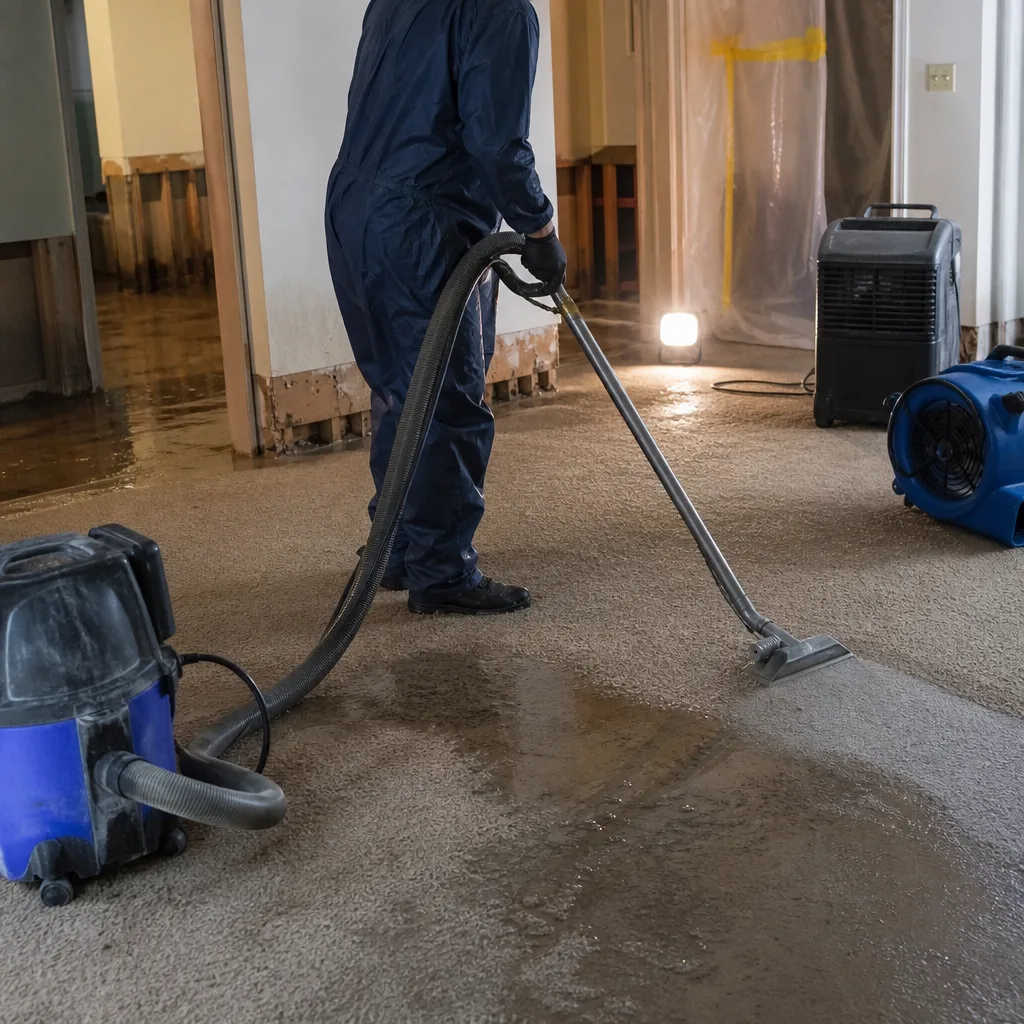
We dry the structure, not just the surface. Professional-grade Dri-Eaz and Phoenix dehumidifiers paired with XPOWER air movers pull moisture from masonry walls, timber joists, and subfloor cavities. Daily readings are logged until we hit the dry standard, and those logs go to you and your carrier.
Cleaning & Sanitization
Antimicrobial treatment is applied to every affected structural surface, including the back sides of walls and the floor cavities. We use HEPA vacuums to capture spores, and we treat the old materials that newer buildings don’t have: original cast-iron plumbing chases, legacy brick, and timber beams from the 1800s.
Specialty Treatment for Lower Manhattan Conditions
This is where the neighborhood makes the job harder. Salt-laden moisture from storm surge corrodes structural steel and electrical conduit. Chronic groundwater in landfill basements keeps re-wetting drying walls. We use Injectidry panels for deep masonry drying and specify salt-resistant antimicrobials appropriate for harbor-water contamination. These are not standard treatments for upland Manhattan, and crews that never work below Chambers Street don’t carry them.
Repairs & Restoration
After clearance testing confirms the mold and moisture are gone, we rebuild whatever came out. Drywall, flooring, trim, cabinetry. We handle the whole scope with the same crew, and we hand you the moisture log and the 90-Day Done Right Promise in writing when the job closes.
Need Emergency Mold Remediation in Lower Manhattan Now?
Crews minutes away, answering live 24 hours a day. The sooner we start, the less it costs.
Working With Your Insurance Company
Mold claims in Lower Manhattan are handled slowly by carriers that are used to generic water losses. Your adjuster needs something better: documentation from the first hour that ties the mold to a covered peril, not to deferred maintenance. We do that from the minute our crew steps off the truck. Photo documentation of every affected room, moisture readings with timestamps, a line-item scope of work, and daily drying logs that show we attacked the problem immediately and professionally.
We bill the carrier directly and speak to the adjuster ourselves, so you aren’t the middleman. In Battery Park City condo buildings with master policies and subrogation clauses, we know how to structure the paperwork so the claim isn’t bounced between the condo association’s carrier and your unit policy. It’s a square deal: no surprises on the bill, and we stand behind it. If you’re not sure the mold is covered, call us first. The free inspection gives you a straight answer before you ever file.
What We Provide Your Insurer
- Thorough documentation of the loss
- Photos of all damage, room by room
- Moisture readings and drying logs
- A detailed, line-item scope of work
- Direct coordination with your carrier
Built for Lower Manhattan’s Loss Calendar
Mold in Lower Manhattan doesn’t follow a neat seasonal calendar the way it does in drier parts of the metro area. The water table beneath the landfill sections of Battery Park City and the Financial District stays high year-round, so basement seepage happens in July as readily as March. But the losses do cluster. January deep freezes burst supply lines in pre-war risers from TriBeCa to the South Street Seaport, and the water runs down through 120-year-old plumbing chases into multiple units below. A “small leak in the upstairs neighbor’s wall” becomes a Category 2 loss in three units within a day.
Spring brings the nor’easter season, and that’s when Lower Manhattan’s geography makes it uniquely vulnerable. Storm surge from the harbor doesn’t just flood basements; it pushes Category 3 contaminated water into sub-grade mechanical rooms and elevator pits, wicking upward through brick and concrete. We are the same team that has worked these losses all year, but the storm season is when local building owners recognize why experience in this specific neighborhood matters. Most jobs get completed in a single visit, with a live dispatcher routing the nearest available crew and the same technicians running daily moisture readings until the dry standard holds. Then we rebuild what the water touched, and we back the whole thing with the 90-Day Done Right Promise in writing.
Mold Remediation Across Lower Manhattan’s Neighborhoods
Lower Manhattan is not one housing market; it’s four or five distinct building types jammed into a two-mile radius, and each one fails differently. In Battery Park City, the towers sit on Hudson River landfill with the water table sometimes just a few feet below the sub-grade parking levels. Condo owners there call us for recurring mustiness in storage cages and seepage through expansion joints. The remediation usually includes chronic groundwater control, not just a one-time dry-out.
TriBeCa’s cast-iron and masonry buildings from the late 1800s are the hardest properties to dry properly. The brick is structural, the mortar is lime-based, and the walls hold moisture for weeks. When we get a call on Hudson Street or Franklin Street, we know before we arrive that the water traveled further than the owner thinks. In the Financial District, converted commercial towers and landmark pre-war buildings have sub-grade mechanical rooms that took the worst of Hurricane Sandy’s surge. Many of those buildings have since relocated boilers and switchgear to upper floors, which changes where the water goes now. FiDi residents need crews that can read a non-standard building system, and owners need documentation for the master policy, not just the unit policy.
The South Street Seaport and East River corridor get the same nor’easter surge as Battery Park, but the housing stock is mixed: some restored maritime warehouses, some 1970s and 1980s residential buildings. Those older warehouse conversions share the same masonry-drying problem as TriBeCa’s, but with the added pressure of salt air and exterior exposure. Chinatown and the Lower East Side fringes of the neighborhood have tenement buildings with small floor plates, rowhouse-style layouts, and a century of layered renovations. Water from a burst riser in those buildings travels across party walls and through shared joist bays, so the neighbor’s leak becomes your mold problem before either of you knows it.
Specialized Mold Remediation Services We Offer in Lower Manhattan
Mold Inspection & Testing
We start every Lower Manhattan job by finding the water source first. If we don’t fix what’s feeding the mold, the mold returns. In a Battery Park City condo with recurring mustiness that no prior remediation resolved, the source is almost always groundwater seepage through the sub-grade slab or a failed waterproofing membrane at the perimeter. We use thermal imaging and hygrometers to find it, then we tell you plainly what’s happening and what it costs to fix.
Mold Removal
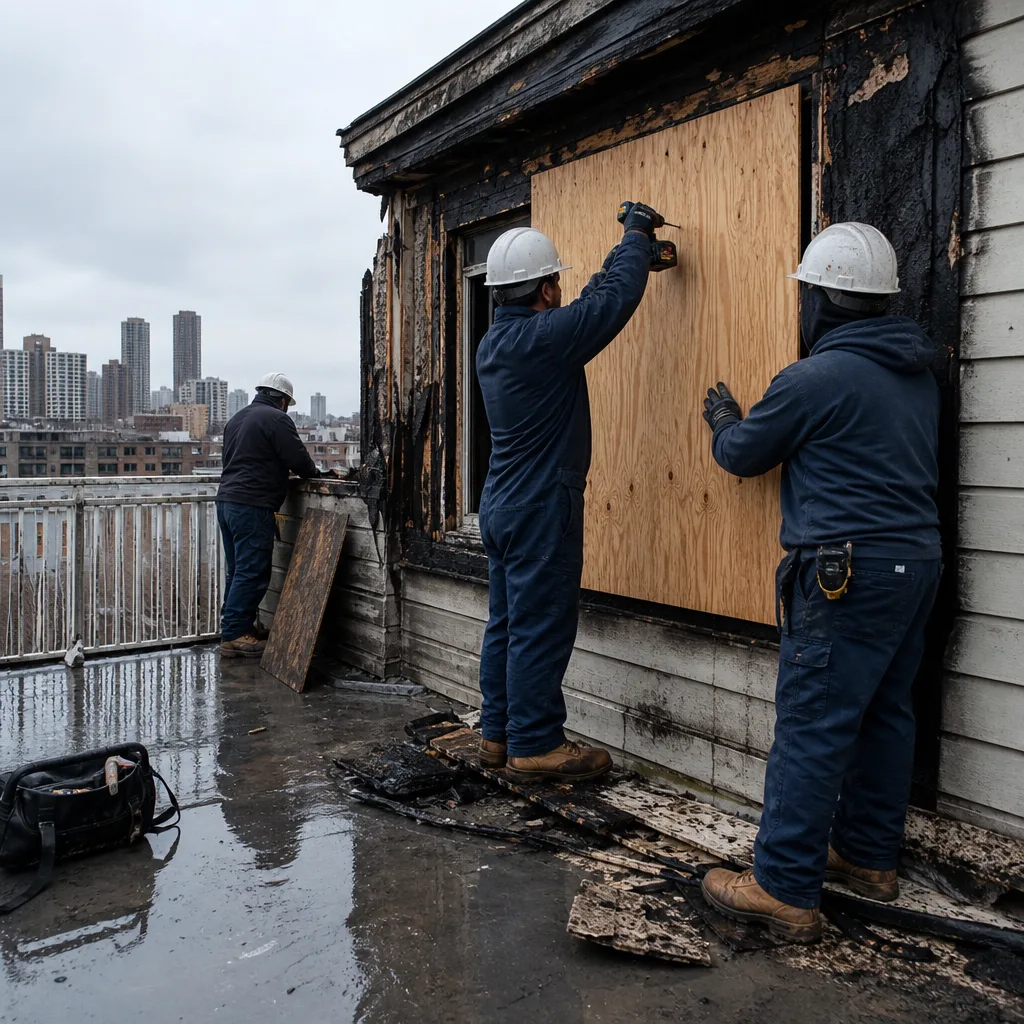
Proper mold removal means physical removal of contaminated materials plus HEPA vacuuming and antimicrobial treatment of the structure. In Lower Manhattan’s older buildings, that means pulling out lath-and-plaster ceilings, treating the original timber joists behind them, and drying the cavity properly before closing it back up. We don’t fog and paint over it. We remove it, treat the structure, and give you the clearance testing data when we’re done.
Black Mold Remediation
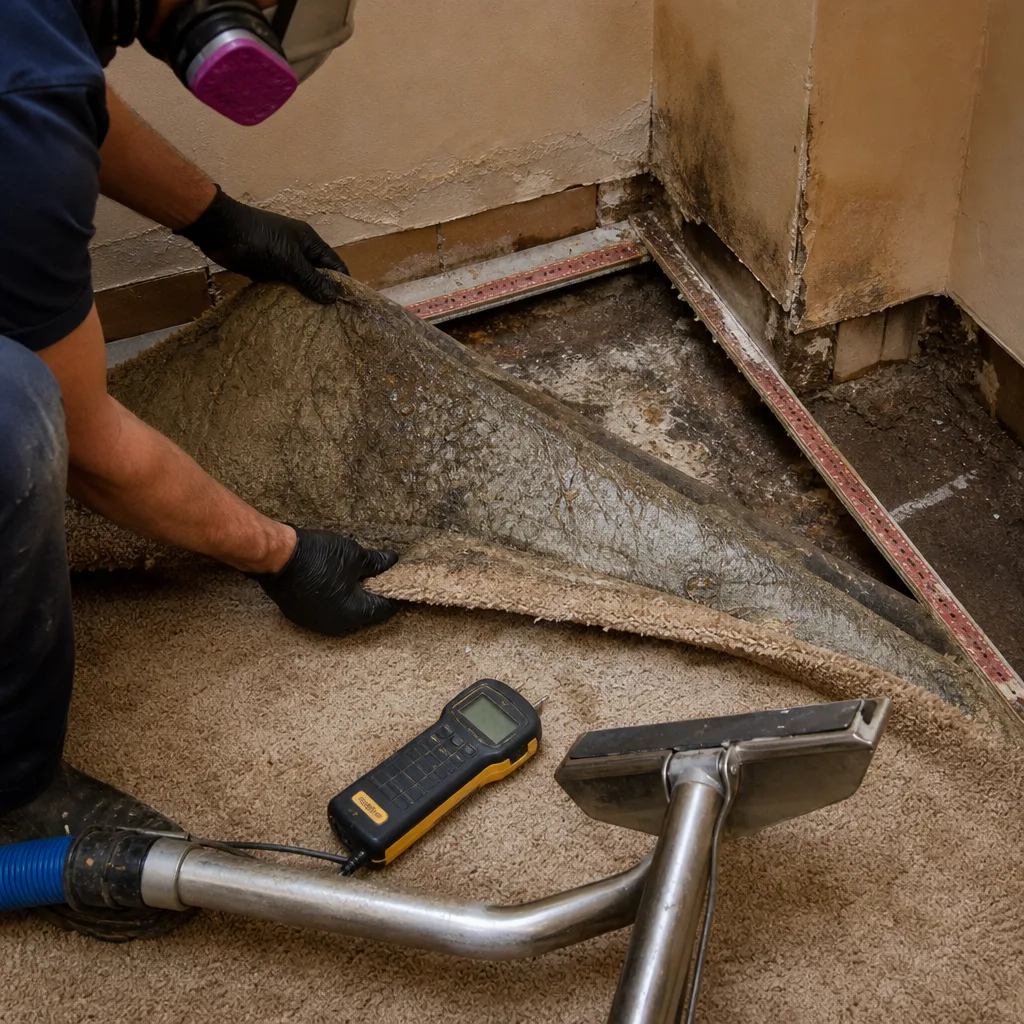
Black mold, specifically Stachybotrys chartarum, thrives on cellulose materials that have stayed wet for days, which is exactly what happens inside a TriBeCa loft’s original brick party wall after a roof leak has dripped for a month. In Lower Manhattan, black mold work frequently means opening up historic plasterwork and treating timber framing that’s been wet since before the conversion. This is a contained, HEPA-scrubbed, air-scrubbed job, and it’s the one we’d never do as a wipe-and-go.
Air Quality Restoration
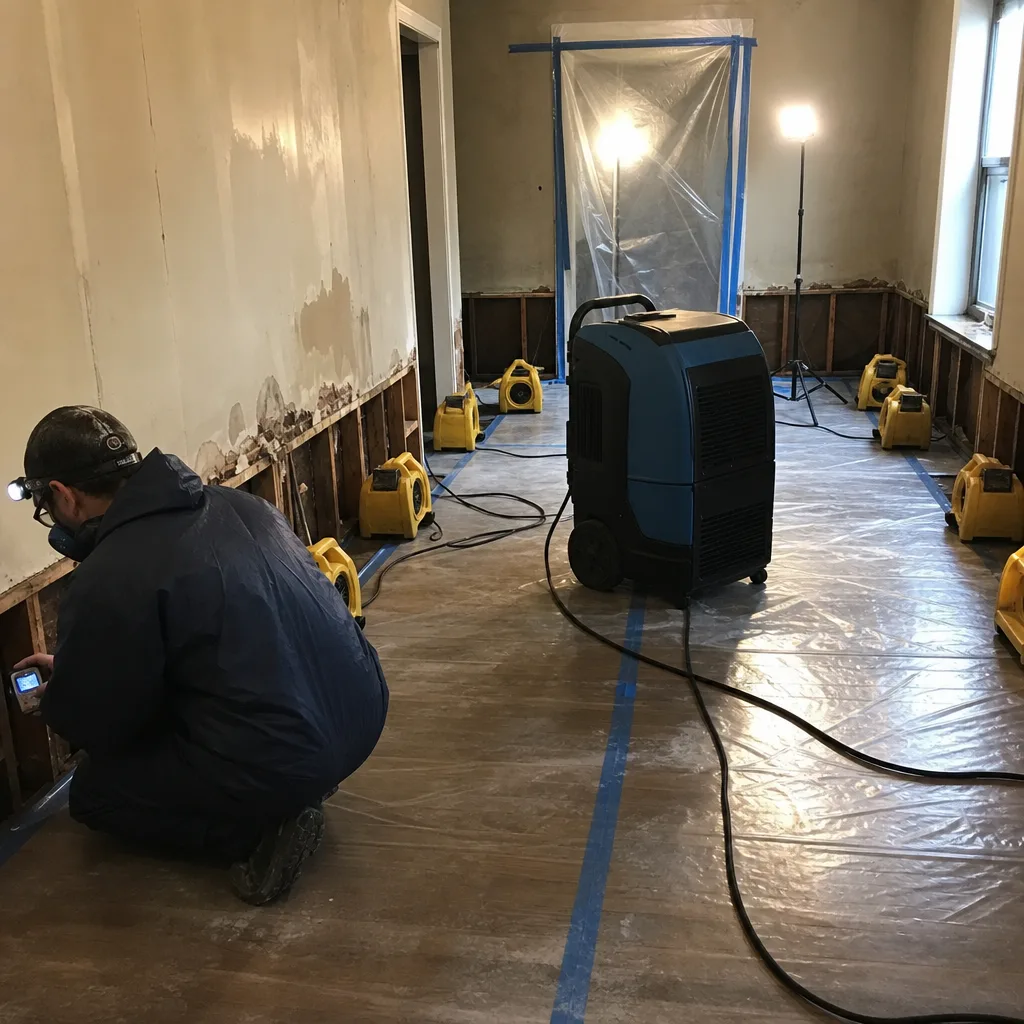
After physical removal, we run HEPA air scrubbers on negative pressure to capture airborne spores and re-set the indoor environment. The thick masonry walls and low-ventilation layouts of Lower Manhattan’s older units mean post-remediation air quality testing isn’t optional. We sample and verify. You get the clearance report, and your condo board gets it too if that’s part of the building’s protocol.
Crawl Space Treatment
Lower Manhattan doesn’t have many traditional crawl spaces, but the pre-war tenement buildings and older mid-rises along the Lower East Side and the Seaport have shallow sub-grade plenums and pipe chases that function the same way. We treat those cavities with moisture control, antimicrobial application, and humidity management so the source that fed the mold stops feeding it. That’s how the mold stays gone.
What happens when you call
- 1
A real person answersNo phone trees - you reach a local pro.
- 2
You get an upfront price rangeHonest numbers before anyone is dispatched.
- 3
A background-checked tech heads outLicensed & insured, dispatched right away.
- 4
You approve before work beginsNothing starts until you say go.
Mold Remediation Costs in Lower Manhattan, NY
Here’s the honest math for Lower Manhattan’s market. A small, contained mold removal in a single closet or bathroom typically runs $1,800-$3,500. A standard remediation affecting one room with full containment and HEPA air scrubbing lands between $3,500 and $6,500. Black mold remediation or multi-room work in a loft, a large condo unit, or a sub-grade commercial space ranges from $6,000 to $12,000 or more depending on how far the water traveled and how much historic material has to come out. In a TriBeCa building with original plaster ceilings and timber framing, expect the higher end.
What moves the price: the contamination category of the source water, the extent of masonry that has to be dried, whether post-Sandy building systems have relocated mechanicals, and whether your building’s access requires containment in shared corridors. Insurance often covers mold remediation when it’s tied to a covered peril like a burst pipe or storm surge; it rarely covers mold from deferred maintenance or chronic seepage. We’ll tell you which bucket yours falls into during the free visual inspection. Then you get a firm, line-item scope in writing before any work starts. We bill your carrier directly, and we hand you a moisture log with daily readings so the claim file is clean from day one. Call (917) 924-4221 for an exact quote; estimates are free and there’s no obligation.
We Also Serve Cities Near Lower Manhattan
Our crews cover the surrounding metro area with the same live-dispatch, certified-team standard. In addition to our Lower Manhattan work, we take mold remediation calls in Fairview, Harrison, East Bronx, and Hunts Point. If you’re in one of these areas and you’ve got a wet basement, a musty loft, or a post-storm moisture issue, call the same line and a live dispatcher routes the nearest available crew.
Serving Lower Manhattan, NY - Our Local Coverage Area
We’re based in the Lower Manhattan area and know this community well. Use the map below to see our service coverage - if you’re nearby, we can almost certainly help.
Lower Manhattan Mold Remediation Questions, Answered
Why does mold keep coming back in my Battery Park City condo even after remediation?
The most common reason is unchecked groundwater seepage. Battery Park City sits on Hudson River landfill with the water table just a few feet below the sub-grade level, and chronic seepage through slab cracks re-wets finished walls and floors after every dry-out. We find the source, not just the mold.
My loft is in a cast-iron TriBeCa building from the 1800s-can mold hide behind the original brick walls?
Yes, and it does. Original lime-mortar brick walls wick moisture laterally and vertically, and mold colonizes the back sides of plaster, old timber joists, and the masonry itself. Without opening small inspection points and using moisture mapping, you won’t see it. By the time it blooms through, it’s been there a while.
After Sandy, our building moved the boiler to the roof. How does that change mold remediation?
It changes where the water source is. If a pipe bursts on an upper floor, water may travel down through building systems that have been relocated and reconfigured. A crew that assumes the damage originates in the basement wastes hours looking for equipment that isn’t there. We know these retrofitted buildings, and we start by tracing actual moisture, not assumptions.
We had Category 3 floodwater from storm surge in our Financial District basement. Is it safe to just dry it out?
No. Category 3 water contains sewage, bacteria, and harbor contaminants. Drying without disinfection leaves pathogens and spores in the structure, and any remaining moisture feeds mold you’ll smell for months. This work requires full containment, HEPA air scrubbing, antimicrobial treatment, and clearance testing before we call it done.
How quickly should we start mold remediation after water intrusion in a Lower Manhattan high-rise?
Within 24 to 48 hours is the window before mold establishes itself, and in Lower Manhattan’s masonry buildings that window is tighter because walls hold moisture longer. If you can’t get to us the same day, call (917) 924-4221 and we’ll at least give you the first-hour steps that reduce the eventual scope.
Will my insurance cover mold remediation in Lower Manhattan?
It depends on the source. Mold from a covered peril like a burst pipe or storm surge is usually covered. Mold from chronic seepage, deferred maintenance, or a leak that’s been going for months is often not. We’ll review your situation during the free inspection and document the loss honestly from hour one so your claim isn’t weakened by ambiguous evidence.
Do we have to leave our condo during mold remediation?
For a small contained job in a single room, usually not. For black mold, Category 3 water, or anything affecting the HVAC system, we recommend vacating during active remediation. We’ll tell you up front, before work starts, and we’ll plan the schedule around what’s safe for you.
What should we do in the first 30 minutes after a water leak in our Lower Manhattan home?
Stop the water at the source if you can do it safely, shut off electricity to the affected area, move valuables and furniture out of the path of water, and call (917) 924-4221. Don’t use a home vacuum on any standing water. The faster a crew with professional-grade equipment is on site, the less you lose and the less it costs to restore.
Written by Curt Bowman, Owner at Floodline Restoration Co. of Manhattan, serving Lower Manhattan with 24/7 emergency mold remediation and complete restoration since 2010.