
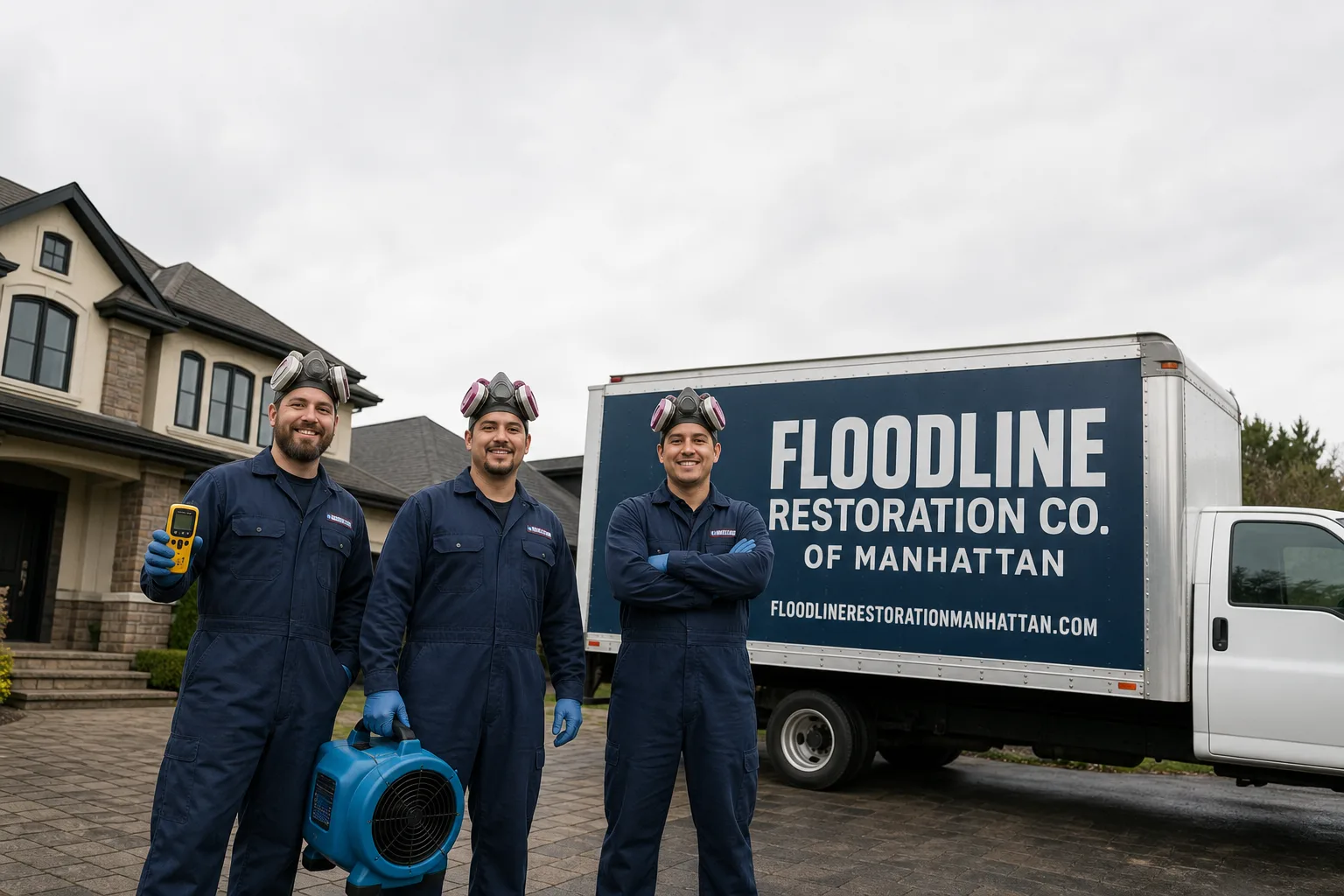
Free visual inspection and a written scope of work before any mitigation begins - photos, moisture readings, and drying logs go in your claim file
The scope we write is the scope we bill. Anything new gets shown to you, in writing, before we touch it.






 Before
 After
After Before
 After
After Before
 After
After24/7 Emergency Mold Remediation in Midtown Manhattan
Mold remediation in Midtown Manhattan typically costs $1,800-$6,500 for a contained high-rise job, with black mold removal on the higher end. Our crews answer live 24 hours a day at (917) 924-4221 and can typically begin the first visual inspection the same day you call. The hour after you discover mold matters because Midtown’s stacked-floor construction means one slow leak has usually been feeding fungal growth behind finishes for weeks before you ever see staining on drywall or smell that musty odor in a hallway. Call us before you open the wall. Containing the affected zone first protects the rest of the floor and the units below.
Understanding Mold Remediation Severity in Midtown Manhattan Properties
Mold severity in Midtown Manhattan is not just about square footage. It is about building geometry and water history. A Category 1 event, clean water from a supply line, becomes a mold driver when it soaks porous materials for 48 hours or more. A Category 2 event, gray water from a failed condenser or drain pan, accelerates fungal colonization faster. And a Category 3 event, sewage from a combined sewer overflow in a sub-basement mechanical room, is not a drying job at all - it is a contain, pack-out, dispose, and sanitize job. In Midtown’s 1920s and 1930s buildings, the cavity between terra-cotta tile and plaster creates exactly the dark, low-airflow environment mold needs. We map moisture with thermal imaging and hygrometers before we ever stage a HEPA air scrubber. Containment, negative air pressure, and clearance testing after remediation are standard on every job here. No exceptions.
Why Midtown Manhattan Property Owners Choose Floodline Restoration Co. of Manhattan
- Live answer, 24 hours a day. You call (917) 924-4221 at 2 a.m. and a real dispatcher picks up. Not a recording. Not a callback service.
- IICRC-certified crews. Our technicians hold WRT, FSRT, and AMRT certifications. Background-checked and uniformed, every visit.
- Free visual inspection. We look before we quote. No charge to walk the affected space and tell you what we are actually dealing with.
- Direct insurance billing. We communicate with your adjuster, provide the documentation, and bill the carrier directly. You never play messenger.
- One team from containment to reconstruction. The same Floodline crew that seals the affected zone handles drying, treatment, and the rebuild. No handoff to an inherited subcontractor.
- 90-Day Done Right Promise. In writing. If the mold returns or the work is not done right, we make it right. No argument, no paperwork battle.
We have been doing this since 2010, built around a dispatch board, not a sales desk. Curt Bowman founded Floodline Restoration Co. to keep one accountable name on every phase of the job. That structure matters in Midtown Manhattan, where building management, co-op boards, and insurance carriers all need to know who is responsible. The answer is us.
Our Mold Remediation Process
Inspection & Assessment
We walk the affected space, read moisture with thermal imaging and hygrometers, and document every finding in writing and photos. In Midtown pre-war buildings, we identify whether the source is an active steam riser, a failed drain stack, or a facade leak from the exterior wall. The source stops before the mold work starts.
Source Stabilization
We coordinate with the building’s licensed boiler operator or plumber to isolate the water source. In pre-war towers, that often means scheduling the riser shutdown through building management. We cannot cut into a wall cavity that is still being fed by an active steam line. Stabilization comes first, every time.
Containment & Air Scrubbing
We seal the affected zone with 6-mil poly sheeting and run HEPA air scrubbers to create negative air pressure. This keeps airborne spores from migrating through hallway corridors, elevator shafts, and utility chases into clean units on other floors. In Midtown, containment is not optional. It is the standard.
Removal & Cleaning
Affected drywall, insulation, and porous finishes come out under containment. Hard surfaces get HEPA-vacuumed and wiped with antimicrobial treatment. Terra-cotta tile and plaster partitions in pre-war buildings often need specialized treatment because they cannot simply be replaced like modern gypsum board.
Drying & Moisture Verification
We run Dri-Eaz dehumidifiers, Phoenix air movers, and Injectidry panels where needed, with daily moisture readings logged until the affected materials stay below the dry standard for three consecutive days. That log goes to you and to your insurance carrier.
Repairs & Restoration
Once the space is dry and cleared, the same Floodline crew rebuilds what was removed. Drywall, paint, trim, flooring. Done right, and backed in writing by the 90-Day Done Right Promise.
Need Emergency Mold Remediation in Midtown Manhattan Now?
Crews minutes away, answering live 24 hours a day. The sooner we start, the less it costs.
Working With Your Insurance Company
Mold claims in Midtown Manhattan carry complication. Carriers want proof that the water source stopped, that the affected area was properly contained, and that the scope of work matches the actual damage. We document from the first hour. Every photo, every moisture reading, every containment setup. Our estimates are line-item and written to insurance industry software standards, so your adjuster reads a scope they recognize. We speak directly with the carrier, the public adjuster if you have one, and the building’s property manager when the loss involves common areas. You do not carry messages between parties. That is our job.
What We Provide Your Insurer
- Thorough documentation of the loss
- Photos of all damage, room by room
- Moisture readings and drying logs
- A detailed, line-item scope of work
- Direct coordination with your carrier
Built for Midtown Manhattan’s Loss Calendar
Mold in Midtown Manhattan follows the building’s calendar, not the weather app. January deep freezes burst supply lines in uninsulated mechanical closets and below-grade pipe chases, sending Category 1 water through stacked riser cavities. Spring thaw pushes ground water against sub-basement walls in buildings that predate modern waterproofing. Summer cloudburst events overwhelm the century-old combined sewer mains beneath Midtown’s grid, forcing sewage backups into elevator pits and loading docks. Nor’easters drive wind-driven rain behind the brick-and-limestone facades of pre-war towers, and that chronic intrusion saturates plaster behind finished walls for weeks before visible staining appears. Every season in Midtown Manhattan has a mold pathway. We schedule around them all, and we answer the phone when they happen at 3 a.m.
Mold Remediation Across Midtown Manhattan’s Neighborhoods
Our crews run the same Midtown Manhattan streets every day, and the building types change within blocks. In the Times Square corridor along Seventh Avenue, we work in converted 1920s hotels where original cast-iron drain stacks inside masonry chases are the usual culprit behind hidden mold behind bathroom walls. Over by Madison Avenue and the high-end co-op towers of the East 50s, the losses are quieter: slow steam-trap failures inside wall cavities that saturate plaster for weeks. Down toward Hudson Yards and the glass curtain-wall residentials on the Far West Side, we see newer construction, but the condensation problems come from HVAC equipment packed into tight mechanical rooms. In the Garment District’s mid-century commercial conversions, aged drop-ceiling tiles and pipe insulation mean asbestos identification has to happen before any air mover gets staged. And around Bryant Park, the pre-war office conversions above busy retail levels bring freight elevator scheduling into every job. Each of these Midtown Manhattan zones has a different mold signature. Our team reads them the same way every time: containment first, source identification second, and a written scope before any work begins.
Specialized Mold Remediation Services We Offer in Midtown Manhattan
Mold Inspection & Testing
Before we touch a wall in Midtown Manhattan, we identify what is growing and why. Our inspection includes thermal imaging, moisture mapping, and air sampling where indicated. In pre-war buildings, we check the steam riser cavities and the pipe chases first, because that is where slow leaks hide. You get a written report, a clear read on severity, and a recommended scope you can take to your co-op board or insurance carrier.
Black Mold Remediation
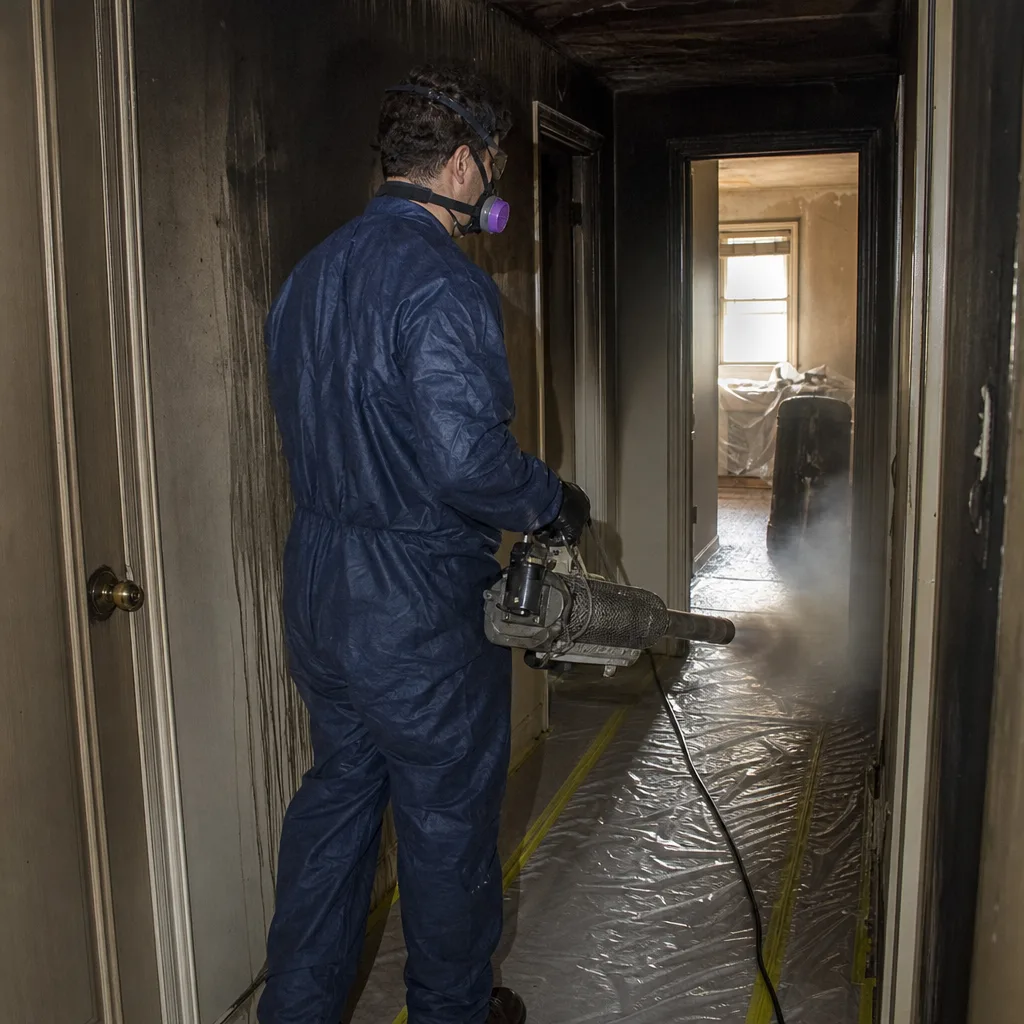
Black mold, typically Stachybotrys chartarum, shows up in Midtown Manhattan where Category 3 water sat on cellulose materials for a week or more. In a sub-basement mechanical room after a sewer backup, that means full containment, pack-out of contaminated porous materials, HEPA air scrubbing, and antimicrobial treatment on every hard surface. We do not spot-clean black mold behind a bathroom wall and call it done.
Moisture & Humidity Control
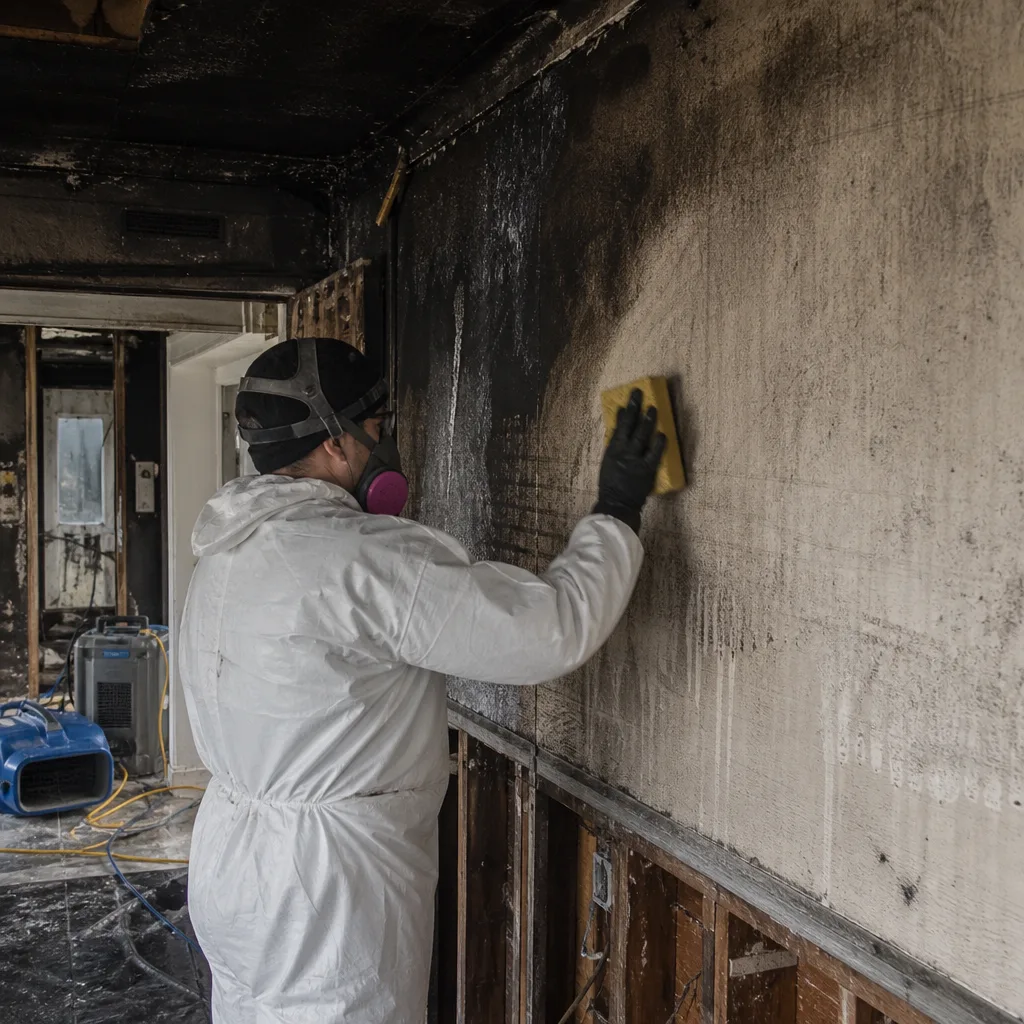
Midtown high-rises trap humidity in mechanical rooms, pipe chases, and below-grade storage areas. We install and calibrate commercial dehumidification, recommend building-management-friendly solutions like controlled exhaust ventilation, and document conditions with daily readings. For co-op boards and property managers, this is the prevention step that stops a slow mold bloom from becoming a multi-floor claim next spring. Our full Mold Remediation team handles this work alongside our reconstruction crews, so the fix and the prevention come from the same accountable name.
Mold Removal
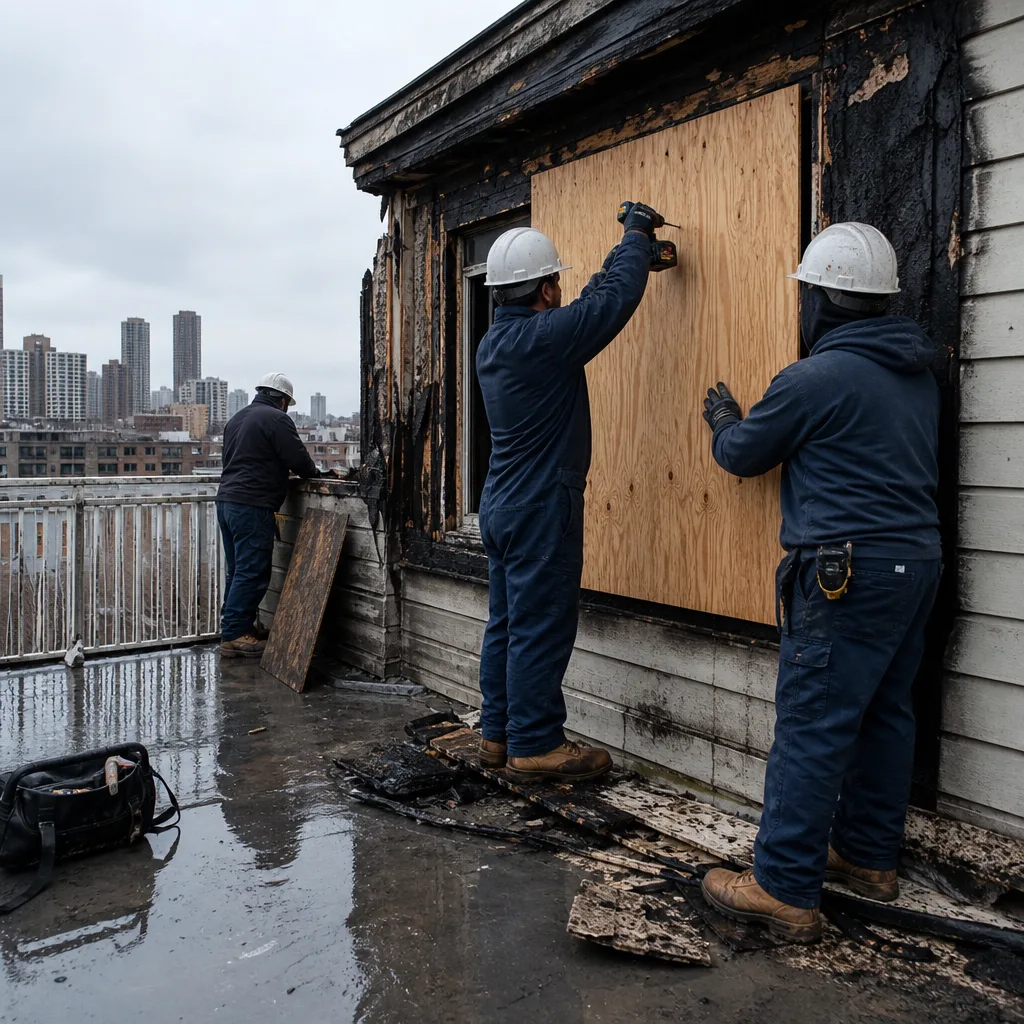
Mold removal means physically taking out the affected material. Drywall, insulation, carpet, drop-ceiling tiles. In Midtown Manhattan, removal almost always involves working inside contained zones with strict building access rules. We schedule every equipment move through the freight elevator with building management, and we never leave a pile of contaminated debris in a service corridor without a sealed, labeled removal plan.
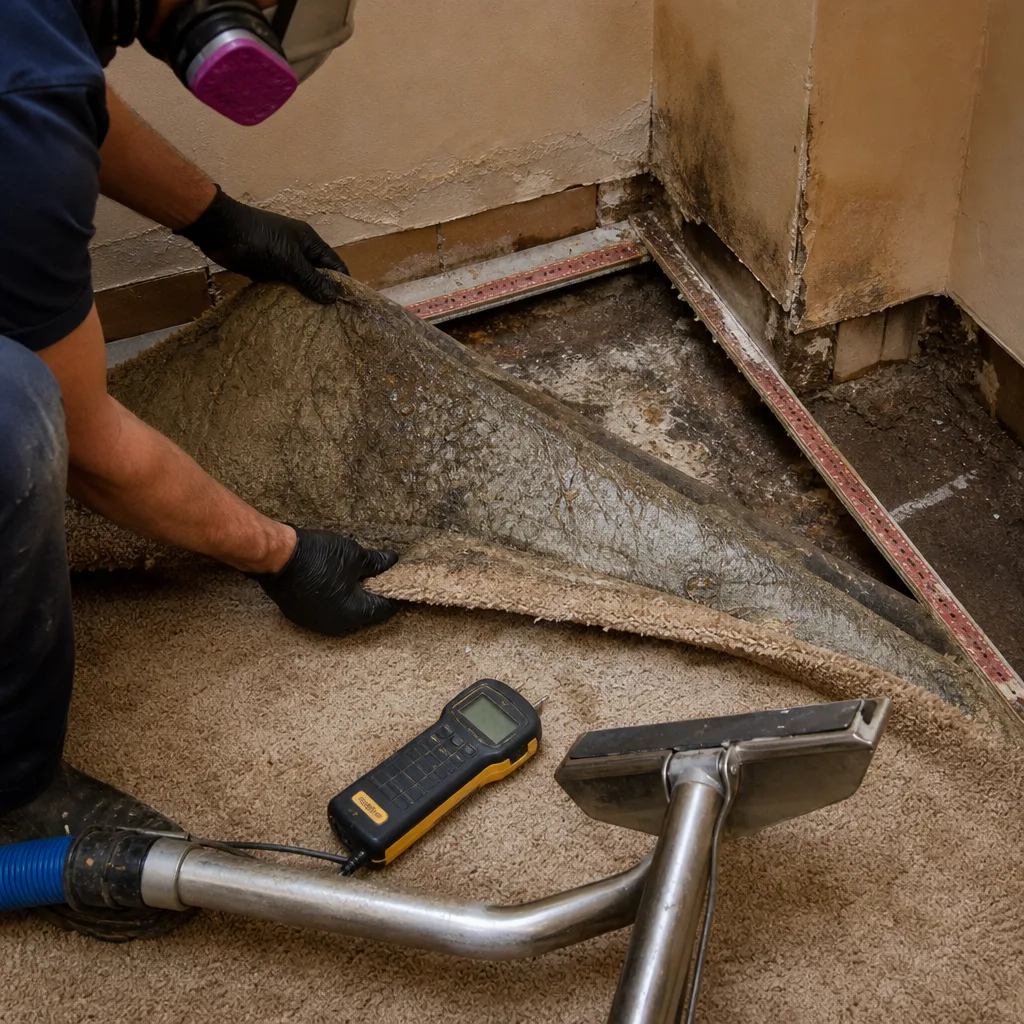
Air Quality Restoration
After the visible mold is gone, the air in a Midtown Manhattan unit still carries spore counts that can trigger respiratory issues for weeks. We run HEPA air scrubbers during the job, and we verify post-remediation air quality with clearance testing before we break containment. That clearance result is written documentation you can show your board, your tenants, or your family.
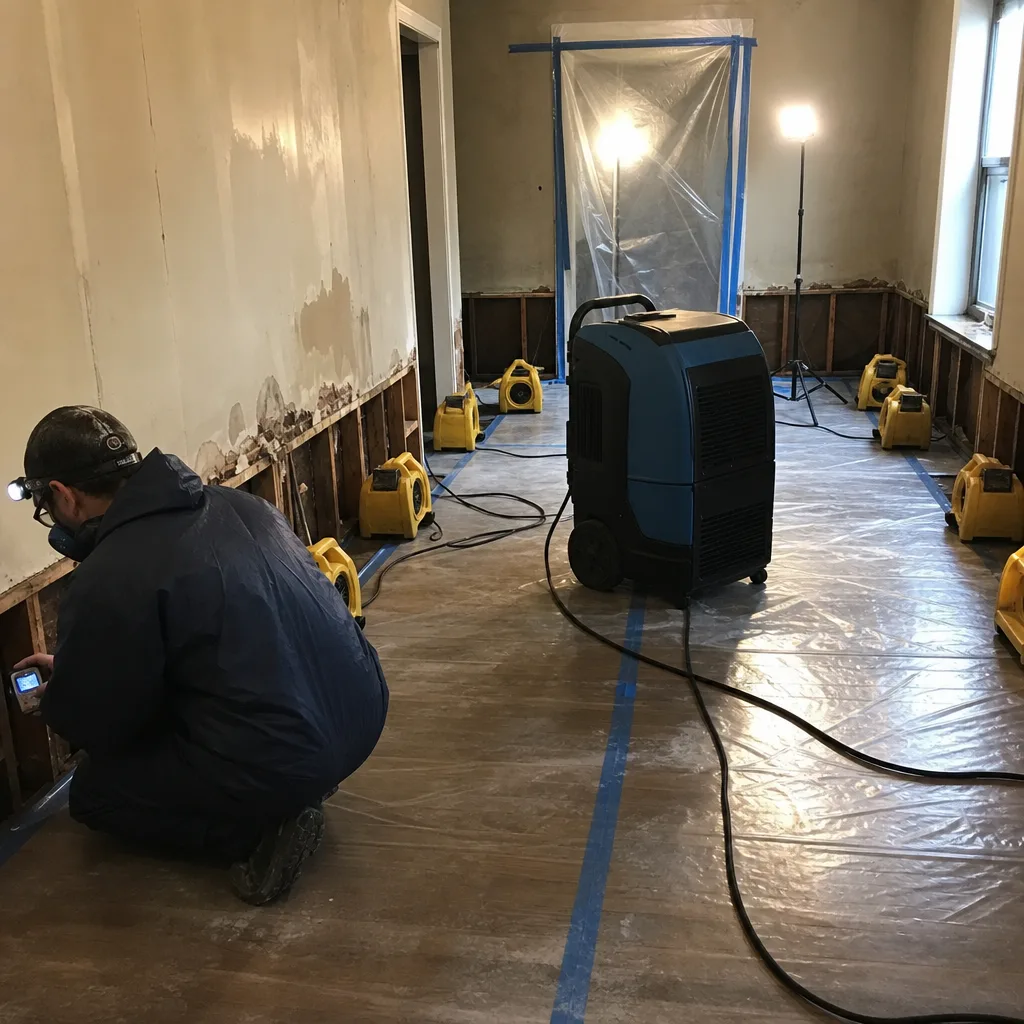
Crawl Space Treatment
In Midtown’s older low-rise and converted structures, crawl spaces under ground-level commercial spaces breed mold from groundwater seepage and poor ventilation. We treat the space with containment, remove saturated insulation, apply antimicrobial treatment, and install vapor barriers where the building’s construction allows. The goal is a dry, stable space that does not feed the floors above it.
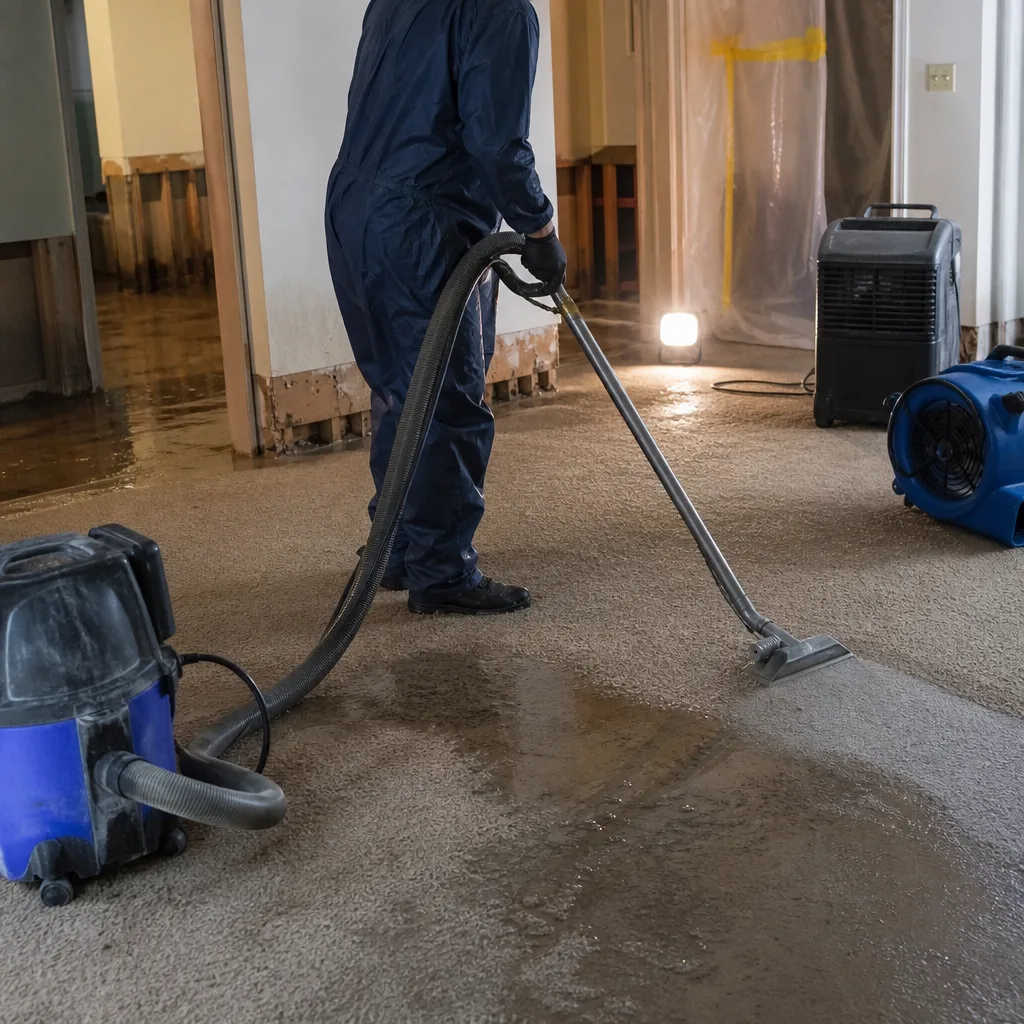
What happens when you call
- 1
A real person answersNo phone trees - you reach a local pro.
- 2
You get an upfront price rangeHonest numbers before anyone is dispatched.
- 3
A background-checked tech heads outLicensed & insured, dispatched right away.
- 4
You approve before work beginsNothing starts until you say go.
Mold Remediation Costs in Midtown Manhattan, NY
A typical mold job in Midtown Manhattan runs as follows. Mold inspection and testing: $350-$900, with air sampling on the higher end. Contained mold removal in a single bathroom or wall cavity: $1,800-$4,500, depending on whether we are cutting into terra-cotta and plaster or modern gypsum. Black mold remediation in a sub-basement or multi-room spread: $5,000-$12,000, driven by pack-out volume and the disposal requirements for Category 3-contaminated material. Full reconstruction after the mold is out adds $3,000-$25,000 depending on finish level. What moves the price in Midtown Manhattan is rarely the mold itself. It is the freight elevator scheduling, the asbestos abatement coordination, the riser shutdown windows, and the building management’s required work hours. Those are real costs in this borough, and any estimate that ignores them is guessing. We do not guess. Call (917) 924-4221 for a free visual inspection, and we will put a written scope in your hands before any work starts.
We Also Serve Cities Near Midtown Manhattan
Our crews work throughout the metro area, including Midtown Manhattan and the neighboring communities of Fairview, Harrison, East Bronx, and Hunts Point. Same live 24/7 dispatch, same certified crews, same written guarantee.
Serving Midtown Manhattan, NY - Our Local Coverage Area
We’re based in the Midtown Manhattan area and know this community well. Use the map below to see our service coverage - if you’re nearby, we can almost certainly help.
Midtown Manhattan Mold Remediation Questions, Answered
How does a steam-trap failure inside a Midtown pre-war wall cavity change the mold remediation process?
A failed steam trap inside a wall cavity saturates plaster and terra-cotta tile for weeks before anyone sees it. The remediation process changes in one critical way: we cannot start mold removal until the building’s licensed boiler operator isolates the riser feeding that cavity. That coordination step can add one to three days to the job start. If a contractor starts removing mold while the riser is still live, the cavity re-wets and the tear-out has to happen twice. We hold containment setup until the riser is isolated, then open the wall, treat the terra-cotta, and run structural drying until moisture stays below 6 percent for three consecutive days. Call (917) 924-4221 if you suspect a steam-trap failure behind a Midtown wall.
Can mold from a Category 3 sewage backup in a Midtown sub-basement be dried in place?
No. Category 3 sewage water, the kind that backs up into Midtown sub-basement mechanical rooms during combined sewer overflows, contains pathogens. Any porous material that sewage touched, insulation, drywall, cardboard, carpet, must be bagged and disposed of under containment. Hard surfaces get washed, scrubbed, and treated with antimicrobials. Drying in place would leave contaminated water and organic matter in the sub-basement, and the mold bloom would return. This is a pack-out job, not a drying job. Call (917) 924-4221 and we will walk the space and tell you exactly what the scope requires.
Why do Midtown building managers require freight elevator scheduling for mold remediation equipment?
Midtown Manhattan high-rises move every piece of equipment, every air mover, every dehumidifier, and every bag of contained debris through the freight elevator. Building management sets the schedule, usually in blocks of time during business hours, and those windows dictate how fast a job progresses. A 45-minute response commitment means our crew reaches the building fast. The actual staging of equipment follows the building’s rules. We coordinate every move with management in advance. It adds coordination time to any Midtown Manhattan job, and it is a requirement no surrounding borough faces at this scale.
How does asbestos in a 1920s Midtown tower affect the scope of a mold remediation job?
In 1920s and 1930s Midtown buildings, asbestos-containing pipe insulation, floor-leveling compounds, and drop-ceiling tiles are common. Before we stage a single air mover in an affected zone, we identify any suspect material. If asbestos is present, NYC DEP rules require a licensed abatement contractor to remove or contain it before we proceed. Failing to do that triggers a stop-work order and re-containment. We built that step into our Midtown Manhattan process from the first day, because we know the building stock. Call (917) 924-4221 for a visual inspection, and we will tell you if asbestos coordination is part of your scope.
What is the typical mold growth timeline in a Midtown high-rise after a Category 1 or 2 water event?
In a Midtown Manhattan high-rise, mold colonization typically begins within 24 to 48 hours on wet drywall or porous insulation, especially in dark wall cavities and pipe chases where airflow is poor. A Category 1 clean-water leak that saturates a wall cavity and is not dried can show visible mold within 5 to 7 days. A Category 2 gray-water event moves faster, often 3 to 5 days. Pre-war construction with plaster and terra-cotta partitions tends to hide the growth longer, because the moisture is trapped behind non-porous finishes. By the time staining appears, the affected area is usually larger than what you see. That is why the first call matters. Call (917) 924-4221 the day you know water has been sitting.
How fast can a mold remediation crew actually get to Midtown Manhattan?
Our dispatch team answers live 24/7, and we commit to reaching most Midtown Manhattan addresses within 45 minutes of your call. That means a real person on the phone, a certified crew on the way, and a visual inspection started the same visit. For severe losses with active water, we can often begin source stabilization immediately. For contained mold work, we schedule the full job around building management’s freight elevator windows. The phone call is free, and so is the visual inspection. Call (917) 924-4221 now.
Will my insurance cover mold remediation in Midtown Manhattan?
Most Midtown Manhattan homeowner and co-op policies cover mold remediation when the mold results from a covered water event, like a burst supply line or a sewer backup. The key is proving the water source stopped and the mold was professionally contained. We document from the first hour, provide the moisture logs and containment photos your adjuster needs, and bill the carrier directly. If your policy has a mold sub-limit, we can tell you what the likely out-of-pocket looks like before any work starts. Call (917) 924-4221 and we will help you sort out the claim path.
What should I do in the first 30 minutes after finding mold in my Midtown apartment?
Do not disturb it. Do not wipe it with bleach, do not open the wall, and do not run a box fan to dry the area. Disturbing mold releases spores into the air and spreads the contamination into clean rooms and adjacent units. Close the door to the affected space if you can. Shut off the water to that area if you know the source, such as a toilet, supply line, or radiator valve. Call (917) 924-4221. We will walk you through the next steps on the phone and get a crew to your building. The less you touch it, the smaller and cheaper the job stays.
Written by Curt Bowman, Owner at Floodline Restoration Co. of Manhattan, serving New York City since 2010.