

Free visual inspection and a written scope of work before any mitigation begins - photos, moisture readings, and drying logs go in your claim file
The scope we write is the scope we bill. Anything new gets shown to you, in writing, before we touch it.






 Before
 After
After Before
 After
After Before
 After
After24/7 Emergency Mold Remediation in Munsey Park
Mold remediation in Munsey Park typically costs $1,800-$6,500 depending on how far the colony has spread and whether structural drying of original plaster is required. Most jobs in the village start with a free visual inspection, and our crews reach Munsey Park within 45 minutes of your call. If you suspect mold behind a wall or after a roof leak, call (917) 924-4221 right now. A live dispatcher answers at two in the morning, not a recording, and the sooner we contain the affected area, the less it costs to fix.
The first hour matters because mold releases spores into the air every minute it stays undisturbed. In a house with original horsehair plaster and unventilated attic spaces like most Munsey Park homes, mold moves through wall cavities faster than you’d think. We start with containment, air scrubbing, and a moisture map of the affected rooms. That stops the spread while we figure out the full scope.
Understanding Mold Remediation Severity in Munsey Park Properties
Not every mold problem in Munsey Park is the same. Most of the village’s homes were built between 1920 and 1950, which means the walls are thick horsehair-plaster over wood lath, not modern drywall on studs. Plaster holds moisture far longer than gypsum board, and it wicks water horizontally through the lime base coat. That means a slow roof leak at the flashing line can send moisture three or four feet sideways before you ever see a stain on the ceiling. By the time it shows, the colony behind the plaster is often much larger than the visible patch.
We classify every job by containment level. Level 1 covers small areas under 10 square feet, typically a closet corner or a spot under a sink. Level 2 requires full containment with 6-mil poly and negative air, usually because the mold is inside a wall cavity or crawl space. Level 3 is whole-room or multi-room contamination, which happens most often in Munsey Park after a sewer backup or a nor’easter-driven roof puncture. Older homes with cast-iron drain lines and mature root systems nearby are the highest risk for Level 3 events.
Why Munsey Park Property Owners Choose Floodline Restoration Co. of Manhattan
- 45-minute response commitment from our New York City dispatch desk to Munsey Park. We don’t just take your information and promise a callback. A crew is on the road, and you get a name and a time.
- A live person answers every call, 24 hours a day. No automated phone tree, no “leave a message.” At 2 a.m. during a nor’easter, you’ll talk to a dispatcher who knows what questions to ask.
- IICRC-certified crews trained to the WRT, FSRT, and AMRT standards. Our technicians are also RIA and IFA certified, background-checked, and uniformed. You’ll know who’s walking into your house.
- Free visual inspection with moisture mapping. We don’t charge to look. We use thermal imaging and hygrometers to find moisture you can’t see, which matters in pre-war homes with hidden cavities.
- Direct insurance billing with carrier coordination. We deal with your adjuster, not you. You get a written scope, we get approval, and we document everything from day one.
- One team from first extraction to finished rebuild. No handoff to a subcontractor halfway through. The same crew that reads the moisture map on day one handles the daily readings and rebuilds what needs rebuilding.
Our Mold Remediation Process
Inspection & Assessment
We start with a visual inspection and moisture mapping using thermal imaging and hygrometers. Every affected room gets a reading, and we photograph everything before we touch a wall. This creates the baseline for your insurance claim and tells us how far the moisture has traveled.
Containment & Source Stop
Before any demolition, we seal the affected area with 6-mil poly and set up negative air pressure with HEPA-filtered air scrubbers. The source of the moisture gets stopped first: a roof patch, a plumbing repair, or a drainage correction. If water is still coming in, no amount of drying works.
Drying & Dehumidification
Professional-grade Dri-Eaz and Phoenix dehumidifiers run continuously, with Injectidry systems for wall cavities and under-floor spaces. We take daily moisture readings until the dry standard is met. In Munsey Park’s horsehair-plaster homes, this often takes longer than in newer construction because the material releases moisture slowly.
Cleaning & Antimicrobial Treatment
All affected surfaces get HEPA vacuuming and antimicrobial application. We treat the framing, the back of the plaster, and any salvageable finishes. This step is critical in older homes where complete removal of original material isn’t always possible or desirable.
Crawl Space & Humidity Control
Munsey Park homes often have crawl spaces that feed humid air into the first floor. We evaluate the crawl space vapor barrier, check for standing water, and recommend or install dehumidification to keep the ambient humidity below the mold growth threshold.
Repairs & Restoration
We rebuild using materials that match the original construction. Where plaster can be saved, we save it. Where framing needs replacement, we match the original dimensions. The goal is a repair that looks like it was always there, with a written 90-Day Done Right Promise behind it.
Need Emergency Mold Remediation in Munsey Park Now?
Crews minutes away, answering live 24 hours a day. The sooner we start, the less it costs.
Working With Your Insurance Company
Mold remediation claims in Munsey Park almost always involve a covered peril first: a nor’easter roof puncture, a burst pipe, or a sewer backup. We document everything from the first hour so your carrier gets a clear picture of what happened and what it takes to fix it. Photographs, moisture readings, daily drying logs, and a line-item scope are submitted in the format adjusters expect. We talk to your adjuster directly, so you don’t have to translate restoration terminology into insurance language.
What We Provide Your Insurer
- Thorough documentation of the loss
- Photos of all damage, room by room
- Moisture readings and drying logs
- A detailed, line-item scope of work
- Direct coordination with your carrier
Built for Munsey Park’s Loss Calendar
Munsey Park’s mold season doesn’t follow a simple pattern the way it does in newer subdivisions. November through March brings nor’easters with sustained wind-driven rain that gets under aging slate flashings and into unventilated attic spaces. Those storms also drop limbs from the village’s 70-to-100-year-old oaks and maples onto steep slate roofs, creating puncture points that leak for weeks before anyone notices. Spring brings thaw cycles and the first signs of basement seepage in homes with original stone or block foundations. Summer humidity, kept elevated by the proximity to Manhasset Bay, accelerates secondary mold growth in any wall cavity that never fully dried. Fall brings leaf-clogged gutters and the slow creep of moisture into soffits and eaves. Every season has a trigger, and every trigger in Munsey Park leads back to the same thing: hidden moisture inside original building materials that don’t dry on their own.
Mold Remediation Across Munsey Park’s Neighborhoods
Munsey Park is small, around 1,000 homes, but the loss patterns vary block by block. Along Hunt Lane and Abbey Road, where the oldest 1920s Colonials sit closest to the mature oak canopy, roof punctures and attic mold are the most common calls we get. The homes near Manhasset Bay on the village’s western edge see more ambient humidity and salt-air corrosion on any metal components, which means crawl space humidity and garage hardware issues crop up more often there. Streets like Ridge Road and Oxford Road, with their steeply pitched slate roofs and original copper downspouts, tend to have flashing failures at the eaves and valleys that send water into wall cavities rather than onto the ceiling. And on the northern stretches near Port Washington, where original cast-iron sewer laterals run through root-dense parkways, paired sewer-backup and mold contamination calls after heavy storms are a pattern we see year after year.
Specialized Mold Remediation Services We Offer in Munsey Park
Mold Inspection & Testing
We inspect first, then test. In Munsey Park homes with horsehair plaster and original wood framing, visual inspection alone misses too much. We use moisture meters and thermal imaging to find damp pockets behind lime plaster, and we take air and surface samples where contamination is suspected but not visible. A written report follows, with findings tied to photos and moisture readings.
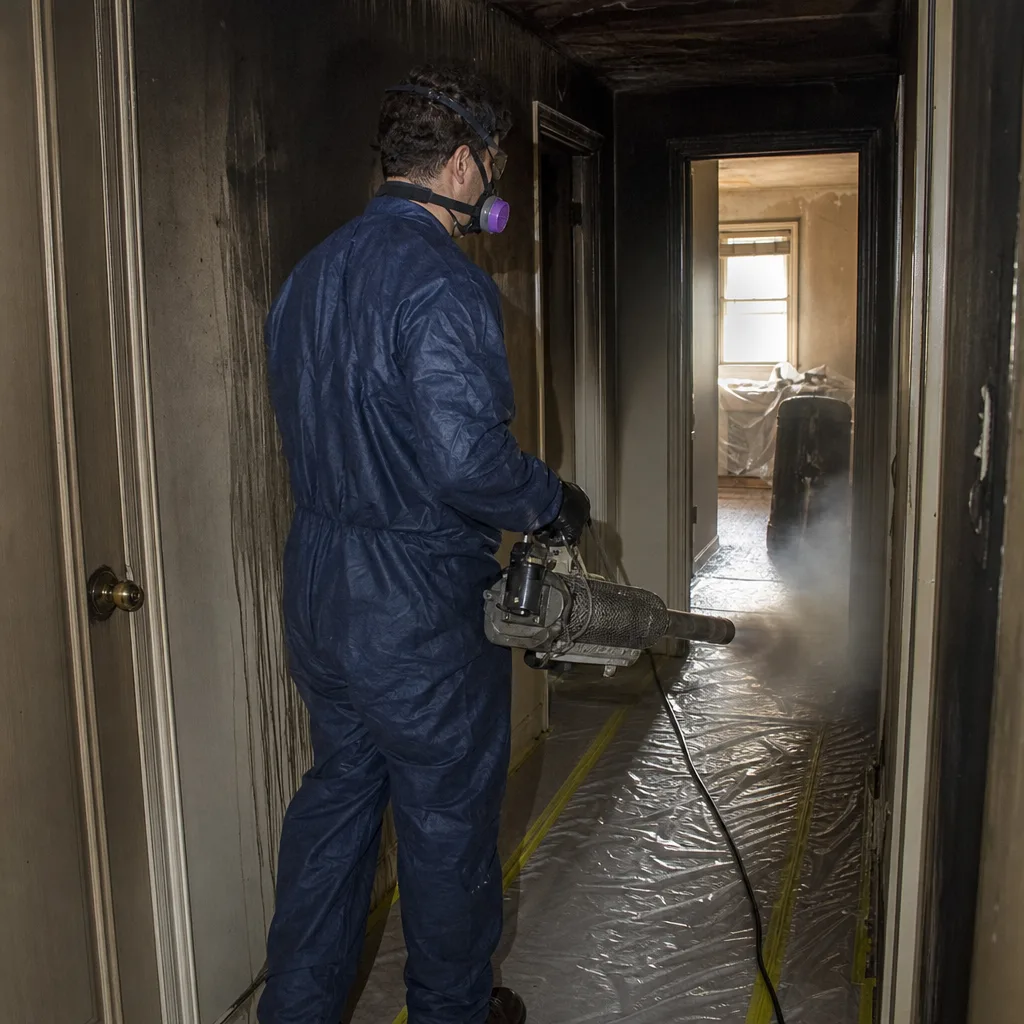
Mold Removal
Removal means physical removal, not just spraying something on the surface. In older homes, that often means carefully cutting out affected plaster sections while preserving the surrounding material. We contain the area first so spores don’t move through the rest of the house during demolition.
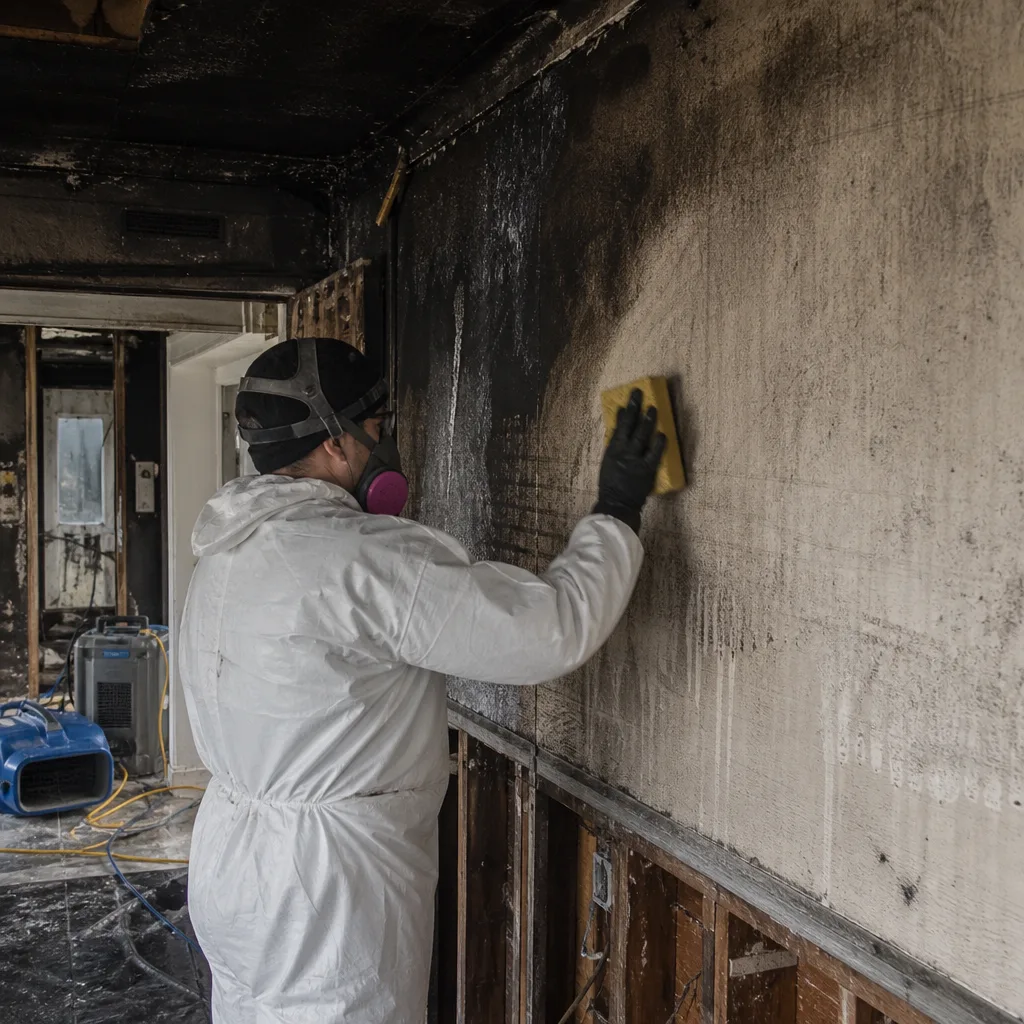
Black Mold Remediation
Black mold, technically Stachybotrys, grows on materials that have been wet for extended periods. In Munsey Park, we most often find it in attics after long-running roof leaks and in wall cavities after sewer backups. This work requires full containment, negative air pressure, and clearance testing before the area is released back to the family. We treat it with the seriousness it deserves, but we don’t oversell it. A black mold finding means a specific remediation protocol, not a panic button.
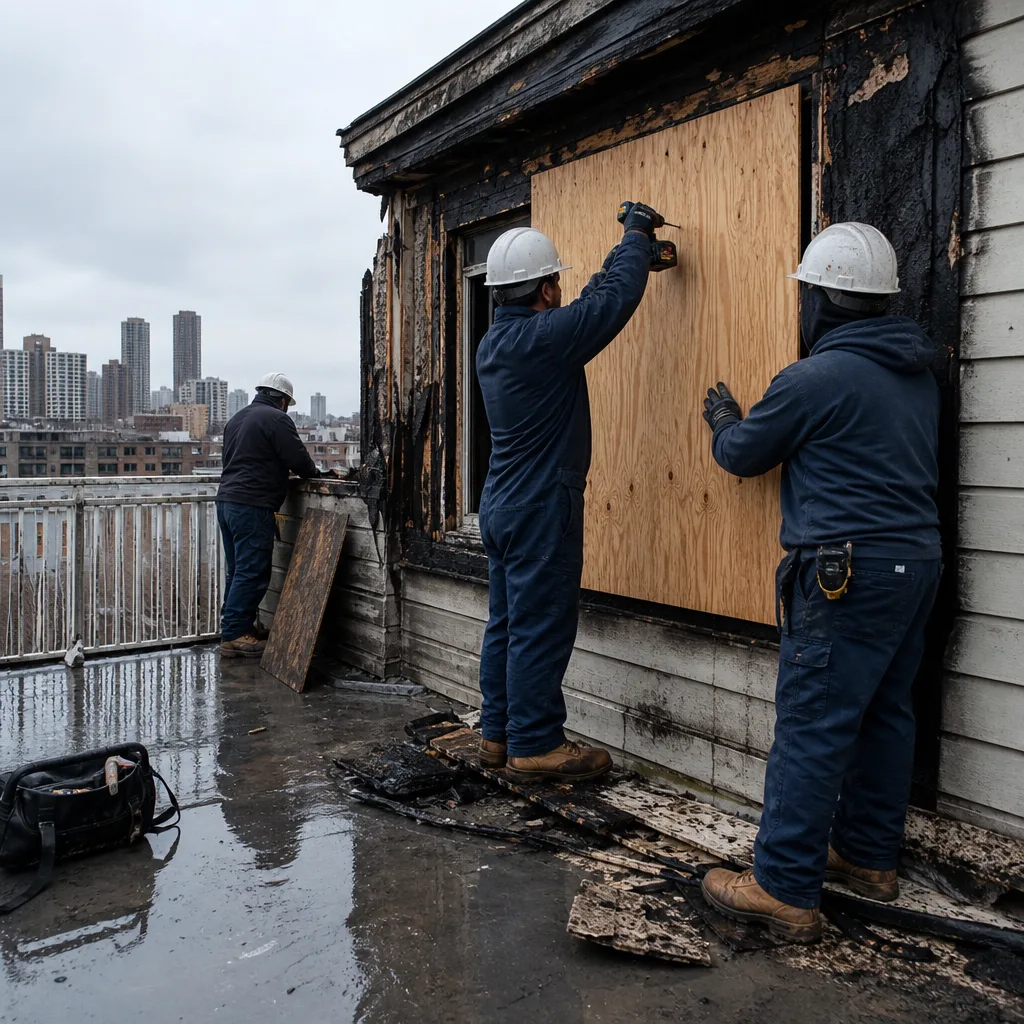
Air Quality Restoration
After any significant mold remediation, the air needs to be cleaned and the spore count brought back to normal background levels. We run HEPA air scrubbers through the remediation and for a period afterward. In a closed-up pre-war house, this is the difference between a finished job and a lingering problem.
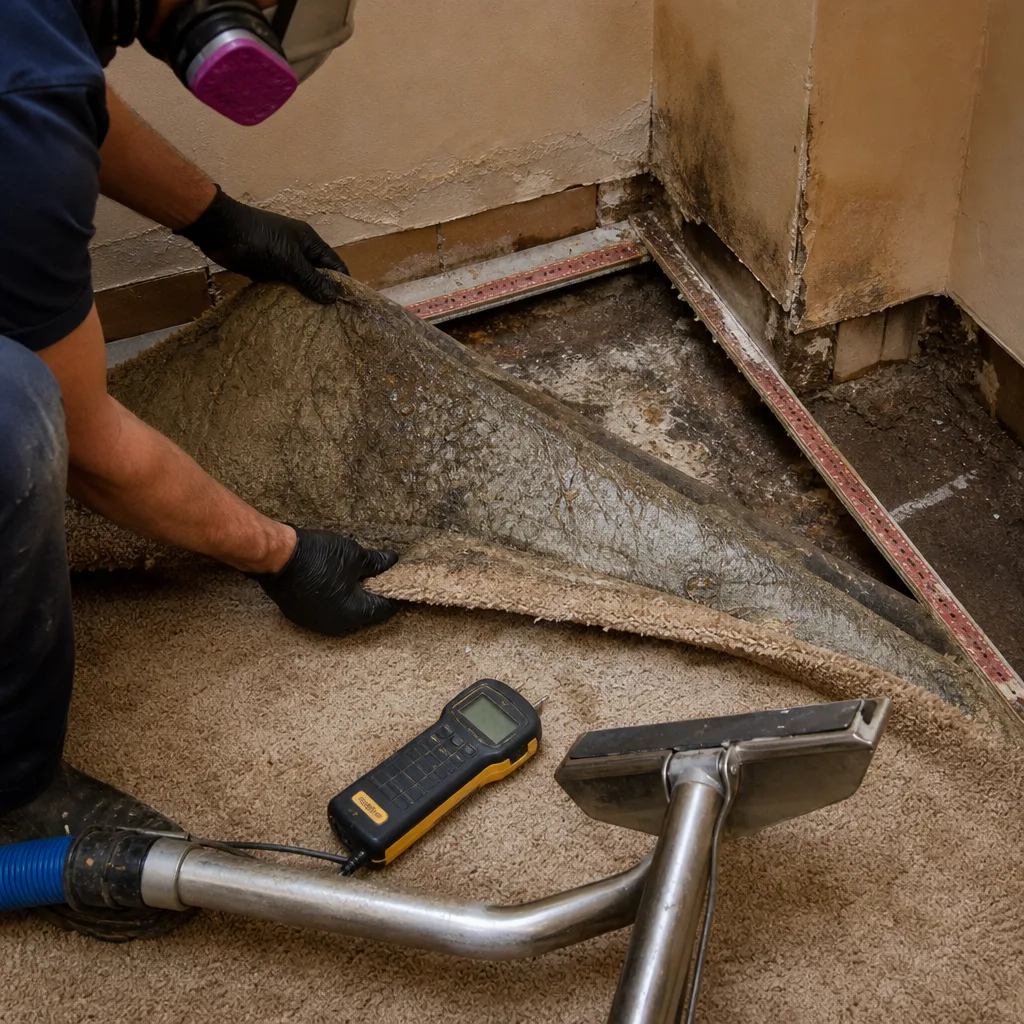
Crawl Space Treatment
Many Munsey Park homes have crawl spaces that were never designed for modern humidity loads. We install or repair vapor barriers, correct grading and drainage where needed, and set up dehumidification. The crawl space is often the source of first-floor mold problems that keep coming back.
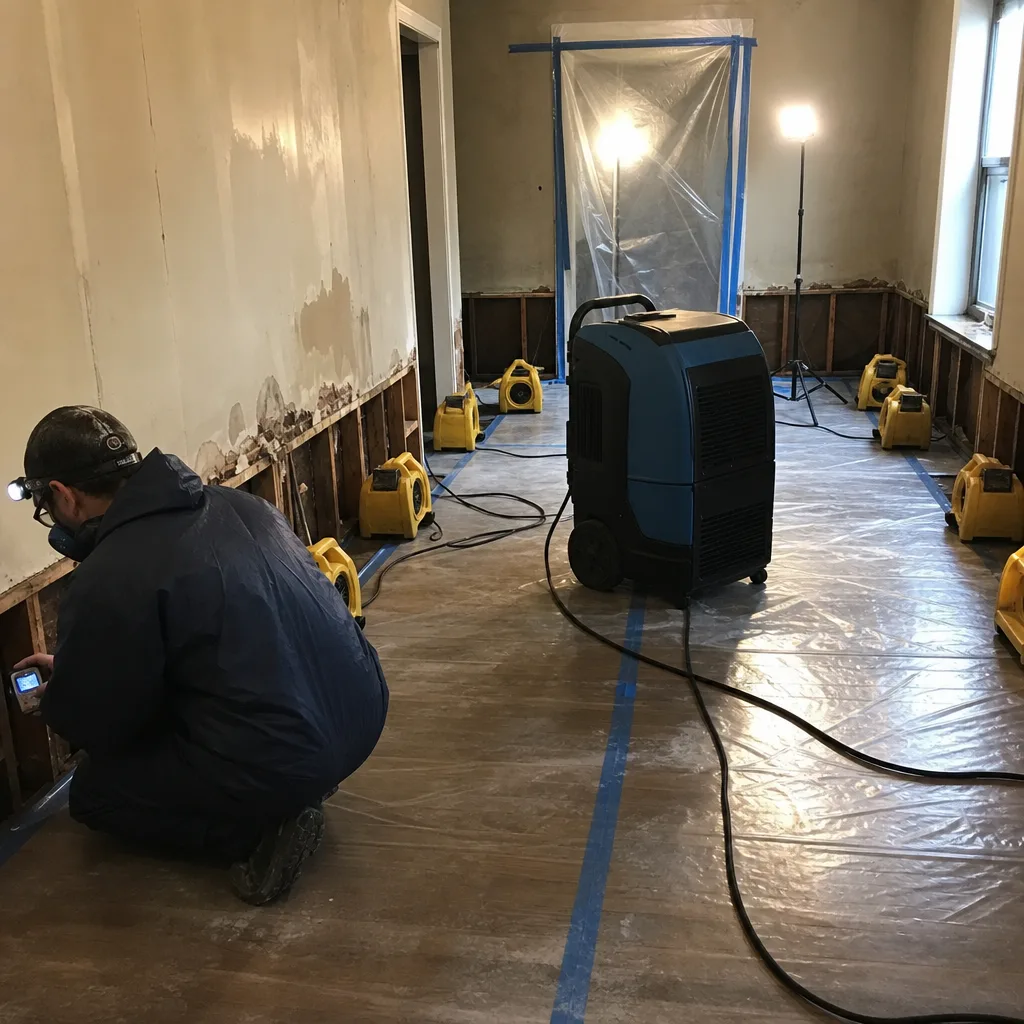
Moisture & Humidity Control
Salt air near Manhasset Bay keeps ambient humidity higher than inland Nassau County. For older homes, that means baseline dehumidification isn’t optional; it’s the difference between a dry house and a recurring mold problem. We size and place dehumidifiers properly, which matters more than most people think.
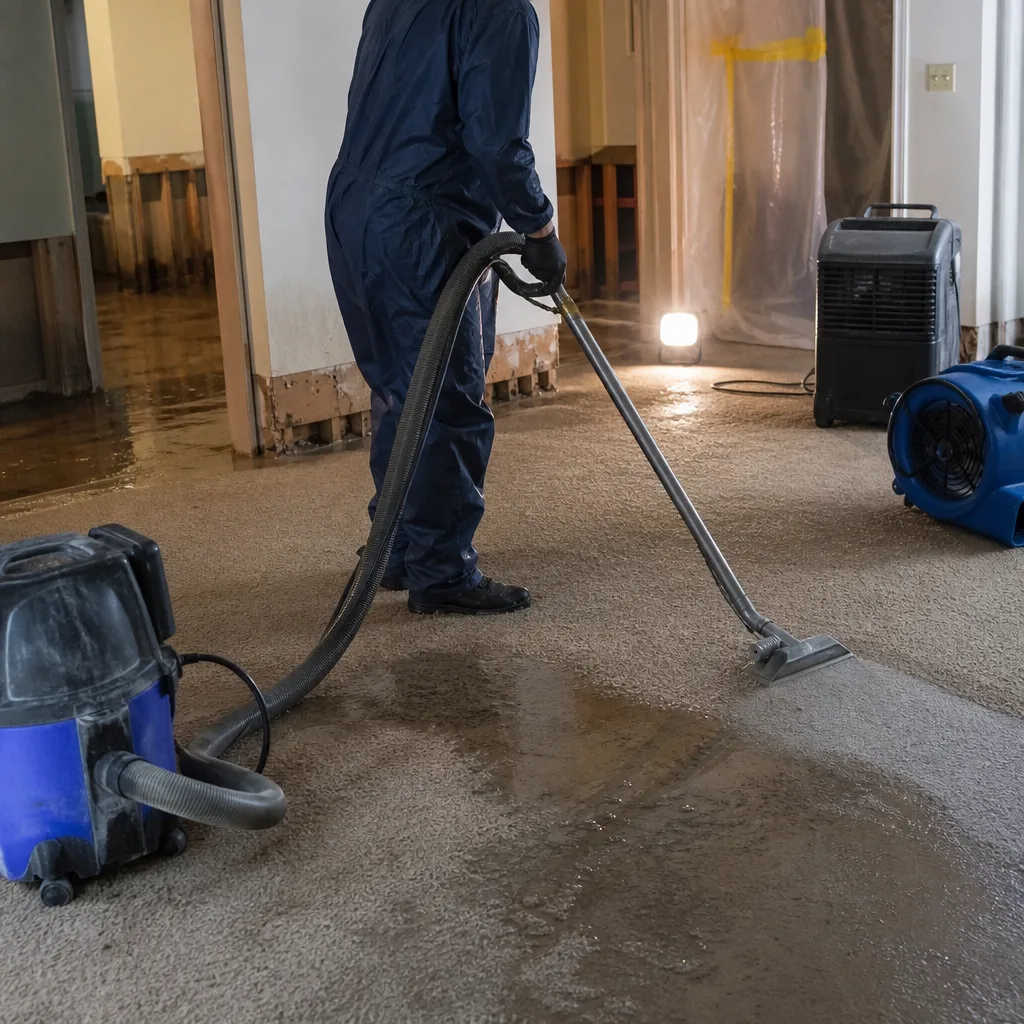
What happens when you call
- 1
A real person answersNo phone trees - you reach a local pro.
- 2
You get an upfront price rangeHonest numbers before anyone is dispatched.
- 3
A background-checked tech heads outLicensed & insured, dispatched right away.
- 4
You approve before work beginsNothing starts until you say go.
Mold Remediation Costs in Munsey Park, NY
Here’s what homeowners in Munsey Park should expect. A contained bathroom or closet mold removal runs $800-$1,800. A single room with wall cavity involvement runs $2,000-$4,500. A whole-attic remediation after a roof puncture runs $3,500-$8,000. A sewer backup with Category 3 water and cross-contamination, which unfortunately does happen here when roots infiltrate the cast-iron laterals, runs $6,000-$18,000 or more depending on how many rooms are affected. What moves the price: the square footage of containment, whether original plaster must be removed and matched, the number of days of structural drying, and whether the crawl space needs full encapsulation. Insurance covers most of these scenarios when the source was a covered peril. The fastest way to get a firm number is to call (917) 924-4221 for a free visual inspection. We’ll give you a written scope before any work starts, not after.
We Also Serve Cities Near Munsey Park
Our Mold Remediation team regularly works in neighboring communities including Fairview, Harrison, East Bronx, and Hunts Point. Call (917) 924-4221 and we’ll tell you which crew is closest to you right now, whether you’re in Munsey Park or just across the village line.
Munsey Park Mold Remediation Questions, Answered
Why does mold remediation in Munsey Park homes often require longer structural drying than in newer Nassau County houses?
Original horsehair plaster and old-growth framing absorb moisture far more slowly than modern drywall and engineered lumber, so drying takes longer. Rushing the process leaves hidden pockets where mold regrows behind original lime plaster. We use moisture mapping and daily readings until the dry standard is met, even when that takes a week longer than a newer house would.
How do nor’easters cause combined roof and sewer mold problems in Munsey Park?
The same storm that drops a limb onto your slate roof also floods the ground around your cast-iron sewer laterals, and mature root systems from the village’s oak canopy have already infiltrated those pipes. You get roof water coming in from above and sewer water backing up from below, often in the same week. Both need to be addressed, and the sewer backup brings Category 3 water that requires full containment and antimicrobial treatment, not just drying.
What is the fastest way to check for hidden mold behind horsehair plaster in a Munsey Park colonial after a roof leak?
Call us at (917) 924-4221 and we’ll do a free visual inspection with thermal imaging and moisture meters. These tools find damp pockets behind lime plaster that no visual inspection can see. If you want to check yourself first, look for efflorescence, a chalky white residue on the plaster surface, and any musty odor that gets stronger after rain. But the fastest reliable answer comes from professional moisture mapping.
Does the salt air near Manhasset Bay affect mold growth in Munsey Park garages?
Yes, in a specific way. Salt air corrodes garage-door hardware, fasteners, and tracks, and that corrosion allows water entry points that feed mold growth on the wood framing and stored items. We see garage mold problems more often in the western parts of the village near the Bay than in the interior streets. The fix starts with addressing the entry points and then treating the mold itself.
What should I expect from a mold remediation scope of work for a 1930s Munsey Park home with original plaster and copper pipes?
A written line-item scope that covers containment, demolition of affected plaster, structural drying, antimicrobial treatment, and repair or rebuild. For original plaster, we save what we can and match what we must replace. For copper pipes, we inspect for pinhole leaks and corrosion, which are common after 80-plus years. The scope should also address the moisture source, because mold remediation without source correction is just a temporary fix.
How fast can you get to a Munsey Park house?
Our commitment is 45 minutes from your call to our crew at your door. Dispatch is coordinated from our New York City office, and we keep crews positioned to reach Munsey Park quickly. Call (917) 924-4221 and you’ll have a live dispatcher on the phone, not a callback promise.
Can we stay in the house during mold remediation?
For small contained jobs, usually yes. For whole-room or multi-room contamination with negative air pressure and containment barriers, we recommend vacating the affected area, and sometimes the house, for the duration of the work. Your safety is the first priority, and we’ll tell you straight if the job requires you to relocate temporarily.
What certifications do your mold remediation technicians hold?
Our technicians are IICRC-certified in WRT, FSRT, and AMRT, and we train to RIA and IFA standards as well. Every crew member is background-checked and uniformed. You’ll know who’s in your house, and you’ll know they’ve been trained to handle pre-war construction materials like what’s in your Munsey Park home.
Munsey Park’s Coastal Environment and Mold: What Actually Happens
Munsey Park’s dense canopy of 70-to-100-year-old oak and maple trees makes storm-toppled limbs puncturing slate roofs and infiltrating cast-iron sewer lines the dominant paired path to hidden mold, unlike neighboring villages with younger trees and newer plumbing. This is the village’s signature loss pattern, and it’s the reason we approach every Munsey Park mold job the same way: find the entry point, map the moisture, contain the affected area, and dry it properly. The trees that give the village its character are also the ones dropping limbs onto roofs and sending roots through sewer lines.
The salt air near Manhasset Bay adds another layer. Corrosion moves faster on any exposed metal: garage-door springs, hinges, rollers, tracks, fasteners, and opener chains. When those components fail, moisture gets in. When moisture gets into an unventilated pre-war garage or crawl space, mold follows. We inspect for corrosion-related water entry as part of every mold assessment in Munsey Park. Galvanized springs, stainless hardware, and nylon rollers are the standard recommendations for coastal homes, and we check these as part of our mold inspections because the two problems overlap more than most homeowners expect.
After a nor’easter dropped a large oak limb onto a 1930s Colonial on Hunt Lane, our crew found wind-driven rain had soaked the horsehair-plaster attic and walls. Using moisture mapping and Dri-Eaz dehumidifiers, we contained the attic, removed failed plaster in the worst-hit bays, and applied antimicrobial treatment before structural drying, preserving the original chestnut flooring and matching period millwork rather than replacing with modern drywall. That’s the difference between a restorer who knows Munsey Park’s housing stock and one who treats every house like a drywall rectangle.
Serving Munsey Park, NY - Our Local Coverage Area
We’re based in the Munsey Park area and know this community well. Use the map below to see our service coverage - if you’re nearby, we can almost certainly help.
Why This Matters for Your Munsey Park Home
If you own a 1920s-1940s estate home in Munsey Park, your house was built with materials that don’t behave like modern construction. Horsehair plaster holds moisture for weeks. Old-growth oak framing is dense and slow to dry. Cast-iron sewer lines are vulnerable to the root systems of the very trees that make the village what it is. Slate roofs are beautiful and durable, but they need flashing maintenance and they don’t tolerate limb strikes well. All of this means mold remediation in Munsey Park isn’t a one-size-fits-all process. It requires moisture mapping, patience during structural drying, and a willingness to preserve what’s original rather than rip it out and replace it with drywall.
Call (917) 924-4221 for a free visual inspection. A live person answers. We’ll come out, map the moisture, explain what’s happening in plain language, and give you a written scope before any work starts. Done right, and backed in writing.
Written by Curt Bowman, Owner at Floodline Restoration Co. of Manhattan, serving Munsey Park and surrounding communities.