

Free visual inspection and a written scope of work before any mitigation begins - photos, moisture readings, and drying logs go in your claim file
The scope we write is the scope we bill. Anything new gets shown to you, in writing, before we touch it.






 Before
 After
After Before
 After
After Before
 After
After24/7 Emergency Storm & Disaster Restoration in Munsey Park
Storm damage in Munsey Park moves fast, and so do we. Our crews answer live around the clock and dispatch into the village immediately. A roof puncture from a fallen limb turns into water in the walls within minutes, and water in horsehair plaster turns into mold faster than you’d think. Call (917) 924-4221 the moment you see damage. We’ll have a certified team on-site, extraction running, and a written scope in your hands before you’ve finished making the coffee.
Munsey Park’s pre-war homes demand a restoration crew that understands what they’re walking into. We do. From slate roofs to cast-iron laterals to plaster walls that hold moisture for days, we read the house before we start pulling it apart. Free visual inspection. Direct insurance billing. One team from first cut to final coat of paint.
Understanding Storm & Disaster Restoration Severity in Munsey Park Properties
Not all storm water is the same, and Munsey Park’s older homes don’t respond to damage the way a 1990s colonial does. Water from a roof breach is usually Category 1 or Category 2, depending on what it passes through on the way down. Once it soaks through a 90-year-old attic deck and into horsehair plaster, it has already crossed into Category 2 territory. If a nor’easter cracks a cast-iron sewer lateral and sewage backs up into the basement, that’s Category 3 black water, and it requires full containment, antimicrobial treatment, and pack-out of affected materials.
The building envelope in Munsey Park complicates drying. Horsehair plaster wicks moisture laterally and releases it slowly. Old-growth oak flooring swells and cups but dries unevenly. Without aggressive structural drying using moisture mapping, thermal imaging, and daily hygrometer readings, hidden pockets stay wet. That hidden moisture is exactly what feeds mold in wall cavities. A restoration crew that treats a 1928 Munsey Park Tudor like a modern drywall assembly will under-dry it. We don’t.
Why Munsey Park Property Owners Choose Floodline Restoration Co. of Manhattan
- 45-minute response commitment: When a limb comes through your slate roof, we’re already rolling. Our crews are minutes away, not hours.
- 24/7 live answer: A real person picks up at two in the morning. Never an automated system, never a call center script.
- IICRC-certified crews: Our technicians hold WRT, FSRT, and AMRT certifications. They know what Category 3 water means and how to treat it.
- Free visual inspection: We walk the damage with you, explain what we’re seeing, and give you a written scope before any work begins.
- Direct insurance billing: We bill your carrier directly and communicate with your adjuster. You never play messenger.
- One team from extraction to reconstruction: The same certified crew that reads the moisture map on day one handles daily readings and rebuilds what needs rebuilding.
Our Storm & Disaster Restoration Process
Inspection & Assessment
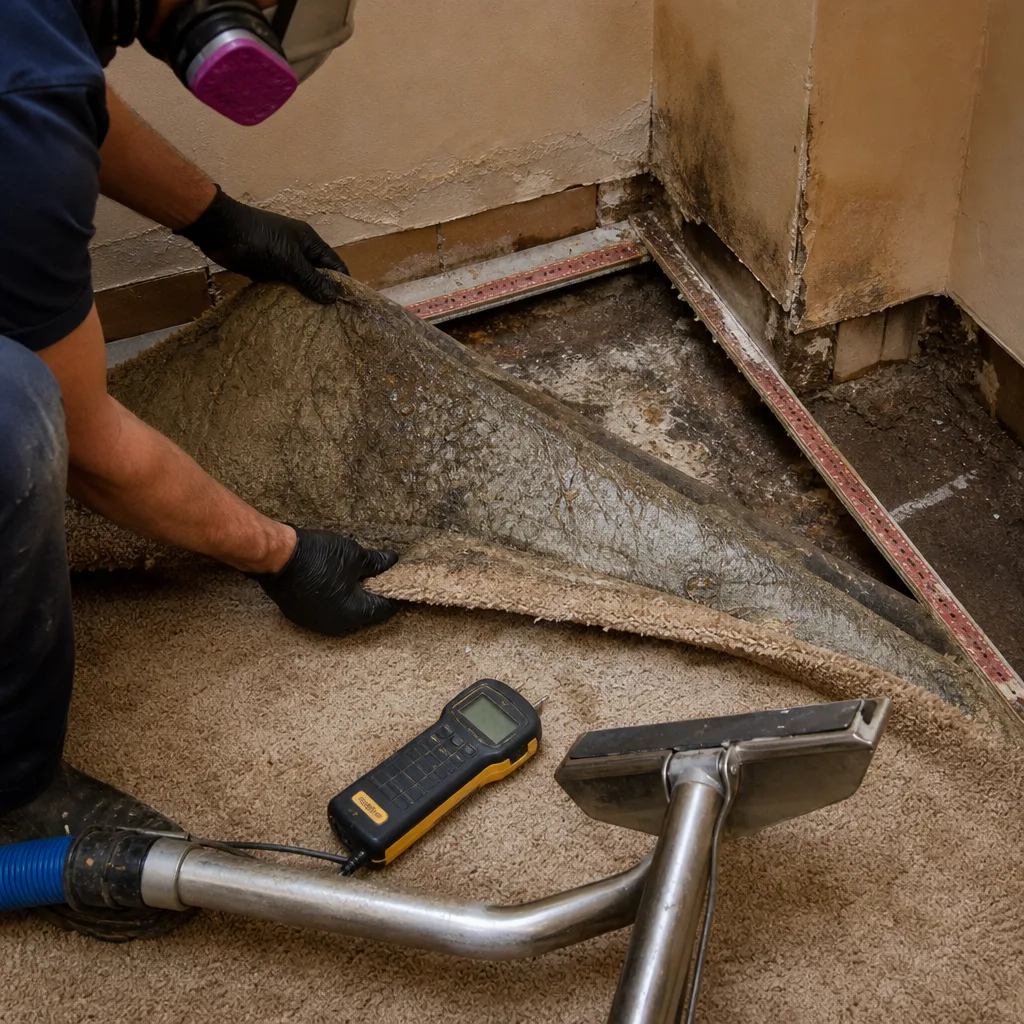
We arrive, walk the property, and map the damage using thermal imaging and moisture meters. On a Munsey Park home, we’re checking for water migration through plaster walls and under old-growth hardwood. We identify the water category and set the drying standard.
Extraction/Stabilization
Standing water comes out first. If a tree limb has punctured the roof, we install emergency tarping and board-up before interior work begins. If sewage is involved, we set up containment immediately.
Drying & Dehumidification
We place Dri-Eaz dehumidifiers and XPOWER air movers based on the moisture map, not guesswork. For Munsey Park’s plaster walls, we often use Injectidry systems to pull water from inside wall cavities. We log daily readings until the dry standard is met.
Cleaning & Sanitization
Every affected surface gets treated to the water category involved. Category 3 requires antimicrobial treatment and HEPA air scrubbing. We’d rather over-treat than leave anything behind in a pre-war home.
Specialty Treatment for Storm & Disaster Restoration
Storm damage in Munsey Park often means roof repair, sewer work, and Reconstruction & Cleanup - Munsey Park happening at once. We coordinate the trades and keep the sequence right so the house dries in the correct order.
Repairs & Restoration
The same crew handles the rebuild. We match period materials, from slate tiles to plaster to wood species, so the repair doesn’t look like a repair. Then we hand you the moisture log and our written 90-Day Done Right Promise.
Need Emergency Storm & Disaster Restoration in Munsey Park Now?
Crews minutes away, answering live 24 hours a day. The sooner we start, the less it costs.
Working With Your Insurance Company
Storm claims in Munsey Park get complicated fast. A nor’easter that drops a limb on your roof and cracks a sewer lateral at the same time can involve multiple coverage lines and an adjuster who has never seen horsehair plaster dry. We’ve handled hundreds of these claims. Our job is to make the carrier understand what your home actually requires, not what a generic estimating program says it should cost.
We start documenting from the first hour. Photos, moisture readings, material samples, and a line-item scope that reflects like-for-like replacement of period materials. We talk directly to your adjuster so you don’t have to. Our Storm & Disaster Restoration team handles the entire claim from first call to final invoice.
What We Provide Your Insurer
- Thorough documentation of the loss
- Photos of all damage, room by room
- Moisture readings and drying logs
- A detailed, line-item scope of work
- Direct coordination with your carrier
Built for Munsey Park’s Loss Calendar
Munsey Park’s storm season doesn’t follow a single pattern. November through March, nor’easters drive wind and rain against steep slate rooflines and through aging flashings. The village’s mature oak and maple canopy, the same trees that give the streets their estate character, drops heavy limbs onto roofs and power lines. We see roof punctures and water intrusion from wind-driven rain more than any other winter cause.
Spring thaw brings a different problem. Snow melt and heavy rains saturate the ground around foundations and push into the cast-iron sewer laterals that serve the village’s older homes. Root intrusion from those same mature trees cracks the lines, and basement backups follow. Summer thunderstorms are shorter but intense, and flash flooding can overwhelm drainage systems. Through all of it, the proximity to Manhasset Bay keeps ambient humidity elevated, which means any water intrusion that isn’t dried aggressively turns into mold faster than inland locations. Our Storm & Disaster Restoration in Munsey Park crews know the seasonal patterns and prepare for them.
Storm & Disaster Restoration Across Munsey Park’s Neighborhoods
Munsey Park is small, roughly a mile square, but the restoration patterns vary by street and block. Along Port Washington Boulevard, the homes tend to sit on slightly flatter ground, and we see more sewer lateral backups after heavy rain because the cast-iron lines run shallow and old. Over near Manhasset Bay, the humidity effect is more pronounced, and any water intrusion demands faster, more aggressive drying to stay ahead of mold. On Elm Sea Lane and the surrounding streets, the tree canopy is denser and older, so roof punctures from falling limbs are a regular call after any significant wind event. Around Hunt Lane and Park Avenue, the homes are set back from the road with deeper lawns, which means water pooling against foundations after extended rain is a bigger risk than roof damage.
The common thread across all of these areas is construction age. Every home in Munsey Park was built between roughly 1920 and 1950, and every one of them has plaster walls, old-growth wood, and original plumbing that has seen decades of use. That’s not a liability if the crew knows what they’re doing. It is a liability if they don’t.
Specialized Storm & Disaster Restoration Services We Offer in Munsey Park
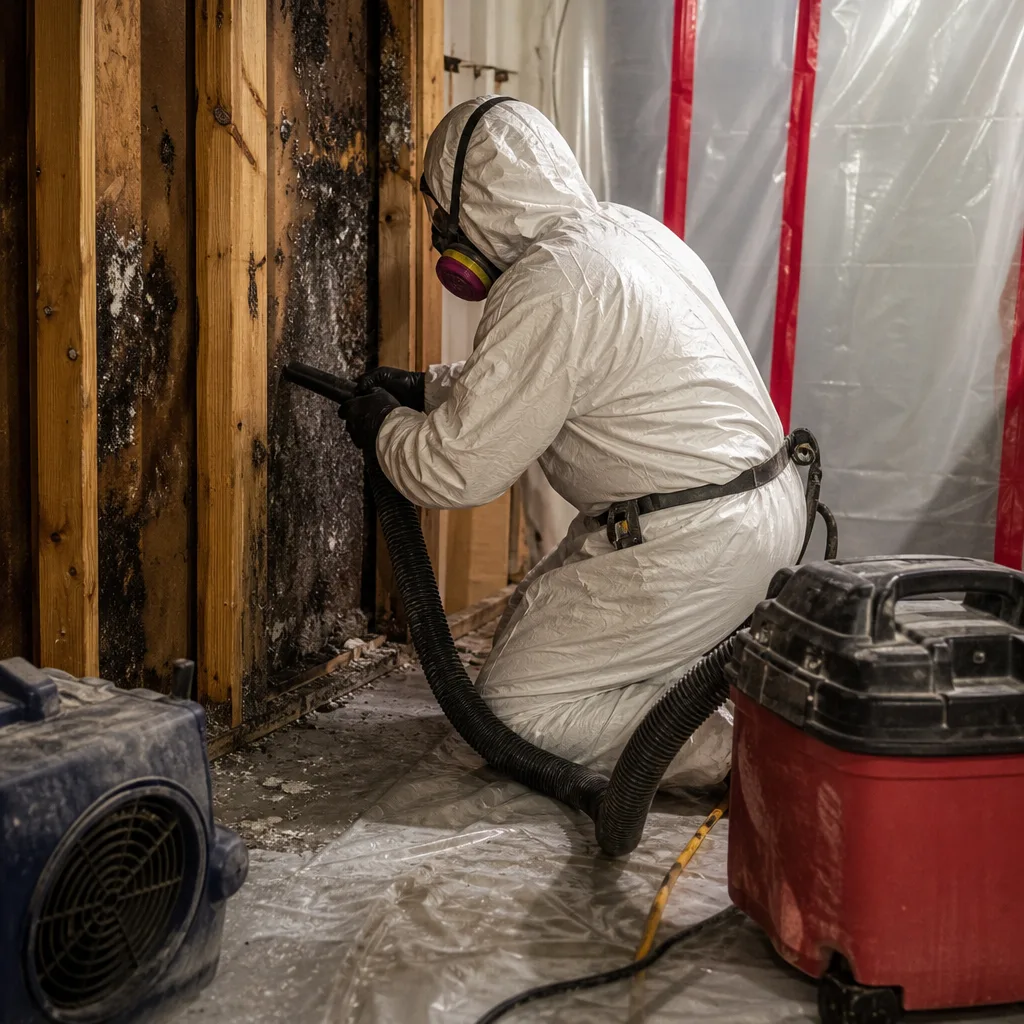
Roof Tarping
When a limb punches through slate, the first priority is keeping more water out. We install heavy-duty tarps that can hold up to a nor’easter while you wait for permanent repairs. Our tarps are anchored to the structure, not just draped over the ridge, and we photograph everything for your insurer.
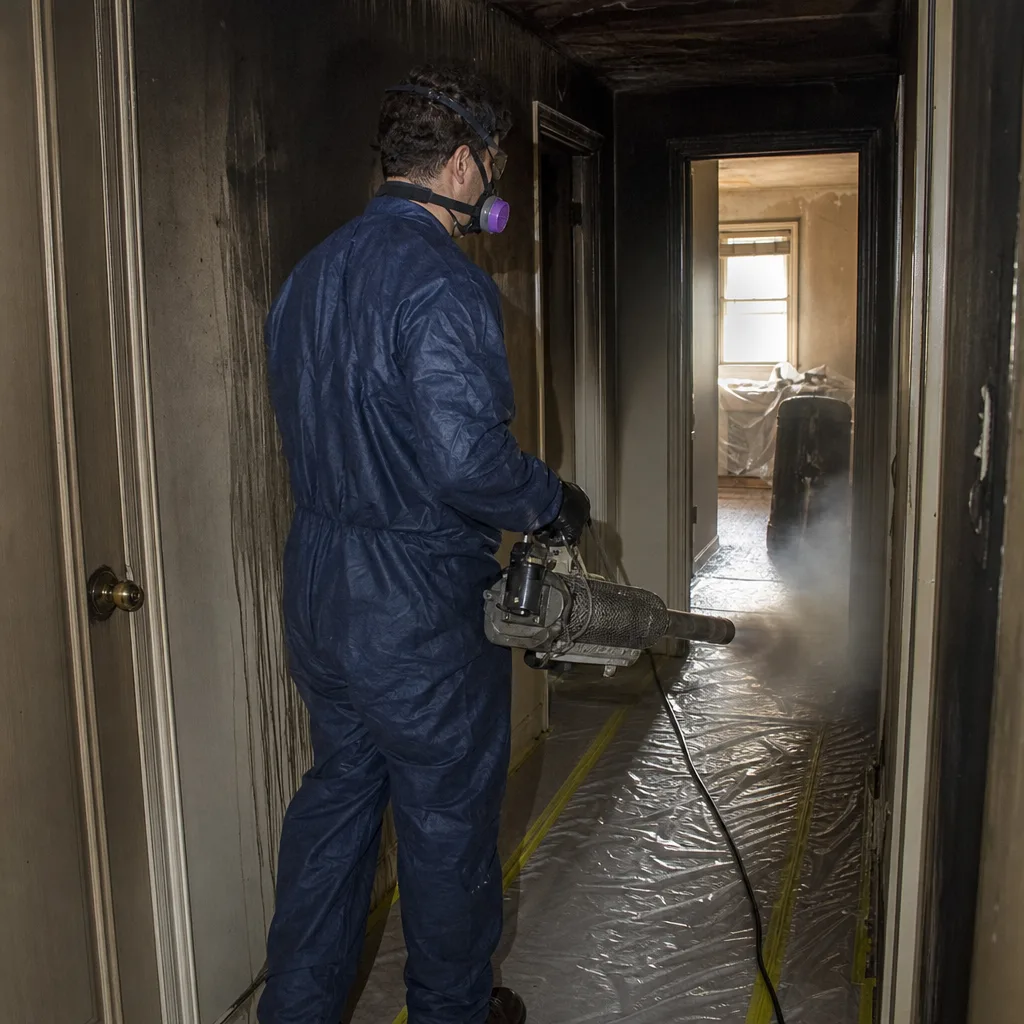
Emergency Board-Up
Broken windows and compromised doors leave a Munsey Park home exposed overnight. We board up with plywood cut to fit each opening, and we secure the property before we leave. No open entry points, no further water or wind damage.
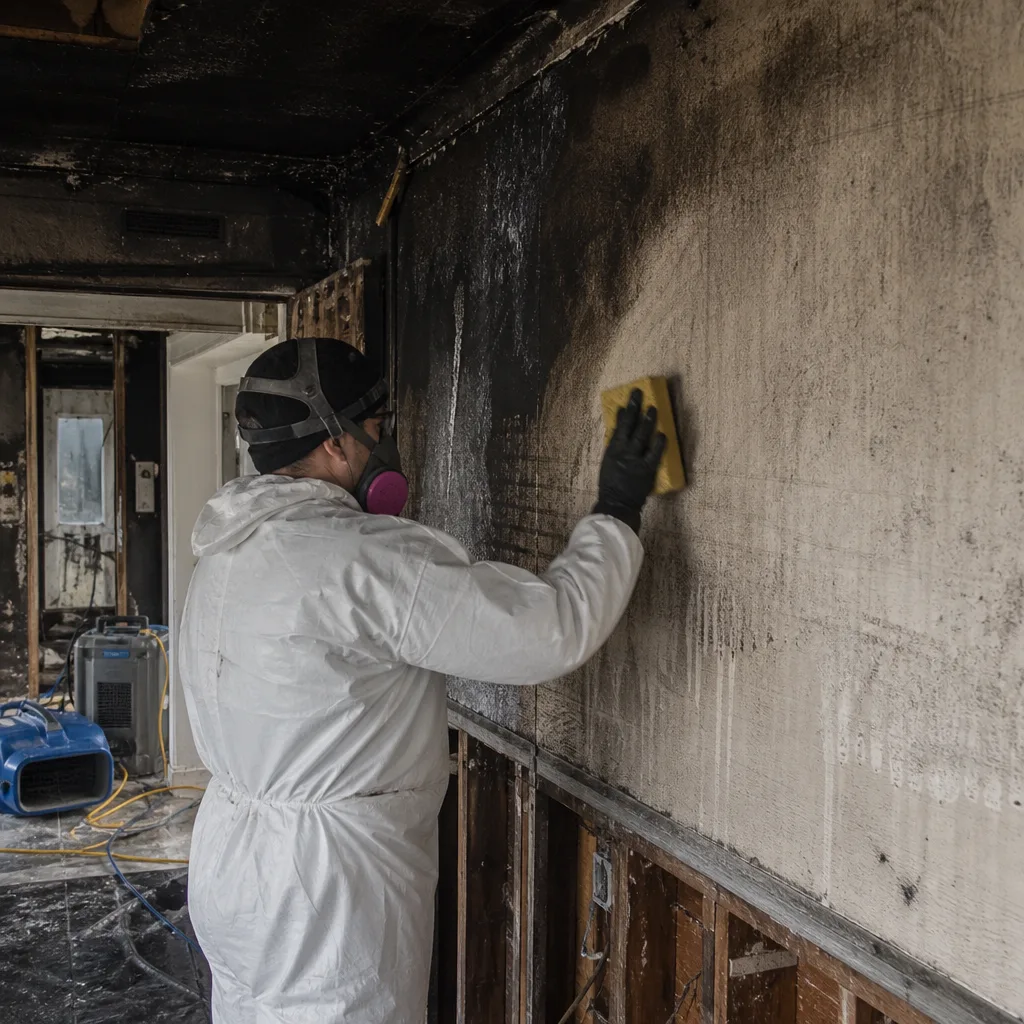
Storm Damage Cleanup
Fallen limbs, debris in the yard, standing water in the basement, and damaged materials all need to come out before restoration starts. We remove debris, pump out water, and clear the site. We work around mature trees and landscaping carefully, because we know you’re not going to sacrifice a century-old oak to make our job easier.
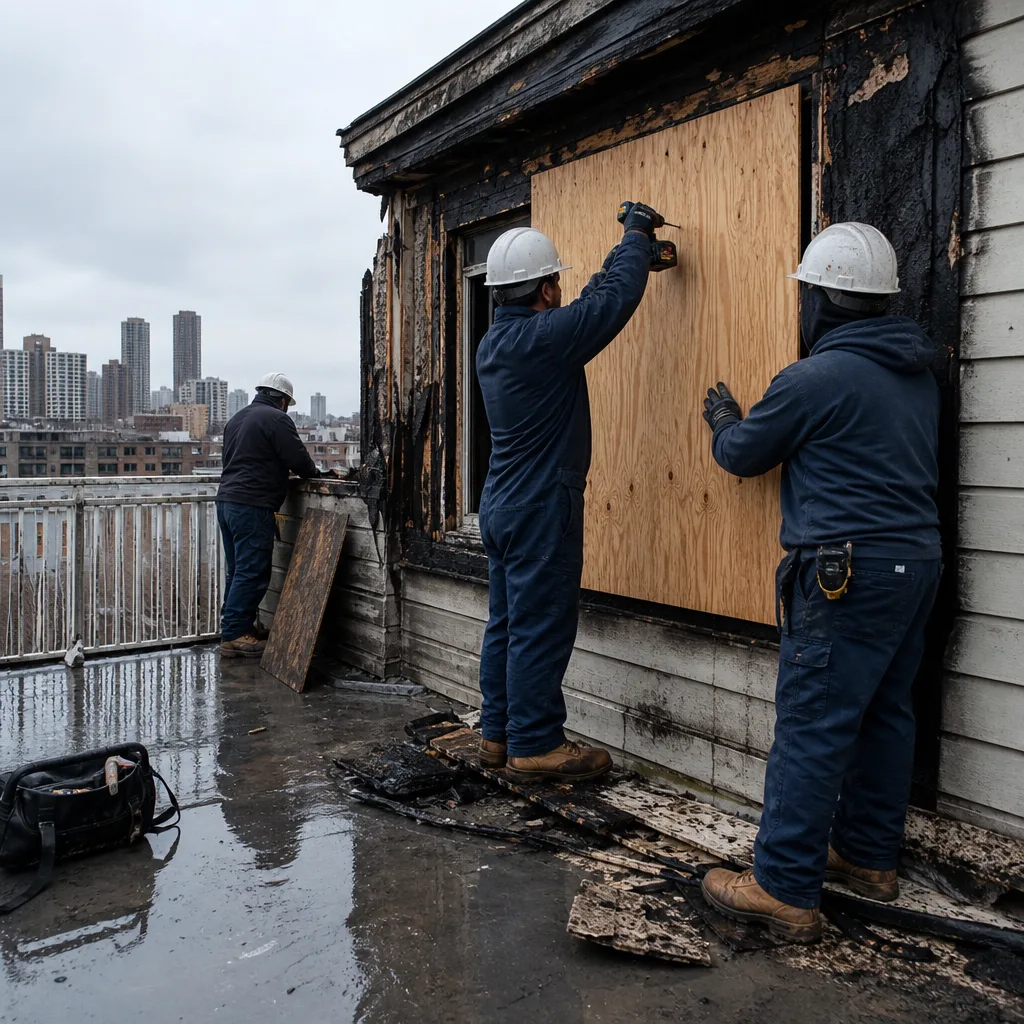
Flood Damage Restoration
Water inside a home with horsehair plaster walls is a different animal than water in a drywall house. We set the drying standard based on the materials, not a generic chart. That means longer drying times, more aggressive equipment, and daily moisture readings until the walls read dry, not just the air.
Wind Damage Repair
Nor’easter winds tear off flashing, lift slate tiles, and drive rain into attics. We repair what’s damaged, match what’s missing, and seal the envelope so the next storm doesn’t find the same entry point. No visible shortcuts, no modern substitutes where period materials are required.
What happens when you call
- 1
A real person answersNo phone trees - you reach a local pro.
- 2
You get an upfront price rangeHonest numbers before anyone is dispatched.
- 3
A background-checked tech heads outLicensed & insured, dispatched right away.
- 4
You approve before work beginsNothing starts until you say go.
Storm & Disaster Restoration Costs in Munsey Park, NY
Let’s talk real numbers. Roof tarping in Munsey Park typically runs $450-$1,200 depending on roof pitch and the size of the damaged area. Emergency board-up usually lands between $300-$800 per opening. Full storm damage cleanup, including debris removal and water extraction from a basement, averages $1,800-$5,500. Flood damage restoration inside a home, with structural drying and Munsey Park Sanitization Services, commonly falls between $3,500-$12,000 depending on square footage and water category. If a roof puncture requires like-for-like slate repair, roofing work adds $2,500-$9,000, with original slate matching pushing the upper end.
What moves the price is what the water touched. Plaster walls dry slower, and slower drying means more equipment days. Category 3 water requires containment and antimicrobial treatment. Sewer lateral repair, if a storm cracks an old cast-iron line, is a separate line item. The free inspection gives you a firm written scope before any work begins, and we bill your carrier directly. Call (917) 924-4221 and we’ll send a crew to walk it with you.
We Also Serve Cities Near Munsey Park
Our crews cover the surrounding communities, including Fairview, Harrison, East Bronx, and Hunts Point. If you’re just outside the village line and dealing with storm damage, call us. The same team that knows Munsey Park’s pre-war homes can handle yours.
Serving Munsey Park, NY - Our Local Coverage Area
We’re based in the Munsey Park area and know this community well. Use the map below to see our service coverage - if you’re nearby, we can almost certainly help.
Munsey Park Storm & Disaster Restoration Questions, Answered
How does the age of my Munsey Park home’s horsehair plaster affect how long storm water restoration takes?
It extends it, often by several days. Horsehair plaster is dense and porous, which means it holds moisture longer and releases it slower than modern drywall. A wall that would dry in three days in a sheetrock house might take five to seven days in a 1930s Munsey Park home. We plan for that from the first moisture reading, not halfway through the job when the walls are still wet.
Can you match the original slate or clay tile when repairing my roof after a storm, or will it look patched?
We match it. Munsey Park’s code oversight and homeowners don’t accept visible modern substitutes on period roofs. We source reclaimed or matching slate and clay tile, and we take the time to blend the repair into the existing roof. It won’t look patched.
What should I do if a nor’easter drops a limb on my roof and sewage backs up into the basement at the same time?
Call us immediately. That combination means you have Category 2 water from the roof and Category 3 black water from the sewer, and they require different treatment protocols. We’ll tarp the roof, set up Biohazard & Crime Scene Cleanup - Munsey Park containment, and start extraction on both fronts. Don’t go into the basement without protective gear. Call (917) 924-4221 and we’ll handle it from the first truck.
Why does Munsey Park’s proximity to Manhasset Bay make mold prevention after a storm even more critical?
Because ambient humidity near the bay stays elevated year-round, which means the moisture already in your home’s air gives mold a running start. Any water intrusion that isn’t dried aggressively and quickly becomes a mold problem faster here than it would further inland. That’s why we use Dri-Eaz dehumidifiers and XPOWER air movers at full capacity from day one.
Do I need to move out during restoration of my pre-war home, and how do you protect my furnishings and period details?
Sometimes, but not always. If the damage is contained to one area, we set up containment and you can usually stay. If Category 3 water has affected living spaces, we recommend relocating until sanitization is complete. We protect period details with plastic sheeting, and we move furnishings to safe zones before work starts. Your moldings, plaster, and original hardware are treated the way we’d treat our own grandmother’s house.
How fast can someone actually get to Munsey Park?
We’re minutes away and our 45-minute response commitment is real. A live dispatcher answers the phone, a crew gets rolling, and we’re at your door with extraction equipment the same visit. The first hour after a roof breach is when the most secondary damage occurs, so we move fast.
Will insurance cover storm restoration for my older home?
Most Munsey Park homeowner policies cover storm damage, including roof repair and water extraction. The question is whether your carrier’s estimate reflects what a pre-war home actually requires. We document everything, provide like-for-like material costs, and talk directly to your adjuster so the settlement matches the real scope. We bill the carrier directly.
What should I do in the first 30 minutes after storm damage?
Shut off power if water is near outlets. Don’t enter standing water if sewage might be involved. Call us. We’ll walk you through it on the phone while the crew is on the way. The less you touch, the safer you are and the cleaner the restoration.
Call Floodline Restoration Co. of Manhattan for Storm & Disaster Restoration in Munsey Park
When a nor’easter puts a limb through your slate roof or a storm backs sewage into your basement, you want a crew that has seen Munsey Park’s homes before. We have. We know the plaster, the slate, the cast-iron laterals, and the tree canopy. We carry the right equipment, we dry to the actual material, and we stand behind the work with the 90-Day Done Right Promise in writing. One call, one team, from first extraction to finished rebuild. Call (917) 924-4221 for a free estimate and a real person on the line.
Written by Curt Bowman, Owner at Floodline Restoration Co. of Manhattan, serving Munsey Park since 2010.