
Free visual inspection and a written scope of work before any mitigation begins - photos, moisture readings, and drying logs go in your claim file
The scope we write is the scope we bill. Anything new gets shown to you, in writing, before we touch it.






 Before
 After
After Before
 After
After Before
 After
After24/7 Emergency Mold Remediation in Peekskill
Mold in a Peekskill home moves fast, and so do we. You call (917) 924-4221 and a live dispatcher answers, no recording and no answering service. A certified crew is dispatched inside the Peekskill area around the clock, every day of the year. We arrive for a free visual inspection, map the moisture that’s feeding the growth, and explain what needs to happen before the first tool comes off the truck. The first hour matters because mold colonies double roughly every 24 to 48 hours once a water source is present. The sooner containment goes up, the less surface area we treat, the less drywall comes out, and the smaller the final bill.
Understanding Mold Remediation Severity in Peekskill Properties
Peekskill’s housing stock runs older than most of Westchester: late-Victorian wood frames, converted 19th-century industrial buildings, and row houses on steep blocks climbing toward the Hudson Highlands. That raises the stakes for mold because the water that feeds it travels behind plaster, through rubble-fieldstone foundations, and across shared walls. We classify mold jobs by square footage of visible colonization, the moisture source behind it, and whether the air has become involved. A small patch behind a bathroom vanity is a localized cleanup. Discoloration spanning a basement sill plate plus elevated humidity readings in the wall cavities above is a containment project with air scrubbing. Peekskill’s converted loft buildings on the downtown grid add a third layer: porous brick and exposed timber can store moisture for months after a single pipe leak, and spore-laden air moves through open floor plates like a hallway in a row house. We don’t guess. We run hygrometers, thermal imaging, and moisture probes through plaster, then set the scope to what the readings show, not what the stain suggests.
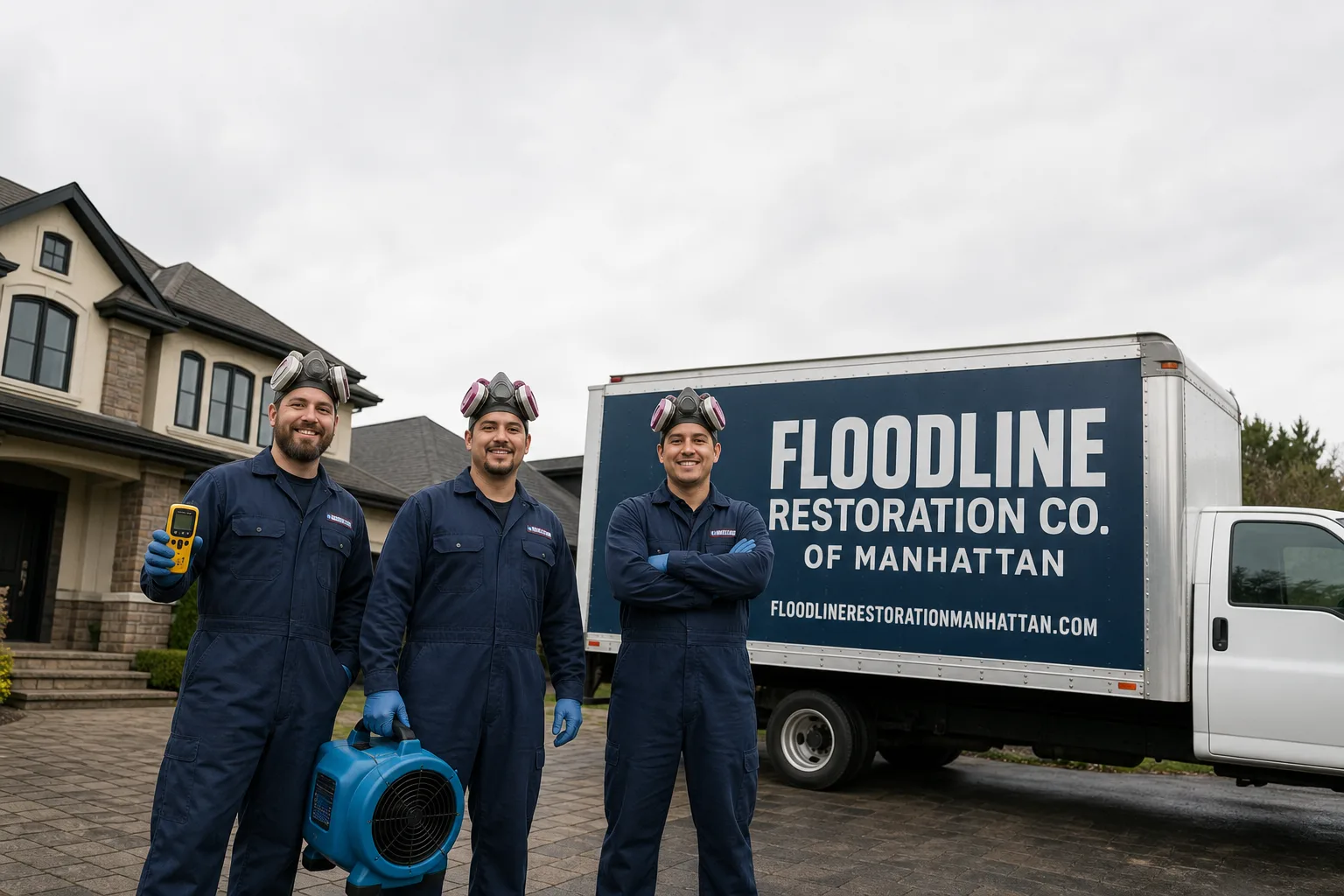
Why Peekskill Property Owners Choose Floodline Restoration Co. of Manhattan
- 45-minute response commitment to Peekskill. From the moment your call ends, a crew is on the road, and we honor that window like a written promise because it is one.
- A real person answers, 24/7. At 2 a.m., a live dispatcher picks up. Not a voicemail box, not a call center reading a script. A person who can send a crew.
- IICRC-certified crews, trained to the WRT and AMRT standards. Water damage and applied microbial remediation are separate disciplines. Our technicians hold both.
- Free visual inspection, no obligation. We look, we measure, we explain. If remediation isn’t needed, we say so. That’s the square deal.
- Direct insurance billing. We send the scope and daily readings to your carrier and deal with the adjuster so you don’t have to play messenger.
- One crew from the first cut to the finish coat. We don’t hand the job off between extraction, drying, and rebuild. Same certified team, all the way through.
Our Mold Remediation Process
Inspection & Assessment
We start with thermal imaging and moisture probes, not with a scraper. Peekskill’s plaster walls hide moisture in wall cavities and behind baseboards. We find the water source before touching the mold.
Extraction & Stabilization
If standing water is present in a basement or crawl space, we remove it with pumps and extractors. On dry-flood jobs, the water may be inside the wall cavities, so stabilization means stopping the intrusion at the foundation level first.
Drying & Dehumidification
We set Dri-Eaz dehumidifiers and high-velocity air movers inside the affected zones, with daily moisture readings logged until the dry standard is met. The dry standard is a number, not an opinion, and we share the log with you and your carrier.
Containment & Cleaning
HEPA-filtered negative air machines hold pressure inside the work zone so spores don’t travel to the rest of the house. Surfaces are HEPA-vacuumed and wiped down. Contaminated drywall and insulation come out in sealed bags.
Antimicrobial Treatment & Air Scrubbing
After the affected material is removed, we treat remaining surfaces with an EPA-registered antimicrobial and run HEPA air scrubbers through the space. Air quality restoration in a Peekskill loft or row house means treating the air, not just the walls.
Repairs & Restoration
Once clearance levels are confirmed, we rebuild. Drywall, trim, flooring, paint. Our same crew handles the construction, so the remediation and the restoration aren’t two different jobs with two different contractors.
Need Emergency Mold Remediation in Peekskill Now?
Crews minutes away, answering live 24 hours a day. The sooner we start, the less it costs.
Working With Your Insurance Company
Mold claims get scrutinized harder than almost any other loss. The carrier wants a documented cause, a measured scope, and proof the drying actually happened. We provide all three. From the first hour, we photograph every affected surface, log every moisture reading, and write a line-item scope that matches how adjusters actually review claims. When your mold traces back to a covered peril, like a burst pipe or storm-driven water intrusion, we bill your carrier directly and coordinate with the adjuster on your behalf. You get a copy of everything. No surprises on the bill, and no phone tag between you and the insurance company. For Peekskill homes along the Annsville Creek corridor, where flood policies enter the picture, our documentation matters even more. We speak NFIP.
What We Provide Your Insurer
- Thorough documentation of the loss
- Photos of all damage, room by room
- Moisture readings and drying logs
- A detailed, line-item scope of work
- Direct coordination with your carrier
Built for Peekskill’s Loss Calendar
January in Peekskill is the pipe-burst month. The city sits in a cold-air drainage zone at the mouth of the Highlands, regularly running colder than neighboring towns, which extends the freeze-thaw season and puts older supply lines under real stress. February and March bring ice dams on shallow-pitched Victorian roofs, and the meltwater finds its way down through ceilings and into wall cavities. Spring thaw saturates the ground, and hydrostatic pressure builds against rubble foundations all over the hillside blocks. Summer thunderstorms drop an inch on the ridge in twenty minutes, and water arrives at the lower streets faster than the aging combined sewer system can take it. Nor’easters in fall and early winter stall over the Highlands and dump for hours. Every one of these events leaves moisture behind. Every one can become a mold problem within days if the structure isn’t dried correctly. That calendar is why we keep crews staged to reach Peekskill inside 45 minutes, all year.
Mold Remediation Across Peekskill’s Neighborhoods
Peekskill isn’t one kind of town, and mold doesn’t behave the same way in every part of it. Up on the residential blocks climbing toward the ridgeline, off Washington Street and Crompond Road, we work in late-Victorian houses with rubble foundations and plaster walls. The mold signature there is the dry-flood: no surface water, but hydrostatic pressure forcing moisture through the stone, and mold colonizing the wall cavities before anyone sees a stain. Down in the downtown grid around North Division and South Street, we’re inside converted 19th-century industrial buildings, artist live-work lofts with open floor plates and exposed masonry. Water travels down through multiple stories, and remediation means managing air flow across big, connected spaces. Along the Hudson side and the Annsville Creek corridor, flood-zone properties carry the added weight of NFIP documentation. And in the two- and three-family wood frames spread across the city, shared walls mean containment has to be exact so spores don’t move into the neighboring unit. Different blocks, different failure modes. The crews we send know which one they’re walking into.
Specialized Mold Remediation Services We Offer in Peekskill
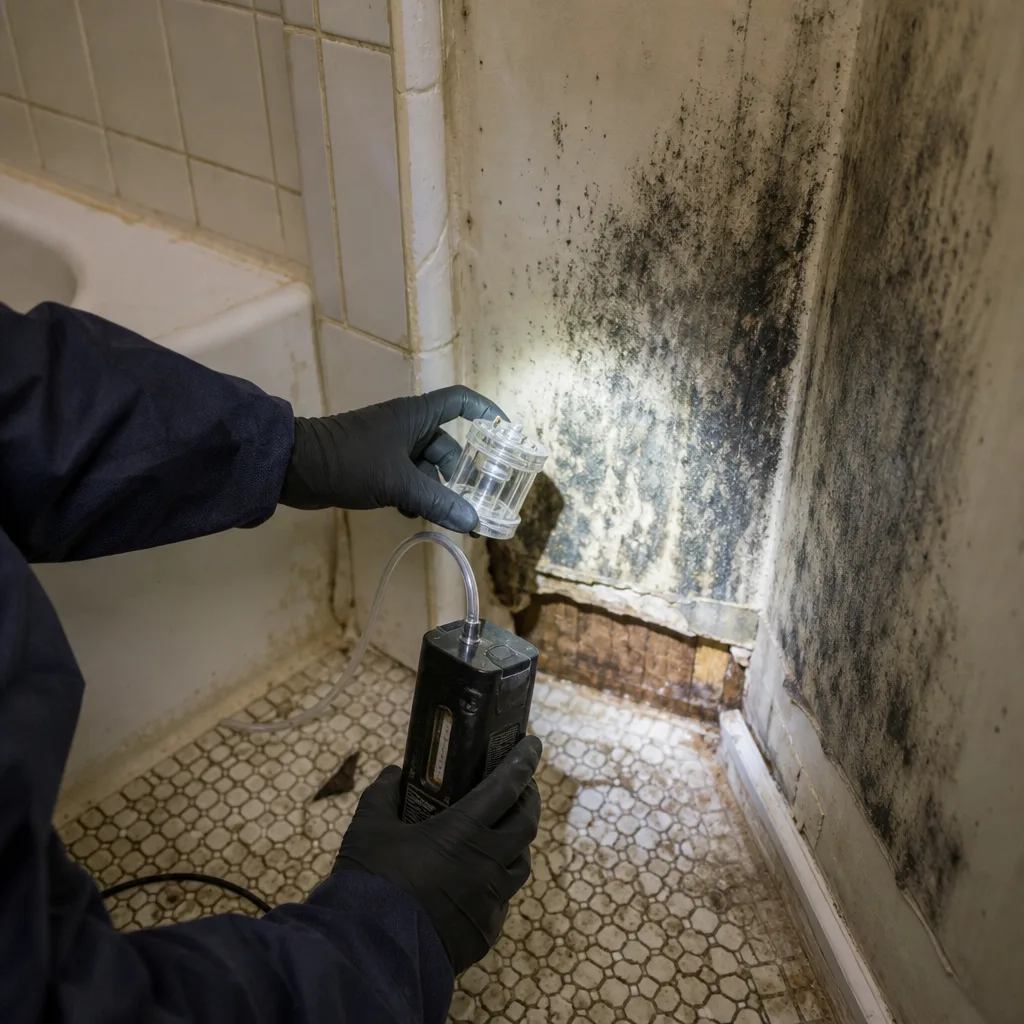
Mold Inspection & Testing
Before any remediation, you need to know what’s actually growing and how far it’s spread. We inspect with thermal imaging and moisture meters, and we can take air and surface samples for third-party lab analysis. In Peekskill, where dry-flood mold hides behind plaster while the wall looks fine, inspection is not a formality. It’s how we find the problem before it doubles again.
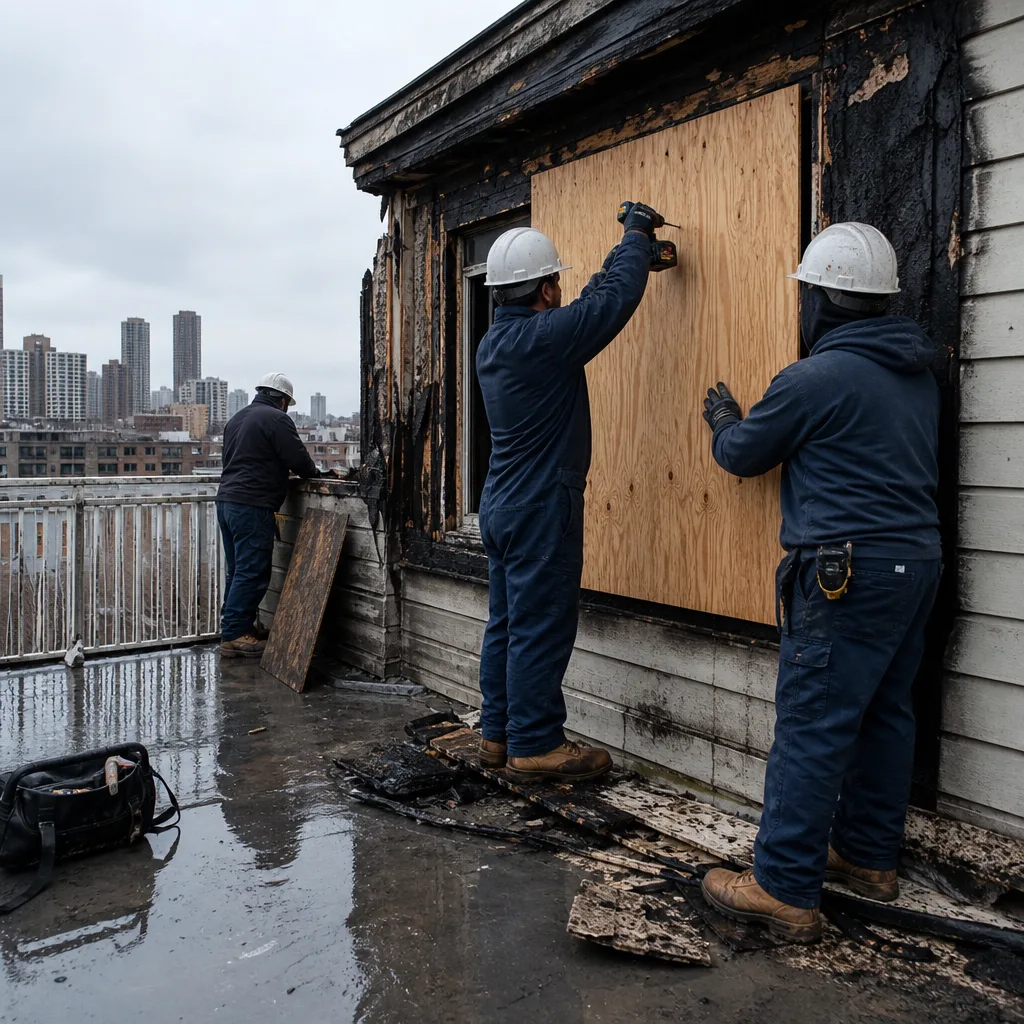
Mold Removal
Removal is the physical work: cutting out contaminated drywall, removing soaked insulation, HEPA-vacuuming framing, and bagging debris on site. In Peekskill’s row houses and multi-family homes, we sequence the work to keep occupants in place wherever possible, which means precise containment and clear communication with every unit.
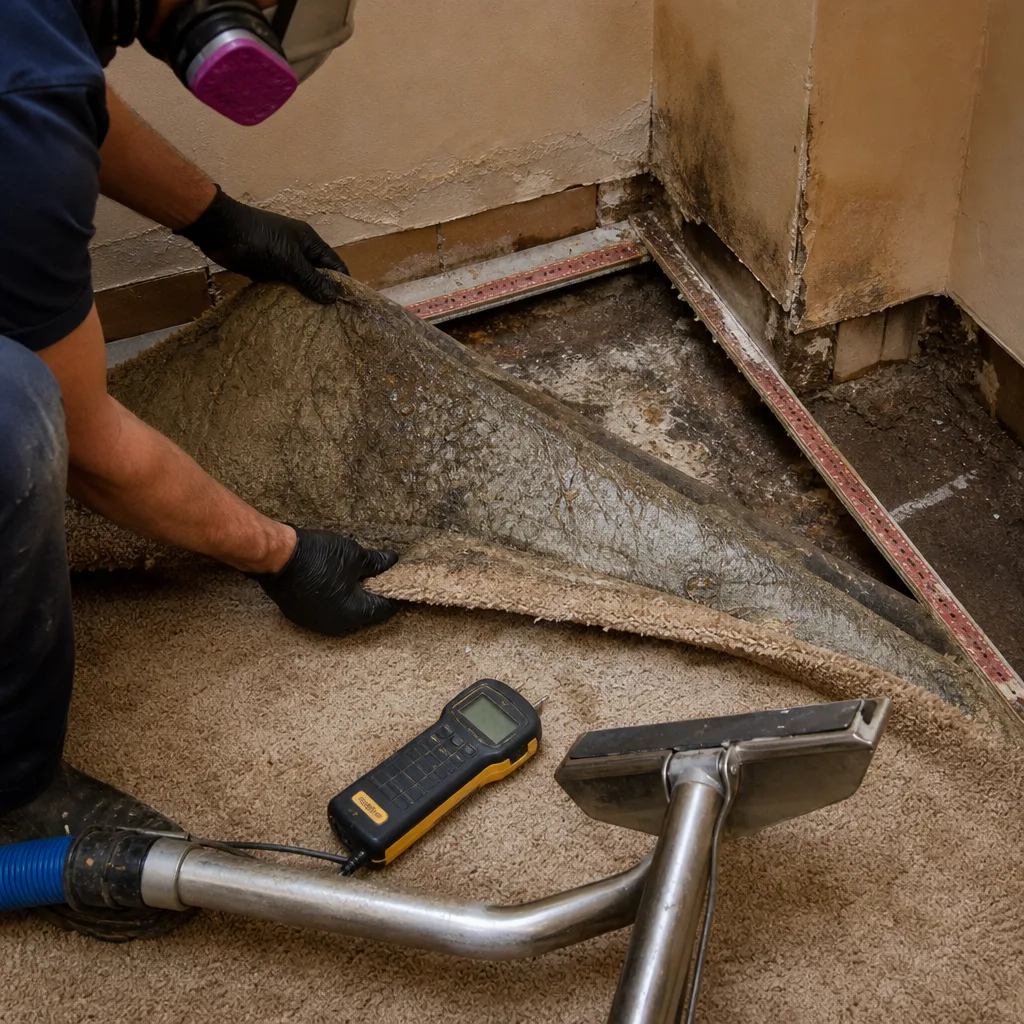
Black Mold Remediation
Stachybotrys, the species people call black mold, gets attention because it produces mycotoxins. The remediation approach is the same as for any significant colonization: source control, containment, removal, air scrubbing, and clearance. What changes is the caution level. We treat every black mold job as a full containment project from the first hour.
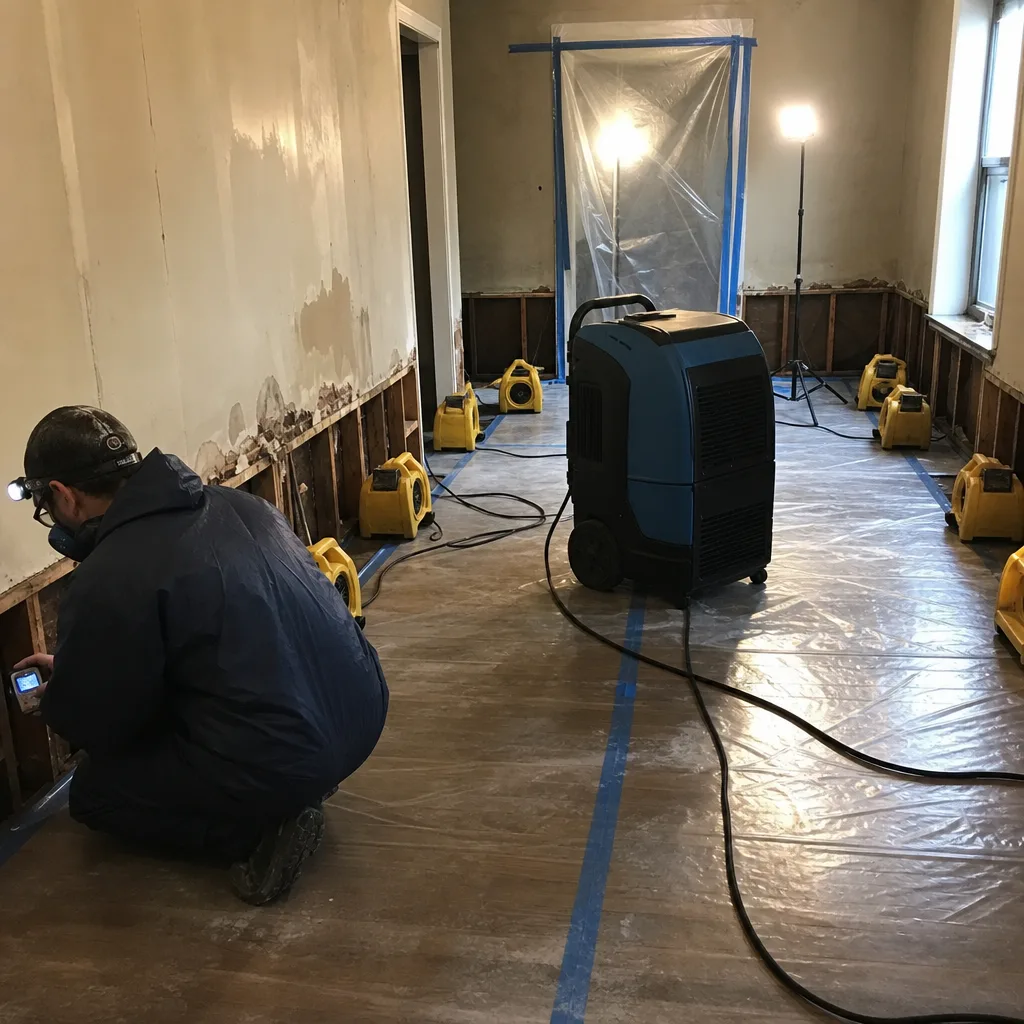
Air Quality Restoration
After structural drying and remediation, the air inside the home still carries the story of what happened. We run HEPA air scrubbers and, when appropriate, hydroxyl or ozone treatment to bring spore counts down to normal outdoor background levels. In Peekskill’s converted lofts, with their high ceilings and open floor plates, air restoration is not a finishing touch. It’s a third of the job.
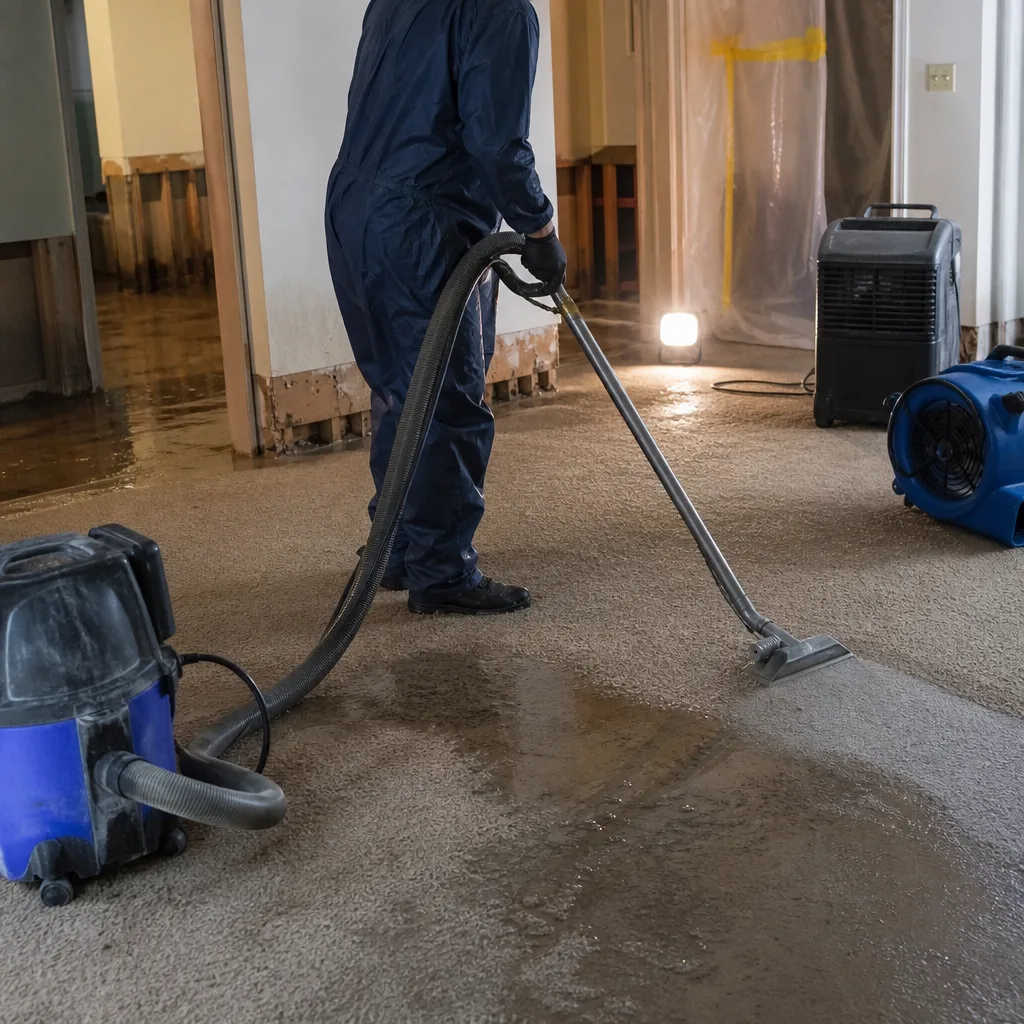
Crawl Space Treatment
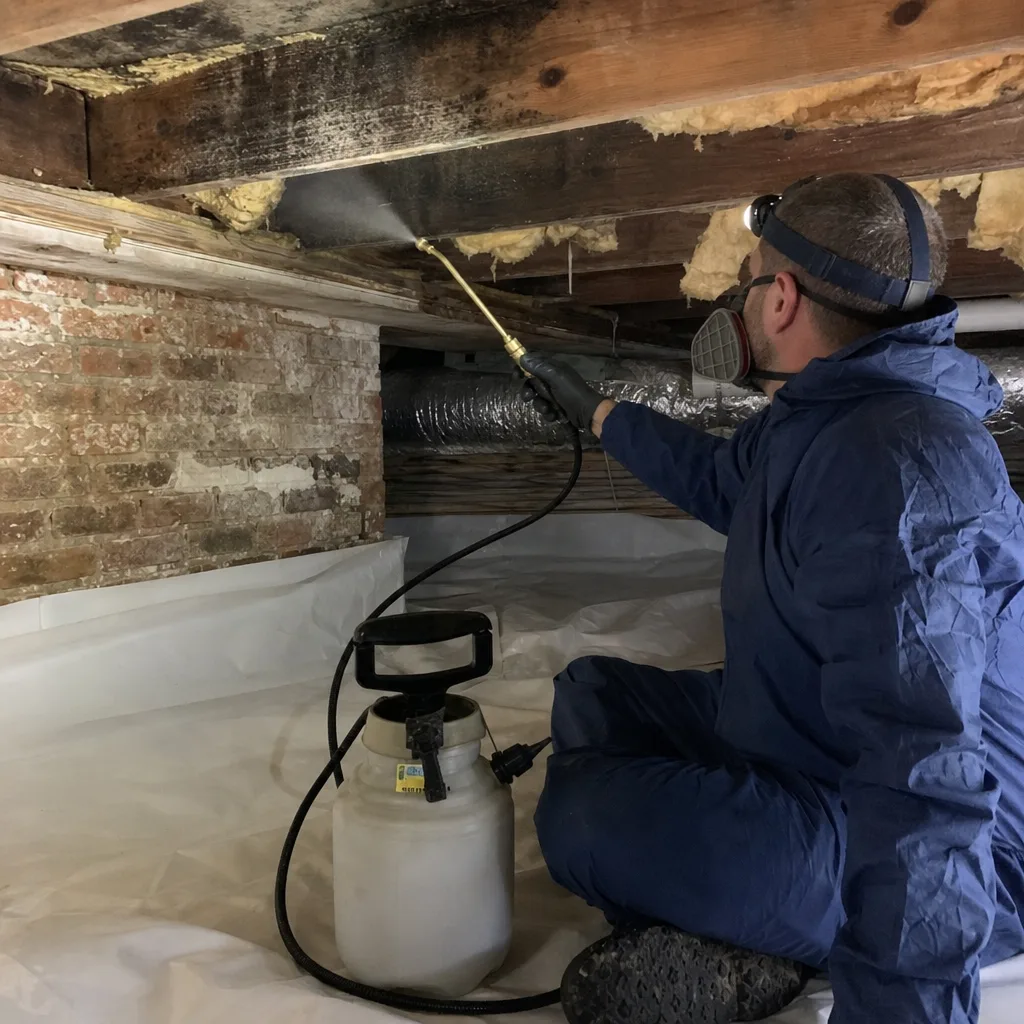
Peekskill homes on hillside lots often have dirt-floor crawl spaces under the uphill side of the foundation. Those spaces are mold factories in the making: trapped humidity, soil moisture, and no air exchange. We install vapor barriers, run dehumidifiers, and treat affected framing. A dry crawl space protects the house above it.
Moisture & Humidity Control
The mold you see is a symptom. The moisture behind it is the disease. We install and calibrate dehumidification, improve drainage at the foundation line, and recommend ventilation fixes specific to Peekskill’s older housing stock. If the humidity comes back, the mold comes back. We design the fix so it doesn’t.
What happens when you call
- 1
A real person answersNo phone trees - you reach a local pro.
- 2
You get an upfront price rangeHonest numbers before anyone is dispatched.
- 3
A background-checked tech heads outLicensed & insured, dispatched right away.
- 4
You approve before work beginsNothing starts until you say go.
Mold Remediation Costs in Peekskill, NY
What you’ll pay depends on how far the mold has spread and where the moisture source sits. A small, localized surface cleanup on a bathroom ceiling typically runs $450 to $900. A single-room remediation with containment, removal, drying, and antimicrobial treatment lands between $1,800 and $3,600. A basement-wide project involving multiple rooms, a crawl space, or significant drywall removal runs $4,000 to $9,000 in the Peekskill market. Hillside homes with dry-flood wall-cavity contamination often fall on the higher end. Insurance may cover the work when the cause is a sudden, covered water event. If the water is from long-term seepage or neglect, you’re likely paying out of pocket. The free visual inspection is how you find out. We show up, we look, we give you a written scope and a firm number before any work starts. Call (917) 924-4221 and we’ll schedule it.
We Also Serve Cities Near Peekskill
Our Peekskill crews regularly handle mold remediation in Buchanan, Montrose, Crompond, and Verplanck. The same live dispatch, the same 45-minute commitment, and the same 90-Day Done Right Promise apply across the area.
Serving Peekskill, NY - Our Local Coverage Area
We’re based in the Peekskill area and know this community well. Use the map below to see our service coverage - if you’re nearby, we can almost certainly help.
Peekskill Mold Remediation Questions, Answered
Why do Peekskill hillside homes get mold even without visible flooding?
Because after any storm dropping more than an inch on the Highland ridgeline above, hydrostatic groundwater pressure pushes water through rubble-fieldstone foundations and into wall cavities and basement spaces, even when no surface water ever appears. By the time you see a stain, the mold has already been growing for days or weeks. That’s the dry-flood signature, and it’s the single most common mold source we find in Peekskill’s hillside homes. If your house sits on a block climbing toward the ridge, treat any persistent musty smell or unexplained humidity as a red flag. Call (917) 924-4221 for a free inspection.
How do you handle mold remediation in Peekskill’s converted industrial loft buildings?
Carefully. Converted 19th-century industrial buildings have open floor plates, exposed brick, and timber framing that holds moisture for months. We set large containment zones and run HEPA air scrubbers sized to the actual cubic footage of the space, not a one-size-fits-all calculation. We also map water migration across multiple stories before touching any material. The air handling matters as much as the surface work in these buildings, and our crews treat it that way.
What documentation does Peekskill mold work need for NFIP flood claims?
NFIP claims require proof that the moisture intrusion was flood-related, plus documented drying to a measurable standard. That means elevation references where applicable, photos of the intrusion point, moisture readings taken every day until the dry standard is met, and a line-item scope tied to the flood event. Properties along the Annsville Creek corridor and other FEMA-designated zones in Peekskill live with this paperwork reality. We document from the first visit and send the full package to your carrier.
Can you remediate mold in a Peekskill row house without disrupting neighbors?
Most of the time, yes. Row houses and attached multi-family buildings present shared-wall risks, so we set negative-air containment with HEPA filtration to keep spores from leaving the work zone. We move debris out through controlled routes, not through shared hallways when that can be avoided. Clear communication with adjacent units is part of the job. We’ll tell your neighbors what’s happening and why the plastic is up. The goal is simple: fix one home, not contaminate two.
How fast can you start mold remediation after a Peekskill pipe burst or storm?
In most cases, within 45 minutes of your call, the crew is on site. We start with a visual assessment and moisture mapping, then go to work on the source. For an active leak or standing water, extraction and stabilization begin the same visit. The faster the structure starts drying, the less mold takes hold. If you’re calling at 2 a.m., a live person answers and dispatch happens right then. Call (917) 924-4221 now if you need someone.
Will my insurance cover mold remediation in Peekskill?
It depends on the cause, not the mold itself. If the mold comes from a sudden, covered water event such as a burst pipe, a storm-driven roof leak, or flood water under an NFIP policy, remediation is often covered. If the moisture is from long-term seepage, poor drainage, or untreated humidity, the carrier will usually deny the claim. Either way, our documentation supports your position. We give you the moisture logs, the photos, and the scope in a format adjusters recognize.
How long does mold remediation take in a Peekskill home?
A localized single-room job is usually done in one to three days. A full basement remediation with wall-cavity work and crawl space treatment can run five to ten days, including drying time and clearance testing. The rebuild phase, if significant drywall or flooring comes out, extends the timeline. We’ll give you a written schedule before work starts, and we do not stretch the clock. Most jobs are completed in a single visit for the remediation phase, with follow-up only for drying verification and rebuild.
What should I do in the first 30 minutes after finding mold in my Peekskill home?
Don’t disturb it. Scrubbing, sanding, or spraying bleach on visible mold releases spores into the air and spreads the problem. Close the door to the affected area if you can, turn off any fans or HVAC running through that space, and call us at (917) 924-4221. A live dispatch team is on call around the clock. We’ll talk you through the next steps and get a crew moving toward Peekskill immediately. The best thing you can do in the first 30 minutes is nothing physical, and the second best thing is call.
Written by Curt Bowman, Owner at Floodline Restoration Co. of Manhattan, serving Peekskill with certified mold remediation and restoration since the company’s founding in 2010.