
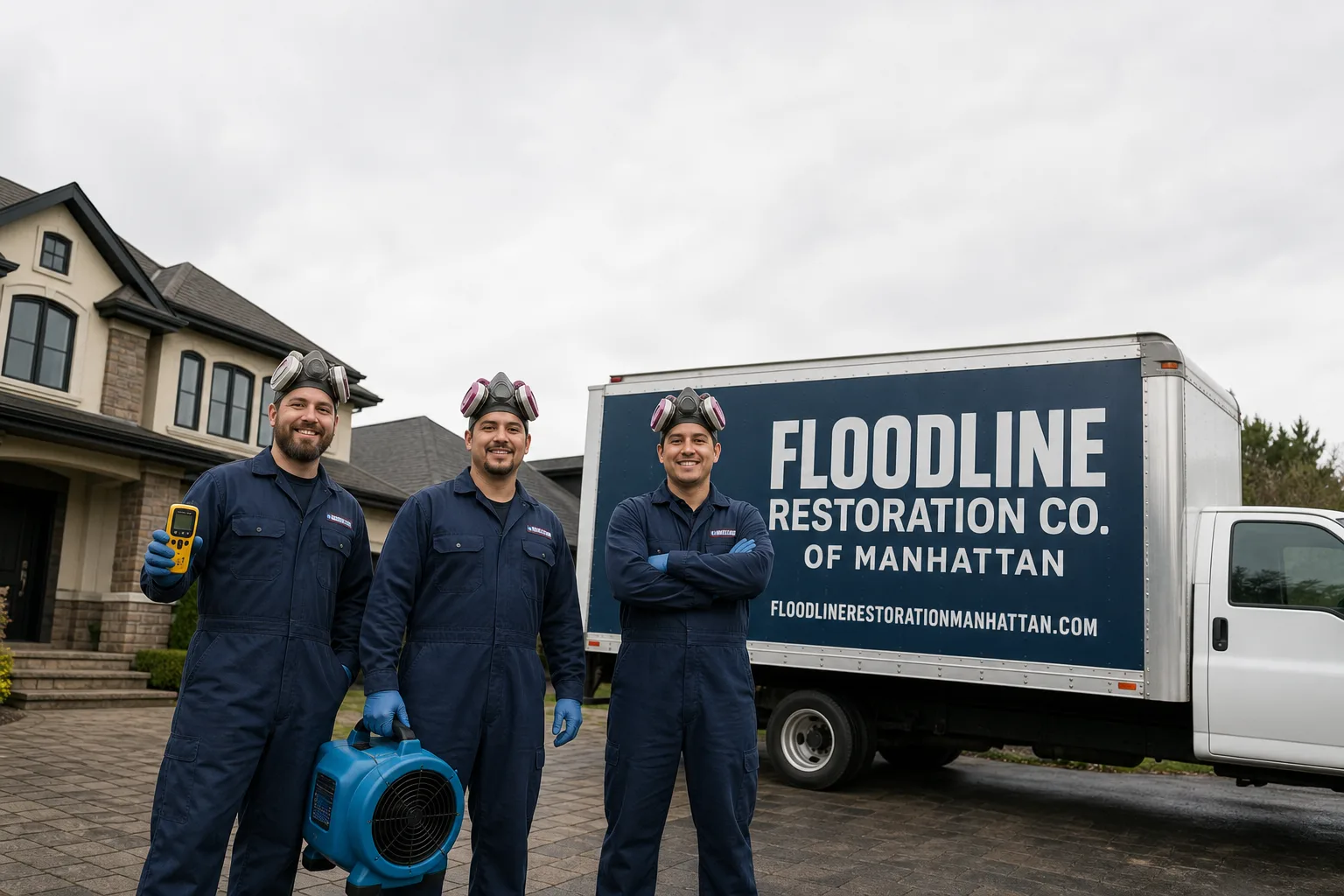
Free visual inspection and a written scope of work before any mitigation begins - photos, moisture readings, and drying logs go in your claim file
The scope we write is the scope we bill. Anything new gets shown to you, in writing, before we touch it.






 Before
 After
After Before
 After
After Before
 After
After24/7 Emergency Storm & Disaster Restoration in Peekskill
Storm damage in Peekskill moves fast, and so do we. Our crews are on call around the clock, every day of the year, and a live dispatcher answers at (917) 924-4221 no matter the hour. When a nor’easter stalls over the Hudson Highlands or a summer thunderstorm dumps an inch of rain on the ridgeline in twenty minutes, water starts pushing through rubble-fieldstone foundations before most homeowners even realize anything’s wrong. The first hour matters because that’s the window where structural drying can still save plaster walls, floor joists, and stored belongings. Call us the moment you suspect water intrusion, and a certified crew from our Storm & Disaster Restoration team will be dispatched to your Peekskill address. We arrive, assess, and get extraction running the same visit. Free visual inspection, no obligation, and a straight answer about what you’re actually dealing with.
Understanding Storm & Disaster Restoration Severity in Peekskill Properties
Storm restoration isn’t one problem with one severity level. It’s a ladder of water categories, building materials, and time. Category 1 water is clean supply water from a burst pipe or roof leak. Category 2 carries significant contamination, and Category 3 is grossly unsanitary, which is what Peekskill homeowners face when Annsville Creek overtops its banks or combined sewer overflow backs up into basements during heavy rain events. The distinction drives everything downstream: extraction method, antimicrobial requirements, pack-out decisions, and which materials can be dried versus which must be removed.
Peekskill’s housing stock makes these severity calls more consequential than in newer suburbs. The late-Victorian and early 20th-century wood-frame houses that dominate the city’s hillside blocks sit on rubble-fieldstone foundations that allow hydrostatic groundwater to migrate through the wall assembly. Water doesn’t just pool on the floor. It wicks up plaster, saturates original hardwood, and climbs into wall cavities where the moisture mapping tells the real story. Converted 19th-century industrial buildings downtown present a different challenge: large open floor plates, exposed masonry, and multiple hidden voids where water travels across stories before showing up as a stain on a ceiling two floors below the actual entry point. Severity in Peekskill is rarely what it looks like from the doorway. It’s what the moisture readings reveal.
Why Peekskill Property Owners Choose Floodline Restoration Co. of Manhattan
- 45-minute response commitment: When you call with standing water or storm damage, we commit to having eyes on the problem within 45 minutes of dispatch. In a city where hillside runoff can turn a dry basement into a Category 2 situation overnight, speed isn’t a courtesy. It’s the difference between drying and demolition.
- 24/7 live answer, never an automated system: A real person picks up the phone at 2 a.m. Not a recording. Not a callback service. Our dispatch board is staffed around the clock, so you get a human voice and a committed arrival window, not a voicemail promise.
- IICRC-certified crews holding WRT, FSRT, and AMRT certifications: Every technician who walks into your Peekskill home is background-checked, uniformed, and trained to the standards that matter for water, fire, and mold work. Certification numbers aren’t decoration. They’re a floor we don’t work below.
- Free visual inspection with moisture mapping: We don’t charge to tell you what’s wrong. We bring thermal imaging cameras, hygrometers, and penetrating moisture meters to map the actual extent of water migration before we recommend anything.
- Direct insurance billing: You never play messenger between our team and your carrier. We document, submit, and bill directly, using the line-item scopes and photo logs adjusters expect.
- One crew from extraction to reconstruction: The same certified technicians who set up the drying equipment handle the daily readings, hand you the moisture log, and rebuild what needs rebuilding. No mid-job handoff to a crew that wasn’t there on day one.
Our Storm & Disaster Restoration Process
Inspection & Assessment
We start with thermal imaging and penetrating moisture meters to map every affected surface. In Peekskill’s older homes, this means checking wall cavities, not just floors. We document everything for your insurer from the first hour.
Extraction & Stabilization
Standing water comes out with truck-mounted extraction units and submersible pumps. For storm floodwater, we classify the water category immediately, because Category 3 water from Annsville Creek or sewer overflow changes the entire protocol.
Drying & Dehumidification
We place Dri-Eaz dehumidifiers and XPOWER air movers according to a calculated drying chamber design, then take daily readings until we hit the dry standard. Peekskill’s rubble foundations often mean extended drying times in wall cavities, not just open spaces.
Cleaning & Sanitization
Contaminated surfaces get antimicrobial treatment appropriate to the water category. HEPA air scrubbers run during and after the work to capture airborne particulates from stirred-up storm debris and microbial growth.
Targeted Storm Damage Treatment
Hillside homes with hydrostatic pressure intrusion get foundation-focused drying and capillary break evaluation. Converted lofts with exposed masonry get staged dehumidification across multiple floor levels. Every Peekskill property gets a treatment plan mapped to its actual construction.
Repairs & Restoration
When the building hits the dry standard, we rebuild. Trim, drywall, flooring, paint. One crew, one scope of work, and the 90-Day Done Right Promise in writing before we start.
Need Emergency Storm & Disaster Restoration in Peekskill Now?
Crews minutes away, answering live 24 hours a day. The sooner we start, the less it costs.
Working With Your Insurance Company
Insurance claims after storm damage in Peekskill have a particular shape. FEMA flood-zone properties along the Annsville Creek corridor involve NFIP procedures, elevation certificates, and flood-loss documentation that inland Westchester adjusters don’t see every day. Standard homeowners policies cover wind damage, pipe bursts, and storm-driven roof leaks, but flood damage typically requires a separate flood policy. That distinction matters, and we don’t let it surprise you after the work is done.
From the first hour, we document: photos room by room, moisture readings with timestamps, extraction logs, and a line-item scope that matches industry-standard estimating software adjusters recognize. We coordinate directly with your carrier. You don’t chase paperwork. We don’t argue scope with an adjuster over your kitchen table. We hand them the documentation and the drying log, and we bill directly.
What We Provide Your Insurer
- Thorough documentation of the loss
- Photos of all damage, room by room
- Moisture readings and drying logs
- A detailed, line-item scope of work
- Direct coordination with your carrier
Built for Peekskill’s Loss Calendar
Peekskill’s storm season isn’t one season. It’s a year-round rhythm with distinct failure modes.
January and February bring deep freezes that settle into the cold-air drainage at the mouth of the Highlands, recording temperatures several degrees colder than surrounding Westchester towns. Supply lines in uninsulated Victorian basements burst, and ice dams form on the shallow-pitched roofs of older housing stock.
Spring thaw pushes snowmelt down the ridgeline into saturated ground, and hydrostatic pressure against rubble foundations peaks. We take more “dry basement” calls between March and May than any other stretch, because homeowners find damp plaster and musty odors without ever seeing standing water.
Summer brings convective thunderstorms that stall over the Highlands and drop an inch of rain in minutes. The city’s aging combined sewer infrastructure can’t handle the volume, and lower blocks from downtown toward the river see localized flash flooding. Multiple properties call within the same hour, and our dispatch board triages by water category and occupant risk.
Autumn nor’easters bring wind and prolonged rain. Tree limbs through roofs, damaged siding, and saturated wall assemblies on the windward sides of hillside homes. Each season in Peekskill has its own restoration profile, and our crews have worked all of them.
Storm & Disaster Restoration Across Peekskill’s Neighborhoods
The hillside blocks climbing from downtown toward the Highland ridgeline present our most common “dry-flood” scenario. Homes along Nelson Avenue, Depew Street, and the residential streets east of Route 9 sit on rubble-fieldstone foundations that weep groundwater after any storm dropping more than an inch on the ridge above. Homeowners see no surface water. Moisture mapping tells a different story.
Downtown, around North Division Street and the commercial core, converted 19th-century industrial buildings now used as artist live-work lofts present complex multi-story water migration. A roof leak at the parapet can travel through open floor plates and exposed masonry voids before appearing as a stain two floors down. Drying these buildings requires staged dehumidification and aggressive air movement, not a standard fan-and-dehumidifier setup.
The Annsville Creek corridor along the city’s northern edge carries active FEMA flood-zone designations. Flood loss there involves creek water and combined sewer overflow, which means Category 3 contamination and antimicrobial protocols. Homes off Crompond Road and the smaller residential streets near the Buchanan border face wind-driven rain and saturated ground more than surface flooding, but the foundation dynamics are similar.
Each of these areas responds differently to the same storm. Our dispatch board routes crews by neighborhood because we know which blocks drain fast, which ones hold groundwater, and which buildings need containment set up before extraction even begins.
Specialized Storm & Disaster Restoration Services We Offer in Peekskill
Flood Damage Restoration
When Annsville Creek overtops or storm drains back up into Peekskill basements, the water is rarely clean. We classify it honestly, extract it fast, and apply antimicrobial treatment where the category demands it. For hillside homes with hydrostatic intrusion, we dry the wall cavities, not just the floor, because that’s where the damage actually lives.
Storm Damage Cleanup
Wind-driven rain, downed limbs, and flying debris leave more than wet floors. We remove storm debris, document exterior damage for your insurer, and stabilize what’s exposed. In Peekskill’s older housing stock, storm cleanup often reveals pre-existing foundation vulnerabilities that the storm exploited, and we flag those honestly rather than painting over them.
Emergency Board-Up
When a tree limb goes through a roof or wind takes out a window, your home is open to the next storm and everything else. We board up and tarp within hours, securing the property before more damage accumulates. On Peekskill’s hillside blocks, exposure means wind-driven rain hitting already saturated plaster, so the board-up isn’t cosmetic. It’s containment.
Roof Tarping
Shallow-pitched Victorian roofs and flat-roofed industrial conversions both leak in Peekskill storms. We tarp the affected area correctly, with fasteners that hold in wind, not just draped plastic. A proper tarp keeps the interior dry while your insurance claim processes and permanent repairs get scheduled.
Debris Removal
Storm debris in Peekskill is rarely just yard waste. It’s shingles, broken glass, saturated drywall, and sometimes contaminated material from flood events. We remove it, separate what’s contaminated, and document everything for your claim. No homeowner should handle Category 3 debris without proper protective equipment.
What happens when you call
- 1
A real person answersNo phone trees - you reach a local pro.
- 2
You get an upfront price rangeHonest numbers before anyone is dispatched.
- 3
A background-checked tech heads outLicensed & insured, dispatched right away.
- 4
You approve before work beginsNothing starts until you say go.
Storm & Disaster Restoration Costs in Peekskill, NY
A typical storm water extraction and drying job in Peekskill runs $2,800 to $7,500, depending on the square footage affected and whether wall cavities require opening. Hydrostatic pressure intrusion in a hillside Victorian with rubble foundations often lands between $4,000 and $9,000 once you account for containment, structural drying, and antimicrobial treatment. Roof tarping typically costs $400 to $1,200, and emergency board-up runs $300 to $900 per opening.
Flood damage in the Annsville Creek corridor, where Category 3 water demands antimicrobial treatment and pack-out, commonly ranges from $6,000 to $18,000 depending on the building’s size and accumulated contents. The faster you call, the lower the final number, because drying costs a fraction of what demolition and rebuild costs.
We give you a firm scope in writing before work starts. Free inspection, honest classification, and direct insurance billing so the financial conversation happens between us and your carrier, not over your kitchen table. Call (917) 924-4221 for an exact quote. Estimates are free.
We Also Serve Cities Near Peekskill
Our dispatch regularly sends crews to Buchanan, Montrose, Crompond, and Verplanck. The housing stock and storm patterns are similar along this stretch of the Hudson, and we treat every job with the same documentation standard and the same 90-Day Done Right Promise. If you’re in a neighboring community, call the same number and a live person answers.
Serving Peekskill, NY - Our Local Coverage Area
We’re based in the Peekskill area and know this community well. Use the map below to see our service coverage - if you’re nearby, we can almost certainly help.
Peekskill Storm & Disaster Restoration Questions, Answered
Why does my Peekskill basement get wet after a storm even when there’s no flooding in the street?
Your rubble-fieldstone foundation is under hydrostatic pressure from groundwater. When more than an inch of rain falls on the Hudson Highlands ridgeline above Peekskill, that water migrates downhill through the soil and pushes against your foundation walls from the outside. Water seeps through the stone and mortar joints even when no surface water collects anywhere. Call (917) 924-4221 if you suspect this is happening. We’ll map the moisture and tell you what you’re actually dealing with.
How quickly can mold start in a Peekskill Victorian after storm water intrusion?
Mold colonization can begin within 24 to 48 hours in the warm, dark wall cavities of an older wood-frame house. Peekskill’s plaster walls and lath construction hold moisture longer than modern drywall, and by the time stains appear on the surface, the colony is often already established behind the plaster. That’s why we recommend moisture mapping within hours of any suspected intrusion, not days. If you wait for visible signs, you’re often looking at gut-and-replace instead of structural drying.
Do Peekskill storm restoration jobs need to account for the Annsville Creek flood zone?
Yes, if your property sits within the FEMA-designated flood zones along the Annsville Creek corridor, the documentation requirements are different. Flood-loss claims involve elevation certificates, NFIP procedures, and specific loss documentation that standard homeowners claims don’t require. Our team is fluent in those requirements and handles them directly with your carrier. If you’re not sure whether your property falls in the zone, call us. We’ll verify it as part of the free inspection.
Why do converted loft buildings in downtown Peekskill take longer to dry after a storm?
Converted 19th-century industrial buildings with exposed masonry and large open floor plates have hidden voids where water travels across multiple stories before appearing anywhere visible. The masonry itself absorbs and releases moisture slowly, and standard drying equipment can’t reach the cavities without staged dehumidification and aggressive air movement. We map the migration path before we design the drying chamber, which is why our drying plans for these buildings look different from anything you’d see in a suburban drywall house.
Should I be worried about hidden water damage after a Peekskill storm even if my basement looks dry?
Yes. This is the most common scenario we see on Peekskill’s hillside blocks. Hydrostatic pressure from ridge runoff forces water through rubble foundations even when the floor looks dry. By the time you notice a stain or a musty smell, mold is often already active inside the wall cavities. If a storm dropped more than an inch of rain on the ridgeline above you, call (917) 924-4221 for a free moisture mapping inspection. Catching it early is the difference between drying and demolition.
How fast can you actually get to my Peekskill home?
We commit to 45 minutes from dispatch to arrival for emergency calls in Peekskill. A live dispatcher answers at (917) 924-4221, confirms your address, and routes the nearest available certified crew. The sooner extraction starts, the less damage spreads, and the lower your final restoration cost will be.
Will my insurance cover storm and flood damage in Peekskill?
Wind damage, storm-driven roof leaks, and burst pipes are typically covered under standard homeowners policies. Flood damage from Annsville Creek overflow or groundwater intrusion usually requires a separate flood insurance policy. We document everything from the first hour and bill your carrier directly, so you never have to argue scope or chase paperwork. Call us and we’ll help you understand exactly what your policy covers before work begins.
What should I do in the first 30 minutes after discovering storm damage?
Call (917) 924-4221. Then shut off power to affected areas if it’s safe to do so without stepping in water. Don’t enter standing water if you’re unsure whether it’s contaminated. Take photos of visible damage for your records, but don’t attempt to remove saturated materials or open walls yourself. The sooner we start moisture mapping and extraction, the more of your home we can save. Our 45-minute response commitment means you’re not waiting through a voicemail queue while water keeps moving through your walls.
Written by Curt Bowman, Owner at Floodline Restoration Co. of Manhattan, serving Peekskill with certified storm restoration crews and the 90-Day Done Right Promise in writing.