
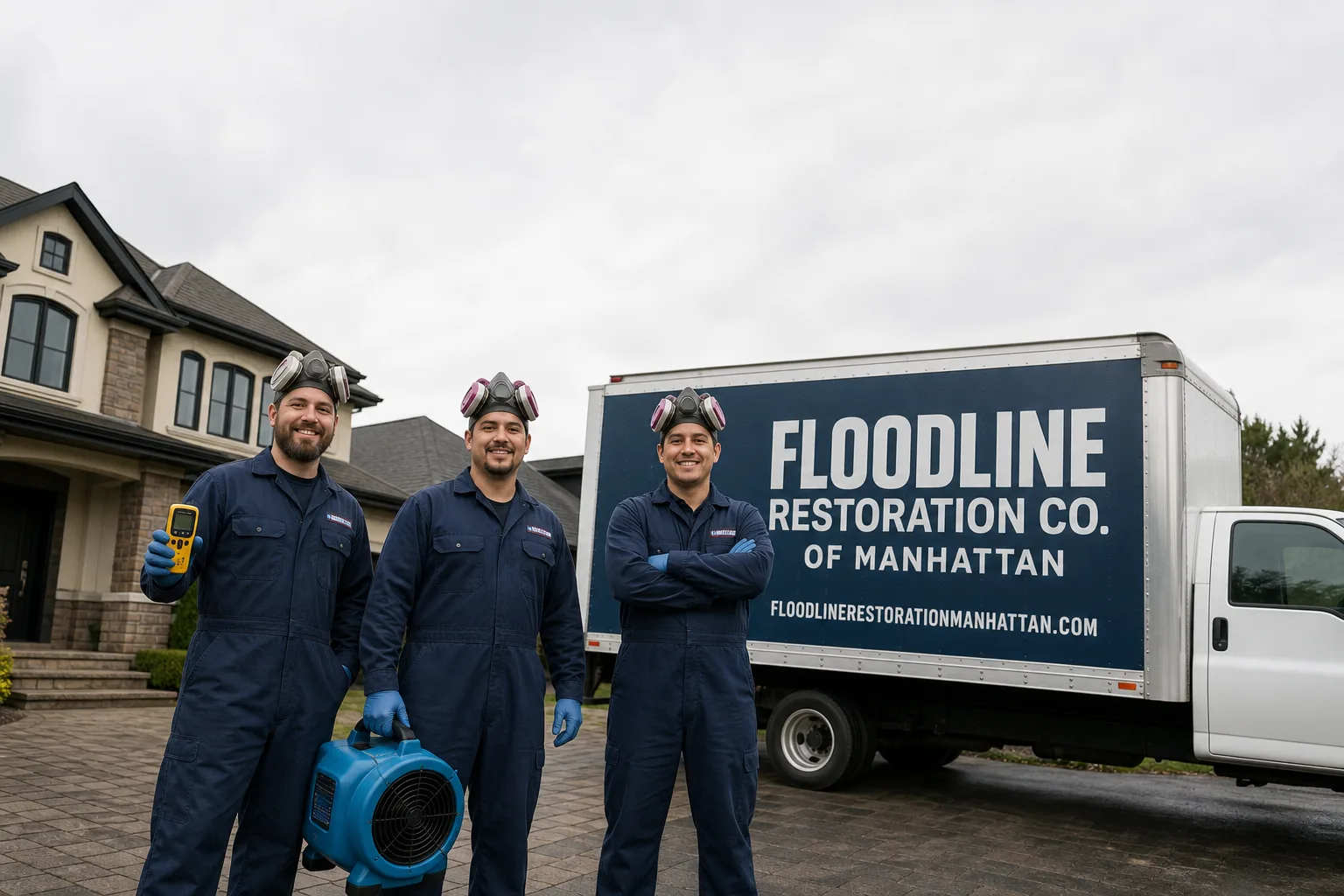
Free visual inspection and a written scope of work before any mitigation begins - photos, moisture readings, and drying logs go in your claim file
The scope we write is the scope we bill. Anything new gets shown to you, in writing, before we touch it.






 Before
 After
After Before
 After
After Before
 After
After24/7 Emergency Mold Remediation in Ridgewood
Mold remediation in Ridgewood typically costs between $1,500 and $6,000 depending on containment area and colonized materials, and a crew can usually reach your block the same day you call. We answer live at (917) 924-4221 around the clock, and a uniformed technician can be standing in your cellar or parlor floor within about 45 minutes of your call. Mold doubles every 24 to 48 hours once active growth is fed by moisture, so a slow response means a larger containment zone, more removed plaster, and a longer bill. Our Mold Remediation team knows Ridgewood’s rowhouses well enough to start scoping the moment they arrive, not after a walkthrough orientation. The first hour matters because mold that is still contained to one stud bay is a cleaning job; mold that has crossed a party wall is a multi-unit restoration.
Understanding Mold Remediation Severity in Ridgewood Properties
In Ridgewood, mold severity follows the water source, and the water source follows the building. A slow drip from a hundred-year-old cast-iron drain stack inside a shared wall feeds mold in interstitial space for months before anyone sees staining. A flat-roof ponding failure sends water down through ceiling cavities across multiple floor levels. A combined-sewer backup through a basement floor drain introduces Category 3 black water, which carries sewage-borne bacteria and fungal loads that require full biohazard containment, not basic wipe-down. Our crews classify every loss with moisture mapping, thermal imaging, and air sampling before any remediation begins. In a two-story attached yellow brick rowhouse near Fresh Pond Road, we commonly find relative humidity in party-wall cavities at 85-100% even when visible plaster shows only light discoloration. That is the difference between surface mold and a wall-system colonization. In Ridgewood, hidden means inside the wall assembly, and inside the wall assembly often means inside your neighbor’s wall assembly too.
Why Ridgewood Property Owners Choose Floodline Restoration Co. of Manhattan
- 45-minute response commitment: We dispatch from the New York City office and crews stage locally around the Ridgewood area, so the technician who answers your call knows the blocks between Myrtle and Metropolitan as well as you do.
- 24/7 live answer, every time: When you call (917) 924-4221 at 2 a.m., a live dispatcher picks up. You will never talk to a recording or a call center in another state.
- IICRC-certified crews, WRT and AMRT trained: Our technicians carry IICRC applied microbial remediation and water damage credentials, plus training to IFA standards for fire and structural restoration.
- Free visual inspection: We walk the property, take moisture readings, and tell you what you are dealing with before you spend a dime. If it is not a remediation job, we say so.
- Direct insurance billing: We bill your carrier directly and handle adjuster coordination. You are not the messenger between us and the insurance company.
- One team, start to finish: The same certified crew that sets containment and runs HEPA air scrubbers also handles the rebuild. No mid-job handoff to a subcontractor who has never seen the moisture map.
Our Mold Remediation Process
Inspection & Assessment
We start with a walkthrough of the affected unit plus any adjoining rowhouses sharing a party wall. Moisture readings, thermal imaging, and air samples tell us whether the colony is active, dormant, or spreading. We write a scope before any work begins.
Containment & Stabilization
We seal the affected area with polyethylene sheeting under negative air pressure so spores do not travel through your rowhouse or into the neighbor’s unit. In the shared-wall context, this often means running containment across two addresses.
Drying & Dehumidification
Dri-Eaz dehumidifiers and XPOWER air movers run continuously until moisture readings in structural materials fall below the dry standard. Daily readings are logged and shared with your insurer.
Removal of Colonized Materials
Saturated lath, plaster, and framing that cannot be dried are removed with HEPA vacuums and sealed disposal bags. Original plaster is salvaged where readings show it can be saved.
Antimicrobial Treatment & Air Scrubbing
Remaining surfaces are treated with EPA-registered antimicrobials and HEPA air scrubbers run throughout the job. Clearance air sampling confirms spore counts have returned to background levels.
Repairs & Restoration
We rebuild what was removed: plaster, framing, trim, and paint. The final walkthrough includes a moisture log and written documentation of the dry standard met. The 90-Day Done Right Promise covers the work in writing.
Need Emergency Mold Remediation in Ridgewood Now?
Crews minutes away, answering live 24 hours a day. The sooner we start, the less it costs.
Working With Your Insurance Company
Mold remediation claims in Ridgewood rowhouses get more complicated when the source is a shared party wall or a sewer backup that crosses property lines. We document everything from the first hour so your carrier sees exactly what we saw: the moisture map, the photos of visible growth, the readings from inside the wall cavity. Our estimates follow industry-standard line-item formats that adjusters recognize, and we talk to your adjuster directly. You do not have to interpret drying logs or argue about whether plaster facing from an original 1912 wall should be removed or salvaged. We make that case for you, with documentation. If your neighbor’s unit is involved, we help coordinate with the second carrier so the claim does not stall while mold continues to colonize the shared wall.
What We Provide Your Insurer
- Thorough documentation of the loss
- Photos of all damage, room by room
- Moisture readings and drying logs
- A detailed, line-item scope of work
- Direct coordination with your carrier
Built for Ridgewood’s Loss Calendar
Ridgewood’s mold problems peak at predictable times, and the pattern follows the neighborhood’s flat roofs, cast-iron plumbing, and below-grade units. January deep freezes crack supply lines in unheated cellars, and the slow leak behind original lath feeds mold all winter before anyone notices. Spring thaw and heavy April rains saturate the soil around century-old foundations, pushing water through porous masonry into basement units along Fresh Pond Road and Myrtle Avenue. Summer convective thunderstorms overwhelm the combined sewer system, sending Category 3 water up through floor drains in below-grade apartments. Nor’easters in the fall drive ponding on flat roofs, and membrane failures drip down through ceiling cavities for weeks before staining appears on the parlor ceiling. The common thread: by the time a Ridgewood homeowner sees mold, the colony has usually been growing inside a wall or ceiling assembly for at least two or three weeks. That is why we walk the neighboring units on either side of the loss as part of every initial scope.
Mold Remediation Across Ridgewood’s Neighborhoods
The rowhouses along Seneca Avenue and Catalpa Avenue share the same unbroken masonry party walls that define Mold Remediation in Ridgewood as a multi-unit problem. When we respond to a mold loss on these blocks, we know the parking constraints, the narrow stair halls, and the cellar entrances under the stoop. The blocks east of Fresh Pond Road toward the Middle Village border tend to have slightly taller three-story rowhouses with deeper basements, which means longer vertical moisture paths and more hidden cavities. The homes around Joe’s Restaurant on Myrtle Avenue and the commercial corridors along Fresh Pond Road sit above mixed-use spaces, where mold from a rear kitchen exhaust or a buried drain line can migrate through the floor assembly into residential rooms above. We have worked enough of these jobs to know that a mold stain on your second-floor bedroom wall may trace back to a leaking drain in the cellar, not to the room itself. The blocks around the Halsey Street station and toward Maspeth show the same pre-war construction with original cast-iron stacks, and those stacks corrode from the inside, rusting until the wall gives way.
Specialized Mold Remediation Services We Offer in Ridgewood
Mold Inspection & Testing
We test for mold in Ridgewood rowhouses using air sampling, surface swabs, and moisture readings from inside wall cavities. Because the party wall is shared, we sample on both sides of the wall before we write a remediation scope. You get lab results and a written recommendation, not a scare tactic.
Mold Removal
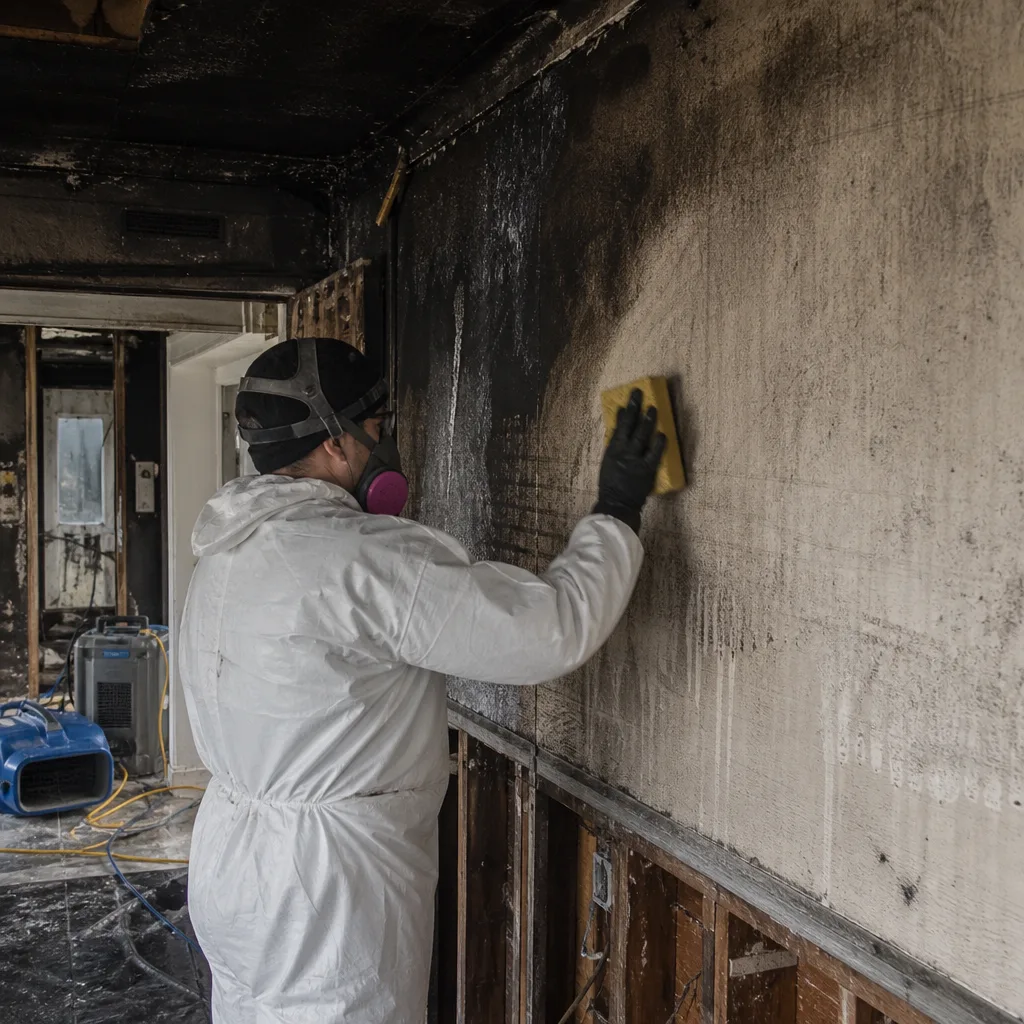
Removal in a Ridgewood rowhouse means cutting out saturated plaster and lath, cleaning the masonry behind it, and treating the stud bay with antimicrobials so the colony does not return through the same wall system. We salvage original plaster where moistures readings allow it. The goal is a clean, dry wall assembly, not a gutted house.
Black Mold Remediation
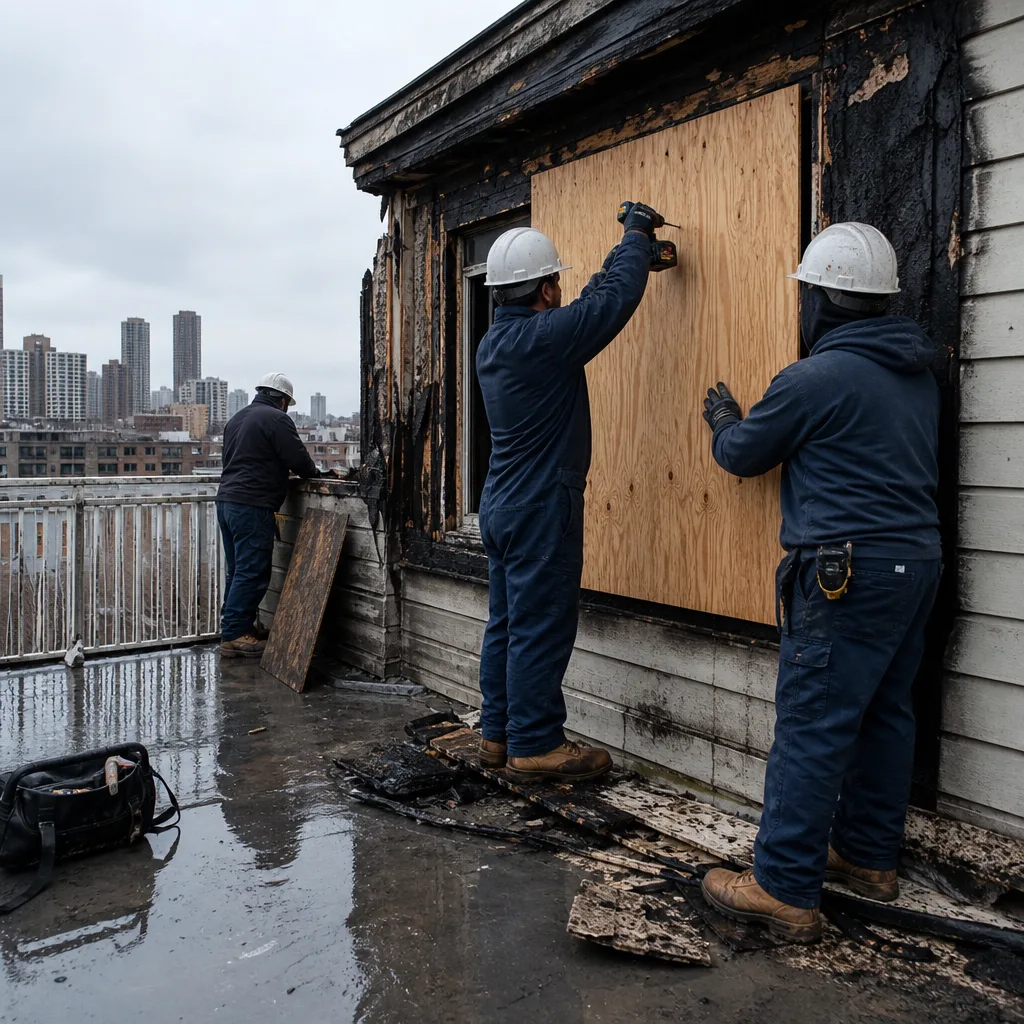
Black mold in Ridgewood basements and cellars is most common after sewer backups or slow plumbing leaks behind finished walls. Stachybotrys requires full containment with negative air and HEPA scrubbing throughout the job. We treat it as a biohazard loss, not a surface cleaning.

Air Quality Restoration
After remediation, we run HEPA air scrubbers until clearance sampling shows spore counts at or below ambient background for your block. In a sealed rowhouse where air does not move freely, air quality restoration means using the right scrubber volume for the cubic footage of the space, not just running a machine for a few days.

Crawl Space Treatment
Ridgewood rowhouses with raised crawl spaces under the parlor floor hold humidity that feeds mold in the floor joists. We treat those spaces with antimicrobial applications, install vapor barriers where appropriate, and set drying equipment sized for the space. If your crawl space smells like earth after rain, there is moisture getting in, and moisture feeds mold.

What happens when you call
- 1
A real person answersNo phone trees - you reach a local pro.
- 2
You get an upfront price rangeHonest numbers before anyone is dispatched.
- 3
A background-checked tech heads outLicensed & insured, dispatched right away.
- 4
You approve before work beginsNothing starts until you say go.
Mold Remediation Costs in Ridgewood, NY
A straightforward mold remediation job in Ridgewood runs $1,500-$3,500 for a contained area, such as a single basement wall or a bathroom ceiling cavity with active growth. Multi-room remediations with pack-out, full containment, and structural drying typically land between $4,000 and $6,000. Whole-house remediations involving shared party walls and neighbor coordination fall between $8,000 and $15,000 depending on the extent and the cost of rebuilding original plaster. What moves the price in Ridgewood specifically is the shared-wall factor: if your remediation requires containment on both sides of a party wall, the area doubles. Insurance covers mold remediation when the underlying cause is a covered peril, such as a burst pipe, a roof leak, or a sewer backup. If the mold grew from long-term neglect or an ignored leak, the remediation is likely out-of-pocket. Our free visual inspection gives you a firm scope and a price before any work starts, so there is no surprise once the job is underway.
We Also Serve Cities Near Ridgewood
We serve Ridgewood and the neighboring communities of Middle Village, Maspeth, Woodhaven, and Elmhurst. Many of these blocks share the same pre-war rowhouse construction, the same combined sewer system, and the same party-wall mold migration patterns. Our crews move between these neighborhoods daily and know the local streets, parking restrictions, and building types.
Ridgewood Mold Remediation Questions, Answered
Why does mold remediation in Ridgewood often require treating the neighboring rowhouse even if it looks fine?
Ridgewood’s rowhouses share continuous masonry party walls with no separation between structures, so mold from a hidden leak or flat-roof failure in one unit routinely colonizes the plaster and framing in the adjoining unit. We moisture-map both sides of the party wall before writing a scope. Treating only the visibly affected unit allows hidden colonies to re-infect within weeks. Call (917) 924-4221 and we will walk both properties before any containment goes up.
How do you handle Category 3 black water mold risks from Ridgewood’s combined sewer backups in basement units?
Category 3 water from sewer backups carries sewage-borne bacteria and fungal loads that require full biohazard protocols, not standard mold cleaning. We set up full containment with negative air, remove saturated materials including the floor drain area, treat with EPA-registered antimicrobials, and run HEPA air scrubbers until clearance samples pass. Insurance often covers these losses. Call (917) 924-4221 and we will confirm the water category and scope on site.
Can my Ridgewood rowhouse’s original plaster walls be salvaged during mold remediation, or do they always need to come out?
Original plaster over masonry can often be saved when moisture readings show the plaster substrate is dry and only surface mold is present. We salvage plaster where possible, remove it only where readings prove saturation or hidden colonization. This is a building-material judgment based on your wall’s specific readings, not a blanket rule. For a free assessment of your plaster, call (917) 924-4221.
What makes flat-roof ponding in Ridgewood lead to hidden mold in basement units?
Flat roofs on Ridgewood’s pre-war rowhouses pond water after heavy rain, and membrane failures drip down through ceiling cavities across multiple floors before reaching the basement. The water travels along the path of least resistance, which is often interior wall cavities and utility chases, not open spaces where you would see it. By the time moisture reaches the basement, mold has been growing in the wall assembly for weeks. A free inspection with thermal imaging can trace the path.
How do you set up containment in a narrow Ridgewood rowhouse without damaging the original architecture?
We build containment with polyethylene sheeting and pressure-fit poles that do not require fasteners into original plaster, molding, or woodwork. Negative air machines run so spores do not travel through your narrow stair halls or into the neighbor’s unit. The sheeting comes down without leaving holes in the architecture. Our techs set containment on these narrow blocks every week and know how to work within the tight clearances.
How fast can you actually get to Ridgewood?
About 45 minutes from your call. Our dispatcher picks up live and a certified crew is dispatched from the New York City office to your block. We are not a national franchise with a 24-hour callback window. Call (917) 924-4221 and someone is driving to you.
What certifications do your mold remediation techs hold?
Our technicians are background-checked, uniformed, and certified to IICRC standards in applied microbial remediation and water damage restoration. We also train to IFA standards for fire and structural restoration. Each crew member carries documentation of their certifications. The 90-Day Done Right Promise covers every mold remediation job in writing.
How long does mold remediation take in a Ridgewood rowhouse?
A contained single-room remediation typically finishes in 2-4 days. A shared-party-wall job with neighboring unit containment and rebuild runs one to two weeks. Drying continues until moisture readings fall below the dry standard, and we do not rush that. Get a timeline for your specific loss by calling (917) 924-4221.
Will my insurance cover mold remediation in Ridgewood?
If the mold is caused by a covered peril like a burst pipe, roof leak, or sewer backup, your policy likely covers remediation. Mold from long-term neglect or an ignored leak is generally not covered. We document everything from the first hour so your adjuster sees the cause and scope. We handle direct adjuster coordination.
Do I really need full remediation, or just a cleaning?
If the mold is on a non-porous surface like tile or glass, a cleaning may be enough. If it is in drywall, plaster, framing, or insulation, it needs removal. In a Ridgewood rowhouse, the deciding factor is often what the moisture readings show inside the shared wall. A free inspection will tell you. Call (917) 924-4221 to schedule one.
Serving Ridgewood, NY - Our Local Coverage Area
We’re based in the Ridgewood area and know this community well. Use the map below to see our service coverage - if you’re nearby, we can almost certainly help.
Contact Floodline Restoration Co. of Manhattan for Mold Remediation in Ridgewood
If you see mold, smell must, or know there has been a leak you never chased down, call us. We will walk the property, take readings, and tell you honestly what you are dealing with. A free estimate is backed by the 90-Day Done Right Promise in writing, direct insurance billing, and a live person on the phone any hour of the day. Call (917) 924-4221 now.
Written by Curt Bowman, Owner at Floodline Restoration Co. of Manhattan, serving Ridgewood with certified mold remediation and restoration since 2010.