
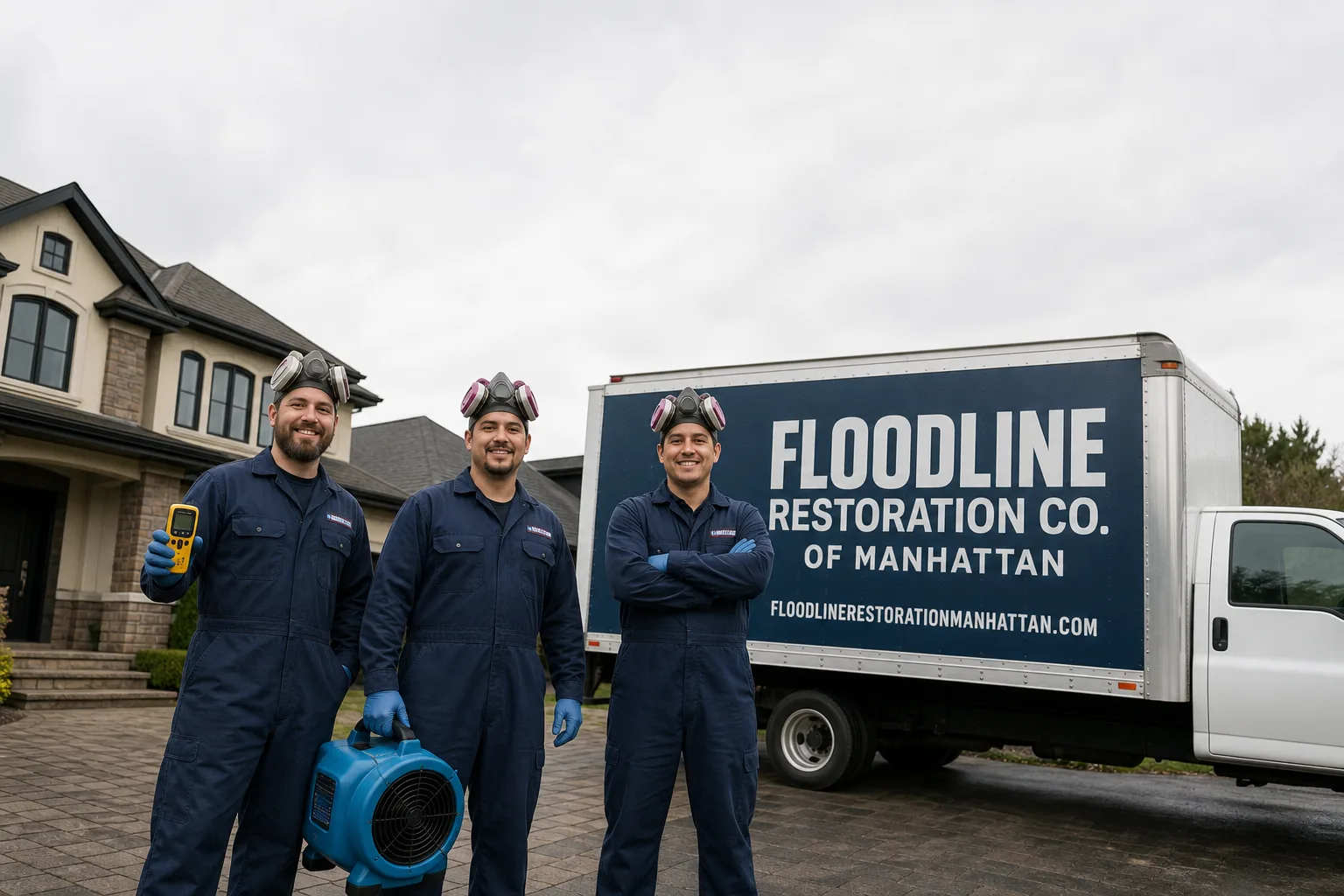
Free visual inspection and a written scope of work before any mitigation begins - photos, moisture readings, and drying logs go in your claim file
The scope we write is the scope we bill. Anything new gets shown to you, in writing, before we touch it.






 Before
 After
After Before
 After
After Before
 After
After24/7 Emergency Mold Remediation in Rye
Mold doesn’t wait for business hours, and neither do we. Floodline Restoration Co. of Manhattan answers the phone with a live person at 2 a.m., not a recording, and we dispatch certified crews into Rye the same visit. If you’ve found mold behind a bathroom wall, smelled must in a crawlspace, or watched tide-driven backflow push water up through an Oakland Beach floor drain, call (917) 924-4221 right now. The first hour matters because mold colonies expand fast in Rye’s coastal humidity, especially inside pre-WWII plaster-and-lath walls that hold moisture for days. We’ll do a free visual inspection, map the moisture, and tell you honestly whether you need full remediation or a targeted cleaning. No pressure, no overselling. Just a square deal and a written scope before any work starts.
Understanding Mold Remediation Severity in Rye Properties
Mold remediation severity splits into three practical tiers: surface colonization, wall-cavity growth, and structural saturation. Surface mold, often on bathroom ceilings or window sills, responds to HEPA vacuuming, antimicrobial application, and correcting the humidity source. Wall-cavity growth is what Rye homeowners face most often: moisture trapped behind original plaster-and-lath, where mold feeds on wood lath and old wallpaper glue. That requires full containment, negative air pressure, and air scrubbing during removal. Structural saturation, the most serious, happens when saltwater intrusion from Long Island Sound or Blind Brook overflow penetrates timber framing, subflooring, and sill plates. In Rye’s pre-WWII Colonial, Tudor, and Victorian stock, old-growth hardwood and original timber wick moisture far longer than modern engineered lumber. That means a moisture map and daily readings matter more here than a quick visual check. We use thermal imaging cameras and hygrometers to find wet zones no eye can see, then run Dri-Eaz dehumidifiers, Phoenix air movers, and XPOWER axial fans until the dry standard is met and documented.
Why Rye Property Owners Choose Floodline Restoration Co. of Manhattan
- 45-minute response commitment to Rye: crews staged in the metro dispatch reach Rye fast, and we’ll be there when we say. A live dispatcher coordinates the route, not an app.
- Live answer, 24/7, 365: call at 2 a.m. on a Sunday and a real person picks up. Never an automated system, never a callback queue.
- IICRC-certified crews with the right credentials: our technicians hold WRT (Water Restoration Technician), FSRT (Fire & Smoke Restoration Technician), and AMRT (Applied Microbial Remediation Technician) certifications, plus RIA and IFA training.
- Free visual inspection before any commitment: we’ll assess moisture, identify mold type likely present, and give you a straight answer on scope. No charge, no obligation.
- Direct insurance billing with line-item documentation: we handle claim paperwork, send photos and drying logs to your adjuster, and bill the carrier directly so you’re not playing messenger.
- One team from extraction to reconstruction: the same certified crew that sets containment and runs drying also handles millwork repair, plaster restoration, and rebuild. No mid-job handoff to strangers.
Our Mold Remediation Process
Inspection & Assessment
We start with thermal imaging, moisture meters, and a visual walkthrough of the affected area, plus adjacent rooms and the basement or crawlspace. In Rye, we specifically check for salt residue from tide-driven backflow and hidden wet zones behind original plaster. You get a written scope with line-item pricing before any work begins.
Containment & Source Control
Before disturbing any mold, we seal the work area with 6-mil polyethylene and run negative air pressure with HEPA-filtered air scrubbers. This prevents spores from migrating into clean rooms. The moisture source, whether a leaky supply line, tide intrusion, or crawlspace humidity, gets corrected at the same time.
Drying & Dehumidification
Dri-Eaz dehumidifiers and Phoenix air movers run until structural materials reach the dry standard. In Rye’s coastal climate, this often takes 3 to 7 days, not 2. We log moisture readings every 12 hours and hand you the completed drying log for your records and your carrier.
Cleaning & Sanitization
Affected surfaces receive HEPA vacuuming, wire brushing where needed, and EPA-registered antimicrobial treatment. Salt residue from Long Island Sound backflow gets neutralized before treatment, because salt left behind keeps attracting moisture and re-feeding mold long after the visible growth is gone.
Air Quality Restoration
After removal and cleaning, HEPA air scrubbers continue running to pull residual spores from the air column. We can also perform post-remediation clearance testing through an independent lab, so you get third-party confirmation that spore counts are back to normal background levels for Rye’s coastal environment.
Repairs & Restoration
Anything we opened up, we close up: new drywall or restored plaster, trim, millwork, paint. If original plaster medallions or antique moldings were removed, our finish carpenters can repair or replicate them. The crew that read the moisture map on day one is the crew that hands you the finished room.
Need Emergency Mold Remediation in Rye Now?
Crews minutes away, answering live 24 hours a day. The sooner we start, the less it costs.
Working With Your Insurance Company
Insurance covers mold remediation when the mold resulted from a covered water loss: a burst supply line, storm-driven water intrusion, or sewage backflow. The carrier won’t cover mold from long-term neglect or chronic humidity. What matters is documentation from the first hour. We photograph every affected surface before we touch it, room by room. We log moisture readings, note salt residue where present, and write a line-item scope that matches industry-standard estimating software your adjuster recognizes. We send all of it directly to your carrier and talk to the adjuster ourselves, so you’re not relaying messages between a contractor and an insurance desk. If your claim is denied or partially denied, we’ll walk you through what the policy language actually says and what your options are, plainly and without jargon.
What We Provide Your Insurer
- Thorough documentation of the loss
- Photos of all damage, room by room
- Moisture readings and drying logs
- A detailed, line-item scope of work
- Direct coordination with your carrier
Built for Rye’s Loss Calendar
Rye’s mold season tracks the water calendar, and the water calendar here is shaped by Long Island Sound and the Blind Brook. Late summer and early fall bring the nor’easter threat: storm surge hits shoreline neighborhoods like Oakland Beach, while inland rainfall swells the Blind Brook corridor, and the two vectors converge on the same basements. After the water recedes, post-storm humidity off the Sound keeps wall cavities damp for days, pushing any hidden moisture toward active mold growth within 48 to 72 hours. Spring brings thaw and heavy rain, which saturates the clay-heavy soils around older foundations and seeps into fieldstone basements. Winter’s deep freezes burst supply lines in unheated crawlspaces and exterior walls, especially in the pre-WWII Colonials with original plumbing chases. Summer’s thunderstorms drop an inch of rain in forty minutes onto saturated ground. The common thread: every season here produces water, and water left alone turns into mold. The 90-Day Done Right Promise we put in writing means if mold returns in the finished area within ninety days, we come back and make it right. No paper battles, no arguing.
Mold Remediation Across Rye’s Neighborhoods
Oakland Beach and the shoreline streets along Forest Avenue and Stuyvesant Avenue face the tide-driven backflow problem directly. During a nor’easter, storm drains connect to tide-influenced water, so Sound water can push up through basement floor drains hours before peak winds. We check for salt residue and corrosion on mechanicals, not just standing water. Greenhaven and the neighborhoods along the Blind Brook corridor deal with inland flooding that carries silt and organic matter into basements, which feeds mold fast. The homes here, many built before 1940, have fieldstone foundations and original timber sills that hold moisture long after visible water is gone. Along Boston Post Road and the commercial strips, older mixed-use buildings share walls, so a roof leak in one unit travels laterally into a neighbor’s wall cavity. Indian Village and the streets off Rye Beach Avenue have some of the oldest housing stock in the city, with original plaster medallions and millwork that require careful removal and documentation. Our Mold Remediation in Rye routes cover all of these areas, and our crews know which failure pattern to look for before we even park the truck.
Specialized Mold Remediation Services We Offer in Rye
Mold Inspection & Testing
We start with thermal imaging and moisture meters to find wet zones that aren’t visible. When testing is needed, we collect air and surface samples and send them to an independent lab, so you get an unbiased report on spore types and counts. This matters in Rye because coastal salt air can produce elevated background counts that don’t necessarily mean an active problem inside your walls.
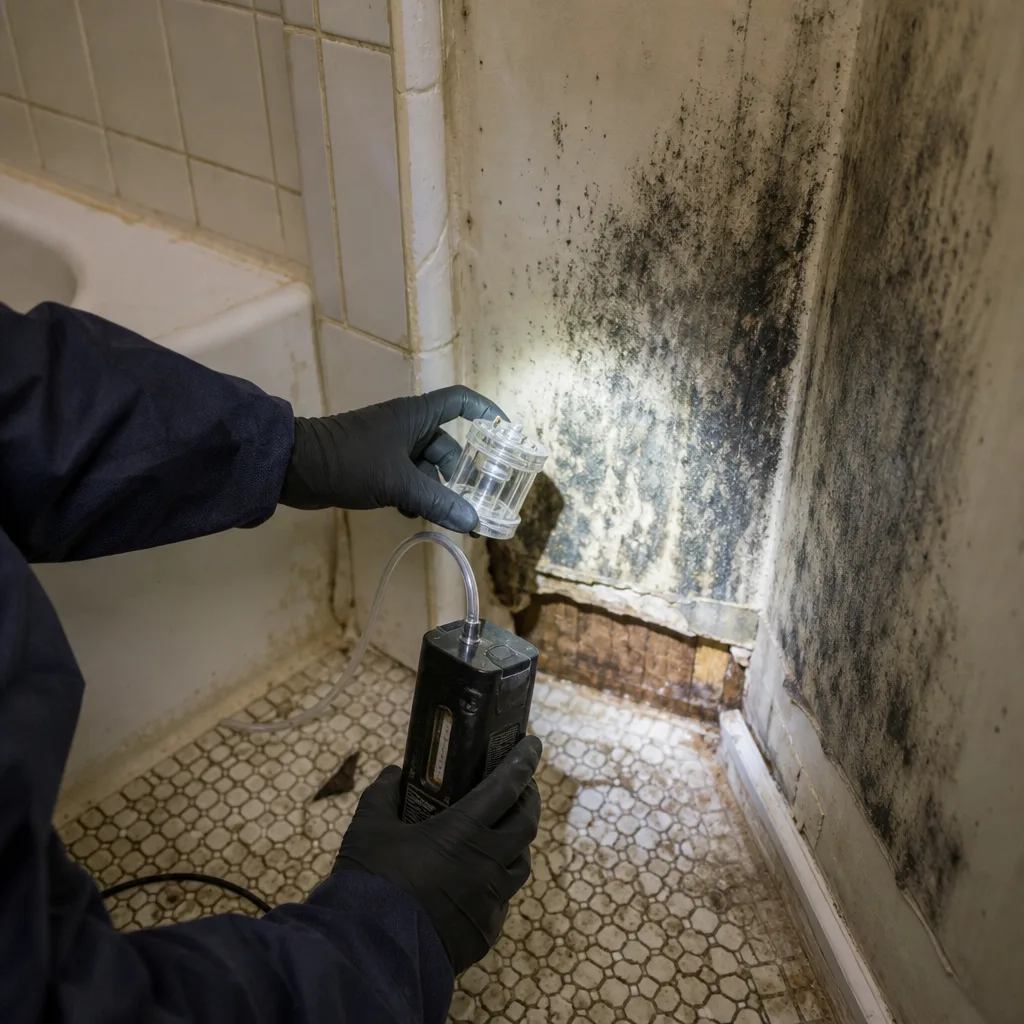
Mold Removal
Full containment, HEPA air scrubbing, and removal of affected materials. In Rye’s older homes, this often means removing water-damaged plaster and lath, not just drywall. We preserve what’s salvageable: original millwork, plaster medallions, irreplaceable trim. Anything we can’t save gets documented with photos for your carrier before disposal.
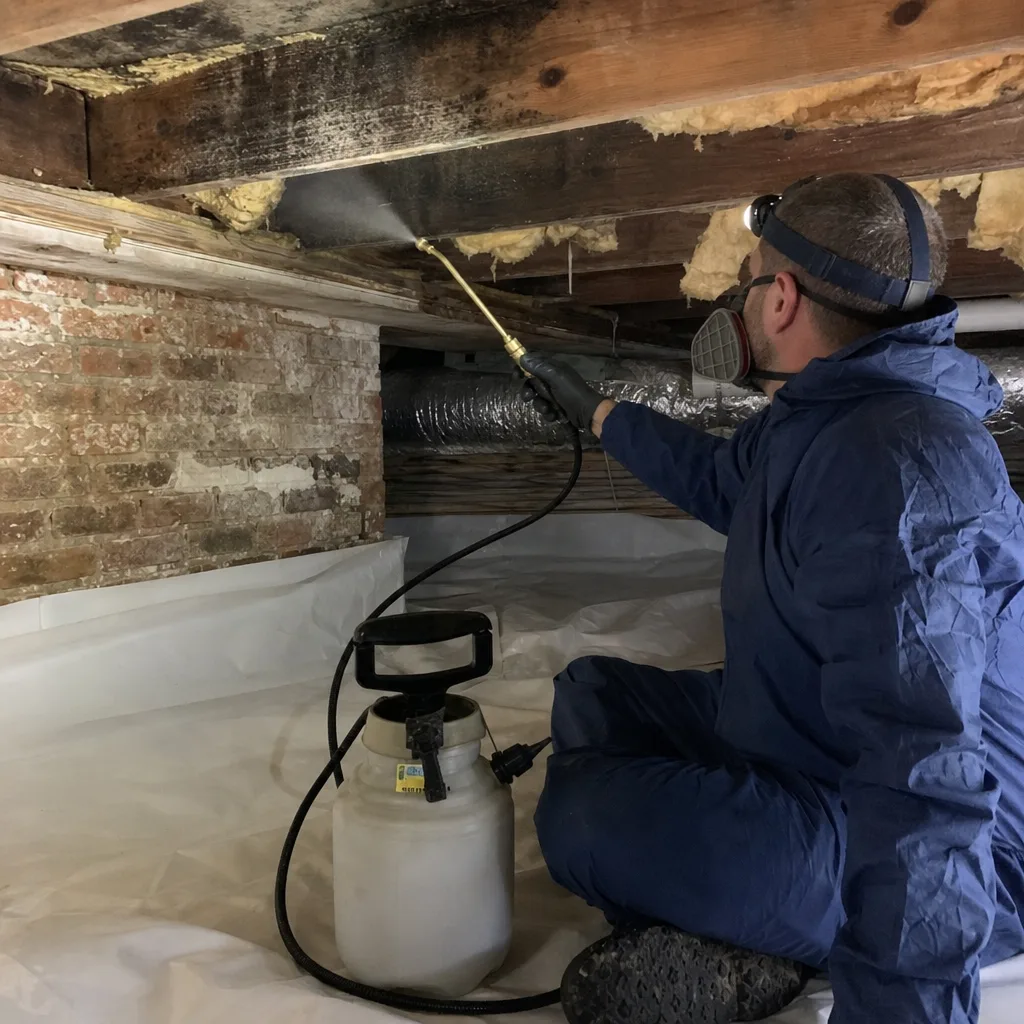
Black Mold Remediation
Black mold, often Stachybotrys, feeds on cellulose-heavy materials like wood lath, old wallpaper glue, and drywall paper. Rye’s pre-WWII homes have all three. This type of growth requires Biohazard & Crime Scene Cleanup in Rye-level containment, negative air pressure, and careful removal protocols under AMRT-certified supervision. A real expert always flags the danger: disturbing black mold without containment spreads spores throughout the house.
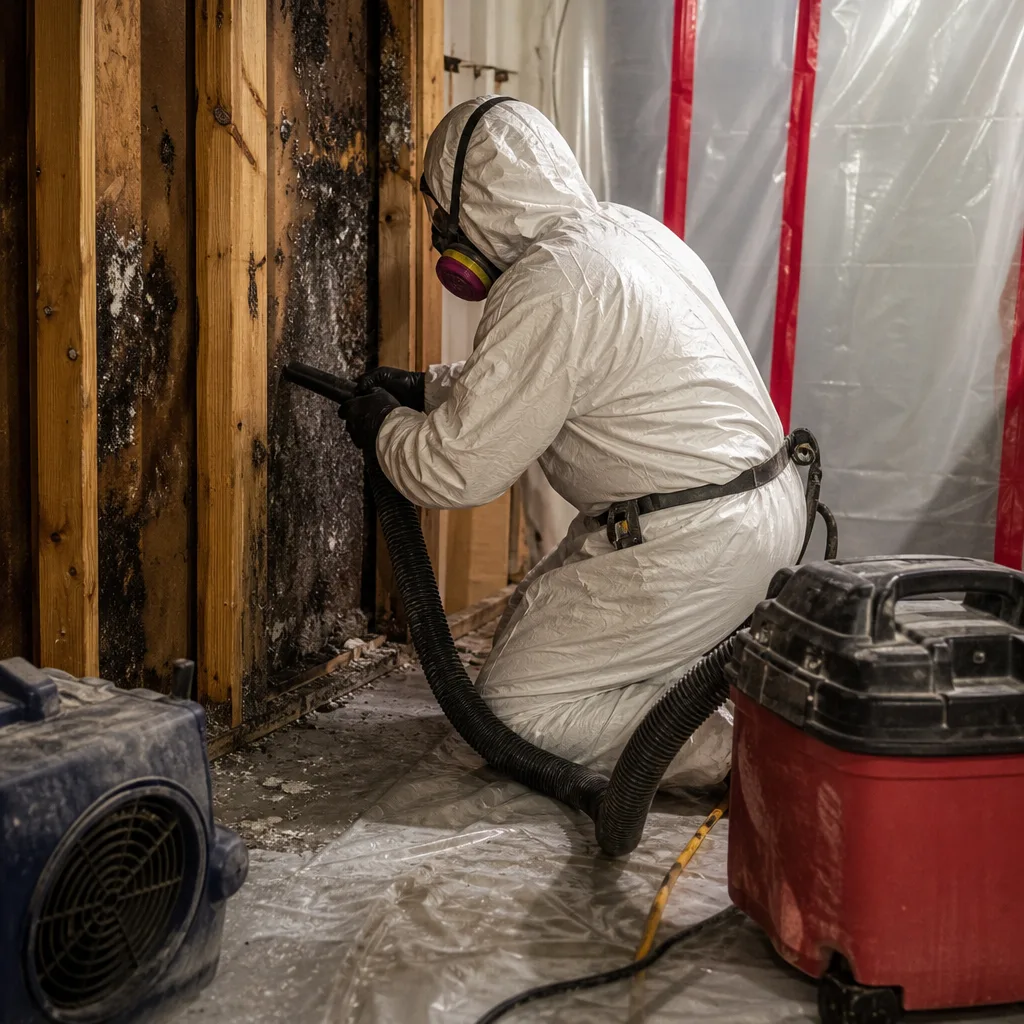
Air Quality Restoration
After removal, we run HEPA air scrubbers until the air column reads clean. For Rye homes with forced-air systems, we also inspect duct interiors for mold growth and clean them where needed. Post-remediation clearance testing through an independent lab gives you written proof that the job is done right.
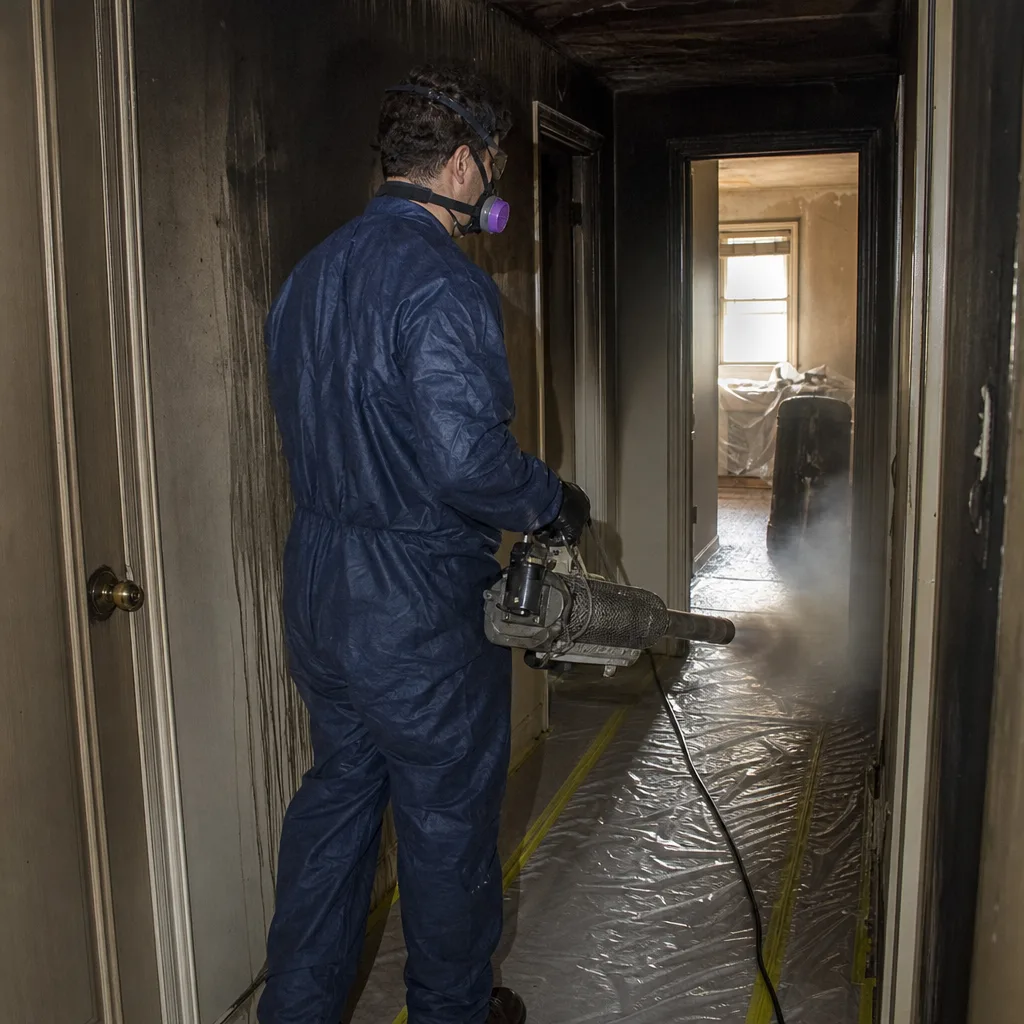
Crawl Space Treatment
Rye’s coastal elevation means many crawlspaces sit close to the water table. We install vapor barriers, seal foundation vents where appropriate, add dehumidification, and treat framing that’s already showing microbial growth. The goal is to break the cycle: wet crawlspace air rises into the house, and mold follows. Our Mold Remediation team handles the full scope, from encapsulation to structural drying to antimicrobial treatment.
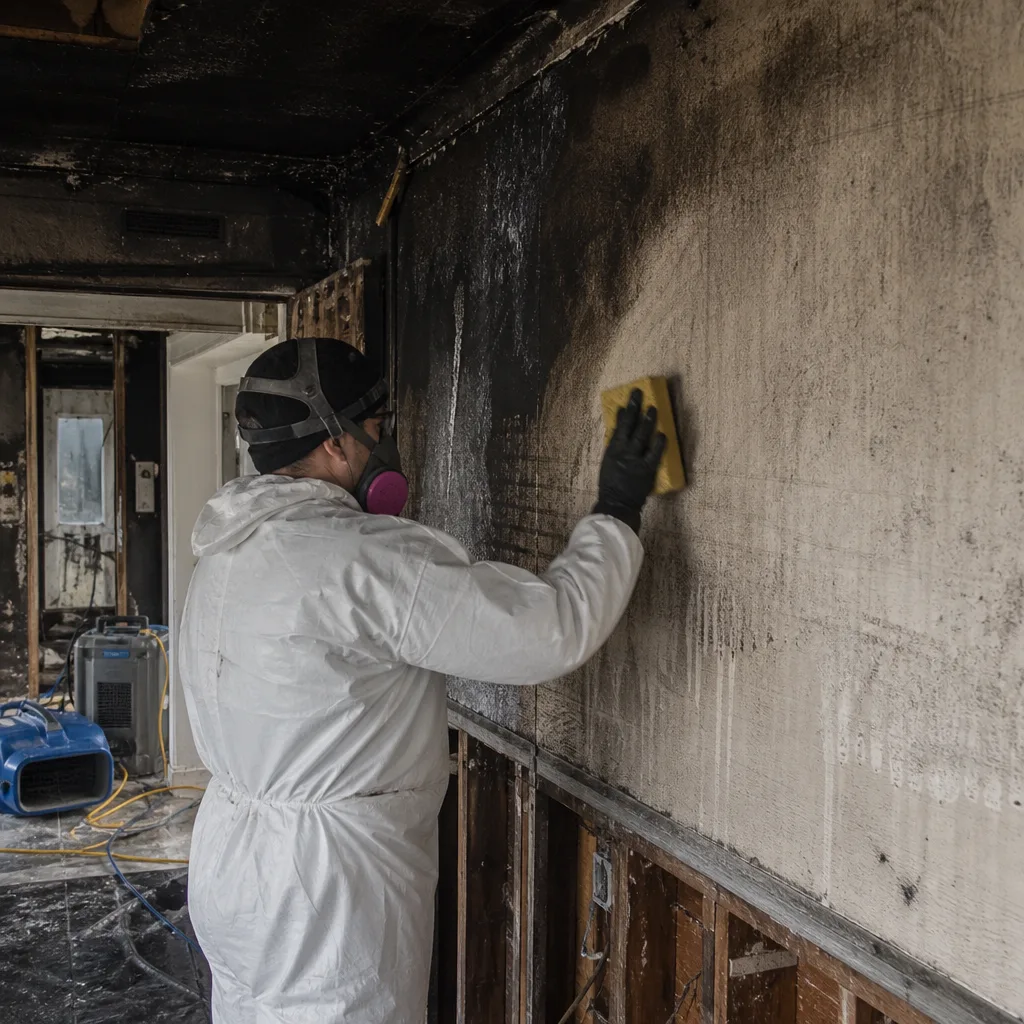
Moisture & Humidity Control
This is the sub-service that prevents the next call. We identify where moisture is entering, whether through foundation seepage, tide-driven backflow, roof leaks, or condensation, then correct it. In Rye, post-storm Sound humidity often keeps hidden wall cavities above mold-growth thresholds for days even when surfaces feel dry. We run dehumidifiers until the dry standard is met and documented, not until the floor looks dry.
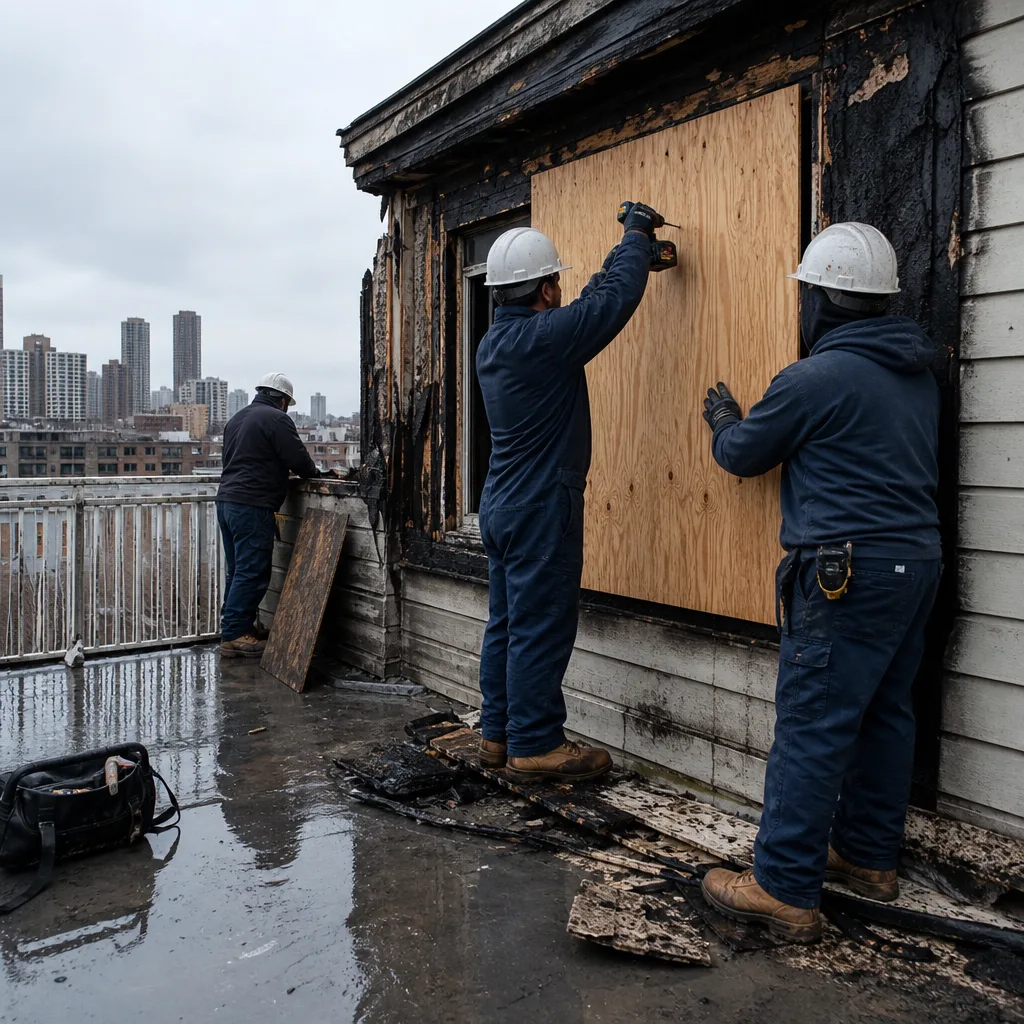
What happens when you call
- 1
A real person answersNo phone trees - you reach a local pro.
- 2
You get an upfront price rangeHonest numbers before anyone is dispatched.
- 3
A background-checked tech heads outLicensed & insured, dispatched right away.
- 4
You approve before work beginsNothing starts until you say go.
Mold Remediation Costs in Rye, NY
A typical mold remediation job in Rye runs $1,800 to $6,500 depending on square footage, accessibility, and whether wall cavities are involved. A small bathroom surface cleanup with HEPA vacuuming and antimicrobial treatment runs $500 to $1,200. Full containment and removal behind plaster walls in a pre-WWII Colonial runs $2,500 to $5,500. Crawl space treatment with vapor barrier and dehumidification runs $2,000 to $4,500. Saltwater intrusion from Long Island Sound backflow adds cost because salt residue requires neutralization before antimicrobial treatment, typically adding $400 to $900. Air quality testing through an independent lab runs $300 to $600 per sample set. If the mold resulted from a covered water loss, your carrier may pay most of the bill; we bill them directly. The free visual inspection gives you a firm written scope before you commit to anything. Call (917) 924-4221 for an exact quote. We also honor the Senior & Veteran 5% discount and $50 off any repair over $250, always.
We Also Serve Cities Near Rye
Floodline Restoration Co. of Manhattan serves the full Rye area and neighboring communities. You’ll find us in Harrison, Mamaroneck, Port Chester, and Larchmont. If you’re in one of those towns and dealing with mold, water, or storm damage, the same live dispatcher answers, the same certified crews respond, and the same written 90-Day Done Right Promise applies.
Serving Rye, NY - Our Local Coverage Area
We’re based in the Rye area and know this community well. Use the map below to see our service coverage - if you’re nearby, we can almost certainly help.
Rye Mold Remediation Questions, Answered
How quickly should I schedule mold remediation after a nor’easter hits my Rye home?
Within 24 to 48 hours is the critical window, because Rye’s post-storm Sound humidity keeps interior wall cavities damp and pushes hidden moisture into active mold growth fast. Call (917) 924-4221 the day you see water or smell must. We’ll get a crew out and set containment before spores spread into clean rooms.
How does saltwater backflow through Oakland Beach floor drains affect mold remediation compared to freshwater flooding?
Saltwater leaves behind hygroscopic salt crystals that keep attracting moisture long after visible water is gone, which re-feeds mold inside wall cavities and on timber framing. Standard freshwater drying protocols miss this. The salt residue must be neutralized before antimicrobial treatment, or the mold comes back. This is exactly the kind of dual-vector damage our Mold Remediation crews are trained to handle.
Do pre-WWII homes in Rye need longer drying times before mold remediation can be considered complete?
Yes, often significantly longer. Original plaster and lath, old-growth hardwood, and original timber framing wick and hold moisture far longer than modern drywall and engineered lumber. A drying job that takes 2 days in a newer home can take 5 to 7 days in a 1920s Rye Colonial. We log moisture readings every 12 hours until the structural dry standard is met and documented, not until surfaces feel dry. Shortening this timeline is how mold comes back.
What permit or code expectations in Rye affect mold remediation work in historic districts?
Rye’s building department requires permits for structural repairs and any work that alters load-bearing elements. In historic districts, exterior work may also need design review. For mold remediation itself, the key requirement is that removal and rebuild meet current code for moisture control and ventilation, which may mean upgrading insulation or vapor barriers in older homes. We pull the permits and coordinate with the building department, so you’re not chasing paperwork.
Will my insurance cover mold remediation after a nor’easter or tide-driven backflow?
If the mold resulted from a covered water loss, storm surge, or Sewage Cleanup in Rye, most homeowners policies cover the remediation and associated repairs. The carrier will want documentation: photos from the first hour, moisture readings, drying logs, and a line-item scope. We provide all of that directly to your adjuster, and we bill the carrier directly. If mold resulted from chronic humidity or long-term neglect, coverage may be limited. We’ll walk you through the specifics of your policy honestly.
Can I stay in my Rye home during mold remediation?
For surface mold in a bathroom or single room, usually yes, with containment sealing off the work area. For black mold remediation, especially when wall cavities are opened or saltwater-saturated framing is exposed, we recommend staying elsewhere during active removal and air scrubbing. We’ll give you a straight answer based on the actual conditions, not a generic rule.
How does Floodline Restoration Co. handle the dual-vector flooding risk specific to Rye?
In the Oakland Beach neighborhood, our crew responded to a pre-WWII Colonial where a nor’easter had pushed Sound water up through the basement floor drain, backflowing category 3 water across the poured concrete floor before the storm peak. We set containment, ran structural drying with Dri-Eaz dehumidifiers and air movers, and took moisture readings every 12 hours, documenting drying logs until the original timber framing returned to pre-loss condition and the salt residue was neutralized before applying antimicrobial treatment. That’s the standard we bring to every Rye Storm & Disaster Restoration job, shoreline or inland.
How long does full mold remediation take in a typical Rye home?
Most jobs finish in 3 to 7 days from setup to final air scrub, depending on square footage, wall-cavity access, and salt intrusion. A single bathroom surface job may finish same day. A full basement with tide-driven backflow and saturated framing typically runs 5 to 8 days. Most jobs are completed in a single visit with our professional-grade equipment, and the 90-Day Done Right Promise means if mold returns in the finished area within ninety days, we make it right in writing.
Written by Curt Bowman, Owner at Floodline Restoration Co. of Manhattan, serving Rye and the surrounding communities. Floodline has answered the phone with a live person at 2 a.m. since 2010, and every job is backed by the 90-Day Done Right Promise, the Keystone Standard, in writing.