
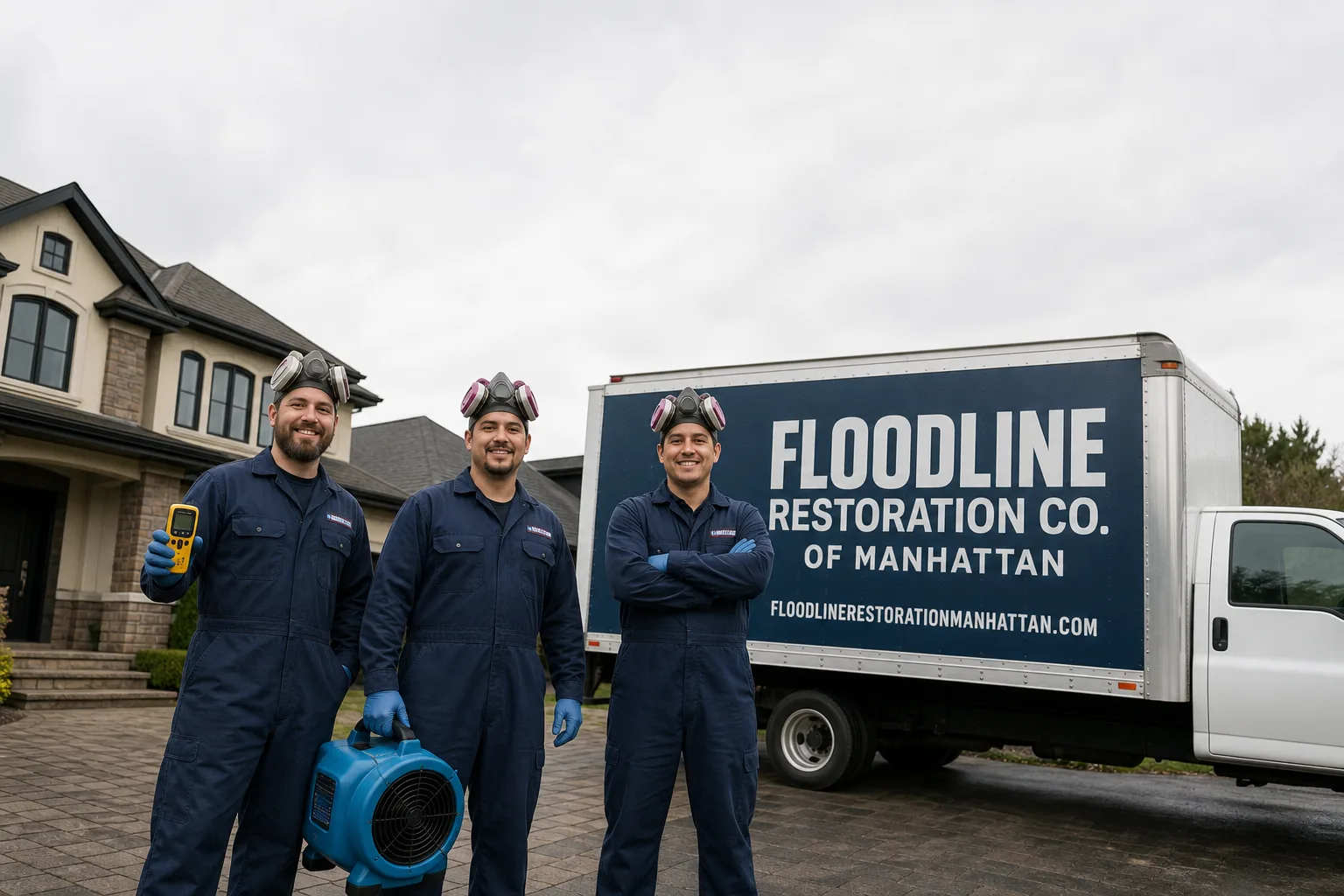
Free visual inspection and a written scope of work before any mitigation begins - photos, moisture readings, and drying logs go in your claim file
The scope we write is the scope we bill. Anything new gets shown to you, in writing, before we touch it.






 Before
 After
After Before
 After
After Before
 After
After24/7 Emergency Mold Remediation in Tarrytown
Mold remediation in Tarrytown typically costs $1,800 to $6,500 depending on square footage and how far moisture migrated through pre-war framing, and we can usually have a crew on-site within 45 minutes. If you’re standing in a Tarrytown basement watching black patches climb the plaster, call (917) 924-4221 right now. A live dispatcher answers at 2 a.m. the same way they answer at noon, and the sooner we contain the spread, the less wall we have to open. The first hour matters because mold doesn’t wait for business hours, and neither do we.
Understanding Mold Remediation Severity in Tarrytown Properties
Mold severity in Tarrytown splits along a line that most national remediation guides never mention: the age of your framing. In the 1870s-1920s Victorians and Edwardians that dominate the village, balloon-frame construction means a basement mold bloom isn’t confined to the basement. Open wall chases run continuously from the foundation sill to the attic, so spores travel upward through cavities behind horsehair plaster. By the time you see staining on a first-floor wall, the colony may already be established two floors above.
We classify every job by the Institute of Inspection, Cleaning and Restoration Certification (IICRC) standard: Condition 1 is normal indoor ecology, Condition 2 is settled spores with active growth in one area, and Condition 3 is active growth inside the HVAC system or wall cavities. Tarrytown’s pre-1930 stock lands in Condition 3 more often than newer housing because original fieldstone foundations breathe continuously, wicking Hudson Valley soil moisture into sill plates and rim joists. Remediation on these homes means treating the source, not just the stain.
Why Tarrytown Property Owners Choose Floodline Restoration Co. of Manhattan
- 45-minute response commitment in Tarrytown: Dispatch is coordinated from our New York City office, and crews serving the village run local routes along Route 9 and Broadway. A call at midnight gets a truck moving, not a callback in the morning.
- 24/7 live answer, every time: A person picks up the phone. No automated tree, no “leave a message.” That’s been true since Curt Bowman founded the company in 2010, and it’s written into how we schedule.
- IICRC-certified crews, trained to RIA and IFA standards: The technicians in your home are background-checked, uniformed, and certified for mold remediation (AMRT) as well as water damage (WRT) and fire/smoke (FSRT). They carry the moisture meters to prove what’s wet and what isn’t.
- Free visual inspection with no obligation: We’ll walk the affected area, read moisture levels, and tell you honestly whether you need full remediation or just targeted drying. If you don’t need us, we’ll say so.
- Direct insurance billing: We coordinate with your adjuster, submit the line-item scope, and bill the carrier directly. You handle the deductible; we handle the paperwork.
- One crew from extraction to reconstruction: The same team that sets containment also runs the daily moisture readings, and if lath or drywall has to come out, the same crew rebuilds it. No mid-job handoff to a subcontractor you’ve never met.
Our Mold Remediation Process
Inspection & Assessment
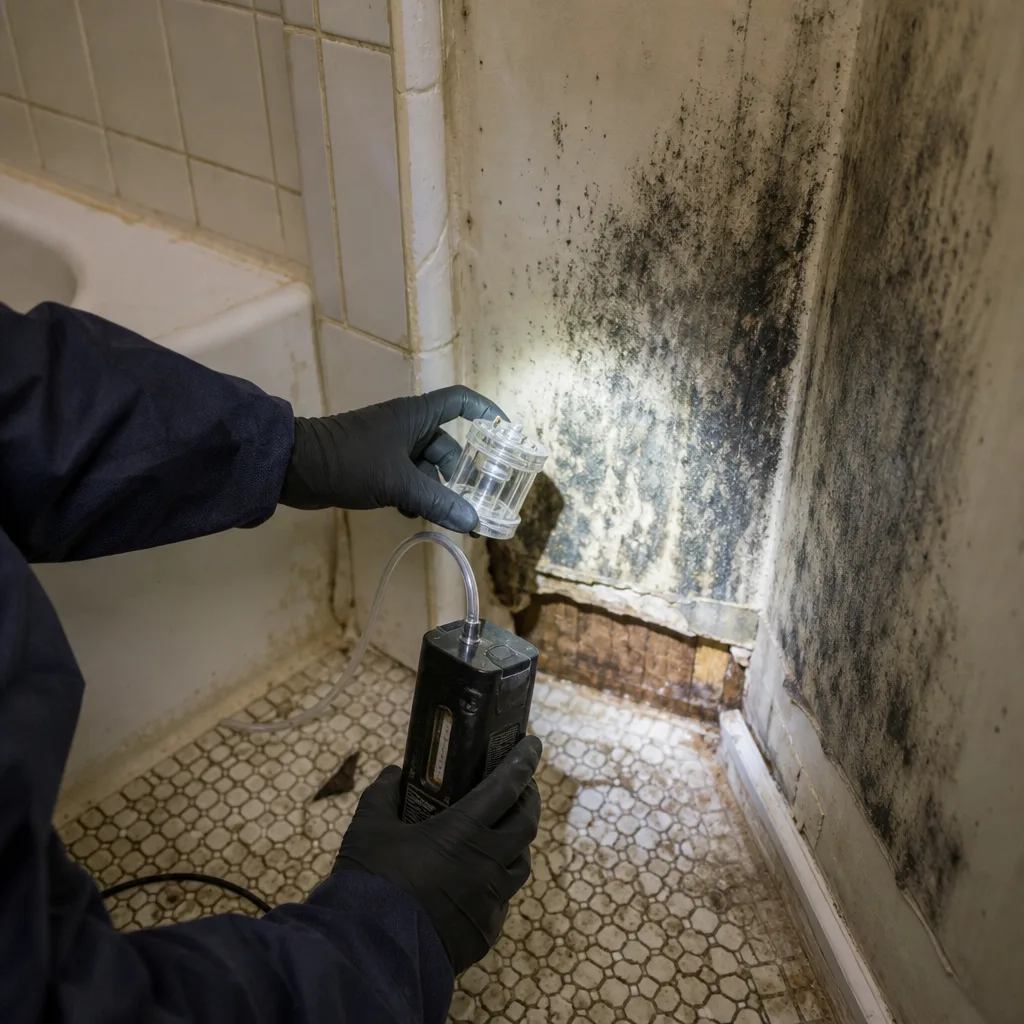
We start with a visual walk and moisture mapping across every affected room. Thermal imaging finds cold spots behind plaster and inside living spaces where hidden moisture hides. Then we take air and surface samples if the scope suggests it, and we tell you exactly what we found before any work begins.
Containment & Source Correction
Before we touch visible mold, we stop the water source. That often means tracing a slow plumbing leak inside a wall cavity or sealing a fieldstone foundation crack. Then we build containment with 6-mil poly and negative air pressure so spores don’t migrate through Tarrytown’s open balloon-frame chases while we work.
Drying & Dehumidification
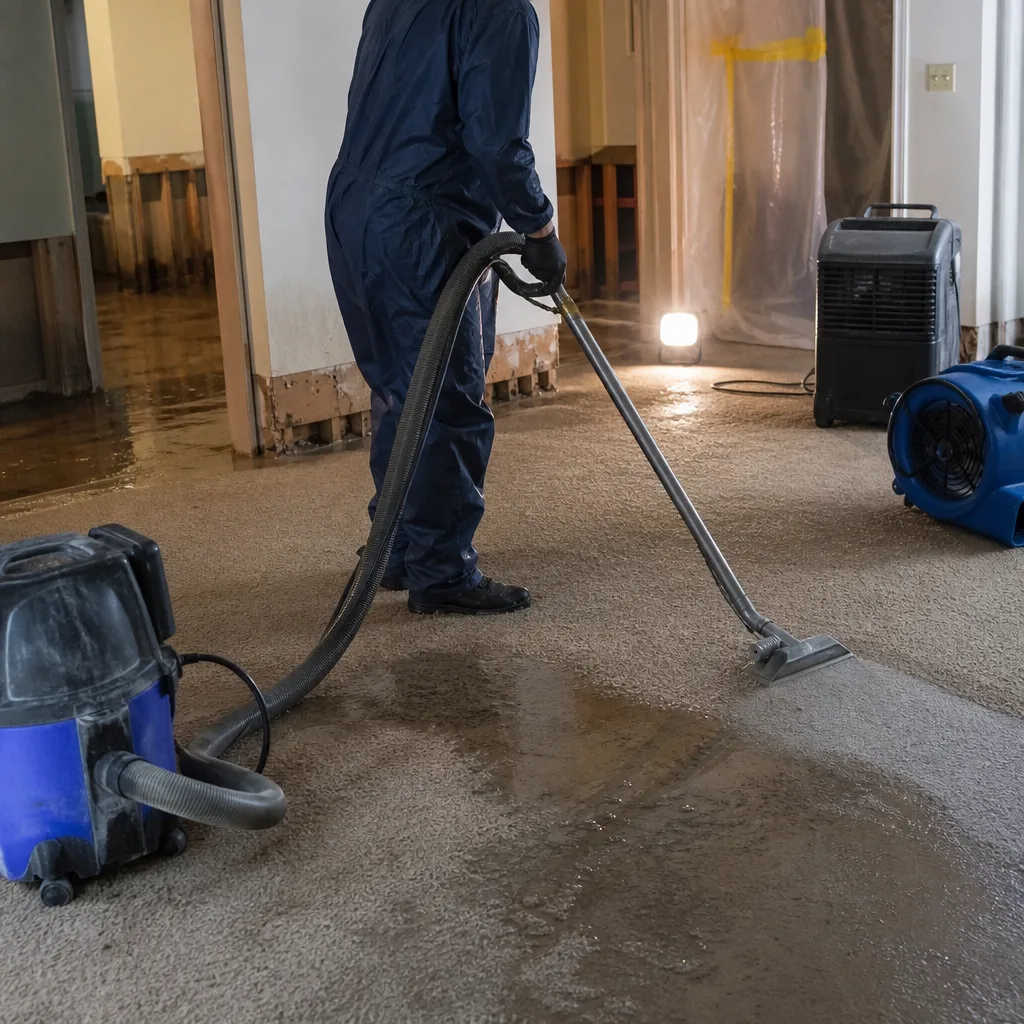
We set Dri-Eaz LGR dehumidifiers and XPOWER air movers, and in plaster walls we install Injectidry panels that pull moisture out through the wall surface without tearing out original lath. Daily moisture readings are logged until every affected material hits the IICRC dry standard – usually 3 to 7 days in Tarrytown’s humidity, sometimes longer near the river.
Mold Removal & Cleaning
Affected materials come out under containment: drywall, saturated insulation, and any framing with active colonization. Remaining surfaces get HEPA-vacuumed and treated with antimicrobial agents. We run HEPA air scrubbers throughout the process to capture airborne spores.
Clearance Testing
After remediation, a third-party or independent clearance test confirms indoor spore counts are back to normal background levels for the region. This is the step that proves the job is done, and we document it for you and your insurer.
Repairs & Restoration
We rebuild what we opened: new drywall, new plaster, new insulation, and any framing repairs. The same crew that ran the dryers does the finish work, and we stand behind the whole job with the 90-Day Done Right Promise. If it’s not done right, we make it right. In writing.
Need Emergency Mold Remediation in Tarrytown Now?
Crews minutes away, answering live 24 hours a day. The sooner we start, the less it costs.
Working With Your Insurance Company
Mold claims in Tarrytown hinge on whether the underlying cause is a covered peril – a burst supply line, a nor’easter-driven leak, a sewage backup. If it is, the remediation is generally covered subject to your policy’s mold sub-limit, which often runs $5,000 to $10,000. We document everything from the first hour: photos of the original water event, moisture readings before and after drying, daily logs, and a line-item scope of work your adjuster can actually read. We talk to the adjuster directly. You shouldn’t have to be the messenger between a restoration crew and an insurance desk.
What We Provide Your Insurer
- Thorough documentation of the loss
- Photos of all damage, room by room
- Moisture readings and drying logs
- A detailed, line-item scope of work
- Direct coordination with your carrier
Built for Tarrytown’s Loss Calendar
January and February hit Tarrytown’s aging supply lines hard. When deep freezes burst galvanized pipes in a 1910s home on Neperan Road, water runs through balloon-frame cavities for hours before anyone notices – and by then the mold clock is already running. Spring brings the thaw and a different problem: basement seepage into fieldstone foundations as saturated ground drains down the hillside toward the river. The low-lying blocks between Main Street and the Metro-North station see it first.
Summer thunderstorms dump an inch of rain in thirty minutes, and Tarrytown’s steep streets turn into runoff channels that find every crack in a foundation wall. Then come the nor’easters, tracking up the Hudson corridor from October through March, driving wind-blown rain into aging window frames and rooflines from the waterfront up to the hillside. Every one of these events leaves moisture in places you can’t see. That’s the mold that shows up later as a musty smell in a closet or black staining behind a bookshelf.
Mold Remediation Across Tarrytown’s Neighborhoods
The blocks between Main Street and the Hudson River carry a pattern we don’t see in upland Westchester. These are the Sandy-impact parcels, the old waterfront homes and converted buildings with 1890s fieldstone foundations that flooded in 2012. Many were remediated then, but never fully dried. Moisture migrated into the stone and mortar, and a decade later we’re still reopening those jobs when mold blooms again. If you live near Pierson Park or down by the Tarrytown Marina, and you smell something earthy in the basement after a heavy rain, it’s worth a free inspection.
Up the hill near the Tarrytown Music Hall and along Broadway, the housing shifts to 1940s-1960s brick and clapboard on tighter lots, but the original Victorians on streets like Neperan Road and Hamilton Place still dominate. These homes have the balloon-frame wall chases that make mold spread vertically. Over in the Crest neighborhood and up near the Sunnyside area, the elevation means less river humidity but more exposure to nor’easter wind loads. The wet basements we see there usually track back to roof and window flashing failures, not groundwater.
Specialized Mold Remediation Services We Offer in Tarrytown
Mold Inspection & Testing
Before you remove anything, you need to know what you’re dealing with. We run moisture readings across every wall, thermal scans behind plaster, and air sampling when the scope calls for it. In Tarrytown’s older homes, that means checking wall cavities and sill plates, not just the visible stain. A surface probe that says “dry” on an 1890s fieldstone wall can be wrong. We verify.
Mold Removal
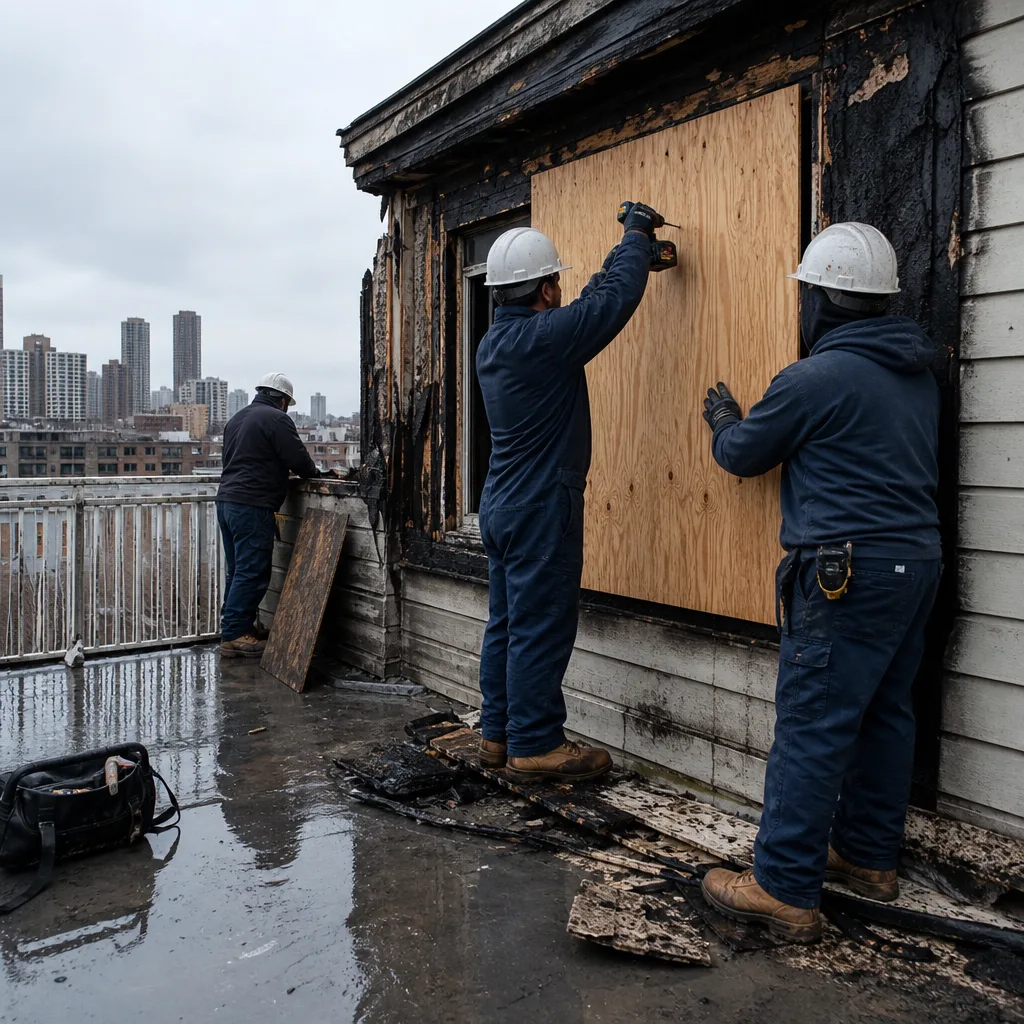
Removal means physical extraction under containment: cutting out colonized drywall, bagging it, HEPA-vacuuming framing, and treating surfaces. We don’t just spray bleach on the visible mold and call it done. That doesn’t work here, not with river humidity and open wall chases that let spores move. Proper removal is the only thing that keeps mold from returning by spring.
Black Mold Remediation
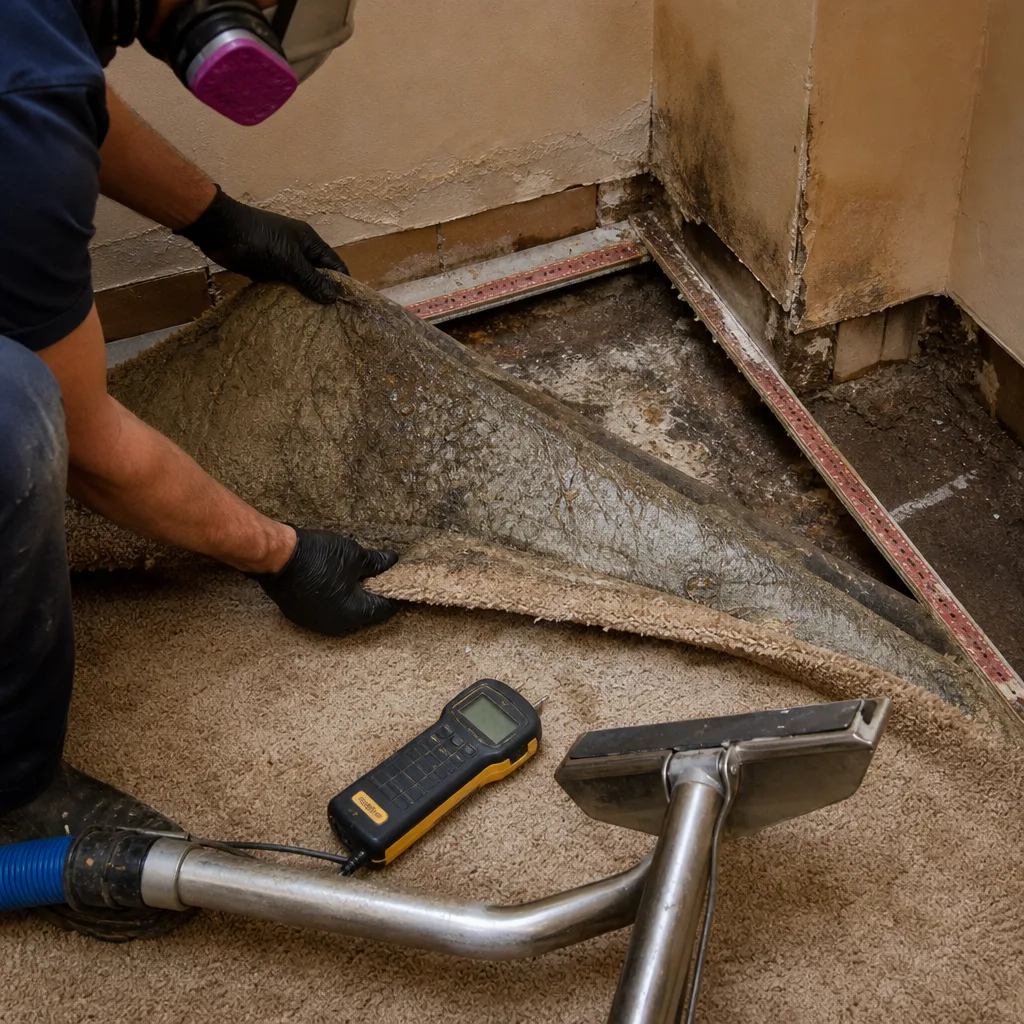
Stachybotrys gets a lot of attention, and it deserves it. Black mold in a Tarrytown basement usually feeds on chronically wet cellulose – drywall, insulation, old lath. The health risks are real, especially for older homeowners with respiratory conditions. Our approach is the same for all toxigenic molds: full containment, HEPA air scrubbing, physical removal, and clearance testing. We’ll explain the lab results in plain English so you understand what was there and what’s left.
Air Quality Restoration
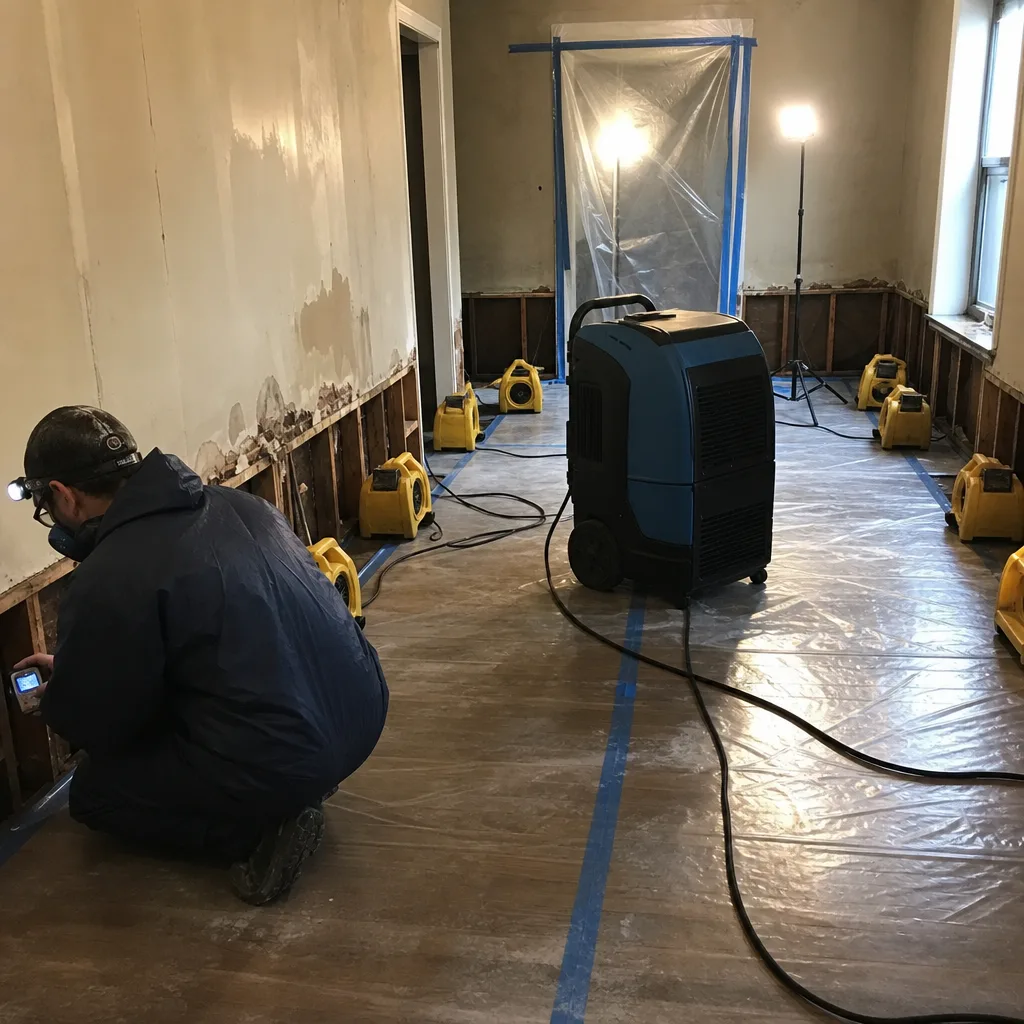
After remediation, the air you breathe matters as much as the walls you see. We run HEPA air scrubbers during the job and can set up post-remediation air exchange to bring indoor spore counts back to normal background levels. In homes near the Tarrytown waterfront, where valley fog keeps outdoor humidity high year-round, we often pair this with dehumidification to hold interior relative humidity below 55% so mold can’t re-establish.
Crawl Space Treatment
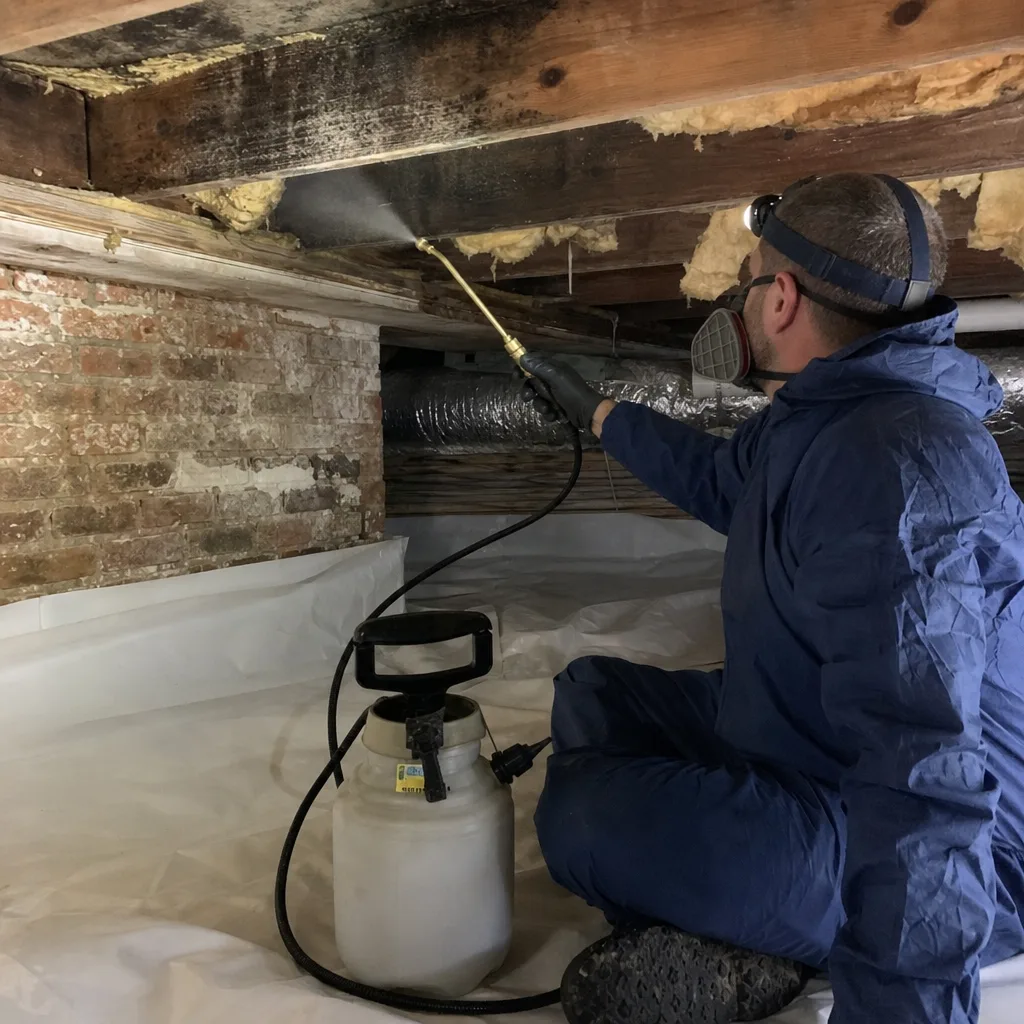
Many Tarrytown older homes have dirt-floor crawl spaces under the kitchen or rear addition. These spaces are mold factories. Dirt floors wick moisture up into floor joists, and the musty smell rises through the floorboards into the house. We seal the ground with vapor barrier, install dehumidification if the space calls for it, and treat the framing that’s already affected. It’s not a glamorous job. It’s the one that keeps the smell from coming back.
Moisture & Humidity Control
Long-term mold prevention in Tarrytown is a moisture problem, not a chemical problem. We set dehumidifiers, seal foundation cracks, and fix the grading and downspouts that dump water against your foundation. The goal is a home that stays dry on its own, so you never have to call us again – unless you want to.
What happens when you call
- 1
A real person answersNo phone trees - you reach a local pro.
- 2
You get an upfront price rangeHonest numbers before anyone is dispatched.
- 3
A background-checked tech heads outLicensed & insured, dispatched right away.
- 4
You approve before work beginsNothing starts until you say go.
Mold Remediation Costs in Tarrytown, NY
Mold remediation in Tarrytown runs a real range, and the honest numbers are lower than you might fear and higher than the cheapest quote you’ll get. A contained bathroom or closet job runs $1,500 to $3,500. A full basement with visible mold on framing and drywall runs $4,000 to $8,000. Homes with balloon-frame migration where mold traveled up two or three floors run $8,000 to $15,000 or more. Crawl space encapsulation and treatment runs $2,500 to $6,000. The price moves with square footage, how much drywall and lath has to come out, whether asbestos or lead abatement is required (common in Tarrytown’s pre-1930 stock), and whether the job is inside the historic district where preservation guidelines slow work.
Most Tarrytown mold jobs are insurance-covered when tied to a sudden, covered water event. If the mold is from chronic humidity or slow seepage, that’s usually an out-of-pocket repair. The free inspection is how you find out where you stand without spending a dollar. Call (917) 924-4221 and we’ll walk the space, read moisture levels, and give you a written scope you can hold.
We Also Serve Cities Near Tarrytown
Our mold remediation crews cover Tarrytown and the surrounding Westchester villages. We regularly work in Elmsford, Hawthorne, Valhalla, and Irvington – same 45-minute response, same live dispatcher, same 90-Day Done Right Promise in writing.
Tarrytown Mold Remediation Questions, Answered
Why do mold jobs on Tarrytown’s riverfront blocks take longer to dry than similar homes a few miles inland?
Because the Hudson River creates persistent valley fog and high humidity directly on the waterfront, which slows evaporation and accelerates mold colonization after water intrusion. The same square footage two miles inland in Elmsford might dry in three days; on the low blocks near the Metro-North station it often takes five to seven. We account for that in our drying plans and run dehumidifiers longer than a standard dry chart would call for. Call (917) 924-4221 and we’ll map your specific conditions for free.
Do I need a permit from Tarrytown’s Building Department for mold remediation if my house is in the historic district?
Mold remediation itself typically doesn’t require a building permit, but if the job involves structural repairs, exterior changes, or asbestos and lead abatement in a designated historic property, the Westchester County historic-district preservation guidelines can add review steps. We handle that coordination. We know which Tarrytown blocks fall under review and which don’t, and we’ll tell you upfront whether your scope needs sign-off before we start. Call for a free assessment.
What’s different about mold remediation in Tarrytown homes built before 1930 compared to newer construction?
Pre-1930 homes in Tarrytown are usually balloon-frame with horsehair plaster and original fieldstone foundations. Balloon framing means wall cavities run continuously from foundation to attic, so mold spores travel vertically and a basement bloom can reach upper floors. Horsehair plaster holds water longer than drywall. Fieldstone foundations wick moisture constantly. All three factors mean remediation has to address hidden cavities and ongoing moisture sources, not just the visible stain. A surface-level treatment will fail.
After a nor’easter, does wind-driven rain create different mold risks in Tarrytown than a typical roof leak?
Yes. Wind-driven rain from a nor’easter pushes water horizontally into aging window frames, rooflines, and wall sheathing, often saturating plaster from the inside out without pooling anywhere visible. Tarrytown’s hillside homes catch the full force of storms tracking up the Hudson corridor. The water ends up inside wall cavities, and by the time it shows on drywall it’s been there long enough to grow mold. We check window flashing, sidewall penetration points, and attic sheathing after these storms – not just the obvious ceiling stain.
How do I know if a mold problem in my Tarrytown basement is from the Hudson River or from uphill runoff?
River-driven moisture comes up through the slab and foundation from groundwater, so you’ll see mold concentrated at the base of walls and along floor edges, often with a persistent damp band at the fieldstone line. Uphill runoff from the Tarrytown hillside enters through foundation cracks mid-wall or flows in from window wells and doorways after heavy rain. We tell the difference with moisture readings and a visual of the foundation, and the source determines the fix. A free inspection answers it for sure.
How fast can someone actually get to my Tarrytown home?
Our commitment is 45 minutes for emergency calls in Tarrytown, because we dispatch from a New York City office with crews staged along the Route 9 and Saw Mill River corridors. A live person answers the phone 24/7, and the truck rolls when you hang up. For non-emergency inspections and estimates, we schedule at your convenience, usually within 24 hours.
Will my insurance cover mold remediation in Tarrytown?
If the mold stems from a sudden, covered water event – a burst pipe, a nor’easter-driven leak, a sewage backup – your policy generally covers remediation up to the mold sub-limit, which is often $5,000 to $10,000. Chronic humidity or long-term seepage without a covered cause is usually excluded. We document the original event, submit the scope, bill your carrier directly, and coordinate with the adjuster so you’re never left arguing paperwork at 10 p.m. Call (917) 924-4221 and we’ll help you figure out where your claim stands.
Can we stay in our Tarrytown home during mold remediation?
Usually yes, once containment is set up and negative air pressure is running. For jobs confined to one room or a basement, the rest of the house stays habitable. If the mold has reached into HVAC ducts or covers multiple floors, we’ll recommend temporary relocation, especially if anyone in the home has respiratory issues. We’ll tell you honestly which situation you’re in before we start.
Serving Tarrytown, NY - Our Local Coverage Area
We’re based in the Tarrytown area and know this community well. Use the map below to see our service coverage - if you’re nearby, we can almost certainly help.
One More Thing About Tarrytown Mold
The Sandy-impact zone between Main Street and the Hudson has a problem that generic mold pages will never tell you about. Homes there flooded in 2012, were remediated quickly to get people back in, but never fully dried. Moisture stayed in the 1890s fieldstone foundations, and now, twelve years later, mold is blooming again behind finished walls that were built over damp stone. We know this pattern because we’ve opened enough of these walls to see it. If you live anywhere near the waterfront, from the blocks around the Tarrytown train station down to Pierson Park, and you’ve had a musty smell that comes back every spring, that’s not a coincidence. That’s river moisture still migrating through your foundation. The fix is a full moisture survey and cavity drying, not another coat of paint. Call (917) 924-4221 and we’ll tell you what’s actually happening under your floor.
Written by Curt Bowman, Owner at Floodline Restoration Co. of Manhattan, serving Tarrytown, NY with full-cycle restoration since 2010. Done right, and backed in writing.