
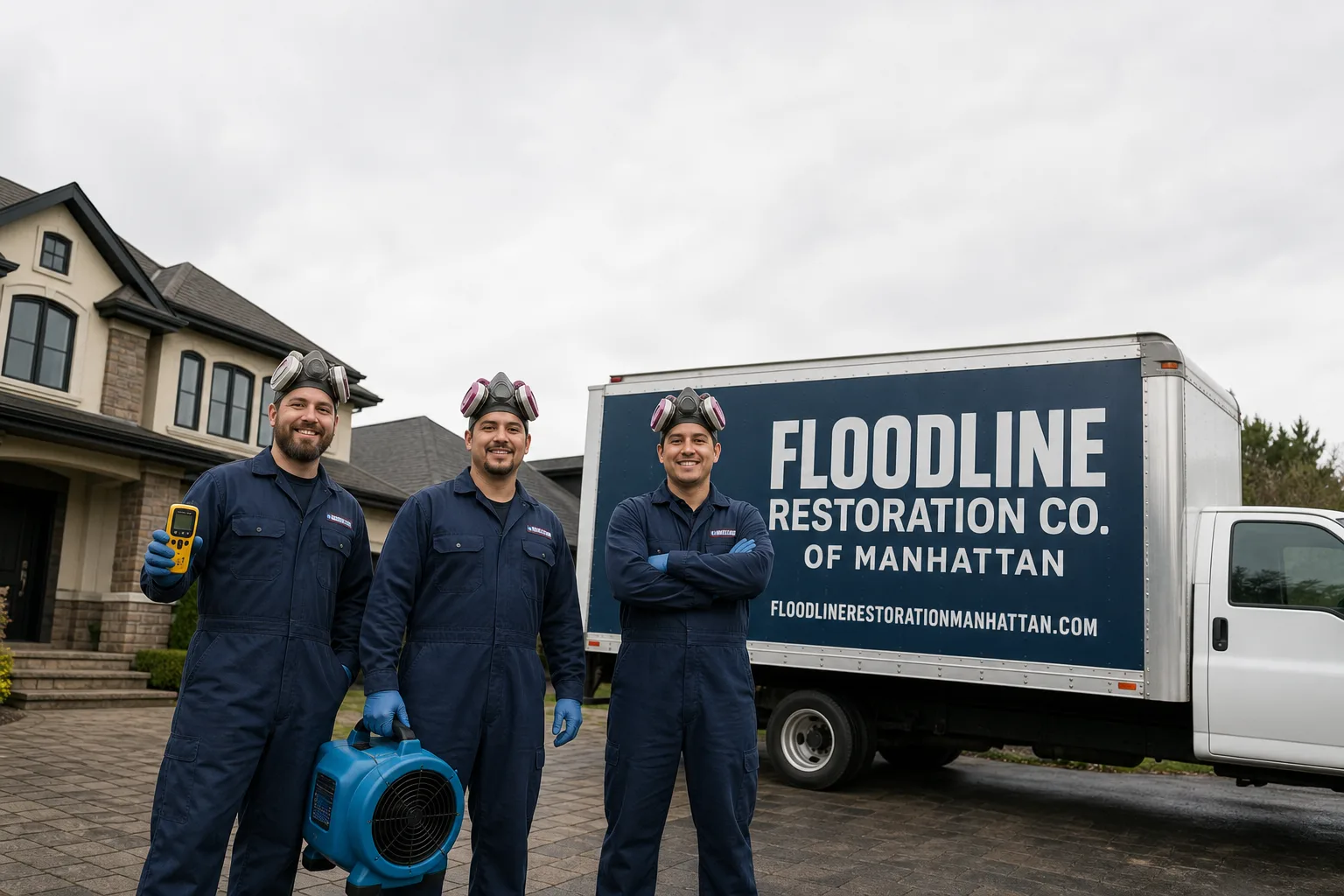
Free visual inspection and a written scope of work before any mitigation begins - photos, moisture readings, and drying logs go in your claim file
The scope we write is the scope we bill. Anything new gets shown to you, in writing, before we touch it.






 Before
 After
After Before
 After
After Before
 After
After24/7 Emergency Mold Remediation in Hawthorne
Mold remediation in Hawthorne typically runs $2,800 to $6,500 for a contained basement or crawl space job, and our crews can usually reach a Hawthorne address within 45 minutes. If you’ve found visible mold growth, a persistent musty smell, or water stains spreading across drywall, call (917) 924-4221 right now. A live dispatcher answers at any hour, and a background-checked technician will walk the property with a thermal camera and moisture meter at no charge before any work is quoted.
Hawthorne homes don’t wait well. The same concrete-block basements that made postwar split-levels affordable here also hold moisture against foundation walls for days after a storm, and mold colonizes gypsum board within 48 to 72 hours of a water event. Our Mold Remediation team treats every Hawthorne call as time-sensitive, not because it sells better, but because a contained two-room bloom is a two-day job while a spread-through-the-joists colonization is a two-week reconstruction.
Understanding Mold Remediation Severity in Hawthorne Properties
We classify mold work the way the IICRC S520 standard frames it: Condition 1 is normal indoor ecology, Condition 2 is settled spores and surface contamination, and Condition 3 is active growth with airborne spore release. In Hawthorne, the jump from Condition 2 to Condition 3 happens fast on hillside streets draining toward the Saw Mill River corridor. A 1960s split-level with a concrete-block basement may show nothing more than efflorescence on a Tuesday, then a nor’easter drops three inches and the same wall is weeping groundwater by Friday.
Severity drives everything: containment type, air scrubber sizing, whether drywall gets cut at the floodline or above it, and whether the homeowner can stay in the house. A small bloom behind a bathroom vanity often needs only local containment, HEPA air scrubbing, and surface treatment. A basement where mold has worked into fiberglass insulation and open wall cavities needs full containment, negative air pressure, and clearance testing before anyone sleeps in the house again. The building age matters too. Hawthorne’s older colonials with plaster walls and knob-and-tube wiring require moisture mapping before any restoration drying equipment gets plugged in, because drying a wall framed with cloth-wrapped conductors is a different job than drying one built in 1972.
Why Hawthorne Property Owners Choose Floodline Restoration Co. of Manhattan
- 45-minute response commitment. A live dispatcher logs your call and a crew is rolling toward Hawthorne immediately, not after a callback window.
- 24/7 live answer, every time. No automated attendant, no answering service. A real person picks up at 2 a.m. and starts the dispatch.
- IICRC-certified remediation crews. Our techs train to the AMRT and WRT standards, and they work with RIA and IFA protocols on every job.
- Free visual inspection with moisture mapping. Thermal imaging and hygrometer readings before any quote, so you know exactly what you’re dealing with.
- Direct insurance billing. We bill the carrier directly and handle the adjuster communication. You don’t play messenger.
- One team, first extraction to final coat of paint. The crew that maps the moisture on day one is the crew that rebuilds the wall on day ten.
Our Mold Remediation Process
Inspection & Assessment
We walk the property with thermal imaging, hygrometers, and a moisture meter. In Hawthorne basements, we’re looking for the water source first: uphill groundwater pressure, a failed perimeter drain, a roof leader dumping at the foundation, or a supply line leak inside a wall cavity.
Containment & Stabilization
We seal the affected area with 6-mil poly and run HEPA-filtered air scrubbers to establish negative pressure. This keeps airborne spores from migrating into living space while we work. On Hawthorne’s tight hillside lots, we stage containment so the family can stay in the house safely.
Drying & Dehumidification
We run professional-grade Dri-Eaz and Phoenix dehumidifiers with XPOWER air movers to drive moisture out of block walls, framing, and subfloor. Daily moisture readings get logged until the dry standard is met, and that log goes to you and your carrier.
Cleaning & Sanitization
We HEPA-vacuum surfaces, clean salvageable materials, and apply an antimicrobial treatment that complies with NYC DEP watershed restrictions for Hawthorne properties. No shortcuts on chemistry, no banned substances.
Material Removal & Disposal
Colonized drywall, insulation, and carpet pad get cut out, bagged, and removed under containment. We cut at the floodline plus a margin, because mold hyphae extend beyond visible staining. On pre-1978 colonials, we flag lead paint and knob-and-tube before any opening is cut.
Repairs & Restoration
Same crew rebuilds. We replace drywall, re-insulate, re-trim, and paint. If exterior drainage was the root cause, we counsel on downspout extensions, regrading, or a curtain drain so the job doesn’t come back next season.
Need Emergency Mold Remediation in Hawthorne Now?
Crews minutes away, answering live 24 hours a day. The sooner we start, the less it costs.
Working With Your Insurance Company
Mold claims get scrutinized harder than water claims, and carriers look for any gap in documentation. We’ve handled enough Hawthorne losses to know what an adjuster needs: a moisture log showing the dry standard was met, photos of every affected surface before and after, and a line-item scope that ties the remediation to a covered water event. We document from the first hour, not the first invoice.
We bill your carrier directly and talk to the adjuster ourselves. When the carrier needs a second opinion on whether that wall cavity was truly colonized, we have the readings and the photos to support it. You get one less fight. Curt Bowman built Floodline Restoration Co. around a simple idea: the homeowner shouldn’t be the one explaining a moisture map to an insurance desk at 4 p.m. on a Friday.
What We Provide Your Insurer
- Thorough documentation of the loss
- Photos of all damage, room by room
- Moisture readings and drying logs
- A detailed, line-item scope of work
- Direct coordination with your carrier
Built for Hawthorne’s Loss Calendar
Hawthorne’s mold season doesn’t follow one calendar. January and February bring hard freeze-thaw cycles that split supply lines in unheated basement ceilings and garage walls, and those leaks run for days before anyone notices the stain on the ceiling tile. February is the month we cut open the most block-foundation walls on Elwood Avenue and saw wet framing behind drywall that looked fine on the surface.
March and April bring the thaw. Snowmelt on the ridgelines above the Saw Mill River corridor pushes groundwater downhill, and Hawthorne basements that were dry all winter start seeping through the cove joint. May through August is thunderstorm season, when a single afternoon cell can drop two inches on already-saturated soil and turn a hillside yard into a slow leak against the foundation. September and October bring the nor’easter risk: Ida in 2021 and Irene in 2011 both put water into Hawthorne basements that had never flooded before. Late fall brings leaf-clogged gutters, which overshoot the foundation wall instead of the storm drain. Every season has a failure mode here. We schedule our equipment staging around them.
Mold Remediation Across Hawthorne’s Neighborhoods
Hillside streets feeding toward the Saw Mill River corridor, like those off Elwood Avenue and Commerce Street, show the most stubborn basement mold. These aren’t sump-failure jobs. The water comes from sustained uphill groundwater pressure that builds for three or four days after a heavy rain, pushing through cove joints and micro-cracks in old block foundations, and the mold returns within a season unless someone addresses the drainage on the high side of the house.
Over on the flatter streets near the Taconic State Parkway and Bradhurst Drive, we see more roof-leader problems and gutter overflow driving water against foundations. The houses are the same postwar capes and ranches, but the water path is easier to fix: extend the downspout, regrade a flower bed, and the basement stays dry. Down near the Westchester Medical Center corridor, we work in a mix of mid-century homes and some older turn-of-the-century colonials where plaster walls and knob-and-tube wiring mean every drying job starts with a wiring check before a dehumidifier gets plugged in. The commercial-storefront apartments along Route 141 and Saw Mill River Road bring their own pattern: shared walls, limited access to the foundation, and mold that travels between units through rim joists. We’ve remediated in every corner of Hawthorne, and the failure modes are as local as the streets.
Specialized Mold Remediation Services We Offer in Hawthorne
Mold Inspection & Testing
We inspect for visible growth, moisture sources, and hidden colonization behind walls using thermal imaging and moisture meters. When air sampling is warranted, we collect it under S520 protocol and send it to a third-party lab. In Hawthorne’s watershed zones, testing also confirms that the antimicrobial chosen for your job is the right one under DEP rules.
Mold Removal
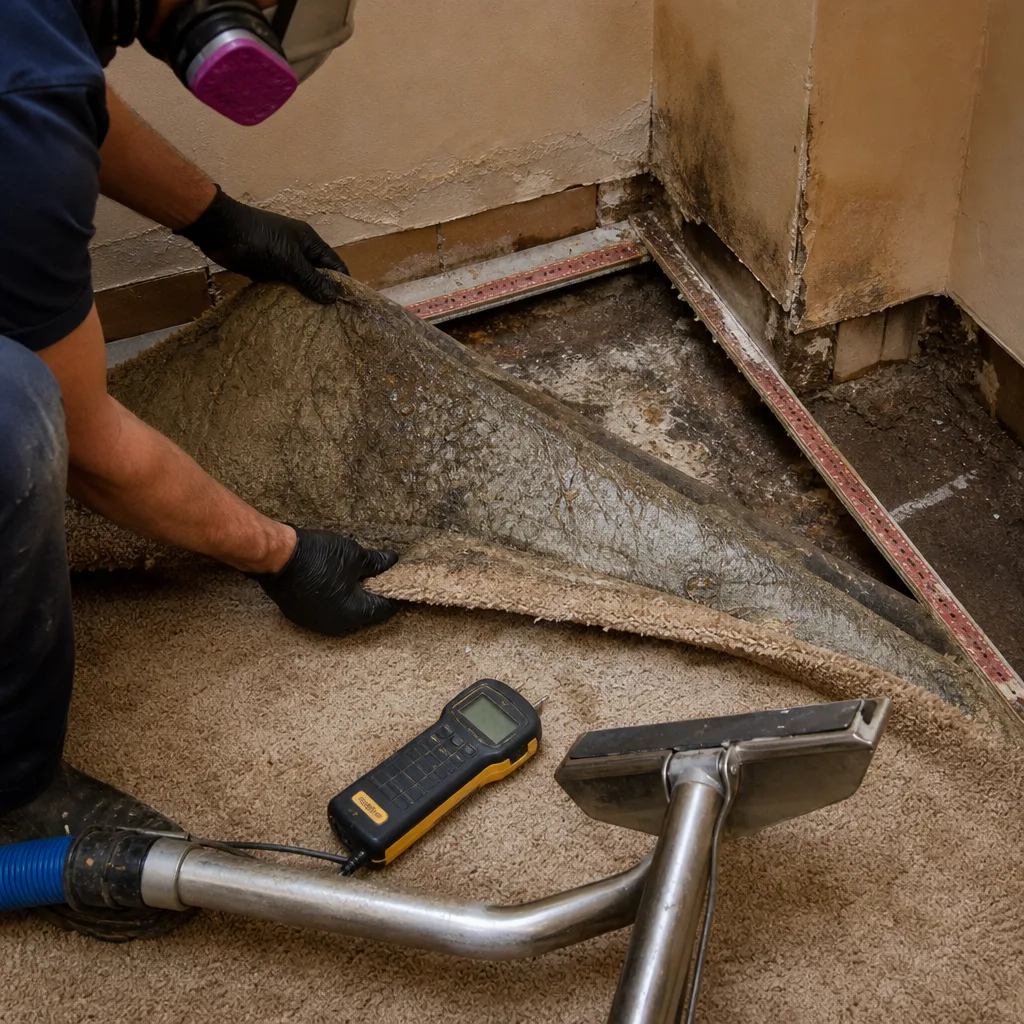
Removal means physical elimination of colonized material, not just spraying a biocide and walking away. We cut out what’s colonized, HEPA-vacuum what’s salvageable, and treat what remains. The goal is a house with no active growth and no airborne spore count above outdoor baseline.
Black Mold Remediation
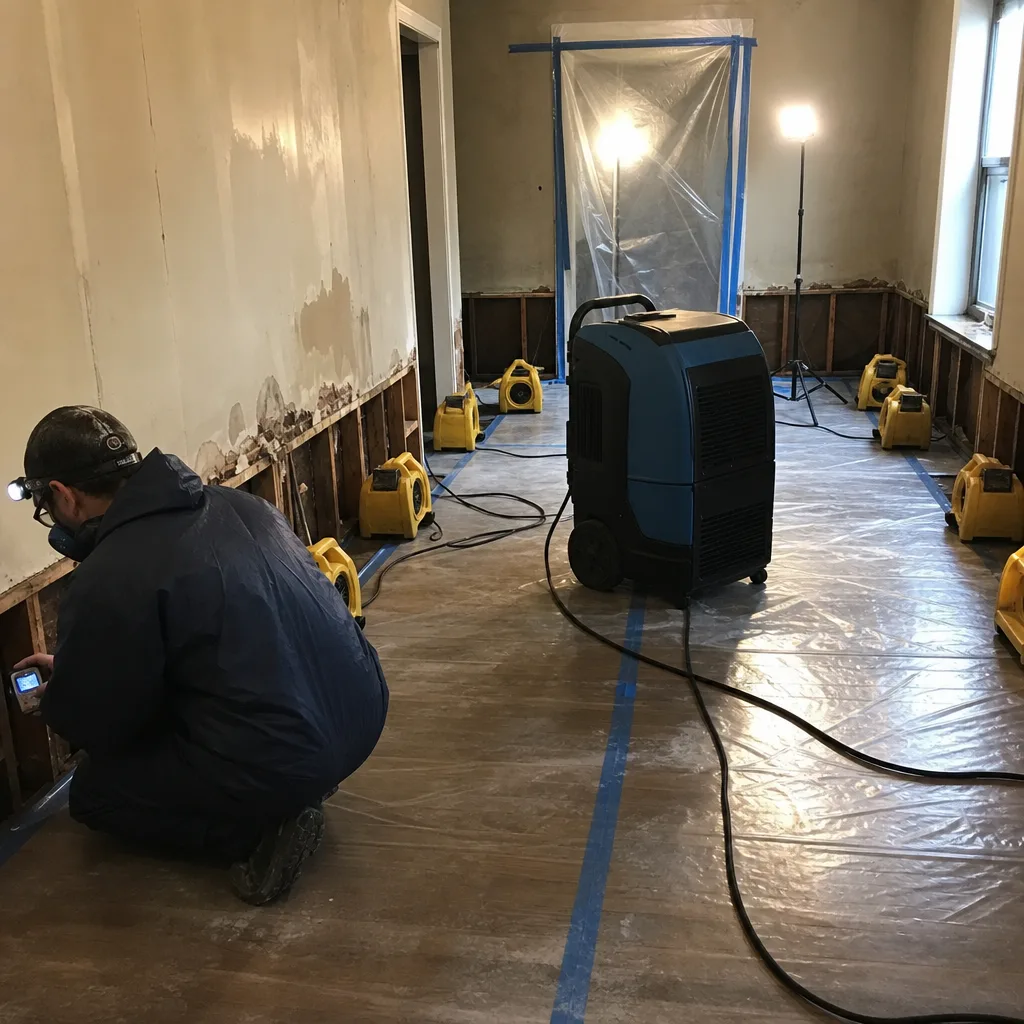
Stachybotrys gets the headlines, but in Hawthorne the black staining we most often find is Cladosporium or Alternaria feeding on damp drywall and ceiling tiles. We treat all toxigenic-looking growth with the same containment and clearance discipline: full negative air, HEPA scrubbing, and post-remediation verification before we hand the room back.
Air Quality Restoration
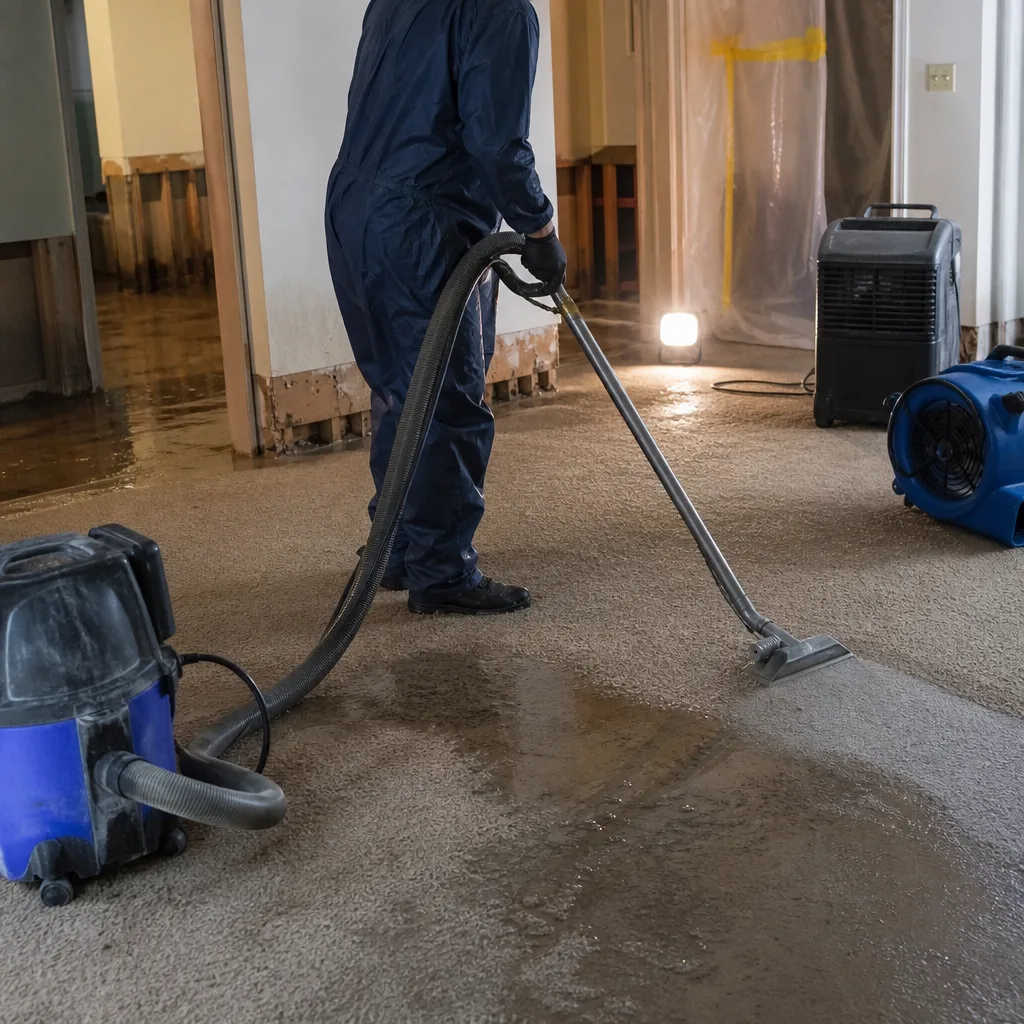
After the source is removed, the air itself needs work. We run HEPA air scrubbers during remediation and, where needed, after, to drop airborne spore counts. For Hawthorne homeowners with existing respiratory sensitivities, we can arrange post-clearance air sampling to confirm the indoor environment is back to normal.
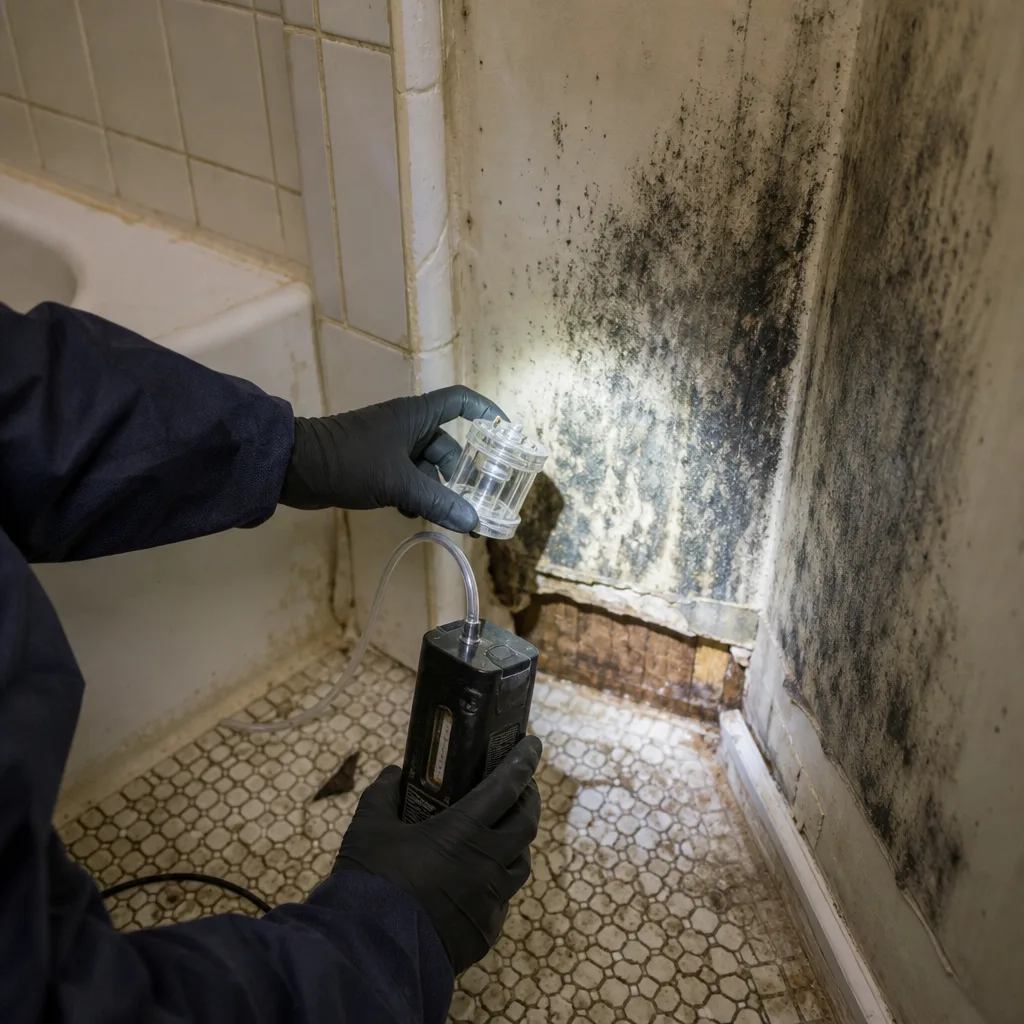
Crawl Space Treatment
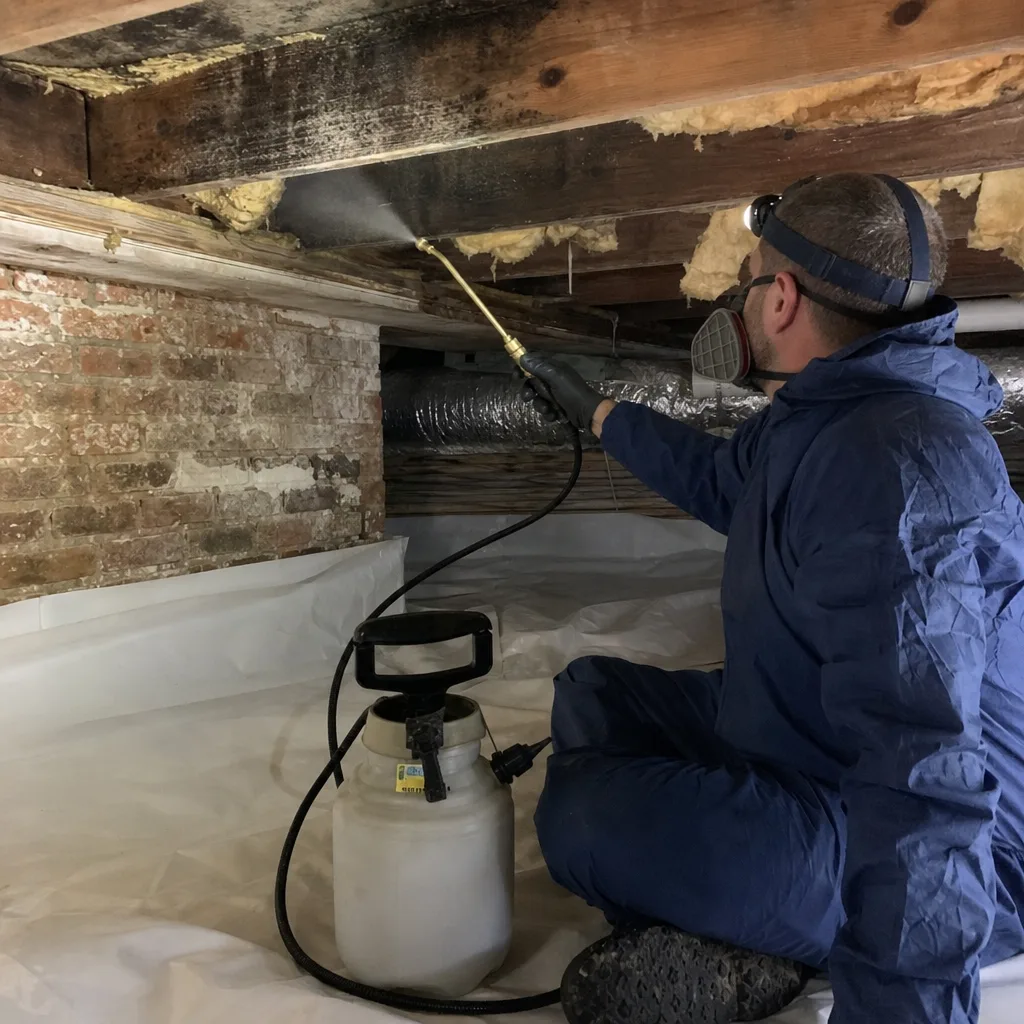
Hawthorne’s cape cods and ranches often have vented crawl spaces that pull humid summer air straight onto floor joists. We seal, insulate, and condition or dehumidify those spaces, and treat any fungal growth on the framing. A dry crawl space does more for the rest of the house than most people expect.
Moisture & Humidity Control
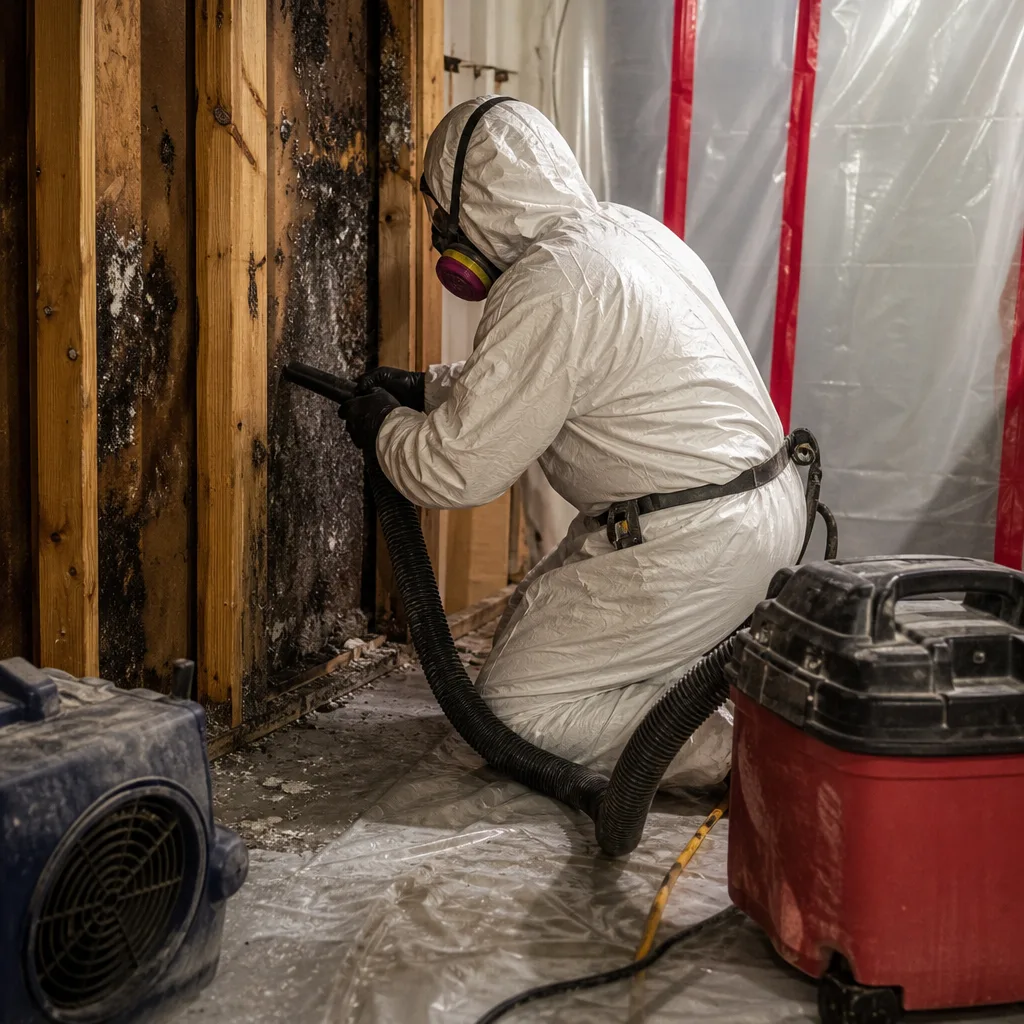
The mold may be gone, but the moisture that fed it is still there unless you address it. We install dehumidification systems, repair perimeter drains, and counsel on exterior grading and downspout routing. On Hawthorne’s hillside lots, this is the step that keeps a $4,000 remediation from becoming a $9,000 one next March.
What happens when you call
- 1
A real person answersNo phone trees - you reach a local pro.
- 2
You get an upfront price rangeHonest numbers before anyone is dispatched.
- 3
A background-checked tech heads outLicensed & insured, dispatched right away.
- 4
You approve before work beginsNothing starts until you say go.
Mold Remediation Costs in Hawthorne, NY
A contained bathroom or closet mold removal in Hawthorne typically runs $1,800 to $3,200. A full basement containment with drywall cut-out, HEPA scrubbing, and rebuild lands between $5,000 and $11,000 depending on square footage and whether we’re replacing framing or just drywall and insulation. Crawl space treatment usually runs $3,500 to $7,500 when it includes sealing and dehumidification.
Biggest cost drivers in Hawthorne are access and water source. A hillside basement with uphill groundwater pressure costs more to fix correctly than a flat-lot basement with a failed downspout, because the drainage correction is part of the job. Homes with knob-and-tube wiring add electrical scoping time before drying equipment goes in. Insurance covers mold remediation when it ties to a covered water event, and we help make that case with documentation. The free visual inspection gives you a firm written scope before anything starts. No surprises on the bill.
Seniors and veterans get 5% off, always. Any repair over $250 takes $50 off. And the $89 Seasonal Tune-Up is a good cheap way to catch a moisture problem before it becomes a mold problem.
We Also Serve Cities Near Hawthorne
Our crews cover the full Westchester corridor around Hawthorne every day, including Thornwood, Valhalla, Pleasantville, and Tarrytown. If you’re just over the line in any of those towns, the same dispatch board and the same live answer apply. Call (917) 924-4221 and a real person starts the truck rolling.
Serving Hawthorne, NY - Our Local Coverage Area
We’re based in the Hawthorne area and know this community well. Use the map below to see our service coverage - if you’re nearby, we can almost certainly help.
Hawthorne Mold Remediation Questions, Answered
Do mold remediation companies in Hawthorne need to follow different chemical rules than in White Plains?
Yes. Much of Hawthorne sits within NYC DEP watershed protection zones, which restrict the use of certain biocides, antimicrobials, and chemical drying agents that a contractor in White Plains or Yonkers could legally apply. A remediation crew working in Hawthorne must select treatment chemistry that complies with DEP restricted-substance rules, and using a non-compliant product can trigger enforcement action and force rework. Any firm doing mold work in Hawthorne should know exactly which products are allowed in your specific zone before they open a single wall.
Why does mold keep coming back in my Hawthorne basement even after professional remediation?
Because the water source was never eliminated. On Hawthorne’s hillside streets, the usual culprit is sustained uphill groundwater pressure against a block foundation, not a one-time leak the remediation crew can dry out and forget. The mold was removed, but the same moisture path that fed it re-wets the same materials within a season. The fix is exterior drainage correction: downspout extensions, regrading on the high side, or a curtain drain. Any remediation that ignores the groundwater is a temporary cleanup, not a cure. Call (917) 924-4221 and we’ll find the water first, then treat the mold.
How fast can mold grow after a water leak in a Hawthorne home?
Mold can begin colonizing wet drywall and cellulose materials within 48 to 72 hours in a Hawthorne basement, faster in summer when humidity is high. That’s why we treat every water event here as time-sensitive, even if the leak looks small. The window to dry materials before microbial growth takes hold is measured in days, not weeks. If you’ve had a leak and you smell must, call (917) 924-4221 for a free visual inspection before the bloom spreads.
Is mold testing necessary before remediation in Hawthorne, given the watershed restrictions?
Not always, but it’s often useful for two reasons. Testing identifies the genus and spore load, which tells us whether we’re dealing with a surface bloom or a colonized cavity. And in Hawthorne’s DEP watershed zones, testing documents what treatment chemistry is appropriate under restricted-substance rules, which protects you from a compliance problem later. We recommend testing when mold covers more than a small area, when musty odor has no visible source, or when a family member has respiratory sensitivity. The visual inspection comes free; sampling costs a few hundred and goes to a third-party lab.
Can you dry my Hawthorne basement without tearing out all the drywall?
Sometimes. If the drywall is salvageable, meaning no visible mold growth, no delamination, and moisture readings below the threshold, we can dry it in place with air movers and dehumidifiers. But drywall that has been wet for more than 48 hours, or that shows visible staining or mold, usually needs to come out at the floodline plus a margin. The thermal imaging and moisture mapping from the free inspection tell us which wall sections can stay and which have to go. No guesswork, no overselling.
How fast can you actually get to my Hawthorne house?
Usually within 45 minutes. Our live dispatcher starts the response the moment you call (917) 924-4221, and we keep crews staged across the Westchester corridor so Hawthorne calls don’t wait on a drive from another county. For active water events, faster is always cheaper: every hour the water sits, the more material we have to cut out and replace.
Can my family stay in the house during mold remediation?
For contained small-area jobs, usually yes. We seal the work area with poly and run negative-pressure HEPA air scrubbers so airborne spores don’t reach living space. For large basement colonizations, or when mold has spread through HVAC ducts, we may recommend temporary relocation while we work and until post-remediation air samples come back clean. We’ll tell you honestly at the inspection, and the written scope will say exactly which scenario applies to your house.
What should I do in the first 30 minutes after discovering mold in my Hawthorne home?
Stop the water source if you can do so safely, shut off the area from the rest of the house, and don’t disturb the mold by scrubbing at it. Disturbing a colony releases spores into the air. Don’t run a household fan in the room, because that spreads spores through the house. Then call (917) 924-4221. A live person answers, and we’ll walk you through what to do while a crew rolls toward Hawthorne.
Floodline Restoration Co. of Manhattan coordinates dispatch and scheduling from our New York City office, and our crews serve Hawthorne locally every day. The 90-Day Done Right Promise stands behind every job we do here, in writing. If it’s not done right, we make it right. That’s the Keystone Standard, and it applies to every Hawthorne basement, crawl space, and living room we work in.
Written by Curt Bowman, Owner at Floodline Restoration Co., serving Hawthorne and Westchester County since 2010.