

Free visual inspection and a written scope of work before any mitigation begins - photos, moisture readings, and drying logs go in your claim file
The scope we write is the scope we bill. Anything new gets shown to you, in writing, before we touch it.






 Before
 After
After Before
 After
After Before
 After
After24/7 Emergency Mold Remediation in Woodrow
Mold remediation in Woodrow typically costs $450-$2,400 for a contained removal of a bathroom or closet area, $2,800-$6,500 for a full basement wall system, and $7,000-$15,000+ when HVAC ducting and multiple rooms are involved. Most jobs in the neighborhood take two to five days from containment to clearance testing. If you’re seeing dark staining spreading across drywall, a musty smell that won’t leave, or family members with worsening allergies inside the house, call us at (917) 924-4221 right now. A live dispatcher answers, and a crew can reach most Woodrow streets within 45 minutes.
We don’t ask you to leave a message at 2 a.m. and hope someone calls back. Floodline Restoration Co. of Manhattan has run a live dispatch board since 2010, and the person who picks up can send a certified crew to your door the same day. Woodrow’s clay soil and low-lying drainage make mold a problem that compounds by the hour after any water event. The first step is a free visual inspection, no charge, no obligation.
Understanding Mold Remediation Severity in Woodrow Properties
Mold severity comes down to three things: how much water got in, how long it sat, and what the spores have colonized. A small patch behind a bathroom vanity is a different animal than mold moving through wall cavities in a 1960s Cape Cod with kraft-faced insulation and original plaster. Woodrow’s housing stock, built mostly between 1950 and 1985, is full of materials that hold moisture differently than modern construction. Plaster wicks water upward. Kraft paper facing on fiberglass insulation is essentially mold food once wet. Cast-iron and galvanized plumbing from that era develops pinhole leaks behind walls where you won’t see the problem for months.
We classify mold work by the square footage of affected surface area and whether the HVAC system has been involved. Anything over 10 square feet of visible mold typically requires full containment under IICRC S520 standards: negative air pressure, HEPA air scrubbers running, and sealed work zones so spores don’t migrate through forced-air ducts into the living space. In Woodrow specifically, we also check for the two failure modes most contractors skip: groundwater wicking through clay-heavy soil at the foundation line, and landfill-adjacent grade settlement that redirects stormwater toward the house, which is why our Woodrow Storm & Disaster Restoration team always inspects drainage patterns first. Miss either and the mold comes back after the next heavy rain.
Why Woodrow Property Owners Choose Floodline Restoration Co. of Manhattan
- 45-minute response commitment to Woodrow: our dispatch board tracks the nearest available crew and sends them straight to your street, not a call center queue.
- A real person answers, 24 hours a day: no phone tree, no “leave a message after the tone.” The dispatcher who answers knows the difference between a wet crawl space and a mold emergency.
- Certified to IICRC WRT, FSRT, and AMRT standards: the crew that shows up has documented training in water restoration, fire and smoke restoration, and applied microbial remediation.
- Free visual inspection with photo documentation: we photograph what we find, explain what’s urgent and what can wait, and hand you a written scope before any work starts.
- Direct insurance billing: we talk to your adjuster, submit the drying logs and line-item scope, and you never play messenger between us and the carrier.
- One team from first cut to final coat: we remediate the mold and rebuild what we removed. No handoff to a sub, no second crew learning the job from scratch.
Our Mold Remediation Process
Inspection & Assessment
We walk the property, map moisture readings with thermal imaging and hygrometers, and identify the water source feeding the mold. In Woodrow, that means checking foundation grade lines, gutter discharge, and the clay soil conditions around the perimeter, not just the visible staining.
Extraction/Stabilization
If standing water or sewage cleanup in Woodrow is needed, we remove saturated materials immediately. Wet drywall, carpet, and insulation come out. The goal in hour one is to stop the mold from spreading into new material.
Drying & Dehumidification
We run Dri-Eaz and Phoenix dehumidifiers with high-velocity air movers to pull moisture out of framing, subfloor, and wall cavities. Daily moisture readings are logged until the dry standard is met. You get a copy of the log, and so does your insurer.
Cleaning & Sanitization
HEPA air scrubbers run throughout the containment zone. Non-porous surfaces get scrubbed with antimicrobial treatments. Porous materials that can’t be cleaned get removed and replaced.
Containment & Air Scrubbing
Certified containment means physical barriers, negative air pressure, and continuous HEPA filtration. This is the step that separates a real mold remediation from a handyman with a bleach sprayer. Spores never reach your living room.
Repairs & Restoration
We rebuild what we removed: drywall, insulation, baseboards, flooring. The same crew that cut it out puts it back, and the work carries our 90-Day Done Right Promise in writing.
Need Emergency Mold Remediation in Woodrow Now?
Crews minutes away, answering live 24 hours a day. The sooner we start, the less it costs.
Working With Your Insurance Company
Mold remediation coverage depends almost entirely on the cause of the water intrusion and how your policy is written. A sudden pipe burst that gets reported and dried promptly is much more likely to be covered than mold from years of slow seepage. Either way, the paper trail matters. We document everything from the first hour: photos of the damage in every room, moisture readings before and after drying, daily logs showing the drying curve, and a line-item scope of work with clear pricing. We send it to your adjuster directly and answer their questions ourselves. You don’t get stuck playing phone tag between a restoration company and an insurance carrier. That’s the way Floodline has operated for 42 years in the restoration business, and it’s the way we handle every Woodrow claim.
What We Provide Your Insurer
- Thorough documentation of the loss
- Photos of all damage, room by room
- Moisture readings and drying logs
- A detailed, line-item scope of work
- Direct coordination with your carrier
Built for Woodrow’s Loss Calendar
Mold in Woodrow follows a predictable clock, and it’s tied to Staten Island’s seasons. January and February bring deep freezes that burst supply lines in unheated basements and crawl spaces in the ranch homes and split-levels along Woodrow Road and Bloomingdale Road. Water runs for hours before anyone notices. Spring thaw saturates the already slow-draining clay soil, and groundwater wicks up through foundation cracks in the pre-1980s Cape Cods that dominate the neighborhood. Summer thunderstorms dump inches of rain in an hour, overwhelming the older drainage systems near the Fresh Kills corridor and pushing water toward foundations that have settled unevenly since the landfill era. Late-summer hurricane remnants and fall nor’easters repeat the cycle. Every one of these events leaves moisture trapped behind finished basement walls, where mold colonizes kraft-faced insulation within 48 to 72 hours. The mold you discover in March or October usually traces back to water that entered months earlier. That’s why we moisture-map every Woodrow job, not just spray and repaint.
Mold Remediation Across Woodrow’s Neighborhoods
Woodrow isn’t one uniform grid. The homes near the intersection of Woodrow Road and Maguire Avenue tend to be post-WWII Capes and ranches with partially finished basements, and we see recurring spring moisture problems there tied to the old clay tile foundation drains. Over by Bloomingdale Road, the split-levels from the 1960s and 70s often have crawl spaces with exposed kraft-faced insulation that stays damp through every humid Staten Island summer. Along Clay Pit Road and the streets east toward the former landfill boundary, we regularly diagnose drainage quirks that trace back to landfill-adjacent soil settlement: grades that slope toward the house, downspouts that discharge against the foundation, slab edges that have dropped an inch or more. Homes close to Freshkills Park can hold moisture in the soil profile long after surface water drains away. And the stretch of Woodrow near the Arthur Kill corridor deals with persistent humidity that keeps crawl space wood at mold-friendly moisture levels from June through September. Each area needs a slightly different remediation approach, and we scope each job accordingly.
Specialized Mold Remediation Services We Offer in Woodrow
Mold Inspection & Testing
Before any remediation, you need to know what you’re dealing with and where the water is coming from. Our Mold Remediation inspections in Woodrow include thermal imaging scans of wall cavities, moisture readings at the foundation line, and an assessment of whether landfill-adjacent grade settlement is contributing to water intrusion. If lab analysis is warranted, we can collect samples and coordinate testing through an independent lab.
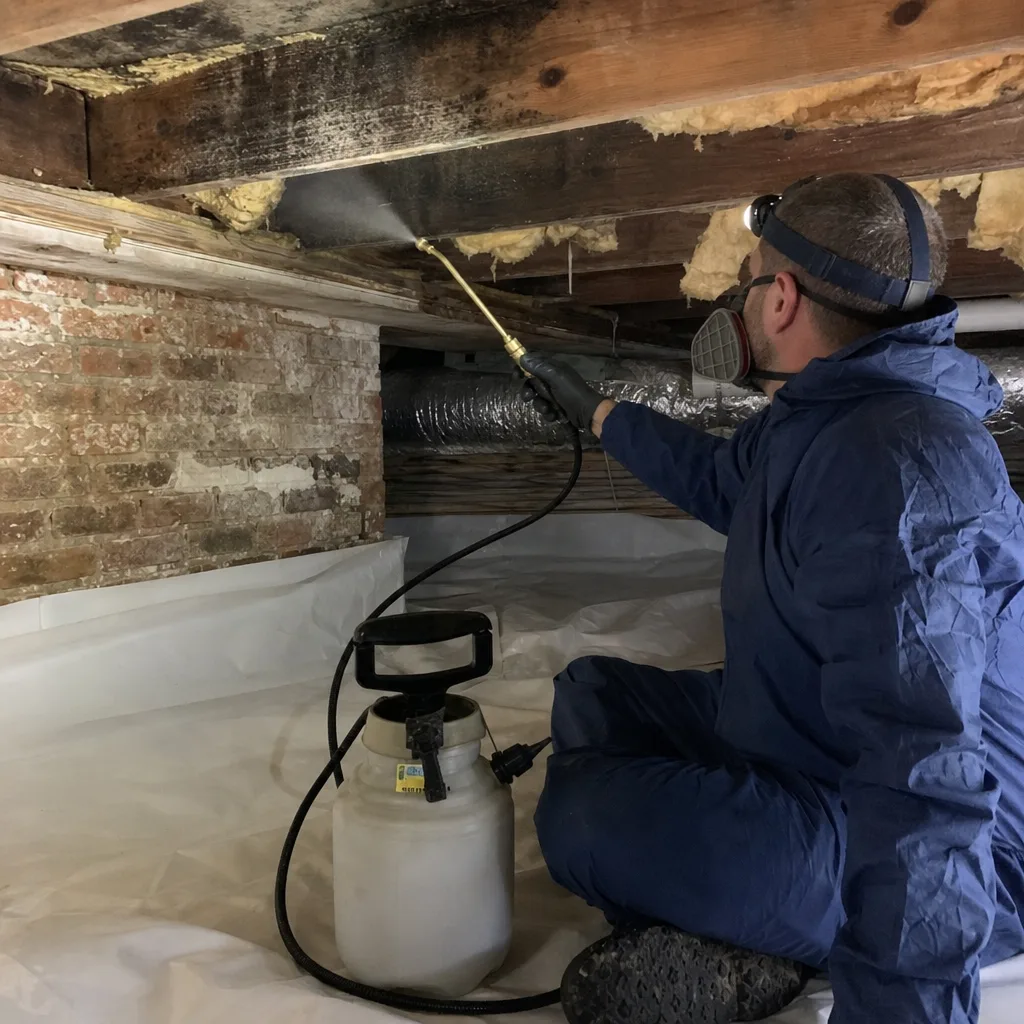
Mold Removal
Removal means physically cutting out and disposing of contaminated material under containment. In Woodrow’s older homes, that often means taking out decades-old drywall and insulation that has been damp since Hurricane Sandy. We run HEPA air scrubbers throughout the job and dispose of contaminated materials per NYC Department of Environmental Protection requirements.
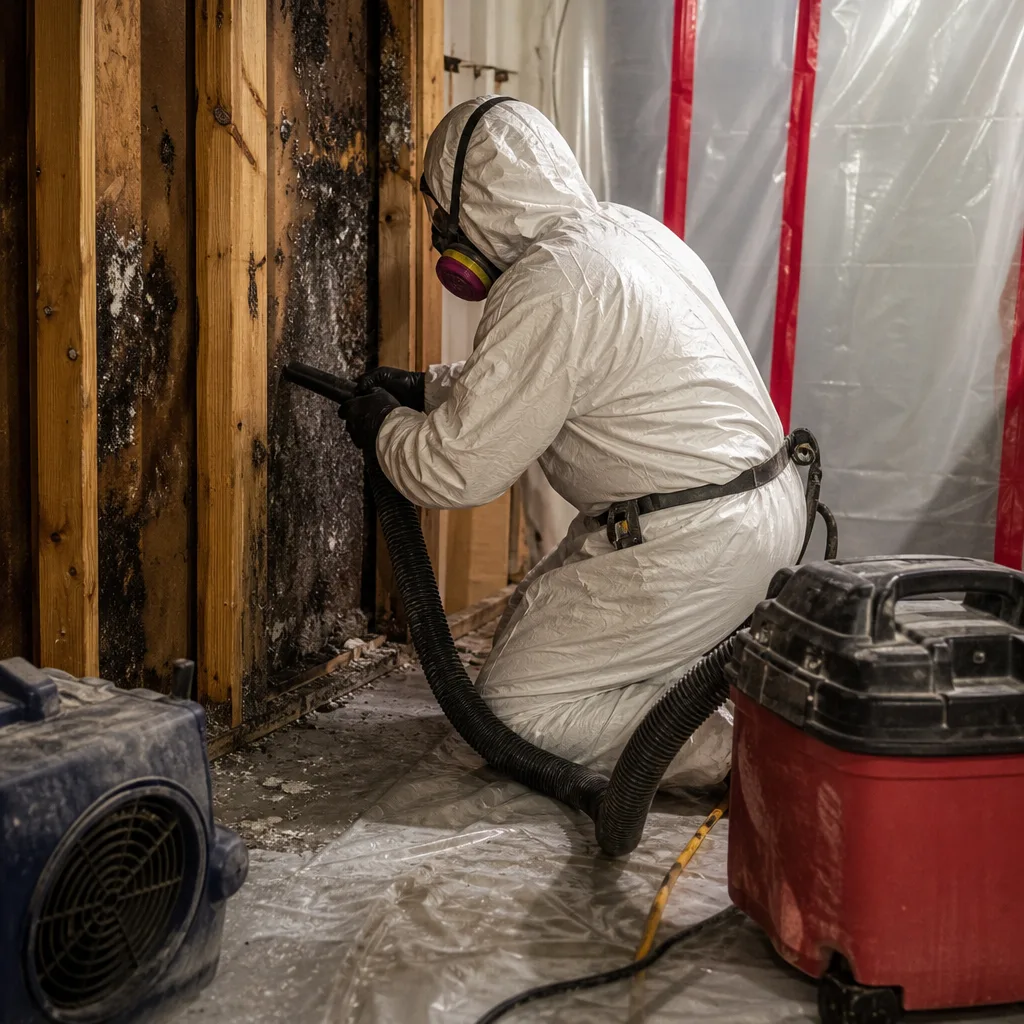
Black Mold Remediation
Stachybotrys chartarum, the mold people call black mold, needs prolonged moisture to colonize, which makes slow foundation leaks in Woodrow’s clay-rich soil a prime culprit requiring biohazard & crime scene cleanup - Woodrow protocols for safe removal. Greenish-black staining on drywall or ceiling tiles should be treated as a serious problem, not something to paint over. We contain the affected area, remove porous materials, and treat structural framing with antimicrobials before rebuilding.
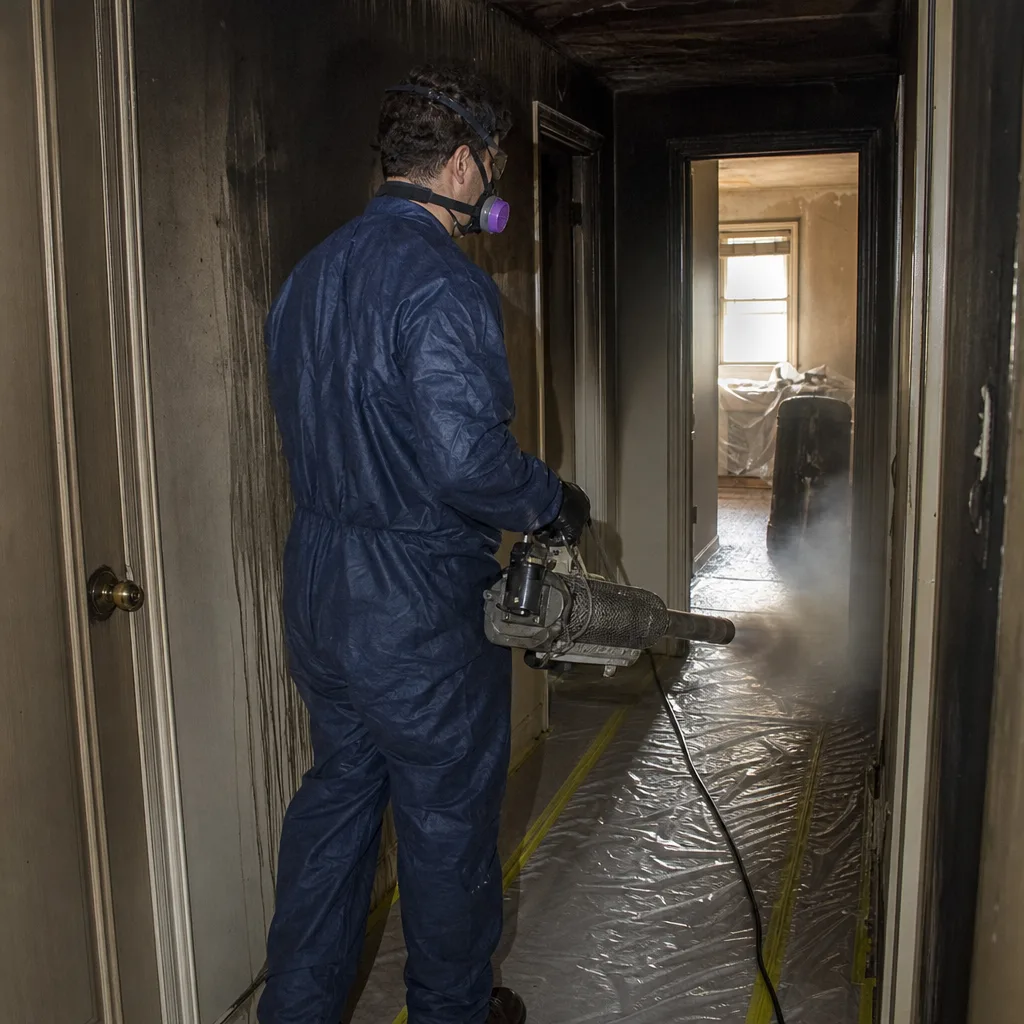
Air Quality Restoration
After physical remediation, airborne spore counts need to come down to safe levels. We run professional-grade HEPA air scrubbers and, where needed, fog the contained space with EPA-registered antimicrobials. Post-remediation air samples from an independent lab give you written confirmation that the job cleared.
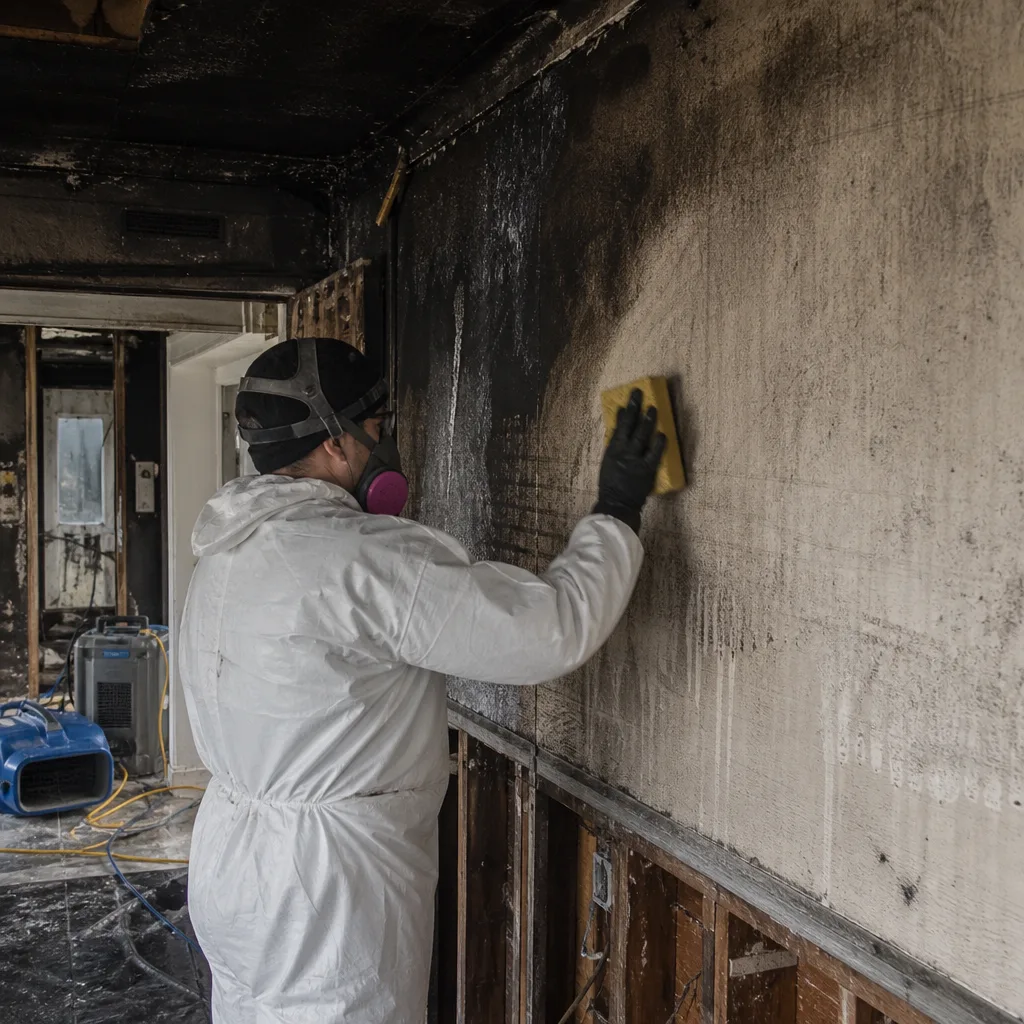
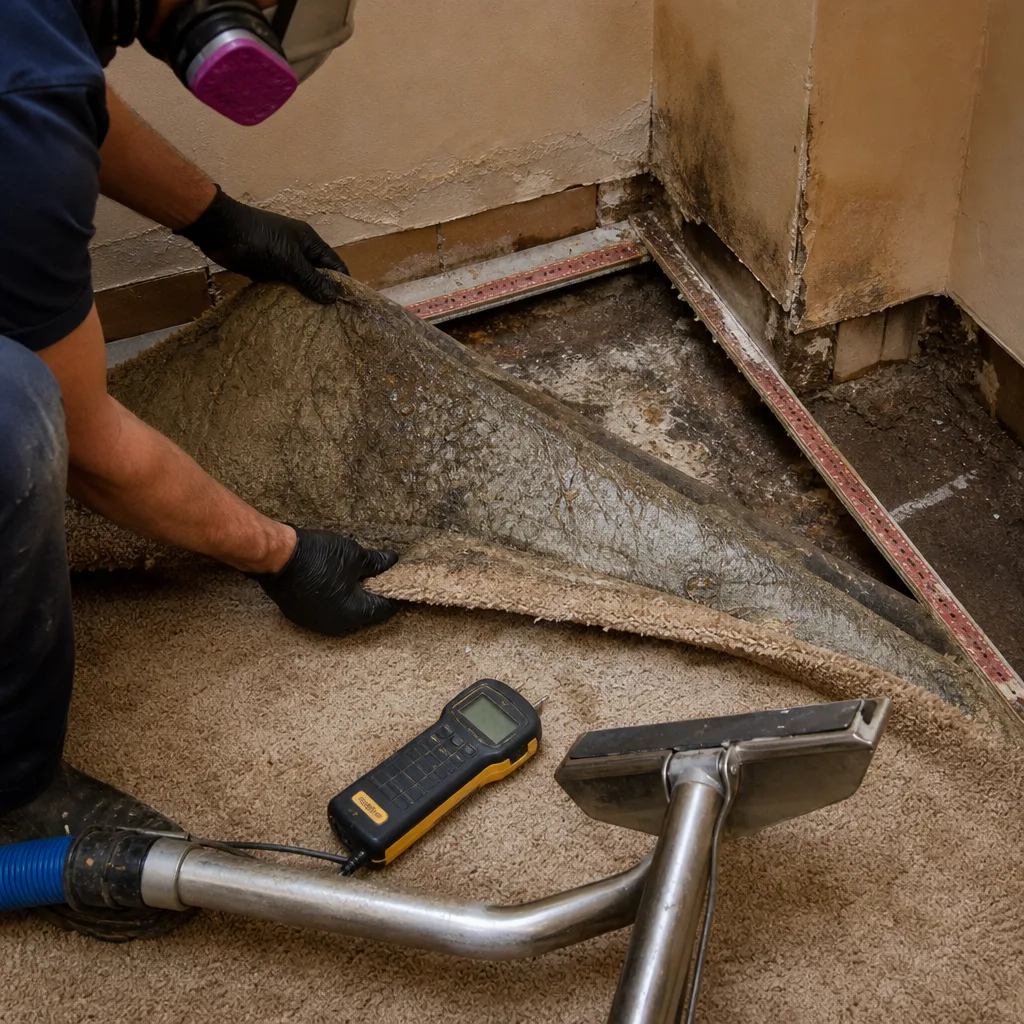
Crawl Space Treatment
Woodrow crawl spaces under ranch homes and split-levels are damp by default: clay soil, coastal humidity, and minimal venting. We install vapor barriers, seal rim joists, and where appropriate set up moisture-control systems like dehumidifiers sized for the square footage. Crawl space mold feeds the house above through stack effect air movement, so this isn’t a cosmetic fix.
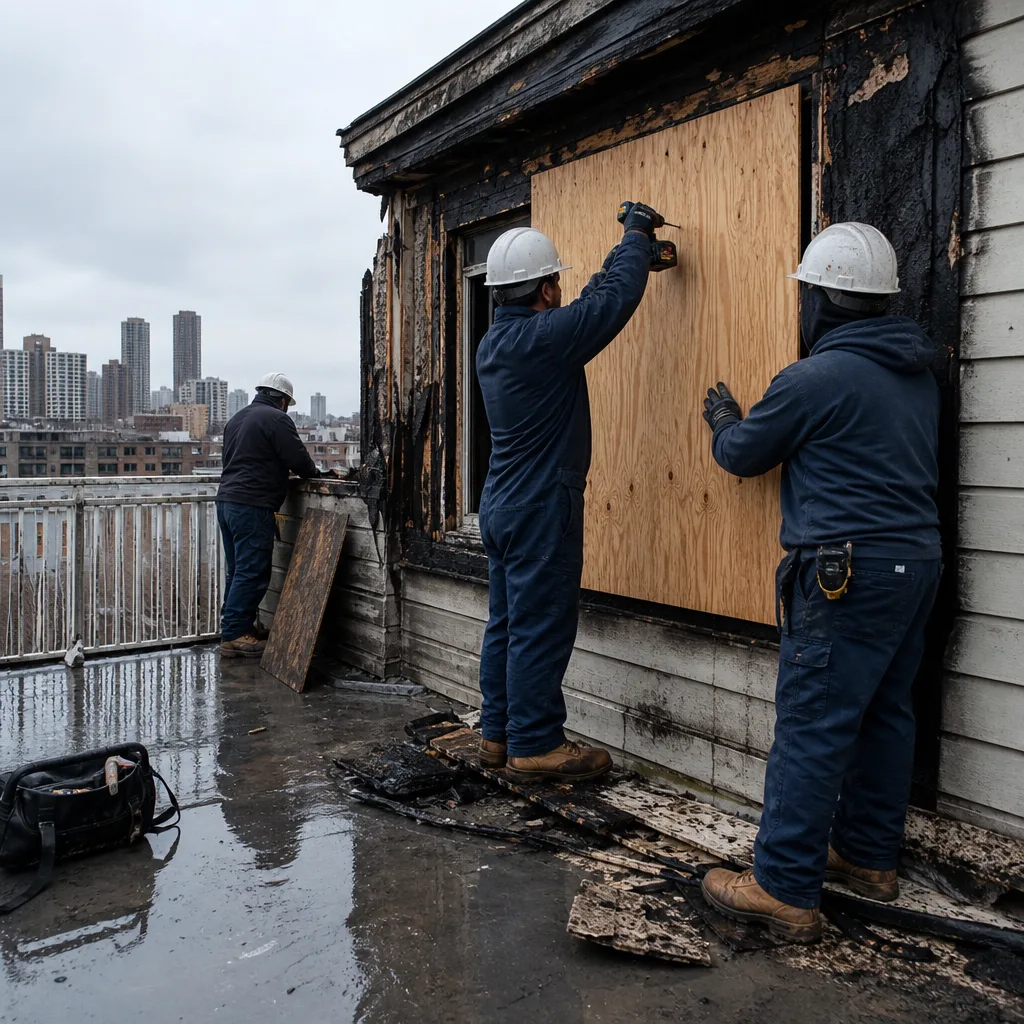
Moisture & Humidity Control
Mold remediation that doesn’t fix the moisture source is a temporary patch. In Woodrow, that can mean regrading a foundation edge, rerouting downspouts, installing a sump pump, or mounting a whole-crawl-space dehumidifier. We scope the moisture fix as part of the remediation plan, not as an add-on to bill later.
What happens when you call
- 1
A real person answersNo phone trees - you reach a local pro.
- 2
You get an upfront price rangeHonest numbers before anyone is dispatched.
- 3
A background-checked tech heads outLicensed & insured, dispatched right away.
- 4
You approve before work beginsNothing starts until you say go.
Mold Remediation Costs in Woodrow, NY
Real numbers, not vague ranges. A contained mold removal in a single bathroom or closet in Woodrow runs $450-$1,200. A full basement wall with containment, HEPA scrubbing, and rebuild of removed drywall runs $2,800-$6,500 depending on square footage and whether HVAC ducting was involved. Whole-crawl-space remediation with vapor barrier installation runs $4,000-$9,000. Black mold remediation with lab testing on both ends typically adds $500-$1,200 for the independent lab work. What moves the price: whether we need full containment, how much drywall and insulation comes out, whether the moisture source requires foundation work or drainage correction, and whether the HVAC system needs cleaning. The free visual inspection in Woodrow gives you a firm, line-item scope before you spend anything. And we bill your insurer directly when coverage applies, which keeps your out-of-pocket as low as your policy allows.
We Also Serve Cities Near Woodrow
Floodline crews also respond to Woodrow-adjacent communities including Fairview, Harrison, East Bronx, and Hunts Point. Same live dispatch, same 45-minute response commitment, same written scope before work starts. If you’re within 20 minutes of our Woodrow routes, the drive time doesn’t change the urgency of what we do.
Woodrow Mold Remediation Questions, Answered
Our Woodrow basement has mold near the foundation wall every spring. Is this just high humidity, or should we be checking for water intrusion from the clay soil?
If the mold returns every spring in the same spot, it’s almost certainly water intrusion, not just humidity. Woodrow’s clay-heavy soil holds moisture against foundation walls through the warm months. We see this pattern constantly in Capes and ranches where the exterior grade has settled over decades. The fix requires finding the actual water path: a hidden crack, a failed drain tile, or a grade issue from landfill-adjacent settlement. Cleaning the mold without fixing that is a temporary patch. Call (917) 924-4221 for a free inspection with thermal imaging and moisture mapping.
Does mold remediation in Woodrow need any special NYC building department permits or inspections?
Mold remediation itself does not require a DOB permit in most cases, but any structural repair that follows it (rebuilding walls, replacing framing, waterproofing) falls under NYC Department of Buildings rules. If we’re cutting into load-bearing structure or making changes to drainage systems, we handle the permit paperwork. Woodrow sits entirely within the NYC DOB jurisdiction, so contractors who work across the Arthur Kill in New Jersey don’t operate under the same code requirements. We do. We’re familiar with the local inspection process and can coordinate it as part of the job.
Our home is within a mile of Freshkills Park. Could old landfill settlement be making our basement wetter than normal?
Yes, and we’ve seen it enough in Woodrow to look for it specifically. Homes built before the landfill closed can sit on ground that has settled unevenly over decades. That settlement changes the grade around foundations, redirecting stormwater toward the house instead of away from it. It also stresses older foundation walls, creating hairline cracks that admit groundwater. This isn’t something a standard mold inspection checks for unless the contractor knows the neighborhood. We check for it on every Woodrow job because it’s a known local condition. Give us a call to have the grade and moisture profile assessed.
After Hurricane Sandy, we had mold ‘cleaned’ by a handyman, but it came back. What was missed?
Almost certainly the moisture source was never found, and the contaminated material wasn’t fully removed. Sandy drove salt water into wall cavities and under slabs across Staten Island, and Woodrow’s clay soil held that moisture for months after surface water receded. A surface cleaning kills visible mold but leaves spores in the wall cavity and moisture in the framing. We find this pattern regularly: a 1960s Cape where someone bleached the drywall, repainted, and sold the house. Six months later, mold is through the insulation. Proper remediation requires finding the water path, opening the affected area, drying to the dry standard, and removing contaminated material. Anything less fails. We offer a free inspection for Woodrow homeowners who had prior remediation that didn’t hold.
We see greenish-black spots on our crawl space beams but no standing water. Is that black mold, and can it wait?
It could be Stachybotrys, and it shouldn’t wait. Crawl space beams don’t need standing water to grow mold. Woodrow’s coastal humidity keeps crawl space wood at mold-friendly moisture levels through the summer, especially under ranch homes with minimal venting. What you’re seeing is the visible sign of a moisture problem that’s been building for years. Left untreated, the mold feeds on the wood and can weaken structural members over time. And stack effect means the air in your crawl space ends up in your living room. We can scope a crawl space treatment and inspection for you, including moisture readings and a written plan. Call (917) 924-4221.
How fast can you actually get to a Woodrow address in an emergency?
We commit to 45 minutes for most Woodrow streets. The dispatch board shows the nearest available certified crew, and the dispatcher sends them straight to you while you’re still on the phone. No callbacks, no waiting for a regional office to schedule something. Floodline has run live dispatch since 2010, and we answer the phone with a person at 2 a.m. just like we do at 2 p.m.
Will my insurance cover mold remediation in Woodrow?
It depends on your policy language and the water source that caused the mold. A sudden pipe burst or storm-related intrusion is much more likely to be covered than long-term seepage. What we do is document everything from day one, send the full package to your adjuster, and bill the carrier directly whenever coverage applies. That takes the negotiation off your plate. Ask us during the inspection and we’ll give you an honest read on how your specific situation lines up with typical mold exclusions and coverage limits.
What should I do in the first 30 minutes after finding mold in my Woodrow home?
Don’t disturb it. Don’t wipe it, don’t spray bleach, don’t run a fan on it. Disturbing mold releases spores into the air where they spread through the house. Close the door to the affected room if you can. Shut off the HVAC system to prevent spore circulation through ducts. If there’s an active water source, shut off the water supply to that area. Then call (917) 924-4221. The faster we get containment and drying started, the less material has to be removed and the lower the total cost.
Serving Woodrow, NY - Our Local Coverage Area
We’re based in the Woodrow area and know this community well. Use the map below to see our service coverage - if you’re nearby, we can almost certainly help.
Mold Remediation in Woodrow: What Most Contractors Miss
Woodrow sits in a unique position on Staten Island’s southwestern interior, within a mile of the former Fresh Kills landfill boundary and surrounded by tidal wetlands along the Arthur Kill and Fresh Kills corridors. The neighborhood’s dense clay soils drain slowly. The water table sits high near those wetland edges. And the lasting structural legacy of Hurricane Sandy, which killed 23 people on Staten Island in 2012, left many Woodrow homes with moisture intrusion that was never properly dried. Put those three conditions together and you get a neighborhood where mold recurs because the underlying moisture problem was never diagnosed, not because the previous cleaning was sloppy.
Most mold contractors from outside the area don’t know Woodrow’s pre-remediation-era drainage quirks. They don’t know that landfill-adjacent soil settlement has redirected stormwater toward foundations in ways that don’t show on a standard visual inspection. They don’t know that clay-heavy soil holds groundwater against foundation walls for weeks after a rain event. Our crews do, because we’ve been working Mold Remediation in Woodrow long enough to map where the water actually comes from. We also work under the NYC Department of Buildings permit regime, the same code compliance that doesn’t apply to contractors working across the Arthur Kill in New Jersey.
Written by Curt Bowman, Owner at Floodline Restoration Co. of Manhattan, serving Woodrow since 2010.