
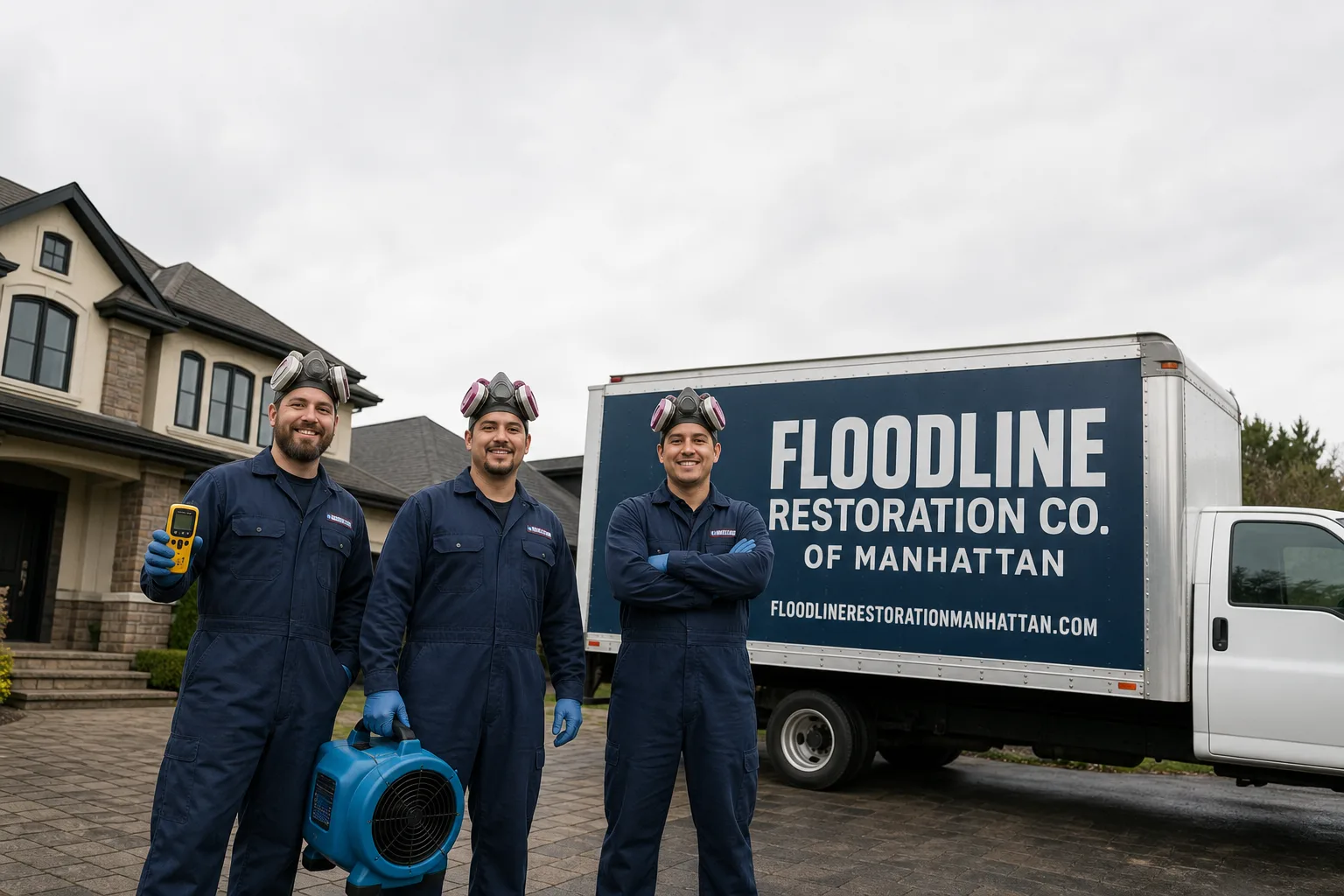
Free visual inspection and a written scope of work before any mitigation begins - photos, moisture readings, and drying logs go in your claim file
The scope we write is the scope we bill. Anything new gets shown to you, in writing, before we touch it.






 Before
 After
After Before
 After
After Before
 After
After24/7 Emergency Reconstruction & Cleanup in Bayside
When a finished basement on Bell Boulevard takes on Little Neck Bay surge water at 2 a.m., or a burst galvanized supply line floods a 1930s Colonial on Northern Boulevard, the first call should reach a live person. Ours does. Floodline Restoration Co. of Manhattan answers 24 hours a day, every day, and dispatches crews into Bayside immediately. Call (917) 924-4221 the moment water, fire, or demolition dust appears. We do a free visual inspection, map the damage, and start extraction on the same visit. The first hour matters because water wicking into plaster-and-lath walls begins breaking down gypsum and wood fiber almost immediately. A delay of six hours can mean the difference between drying a wall in place and gutting it to studs. In a neighborhood where homes date from the 1920s through the 1950s, that difference is expensive.
Understanding Reconstruction & Cleanup Severity in Bayside Properties
Reconstruction in Bayside means working inside homes built before modern building science existed. That changes how we classify and handle every loss. Water damage gets categorized by contamination level: Category 1 is clean supply-line water, Category 2 carries detergents or biological matter from appliances and sump pits, and Category 3 is grossly contaminated floodwater or sewage. In Bay Terrace, surge from Little Neck Bay is nearly always Category 3, which triggers full antimicrobial treatment and disposal of any saturated porous material that cannot be thoroughly dried and disinfected. Fire damage carries its own severity ladder: light soot from a kitchen pan fire sits at the low end, while protein smoke from a stove fire can become nearly invisible but corrosive to metal fixtures within days. Wet smoke from a slow-smoldering fire embeds in plaster walls and often requires full odor sealing. Then there is the one factor virtually every legacy Bayside home introduces: pre-1980 materials. Asbestos floor tiles, vermiculite attic insulation, and oil-based lead paint shift a Category-2 water job into a regulated abatement-and-reconstruction project before drying equipment touches the room. That sequence is rare in newer developments. In Bayside, it is the norm.
Why Bayside Property Owners Choose Floodline Restoration Co. of Manhattan
- 45-minute response commitment for Bayside calls. Our Queens-based crews are staged to reach Bell Boulevard, Northern Boulevard, and Crocheron Avenue fast, and we say when we will arrive, then show up.
- A live dispatcher answers at all hours. You call (917) 924-4221 at 2 a.m. and talk to a person who can start a work order right then, not a recording telling you to leave a message.
- IICRC-certified technicians running WRT, FSRT, and AMRT protocols. Every crew member is background-checked, uniformed, and trained to the restoration industry’s written standards.
- Free visual inspection with thermal imaging and moisture mapping. We find hidden water behind plaster walls and under finished floors before your insurance adjuster ever sees the job.
- Direct insurance billing and adjuster coordination. We submit photo documentation, drying logs, and a line-item scope of work straight to your carrier so you are not the messenger.
- One team from first extraction to final nail. The same certified crew that reads the moisture map on day one dries the structure, documents it, and rebuilds what needs rebuilding. No mid-job handoff. Ever.
Our Reconstruction & Cleanup Process
Inspection & Assessment
We arrive within 45 minutes of your call and walk the full loss area with thermal imaging and hygrometers. For Bayside homes built before 1980, we check for asbestos floor tiles, popcorn ceilings, and lead-paint surfaces before any demolition decision is made. You get a written scope of work, not a verbal estimate.
Extraction & Stabilization
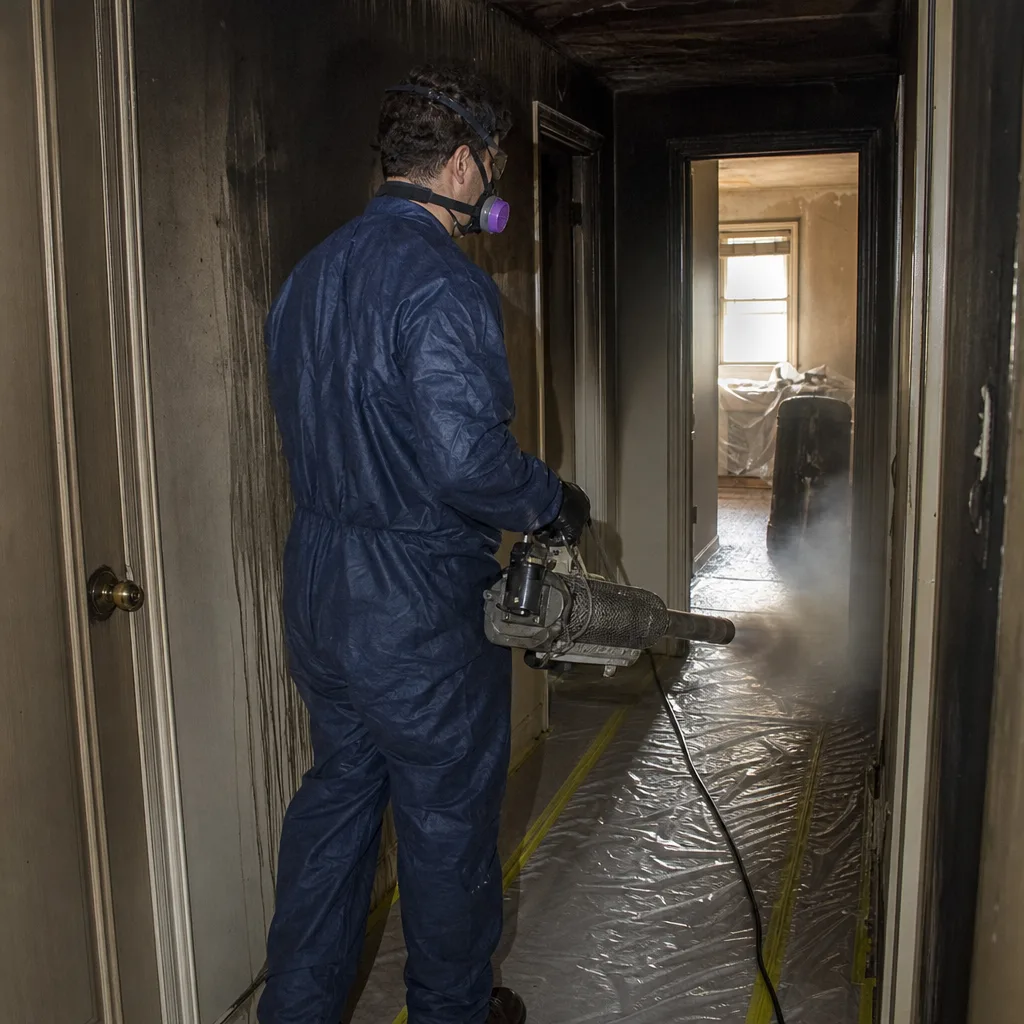
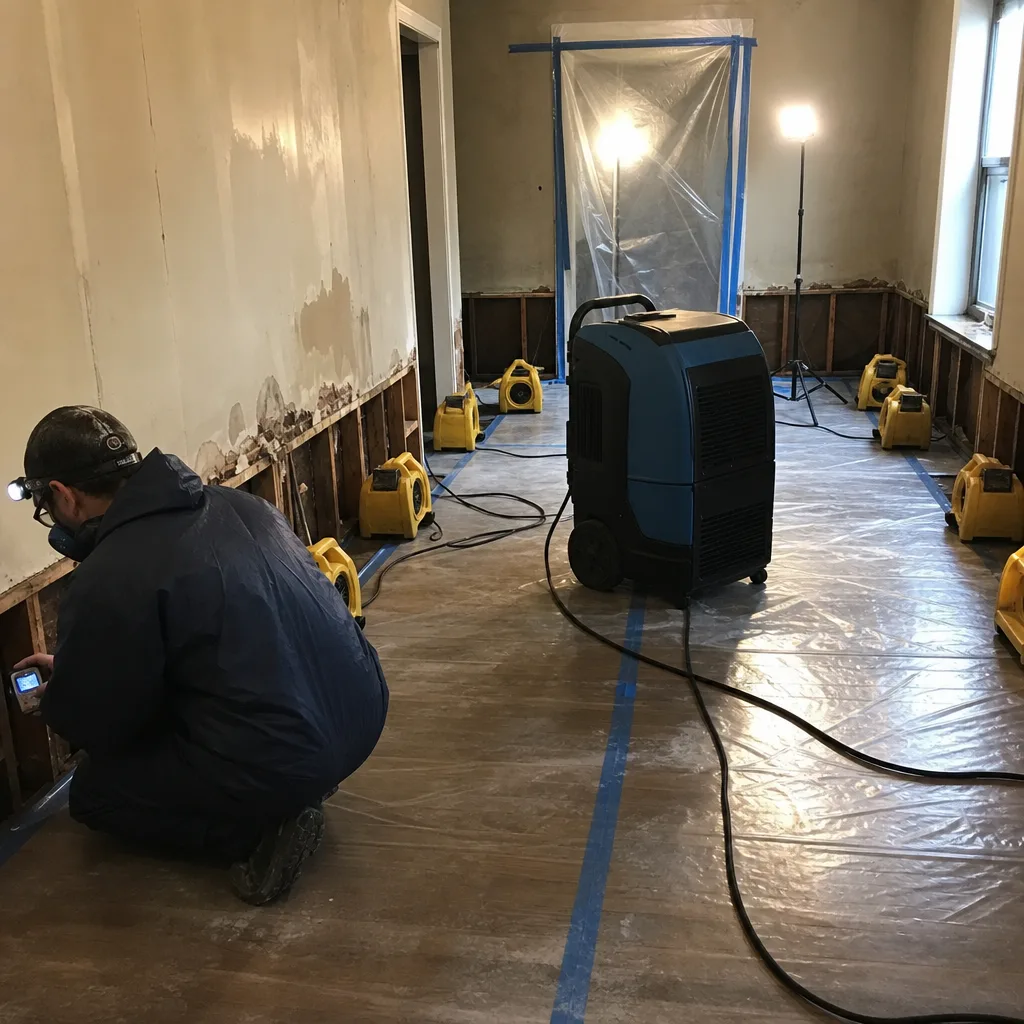
Standing water is removed with truck-mounted extraction equipment immediately. If the water is Category 3 from bay surge or sewage, we set containment barriers and begin antimicrobial applications. Damaged drywall and flooring are removed only under proper containment if legacy materials are present.
Drying & Dehumidification
We run professional-grade Dri-Eaz and Phoenix air movers and dehumidifiers and take daily moisture readings with a written log. Plaster-and-lath walls need slower, lower-heat drying than modern drywall; we adjust airflow and dew point to preserve what we can. Drying logs go to you and your insurer.
Cleaning & Sanitization
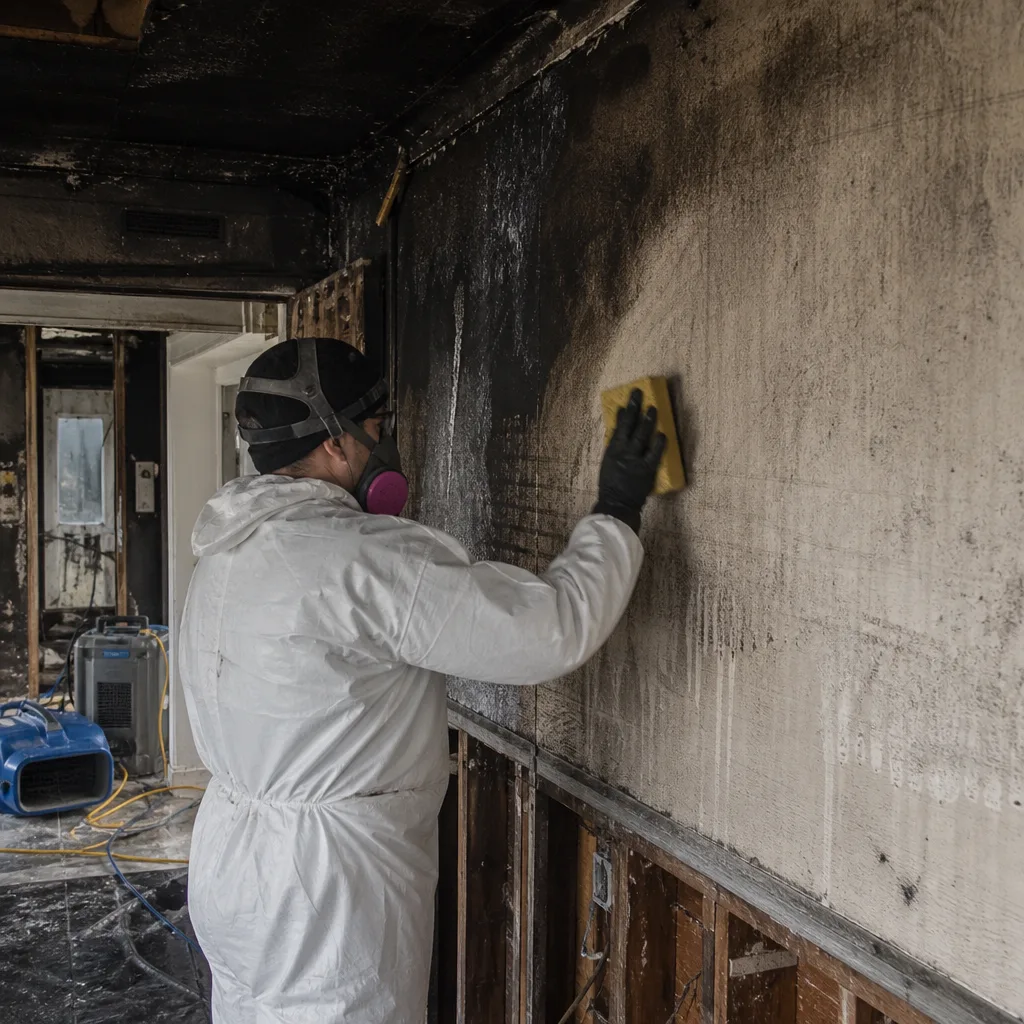
All affected surfaces are HEPA-vacuumed, cleaned, and treated with the appropriate antimicrobial for the water category. For smoke-damaged framing, we apply odor-sealing primers that stop soot smell from re-emerging through fresh paint. Contents are cleaned at our facility or on-site, depending on material and condition.
Contents & Specialty Treatment
Pack-out begins only after we know what is restorable. Porcelain, metal, and solid wood from a 1930s Bayside dining room often restore beautifully. Pressboard furniture and waterlogged upholstery usually do not. We photograph everything, document condition, and store contents in a climate-controlled facility while your home is rebuilt.
Repairs & Restoration
Drywall, flooring, trim, paint, cabinetry: our reconstruction crews put the home back to pre-loss condition under current NYC code. That includes electrical and framing inspections where old wiring and balloon-frame construction are involved. The job ends with a sign-off, not a punch list you have to chase.
Need Emergency Reconstruction & Cleanup in Bayside Now?
Crews minutes away, answering live 24 hours a day. The sooner we start, the less it costs.
Working With Your Insurance Company
Most Bayside homeowners dealing with a flooded finished basement or a kitchen fire have never filed a restoration claim. We handle the paperwork from hour one. Photo documentation starts before extraction, not after. Moisture readings are logged and dated. A detailed, line-item scope of work gets submitted using the same estimating format your carrier uses, so the adjuster can read it without extra back-and-forth. We speak to the adjuster directly. You do not translate decisions between us and your insurance company. The 90-Day Done Right Promise stays in effect through the end of the claim, and we bill the carrier directly where coverage applies.
What We Provide Your Insurer
- Thorough documentation of the loss
- Photos of all damage, room by room
- Moisture readings and drying logs
- A detailed, line-item scope of work
- Direct coordination with your carrier
Built for Bayside’s Loss Calendar
Bayside’s damage pattern follows the bay, the age of its housing stock, and the season. January and February bring deep freezes that burst uninsulated galvanized supply lines in balloon-frame exterior walls, especially along Bay Terrace and the streets running down toward Little Neck Bay. We see those calls most often in Cape Cods and Colonials built between 1930 and 1955. March and April bring thaw and saturated ground, pushing groundwater into finished basements through foundation cracks and old fieldstone footings. Summer thunderstorms hit fast and hard, overwhelming the combined sewers on Northern Boulevard and flooding low-lying blocks near the Cross Island Parkway. Nor’easters in October and November drive bay surge into the waterfront streets, and that water is almost never clean. Then the cycle repeats. A Bayside homeowner with an older home should expect one of these loss events roughly every three to five years, which means the questions we answer on this page will come up again. Better to have a company on file now than a flooded basement and no phone number at midnight.
Reconstruction & Cleanup Across Bayside’s Neighborhoods
Bay Terrace is the waterfront section where Little Neck Bay surge enters basements directly, and it is also where our crews most often encounter 9×9 asbestos floor tiles and popcorn ceilings that turn a water job into a DEP-notified abatement project. Bell Boulevard runs through the heart of the neighborhood, and we run Bell Boulevard on every surge call. North of Northern Boulevard, the older Colonials and Tudors hold plaster-and-lath walls that hide moisture well, so we map them aggressively before declaring a structure dry. Around Crocheron Park and the streets running toward the bay, homes sit lower in the floodplain and finished basements function as living space, storage, and home offices, so a flood there is a contents restoration project as much as a structural one. Further east toward 211th Street and the Little Neck line, newer mid-century construction still predates modern waterproofing, and basement seepage shows up there as the slow, persistent kind of damage that eventually warps flooring and rots sill plates. Each pocket of Bayside has a different failure mode. We know them because we work them every season.
Specialized Reconstruction & Cleanup Services We Offer in Bayside
Full-Service Reconstruction
When a Bayside basement is gutted to studs or a kitchen fire burns through plaster, we rebuild it. That means drywall to current code, flooring, trim, cabinets, paint, and millwork that matches the home’s period character. Older Bayside homes often have non-standard wall thicknesses and original woodwork; our crews replicate profiles rather than slapping in modern off-the-shelf trim that looks wrong. The same team that tore out the damage finishes the rebuild. No new faces halfway through.
Drywall & Flooring Repair
Plaster-and-lath walls need a different drying and repair approach than modern drywall. We preserve what is restorable and replace what is not, matching the plaster thickness and finish so the repair does not telegraph through paint. For floors, we work with the original subfloor where possible. 1920s pine subfloors often survive a flood if dried correctly within the first 48 hours.
Contents Restoration & Pack-Out
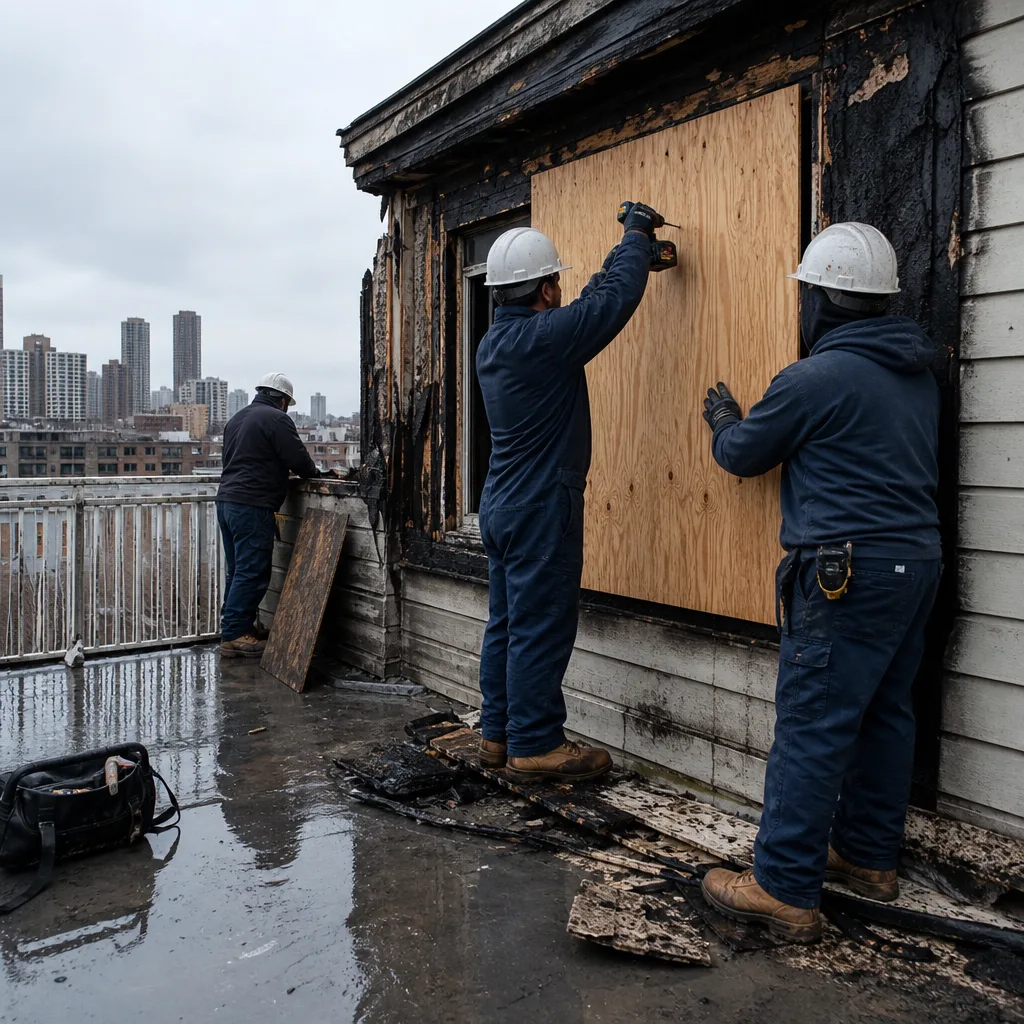
Bayside basements hold furniture, photo albums, tools, and holiday decorations. When we have to gut a finished basement, we inventory, photograph, pack, and store everything that can be saved. Contents are cleaned, dried, and restored at our facility, with ultrasonic cleaning for metals and hand-cleaning for fragile pieces. You get a written inventory. Every item is tracked.
Carpet & Upholstery Cleaning
For lower-severity losses, or as part of a larger reconstruction, we clean carpets and upholstery on-site using truck-mounted hot water extraction. Category 2 and Category 3 water often ruins carpet beyond reasonable restoration, and we tell you honestly when cleaning is not worth it. We do not clean a carpet we should be replacing, because it will smell like the flood forever.
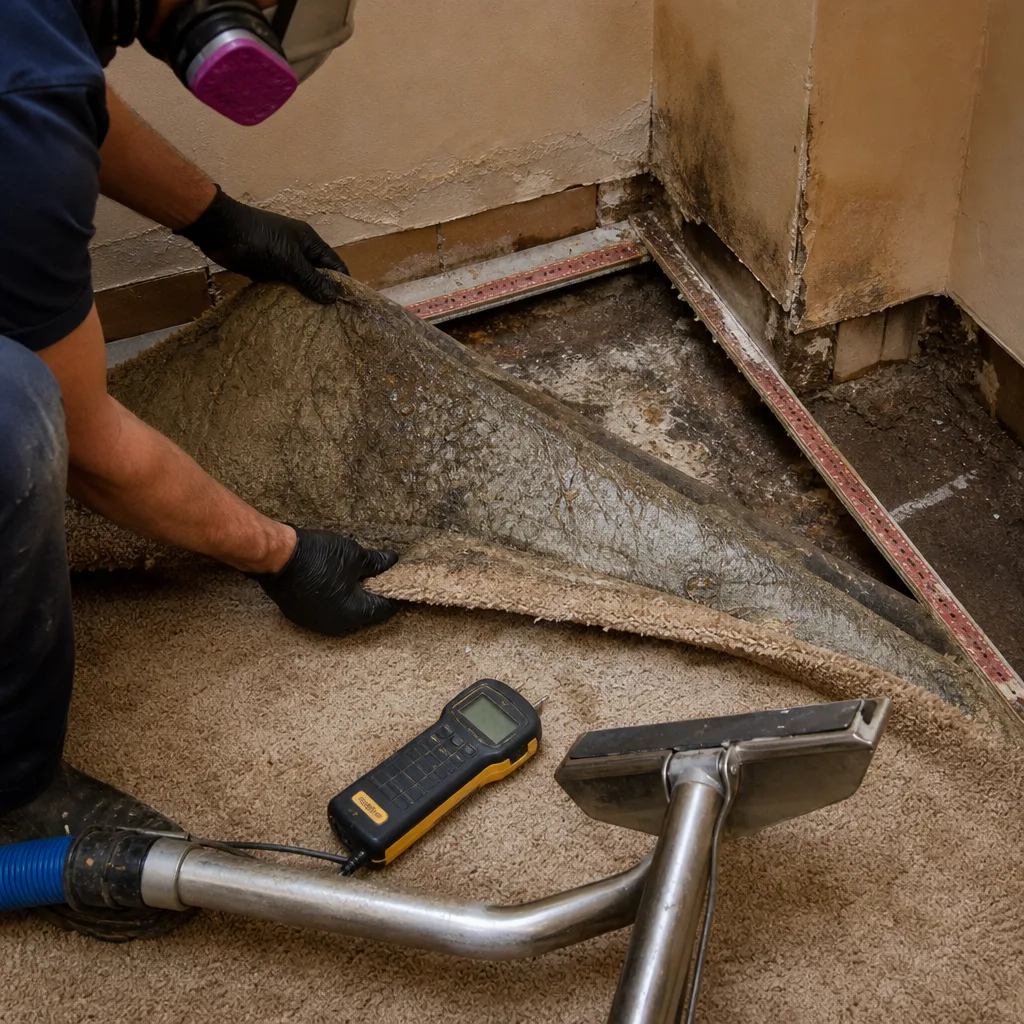
Post-Construction Cleanup
After a rebuild, the home is covered in fine construction dust. We do full post-construction cleaning, including HEPA vacuuming of every surface, vent cleaning, and window and fixture polishing, so you walk into a finished home, not a job site. This is part of our standard reconstruction scope in Bayside.
What happens when you call
- 1
A real person answersNo phone trees - you reach a local pro.
- 2
You get an upfront price rangeHonest numbers before anyone is dispatched.
- 3
A background-checked tech heads outLicensed & insured, dispatched right away.
- 4
You approve before work beginsNothing starts until you say go.
Reconstruction & Cleanup Costs in Bayside, NY
Bayside pricing runs on structure age, water category, and square footage. A straightforward Category 1 water extraction and drying in a 200-square-foot basement with modern drywall typically runs $1,800 to $3,200. Category 3 sewage or surge water in the same space, with full containment, antimicrobial treatment, and demolition of soaked materials, ranges from $4,500 to $9,000 before any rebuild begins. Full basement reconstruction in a 1920s-1950s Bayside home, including new drywall, flooring, trim, and paint, commonly lands between $15,000 and $40,000 depending on finish level and electrical or framing corrections. Asbestos abatement, if triggered by floor tile or popcorn ceiling discoveries, adds $2,500 to $8,000 and requires separate DEP-notified contractors. We give you a written scope before demolition starts, with the insurance-covered portions broken out from any out-of-pocket upgrades you choose. A free inspection is the fastest way to turn a flooded basement question into a firm number. Call (917) 924-4221.
We Also Serve Cities Near Bayside
Floodline Restoration Co. also handles Reconstruction & Cleanup in Whitestone, Flushing, Little Neck, and Great Neck. The housing stock and loss patterns in those areas run close to Bayside’s, and our crews move between them daily. If your property sits on the Bayside line, call us. We will tell you which coverage area you are in and get a crew to you regardless.
Serving Bayside, NY - Our Local Coverage Area
We’re based in the Bayside area and know this community well. Use the map below to see our service coverage - if you’re nearby, we can almost certainly help.
Bayside Reconstruction & Cleanup Questions, Answered
What asbestos and lead protocols does a Bayside reconstruction job trigger if my home was built before 1978?
Any demolition, sanding, or disturbance of tested-or-suspected asbestos flooring, pipe insulation, or popcorn ceilings in a pre-1978 Bayside home requires a NYC DEP asbestos survey and potentially licensed abatement before reconstruction work can proceed. Lead paint on walls and trim triggers similar rules under the EPA Renovation, Repair and Painting rule. We check for these materials during the initial inspection and never cut into a surface we have not evaluated. Call (917) 924-4221 and we will tell you what applies to your house.
Why does a basement flood from Little Neck Bay in Bay Terrace require different cleanup than a burst pipe?
Because Little Neck Bay surge water is Category 3, meaning it carries bacteria, salt, and debris from the bay and the street. A burst supply line is Category 1 clean water. Category 3 water requires full containment, antimicrobial treatment, and disposal of saturated porous materials that cannot be thoroughly disinfected. Salt intrusion is also corrosive to wiring and metal framing, so we inspect those before closing walls. The difference in treatment is why the same square-footage job costs more when the water came from the bay. We will explain it against your specific loss once we see it.
How do crews dry 1920s plaster-and-lath walls after a flood without causing more damage?
Slowly and with lower heat than modern drywall would get. Plaster-and-lath holds moisture in the wood lath strips and the plaster keys that grip them. Force-drying too fast cracks the plaster and loosens the keys. We use low-grain refrigerant dehumidifiers, controlled airflow, and daily moisture probes in the wall cavities until the dry standard is reached. If the plaster is already delaminated from the lath, we remove it to studs rather than painting over a wall that is structurally detached. The drying log documents every reading for you and your insurer.
Can you pack out and restore contents from a Bayside finished basement without triggering asbestos abatement?
Yes, in most cases. Contents restoration and pack-out do not themselves trigger abatement. Asbestos rules trigger when demolition disturbs the materials. We can inventory, photograph, pack, and remove your contents from the wet basement while asbestos testing and any required abatement proceed separately. If asbestos floor tiles are present, we set up a clean path and use proper containment methods during removal. Your belongings get restored even while the structure waits. We handle the sequencing so nothing stalls the claim.
What repair vs. retrofit decision do Bayside homeowners face when original galvanized pipes cause repeat water damage?
Galvanized supply lines in 1920s-1950s Bayside homes corrode from the inside, burst in winter, and then do it again a few years later. The decision is whether to repair the section that burst or replace the run with copper or PEX. Section repair costs $400 to $900 per occurrence. A full repipe of a typical Bayside Colonial runs $8,000 to $15,000. We are happy to document the cause and coordinate with your insurance, but insurance covers the water damage, not the pipe replacement. We will give you an honest recommendation based on the age and condition of your specific lines.
How fast can you actually get to my Bayside home after I call?
Our commitment is 45 minutes or less for Bayside addresses, day or night. A live dispatcher takes your call at (917) 924-4221 and routes the nearest certified crew. We do not work from a call center or make you leave a message for a “service window.” The crew that arrives is the crew that starts working.
Will my insurance cover Reconstruction & Cleanup after a flood or fire in Bayside?
Most homeowner policies cover sudden and accidental water damage, fire, and storm damage, but every policy differs on flood vs. seepage vs. sewer backup. We document the loss from day one with photos, moisture logs, and a code-accurate scope of work, then submit it directly to your carrier and speak with your adjuster. We do not argue coverage. We give the carrier what they need to pay the claim. Call (917) 924-4221 and we will start that documentation tonight.
What should I do in the first 30 minutes after I find water damage in my Bayside home?
Call us first at (917) 924-4221. Then, if it is safe, shut off the water at the main shutoff valve, usually near the street or in the basement utility area. Do not walk through standing water if it may be in contact with electrical outlets or appliances. Do not start demolition or pull up carpet, because in a pre-1978 Bayside home you may be disturbing asbestos or lead materials. Move undamaged items to dry ground if you can do so safely. Our crew will take it from there.
Fill out the form below or call (917) 924-4221 for a free, no-pressure estimate. A live person answers. A certified crew shows up. We stand behind the result in writing with the 90-Day Done Right Promise.
Written by Curt Bowman, Owner at Floodline Restoration Co., serving Bayside and the surrounding Queens communities.