
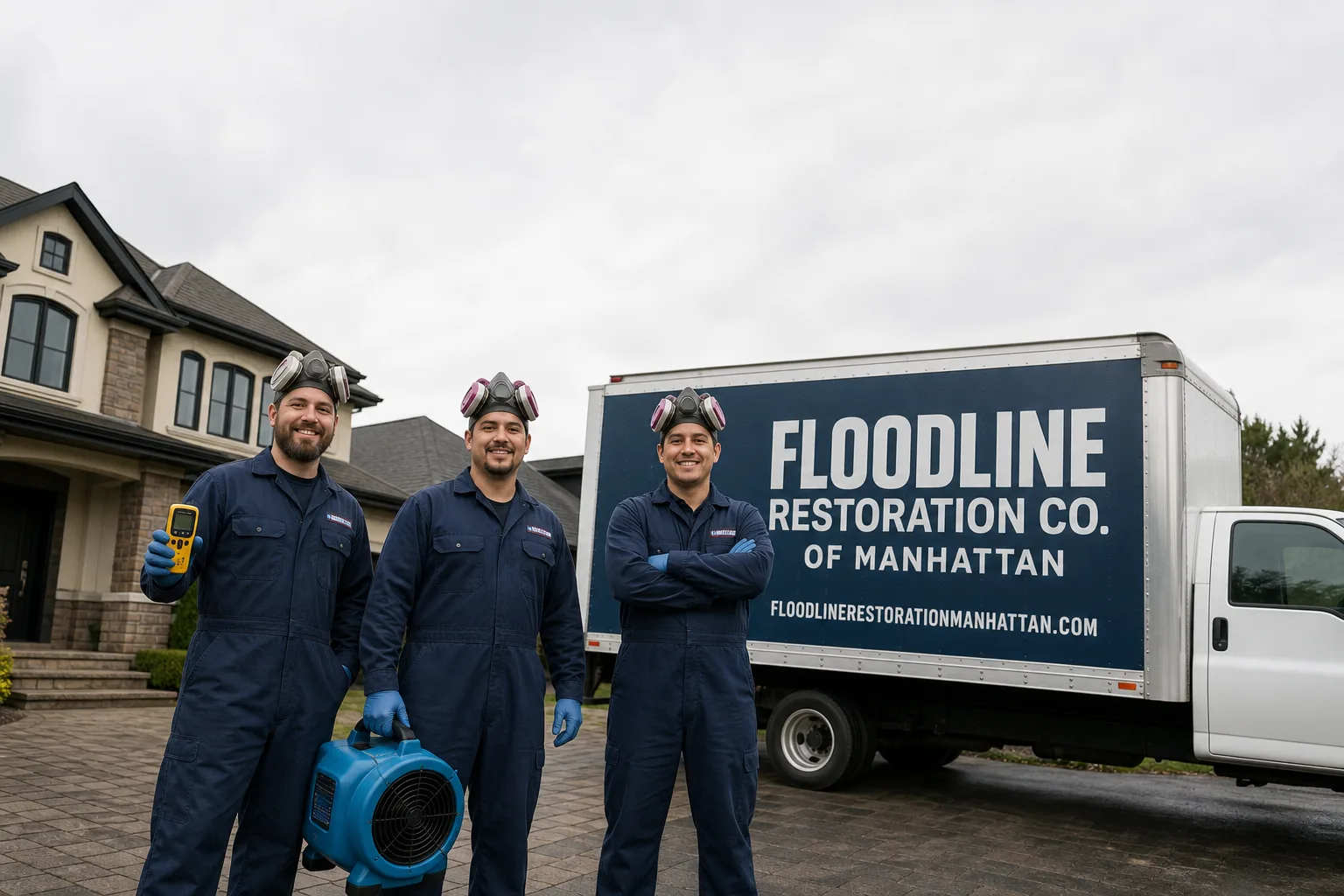
Free visual inspection and a written scope of work before any mitigation begins - photos, moisture readings, and drying logs go in your claim file
The scope we write is the scope we bill. Anything new gets shown to you, in writing, before we touch it.






 Before
 After
After Before
 After
After Before
 After
After24/7 Emergency Reconstruction & Cleanup in Midtown Manhattan
When water, fire, or structural damage hits a Midtown Manhattan property, reconstruction and cleanup are not jobs to leave to voicemail. Our emergency line rings to a live dispatcher at any hour, day or night. Call (917) 924-4221 and a certified crew is dispatched inside the Midtown Manhattan area, often within the hour. Every job starts with a free visual inspection delivered in person, not over the phone. The first hour shapes the scope of drying, demolition, and eventual rebuild, so we move the moment you call.
Midtown’s freight-elevator logistics, pre-war materials, and building-management coordination make early action even more important here. The longer water sits inside a wall cavity or smoke particles work into drywall, the wider the reconstruction footprint becomes. We arrive with professional-grade equipment, document every step, and hand you a written plan before we start. Done right, backed in writing.
Understanding Reconstruction & Cleanup Severity in Midtown Manhattan Properties
Reconstruction severity in Midtown Manhattan has little in common with single-family home losses in the boroughs. The city’s building stock ranges from 1920s Art Deco towers with original steam-heat risers to modern curtain-wall residentials, and each age group fails in its own way. Water losses break down by contamination category. Category 1 is clean supply water, usually a failed valve or ice-damaged supply line. Category 2 carries contaminants from washing machines or HVAC condensate. Category 3 is grossly contaminated water from sewage backup, storm surge, or sub-basement flooding. Midtown’s aging combined sewer mains make Category 3 backflows into sub-basement mechanical rooms and elevator pits a regular occurrence during summer cloudburst events.
Fire losses carry their own severity meter. Light soot from a contained grease fire leaves surface residue. A deeper loss pushes soot and acidic smoke particles into drywall, insulation, and cavity spaces. Pre-war Midtown buildings hold plaster and terra-cotta partitions that absorb smoke differently than modern gypsum. The type of soot, the surface temperatures reached, and the length of exposure all change the cleaning method. Our certified crew reads those signs before any equipment is staged, and the written scope matches what we actually find.
Why Midtown Manhattan Property Owners Choose Floodline Restoration Co. of Manhattan
- 45-minute response commitment. From the dispatch desk on the first call, our target is a certified crew at your Midtown address within 45 minutes. Building access variables like freight elevator scheduling can shift that, and we tell you honestly if they will.
- Live answer, 24 hours a day. A real person picks up at two in the morning, not an automated recording. Midtown damage rarely waits for business hours, and neither do we.
- IICRC-certified crews. Our technicians hold WRT, FSRT, and AMRT certifications and train to RIA and IFA standards. The person reading your moisture map is the same person running daily drying logs.
- Free visual inspection. We walk the loss, document the damage, and hand you a written scope before any equipment comes off the truck. No surprises on the bill.
- Direct insurance billing. You never play messenger between Floodline and your carrier. We bill the insurer directly and coordinate with your adjuster from the first day.
- One team, start to finish. Extraction, drying, cleaning, demolition, and rebuild stay with the same certified crew. No mid-job handoff, no inherited subcontractor you never met.
Our Reconstruction & Cleanup Process
Inspection & Assessment
We arrive, walk the property, and map the damage. Thermal imaging and hygrometers locate water inside cavities and behind finishes. The written scope you receive matches the loss we see, not a generic checklist.
Extraction & Stabilization
Standing water comes out with truck-mounted and portable extraction tools. Damaged materials that cannot be dried, like saturated drywall and compromised insulation, get cut out and removed. We stabilize first, then dry what remains.
Drying & Dehumidification
Professional-grade Dri-Eaz, Phoenix, and B-Air air movers and dehumidifiers get staged according to a moisture map. Daily readings log the drying curve until the dry standard is met, and that log goes to you and your carrier.
Cleaning & Sanitization
Antimicrobial applications stop mold and bacteria growth on affected surfaces. Smoke losses get HEPA air scrubbing, soot removal, and odor treatment. We clean what is salvageable and remove what is not.
Specialty Treatment for Midtown Structures
Pre-war buildings need coordination with building engineers, boiler operators, and asbestos surveys under NYC DEP rules before certain work can begin. We handle that paperwork and scheduling so you do not wait on a holdup.
Repairs & Restoration
We rebuild the drywall, flooring, trim, and finishes the loss took out. The same crew that read the moisture map on day one handles the reconstruction, so the final product matches the first assessment and the written scope.
Need Emergency Reconstruction & Cleanup in Midtown Manhattan Now?
Crews minutes away, answering live 24 hours a day. The sooner we start, the less it costs.
Working With Your Insurance Company
We built our claims process on one idea: the insurance company should never have to chase documentation, and you should never have to chase the insurance company. From the first hour, we photograph the loss room by room, log moisture readings daily, and build a line-item scope of work that matches industry-standard estimating software. Our team communicates directly with your adjuster, answers their questions, and provides the documentation they need to process the claim without delay. If a dispute comes up, we stand behind our documentation and our written scope. A square deal means the bill is handled the same way the work is: directly and without surprises.
What We Provide Your Insurer
- Thorough documentation of the loss
- Photos of all damage, room by room
- Moisture readings and drying logs
- A detailed, line-item scope of work
- Direct coordination with your carrier
Built for Midtown Manhattan’s Loss Calendar
Reconstruction and cleanup in Midtown Manhattan follows a seasonal rhythm shaped by geography and hundred-year-old infrastructure. January deep freezes burst supply lines inside pre-war towers, sending water down through stacked units below. Spring thaw and heavy rains push ground water into sub-basements and underground parking, where drains from the 1920s were never built for modern storm volumes. Summer cloudbursts overwhelm the combined sewer mains beneath Midtown’s grid, and the backups surface in elevator pits, loading docks, and mechanical rooms. Autumn brings nor’easters that drive wind-driven rain behind aging brick-and-limestone facades, saturating wall cavities that dry slowly behind vapor barriers.
Any one of those events can force reconstruction, not just cleanup. The pattern matters: losses in Midtown are rarely isolated to one unit. A single failed valve on the 12th floor of a hotel tower becomes a multi-floor event by morning. We plan for that. Our crews know the freight elevator schedules, the building management protocols, and the structural realities of Midtown Manhattan before the first truck pulls up.
Reconstruction & Cleanup Across Midtown Manhattan’s Neighborhoods
Midtown is not one neighborhood. It is a strip of distinct corridors, and each one shapes the work. Around Grand Central and the Park Avenue co-op towers, the losses are pre-war plumbing failures, steam-trap leaks, and water migration behind original plaster walls. Crews coordinate with building engineers and licensed boiler operators before any cutting begins. Down in the Garment District, the buildings are older commercial lofts converted to residential, with cast-iron drain stacks and tight freight elevators that dictate how every piece of drying equipment moves.
East of the Theater District, the hotel towers along Seventh Avenue and Broadway see Category 2 and Category 3 overflows that cascade through stacked rooms. Scheduling work there means working around guest occupancy and building-management windows. In the residential band near Columbus Circle and the west 50s, condos and rental towers built in the mid-century era bring different concerns: electrical panels with limited amperage for drying equipment, and drop-ceiling tiles that may contain asbestos and require NYC DEP survey before we touch them. None of it surprises us. We know Midtown Manhattan’s buildings because we work in them every week.
Specialized Reconstruction & Cleanup Services We Offer in Midtown Manhattan
Full-Service Reconstruction
We rebuild what the loss took out, from drywall and framing to cabinetry, trim, and finishes. In Midtown co-ops and condos, that also means matching pre-war detailing or modern finishes to the unit’s original character. The same crew that dried the space rebuilds it, so the work is continuous and the handoff is nonexistent. Our Reconstruction & Cleanup team handles every phase, and the final walkthrough is against the written scope you approved on day one.
Insurance Claim Documentation
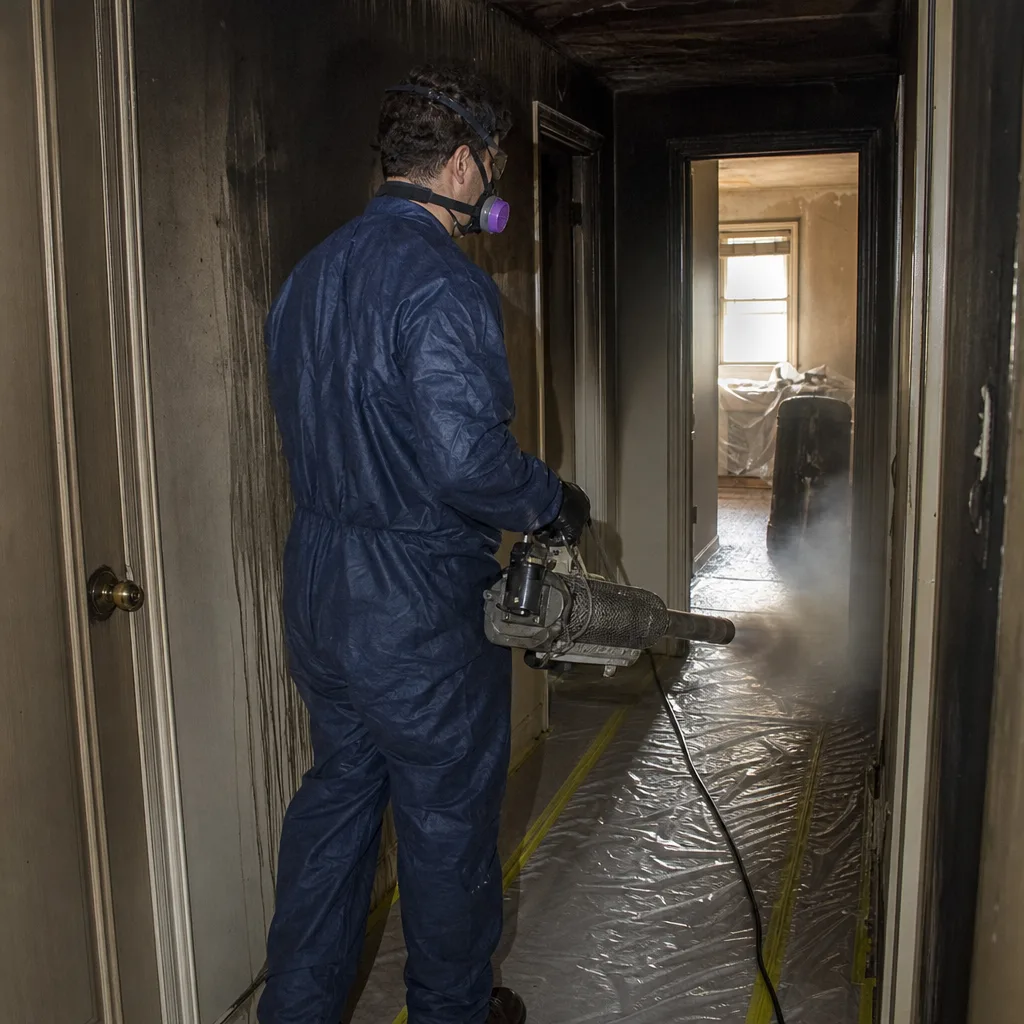
Midtown insurers and co-op boards expect documentation that holds up under scrutiny. We provide moisture logs, drying charts, photo records, and line-item scopes built to industry standards. If the board or the carrier questions a line item, we answer it directly with the documentation on file. You stay out of the middle.
Contents Restoration & Pack-Out
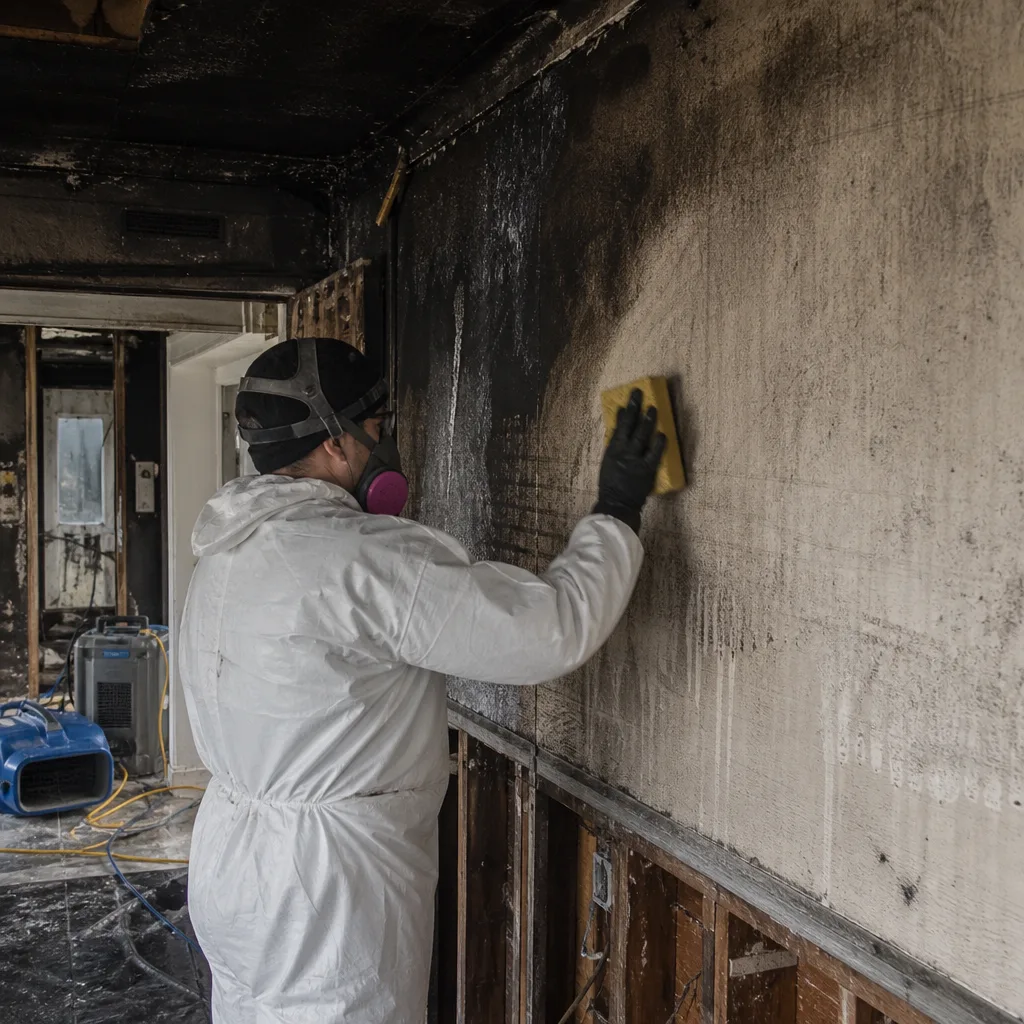
Small Midtown co-op units leave no room to store contents on-site during reconstruction. We pack out what is salvageable, document it, clean it, and store it off-site until the rebuild is complete. Inventory lists and photographs travel with every box, so nothing disappears. When the unit is ready, we bring it back and set it in place.
Drywall & Flooring Repair
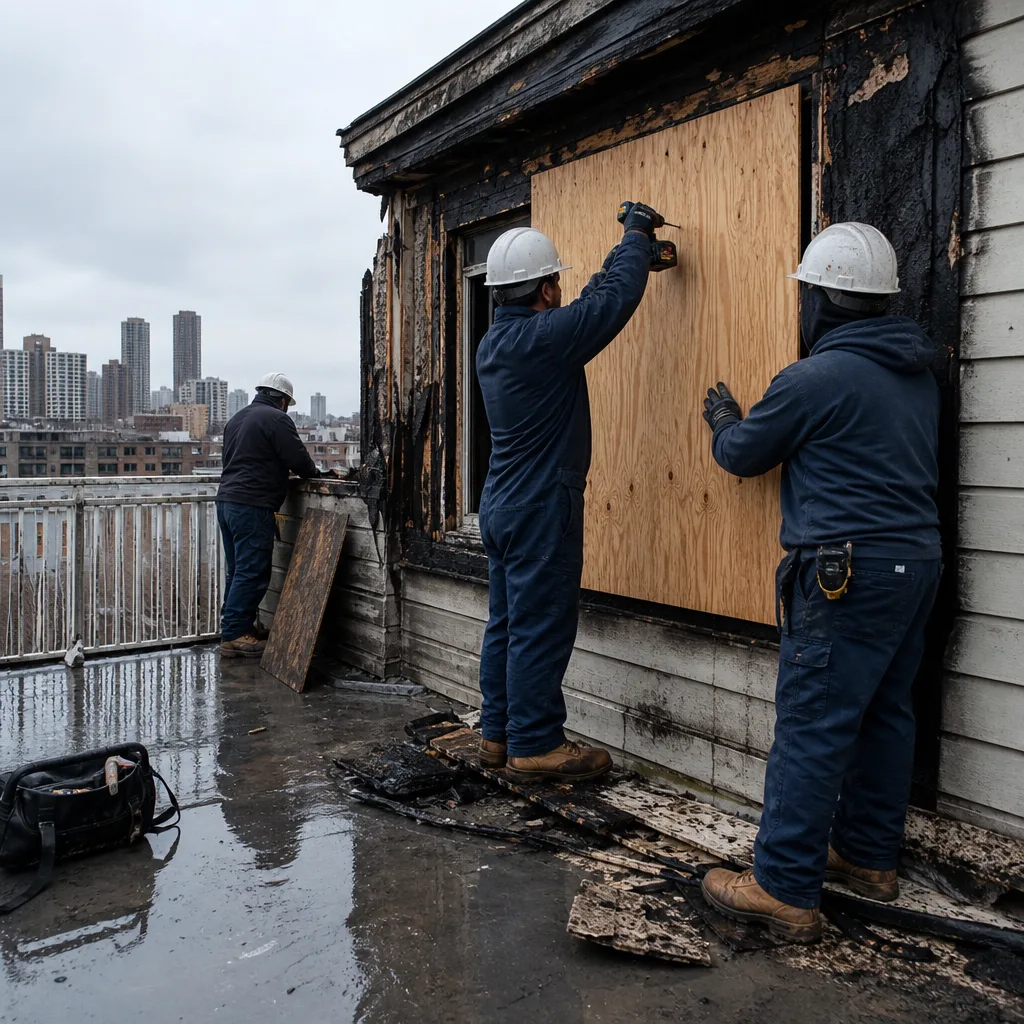
Water and fire losses in Midtown towers usually require cut-out and replacement of drywall and flooring. We match materials to the building’s era where it matters: pre-war plaster details, hardwood flooring patterns, or modern engineered finishes. The final product looks like it belongs in the building, not like a patch.
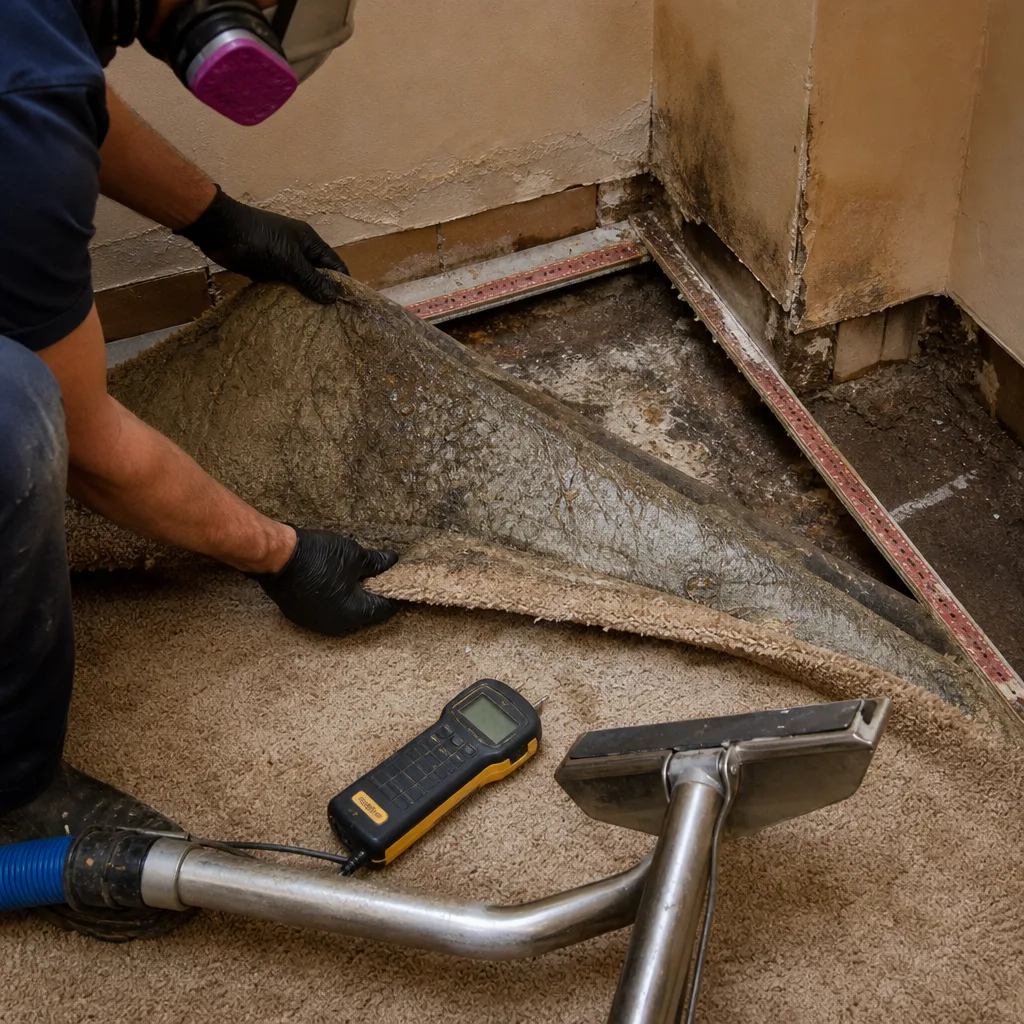
Carpet & Upholstery Cleaning
After a Category 1 loss or light soot event, salvageable carpet and upholstery get professional extraction and cleaning with truck-mounted equipment. We treat what can be saved and tell you honestly when replacement is cheaper than restoration. The line the water left is where we start, and the scope follows the facts.
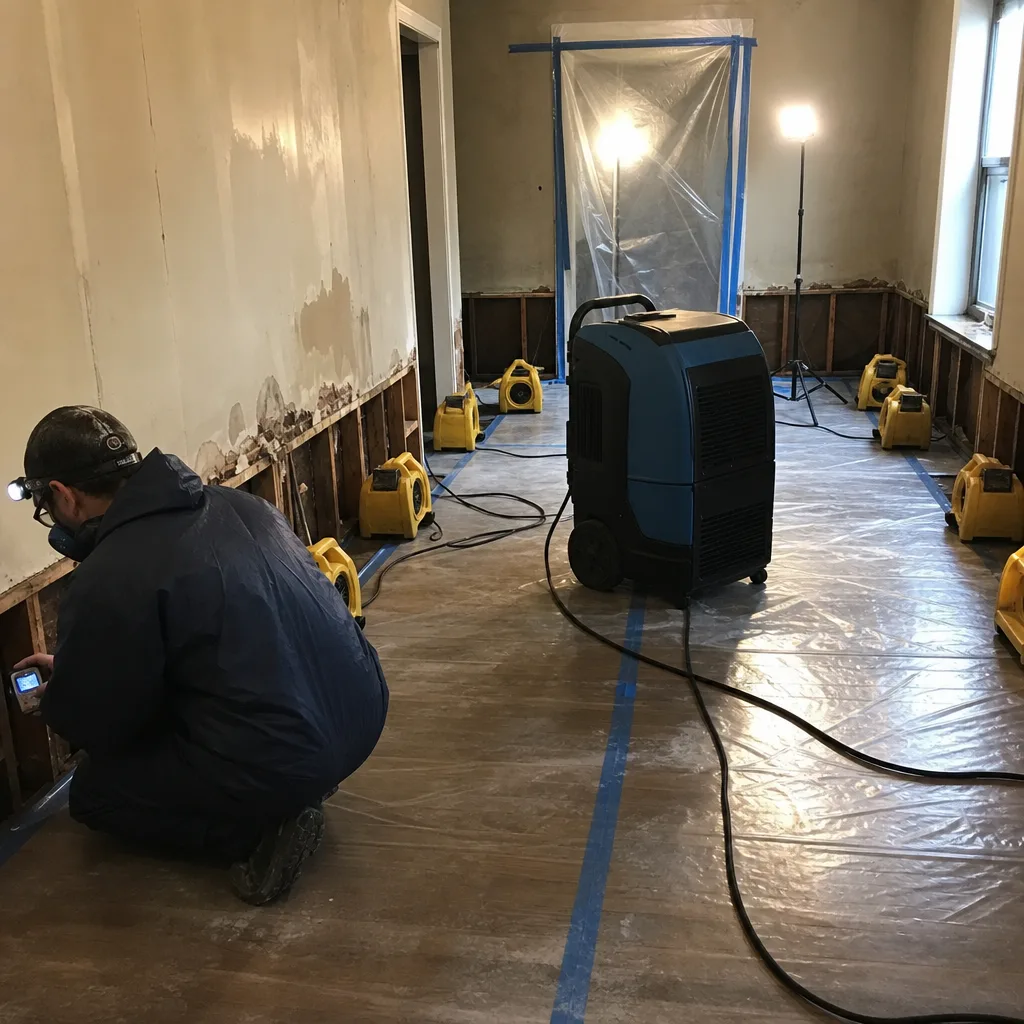
Post-Construction Cleanup
When the rebuild is finished, the dust is not. We clear construction debris, clean surfaces, and leave the unit ready to live in. No dust trails to the freight elevator, no debris staged in the hallway waiting for a slot. The building management in Midtown Manhattan notices, and so will you.
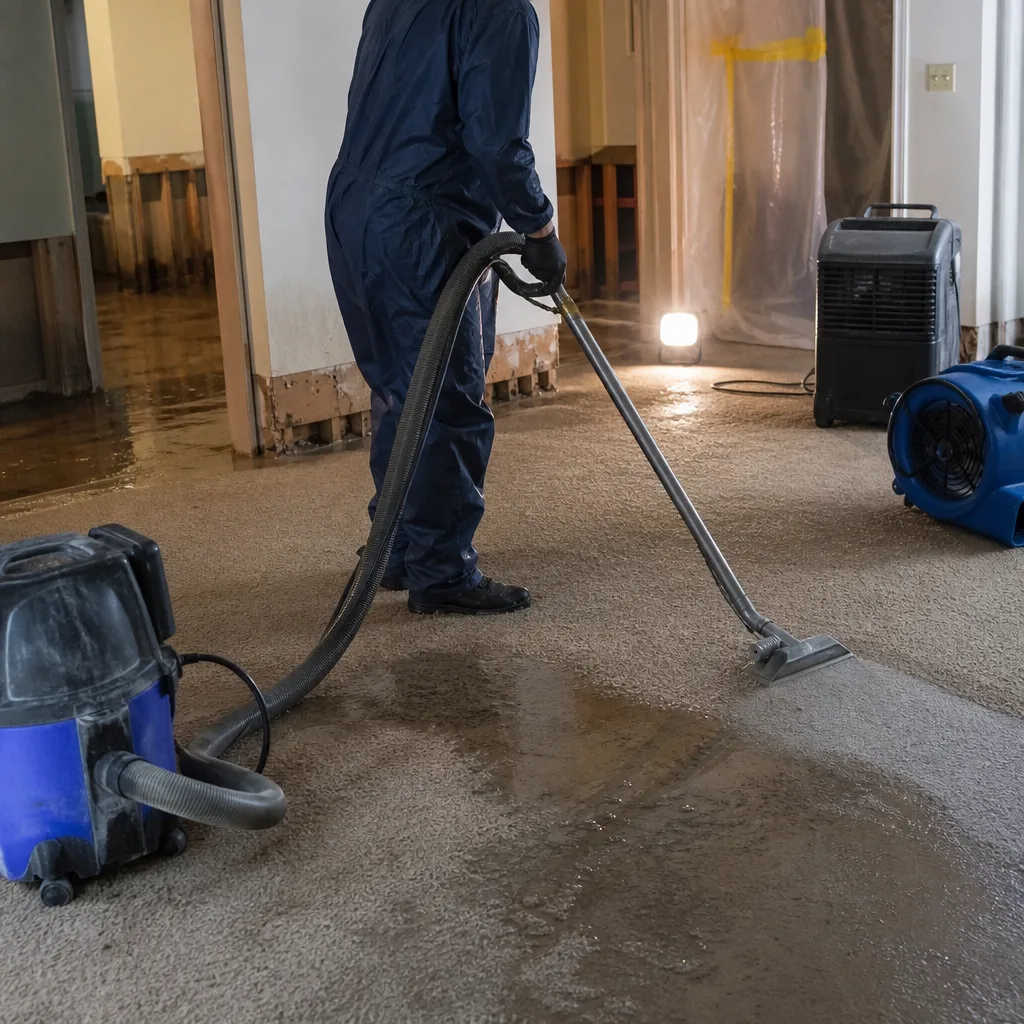
What happens when you call
- 1
A real person answersNo phone trees - you reach a local pro.
- 2
You get an upfront price rangeHonest numbers before anyone is dispatched.
- 3
A background-checked tech heads outLicensed & insured, dispatched right away.
- 4
You approve before work beginsNothing starts until you say go.
Reconstruction & Cleanup Costs in Midtown Manhattan, NY
Midtown Manhattan reconstruction and cleanup pricing runs higher than neighboring boroughs, and the reasons are structural, not arbitrary. Freight elevator scheduling, NYC DEP asbestos surveys, and building-management coordination all add labor hours to the same physical work. A straight water extraction and dry-out of a single unit in Midtown Manhattan typically runs $3,200-$6,500. Adding drywall removal, antimicrobial treatment, and reconstruction brings a typical apartment to $8,000-$18,000, depending on square footage, materials matching, and whether asbestos abatement is required. Contents pack-out and off-site storage in a small co-op unit adds $1,800-$4,500.
Post-construction cleanup alone runs $900-$2,800 for a standard one-bedroom. What moves the price: the water category, the number of affected rooms, freight elevator availability, whether the building’s amperage can handle industrial drying equipment, and how much pre-war material needs replacement. Insurance covers most covered losses, and we bill the carrier directly. The free visual inspection turns all of this into a firm, written scope before you owe us a dollar. Call (917) 924-4221 to schedule yours.
We Also Serve Cities Near Midtown Manhattan
Our service area extends beyond Midtown Manhattan to cover Midtown Manhattan and the surrounding communities, including Fairview, Harrison, East Bronx, and Hunts Point. If you are just outside the neighborhood in any direction, call and ask. The same live dispatcher answers, and the same certified crews respond.
Serving Midtown Manhattan, NY - Our Local Coverage Area
We’re based in the Midtown Manhattan area and know this community well. Use the map below to see our service coverage - if you’re nearby, we can almost certainly help.
Midtown Manhattan Reconstruction & Cleanup Questions, Answered
How do you move drying equipment into a Midtown high-rise when the building only allows freight elevator use during specific hours?
We book freight elevator time with building management before the equipment arrives, usually on the same call that dispatches the crew. Midtown buildings often restrict freight use to specific windows, and that means coordinating every air mover, dehumidifier, and containment panel load on the building’s schedule. We arrive with a loading plan, not a stack of equipment waiting at the dock. If the freight slot is hours out, we stage off-site and begin documentation and extraction with portable gear that fits through a service entrance. This coordination is part of working in Midtown Manhattan, and we plan for it before anyone shows up at the loading dock. Call (917) 924-4221 and we’ll walk you through what your building requires.
What does a Category 3 water loss in a Midtown sub-basement mean for the scope of work?
Category 3 water is grossly contaminated, typically from sewage backup, storm surge, or groundwater intrusion. In a Midtown sub-basement, that means mechanical rooms, elevator pits, and loading docks flooded with water that requires full containment, removal of saturated porous materials, antimicrobial treatment, and structural drying before anyone rebuilds. The scope is larger and the labor is slower because every move happens below grade, often with limited elevator access and building engineering oversight. We handle it start to finish. Call (917) 924-4221 for a free inspection and a firm written scope.
Can you begin reconstruction in a Midtown pre-war apartment if the original steam-heat riser is still wet?
No, and any contractor who says otherwise is creating a mold liability you would live with for years. In Midtown pre-war co-ops, the steam riser inside a wall cavity must be isolated by the building’s licensed boiler operator before drying or demolition can proceed. If the riser is still wet, we hold reconstruction until the moisture map confirms the cavity is dry. The drying log we hand you and your carrier documents exactly when the standard was met. Then we rebuild. The sequence matters; we do not cut corners on it.
How do you handle pack-out in a small Midtown co-op unit where there’s no room to store contents on-site?
We pack it out. Contents get inventoried, photographed, cleaned, and stored off-site in a climate-controlled facility until the reconstruction is complete. The inventory travels with the items, and you get a copy. When the unit is ready, we return everything and set it in place. Pack-out in a small Midtown co-op typically runs $1,800-$4,500 depending on volume and cleaning needs. Call (917) 924-4221 for an exact quote after a walkthrough.
Will your drying logs satisfy a Midtown condo board or co-op’s insurance carrier?
Yes. Our drying logs follow IICRC S500 standards, with daily moisture readings, equipment placement records, and dry-standard documentation. Midtown boards and carriers see these logs constantly because we work in the neighborhood weekly. The log is part of the claim package we submit directly to your insurer, and we coordinate with the board’s engineer if they want their own review. The documentation is yours to keep, and it stands up.
How fast can a crew actually get to a Midtown Manhattan address?
Our target is 45 minutes from the time you call to the time a certified crew reaches your building. Midtown variables apply: freight elevator scheduling, building security clearance, and street access can add time, and we tell you honestly when they will. The key is that a live dispatcher answers immediately, and the crew is dispatched that same call, not after a callback. Damage spreads while you wait, so we move immediately. Call (917) 924-4221 now if you are standing in water.
Do I need full reconstruction or just a cleaning after a water loss?
It depends on how far the water moved and what it touched. Clean Category 1 water on tile often ends at extraction and drying. Water that sat for more than 24 hours, or water that touched drywall, insulation, or pre-war plaster, usually requires cut-out and rebuilding. We tell you the truth after a free visual inspection with thermal imaging. We do not sell reconstruction that is not needed, and we do not skip drying to save a day. The written scope is based on what we find.
What should I do in the first 30 minutes after a water or fire loss in Midtown Manhattan?
Call (917) 924-4221 first. Then, if it is safe, shut off the water supply or electrical panel only if you can do so without standing in water or touching compromised wiring. Do not enter a room with sagging drywall or a sub-basement with standing water that could be contaminated. Take photos from a safe distance if you can. Do not move debris or attempt DIY drying on pre-war plaster; trapping moisture behind a finish makes the reconstruction scope bigger. Let our crew document, assess, and start the work safely.
Written by Curt Bowman, Owner at Floodline Restoration Co., serving Midtown Manhattan and the greater New York City area. Our crews have handled reconstruction and cleanup in freight-elevator-only high-rises, pre-war co-op towers, and modern condos across the neighborhood, and we stand behind the work in writing.