
Free visual inspection and a written scope of work before any mitigation begins - photos, moisture readings, and drying logs go in your claim file
The scope we write is the scope we bill. Anything new gets shown to you, in writing, before we touch it.






 Before
 After
After Before
 After
After Before
 After
After24/7 Emergency Reconstruction & Cleanup in Harrison
Reconstruction and cleanup in Harrison typically runs $1,800-$14,000 depending on whether you’re drying a single flooded room or rebuilding a finished basement, and most emergency work can start the same day you call. A live dispatcher answers at (917) 924-4221 around the clock, every day of the year. When water is standing in a Harrison colonial or smoke has moved through a Purchase estate, the first hour determines how much of the structure gets saved. We dispatch crews into Harrison immediately, perform a free visual inspection, and put equipment to work on the first visit.
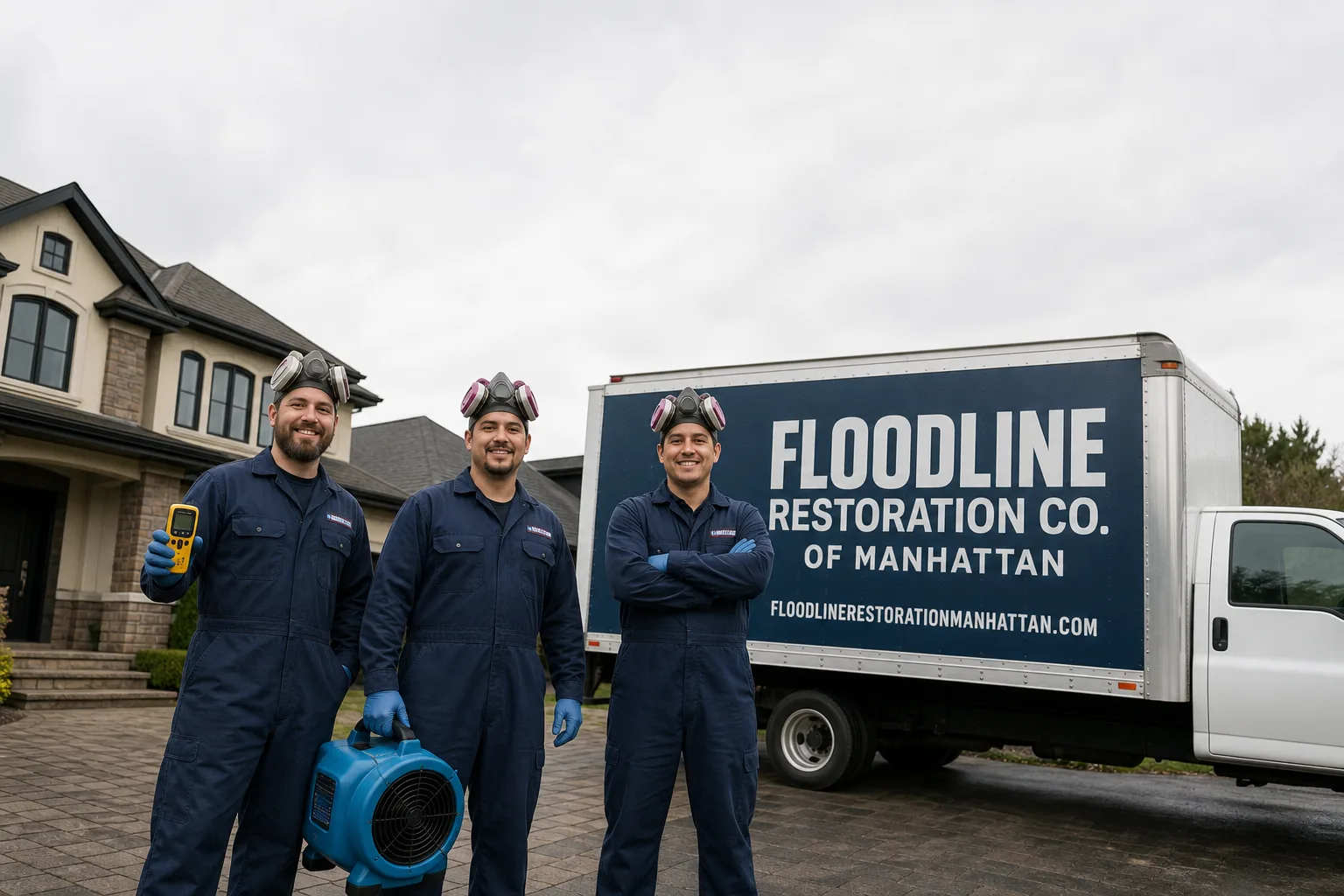
Floodline Restoration Co. of Manhattan coordinates all Harrison work from our New York City office, with background-checked, uniformed technicians serving the village and Purchase hamlet directly. The line the water left is where we start.
Understanding Reconstruction & Cleanup Severity in Harrison Properties
Water damage gets classified by contamination level before anyone touches a wall. Category 1 is clean water from a supply line or tub overflow. Category 2 carries detergents or wash water from a burst galvanized or copper line. Category 3 is sewage, river backup, or stormwater from the Mamaroneck River corridor, and that changes everything about demolition scope and sanitizing protocols. In Harrison’s pre-WWII colonials and cape cods, original plaster over wood lath traps moisture differently than modern drywall. Without moisture mapping and proper structural drying, hidden pockets sit behind walls and feed mold growth within 48 hours of a Category 2 or 3 event.
For fire losses, severity depends on soot type: wet soot from smoldering synthetics, dry soot from fast-burning paper and wood, or protein residue from kitchen fires that clings to painted surfaces. Harrison’s older village homes often have balloon framing that carries smoke into ceiling cavities and adjacent rooms through open wall chases. Purchase estates add another layer: custom millwork, imported stone, and hand-finished surfaces that react badly to aggressive chemical cleaning. Reading that difference correctly is the difference between restoration and a teardown.
Why Harrison Property Owners Choose Floodline Restoration Co. of Manhattan
- 45-minute response commitment: Our Harrison crews are on the road within 45 minutes of your call, with equipment aboard and dispatch tracking the route. We’ll be there when we say.
- 24/7 live answer, no recordings: A real person answers the phone at 2 a.m. Not a menu. Not a call-back service. You tell us what’s happening, and a certified crew gets moving.
- IICRC-certified crews, WRT/ASD trained: Our technicians hold Water Damage Restoration and Applied Structural Drying certifications, plus RIA and IFA training, so the drying plan is built on readings, not guesses.
- Free visual inspection: We look, we measure, we explain what we found. No charge for the assessment, and no pressure to sign anything before you understand the scope.
- Direct insurance billing: We document the loss from hour one, submit line-item scopes directly to your carrier, and talk to adjusters ourselves. You don’t play messenger.
- One team from extraction to rebuild: The same crew that extracts and dries also hangs drywall, sands, primes, and paints. Nobody hands your house off to a subcontractor mid-job.
Our Reconstruction & Cleanup Process
Inspection & Assessment
We arrive with thermal imaging, hygrometers, and pin meters. In the village core, we check for water migration through original plaster and old framing; in Purchase, we inspect custom finishes before any tool touches them. You get a written scope before work starts.
Extraction & Stabilization
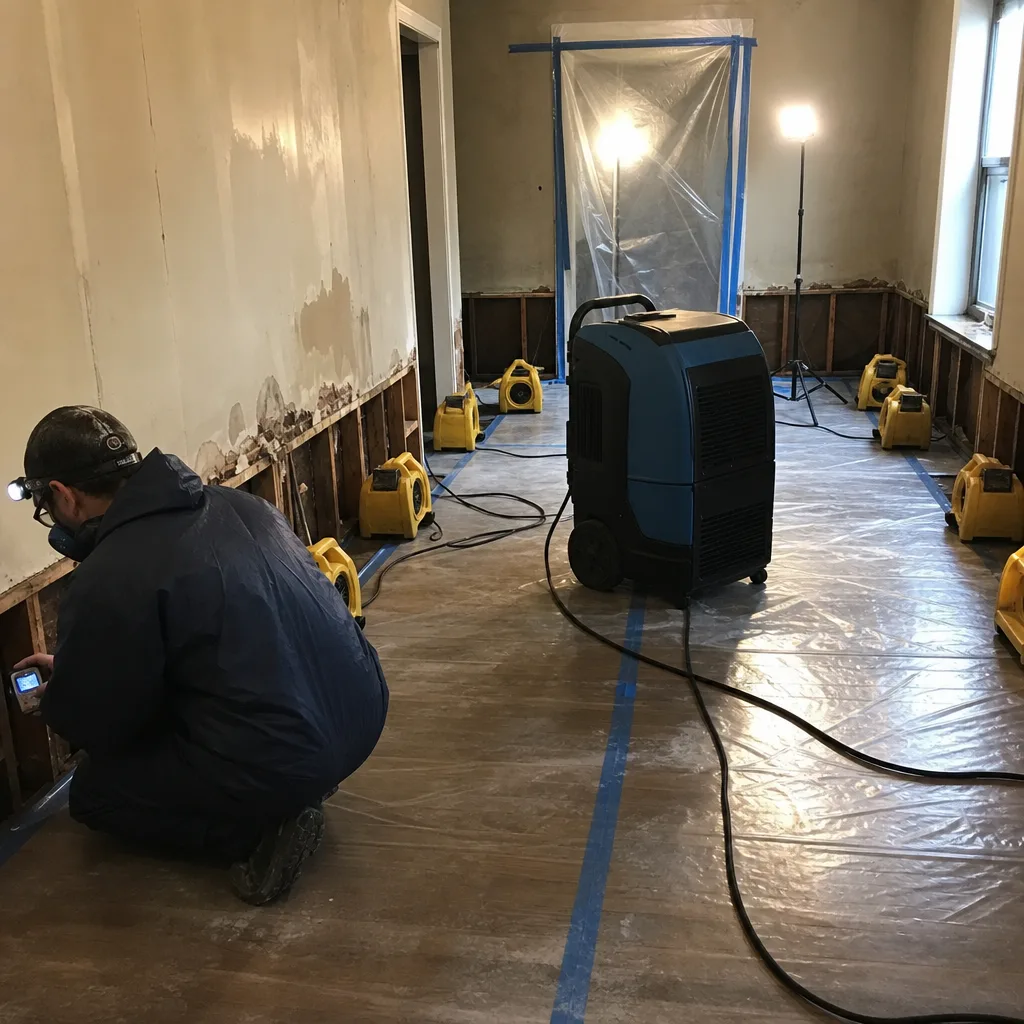
Standing water comes out first using truck-mounted and portable extraction units. We stabilize the area, set containment where needed, and protect undamaged surfaces. The clock stops on further spread.
Drying & Dehumidification
Dri-Eaz dehumidifiers and axial air movers run on a moisture map, not a timer. Daily readings are logged until framing and subfloor hit pre-loss moisture levels. In older Harrison homes, this is where plaster is saved instead of torn out.
Cleaning & Sanitization
Category 3 events require sanitizing and, where necessary, removal of contaminated material. HEPA-filtered air scrubbers run during and after tear-out. On fire jobs, we match the cleaning method to the soot type so finishes aren’t etched or rubbed out.
Contents Handling & Pack-Out
Salvageable contents get photographed, packed, and either cleaned on site or stored while the structure dries. Vintage furniture from Harrison’s older homes and fine art from Purchase properties are inventoried line by line.
Repairs & Restoration
Drywall, flooring, trim, and paint go back to match the existing profile. For pre-WWII homes, that means matching plaster profiles and old-growth trim. For Purchase estates, we source specialty materials through established luxury-trade suppliers.
Need Emergency Reconstruction & Cleanup in Harrison Now?
Crews minutes away, answering live 24 hours a day. The sooner we start, the less it costs.
Working With Your Insurance Company
We’ve handled claims for Harrison homeowners from the village’s older colonials to Purchase estates, and the pattern is always the same: the carrier pays more fairly when the documentation is airtight from the first hour. We photograph everything, record moisture readings daily, and build a line-item scope that matches your policy’s covered perils. Our team talks directly to your adjuster, so you’re not stuck translating between a contractor and an insurance desk. The 90-Day Done Right Promise is in writing on every job, and the paper trail backs it up.
What We Provide Your Insurer
- Thorough documentation of the loss
- Photos of all damage, room by room
- Moisture readings and drying logs
- A detailed, line-item scope of work
- Direct coordination with your carrier
Built for Harrison’s Loss Calendar
Harrison sees a predictable rhythm of Reconstruction & Cleanup calls through the year, and the older housing stock near the village takes the brunt of it. January and February bring hard freeze-thaw cycles that burst supply lines in unheated crawl spaces and exterior-wall plumbing in pre-WWII colonials. Those losses often saturate first-floor ceilings and plaster before anyone notices. March rains and snowmelt push groundwater up through aging fieldstone foundations and pour through floor drains already compromised by original cast-iron or clay pipe. Spring is basement season.
Summer thunderstorms and late-season nor’easters hammer the Mamaroneck River corridor, where low-lying streets near the village and toward West Harrison get flash flooding that backs up storm laterals into finished basements. That water is Category 3 every time. Fall brings gutter and drainage failures on homes whose leaders were installed decades ago, and early winter freeze events snap exterior hose bibs if they weren’t shut off in time. The calendar doesn’t change much year to year; what changes is how fast the homeowner calls. Faster calls mean smaller scopes.
Reconstruction & Cleanup Across Harrison’s Neighborhoods
The village core, from Halstead Avenue up to Harrison Avenue and the streets around the Metro-North station, holds a dense stock of pre-WWII through 1960s colonials, cape cods, and split levels. These homes have original plaster walls, galvanized or early copper supply lines, and drainage systems well past their service life. When a line lets go, water travels through wall cavities and under oak flooring in ways that demand careful moisture mapping and conservative demolition. Tear out too little and mold finds the lath; tear out too much and the homeowner loses original trim they cannot match at the lumberyard.
The neighborhoods east of the Mamaroneck River, along West Street and the corridors heading toward Purchase, include a mix of mid-century homes on larger lots and newer construction. Water behavior changes with building age, but the flooding risk near the river corridor is constant. Purchase itself is a different assignment entirely. The hamlet’s large estates feature custom millwork, imported tile, Venetian plaster, and hand-cut stone. A flooded master bath there isn’t a drying job; it’s a materials-sourcing and finish-matching negotiation between contractor, adjuster, and specialty suppliers. Our Reconstruction & Cleanup team works both tiers, often in the same week.
Specialized Reconstruction & Cleanup Services We Offer in Harrison
Full-Service Reconstruction
From wet drywall to finished paint, we rebuild Harrison homes back to pre-loss condition and beyond. In village colonials, that means matching plaster profiles and trim details that modern stock never matches off the shelf. In Purchase, it means sourcing custom materials and giving the adjuster receipts that justify every line. One crew, one scope, one guarantee.
Contents Restoration & Pack-Out
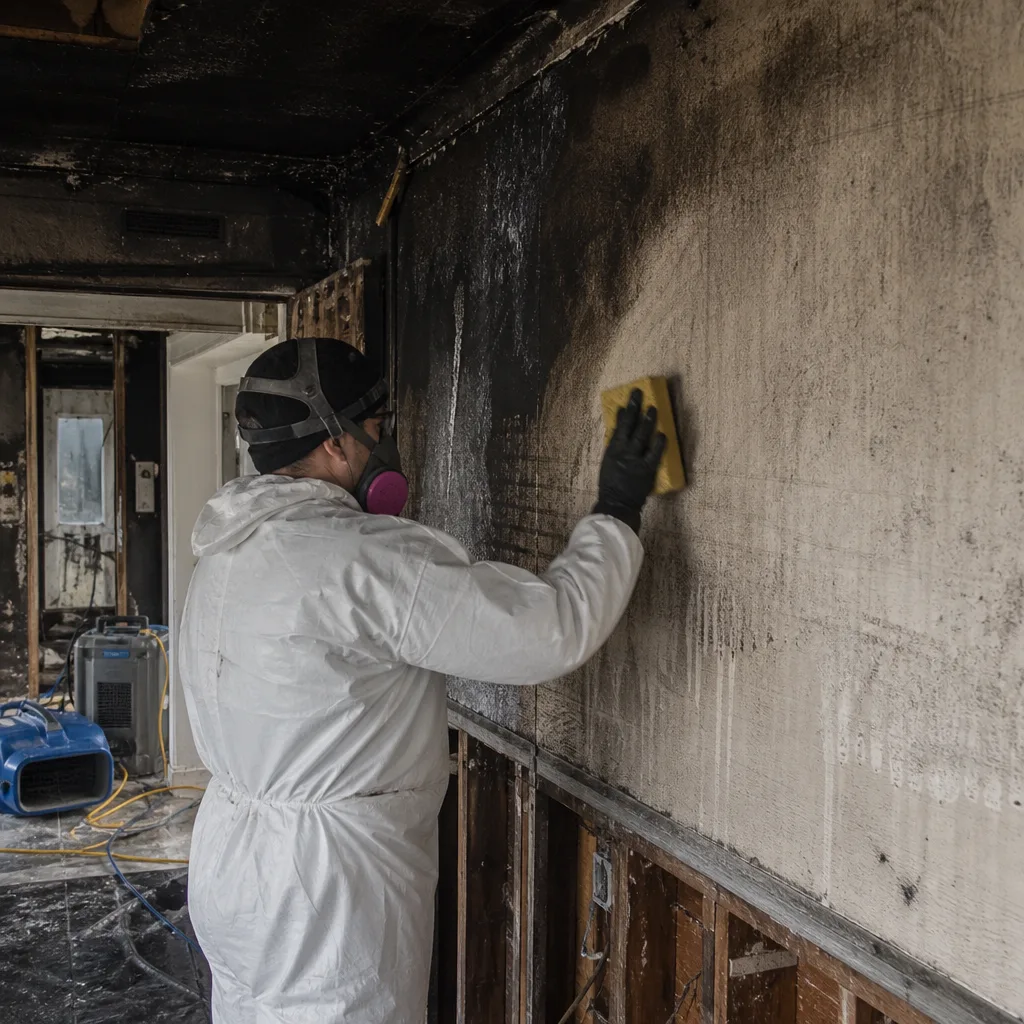
We packed out a flooded finished basement in a 1950s colonial near the Mamaroneck River corridor after a failed original cast-iron drain line backed Category 3 water into the space. We set containment, extracted the water, removed saturated drywall and flooring, and ran Dri-Eaz dehumidifiers and air movers until the framing hit pre-loss condition. Because the homeowner wanted to preserve the vintage plaster walls upstairs, we coordinated pack-out of contents and post-construction cleanup before replacing the drywall and flooring to match the existing profile. Your contents get the same care: photographed, packed, cleaned, and stored until the structure is ready for them.
Insurance Claim Documentation
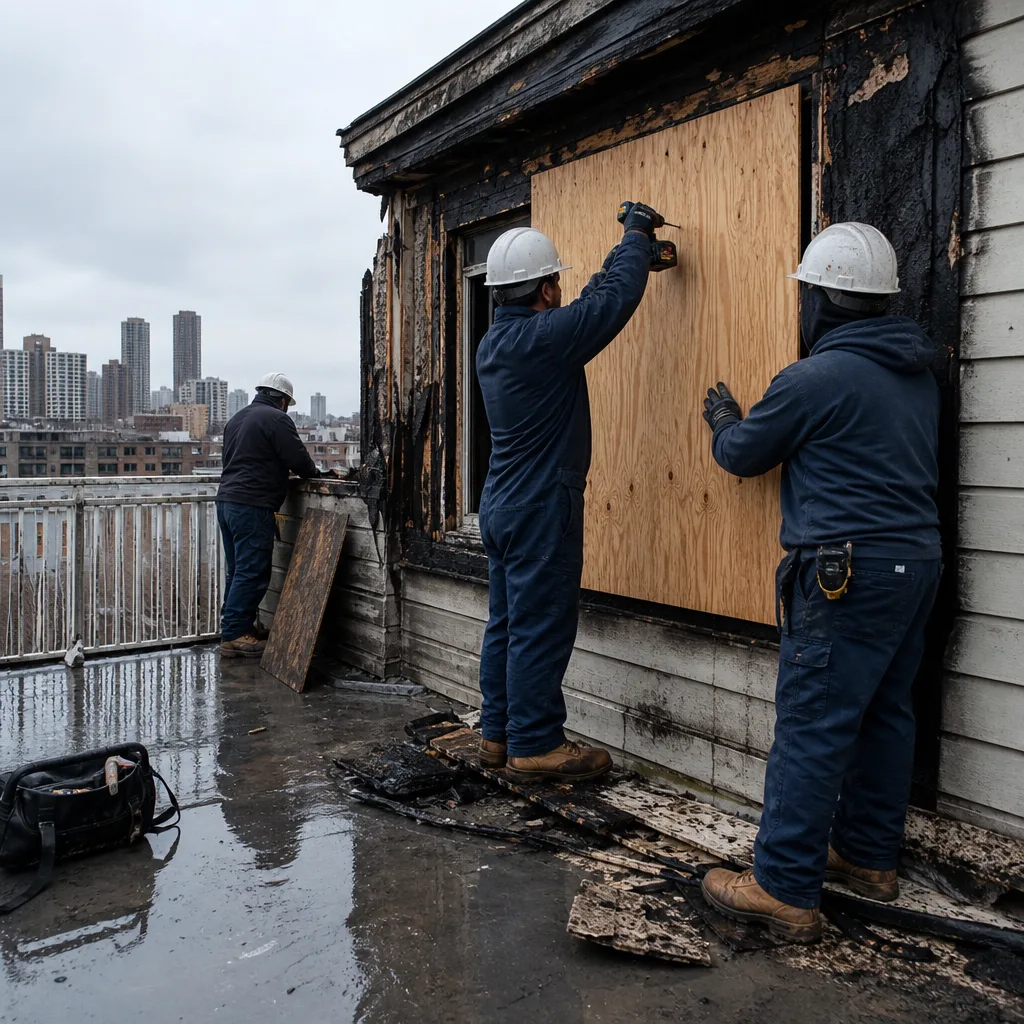
Harrison’s older homes generate claims that adjusters question: pre-existing pipe corrosion, slab seepage, or long-term humidity. Our documentation gets ahead of that. Daily moisture logs, pre-existing condition photos, and line-item scopes built in industry language keep the claim moving. For Purchase estates with custom finishes, we document material grades and square footages so the adjuster sees why the line items exceed standard Xactimate pricing. We stand behind that paperwork.
Drywall & Flooring Repair
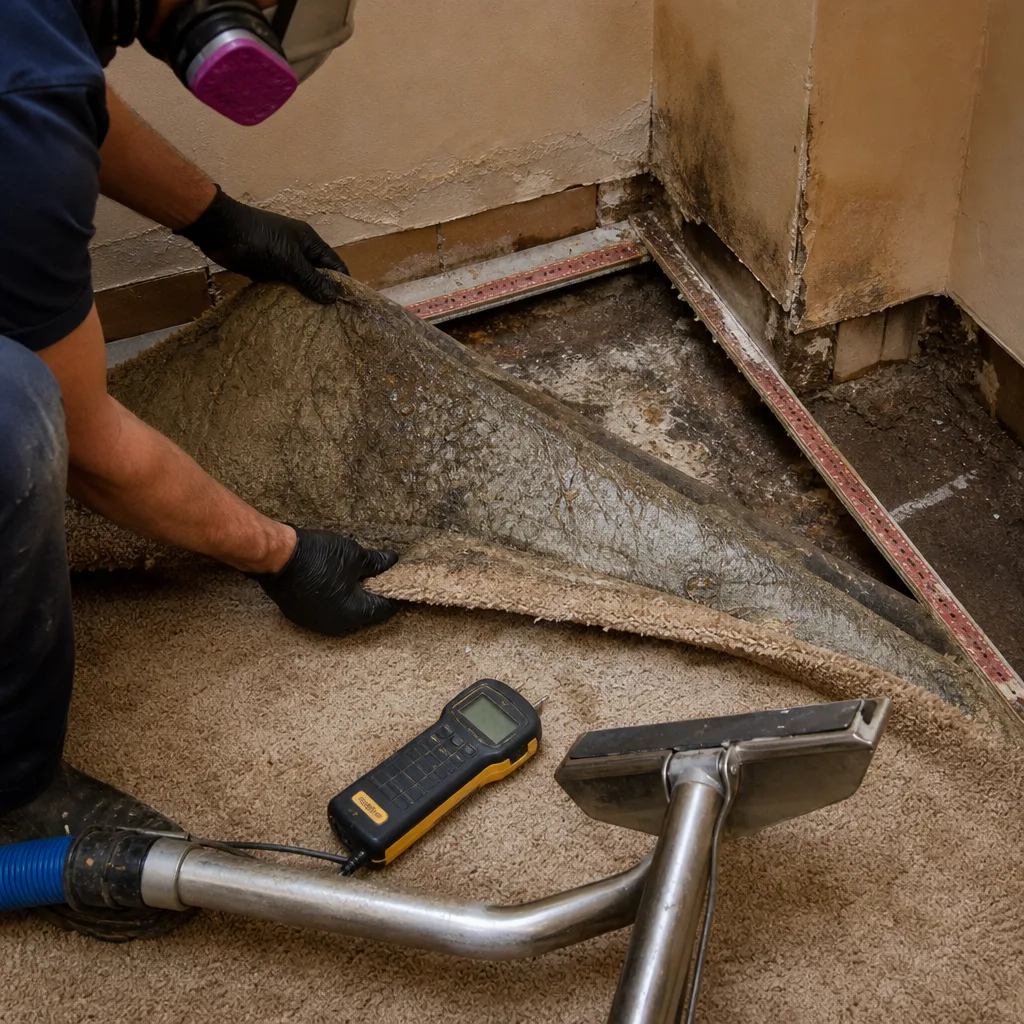
Water-warped hardwood, buckled subfloor, and crumbling plaster all get addressed in scope. In Harrison cape cods, we work to preserve original oak and maple floors where the moisture readings support it; where the boards have cupped past the point of sanding and refinish, we say so plainly and show you the readings.
Carpet & Upholstery Cleaning
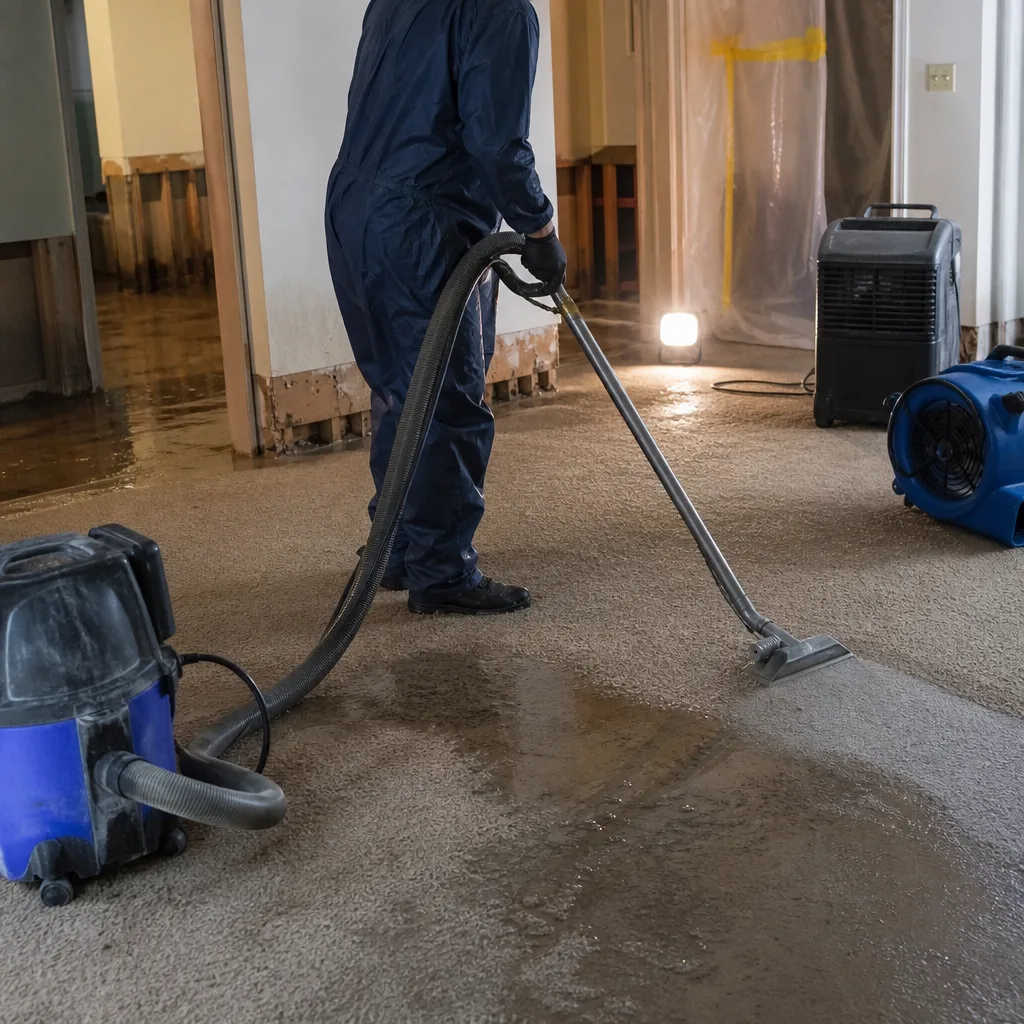
Category 1 losses sometimes leave carpet and upholstery that can be saved with proper extraction and drying. We use professional-grade equipment and anti-microbial treatments when the material supports it. If the carpet pad is saturated, we cut it back rather than risk hidden mold under the surface. A square deal means telling you what’s worth saving and what isn’t.
Post-Construction Cleanup
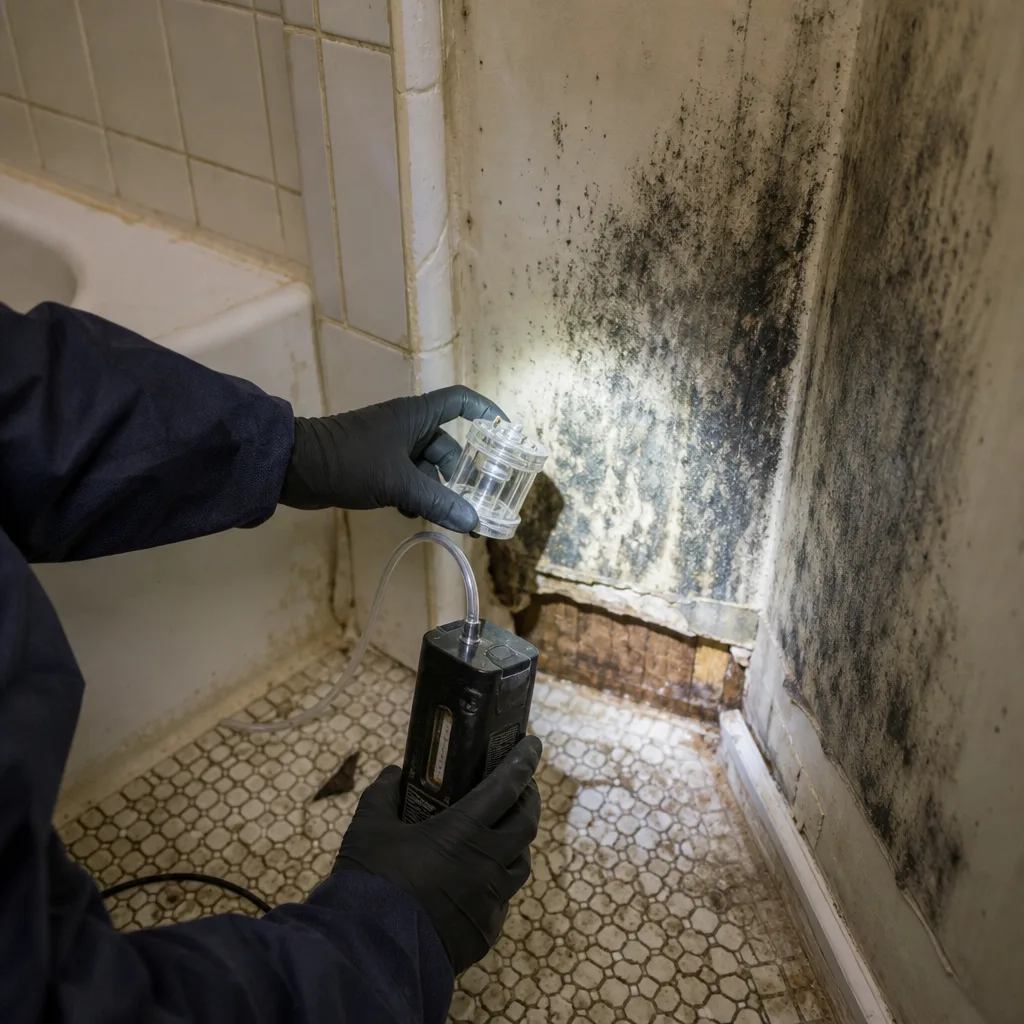
After drywall, paint, and finish work, we leave the house ready to live in. Fine dust from sanding, smudges from trim work, and construction debris all get addressed. We walk the site with you before we call it done, and the 90-Day Done Right Promise covers what we missed.
What happens when you call
- 1
A real person answersNo phone trees - you reach a local pro.
- 2
You get an upfront price rangeHonest numbers before anyone is dispatched.
- 3
A background-checked tech heads outLicensed & insured, dispatched right away.
- 4
You approve before work beginsNothing starts until you say go.
Reconstruction & Cleanup Costs in Harrison, NY
Harrison pricing reflects the dual market it serves. In the village core, a single-room water extraction and dry-out on an older colonial typically runs $1,800-$4,200, while a finished basement flood with Category 3 water and full demolition plus rebuild lands between $8,000 and $14,000. Fire damage from a kitchen incident with smoke migration through balloon framing often starts around $6,000 and climbs based on square footage and finish materials.
Purchase estate work runs higher by design. Custom Venetian plaster, imported stone, and specialty millwork cannot be replaced with stock materials, and the line items reflect that. A flooded master bath in a Purchase property with custom finishes routinely falls between $10,000 and $25,000 or more, depending on material sourcing. The free visual inspection is the fastest way to a firm number: we measure, we scope, and we put it in writing before work begins. Senior and veteran homeowners always receive a 5% discount, and any repair over $250 qualifies for $50 off.
We Also Serve Cities Near Harrison
Our Harrison crews regularly work neighboring communities including Harrison itself, Rye, Mamaroneck, Larchmont, and Port Chester. Same 45-minute response, same live 24/7 dispatch, same written guarantee. Call (917) 924-4221 and a real person picks up, wherever the damage happened.
Serving Harrison, NY - Our Local Coverage Area
We’re based in the Harrison area and know this community well. Use the map below to see our service coverage - if you’re nearby, we can almost certainly help.
Harrison Reconstruction & Cleanup Questions, Answered
How do you handle water damage in a pre-1950 Harrison colonial with original plaster walls and no vapor barrier?
We treat original plaster as a different material than drywall, not a slower-drying version of it. Plaster over wood lath holds moisture in the mortar and the lath behind it, and with no vapor barrier, the wall assembly doesn’t breathe the way modern construction does. That means we run moisture mapping on every affected wall plane, not just the visible surface. If readings show saturation behind the plaster, we open controlled access points at the base and run air movers and dehumidifiers into the stud cavities. In many cases the plaster face can be saved. In others, the mortar has already begun to degrade and the only sound fix is removal and reinstatement with blueboard and skim-coat plaster to match the original profile. The decision is always based on readings, never on habit. Call (917) 924-4221 and we’ll walk you through what we see.
What does Reconstruction & Cleanup look like for a Purchase estate with custom millwork after a pipe burst?
A Purchase estate pipe burst is a finish-preservation job first and a drying job second. The water damage is real, but what the homeowner is really losing is custom millwork, imported tile, or hand-finished wall surfaces that cannot be reordered from a catalog. We start by documenting every affected finish with photographs and measurements so the insurance claim reflects the actual material grade. Then we dry the structure with low-grain refrigerant dehumidifiers and air movers positioned to protect, not blast, the fine surfaces. Millwork gets cleaned and refinished by tradespeople who work on high-end properties, not patched with stock trim. The process takes longer than standard restoration, and it should. Rushing custom finishes ruins them. For a free visual inspection at your estate, call (917) 924-4221.
Are there special drying protocols for homes near the Mamaroneck River in Harrison?
Yes, and they start with the water category. Floodwater from the Mamaroneck River corridor is always Category 3: contaminated with river sediment, stormwater, and potentially sewage from backed-up laterals. That means containment, antimicrobial treatment, and removal of porous materials that contacted the water, including drywall, insulation, carpet, and pad. Structural framing gets dried and treated; the drying itself is no different in principle from a clean-water job, but the demolition perimeter is much more aggressive. Homes near the river also tend to have higher ambient humidity, so our drying plans factor that in from the first day. If your home flooded this week, call (917) 924-4221 before more water migrates up into the framing.
How do you document insurance claims for Reconstruction & Cleanup in Harrison’s older village homes?
We document what the carrier needs to see: moisture readings day by day, photos of every affected room and material, and a line-item scope that matches the adjuster’s software. In older village homes, that means photographing original plaster profiles and existing trim before demolition, because if we remove them and the carrier didn’t signal pre-existing condition, the claim stalls. We also photograph the pipes and fittings that failed, because carriers routinely ask whether the loss came from covered sudden failure or uncovered long-term wear. Our team communicates directly with the adjuster from the first submission to the final invoice. You don’t carry messages. Call (917) 924-4221 and we’ll start the file the same day.
Can you preserve original hardwood floors in a Harrison cape cod after water damage, or do they need full replacement?
Original oak or maple floors can often be saved, but the answer depends on how long the water sat, what category it was, and what the moisture readings say. Hardwood swells when it absorbs water, and if the boards have cupped but remain below the replacement threshold on our moisture meters, we dry them in place with low-positioned air movers and dehumidifiers, then sand and refinish after the structure is stable. If the water was Category 3 or sat long enough to delaminate the boards, the honest answer is replacement. Harrison cape cods from the 1940s and 50s often have original strip flooring that is worth fighting for, and we fight for it. But we won’t promise a floor is salvageable to win the job. We’ll show you the readings. Call (917) 924-4221 for a free inspection.
How fast can you actually get to a Harrison address for an emergency cleanup?
We commit to 45 minutes from call to dispatch for Harrison addresses. Our crews stage in and around the metro area, and a live dispatcher tracks every truck, so the arrival window is real rather than aspirational. For a flooded basement or a burst pipe, the first 45 minutes usually separates a drying job from a full tear-out. Call (917) 924-4221, tell the dispatcher what you’re seeing, and the crew is moving.
What certifications do your Harrison technicians hold?
Our Harrison crews are background-checked and uniformed, trained to IICRC standards including WRT (Water Damage Restoration Technician) and ASD (Applied Structural Drying), with additional RIA and IFA training. On fire jobs, the relevant certification is FSRT; on mold work, AMRT. We do not send uncertified labor to your home. The person reading the moisture meter on day one is the same person who answers your questions about it.
What should a Harrison homeowner do in the first 30 minutes after a pipe burst or flood?
Shut off the water at the main if you can reach it safely. Kill power to the affected area if water is near outlets or the panel. Move what you can off the floor and out of the water’s path. Then call (917) 924-4221. Don’t wait for the insurance company to call back. Don’t start pulling baseboards yourself. Our dispatcher will talk you through the next steps and get a crew moving to your Harrison address. The equipment is already on the truck.
Written by Curt Bowman, Owner at Floodline Restoration Co. of Manhattan, serving Harrison since our founding in 2010.