
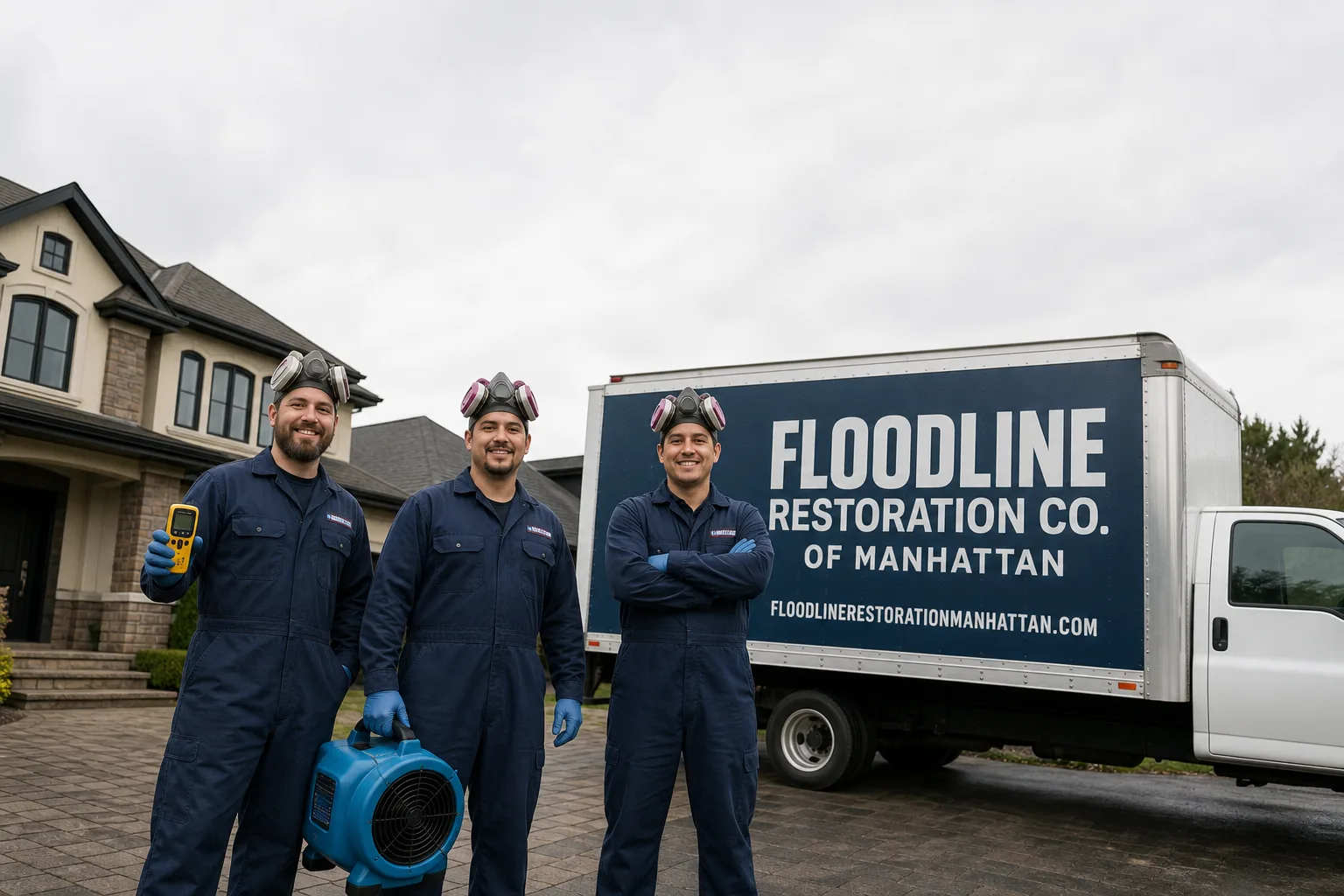
Free visual inspection and a written scope of work before any mitigation begins - photos, moisture readings, and drying logs go in your claim file
The scope we write is the scope we bill. Anything new gets shown to you, in writing, before we touch it.






 Before
 After
After Before
 After
After Before
 After
After24/7 Emergency Reconstruction & Cleanup in Richmond Hill
Reconstruction and cleanup in Richmond Hill after a flood, fire, or sewer backup needs to start the same day the damage happens. Water moves fast through the neighborhood’s pre-1930 wood-frame homes, and every hour it sits means more drywall to cut, more insulation to pull, and more mold to remediate. Floodline Restoration Co. of Manhattan answers the phone with a live dispatcher at any hour and can have a certified crew on site in Richmond Hill within 45 minutes. Call (917) 924-4221 and we’ll start with a free visual inspection, then tell you exactly what needs to happen and what it will cost before any work begins.
Understanding Reconstruction & Cleanup Severity in Richmond Hill Properties
Richmond Hill’s housing stock was built between roughly 1900 and 1935, and those buildings behave differently in a water-loss event than anything built after 1960. The critical difference is balloon-frame construction. In a balloon-frame house, the wall cavities run continuously from the basement sill plate all the way to the roof line with no fire blocking or horizontal breaks. When a basement floods in Richmond Hill, water soaks into the bottom of those open cavities and wicks upward inside the walls. Our techs have pulled drywall off upper-floor bedrooms in Richmond Hill and found active mold growth two floors above a basement that looked bone dry on the surface. That’s why surface moisture meters are not enough here. We use penetrating and thermal imaging equipment to map moisture inside wall cavities, then log daily readings until the entire structure meets the dry standard.
Most of the water we handle in Richmond Hill is Category 3, which is the most severe classification. It’s not clean rainwater. When the combined sewer system backs up during a nor’easter or a summer cloudburst, what comes up through the floor drains in this neighborhood is sewage-contaminated water carrying bacteria, viruses, and whatever else the pipe was carrying. Category 3 water requires full containment, removal of all porous materials it touched, antimicrobial treatment, and documented clearance before reconstruction begins. We follow those protocols on every sewer-backup job in Richmond Hill, no exceptions. The alternative, skipping containment or leaving wet drywall behind, is a mold problem that returns in six months and a scope of work that gets more expensive the second time.
Why Richmond Hill Property Owners Choose Floodline Restoration Co. of Manhattan
- 45-minute response commitment – We dispatch crews from staging points around Queens so someone is at your door in Richmond Hill fast, not in four hours. The first call, the first look, and the fix all happen from one team.
- 24/7 live answer, never an automated system – A real dispatcher picks up the phone at 2 a.m. and stays on the line until a crew is rolling. No voicemail, no callback, no waiting on hold.
- IICRC-certified crews, including WRT and ASD certifications – Our techs train to the Water Restoration Technician and Applied Structural Drying standards, which means the drying plan they write is built on documented science, not guesswork.
- Free visual inspection before you commit – We look, we tell you what we found, and we put a written scope and a firm price in your hands. You decide. There is no obligation and no high-pressure pitch.
- Direct insurance billing – We document the loss from the first hour, bill your carrier directly, and handle the adjuster conversation so you don’t spend your week on the phone.
- One team from extraction to final paint – The same crew that cuts the wet drywall and runs the drying equipment rebuilds your walls and floors. No mid-job handoff to a unfamiliar subcontractor.
Our Reconstruction & Cleanup Process
1. Inspection & Assessment
We walk the entire property with thermal imaging and penetrating moisture meters, mapping the damage line and identifying what’s still wet inside the walls. In Richmond Hill’s balloon-frame homes, this step takes longer because we’re specifically looking for hidden wicking upward from the basement.
2. Extraction & Stabilization
We remove standing water with truck-mounted extraction units, then stabilize the structure to prevent further damage. For Category 3 water, this includes setting up containment barriers and negative air pressure before any demolition begins, which protects the rest of the house from airborne mold spores and contaminants.
3. Drying & Dehumidification
High-volume air movers and LGR dehumidifiers from Dri-Eaz and Phoenix run around the clock, with daily readings logged by hand. For balloon-frame cavities, we supplement with Injectidry wall-drying systems that pull moisture from inside the open stud bays. The drying log goes to you and your carrier.
4. Cleaning & Sanitization
Every affected surface gets cleaned, and every Category 3 loss gets antimicrobial treatment. We run HEPA air scrubbers to capture airborne particulates and, where needed, follow up with clearance testing before we put anything back together.
5. Reconstruction Scoping & Documentation
We write the line-item scope for the rebuild, photograph every phase, and document all treatments for the insurance file. This is the step that determines whether your claim pays for the full restoration or just a partial patch, and we’ve been doing it for enough years to know what a carrier looks for.
6. Repairs & Restoration
Drywall, insulation, flooring, trim, paint: we rebuild to pre-loss condition or better, and we do it with the same crew that ran the drying. When the job is done, you get the 90-Day Done Right Promise in writing. If something is not right, we make it right. No arguing.
Need Emergency Reconstruction & Cleanup in Richmond Hill Now?
Crews minutes away, answering live 24 hours a day. The sooner we start, the less it costs.
Working With Your Insurance Company
Insurance claims after a water loss in Richmond Hill hinge on documentation. If the adjuster cannot see the damage, the extension of the damage, and the reasoning behind the scope of work, the claim gets denied or underpaid. We photograph everything, room by room, before we move a single piece of drywall. We keep daily moisture readings and drying logs. We write a detailed, line-item scope with real numbers, not vague descriptions. And we speak directly with your adjuster in the language they expect. You never have to play messenger between Floodline Restoration Co. and the carrier. Curt Bowman founded this company in 2010 around a dispatch board, not a sales desk, and the systems we run for claims are built the same way: methodical, documented, and complete.
What We Provide Your Insurer
- Thorough documentation of the loss
- Photos of all damage, room by room
- Moisture readings and drying logs
- A detailed, line-item scope of work
- Direct coordination with your carrier
Built for Richmond Hill’s Loss Calendar
Reconstruction and cleanup in Richmond Hill follows a seasonal pattern that homeowners here know well, because most of them have lived it at least twice. January and February bring deep freezes that split supply lines in uninsulated crawlspaces and exterior walls without adequate frost protection. Those bursts send clean but aggressive water through finished basements and first-floor kitchens, usually discovered when someone comes home from work to a running ceiling. March and April bring thaw and spring rain, which finds every foundation crack in Richmond Hill’s rubble-stone and brick basements. July and August thunderstorms are the worst here. The neighborhood’s flat grade and combined sewer system mean a thirty-minute cloudburst can push street-level water over curbs and up through basement floor drains, bringing the Category 3 contamination we described above. Nor’easters hit in the fall and winter and bring the same sewer-backup pattern with more volume. The homes sustain repeat damage, and many Richmond Hill walls hold moisture from multiple events. A proper scope here has to account for that history.
Reconstruction & Cleanup Across Richmond Hill’s Neighborhoods
Richmond Hill is not one uniform neighborhood. The blocks around Jamaica Avenue are dense with attached and semi-detached wood-frame houses from the 1910s and 1920s, many with finished basement units that tenants call home. When water hits those blocks, displacement is immediate and evacuation usually includes a family that doesn’t own the house.
Up around Atlantic Avenue and the Forest Park edge, the homes tend to be slightly larger, some with brick fronts over balloon-frame interiors. The brick holds up better than wood siding, but the wall cavities behind it are the same open channel to the roof. Mid-neighborhood streets like 116th Street, 117th Street, and Park Lane South mix single-family houses with subdivided homes, and we’ve learned to scope every basement here as a potential living space, not just a storage cellar. That changes the urgency. South toward Liberty Avenue and the Ozone Park boundary, the housing is mixed residential and rail-adjacent, and street drainage can be slower after heavy rain. We route crews to all of these areas off Atlantic and Jamaica, which keeps our response time short. Losses run the same regardless of block: basement sewage, wicking walls, plaster that needs careful containment before removal, and homeowners who need the job done correctly the first time.
Specialized Reconstruction & Cleanup Services We Offer in Richmond Hill
Full-Service Reconstruction
We rebuild everything a water or fire event took out: framing, drywall, insulation, flooring, doors, trim, and paint. For Richmond Hill homes, that frequently includes repairing original plaster walls and matching the older trim profiles common in the neighborhood’s pre-war houses. Our Reconstruction & Cleanup crew handles the entire scope under one roof, which means no mid-job handoff and no finger-pointing about who was responsible for what.
Drywall & Flooring Repair
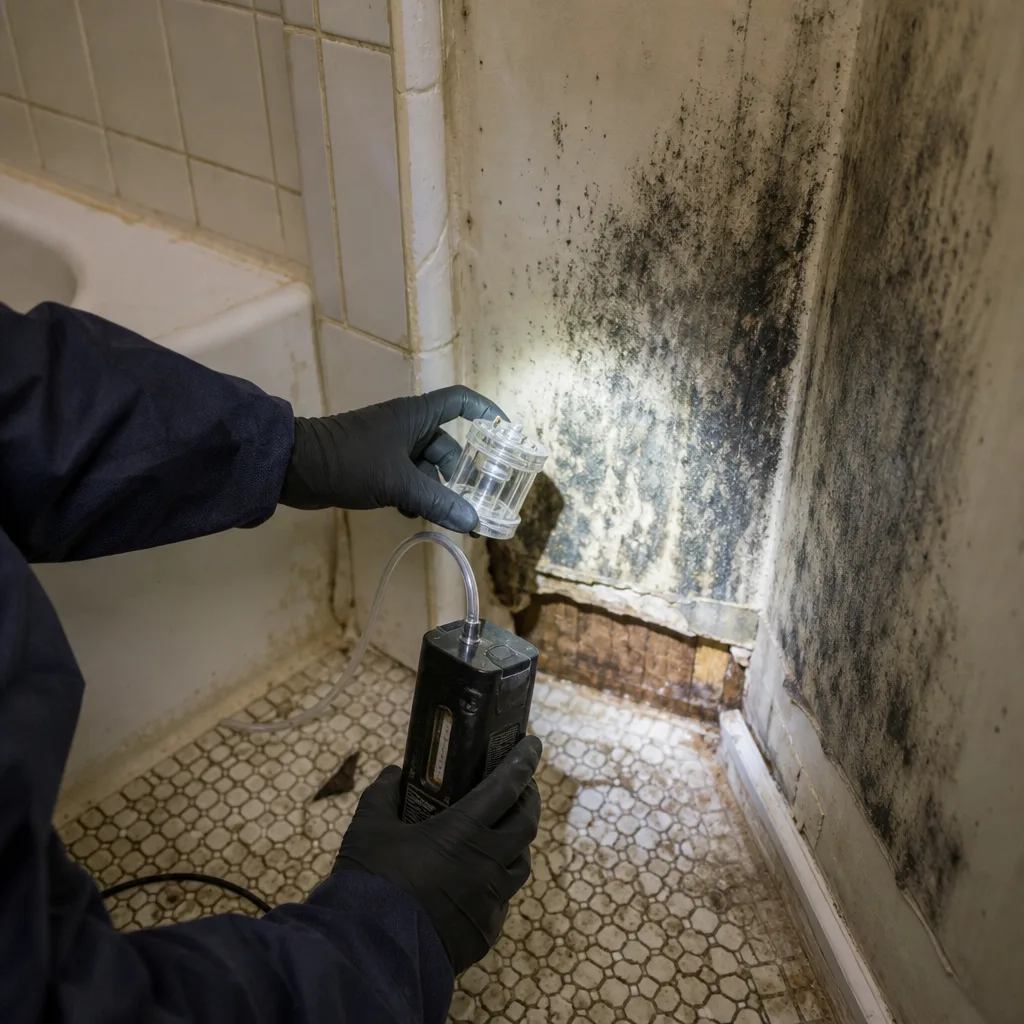
Most Richmond Hill reconstruction involves cutting drywall that was soaked from behind by wicking moisture, then replacing it once the cavity is dry. We match drywall thickness and texture, and we handle hardwood floors, tile, and the laminate planks popular in rental basement finishes. If the floor system is still wet, we dry it before we lay anything over it. Covering a wet subfloor is how you get a warranty callback.
Insurance Claim Documentation
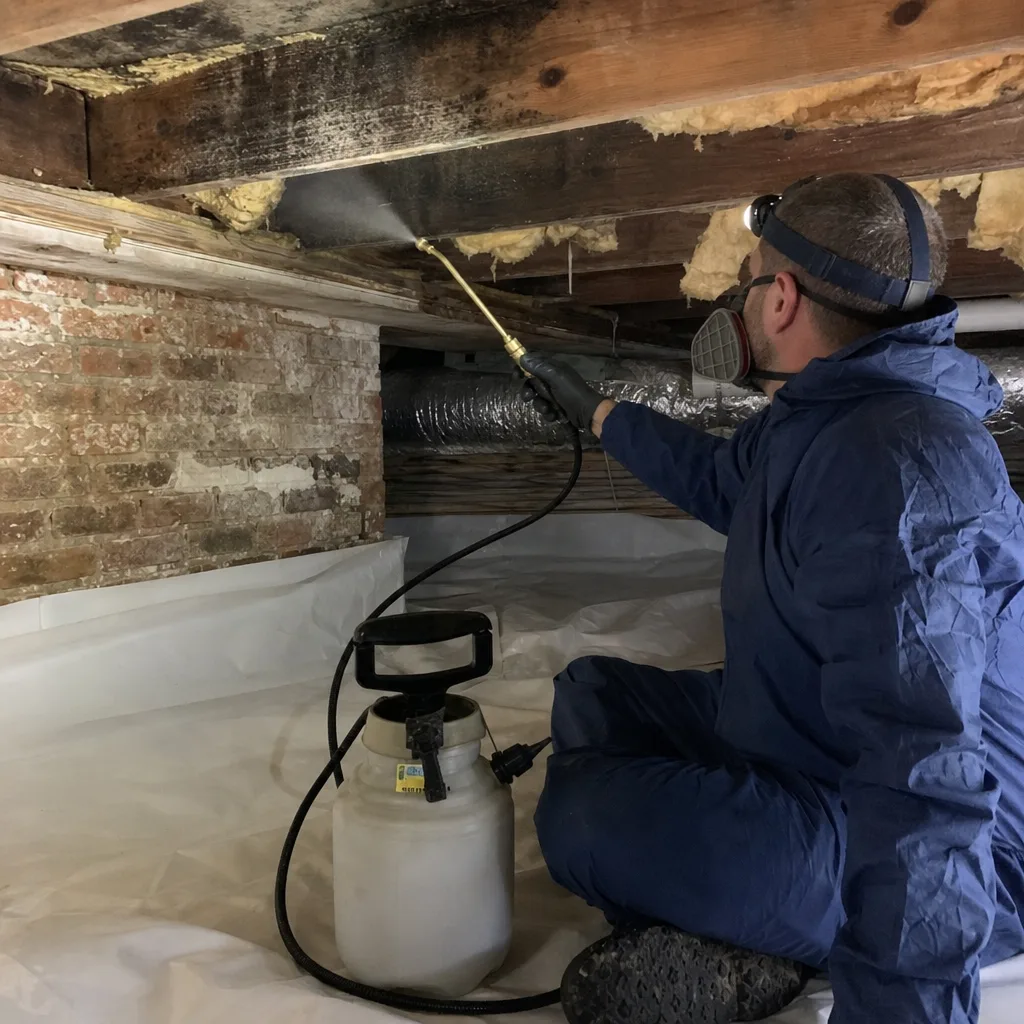
This is the service that protects your payout. We document the loss from the first hour with photos, moisture readings, an itemized scope, and daily drying logs written the way an adjuster expects to see them. We bill the carrier directly and talk to them on your behalf. When a Richmond Hill homeowner has a claim denied or slashed, it’s almost always because the documentation was thin. We do not do thin documentation.
Contents Restoration & Pack-Out
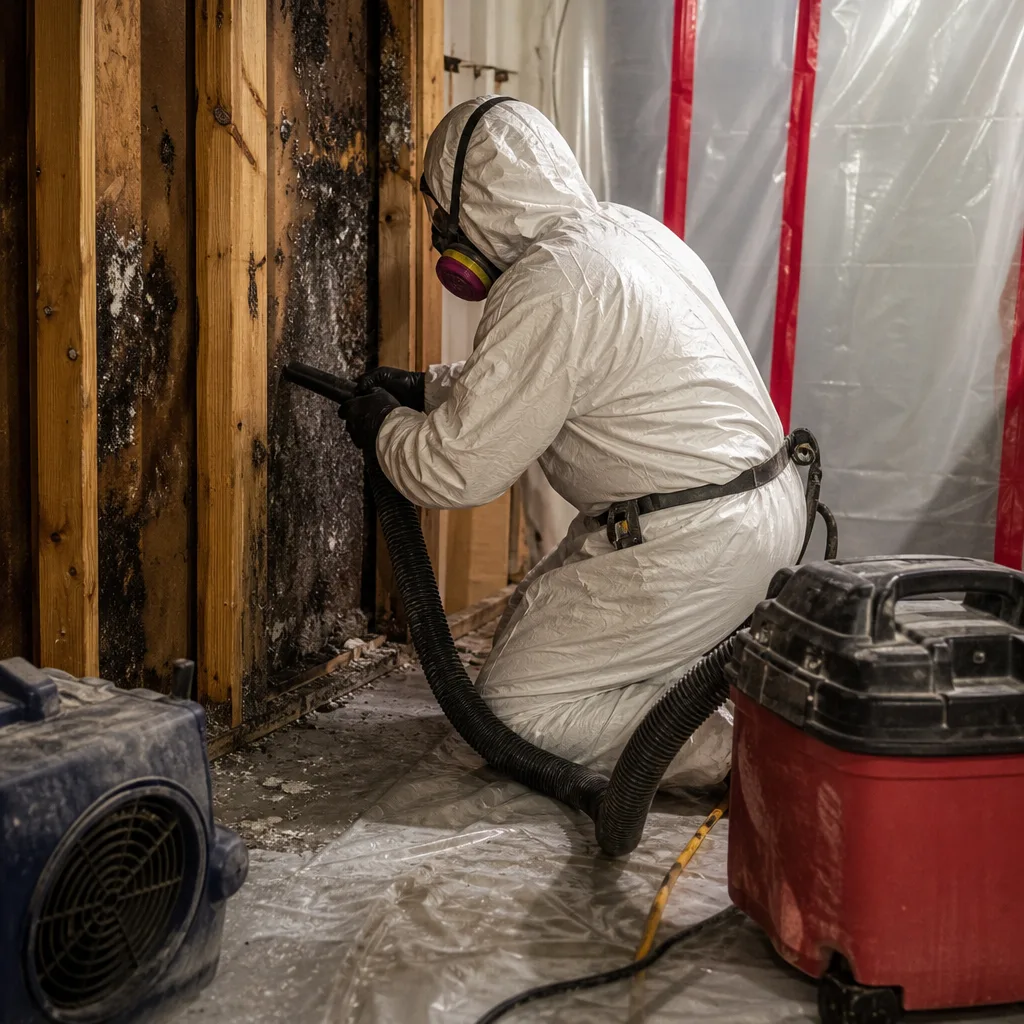
Furniture, clothing, documents, electronics: we pack out what needs to be moved, clean and restore what can be saved, and store the rest under controlled conditions until the rebuild is finished. For finished basement apartments in Richmond Hill, this means a tenant’s entire life gets packed, cleaned, and returned, and we treat that responsibility seriously.
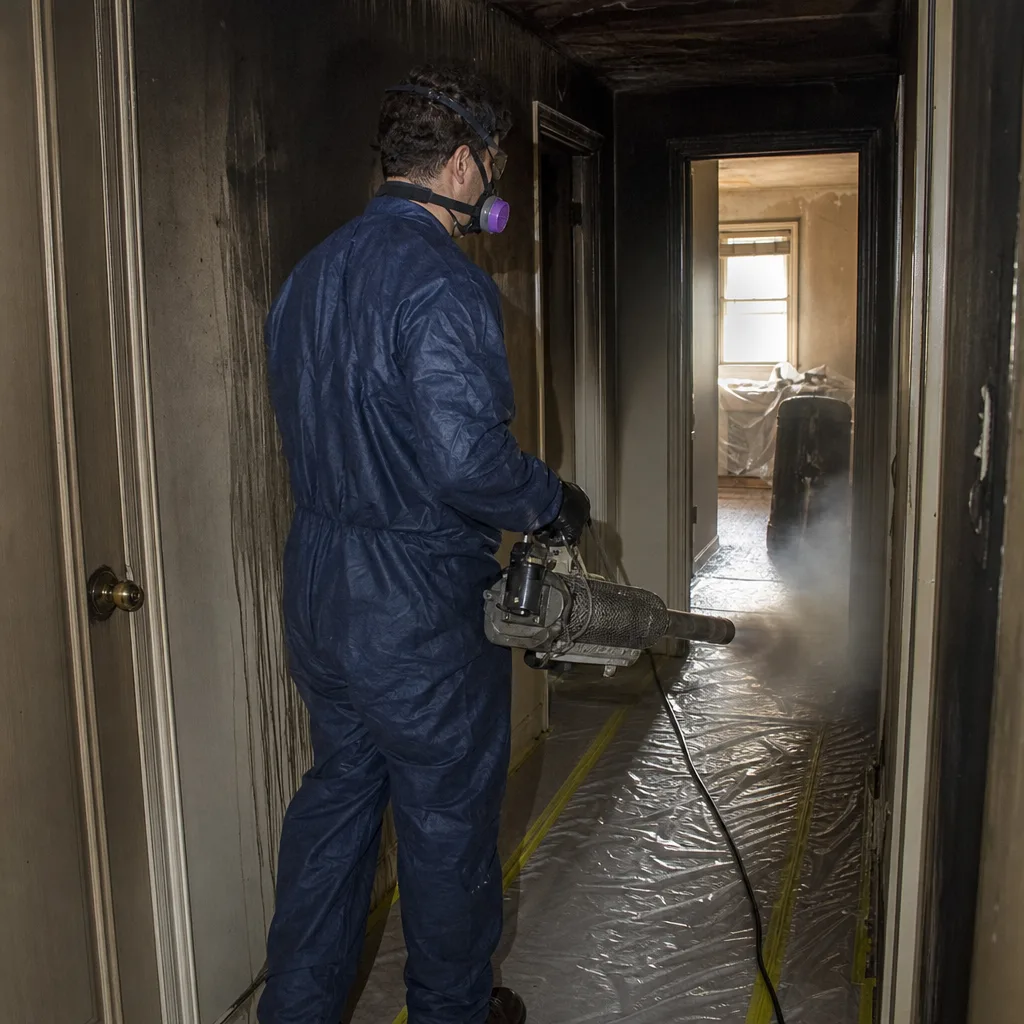
Carpet & Upholstery Cleaning
Where carpet and upholstery have been exposed to clean water or light smoke, we provide professional-grade hot water extraction and deodorization. After Category 3 water, carpet is almost always removed, not cleaned, and we’ll tell you so plainly. For post-construction dust and years of accumulated soil, this service restores the surface without replacing it.
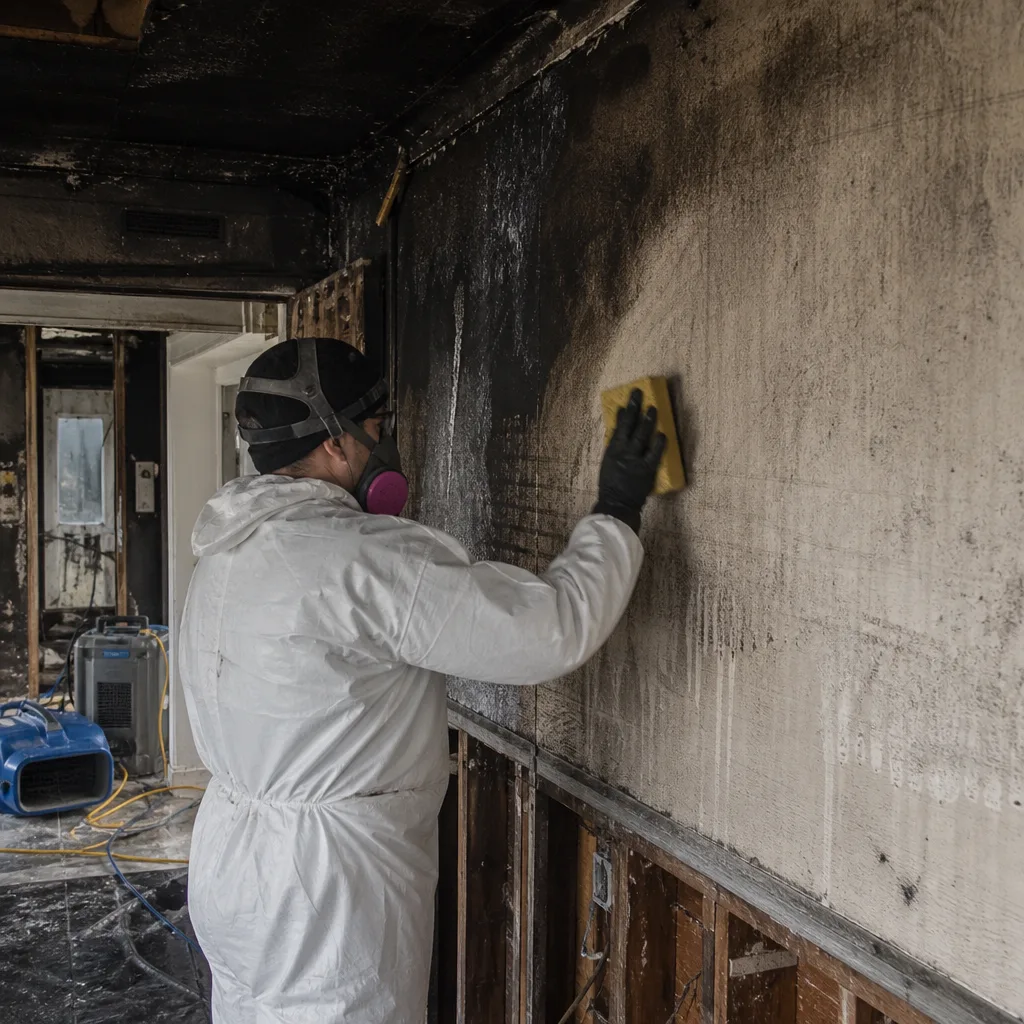
Post-Construction Cleanup
After our rebuild is complete, or after any renovation in Richmond Hill, we remove the dust, debris, and construction residue that settles into every surface in the house. We run HEPA air scrubbers during and after the work, wipe down walls and fixtures, and leave the place ready to live in, not ready to sweep.
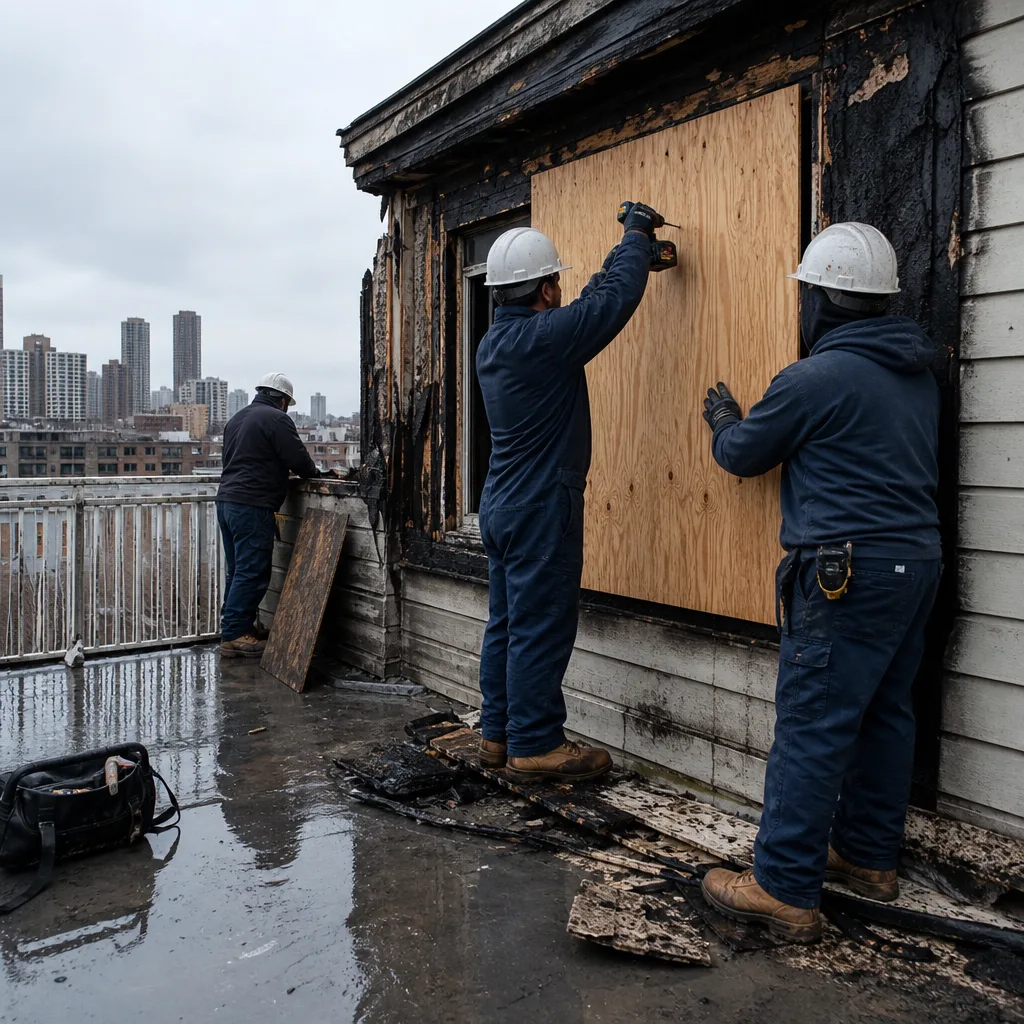
What happens when you call
- 1
A real person answersNo phone trees - you reach a local pro.
- 2
You get an upfront price rangeHonest numbers before anyone is dispatched.
- 3
A background-checked tech heads outLicensed & insured, dispatched right away.
- 4
You approve before work beginsNothing starts until you say go.
Reconstruction & Cleanup Costs in Richmond Hill, NY
What you’ll pay depends on the size of the loss, the category of water, and how far the moisture traveled inside the walls. In Richmond Hill specifically, here are the ranges we typically see:
- Basement sewer-backup cleanup and disinfecting (finished space, partial): $2,400-$4,800
- Full finished basement gut and rebuild after Category 3 water: $9,000-$22,000 depending on fixtures and flooring
- Drywall removal and replacement for one room with wicking damage: $1,800-$3,400
- Contents pack-out, cleaning, and storage for a one-bedroom rental unit: $1,500-$3,200
- Post-construction cleanup for a whole house after our rebuild: $800-$1,800
What moves the price most in Richmond Hill is whether the water was Category 3 and whether the wall cavities wicked moisture upward. A finished basement with sewage water and balloon-frame walls is the most expensive scenario, because it requires containment, more demolition, longer drying time, and antimicrobial treatment on everything. The free visual inspection gets you a firm number. Call (917) 924-4221 and we’ll tell you what you’re looking at before you spend a cent. Our standing offers apply on every job: $50 off any repair over $250, $89 seasonal tune-up, and a 5% discount for seniors and veterans.
We Also Serve Cities Near Richmond Hill
Our dispatch roster covers Kew Gardens, South Richmond Hill, Ozone Park, and Woodhaven with the same 45-minute response commitment and live 24/7 phone answer. If you’re on the edge of any of those neighborhoods, call and we’ll confirm which crew is nearest to you.
Richmond Hill Reconstruction & Cleanup Questions, Answered
Why do Richmond Hill basements flood from the sewer instead of just rainwater?
Because the combined sewer system in this part of Queens carries both stormwater and sanitary sewage in the same pipes. When a nor’easter or summer cloudburst overloads the system, the water has nowhere to go but back up through the lowest opening, which is usually the floor drain in your basement. That water is Category 3, sewage-contaminated, and needs full sanitary treatment and removal of any porous material it touched. Call (917) 924-4221 and we’ll walk you through exactly what your situation requires.
How do you know if mold is already growing after a Richmond Hill basement flood?
Mold begins colonizing wet drywall, insulation, and wood within 24 to 48 hours in the warm months, and it can start slower but still establish itself in fall and winter, especially inside walls. In Richmond Hill’s balloon-frame homes, the real danger is mold growing inside open wall cavities two floors above where you can see the water line. We use thermal imaging and penetrating moisture meters to find elevated moisture inside cavities, then confirm with air sampling and visual inspection when we open the walls. If you smell a musty odor anywhere in the house after a basement flood, that’s usually the sign that wicking has already carried moisture upward.
What does a Reconstruction & Cleanup scope of work include for a converted basement apartment in Richmond Hill?
A proper scope for a finished basement unit includes: containment setup before demolition, removal of all Category 3-affected drywall, insulation, flooring, and baseboards, antimicrobial treatment on framing and concrete, structural drying with daily moisture readings, HEPA air scrubbing during the work, reconstruction to pre-loss condition, and a documented drying log and photo record for your insurer. If the unit is tenant-occupied, we also coordinate contents pack-out and temporary storage. The scope should be written and priced before work starts, which is exactly what we do.
Do you need a permit to rebuild after a flood in Richmond Hill?
It depends on the scope. Replacing drywall, insulation, and flooring as part of a direct repair to pre-loss condition often does not require a permit from the NYC Department of Buildings, but any change to the structure, the electrical system, the plumbing, or the layout of a unit likely does. The same applies if you are rebuilding a basement into a legal dwelling unit, which carries additional egress and ceiling-height requirements. We’ll tell you before we start whether your job needs a permit and we handle the filing when it does.
Why is dehumidification harder in Richmond Hill’s old houses than in newer Queens homes?
Older Richmond Hill houses have plaster walls, brick and rubble-stone foundations, and minimal vapor barriers, which means the building itself holds moisture and releases it slowly. Newer platform-frame construction uses studs, engineered lumber, and vapor barriers that dry faster and more predictably. In a pre-1930 balloon-frame house, the wall cavities are deep, often irregular, and connected across multiple floors, so we have to run dehumidifiers longer and use Injectidry wall-drying systems to pull moisture out of cavities that open equipment cannot reach. It’s not a harder job, it’s a longer one, and cutting the drying time short is the mistake that brings mold back.
How fast can you actually get to a house in Richmond Hill?
Our commitment is 45 minutes or less from the time you call. Dispatch routes crews from access points off Atlantic Avenue and Jamaica Avenue, which keeps us close to most of the neighborhood’s grid. The dispatcher who answers the phone knows which crew is nearest and sends them immediately. Call (917) 924-4221 and we’ll tell you exactly when someone will be at your door.
Will my insurance cover the full cost of reconstruction after a flood?
Most standard homeowners policies in New York cover sudden and accidental water damage from a burst pipe, but sewer backup and storm-related flooding are often excluded unless you purchased specific endorsements. If your claim is covered, our documentation package, direct adjuster communication, and line-item scope make it far more likely the carrier approves the full scope rather than a partial patch. We’ll be direct with you about what your policy language says and what to expect before we start.
What should I do in the first 30 minutes after a flood or sewer backup in Richmond Hill?
Turn off the electricity to the affected area at the breaker panel if you can do so safely without stepping in water. Do not enter standing water that came from a sewer line. Call (917) 924-4221 and we’ll talk you through the immediate steps while the crew is en route. Begin documenting with your phone: take photos of every affected room before moving anything. If you know where your policy documents are, pull them out. Our dispatcher will stay on the line with you and coordinate the whole response.
Serving Richmond Hill, NY - Our Local Coverage Area
We’re based in the Richmond Hill area and know this community well. Use the map below to see our service coverage - if you’re nearby, we can almost certainly help.
Reconstruction & Cleanup for Richmond Hill, Done Right and Backed in Writing
We rebuilt a finished basement rental on 116th Street near Jamaica Avenue after a summer cloudburst sent Category 3 water through the floor drain and into the drywall. Our techs cut containment, pulled the wet drywall and insulation, and used Injectidry to dry the balloon-frame cavities, documenting every moisture reading and antimicrobial treatment in the drying logs before rebuilding to pre-loss condition. The tenant moved back into a dry, tested, documented apartment, and the homeowner’s claim was approved on the first submission.
That’s the standard we bring to every job in Richmond Hill. A square deal, no surprises on the bill, and a name you can hold accountable. We’ve been doing this for over 42 years across the city, and we plan to be answering the phone in another thirty. Every job is backed by the 90-Day Done Right Promise, the Keystone Standard, given in writing with no paperwork battles and no arguing. Krafted right, Every time, Your home first, Standing behind it.
If you have water in your basement, a wall that won’t dry, or a rebuild that needs to happen correctly the first time, call (917) 924-4221 now. A live person will answer, and the estimate is free.
Written by Curt Bowman, Owner at Floodline Restoration Co. of Manhattan, serving Richmond Hill.