
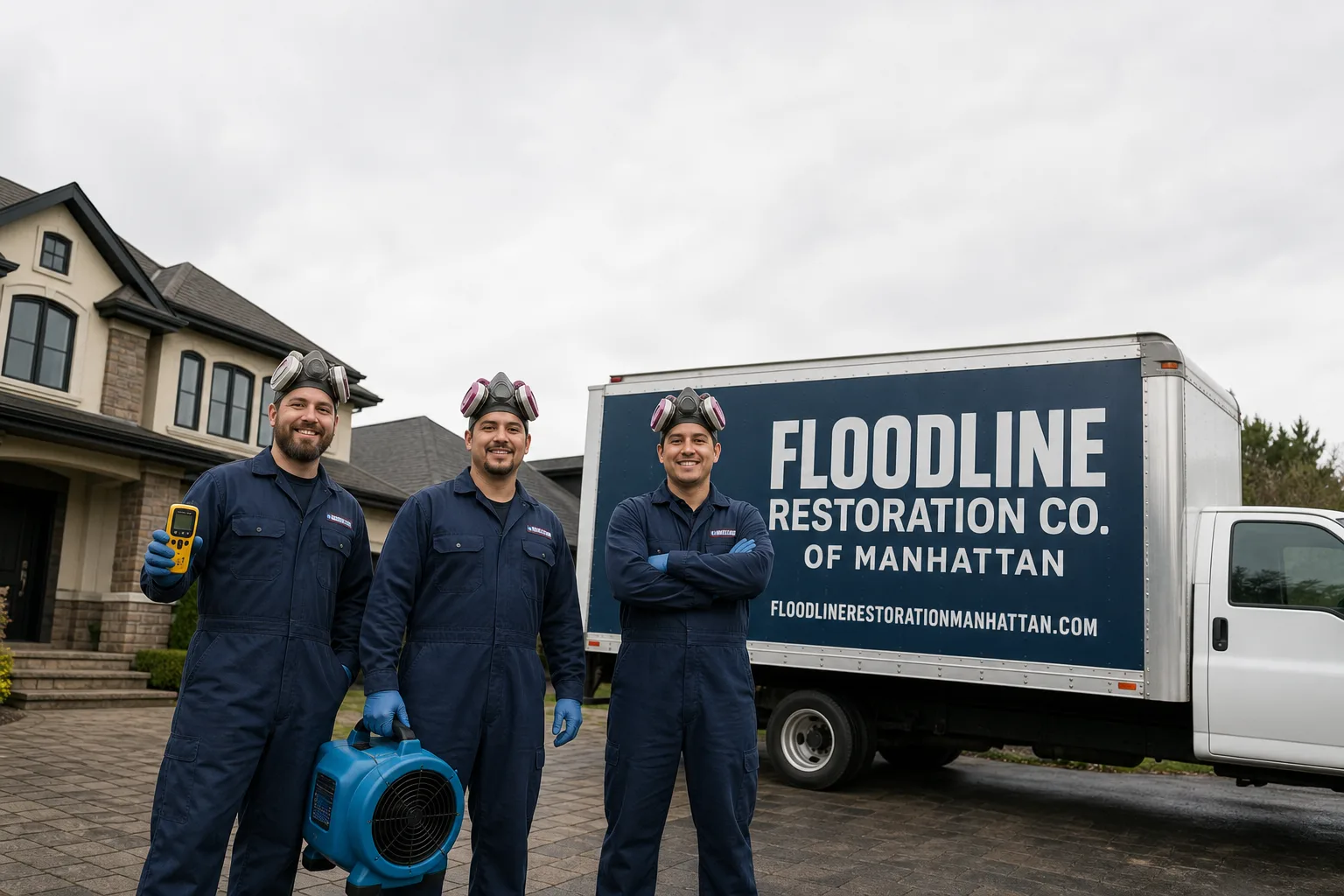
Free visual inspection and a written scope of work before any mitigation begins - photos, moisture readings, and drying logs go in your claim file
The scope we write is the scope we bill. Anything new gets shown to you, in writing, before we touch it.






 Before
 After
After Before
 After
After Before
 After
After24/7 Emergency Reconstruction & Cleanup in Kew Gardens
Reconstruction and cleanup after a water loss, fire, or sewage backup in Kew Gardens typically starts with a call to (917) 924-4221, and our crews reach most buildings in the neighborhood within 45 minutes. A live dispatcher answers at 2 a.m. the same way they answer at 2 p.m. We start the visual inspection the moment a technician walks through your door, because the first hour after a cast-iron stack lets go or a supply line splits determines whether you’re drying plaster or replacing it. We serve the pre-war co-ops, the detached Tudor homes on the quieter streets, and every building type in between. When water is moving through original plaster-and-lath ceilings and down shared riser closets, waiting until morning is the most expensive decision a homeowner can make. Our Reconstruction & Cleanup teams are background-checked, uniformed, and already familiar with the access constraints of Kew Gardens’s 1920s and 1930s buildings.
Understanding Reconstruction & Cleanup Severity in Kew Gardens Properties
Severity in Kew Gardens rarely looks like a flooded basement. It looks like a sixth-floor supply line rupture that sends Category 2 water through four floors of original plaster ceilings before anyone notices the stain spreading across a fifth-floor hallway. The neighborhood’s housing stock, mostly pre-war Tudor Revival and Colonial Revival brick buildings from the 1920s through the 1940s, carries specific failure modes that newer construction does not. Cast-iron waste stacks corrode from the inside out. Galvanized supply piping reaches the end of its service life and fails at threaded joints inside walls. Original plaster-and-lath assemblies hold water differently than modern drywall, wet plaster can read 18% moisture content while the painted surface looks dry, and that trapped moisture feeds mold growth behind baseboards and crown molding for weeks. We classify water by category on arrival, map moisture with thermal imaging and hygrometers, and set containment before we disturb anything. In a co-op, disturbing the wrong material has legal consequences, not just structural ones.
Why Kew Gardens Property Owners Choose Floodline Restoration Co. of Manhattan
- 45-minute response commitment to Kew Gardens. Our dispatch board tracks the nearest crew, and we quote arrival times we can actually meet. A live person confirms the ETA before the truck rolls.
- 24/7 live answer, every call. No recorded menu, no answering service that takes a message. A dispatcher picks up at 3 a.m. and starts the response.
- IICRC-certified crews. Our technicians carry WRT, ASD, and AMRT certifications, and they’re trained to RIA and IFA standards. The certifications matter when a co-op board asks who’s working in the building.
- Free visual inspection. We assess the loss before we recommend a scope. If it only needs drying, that’s what we tell you. The 90-Day Done Right Promise backs what we write down.
- Direct insurance billing. We communicate with your carrier and your co-op’s carrier directly. You don’t carry paperwork between two insurance companies and a management office.
- One team from extraction to rebuild. The same crew that sets containment and runs drying equipment also hangs the new drywall, refinishes the floors, and handles final cleanup. No mid-job handoff to a subcontractor you’ve never met.
Our Reconstruction & Cleanup Process
Inspection & Assessment
We document the loss with photos and moisture readings, identify the water category, and check for materials that may require NYC DEP asbestos or lead surveys before any demolition. In Kew Gardens co-ops, this step often determines the project timeline more than the damage itself.
Extraction & Stabilization
Standing water comes out first, followed by removal of unsalvageable materials. We stabilize the unit to stop further damage, which in a multi-floor co-op means coordinating with the super and the board about shared risers and drain stacks.
Drying & Dehumidification
We run Dri-Eaz and Phoenix dehumidifiers with XPOWER air movers sized to the room layout. Tight pre-war rooms with lath-and-plaster walls need different airflow calculations than open modern floorplans. We take daily readings and hand the moisture log to you and your carrier.
Cleaning & Sanitization
Every affected surface gets treated to the appropriate standard. Category 2 water from a waste stack requires different cleaning than a clean-water supply line break. We use HEPA air scrubbers when containment is active and document the process.
Contents Restoration & Pack-Out
We pack out salvageable belongings, inventory them, and move them to a secured storage area for cleaning and restoration. Original oak flooring, galley kitchen contents, and personal effects all get handled by the same crew, not a third-party moving company.
Repairs & Restoration
Drywall, plaster repair, flooring, trim, paint, and full reconstruction as needed. We rebuild to pre-loss condition and stand behind the work with the 90-Day Done Right Promise in writing. No arguing, no chasing a sub who already got paid.
Need Emergency Reconstruction & Cleanup in Kew Gardens Now?
Crews minutes away, answering live 24 hours a day. The sooner we start, the less it costs.
Working With Your Insurance Company
Kew Gardens co-op claims get complicated fast. There’s your policy, the co-op corporation’s master policy, and sometimes a neighbor’s carrier involved when a shared drain stack fails. We’ve handled enough of these to know that the insurer needs documentation from hour one, not a vague description after the fact. We provide that documentation: photos of every room before and after extraction, moisture readings from day one through the final dry standard, and a line-item scope of work that uses industry-standard pricing. Your adjuster can call our project manager directly. You don’t translate between us. That’s our job.
What We Provide Your Insurer
- Thorough documentation of the loss
- Photos of all damage, room by room
- Moisture readings and drying logs
- A detailed, line-item scope of work
- Direct coordination with your carrier
Built for Kew Gardens’s Loss Calendar
January and February bring deep freezes that split galvanized supply lines in uninsulated exterior walls, and a sixth-floor pipe burst in a pre-war co-op means water in four units below before the super can shut the riser. Spring thaw pushes groundwater through original masonry foundations in the detached Tudor homes off Metropolitan Avenue and Audley Street, where clay-tile perimeter drains from the 1930s have long since stopped functioning. Summer thunderstorms overwhelm flat-section roof assemblies on the apartment buildings, and wind-driven rain finds every deteriorated mortar joint in a brick facade. Then comes nor’easter season, when wind pushes rain sideways into parapet walls and around original steel casement windows that haven’t been re-flashed since the Roosevelt administration. Every season produces the same result in Kew Gardens: water where it shouldn’t be, and a decision about how much needs to come out before drying can start. That decision is where we earn our keep.
Reconstruction & Cleanup Across Kew Gardens’s Neighborhoods
The co-op buildings along Lefferts Boulevard and Kew Gardens Road sit on tight lots with single freight entrances and elevator clearances that limit equipment sizes. We run drying systems through shared riser closets with less than 28 inches of clearance, using Injectidry panels and low-profile air movers that fit where a standard floor blower won’t. The detached single-family Tudors on streets like Grenfell Street and Audley Street present different access: narrow driveways, basement entries with low headroom, and original oak flooring that’s worth drying rather than replacing whenever the moisture readings support it. Around Forest Park’s northern edge, the larger pre-war buildings along Park Lane South deal with facade water intrusion through parapet walls and cornice lines. We know the routes between these areas, we know which buildings have supers who expect a call before anyone sets up equipment, and we know that parking a box truck on Lefferts Boulevard at 8 a.m. requires a plan. The Reconstruction & Cleanup in Kew Gardens work we do runs on that local knowledge, not a GPS and a guess.
Specialized Reconstruction & Cleanup Services We Offer in Kew Gardens
Full-Service Reconstruction
When a Kew Gardens co-op unit needs more than drying, we rebuild it. Plaster repair on original walls, new drywall where sheetrock is the better call, trim matching, flooring, and paint. We coordinate with the board on any work that touches building systems, because replacing a section of shared drain stack is not the same as patching a wall in a house.
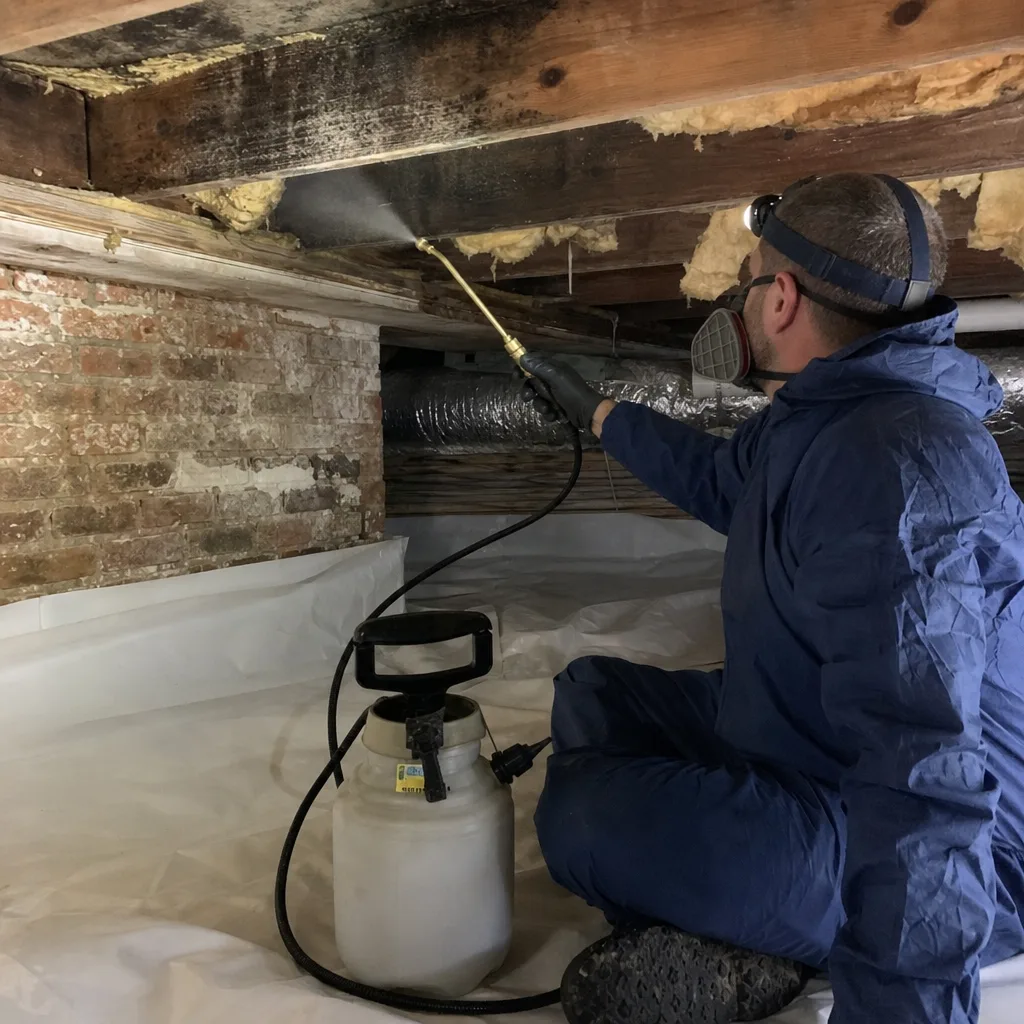
Contents Restoration & Pack-Out
We inventory, pack, and store your belongings when the unit has to be emptied for structural drying or reconstruction. Original oak flooring, kitchen cabinetry, books, clothing, furniture. Everything gets logged with photos and cleaning notes, and everything comes back to the unit when the work is done.
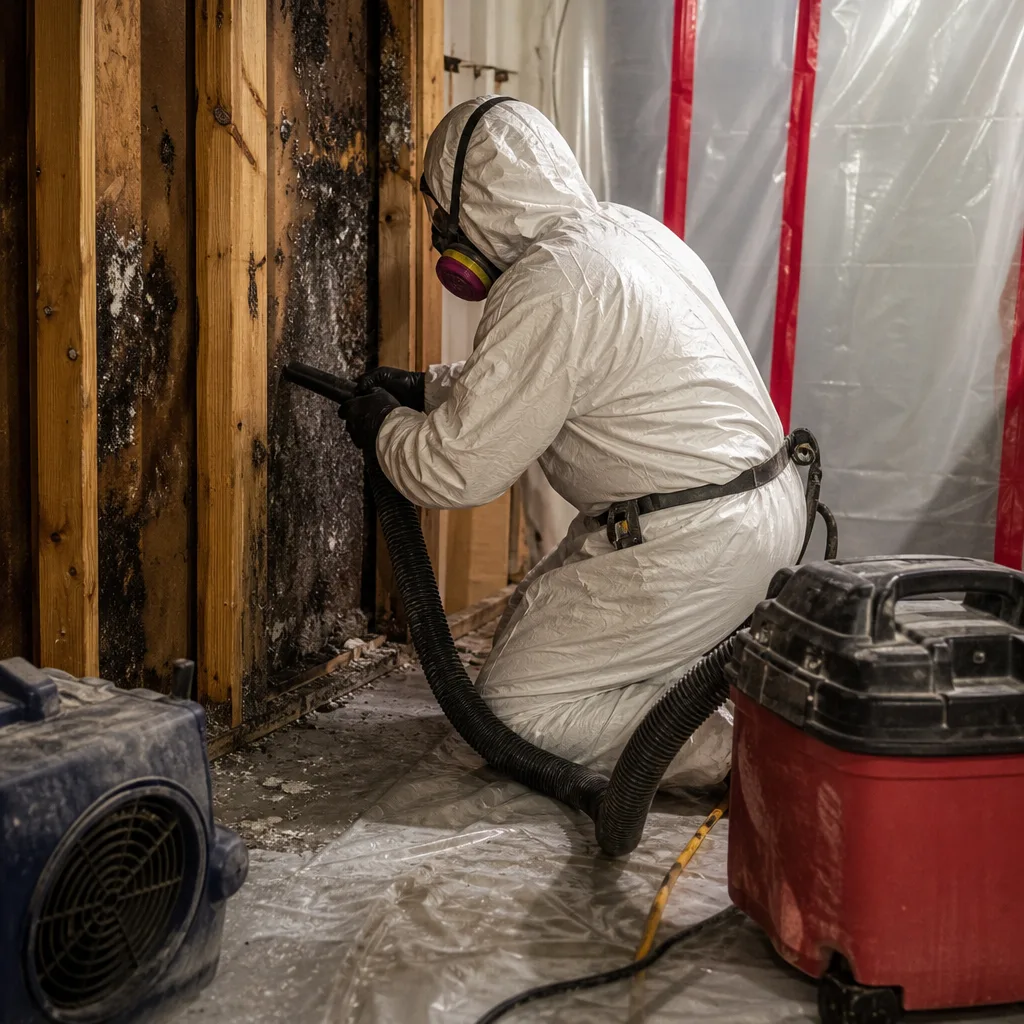
Insurance Claim Documentation
Kew Gardens co-op claims live or die on documentation. We provide the photos, moisture logs, and line-item scopes that carriers and co-op boards both require. When a DEP asbestos survey adds two to four weeks to the timeline, the paperwork has to show exactly why, and it does.
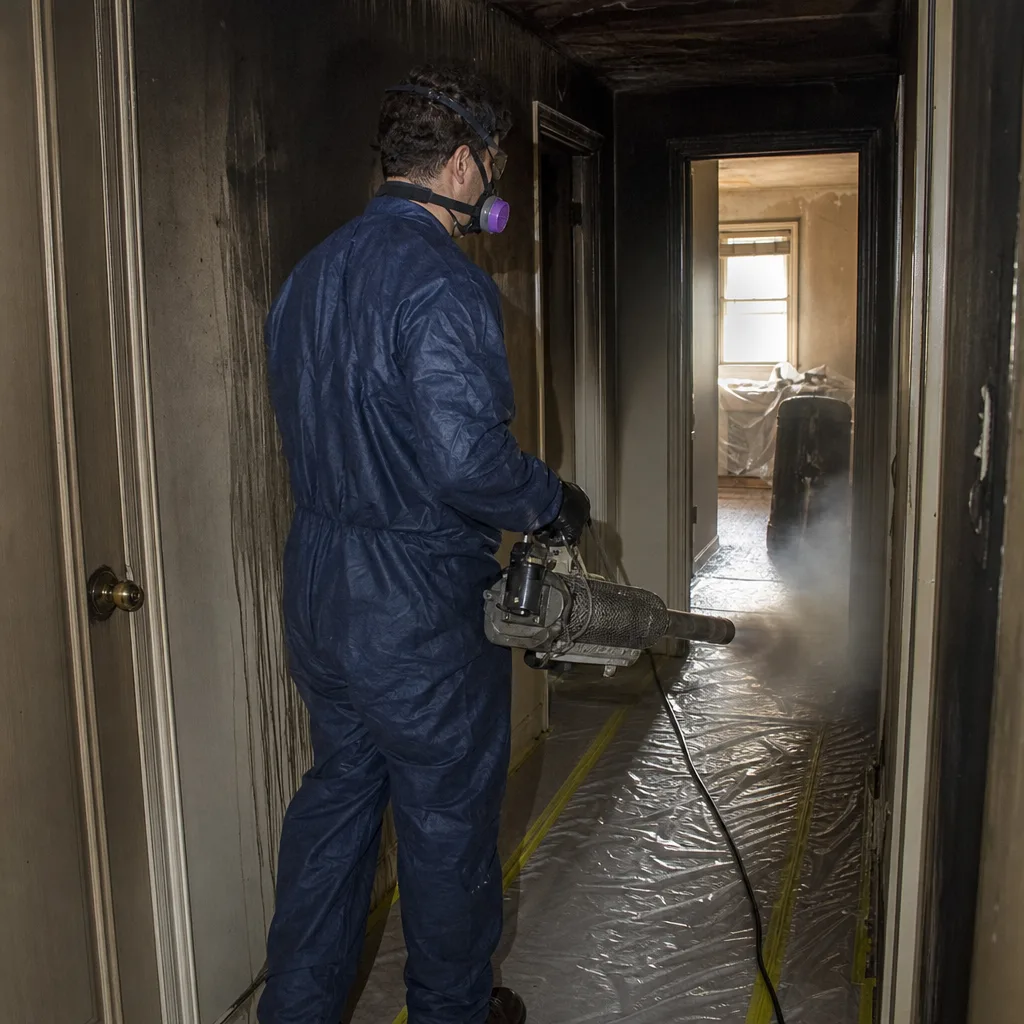
What happens when you call
- 1
A real person answersNo phone trees - you reach a local pro.
- 2
You get an upfront price rangeHonest numbers before anyone is dispatched.
- 3
A background-checked tech heads outLicensed & insured, dispatched right away.
- 4
You approve before work beginsNothing starts until you say go.
Reconstruction & Cleanup Costs in Kew Gardens, NY
A typical water damage cleanup and drying job in a Kew Gardens co-op unit runs $2,800 to $6,500 depending on the number of affected rooms and whether the water category requires containment. Full reconstruction after a cast-iron stack rupture, including plaster repair, flooring, and paint, typically lands between $12,000 and $38,000 when multiple rooms are involved. Contents pack-out and restoration adds $1,500 to $6,000 depending on volume. The variables that move these numbers in Kew Gardens specifically include DEP asbestos and lead survey requirements, co-op board approval timelines, elevator and freight entrance scheduling, and whether the building’s master policy covers any portion of the loss. We provide a written scope with a firm price before any work starts. The free visual inspection is how you get there without committing to anything. Call (917) 924-4221 and we’ll walk the loss with you.
We Also Serve Cities Near Kew Gardens
Our crews regularly work in Richmond Hill, South Richmond Hill, Forest Hills, and Woodhaven. The same 45-minute response commitment and direct insurance billing apply. If you’re in a neighboring community and dealing with water, fire, or sewage damage, call the same number: (917) 924-4221.
Serving Kew Gardens, NY - Our Local Coverage Area
We’re based in the Kew Gardens area and know this community well. Use the map below to see our service coverage - if you’re nearby, we can almost certainly help.
Kew Gardens Reconstruction & Cleanup Questions, Answered
Do I need a NYC DOB permit for reconstruction in a Kew Gardens co-op after a burst pipe?
Yes, for most structural, plumbing, and wall-demolition work in a co-op building, a NYC Department of Buildings permit is required, and the co-op board typically files through their own contractor or manager. We coordinate with the board and the building’s architect or engineer to get the permit filed correctly, which prevents stop-work orders that can add weeks to the timeline. Call (917) 924-4221 and we’ll tell you what your specific job requires.
How long does asbestos abatement delay reconstruction in a pre-war Kew Gardens apartment?
Two to four weeks is typical, because NYC DEP requires bulk sampling and abatement clearance before any disturbance of pre-1980 plaster, floor tile, or pipe insulation. The testing itself takes a few days, but scheduling licensed abatement crews and clearance air monitoring adds the rest. We build this timeline into the scope from day one, so you’re not surprised three weeks in.
Can you dry a Kew Gardens co-op unit without removing the original plaster walls?
Often yes, when the water is Category 1 or clean Category 2 and the plaster is still sound. We use Injectidry systems and low-profile air movers to force air into wall cavities without cutting out the original plaster-and-lath. If the plaster has delaminated from the lath or the moisture readings won’t come down, removal becomes necessary. Our goal is saving what’s salvageable, not demoing for its own sake.
What happens to my belongings when you pack out a Kew Gardens co-op apartment after water damage?
We inventory every item with photos and a written log, pack it in clean containers, and move it to a secured storage area for cleaning and restoration. Furniture, clothing, books, and personal effects all get the same treatment. When the unit is rebuilt, everything comes back. The inventory is part of the documentation we provide your insurer.
How do you handle reconstruction access when my Kew Gardens building has no alley or back entrance?
We schedule all equipment deliveries and material drop-offs through the building’s single freight entrance, coordinating with the super and the board for elevator time and loading dock access. We use equipment sized to fit through standard co-op doorways and tight riser closets. The work doesn’t block the lobby, and it doesn’t require street-level staging that the building hasn’t approved.
How fast can someone actually get to Kew Gardens for a water emergency?
Our response commitment is 45 minutes to most Kew Gardens addresses, and the dispatcher confirms the ETA while you’re still on the phone. A live person answers at all hours, and the crew arrives with extraction equipment on the truck, not just a clipboard and a quote pad. Extraction starts the same visit.
Will insurance cover reconstruction after a burst pipe in a Kew Gardens co-op?
It depends on your policy and the building’s master policy, but most standard HO-6 co-op policies cover interior unit damage from sudden pipe failures, while the co-op’s master policy typically covers the building systems and common areas. We document the loss and communicate with both carriers so the claim moves on a clear record, not a phone-tag relay. Call us and we’ll help you understand what your specific policies cover.
What should I do in the first 30 minutes after discovering water damage in my Kew Gardens co-op?
Call the super or building management to shut the riser or supply line, then call (917) 924-4221. Move small belongings out of the water path if it’s safe to do so. Don’t turn on ceiling fixtures below the leak, and don’t start cutting anything open until we’ve assessed the water category and checked for asbestos-containing materials. The right first hour saves the next four weeks.
Written by Curt Bowman, Owner at Floodline Restoration Co. of Manhattan. Our team has been answering the phone and getting to work on New York’s water and fire losses since 2010, and we stand behind every job with the 90-Day Done Right Promise in writing.