
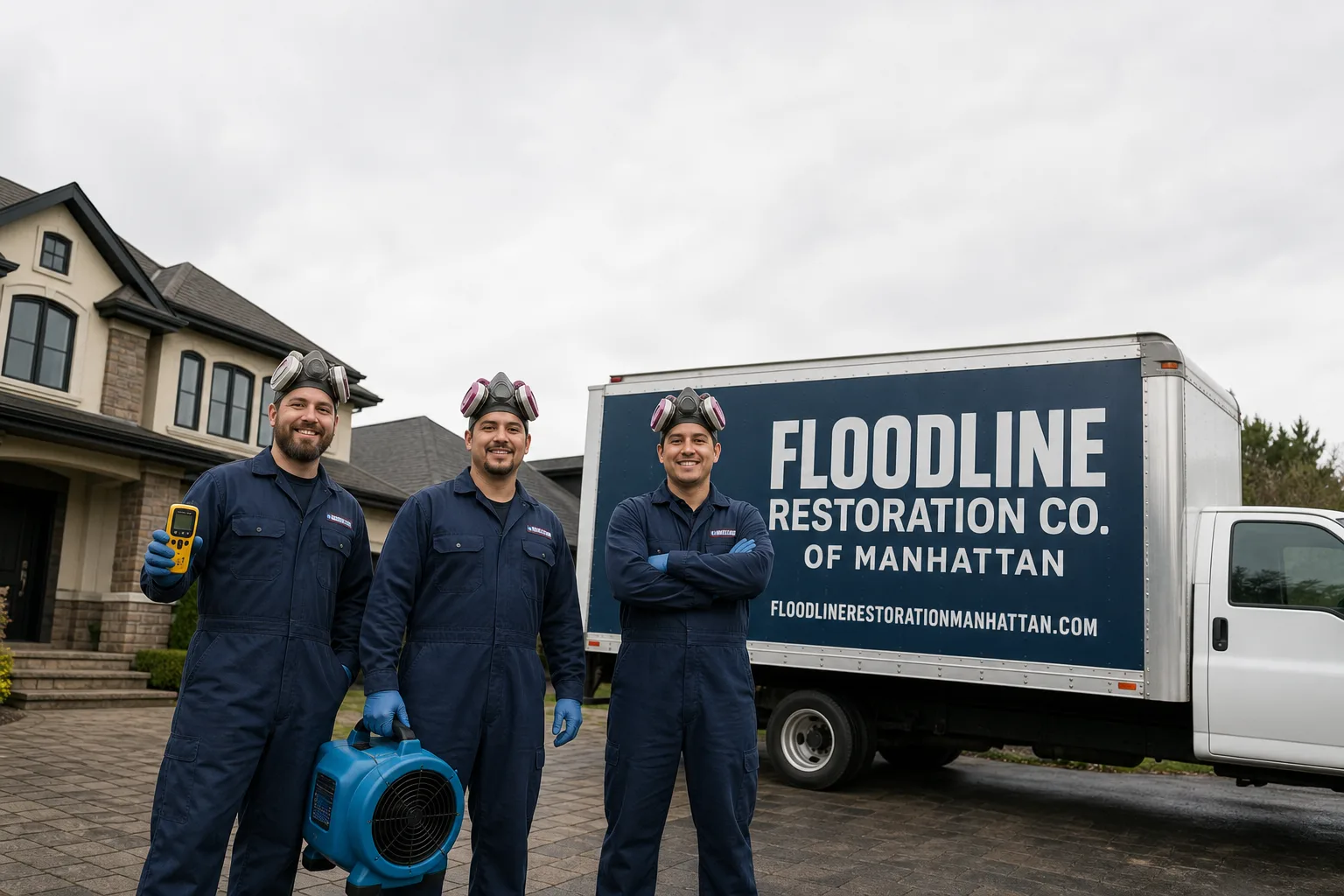
Free visual inspection and a written scope of work before any mitigation begins - photos, moisture readings, and drying logs go in your claim file
The scope we write is the scope we bill. Anything new gets shown to you, in writing, before we touch it.






 Before
 After
After Before
 After
After Before
 After
After24/7 Emergency Sewage Cleanup in Glen Oaks
Sewage cleanup in Glen Oaks typically costs $1,800-$4,600 for a Category 3 water event in a garden-level co-op unit, and response time genuinely matters: the longer black water sits, the farther it wicks into drywall, subfloor, and shared crawl spaces. Our crews reach Glen Oaks addresses in about 45 minutes, day or night, and the first visual inspection is free. Call (917) 924-4221 and you’ll speak with a live dispatcher, not a recording. We start extraction the same visit.
Understanding Sewage Cleanup Severity in Glen Oaks Properties
Not every backup is a catastrophe, but in Glen Oaks Village the margin between a contained spill and a multi-unit loss is thinner than most homeowners realize. Restoration work classifies water by contamination level. Category 1 is clean supply water. Category 2 carries some contaminant load from a washing machine or sump pit. Category 3 – what we’re dealing with in sewage backups – contains pathogens, bacteria, and particulate that make direct contact hazardous. It requires full PPE, containment barriers, HEPA air scrubbing, antimicrobial treatment, and removal of porous materials that absorbed the water.
Glen Oaks’s housing stock makes Category 3 events structurally unique. The Village’s mid-century brick garden apartments were built with shared cast-iron drain stacks that run vertically through multiple units. When one of those stacks cracks or collapses, sewage doesn’t stop at one shareholder’s ceiling. It follows the path of least resistance: down through wall cavities, across the floor assembly, and into garden-level crawl spaces that connect adjacent units. A backup on the second floor can saturate insulation and drywall two floors below before anyone notices staining. In single-family homes, you deal with one contained footprint. Here, the contamination plume can span three or four units and require co-op board sign-off before we open any common chase, making Glen Oaks Commercial Restoration expertise essential.
Why Glen Oaks Property Owners Choose Floodline Restoration Co. of Manhattan
- Roughly 45-minute response to Glen Oaks addresses – our dispatchers know the Union Turnpike and Little Neck Parkway corridors cold, which means a certified crew gets to your door fast.
- A live person answers at 2 a.m. – no phone tree, no answering service. Floodline Restoration Co. has run a 24/7 dispatch board since 2010.
- IICRC-certified technicians – our crews carry WRT and ASD certifications and are also trained to IFA standards for fire and smoke work, so the person reading your moisture map knows exactly what the readings mean.
- Free visual inspection, no obligation – we’ll assess the scope, walk you through what has to be removed versus what can be cleaned, and give you a written plan before any wall is opened.
- Direct insurance billing – we send photographs, moisture logs, and line-item scopes straight to your carrier and talk to the adjuster ourselves.
- One crew from puddle to paint – the team that extracts the sewage is the same team that dries, sanitizes, and rebuilds. You never inherit a subcontracted stranger mid-job.
Our Sewage Cleanup Process
Inspection & Assessment
We map the full contamination footprint with thermal imaging and moisture meters, not just what you can see. In Glen Oaks Village, this means tracing water into shared wall cavities and the crawl spaces between garden-level units, and identifying exactly which elements belong to the shareholder versus the co-op corporation.
Containment & Extraction
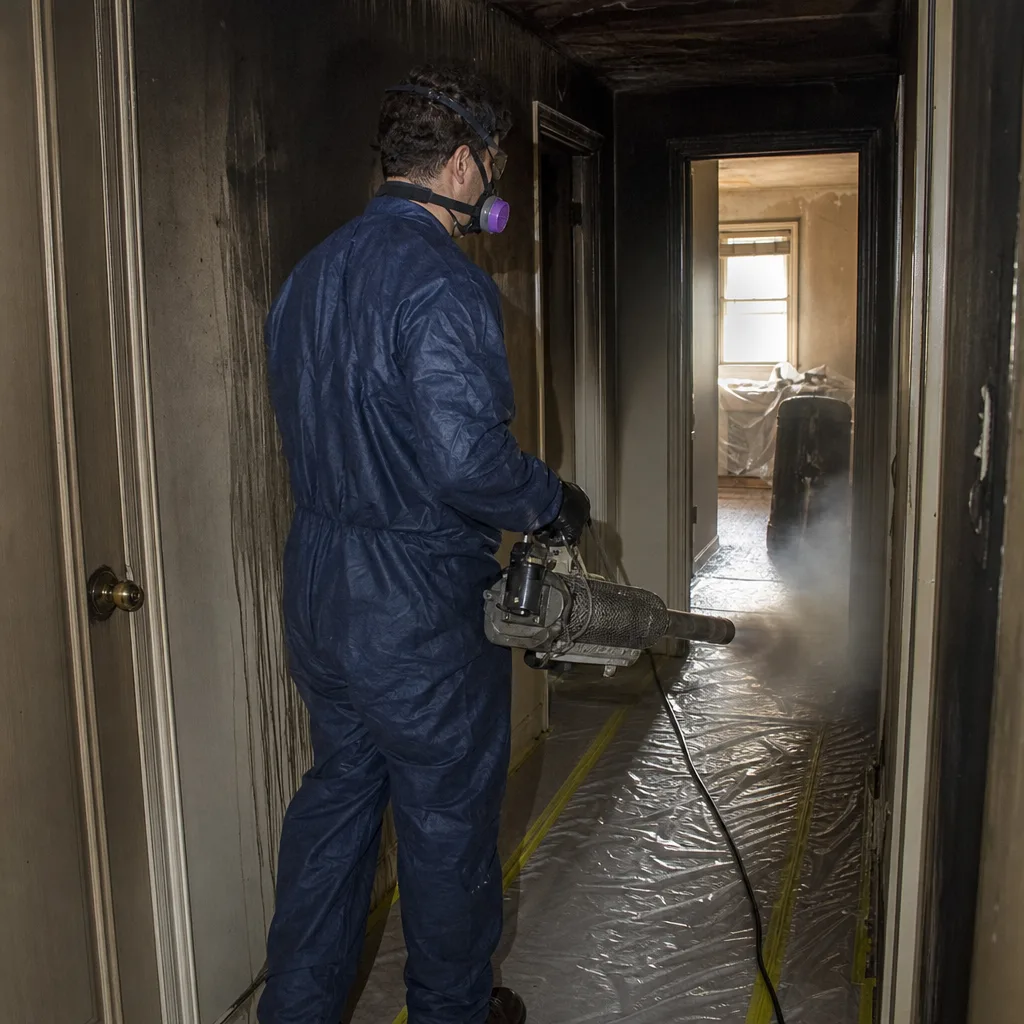
Before we touch sewage, we set physical barriers and negative air pressure so aerosolized particles don’t migrate into living areas. Then we run truck-mounted or portable extraction units to pull standing black water out fast. Dri-Eaz and XPOWER equipment goes in on the first visit, not the second.
Drying & Dehumidification
Sewage water saturation requires more aggressive drying than clean water because the contaminated moisture penetrates materials deeply. Phoenix axial air movers and low-grain refrigerant dehumidifiers run continuously. We log moisture readings daily until every affected cavity, including subfloor and shared crawl space, meets the dry standard.
Cleaning & Sanitization
Every contaminated surface gets cleaned, then treated with an EPA-registered antimicrobial. Porous materials that absorbed Category 3 water – pad, carpet, insulation, drywall below the flood line – are cut out and disposed of properly. We don’t dry sewage-saturated drywall and call it clean. That’s a health risk, not a corner worth cutting.
Crawl Space & Cavity Treatment
In Glen Oaks Village, we pay special attention to the low-rise crawl spaces beneath garden-level units. These are low-clearance, high-humidity spaces where sewage pools invisibly. Our techs access what’s safe to reach, extract, sanitize, and install temporary drying equipment until readings confirm the space is dry below target.
Repairs & Restoration
Once the affected areas are dry and sanitized, our Reconstruction & Cleanup in Glen Oaks rebuilds what we removed: drywall, baseboards, insulation, and any structural components requiring replacement. If the co-op’s common plumbing stack needs section repair, we coordinate with the managing agent and provide the restoration scope that follows the plumber’s work.
Need Emergency Sewage Cleanup in Glen Oaks Now?
Crews minutes away, answering live 24 hours a day. The sooner we start, the less it costs.
Working With Your Insurance Company
Sewage backup coverage in Glen Oaks co-ops gets complicated fast, because the loss may be the corporation’s responsibility, the shareholder’s, or split between the two depending on where the pipe failed and who owns it. We document everything from the first hour so the claim is clean no matter who writes the check. Our team photographs all damage room by room, logs moisture readings daily, writes a detailed line-item scope with pricing justification, and speaks directly with your adjuster. You don’t play messenger between us and the carrier. If the co-op’s master policy picks up part of the claim and your shareholder policy the rest, we handle both conversations and make sure each policy sees exactly what it’s responsible for.
What We Provide Your Insurer
- Thorough documentation of the loss
- Photos of all damage, room by room
- Moisture readings and drying logs
- A detailed, line-item scope of work
- Direct coordination with your carrier
Built for Glen Oaks’s Loss Calendar
Glen Oaks sits inland from coastal flood zones, but its flat position in northeastern Queens takes the full brunt of nor’easter rainfall and rapid snowmelt, which overload storm infrastructure and push water into garden-level units. Winter brings a different rhythm: repeated freeze-thaw cycles stress the aging parapet walls and flat roof membranes of the Village’s low-rise buildings, and cold snaps freeze cast-iron drain lines that are already brittle with age. A frozen stack doesn’t just leak – it cracks, and a cracked stack above your ceiling becomes a sewage event without warning. Spring snowmelt raises the water table and finds every compromised foundation seam and crawl space entry point. Summer thunderstorms dump an inch of rain in forty minutes, overwhelming the local storm drains along Union Turnpike and sending runoff toward the lowest points of the property. None of this is theoretical; it’s the loss calendar we’ve tracked across Glen Oaks for years. When a backup hits, it’s almost never a total surprise to the building systems – just to the homeowner who has to live through it.
Sewage Cleanup Across Glen Oaks’s Neighborhoods
Glen Oaks is small, roughly bounded by Little Neck Parkway to the east, the Grand Central Parkway to the south, and the Nassau County line to the east and north. But the loss patterns vary block to block. The heart of the community is Glen Oaks Village itself, the William Levitt-built garden apartment cooperative that defines the area – hundreds of red-brick buildings, most dating from 1947 to 1950, arranged around open courtyards and shared parking courts. Here the challenge is almost always vertical: cast-iron drain stacks that run from roof vent to foundation, passing through multiple shareholder units on the way. A backup on Commonwealth Boulevard is rarely a one-unit problem. Around the edges of the Village, along 260th Street and the blocks fronting Union Turnpike, you’ll find a small number of attached row homes and older single-family houses. These deal with their own aging sewer laterals and root intrusion into clay pipe, but at least you don’t need board approval to open the wall. Near Queens County Farm Museum to the southwest, the ground opens up, and we see more foundation-level water and crawl space moisture after heavy rain.
Specialized Sewage Cleanup Services We Offer in Glen Oaks
Every Sewage Cleanup job starts with identifying exactly which sub-service applies, because the scope changes significantly. Here’s how we approach the most common sewage events in Glen Oaks.
Sewage Backup Cleanup
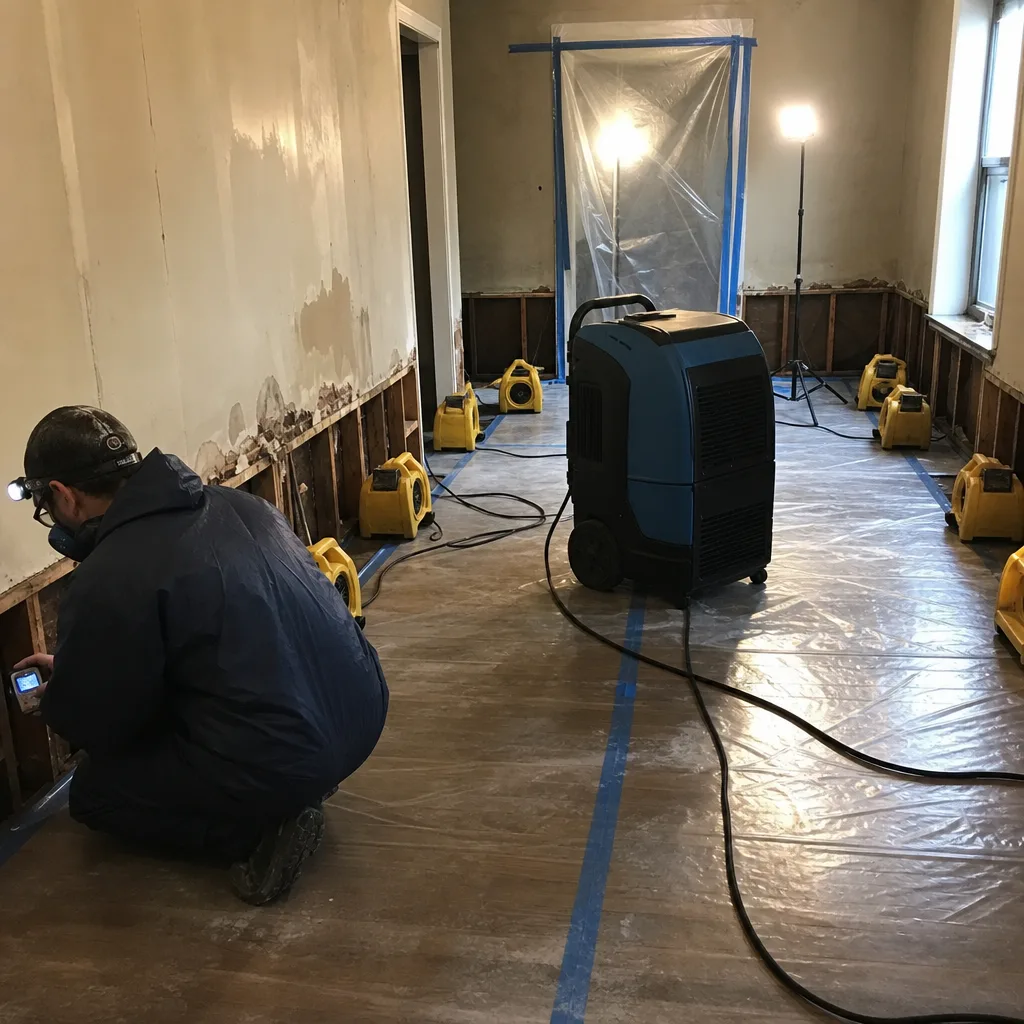
When a drain line backs up into a tub, shower, or floor drain, the contamination may be limited or extensive depending on how long the blockage has been building. In Glen Oaks Village, we check the shared stack immediately, because a backup in your unit often means a larger obstruction downstream that’s affecting neighbors too.
Toilet Overflow Cleanup
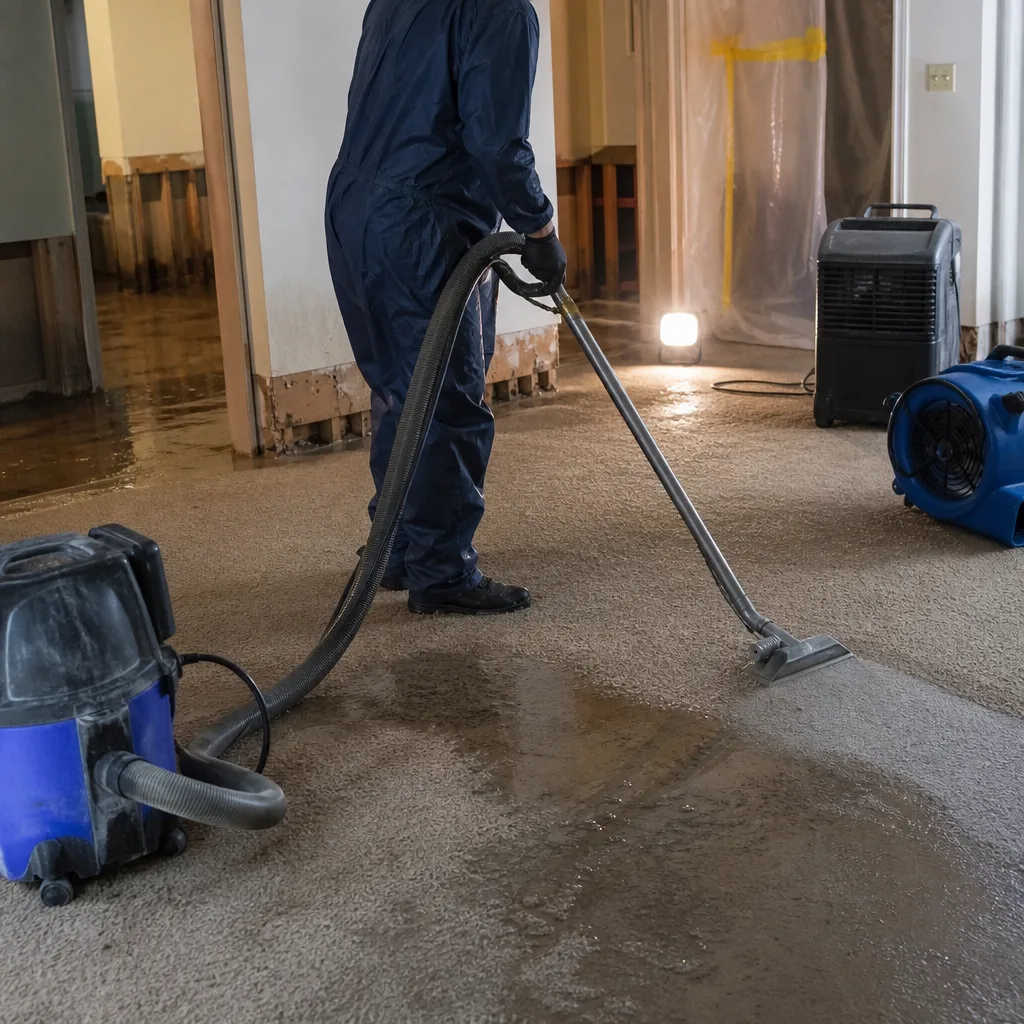
Toilet overflows in garden-level units spread fast because the water runs across sheet vinyl or tile and finds the gaps around the flange into the crawl space below. We extract the visible water, then inspect underneath with moisture meters. If Category 3 water reached the crawl space, that’s a separate containment and treatment scope.
Septic Failure Cleanup
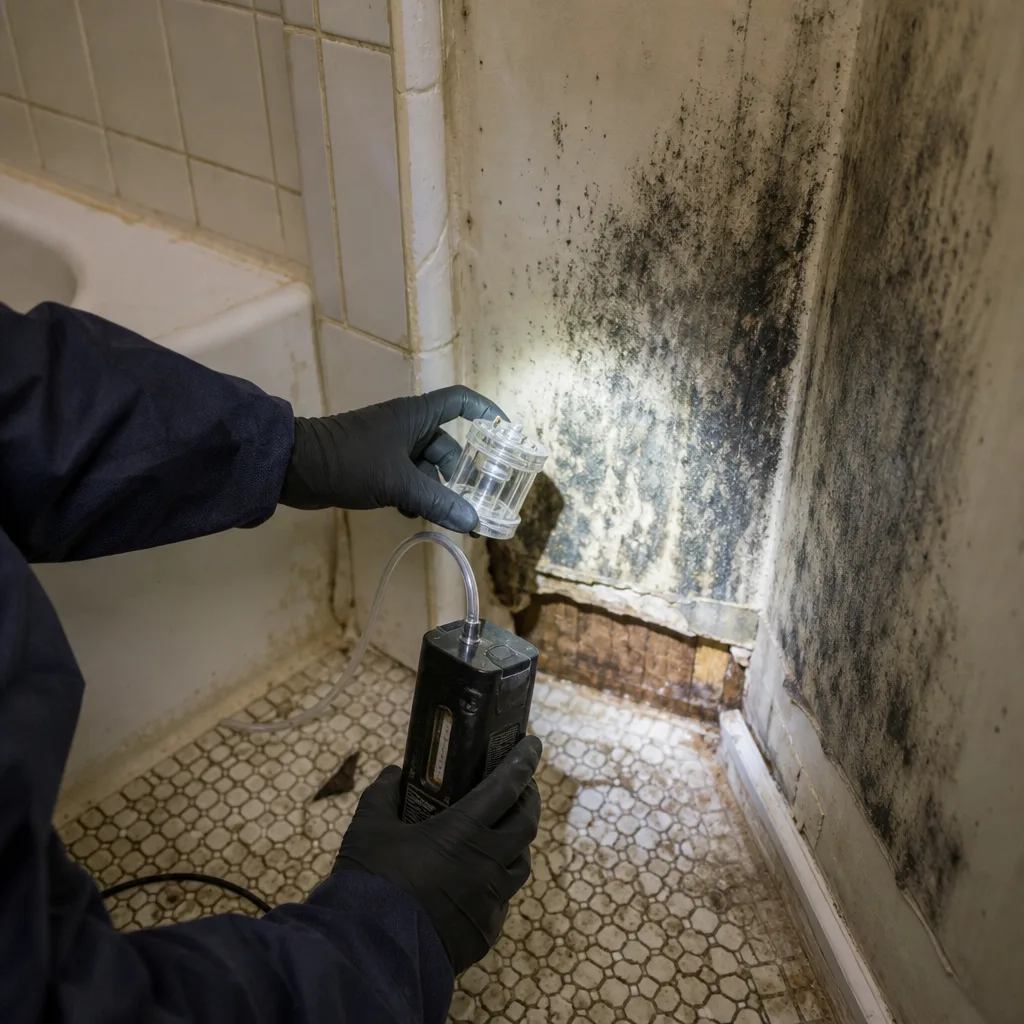
Most of Glen Oaks is on municipal sewer, but a handful of older properties near the county line still run private septic or cesspool systems. When those fail, effluent surfaces in the yard or backs up through the lowest drain in the house. We handle the indoor contamination; if the tank itself needs pumping or repair, we coordinate with a licensed Long Island septic contractor and sequence our work around theirs.
Black Water Extraction
Category 3 water – sewage, floodwater mixed with sewage, or standing water that has incubated for more than 48 hours – is what our extraction crews train for. We run high-volume extractors and submersible pumps, remove contaminated debris, and get the affected area to a point where drying equipment can actually work. Standing black water is the enemy of every material in the room.
Sanitization & Disinfection
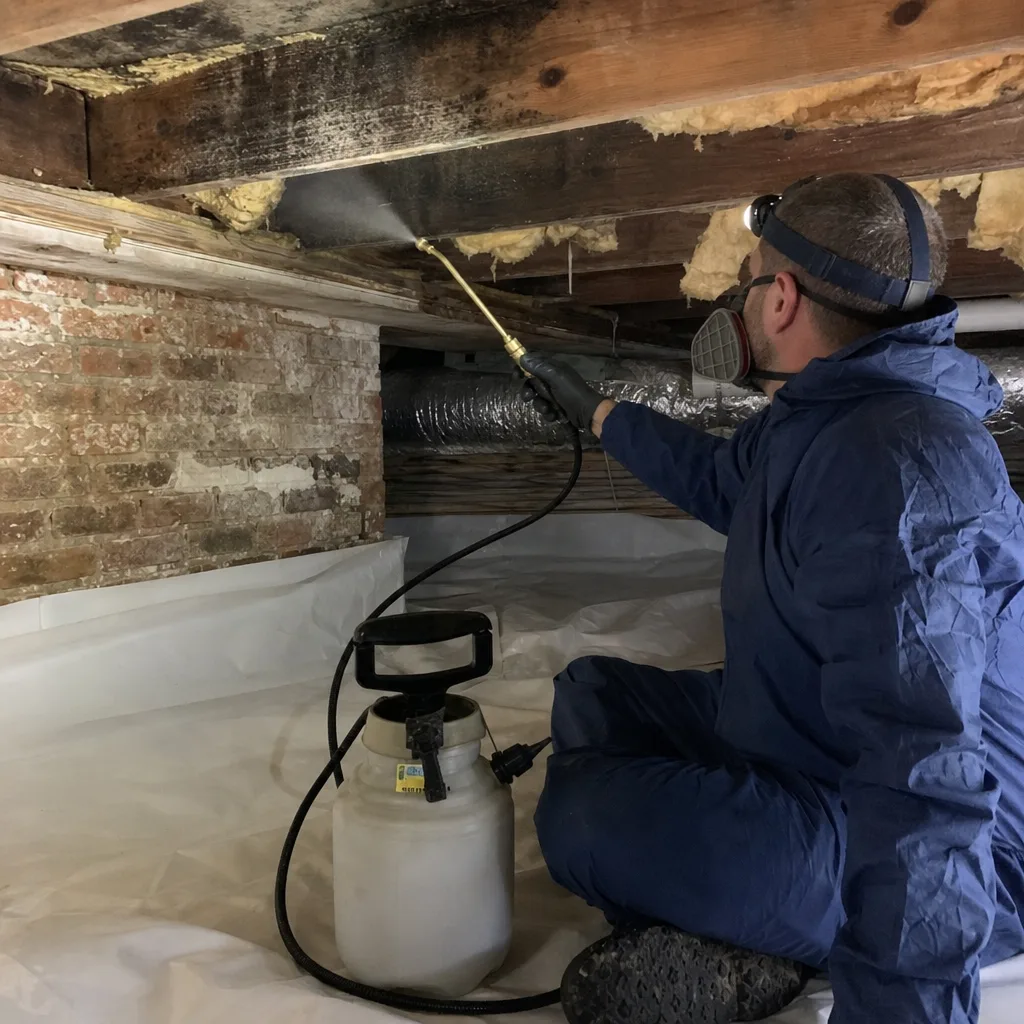
After extraction and drying, every salvageable surface gets cleaned with appropriate detergents and treated with an EPA-registered antimicrobial as part of our Sanitization Services in Glen Oaks. This step isn’t optional in a Category 3 event. It’s the line between cleaning up and actually eliminating the pathogens that survived extraction. We re-test surfaces before we sign off on the sanitization phase.
Crawl Space Sewage Removal
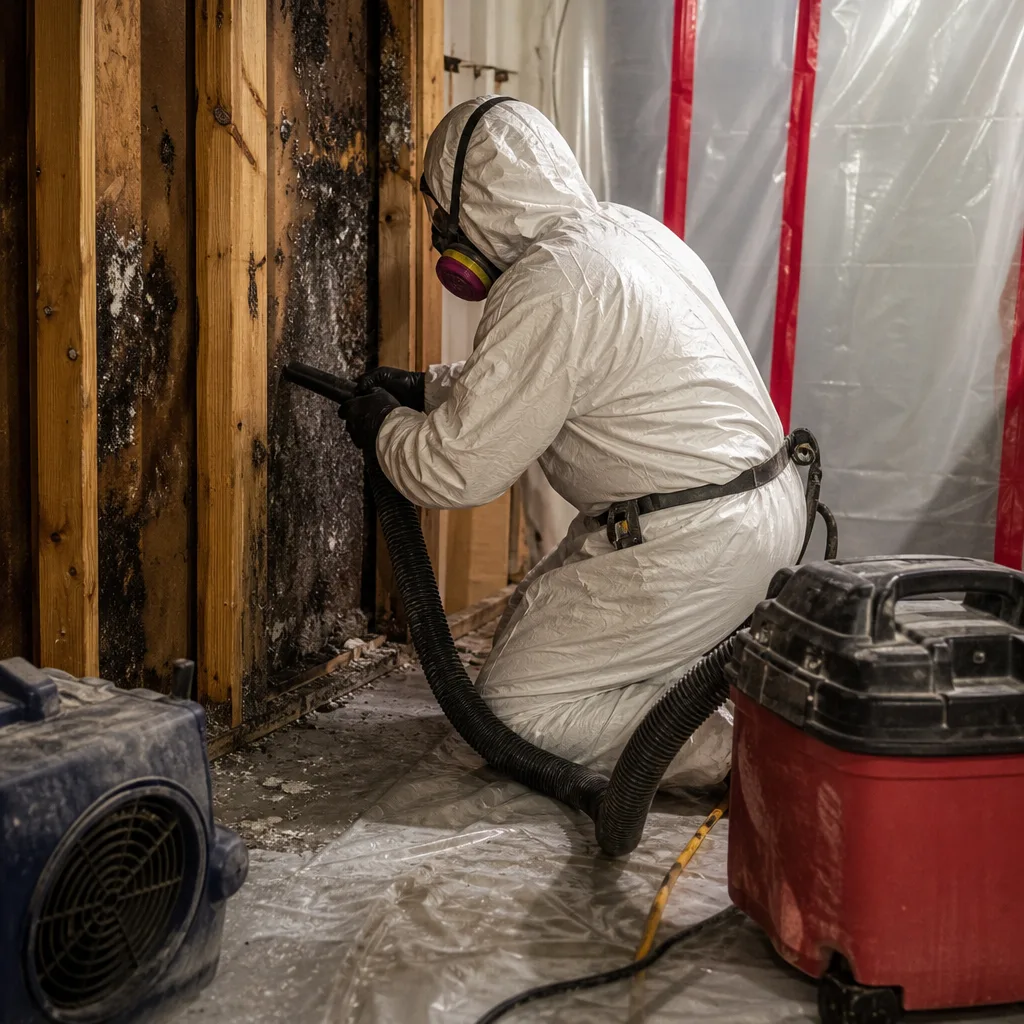
The crawl spaces under garden-level Glen Oaks Village units are shallow, dark, and often partially obstructed by mechanicals. When sewage pools there, it saturates the soil and wicks into floor joists installed seventy-five years ago. We extract what’s pumpable, remove contaminated soil where needed, treat the structure, and run drying equipment until the space is stable. This is the single most common missed scope in co-op sewage claims, and the one that causes the worst repeat losses.
What happens when you call
- 1
A real person answersNo phone trees - you reach a local pro.
- 2
You get an upfront price rangeHonest numbers before anyone is dispatched.
- 3
A background-checked tech heads outLicensed & insured, dispatched right away.
- 4
You approve before work beginsNothing starts until you say go.
Sewage Cleanup Costs in Glen Oaks, NY
A contained toilet overflow cleanup in a single Glen Oaks Village bathroom runs $1,800-$3,200, depending on how far the water traveled. A full black water extraction with crawl space treatment across a garden-level unit and one adjacent unit runs $3,500-$6,000. A multi-floor sewage event involving a failed cast-iron stack, saturated wall cavities on two or three floors, and full sanitization can reach $8,000-$14,000 when the co-op corporation’s common elements are involved. What moves the price: the square footage of affected drywall, whether the crawl space is saturated, how far the contamination migrated through floor assemblies, and whether we’re coordinating with a plumber on the stack repair. The free visual inspection gives you a written scope before we touch anything. Estimates are specific; they don’t have surprises attached.
We Also Serve Cities Near Glen Oaks
Our crews routinely dispatch to Bellerose, Little Neck, Floral Park, and Great Neck – all within a short run of our New York City dispatch office. If you’re just across the county line and dealing with a sewage or water emergency, the same live-answer phone line applies.
Glen Oaks Sewage Cleanup Questions, Answered
Who authorizes sewage cleanup in a Glen Oaks Village co-op unit?
The shareholder authorizes work inside their own unit, but any work on a common element – a shared drain stack, a party wall, a crawl space serving multiple units – requires written sign-off from both the affected shareholder and the building’s managing agent. We never cut into a common wall or plumbing chase without that authorization. A work-stop order is the fastest way to turn a two-day job into a two-week negotiation.
How fast does sewage damage spread in Glen Oaks Village garden apartments?
Fast. Category 3 water moves downward and outward, through the gaps around pipes, along the underside of floor assemblies, and into the shared crawl space within the first hour. Materials like carpet pad, gypsum board, and fiberglass insulation reach saturation quickly and then hold the contamination. By 24 hours, the affected footprint is stable but the damage to porous materials is largely done – that’s why mitigation, not just cleanup, is the right word.
Can you dry sewage-damaged drywall in a mid-century Glen Oaks co-op?
No. Drywall that has absorbed Category 3 water is a porous material that cannot be reliably sanitized once saturated with sewage. It comes out, down to the flood line, and gets replaced. Any contractor who says otherwise is putting a price ahead of your health. The structural framing behind it can often be dried and treated; the gypsum itself comes out.
Do you need to coordinate with the co-op board for crawl space sewage removal?
Almost always yes. Crawl spaces in Glen Oaks Village are common elements, not shareholder property. Even when the sewage originated in a shareholder’s unit, the moment the contamination enters the shared crawl space, the scope belongs to the corporation. We secure written authorization from the managing agent, document the pre-existing condition, and track moisture readings for both the co-op’s file and your insurance carrier’s.
What if my neighbor’s sewage backup floods my Glen Oaks Village unit?
You file with your own insurance carrier, and we document everything. In co-op buildings, the originating unit’s shareholder and the corporation may each bear liability depending on where the pipe failed and whose responsibility it was. Your policy covers your unit’s damage; subrogation is the legal process by which your carrier pursues whoever was actually at fault. We just make sure the loss is documented thoroughly enough that no one can argue about what happened.
How quickly can you actually get to Glen Oaks?
Roughly 45 minutes, day or night. Our dispatch office is in New York City and our crews know the Union Turnpike and Little Neck Parkway routes well. A live person answers the phone at (917) 924-4221, takes your address, and gives you a real arrival window. We’re not a national franchise routing through a call center three time zones away.
Will my insurance cover a sewage backup in Glen Oaks?
Most shareholder policies cover sudden and accidental sewage backup damage, often through a specific backup endorsement, but coverage limits vary widely. In co-op buildings, the corporation’s master policy may cover common areas and original building elements while your policy covers inside-the-walls improvements. We work directly with whichever carrier has an obligation, and we never recommend waiting for a coverage decision before starting mitigation. The clock doesn’t wait for an adjuster.
What should I do in the first 30 minutes after a sewage backup?
Stop using water anywhere in the unit, shut off the toilet supply valve if the overflow came from the fixture, and keep people and pets out of the affected area. Don’t flush, don’t run the washing machine, and don’t try to shop-vac sewage yourself – that aerosolizes contaminants. Take photos if it’s safe to do so, then call us at (917) 924-4221. We’ll walk you through what to do until the crew arrives.
Serving Glen Oaks, NY - Our Local Coverage Area
We’re based in the Glen Oaks area and know this community well. Use the map below to see our service coverage - if you’re nearby, we can almost certainly help.
How Glen Oaks Village Co-op Rules Shape Every Sewage Job We Do
Here’s what a generic sewage cleanup page will never tell you about Glen Oaks: in this community, the hardest part of the job isn’t the extraction. It’s the authorization. Glen Oaks Village is one of the largest garden apartment cooperatives in the United States – a William Levitt-built complex of hundreds of red-brick buildings raised between 1947 and 1950. The units are shareholder-owned, but the bones of the buildings are not. Walls between units, vertical drain stacks, roof membranes, crawl spaces – those belong to the corporation. When sewage from a cracked cast-iron stack enters a shared wall cavity or the crawl space, our crew cannot legally open that space without written sign-off from the managing agent and the affected shareholder. Contractors who ignore that step get work-stop orders. We carry proof of insurance that satisfies the co-op board’s specific requirements, and we get authorization before any cutting starts.
We responded to a toilet overflow in a garden-level Glen Oaks Village unit where the 1950 cast-iron stack had cracked between floors. Because the damaged pipe was a co-op common element, we first secured written authorization from the managing agent and the affected shareholder before cutting containment and setting XPOWER air movers. Our moisture mapping showed Category 3 water had wicked into the shared crawl space below two adjacent units, so we scoped black water extraction and full antimicrobial treatment before drying logs could even begin. That kind of multi-unit, multi-authorization scope is routine here. It’s also the reason we put senior techs on Glen Oaks Village jobs – a technician who has never read a co-op proprietary lease addendum can turn a straightforward mitigation into a compliance problem.
For anyone searching for Sewage Cleanup in this specific part of Queens, the co-op board layer is the information gain that matters. You don’t need a vendor who promises speed and then stalls at the first closed wall. You need a crew that knows the difference between a shareholder element and a common element, that carries the paperwork the managing agent will ask for, and that can sequence the restoration around the plumber’s stack repair. Floodline Restoration Co. has been running sewage and water jobs in New York City since 2010, and Glenn Oaks Village is one of the places we know best.
Written by Curt Bowman, Owner at Floodline Restoration Co. of Manhattan, serving Glen Oaks with licensed, certified sewage cleanup and restoration crews.