
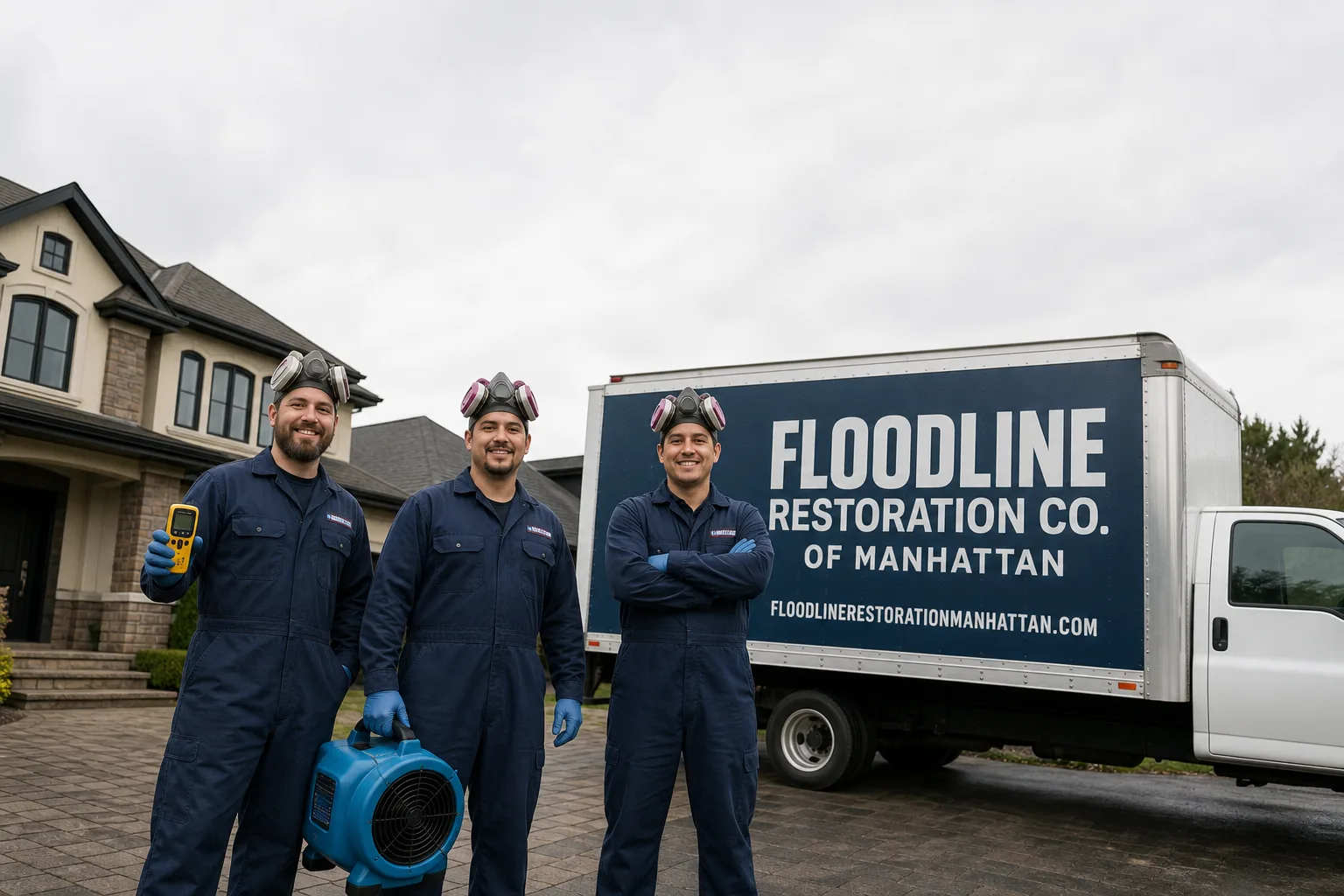
Free visual inspection and a written scope of work before any mitigation begins - photos, moisture readings, and drying logs go in your claim file
The scope we write is the scope we bill. Anything new gets shown to you, in writing, before we touch it.






 Before
 After
After Before
 After
After Before
 After
After24/7 Emergency Sewage Cleanup in Hillsdale
When sewage backs up into a Hillsdale home, the clock starts before you even notice the smell. Black water carries bacteria, viruses, and parasites that begin wicking into plaster walls, timber sills, and flooring within minutes. We answer the phone with a live person at 2 a.m., and a certified crew is dispatched to Hillsdale immediately, not in the morning. The first hour determines whether you’re looking at a contained cleanup or a weeks-long restoration involving mold remediation and structural repair. Call (917) 924-4221 the moment you see standing water, sewage odor, or a fixture backing up. Free visual inspection, every time.
Understanding Sewage Cleanup Severity in Hillsdale Properties
Every sewage loss gets classified as Category 3 water, the most dangerous kind. That means the water contains pathogens from human waste, and it requires full PPE, containment, and antimicrobial treatment, not just mopping and fans. In Hillsdale, severity gets compounded by the housing stock itself. Most homes here are 18th and 19th century timber-frame farmhouses on rubble stone foundations. Category 3 water doesn’t just pool on a slab, it sinks into fieldstone, soaks into original hand-hewn sill beams, and travels upward through unsealed plaster. Our moisture mapping on a Hillsdale crawl space regularly shows readings two to three feet above the visible waterline. That’s why we treat every sewage backup in this town as a structural drying project, not a carpet cleaning job. The Roeliff Jansen Kill and its feeder streams add another layer: spring meltwater pushes groundwater up through those stone foundations, mixing with sewage solids and spreading contamination far beyond the original backup point.
Why Hillsdale Property Owners Choose Floodline Restoration Co. of Manhattan
- 45-minute response commitment to Hillsdale - our nearest crew is dispatched the moment you call, not after a callback from a sales rep.
- A live person answers, 24/7 - no automated system, no “press 2 for emergencies.” A dispatcher picks up at two in the morning.
- IICRC-certified crews on every truck - certified in Water Damage Restoration (WRT), Applied Structural Drying (ASD), and Applied Microbial Remediation (AMRT).
- Free visual inspection with moisture mapping - we show you the readings before any work begins.
- Direct insurance billing - we bill your carrier and coordinate with the adjuster, so you never play messenger.
- One crew from extraction to reconstruction - the same team that extracts the sewage rebuilds the damaged wall, so nothing gets lost between contractors.
Our Sewage Cleanup Process
Inspection & Assessment
We start with a full visual inspection of the affected area, then run moisture mapping with thermal imaging and hygrometers to find how far the water has traveled. In older Hillsdale homes, that often means checking wall cavities and the crawl space, not just the floor where the sewage pooled.
Extraction & Stabilization
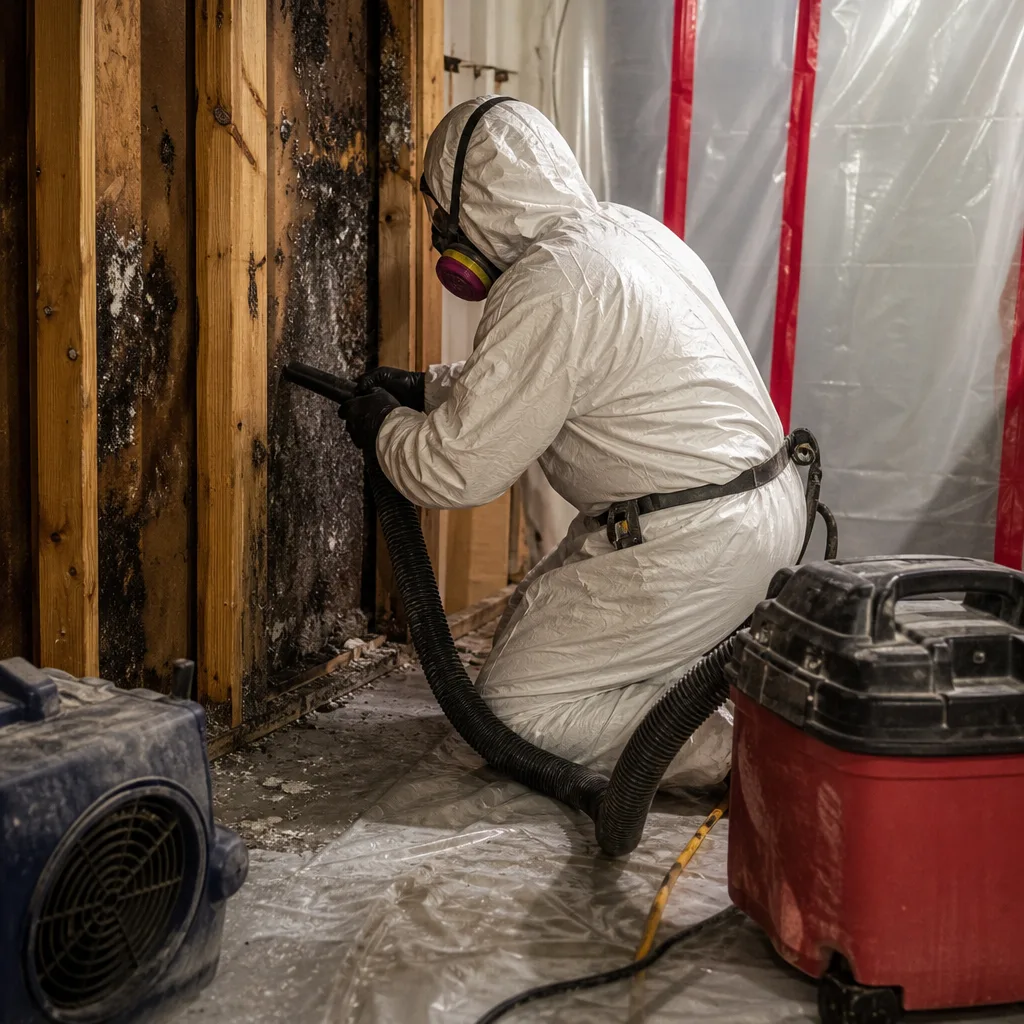
Using truck-mounted extraction equipment and a Dri-Eaz unit when the access allows, we remove standing black water and solid waste. We also contain the affected area with plastic sheeting and negative air pressure so sewage aerosol doesn’t spread to clean rooms.
Drying & Dehumidification
Low-grain refrigerant dehumidifiers and high-volume air movers draw moisture out of plaster, timber, and stone. For rubble foundations, we add Injectidry systems that push dry air into wall cavities and under floors where traditional equipment can’t reach.
Cleaning & Sanitization
We remove contaminated materials that can’t be salvaged, then clean and disinfect all remaining surfaces with EPA-registered antimicrobial treatments. Original plaster walls that can be saved are scrubbed, treated, and dried to pre-loss condition.
Crawl Space & Structural Treatment
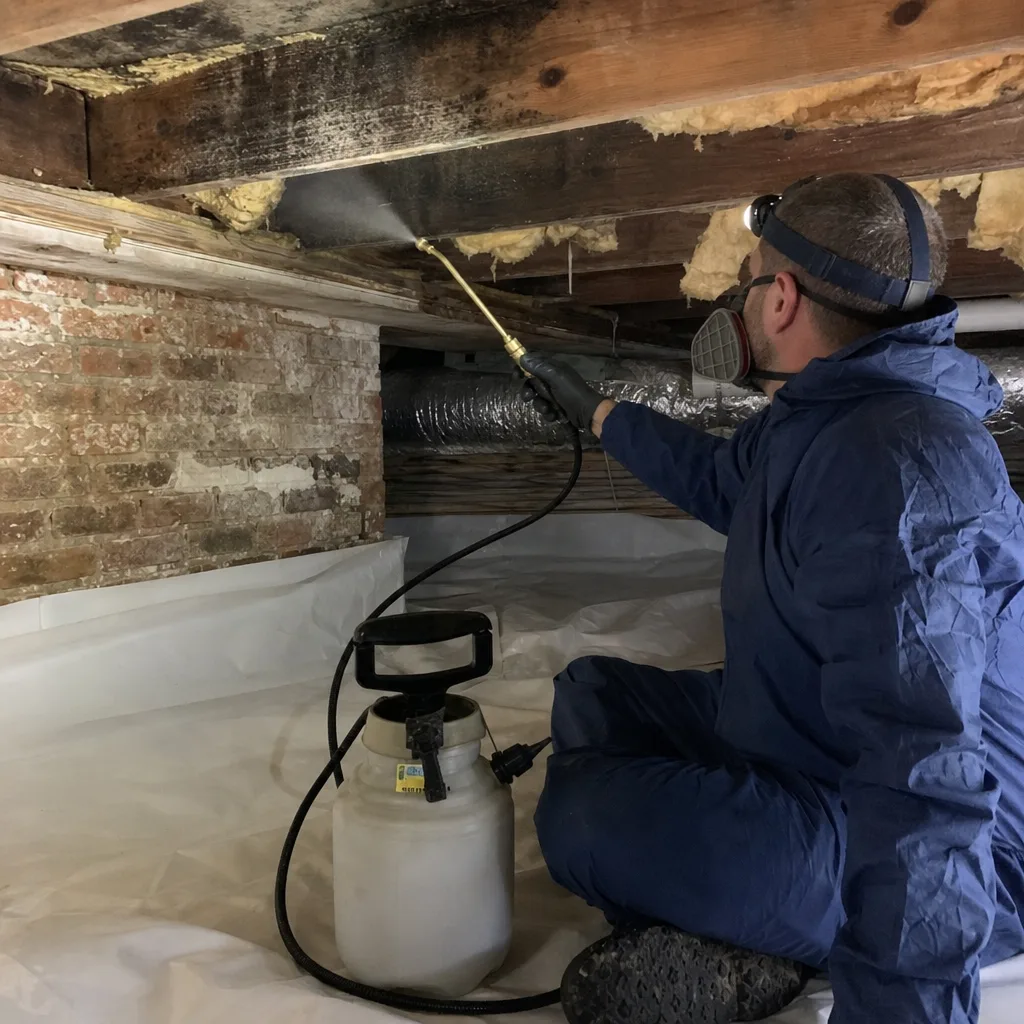
In Hillsdale’s stone-foundation crawl spaces, we remove decades of accumulated debris that sewage has saturated, then apply antimicrobial agents directly to the fieldstone and exposed timber. Without this step, the space retains sewage solids and odor for months.
Repairs & Restoration
We replace what needed removal: damaged subfloor, wainscoting, insulation, or the failed cast-iron drain stack that caused the backup in the first place. The crew that extracted the sewage also handles the rebuild, with a written scope of work you approve before we start.
Need Emergency Sewage Cleanup in Hillsdale Now?
Crews minutes away, answering live 24 hours a day. The sooner we start, the less it costs.
Working With Your Insurance Company
Most homeowner policies in New Jersey cover sudden and accidental sewage backup, but the claim gets complicated when the house sat empty for weeks before discovery. That’s the reality for many Hillsdale second-home owners, and insurance adjusters know it. What helps is documentation from the first hour. We photograph every wet surface, every contaminated material, every moisture reading before and after drying. We provide your adjuster with a line-item scope of work and a drying log that shows we reached the dry standard, not just that we ran equipment for a few days. If your carrier questions whether the damage was pre-existing or worsened by delayed discovery, our documentation creates a factual record. We’ve spent years handling these claims, and we speak the adjuster’s language. Curt Bowman, who founded Floodline Restoration Co. in 2010, built the company around a simple rule: do the work right, document everything, and stand behind the result.
What We Provide Your Insurer
- Thorough documentation of the loss
- Photos of all damage, room by room
- Moisture readings and drying logs
- A detailed, line-item scope of work
- Direct coordination with your carrier
Built for Hillsdale’s Loss Calendar
Sewage backup in Hillsdale follows a pattern that anyone who’s lived here long enough recognizes. January and February bring the deep freezes that crack cast-iron drain stacks and freeze septic lines, especially in the older homes along Hunt Road and up toward the Taconic foothills. The problem goes undiscovered because the owners are in Manhattan. By the time they arrive for a spring weekend, the backup has been sitting for weeks. March and April bring rapid snowmelt from heavier snowfall than the valley towns to the west. The Roeliff Jansen Kill rises, groundwater pushes into rubble foundations, and sewage that backed up months earlier gets re-mobilized through the crawl space. Summer is quieter, but July thunderstorms can overwhelm aging septic systems in a matter of hours. Fall brings leaf-clogged drain lines and the first freeze warnings. Every season has a trigger. The common thread in Hillsdale is vacancy lag: the damage is discovered late, so the contamination has time to move into materials that a same-day call would have saved.
Sewage Cleanup Across Hillsdale’s Neighborhoods
Hillsdale’s response routes follow the town’s two distinct housing patterns. Along Route 22 and the flatter streets near the center of town, you’ll find a mix of mid-century ranches and smaller colonials on concrete foundations, where sewage backups typically stay contained to a bathroom or utility room. The older farmhouse stock sits along Hunt Road, Anthony Street, and the winding lanes that climb toward the Taconic foothills. Those are the homes where a failed drain stack or septic line sends Category 3 water into low-clearance crawl spaces with rubble stone walls, and that’s where our crews spend the most time on structural drying and antimicrobial treatment. Homes near the Roeliff Jansen Kill and its tributaries have a different problem: rising groundwater during spring melt pushes sewage back through floor drains and into basements from below. A house on one side of Route 22 can be cleaned up in a single visit, while a farmhouse two minutes up Hunt Road needs a week of drying and a mold assessment. The difference is the foundation, not the water.
Specialized Sewage Cleanup Services We Offer in Hillsdale
Sewage Backup Cleanup
Main line backups are the most common call we get in Hillsdale, usually from aging cast-iron drain stacks or tree roots in the clay sewer lateral. We extract, disinfect, and dry, but we also identify why the line backed up so the same problem doesn’t return with the next rainstorm. A plumber fixes the pipe; we restore the house.
Crawl Space Sewage Removal
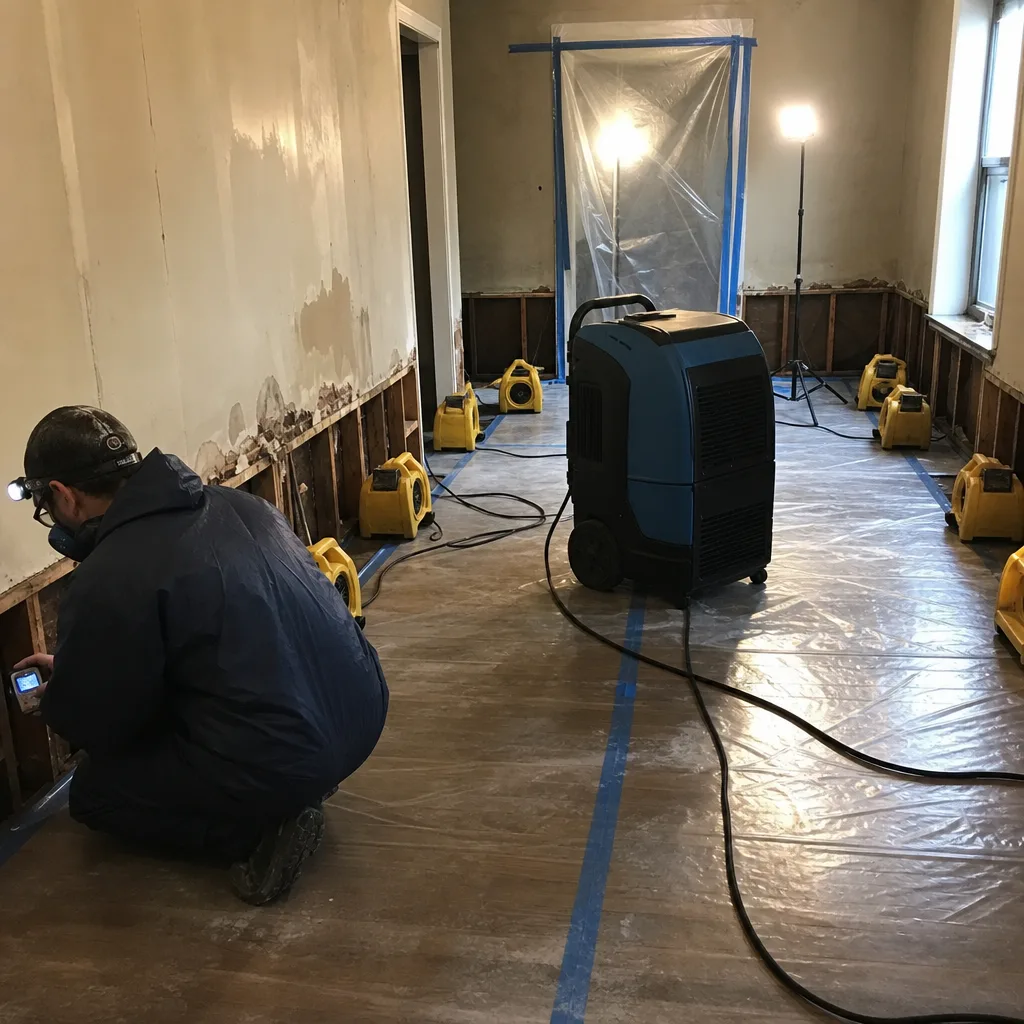
This is Hillsdale-specific work. Low-clearance crawl spaces under 19th-century farmhouses with rubble stone foundations require containment, specialized extraction, and antimicrobial treatment applied directly to stone and timber. Standard extraction equipment won’t reach most of these spaces, so we use low-profile systems and Injectidry mats. We remove saturated debris that may have been accumulating for decades. Then we dry the foundation itself, not just the air around it.
Black Water Extraction
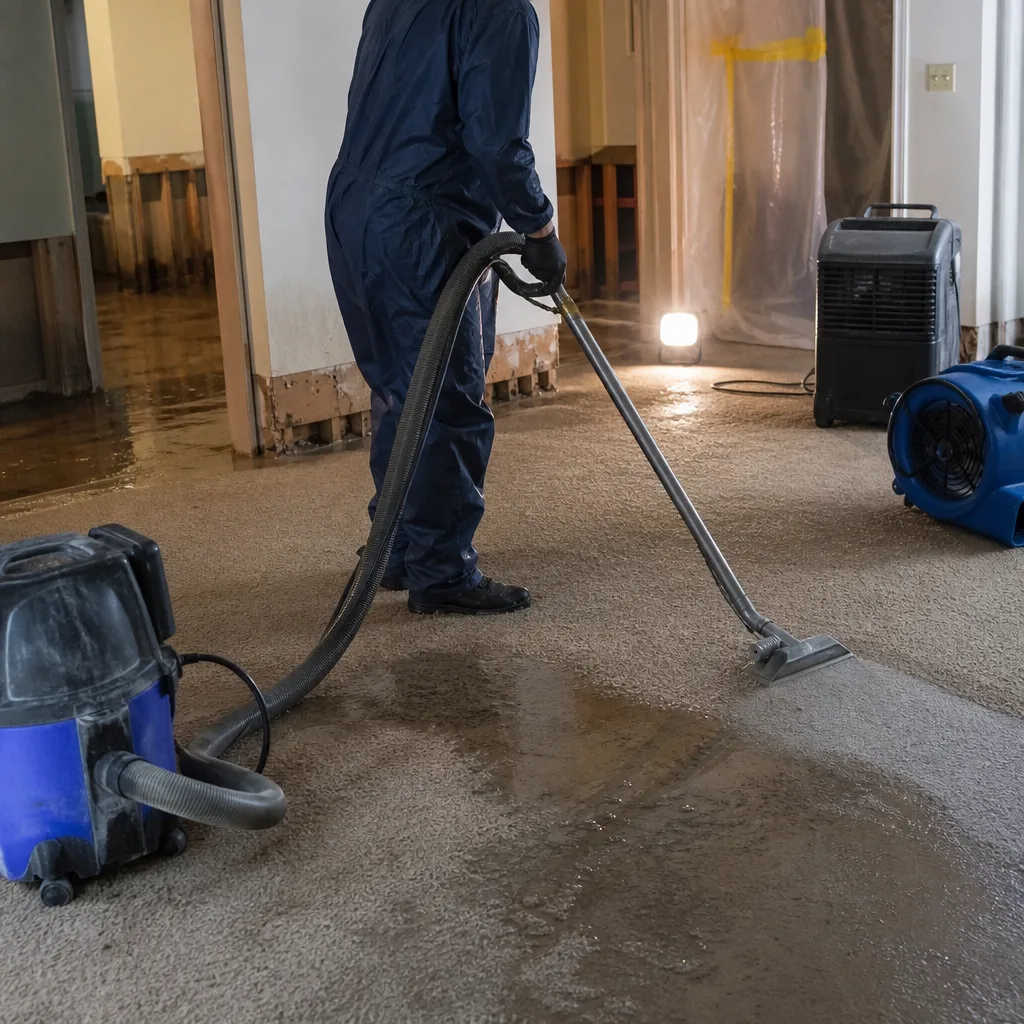
Black water is any water containing human waste, and it requires full PPE and contamination control. We run truck-mounted extraction when the access point allows, followed by moisture mapping to find hidden pockets behind plaster and under flooring. In Hillsdale’s older homes, black water travels further than the visible puddle suggests. Our thermal imaging catches what the eye can’t.
Septic Failure Cleanup
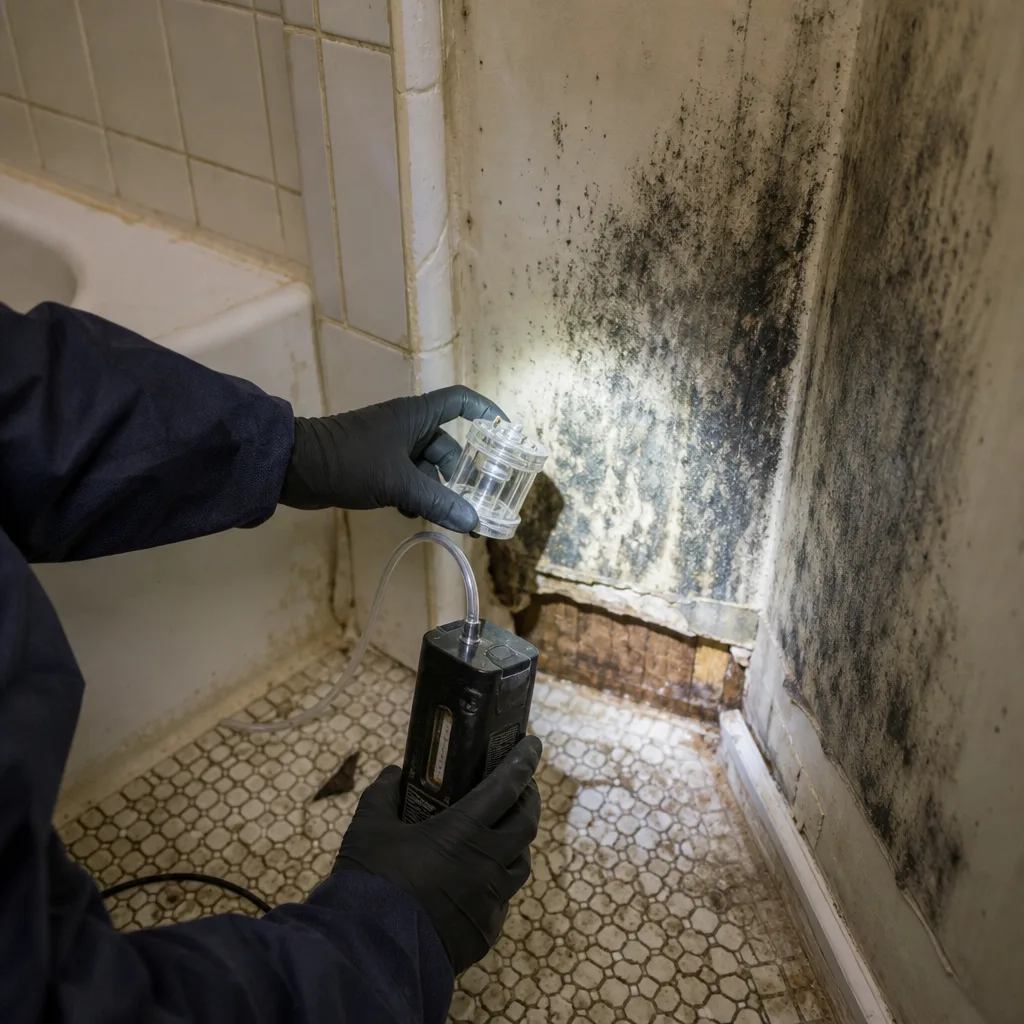
When a septic field fails during a winter freeze or last year’s snowmelt, raw sewage can surface in the yard or back up through the lowest fixture in the house. We handle the interior contamination then coordinate with a licensed septic contractor for the field repair, so you’re not left with a clean house and a failed system nobody will touch.
Sanitization & Disinfection
After extraction, we scrub and treat every affected surface with EPA-registered antimicrobials. That includes the stone, the timber, the plaster, and anything that can be salvaged. We don’t just dry the water out; we make the space safe to occupy again. For second-home owners in Hillsdale, we document every treatment so you have a record for your insurance file and your own peace of mind.
What happens when you call
- 1
A real person answersNo phone trees - you reach a local pro.
- 2
You get an upfront price rangeHonest numbers before anyone is dispatched.
- 3
A background-checked tech heads outLicensed & insured, dispatched right away.
- 4
You approve before work beginsNothing starts until you say go.
Sewage Cleanup Costs in Hillsdale, NJ
A straightforward bathroom overflow in Hillsdale typically runs $1,200 to $2,800 when the damage is contained to a single room and the floor is modern tile or vinyl. A basement backup on a concrete slab ranges from $3,500 to $7,500 depending on how much material has to be removed. The big-ticket jobs are crawl space incidents in the older farmhouses: extracting Category 3 water from a low-clearance rubble foundation, removing saturated debris, drying the stone and timber, and applying antimicrobial treatments routinely runs $8,000 to $18,000. Mold testing, which we recommend on any Hillsdale sewage loss discovered days or weeks after the backup, adds another $300 to $800. The price moves with the age of the house, how far the water wicked into plaster and sill beams, and whether flooring or wainscoting can be saved. Insurance covers most sudden and accidental backups, but the deductible is yours. We provide a free visual inspection and a written scope before any work starts, so you know the number before you commit. Call (917) 924-4221 for a firm quote, not a phone estimate.
We Also Serve Cities Near Hillsdale
Our crews regularly handle Sewage Cleanup calls across the surrounding New Jersey towns. You’ll find us in Woodcliff Lake, Park Ridge, Westwood, and Emerson, often on the same day the call comes in. If you’re in one of those towns and dealing with a backup, the same crew, the same equipment, and the same written guarantee apply. We serve the whole Hillsdale area and the communities around it.
Serving Hillsdale, NJ - Our Local Coverage Area
We’re based in the Hillsdale area and know this community well. Use the map below to see our service coverage - if you’re nearby, we can almost certainly help.
Hillsdale Sewage Cleanup Questions, Answered
Why does sewage backup in a Hillsdale farmhouse often require mold testing even if the backup happened only a few days ago?
Because Hillsdale’s older homes have original plaster walls and timber sills that trap moisture deep inside. Sewage water that wicks into those materials creates the perfect environment for mold growth, even if the visible water was removed quickly. Mold testing confirms whether spores have taken hold behind the plaster before we seal everything back up.
Can you remove sewage from a low-clearance crawl space with a stone foundation without tearing out the floor above?
Yes, in most cases. We use low-profile extraction equipment, crawl space containments, and Injectidry systems that push dry air into the cavity from access points. The floor above usually only comes out if the subfloor itself is saturated or the structural beams are unsalvageable. We’ll show you the moisture readings before recommending any demolition.
Does the age of my house in Hillsdale matter for sewage cleanup category classification?
It doesn’t change the category: sewage backup is always Category 3 water. But age matters a lot for how far that water travels and how much has to be removed. A 19th-century timber-frame house with rubble stone foundations holds sewage solids in the stone and wicks moisture through the plaster much more than a modern home on a concrete slab. The classification is the same; the scope of work is far bigger.
What should I do if I arrive at my Hillsdale second home and smell sewage but see no standing water?
Don’t wait. That smell means the contamination is already in the walls, the floor system, or the crawl space. Call us at (917) 924-4221 for a free inspection. We’ll run thermal imaging and moisture mapping to find where it’s hiding. The longer it sits in a vacant house, the more material has to be removed and the more the restoration costs.
Will my insurance cover sewage backup cleanup if my Hillsdale house sat empty for weeks before I found the damage?
Coverage depends on your policy. Most homeowners policies cover sudden and accidental sewage backup, but delayed discovery can trigger questions about maintenance and neglect. That’s why we document everything from the first hour: photos, moisture readings, and a clear line-item scope. The record we build helps your adjuster see exactly when and how the damage spread. We also bill your carrier directly, so you’re not fronting cash for a claim that should be covered.
How fast can someone actually get to my Hillsdale home?
We commit to a 45-minute response time within the Hillsdale area. Our nearest crew is dispatched the moment you call, and we don’t route through a call center. A live dispatcher picks up, confirms your address, and a truck is on the road.
Do I really need full remediation or just a cleaning?
If the water touched sewage, you need more than a cleaning. Category 3 water requires extraction, containment, antimicrobial treatment, and structural drying. Skipping steps leaves pathogens and moisture in the building. We’ll give you a written scope that itemizes what’s actually needed, so you’re not paying for work the house doesn’t require.
What certifications do your crews hold?
Our technicians are certified to IICRC standards in Water Damage Restoration (WRT), Applied Structural Drying (ASD), and Applied Microbial Remediation (AMRT). They’re also trained to RIA and IFA standards. Every crew member is background-checked and uniformed. The same standards apply whether we’re working in a Hillsdale farmhouse or a newer home in Woodcliff Lake.
Written by Curt Bowman, Owner at Floodline Restoration Co., serving Hillsdale since 2010.