
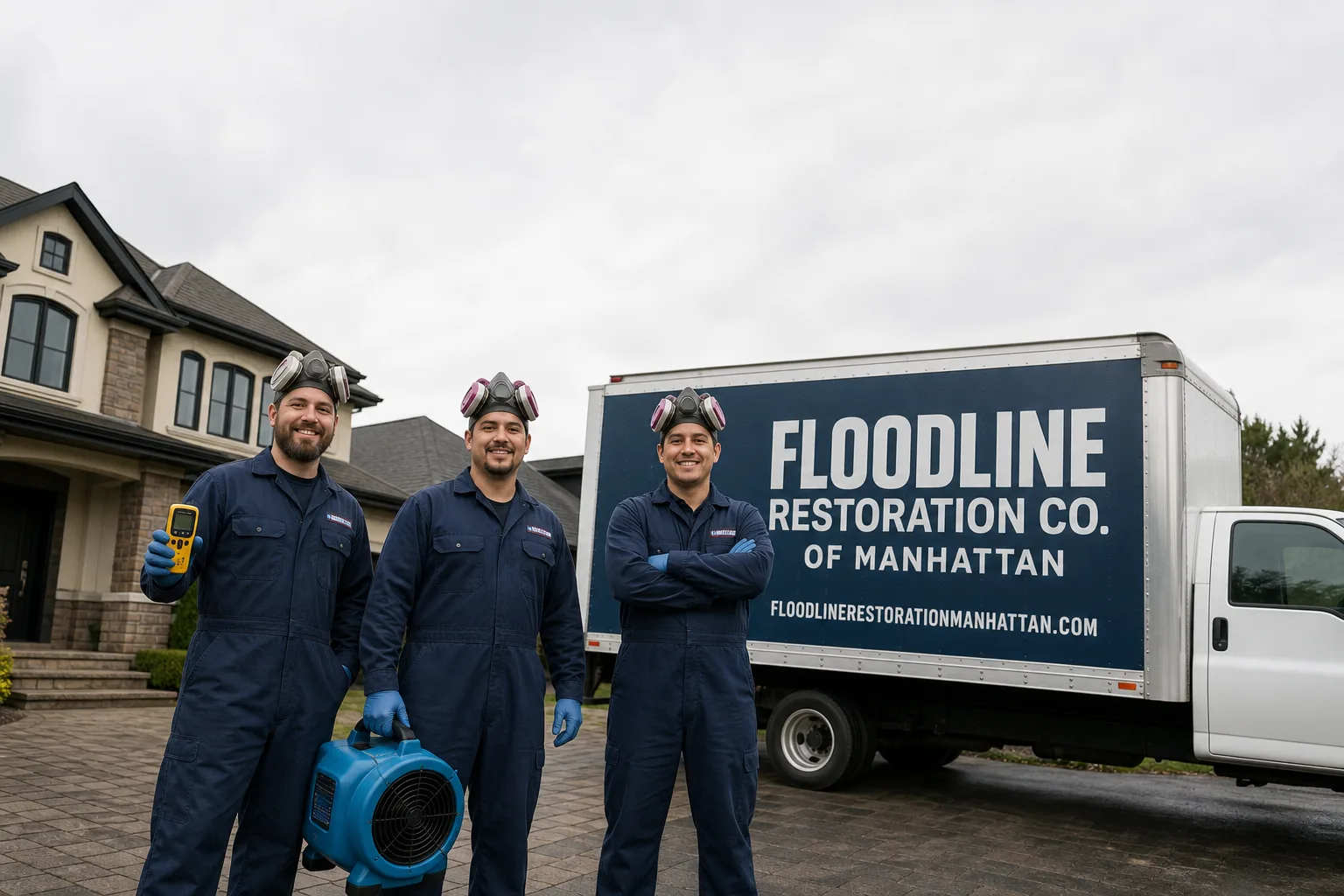
Free visual inspection and a written scope of work before any mitigation begins - photos, moisture readings, and drying logs go in your claim file
The scope we write is the scope we bill. Anything new gets shown to you, in writing, before we touch it.






 Before
 After
After Before
 After
After Before
 After
After24/7 Emergency Sewage Cleanup in Hoboken
If you’re standing in a flooded Hoboken basement right now, here’s the honest answer: sewage cleanup in Hoboken typically runs $2,800-$7,500 for a garden-level unit, and the clock is the most expensive thing in the room. We answer live at (917) 924-4221, every hour of every day, and a certified crew reaches most Hoboken blocks within 45 minutes. The first hour matters because Category 3 water doesn’t just sit there. It wicks into 19th-century brick, climbs plaster walls, and seeps under oak flooring while the bacteria load doubles. Our Sewage Cleanup team starts extraction the same visit, not after a call-back chain. If you’ve got sewage coming up through a floor drain off Washington Street or a toilet that won’t stop running on Madison, call before you move anything. A free visual inspection tells you what you’re actually dealing with. Guessing costs more.
Need Emergency Sewage Cleanup in Hoboken Now?
Crews minutes away, answering live 24 hours a day. The sooner we start, the less it costs.
Understanding Sewage Cleanup Severity in Hoboken Properties
Here’s the distinction most homeowners never hear until it’s too late. Clean water from a burst supply line is Category 1. Gray water from a washing machine overflow is Category 2. Raw sewage, or any water that has mixed with sewage, is Category 3, and that’s what we deal with in Hoboken more than almost anywhere in Hudson County. Why? Because Hoboken’s combined sewer system carries both storm runoff and sanitary sewage in the same pipes. When a nor’easter drops three inches of rain in an afternoon, those pipes surcharge, and the mix comes back up through the floor drains in brownstones built before indoor plumbing was standardized. A basement that looks like rainwater is often carrying coliform bacteria, E. coli, and worse. We treat every basement flood in Hoboken as a potential Category 3 job until moisture mapping and testing prove otherwise. That changes the scope: full containment, HEPA air scrubbing, antimicrobial treatment on every touched surface, and documentation your insurer will accept. Crews that miss this underclassify the job, underbid it, and leave a family living above a contamination source.
Why Hoboken Property Owners Choose Floodline Restoration Co. of Manhattan
- 45-minute response commitment. We dispatch crews staged around Hoboken’s access points, so a live person answers and a truck rolls within the hour, not the next morning.
- 24/7 live answer, always a person. No answering service, no “press 2 for emergencies.” A dispatcher who knows Hoboken picks up at 2 a.m. and starts the process.
- IICRC-certified crews trained to WRT, FSRT, and AMRT standards. The paper matters less than the habit: we document every reading, every cut line, every drying log entry.
- Free visual inspection before any work starts. You see the scope on paper. We agree on the number. Then the equipment comes off the truck.
- Direct insurance billing. We deal with your adjuster, send the photos, send the drying logs, and bill the carrier directly. You don’t play messenger.
- One team from extraction to rebuild. The same certified crew that pumps the sewage also hangs the new drywall. No handoff, no inherited subcontractor, no gap in accountability.
Our Sewage Cleanup Process
Inspection & Assessment
We map the affected area with thermal imaging and moisture meters, checking floor drains, wall cavities, and the party walls that connect Hoboken row houses. Every reading gets logged, because your insurer needs a pre-loss baseline to pay the claim.
Extraction & Stabilization
We pump out standing Category 3 water using professional-grade XPOWER trash pumps, then remove contaminated materials that can’t be salvaged. In Hoboken garden units, that usually means cutting wet drywall at 24 inches and pulling saturated carpet and pad.
Drying & Dehumidification
Phoenix dehumidifiers and B-Air air movers run until the structure hits the dry standard, usually 4-7 days in the dense, slow-drying masonry construction we see across Hoboken. We take daily readings and hand you the log.
Cleaning & Sanitization
Every surface touched by sewage water gets an antimicrobial treatment. We HEPA-vacuum, scrub, and apply an EPA-registered disinfectant. Cast-iron traps in old floor drains get special attention; dried effluent residue in a trap will reactivate odor in the next storm.
Specialty Sewage Treatment
For Hoboken brownstones, this means treating the party wall cavities, sealing the floor drain, and testing for hidden moisture in the original pine subfloor that sits inches above the dirt. We don’t declare the job dry until the readings say dry.
Repairs & Restoration
The same crew that extracted the sewage rebuilds what we cut out: new drywall, new flooring, baseboards, and paint matched to the rest of the unit. One name on the work order, one 90-Day Done Right Promise on the result.
Need Emergency Sewage Cleanup in Hoboken Now?
Crews minutes away, answering live 24 hours a day. The sooner we start, the less it costs.
Working With Your Insurance Company
Most Hoboken homeowners have never filed a Category 3 sewage claim, and the process looks worse from the outside than it is. The difference is documentation from the first hour. We photograph the standing water before extraction. We photograph it again after. We log every moisture reading, every day, until the structure hits the dry standard. We write a line-item scope in the format carriers expect. Then our team talks to your adjuster directly. No games, no inflated numbers, no lowballing that comes back to bite you later. We bill the carrier directly whenever your policy covers the loss. You get a square deal: no surprises on the bill, and a written scope before work starts.
What We Provide Your Insurer
- Thorough documentation of the loss
- Photos of all damage, room by room
- Moisture readings and drying logs
- A detailed, line-item scope of work
- Direct coordination with your carrier
Built for Hoboken’s Loss Calendar
Hoboken’s geography doesn’t produce one flood season. It produces four, and they each hit the same basements in different ways. January and February bring deep freezes that burst supply lines in uninsulated garden-level plumbing, and the water that pours out is clean until it isn’t. March and April bring rain on snowmelt, pushing the combined sewer system past capacity during routine storms. July and August thunderstorms drop two inches in forty minutes, and the city’s low-lying basin, most of it at or below 8-10 feet elevation, sends that water into every below-grade unit built before modern drainage. Then September through November brings nor’easters and the residual threat from Superstorm Sandy’s footprint, which inundated roughly 80% of Hoboken in 2012. About half the sewage jobs we handle in Hoboken start as “water in the basement” calls. The other half start with a neighbor calling because the shared wall is wet.
Sewage Cleanup Across Hoboken’s Neighborhoods
The way we approach a sewage backup changes block by block in Hoboken. Around Church Square Park, the garden-level units in 1880s-to-1910s brownstones sit below the sidewalk line, and floor drains connect directly to the combined sewer. When the system backs up, those units are the first to fill. We staged multiple XPOWER extraction setups along Washington Street after a single July storm last year, working down the corridor from 14th to 1st while more calls came in. The Southwest Hoboken blocks near the PATH tracks have newer infill construction mixed with pre-war brick, and those buildings share drainage laterals; a backup in one address can push sewage into three adjacent basements through the common line. In the Hudson Street corridor near Pier A Park, ground-floor commercial spaces sit directly on the flood zone, and storm surge from the river meets the same combined sewer under pressure. Every neighborhood in Hoboken flushes into the same system. The difference is how the building was built, and how quickly we get there.
Specialized Sewage Cleanup Services We Offer in Hoboken
Sewage Backup Cleanup
This is the core of what we do in Hoboken. A nor’easter hits, the combined sewer surcharges, and raw sewage comes up through the floor drain in a brownstone basement. We extract, contain, sanitize, and dry, then rebuild what we cut out. The job ends with a drying log and a 90-Day Done Right Promise in your hands.
Toilet Overflow Cleanup
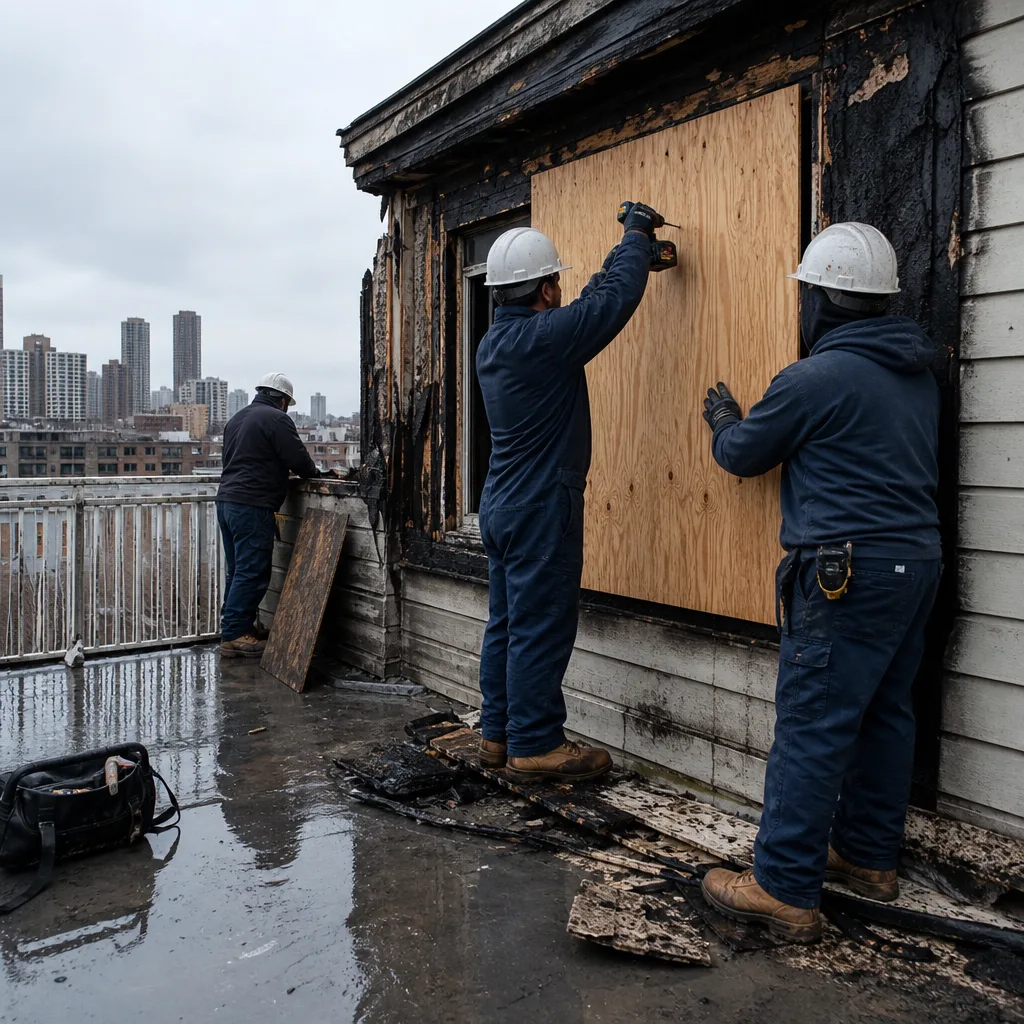
A toilet that overflows once is a mess. A toilet that overflows in a pre-war Hoboken bathroom with original wood floors is a contamination event that wicks under the tile and into the joist bays. We handle it with Category 3 protocols when needed, and we dry the structure, not just the visible surface.

Septic Failure Cleanup
Fewer Hoboken properties are on septic, but the ones that are, mostly in the city’s remaining single-family lots and converted carriage houses, face failures that send effluent into crawl spaces and dirt basements. We pump, remove contaminated soil, and treat the cavity. This is a specialty job that most franchises won’t touch.

Black Water Extraction
Black water means sewage, and sewage means biohazard. We extract with equipment sized for the job, run HEPA air scrubbers to keep airborne bacteria from spreading through the living space, and dispose of contaminated material under state-licensed protocols. We don’t cut corners on PPE or paper trail.

Sanitization & Disinfection
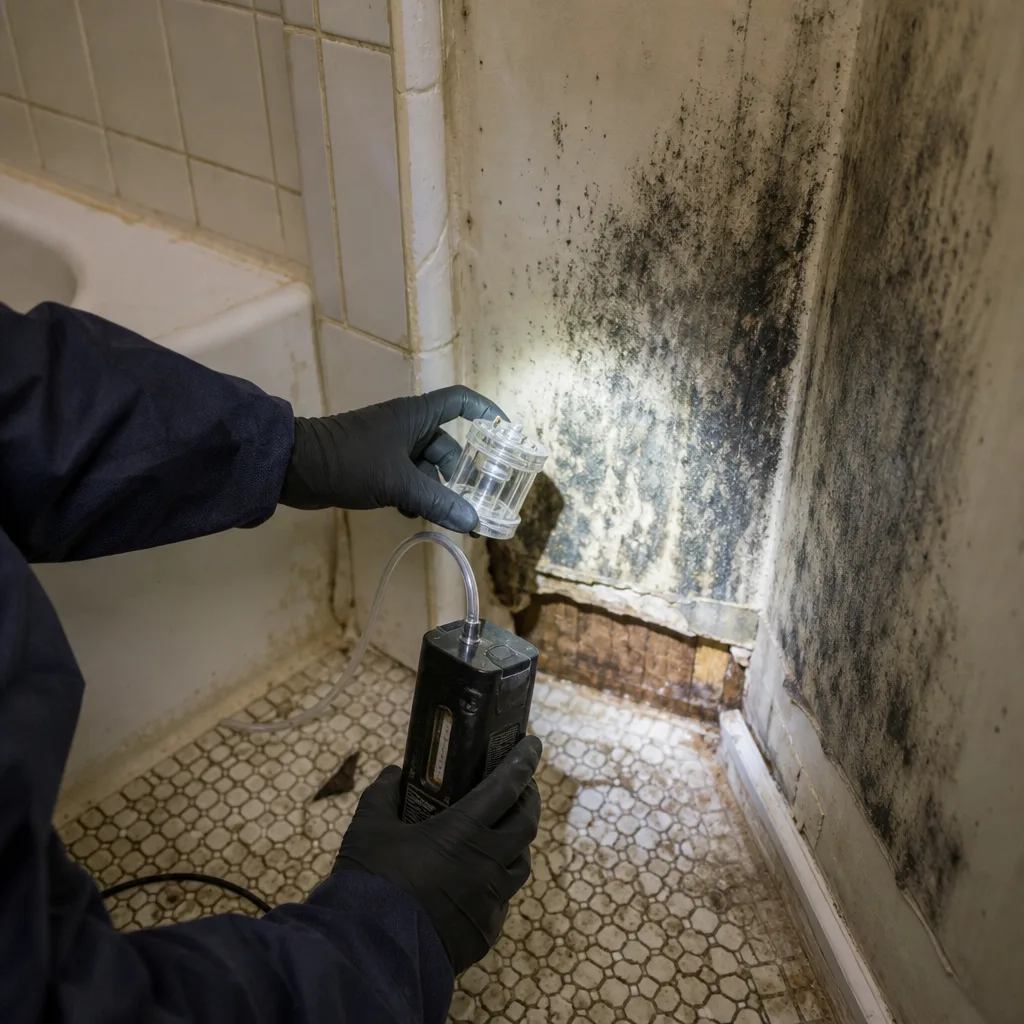
After extraction, every surface that touched Category 3 water gets an EPA-registered antimicrobial. In Hoboken’s old construction, that includes the backside of lath and plaster walls, the cavity behind the baseboard, and the cast-iron trap in the floor drain where dried effluent hides until the next rain.
Crawl Space Sewage Removal
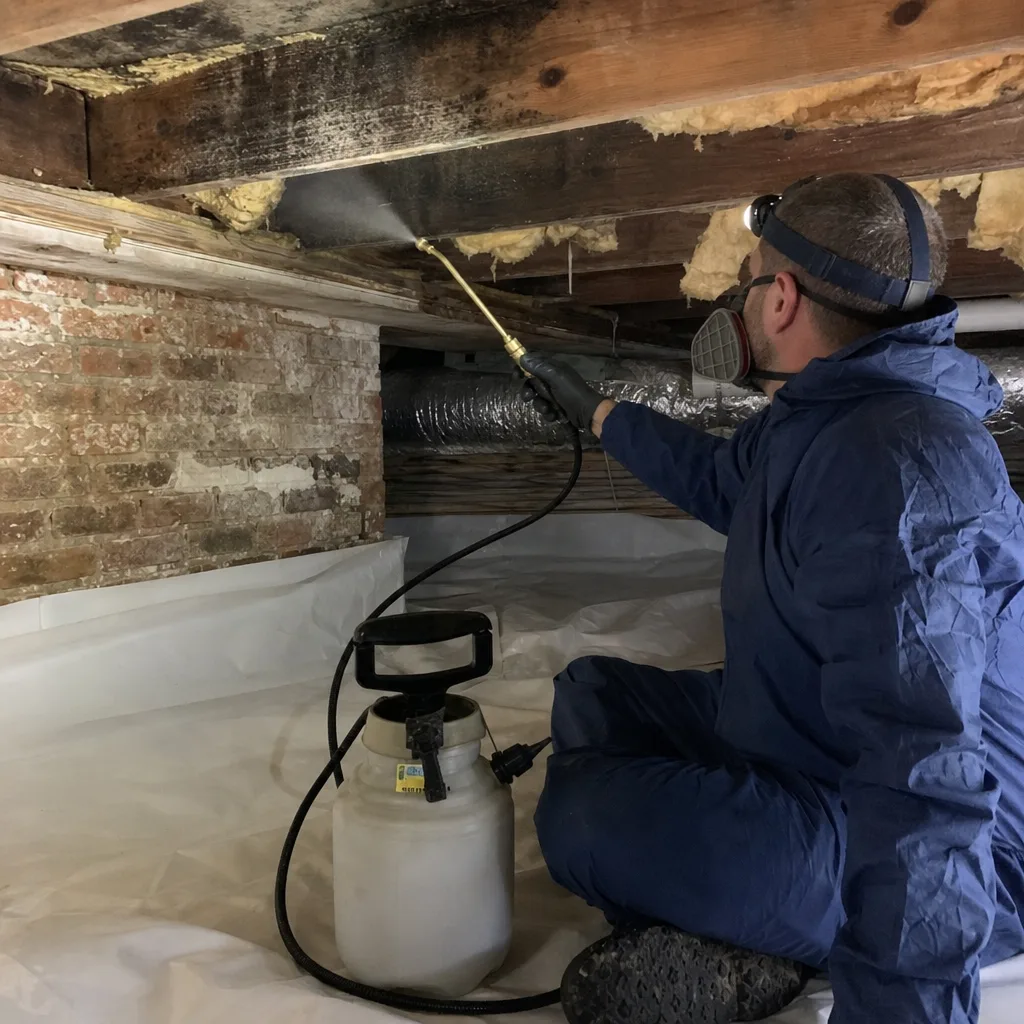
Hoboken has fewer crawl spaces than Jersey City, but the ones that exist are usually under the oldest stock, and they’re tight, dark, and dangerous to enter without the right gear. We send trained crews with PPE and extract what’s down there, then treat the soil and seal the entry point.
What happens when you call
- 1
A real person answersNo phone trees - you reach a local pro.
- 2
You get an upfront price rangeHonest numbers before anyone is dispatched.
- 3
A background-checked tech heads outLicensed & insured, dispatched right away.
- 4
You approve before work beginsNothing starts until you say go.
Sewage Cleanup Costs in Hoboken, NJ
What you’ll actually pay in Hoboken depends on how far the water traveled and how old the building is, but here are real ranges from the local market. A toilet overflow contained to one bathroom runs $900-$2,200. A garden-level unit with sewage across 400 square feet runs $3,500-$8,000. A full brownstone basement with contaminated walls, flooring, and party-wall treatment runs $8,000-$18,000. Crawl space sewage removal starts around $2,500 and climbs with access difficulty. What moves the price: how many walls we open, whether the original plaster can be saved, how long the drying takes in damp masonry, and whether your insurer covers the claim. We give you a free visual inspection and a written scope before any work starts, so you know the number before we cut anything. If you’re comparing quotes, ask the other guy if he’s treating the job as Category 3. That answer changes the whole bid.
We Also Serve Cities Near Hoboken
Our crews regularly respond to sewage backups in Union City, Weehawken, Jersey City, and North Bergen. Same live answer, same 45-minute response, same written scope before work starts. When the combined sewer backs up, the whole county feels it. We cover it.
Sewage in Your Hoboken Basement?
Call now. A live person answers, a crew rolls, and we start extraction the same visit.
Serving Hoboken, NJ - Our Local Coverage Area
We’re based in the Hoboken area and know this community well. Use the map below to see our service coverage - if you’re nearby, we can almost certainly help.
Hoboken Sewage Cleanup Questions, Answered
Why does my Hoboken basement flood with sewage during a rainstorm even though I’m not near the Hudson?
You don’t need to be near the river. Hoboken’s combined sewer system carries storm runoff and sanitary sewage in the same pipes, and when heavy rain overwhelms the system, it surcharges and pushes that mix back up through the lowest opening in your building: usually the floor drain in your basement. This happens throughout Hoboken, from the Heights border to the river blocks. We treat every storm-related basement flood here as a potential Category 3 contamination job until testing says otherwise. Call (917) 924-4221 and we’ll assess it the same day.
My brownstone’s basement flooded from a broken clean-water pipe, but a neighbor’s sewer also backed up. Do I still need sewage cleanup?
Yes, most likely. In Hoboken’s row houses, the drainage systems are often interconnected through shared laterals and party walls. If your neighbor’s sewer backed up, that effluent can migrate into your unit through the common drain line or wick through the shared wall. We treat any flood where sewage might be mixed as Category 3 until confirmed otherwise, because the alternative, assuming it’s clean and being wrong, is a contamination source you just dried into the structure. Call (917) 924-4221 and we’ll test before we recommend a scope.
How do you dry out a Hoboken garden-level unit after a sewage backup without damaging the original plaster and trim?
We dry in place wherever possible. Original plaster holds up better than drywall in wet conditions, so we evacuate the water, remove only the saturated material, and run Phoenix dehumidifiers and air movers at controlled humidity levels to pull moisture from the plaster keys and the wood framing without forcing it out too fast. It takes longer, usually 5-7 days in Hoboken’s dense masonry construction, but it preserves the detail work that makes these buildings worth keeping. We log daily readings and only stop when the dry standard is met.
Can a sewage backup in one Hoboken brownstone unit affect my condo through the shared wall?
Yes, and it happens more often than most owners realize. Party walls in 1880s-to-1920s brownstones are solid brick but the floor joists run through them, and the cavities around those joist pockets let water move laterally. If sewage backs up in the unit next door or below, it can wick into your floor system and up your wall. We’ve opened more than one wall in Hoboken where the visible damage was in the neighbor’s unit and the hidden contamination was in the owner’s. If your neighbor had a backup, have us inspect your side of the wall.
What’s the difference between sewage cleanup in a Hoboken old basement versus modern construction?
Old basements breathe differently. In a 19th-century brownstone, the walls are brick and lime mortar, the floor is often dirt or a thin concrete slab over dirt, and moisture moves through the structure constantly. That means sewage water doesn’t just sit on the surface; it gets absorbed into the masonry and the original timber. We have to dry slower, treat deeper, and check the cast-iron traps because dried effluent residue in a trap will reactivate odor when the next storm hits. Modern construction is tighter and dries faster, but it can hide moisture behind vapor barriers. We handle both, differently.
How fast can someone actually get to my Hoboken address?
Within 45 minutes for most blocks in Hoboken. We stage crews around the access points, knowing that Washington Street traffic and PATH station congestion can slow response during rush hour, so we route around it. A live dispatcher answers 24/7. Call (917) 924-4221 and we’ll tell you exactly when the truck leaves.
Will my homeowner’s insurance cover sewage cleanup in Hoboken?
Most standard HO-3 policies cover sudden and accidental sewage backup, but many exclude it unless you purchased a specific rider. Hoboken owners who live in flood-zone properties often carry NFIP flood insurance for storm surge, but NFIP does not cover sewer backup unless it’s part of a flood event. We document every job from the first hour, coordinate directly with your adjuster, and bill the carrier directly when coverage applies. Free visual inspection first. You’ll know the scope before you commit.
What should I do in the first 30 minutes after sewage backs up in my Hoboken basement?
Turn off the power to the affected area if you can do so safely without stepping in water. Don’t flush toilets or run sinks, which adds more water to the line. Don’t use a shop vac; it won’t handle Category 3 water and will aerosolize bacteria into the air. Don’t walk through it and track contamination upstairs. Call us at (917) 924-4221. We’ll tell you what to move, what to leave, and how to keep your family safe until the crew arrives.
Written by the team at Floodline Restoration Co. of Manhattan, led by Curt Bowman, serving Hoboken property owners with sewage cleanup, black water extraction, and full reconstruction since 2010.
Need sewage cleanup in Hoboken? Call (917) 924-4221 for a free visual inspection and a written scope. Done right, and backed in writing.