
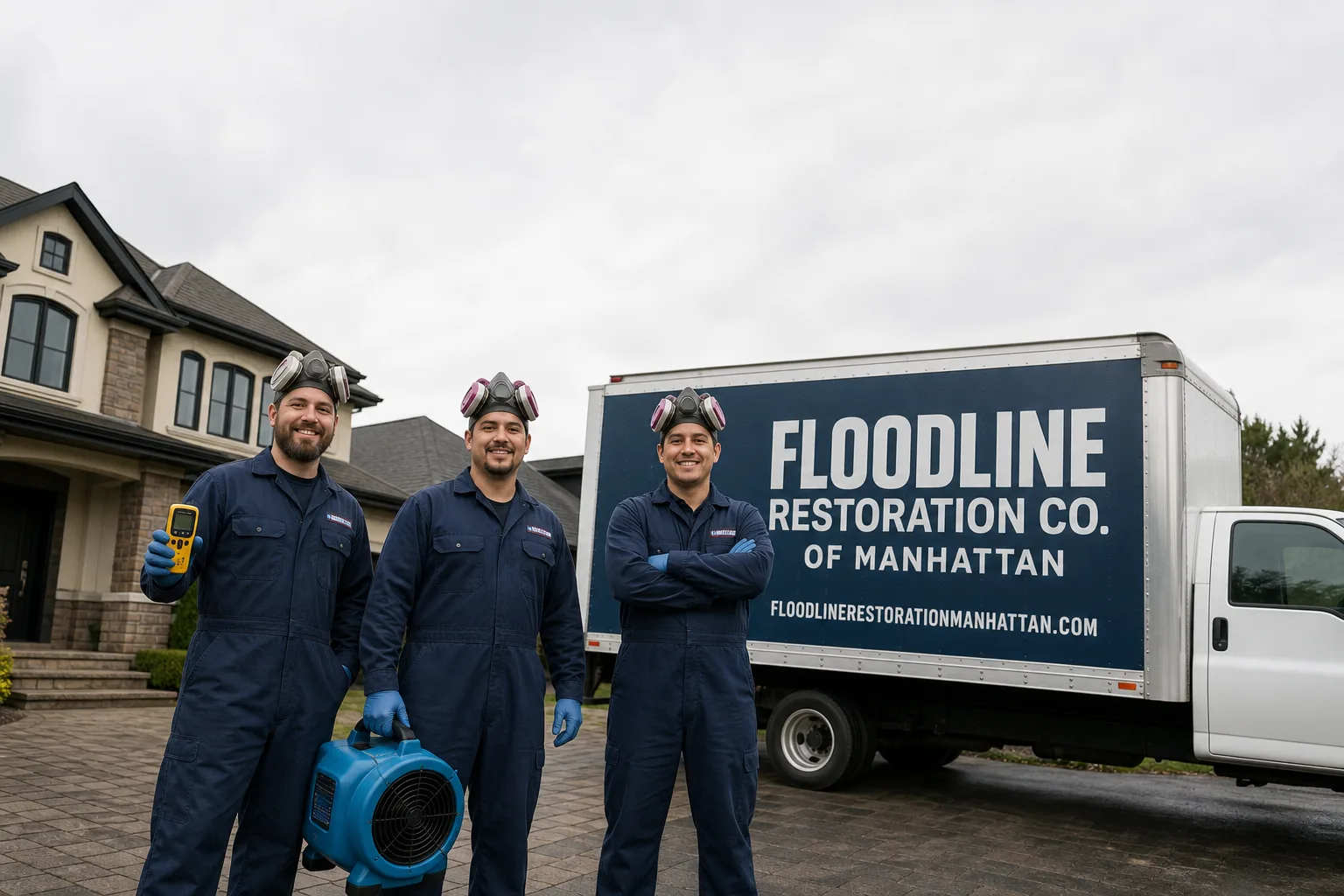
Free visual inspection and a written scope of work before any mitigation begins - photos, moisture readings, and drying logs go in your claim file
The scope we write is the scope we bill. Anything new gets shown to you, in writing, before we touch it.






 Before
 After
After Before
 After
After Before
 After
After24/7 Emergency Sewage Cleanup in River Edge
Sewage cleanup in River Edge typically costs between $1,800 and $5,400 for a standard basement backup, with black water extraction and full sanitization running $2,900 to $7,500 for finished lower levels. We answer the phone live at (917) 924-4221 at any hour, and a certified crew can be on site in the River Edge area within 45 minutes. Sewage is Category 3 water: it carries bacteria, viruses, and pathogens that get worse by the hour. The first 60 minutes after a toilet overflow or sewer backup determines whether you’re cleaning a floor or replacing drywall, studs, and personal belongings. Call now for a free visual inspection and a written scope before any work begins.
Understanding Sewage Cleanup Severity in River Edge Properties
Sewage falls into water damage’s Category 3 classification: grossly contaminated water containing pathogens, fecal matter, and chemical residue. That’s different from the Category 1 water from a burst supply line or Category 2 gray water from a washing machine. River Edge’s housing stock makes Category 3 events particularly unforgiving. The post-WWII Cape Cods and center-hall colonials built between the late 1940s and 1960s sit on minimally waterproofed block foundations. When a cast-iron drain line backs up in one of these homes, sewage pools against porous block and wicks upward. Finished lower levels added in the 1970s and 1980s compound the problem. OSB sheathing, fiberglass insulation, and wood paneling trap sewage moisture behind finished surfaces where air movers can’t reach without pack-out and containment. Moisture mapping with thermal imaging and hygrometers tells us where Category 3 water has traveled, not just where it sits. That’s the difference between a clean job and a recurring problem.
Why River Edge Property Owners Choose Floodline Restoration Co. of Manhattan
- 45-minute response commitment: When sewage is spreading through a River Edge basement, every minute matters. We dispatch crews from the metro area with a hard 45-minute arrival window for emergency calls.
- 24/7 live answer: A real dispatcher picks up at 2 a.m. Not a recording, not an answering service. You speak to a person who can send a crew immediately.
- IICRC-certified crews: Our technicians carry WRT (Water Damage Restoration Technician) and ASD (Applied Structural Drying) certifications, so the moisture log holds up with your carrier.
- Free visual inspection: We assess the damage, map the moisture, and hand you a written scope before any invoice exists. No pressure, no upsell.
- Direct insurance billing: We bill your carrier directly and handle adjuster communication. You’re not playing middleman between a restoration crew and a claims desk.
- One team from extraction to reconstruction: The same crew that extracts sewage is the crew that rebuilds your finished basement. No mid-job handoff, no inherited stranger.
Our Sewage Cleanup Process
Inspection & Assessment
We trace the sewage source in your River Edge property: a failed ejector pit, a root-clogged cast-iron line, a septic failure. Thermal imaging and moisture meters map the full extent. You get a written scope and a firm price before anything is moved.
Extraction & Stabilization
Black water comes out first. We use Dri-Eaz and Phoenix extraction pumps to pull standing sewage from basement slabs, crawl spaces, and finished lower levels. Contaminated materials like saturated drywall and fiberglass insulation come out next, cut to pre-loss condition.
Drying & Dehumidification
XPOWER air movers and Phoenix dehumidifiers run around the clock, with daily moisture readings until structural drying hits the dry standard. The moisture log is handed to you and your carrier. No guesswork, no premature rebuild.
Cleaning & Sanitization
All affected surfaces get antimicrobial treatment and hospital-grade disinfectant. HEPA air scrubbers run to pull airborne contaminants. We treat hidden surfaces too: behind paneling, inside wall cavities, under drop ceilings where sewage odor hides.
Crawl Space & Structural Treatment
River Edge crawl spaces under 1950s Cape Cods are tight, damp, and easy to miss. We remove sewage-contaminated soil, treat block foundations, and set containment where needed so odor doesn’t rise into living spaces.
Repairs & Restoration
Once the dry standard is met, our reconstruction crew rebuilds what came out: drywall, trim, flooring, paint. The same team, the same job file, the 90-Day Done Right Promise in writing.
Need Emergency Sewage Cleanup in River Edge Now?
Crews minutes away, answering live 24 hours a day. The sooner we start, the less it costs.
Working With Your Insurance Company
Insurance claims after a sewage backup in River Edge hinge on documentation. Carriers want to see that the loss was Category 3, that extraction started promptly, and that every dollar spent was necessary. We build that file from the first hour. Photos of the failed ejector pit or the root-clogged drain line. Thermal images showing moisture wicking behind 1970s paneling. Daily drying logs with hygrometer readings until the dry standard is met. A line-item scope of work with no vague categories. Our project manager speaks directly with your adjuster, sends the documentation, and pushes the claim through. If your policy includes sewer backup coverage, we argue it. If it doesn’t, we’ll tell you plainly before the scope expands.
What We Provide Your Insurer
- Thorough documentation of the loss
- Photos of all damage, room by room
- Moisture readings and drying logs
- A detailed, line-item scope of work
- Direct coordination with your carrier
Built for River Edge’s Loss Calendar
River Edge has a sewage loss calendar, and it runs on the Hackensack River. Nor’easters in late fall and early winter push river water into the low-lying New Bridge Road corridor, surcharging municipal lines and sending sewage backward through basement floor drains and ejector pits. Tropical remnants in late summer and early fall, like Irene and Ida, do the same thing with more volume. Spring thaw adds groundwater pressure against those minimally waterproofed block foundations. Winter deep freezes don’t cause sewage backup directly, but they freeze and crack old cast-iron lines that fail the next time the ground shifts. The common thread: floodwater recedes slowly through River Edge because the Hackensack drains sluggishly into the Meadowlands. That extends the window for Category 2 water to become Category 3, for sewage to soak block foundations, and for mold to establish behind finished walls before remediation starts. This is why the same addresses appear on call logs after every major flood event. It’s not bad luck. It’s hydrology.
Sewage Cleanup Across River Edge’s Neighborhoods
River Edge’s sewage patterns divide along two lines: proximity to the Hackensack and age of the drain infrastructure. The New Bridge Road corridor is the flood zone, where riverside surcharge backs municipal sewage into basements during high water events. Homes here tend to be post-WWII Cape Cods and split-levels with original cast-iron drain lines. Tree roots along the road’s old Norway maples infiltrate those lines, causing toilet overflows that pool on unfinished basement floors. Kinderkamack Road on the western side sits higher and drier, but the housing stock is similar age. Septic failures are more common there, particularly on parcels that never connected to the borough’s sewer system. The Cherry Hill area near the Oradell border sees the same finished-lower-level problem: 1970s and 1980s renovations with OSB sheathing and drop ceilings that trap sewage moisture. Bogert Road splits the difference, with a mix of 1950s ranches and capes where crawl space sewage removal is more frequent because the crawl spaces are tighter and vent poorly. Each block has its own failure mode. We know them because we’ve worked them for over 42 years.
Specialized Sewage Cleanup Services We Offer in River Edge
Black Water Extraction
Black water is Category 3: sewage, river backup, or any water that has mixed with fecal matter. In River Edge, black water extraction usually starts with a failed ejector pit or a floor drain that pushed back when the Hackensack crest. We extract with Dri-Eaz pumps, remove saturated materials, and run containment so airborne contaminants stay out of living areas.
Sewage Backup Cleanup
When municipal lines surcharge during a nor’easter, sewage comes back through the lowest drain in the house. In River Edge homes near New Bridge Road, that’s usually the basement. This is the recurring flood loss the borough is named for. We treat it as a structural job, not a surface one. The 90-Day Done Right Promise applies here, in writing, because sewage jobs that aren’t dried properly come back as mold jobs three weeks later.
Crawl Space Sewage Removal
Crawl spaces under River Edge capes and ranches are where sewage hides when a drain line breaks under the house. Block foundations, dirt floors, and poor ventilation make these spaces slow to dry and hard to access. We remove contaminated soil, treat the masonry, and run air movers until moisture readings on the joists hit the dry standard. It’s the kind of work that gets missed by companies that only chase standing water.
Toilet Overflow Cleanup
A toilet overflow in a 1950s Cape Cod isn’t minor just because the water looked clear. Once sewage reaches the crawl space or the finished lower level, it’s a Category 3 event. We extract, cut the saturated drywall, and treat the subfloor. Quick response matters here: in a River Edge basement, sewage odor sets into block walls within a day.
Septic Failure Cleanup
Some River Edge parcels, particularly on the borough’s western edge, still rely on septic systems. When a septic field fails after heavy rain, the backup enters the house through drains and can spread across a finished basement. We handle the interior extraction, sanitization, and drying while you coordinate with a septic contractor for the field work.
Sanitization & Disinfection
After the black water is gone, we treat every affected surface with antimicrobial agents and hospital-grade disinfectant. That includes hidden surfaces: wall cavities, subfloors, the backside of 1970s paneling, the inside of drop ceilings. HEPA air scrubbers run until post-remediation air samples come back clean. Sewage odor doesn’t leave because the floor dried. It leaves because something was treated and something was removed.
What happens when you call
- 1
A real person answersNo phone trees - you reach a local pro.
- 2
You get an upfront price rangeHonest numbers before anyone is dispatched.
- 3
A background-checked tech heads outLicensed & insured, dispatched right away.
- 4
You approve before work beginsNothing starts until you say go.
Sewage Cleanup Costs in River Edge, NJ
Sewage cleanup in River Edge runs on a ladder. A simple toilet overflow contained to a small bathroom floor is $1,200 to $2,400. A sewage backup that fills an unfinished basement floor is $1,800 to $4,200, including extraction, sanitization, and drying. If the basement is finished, the range climbs to $3,500 to $7,500 because drywall, insulation, and flooring come out. Crawl space sewage removal adds $1,500 to $4,000 depending on square footage and soil contamination. What moves the price: how much Category 3 water spread, whether a finished lower level traps moisture behind OSB or paneling, and whether the block foundation absorbed sewage. Insurance-covered jobs with sewer backup coverage reduce out-of-pocket to your deductible. If your policy lacks that endorsement, we’ll tell you before the scope grows. The free visual inspection is how you get a firm number, not a guess.
We Also Serve Cities Near River Edge
Floodline Restoration Co. of Manhattan serves the full Hackensack River corridor. Our crews respond locally to River Edge calls alongside sewage cleanup jobs in New Milford, Oradell, Paramus, and Maywood. If you’re a neighbor calling about a sewage backup in New Milford or a floor drain failing in Oradell, the same certified team, the same 45-minute response, and the same written promise apply. Call (917) 924-4221.
Serving River Edge, NJ - Our Local Coverage Area
We’re based in the River Edge area and know this community well. Use the map below to see our service coverage - if you’re nearby, we can almost certainly help.
River Edge Sewage Cleanup Questions, Answered
How does sewage cleanup differ for homes along New Bridge Road compared to inland River Edge streets?
Homes along New Bridge Road sit in the Hackensack River’s sluggish flood zone, so sewage backup there is usually caused by municipal line surcharge rather than a private drain failure. The floodwater recedes slowly, meaning Category 3 water stays in contact with block foundations for days, not hours. Inland River Edge streets see more isolated failures: root-clogged cast-iron lines, failed ejector pits, or septic issues. The cleanup process is the same, but New Bridge Road jobs require more aggressive structural drying because the foundation walls have absorbed more contaminated water.
Why do River Edge basements with post-WWII block foundations trap sewage smell even after pumping?
Block foundations are porous. When sewage pools against them, contaminated water wicks into the block and mortar. Pumping the standing water removes what’s visible, but the block itself keeps off-gassing sewage odor for weeks unless it’s treated. We use antimicrobial agents on the masonry and run HEPA air scrubbers until the smell is gone. In finished basements, we also check behind paneling and drywall where sewage moisture hides. Call (917) 924-4221 if you’re still smelling it.
After sewage backup in a River Edge split-level near the Hackensack, what’s the fastest way to prevent black mold?
Get Category 3 water out and structural drying started within 24 hours. In River Edge split-levels, sewage wicks behind 1970s wood paneling and OSB sheathing above the block foundation. That moisture feeds mold within 48 to 72 hours. Our crews set containment, extract with Dri-Eaz pumps, remove saturated drywall and insulation to pre-loss condition, and run XPOWER air movers with Phoenix dehumidifiers. Daily moisture readings continue until the dry standard is met, and the log goes to your carrier.
What should a River Edge homeowner do when the toilet overflows in a 1950s Cape Cod and water reaches the crawl space?
Shut the toilet’s supply valve, don’t flush again, and call (917) 924-4221. Crawl spaces under 1950s capes are tight and poorly ventilated, so sewage water there gets absorbed by the soil and the joists above it. The longer it sits, the more of the subfloor and framing gets contaminated. We remove sewage-contaminated soil, treat the block foundation, and run air movers with daily readings until the joists hit the dry standard. Free visual inspection before any work.
Does homeowners’ insurance cover sewage backup in River Edge when the Hackensack River rises?
Standard homeowners policies typically exclude flood damage, including riverine flooding from the Hackensack. But sewage backup caused by municipal line surcharge is often covered under a sewer backup endorsement, which many River Edge homeowners have added after events like Ida. Whether you’re covered depends on your specific policy. We document everything from the first hour, bill your carrier directly, and speak with your adjuster so the claim gets argued properly. Call (917) 924-4221 and we’ll walk through it.
How fast can a crew actually get to a sewage backup in River Edge?
We commit to a 45-minute response for emergency sewage calls in River Edge. A live dispatcher answers at (917) 924-4221 any hour of the day or night, and the crew is dispatched from the metro area immediately. Extraction is running during the first visit, not scheduled for the next day. That speed matters because Category 3 water gets worse by the hour and mold starts within two days.
Do I need full remediation or just a cleaning after a sewage backup?
The honest answer depends on what the sewage touched. If it was a small overflow on a tile bathroom floor and you caught it immediately, a thorough cleaning and disinfection may be enough. If sewage pooled in a finished basement, soaked into a block foundation, or reached a crawl space, the answer is almost always full remediation: extraction, removal of saturated materials, structural drying, and antimicrobial treatment. We’ll tell you which one it is with a free visual inspection and a written scope. No pressure.
What certifications do your sewage cleanup crews carry?
Our technicians are certified to IICRC standards, including WRT (Water Damage Restoration Technician) and ASD (Applied Structural Drying). They’re also trained to RIA and IFA standards, background-checked, and uniformed. The certifications matter because your insurance carrier will ask for the drying log, and a properly certified crew produces a log that holds up. We’ve done this for over 42 years, and the 90-Day Done Right Promise is in writing.
Written by Curt Bowman, Owner at Floodline Restoration Co. of Manhattan, serving River Edge and the Hackensack corridor with sewage cleanup, black water extraction, and full reconstruction.