
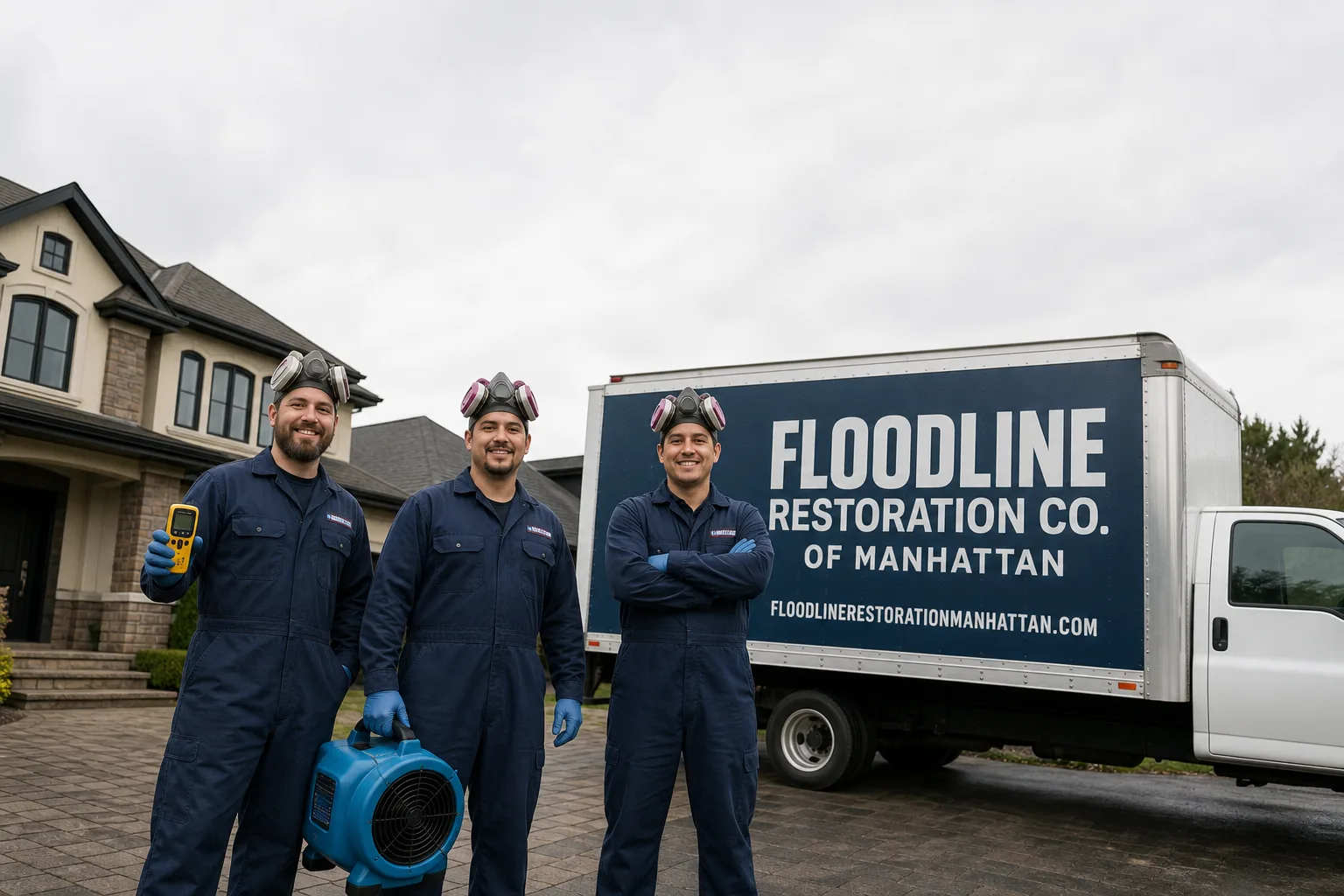
Free visual inspection and a written scope of work before any mitigation begins - photos, moisture readings, and drying logs go in your claim file
The scope we write is the scope we bill. Anything new gets shown to you, in writing, before we touch it.






 Before
 After
After Before
 After
After Before
 After
After24/7 Emergency Sewage Cleanup in New Milford
Sewage cleanup in New Milford typically costs between $1,200 and $4,800 depending on the affected area, and our crews reach most New Milford homes within 45 minutes of your call. When category 3 water is sitting in your basement or crawl space, every hour it sits means it’s soaking deeper into framing, wicking up drywall, and pressing into concrete and stone that will hold that contamination for weeks. Call (917) 924-4221 right now and a live dispatcher answers. That’s a person, not a recording, at any hour. We’ll start extraction on the first visit.
New Milford’s older homes need a different response than newer construction. A 1950s Cape Cod with a full-height fieldstone basement absorbs sewage differently than a slab-on-grade ranch in a neighboring suburb. Stone foundations, dirt crawl spaces, galvanized waste lines, clay-heavy soils. Our crews know what they’re walking into before they arrive because we’ve handled enough jobs off River Road, Madison Avenue, and Columbia Street to read the house before the hose comes off the truck.
Understanding Sewage Cleanup Severity in New Milford Properties
Not every wet basement is the same. The restoration industry classifies water damage in three categories. Category 1 is clean water from a supply line. Category 2 is contaminated water that hasn’t yet carried sewage. Category 3 is exactly what it sounds like: water carrying human waste, bacteria, and pathogens from a toilet, a sewer lateral, or a septic system. Sewage cleanup in New Milford almost always means category 3. That’s not a surface mop job. It’s full containment, extraction, disposal of affected materials, structural drying, and hospital-grade disinfection before anything gets closed back up.
Here’s what we see repeatedly in New Milford’s housing stock. Pre-1970s Colonials and Cape Cods were built with cast-iron and galvanized waste lines. Cast iron lasts decades, but when it cracks, it cracks completely. Galvanized corrodes from the inside out, thinning at elbows and joints behind toilets and under floors. A hairline split in a cast-iron main under a basement floor delivers sewage into the same stone foundation the house has stood on since the Eisenhower administration. The full-height unfinished basements common here become holding tanks when that’s happening. Dirt crawl spaces wick it up through the soil itself. That’s a fundamentally different cleanup than a finished basement with a concrete slab. It requires soil removal, vapor barrier replacement, and containment that gets set before extraction starts, not after.
We also see ice-dam meltwater in March overloading perimeter drains. When that water pressure builds against a foundation wall, it can force sewage up through floor drains that haven’t moved water since Thanksgiving. Homeowners think winter is over. Then the first warm weekend brings a backup that isn’t from a clog at all. It’s groundwater finding the path of least resistance, and that path is sometimes the sewer lateral.
Why New Milford Property Owners Choose Floodline Restoration Co. of Manhattan
- 45-minute response commitment. We dispatch from a board, not a sales desk. A uniformed, background-checked technician reaches most New Milford addresses within 45 minutes of your call, day or night.
- 24/7 live answer - a real person. The dispatcher who picks up at 2 a.m. is the same kind of person who’d answer at noon. No automated triage, no “leave a message after the tone.” You tell us what’s happening; we send a crew.
- IICRC-certified crews. Our technicians carry WRT and ASD certifications, the specific codes that apply to water loss and structural drying. We also train for category 3 containment under the IICRC’s S500 standard.
- Free visual inspection. Before any work is authorized, you get eyes on the damage and a straight explanation of scope. No obligation, no pressure. If it’s just a blocked cleanout, we’ll tell you that and bill accordingly.
- Direct insurance billing. We document everything, work from the same line-item estimates adjusters expect, and deal with your carrier directly. You don’t shuttle paperwork between us and them.
- One team, extraction to reconstruction. The same certified crew that extracts the sewage and dries the framing is also the crew that repairs the drywall and rebuilds the closet. No mid-job handoff to a subcontractor you’ve never met.
Our Sewage Cleanup Process
Inspection & Assessment
We start with thermal imaging and moisture meters to map the full affected area, including what’s behind walls and under flooring. For New Milford’s older homes, we check stone foundation walls, floor drains, and crawl space access points because sewage travels where you can’t see it.
Extraction & Stabilization
We remove standing category 3 water with truck-mounted extraction equipment, then cut out saturated drywall, carpet, and pad. Every cut is made so the repair stage has straight lines and is never bigger than it needs to be. But we cut until it’s clean.
Drying & Dehumidification
After sewage is extracted, we set the drying chamber. Dri-Eaz and Phoenix dehumidifiers pull moisture from framing and concrete while XPOWER air movers create the air pattern that makes structural drying work. Daily moisture logs track progress until we hit the dry standard.
Cleaning & Sanitization
All affected surfaces get treated with an EPA-registered antimicrobial. Stud cavities, floor plates, and the underside of subflooring get the same treatment, not just the visible surfaces. In crawl spaces, we remove contaminated soil and replace vapor barrier.
Containment & Air Quality
During the work, HEPA air scrubbers run continuous negative air to prevent cross-contamination into unaffected rooms. We also mask off ductwork and seal return-air vents so the HVAC system doesn’t spread contamination through the house.
Repairs & Restoration
Once drying targets are verified with moisture readings, we rebuild what we cut out. Drywall, trim, flooring, paint, insulation, whatever was removed goes back to pre-loss condition or better. And the 90-Day Done Right Promise covers the whole job. In writing.
Need Emergency Sewage Cleanup in New Milford Now?
Crews minutes away, answering live 24 hours a day. The sooner we start, the less it costs.
Working With Your Insurance Company
Sewage backups are covered under most New Milford homeowners policies, but the claim turns on documentation. What the adjuster sees in photos, what the moisture log shows, and whether the scope is written in language the carrier recognizes. We handle that from the first hour. Our technicians photograph the pre-existing condition of every affected area before demolition starts, because that’s often the difference between a covered rebuild and a denied one. The homeowner isn’t expected to know what a moisture reading on a stone foundation wall should look like, or why a line item for crawl space soil removal is standard on a category 3 job. We write it up so the carrier can process it, and we talk to your adjuster directly.
What We Provide Your Insurer
- Thorough documentation of the loss
- Photos of all damage, room by room
- Moisture readings and drying logs
- A detailed, line-item scope of work
- Direct coordination with your carrier
Floodline Restoration Co. has been doing this since 2010, and our founder Curt Bowman built the company around the idea that restoration should be documented like a public utility and billed like a square deal. Direct insurance billing means your carrier gets the same paperwork you do. No surprises. The only thing you ever sign before work starts is a scope you can read.
Built for New Milford’s Loss Calendar
New Milford’s sewage losses follow a pattern that most national restoration franchises don’t train for. January and February bring deep freezes that snap older supply lines and stress cast-iron waste pipes. March is the cruel month: freeze-thaw cycles crack fittings that survived the deep cold, then snowmelt saturates the clay-heavy soil around foundations. The ground holds that water for weeks, pressing against full-height stone foundations. That’s when floor drains back up. April rain loads the same saturated ground. Summer thunderstorms hit fast and overload perimeter drains. Fall is when we find what the spring was hiding: corroded galvanized waste lines that leaked quietly behind a knee-wall for six months before the dining room ceiling finally stained.
For New Milford homeowners, that means the sewage loss you’re dealing with is rarely a one-off plumbing failure. It’s usually two or three failure modes stacking up at once. A cracked cast-iron main plus hydrologic pressure plus a clay soil that won’t drain. That’s a restoration scope, not a plumbing call. And it’s exactly the job our team shows up prepared to handle.
Sewage Cleanup Across New Milford’s Neighborhoods
Response routes matter when sewage is spreading. From River Road, where we’ve handled backflow in homes close to the Hackensack River’s tributary drainage, to the quiet side streets off Madison Avenue and Columbia Street, our crews know which blocks have older cast-iron mains and which were rewired, repiped, and partially modernized.
Homes near Milford Pond and the lower-lying sections approaching the river feel groundwater pressure first, and those basements back up sooner after a heavy rain. The Ridgewood Road corridor and streets branching off it have a mix of 1950s Capes and pre-war Colonials. Those Capes are the ones where a corroded galvanized elbow behind a second-floor toilet leaks into the knee-wall cavity and travels down inside the wall until a first-floor ceiling gives the secret away. Up in the areas off Monmouth Avenue and east toward Oradell Reservoir, we see more septic-fed systems, and failures there call for a different extraction approach plus more extensive soil treatment.
We don’t work off a generic playbook. The crew that responds to a finished-basement backup on a cul-de-sac near New Milford High School does different work in that first hour than the crew that pulls up to a dirt-crawl-space Colonial on a hill above the river. Same certification, same equipment. Different job.
Specialized Sewage Cleanup Services We Offer in New Milford
Sewage Backup Cleanup
When the main line backs up into a New Milford basement, we extract the standing water, remove contaminated materials, disinfect every surface, and dry the structure to verified targets. We don’t just pump and run. A backup leaves bacteria in wood grain, concrete pores, and the space between floorboards, and that requires containment and structural drying, not just a wet-vac and some bleach.
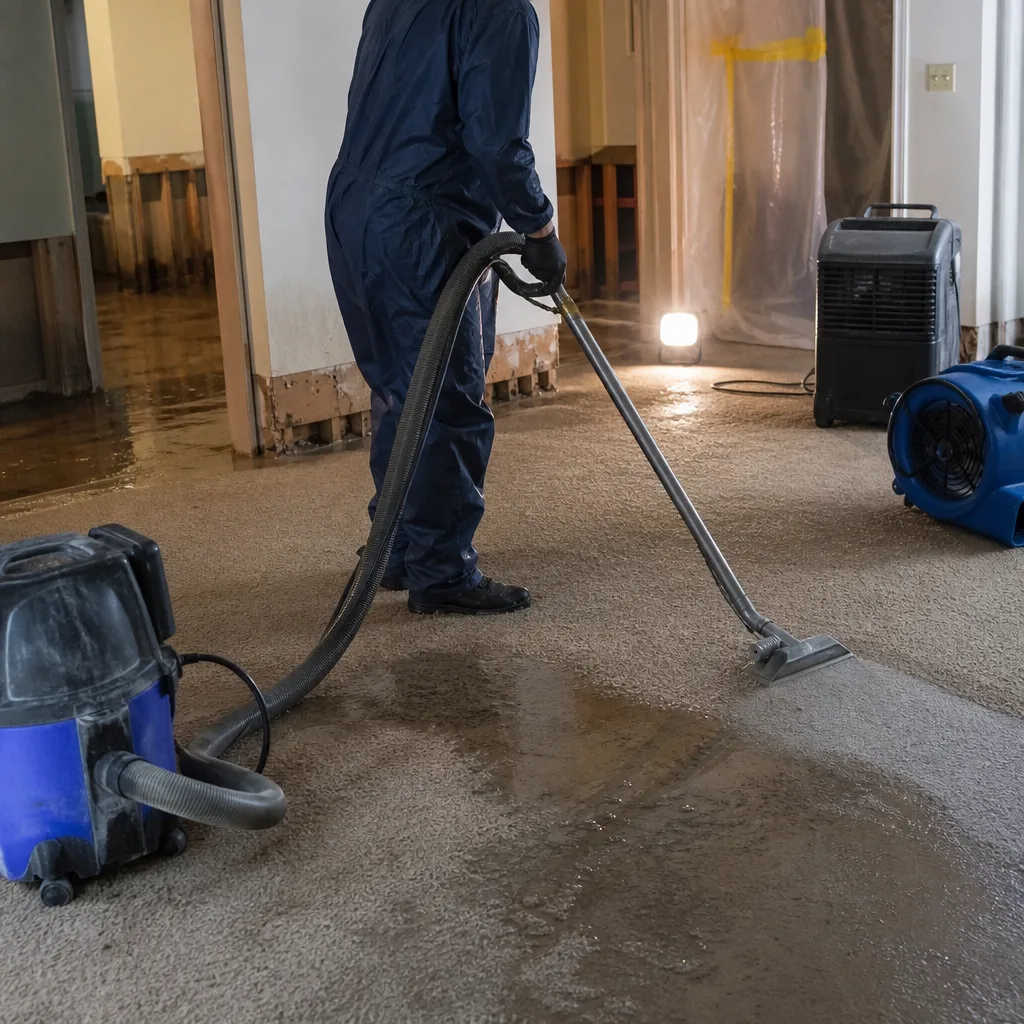
Black Water Extraction
Category 3 water requires equipment sized for the job. We run truck-mounted extractors and high-volume evacuation units like the Dri-Eaz HVE 3000, not a portable carpet cleaner. In tight crawl spaces and behind built-in cabinetry we use hand extraction and specialty wands. Every gallon removed early is a gallon that doesn’t soak deeper into your framing.
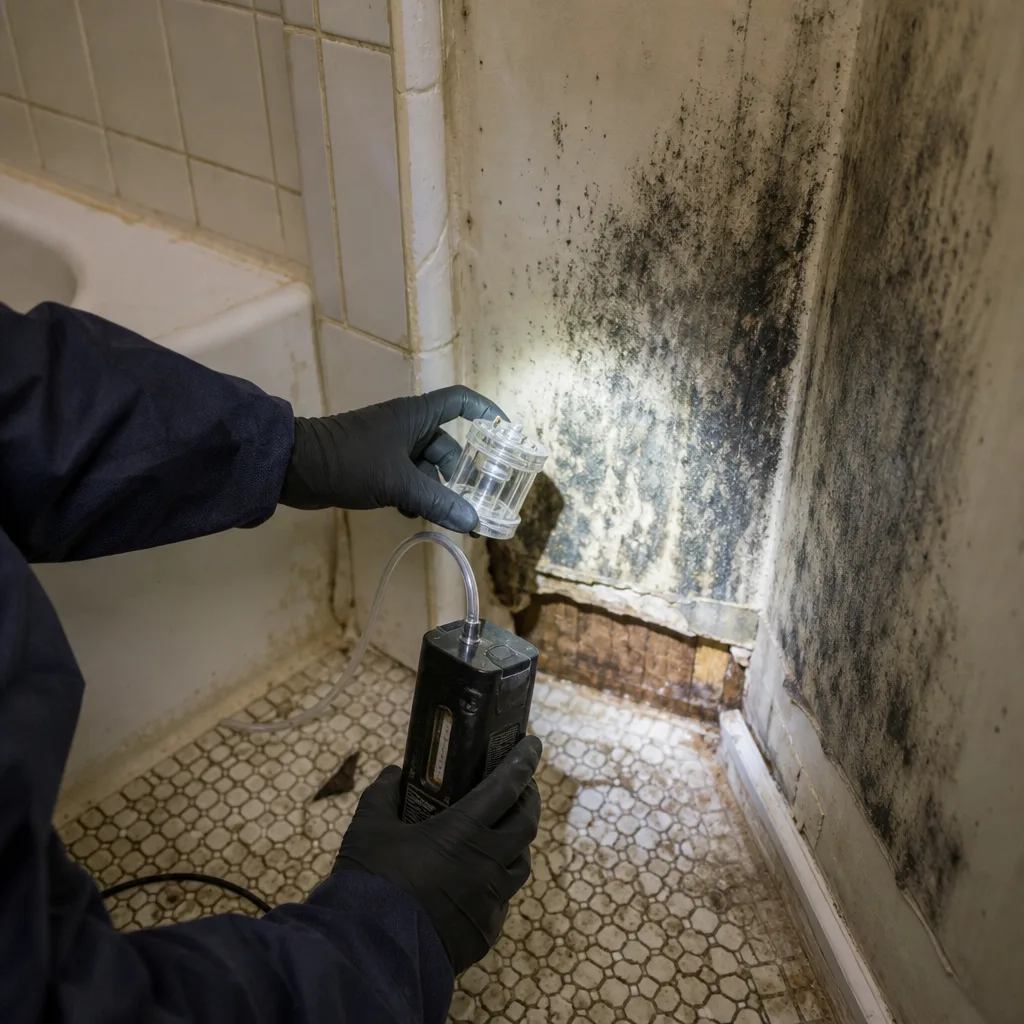
Crawl Space Sewage Removal
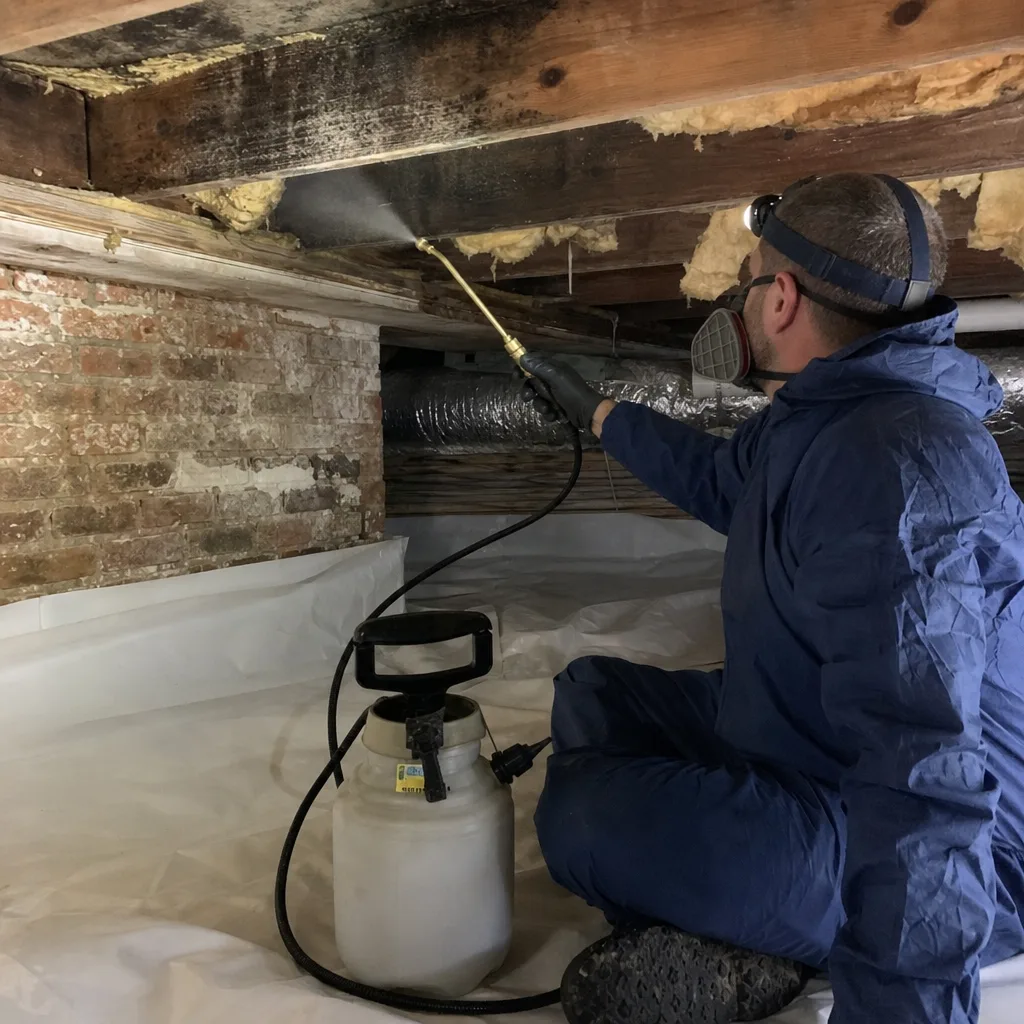
A dirt-floor crawl space under a pre-1970s New Milford home complicates everything. Sewage saturates the soil. The vapor barrier fails. Odors persist for months unless the contaminated soil is removed and replaced. Our crews dig out affected soil, re-grade the crawl space floor, install new vapor barrier, and run drying equipment until moisture readings stabilize. Then we sanitize. Skipping the soil removal means the smell comes back next humid summer.
Toilet Overflow Cleanup
Not every toilet overflow in New Milford is a full category 3 event. If it’s clean water from a tank or a supply line, the scope is smaller and faster. But if it’s backflow from a blocked main, the same water that came out of the bowl has been through the line, and we treat it as sewage. We can tell which one you’re dealing with in the first ten minutes of the inspection.
Sanitization & Disinfection
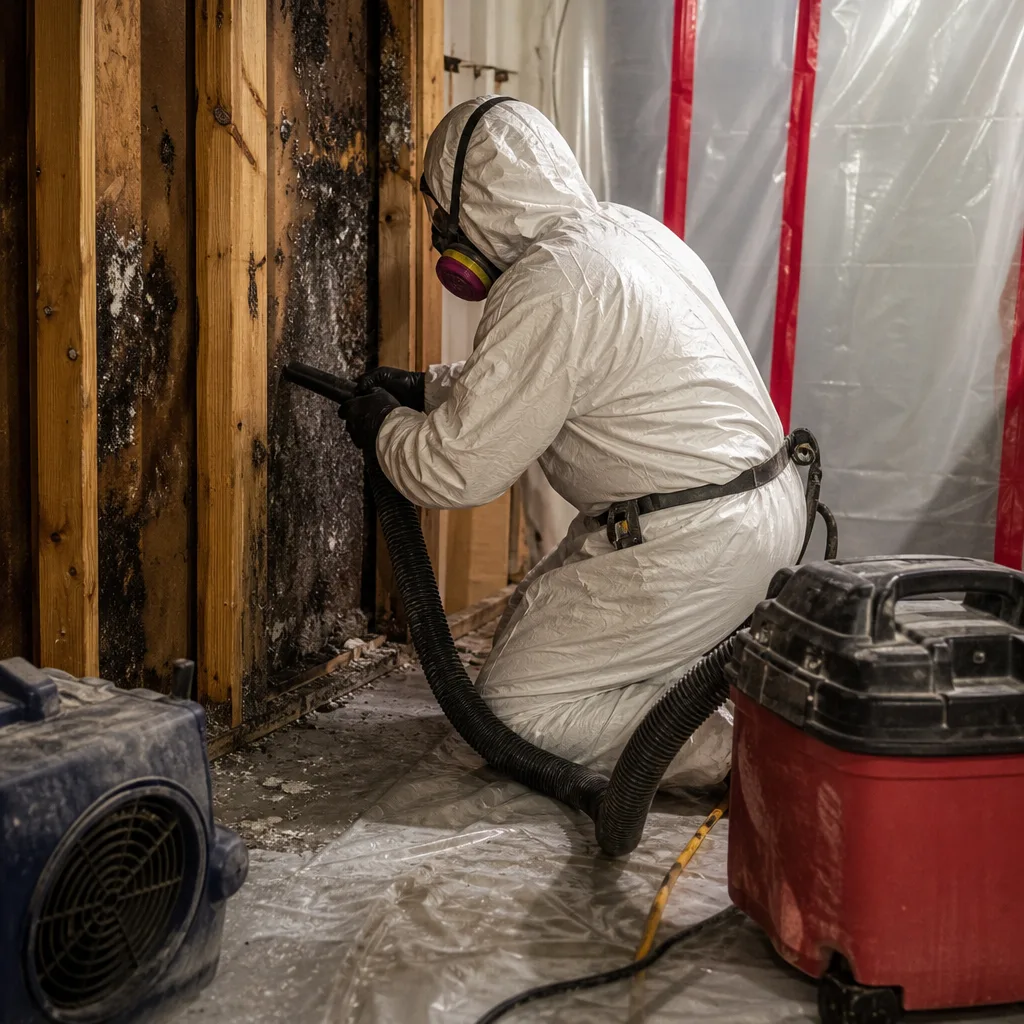
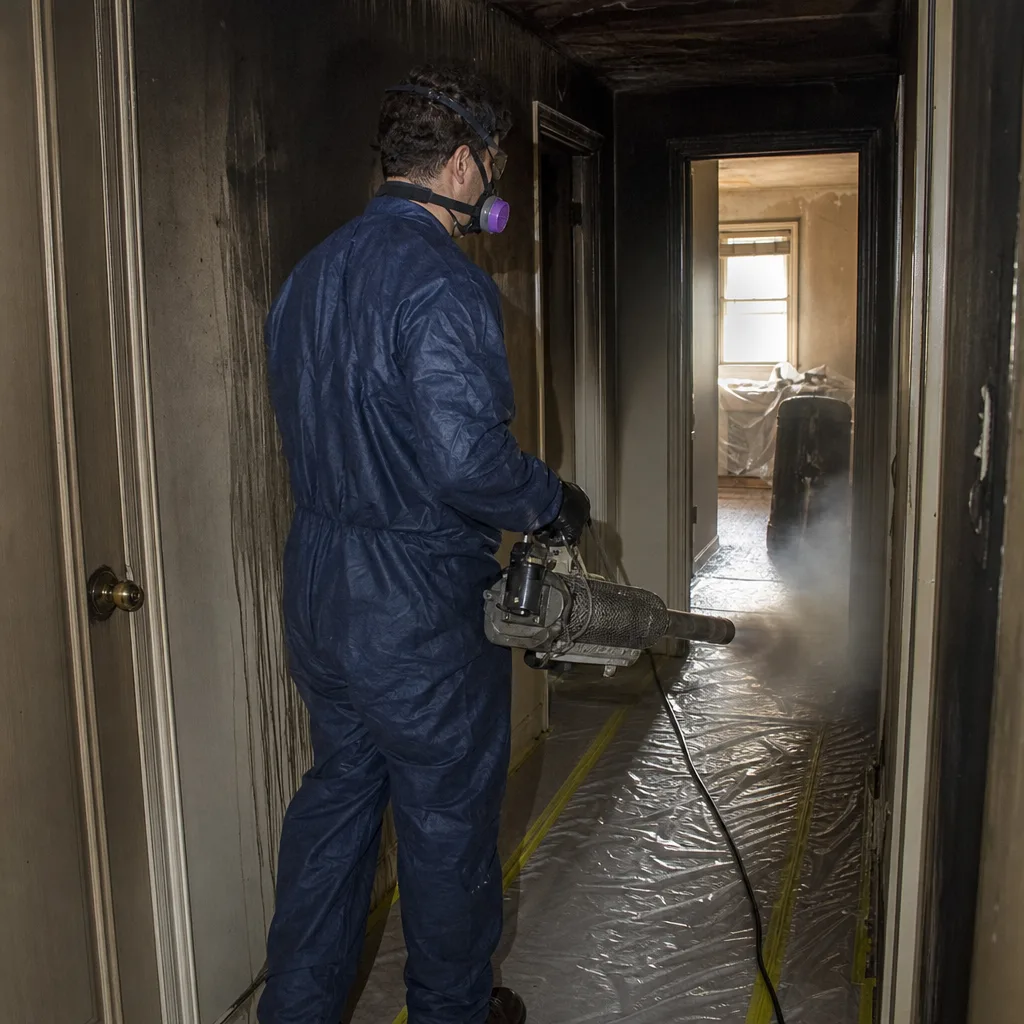
We apply an EPA-registered antimicrobial to every affected surface, including stud cavities and floor plates. HEPA air scrubbers run throughout the job and after, keeping airborne contaminants from settling in clean areas. For New Milford’s older homes, we give special attention to full-height basement walls, where stone and mortar hold contamination differently than poured concrete.
What happens when you call
- 1
A real person answersNo phone trees - you reach a local pro.
- 2
You get an upfront price rangeHonest numbers before anyone is dispatched.
- 3
A background-checked tech heads outLicensed & insured, dispatched right away.
- 4
You approve before work beginsNothing starts until you say go.
Sewage Cleanup Costs in New Milford, NJ
A toilet overflow contained to a single bathroom on River Road might run $800 to $1,400 for cleanup and disinfection. A full basement backup with extraction, drywall removal, structural drying, and sanitization typically lands between $2,500 and $4,800. Crawl space contamination adds soil removal and vapor barrier replacement, pushing that job to $3,500 to $6,500 depending on square footage and access. If framing repair and rebuild are needed, the total grows from there, and that’s where our line-item written scope keeps you from paying for work that isn’t required.
What moves the price: how much water, how long it sat, whether the affected area is finished or unfinished, whether our crews can stand upright in the crawl space or have to work on their knees, and whether damaged materials need disposal under local solid waste rules. Insurance covers most sewage backups when the loss is sudden and accidental. The best way to know your number is a free visual inspection. Call (917) 924-4221 and we’ll come look, write a scope, and walk you through it before you commit to anything.
We Also Serve Cities Near New Milford
Our teams regularly respond to sewage cleanup calls in Sewage Cleanup in New Milford, and we serve the surrounding communities including River Edge, Bergenfield, Oradell, and Dumont. Same 45-minute response commitment, same certified crews, same written guarantee.
Serving New Milford, NJ - Our Local Coverage Area
We’re based in the New Milford area and know this community well. Use the map below to see our service coverage - if you’re nearby, we can almost certainly help.
New Milford Sewage Cleanup Questions, Answered
How does New Milford’s late-winter freeze-thaw pattern make sewage backups worse than in nearby towns?
Freeze-thaw cycling stresses older cast-iron and galvanized waste lines, and roots spend all winter growing toward the warmth of sewer laterals, so a cracked fitting or bellied pipe that survived a cold snap splits wide open in March. Then snowmelt saturates the clay-heavy soil around your foundation, holding water against the stone walls and forcing it into any opening, including floor drains tied to the sanitary lateral. Bergenfield and Dumont have similar housing stock, but New Milford’s low-lying sections near the Hackensack tributaries take groundwater pressure earlier and hold it longer.
Can you clean sewage from a dirt-floor crawl space under a pre-1970s Colonial, or does it all have to be removed?
We can clean it, but contaminated soil under a New Milford Colonial has to come out. Category 3 water saturates the top layer of soil, and no spray or fogger reaches the contamination that’s soaked deeper than the surface. We remove the affected soil, re-grade what’s left, install new vapor barrier, and run drying equipment until the moisture readings stabilize. Trying to only clean a dirt-floor crawl space leaves odor and bacteria trapped in the soil, which comes back as soon as the weather turns humid.
How do you tell the difference between a toilet overflow and a main line backup in a 1940s Cape Cod?
We look at where the water came from and whether it’s moving backward or just overflowing from the fixture. A toilet overflow from a clogged bowl usually stays in the bathroom. A main line backup backs up into every fixture on that waste line, sometimes multiple floors. In a 1940s New Milford Cape Cod, we also check the galvanized elbows behind the toilet, because those corrode from the inside and leak into the knee-wall cavity even when the toilet itself looks fine. The water stains the ceiling below before you ever see it in the bathroom.
Do I need to leave my house during sewage cleanup if I have a full-height unfinished basement?
Not always, but if the HVAC system shares air with the contaminated basement, we recommend staying elsewhere until the affected area is contained and the air scrubbers are running. Full-height unfinished basements in New Milford’s older homes tend to be connected to the rest of the house through open stairwells and duct chases, which is exactly how airborne contamination spreads. Once we set containment, seal the vents, and start HEPA filtration, most homeowners can stay in the finished upper floors during drying.
What does ‘pre-loss condition’ mean when drying a New Milford home with a stone foundation?
It means we document and correlate the condition of every affected area before we start tearing anything out. For a stone foundation home, that includes photos of the stone walls, the mortar joints, the floor drains, the stair framing, and any cedar closets or built-ins near the loss. We write down what was there and what condition it was in. That record determines what the rebuild scope should restore, and it keeps the adjuster and the rebuild crew honest about what the sewage actually affected versus what was already deteriorated. We did a River Road job where a 1950s cedar closet sat next to a cracked cast-iron main. The pre-loss photos proved the closet was already worn before the backup, and that kept the rebuild scope from being padded.
How fast can you actually get to a New Milford sewage backup?
Most New Milford calls see a crew within 45 minutes. Our dispatch is live around the clock, and we’re not running teams in from some regional office an hour away. The faster we start extraction, the less sewage soaks into framing, flooring, and foundation materials. Call (917) 924-4221 and we’ll be on the road before you hang up.
Will my New Milford homeowners insurance cover sewage backup cleanup?
Most policies cover sudden and accidental sewage backups, but the claim has to be documented correctly from the first hour. We photograph everything, log daily moisture readings, and write a line-item scope that matches what adjusters expect to see. We also coordinate directly with your carrier so you don’t have to translate between a technician and an adjuster. If your policy has a specific backup endorsement, we’ll work within those limits and tell you plainly what’s covered before you authorize anything.
What should I do in the first 30 minutes after a sewage backup in New Milford?
Shut off the water if you can reach the valve safely, and do not flush any toilets or run any water down drains. Keep children and pets out of the affected area. Do not run the HVAC system if it might circulate air from the contaminated space. Then call (917) 924-4221. A live dispatcher answers and starts the response. The first hour determines how much material has to be removed and how long the drying will take.
Written by Curt Bowman, Owner at Floodline Restoration Co., serving New Milford since our founding. Our Sewage Cleanup team stands behind every job from first extraction to finished rebuild, backed by the 90-Day Done Right Promise. In writing.
Call (917) 924-4221 for a free estimate on sewage cleanup in New Milford. A live person answers, 24 hours a day, every day. When sewage is spreading, the line the water left is where we start, and we don’t stop until the house is dry, disinfected, and fully restored. Done right. And backed in writing.