
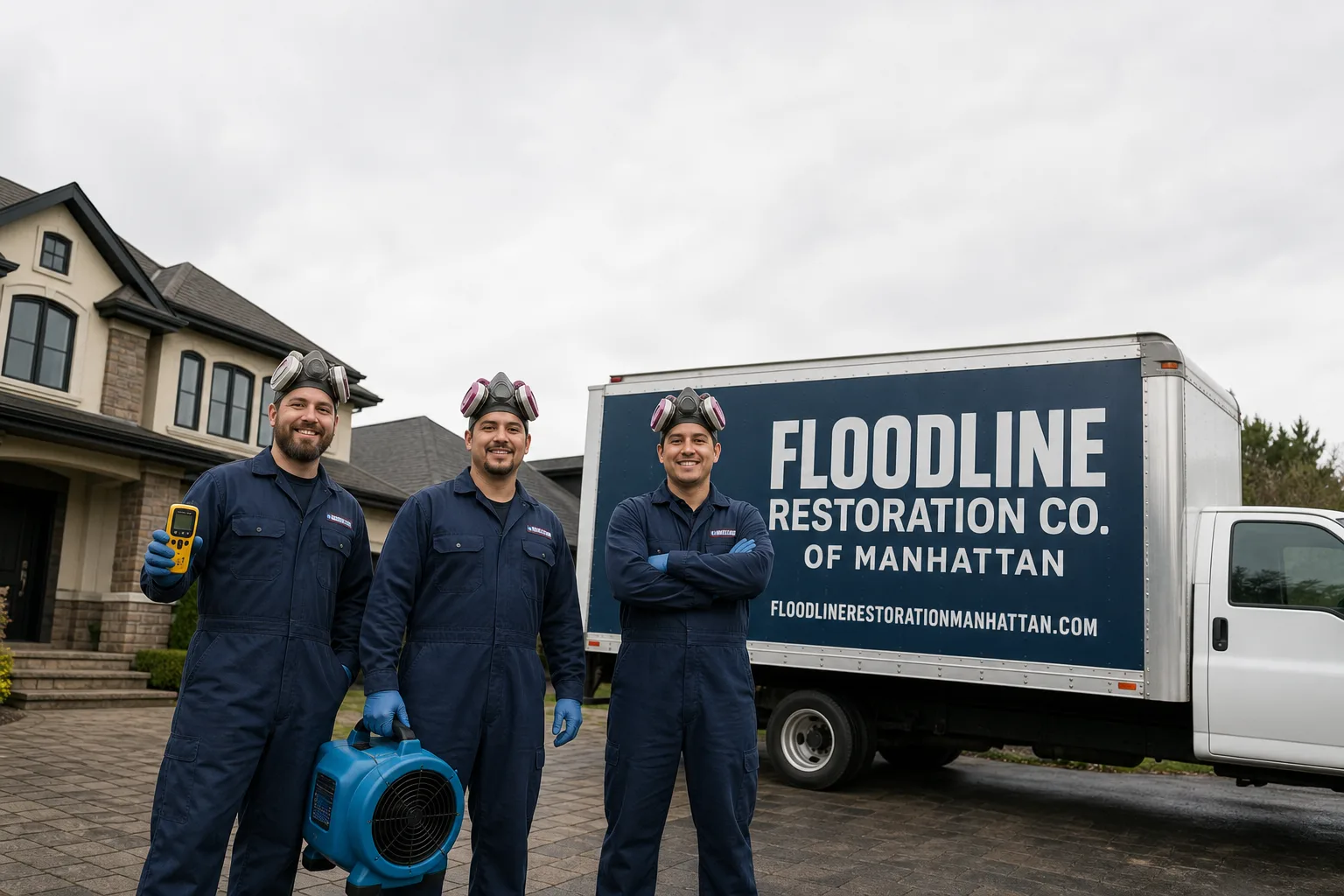
Free visual inspection and a written scope of work before any mitigation begins - photos, moisture readings, and drying logs go in your claim file
The scope we write is the scope we bill. Anything new gets shown to you, in writing, before we touch it.






 Before
 After
After Before
 After
After Before
 After
After24/7 Emergency Storm & Disaster Restoration in Alphabet City
Storm and disaster restoration in Alphabet City typically runs $1,800-$7,500 for flood extraction and drying, with full rebuilds after major storm damage reaching $15,000-$40,000 depending on how many units a shared stack feeds. Our crews reach Alphabet City within 45 minutes, any hour, any day. A live dispatcher answers at (917) 924-4221 and a certified crew is dispatched immediately, because in these pre-war tenements, water moving through plaster-and-lath walls for even one extra hour means the difference between drying a cavity and rebuilding it. The first call is the cheapest money you’ll spend on the whole job.
Understanding Storm & Disaster Restoration Severity in Alphabet City Properties
Storm damage inside Alphabet City’s five- and six-story tenements rarely behaves the way textbooks describe. Category 1 water from a clean supply line can turn Category 3 within 48 hours once it picks up the decades of organic material packed inside old plaster-and-lath assemblies and shared chase walls. Moisture mapping with thermal imaging and penetrating meters is not optional here; we’re often chasing water that has wicked six feet sideways through wall cavities before it ever shows as a stain in the apartment below. Structural drying in these buildings means managing equilibrium moisture content across materials that predate modern building science entirely. Cast-iron drain stacks, original galvanized supply lines, flat tar roofs, and party walls shared between rent-stabilized units all change the math. A roof breach on Avenue C behaves differently than the same breach on a single-family home in Queens: gravity feeds the water down a shared stack, and by morning, four units are involved instead of one. The severity scale here is not about the storm itself. It’s about what the storm found to travel through.
Why Alphabet City Property Owners Choose Floodline Restoration Co. of Manhattan
- 45-minute response commitment for Alphabet City calls. Our crew is staged in the area and dispatches immediately, not after a call-back from a sales desk.
- 24/7 live answer, every time. A real person picks up at (917) 924-4221 at 2 a.m. Not a recording. Not a ticket left for the morning.
- IICRC-certified crews, WRT and ASNT-trained for structural drying. The same technicians handle moisture mapping, daily readings, and rebuild, so the scope never gets inherited by a stranger.
- Free visual inspection with a written scope before work begins. You’ll know what we found, what it costs, and what’s covered before any equipment moves.
- Direct insurance billing with photo documentation from the first hour. We handle the adjuster, the carrier, and the paperwork. You handle getting back to normal.
- One team from extraction to reconstruction. No mid-job handoff. The crew that pulls the water out is the crew that rebuilds the wall. We stand behind the result with the 90-Day Done Right Promise, in writing.
Our Storm & Disaster Restoration Process
Inspection & Assessment
We arrive, walk the affected units, and establish the damage perimeter. Thermal imaging and penetrating moisture meters map water that has not yet surfaced. In Alphabet City tenements, this step routinely reveals hidden moisture in cavities two or three units from the visible loss.
Extraction & Stabilization
Standing water comes out with truck-mounted extraction units and submersible pumps sized for basement and garden-level apartments. We board up breached windows and tarp open roof sections the same visit. Stabilization stops the active loss before it spreads further through shared stacks.
Drying & Dehumidification
Dri-Eaz dehumidifiers and Phoenix air movers are placed according to the moisture map, not guesswork. In plaster-and-lath assemblies, we use Injectidry systems to pull water from inside wall cavities without removing every surface. Daily readings get logged until the dry standard is met.
Cleaning & Sanitization
Antimicrobial treatment goes on every surface that took Category 2 or 3 water. HEPA air scrubbers run during demolition and pack-out to control spores. We treat the cavities, not just the visible faces, because Sandy taught this neighborhood what cosmetic patching leaves behind.
Mold Prevention & Moisture Verification
Before any rebuild starts, we verify the moisture log against the dry standard. If a cavity shows residual moisture or a mold reservoir, containment goes back up. No wall gets closed over a wet cavity in Alphabet City on our watch.
Repairs & Restoration
The same crew rebuilds what was opened: plaster, framing, flooring, and finishes. Your job is backed by the 90-Day Done Right Promise, in writing. If it’s not done right, we make it right. No paperwork battles, no arguing.
Need Emergency Storm & Disaster Restoration in Alphabet City Now?
Crews minutes away, answering live 24 hours a day. The sooner we start, the less it costs.
Working With Your Insurance Company
Most storm and flood damage in Alphabet City is a covered loss, but the difference between a smooth claim and a denied one is documentation that starts in the first hour. We photograph every affected room before demo begins, log moisture readings daily, and write a line-item scope in the format carriers and adjusters recognize. Our team communicates directly with your adjuster, so you’re never the one playing messenger between the insurance company and the restoration crew. For properties east of Avenue B inside FEMA Flood Zone AE, flood insurance claims follow National Flood Insurance Program protocols, and we know what documentation those files require. Curt Bowman built Floodline Restoration Co. of Manhattan around the idea that the homeowner should never be the project manager of their own disaster. We handle the claim, the scope, and the rebuild, and we bill the carrier directly.
What We Provide Your Insurer
- Thorough documentation of the loss
- Photos of all damage, room by room
- Moisture readings and drying logs
- A detailed, line-item scope of work
- Direct coordination with your carrier
Built for Alphabet City’s Loss Calendar
Alphabet City’s storm season runs on a pattern we’ve learned from over 42 years of responding to New York City’s worst water events. January deep freezes burst the original galvanized supply lines that still feed many old-law buildings east of Avenue B; a pinhole leak behind a plaster wall can soak a building cavity for weeks before anyone notices. Spring thaw brings basement seepage into garden-level apartments that sit below grade on Avenue D. Summer thunderstorms overwhelm the neighborhood’s aging flat tar roofs in minutes, sending water down shared stacks and through four or five units at once. Nor’easters in late fall and early winter peel roof membranes off pre-war tenements that have original or early-replacement roofing in place. And the Hurricane Sandy legacy still shows up years later: moisture that was cosmetically patched in 2012, then re-wetted by a smaller event, now holding active mold colonies behind intact plaster. We know what each season brings to these blocks, and we stage our crews accordingly.
Storm & Disaster Restoration Across Alphabet City’s Neighborhoods
The response route matters here. Calls from the blocks around Tompkins Square Park usually involve flat tar roof failures on new-law buildings from the 1920s, where a roofer’s patch gives way during a summer downpour and water rides the shared stack down to the garden level. East of Avenue B, toward the East River and inside Flood Zone AE, we see more basement and ground-floor flooding, where storm surge and backed-up sewers push Category 3 water into apartments that sit below the base flood elevation. The corridor along Avenue C has some of the oldest old-law tenements in the neighborhood, pre-1901 construction with original cast-iron drain stacks that crack under the thermal cycling of January freezes. Around the East Village border along Avenue A, we’re often called into buildings that were Sandy-inundated, cosmetically repaired, and never properly dried; those jobs involve layered damage that looks like a fresh pipe leak but hides a decade of mold behind the plaster. Each block has a signature, and we read it before we unload the truck.
Specialized Storm & Disaster Restoration Services We Offer in Alphabet City
Storm Damage Cleanup
Storm cleanup in Alphabet City starts with stabilizing the building envelope: boarding up windows blown out along Avenue D, tarping the flat roof over East 4th Street, and stopping active water intrusion before it spreads through shared wall cavities. We remove wet debris, damaged contents, and saturated building materials, then set containment to keep dust and spores out of adjacent units. Every step gets photographed for your carrier.
Flood Damage Restoration
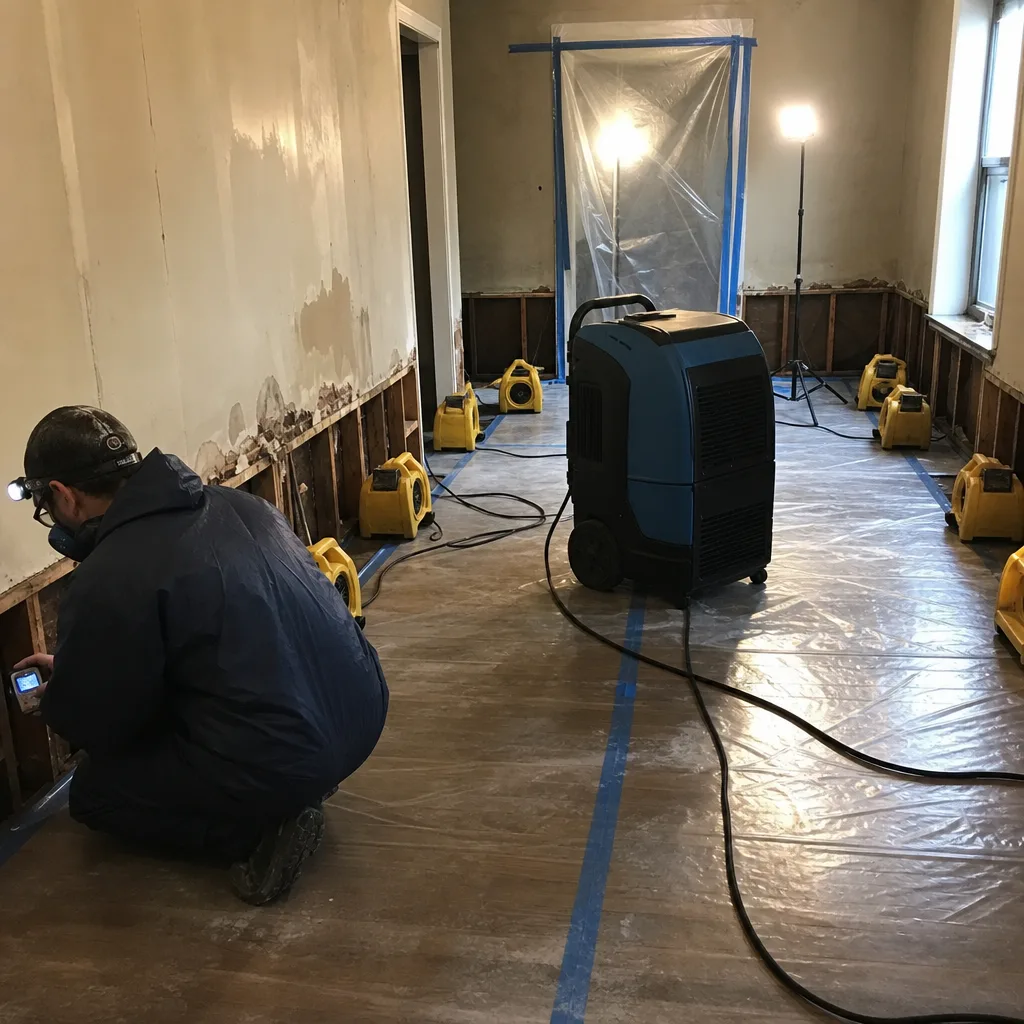
Flood water in this neighborhood is rarely clean. Basement and garden-level apartments east of Avenue B take Category 3 water during storm surge and sewer backup events, which means full extraction, antimicrobial treatment, and structural drying before any rebuild. Our crews use Dri-Eaz and Phoenix equipment sized for multi-unit runs, pulling water from plaster-and-lath assemblies that defy standard drying math.
Emergency Board-Up
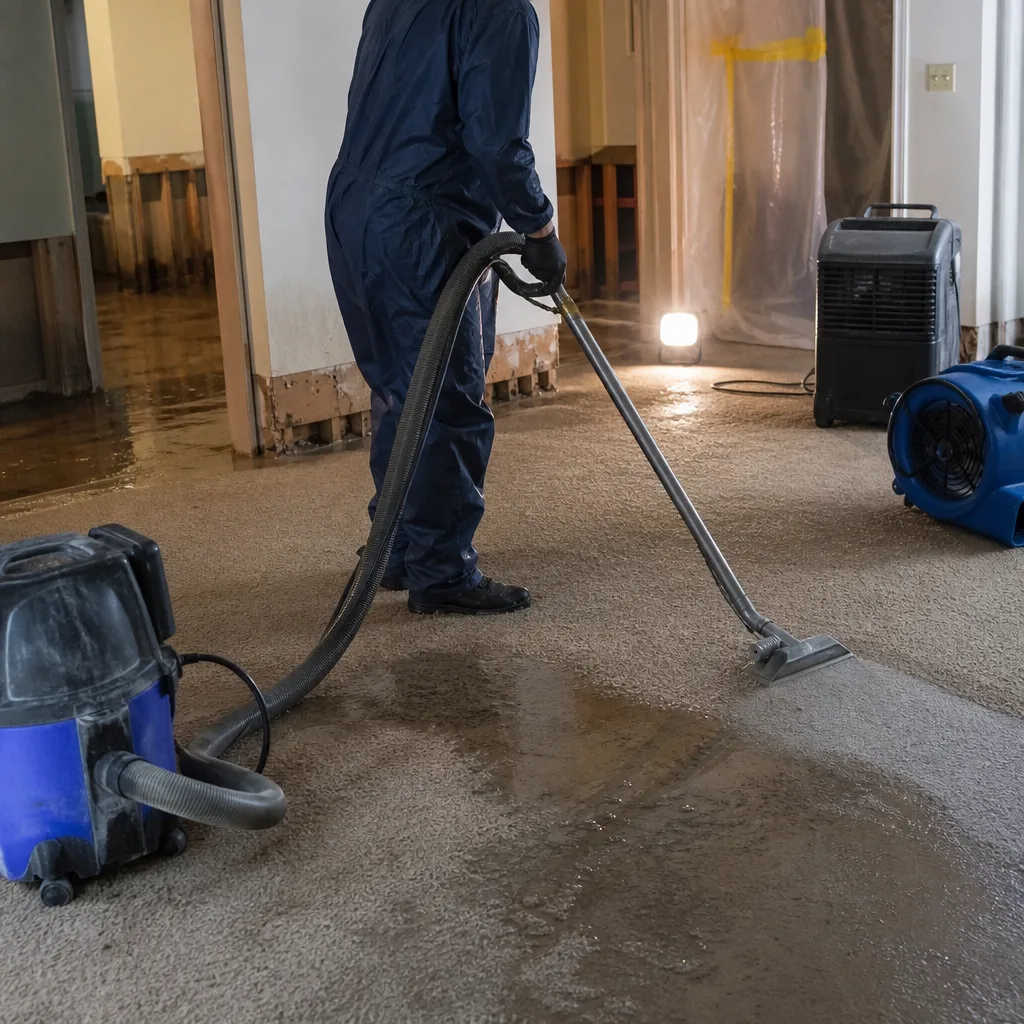
When a storm blows out a window or a door on an Alphabet City tenement, the building is open to weather, pests, and anyone walking by. We board up the breach the same visit, using materials that match the building’s security needs, and document everything for the insurance file. Board-up is not a temporary patch to us; it’s the first step of the restoration scope.
Roof Tarping
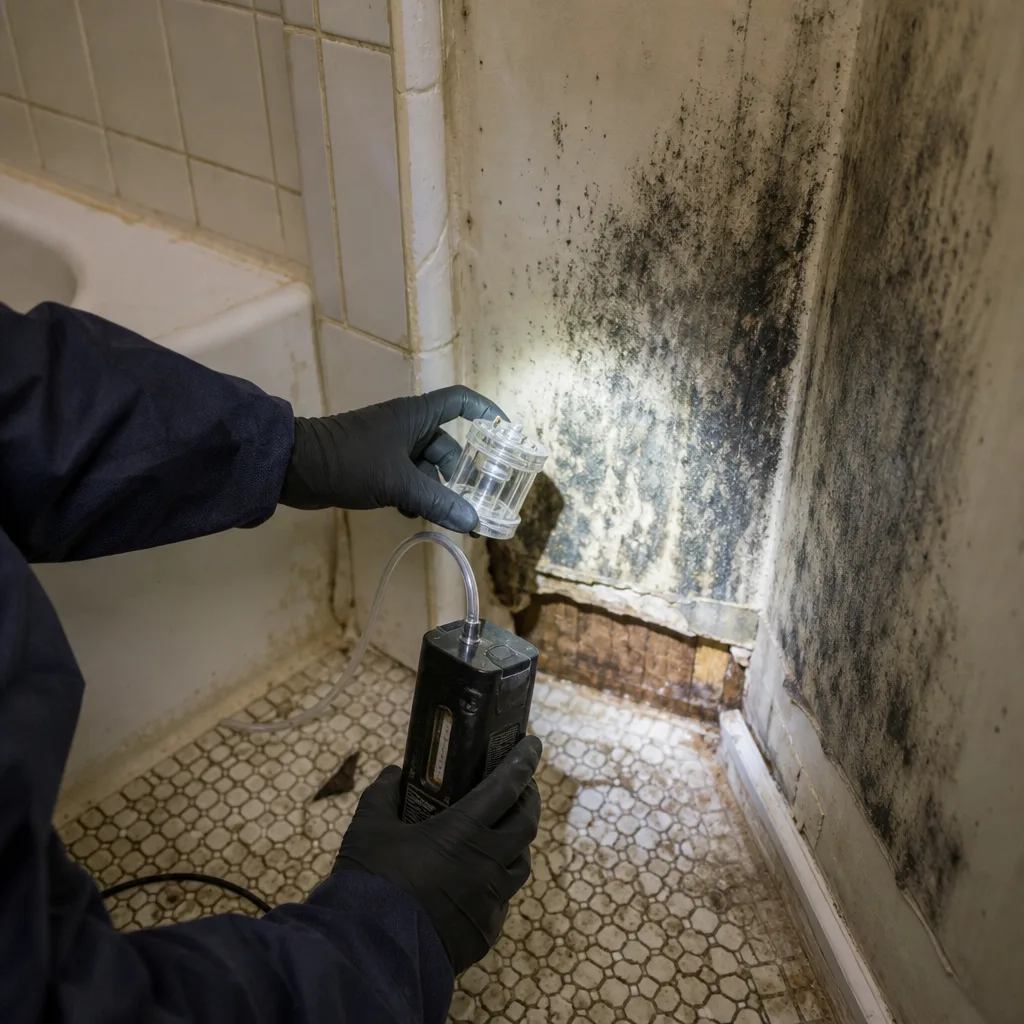
Flat tar roofs on pre-war tenements fail differently than pitched roofs. A nor’easter peels the membrane, and water finds every crack and seam within minutes. We tarp roof sections with reinforced, weighted systems that stay put through follow-up weather events, and we do it before the next storm turns a roof leak into a four-unit cascade.
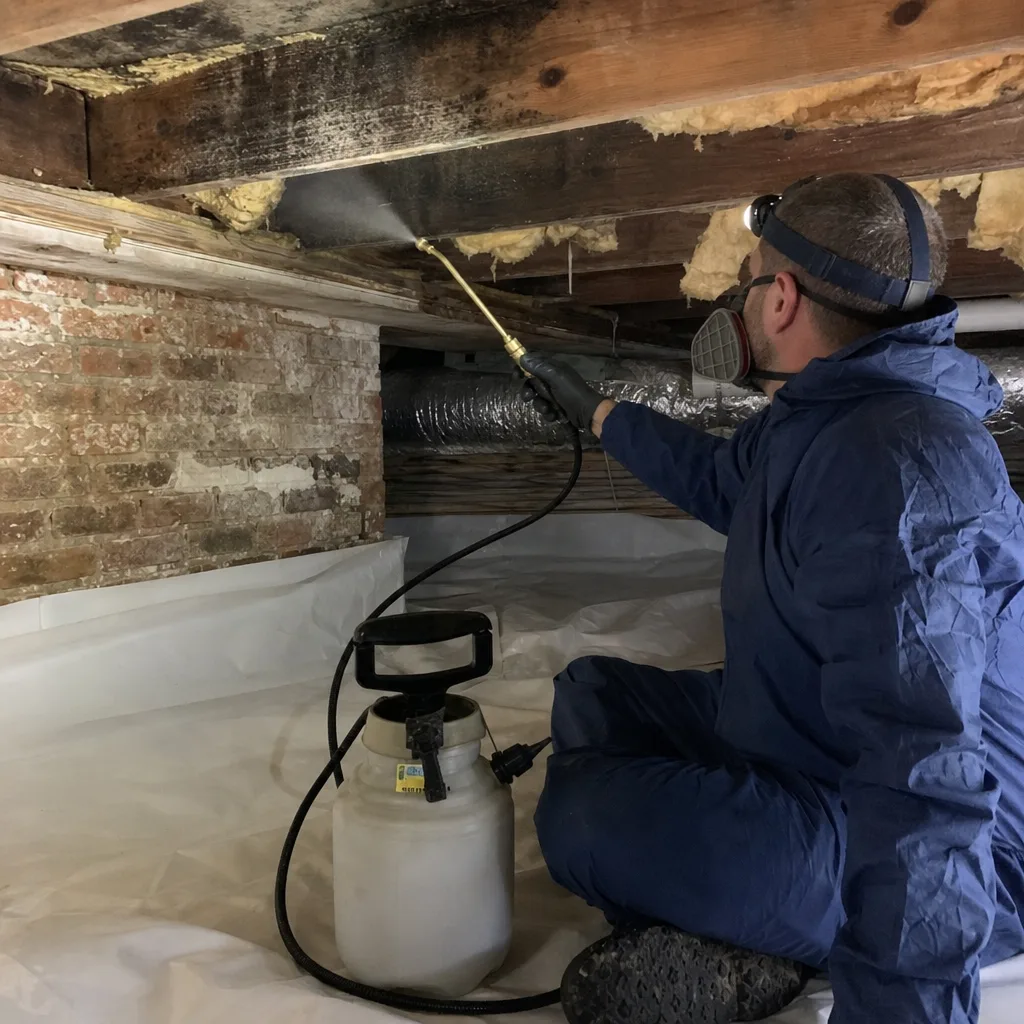
Debris Removal
Storm debris in Alphabet City often includes building materials: slate, tar paper, broken glass from century-old window frames, and wet plaster from collapsed ceilings. We remove and dispose of it under proper protocols, separating building materials from contaminated contents, and we document the full debris scope for your carrier’s file.
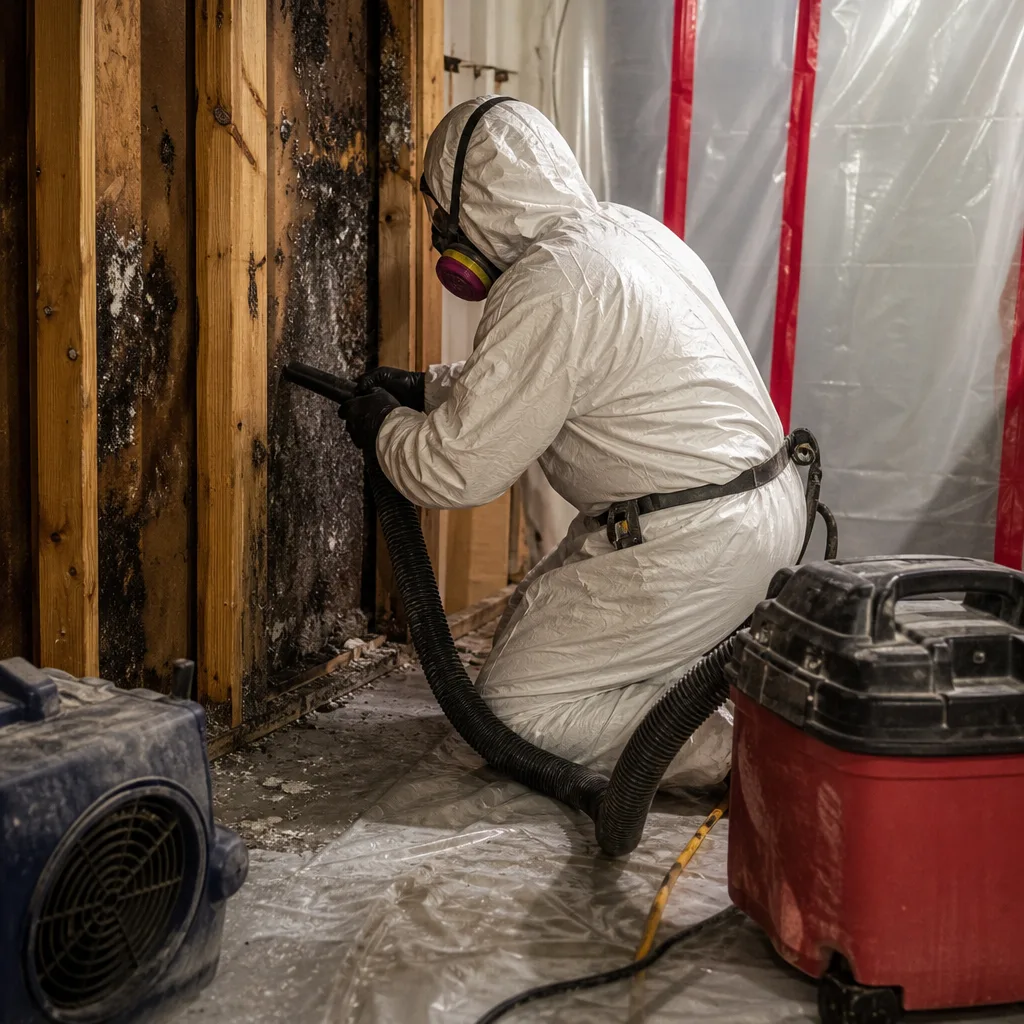
What happens when you call
- 1
A real person answersNo phone trees - you reach a local pro.
- 2
You get an upfront price rangeHonest numbers before anyone is dispatched.
- 3
A background-checked tech heads outLicensed & insured, dispatched right away.
- 4
You approve before work beginsNothing starts until you say go.
Storm & Disaster Restoration Costs in Alphabet City, NY
A typical storm water extraction and structural drying job in Alphabet City runs $1,800-$4,500 for a single apartment, and $5,000-$12,000 when a shared-stack failure pulls water through four or five units. Roof tarping on a flat pre-war roof runs $600-$1,800 depending on square footage and access. Emergency board-up for a single window or door is $250-$750. Full rebuilds after major storm damage, including plaster, framing, and finishes, run $15,000-$40,000 in this neighborhood because the buildings themselves demand careful, layered work. What moves the price: how many units are involved, whether the water is Category 2 or 3, how much plaster must be opened for drying, and whether Sandy-era mold reservoirs get exposed. The free visual inspection gives you a written scope and a firm number before anything moves. Call (917) 924-4221 to schedule one, and remember: the $50 Off Any Repair Over $250 offer and the Senior & Veteran 5% discount always apply.
We Also Serve Cities Near Alphabet City
Our crews cover the full Lower Manhattan corridor, including Alphabet City, Fairview, Harrison, East Bronx, and Hunts Point. If you’re nearby and storm water is moving through your building, call the same number: (917) 924-4221. Live dispatch, any hour.
Serving Alphabet City, NY - Our Local Coverage Area
We’re based in the Alphabet City area and know this community well. Use the map below to see our service coverage - if you’re nearby, we can almost certainly help.
Alphabet City Storm & Disaster Restoration Questions, Answered
How does restoration work differ in Alphabet City’s old-law tenements versus newer buildings?
Restoration in old-law and new-law tenements means working inside shared-stack buildings with plaster-and-lath walls, original cast-iron drain lines, and decades of layered moisture history. A pipe leak or roof breach here often involves four or five units vertically, not one. We map moisture through party walls and between floors before any drying plan is set, because water that enters an old-law building on East 3rd Street will not stay in one apartment. Newer buildings with drywall and isolated plumbing lines dry predictably; these buildings do not.
I live in a ground-floor apartment east of Avenue B. Am I in a flood zone, and what does that mean for storm restoration?
Yes, the blocks east of Avenue B sit within FEMA Flood Zone AE, with a base flood elevation that put ground-floor and basement apartments under several feet of East River storm surge during Hurricane Sandy. For storm restoration, this means flood water is usually Category 3, requiring full containment, antimicrobial treatment, and structural drying verified to the dry standard before any rebuild. It also means your flood insurance claim follows NFIP documentation requirements, which our team handles directly with your carrier.
What is involved in roof tarping for a flat tar roof on a pre-war tenement in Alphabet City?
Roof tarping on a flat tar roof starts with clearing loose debris and standing water, then securing a reinforced tarp across the breached section with weighted systems and mechanical fasteners that will not tear the surrounding membrane. Access matters: many Alphabet City roofs are reached through bulkhead doors and narrow stairs, so crews carry materials by hand. We tarp the same visit we’re called, and we inspect the seal before the next weather event. Expect $600-$1,800 for most pre-war roof sections.
Why does a small pipe leak in an Alphabet City tenement often require full containment and pack-out?
Because in these buildings, a small pipe leak rarely stays small. The leak runs behind plaster, wicks through lath, and soaks the shared wall cavity. By the time it’s visible in the hallway, it has usually been feeding a mold reservoir for days or weeks. Full containment and selective pack-out stop the spread of spores into adjacent rent-stabilized units while we dry and treat the affected cavities. Skipping containment in a pre-war tenement is how one apartment’s leak becomes three apartments’ mold problem.
How long should structural drying take for a storm-damaged pre-war apartment in Alphabet City, and how do you know it’s done?
Structural drying in a plaster-and-lath assembly typically takes 3-7 days when the cavity is opened and treated correctly, though shared-wall and shared-stack losses can extend that. We know it’s done when the moisture log shows every monitored point at or below the dry standard for the material, verified with penetrating meters, not just surface readings. We hand that log to you and your carrier before any rebuild starts. No wall gets closed over a wet cavity.
How fast can someone actually get to Alphabet City?
Our commitment is 45 minutes from your call to a crew at your door within Alphabet City, 24 hours a day. A live dispatcher answers at (917) 924-4221 and routes the nearest certified crew immediately. The first hour matters most here, because water moving through these old building cavities does more damage in hour two than in hour ten of a modern building.
Will insurance cover storm and flood damage in Alphabet City?
Storm damage from wind, falling objects, and roof breaches is typically covered under standard homeowners or building policies. Flood damage east of Avenue B inside FEMA Flood Zone AE is covered only under a separate NFIP flood insurance policy, which many buildings in this neighborhood carry. We document everything from the first hour, bill the carrier directly, and coordinate with your adjuster, so you’re not left arguing coverage while the water keeps moving.
What should I do in the first 30 minutes after storm damage in Alphabet City?
Call (917) 924-4221 first. Then shut off water to the affected unit if you can do so safely, move small valuables to dry ground, and avoid walking through standing Category 3 water, especially in basement apartments where electrical systems may be live. Do not open walls or ceilings yourself; old plaster and lath can hide live wiring and pockets of contaminated water. Let the certified crew make the first cut.
Written by Curt Bowman, Owner at Floodline Restoration Co. of Manhattan, serving Alphabet City with certified storm and disaster restoration crews and the 90-Day Done Right Promise in writing.
If storm water is moving through your Alphabet City building, call (917) 924-4221 now for a free estimate and a crew dispatched in minutes. Done right, and backed in writing.