
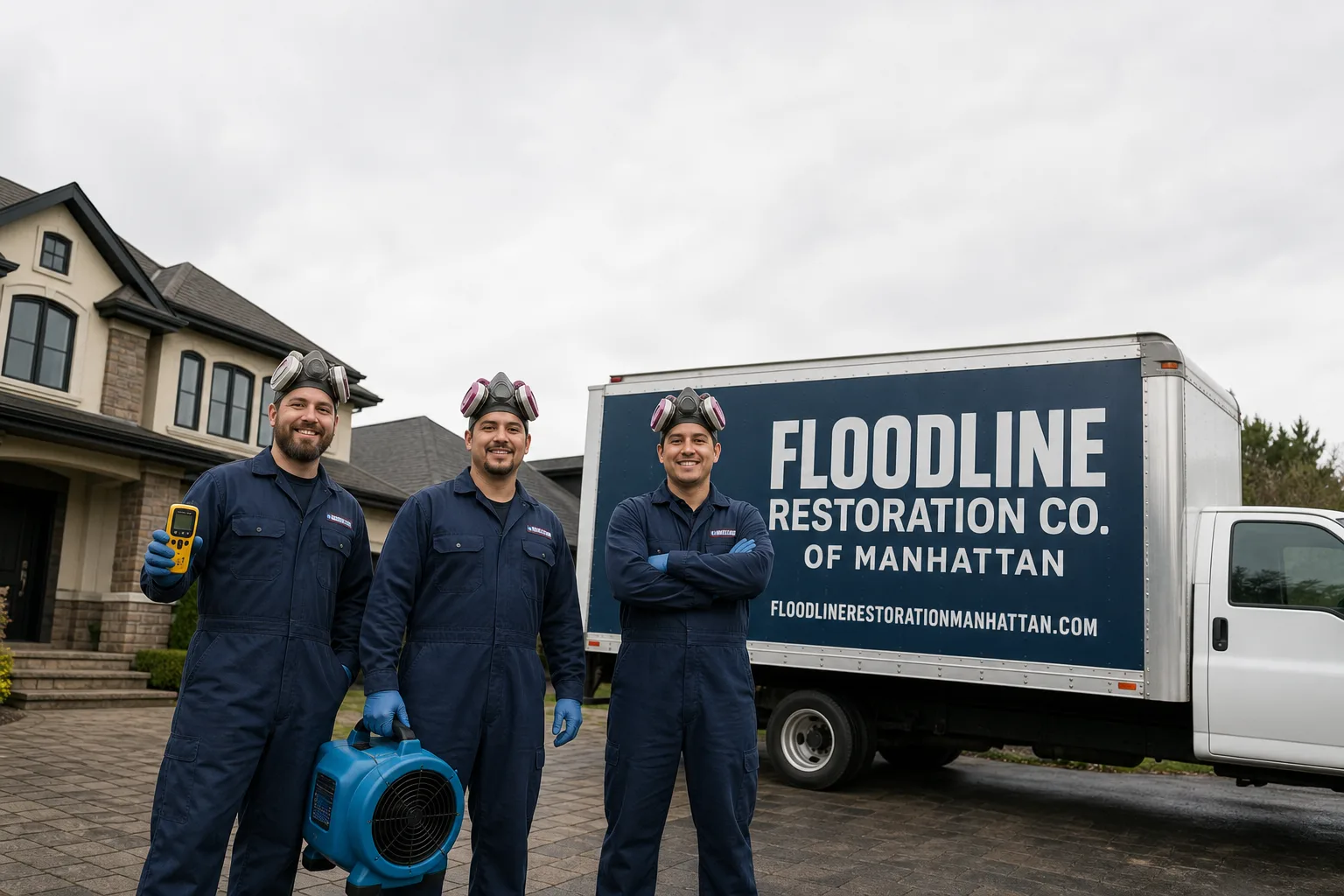
Free visual inspection and a written scope of work before any mitigation begins - photos, moisture readings, and drying logs go in your claim file
The scope we write is the scope we bill. Anything new gets shown to you, in writing, before we touch it.






 Before
 After
After Before
 After
After Before
 After
After24/7 Emergency Storm & Disaster Restoration in Corona
Storm damage in Corona moves fast. Water finds its way into cellars and behind brick walls within minutes, and by the time the rain stops, the real work is just beginning. We answer live at (917) 924-4221 around the clock, every day of the year, and our Storm & Disaster Restoration crews reach Corona neighborhoods within minutes, not hours. The first call is free. The first visual inspection is free. The first hour matters most: water extracted early means less demolition, less mold, and a smaller repair bill. We know the row houses here, the converted cellars, the drains that back up along 108th Street, and the way wind-driven rain finds the weakest point in an old brick facade. Call us. We’ll be there when we say.
Understanding Storm & Disaster Restoration Severity in Corona Properties
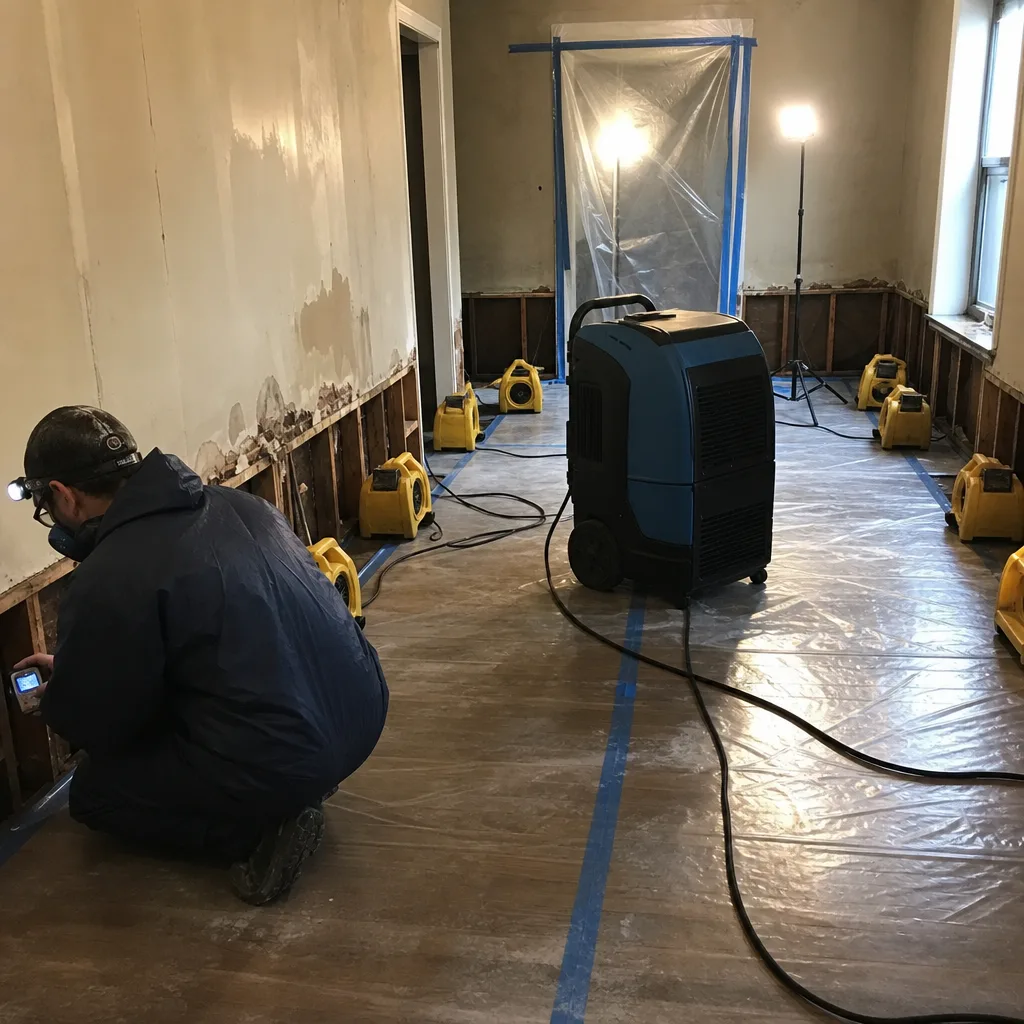
Water that gets into a Corona basement or cellar is not all the same risk. Category 1 water comes from a broken supply line or clean rain that never touched soil. Category 2 carries contaminants: it has washed across a yard, through a window well, or sat in a drain pan, and it carries bacteria but no sewage. Category 3 water has touched sewage, backed-up laterals, or standing floodwater from the street. The difference matters because the scope changes. In Corona’s attached brick row houses from the 1920s to the 1940s, Category 2 and 3 water rarely announces itself: it travels behind plaster-and-lath walls, follows original cast-iron drain stacks, and pools in unpermitted cellar partitions where nobody sees it. Moisture mapping with thermal imaging and hygrometer readings tells us where the water actually went, not just where it pooled. We then set containment, bring in Phoenix dehumidifiers and Dri-Eaz air movers, and log daily drying readings until the structure reaches the dry standard. Anything less than that, and mold starts in 48 hours.
Why Corona Property Owners Choose Floodline Restoration Co. of Manhattan
We are a local Storm & Disaster Restoration in Corona company backed by more than four decades of combined field experience, led by Curt Bowman, and built around a dispatch board, not a sales desk. Homeowners here are guarded. They’ve seen contractors come and go, and they want to know exactly who is walking through the door and what it will cost. Here is what we commit to on every job:
- 45-minute response commitment. When you call (917) 924-4221, a live dispatcher answers, not a recording. A uniformed, background-checked crew is dispatched to Corona immediately.
- 24/7 live answer, every day. We do not route emergency calls to a voicemail at 2 a.m. A person picks up, takes your address, and starts the clock.
- IICRC-certified crews. Our technicians hold IICRC certifications and train to RIA and IFA standards. WRT, FSRT, and AMRT codes apply where the damage calls for them.
- Free visual inspection. We walk the loss with you, open walls where needed, and show you exactly what we’re seeing before anything gets torn out.
- Direct insurance billing. We document from hour one, prepare industry-standard estimates, and talk to your adjuster directly. You do not carry messages.
- One team from extraction to reconstruction. We do not hand you off to a different company after drying. The same crew that reads the moisture map on day one rebuilds what needs rebuilding.
Our Storm & Disaster Restoration Process
Inspection & Assessment
We arrive, walk the property, and map the damage. In Corona, that includes checking cellar walls for hidden saturation, looking for original cast-iron stacks, and flagging any space that may have been converted without a permit. We give you a written scope before any work begins.
Extraction & Stabilization
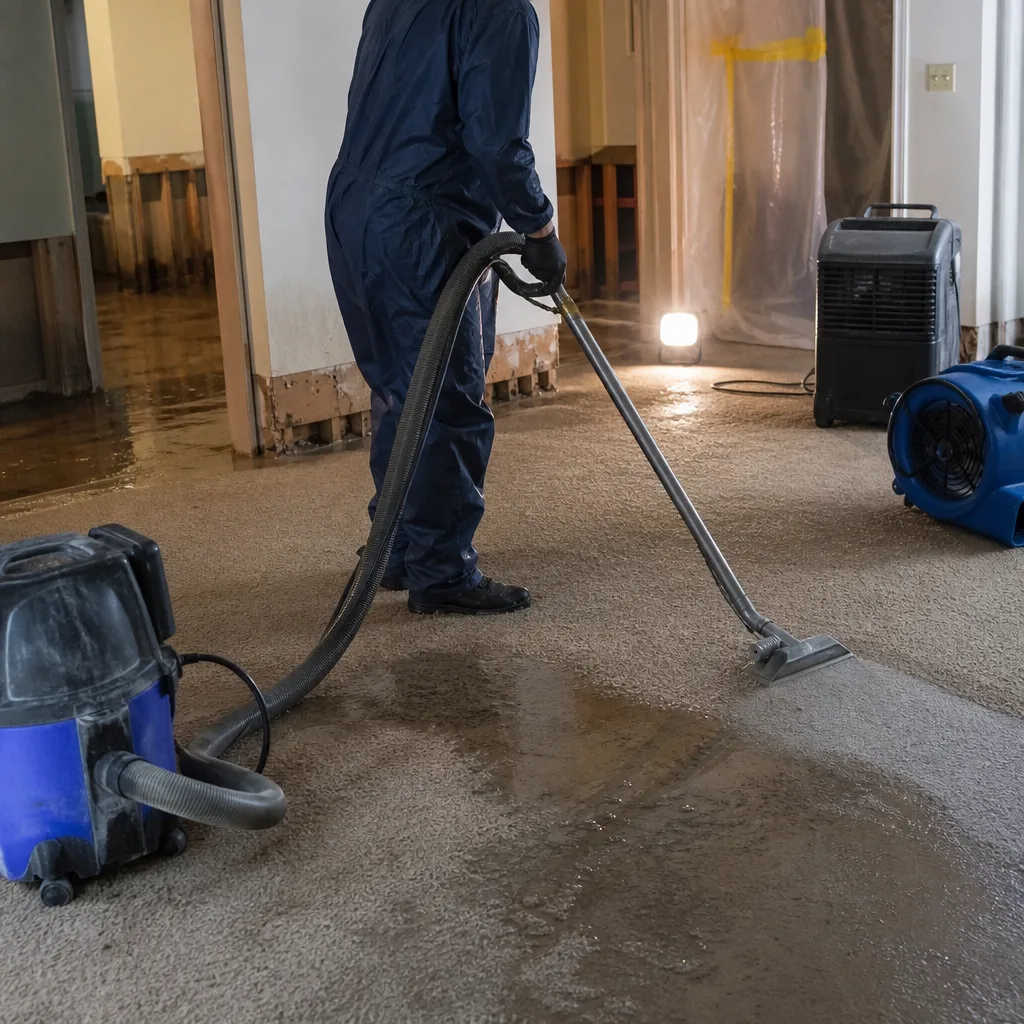
Pumps and truck-mounted extraction units pull standing water from cellars, crawlspaces, and living areas. Board-up and roof tarping happen here too, if wind or debris left the envelope open.
Drying & Dehumidification
Dri-Eaz air movers and Phoenix dehumidifiers are positioned according to moisture map readings, not guesswork. In Corona’s attached rows, we account for shared party walls and below-grade spaces that hold moisture longer.
Cleaning & Sanitization
Surfaces are cleaned and sanitized. HEPA air scrubbers run during demolition to keep airborne spores and particles from migrating into unaffected rooms.
Specialty Treatment
Storm damage in Corona often exposes asbestos pipe insulation on old cast-iron stacks. We coordinate licensed abatement before drying equipment runs. Mold remediation, odor control, and structural drying are done here as the loss requires.
Repairs & Restoration
We rebuild walls, replace damaged framing, hang new doors, restore flooring, and finish with paint. The finished space meets code and matches the rest of the house. Everything is backed by our 90-Day Done Right Promise in writing.
Need Emergency Storm & Disaster Restoration in Corona Now?
Crews minutes away, answering live 24 hours a day. The sooner we start, the less it costs.
Working With Your Insurance Company
Storm claims in Corona are not simple. A single event can involve wind damage, flooding, and a backed-up sewer lateral, each of which may fall under different parts of a policy. We document from the first hour with photos, moisture readings, and a line-item scope of work that matches the language adjusters expect. We coordinate directly with your carrier, and when the adjuster asks for drying logs or subgrade readings, we already have them. You will not get stuck carrying paperwork between two parties. Here is what we hand to your insurer:
What We Provide Your Insurer
- Thorough documentation of the loss
- Photos of all damage, room by room
- Moisture readings and drying logs
- A detailed, line-item scope of work
- Direct coordination with your carrier
Built for Corona’s Loss Calendar
Corona sits on low-lying ground that drains toward Flushing Creek, and the losses here follow a pattern. Summer thunderstorms and remnants of tropical systems bring the real flash-flood risk: sewers along 108th Street and Northern Boulevard get overwhelmed, and water rises through basement drains and below-grade doorways. Fall brings nor’easters with wind-driven rain that finds rotted lintels and failed cellar doors. Winter is quieter outside, but January deep freezes burst supply lines in unheated cellars and behind exterior walls of these old brick row houses. Spring thaws saturate the ground around foundations, and hydrostatic pressure pushes groundwater in through cracks that no one noticed in December. Every season has a signature loss. We plan for all of them.
Storm & Disaster Restoration Across Corona’s Neighborhoods
Corona’s street grid holds a few distinct pockets, and each one behaves differently in a storm. The blocks north of Roosevelt Avenue and around 104th Street have tightly packed attached brick rows where wind damage on one roof can send debris into three neighboring yards. Over near Flushing Meadows Corona Park, homes sit closest to the drainage basin, and backflow pressure on aging clay laterals builds fastest there. The stretch along 108th Street has the chronic sewer backup problem during heavy rain, and the basement units in those old row houses flood first. Around Northern Boulevard and Junction Boulevard, mixed-use buildings with commercial ground floors get water under storefront doors, and the residential units above take wind and rain through old window frames. Wherever the call comes from, we know the roads, the building types, and the failure patterns. That is the advantage of a local crew, not a franchise that has never walked Corona’s blocks.
Specialized Storm & Disaster Restoration Services We Offer in Corona
Storm Damage Cleanup
Wind and rain leave a mess that is more than wet floors: roof tiles, tree branches, broken glass, and soaked drywall. We clear the debris, photograph everything for the claim, and get the property secure so the real restoration can begin. In Corona, that often means working around parked cars and narrow driveways with careful staging.
Flood Damage Restoration
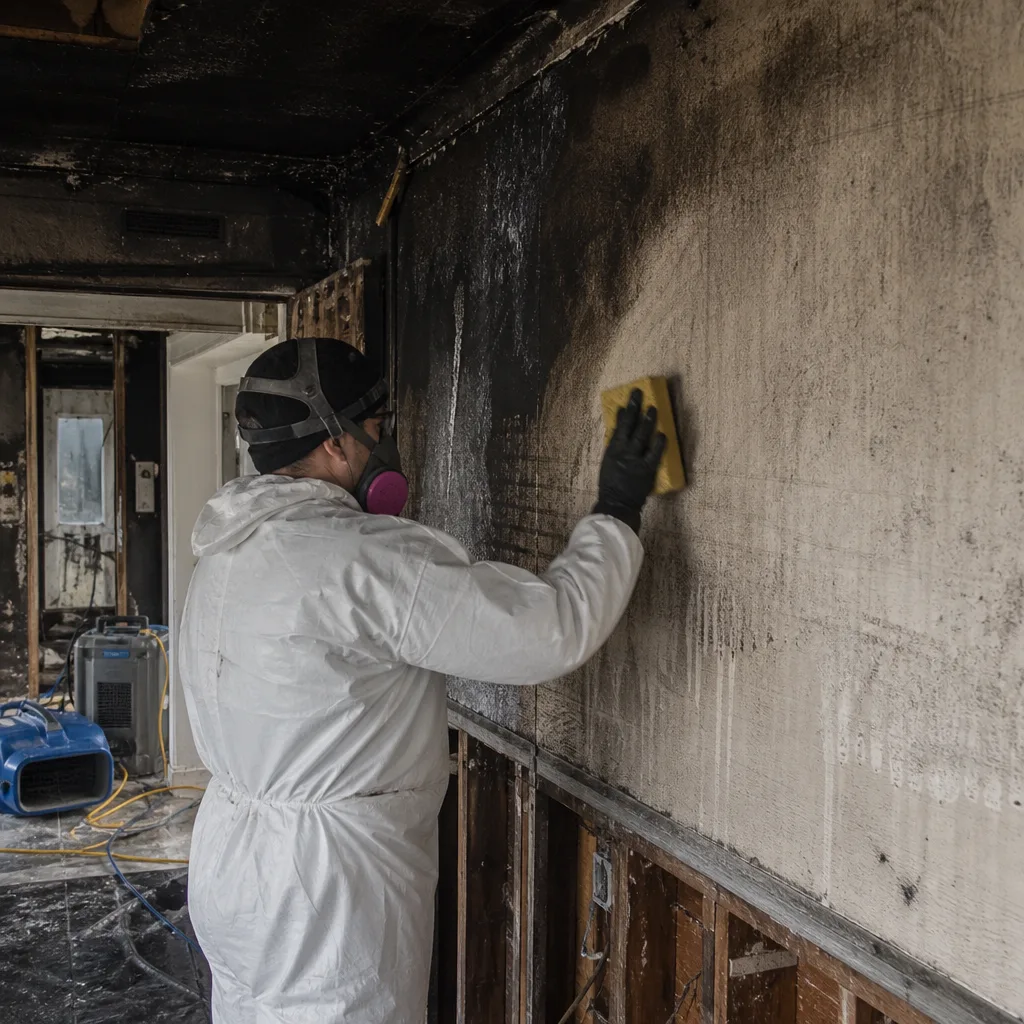
Flash flooding in Corona is not limited to a few bad blocks. Basements and converted cellars fill fast, and the water is often Category 2 or 3. Extraction starts with pumps and truck-mounted units, then moisture mapping tells us where the water traveled behind finished walls. We dry to the standard, log every reading, and rebuild only what needs rebuilding.
Emergency Board-Up
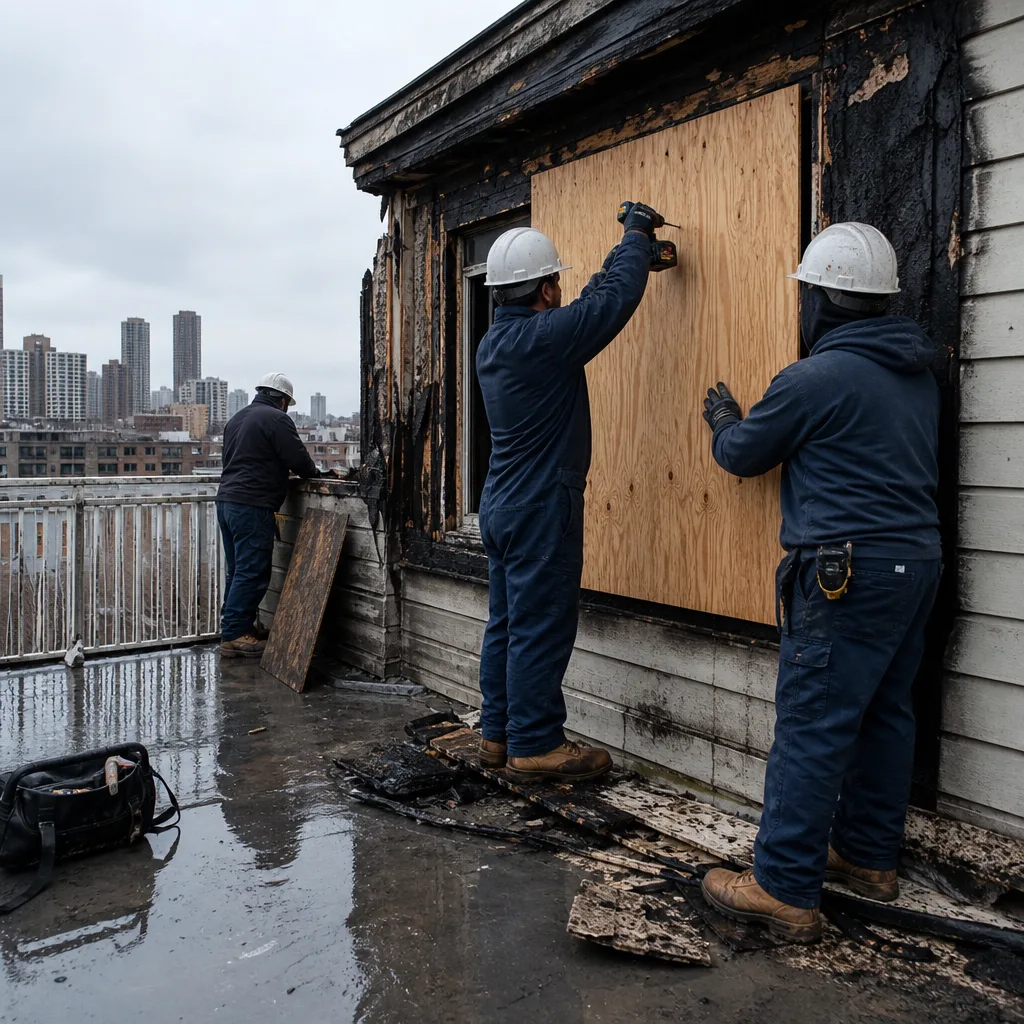
When a window fails or a door is blown out during a storm in Corona, the opening becomes an invitation for more water, plus animals and debris. We board up with plywood and weather-resistant materials that hold until permanent repairs are quoted and scheduled. Board-up is not a temporary patch; it is a secured envelope that protects everything inside.
Roof Tarping
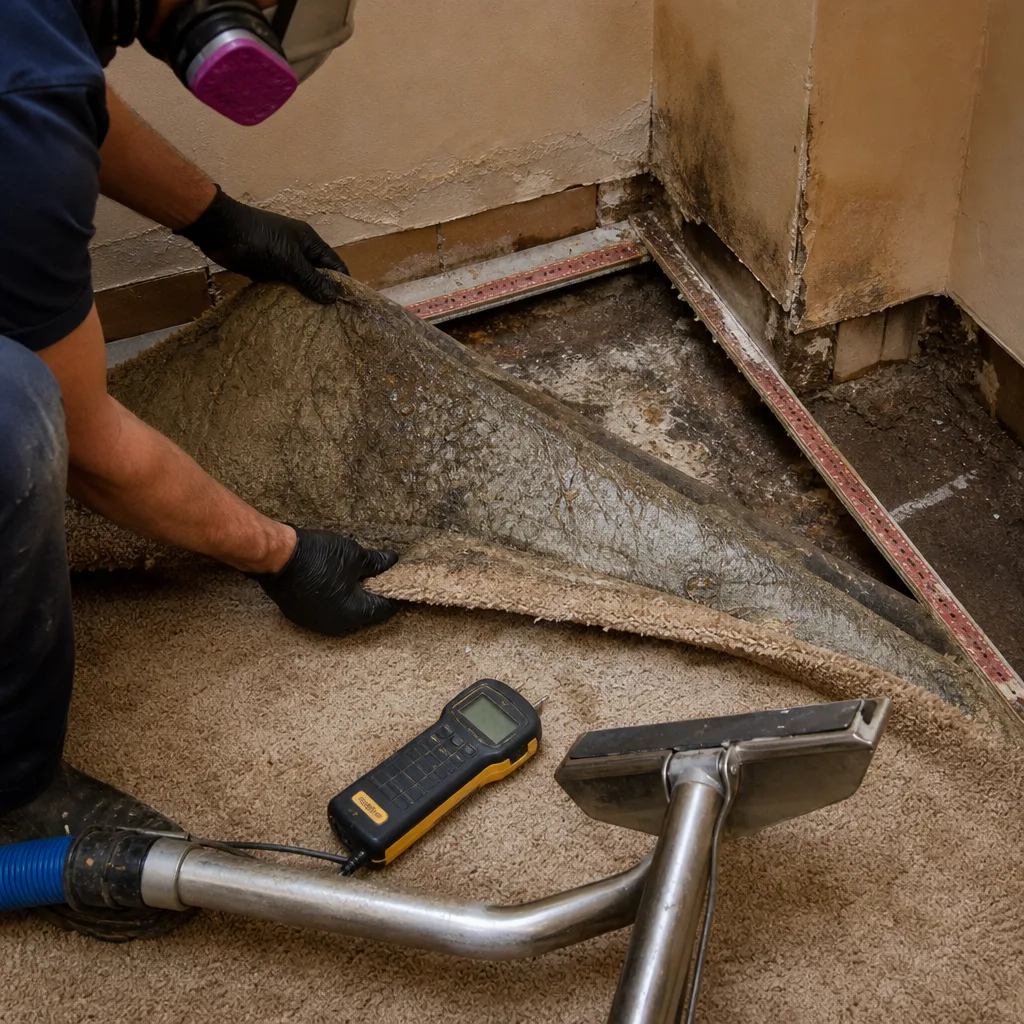
Wind-driven rain finds gaps in old rooflines, and Corona’s attached rows share roof edges, so a small opening on one house can migrate water into the neighbor’s ceiling. We tarp the damaged area with reinforced material, anchored to hold through another storm, so the interior stays dry while a full roof scope is written.
Debris Removal
Storms leave behind more than branches and leaves. We haul away construction debris, ruined contents, and contaminated materials, taking care with the asbestos-wrapped pipes and old plaster that this building stock often hides. Debris leaves the site in proper containers, documented for the claim.
What happens when you call
- 1
A real person answersNo phone trees - you reach a local pro.
- 2
You get an upfront price rangeHonest numbers before anyone is dispatched.
- 3
A background-checked tech heads outLicensed & insured, dispatched right away.
- 4
You approve before work beginsNothing starts until you say go.
Storm & Disaster Restoration Costs in Corona, NY
Storm and disaster restoration costs in Corona depend on how far the water traveled, what it touched, and what it damaged. Water extraction alone typically runs $3 to $7 per square foot of affected area. Structural drying with professional equipment runs $1,800 to $3,400 for a standard Corona cellar that got Category 1 or 2 water. Emergency board-up runs $350 to $900 depending on the size of the opening and the materials needed. Roof tarping runs $450 to $1,100 for a typical rowhouse corner or ridge damage. When subgrade spaces flood with Category 3 water, removal of contaminated materials, sanitization, and drying often push the total into the $6,000 to $14,000 range. The free visual inspection gives you a firm, written scope before any money is committed, and we bill your insurance carrier directly wherever coverage applies. Call (917) 924-4221 and we’ll walk the loss with you at no cost.
We Also Serve Cities Near Corona
We serve property owners in the neighborhoods around Corona as well: Elmhurst, Rego Park, Jackson Heights, and East Elmhurst. Same crews, same response time, same 90-Day Done Right Promise in writing.
Corona Storm & Disaster Restoration Questions, Answered
What does a wind-rated door inspection look like before a storm in Corona’s attached row houses?
We check the track, panels, hinges, weather stripping, and the condition of the opening itself, especially on older brick rowhouses where the frame has settled. In Corona, many of these doors are original or decades old, and wind-driven rain finds any gap. If the door is failing, we document the weak points and give you a written recommendation before the storm arrives. Call (917) 924-4221 to schedule the inspection.
If a storm blows out a track or panel on our overhead door, can you board up and still keep our basement dry?
Yes. We secure the opening with weather-resistant board-up that holds against wind and rain, and we check the area around the door for gaps where water can enter. If water already made it in, extraction starts the same visit. The goal is to keep the basement dry and secure until a proper repair is scoped and scheduled.
How do you handle water extraction in a Corona cellar that was illegally converted before Hurricane Ida?
Carefully. We work with building management and check NYC Department of Buildings records before demolition starts. Under Local Law 49 and related enforcement, some illegally converted cellars cannot legally be restored to their pre-loss use. Our job is to dry the structure, remove contaminants, and document everything, so the owner and their carrier understand what is actually permitted and what is not. A written scope keeps the project from turning into a stop-work order.
Why does mold keep coming back in our basement after every big storm, even after we dry it out?
Because the water is not actually gone. In Corona’s attached brick rows, moisture travels behind original plaster-and-lath walls and through shared party walls. If a previous contractor dried the open floor but never took moisture readings behind those walls, mold kept growing back there. We moisture-map the entire affected area, run drying equipment until hidden cavities meet the dry standard, and log readings every day. The 90-Day Done Right Promise covers the result.
What is the difference between Category 1, 2, and 3 water in a Corona flood, and why does it change your scope of work?
Category 1 is clean water from a supply line or rain that never touched soil. Category 2 is contaminated water, like water that washed across a yard or through a window well. Category 3 carries sewage or street floodwater. Category 3 means saturated materials are removed and disposed of, not dried and kept, and sanitization is required before drying equipment runs. It changes the cost, the scope, and the timeline. We explain the category on site during the free inspection.
How fast can someone actually get to my house in Corona?
We commit to a 45-minute response time for emergency calls in Corona. A live dispatcher takes your call, a crew is dispatched immediately, and we call when we’re minutes out. Storm calls are prioritized by severity: water actively rising or wind damage exposing the interior comes first.
Will my insurance cover storm and flood damage in Corona?
It depends on the cause and the source. Wind damage and the resulting water damage are typically covered under homeowners insurance. Flood damage from rising surface water requires a separate flood policy, usually through the National Flood Insurance Program. Sewer backup coverage is often an endorsement. We document everything from the first hour and work directly with your adjuster so the claim goes in with the right language and evidence. Call (917) 924-4221 and we’ll help you sort it out.
Do I need to leave my home during drying and restoration?
Not always. If the damage is contained to a basement or cellar and we can isolate that area with containment, you can often stay in the rest of the house. When Category 3 water or mold abatement is involved, or when the structure is not safe, we tell you plainly and work with your carrier on relocation if your policy covers it. We never tell a homeowner to stay somewhere that is not safe.
Serving Corona, NY - Our Local Coverage Area
We’re based in the Corona area and know this community well. Use the map below to see our service coverage - if you’re nearby, we can almost certainly help.
A Note on Corona’s Specific Building Challenges
Corona’s attached brick row houses from the 1920s through the 1940s often have original cast-iron drain stacks and clay sewer laterals that backflow under the storm surge pressures unique to the Flushing Creek drainage basin. Flood cuts in these buildings are more likely to expose asbestos pipe insulation that must be abated before any drying equipment goes in. That is not a delay we create; it is a regulation we follow, and it is a real difference between a contractor who knows Corona and one who does not. We coordinate licensed abatement, we document the exposure, and we keep the claim moving.
After a wind-driven rain event pushed Category 2 water through a failed cellar door on 108th Street, our crew set containment and used Dri-Eaz air movers plus Phoenix dehumidifiers while moisture mapping showed elevated readings behind original plaster-and-lath walls. We removed the asbestos-wrapped cast-iron stack and documented drying logs until the subgrade returned to pre-loss condition, all before the city’s Local Law 49 enforcement could flag the informal unit. That is what done right looks like here.
Two more failure modes we see repeatedly in Corona: skipping moisture mapping in converted cellars where hidden plaster-and-lath cavities hold saturation, and under-sizing dehumidification during a nor’easter because the attached rows share party walls. In both cases, mold appears within days. If you have a storm loss, call (917) 924-4221. The first inspection is free, and the line the water left is where we start.
Written by Curt Bowman, Owner at Floodline Restoration Co. of Manhattan, serving Corona and the surrounding Queens neighborhoods.