
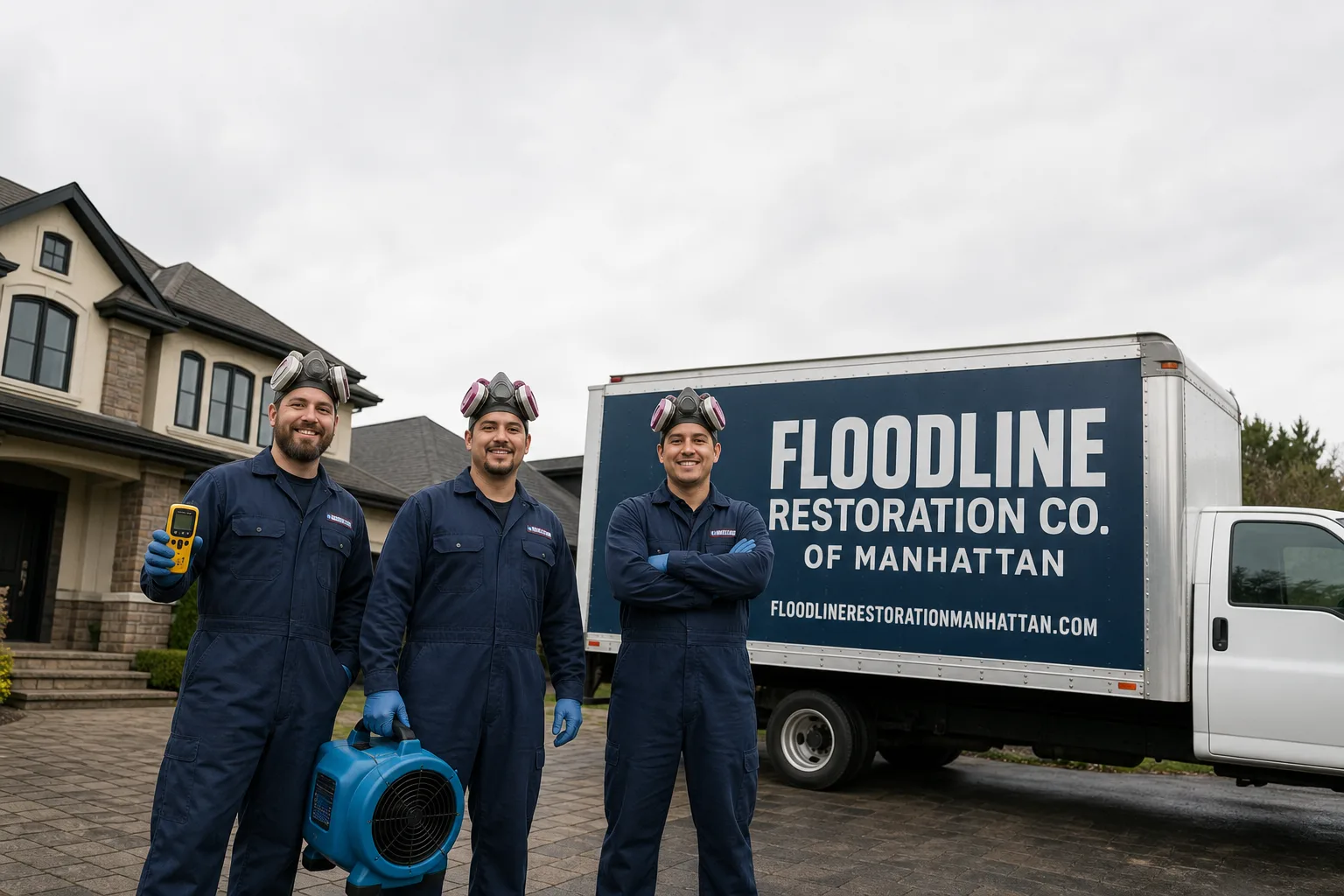
Free visual inspection and a written scope of work before any mitigation begins - photos, moisture readings, and drying logs go in your claim file
The scope we write is the scope we bill. Anything new gets shown to you, in writing, before we touch it.






 Before
 After
After Before
 After
After Before
 After
After24/7 Emergency Reconstruction & Cleanup in Corona
When water, fire, or sewage hits a Corona row house, reconstruction and cleanup can’t wait for business hours. Floodline Restoration Co. of Manhattan answers live at (917) 924-4221 around the clock, and a certified crew can reach most Corona blocks within 45 minutes. We start with a free visual inspection, then get extraction and stabilization running the same visit. The first hour matters because Category 3 water in a 1920s brick cellar wicks into plaster-and-lath walls fast, and every hour of delay pushes the job from cleanup toward full reconstruction. Call now and a real person picks up, not a recording.
Understanding Reconstruction & Cleanup Severity in Corona Properties
Corona’s housing stock shapes every restoration decision we make. Attached brick row houses built between 1915 and 1945 share party walls, original cast-iron drain stacks, and aging clay sewer laterals. That means water in one home rarely stays in one home. We classify water by category before touching anything: Category 1 from a burst supply line, Category 2 from appliance overflow, Category 3 from sewage or storm backup. Category 3 in a Corona cellar requires containment, antimicrobial treatment, and often removal of saturated plaster and lath, because those materials hold moisture for weeks and feed mold behind finished walls. After Ida, we learned to treat every below-grade flooding event here as potentially Category 3 until proven otherwise.
Our techs use moisture mapping, thermal imaging, and hygrometers to read what’s hidden inside wall cavities and under flooring. In Corona’s row houses, water travels horizontally along shared joists and brick party walls. A drywall repair that skips those readings looks fine for a month, then stains and smells return. We don’t rebuild over unknowns.
Why Corona Property Owners Choose Floodline Restoration Co. of Manhattan
- 45-minute response commitment: We dispatch crews from our New York City office to Corona neighborhoods immediately, not after a callback window.
- 24/7 live answer: A human dispatcher picks up at 2 a.m. No automated system, no “leave a message” dead end.
- IICRC-certified crews: Our techs carry WRT, FSRT, and AMRT certifications and train to RIA and IFA standards. Uniformed, background-checked, and sober on every job.
- Free visual inspection: We look before we quote. You get a written scope, not a sales pitch.
- Direct insurance billing: We work with your carrier from first moisture reading to final rebuild. You don’t play messenger.
- One team from extraction to reconstruction: The same crew that reads the moisture map on day one rebuilds the drywall. No mid-job handoff to strangers.
Our Reconstruction & Cleanup Process
Inspection & Assessment
We arrive, walk the property, and document everything. Thermal imaging finds moisture behind walls; moisture meters read the actual water content in studs, plaster, and subfloor. You get a written scope before any work starts.
Extraction & Stabilization
We remove standing water and sewage fast. In a Corona cellar, that means truck-mounted extraction where access allows, portable units where alley clearance won’t. We set up containment if Category 3 water touched living spaces.
Drying & Dehumidification
Dri-Eaz dehumidifiers and XPOWER air movers run until the dry standard is met, not until a timer expires. In attached row houses, we place equipment to dry party walls and shared cavities, which is where hidden moisture does the most damage.
Cleaning & Sanitization
HEPA air scrubbers run throughout remediation. We clean salvageable surfaces, treat affected framing, and remove materials that can’t be saved. Antimicrobial work is done to IICRC standards.
Sewer Lateral & DOB Coordination
In Corona specifically, we check the clay lateral and confirm occupancy status with NYC DOB before reconstruction begins. Rebuilding over a failing sewer lateral or an illegal post-Ida cellar conversion means redoing the work weeks later. We sequence it right the first time.
Repairs & Restoration
Drywall, flooring, trim, paint, and cabinet reset. The same crew that did the extraction does the finish work. You get a moisture log, photo documentation, and the 90-Day Done Right Promise in writing before we leave.
Need Emergency Reconstruction & Cleanup in Corona Now?
Crews minutes away, answering live 24 hours a day. The sooner we start, the less it costs.
Working With Your Insurance Company
Insurance claims for reconstruction in Corona get complicated fast. Below-grade flooding, sewer backup, and post-Ida occupancy rules all raise questions adjusters don’t always know to ask. We document from the first hour: photos of standing water depth, damage room by room, moisture readings before and after drying, and a line-item scope of work written in the format carriers accept. Our team coordinates directly with your adjuster, including the re-inspection calls and supplement requests that keep your claim moving. You get a copy of everything. You never wait on hold to translate between us and your carrier.
What We Provide Your Insurer
- Thorough documentation of the loss
- Photos of all damage, room by room
- Moisture readings and drying logs
- A detailed, line-item scope of work
- Direct coordination with your carrier
Built for Corona’s Loss Calendar
Corona’s damage season runs all year, but the causes shift. January and February bring deep freezes that split supply lines in unheated cellars and behind uninsulated brick walls, common in 1920s row houses. March through May is thaw season, when saturated ground pushes hydrostatic pressure against basements and into foundation cracks. Summer brings the worst: short-duration thunderstorms that overwhelm storm sewers along 108th Street and Northern Boulevard, backing Category 3 water into below-grade units just as Ida did in September 2021.
Fall brings nor’easter remnants and leaf-clogged drains that make moderate rain behave like a flash flood. Every season in Corona carries a distinct failure mode, and the preventive work is different for each. Call us before the next storm, and we’ll walk your property with a moisture meter, not a brochure.
Reconstruction & Cleanup Across Corona’s Neighborhoods
Corona’s geography is tighter than most Queens neighborhoods, and that changes how we work block by block. Around Northern Boulevard and 108th Street, commercial-residential mixed buildings pack close to the curb, so we run extraction lines through basement hatchways and schedule equipment drops around parking restrictions. North of Roosevelt Avenue, the block pattern opens slightly, but attached row houses still share party walls; we contain Category 3 water aggressively because it migrates fast through common brick. Near Flushing Meadows Corona Park, homes sit at the lowest elevations in the drainage basin, and groundwater intrusion is a year-round reality, not a storm event. West toward Junction Boulevard, the older housing stock carries the most original cast-iron and clay lateral infrastructure, which means sewer lateral inspection before any interior rebuild is non-negotiable.
In the blocks around LeFrak City, larger apartment buildings have different loss patterns: pipe breaks on upper floors cascade down through multiple units. We’ve extracted from three stacked units in one evening. On residential streets off 111th Street, narrow alley access means we use portable extraction and smaller drying equipment that still meets the dry standard. Every block in Corona has a rhythm, and after 42 years of restoration work, we know the beats.
Specialized Reconstruction & Cleanup Services We Offer in Corona
Full-Service Reconstruction
We rebuild what water, fire, or mold destroyed: framing, drywall, flooring, trim, paint, and finish work. In Corona, reconstruction often starts with demolition of saturated plaster-and-lath walls, then proper abatement of any asbestos pipe insulation found in pre-1945 buildings. We don’t skip the discovery phase, and we don’t rebuild over unresolved moisture.
Drywall & Flooring Repair
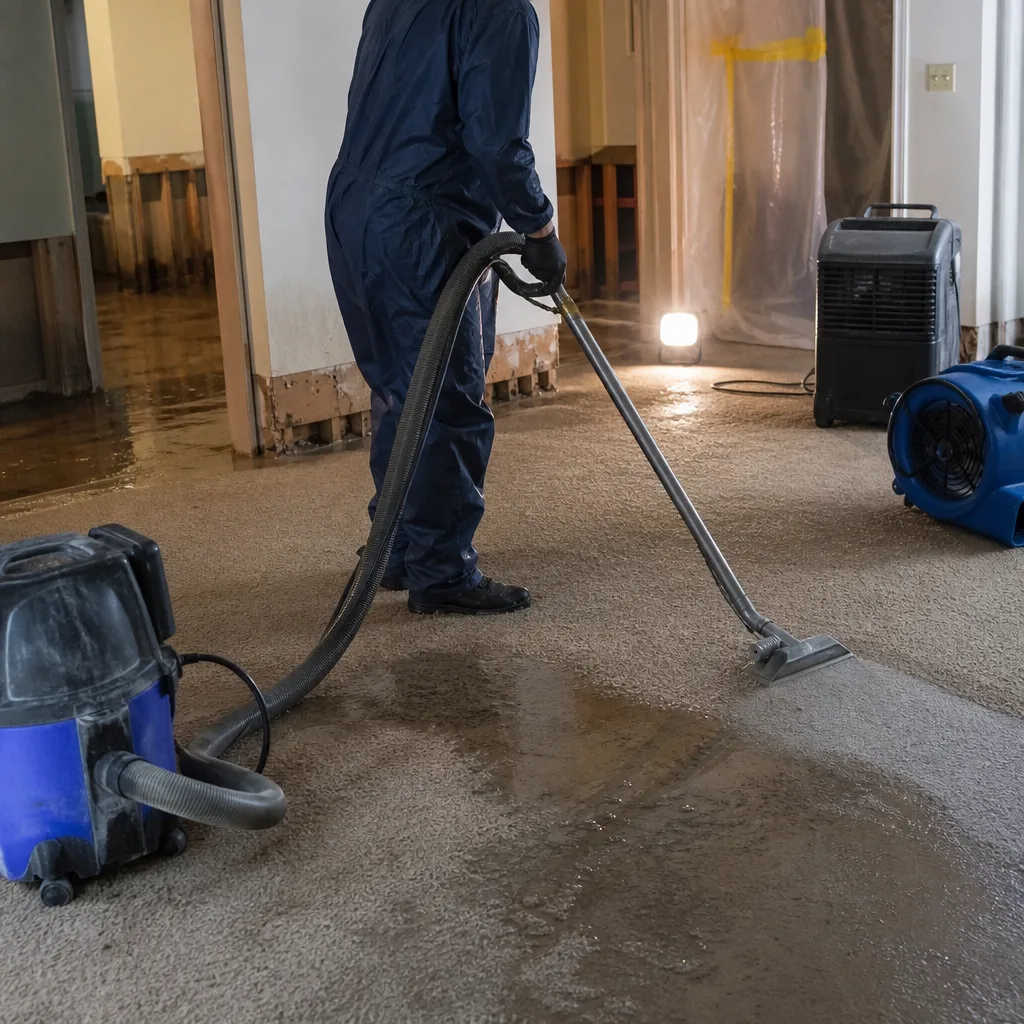
Row houses hide moisture in party walls and shared cavities. We cut drywall where moisture mapping tells us to cut, not where it’s convenient. Subfloors get dried or replaced based on actual readings. We match existing trim profiles and floor heights so the repair doesn’t look like a patch.
Contents Restoration & Pack-Out
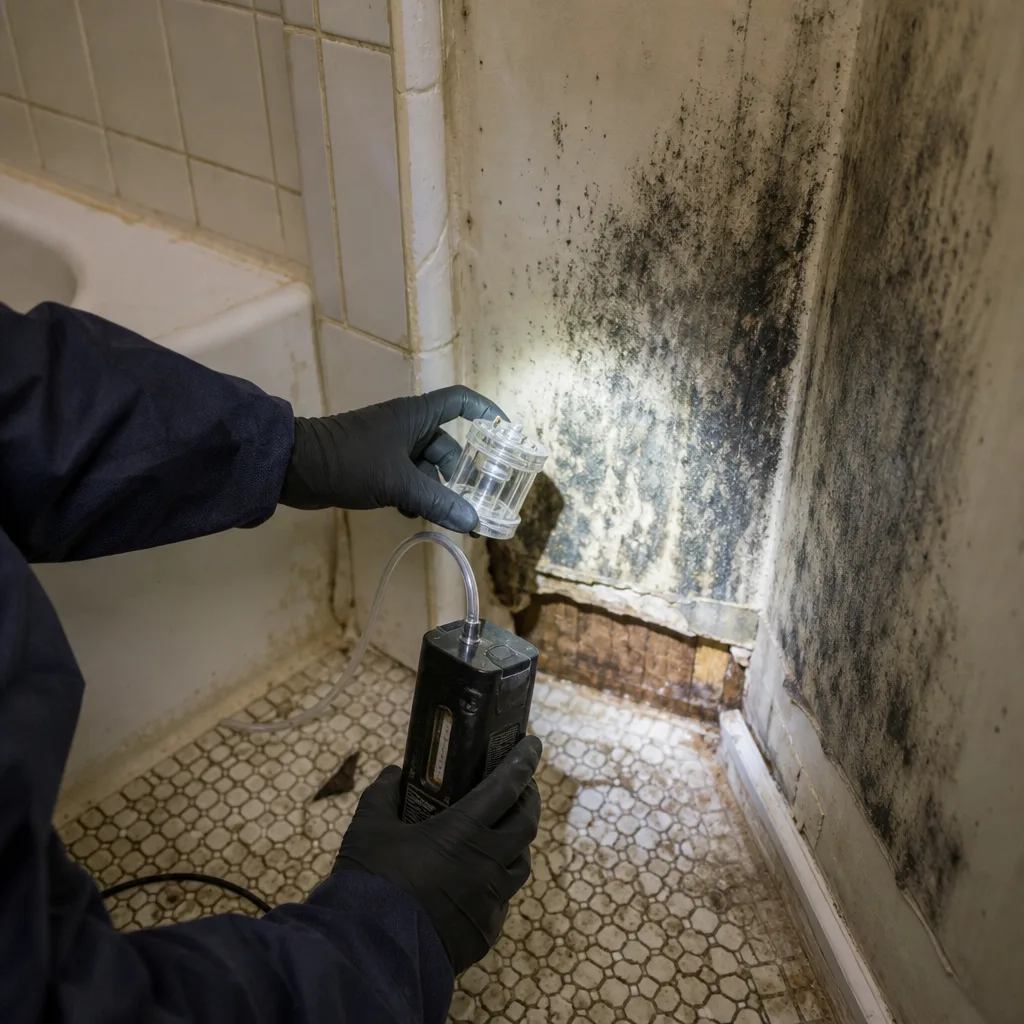
Corona cellars hold decades of belongings, and pack-out in a row house means moving items through narrow stairwells and alley access. We inventory, photograph, pack, and store contents off-site, then clean and restore salvageable items through our contents division. Everything comes back labeled and placed where it belongs.
Carpet & Upholstery Cleaning
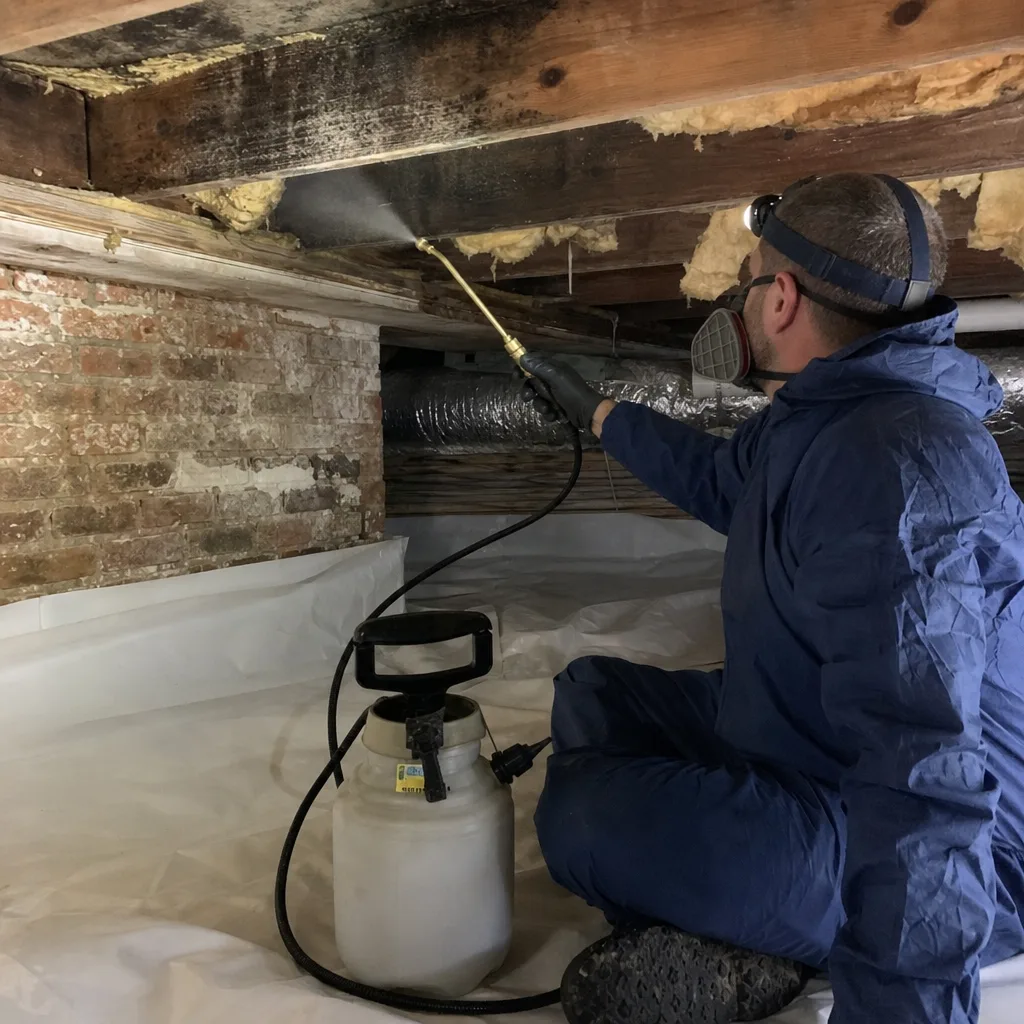
After extraction and drying, salvageable carpet and upholstery get professional cleaning with hot water extraction and antimicrobial treatment. In below-grade Corona units, we test carpet pad moisture before deciding between cleaning and replacement. A pad that stays wet under a dry surface is a mold farm.
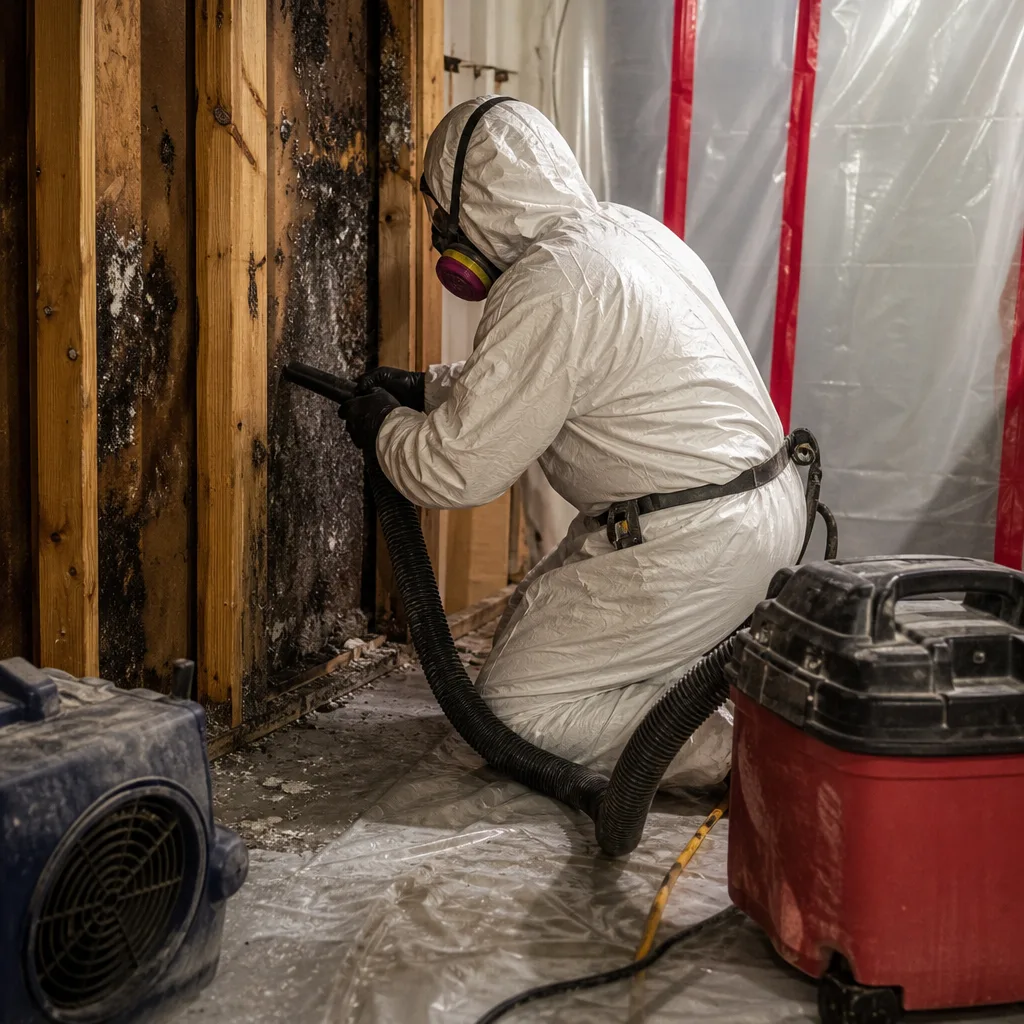
Post-Construction Cleanup
Reconstruction leaves dust, debris, and fine particulate throughout the home. We run HEPA air scrubbers during the rebuild, then do a full post-construction clean: surfaces, ducts, and flooring. You walk back into a finished home, not a job site.
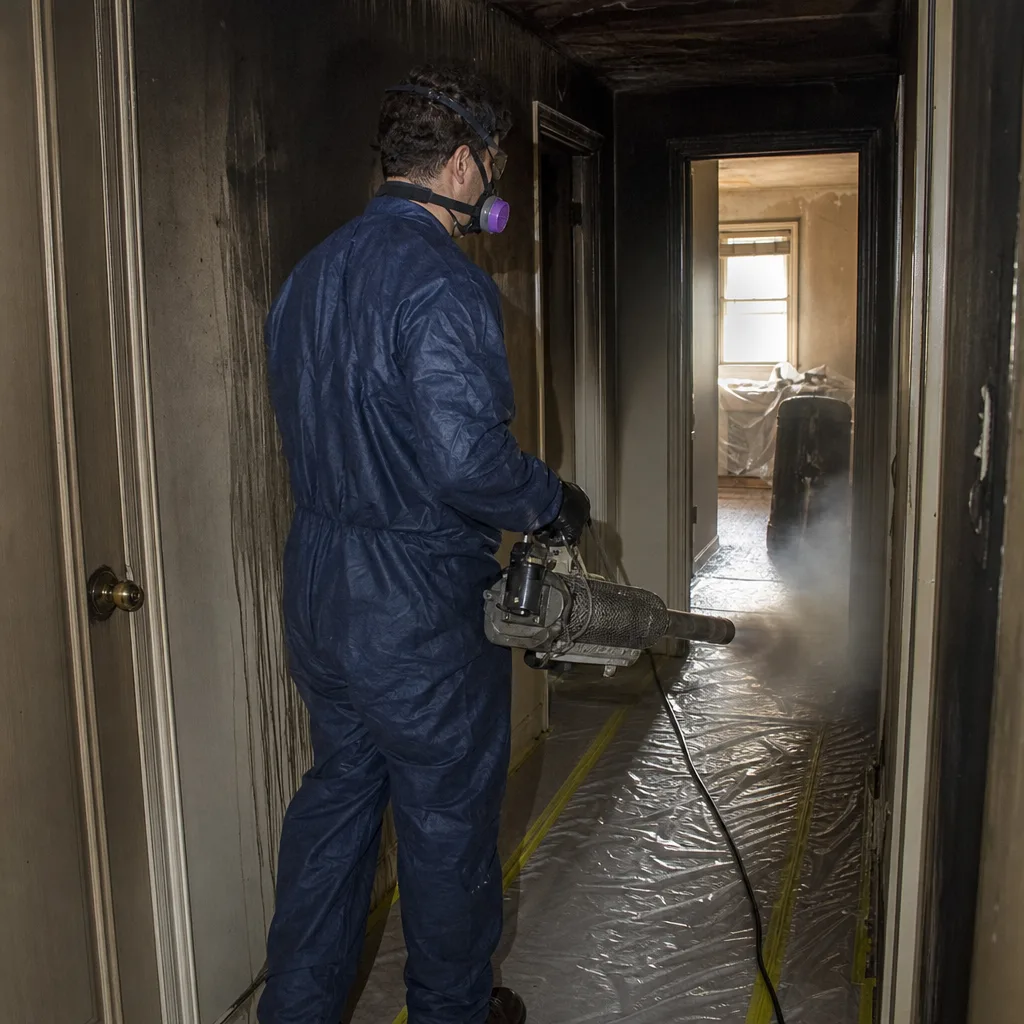
Insurance Claim Documentation
This is the service that saves Corona homeowners the most money. From the first photo to the final supplement, we document in the format your carrier accepts. Photo logs, moisture maps, drying charts, and line-item scopes. When your adjuster asks for proof, it’s already in their inbox.
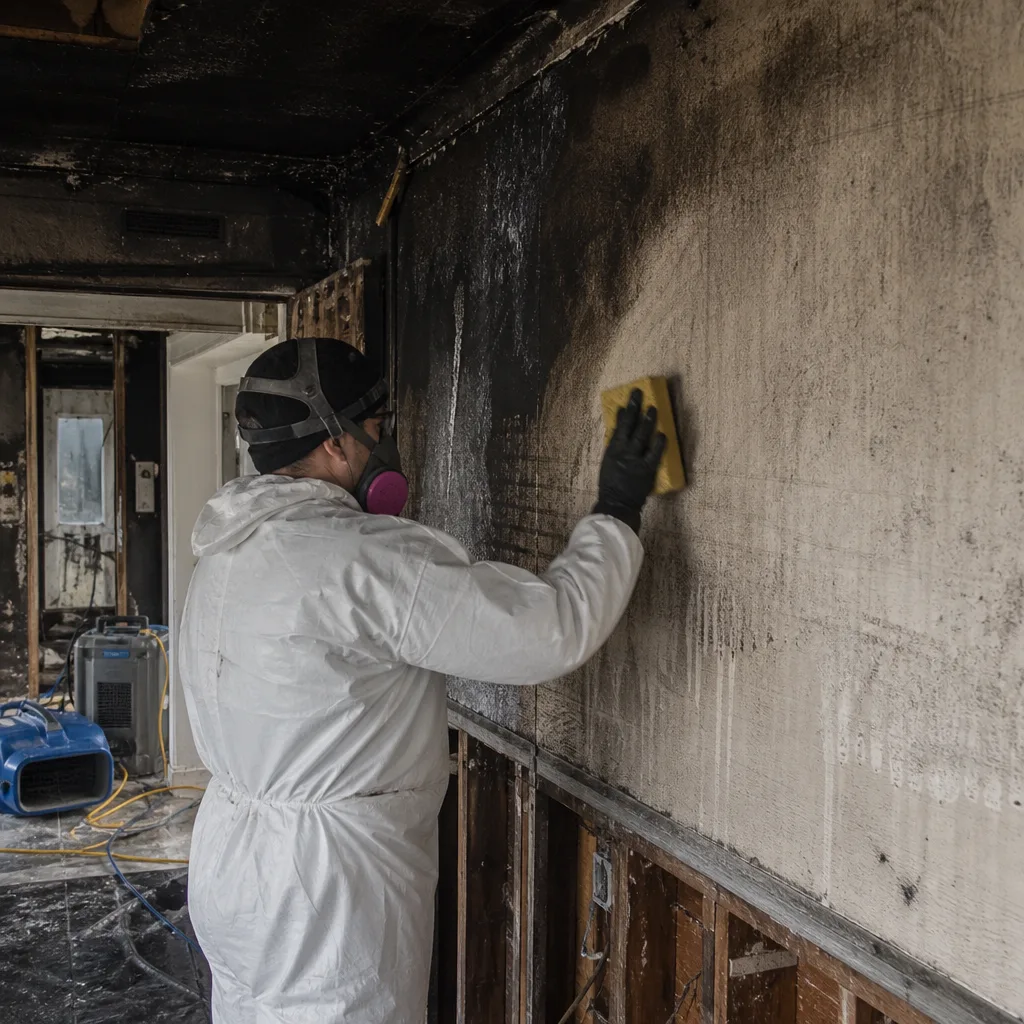
What happens when you call
- 1
A real person answersNo phone trees - you reach a local pro.
- 2
You get an upfront price rangeHonest numbers before anyone is dispatched.
- 3
A background-checked tech heads outLicensed & insured, dispatched right away.
- 4
You approve before work beginsNothing starts until you say go.
Reconstruction & Cleanup Costs in Corona, NY
Reconstruction costs in Corona run higher than the Queens average because the housing stock is older and the access is tighter. A typical water extraction and drying job in a Corona cellar runs $2,800 to $6,500, depending on square footage and how long water sat before we arrived. Full basement reconstruction after Category 3 flooding ranges from $18,000 to $45,000, driven by plaster-and-lath removal, potential asbestos abatement, sewer lateral repair if the clay line failed, and DOB-required permits.
Drywall repair alone runs $1,200 to $3,800 per room in Corona row houses. Contents pack-out and restoration adds $3,000 to $12,000 depending on volume. Carpet and upholstery cleaning starts around $350 for a single room setup. Insurance covers most of these costs when the loss is sudden and accidental. Sewer backup coverage requires a specific rider on many New York policies. Our free inspection gives you a written scope with actual numbers, not a range you have to trust. Call (917) 924-4221 and we’ll price the job after seeing it.
We Also Serve Cities Near Corona
Floodline Restoration Co. of Manhattan sends the same certified crews to Elmhurst, Rego Park, Jackson Heights, and East Elmhurst. If your property sits near the Corona border, call (917) 924-4221 and we’ll confirm dispatch time to your block.
Corona Reconstruction & Cleanup Questions, Answered
Why is reconstruction slower in Corona after a basement flood than in nearby neighborhoods?
Reconstruction in Corona runs slower because of three local factors: clay sewer laterals that often need repair before interior work, NYC DOB occupancy reviews for post-Ida cellar conversions, and plaster-and-lath walls that dry slower than modern drywall. We sequence the work so permits, lateral repair, and structural drying happen in the right order, not the fastest order.
How do you prevent mold from returning during reconstruction after groundwater intrusion in Corona?
We don’t rebuild until moisture readings show the dry standard is met in every cavity, including shared party walls. We also address the water source: hydrostatic pressure through foundation cracks needs drainage or waterproofing, not just drying. Then we treat framing with antimicrobial and run HEPA scrubbers through the rebuild.
Do you need to coordinate with NYC Department of Buildings for reconstruction after Hurricane Ida damage in Corona?
Sometimes, yes. Post-Ida enforcement of Local Law 49 targeted illegal cellar conversions. If the damaged unit cannot legally be restored to occupancy, we coordinate with the landlord, tenants, and DOB before pulling demolition permits. Skipping this step risks a stop-work order and demolition of finished work.
Can you handle pack-out and contents restoration in Corona row houses with narrow alley access?
Yes. We use portable extraction and drying equipment sized for narrow hatches and alley doors. For contents, we hand-carry through stairwells when necessary, inventorying and photographing everything before it leaves. Nothing disappears; everything comes back labeled.
What does a post-flood drying plan look like for a typical 1920s brick row house in Corona?
We map moisture in every wall cavity, floor, and ceiling. Then we place Dri-Eaz dehumidifiers and XPOWER air movers to dry the structure to the IICRC dry standard. In attached row houses, that often means drying party walls from both sides. We take daily readings and hand you the log.
How fast can you actually get to a Corona address?
Most Corona blocks are within 45 minutes of our dispatch point. We answer live 24 hours a day, and the crew rolls immediately after the call. Extraction starts on the same visit, not the next day.
Will my insurance cover full reconstruction in Corona?
Sudden and accidental water damage is typically covered. Sewer backup usually requires a specific rider on New York policies. Flooding from rising groundwater is generally excluded unless the damage was caused by a covered peril first. We document everything in carrier format and coordinate directly with your adjuster. Call (917) 924-4221 and we’ll review your policy with you.
What should I do in the first 30 minutes after discovering water or fire damage in Corona?
Call (917) 924-4221. Shut off water or electricity only if you can do so safely. Don’t enter standing water in a below-grade space; it may be Category 3 and electrically charged. Move what you can to dry ground, and take photos. Then let us handle the rest.
Serving Corona, NY - Our Local Coverage Area
We’re based in the Corona area and know this community well. Use the map below to see our service coverage - if you’re nearby, we can almost certainly help.
Why We Know Corona’s Row Houses Better Than a Franchise
Corona’s 1920s to 1940s attached brick row houses carry original cast-iron drain stacks and clay sewer laterals that fail from the inside out. After a Category 3 water event, the clay lateral is often the source of the problem, not just the casualty. Any contractor who rebuilds the interior without scoping the lateral is setting the homeowner up for a second flood within weeks. We bring a camera to check the lateral before we hang drywall. That single step has saved Corona homeowners tens of thousands of dollars in repeat work.
On 108th Street, we extracted Category 3 water from a below-grade cellar that had flooded when Northern Boulevard storm sewers backed up during a short-duration downpour. After moisture mapping showed hydrostatic pressure still forcing groundwater through foundation cracks, our techs ran structural drying with Dri-Eaz dehumidifiers and XPOWER air movers around a tenant’s packed-out contents. Before any drywall went back, we coordinated with the landlord and NYC DOB because the unit’s post-Ida conversion status required permit review. That step delayed the rebuild but protected everyone from liability. A national franchise would have framed and painted right over the problem.
This is the contractor’s playbook for sequencing sewer lateral repair, DOB occupancy review, and structural drying in Corona’s row houses. Steps the generic restoration guides never mention. We mention them because we do them, every job, and we put the 90-Day Done Right Promise in writing before we leave.
Written by Curt Bowman, Owner at Floodline Restoration Co., serving Corona since our founding in 2010.