
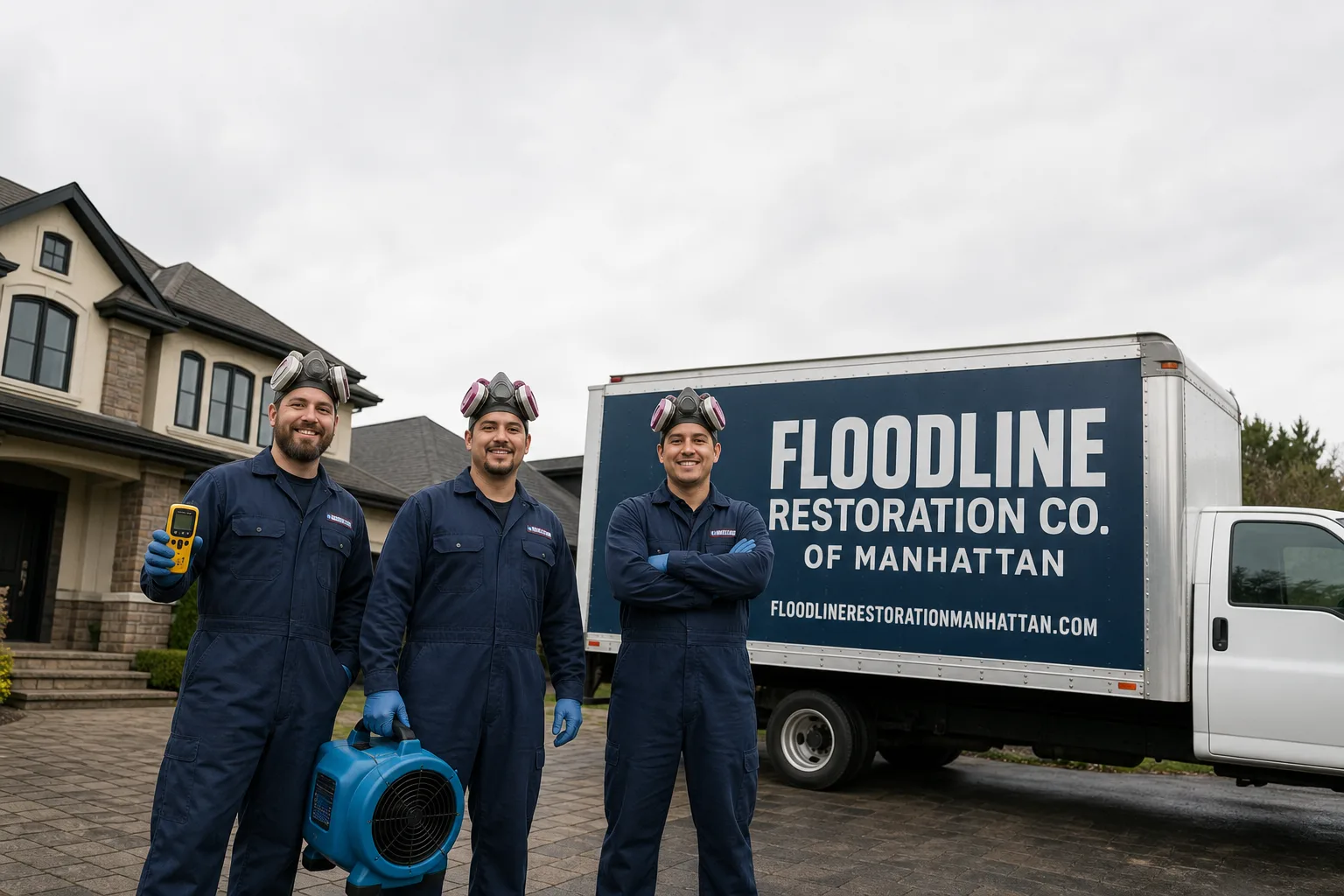
Free visual inspection and a written scope of work before any mitigation begins - photos, moisture readings, and drying logs go in your claim file
The scope we write is the scope we bill. Anything new gets shown to you, in writing, before we touch it.






 Before
 After
After Before
 After
After Before
 After
After24/7 Emergency Water Damage Restoration in Kensington
Water damage in Kensington moves fast, and so do we. A burst supply line or a nor’easter-driven roof leak can soak plaster ceilings, saturate oak flooring, and start wicking into lath within the first hour. Floodline Restoration Co. of Manhattan answers the phone live at (917) 924-4221 around the clock, every day of the year. Our dispatchers send certified crews into Kensington immediately, and we begin emergency water extraction on the same visit. The first hour determines whether your plaster survives or comes down, whether your millwork can be saved or replaced, and whether a Category 1 leak becomes a Category 3 mess. When you call, a real person picks up, not a recording. We have been doing this for over 42 years, and we stand behind every job with the 90-Day Done Right Promise, in writing.
Understanding Water Damage Restoration Severity in Kensington Properties
Kensington water damage restoration rarely looks like the textbook drywall-and-carpet scenarios that national franchises train for. We categorize water by its contamination level. Category 1 is clean water from supply lines and rainwater. Category 2 carries detergents, biological material, or dissolved soil. Category 3, often called black water, contains sewage, storm surge, or ground flooding that brings pathogens into the structure. In Kensington, the distinction matters more than in most neighborhoods because of what the water soaks into. Original plaster-and-lath assemblies, old-growth hardwood flooring, and solid masonry walls absorb and hold moisture differently than modern gypsum and plywood. Moisture mapping with thermal imaging and penetrating meters tells us where water traveled behind walls and under floors, not just where it pooled. Structural drying in a 1920s Colonial requires calculating the drying chamber for plaster density, lath spacing, and the vapor pressure differentials across materials that were cut and nailed by hand. A Category 1 leak left untreated for 48 hours inside a lath cavity can breed the same mold conditions as a Category 2 event, because the enclosed space never gets the airflow it needs. That is why our crews log daily moisture readings until every material meets the dry standard, and why we document those readings for your insurer.
Why Kensington Property Owners Choose Floodline Restoration Co. of Manhattan
- 45-minute response commitment. When water is actively spreading through a Kensington home, we commit to having a crew dispatched and on the way within 45 minutes of your call. Extraction starts on the first visit.
- 24/7 live answer, always a person. Call (917) 924-4221 at 2 a.m. during a nor’easter and a live dispatcher picks up. Not a phone tree, not a callback service. We answer, we dispatch, we arrive.
- IICRC-certified crews trained to WRT and ASD standards. Our technicians hold IICRC certification in Water Damage Restoration (WRT) and Applied Structural Drying (ASD), plus RIA and IFA training. They are background-checked and uniformed before they ever knock on your door.
- Free visual inspection and a written scope of work. Before any tear-out begins, we assess the damage, explain what we found in plain language, and put the full scope, timeline, and price in writing. No surprises on the bill, no pressure to sign.
- Direct insurance billing. We bill your carrier directly and walk the claim through from first photos to final supplement. You do not play messenger, and neither does your adjuster guess what happened.
- One team from extraction through reconstruction. The same certified crew that pulls the water out also dries the structure, replaces what cannot be saved, and finishes the rebuild. There is no mid-job handoff, no inherited crew, and no gap between mitigation and restoration.
Our Water Damage Restoration Process
Inspection & Assessment
We arrive, walk the property with you, and map the water’s path using thermal imaging cameras, penetrating meters, and hygrometers. We photograph everything and identify the water category before touching a single surface.
Extraction & Stabilization
Submersible pumps and truck-mounted extraction units remove standing water from floors, basements, and wall cavities. We stabilize sagging plaster and remove only what cannot be saved, protecting millwork and built-ins wherever possible.
Drying & Dehumidification
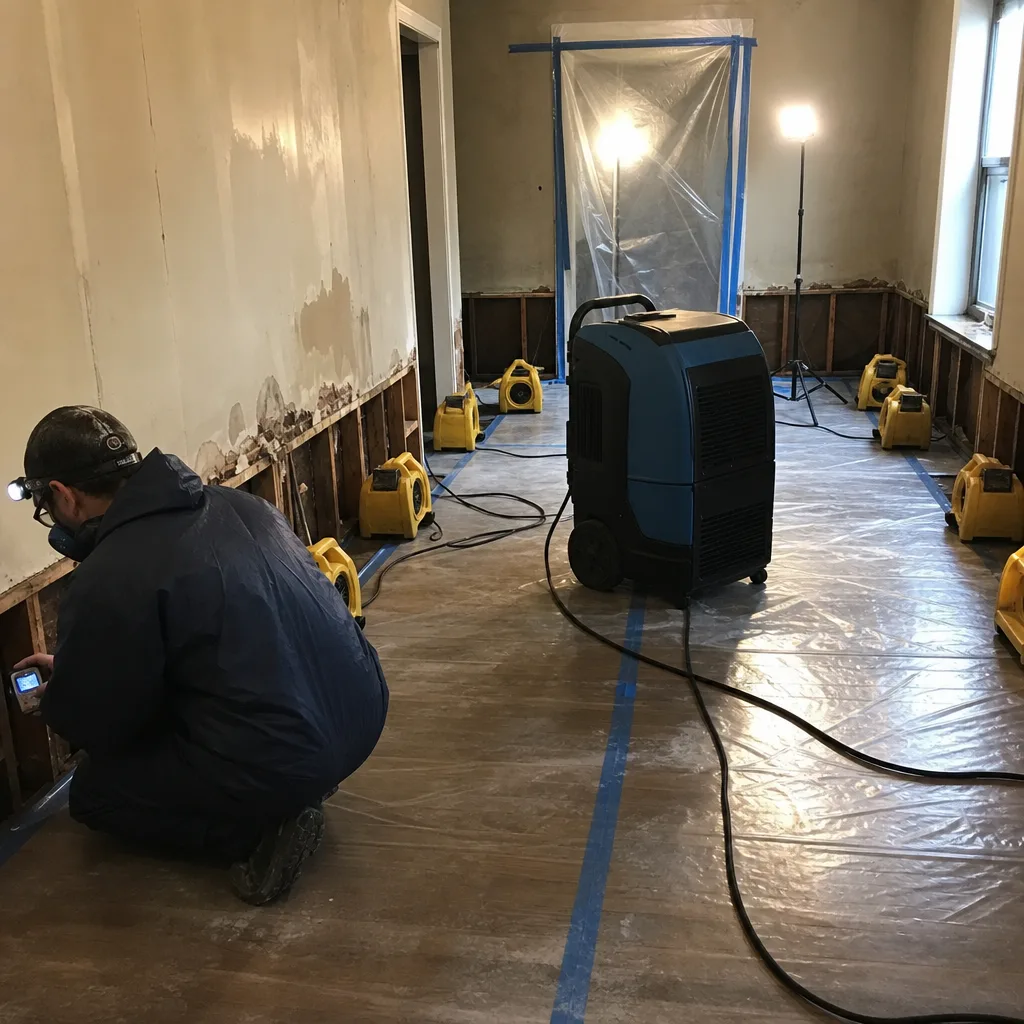
We build controlled drying chambers around wet assemblies using Dri-Eaz and Phoenix dehumidifiers, XPOWER air movers, and Injectidry systems that pull moisture directly through plaster and lath without cracking it. Daily readings are logged until every material reaches dry standard.
Cleaning & Sanitization
Category 2 and 3 water bring contaminants. We clean and sanitize affected surfaces, treat for microbial growth, and run HEPA air scrubbers to capture airborne particulates before they settle elsewhere in the home.
Plaster-Specific Preservation
Kensington homes deserve better than a drywall patch over historic lath. We match plaster thickness, texture, and lime composition so repaired ceilings blend with the original surface. Pack-outs protect millwork and hardware during the drying phase.
Repairs & Restoration
The same crew that extracted and dried now rebuilds. Pipe replacements, plaster restoration, flooring, and paint are all performed by Floodline Restoration Co. technicians, not subcontracted to a crew you never meet. The 90-Day Done Right Promise applies to the entire job.
Need Emergency Water Damage Restoration in Kensington Now?
Crews minutes away, answering live 24 hours a day. The sooner we start, the less it costs.
Working With Your Insurance Company
Water damage claims in Kensington often involve older plumbing, plaster assemblies, and materials that insurers do not routinely see in newer construction. That is why we document everything from the first hour. Our technicians photograph every room, log moisture readings daily, and build a line-item scope of work that follows industry-standard estimating. We speak directly with your adjuster, explain what we found behind the plaster, and submit the documentation your carrier needs to process the claim without inventing numbers or padding line items. A square deal, no surprises on the bill, and no homeowner stuck playing messenger.
What We Provide Your Insurer
- Thorough documentation of the loss
- Photos of all damage, room by room
- Moisture readings and drying logs
- A detailed, line-item scope of work
- Direct coordination with your carrier
Built for Kensington’s Loss Calendar
Kensington sits on Long Island’s North Shore, squarely in the path of nor’easters that push sustained wind-driven rain into aging rooflines, dormers, and masonry facades. The village’s dense mature tree canopy, a defining feature of the neighborhood, drops limbs and whole trees onto older roof structures during every major storm season. January and February bring deep freezes that split aging copper and galvanized supply lines inside uninsulated wall cavities. Spring thaw saturates the ground around foundations and finds every gap in the stone and block, sending seepage into basements. Summer thunderstorms overwhelm old gutters and downspouts, driving water behind fascia boards and into plaster ceilings below. Each season has its own signature loss in Kensington, and each one lands on materials that demand specialty drying rather than demolition. Knowing when a plaster ceiling can be saved and when it cannot is the difference between a three-day drying job and a six-week reconstruction.
Water Damage Restoration Across Kensington’s Neighborhoods
Kensington is a small incorporated village, but its blocks each have a distinct character that changes how we approach water damage restoration. The large Colonials along Beverly Road and Arleigh Road tend to be 1920s and 1930s builds with original plaster, deep lath, and supply lines that predate modern plumbing codes. We see more pinhole leaks and hidden corrosion there than anywhere else in the village. The streets around the village core, including properties near the Kensington Village Hall, hold a mix of pre-war Tudors and early postwar ranches. Those ranches often have slab-on-grade sections where supply lines run beneath concrete, making leak detection and access a different challenge than a full-basement Colonial. Homes near the Long Island Rail Road corridor and the eastern edge of the village see more vibration-related pipe fatigue over decades. And the blocks with the heaviest tree cover, especially along the northern stretches near the North Shore, produce storm-related roof leaks and gutter overflow every time a nor’easter pushes through. When we dispatch to Kensington, the crew already knows which block produces which kind of water event.
Specialized Water Damage Restoration Services We Offer in Kensington
Emergency Water Extraction
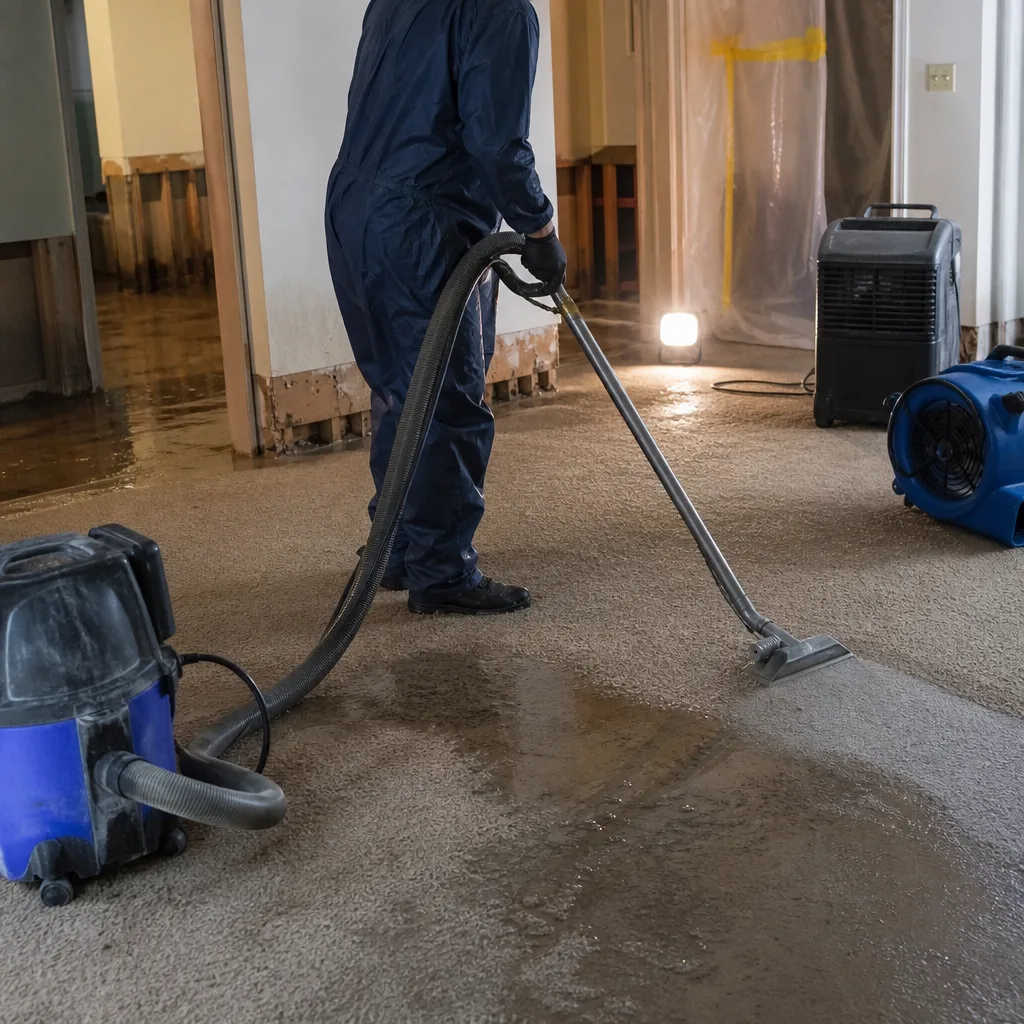
Standing water in a Kensington home doubles the damage every hour it sits. We run truck-mounted extraction units and submersible pumps on the first visit, pulling water from hardwood floors, basement slabs, and wall cavities before it reaches the lath. Our Water Damage Restoration teams arrive with the equipment running within minutes of dispatch.
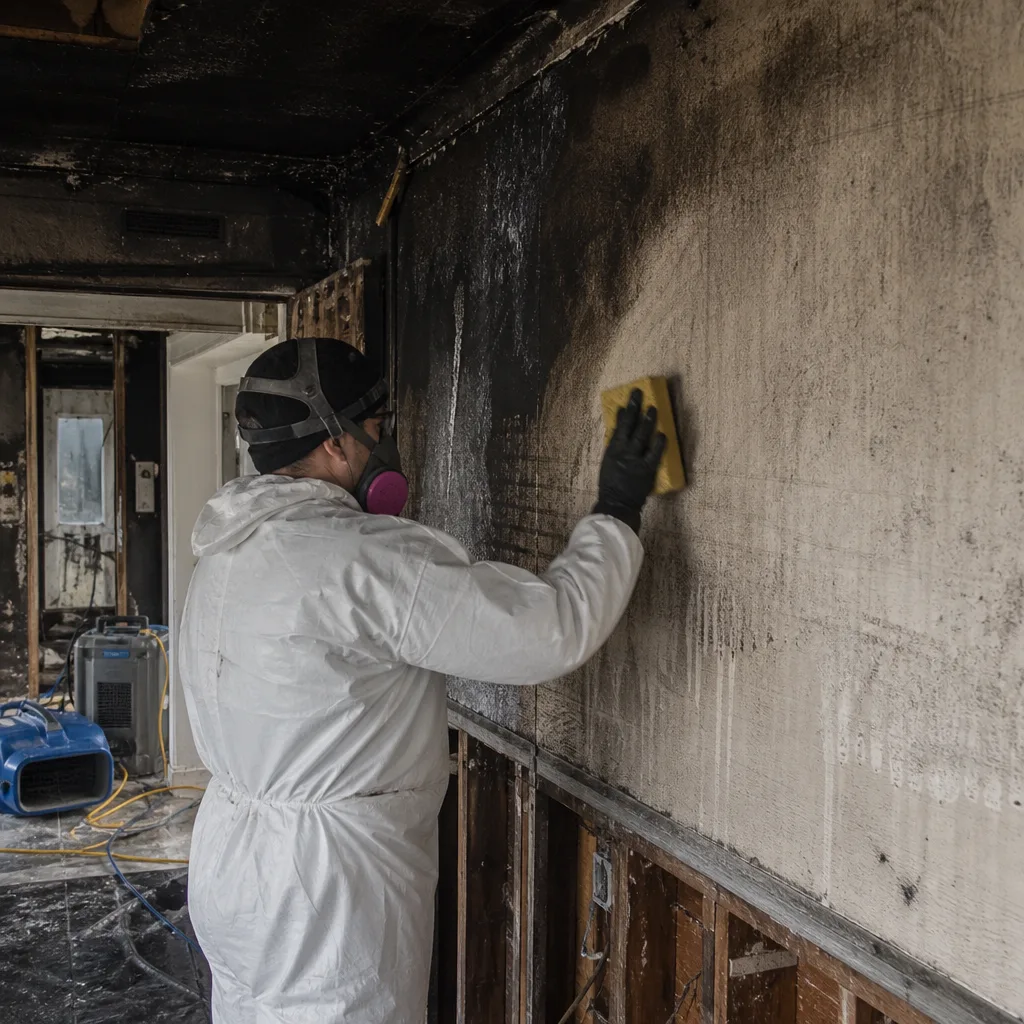
Structural Drying & Dehumidification
Plaster-and-lath assemblies do not dry on their own. We set up drying chambers with Dri-Eaz and Phoenix dehumidifiers, XPOWER air movers, and Injectidry mats that pull moisture through plaster without cracking it. Daily readings confirm when each surface hits the dry standard, and we hand those logs to you and your carrier.
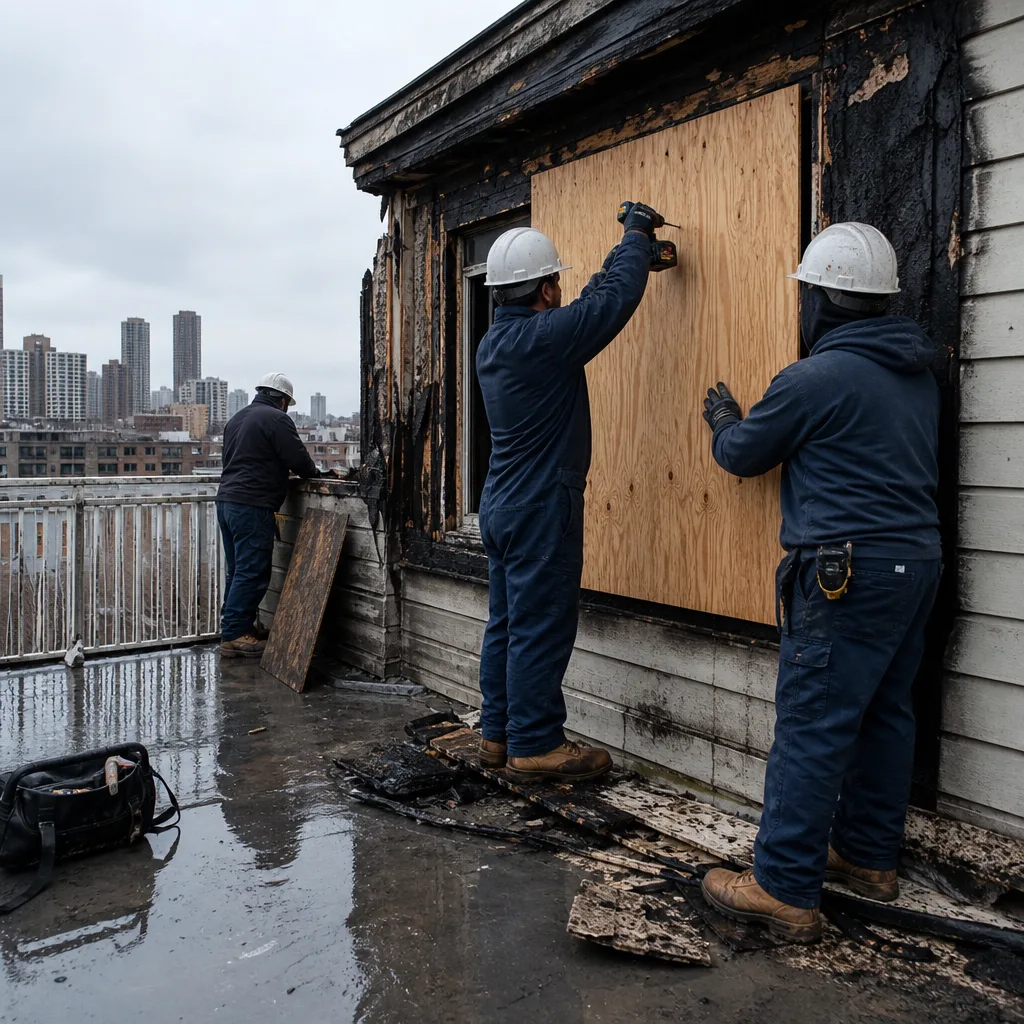
Flood Cleanup
Stormwater and ground flooding in Kensington carry contamination that demands more than wet-vac work. We remove flood water, sanitize affected surfaces, and run HEPA air scrubbers to capture what the flood left behind. Category 3 water changes what can be dried and what must be removed, and we give you a straight answer on both before any work begins.
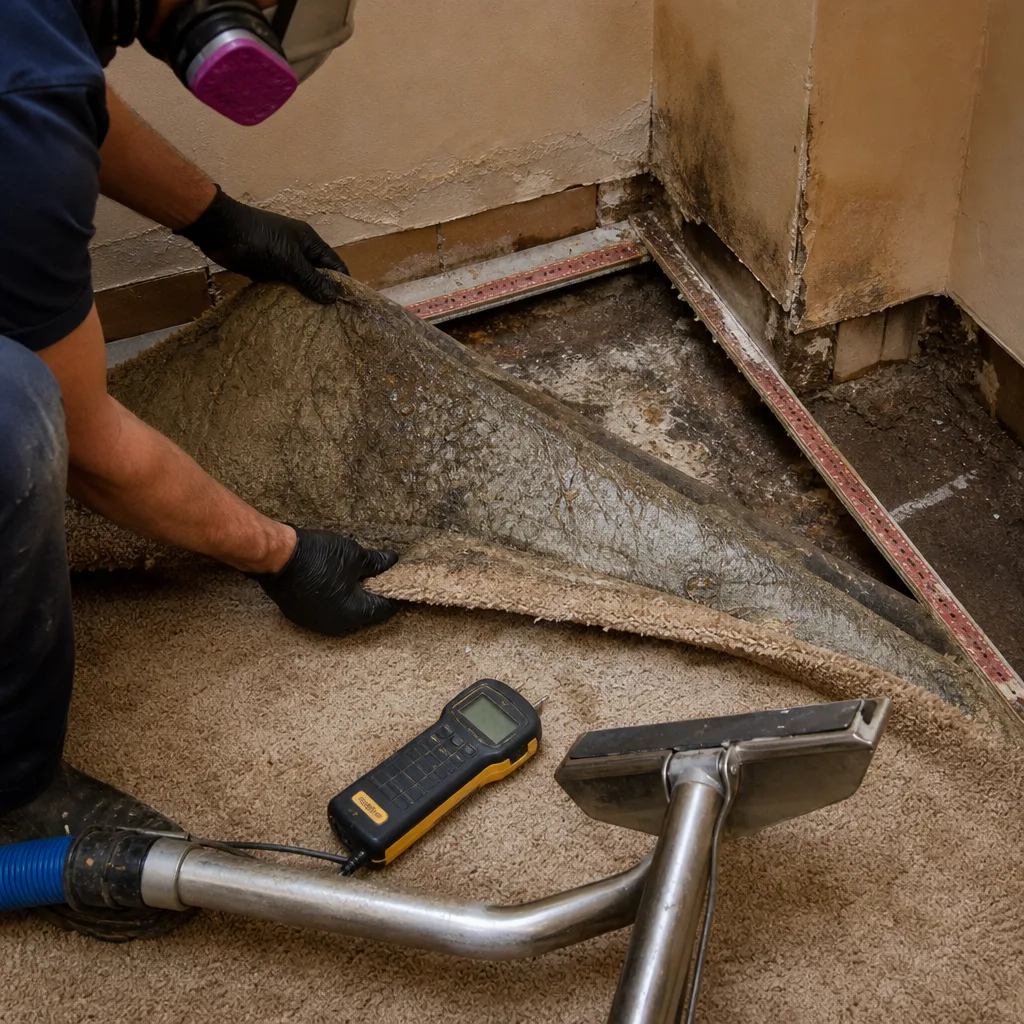
Burst Pipe Restoration
A burst pipe inside a 1920s plaster wall is not the same job as a burst pipe in a sheetrock wall. The water follows the pipe run, saturates the lath, and often reveals corrosion in the original supply lines feeding it. We extract, open only what must be opened, replace the failing pipe, and dry the assembly without unnecessary demolition.
Basement Water Removal
Kensington basements, whether they are stone-and-block originals or finished living space, flood differently than newer construction. Groundwater seepage finds the joints in old foundation walls, and finished basements hide the water until it has soaked carpet, drywall, and stored belongings. We pump, dry, and rebuild with materials appropriate to the home’s age and construction.
What happens when you call
- 1
A real person answersNo phone trees - you reach a local pro.
- 2
You get an upfront price rangeHonest numbers before anyone is dispatched.
- 3
A background-checked tech heads outLicensed & insured, dispatched right away.
- 4
You approve before work beginsNothing starts until you say go.
Water Damage Restoration Costs in Kensington, NY
Water damage restoration pricing in Kensington reflects the age and construction of the homes here more than the square footage affected. A typical emergency water extraction on a single room in a Kensington home runs $1,800 to $3,200, including setup, extraction, and the first 24 hours of drying equipment. A Category 1 burst pipe inside a plaster ceiling with full structural drying and plaster repair typically lands between $4,500 and $8,500, depending on how far the water traveled behind the walls. A Category 3 basement flood with sewage or stormwater contamination, full removal, sanitization, and rebuild of finishes runs $9,000 to $22,000 in Kensington’s market. What moves the price is access: copper supply lines buried in lath, millwork that must be packed out and stored, and village permit requirements that add a layer of paperwork most contractors never plan for. Insurance covers the bulk of most these jobs when the cause is sudden and accidental. Our estimates are free, the scope is written before work starts, and we bill your carrier directly. Call (917) 924-4221 for a firm number on your specific loss.
We Also Serve Cities Near Kensington
While this page focuses on Water Damage Restoration in Kensington, our crews regularly handle losses in the surrounding communities. We serve Fairview, Harrison, East Bronx, and Hunts Point with the same live 24/7 dispatch, certified technicians, and written 90-Day Done Right Promise.
Serving Kensington, NY - Our Local Coverage Area
We’re based in the Kensington area and know this community well. Use the map below to see our service coverage - if you’re nearby, we can almost certainly help.
Kensington Water Damage Restoration Questions, Answered
The Village of Kensington wants a permit before we start tearing out wet plaster - can you handle that?
Yes. We pull permits through Kensington’s own Village Building Department as part of the restoration scope, and we have done it enough times to know exactly what the village inspectors look for on water damage and plaster work. The permit process moves on a schedule you cannot rush, so we sequence the work around it: extraction and drying begin immediately, then the permitted tear-out and rebuild follows once the department signs off. We handle the paperwork, the inspections, and the stop-work risk that comes from skipping the permit entirely.
Our 1920s house has plaster walls over wood lath that got soaked from a burst pipe. Can you dry it or does it all have to come out?
Most plaster-and-lath assemblies can be dried in place, but only with the right equipment and a crew that knows not to treat them like drywall. We use Injectidry mats to pull water through the plaster surface without cracking it, paired with Phoenix and Dri-Eaz dehumidifiers to manage the vapor inside the wall cavity. The deciding factor is how long the water sat. Plaster that soaked for days and has already delaminated from the lath cannot be saved. Plaster that got wet within the last 24 to 48 hours usually can. We give you an honest call on which category your ceiling falls into, and we put it in writing. Call (917) 924-4221 and we will assess it for free.
A nor’easter drove rain through our slate roof and the guest bedroom ceiling is sagging. What’s the first step?
The first step is stopping the active water entry, then stabilizing the sagging plaster before it drops on furniture and people. Call us at (917) 924-4221. We tarp the roof penetration, set up a controlled drip point, and brace the sagging plaster from below to save as much of the original ceiling as possible. Once the water is stopped, we dry the ceiling cavity with the Injectidry system and assess whether the plaster can be preserved or needs to be replaced. Then we work with your roofer or our reconstruction team to close the roof opening permanently.
We found our 1940s home’s original galvanized supply line corroded behind a wet wall. Is that covered by water damage restoration?
The restoration portion is covered when the damage is sudden and accidental, which a failing original supply line qualifies under most policies. The pipe replacement itself may fall to you or to your carrier depending on the policy language, and that is exactly the kind of line we walk with your adjuster ourselves. We document the corrosion, photograph the pipe run, and include the repair in the restoration scope so the claim reflects what actually happened. Navigating the carrier’s interpretation of aging plumbing is not your job. It is ours.
The basement of our Kensington Colonial flooded with black water after a storm. What must be removed versus what can be dried?
Category 3 water, which is what storm flooding carrying ground contaminants qualifies as, changes the restoration math. Porous materials that absorbed black water, including carpet, pad, drywall, insulation, and upholstered furniture, must be removed and disposed of. Non-porous surfaces like concrete, tile, and sealed stone can be cleaned, sanitized, and dried. Framing and masonry that got wet are evaluated case by case. In a Kensington Colonial, that often means removing finished surfaces in the basement while preserving the original structure underneath, then rebuilding with materials appropriate to the home. We give you a line-item list of what goes and what stays before we touch anything.
How fast can you actually get a crew to Kensington after I call?
Within 45 minutes of your call, a crew is dispatched and on the way. We answer the phone live at all hours, so there is no waiting for a callback when a supply line lets go at 3 a.m. The dispatcher confirms the address, the nature of the loss, and the crew’s ETA on that same call. In a village the size of Kensington, our response times run short, and extraction starts on the first visit, not the next morning.
How long does structural drying take in an older plaster home?
Plan on three to five days for most plaster-and-lath drying in Kensington, assuming the water was caught within the first day and the assembly is in good condition. Larger losses, Category 2 or 3 water, or supply lines that continued leaking behind walls for days can stretch drying to a week or more. We take daily moisture readings and show you the trend until every material reaches the dry standard. We do not pull equipment based on a calendar. We pull it when the meters say the structure is dry.
What should I do in the first 30 minutes after I discover water damage in my Kensington home?
Call (917) 924-4221 first. Then, if you can reach the water source safely, shut it off. Do not run electrical appliances or walk through standing water that may be in contact with outlets. Lift furniture legs onto blocks or foil where possible. Do not try to extract water from behind plaster walls yourself, and do not start cutting into walls. Leave that to a certified crew with the equipment and the insurance behind them. The first 30 minutes define how much of your original plaster, millwork, and flooring survives.
Kensington’s older housing stock, its village-level permit process, and the original plumbing still running through these walls mean water damage restoration here is simply not the same job it is in newer communities. The line the water left is where we start. Done right, and backed in writing.
Written by Curt Bowman, Owner at Floodline Restoration Co., serving Kensington since 2010.