
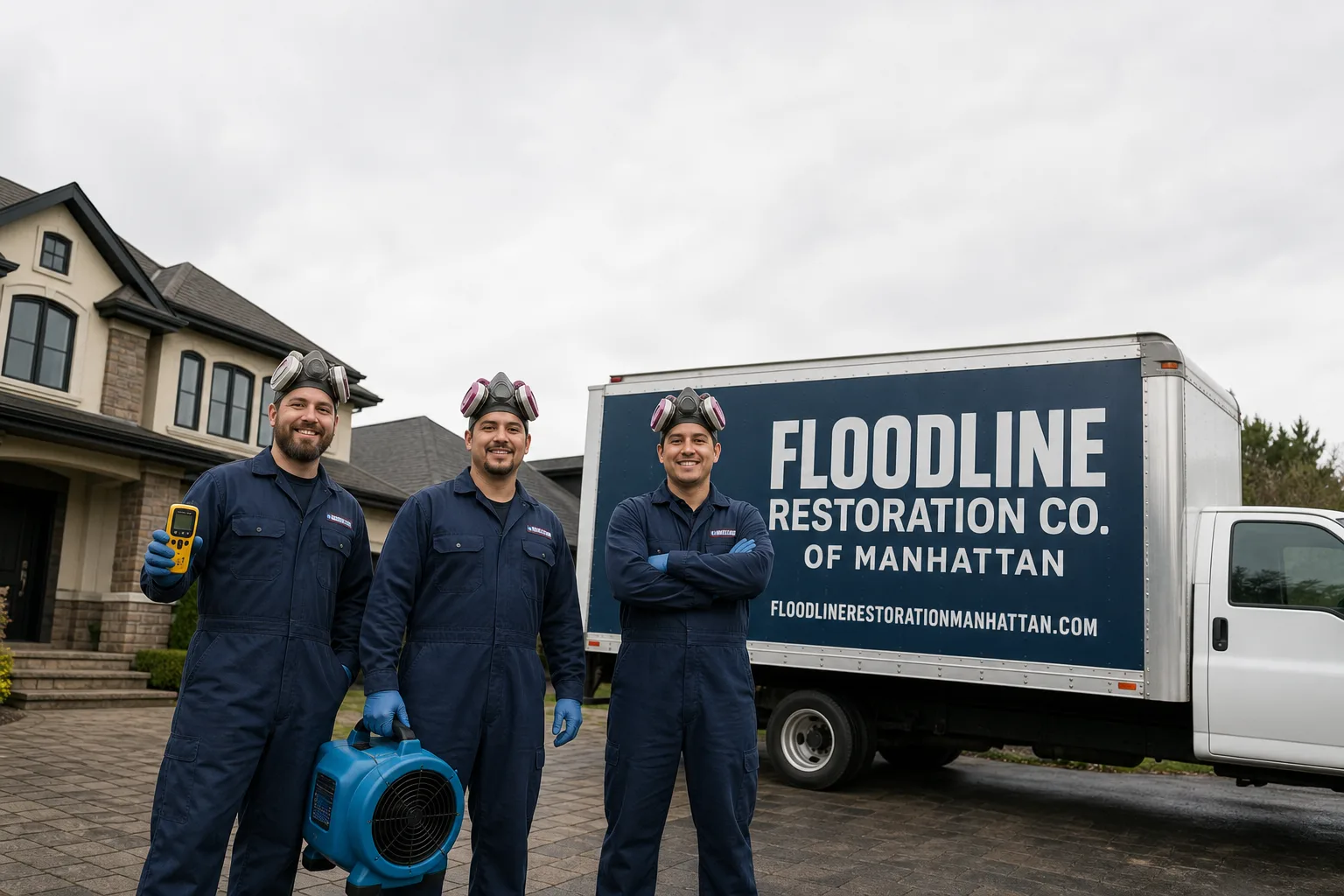
Free visual inspection and a written scope of work before any mitigation begins - photos, moisture readings, and drying logs go in your claim file
The scope we write is the scope we bill. Anything new gets shown to you, in writing, before we touch it.






 Before
 After
After Before
 After
After Before
 After
After24/7 Emergency Biohazard & Crime Scene Cleanup in Verplanck
Biohazard and crime scene cleanup in Verplanck requires more than standard restoration training because the hamlet’s tidal Hudson River shoreline introduces contamination risks that inland crews rarely encounter. Floodline Restoration Co. of Manhattan answers live around the clock at (917) 924-4221, and a certified crew can be dispatched into the Verplanck area within 45 minutes of your call. The first hour matters because bloodborne pathogens, sewage-borne bacteria, and viral contaminants begin colonizing porous surfaces immediately, and once they move into wall cavities and subfloor assemblies in these older riverfront homes, the scope grows fast.
We conduct a free visual inspection, document everything for your insurer, and most biohazard jobs in Verplanck are completed in a single visit with professional-grade equipment. You speak to a real person at two in the morning, not a recording, and the crew that arrives is background-checked, uniformed, and trained to IICRC, RIA, and IFA standards. Call now if you’re standing in front of a flooded basement, a trauma scene, or an unattended death. The sooner containment starts, the less contamination spreads.
Understanding Biohazard & Crime Scene Cleanup Severity in Verplanck Properties
Biohazard contamination falls into categories that dictate how aggressively we treat a space. Category 1 water is clean at the source, like a supply line. Category 2 carries significant contamination, including wash water or diluted urine. Category 3 is grossly contaminated, holding pathogens, sewage, and chemical runoff. In Verplanck, the Hudson River is a tidal estuary, and storm-surge water that breaches basements and crawl spaces is Category 3 by definition, regardless of how clear it looks. It recedes on a tidal schedule, not gravity drainage, so saturated materials stay in contact with contaminated water for days, not hours.
Verplanck’s housing stock compounds the problem. Most homes in the hamlet were built between the 1920s and 1950s, with stone or poured-concrete block foundations that lack modern waterproofing membranes. These foundations wick moisture upward through capillary action, which is why a basement that feels dry at the slab edge can still register above 20% moisture content on a meter a week after the water has receded. That hidden moisture, combined with Category 3 contamination, creates ideal conditions for mold colonization within 24 to 48 hours and allows pathogens to survive in the pores of concrete and mortar. Crime scene and trauma cleanup carries similar urgency. Blood and bodily fluids penetrate grout, unfinished concrete, and subflooring quickly, and in homes where the studs and joists have already been compromised by decades of tidal moisture, the cross-contamination potential is higher than in a newer house.
Why Verplanck Property Owners Choose Floodline Restoration Co. of Manhattan
- 45-minute response commitment: We dispatch crews into Verplanck immediately from our Manhattan office, and you’ll get a real arrival window, not an open-ended “sometime today.”
- 24/7 live answer: A live dispatcher picks up at any hour, every day. You will never reach a voicemail tree when you’re standing in front of a trauma scene or a flooded basement.
- Certified crews: Our technicians hold IICRC certifications including WRT, FSRT, and AMRT, plus RIA and IFA training, so the crew that handles your Verplanck home knows the protocols for Category 3 water, bloodborne pathogens, and infectious disease containment.
- Free visual inspection: We assess the scene at no cost, write a firm scope of work, and you approve it before any billable work begins.
- Direct insurance billing: We communicate with your adjuster directly, submit line-item documentation, and you never play messenger between our crew and the carrier.
- One team, start to finish: Floodline Restoration Co. handles biohazard cleanup, structural drying, and reconstruction, so you never get handed off to a subcontractor who has never seen your house.
Our Biohazard & Crime Scene Cleanup Process
Inspection & Assessment
We walk the entire affected area, including crawl spaces and wall cavities, using hygrometers and thermal imaging to map moisture and contamination. The assessment identifies Category 3 water intrusion, bloodborne pathogen spread, and any HVAC cross-contamination.
Containment & Stabilization
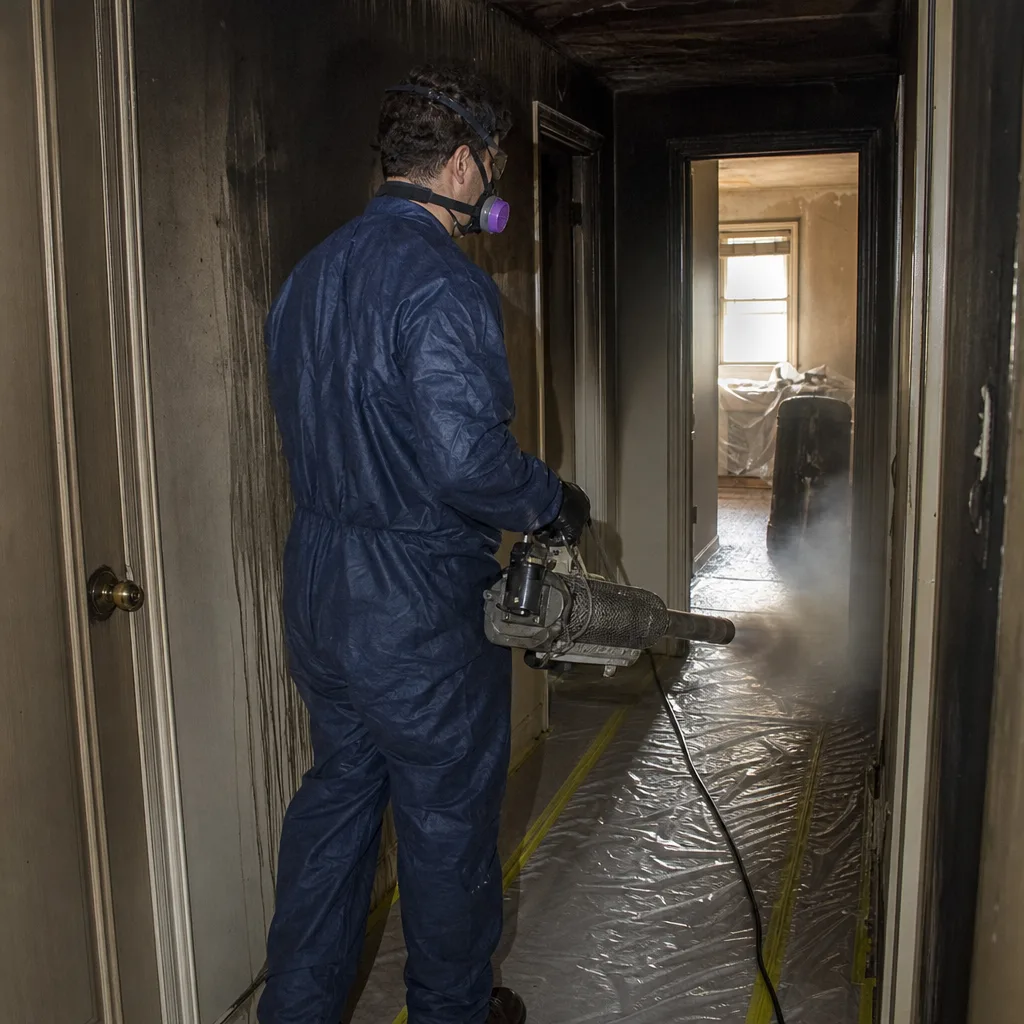
Before we move anything, we establish full containment using 6-mil polyethylene barriers and negative air pressure with HEPA-scrubbed exhaust, and we seal HVAC returns. This step stops airborne contaminants from moving into unaffected rooms. In small, tightly packed Verplanck homes, this is the most important thing we do.
Removal & Extraction
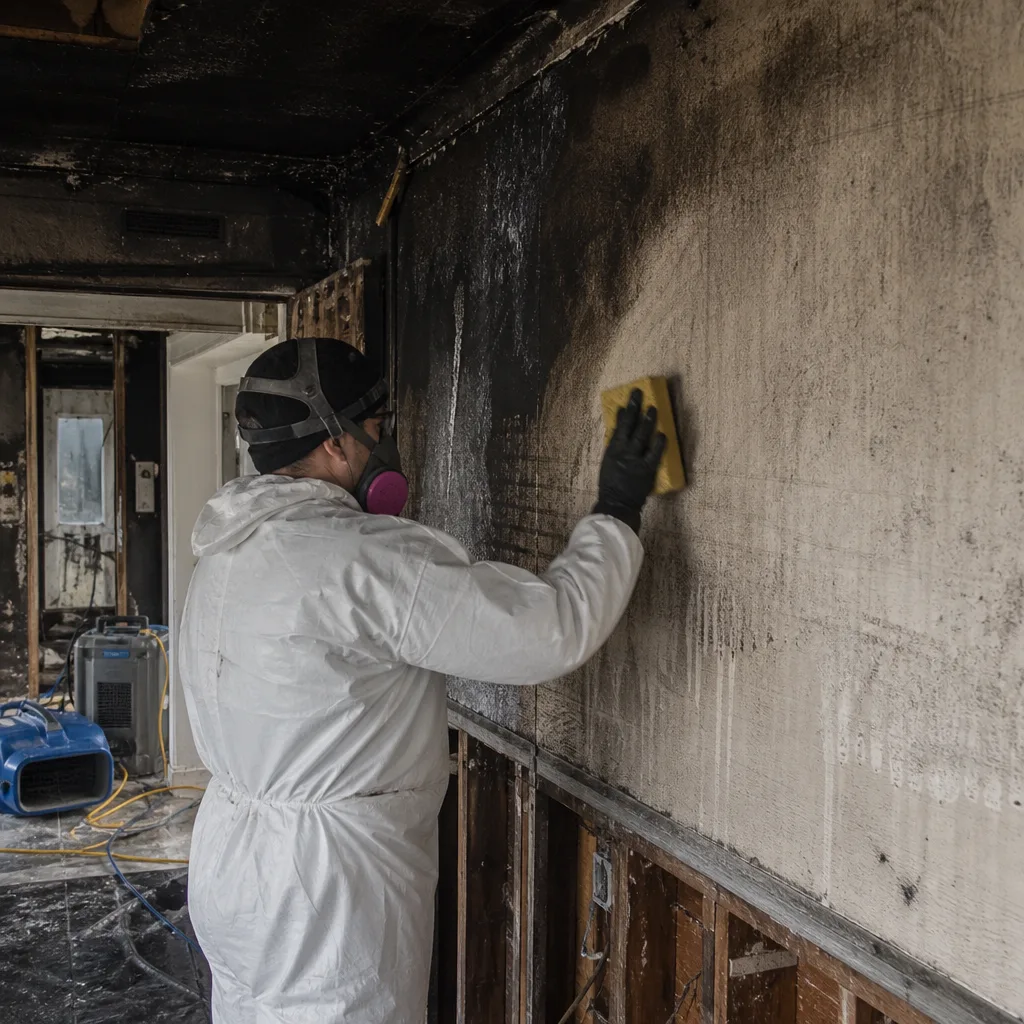
Saturated drywall, insulation, carpet, and pad come out and are bagged for regulated disposal. Porous materials that have absorbed Category 3 water or blood cannot be sanitized reliably, so they go. Solid surfaces that can be saved are cleaned in place.
Cleaning & Sanitization
For biohazard scenes, we apply EPA-registered antimicrobials and hospital-grade disinfectants with appropriate dwell times. For Category 3 floodwater from the Hudson, that means longer contact time on concrete and masonry, because tidal water leaves biofilms and sewage residue that quick sprays do not kill.
Structural Drying & Dehumidification
We place professional-grade Dri-Eaz and Phoenix air movers and low-grain refrigerant dehumidifiers, then log daily moisture readings until the structure hits the dry standard. Verplanck’s older foundations often need a week or more of drying, and we don’t pull equipment out until the numbers say it’s dry, not when the surface looks dry.
Repairs & Restoration
Once the contamination is gone and the structure is dry, our reconstruction crew handles drywall, flooring, trim, and any structural repairs. You get one team from first extraction to finished rebuild, and every step is backed by our 90-Day Done Right Promise in writing.
Need Emergency Biohazard & Crime Scene Cleanup in Verplanck Now?
Crews minutes away, answering live 24 hours a day. The sooner we start, the less it costs.
Working With Your Insurance Company
Most Verplanck homeowners carry homeowners insurance that includes some biohazard and crime scene cleanup coverage, but the claim lives or dies on documentation. We start building that file from the first hour, with photos of the scene before we touch anything, moisture readings, and a line-item scope of work that matches industry-standard estimating software your adjuster recognizes. We talk to your adjuster directly, so you don’t spend your week relaying messages between a carrier and a cleanup crew. If a line item gets questioned, we provide the evidence: thermal imaging, drying logs, and pathogen testing where applicable. Direct insurance billing means we collect from the carrier, not from you, for covered losses.
What We Provide Your Insurer
- Thorough documentation of the loss
- Photos of all damage, room by room
- Moisture readings and drying logs
- A detailed, line-item scope of work
- Direct coordination with your carrier
Built for Verplanck’s Loss Calendar
Verplanck’s biohazard and crime scene cleanup calls follow a pattern tied to the Hudson River and the seasons. Late summer and early fall bring hurricane remnants and tropical systems, and the hamlet’s low-lying streets near the waterfront take storm surge that pushes river water, sewage, and debris into basements and crawl spaces. This isn’t a rain flood; it’s brackish Category 3 water that recedes slowly on the tide, and the contamination window stretches for days.
Winter is different. January deep freezes burst supply lines in older Verplanck homes where copper pipes run through uninsulated crawl spaces and exterior walls. A burst line in a 1940s house on a small lot can flood a basement in hours, and if the water sits over a weekend, it turns into a biohazard event on its own, because standing water in a warm basement is a breeding ground for bacteria within 48 hours. Spring thaw brings groundwater seepage through those aging foundations, and summer thunderstorms can overwhelm the hamlet’s storm drains with flash runoff that carries whatever was in the street into low-lying basements.
Through all of it, our Biohazard & Crime Scene Cleanup team is on call, with live dispatch and crews who know how to read a moisture map on a tidal flood, not just check a box. We’ve worked the tidal surge cases, the frozen-pipe weekends, and the unattended death scenes in homes where the family has lived for forty years. Each one gets the same written guarantee.
Biohazard & Crime Scene Cleanup Across Verplanck’s Neighborhoods
Verplanck is compact, but the cleanup realities change block by block. Homes on Broadway closest to the waterfront take the worst of the tidal surge, and that’s where we see the deepest Category 3 water intrusion after a nor’easter or hurricane remnant. Basements there often have original poured-concrete foundations from the 1930s and 1940s that hold moisture tenaciously. Homes on 7th Street and the numbered streets east of Broadway sit slightly higher, but they still deal with groundwater seepage through unsealed block foundations, and they’re close enough to the water that storm surge can still reach crawl spaces.
The blocks around Lake Meahagh have a different problem. Homes there sit near a brackish pond that doesn’t drain quickly after heavy rain, and when the pond rises, several properties take on water that’s already contaminated with organic material and wildlife waste. That’s biohazard work, not just drying. The homes on 9th Street and Riverview Avenue, many of them small capes and bungalows built before 1950, are close enough to the river that the same storm surge that floods Broadway also pushes water under their floor systems. Because the lots are small and the houses are tight to each other, containment has to be aggressive; contaminated air moves through shared wall cavities and connected rooflines faster than people expect.
When you call us for Biohazard & Crime Scene Cleanup in Verplanck, you get a crew that knows the difference between a Lake Meahagh seep and a Hudson surge, and the protocol for each.
Specialized Biohazard & Crime Scene Cleanup Services We Offer in Verplanck
Infectious Disease Disinfection
We disinfect homes in Verplanck after confirmed or suspected exposure to infectious disease, including norovirus, influenza, MRSA, C. diff, and COVID-19. Our technicians use EPA-registered hospital-grade disinfectants with proper dwell times, and we treat high-touch surfaces, soft goods, and hard-to-reach areas like HVAC vents and light switches. In older Verplanck homes with finished basements, we also fog enclosed spaces where surface wiping cannot reach.
Blood & Bodily Fluid Cleanup
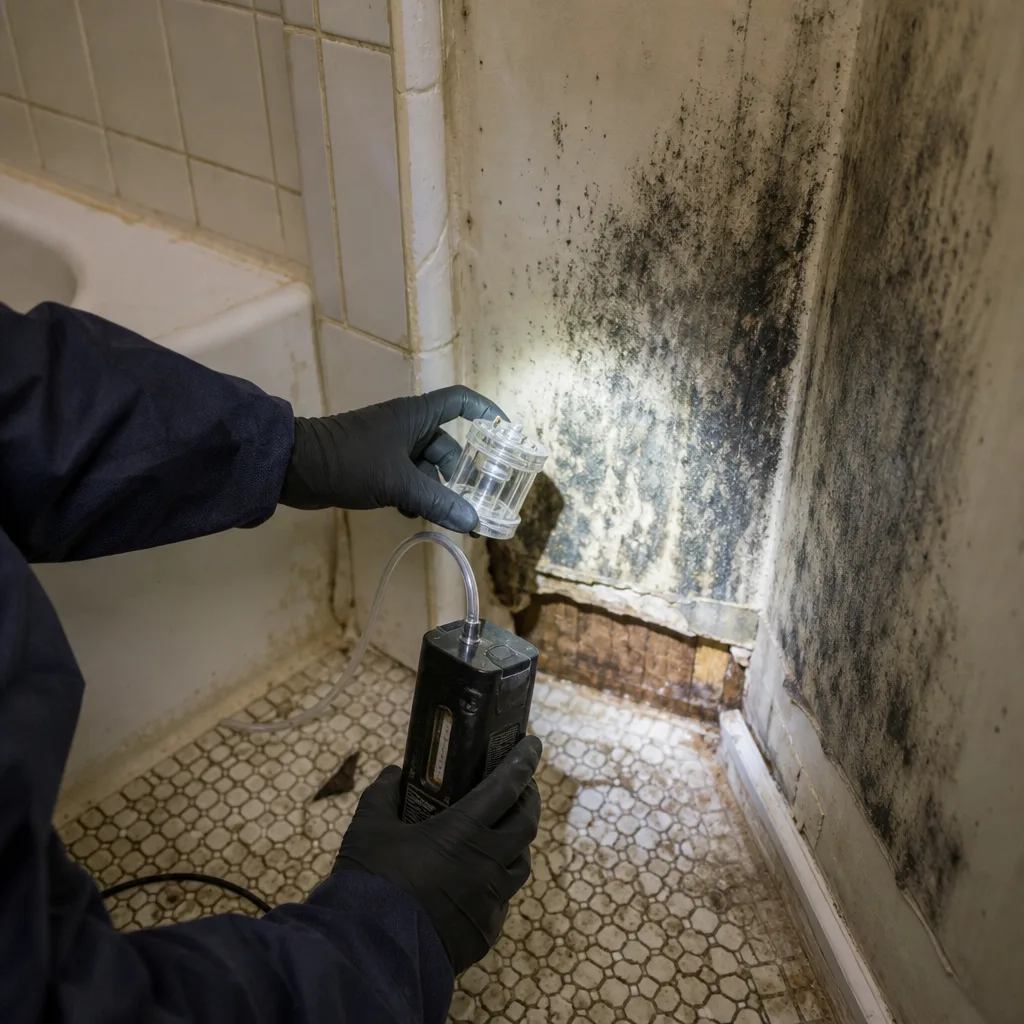
Blood and bodily fluids are regulated biohazards under OSHA’s Bloodborne Pathogen Standard, and Verplanck homeowners should never clean a significant blood spill on their own. We remove porous materials that cannot be reliably sanitized, treat all affected hard surfaces with antimicrobial solutions, and conduct a post-remediation clearance check. In the older homes near the Verplanck waterfront, we pay particular attention to unfinished basement floors and unsealed concrete, where blood can penetrate deeply and remain infectious.
Crime Scene Cleanup
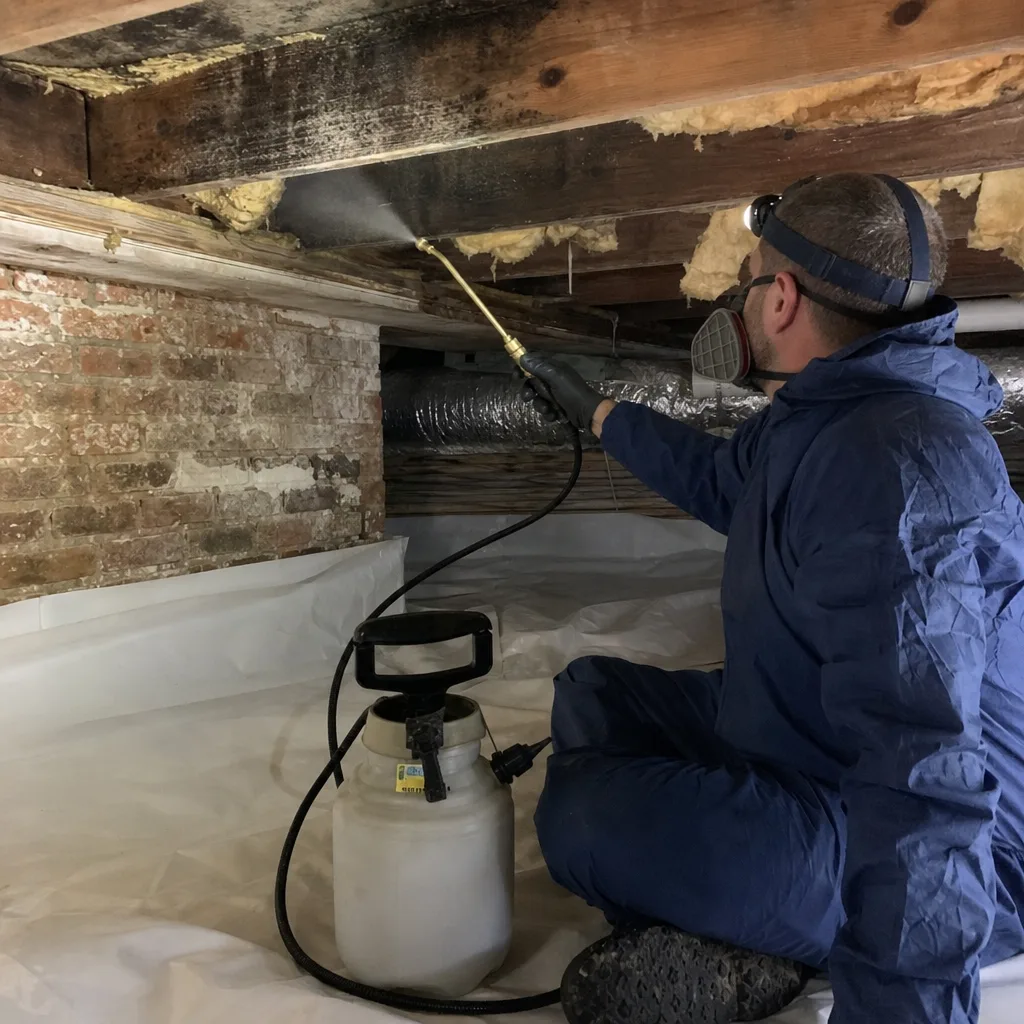
After law enforcement releases the scene, we handle the cleanup with discretion and speed. Our crews arrive in unmarked vehicles, work inside full containment, and restore the property to a safe, usable condition. We document everything for your insurance claim and coordinate with victim services where needed. Verplanck property owners call us because we do the job thoroughly and without drama.
Trauma & Unattended Death Cleanup
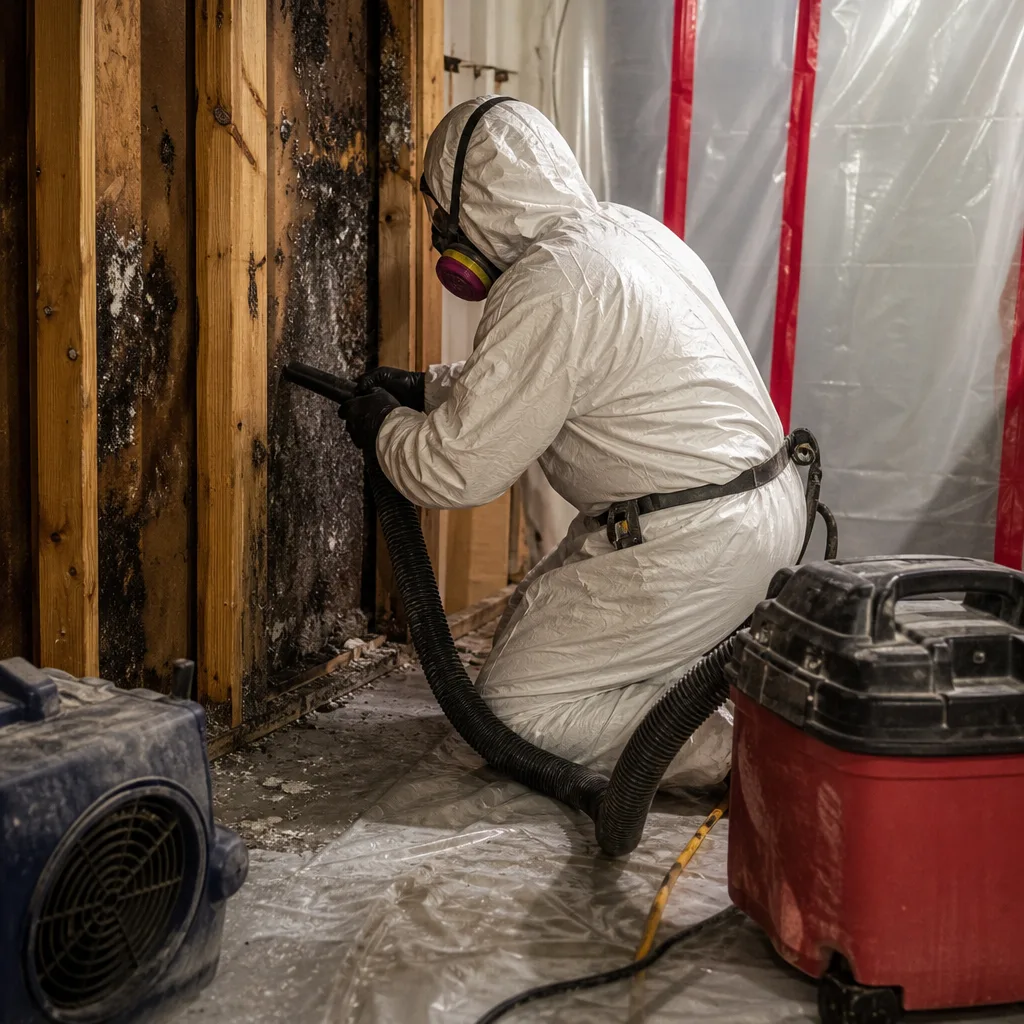
When someone passes away alone, the cleanup involves more than just the room where the death occurred. Decomposition fluids move through floors and into subfloor assemblies, especially in older Verplanck homes with wooden floor systems. We remove the affected materials, treat the structure, and run deodorization through the home so that the reminder of the loss isn’t left in the air.
Hoarding Cleanup
Hoarding cleanup in Verplanck often runs into a second problem: the same aging foundations that hold tidal moisture also hold the weight of years of accumulated material. We work at the homeowner’s pace, sort salvageable items from trash, and handle biohazardous materials including animal waste, mold, and expired food. Our crews are background-checked and treat the homeowner with respect from the first walkthrough to the final clear-out.
What happens when you call
- 1
A real person answersNo phone trees - you reach a local pro.
- 2
You get an upfront price rangeHonest numbers before anyone is dispatched.
- 3
A background-checked tech heads outLicensed & insured, dispatched right away.
- 4
You approve before work beginsNothing starts until you say go.
Biohazard & Crime Scene Cleanup Costs in Verplanck, NY
A typical biohazard cleanup in Verplanck runs between $1,800 and $5,000, depending on the size of the affected area and the type of contamination. Blood cleanup in a single room averages $1,500 to $3,000, while an unattended death that has gone undiscovered for weeks can run $4,000 to $8,000 because decomposition fluids require subfloor removal and full structural treatment. Infectious disease disinfection for a whole home typically costs $900 to $2,500, and hoarding cleanup ranges widely, from $2,000 for a single room to $25,000 for a full house with structural damage.
What moves the price in Verplanck specifically is the tidal component. A basement that took Category 3 Hudson River water needs more antimicrobial treatment, more drying time, and often more material removal than the same square footage in a rain-flooded house. Porous materials like drywall, insulation, and carpet come out, and the cost of disposal and replacement is part of the scope. If you’re unsure whether insurance covers it, call us for a free visual inspection. We’ll give you a written line-item scope before any work starts, and we’ll work with your carrier on the claim. Call (917) 924-4221 for an exact quote. Estimates are free.
We Also Serve Cities Near Verplanck
Floodline Restoration Co. of Manhattan provides biohazard and crime scene cleanup throughout the northern Westchester and southern Putnam county area. We serve homeowners in Montrose, Buchanan, Stony Point, and Peekskill, with the same 45-minute response commitment and 24/7 live dispatch.
Serving Verplanck, NY - Our Local Coverage Area
We’re based in the Verplanck area and know this community well. Use the map below to see our service coverage - if you’re nearby, we can almost certainly help.
Verplanck Biohazard & Crime Scene Cleanup Questions, Answered
How does tidal flooding in Verplanck affect biohazard cleanup compared to a typical rain flood?
Tidal flooding in Verplanck is different because the water is brackish Category 3, full of sewage, river sediment, and marine pathogens, and it recedes on the tide schedule, meaning contaminated water stays in contact with your foundation and floor system for days instead of draining away after a storm. That longer contact time forces us to use longer antimicrobial dwell times, remove more porous material, and run structural drying for a week or more in many cases. A rain flood can sometimes be dried out; a tidal surge nearly always requires full biohazard remediation.
After a storm surge, can I just dry out my Verplanck basement myself before calling a biohazard team?
No. Drying out a Category 3 flood on your own spreads sewage residue and pathogens deeper into porous surfaces and risks cross-contaminating the rest of the house through shared air spaces and your HVAC system. You also won’t have a moisture log for your insurer, and without one, a denied claim is far more likely. Call us at (917) 924-4221 first, even before you call the carrier. The inspection is free, and we’ll document the scene properly from hour one.
Do homes near the Verplanck waterfront need special containment during biohazard cleanup?
Yes. Homes on Broadway, Riverview Avenue, and the streets closest to the Hudson are small and tightly spaced, often with shared wall cavities and connected rooflines. Contaminated air moves through those cavities quickly, so we set full containment with negative air pressure and HEPA filtration before we start any removal. In a 1940s house on a small lot, skipping containment means spreading contamination to rooms we never entered.
How soon after a crime scene in Verplanck should cleanup begin to prevent secondary damage?
Immediately after law enforcement releases the scene. Blood and bodily fluids begin breaking down within hours, and in older Verplanck homes with unsealed concrete or wooden subfloors, they penetrate below the surface where cleaning becomes impossible. The longer the wait, the more material has to be removed. Call (917) 924-4221 the moment the scene is released, and we’ll have a crew there within 45 minutes.
What’s the biggest mistake homeowners make after a biohazard event in a Verplanck home?
The biggest mistake is trusting what the surface looks like. Tidal floodwater in Verplanck recedes slowly, and the slab edge or drywall can look dry from the street while the crawl space and floor joists above the foundation are still saturated. We regularly find moisture readings above 20% a week after a nor’easter, which means mold and bacteria are actively growing behind the baseboards. If you assume it’s dry, you’re inviting a follow-up remediation that’s twice the size.
Will my insurance cover biohazard or crime scene cleanup in Verplanck?
Most standard homeowners policies cover biohazard cleanup when it results from a covered peril, like a burst pipe, storm surge, or a crime scene. The key is documentation, and that starts with our first-visit photos, moisture readings, and the line-item scope we submit directly to your adjuster. We bill the carrier directly for covered losses, and if a line item is challenged, we provide the evidence to support it. Call (917) 924-4221 and we’ll walk you through what your policy likely covers.
How long does biohazard cleanup take in a Verplanck home?
Most biohazard cleanups are completed in one to three days, but structural drying after tidal flooding can add a week or more. A single-room blood cleanup is usually done in a day. A full basement that took Category 3 Hudson water may need five to seven days of drying after the contaminated material is removed, because these older foundations hold moisture stubbornly. We don’t pull equipment out until the moisture log shows the dry standard, and we leave you a copy of that log.
What should I do in the first 30 minutes after discovering a biohazard situation?
Stay out of the affected area, shut off the HVAC system if you can do so safely, and call (917) 924-4221. Don’t open windows into unaffected rooms, don’t run fans, and don’t touch anything wet. The first 30 minutes are about not spreading the contamination. We’ll walk you through what to do over the phone, and a crew will be on the way.
When a biohazard event hits a Verplanck home, the waterline on the basement wall is where the damage starts, but it’s not where the job ends. Floodline Restoration Co. is led by Curt Bowman, and our crews handle every phase of the work, from first containment to final reconstruction, with a written 90-Day Done Right Promise on every job. We answer the phone live at (917) 924-4221, all day, every day, and we’ll be there when we say.
Written by Curt Bowman, Owner at Floodline Restoration Co., serving Verplanck and the surrounding Hudson River communities.