
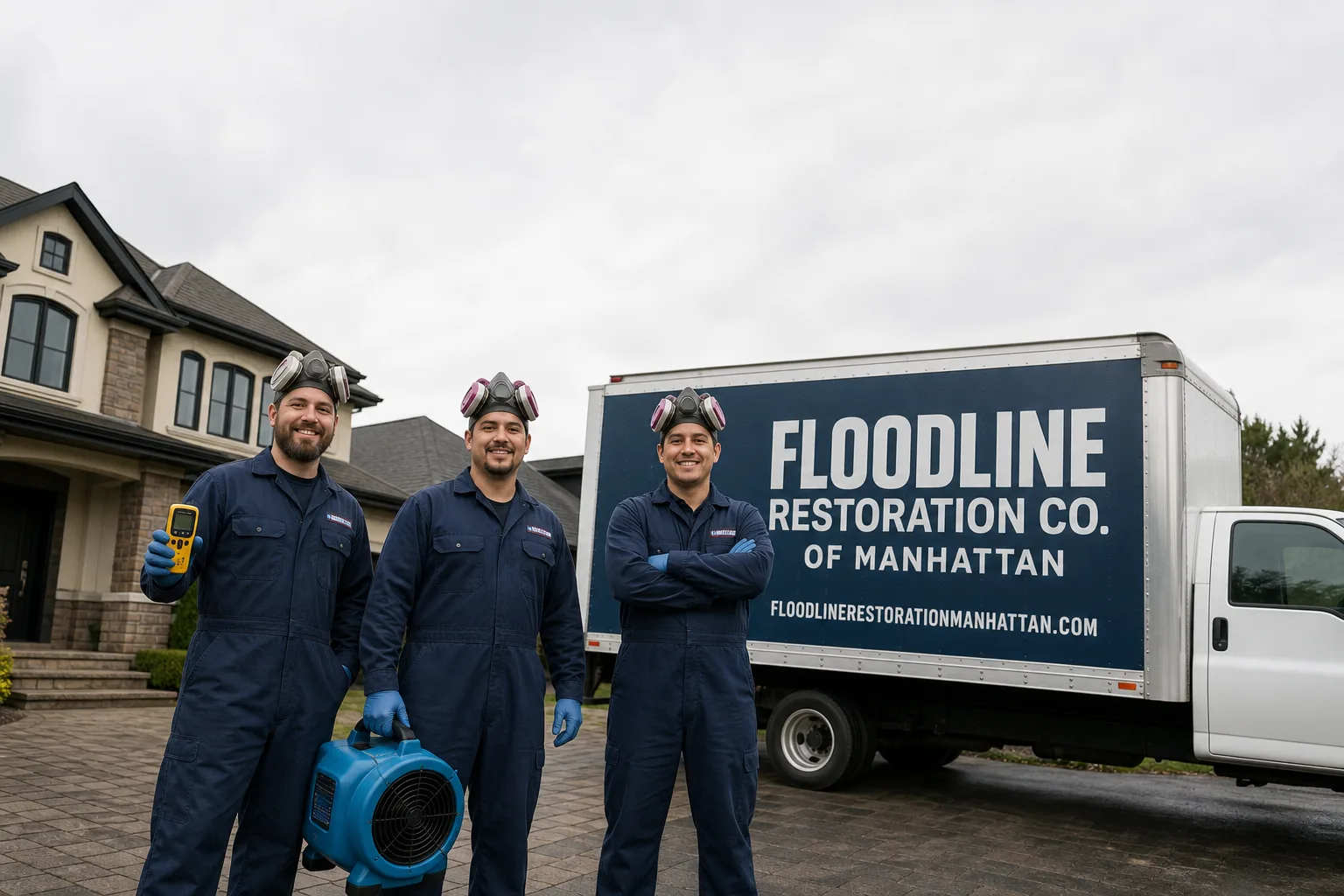
Free visual inspection and a written scope of work before any mitigation begins - photos, moisture readings, and drying logs go in your claim file
The scope we write is the scope we bill. Anything new gets shown to you, in writing, before we touch it.






 Before
 After
After Before
 After
After Before
 After
After24/7 Emergency Water Damage Restoration in Verplanck
Water damage restoration in Verplanck typically costs $4,200 to $11,800 for Category 2 and 3 flood events, and a crew can usually reach riverfront homes within 45 minutes of your call. The first hour after tidal water enters matters more here than almost anywhere in Westchester, because the Hudson doesn’t drain on demand. Our dispatchers answer live at (917) 924-4221 twenty-four hours a day, every day, and we’ll have certified technicians on site fast enough to start extraction before the water wicks deeper into floor joists and block foundations.
In Verplanck specifically, standing water from storm surge can’t be treated like a burst-pipe cleanup. The floodwater is classified by what it carries. Tidal intrusion from the Hudson brings river sediment, brackish contaminants and, after a sewage system surcharge, bacteria into your lowest living spaces. That’s Category 3 water, and it demands a methodical response: extraction first, then structural drying calibrated to a hamlet where the water table sits just below your basement slab.
Calling immediately gets you a free visual inspection and a written scope before any equipment is unloaded. We do not leave Verplanck homeowners waiting for a call back. A real person picks up, a dispatcher confirms your address, and a certified crew heads toward Broadway, Riverview Avenue, or wherever your home sits along the river flats. The line the water left is where we start.
Understanding Water Damage Restoration Severity in Verplanck Properties
Verplanck homes face three distinct categories of water intrusion, and the response changes with the classification. Category 1 water comes from a clean supply line: a burst pipe, an overflowing tub without contamination. That’s the most common winter emergency in the hamlet’s 1920s through 1950s housing stock, where original galvanized supply lines finally let go during a January deep freeze. Category 2 water carries detergents or mild contaminants: a washing machine overflow, a sump pump failure pushing groundwater upward. Category 3 water is the one Verplanck knows too well. That’s the water from the Hudson after a nor’easter or hurricane surge, which picks up sediment, fuel residues from old riverfront bulkheads, and sewage from compromised lines.
Moisture mapping on these jobs is not a formality. We use thermal imaging and hygrometers to track how far Category 3 water has traveled through wall cavities and subfloor assemblies. In older Verplanck homes with unsealed stone or poured-concrete block foundations, capillary action pulls moisture upward from the footing, sometimes eight to twelve inches above the floor line. The freeze-thaw cycles Westchester winters bring then work against homes that already absorbed a flood. Saturated mortar joints crack, foundation coatings spall, and new entry points open for the next tidal event. Severity, in other words, compounds in Verplanck in ways an inland town will never see.
Why Verplanck Property Owners Choose Floodline Restoration Co. of Manhattan
- A 45-minute response commitment for Verplanck properties. When you call, a local crew is dispatched immediately, not queued behind calls from across the metro. We’ll be there when we say.
- A live person answers, every hour, every day. You won’t reach an automated system at 2 a.m. A dispatcher picks up, asks the right questions about water depth and source, and gets a certified crew rolling.
- IICRC-certified technicians, trained to WRT and ASD standards. Water Damage Restoration team members hold the industry credentials that matter for structural drying and applied microbial remediation. RIA and IFA protocols shape how we document every job.
- Free visual inspection with no obligation. Before you pay a dollar, we walk the affected areas, identify the water category, and tell you honestly what full restoration will require.
- Direct insurance billing, handled from day one. We submit the claim documentation, talk to your adjuster, and bill the carrier directly. You never play messenger.
- One crew from first extraction to final rebuild. Floodline Restoration Co. doesn’t hand you off after drying. The same certified technicians who set the Dri-Eaz dehumidifiers also handle the trim, drywall, and finish work once your home is dry.
Our Water Damage Restoration Process
Inspection & Assessment
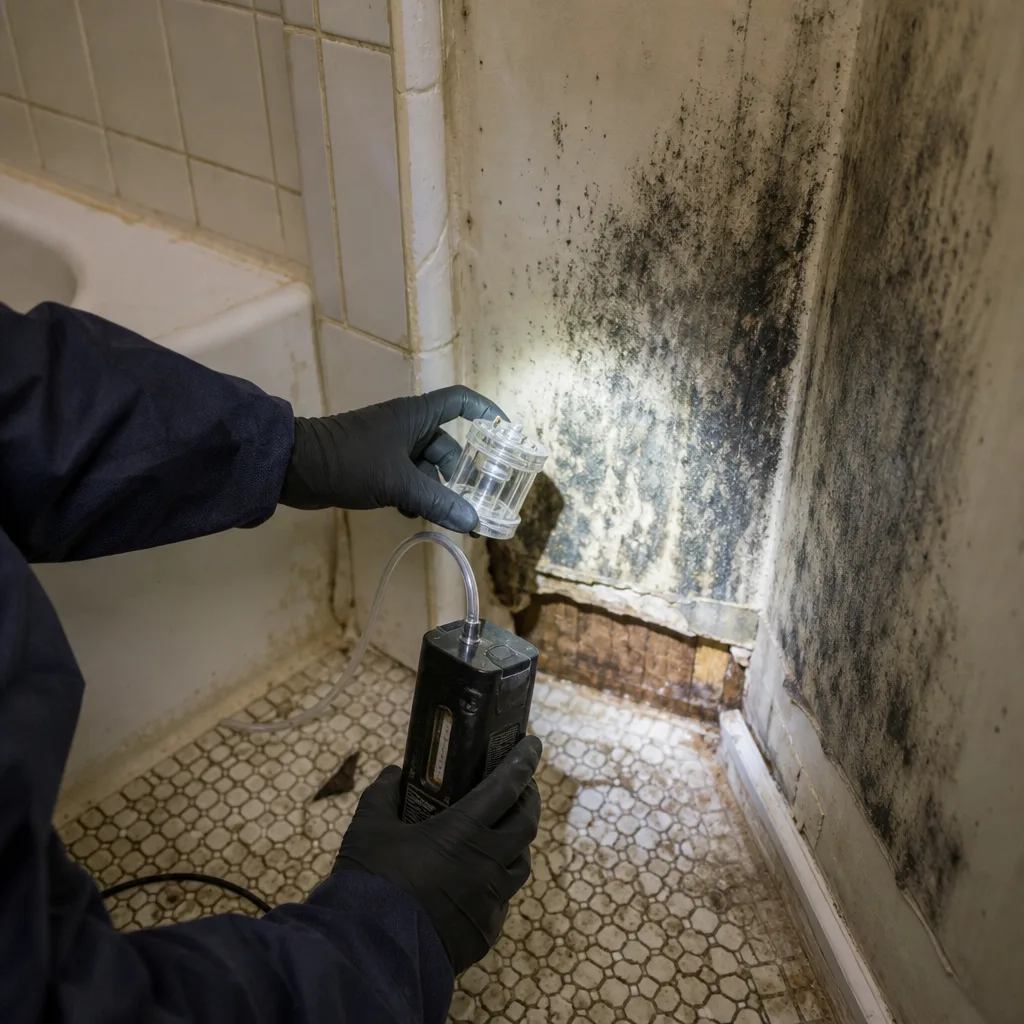
We start with a full physical walkthrough, thermal imaging, and moisture meter readings of walls, floors, and sill plates. The goal is to find every wetted surface, including the ones you can’t see yet. On Verplanck riverfront homes, we pay special attention to mortar joints and slab edges, where tidal water hides.
Extraction & Stabilization
Submersible and truck-mounted extractors pull standing water from floors, crawl spaces, and basements. We move promptly but deliberately, because extracting too early during a tidal recession leaves the second wave behind. Stabilization includes tarping compromised openings and isolating electrical systems until they’re deemed safe.
Drying & Dehumidification
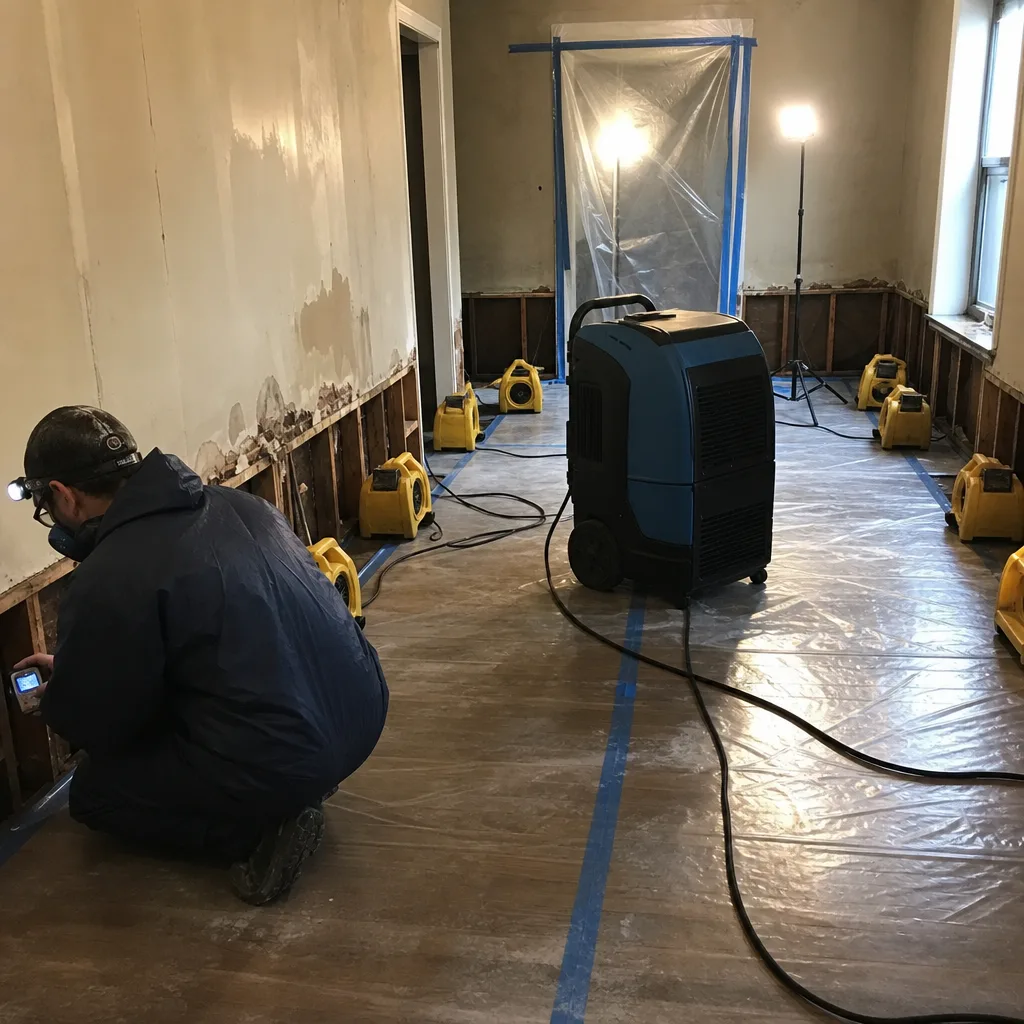
We place Dri-Eaz and Phoenix dehumidifiers alongside XPOWER air movers in a calculated configuration, not a random spread. Daily moisture readings track progress toward the dry standard, and we hand you and your insurer the complete log. In Verplanck’s pre-1960 frame homes, drying often takes 4 to 7 days because original plank subfloors hold water stubbornly.
Cleaning & Sanitization
Surfaces exposed to Category 2 or Category 3 water are treated with professional-grade antimicrobials and cleaned to prevent bacterial and mold growth. HEPA filtration runs throughout the process to scrub airborne contaminants. This is not a cosmetic wipe-down. It’s a restoration-grade sanitization.
Antimicrobial Treatment Behind Baseboards & Wall Cavities
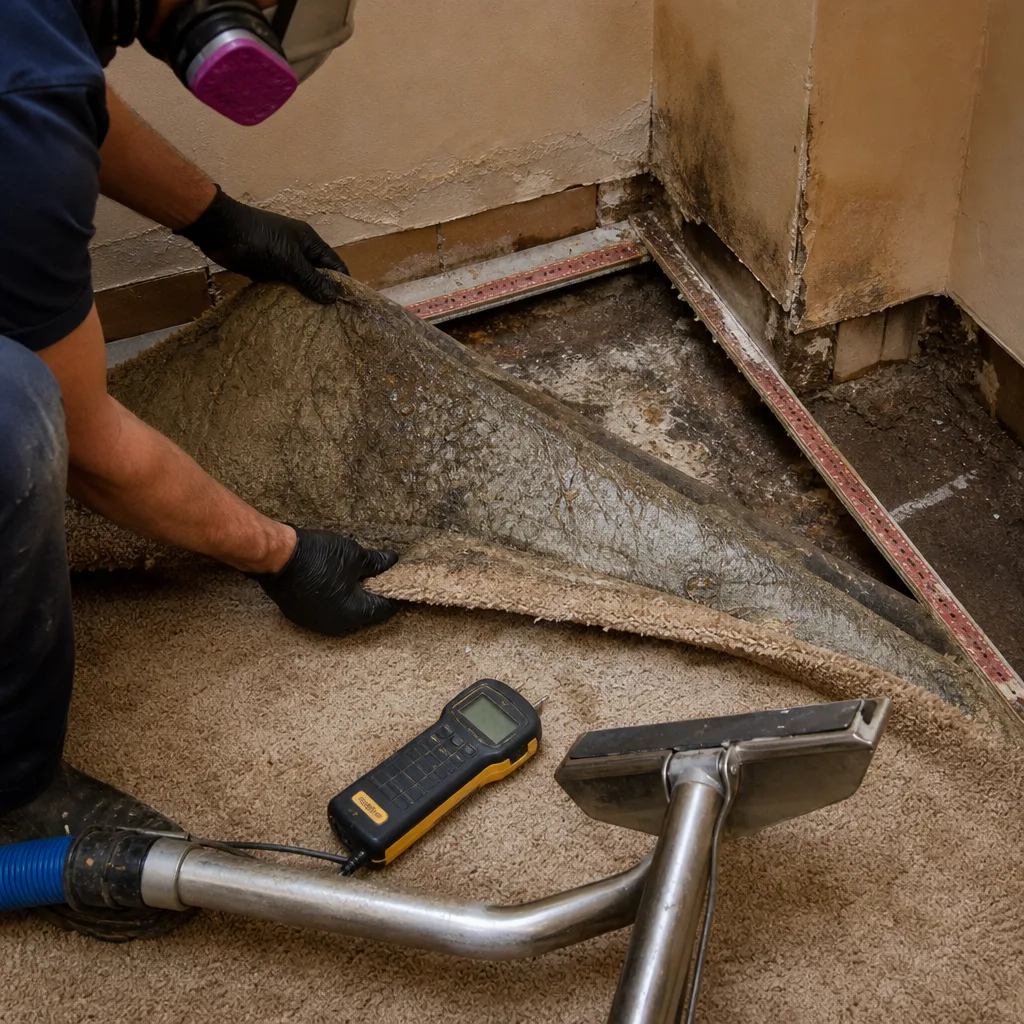
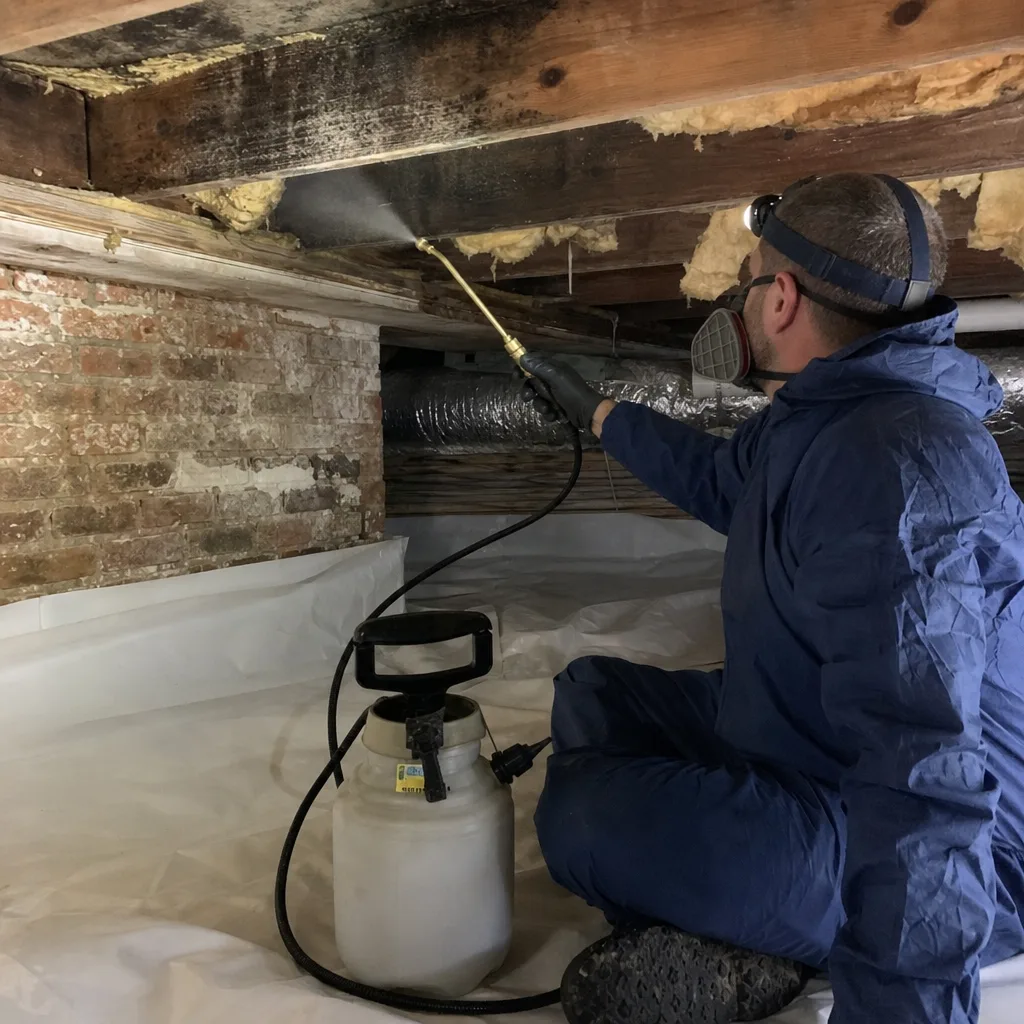
Where moisture wicks upward through block or stone foundations, we remove baseboards, treat the cavity, and document the treatment with photographs. This step is what prevents the follow-up mold call weeks after a Verplanck surge event.
Repairs & Restoration
Once drying verifies below the established moisture threshold, we replace what the water destroyed: drywall, insulation, flooring, trim, and, where needed, structural members. The rebuild is handled by the same Floodline crew, under the same 90-Day Done Right Promise, with no handoff and no second company showing up at your door.
Need Emergency Water Damage Restoration in Verplanck Now?
Crews minutes away, answering live 24 hours a day. The sooner we start, the less it costs.
Working With Your Insurance Company
Homeowners in Verplanck file water damage claims under policies that vary widely. Flood insurance through the NFIP covers tidal and storm surge intrusion in most cases, while a burst pipe is typically a standard homeowners claim. What matters is documentation from the first hour. We photograph every affected room before extraction begins, record moisture readings at each visit, and build a line-item scope that follows IICRC billing standards. Your adjuster receives the entire packet directly from us, not pieced together by you at the kitchen table.
What We Provide Your Insurer
- Thorough documentation of the loss
- Photos of all damage, room by room
- Moisture readings and drying logs
- A detailed, line-item scope of work
- Direct coordination with your carrier
Built for Verplanck’s Loss Calendar
Verplanck’s water damage season does not follow a single arc. January and February bring deep freezes that split aging supply lines in the hamlet’s older homes, sending clean water through first-floor ceilings and into basements while homeowners are at work. March and April thaw the ground, and the elevated water table along the Hudson pushes groundwater against unsealed foundations, producing steady seepage through cracks opened by winter’s freeze. Summer thunderstorms drop sudden volume that overwhelms aging storm drains near the waterfront, flooding low-lying garages and crawl spaces. Then come the nor’easters and hurricane remnants in late summer and fall, when tidal surge is the defining threat. A 1940s riverfront home on Broadway that survived a January pipe break can face a September surge with the same basement. That’s why we treat every Verplanck job as part of the hamlet’s recurring water calendar, not an isolated event.
Water Damage Restoration Across Verplanck’s Neighborhoods
Verplanck’s small geography creates distinct water-damage patterns block by block. Along Broadway, where many of the older riverfront homes sit within a few hundred feet of the Hudson’s edge, surge water arrives first and recedes last, leaving crawl spaces and slab edges saturated for days. These properties are our most frequent Category 3 calls, and they’re almost always pre-1960 construction with block foundations that wick moisture high into wall cavities. Riverview Avenue homes face the same tidal pressure but often sit on slightly higher grade, so the damage concentrates in basements rather than first floors. The blocks around 7th and 8th Streets are dense, modest frame homes built in the 1920s and 1930s, where close lot lines mean shared drainage issues and water from an uphill neighbor’s downspout becomes your foundation problem. Near the Verplanck Post Office and the Our Lady of Mount Carmel church, older homes on compact lots respond to heavy rain with sump pump overloads, the most common Category 2 water source in the hamlet outside of tidal events.
Specialized Water Damage Restoration Services We Offer in Verplanck
Emergency Water Extraction
Standing water in a Verplanck basement after a surge or pipe break needs to come out now, but extraction here has to account for tidal timing. Our crews monitor the water’s recession and stage extraction so we’re not pulling water that’s about to be replaced by the next surge cycle. Truck-mounted extractors remove the bulk; the detail work is what saves your framing.
Structural Drying & Dehumidification
Drying a home in Verplanck is different because the ambient humidity already sits high near the Hudson and the water table presses upward from below. We deploy professional-grade Dri-Eaz and Phoenix dehumidifiers with XPOWER air movers in configurations sized to the square footage and the moisture load, not a one-size-fits-all setup. Daily readings log progress until every affected surface reaches the dry standard.
Flood Cleanup
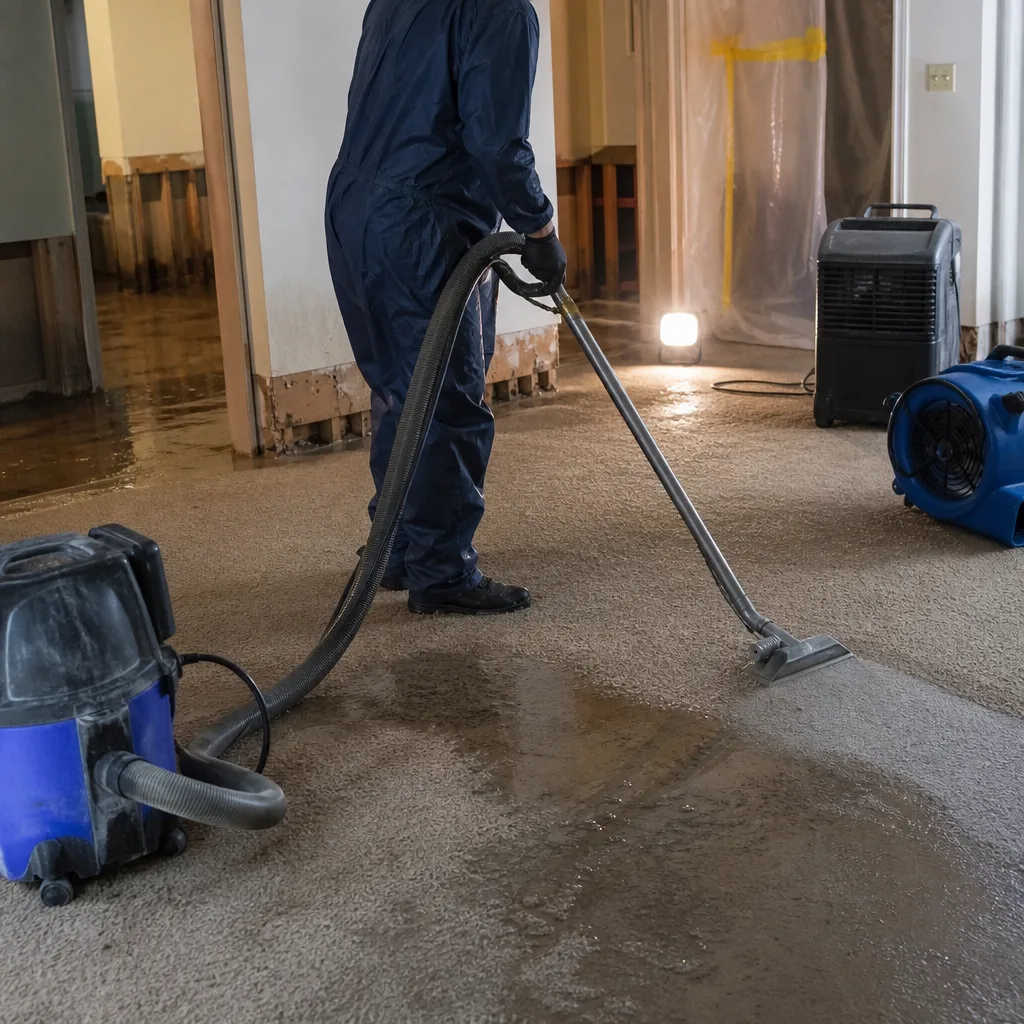
Floodwater in Verplanck is never just water. Tidal surge brings Hudson River silt, organic material, and often sewage contaminated by compromised lines. We handle the full cleanup: contaminated material removal, surface sanitization, antimicrobial application, and disposal under local environmental guidelines. The work is documented photographically for your carrier.
Burst Pipe Restoration
A January freeze in a 1930s Verplanck home with original galvanized plumbing can dump hundreds of gallons before you notice. We extract, dry, and restore the affected areas, then coordinate with our reconstruction team to replace the failed supply line and any damaged finishes. You get one company for the entire repair, from wet walls to finished drywall.
Basement Water Removal
Basements in Verplanck’s older housing stock are rarely modern. Block walls, low ceilings, sometimes dirt floors in the oldest homes: all of it changes how we remove water and dry the space. We bring submersible pumps for standing water, then follow with air movement and dehumidification calibrated to the room’s actual cubic air volume.
What happens when you call
- 1
A real person answersNo phone trees - you reach a local pro.
- 2
You get an upfront price rangeHonest numbers before anyone is dispatched.
- 3
A background-checked tech heads outLicensed & insured, dispatched right away.
- 4
You approve before work beginsNothing starts until you say go.
Water Damage Restoration Costs in Verplanck, NY
A typical Category 1 water damage restoration in Verplanck runs $3,200 to $6,500 for a contained pipe break affecting one or two rooms. Category 2 events, like washing machine overflows or sump pump failures, range from $4,800 to $9,000 depending on how far water traveled through finished space. Category 3 tidal floods are the most variable: a riverfront home with a saturated crawl space, wetted wall cavities, and contaminated materials typically lands between $7,500 and $15,000, with full rebuilds running higher. What moves the price in Verplanck specifically is the age of the home. Pre-1960 framing, unsealed block foundations, and original hardwood floors all add drying time and restoration complexity that newer construction doesn’t. Insurance coverage changes the out-of-pocket picture significantly, which is why we provide the free visual inspection and a written scope before any chargeable work begins. Call (917) 924-4221 and we’ll give you a fair number, in writing, without sales pressure.
We Also Serve Cities Near Verplanck
Floodline Restoration Co. of Manhattan serves Verplanck and the surrounding river towns and villages, including Montrose, Buchanan, Stony Point, and Peekskill. Our crews know the Hudson’s behavior along this stretch of Westchester and Rockland, and we answer live around the clock for all of them. If your home sits near the water, the same 45-minute response commitment applies.
Serving Verplanck, NY - Our Local Coverage Area
We’re based in the Verplanck area and know this community well. Use the map below to see our service coverage - if you’re nearby, we can almost certainly help.
Verplanck Water Damage Restoration Questions, Answered
How is water damage restoration different in Verplanck compared to inland Westchester towns?
Verplanck restoration must account for tidal floodwater that recedes on a schedule set by the Hudson River, not by your sump pump. Inland towns see rain-driven water that drains away; Verplanck sees surge water that sits in crawl spaces and slab edges for days, requiring longer drying cycles and much more aggressive antimicrobial treatment.
After a storm surge, why does my Verplanck home look dry but still have hidden moisture problems?
Because groundwater recedes in stages. The street dries in two days; a crawl space under a riverfront home on Broadway can stay saturated for a week. Moisture wicks upward through unsealed block and stone foundations into wall cavities and subfloor assemblies that are invisible from the living room. Baseboards look fine. What’s behind them is the problem.
What does a Category 3 water event mean for a Verplanck riverfront home after a storm surge?
Category 3 means the water carried contaminants: Hudson River sediment, likely sewage, and whatever the surge picked up along the bulkheads. Everything the water touched must be treated as a biohazard. Porous materials like insulation, drywall, carpet and pad are removed and disposed of. Structural framing is cleaned, dried, and treated with antimicrobials before anything is rebuilt.
How quickly should I call for water extraction after tidal floodwater enters my Verplanck basement?
Call immediately. Mold colonization begins within 24 to 48 hours on saturated organic materials, and in a tidal environment the moisture never drains quickly enough on its own. A call to (917) 924-4221 gets a crew dispatched with extraction equipment running the same visit, which shortens drying time and reduces overall restoration cost.
Do Verplanck homes built before 1960 need special handling after water damage?
Yes. The hamlet’s 1920s through 1950s housing stock uses older framing, original hardwood, and block or stone foundations without modern waterproofing. These materials hold water longer and respond to freezing cycles with new cracking. Restoration on these homes requires longer drying schedules, more careful moisture mapping, and special attention to foundation mortar joints.
How fast can a crew actually reach my home in Verplanck?
Within 45 minutes in most cases. Our dispatch center coordinates from the New York City office, and crews serving Verplanck locally are staged throughout the river towns. When you call with an active water emergency, we don’t schedule you for a window. We dispatch immediately.
Will my insurance cover tidal flood damage in Verplanck?
Standard homeowners policies typically do not cover tidal surge, which is why flood insurance through the NFIP exists. If you carry flood coverage, your policy should respond to a Hudson River surge event. Burst pipes and other interior water sources are usually covered by standard homeowners policies. We document everything from the first hour and coordinate directly with your carrier regardless of the policy type.
What should I do in the first 30 minutes after water enters my Verplanck home?
Call (917) 924-4221 first. Then shut off the main breaker if water is near outlets or the panel. Don’t enter standing water if electrical systems are submerged. Don’t try to extract large volumes yourself with a shop vac; you’ll spend hours moving a fraction of what a truck-mounted extractor pulls in minutes. Stay out, make the call, and let the crew handle the extraction, drying, and documentation.
Written by Curt Bowman, Owner at Floodline Restoration Co. of Manhattan, serving Verplanck with full-cycle water damage restoration, structural drying, and rebuild services since 2010.
If water has found its way into your Verplanck home, don’t wait for the street to dry. Call (917) 924-4221 for a free estimate and a certified crew that answers live, day or night. Done right, and backed in writing.