
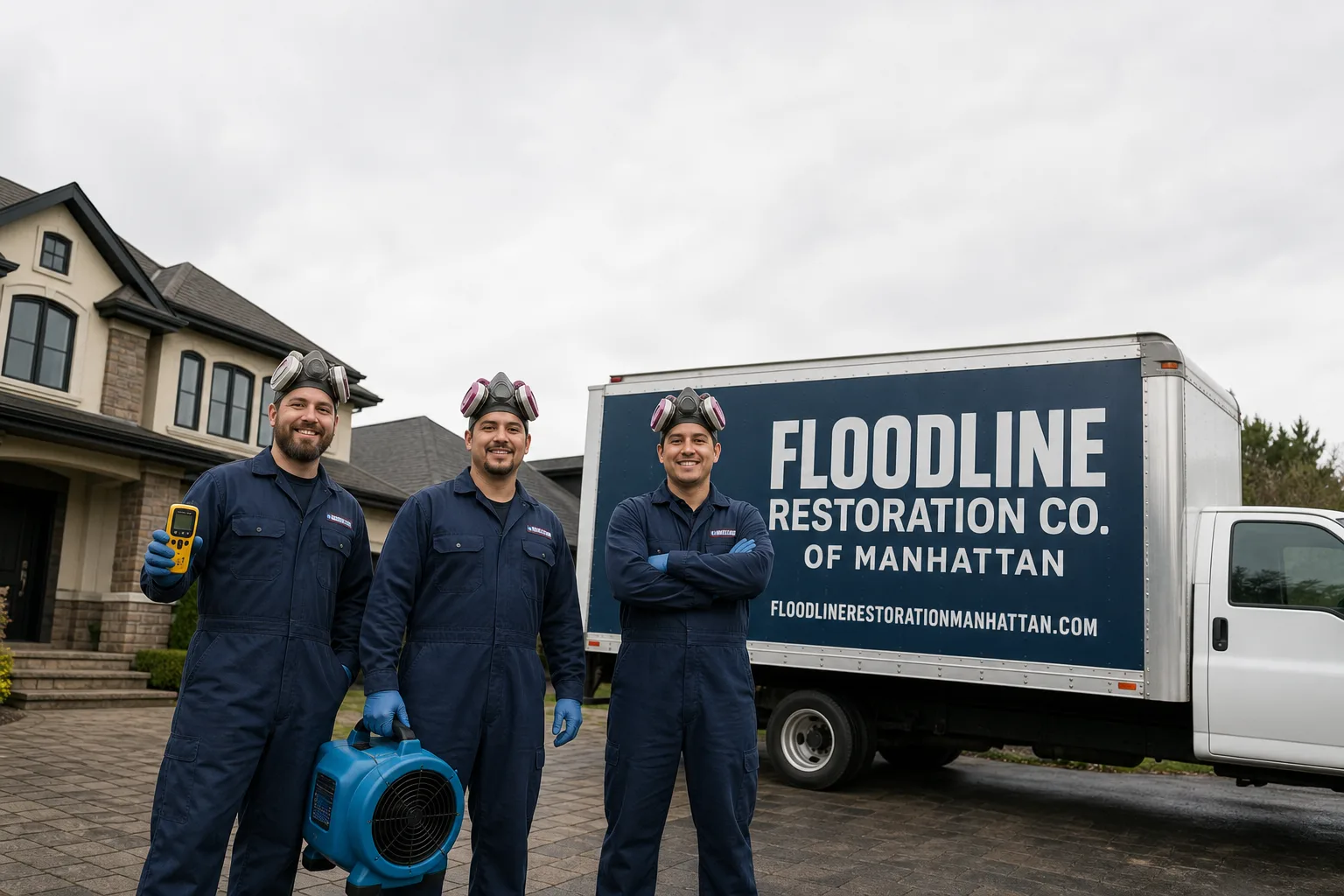
Free visual inspection and a written scope of work before any mitigation begins - photos, moisture readings, and drying logs go in your claim file
The scope we write is the scope we bill. Anything new gets shown to you, in writing, before we touch it.
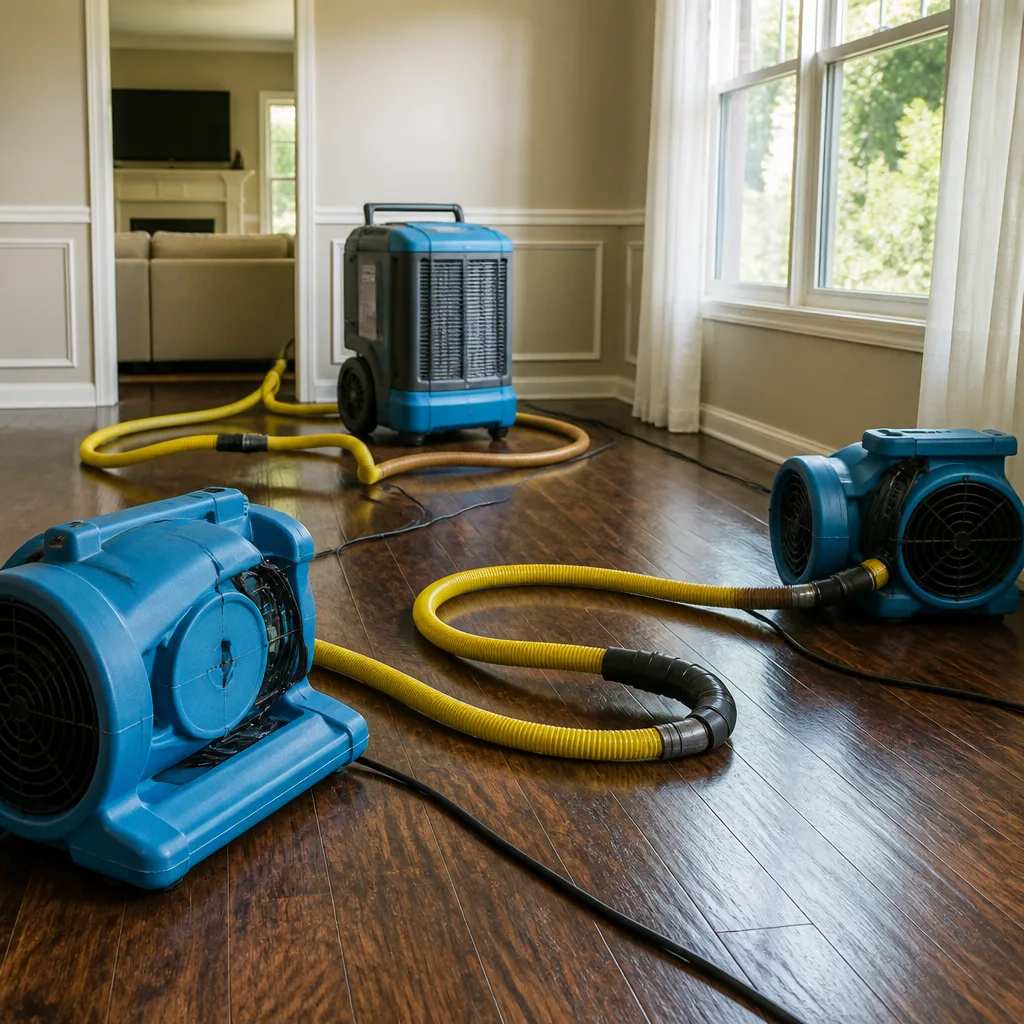
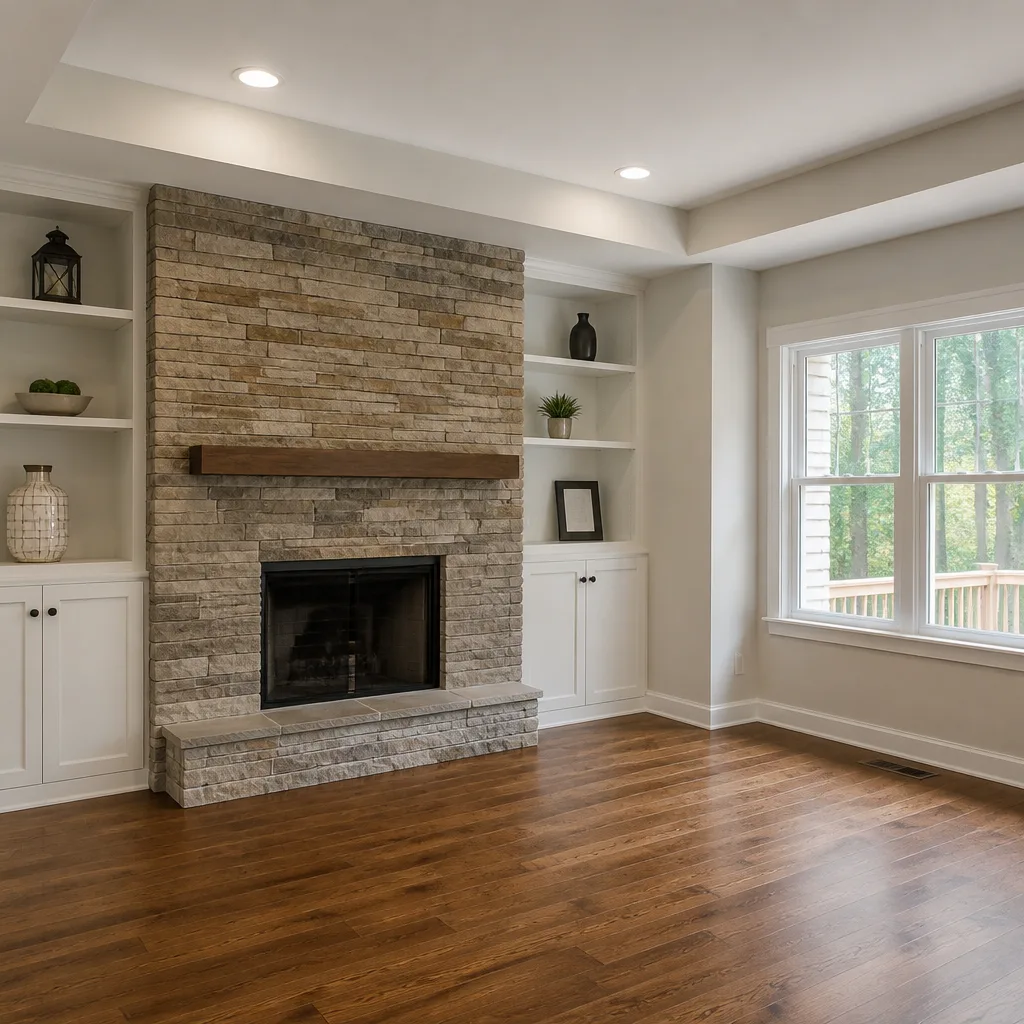
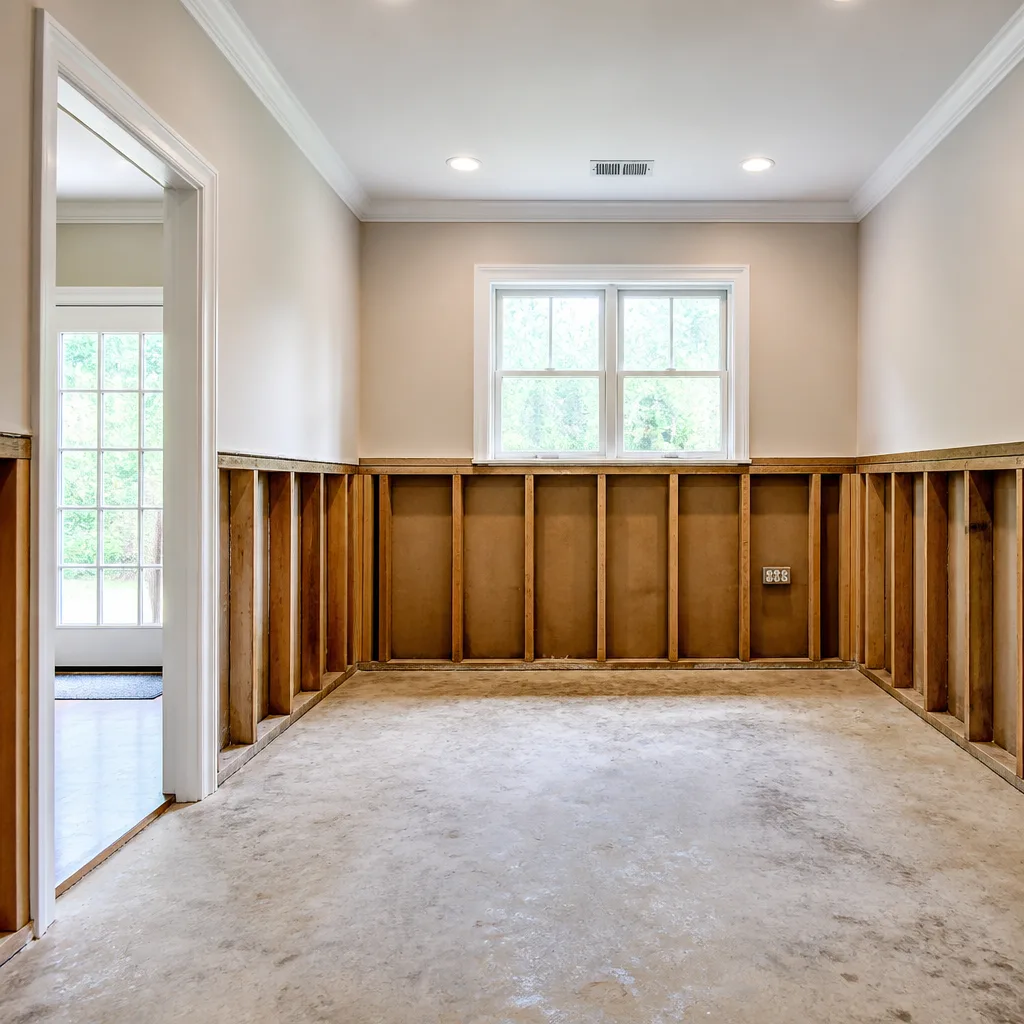
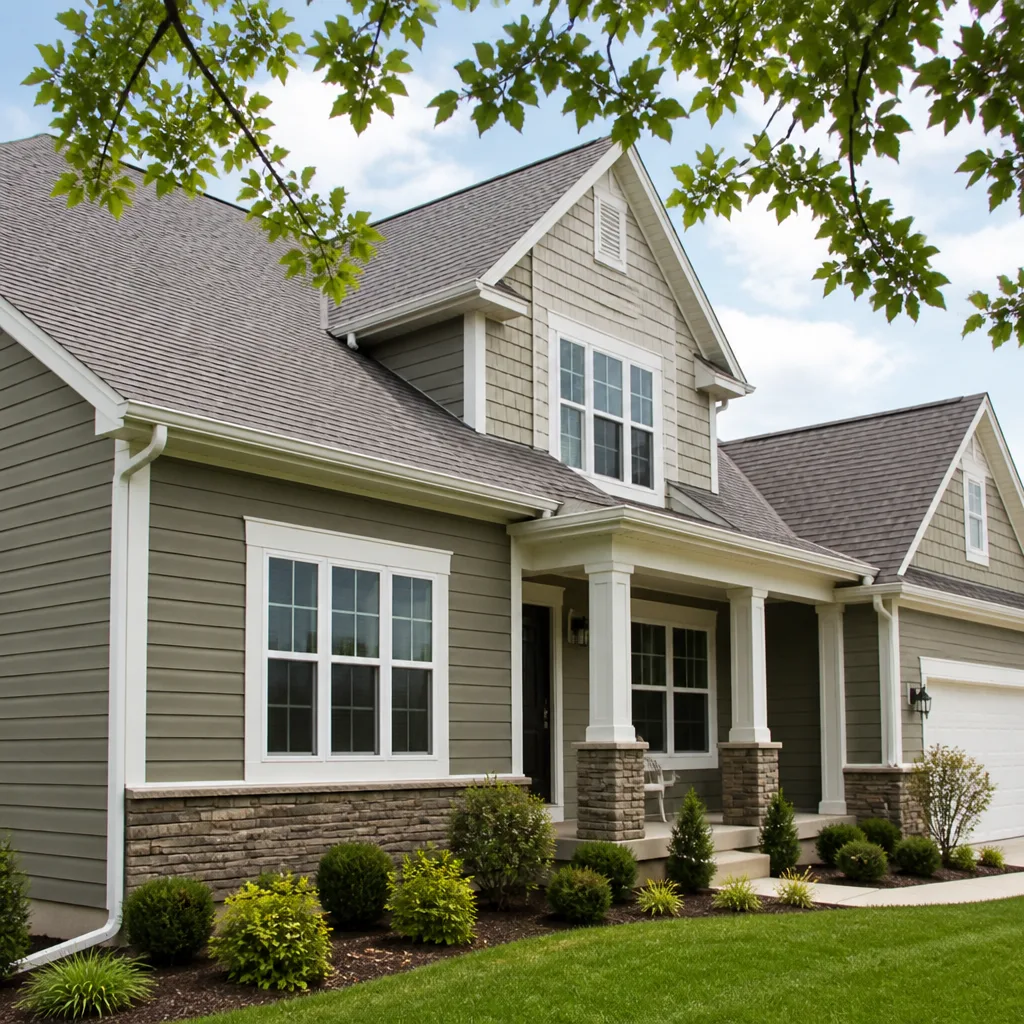
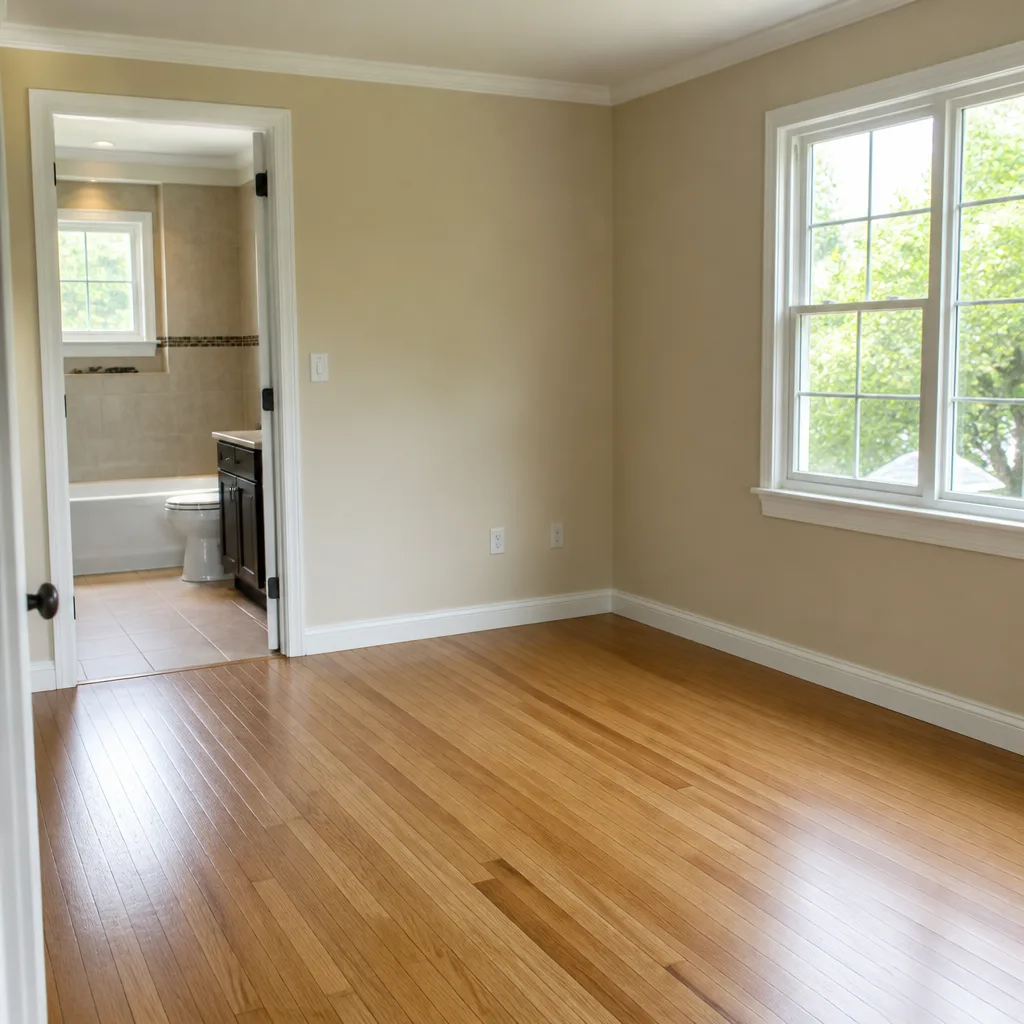
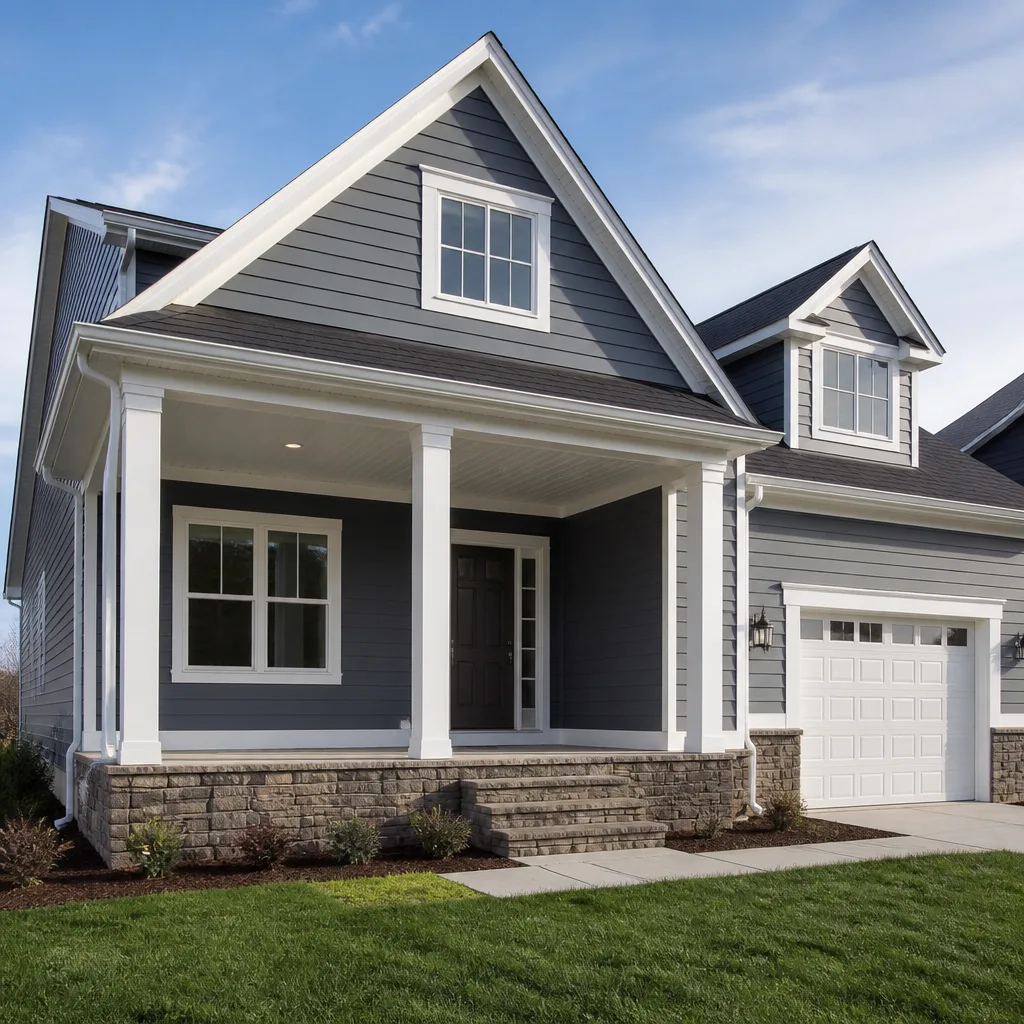
 Before
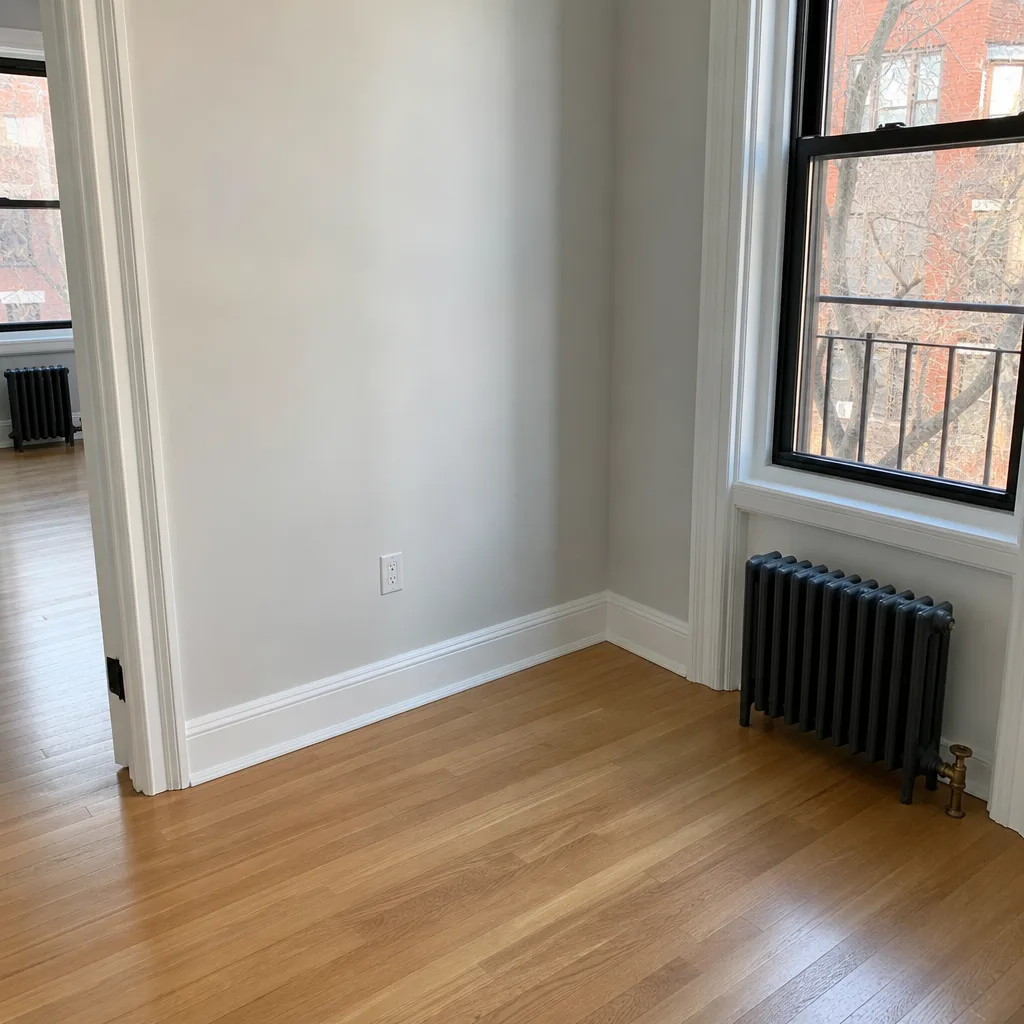 After
After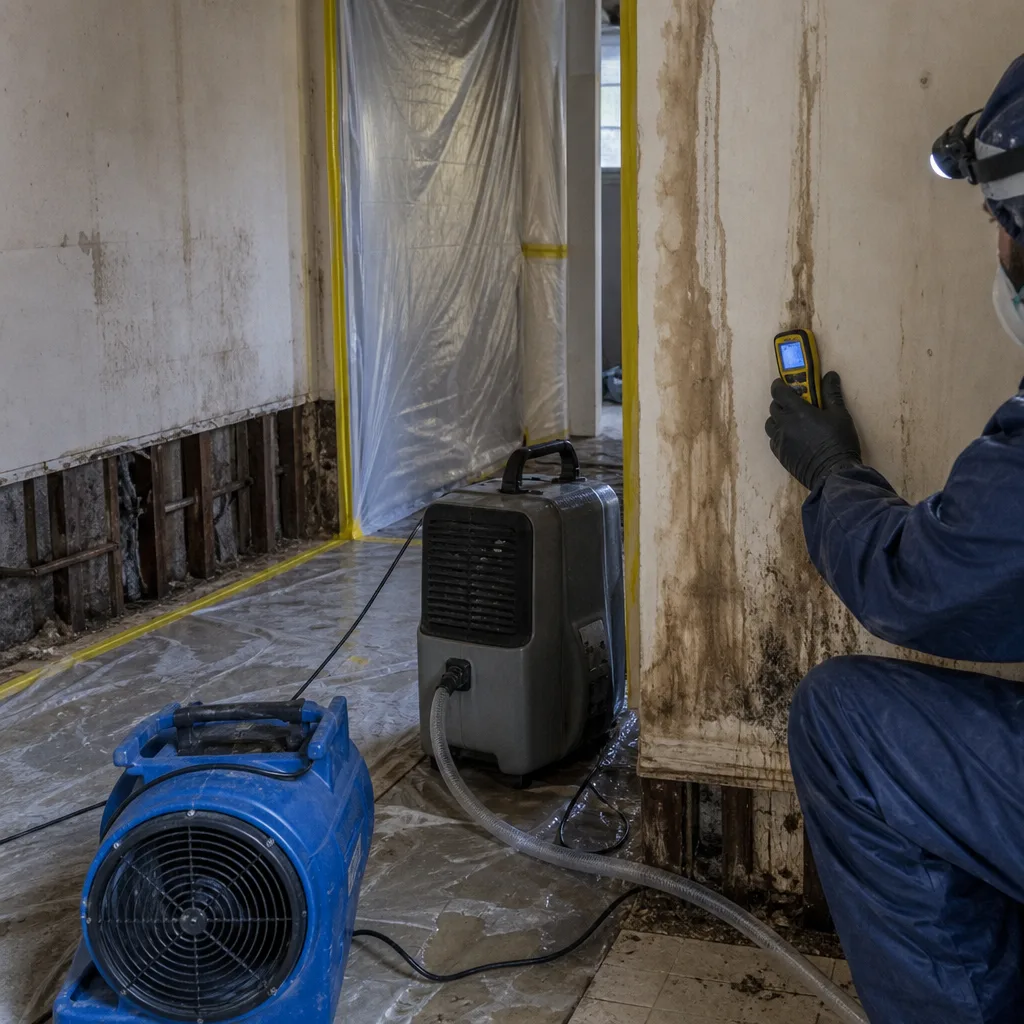 Before
 After
After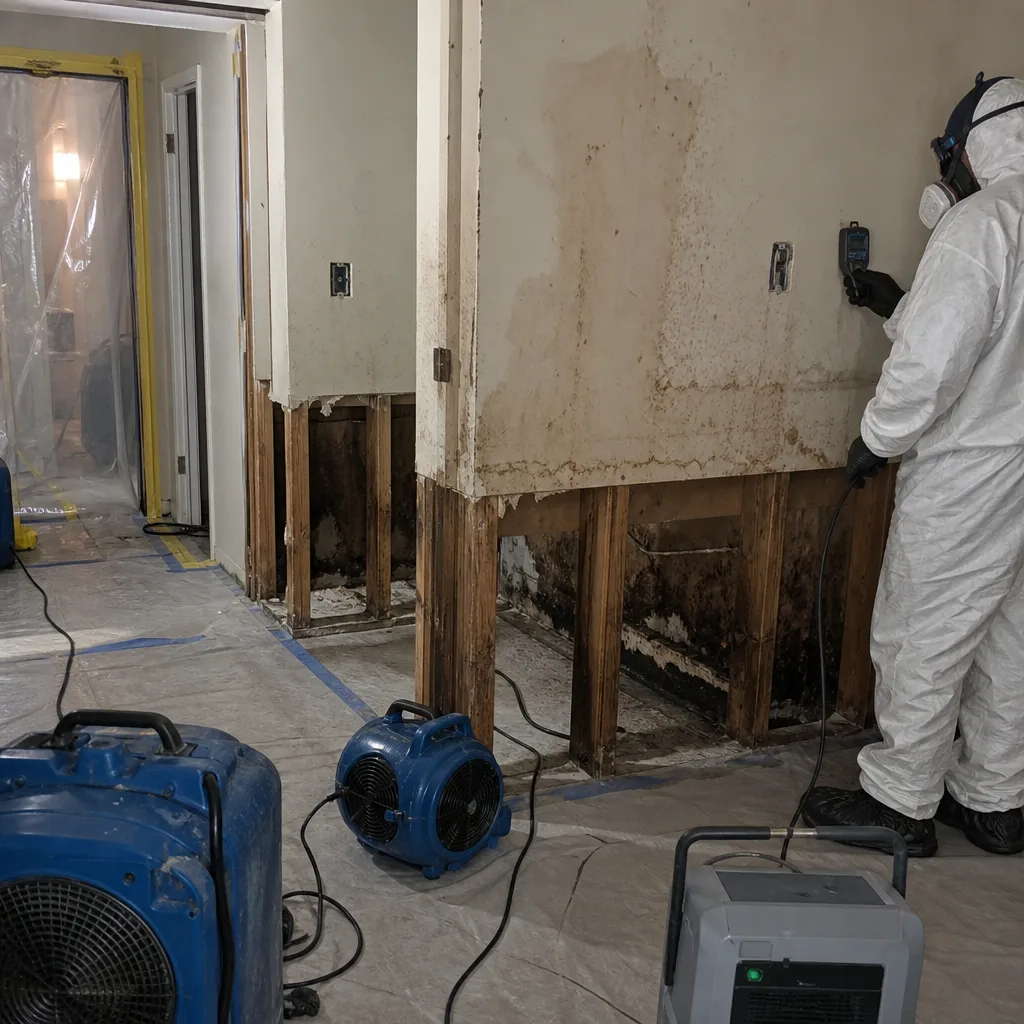 Before
 After
After24/7 Emergency Commercial Restoration in Bedford
Commercial restoration in Bedford runs on a clock that starts the moment water touches plaster, soot settles into timber, or a downed beech opens a roof to the weather. Our crews answer live around the clock and dispatch into Bedford within 45 minutes, because the first hour decides whether a Category 1 pipe break stays a drying job or becomes a Category 3 mold and demolition claim. Call (917) 924-4221 any hour and a real person picks up, not a recording. We send a certified crew, not a salesperson with a clipboard. The visual inspection is free, and we start extraction the same visit whenever it’s safe to do so.
Understanding Commercial Restoration Severity in Bedford Properties
Bedford’s commercial buildings are not standard drywall-and-steel boxes. Many operate out of 18th- and 19th-century stone manor houses, converted carriage barns, and timber-frame farmhouses with horsehair plaster, fieldstone foundations, and wide-plank floors that predate modern building codes by a century or more. That changes what severity means. Water entering a fieldstone basement in a Mount Kisco office park might dry to standard with air movers and a dehumidifier. The same intrusion in a Bedford converted barn saturates foundation mortar that holds moisture for weeks, feeds mold in the lime-based plaster above, and wicks into old-growth timber that will twist if dried too fast or too slow. Fire damage behaves differently too: smoke migrates through plaster lath channels and behind wainscoting in ways that open-plan sheetrock construction never does. We classify every loss by IICRC standards, map moisture with thermal imaging and hygrometers, and write drying plans around the actual assembly, not a default chart. That’s the difference between restoration and a costly redo under historic district review.
Why Bedford Property Owners Choose Floodline Restoration Co. of Manhattan
- 45-minute response commitment: When water is spreading or smoke is still moving, speed is mitigation. We dispatch immediately and tell you who is coming and when.
- 24/7 live answer, never an automated system: A dispatcher picks up at 2 a.m. and talks to you like a person, because that’s what you need at 2 a.m.
- IICRC-certified crews: Our technicians hold WRT, FSRT, and AMRT certifications and work in uniform, background-checked, and trained to RIA and IFA standards.
- Free visual inspection: Before any work is authorized, you get eyes on the damage and a straight explanation of what we found.
- Direct insurance billing: We document from the first hour, bill your carrier directly, and handle adjuster communication so you don’t play messenger.
- One team from extraction to reconstruction: The crew that reads the moisture map on day one handles daily readings and rebuilds what needs rebuilding. No mid-job handoff.
Our Commercial Restoration Process
Inspection & Assessment
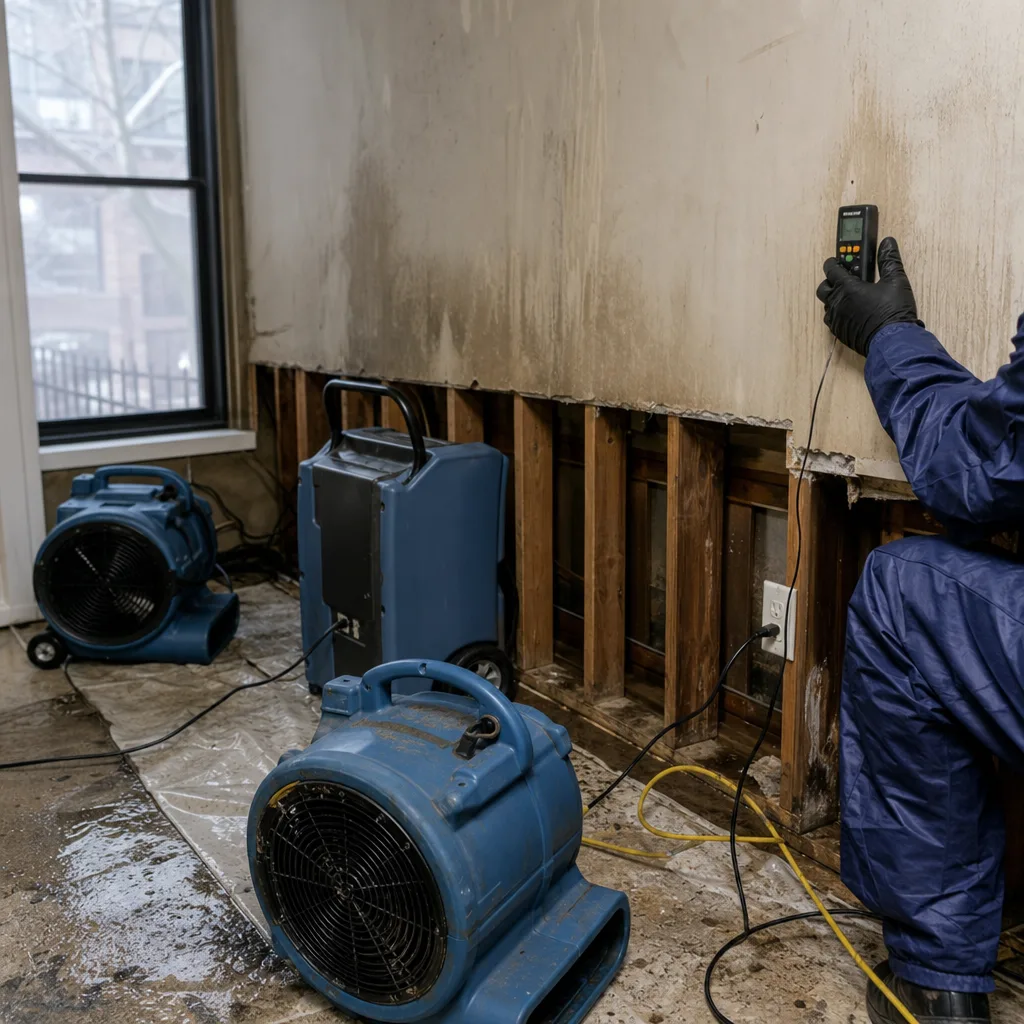
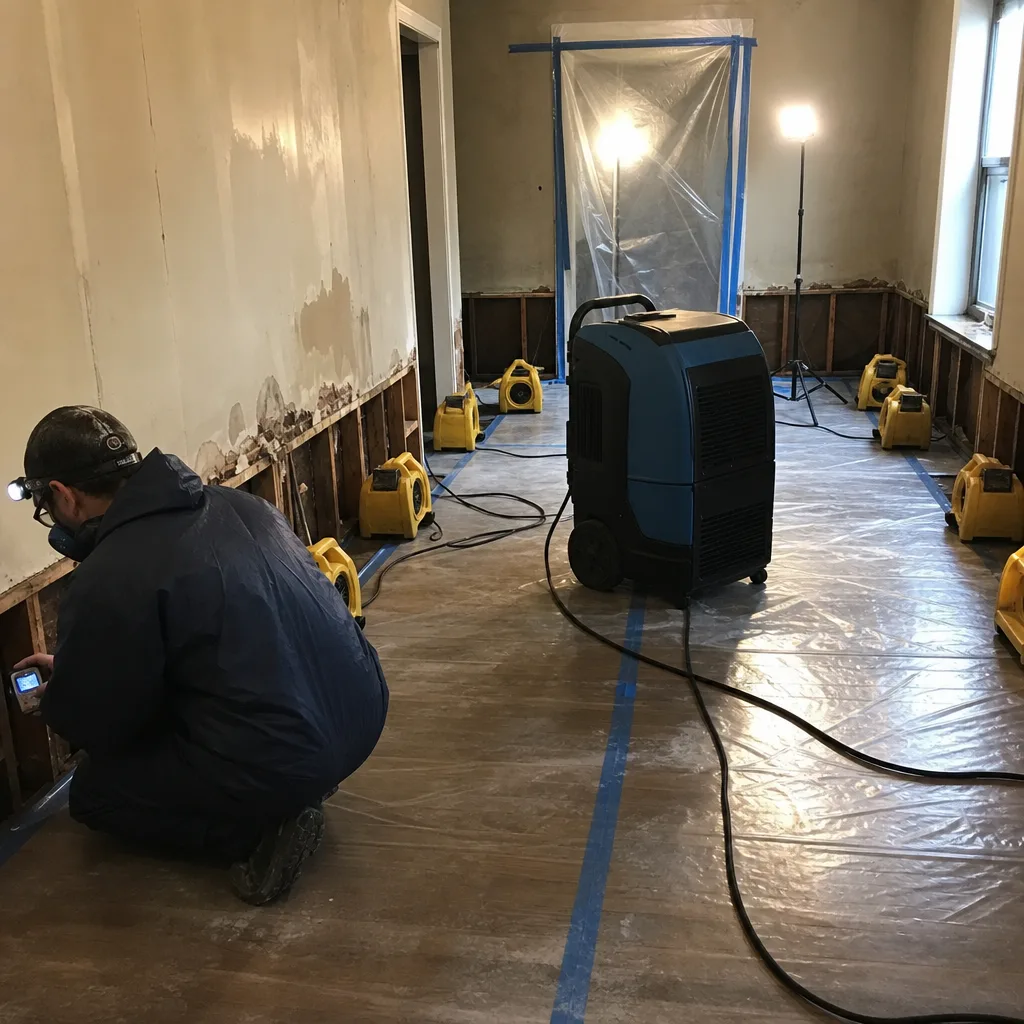
We arrive, walk the property with you, and assess the damage. Thermal imaging finds water behind plaster and under floors that the eye misses. We classify the water category, test for moisture in fieldstone and timber, and give you a written scope before any work begins.
Extraction & Stabilization
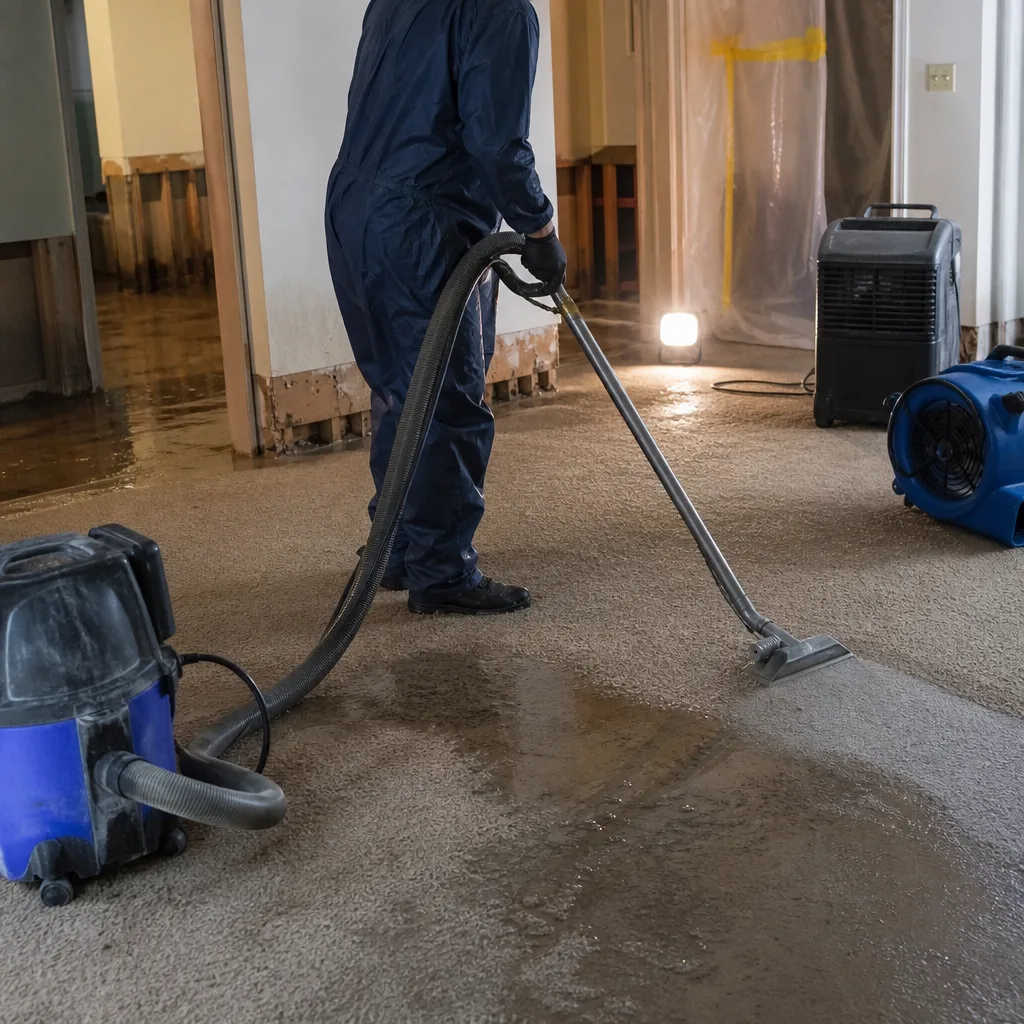
Standing water comes out with truck-mounted extraction, and we stabilize what’s at risk: tarping a breached slate roof, shoring a sagging beam, or isolating a smoke-damaged wing with containment. On estate properties, stabilization often includes coordinating tree removal permits with the town before full work can proceed.
Drying & Dehumidification
We run professional-grade Dri-Eaz, Phoenix, XPOWER, and B-Air equipment, placing air movers and dehumidifiers on a calculated layout, not a guess. On historic floors we use Injectidry drying mats that pull moisture through wide planks without cupping them. Daily readings are logged until the dry standard is met.
Cleaning & Sanitization
Category 2 and 3 water require antimicrobial treatment and controlled demolition of saturated materials. We remove what cannot be saved, contain the work area with HEPA filtration, and treat what remains. Document recovery often runs parallel: paper records, inventory, and electronics get triaged for freeze-drying or restoration.
Preservation-Sensitive Treatment
Historic assemblies need a different hand. Horsehair plaster that can be saved gets dried in place with controlled humidity. Fieldstone mortar that has cracked from freeze-thaw gets repointed with compatible lime-based materials. We coordinate with Bedford’s building department and, where required, the Historic Preservation Commission before touching character-defining features.
Repairs & Restoration
The same crew that extracted and dried now rebuilds. Wide-plank floors, timber framing, plaster repair, roof restoration, and interior finishes are scoped in writing and done to match the original assembly. The job isn’t closed until you hold the moisture log and the 90-Day Done Right Promise in your hands.
Need Emergency Commercial Restoration in Bedford Now?
Crews minutes away, answering live 24 hours a day. The sooner we start, the less it costs.
Working With Your Insurance Company
Insurance claims on Bedford commercial properties get complicated when the building is historic. Replacement-cost language in a standard policy often fails to account for the actual cost of restoring horsehair plaster, old-growth timber, or slate roofing matched to the original. That’s why our documentation starts in the first hour and never stops. We photograph every room before and after demolition, log daily moisture readings, and write a line-item scope that speaks the language adjusters understand. Our team communicates directly with your carrier, provides industry-standard estimates, and pushes back when a settlement doesn’t reflect what the restoration actually costs. You never play messenger. We’ve handled claims on converted barns, estate outbuildings, and mixed-use properties where the policy wasn’t written with a 19th-century assembly in mind, and we know how to make the documentation carry the argument.
What We Provide Your Insurer
- Thorough documentation of the loss
- Photos of all damage, room by room
- Moisture readings and drying logs
- A detailed, line-item scope of work
- Direct coordination with your carrier
Built for Bedford’s Loss Calendar
Bedford’s damage season runs longer and hits differently than in towns closer to Long Island Sound. The town sits at higher elevations in northern Westchester, which means colder winters and more ice. January deep freezes burst supply lines in estate buildings where original plumbing runs through unheated stone walls. February ice storms load slate and cedar shake roofs, forming ice dams that back water under the eaves and into plaster ceilings. Spring brings thaw-soaked ground and the freeze-thaw cycle that has cracked fieldstone foundation mortar for two centuries, letting groundwater seep into basements and crawlspaces all through March and April. Summer thunderstorms can drop two inches in an hour, overwhelming the drainage on older estate lots and sending surface water into carriage barns and below-grade offices. Fall Nor’easters are the wildcard: saturated ground plus high wind topples specimen oaks and maples protected by Bedford’s Tree Preservation Law, crushing outbuildings or tearing open roofs, and then the permit process begins before full access can be restored. We schedule our crews around this calendar because we’ve worked it for years.
Commercial Restoration Across Bedford’s Neighborhoods
Bedford spreads across distinct pockets, and each brings its own restoration patterns. The area around Guard Hill Road holds converted carriage barns and older estate outbuildings now used as offices and studios; water intrusion there often comes from fieldstone foundations and original roofing. Along Route 22, commercial buildings closer to the road grade respond faster but still sit among mature trees that predate the structures. Bedford Village proper, around the historic green and the 1681 court house, is the tightest regulatory environment: any restoration touching a historic facade, roof, or interior feature can trigger review by the Historic Preservation Commission, and we’ve learned to build that timeline into the scope. Properties near the Mianus River corridor and down toward Katonah see groundwater pressure in wet springs that buildings on higher ground never experience. We know the roads, the building types, and the likely failure points in each area before we arrive, which turns a first visit into a working visit.
Specialized Commercial Restoration Services We Offer in Bedford
Office & Retail Restoration
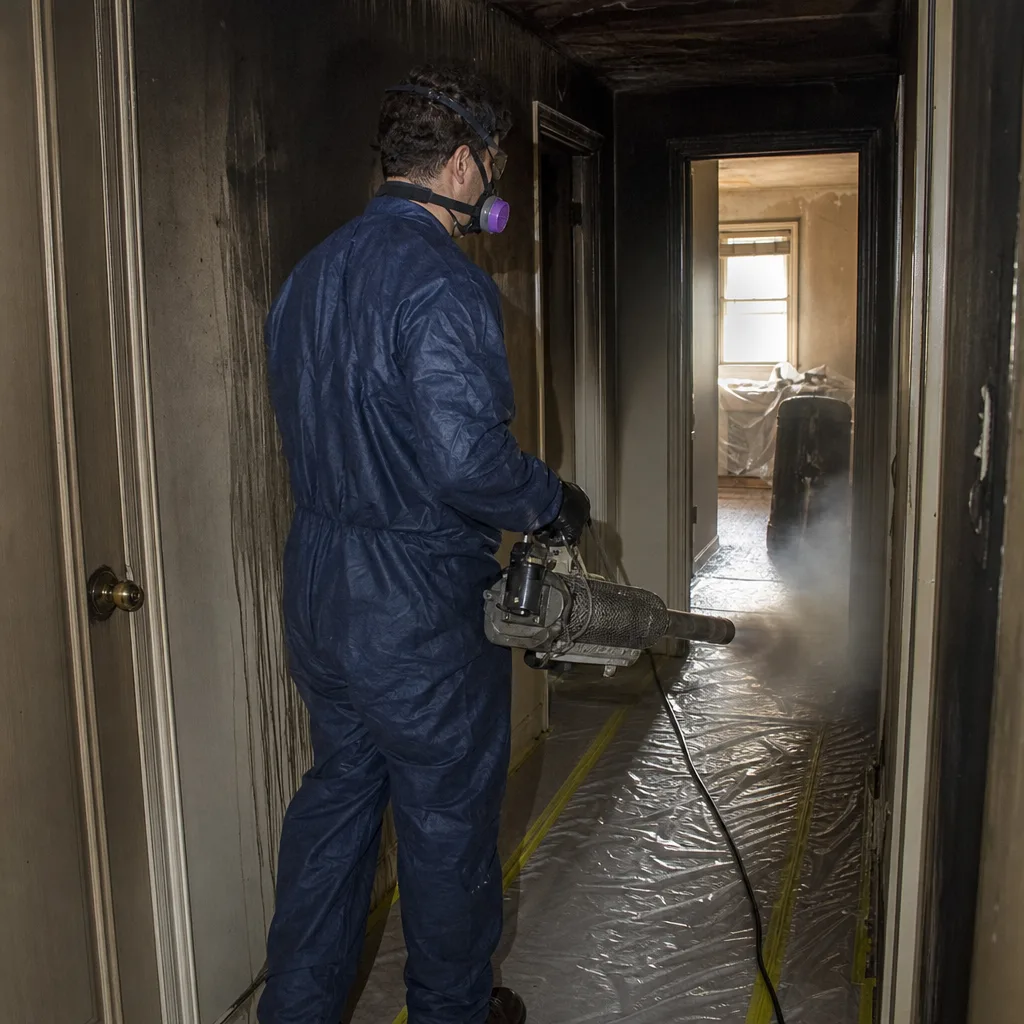
Offices in converted barns and historic houses need restoration that doesn’t strip character while it fixes function. We dry in place where possible, treat plaster rather than demo it, and get businesses back into compliant, usable space without losing the original features that made the property worth occupying in the first place.
Multi-Unit & HOA Restoration
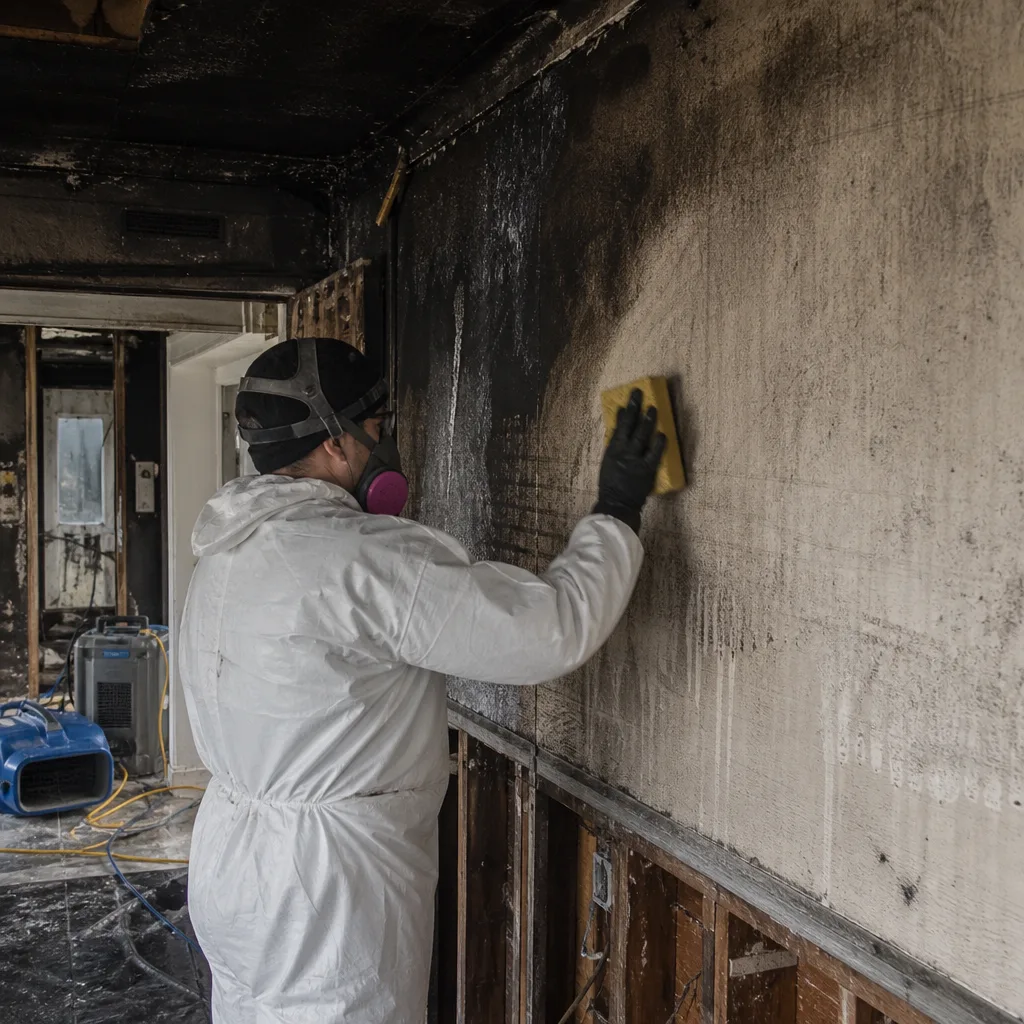
HOA properties in Bedford often mix original structures with later additions. Water in one unit migrates through shared timber framing and plaster lath into adjacent spaces. We scope the whole assembly, not just the visible unit, and coordinate with property managers so notification, access, and restoration schedules stay aligned.
Industrial Facility Cleanup
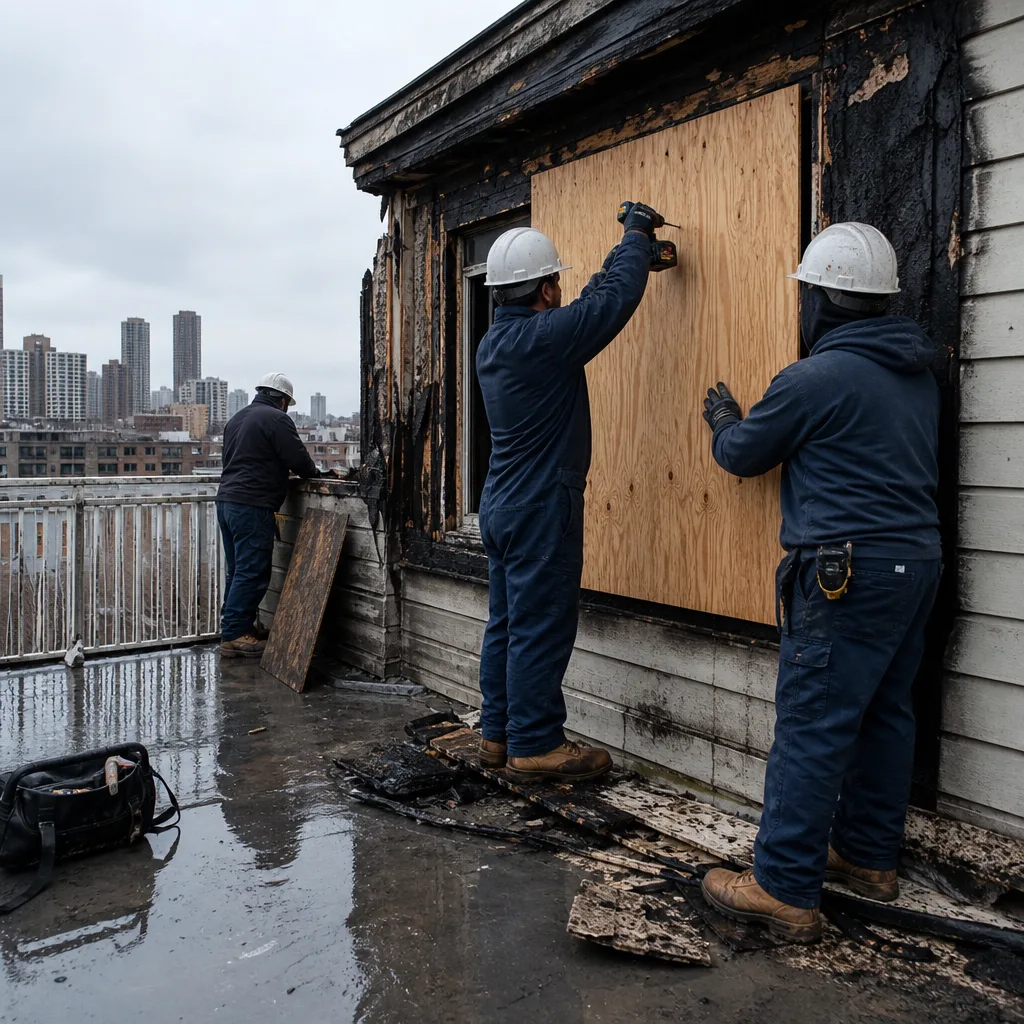
Larger facilities in and around Bedford, including equipment barns and light industrial spaces, need rapid extraction and aggressive drying, often while operations continue in adjacent areas. We build containment, manage air quality, and work in phases that keep critical functions running.
Large-Loss Response
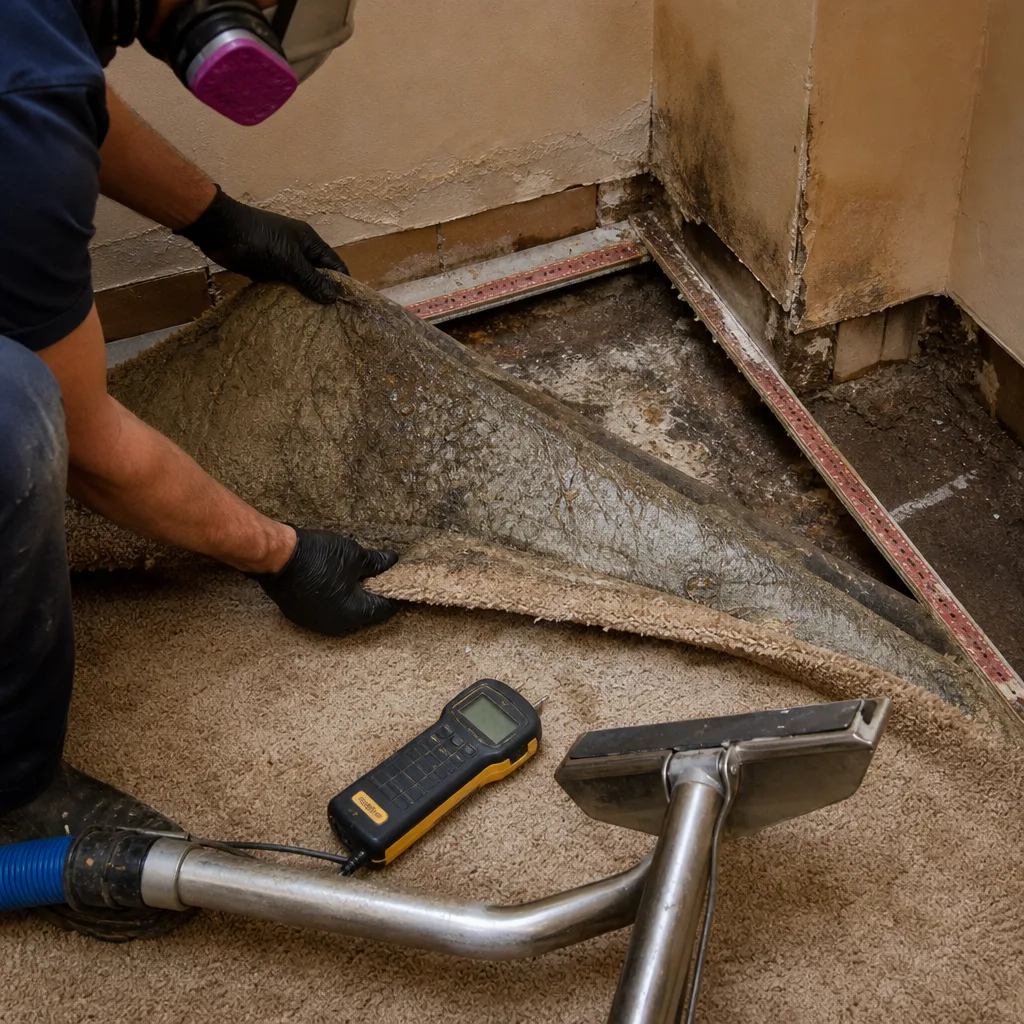
When a Nor’easter opens a roof over a 5,000-square-foot converted barn or a burst line floods a multi-building estate, the response has to scale. We bring multiple crews, industrial dehumidifiers, and a project manager who stays on site until the building is stabilized and drying. This is the work where our Commercial Restoration team’s full-cycle model matters most: one company, one scope, one accountable name.
Business Interruption Minimization
Every day a Bedford office is closed costs real money. We prioritize getting occupied spaces dry, stabilized, and safe first, then work outward. Photo documentation and daily logs give your insurer what they need to process a business interruption claim without delay.
Document & Inventory Recovery
Paper records, archival materials, and inventory stored in historic buildings are often the hardest loss to replace. We triage water-damaged documents for freeze-drying or restoration, inventory what’s salvaged versus lost, and document everything for the claim. For law offices, medical practices, or estate archives, this can be the difference between a disruption and a permanent loss.
What happens when you call
- 1
A real person answersNo phone trees - you reach a local pro.
- 2
You get an upfront price rangeHonest numbers before anyone is dispatched.
- 3
A background-checked tech heads outLicensed & insured, dispatched right away.
- 4
You approve before work beginsNothing starts until you say go.
Commercial Restoration Costs in Bedford, NY
Commercial restoration costs in Bedford run higher than neighboring towns for a reason: the buildings demand preservation-sensitive methods and materials that a standard dry-out never touches. Water extraction from a flooded office in a converted barn typically runs $4-$8 per square foot. Structural drying adds $3-$6 per square foot, more when Injectidry mats are needed on wide-plank floors. Category 3 water from a sewer line or long-standing intrusion pushes costs to $12-$25 per square foot because controlled demolition, antimicrobial treatment, and containment are non-negotiable. Fire restoration in a historic structure ranges widely: $8-$20 per square foot for soot and smoke remediation, with plaster repair and timber treatment adding $15-$40 per square foot when character-defining features require restoration rather than replacement. Large-loss responses on multi-building estates can exceed $100,000 when tree removal permits, structural stabilization, and phased drying are all in play. Most policies cover the work when documentation is airtight from hour one. Call (917) 924-4221 for a free visual inspection and a written scope before any money changes hands.
We Also Serve Cities Near Bedford
Our crews cover Bedford and the surrounding towns, including Bedford Hills, Mount Kisco, Armonk, and Katonah. Response times vary by distance, but the same certified teams, the same equipment, and the same written guarantee apply anywhere we work.
Serving Bedford, NY - Our Local Coverage Area
We’re based in the Bedford area and know this community well. Use the map below to see our service coverage - if you’re nearby, we can almost certainly help.
Bedford Commercial Restoration Questions, Answered
How does Bedford’s Tree Preservation Law affect commercial restoration after storm damage?
Bedford’s Tree Preservation Law requires a permit to remove any protected specimen tree, even one that has already fallen onto your building. That means after a Nor’easter puts a maple or oak through your roof, we can stabilize and tarp immediately, but full debris removal and structural repair may wait on town arborist review. We’ve handled this before and build the permit timeline into the scope so your insurer understands the delay isn’t ours.
Can you restore water-damaged horsehair plaster walls in our historic commercial building?
Yes, and we do it often. Horsehair plaster can often be dried in place with controlled dehumidification rather than demolished, which matters because Bedford’s historic district guidelines often prohibit replacing original plaster with gypsum board. We moisture-map the wall, monitor daily readings, and treat the lath and plaster as an assembly, not a tear-out.
What if our commercial space has Category 3 water from a broken sewer line?
Category 3 water is grossly contaminated and requires controlled demolition of saturated porous materials, antimicrobial treatment, and full containment during removal. In a fieldstone basement or historic timber frame, we remove what can’t be saved, treat what remains, and document everything for your carrier. This is not a mop-and-dry situation; call (917) 924-4221 immediately.
How soon can you get our office back open after a burst pipe in a converted barn?
Most single-visit water losses in Bedford are stabilized within 24 hours: extraction the first day, drying equipment placed and running, and a drying plan in your hands. Full reopening depends on the assembly, but offices in newer additions can often stay partially occupied during drying. Historic wings take longer because the materials demand slower, controlled drying. We’ll give you a realistic date, not a hopeful one.
Do you handle large-loss restoration for multi-building estate properties with mixed commercial and residential use?
Yes. We run multi-crew responses on estate properties where a converted barn office, a residential wing, and an outbuilding are all affected by the same storm or pipe failure. One project manager, one moisture map, one documentation trail for the entire property, and direct billing to your carrier.
How much does commercial restoration cost in Bedford compared to Mount Kisco or Armonk?
Bedford runs 15-30% higher on average because the building stock is older and preservation requirements are stricter. A Category 2 water extraction in a Mount Kisco office park might run $4-$5 per square foot; the same loss in a Bedford converted barn with fieldstone and plaster runs $7-$10. The difference is the method, not the markup.
Are your crews certified for historic and commercial restoration work?
Technicians hold IICRC certifications including WRT (water), FSRT (fire and smoke), and AMRT (applied microbial remediation), plus RIA and IFA training. They work background-checked and in uniform, and they’ve done preservation-sensitive work on buildings that predate the Revolution. Credentials matter on old assemblies.
What should we do in the first 30 minutes after water or fire damage in a Bedford building?
Shut off the water or electrical source if you can do so safely. Move documents, electronics, and inventory out of the wet path. Call (917) 924-4221. Take photos before anything is moved or cleaned. Don’t turn on HVAC, don’t open walls, and don’t attempt to dry plaster yourself - trapped moisture turns to mold behind the surface. We’ll be there within 45 minutes.
We stabilized a flooded 19th-century carriage barn converted to offices on Guard Hill Road after a Nor’easter. The water had come through a breached section of original roof and was sitting on the wide-plank floors. Our crew ran Phoenix and Dri-Eaz dehumidifiers with Injectidry drying mats pulling moisture through the planks rather than off the surface. We also coordinated with the town arborist to get a permit for a downed beech that had to be removed before full structural drying could begin. That’s the Bedford version of this work: the restoration is straightforward, but the town’s regulatory layer is part of the job, and you need a crew that knows it before they arrive.
Written by Curt Bowman, Owner at Floodline Restoration Co. of Manhattan, restoring commercial properties in Bedford and across northern Westchester since 2010.