
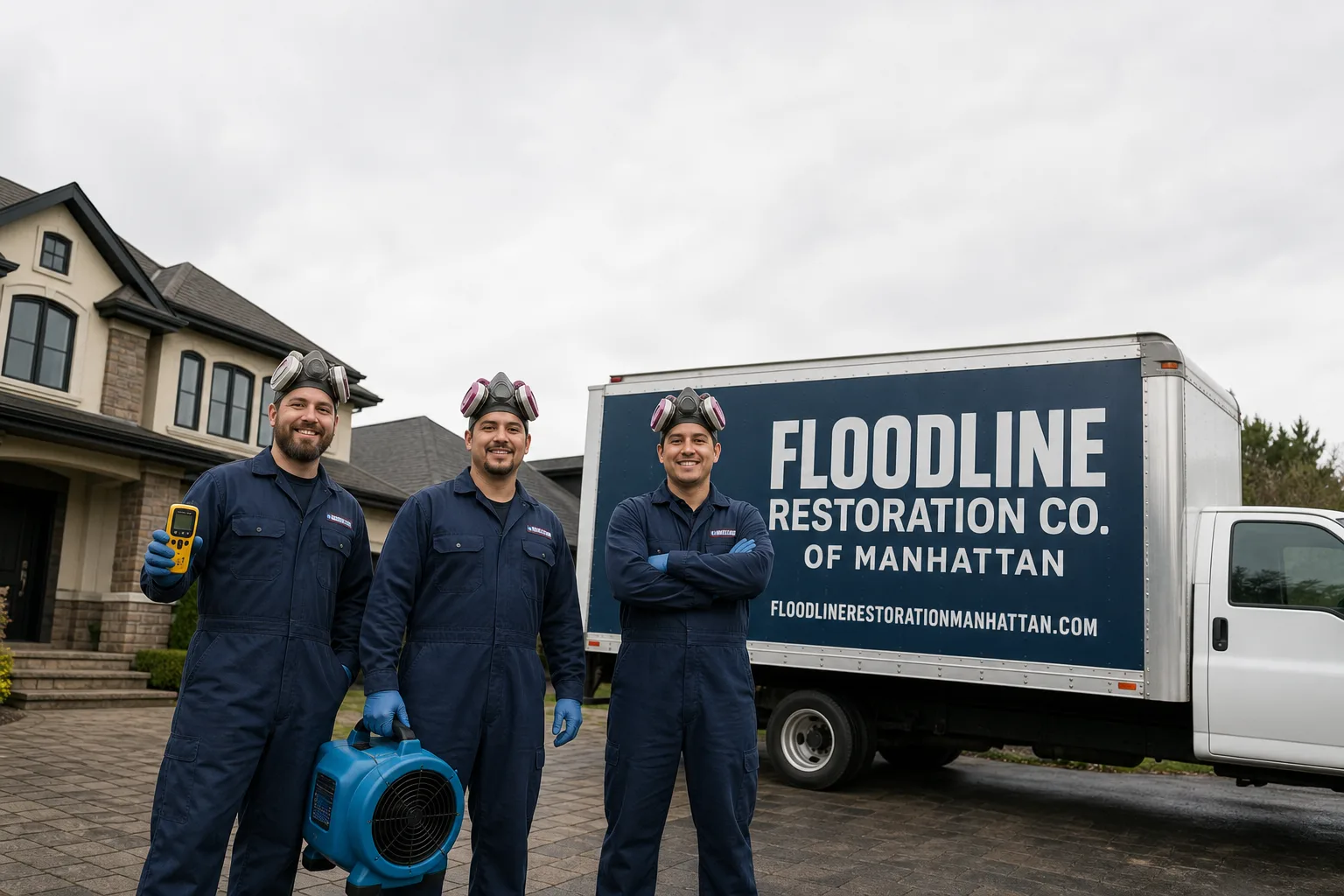
Free visual inspection and a written scope of work before any mitigation begins - photos, moisture readings, and drying logs go in your claim file
The scope we write is the scope we bill. Anything new gets shown to you, in writing, before we touch it.
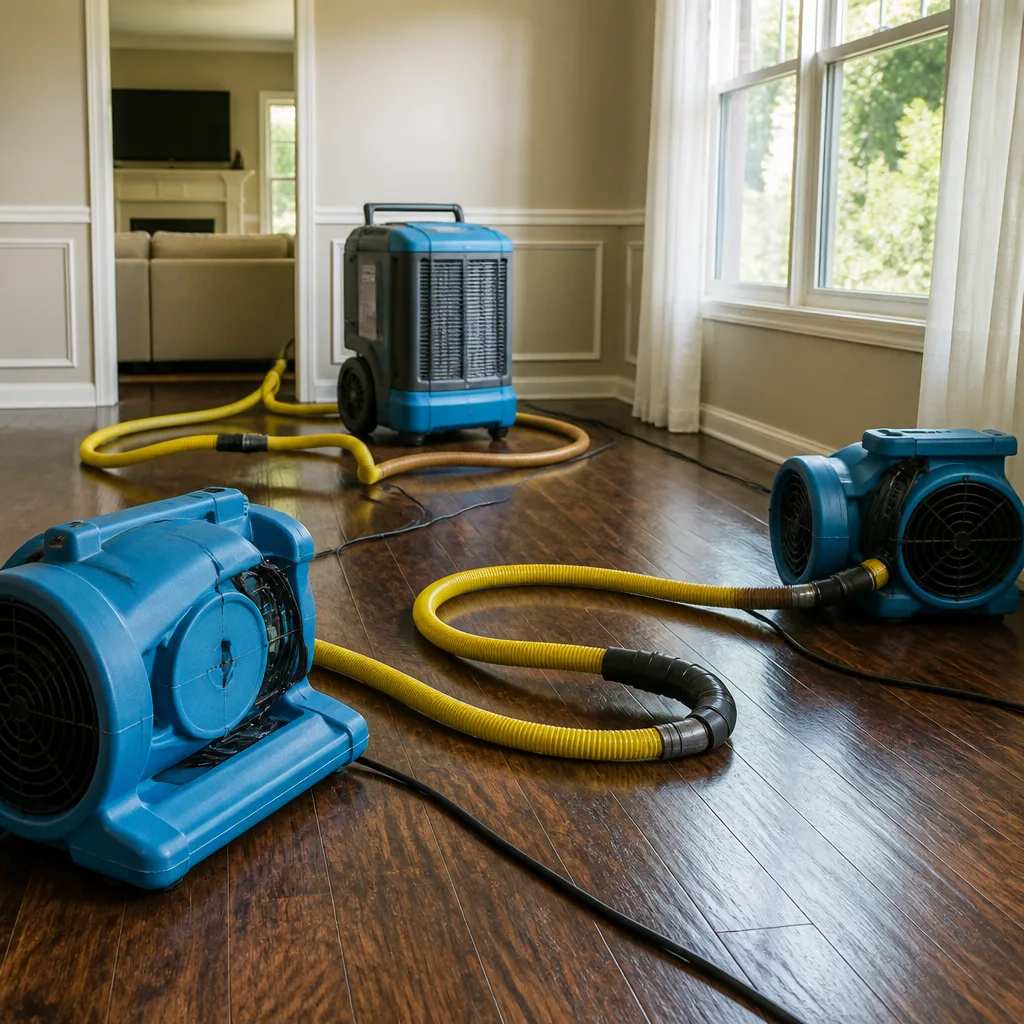

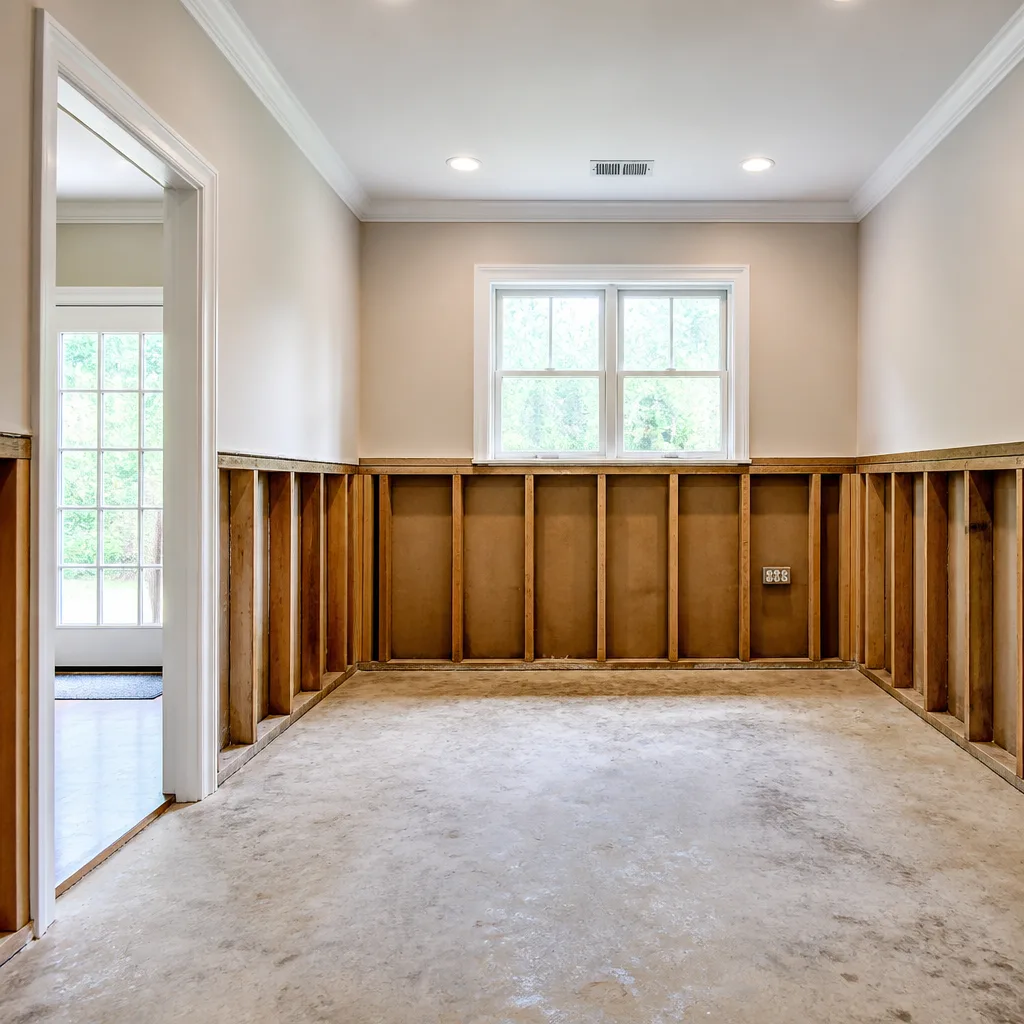



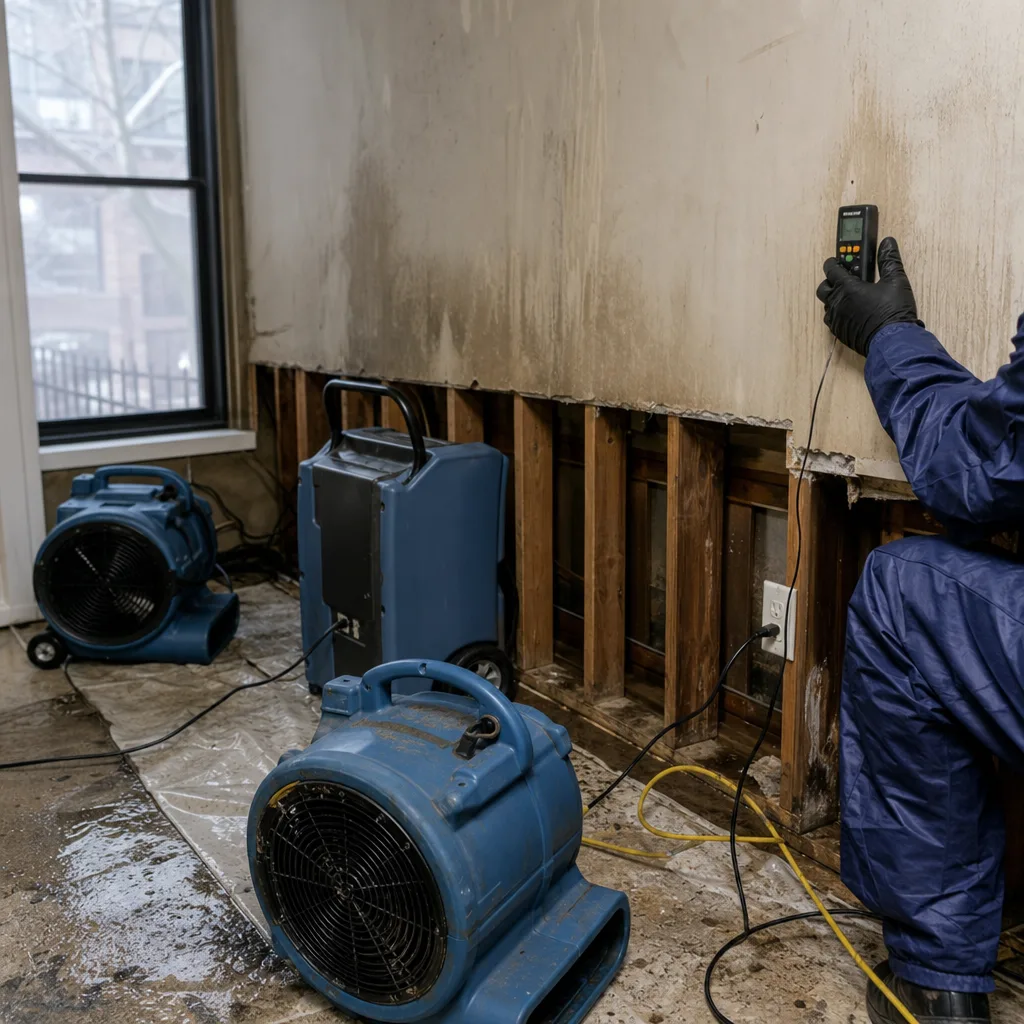 Before
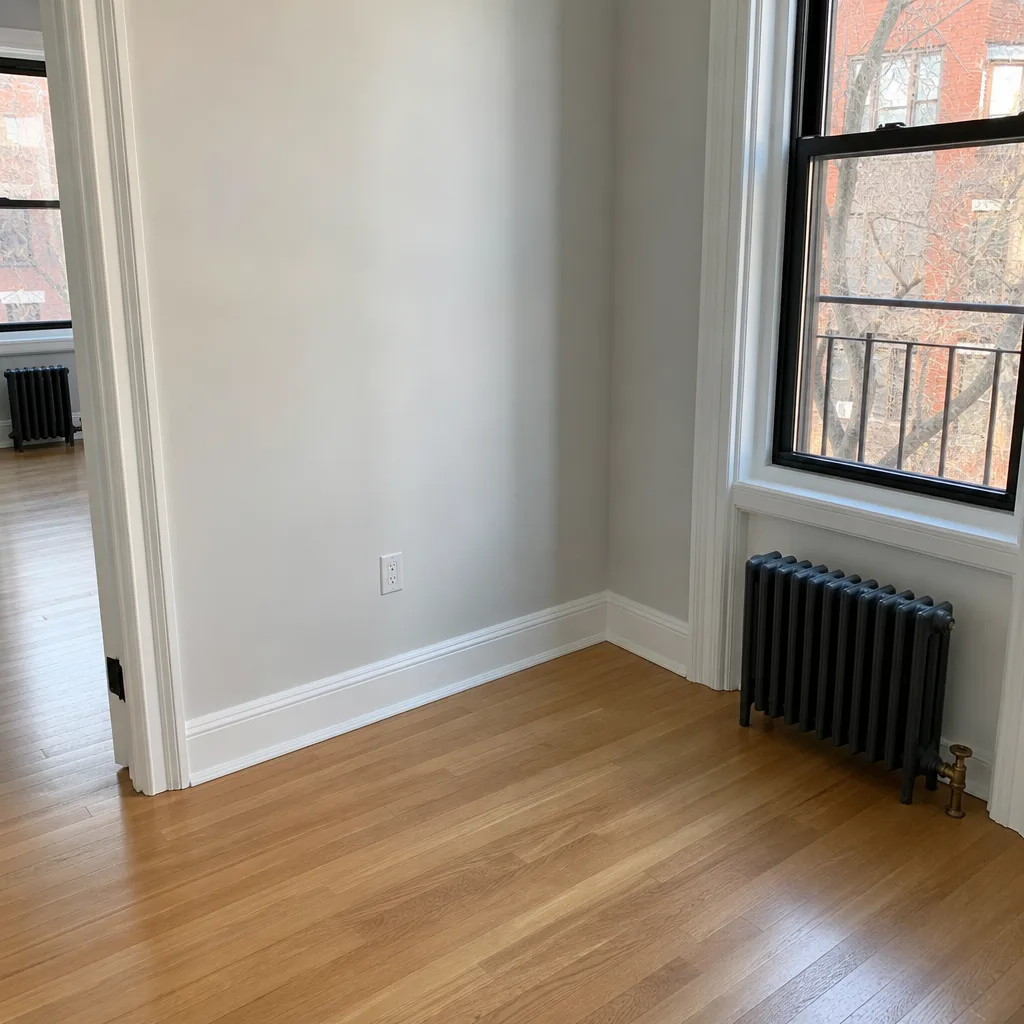 After
After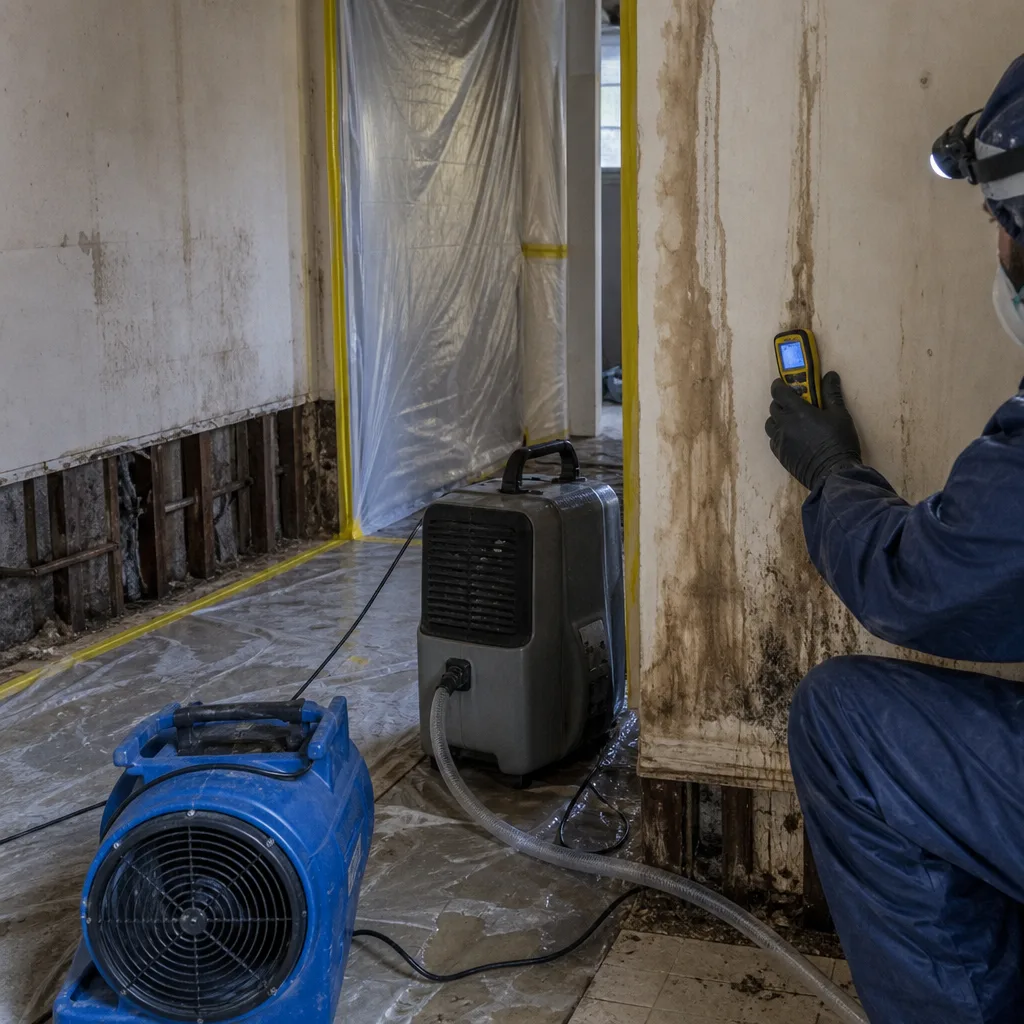 Before
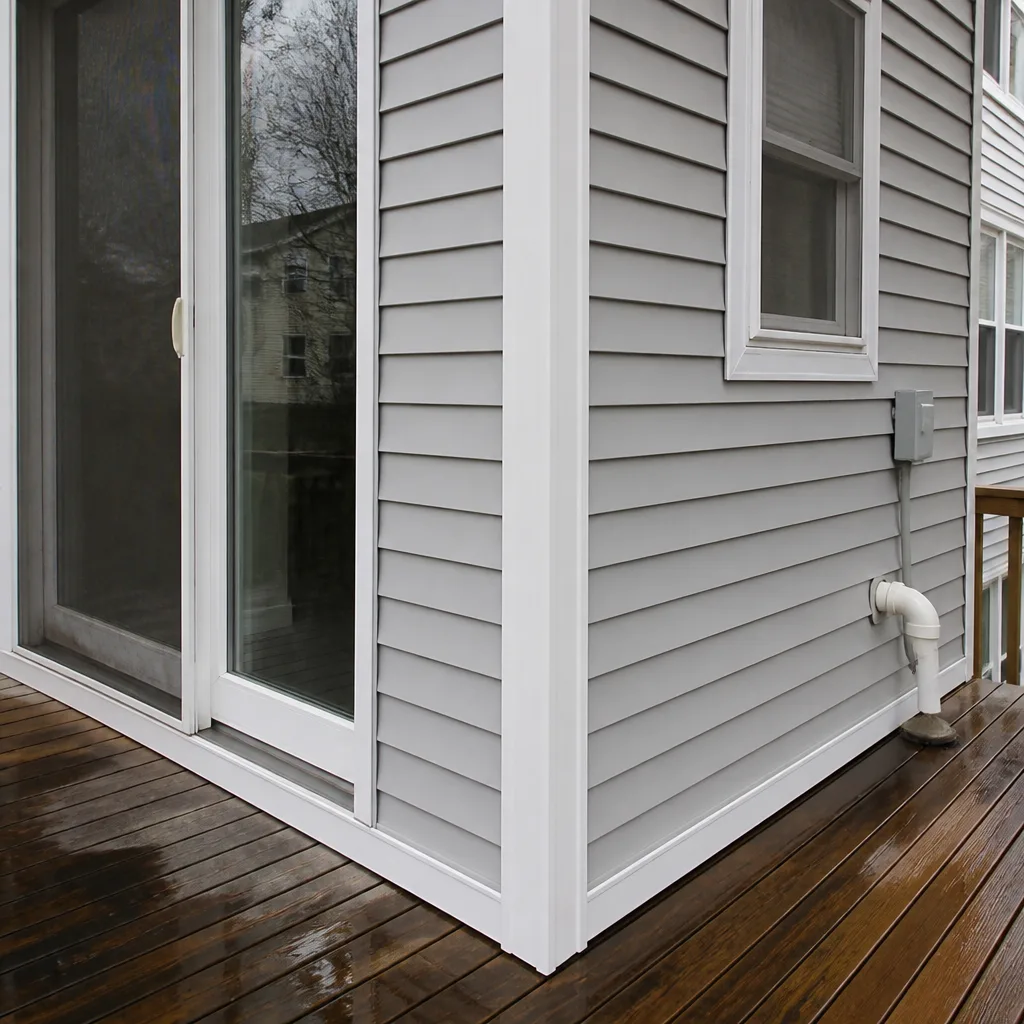 After
After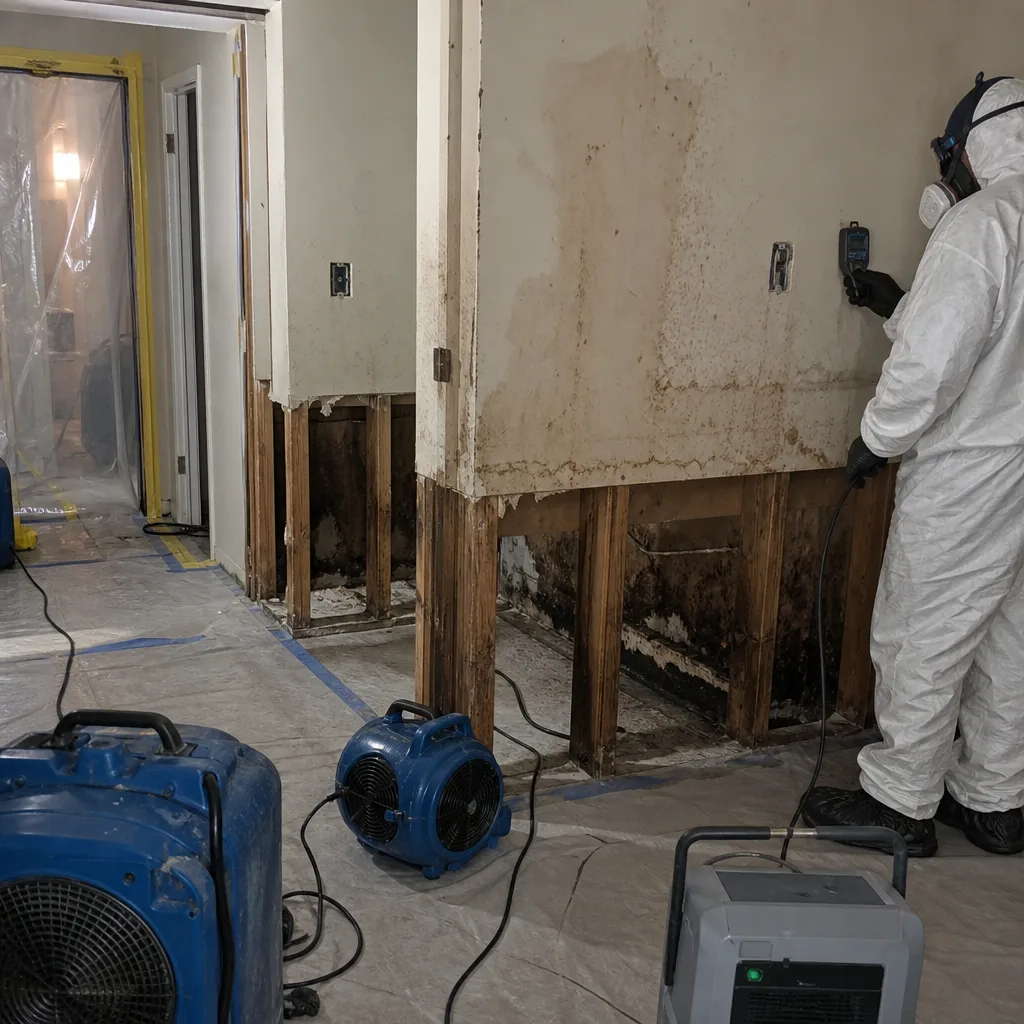 Before
 After
After24/7 Emergency Storm & Disaster Restoration in Bedford
Storm damage in Bedford doesn’t wait for business hours, and neither do we. If a nor’easter just put a tree through your roof or ice dams are forcing water into your fieldstone cellar, call (917) 924-4221 right now. A live dispatcher answers 24 hours a day, and crews are dispatched to Bedford immediately for a free visual inspection. The first hour matters most because water from a breached roof or cracked foundation keeps moving through horsehair plaster, wide-plank floors, and old-growth timber until extraction starts. Every minute of delay adds drying time and cost. We understand that a fallen oak on an 1840s manor isn’t just storm damage; it’s a preservation emergency.
Understanding Storm & Disaster Restoration Severity in Bedford Properties
Storm restoration severity gets classified by water category and structural exposure. Category 1 water comes from a clean supply line break; Category 2 carries detergents or soil; Category 3 contains sewage or storm runoff carrying pathogens. A fieldstone foundation breached by a Nor’easter surge typically pushes Category 3 water into your cellar. We moisture-map the entire affected area with thermal imaging and hygrometers, then establish a drying perimeter using containment and HEPA air scrubbers. Bedford’s older homes change the math. Historic horsehair plaster holds water differently than modern drywall, and old-growth timber framing absorbs moisture slowly but releases it even slower, which means drying logs must run longer here than in a 1990s colonial in Katonah. Our Storm & Disaster Restoration team reads the moisture map daily, not just on day one.
Why Bedford Property Owners Choose Floodline Restoration Co. of Manhattan
Floodline Restoration Co. is led by Curt Bowman, who founded the company in 2010 around a dispatch board, not a sales desk. We serve Bedford from our New York City office with local crews who know this town’s housing stock. Here’s what that means for you:
- 45-minute response commitment: When you call, a certified crew is dispatched toward Bedford immediately, not after a sales pitch.
- Live answer, 24/7: A human being picks up at 2 a.m. Not a recording. Not an answering service that promises a callback. We’re here when the storm hits.
- IICRC-certified crews: Our technicians carry WRT, FSRT, and AMRT certifications through IICRC, plus RIA and IFA training. They understand historic materials, not just water extraction.
- Free visual inspection: We look before we quote. You’ll see the scope in writing, with line items and real numbers, before any work starts.
- Direct insurance billing: We bill your carrier and coordinate with your adjuster directly. You won’t play messenger between us and the insurance company.
- One team, start to finish: The same certified crew that reads the moisture map on day one handles daily readings, documents the drying log for your insurer, and rebuilds what needs rebuilding. No mid-job handoff.
Every job carries the 90-Day Done Right Promise, our Keystone Standard, in writing. If it’s not done right, we make it right. No arguing, no paperwork battles. We stand behind it.
Our Storm & Disaster Restoration Process
Inspection & Assessment
We arrive at your Bedford property and conduct a full structural and moisture assessment. This includes thermal imaging to find water you can’t see inside walls and behind plaster. We document everything with photos from the first hour, because your insurance carrier will need that record.
Extraction & Stabilization
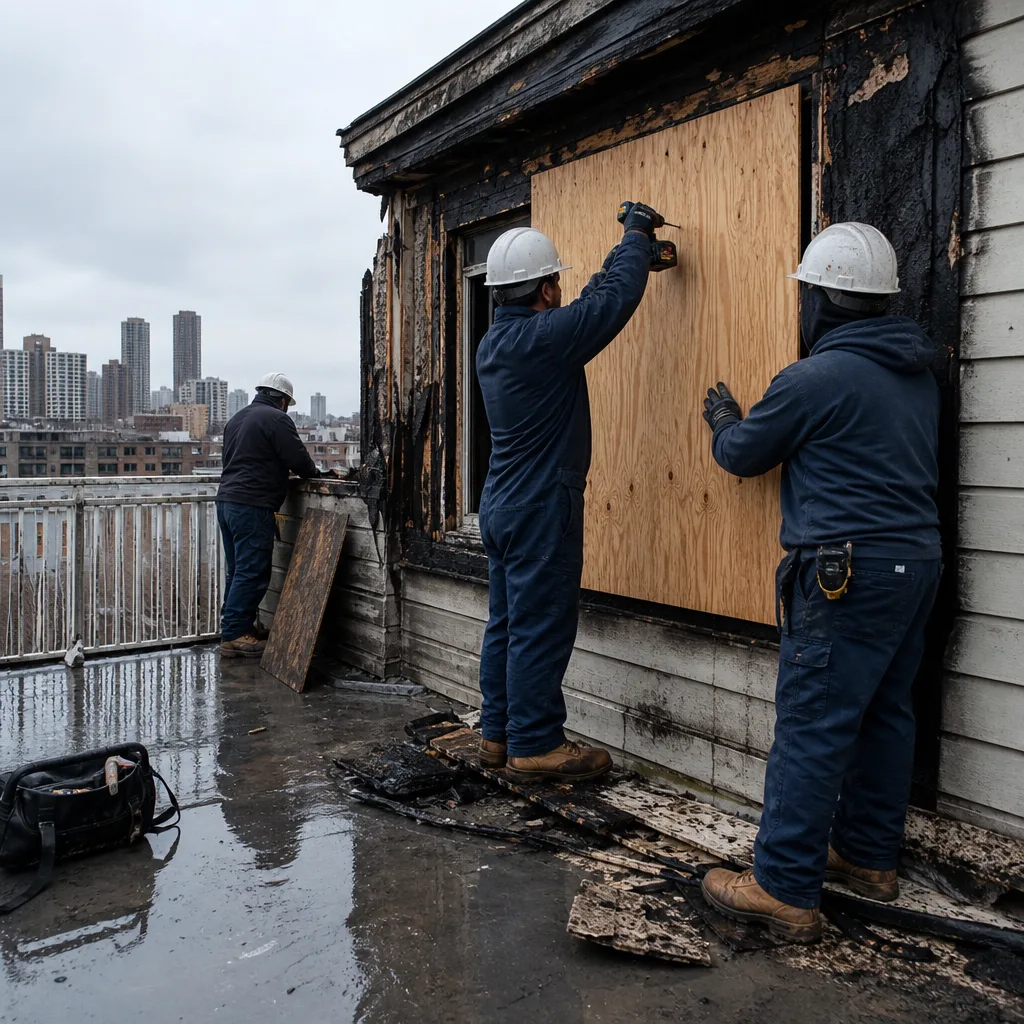
We remove standing water and stabilize the structure. This means emergency board-up on broken windows, roof tarping over breaches, and debris removal from driveways and access points. If Bedford’s tree preservation law requires permits for fallen specimen trees, we coordinate that before structural drying starts, so your property is never left exposed.
Drying & Dehumidification
We set professional-grade Dri-Eaz and Phoenix equipment: air movers, dehumidifiers, and in-wall drying systems. On historic plaster and old-growth timber, we run daily moisture readings until the dry standard is met, and we log every reading for your carrier. We don’t rush this step and we don’t hide it from you.
Cleaning & Sanitization
Storm water carries contaminants. We clean and sanitize affected surfaces with industry-approved antimicrobials, and we run HEPA air scrubbers to remove airborne particulates. For Category 3 water, this step is non-negotiable before any rebuild starts.
Preservation-Sensitive Treatment
Bedford’s historic homes need methods that don’t violate architectural standards. We dry horsehair plaster in place instead of ripping it out. We preserve original wide-plank floors. We match materials to the era of the house. No off-the-shelf replacements that trigger historic district review.
Repairs & Restoration
We rebuild what needs rebuilding: roof sections, fieldstone mortar, rotted sills, damaged trim. The same crew that started the job finishes it, and you get the 90-Day Done Right Promise in writing before we leave. Done right, and backed in writing.
Need Emergency Storm & Disaster Restoration in Bedford Now?
Crews minutes away, answering live 24 hours a day. The sooner we start, the less it costs.
Working With Your Insurance Company
When storm damage hits a historic Bedford property, the insurance claim can feel heavier than the tree on the roof. We handle it with you, not against you. Our documentation starts in the first hour: photos of every affected room, moisture readings, and a line-item scope of work that matches industry-standard estimating software your adjuster already recognizes. We talk to your adjuster directly. We answer their questions. We provide the drying logs and the photo evidence they need to approve the claim promptly. You shouldn’t have to become an insurance expert in the middle of a disaster. Our Storm & Disaster Restoration in Bedford team does this every week. A square deal: no surprises on the bill.
What We Provide Your Insurer
- Thorough documentation of the loss
- Photos of all damage, room by room
- Moisture readings and drying logs
- A detailed, line-item scope of work
- Direct coordination with your carrier
Built for Bedford’s Loss Calendar
Bedford’s elevation in northern Westchester means colder winters and more ice than towns closer to the Sound. January and February bring deep freezes that crack supply lines in unheated wings of old estates, and repeated freeze-thaw cycles open mortar joints in fieldstone foundations. Ice dams form on slate and cedar shake roofs, backing water under flashing and into attic spaces. March and April turn snowmelt into groundwater, and that water finds its way into cellars through stone foundations that have been wicking moisture for 200 years. Summer thunderstorms in July and August can drop two inches of rain in an hour, overwhelming old drainage systems. September and October bring the remnants of tropical systems. And all year, mature oaks and maples protected by Bedford’s Town Tree Preservation Law stand tall until they don’t. When one comes down, the damage is rarely small.
Storm & Disaster Restoration Across Bedford’s Neighborhoods
Bedford stretches across three hamlets: Bedford Village, Bedford Hills, and Katonah, each with its own restoration profile. In Bedford Village, along routes 22 and 172, we see the oldest stock: 18th-century stone manors and converted carriage barns with fieldstone foundations and hand-hewn beams. Water intrusion here usually enters through foundation mortar or roof breaches, and restoration must respect the village’s strict historic character. Bedford Hills, around Babbitt Road and the commercial corridor, includes both pre-war colonials and newer construction. The older homes have the same plaster and stone issues; the newer ones tend to fail at roof penetrations and basement drainage. Along Succabone Road and Guard Hill Road, estate lots with specimen oaks and maples create a specific risk: a falling tree can take out a wing addition, and the permit to remove it moves on town time, not storm time. We plan around that, because we’ve done it. On Cantitoe Street and Cherry Street, narrow driveways and mature canopies complicate equipment access, so we stage trucks carefully and often walk equipment in by hand. The line the water left is where we start.
Specialized Storm & Disaster Restoration Services We Offer in Bedford
Storm Damage Cleanup
After a Nor’easter or ice storm, Bedford properties need debris cleared, damaged materials removed, and the site made safe. We handle fallen limbs, saturated insulation, ruined drywall, and damaged contents. On estate properties, we coordinate with tree crews and respect the town’s permit requirements while keeping the restoration schedule moving.
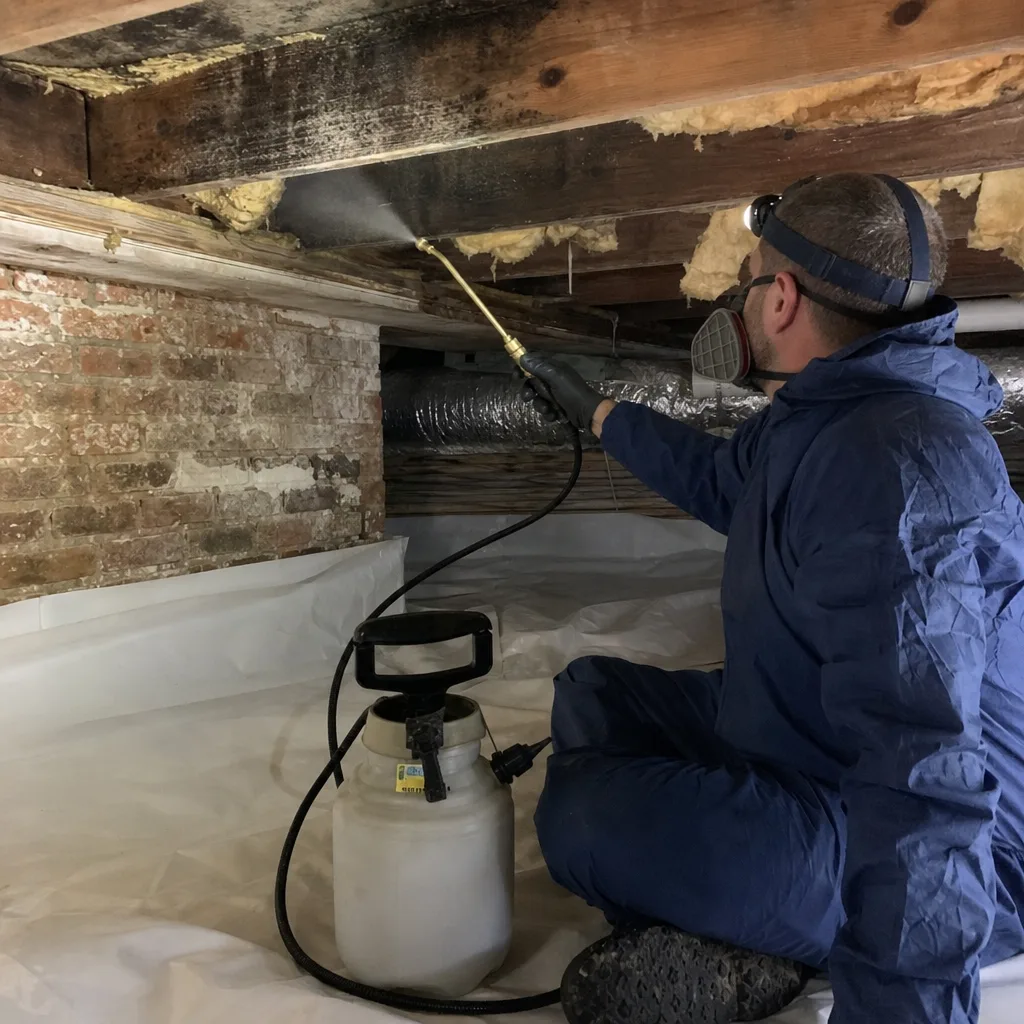
Flood Damage Restoration
When the cellar floods from groundwater, a failed sump, or a breached foundation, we extract the water, dry the structure, and sanitize the space. On fieldstone foundations, we apply masonry-specific drying methods and monitor daily. Your antique rugs and furniture get packed out to a controlled drying facility when needed, so they’re not ruined in place.
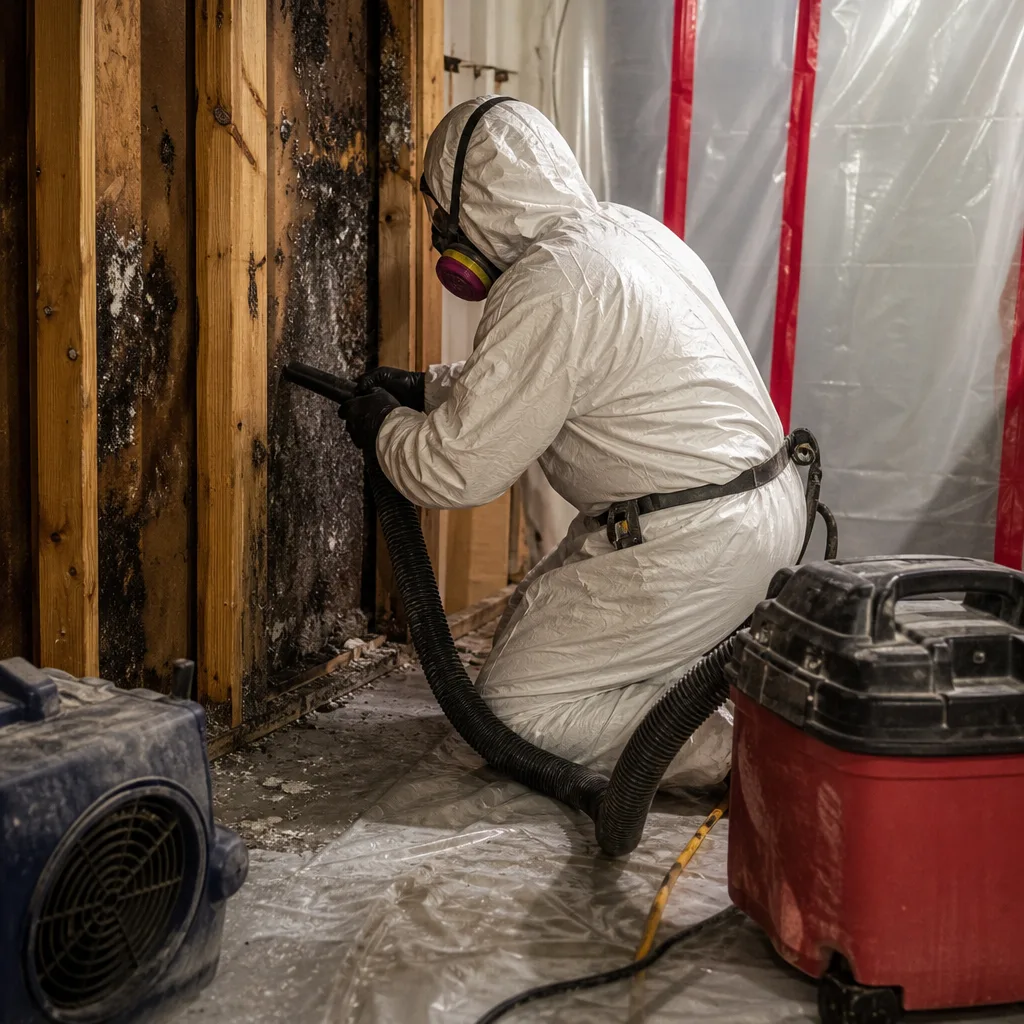
Emergency Board-Up
Broken windows and open walls are invitations to weather, animals, and vandals. We board up openings with plywood and fasteners that won’t further damage historic trim. This is a stopgap, but it’s a stopgap done right, sized to the opening, and documented for your carrier.
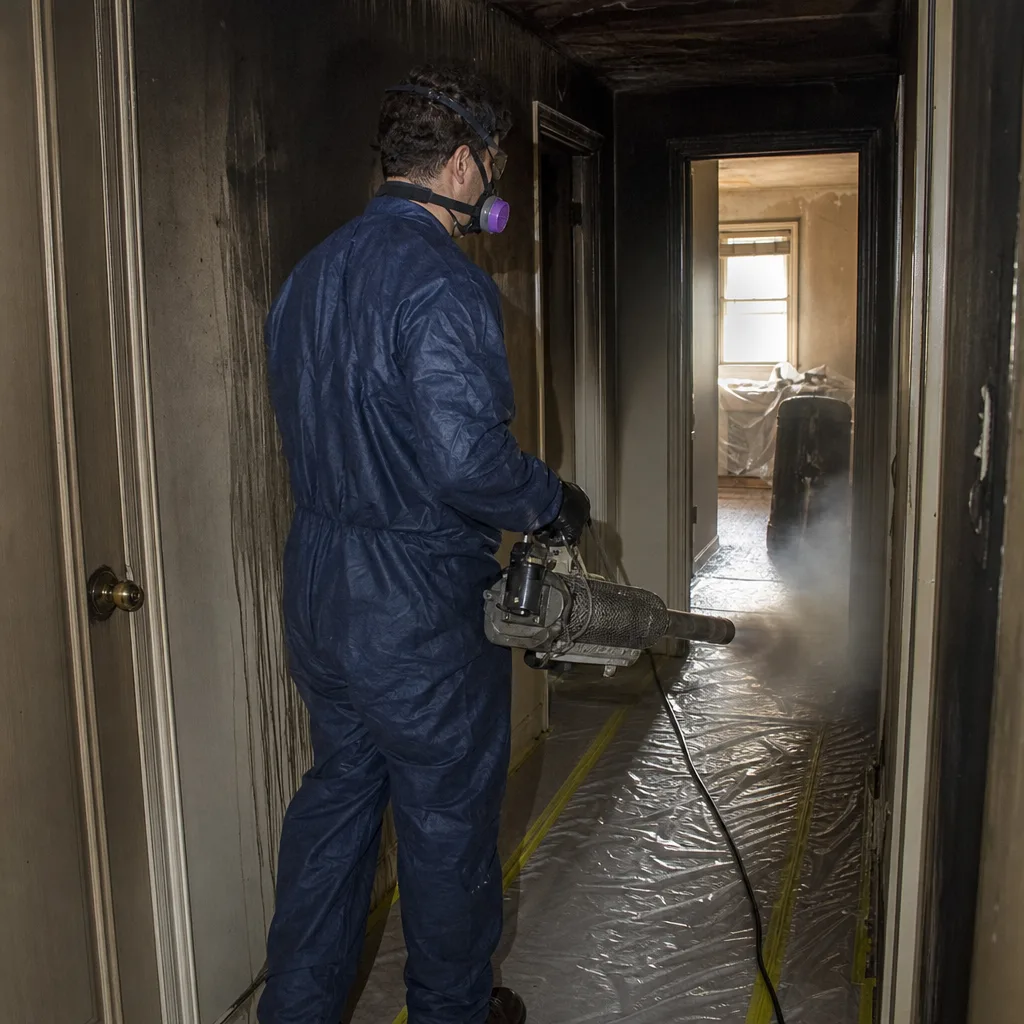
Roof Tarping
A tarp over a storm breach is the difference between restoration and demolition. We tarp the affected roofline, sealing edges to shed water until permanent repairs are scheduled. On slate and cedar shake roofs, we secure tarps without driving nails through existing shingles, because replacing one broken slate can cost more than the tarp itself.
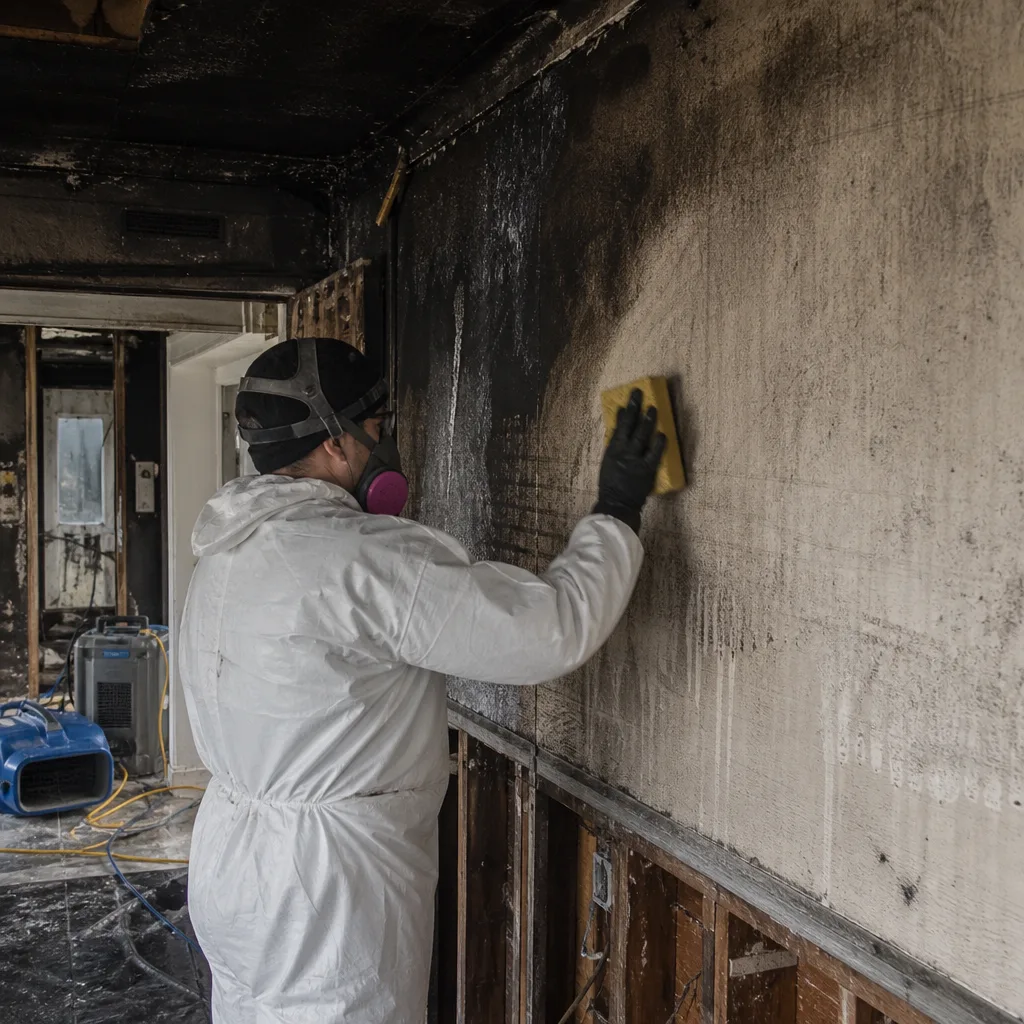
Debris Removal
Storm debris on Bedford estate lots often includes protected oaks and maples. We handle the removal permit process with the town, coordinate the tree crew, and clear the debris out so structural drying and repairs can proceed. You’ll get one point of contact for the whole job, not three different contractors.
What happens when you call
- 1
A real person answersNo phone trees - you reach a local pro.
- 2
You get an upfront price rangeHonest numbers before anyone is dispatched.
- 3
A background-checked tech heads outLicensed & insured, dispatched right away.
- 4
You approve before work beginsNothing starts until you say go.
Storm & Disaster Restoration Costs in Bedford, NY
Storm restoration in Bedford runs on a curve, not a flat rate. A simple roof tarp over a small breach typically costs $400 to $800. Emergency board-up for one window or door runs $200 to $600. Full storm damage cleanup with debris removal and drying for a flooded cellar usually lands between $3,500 and $8,500. A tree through a roof with structural repairs and plaster drying can run $15,000 to $40,000 or more depending on the square footage and the historic materials involved. What moves the price: the amount of Category 3 water, the number of rooms affected, whether the tree removal requires town permits, and whether your plaster can be dried in place or must be replaced. Insurance typically covers storm damage from named events and sudden breaches. Your out-of-pocket is usually the deductible plus any upgrades you choose beyond like-kind replacement. We offer free inspections and written scopes, so you’ll know the number before we start. Call (917) 924-4221 for an exact quote. Estimates are free.
We Also Serve Cities Near Bedford
Our storm and disaster restoration crews regularly serve Bedford Hills, Mount Kisco, Armonk, and Katonah. If you’re in any of these nearby communities and storm damage just hit, the same live answer and the same 90-Day Done Right Promise apply. Call (917) 924-4221.
Serving Bedford, NY - Our Local Coverage Area
We’re based in the Bedford area and know this community well. Use the map below to see our service coverage - if you’re nearby, we can almost certainly help.
Bedford Storm & Disaster Restoration Questions, Answered
Can I remove a storm-damaged oak from my Bedford property myself?
No, not legally without checking Bedford’s Town Tree Preservation Law first. Protected specimen oaks and maples require a permit for removal, even when storm-damaged. Removing one without a permit can trigger fines and delays. We coordinate the permit with the town as part of the restoration scope. Call (917) 924-4221 and we’ll walk you through it.
Will my historic plaster walls need to be replaced after roof tarping?
Usually not. Historic horsehair plaster can often be dried in place with professional-grade Dri-Eaz and Phoenix equipment and conservative drying methods. Replacement with modern drywall frequently violates Bedford’s architectural standards and triggers historic district review. We dry first, replace only what cannot be saved. Estimates are free.
How do you dry a fieldstone foundation after an ice dam floods my cellar?
We start with extraction, then run dehumidifiers and air movers in the cellar while monitoring moisture levels in the stone and mortar daily. Fieldstone holds water and releases it slowly, so drying typically takes longer than a poured concrete basement. We log every reading and provide it to your insurer. Call (917) 924-4221 for a visual inspection.
Do I need a pack-out before you dry my antique rugs and furniture?
If Category 3 water reached your rugs or upholstered pieces, yes. We inventory, photograph, and transport them to a controlled drying facility where they’re cleaned and dried under monitored conditions. This preserves the pieces and keeps your drying timeline shorter at the property. We handle the full inventory for your insurance claim.
Can a fallen tree delay my restoration under Bedford’s regulations?
Yes. If the tree is a protected specimen under the Town Tree Preservation Law, removal requires a permit before structural drying or rebuild can proceed in the affected area. We file the paperwork and coordinate with the town, so the delay is measured in days, not weeks. This is one place where our Bedford experience saves you money.
How fast can you actually get to Bedford after a storm?
We commit to a 45-minute response time from the moment you call (917) 924-4221. A live dispatcher answers and a certified crew is dispatched toward your property immediately. We’re on site, with extraction running, the same visit in most cases. No callback promises, no “we’ll be there tomorrow.”
Are your crews certified for historic restoration work?
Our technicians are certified to IICRC, RIA, and IFA standards, including WRT, FSRT, and AMRT designations. They’re trained in historic material preservation methods, not just modern water extraction. That matters when you’re drying 19th-century plaster instead of drywall. We stand behind the work in writing with the 90-Day Done Right Promise.
What should I do in the first 30 minutes after storm damage?
Call (917) 924-4221 first. Then, if it’s safe, shut off water or electricity to the affected area. Don’t enter standing water in a cellar with electrical systems. Don’t move saturated plaster walls or attempt to pull down ceilings. Document with photos from a safe distance. Our crew will handle the rest when we arrive. We’ll be there when we say.
Written by Curt Bowman, Owner at Floodline Restoration Co. of Manhattan, serving Bedford and the surrounding communities since 2010.