
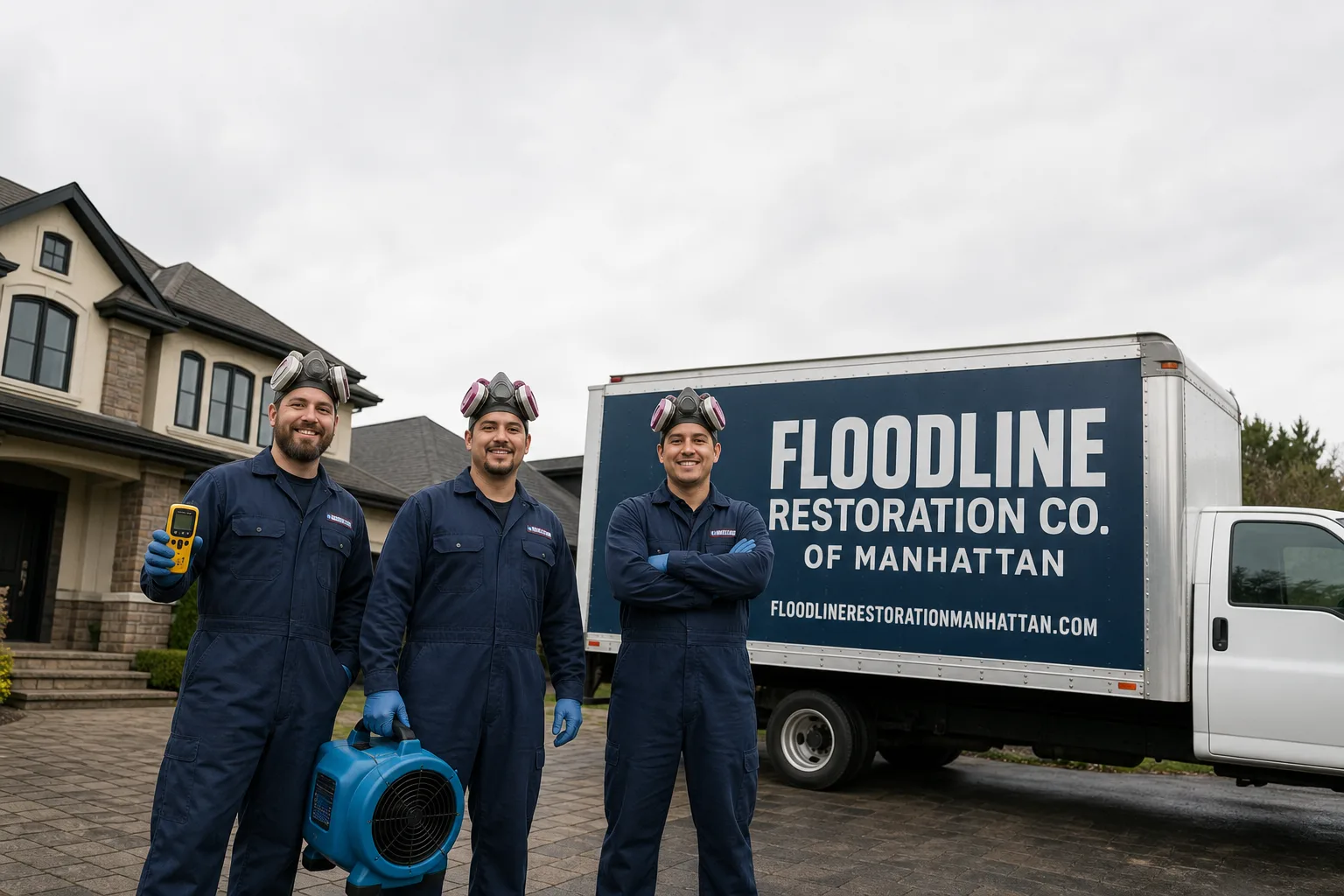
Free visual inspection and a written scope of work before any mitigation begins - photos, moisture readings, and drying logs go in your claim file
The scope we write is the scope we bill. Anything new gets shown to you, in writing, before we touch it.






 Before
 After
After Before
 After
After Before
 After
After24/7 Emergency Commercial Restoration in Inwood
Commercial restoration in Inwood means responding to what the water leaves behind on a low-lying South Shore peninsula. When Jamaica Bay surge or a burst supply line hits your storefront, office, or multi-unit building, every hour of delay pushes saltwater deeper into slab floors, wall cavities, and inventory. Floodline Restoration Co. of Manhattan answers live at (917) 924-4221 around the clock, and crews reach Inwood addresses fast because we know the blocks, the building stock, and the failure patterns here. The first call gets you a free visual inspection and a straight answer about what you’re facing.
We don’t hand your job to a subcontractor after extraction. The same certified crew that pulls the water runs the drying logs, documents for your carrier, and rebuilds what needs rebuilding. That’s the full-cycle Commercial Restoration approach that matters most when a nor’easter floods your Bayview Avenue shop at 2 a.m. and you need someone who answers the phone like a person, not a recording.
Understanding Commercial Restoration Severity in Inwood Properties
Inwood commercial buildings sit near sea level, and many were built between the 1940s and 1960s with slab-on-grade floors or shallow basements that sit at or below the 100-year flood elevation. When Jamaica Bay pushes Category 2 or Category 3 water into these structures, the contamination isn’t just water. It’s salt, sediment, and sewage-borne pathogens that single-wythe masonry and older fiberglass insulation hold onto for weeks. Standard moisture mapping calibrated for single-event freshwater losses misses what repeated tidal flooding does to Inwood buildings. We use thermal imaging and hygrometers to find moisture that surface readings hide, because saltwater conducts moisture differently than clear water and dries on a slower curve.
The severity scale here runs from Category 1 clear-water breaks in supply lines to Category 3 storm surge laden with salt and contaminants. In a 1960s strip store off Sheridan Boulevard, a Category 1 supply line break might dry in three to five days. The same square footage hit by Jamaica Bay overtopping needs salt-neutralization treatment, containment, and often selective demolition of wetted drywall and insulation. Mold assessment follows every saltwater intrusion because efflorescence can mask active fungal growth behind baseboards for months after the surface looks dry.
Why Inwood Property Owners Choose Floodline Restoration Co. of Manhattan
- 45-minute response commitment: Live dispatch knows Inwood’s streets, and a crew is on the road to your building within 45 minutes of your call, any hour, any day.
- 24/7 live answer, never an automated system: A real person picks up at (917) 924-4221 at two in the morning. You’ll never sit through a phone tree while water keeps rising.
- IICRC-certified crews: Technicians hold WRT (Water Damage Restoration), FSRT (Fire & Smoke), and AMRT (Applied Microbial Remediation) certifications, trained to RIA and IFA standards.
- Free visual inspection: We assess the damage, explain the scope in plain terms, and give you a written plan before any work begins. No pressure, no upselling.
- Direct insurance billing: We work with your carrier from day one, handle the adjuster communication, and bill directly so you’re not playing messenger.
- One team from extraction to reconstruction: The crew that reads the moisture map on day one handles daily readings and rebuilds what needs rebuilding. No mid-job handoff, no inherited strangers.
Our Commercial Restoration Process
Inspection & Assessment
We walk the building with thermal imaging and moisture meters, mapping every wet surface and cavity. Saltwater intrusion shows up as elevated readings in slab edges and masonry wicking lines that visual inspection alone misses.
Extraction & Stabilization
Standing water comes out with truck-mounted and portable extraction units. We stabilize the building envelope, shut down compromised electrical where needed, and set containment to prevent cross-contamination.
Drying & Dehumidification
Dri-Eaz dehumidifiers and XPOWER air movers run on a calculated layout based on the moisture map. Daily readings get logged until dry standard is met. Saltwater jobs get extended drying timelines and salt-neutralizing flushes on masonry and slab edges.
Cleaning & Sanitization
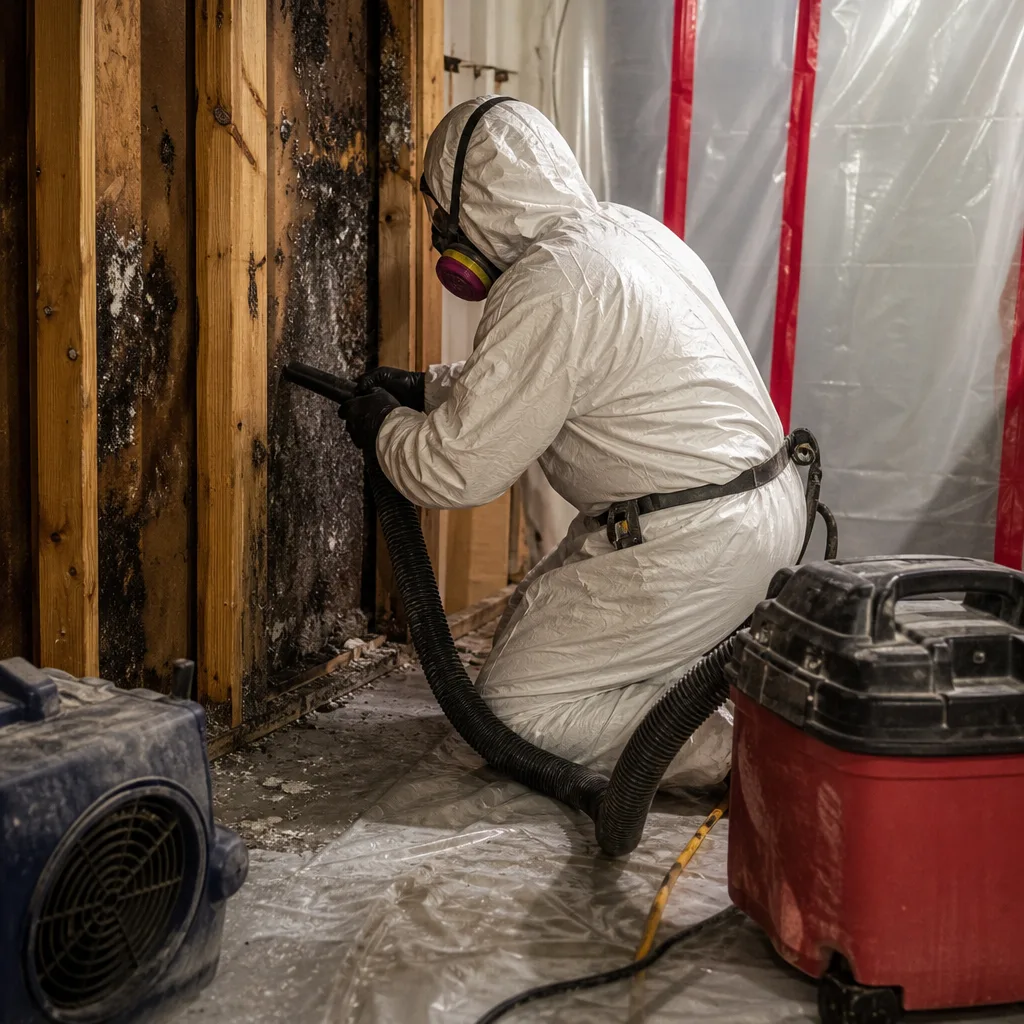
HEPA air scrubbers run during and after demolition to capture salt crystals and mold spores. Affected surfaces get antimicrobial treatment appropriate to the water category. Inventory and documents get evaluated for recovery or content cleaning.
Salt Remediation & Efflorescence Control
Inwood’s defining challenge. We flush salt-contaminated masonry with neutralizing agents, address corrosion on fasteners and HVAC components, and check every wall base for the chalky bloom that signals incomplete prior remediation.
Repairs & Restoration
The same crew rebuilds drywall, replaces insulation, restores flooring, and repaints. You get the 90-Day Done Right Promise in writing when we finish. If it’s not done right, we make it right.
Need Emergency Commercial Restoration in Inwood Now?
Crews minutes away, answering live 24 hours a day. The sooner we start, the less it costs.
Working With Your Insurance Company
Commercial flood and water claims in Inwood involve repeat losses, saltwater exclusions, and adjusters who may not know what efflorescence means. We’ve handled hundreds of these claims and we know what carriers need to approve a scope quickly. From the first hour on site, we document everything: room-by-room photos, moisture readings before and after drying, salt contamination evidence, and a line-item scope tied to industry-standard pricing. Our team communicates directly with your adjuster, sends the drying logs as they’re generated, and pushes for the full scope when surface-level assessments understate what saltwater does to slab-on-grade floors and single-wythe masonry.
What We Provide Your Insurer
- Thorough documentation of the loss
- Photos of all damage, room by room
- Moisture readings and drying logs
- A detailed, line-item scope of work
- Direct coordination with your carrier
Built for Inwood’s Loss Calendar
Inwood’s damage calendar runs on water. Nor’easters in late fall and winter push Jamaica Bay over bulkheads and into commercial basements, the enclosed geometry of the bay amplifying surge two to four feet above normal tidal lines even in moderate storms. January and February bring deep freezes that burst supply lines in unheated rear storage rooms and vacant storefronts. Spring thaw saturates the ground around slab foundations, and the water table sits so high here that even a dry week leaves crawl spaces damp. Summer thunderstorms dump inches of rain in an hour, overwhelming the old drainage that serves Doughty Boulevard and the side streets, sending Category 2 water under overhead doors. Then comes hurricane season, and every owner who’s been through Sandy knows the drill. We schedule around this calendar because we’ve worked it for years, and we know which months bring what kind of call.
Commercial Restoration Across Inwood’s Neighborhoods
Inwood, NY isn’t one uniform grid. The commercial strips along Sheridan Boulevard and Burnside Avenue carry a different risk profile than the industrial buildings near the Five Towns line. Autobody shops and supply houses off Bayview Avenue sit closest to the bay’s surge path, and their slab-on-grade floors take the brunt of every tidal event. The older 1940s storefronts along Doughty Boulevard have shallow basements and single-wythe masonry walls that wick saltwater upward for weeks after a flood. Multi-unit residential buildings near the Nassau Expressway get water through foundation cracks and under entry doors, affecting first-floor commercial tenants and common areas. The blocks near Lawrence and Cedarhurst border Inwood’s eastern edge, where older ranches converted to offices share the same slab vulnerability. Each area needs a slightly different drying strategy, and our crews know the difference without being told.
Bayview Avenue deserves a specific note here. It runs parallel to the bay’s tidal influence, and buildings there see repeated lower-level flooding that standard restoration scopes underestimate. A single nor’easter pushes water into crawlspaces and over thresholds, but the cumulative effect of three or four of those events per decade creates moisture damage that never shows up as a dramatic single loss. That’s why we check the base of every wall for efflorescence when we’re called to Bayview and why our drying protocols run longer there than on inland Inwood blocks.
Specialized Commercial Restoration Services We Offer in Inwood
Office & Retail Restoration
Storefronts and professional offices in Inwood face two fights after a flood: getting the space dry and getting revenue flowing again. We prioritize drying the areas that stop your doors from reopening, contain work zones so you can stage partial operations where code allows, and rebuild finishes to pre-loss condition. Document and inventory recovery runs alongside structural drying, because losing client files or retail stock is a second loss on top of the flood.
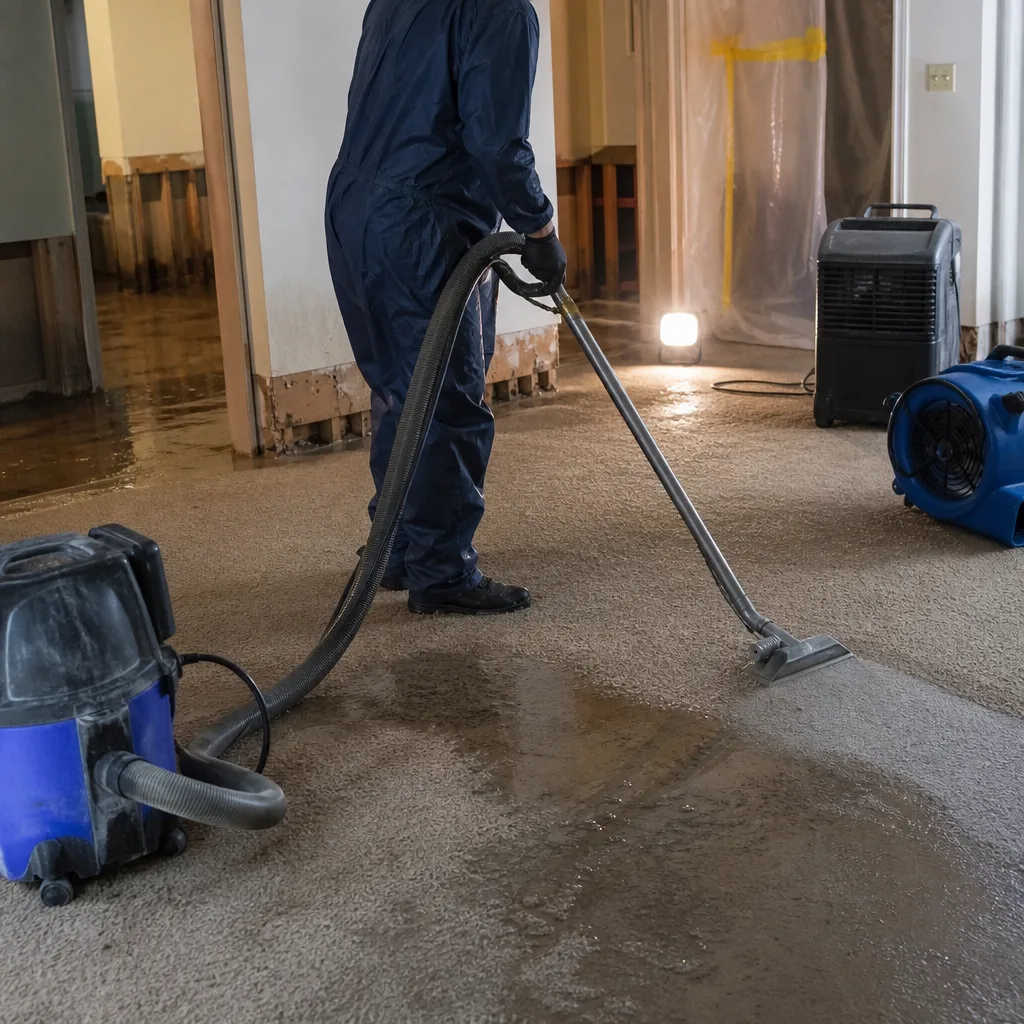
Multi-Unit & HOA Restoration
Multi-unit buildings in Inwood, especially the older courtyard apartments and converted homes near the Five Towns line, need a crew that understands common-area water damage and unit-by-unit containment. We coordinate with property managers and HOA boards, document every affected unit for the master policy, and keep hallways and entrances passable while drying runs. Saltwater in shared basements and utility rooms gets the same salt-flush treatment as commercial storefronts, because the building envelope doesn’t care who owns which unit.
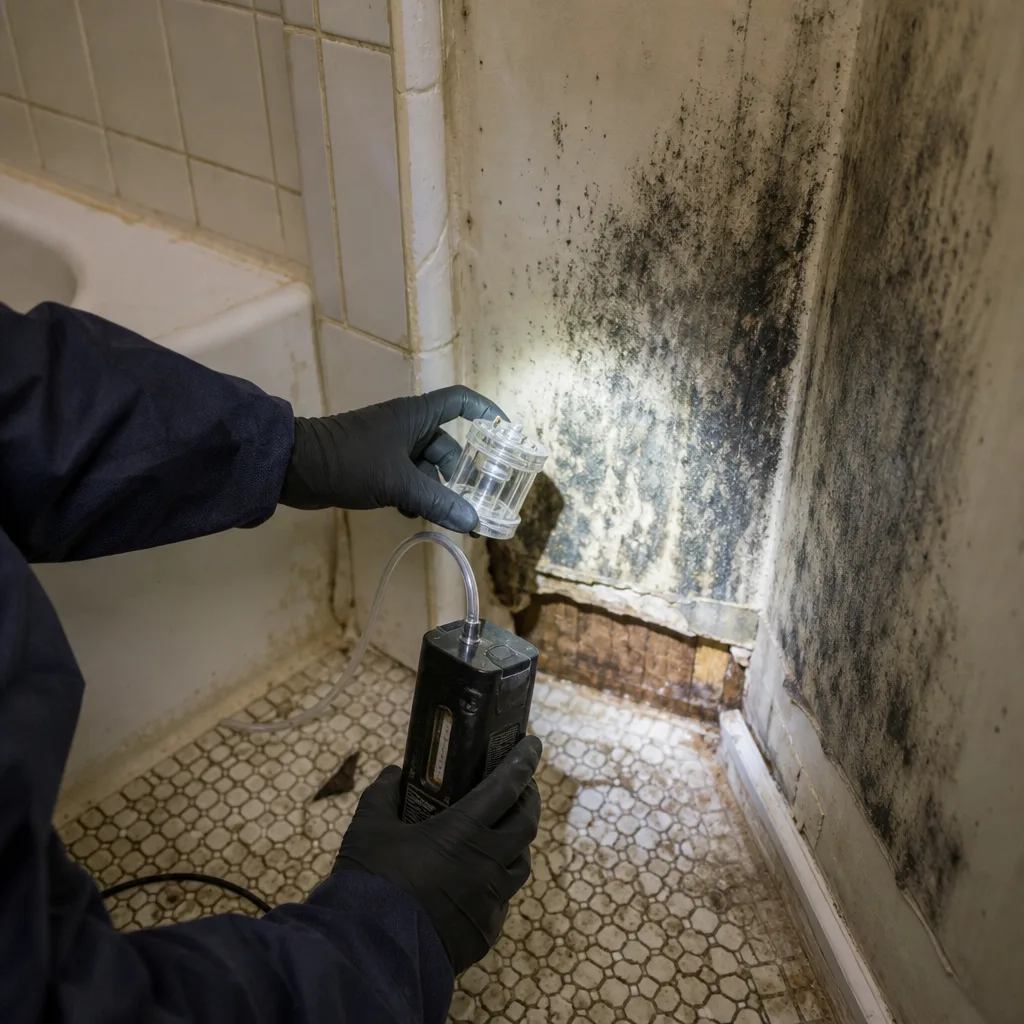
Industrial Facility Cleanup
Warehouse and light-industrial buildings in Inwood’s eastern blocks sit on slab floors with overhead doors that let tidal water in. Category 2 water standing under pallet racks and machinery creates corrosion, slips, and mold risk that gets worse by the hour. Our crews work around your operations where possible, set drying zones section by section, and document everything for your carrier. Industrial losses often involve large square footage and heavy equipment, which is why our large-loss experience matters here.
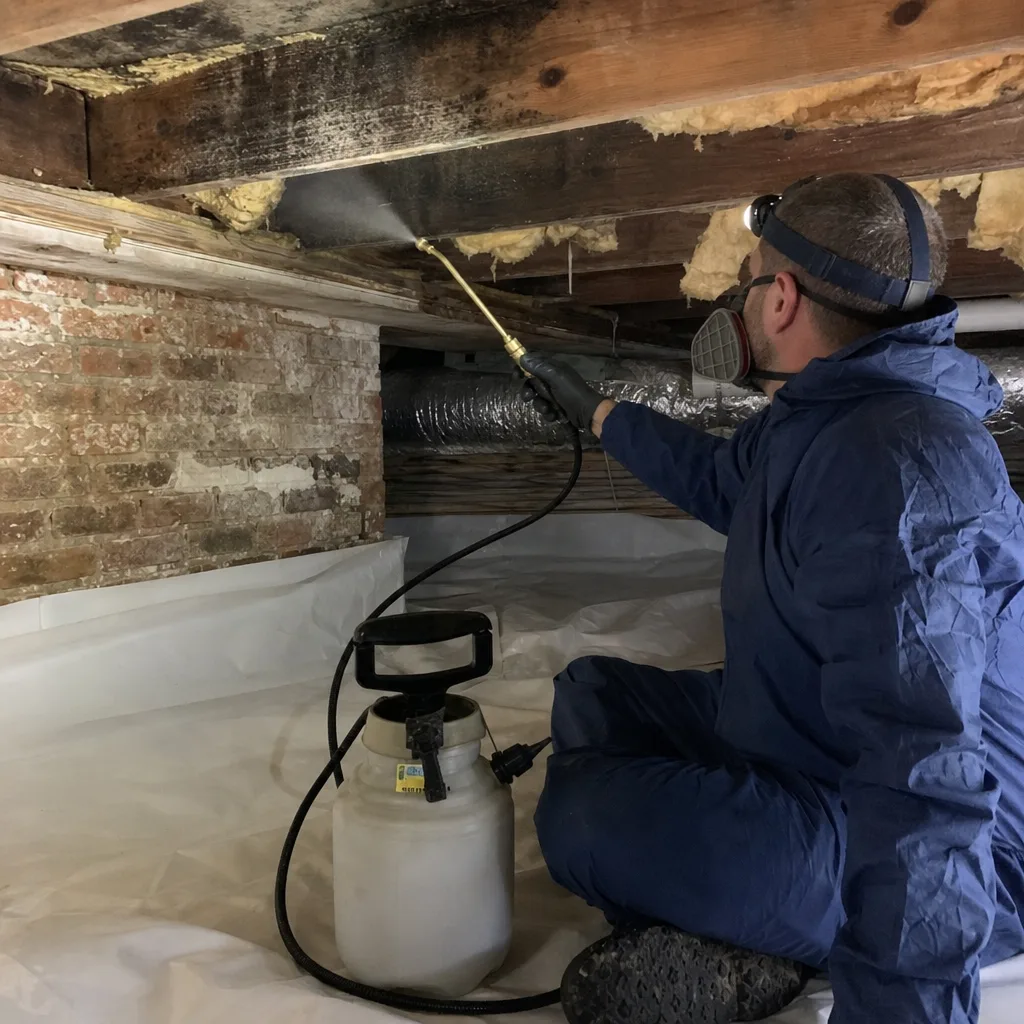
Large-Loss Response
When an entire Inwood commercial building floods, you need more than a truck and two fans. Our large-loss response brings multiple crews, industrial-scale Dri-EZ and Phoenix dehumidifiers, and a project manager who runs the drying plan like a construction schedule. We’ve handled full strip-store floods, apartment building common areas, and industrial bays where the water sat overnight before anyone noticed. The key is simultaneous extraction and drying across zones so the building dries evenly, not room by room while the rest keeps wicking.
Business Interruption Minimization
Every day your Inwood business is closed costs real money. We scope restoration to reopen revenue-generating areas first, work during your closed hours where possible, and document everything for a business interruption claim if your policy covers it. A storefront on Sheridan Boulevard that we can dry and reopen in four days instead of two weeks is worth the call. Direct adjuster coordination keeps the claim moving while we keep the drying moving.
What happens when you call
- 1
A real person answersNo phone trees - you reach a local pro.
- 2
You get an upfront price rangeHonest numbers before anyone is dispatched.
- 3
A background-checked tech heads outLicensed & insured, dispatched right away.
- 4
You approve before work beginsNothing starts until you say go.
Commercial Restoration Costs in Inwood, NY
Commercial water extraction and drying in Inwood typically runs $3,500 to $12,000 for a single storefront or small office, depending on square footage and water category. Saltwater intrusion pushes toward the higher end because salt-neutralization flushing and extended drying add labor and equipment days. A strip store with 1,200 square feet of Category 3 water from Jamaica Bay surge usually lands between $8,000 and $18,000 including containment, demolition of wetted drywall, and full drying. Multi-unit common areas affected across several units range from $15,000 to $45,000 depending on how far the water traveled and how many wall cavities need opening. Reconstruction is separate and priced after drying is verified. The fastest way to a firm number is a free visual inspection where we map the moisture, identify the water category, and write a scope in plain English before work starts. Call (917) 924-4221 and we’ll be there.
We Also Serve Cities Near Inwood
Our crews cover the Five Towns and the South Shore daily. Commercial restoration calls from Inwood often come from owners with properties in Lawrence, Far Rockaway, Cedarhurst, and Woodmere too. If you manage multiple buildings across the area, one team handles all of them with the same documentation and the same guarantee.
Inwood Commercial Restoration Questions, Answered
Why does saltwater flooding in Inwood commercial buildings require different drying than clear-water losses?
Saltwater conducts moisture differently and leaves crystalline salt deposits inside masonry and slab edges that continue pulling humidity from the air long after visible water is gone. Clear-water drying targets evaporation. Saltwater drying requires salt-neutralization flushing, longer equipment runtimes, and post-drying verification that salt isn’t causing recurring efflorescence and adhesive failure. If you skip the salt treatment, mold and drywall failure come back months later.
How soon after a nor’easter should an Inwood business call for water extraction?
Immediately. The first two hours decide how much drywall, insulation, and inventory survives. Saltwater wicks up single-wythe masonry at roughly an inch per day, so a wall that’s wet at the base today has contaminated cavities by Friday. Call (917) 924-4221 while the water is still coming in if you can, and we’ll have extraction running within hours of your call.
What is the white chalky powder at the base of my Inwood storefront wall after flooding?
That’s efflorescence, salt crystals left behind when saltwater evaporates from masonry or slab edges. It tells you the wall was saltwater-flooded at some point and the salt was never fully flushed. Cosmetic repairs without salt-neutralization leave that bloom behind, and it signals ongoing moisture inside the wall cavity that will eventually fail the drywall again. We treat it at the source, not just paint over it.
Can you restore commercial documents and inventory damaged by saltwater flood in Inwood?
Yes. We evaluate documents for freeze-drying or desiccant drying depending on volume and damage level. Paper records that sat in Category 3 storm surge need contamination assessment before restoration; not everything is recoverable, but we’ll tell you straight what can be saved and what can’t. Inventory gets categorized for cleaning, salvage, or disposal with documentation your carrier can use.
How do you minimize business interruption during a commercial restoration in Inwood?
We sequence the work around your revenue. Public-facing areas get dried and reopened first, containment walls isolate work zones so you can operate partial space where code allows, and we schedule noisy or disruptive phases during closed hours when possible. Every day we save you is real money, and we’ll document the timeline for your business interruption claim if your policy covers it.
Does insurance cover saltwater flood damage to Inwood commercial buildings?
Standard commercial property policies usually exclude storm surge and tidal flooding unless you carry a separate flood policy, often through the NFIP or a private flood carrier. Saltwater intrusion is typically covered only under flood policies, not general water damage. We document the source and water category carefully, file the claim with the right policy, and work with your adjuster directly so the coverage question gets answered by your carrier, not guessed at.
How long does commercial drying take on an Inwood saltwater job?
Plan on seven to fourteen days for typical storefront saltwater intrusion, more if the water sat overnight or penetrated slab-on-grade floors. Clear-water supply line breaks dry faster, often three to five days. We log moisture readings daily until the dry standard is met, and we don’t start reconstruction until the numbers are right, not just until it looks dry.
What should I do in the first 30 minutes after water enters my Inwood commercial space?
Call (917) 924-4221. Then shut off power to affected areas at the breaker if you can reach it safely, and move electronics, documents, and inventory up off the floor. Don’t walk through standing water if you can’t see the floor, and don’t turn on HVAC systems because they’ll spread salt-laden humidity through the building. Our dispatcher will walk you through the immediate steps while the crew is on the way.
Serving Inwood, NY - Our Local Coverage Area
We’re based in the Inwood area and know this community well. Use the map below to see our service coverage - if you’re nearby, we can almost certainly help.
The Inwood Saltwater Pattern Most Restoration Companies Miss
We’ve spent enough years working Inwood’s commercial buildings to know something most regional franchise crews never learn: the first flood is rarely the only flood. On the low-lying blocks east of the bay, Jamaica Bay surge pushes saltwater into wall cavities and under slab-on-grade floors, and what it leaves behind is a chalky white bloom at the base of every interior partition. That efflorescence tells the real story. The building was flooded, the visible damage got painted over, and the salt inside the masonry never got flushed. Months later, the drywall fails again, the vinyl tile lifts in sheets, and mold shows up behind baseboards that looked fine in March. This secondary restoration wave is the defining pattern of Inwood, not seen in upland Nassau hamlets where the water table stays below the slab and the flood event is a one-time thing.
We were called to a 1960s one-story commercial building off Bayview Avenue after a nor’easter pushed Category 3 water into the crawlspace. Our techs found saltwater had wicked up the single-wythe masonry, with moisture readings above 40% and white salt bloom along interior partition walls. We set containment, pulled saturated fiberglass insulation, flushed the cavities with salt-neutralizing agents, and ran Dri-Eaz dehumidifiers and XPOWER air movers with daily drying logs until pre-loss condition was verified. Six weeks later, the walls remain dry. That’s what full-cycle Commercial Restoration means here: not just getting the water out, but getting the salt out. If your Inwood building shows that white bloom at the wall base, call (917) 924-4221 and we’ll tell you honestly what’s going on and what it takes to fix it right. Estimates are free, and the 90-Day Done Right Promise comes in writing when we finish.
Written by Curt Bowman, Owner at Floodline Restoration Co. of Manhattan, serving Inwood and the Five Towns since 2010.