
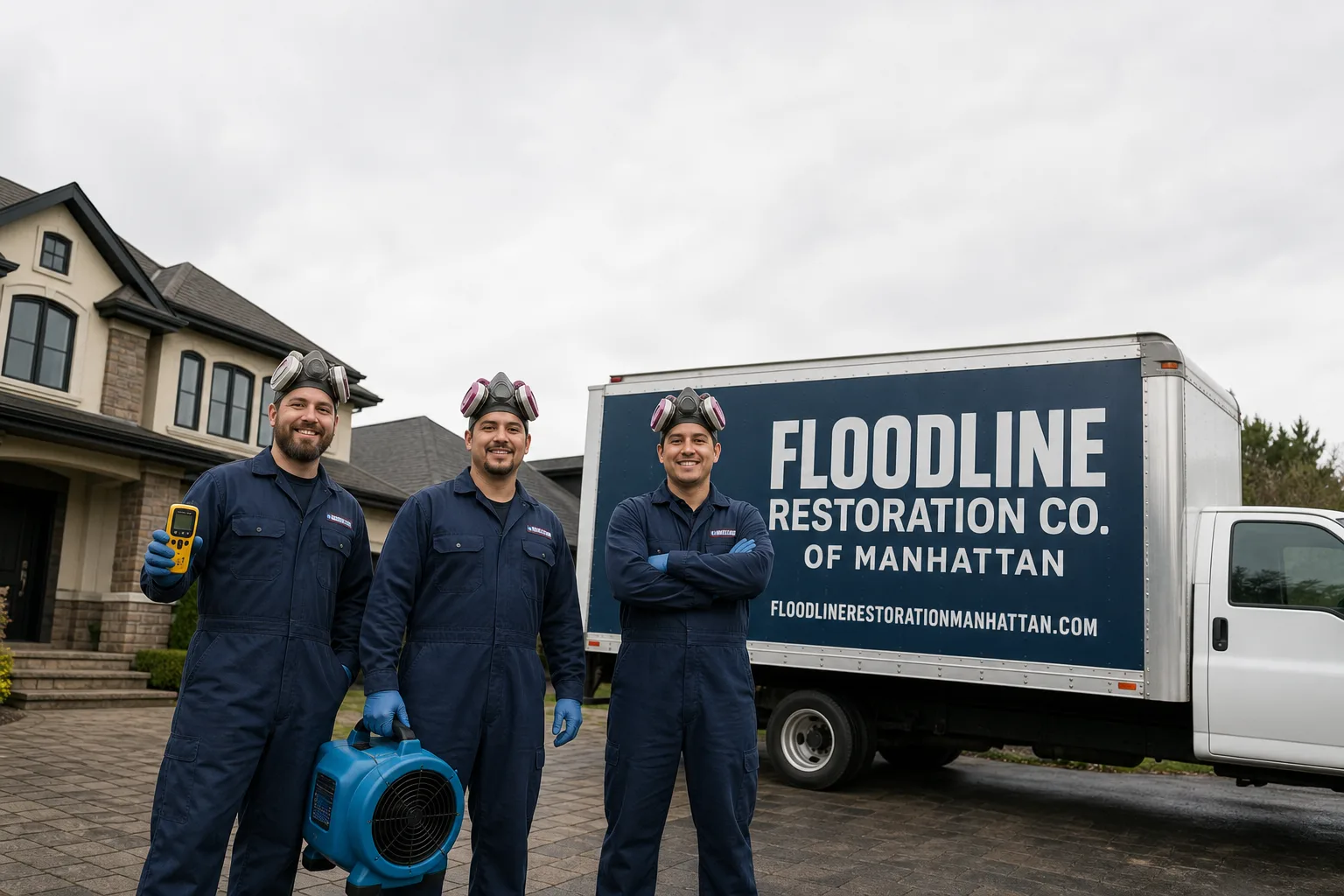
Free visual inspection and a written scope of work before any mitigation begins - photos, moisture readings, and drying logs go in your claim file
The scope we write is the scope we bill. Anything new gets shown to you, in writing, before we touch it.






 Before
 After
After Before
 After
After Before
 After
After24/7 Emergency Mold Remediation in Inwood
Mold remediation in Inwood typically costs $1,400 to $5,600 depending on containment needs and how far saltwater intrusion has spread through wall cavities. Most jobs we handle in the hamlet are completed within 3 to 5 days once containment is set. If you’ve got visible mold or a musty smell that won’t quit after flooding, call (917) 924-4221 and you’ll get a live dispatcher, not a recording, any hour of the day. The first hour matters because airborne mold spores move fast through forced-air systems in Inwood’s aging Cape Cods and ranches. A free visual inspection tells us whether you need full containment or a targeted treatment, and our crews reach most Inwood addresses within 45 minutes of your call. Don’t wait for the drywall to blister or the smell to spread upstairs.
Understanding Mold Remediation Severity in Inwood Properties
Mold severity in Inwood breaks into three practical levels. Level one is surface colonization on interior drywall or ceiling tiles, usually from condensation or a one-time leak, and it responds to HEPA vacuuming, antimicrobial treatment, and source correction. Level two involves mold within wall cavities or insulation, common in Inwood’s 1940s-1960s slab-on-grade construction where moisture wicks upward through concrete and feeds hidden growth behind baseboards. That requires containment, negative air pressure, and removal of affected drywall to expose the substrate. Level three is the Inwood signature: salt-contaminated substrates from Jamaica Bay storm surge that keep reabsorbing humidity and reactivating mold even after surface treatment. Any remediation on level three demands salt-flush protocols before antimicrobial application, or the growth returns within months. Our technicians assess severity with thermal imaging and moisture meters before proposing a scope.
Why Inwood Property Owners Choose Floodline Restoration Co. of Manhattan
- 45-minute response commitment - our dispatch board tracks incoming calls from Inwood and routes the nearest certified crew immediately, not after a sales call.
- 24/7 live answer - a real person picks up at 2 a.m. when a nor’easter pushes Jamaica Bay water into your crawl space. No automated tree, no call-back request.
- IICRC-certified crews - our technicians hold AMRT, WRT, and FSRT certifications, which matter when saltwater contamination and structural drying come into play.
- Free visual inspection - we walk the property, check wall bases for efflorescence, and give you a written scope before any work begins.
- Direct insurance billing - we document everything from hour one, send the paperwork to your carrier, and handle adjuster communication ourselves.
- One team, start to finish - the same Floodline crew that sets containment handles drying, treatment, and any rebuild. No mid-job handoff, no strangers in your house.
Our Mold Remediation Process
Inspection & Assessment
We start with a visual walkthrough and moisture mapping across floors, walls, and crawl spaces. In Inwood we specifically check for white chalky efflorescence at wall bases, a sign of past saltwater intrusion that inland inspectors routinely miss.
Containment & Source Control
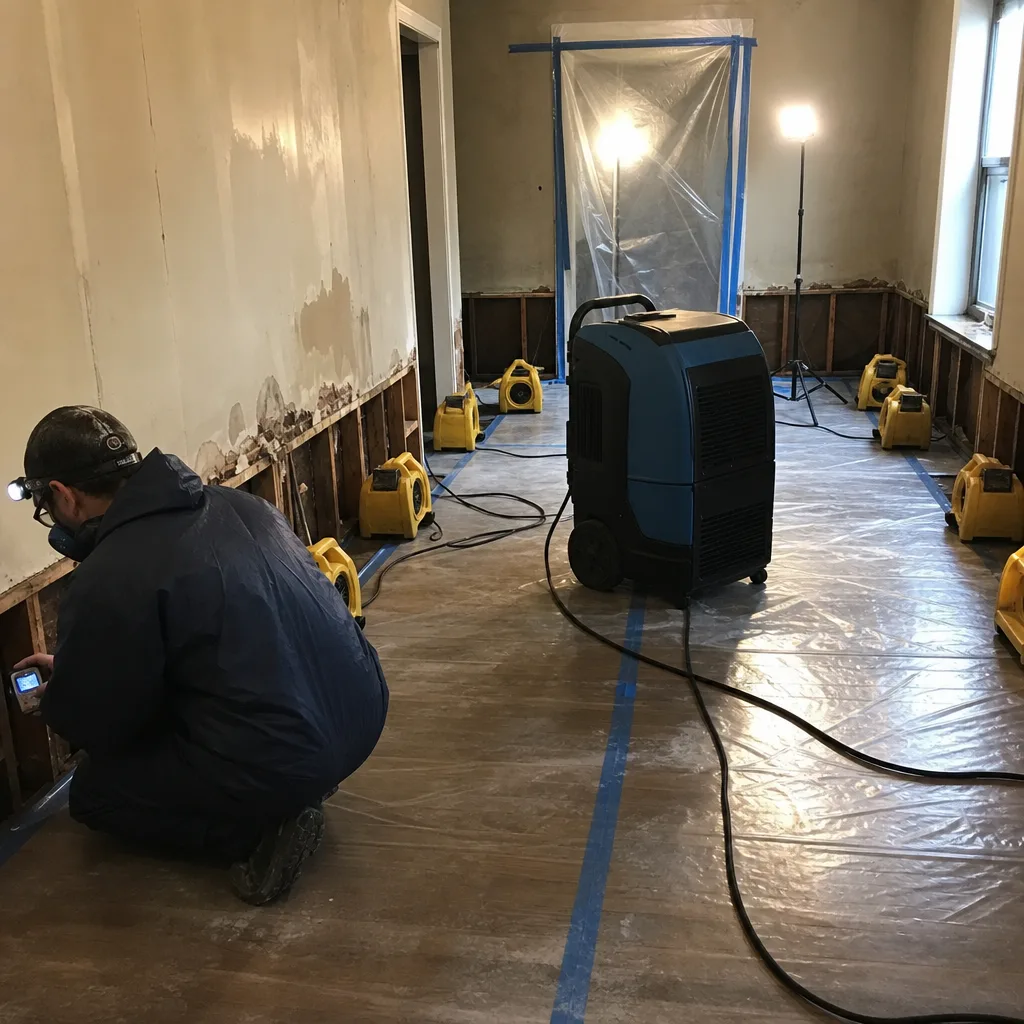
We seal affected areas with 6-mil polyethylene and run HEPA air scrubbers to establish negative pressure. Stopping the moisture source, whether it’s a leaking sill plate or slab wicking, happens before any treatment.
Drying & Dehumidification
Dri-Eaz and Phoenix dehumidifiers run on a logged schedule with daily hygrometer readings until structural drying targets are met, not just when surfaces feel dry to the touch. Inwood’s high ambient humidity means we hold drying longer than inland protocol suggests.
Salt-Flush & Antimicrobial Treatment
Where efflorescence or known surge exposure is present, we flush affected substrates to draw out sodium chloride before applying EPA-registered antimicrobials. This step is the difference between a repair that lasts and a mold recurrence in 8 months.
Air Quality Restoration
After treatment, HEPA filtration and air scrubbing bring spore counts down to clearance levels. We can coordinate third-party post-remediation verification if you or your insurer want independent confirmation.
Repairs & Restoration
We replace what we removed: drywall, insulation, trim, and any flooring affected. Floodline handles the rebuild, so you’re not juggling a mold crew and a separate carpenter.
Need Emergency Mold Remediation in Inwood Now?
Crews minutes away, answering live 24 hours a day. The sooner we start, the less it costs.
Working With Your Insurance Company
Mold coverage on Inwood homeowner policies varies by carrier and by whether the mold stems from a covered peril like hurricane storm surge or from long-term seepage, which most policies exclude. What helps every claim is documentation from the first hour: photos of visible growth, moisture readings, and a line-item scope that separates remediation from rebuild. Floodline Restoration Co. coordinates adjuster communication directly, so you’re not stuck explaining containment protocol or drying logs to a desk adjuster while mold spreads. Our crews document room by room, log daily moisture readings, and provide your insurer the same data we use to hit dry standard. Curt Bowman, our founder, built the company around making insurance billing straightforward, not something homeowners dread.
What We Provide Your Insurer
- Thorough documentation of the loss
- Photos of all damage, room by room
- Moisture readings and drying logs
- A detailed, line-item scope of work
- Direct coordination with your carrier
Built for Inwood’s Loss Calendar
Inwood’s mold season does not follow the same rhythm as inland Nassau County. Water pushes up from Jamaica Bay during nor’easters between September and April, flooding crawl spaces and shallow basements in hours, not days. Summer brings a different problem: high ambient humidity on the South Shore keeps sub-grade walls damp even without standing water, so condensation-fed mold grows inside wall cavities all through July and August. January freezes burst supply lines in the unheated crawl spaces beneath 1950s Cape Cods on blocks like Wanser Avenue and Lord Avenue, and the resulting slow leaks go unnoticed until wall bases darken. Spring thaw raises the water table under slab-on-grade homes, feeding capillary moisture through unsealed concrete. Each of these events leaves salt-laden moisture in wall cavities if the original flooding was tidal, compounding what a new leak does months later. Floodline dispatches crews for all of it, year-round, with the same Mold Remediation team trained on flood-cycle moisture patterns. For homeowners in Inwood, that local calendar knowledge is the difference between a one-time repair and a recurring war with black mold.
Mold Remediation Across Inwood’s Neighborhoods
Inwood’s residential grid from Doughty Boulevard south to the bay presents different mold profiles block to block. The streets between Sheridan Boulevard and Bayview Avenue sit closest to the water, and those homes take surge water during even moderate coastal storms, which means our crews expect to find salt-contaminated substrates there and plan for salt-flush treatment from the first inspection. North of Mott Avenue, where homes are slightly older and many sit on raised slabs, condensation and failed vapor barriers drive more growth than direct flooding, so we focus on crawl space dehumidification and rim joist sealing. Along Lord Avenue and the blocks around Inwood Park, homes built during the postwar boom share similar shallow basements, and we run into the same problem repeatedly: prior cosmetic repairs hiding efflorescence above baseboards, with mold festering behind the fresh paint. The corridor near Five Towns Community Center sees older ranches where original single-wythe foundations admit ground moisture through cracks that reopening with every freeze-thaw cycle. Wherever the address in Inwood, our dispatch sends a crew that knows what that part of the peninsula does when water shows up.
Specialized Mold Remediation Services We Offer in Inwood
Mold Inspection & Testing
Our technicians inspect for visible growth, hidden moisture, and the salt bloom that signals past Jamaica Bay surge intrusion. We take spore samples where needed and provide a written report you can hand to your insurer or keep for your records. Every inspection in Inwood includes a crawl space or slab check, because that is where this hamlet’s problems start.
Mold Removal
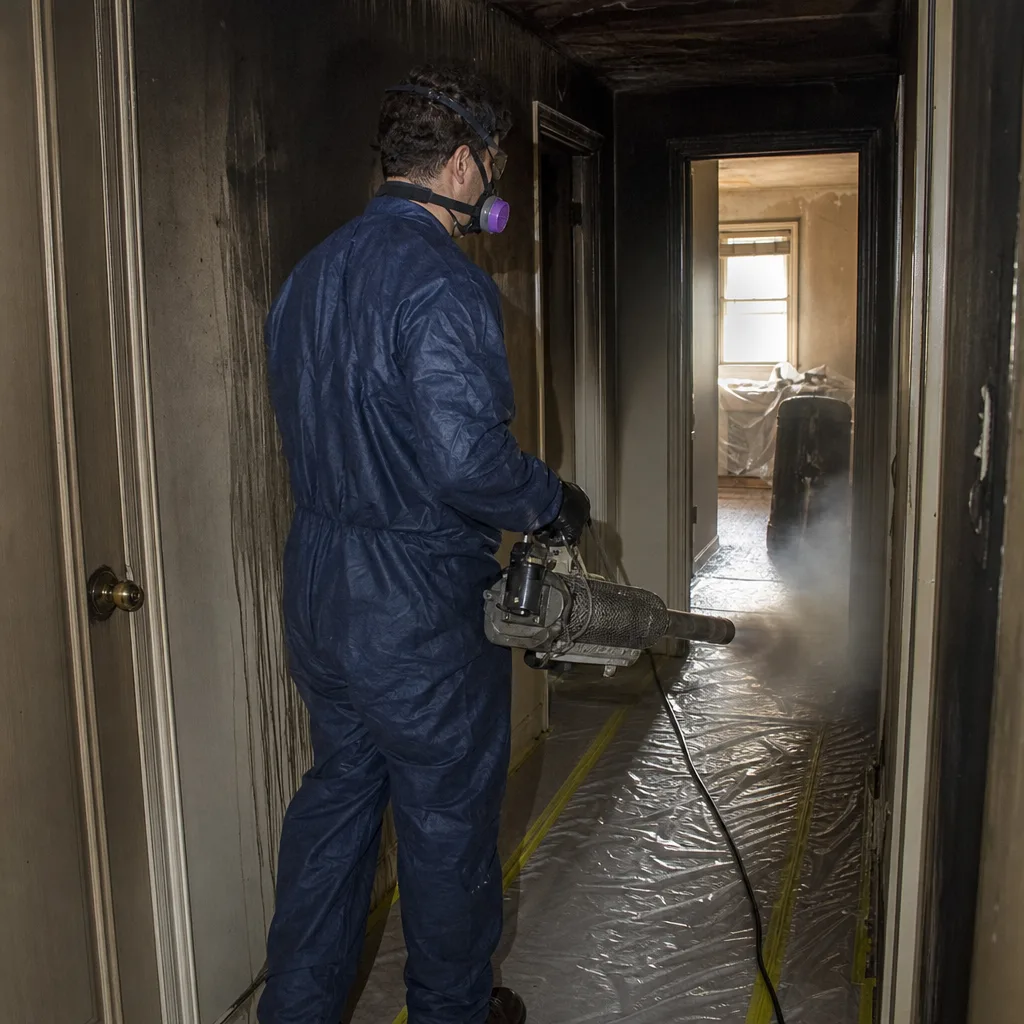
We remove mold from drywall, framing, insulation, and flooring with containment and HEPA filtration. On Inwood’s Cape Cods and ranches, removal often means opening wall cavities to check for salt-contaminated substrate, not just cutting out the stained surface.
Black Mold Remediation
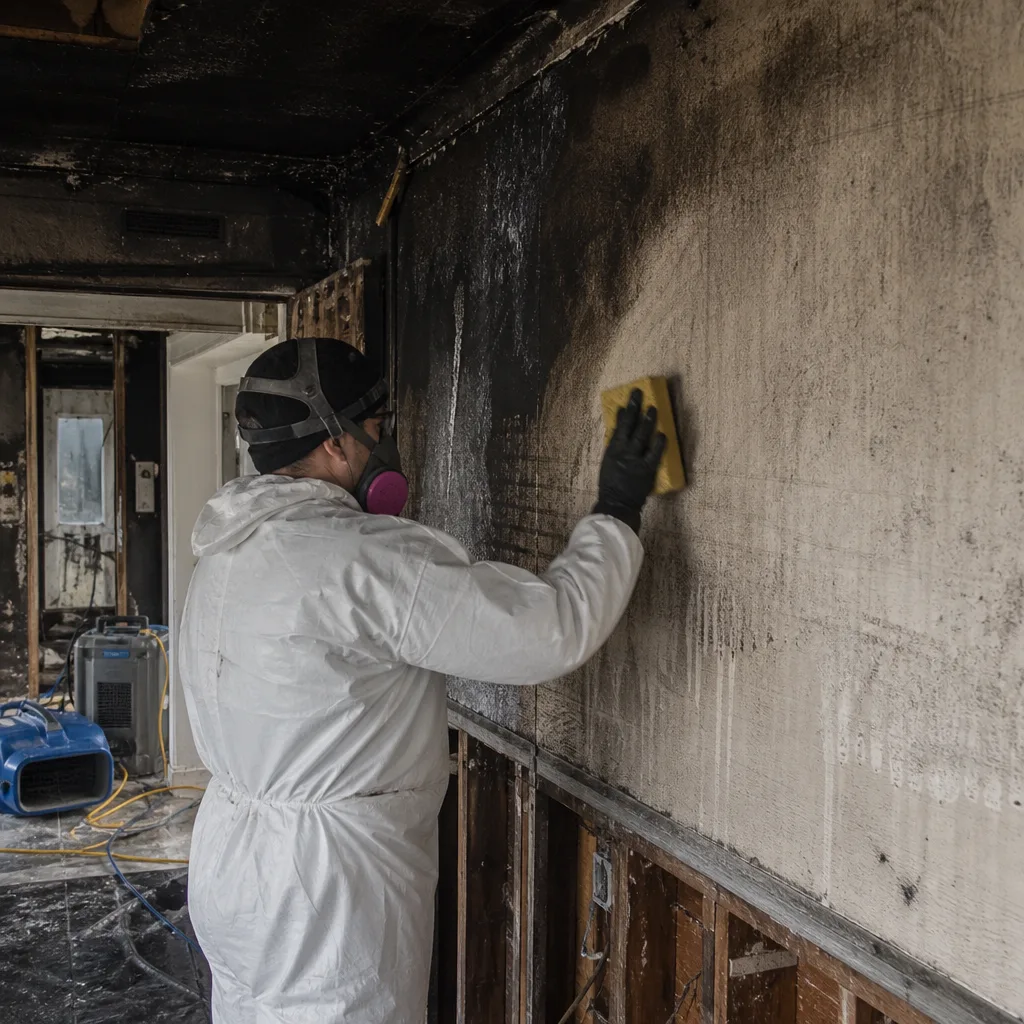
Stachybotrys, the black mold homeowners worry most about, thrives on chronically wet cellulose like drywall and wood subfloors that have wicked saltwater. Full containment and negative air are standard on every black mold job in Inwood, and we treat the substrate, not just the surface growth.
Air Quality Restoration
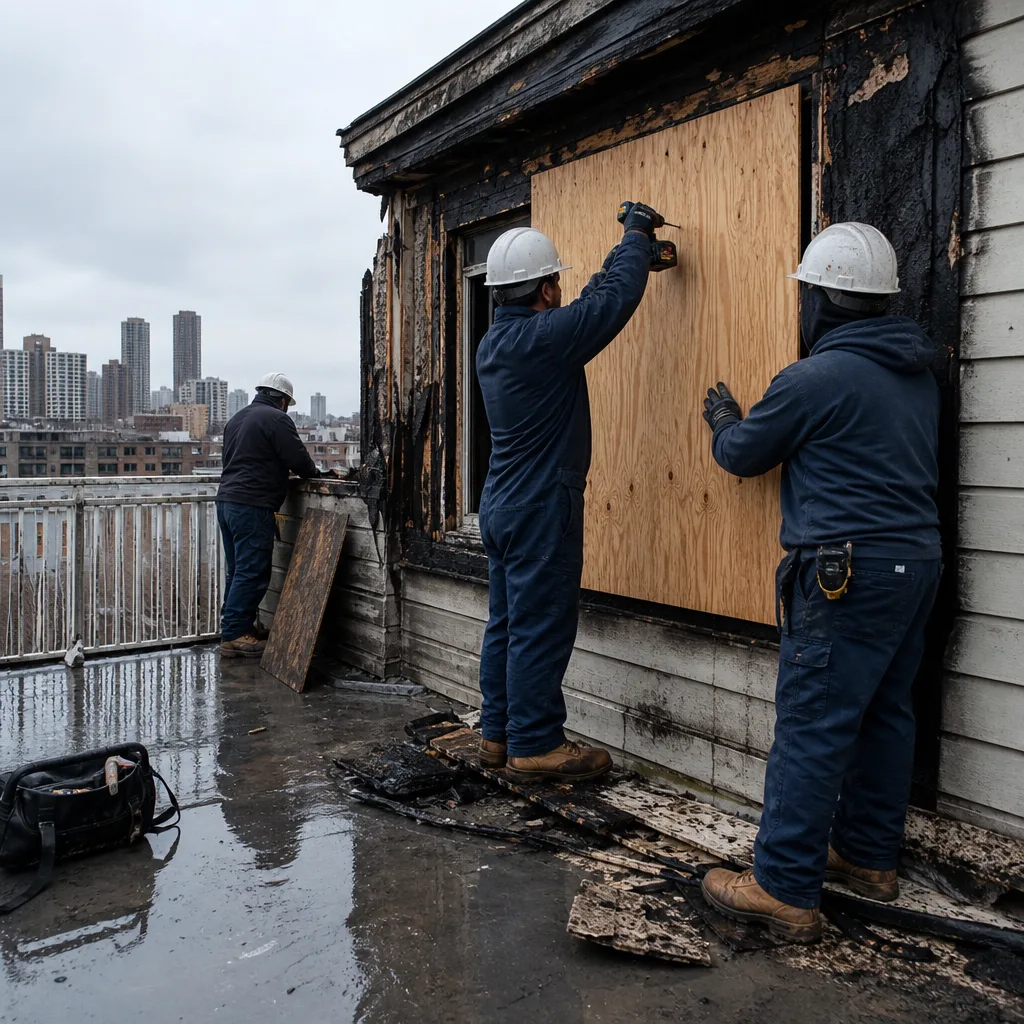
After remediation, we scrub the air with HEPA filtration and can arrange post-remediation clearance testing so you know spore counts have dropped to safe levels. This matters in tight 1950s homes where forced-air ducts spread mold spores to every room within a day.
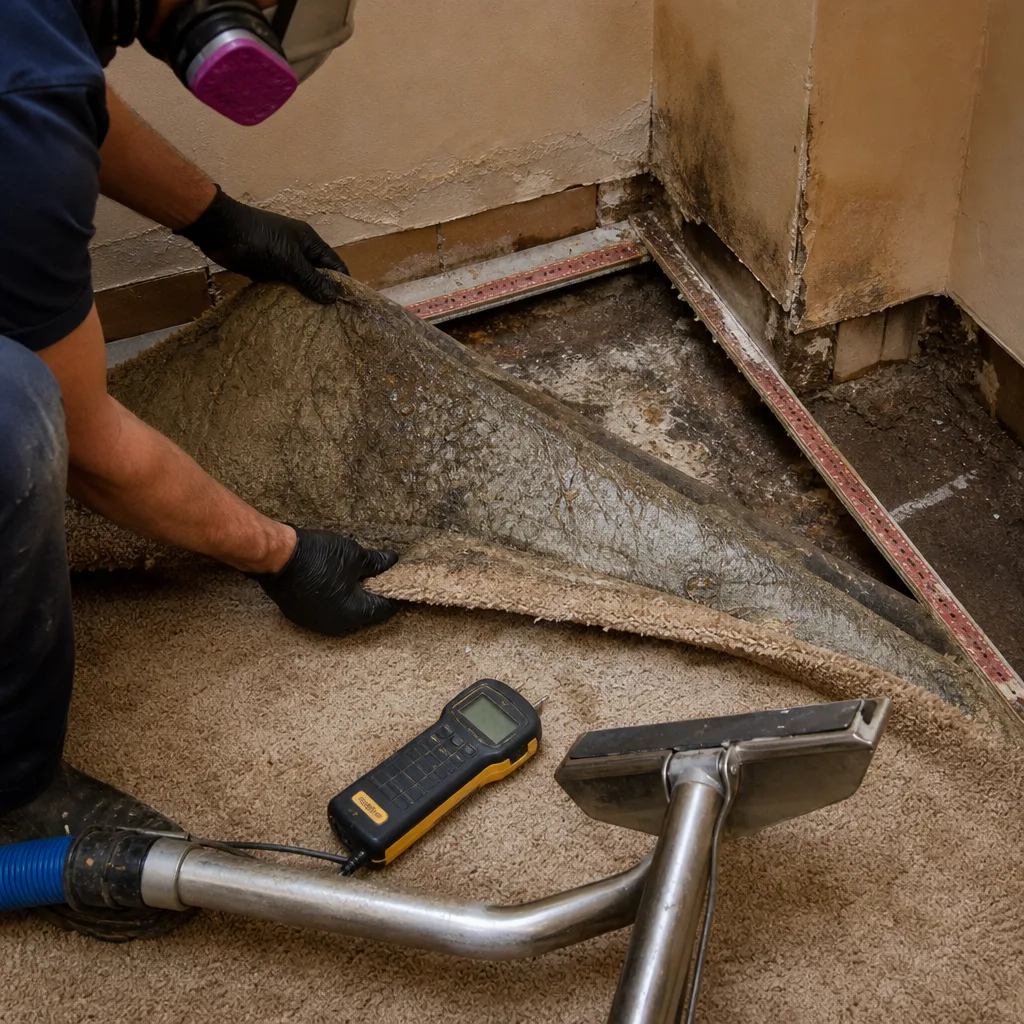
Crawl Space Treatment
Most mold problems in Inwood begin in the crawl space. We seal vapor barriers, correct drainage, install dehumidification, and treat exposed framing. Given Jamaica Bay’s humidity, we spec semi-enclosed crawl spaces for continuous dehumidification, not just a one-time drying pass.
What happens when you call
- 1
A real person answersNo phone trees - you reach a local pro.
- 2
You get an upfront price rangeHonest numbers before anyone is dispatched.
- 3
A background-checked tech heads outLicensed & insured, dispatched right away.
- 4
You approve before work beginsNothing starts until you say go.
Mold Remediation Costs in Inwood, NY
Mold inspection and testing in Inwood runs $350 to $750 depending on the number of samples and whether lab analysis is included. A standard isolated mold removal job, say a bathroom ceiling or a single wall cavity, falls between $1,400 and $2,800. Whole-crawl-space treatment on a 1950s Cape Cod with containment, salt-flush, and dehumidifier installation runs $3,500 to $6,500. Full-home remediation after Category 3 flood water where multiple rooms are involved starts around $5,600 and goes up from there based on how much drywall and insulation must come out. What moves the price in Inwood specifically is the salt question: if substrate flushing is needed, the job costs more than surface treatment, but skipping it guarantees a recurrence. Insurance-covered claims vary; many policies exclude mold from seepage but cover it when it results from a covered peril like a sudden pipe break or storm surge. The free visual inspection is the fastest path to a firm written scope. Call (917) 924-4221 and we will walk the house and tell you exactly what you’re looking at before anything gets signed.
We Also Serve Cities Near Inwood
Floodline runs mold remediation crews through Lawrence, Far Rockaway, Cedarhurst, and Woodmere on the same dispatch board. If you’re just over the line in any of those communities and dealing with bay-driven moisture or crawl space mold, call (917) 924-4221 and we’ll route the nearest available certified crew to you.
Serving Inwood, NY - Our Local Coverage Area
We’re based in the Inwood area and know this community well. Use the map below to see our service coverage - if you’re nearby, we can almost certainly help.
Inwood Mold Remediation Questions, Answered
Why does mold keep returning in my Inwood home even after remediation?
Mold keeps returning in Inwood because salt from Jamaica Bay storm surge remains in wall cavities after surface-only treatments. Sodium chloride absorbs humidity from the air and keeps substrates damp, reactivating mold within months. A proper remediation includes salt-flush treatment before antimicrobial application. If a prior contractor skipped that step, the growth comes back on the same wall. Call (917) 924-4221 for an inspection that checks for efflorescence at wall bases.
Do I need a mold inspection after every minor flood on my street?
Not every street flood requires a full inspection, but if brackish water from Jamaica Bay entered your crawl space or touched any wall base, yes. Tidal water carries salt that standard drying methods do not remove. A visual check with a moisture meter can confirm whether walls have absorbed enough water to support mold. If you’re on a low block near the bay, even ankle-deep street flooding warrants a call.
Why is my 1950s Cape Cod more prone to mold than newer homes in Nassau County?
Your 1950s Cape Cod in Inwood is more prone to mold because original single-wythe masonry and fiberglass insulation absorb and retain moisture far longer than modern materials. Slab-on-grade construction wicks ground moisture upward into wall cavities, and the peninsula’s high humidity slows natural drying. Newer homes have vapor barriers and capillary breaks that many of Inwood’s original homes simply never got.
Can mold remediation in Inwood help with recurring musty smells after a nor’easter?
Yes, musty smells after a nor’easter usually mean mold is active somewhere you cannot see, most often behind baseboards or in crawl spaces where surge water soaked framing. Remediation removes the source, not just the smell. We find hidden growth with moisture mapping and treat the full contaminated area. If the smell returns whenever humidity rises, salt-contaminated substrate is the likely culprit, and salt-flush treatment fixes that.
Is black mold in a crawl space more dangerous in Inwood than inland?
Black mold in an Inwood crawl space is not more toxic than inland growth, but it is more persistent and more likely to spread upward into living space because the peninsula’s humidity keeps crawl spaces damp year-round. The danger level depends on spore concentration and occupant sensitivity, not geography. What makes Inwood different is the salt factor: black mold on salt-contaminated wood needs salt-flush treatment before antimicrobials or it returns.
How fast can you actually get to my Inwood home?
In most cases, a certified crew reaches Inwood addresses within 45 minutes of your call. Dispatch runs 24/7 from our New York City office, and a live person answers the phone at any hour. Response time depends partly on where the nearest available crew is when you call. Call (917) 924-4221 and you’ll know exactly when we’ll be there before you hang up.
Are your technicians certified for mold remediation work?
Our technicians hold IICRC certifications including AMRT (Applied Microbial Remediation Technician), WRT, and FSRT. We also train to RIA and IFA standards. All crews are background-checked, uniformed, and use professional-grade equipment including Phoenix dehumidifiers, Dri-Eaz air movers, and HEPA air scrubbers. Certifications matter when insurance adjusters review a claim file.
What should I do in the first 30 minutes after discovering mold in my Inwood home?
Do not disturb the mold or try to scrub it with bleach. Airborne spores spread fast when disturbed. Close doors to the affected room, turn off your HVAC system so spores don’t circulate through ducts, and call (917) 924-4221. Keep children and pets out of the area. Take photos for your records and your insurer before anything is touched. The sooner containment goes up, the smaller the remediation job will be.
Written by Curt Bowman, Owner at Floodline Restoration Co. of Manhattan, serving Inwood since the company’s founding in 2010.