

Free visual inspection and a written scope of work before any mitigation begins - photos, moisture readings, and drying logs go in your claim file
The scope we write is the scope we bill. Anything new gets shown to you, in writing, before we touch it.






 Before
 After
After Before
 After
After Before
 After
After24/7 Emergency Commercial Restoration in Little Italy
Commercial restoration in Little Italy means something different than it does two blocks west in SoHo. Here, a water loss inside one storefront rarely stays inside one storefront. Shared masonry walls, century-old plumbing, and landmark oversight turn what looks like a routine mitigation into a multi-party event involving landlords, insurance carriers, and sometimes the Landmarks Preservation Commission. Our crews answer live 24 hours a day and reach Little Italy within 45 minutes. If you’re standing in a flooded storefront right now, call (917) 924-4221. The first hour determines whether you’re drying plaster or replacing it.
Understanding Commercial Restoration Severity in Little Italy Properties
Water damage in Little Italy’s pre-1920s tenements follows patterns that standard drywall-construction buildings simply don’t. Category 1 water from a broken supply line is relatively clean. Category 2 carries significant contamination, like laundry overflow or sump pump discharge. Category 3 is the one our crews see most often in these buildings: sewage from a cracked cast-iron soil stack behind a party wall, saturating horsehair-bound plaster and wicking upward through tin ceilings before anyone notices. Fire and smoke behave differently here too. Synthetic soot from burning retail inventory leaves a fine, oily residue that penetrates porous brick and requires HEPA air scrubbing and full containment during cleanup. Mold in a 1910 brick tenement migrates through wall cavities spanning multiple floors when a single roof leak goes undetected for weeks. The severity isn’t just about the water. It’s about the building’s age, materials, and shared structure. That’s why our technicians moisture-map from day one and log daily readings until the dry standard is met, using Dri-Eaz and Phoenix equipment calibrated for masonry and plaster rather than gypsum board.
Why Little Italy Property Owners Choose Floodline Restoration Co. of Manhattan
- 45-minute response commitment: We dispatch from our New York City office, with crews that know Mulberry Street’s stop-work hours as well as they know the equipment.
- 24/7 live answer: A real dispatcher picks up at 2 a.m. Not a recording. Not a call center script. A person who can send a crew immediately.
- IICRC-certified crews: Our technicians hold WRT, FSRT, and AMRT certifications and train to IICRC, RIA, and IFA standards. Background-checked, uniformed, and accountable.
- Free visual inspection: We walk the loss site with you before any scope is written. You see what we see.
- Direct insurance billing: We coordinate with your adjuster and bill your carrier directly. You don’t play messenger.
- One team, extraction to reconstruction: The same certified crew that sets up containment on day one handles rebuild. Full-cycle Commercial Restoration without mid-job handoffs.
Our Commercial Restoration Process
Inspection & Assessment
We arrive within 45 minutes, map the loss, test moisture levels in walls and ceilings with hygrometers and thermal imaging, and give you a written scope before any equipment gets unloaded. The aging party walls and masonry construction mean this step takes longer here, but it prevents missed damage.
Extraction & Stabilization
Standing water comes out with professional extraction equipment, and immediate stabilization includes structural containment. Cast-iron soil stacks may still be actively leaking, so we isolate the source before it re-contaminates the space.
Drying & Dehumidification
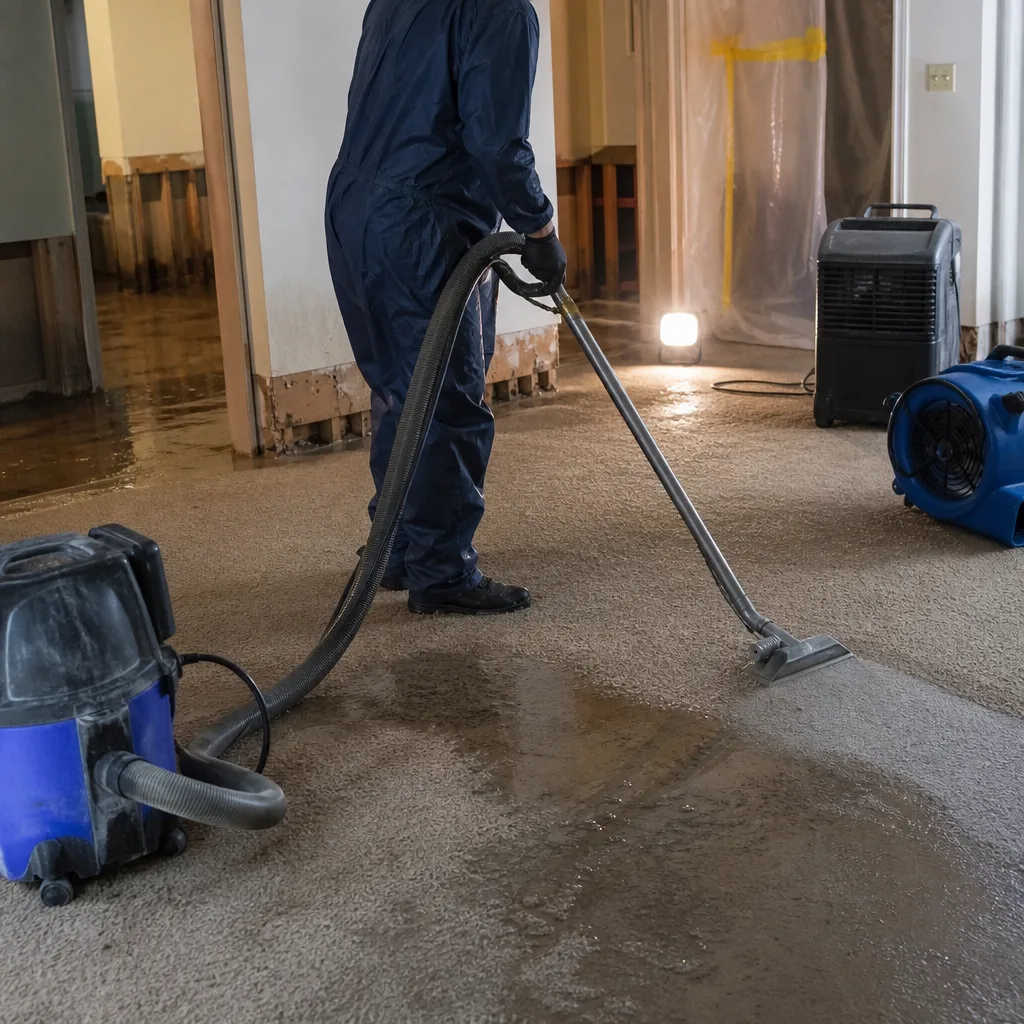
Dri-Eaz and Phoenix dehumidifiers paired with XPOWER and B-Air air movers start running the same visit. We take readings every four hours in the first 48 hours because plaster and tin ceilings release moisture slower than drywall.
Cleaning & Sanitization
Category 2 and 3 water requires antimicrobial application and HEPA air scrubbing to prevent secondary mold. Soot-damaged masonry gets dry-ice blasting or soda blasting as appropriate. We protect original architectural features while removing contamination.
Landmark-Sensitive Restoration
In Little Italy, restoration often means preserving tin ceilings, original brick, and horsehair plaster under LPC oversight. We coordinate with the Landmarks Preservation Commission and the building’s architect to restore rather than replace where feasible, and replace with documented materials when not.
Repairs & Reconstruction
The last phase is rebuilding what the loss destroyed. Walls, floors, storefronts, signage. Done by the same crew that handled day one, backed by the 90-Day Done Right Promise in writing.
Need Emergency Commercial Restoration in Little Italy Now?
Crews minutes away, answering live 24 hours a day. The sooner we start, the less it costs.
Working With Your Insurance Company
In Little Italy, a single water loss commonly brings two, three, sometimes five insurance carriers into the room. The landlord’s policy covers the structure. The tenant’s policy covers the inventory. The neighbor behind the shared party wall has a claim too. We send every scope of work as a detailed, line-item document using industry-standard pricing so adjusters can approve it without friction. We take photos of all damage room by room, log moisture readings daily, and provide drying logs that hold up under examination. Our team speaks directly with your adjuster so you don’t get stuck on hold explaining the difference between Category 2 and Category 3 water.
What We Provide Your Insurer
- Thorough documentation of the loss
- Photos of all damage, room by room
- Moisture readings and drying logs
- A detailed, line-item scope of work
- Direct coordination with your carrier
Built for Little Italy’s Loss Calendar
Little Italy’s commercial restoration losses follow the calendar as predictably as the Feast of San Gennaro. January and February send deep freezes through aging masonry, cracking supply lines and splitting the already corroded cast-iron stacks behind party walls. Late winter and early spring bring the thaw, when snowmelt and rain find every compromised mortar joint along Mulberry and Mott Streets and push into wall cavities that no one notices until mold columns appear. Summer thunderstorms arrive fast and hard in lower Manhattan, overwhelming aging rooftop drains and sending water through tar-and-gravel roofs that have been patched too many times to count. Nor’easters are the wildcard: wind-driven rain hits brownstone parapets at an angle, enters through failed pointing, and saturates interior plaster ceilings. And in September, the Feast of San Gennaro shuts Mulberry Street for eleven days. We build that blackout into every late-summer project timeline because we know the streets better than anyone working from a GPS app.
Commercial Restoration Across Little Italy’s Neighborhoods
The blocks around Mulberry Street between Canal and Broome are the six-story brick tenements most people picture when they hear Little Italy. These buildings often house restaurants and food retailers at street level, where a cast-iron soil stack failure above can pour Category 2 water onto food prep surfaces in minutes. Over on Mott Street, the 1908-era walk-ups still have original tin ceilings and horsehair plaster, and water trapped above those ceilings spreads laterally before it ever shows as a stain. Elizabeth Street’s storefronts tend to be narrow and long, which makes drying equipment staging tight and forces us to use low-profile XPOWER air movers. Cross over Kenmare Street toward the old tenement blocks and you’ll find a mix of retail, office, and residential use sharing the same vertical risers, which means one broken line on the fourth floor affects three commercial tenants below it. Each corridor has a different restoration profile. Our crews know them all because we work them all month after month.
Specialized Commercial Restoration Services We Offer in Little Italy
Office & Retail Restoration
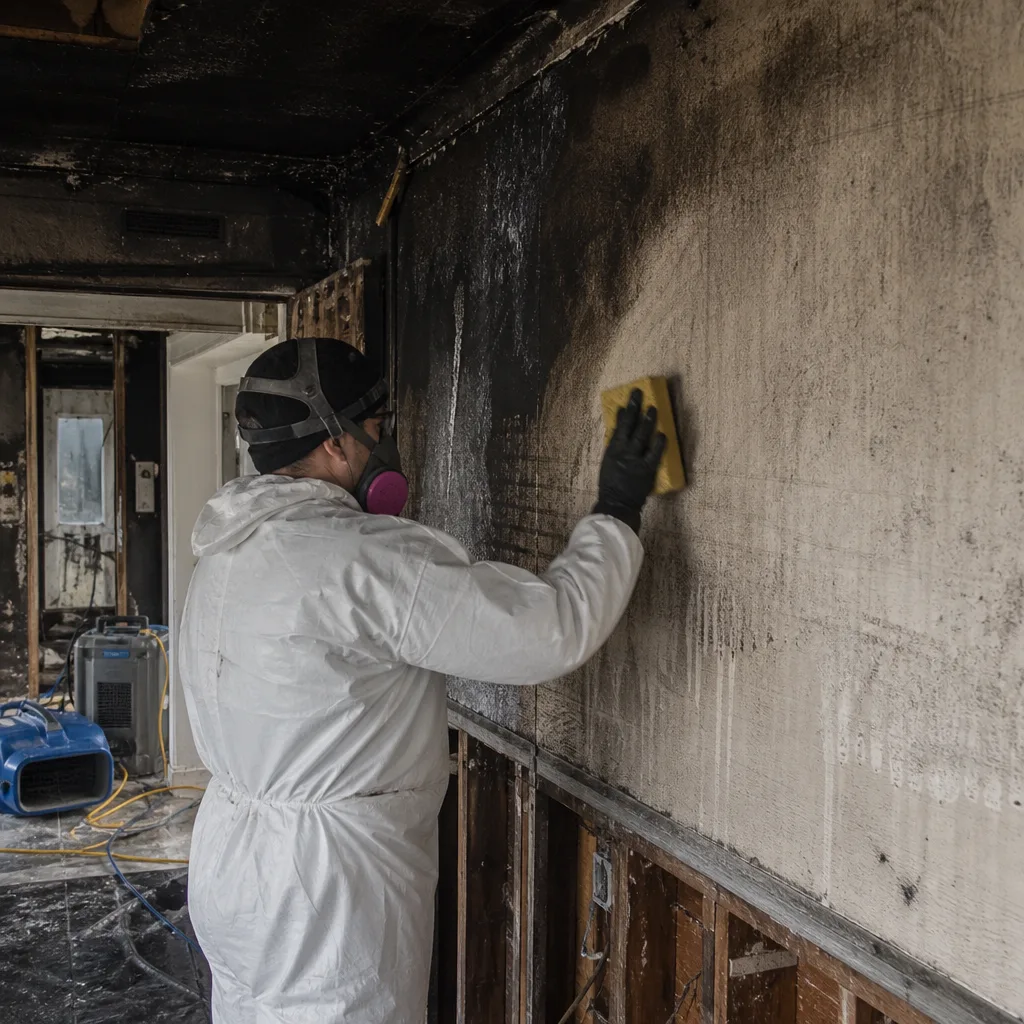
Storefronts along Grand and Hester Streets rarely close for more than a few days when we’re on the job. We prioritize keeping your doors open by setting up containment that allows partial operation where safe, and we schedule noisy extraction around your business hours. A retail loss in Little Italy often means perishable inventory, cash registers, and point-of-sale systems in the path of water. We move equipment, document inventory loss for your carrier, and get the drying process running the same visit.
Multi-Unit & HOA Restoration
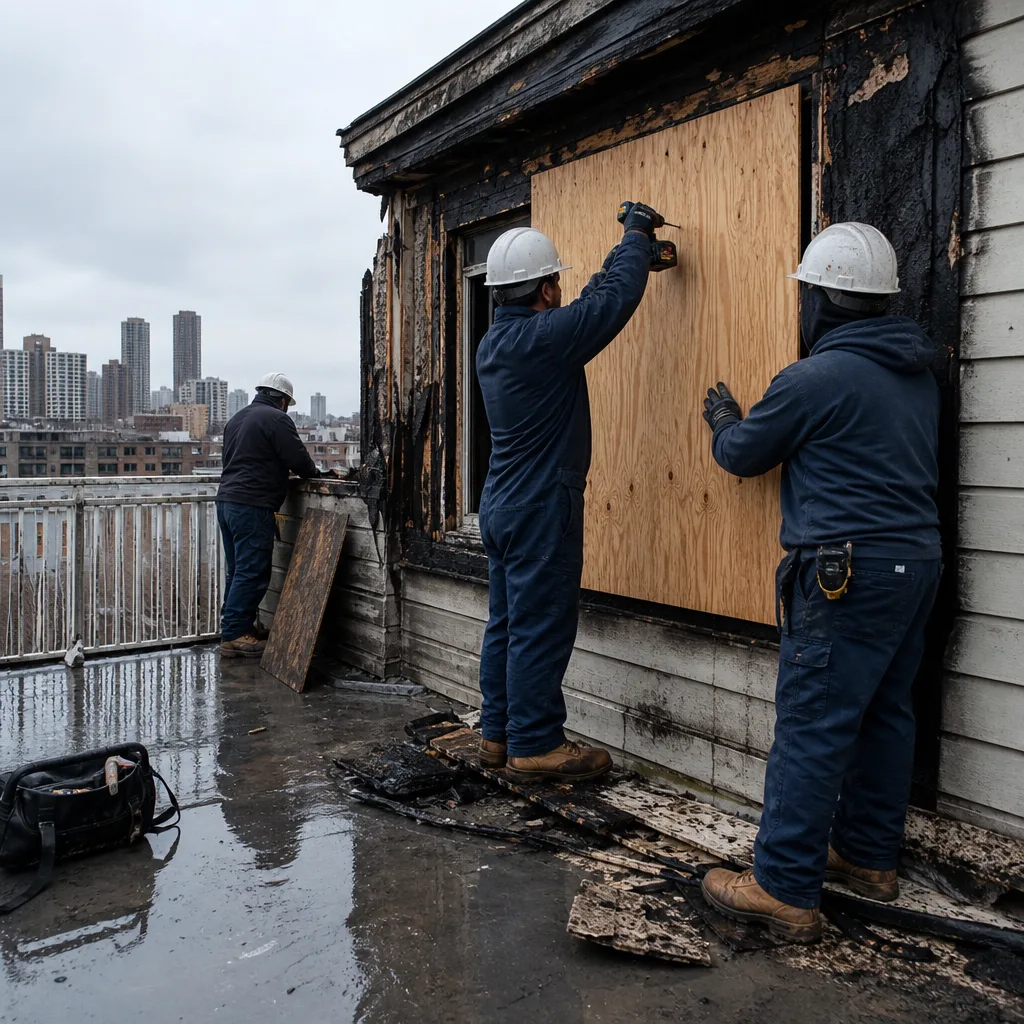
This is the work that defines Little Italy. When a roof leak or stack failure affects four commercial tenants and two residential units above them, the HOA needs one contractor who understands every policy, every party wall, and every shared system. We provide a single point of accountability, a written scope that each carrier can review, and a moisture log that documents exactly where the water went and when it stopped moving. That documentation settles disputes before they start.
Industrial Facility Cleanup
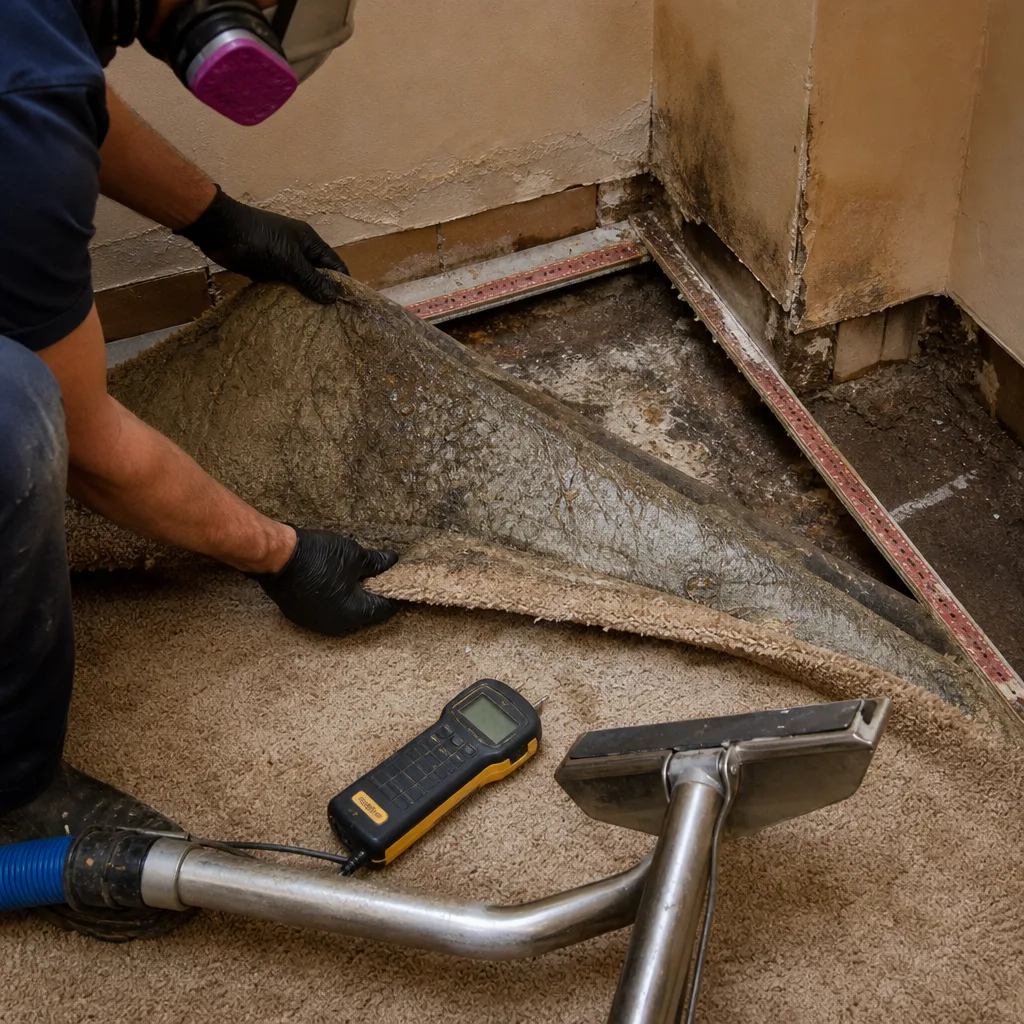
Production spaces around the Canal Street corridor have their own challenges: exposed brick, high ceilings, larger square footage, and often a landlord who has deferred maintenance for years. We handle direct water extraction, structural drying with multiple dehumidifiers staged in series, and cleaning of industrial equipment affected by soot or contaminated water. We also recognize that every day a facility sits closed is a day of lost revenue, which is why we staff these jobs around the clock when needed.
Large-Loss Response
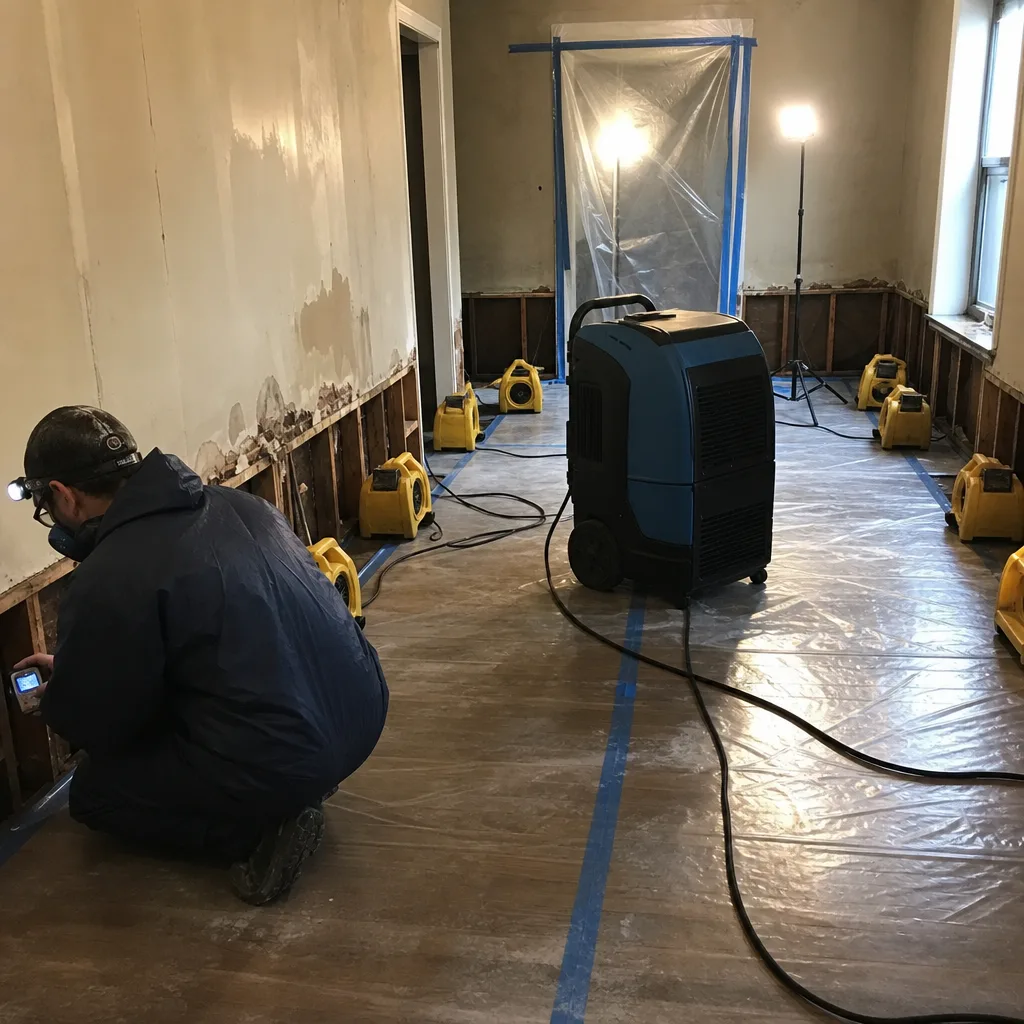
When a soil stack fails across three floors of a Mott Street tenement, or a nor’easter pushes water through the roof of a five-story mixed-use building, this stops being a small project. We bring additional certified crews, multiple truckloads of Dri-Eaz and Phoenix equipment, and a project manager who stays on site through the drying cycle. Large-loss work in Little Italy always involves multiple carriers, often the LPC, and usually a landlord who has never dealt with a claim of this size. We take that off their plate.
Business Interruption Minimization
The fastest way to turn a $30,000 water loss into a $300,000 loss is to let the space stay closed for weeks while paperwork gets sorted. Our job is to keep the closure as short as physically possible. We document everything from the first hour so your business interruption claim has the evidence it needs. We stage containment so you can keep serving customers where it’s safe. And we work directly with your adjuster on scope approvals so the rebuild starts the same week, not six weeks later.
What happens when you call
- 1
A real person answersNo phone trees - you reach a local pro.
- 2
You get an upfront price rangeHonest numbers before anyone is dispatched.
- 3
A background-checked tech heads outLicensed & insured, dispatched right away.
- 4
You approve before work beginsNothing starts until you say go.
Commercial Restoration Costs in Little Italy, NY
In Little Italy, a small water extraction and drying job with no structural damage typically runs $2,800 to $6,500 depending on square footage and whether masonry is involved. A full restaurant or retail storefront restoration with Category 3 water, plaster removal, masonry drying, and finish work generally lands between $18,000 and $60,000. Large-loss multi-tenant claims can and do exceed $150,000 when multiple floors and landmark-sensitive work are involved. What moves the price most is the building’s age and the materials involved. Drying thin modern drywall in a renovated storefront is straightforward. Drying horsehair plaster and tin ceilings behind a shared party wall is not. Also consider that LPC-required restoration of original features costs more than standard replacement. Most claims are insurance-covered. Our free visual inspection gives you a written scope with firm numbers, not a range that widens after the job starts. Call (917) 924-4221 for an exact quote on your situation.
We Also Serve Cities Near Little Italy
Floodline Restoration Co. of Manhattan handles commercial restoration across the lower Manhattan market. We serve Fairview, Harrison, East Bronx, Hunts Point, and the surrounding communities with the same 45-minute response commitment and the same 90-Day Done Right Promise in writing.
Little Italy Commercial Restoration Questions, Answered
How do shared party walls between Little Italy tenements affect the scope of a commercial water damage restoration?
Shared party walls mean a water loss from one building migrates directly into the adjacent building through the masonry, often saturating both sides of the wall before the first visible stain appears. The scope must include drying both properties, which requires access agreements between landlords and coordination across multiple insurance policies. We document everything on the day-one inspection so there’s no dispute later about whose loss it is.
What specific challenges do original cast-iron soil stacks in Little Italy tenements pose during commercial restoration?
Original cast-iron stacks from the 1880s through the 1920s corrode from the inside, cracking behind walls where the leak is invisible until water has traveled through the building for weeks or months. During restoration, accessing these stacks usually means opening plaster walls, which triggers lead paint and asbestos protocols on any pre-1978 structure. We coordinate testing and abatement within the restoration scope so you’re not left with a half-finished wall.
How does the Feast of San Gennaro affect commercial restoration timelines on Mulberry Street?
For about eleven days each September, Mulberry Street is closed to vehicle traffic and NYC DOT street-use permits make staging dumpsters, trailers, or scaffolding nearly impossible on or near the block. Any mitigation or rebuild that requires street access has to be scheduled around that window. We build the blackout period into every project timeline for work on or near Mulberry Street starting in late summer.
Are lead paint and asbestos always a concern when restoring commercial spaces in Little Italy’s older buildings?
In any pre-1978 structure, the presumption should be yes. Little Italy’s tenements are mostly from the 1880s through 1920s, and lead paint and asbestos-bearing materials were standard in commercial spaces of that era. We follow proper containment and abatement protocols through certified subcontractors, and we coordinate testing documentation with your carrier so the claim reflects the full scope, not just the visible damage.
How do nor’easters and freeze-thaw cycles lead to hidden mold in Little Italy commercial storefronts?
Nor’easter wind drives rain through failing mortar joints and brownstone parapets, saturating wall cavities that never fully dry in the cool, shaded air of these narrow streets. Freeze-thaw cycles widen those mortar gaps each winter, so the problem compounds. Mold then grows inside unseen cavities and migrates through shared walls before any visible evidence appears. This is why we moisture-map and document drying progress daily, not just at setup and teardown.
How fast can you actually get to my Little Italy commercial property?
We commit to 45 minutes for any commercial property in Little Italy. Our crews stage from the New York City office and know the street patterns around Mulberry, Mott, and Elizabeth without relying on GPS detours. A live dispatcher answers every call at any hour and puts a crew in motion immediately.
Will my insurance cover commercial restoration in a building this old?
Most commercial policies cover sudden and accidental water damage regardless of building age. The disputes arise over documentation. We provide the evidence adjusters need: photos from the first hour, moisture readings every four hours initially, drying logs until the dry standard is met, and a line-item scope of work with industry-standard pricing. We bill your carrier directly and speak with the adjuster ourselves.
Do I need full restoration or can you just clean and dry my commercial space?
It depends on the water category and the materials affected. Clean Category 1 water on tile and glass can often be extracted and dried without major reconstruction. Category 2 or 3 water in horsehair plaster or behind a party wall almost always requires removal and replacement. We tell you honestly which path is right, with a written scope either way. Call (917) 924-4221 for a free visual inspection and a straight answer.
Serving Little Italy, NY - Our Local Coverage Area
We’re based in the Little Italy area and know this community well. Use the map below to see our service coverage - if you’re nearby, we can almost certainly help.
Contact Floodline Restoration Co. of Manhattan
If you’re dealing with a commercial water loss, fire, or mold event in Little Italy, call us now at (917) 924-4221. A live person answers. We’ll send a certified crew within 45 minutes, give you a free visual inspection and a written scope, and handle your insurance carrier directly. Every job is backed by the 90-Day Done Right Promise, in writing. We stand behind it. That’s the Keystone Standard, and it’s been our way since Curt Bowman founded this company in 2010.
Written by Curt Bowman, Owner at Floodline Restoration Co. of Manhattan, serving Little Italy with commercial restoration done right and backed in writing.