
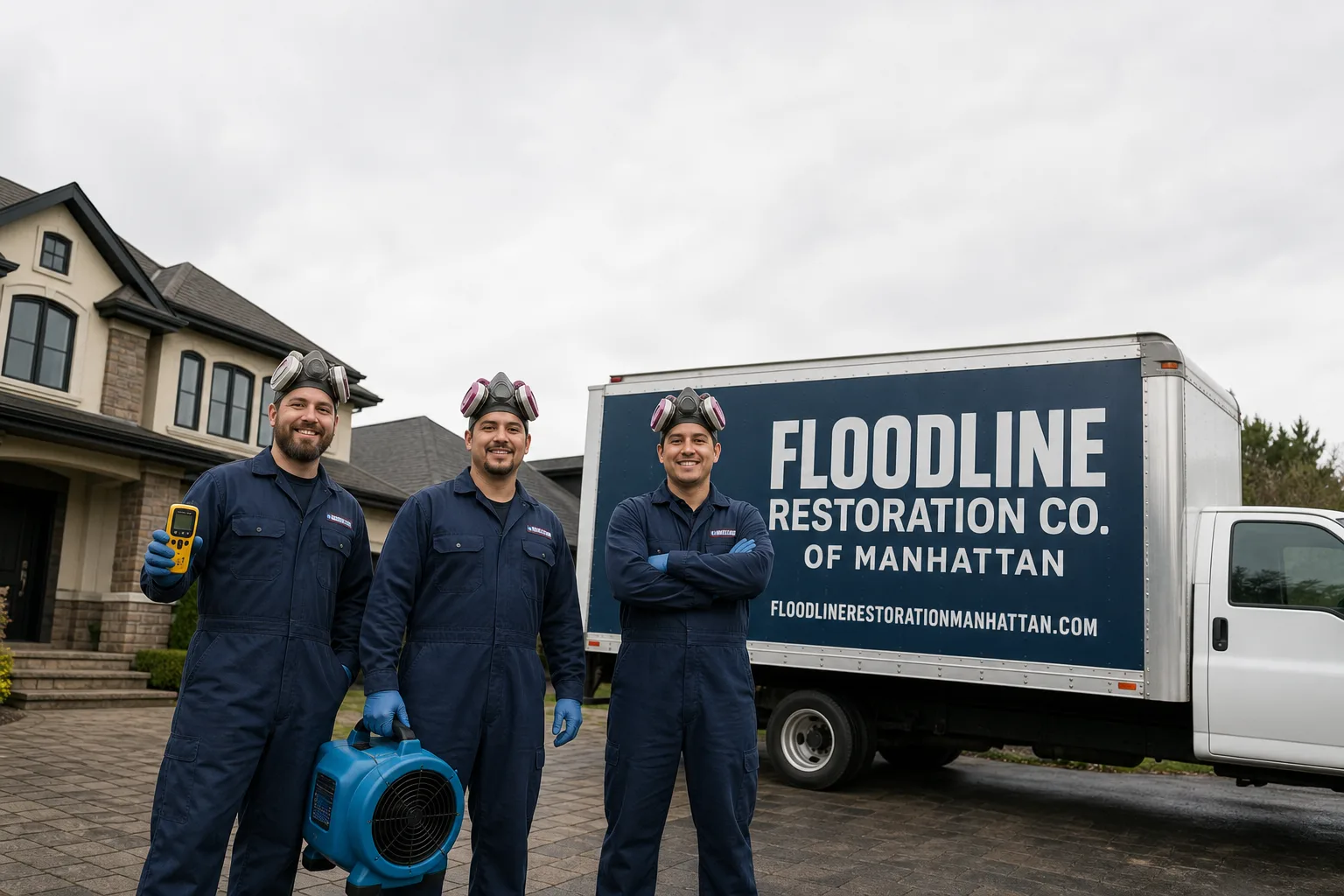
Free visual inspection and a written scope of work before any mitigation begins - photos, moisture readings, and drying logs go in your claim file
The scope we write is the scope we bill. Anything new gets shown to you, in writing, before we touch it.






 Before
 After
After Before
 After
After Before
 After
After24/7 Emergency Commercial Restoration in Little Neck
Commercial water, fire, or mold damage in Little Neck doesn’t wait for business hours, and neither do we. Floodline Restoration Co. of Manhattan answers every call with a live dispatcher, 24 hours a day, and crews reach commercial properties across Little Neck within 45 minutes of a call. If water is moving through a storefront on Northern Boulevard or a medical office near the bay, the first hour decides what gets salvaged and what gets torn out. Call (917) 924-4221 the moment you see damage. We arrive, assess, contain, and start extraction the same visit, with a written scope before any work begins.
Little Neck’s commercial buildings sit in one of the most flood-exposed corridors in Queens. That changes how restoration has to be done. We’ll explain exactly what that means for your property below.
Understanding Commercial Restoration Severity in Little Neck Properties
Commercial restoration in Little Neck is not one problem with one fix. The severity of damage depends on water category, building age, and how long moisture sits before drying starts. Category 1 water comes from a clean source like a broken supply line. Category 2 carries contaminants from appliances or sump failures. Category 3, what we call black water, contains sewage, marine sediment, or storm-surge water from Little Neck Bay. That last category drives most of the worst commercial losses along the bay-front blocks, where nor’easters and tidal push send Category 3 water through door thresholds and into subfloors.
The building stock here compounds the problem. Little Neck’s commercial and mixed-use buildings from the 1920s through the 1950s hold onto moisture inside original plaster-over-lath assemblies. Plaster absorbs water slowly and hides it well. A storefront owner can see a damp stain and think the problem is minor while moisture has already wicked four feet up the wall cavities behind the plaster. Thermal imaging and moisture meters expose what the naked eye misses. That’s why every commercial job here starts with a moisture map, not just a visual once-over.
We also look for damage that predates the current loss. After Hurricane Sandy, many Little Neck commercial buildings were patched and painted without a complete dry-out. That trapped moisture never left the wall cavities. Today, what looks like a new leak is often a decade-old problem reactivated. You can’t fix what you don’t find, and hidden moisture is the most expensive kind.
Why Little Neck Property Owners Choose Floodline Restoration Co. of Manhattan
- 45-minute response commitment: We’re not the company that calls you back in the morning. Our crews are dispatched from the NYC office and reach Little Neck addresses fast, because a bay-front storefront can go from wet to ruined in one overnight cycle.
- 24/7 live answer, not a recording: The person who picks up at 2 a.m. is the person dispatching the crew. No answering services, no call centers, no “leave a message.” That has been how this company works since 2010.
- IICRC-certified crews on every job: Our technicians hold WRT (Water Restoration), FSRT (Fire & Smoke Restoration), and AMRT (Applied Microbial Remediation) certifications. The person who reads the moisture map is the same person who runs the drying equipment.
- Free visual inspection, always: Before any money changes hands, you get a straight assessment of what’s wet, what can be saved, and what has to go. A written scope comes before work starts.
- Direct insurance billing: For commercial claims, we coordinate directly with your carrier, provide the documentation they need, and bill them where the policy allows. Property owners and office managers don’t play messenger.
- One team from extraction to reconstruction: We don’t dry the building and hand you off to a different company for the rebuild. The same certified crew that sets containment also hangs the new drywall and matches your existing trim.
Our Commercial Restoration Process
Inspection & Assessment
We arrive, walk every affected area, and take baseline moisture readings from walls, floors, and the air. Thermal imaging shows us water trapped behind plaster and under vinyl flooring that a visual inspection misses. You get a clear explanation of the damage class and what it means before we touch anything.
Extraction & Stabilization
Standing water comes out first. We use truck-mounted and portable extraction units to remove water from floors, subfloors, and carpet. Anti-microbial treatment goes down at this stage when the water is Category 3, which is common along Little Neck’s bay-front commercial strips.
Drying & Dehumidification
We set Dri-Eaz dehumidifiers and Phoenix air movers in a calculated pattern to force moisture out of building materials. Daily readings go into a log that we share with you and your insurer. The drying continues until moisture levels match the building’s pre-loss condition, not just until things feel dry.
Cleaning & Sanitization
Surfaces that can be salvaged get cleaned, sanitized, and deodorized. In flood cases, we follow containment and antimicrobial protocols required for Category 3 water. Air scrubbers run during the entire process to pull airborne spores and particulate out of the breathing space.
Document & Inventory Recovery
Little Neck offices, dental practices, and retail businesses keep records, patient files, and inventory on site. We pack out and stabilize documents, electronics, and stock so your business can keep operating even while the building dries. Contents restoration is part of the job, not an afterthought.
Repairs & Restoration
The final step is full repairs: drywall replacement, flooring, painting, trim, and structural fixes. Because the same crew has been on the job since hour one, the repair work matches the original building. No hand-offs, no new scope surprises, no arguing about who did what.
Need Emergency Commercial Restoration in Little Neck Now?
Crews minutes away, answering live 24 hours a day. The sooner we start, the less it costs.
Working With Your Insurance Company
Commercial flood and storm damage claims in Little Neck get complicated fast. Bay-front properties inside FEMA flood zones carry policies with different deductibles and coverage limits than inland commercial buildings. Our office handles carrier communication from day one. We document the loss, take room-by-room photos, log moisture readings, and build a line-item scope that matches industry standards. When your adjuster calls, we answer. When your carrier needs a drying log from day four, we send it. That direct billing arrangement removes the biggest headache for Little Neck business owners: being the go-between who has to translate restoration jargon to an insurance desk. We stand behind the 90-Day Done Right Promise on every job, in writing, with no fine print battles. That’s the Keystone Standard. If something isn’t right within 90 days, we make it right. Full stop.
What We Provide Your Insurer
- Thorough documentation of the loss
- Photos of all damage, room by room
- Moisture readings and drying logs
- A detailed, line-item scope of work
- Direct coordination with your carrier
Built for Little Neck’s Loss Calendar
Little Neck’s commercial restoration needs follow a distinct seasonal rhythm, and it’s not the same pattern as inland Queens. Late summer into early fall is the active period. Nor’easters and tropical remnants push Little Neck Bay water over the bulkhead near the low-lying blocks off Northern Boulevard and up toward Marathon Parkway. Storm surge reaches storefront thresholds, flexes door frames, and introduces Category 3 water before any sandbag goes down. That’s the season when we see the most demand for emergency extraction and storefront stabilization.
Winter brings a different failure: deep freezes that burst supply lines inside unheated commercial spaces, plus ice damming on older flat roofs. By early spring, thaw cycles expose leaks that formed months earlier, and that’s when hidden mold blooms behind plaster walls show up as a musty smell in offices and retail spaces. Summer thunderstorms produce flash flooding, but the combined sewer system near the bay backs up faster than inland neighborhoods. For a Little Neck commercial owner, the practical takeaway is simple: if you see water or smell dampness, the problem is already further along than it looks. Our Commercial Restoration team handles every season, every category, every building type here.
Commercial Restoration Across Little Neck’s Neighborhoods
Response time and building type vary block to block in Little Neck, and we route crews accordingly. The Northern Boulevard corridor is the commercial spine of the neighborhood, with storefronts, medical offices, and mixed-use buildings sitting at the lowest elevations and facing the most direct storm-surge exposure. When nor’easter water comes over the bulkhead, these are the first properties to take on Category 3 water through door thresholds and sidewalk vents. We stage equipment with that in mind during storm watches.
Up toward Marathon Parkway and the blocks around Little Neck Parkway, you find more professional offices and medical practices in buildings from the post-war era. The construction is slightly newer, but many still have original plaster walls and shallow crawl spaces. Loss patterns here tend toward supply-line breaks, roof leaks, and hidden moisture from older storms that never fully dried. Near Douglaston Plaza and the shopping district closer to the LIRR tracks, retail spaces see the usual share of water heater failures, sewage backups, and occasional fire loss. The difference in this neighborhood is proximity to the bay: even buildings a quarter mile inland can see groundwater intrusion after a major tidal event because the water table rises under the whole area, not just the shoreline blocks.
Properties in the Glenwood Village area, including HOAs and multi-unit buildings, bring a different set of needs: shared walls mean one unit’s leak becomes another unit’s mold problem, and board members need documentation that holds up when unit owners ask questions. Little Neck’s zoning keeps commercial buildings low-rise and aging, which means restoration here is about understanding old plumbing, old plaster, and near-bay hydrology all at once. That’s the specific knowledge base this page exists to explain, and what makes Commercial Restoration in Little Neck different from a generic disaster-response template.
Specialized Commercial Restoration Services We Offer in Little Neck
Office & Retail Restoration
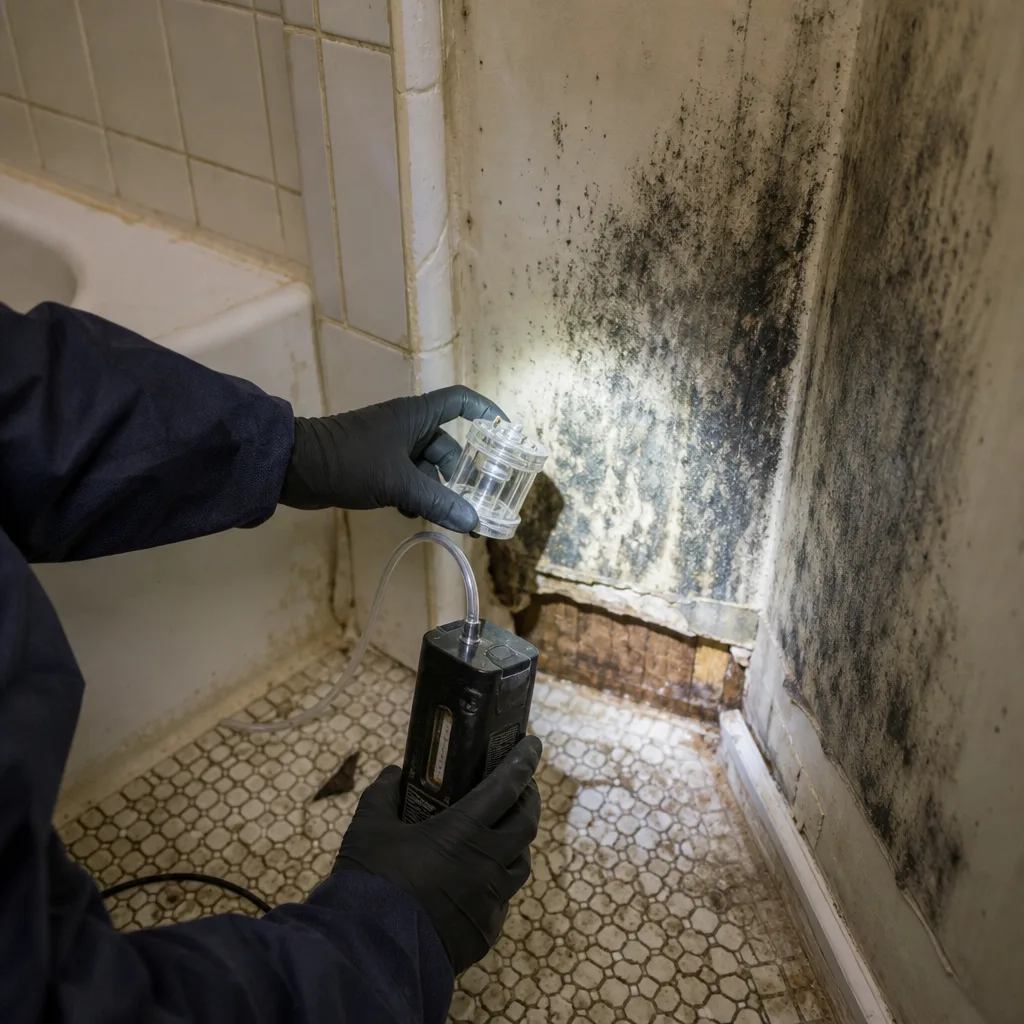
When a Little Neck storefront or office takes on storm-surge water, the priority is reopening without a secondary mold bloom weeks later. We pack out inventory and office equipment, set containment, extract, dry, and clean in one coordinated sequence. A retail space on Northern Boulevard can often resume partial operations while drying continues in the back of house. We’ll work around your hours where safety allows, and we’ll tell you straight if full closure is unavoidable.
Multi-Unit & HOA Restoration
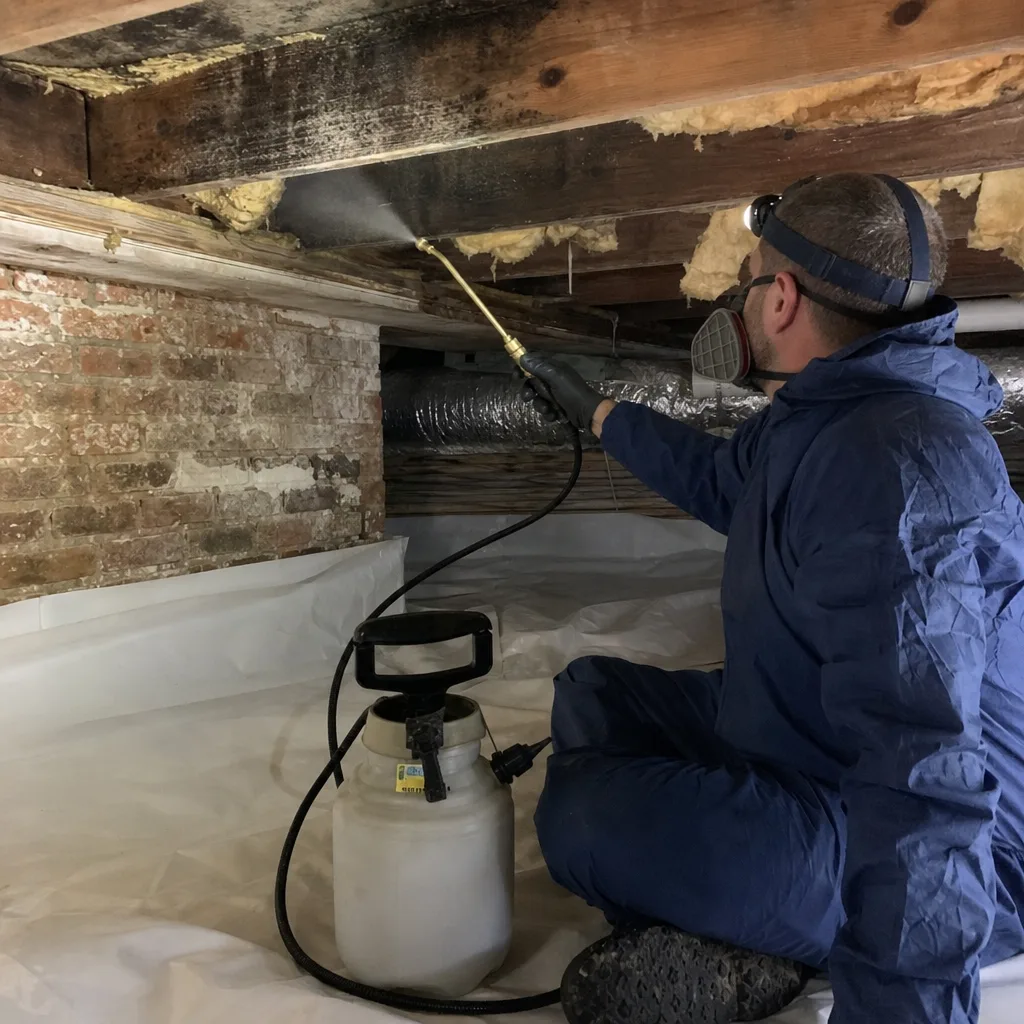
HOA and co-op boards in Little Neck face a different pressure: unit owners need answers, and any delay reads as incompetence. We supply the board with a documented moisture log, a clear scope, and direct insurance billing so the building’s claim moves without the board acting as translator. For buildings with shared laundry rooms, lobbies, or mechanical rooms, we set containment to keep common areas usable while the affected zone dries. No board wants to shut down the laundry room for two weeks because someone’s pipe burst; we design the drying plan around keeping those spaces operational where it’s safe.
Industrial Facility Cleanup
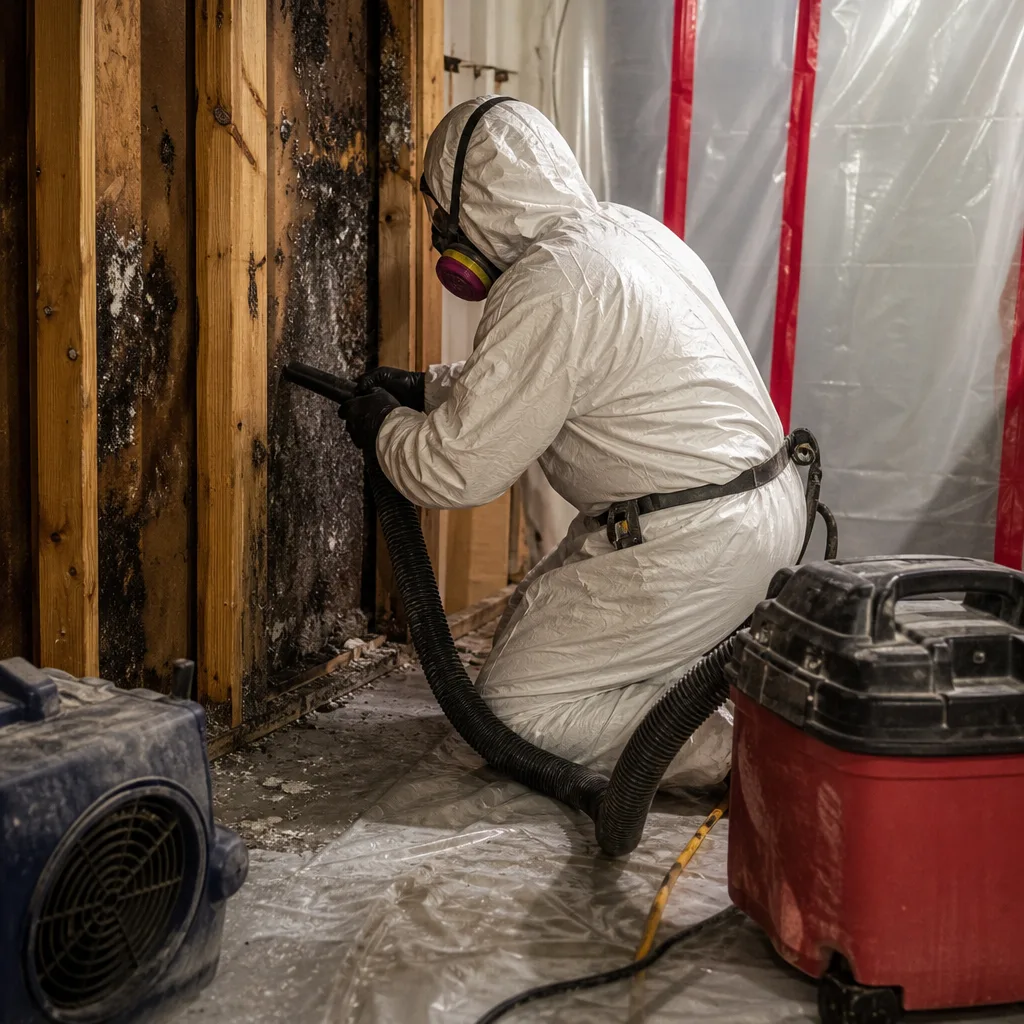
Little Neck’s industrial and warehouse spaces near the rail corridor deal with water intrusion from below: groundwater seepage through slab cracks and bay-driven flooding into loading docks. That water carries sediment and contaminants. We’re equipped for large-floor-area extraction, low-grain dehumidification, and full contamination control. The same IICRC protocols apply whether the space is 500 square feet or 15,000.
Large-Loss Response
When the loss exceeds what a single crew can handle in a shift, Floodline scales up. We run multiple Dri-Eaz dehumidifiers, Phoenix air movers, and XPOWER units in sequenced phases across multiple zones. A full-building burst pipe or fire suppression discharge doesn’t have to mean a 3-week closure if the drying plan is aggressive and the equipment count is right. Our NYC office dispatches additional certified techs to Little Neck whenever a large-loss event demands it.
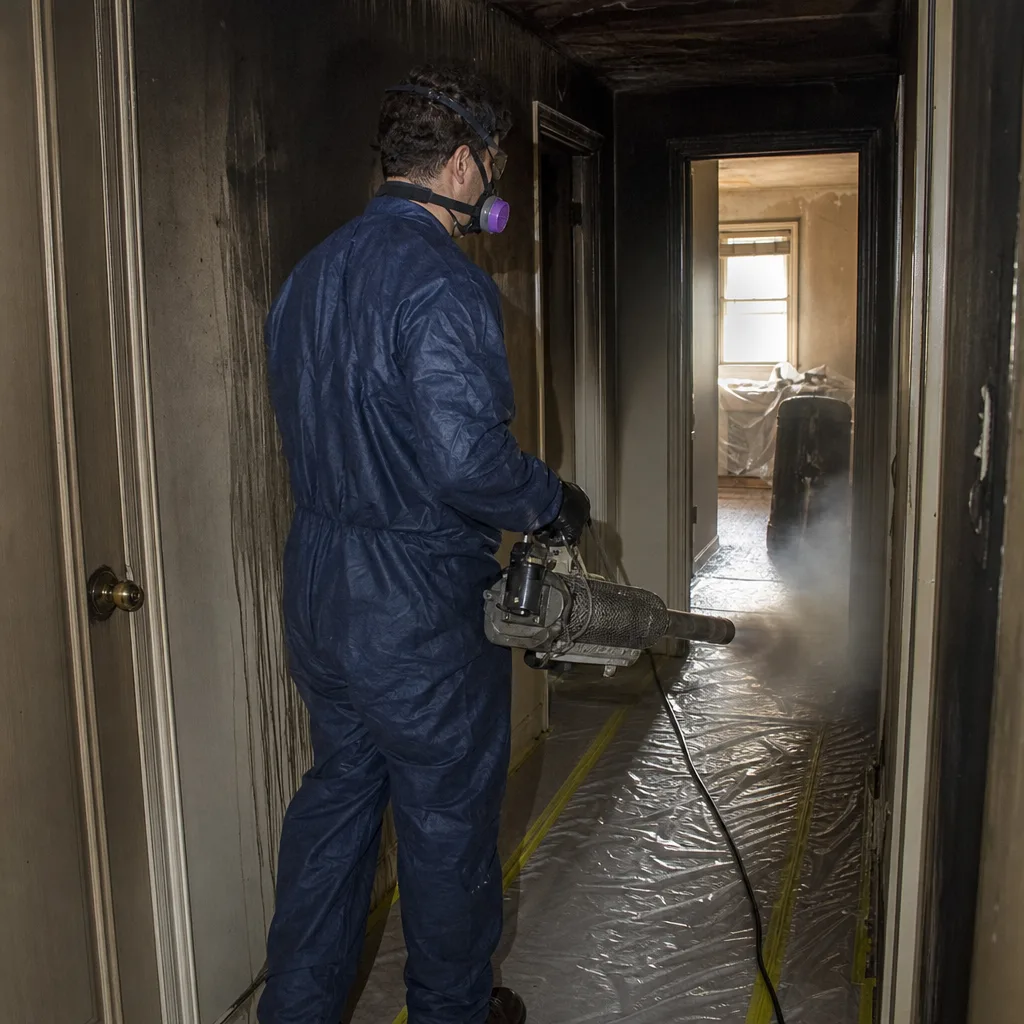
Business Interruption Minimization
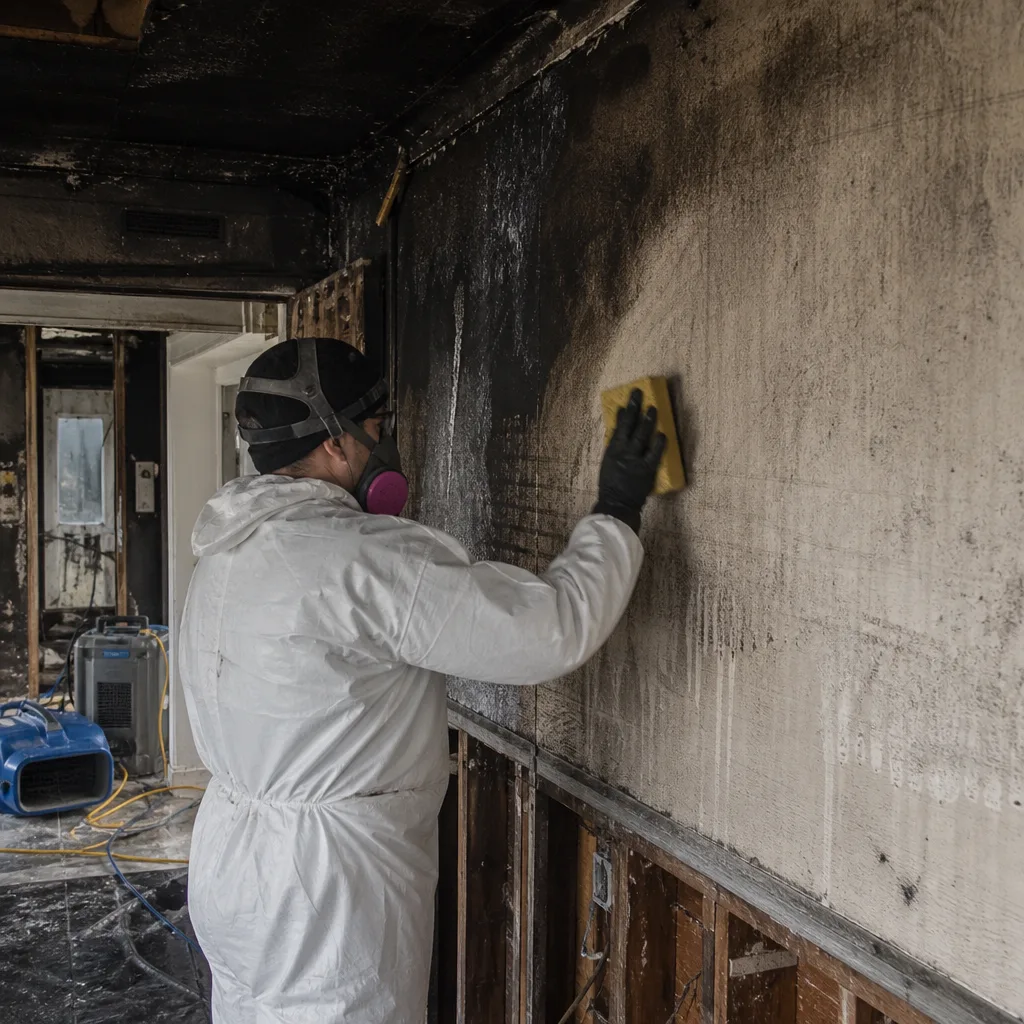
Every day closed costs a Little Neck owner real money. That’s why our process is built around getting commercial spaces back to revenue as fast as the building’s safety allows. For a dental practice on Marathon Parkway, that meant completing a Category 3 extraction, containment, drying, and reconstruction in six days. We plan around your hours, document everything for your business-interruption claim, and give you a realistic reopening date from the first visit, not a vague “when it’s done.”
What happens when you call
- 1
A real person answersNo phone trees - you reach a local pro.
- 2
You get an upfront price rangeHonest numbers before anyone is dispatched.
- 3
A background-checked tech heads outLicensed & insured, dispatched right away.
- 4
You approve before work beginsNothing starts until you say go.
Commercial Restoration Costs in Little Neck, NY
Commercial restoration pricing in Little Neck runs higher than inland Queens because of the flood-exposure factor. A single-storefront water extraction with drying and basic repairs typically costs $4,200 to $9,800. For multi-room office suites with Category 3 water, antimicrobial treatment, and full reconstruction, expect $11,000 to $38,000. Large-loss commercial jobs, where multiple units or a full building footprint is affected, start around $40,000 and climb from there based on square footage and materials. Fire and smoke restoration on a small retail space usually lands between $8,500 and $27,000, with soot type and smoke migration distance moving the number.
What moves the price in Little Neck specifically: whether the water is Category 3, how long it sat before extraction began, and whether the building has original plaster that must be removed rather than dried in place. A bay-front storefront that takes surge water at 2 a.m. and gets our crew by 2:45 a.m. costs far less to restore than one where the owner waited until morning. Insurance covers most of these costs under commercial flood or property policies, and our free inspection produces the line-item scope your carrier needs. Call (917) 924-4221 and we’ll give you an honest number before any work begins.
We Also Serve Cities Near Little Neck
Our crews serve the full northeast Queens and western Nassau area, including Little Neck, Great Neck, Glen Oaks, Bellerose, and Oakland Gardens. If your commercial property is in one of these nearby communities, the same 45-minute response commitment and direct insurance billing apply. Reach us at (917) 924-4221 any hour, any day.
Serving Little Neck, NY - Our Local Coverage Area
We’re based in the Little Neck area and know this community well. Use the map below to see our service coverage - if you’re nearby, we can almost certainly help.
Little Neck Commercial Restoration Questions, Answered
Does FEMA’s flood zone designation for a Little Neck storefront change how commercial water extraction is handled?
Yes. Properties inside FEMA Special Flood Hazard Areas along Little Neck Bay require Category 3 protocols from the first minute, because storm-surge water is presumed contaminated with marine sediment, sewage, and debris. We set containment, run air scrubbers, and apply antimicrobial treatment as standard practice on these jobs. We also document the flood zone status in your claim file, which matters for carrier review. Call (917) 924-4221 to have us assess your building’s specific situation.
What wind rating should the front door of a Little Neck medical office have before hurricane season?
Little Neck’s coastal exposure means any commercial entry door should be impact-rated for the wind zone or, at minimum, braced and weather-sealed before storm season. Unbraced glass doors flex under wind load, break seals, and let Category 3 surge water across the threshold. We’ve seen this exact failure on Northern Boulevard storefronts. We can inspect doors, recommend specific reinforcement, and repair frame or track damage after a storm. Call (917) 924-4221 for a free visual inspection.
After a storm, is the track or panel damage on our Little Neck restaurant’s roll-up door a restoration issue?
Yes, and it’s often the first place surge water enters a restaurant’s storage area. A bent track or dented panel means the door no longer seals, and water moves through at floor level. We treat roll-up door damage as part of the restoration scope: repairing or replacing the door and track, extracting any water that entered, and drying the threshold area before mold can start. Get it documented the same week. Call (917) 924-4221 and we’ll assess the door as part of the broader restoration.
How do you dry out a 1920s-era Little Neck commercial building with original plaster walls after a flood?
You don’t force-dry it with air alone. Original plaster holds moisture deep in the lath structure, so we use thermal imaging to map the full wet zone, then remove non-salvageable plaster where necessary, drill hidden ventilation ports where the lath can still dry, and run Dri-Eaz dehumidifiers against a moisture log until readings match the building’s known dry standard. Rushing this process is how buildings end up with mold behind the wall years later. We’ve corrected that mistake many times in Little Neck. Call (917) 924-4221 to start with a proper moisture map.
Our HOA board in a Little Neck co-op needs to keep our laundry room open during cleanup-what’s the fastest compliant path?
Containment is the answer. We build a sealed plastic enclosure around the affected area, run negative air machines with HEPA filtration, and route exhaust so the rest of the laundry room stays usable. Daily air-quality readings confirm the containment is holding. This lets your building keep operating while the wet zone dries. We’ve run this exact setup for Little Neck co-op boards more times than we can count. Call (917) 924-4221 and we’ll walk the board through the plan.
How fast can you actually reach a commercial property in Little Neck?
We commit to 45 minutes from call to arrival for commercial properties in Little Neck. In practice, crews dispatched from our NYC office often reach Northern Boulevard addresses faster during non-storm periods. During active nor’easters, we pre-stage crews near the bay because we know which blocks flood first. The dispatcher who answers your call at 2 a.m. is the same person assigning the crew. Call (917) 924-4221 and you’ll hear a live voice.
Do I really need full restoration, or can my office just get a deep cleaning after minor water damage?
It depends on the water category and what the moisture meter says. Category 1 water from a clean supply line on tile floors often needs only extraction, drying, and sanitizing. Category 3 water from storm surge or sewage always requires containment, antimicrobial treatment, and removal of absorbent materials. A cleaning without drying logs leaves moisture behind walls where mold grows unseen. We’ll tell you honestly which path your building needs and put it in writing before any work starts. Call (917) 924-4221 for a free assessment.
What should I do in the first 30 minutes after discovering commercial water damage in Little Neck?
Call (917) 924-4221 first, before moving furniture or unplugging anything yourself. Shut off electricity to the affected zone if it’s safe to reach the breaker panel. Don’t walk through standing water on a commercial floor, especially near the bay where surge water can carry electrical hazards. Take photos from doorways for your own record. Then let our crew take over. The first 30 minutes decide whether your framing dries or gets torn out. Call now and we’ll be there within the hour.
Commercial restoration in Little Neck means understanding bay-front hydrology, 1920s plaster construction, and storm-surge insurance rules all at once. Floodline Restoration Co. of Manhattan brings all three to every job, with certified crews, direct carrier billing, and a 90-Day Done Right Promise in writing. Call (917) 924-4221 for a free estimate. We answer live, 24 hours a day, and we’ll be there when we say.
Written by Curt Bowman, Owner at Floodline Restoration Co. of Manhattan, serving Little Neck since 2010.