
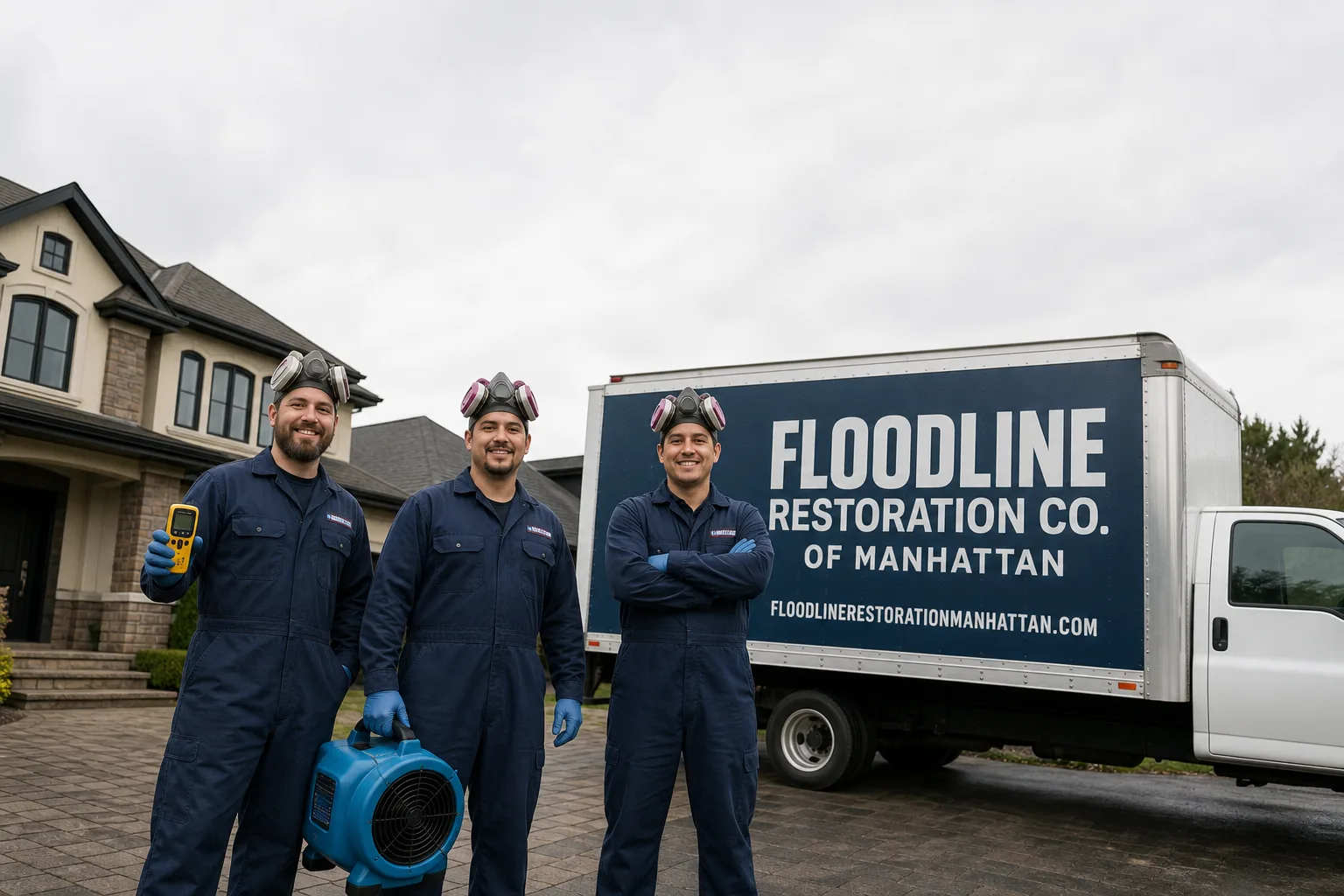
Free visual inspection and a written scope of work before any mitigation begins - photos, moisture readings, and drying logs go in your claim file
The scope we write is the scope we bill. Anything new gets shown to you, in writing, before we touch it.
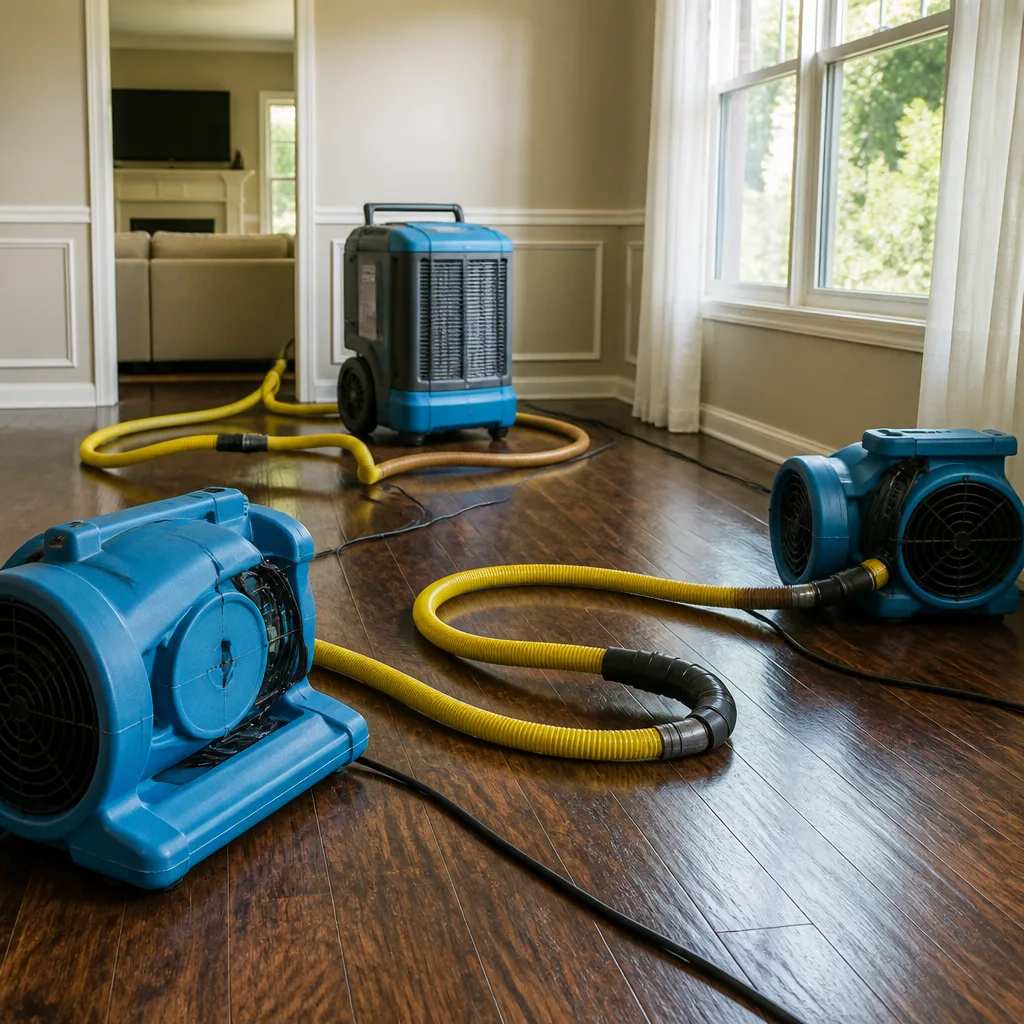
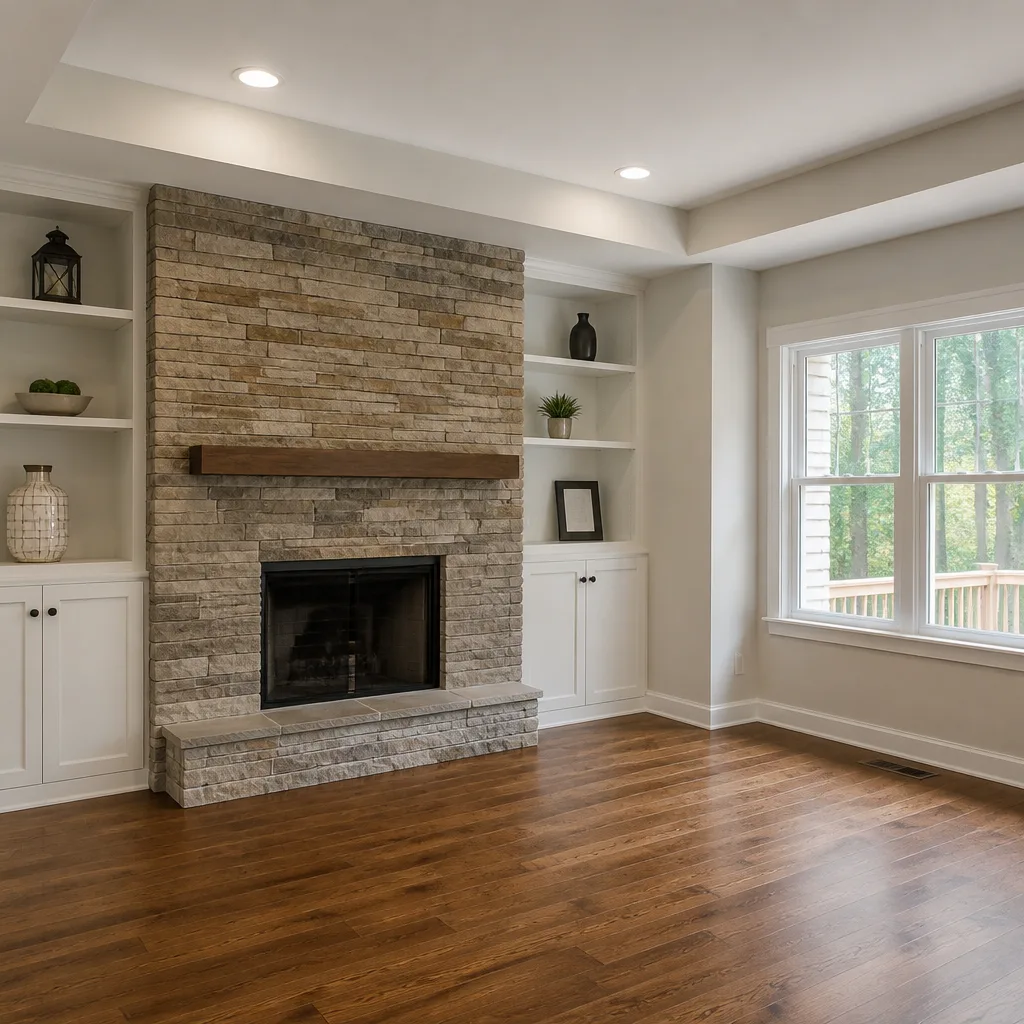
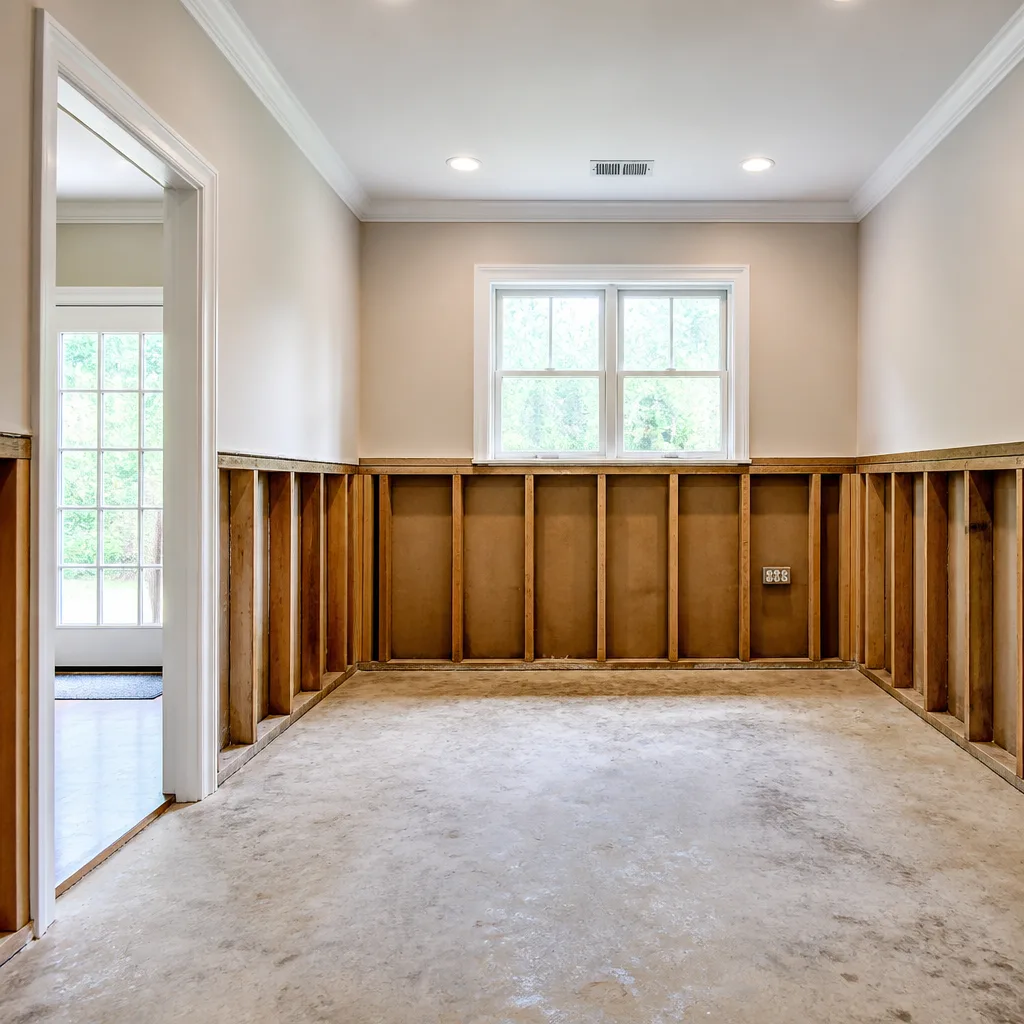
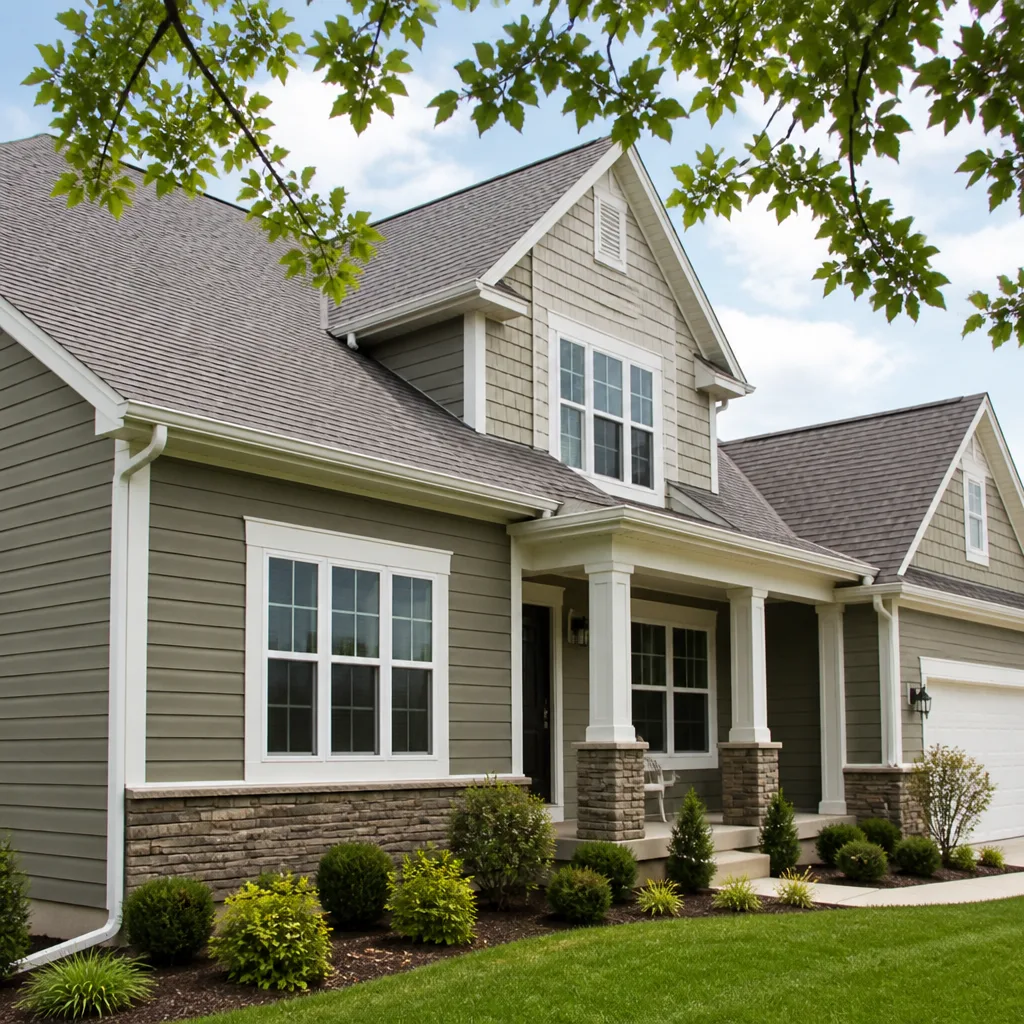
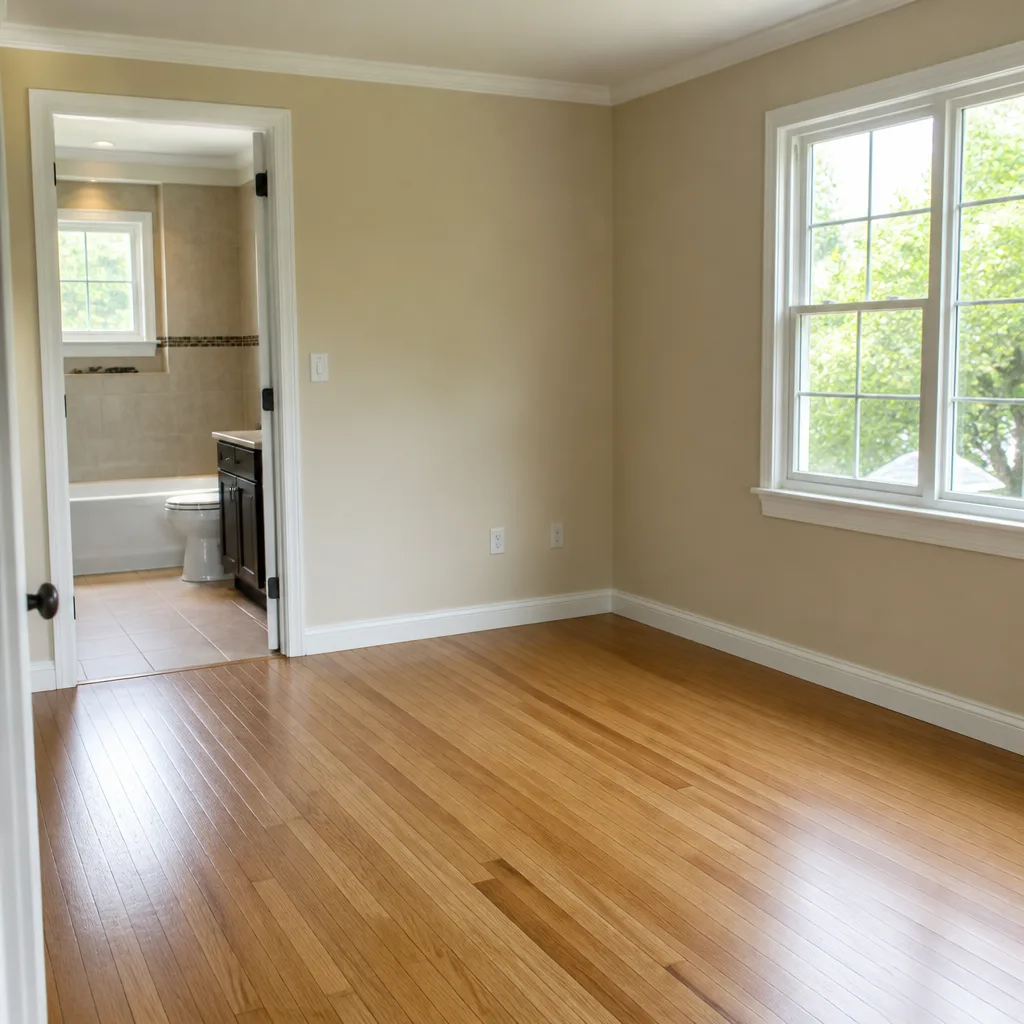
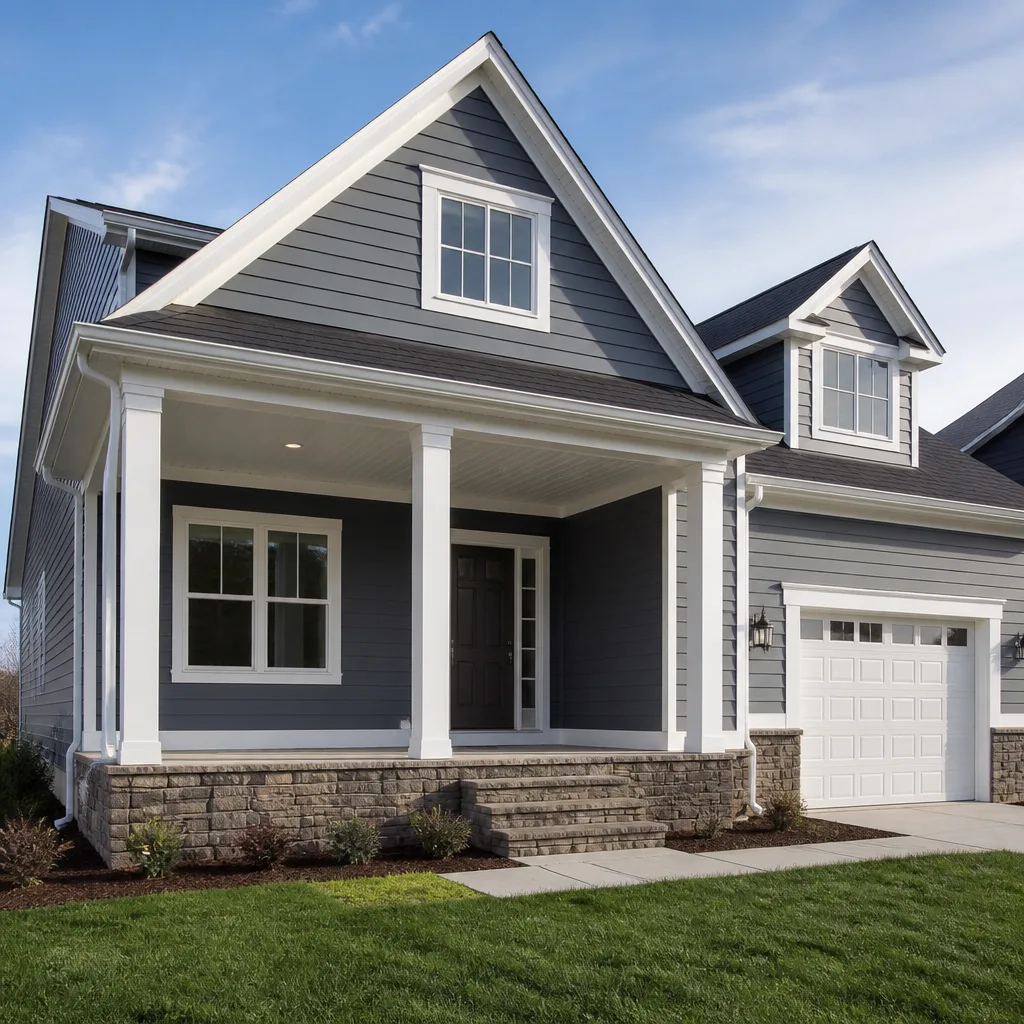
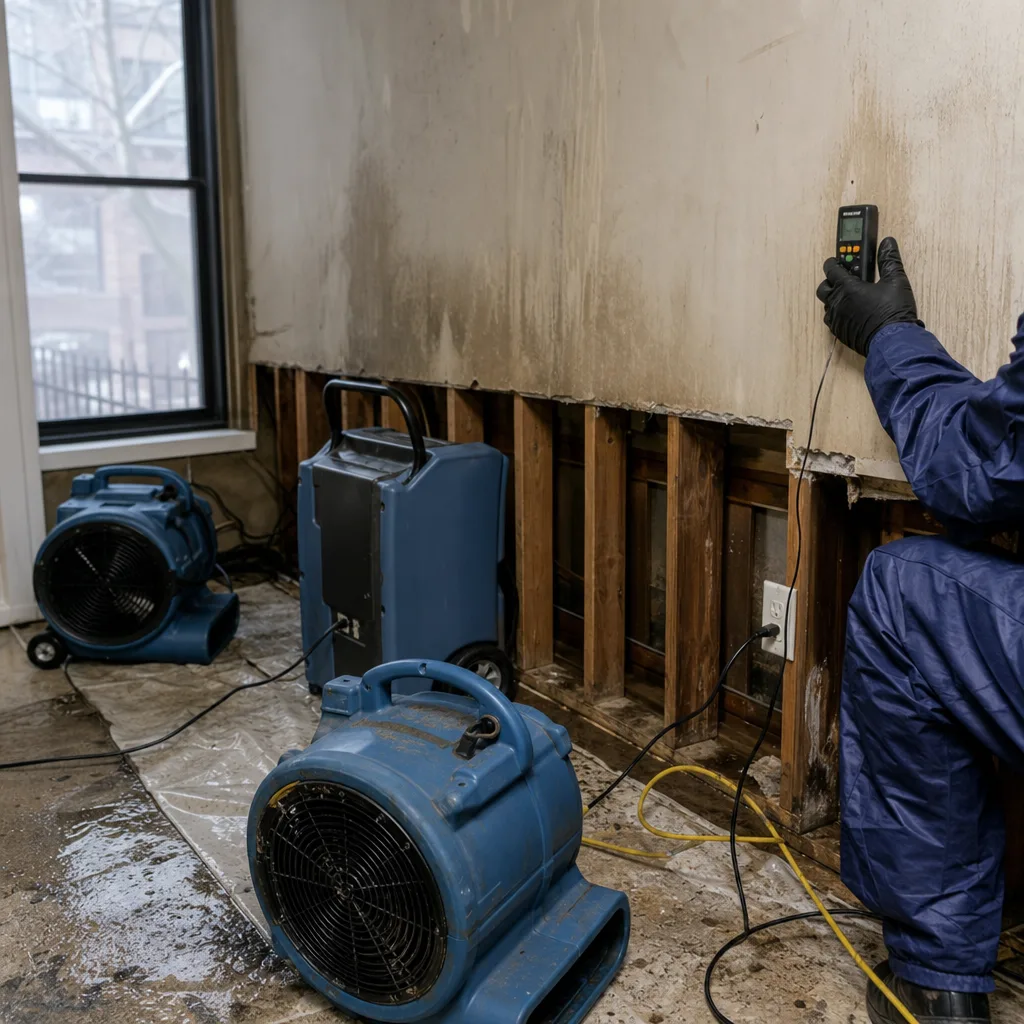 Before
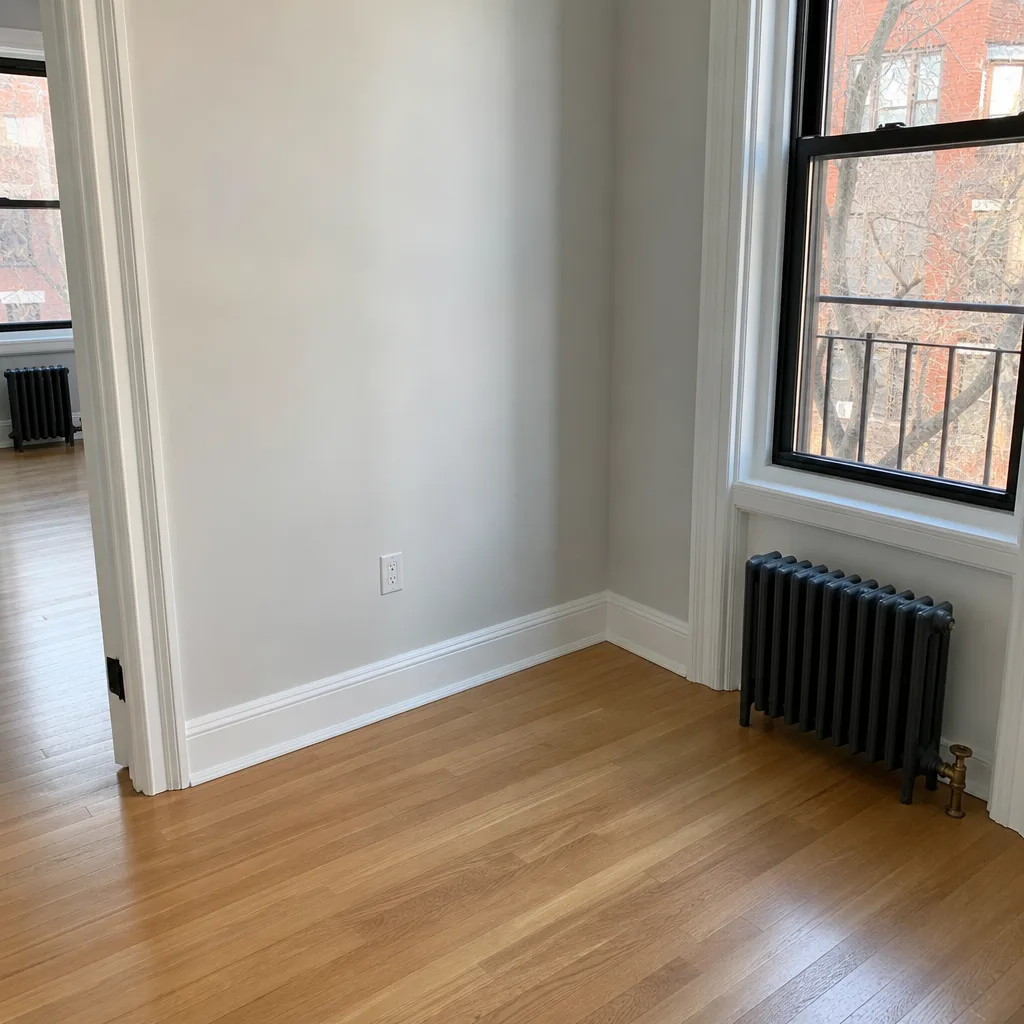 After
After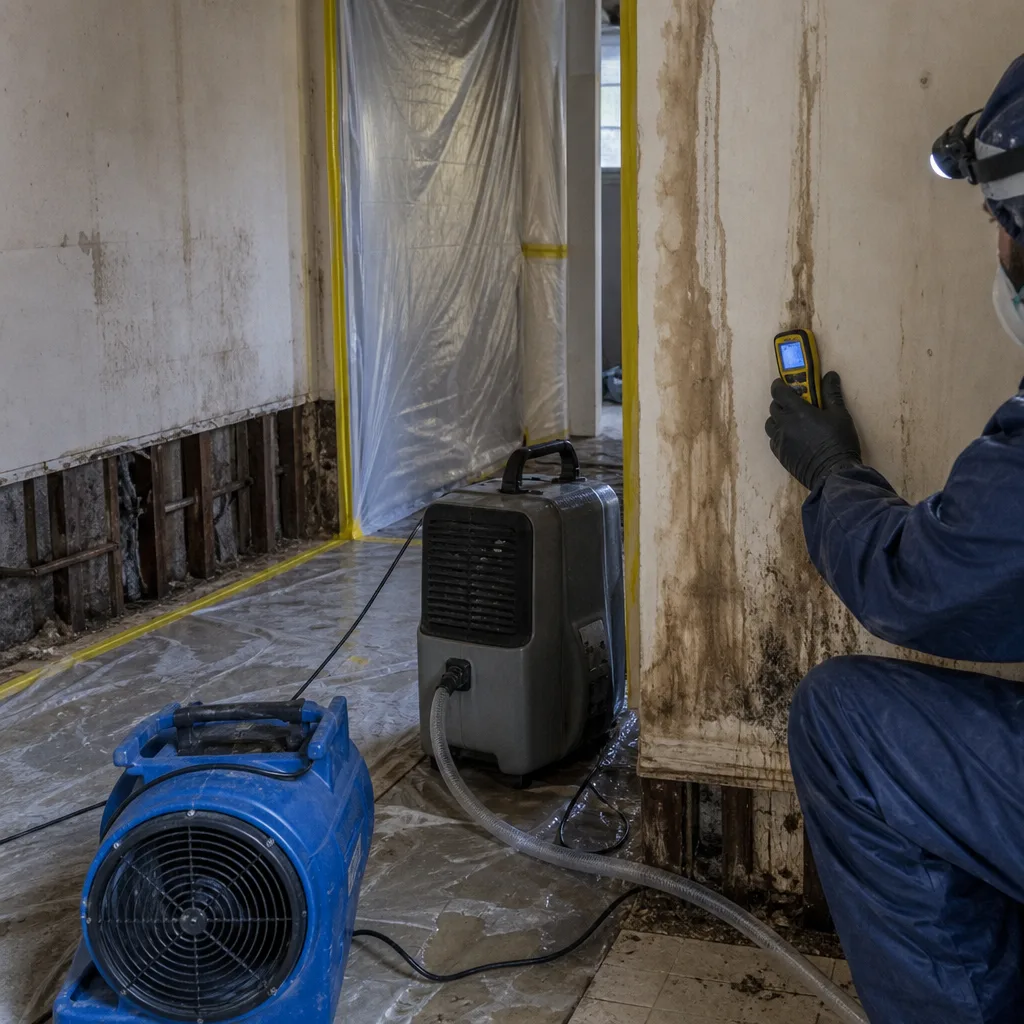 Before
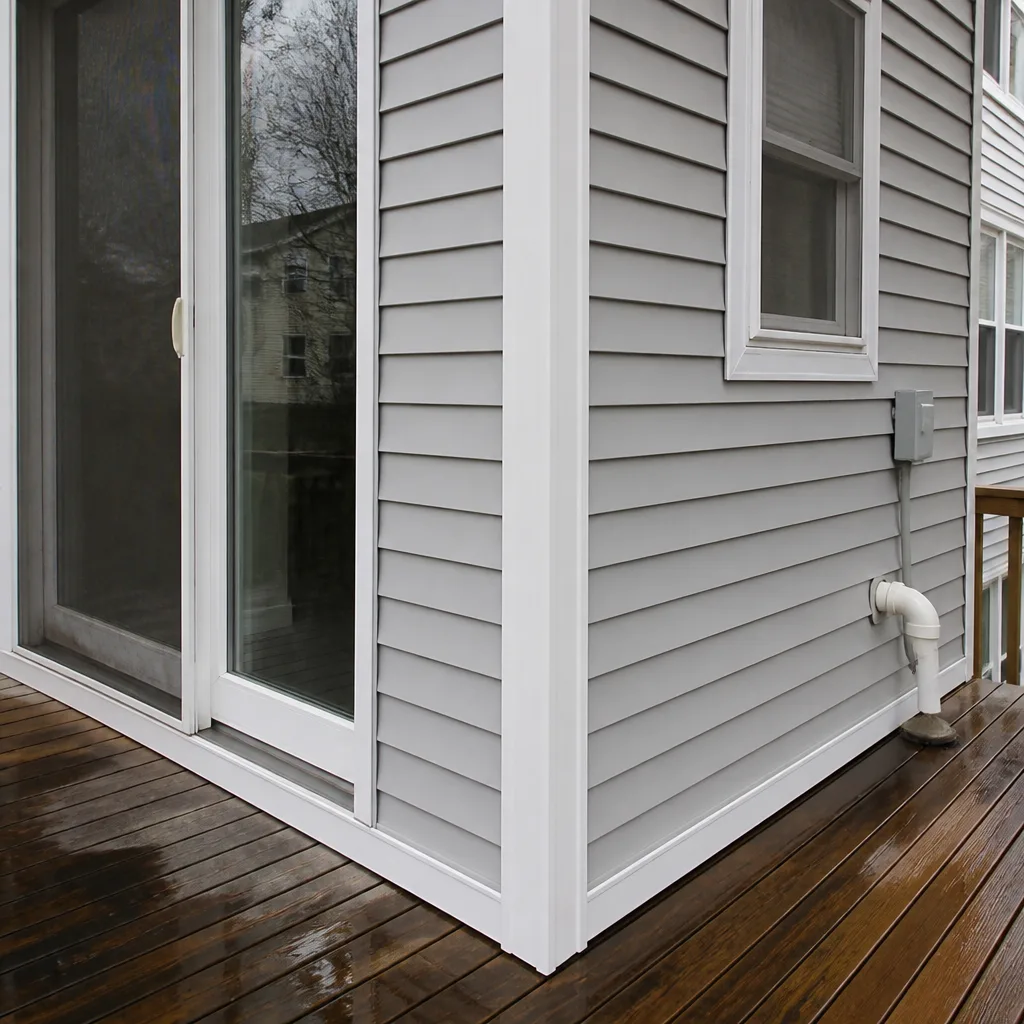 After
After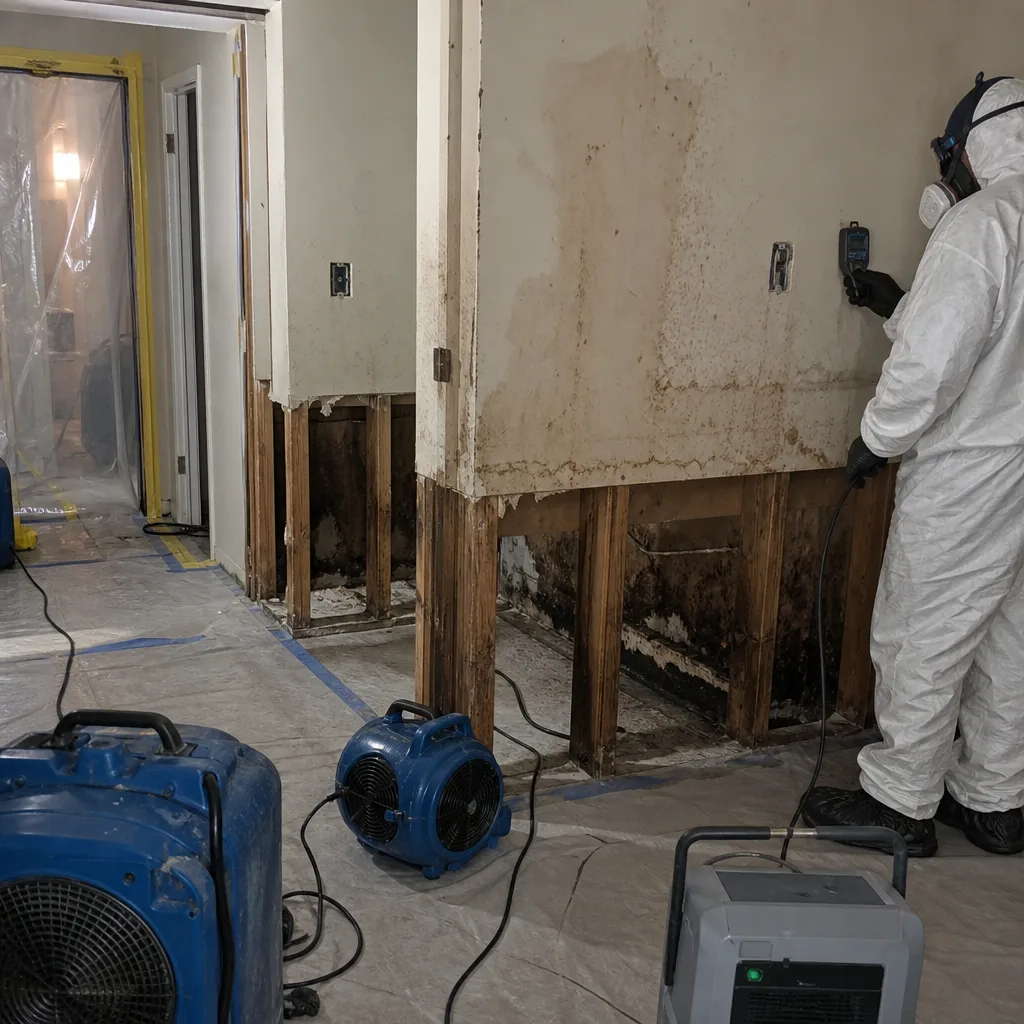 Before
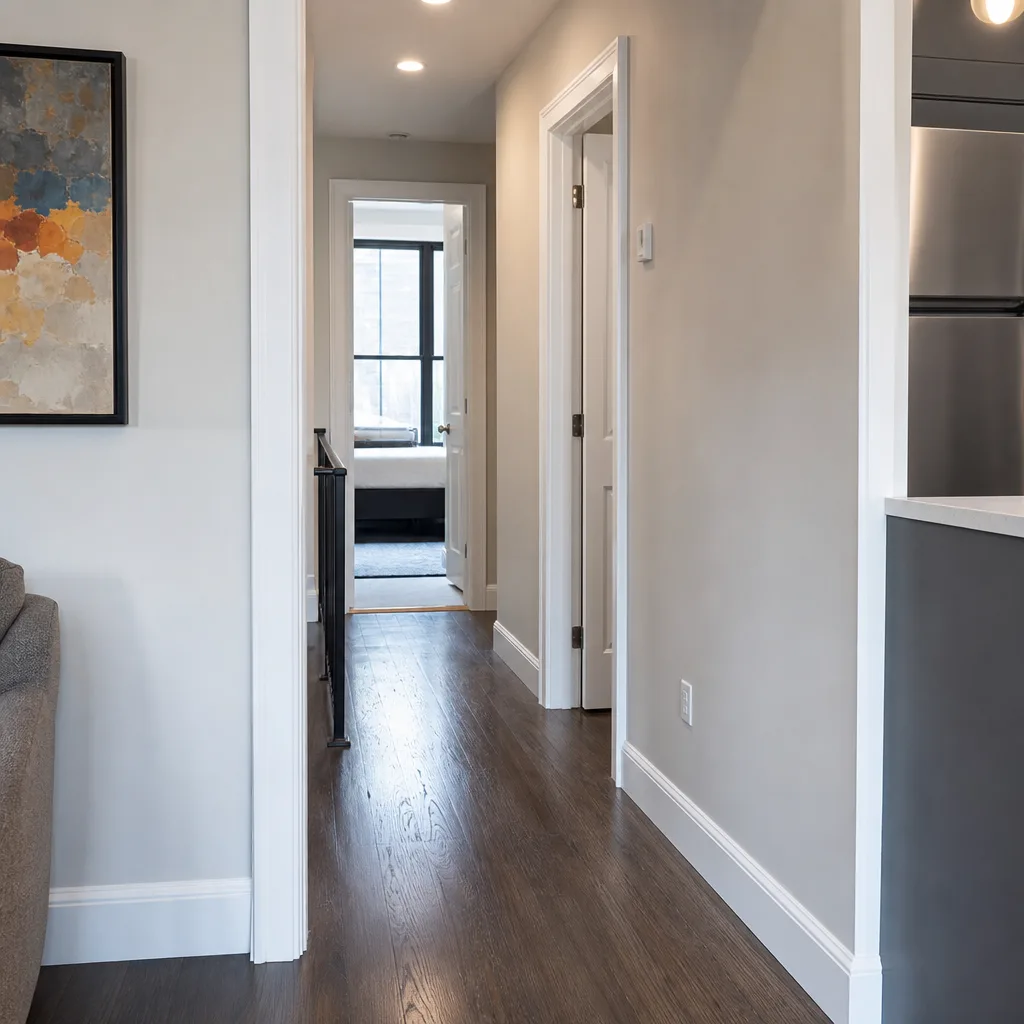 After
After24/7 Emergency Fire & Smoke Damage Restoration in Atlantic Beach
A fire in an Atlantic Beach home hits differently than a fire almost anywhere else in Nassau County. The ocean is on one side of you, Reynolds Channel on the other, and every minute of delay lets smoke embed deeper into walls, insulation, and soft goods. Call Floodline Restoration Co. of Manhattan at (917) 924-4221 any hour, any day. A live dispatcher answers at 2 a.m., and our crews head toward the island immediately. We complete a free visual inspection on arrival, photograph everything, and start emergency board-up and soot containment the same visit. The first hour matters because soot residue turns acidic within days, and salt-laden firefighting water on a barrier island accelerates corrosion faster than freshwater ever could.
Understanding Fire & Smoke Damage Restoration Severity in Atlantic Beach Properties
Fire damage in Atlantic Beach carries a structural signature most mainland contractors never see: saltwater contamination from firefighting, compounded by decades of salt-air exposure in pre-Sandy bungalows and beach cottages. We classify every loss by residue type, because dry protein soot demands different chemistry than wet synthetic soot from burning plastics, and Atlantic Beach homes frequently show both. Smoke migrates through wall cavities, follows electrical chases, and settles in HVAC ductwork that has been breathing ocean air for decades. In slab-on-grade cottages, smoke pressure pushes soot into porous concrete and cracks, where it hides. In elevated post-Sandy builds, fire and smoke travel upward through open ground-floor voids where mechanical systems sit exposed. We use thermal imaging and hygrometers to map what cannot be seen, then build a moisture map that accounts for intrusion from both fire suppression and storm surge. Atlantic Beach does not allow guesswork: the same fire that chars a kitchen can leave salt-soaked studs rotting inside a wall cavity six feet from the nearest visible flame.
Why Atlantic Beach Property Owners Choose Floodline Restoration Co. of Manhattan
- 45-minute response commitment to Atlantic Beach. We know the roads over the bridge and the access patterns on the island. A crew heads your way the moment you hang up, and we stay until the property is stabilized and documented.
- 24/7 live answer, every single call. No automated phone trees, no answering service that takes a message. A real dispatch person picks up, even during a nor’easter at 3 a.m., and starts moving resources toward your home.
- IICRC-certified fire and smoke crews (FSRT and WRT certified). Our technicians train to IICRC, RIA, and IFA standards, and our fire and water restoration specialists hold the specific certifications that apply to post-fire saltwater contamination and structural drying.
- Free visual inspection with photo documentation. Before you sign anything, we walk the property, show you what we see, and hand you a written scope of work. You decide what happens next with facts in hand, not pressure.
- Direct insurance billing, no middleman games. We bill your carrier directly, send adjusters the documentation they need, and keep you out of the claim negotiation. You hired us; the carrier is our problem.
- One team from first board-up to final rebuild. The same crew that seals the structure and extracts contaminated water also performs structural fire repair and rebuild. No handoff, no inherited strangers in your house.
Our Fire & Smoke Damage Restoration Process
1. Inspection & Assessment
We arrive, walk the entire structure, and map every affected surface. Thermal imaging finds heat-damaged framing; hygrometers measure moisture in studs and slab; we test for soot type, salt contamination, and smoke intrusion depth. You get a written scope with line items and clear numbers.
2. Emergency Board-Up & Stabilization
Broken windows and burned openings become entry points for weather, animals, and more soot. We board up, tarp, and seal the structure the same visit, then address structural hazards as part of Atlantic Beach Biohazard & Crime Scene Cleanup so no one gets hurt walking through the damage.
3. Water & Salt Extraction
Fire suppression leaves behind standing water, and in Atlantic Beach that water is usually salt-contaminated from surge or salt-air source lines, which may require our Sewage Cleanup in Atlantic Beach if contamination is severe. We extract with professional-grade Phoenix and XPOWER pumps and extractors, then begin mapping hidden moisture in walls, subfloor, and the slab.
4. Drying, Dehumidification & Salt Mitigation
Dri-Eaz dehumidifiers and high-volume air movers run until the moisture map shows the dry standard is met. On barrier-island losses, we test for salt residue in concrete and framing, because salt holds moisture and corrodes metal long after the visible water is gone. Antimicrobial treatment follows where salt contamination demands it.
5. Smoke, Soot & Odor Removal
HEPA-filtered air scrubbers run continuously to pull suspended particles from the air. We clean every surface by residue type, run duct cleaning on HVAC systems that have been breathing ocean air for years, and neutralize odor at its source rather than masking it. Contents cleaning and pack-out follow where soft goods need off-site care.
6. Structural Fire Repair & Restoration
We rebuild what was burned or removed: framing, drywall, flooring, electrical, and finish work. In Atlantic Beach, that can include wind-rated assemblies and flood-zone materials through our Reconstruction & Cleanup in Atlantic Beach. The same crew that sealed the building on day one hands you the keys at the end, with a 90-Day Done Right Promise in writing.
Need Emergency Fire & Smoke Damage Restoration in Atlantic Beach Now?
Crews minutes away, answering live 24 hours a day. The sooner we start, the less it costs.
Working With Your Insurance Company
Fire claims in Atlantic Beach are complicated by flood zone rules, saltwater contamination, and NFIP 50% rule triggers that most adjusters know in theory but rarely handle day to day. From the first hour on site, we document every surface, every moisture reading, every damaged framing member, and every piece of charred contents. That documentation becomes the evidence your carrier uses to approve the scope. Our estimators write industry-standard, line-item scopes that speak Xactimate language; our team talks directly with your adjuster, sends photos and logs the same day, and keeps the claim moving while you focus on your family. We bill the carrier directly.
What We Provide Your Insurer
- Thorough documentation of the loss
- Photos of all damage, room by room
- Moisture readings and drying logs
- A detailed, line-item scope of work
- Direct coordination with your carrier
Built for Atlantic Beach’s Loss Calendar
Atlantic Beach’s fire and smoke restoration calendar follows the ocean, not the calendar on the wall. Late summer and early fall bring hurricane season, when electrical surges from storm-driven salt spray, downed lines, and surge-flooded panels cause fires that would never happen inland. Winter nor’easters push the same saltwater exposure against structures already corroded from decades of ocean air, and heating systems pushed hard through cold snaps fail in bungalows with aging wiring and panel boxes. Spring brings the thaw cycle, when moisture trapped inside salt-damaged walls creates electrical shorts in fixtures and outlets. Even calm summers have a baseline: the salt air never stops working on metal fasteners, HVAC coils, and electrical connections, and homes on this island develop fire conditions between storm events that mainland houses simply do not. This is not a seasonal business for Atlantic Beach. It is an every-week reality, which is why our dispatch board never goes quiet and our crews stay familiar with every road and bridge onto the island.
Fire & Smoke Damage Restoration Across Atlantic Beach’s Neighborhoods
Response routes in Atlantic Beach run narrow and fast: the bridge at the western end of Beech Street feeds into the island’s grid, and our drivers know the doglegs around Ocean Boulevard, Albany Boulevard, and Bay Boulevard where narrow streets and dense cottage lots slow outside crews down. The northern side of the island along Reynolds Channel sees bay-side surge that pushes saltwater into ground floors and electrical rooms during even moderate storm events. The southern side, facing the open Atlantic along Ocean Boulevard, takes the harder wave impact and more wind-driven rain, which means post-fire board-up there has to hold against genuine ocean wind loads off the beach. The side streets east of the bridge, where mid-century bungalows sit close together on small lots, create tight access for our extraction equipment and air movers, and our crews have learned to stage equipment on trailers and walk in rather than block a neighbor’s driveway. Owners in the elevated post-Sandy rebuilds east of the boulevard face a different pattern: fires that start in ground-floor mechanical voids, then channel smoke upward through the entire living space.
Specialized Fire & Smoke Damage Restoration Services We Offer in Atlantic Beach
Fire Damage Cleanup
We remove charred debris, clean every surface by residue type, and address the water and salt left behind by firefighting. In Atlantic Beach, that cleanup must account for salt-saturated drywall and concrete, not just burned material. If salt is left behind, corrosion and mold follow behind us, and we do not leave jobs that undo themselves.
Smoke & Soot Removal
Soot is not one substance; it is a family of residues. Our technicians identify what burned and match the cleaning chemistry to the residue: dry protein soot, wet synthetic soot, or the mixed residue typical of Atlantic Beach fires that involve both building materials and household plastics. We clean walls, ceilings, cabinetry, fixtures, and the spaces behind faceplates and vents where smoke hides.
Odor Removal & Deodorization
Salt air makes smoke odors cling longer in Atlantic Beach. Salt attracts and holds moisture, and moisture reactivates smoke molecules, which is why a house can smell fine for a month and then go sharp again on a humid day. We treat odor at its source with HEPA air scrubbing, duct cleaning, surface sealing where appropriate, and deodorization matched to the residue type.
Contents Cleaning & Pack-Out
Soft goods, clothing, upholstery, and window treatments absorb smoke deeply, and salt-air humidity makes that absorption worse. We inventory every item, pack out what needs off-site cleaning, restore what can be restored, and document everything for your insurer. What cannot be restored gets itemized, not thrown in a pile and guessed at.
Emergency Board-Up & Tarping
Atlantic Beach wind loads are real. Boards and tarps that would hold in inland Nassau County fail here when a real breeze comes off the Atlantic. We use reinforced fastening and marine-grade tarping, because a failed tarp after a fire means a second water intrusion event inside an already damaged structure. That is an avoidable loss, and we build the board-up so it does not become one.
What happens when you call
- 1
A real person answersNo phone trees - you reach a local pro.
- 2
You get an upfront price rangeHonest numbers before anyone is dispatched.
- 3
A background-checked tech heads outLicensed & insured, dispatched right away.
- 4
You approve before work beginsNothing starts until you say go.
Fire & Smoke Damage Restoration Costs in Atlantic Beach, NY
A small kitchen fire with light smoke damage in Atlantic Beach typically runs $2,500 to $6,000 for cleanup, soot removal, deodorization, and basic board-up. A moderate fire with water damage from suppression and salt contamination can land between $8,000 and $25,000 once drying, salt mitigation, and structural repair enter the scope. A severe fire requiring full rebuild of a room or roof section with NFIP elevation review commonly runs $35,000 to $80,000 or more, depending on framing, electrical, and whether the 50% rule comes into play. What moves the price in Atlantic Beach: whether the structure is pre-Sandy slab-on-grade or elevated, how far smoke migrated into HVAC and wall cavities, and whether saltwater contaminated the slab. The free inspection gets you a firm, line-item scope in writing before you approve a dollar. Call (917) 924-4221 for an exact quote. Estimates are free, and no one pressures you.
We Also Serve Cities Near Atlantic Beach
Our Atlantic Beach crews regularly respond to fire and smoke losses in Lawrence, Far Rockaway, Cedarhurst, and Inwood. The housing stock differs across the bridges, but the salt-air exposure and surge-driven fire patterns bleed across the area. If you own property anywhere along this stretch of the South Shore, we can be there fast.
Atlantic Beach Fire & Smoke Damage Restoration Questions, Answered
In Atlantic Beach, does saltwater from storm surge change how you handle fire and smoke damage?
Yes, and it changes nearly everything. Saltwater is corrosive, electrically conductive, and hygroscopic, meaning it keeps pulling moisture from the air long after the visible water is gone. When firefighting water is drawn from or mixed with ocean surge, every wet surface becomes a salt contamination problem. We test for chloride levels in drywall, concrete, and framing, and we withhold the dry standard until salt residue is addressed. Skip that step in Atlantic Beach and mold will bloom inside the walls within weeks. Call (917) 924-4221 if your fire loss involved surge water, and we will inspect accordingly.
Are older pre-Sandy bungalows in Atlantic Beach more likely to need full elevation after a fire?
Yes, and it is a function of FEMA flood zone rules, not construction preference. Most of the older bungalows on the island sit in Flood Zone AE or VE on slab foundations. When repair costs exceed 50% of the pre-damage structure value, the NFIP 50% rule can require elevation or floodproofing before a permit is issued. A fire that damages framing and electrical can push that threshold faster than homeowners expect. We flag the elevation certificate issue early in the scope so you know what you are facing before permits stall. Call (917) 924-4221 for a free inspection that includes this assessment.
How quickly does mold become a problem after a fire in Atlantic Beach?
Faster than almost anywhere in the New York metro. The island’s year-round humidity and constant salt-air exposure create ideal mold conditions, and fire suppression water plus storm surge means wet materials at high temperatures. Mold can establish within 24 to 48 hours in damp drywall and insulation. That is why we start extraction and drying on the same visit, and why we treat antimicrobial application as a default step on Atlantic Beach fire losses, not an optional add-on. Call (917) 924-4221 immediately after a fire, even if the visible damage looks small.
What’s different about smoke and soot removal in a salt-air environment like Atlantic Beach?
Salt holds moisture, and moisture reactivates smoke odor. A house that was cleaned well but not addressing the salt content in porous surfaces will start to smell again during the next humid spell. Our smoke and soot removal in Atlantic Beach includes dehumidification, surface salt testing, and sealing where needed so the remediation holds through the salt-air summers. The national franchise playbook does not account for this; we do, because we work here every week. Call (917) 924-4221 to discuss your specific loss.
Does Atlantic Beach require special permits for fire damage board-up or structural repair?
Board-up and tarping are generally considered emergency protective measures and do not require a permit, but any structural repair beyond basic stabilization does. Atlantic Beach sits almost entirely within FEMA Flood Zones AE and VE, so permits trigger elevation certificate review and potential NFIP 50% rule scrutiny. We handle that documentation for you, because we have navigated it on this island repeatedly. Call (917) 924-4221 before you sign any repair agreement, and we will tell you what your specific property triggers.
How fast can you actually get to Atlantic Beach?
Our response commitment is 45 minutes to the island, day or night. Atlantic Beach has one main entry corridor from the mainland, and our drivers know the traffic patterns and the back ways. A live dispatcher is on the phone with you while the crew rolls, and you are not waiting on a recording or a callback. Call (917) 924-4221 now and someone heads toward the bridge.
Can we stay in the home after a fire in Atlantic Beach?
It depends on the extent of smoke travel, the condition of electrical systems, and whether saltwater entered living spaces. A small contained fire with minimal smoke may allow you to stay in unaffected rooms with containment barriers in place. A fire that spread smoke through ducts, involved electrical, or left standing water usually requires relocation while we dry, clean, and rebuild. We will tell you the truth after the inspection, and we will document everything for your insurer’s additional living expense coverage. Call (917) 924-4221 to get that answer for your specific house.
What certifications do your Atlantic Beach fire restoration crews hold?
Our technicians are certified under IICRC, RIA, and IFA standards, and our fire and smoke specialists carry the specific FSRT and WRT credentials relevant to fire residue cleaning and water damage restoration. Every tech on your property is background-checked, uniformed, and trained on the full Fire & Smoke Damage Restoration protocol, including saltwater contamination response, which matters more on Atlantic Beach than anywhere else on Long Island. Ask us for certification numbers when we arrive; we will show you.
Fire and Smoke Restoration on a Barrier Island Is Different Here
Atlantic Beach occupies a narrow barrier island between the Atlantic Ocean and Reynolds Channel, which means nearly every storm-related fire or smoke event here involves saltwater intrusion. The same surge that floods a home also contaminates firefighting water, turning ordinary Category 3 black water into a pervasive corrosive agent that works its way into studs, concrete, and HVAC systems. Inland Nassau County restorers rarely encounter this, because inland fires involve municipal freshwater supply lines and no ocean surge. Here, the fire hose runs through saltwater. That single fact changes the drying protocol, the cleaning chemistry, the antimicrobial strategy, and the structural repair scope. After a post-storm electrical fire in a bungalow near Ocean Boulevard, our techs encountered salt-saturated drywall and corroded wiring throughout the ground floor. We set up containment and used HEPA-filtered air movers and dehumidifiers, then performed moisture mapping and structural drying before removing all salt-contaminated drywall and applying antimicrobial treatment to exposed framing. The home’s pre-Sandy slab foundation complicated structural fire repair, requiring us to document moisture readings and adjust the scope of work to prevent future mold bloom from residual salt in the slab. That is what Atlantic Beach says to us on every job: treat the salt, or the job undoes itself. Our Fire & Smoke Damage Restoration protocol is built for this island, not adapted from a playbook written for a mainland suburb. If your home in Atlantic Beach has been through a fire with any water involvement, even a small one, call (917) 924-4221 before the salt sets the schedule.
Why Fire Damage Feels Different on This Island
The housing stock in Atlantic Beach was never meant to be permanent. Most of the village is mid-20th-century single-family bungalows and beach cottages, originally built as seasonal homes on slab or shallow foundations. Hurricane Sandy changed that. A portion were rebuilt or elevated on pilings, creating a split stock where ground-level pre-Sandy homes remain highly vulnerable to repeat surge flooding, while newer elevated builds have mechanical systems staged in exposed ground-floor voids susceptible to wind and wave damage. A fire in the old stock is a fire in a house where electrical systems have been through decades of salt-air corrosion and at least one major flood. A fire in the new stock is a fire in a house where the mechanical room lives in a flood zone by design. Neither one is a standard fire cleanup. We have learned to identify which category a home falls into before we set up equipment, because it changes where we look for hidden damage and what we document for the carrier. This is the kind of local knowledge no national franchise brings to the island, and it is why our scope of work holds up under adjuster scrutiny and village permit review.
Serving Atlantic Beach, NY - Our Local Coverage Area
We’re based in the Atlantic Beach area and know this community well. Use the map below to see our service coverage - if you’re nearby, we can almost certainly help.
Get a Free Fire & Smoke Damage Assessment in Atlantic Beach
If your Atlantic Beach home has been through a fire, even a small one, the clock is already running. Smoke is settling into walls and ducts, salt-laden water is working on framing and wiring, and every humid day makes it worse. Call Floodline Restoration Co. of Manhattan at (917) 924-4221 now. You will reach a live person, not a recording. A certified crew heads to the island immediately, completes a free visual inspection with full photo documentation, and hands you a written scope of work before any work begins. We bill your insurer directly. We answer at 2 a.m. We stand behind the work with the 90-Day Done Right Promise, in writing, the Keystone Standard, because that is how we have operated since Curt Bowman founded the company: Krafted right, Every time, Your home first, Standing behind it.
Written by Curt Bowman, Owner at Floodline Restoration Co. of Manhattan, serving Atlantic Beach and the surrounding South Shore communities.