
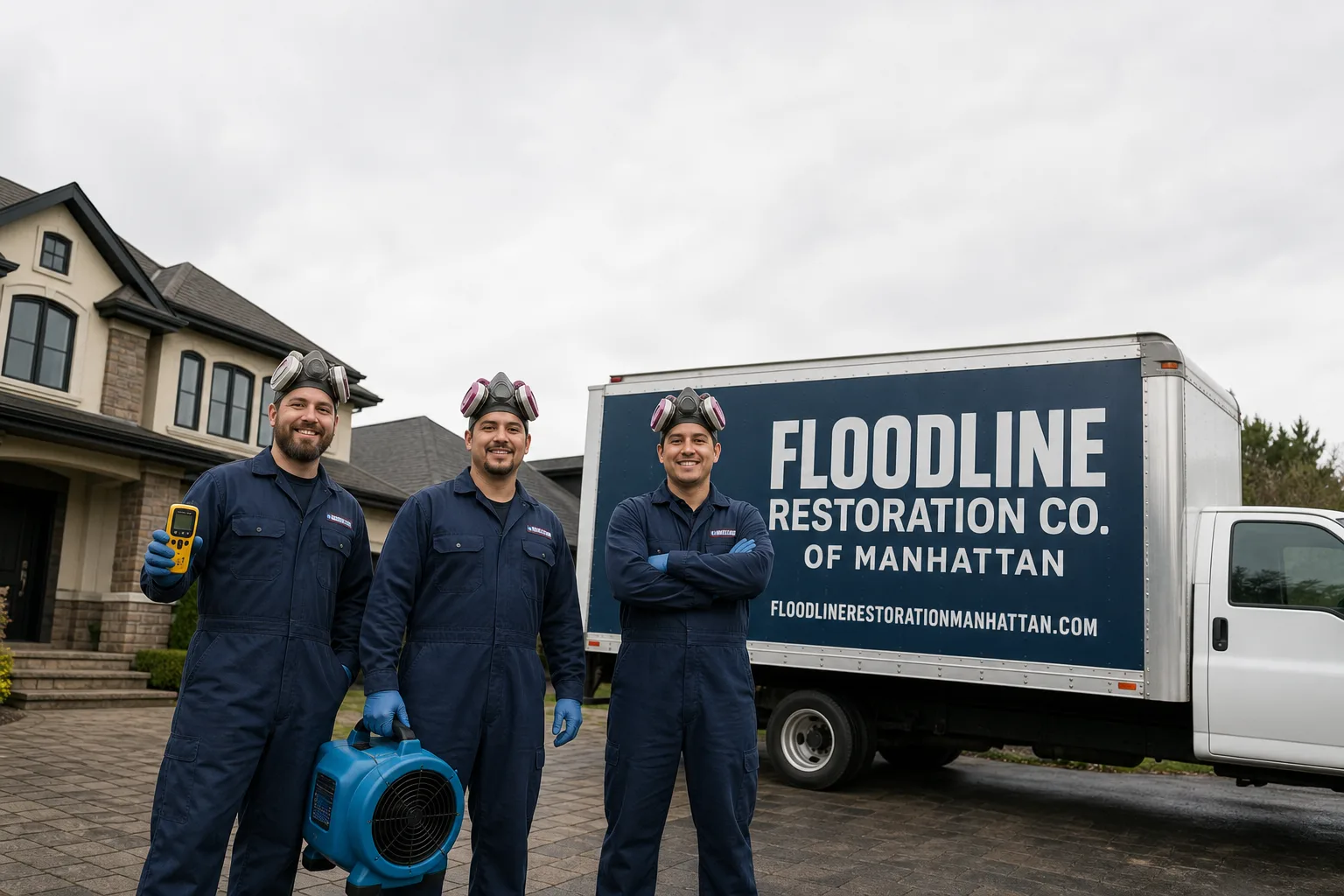
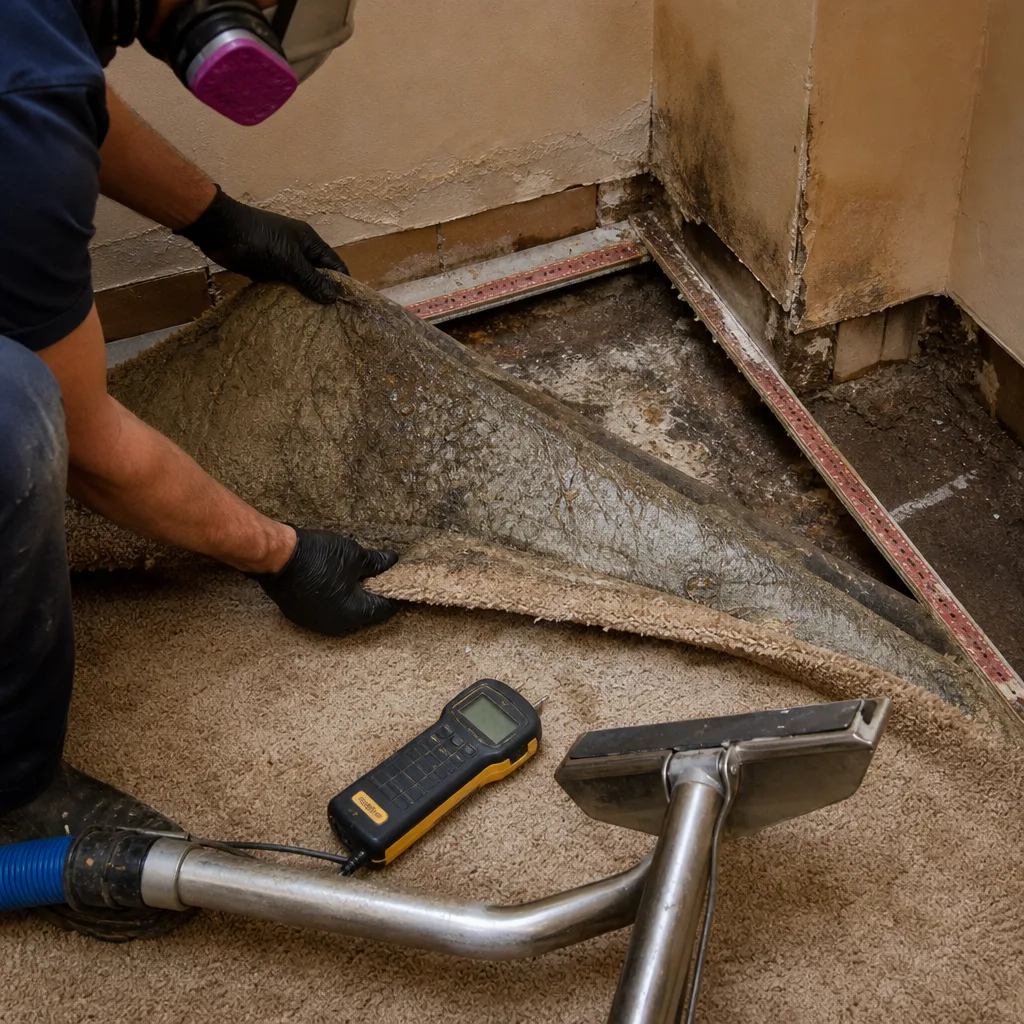
Free visual inspection and a written scope of work before any mitigation begins - photos, moisture readings, and drying logs go in your claim file
The scope we write is the scope we bill. Anything new gets shown to you, in writing, before we touch it.
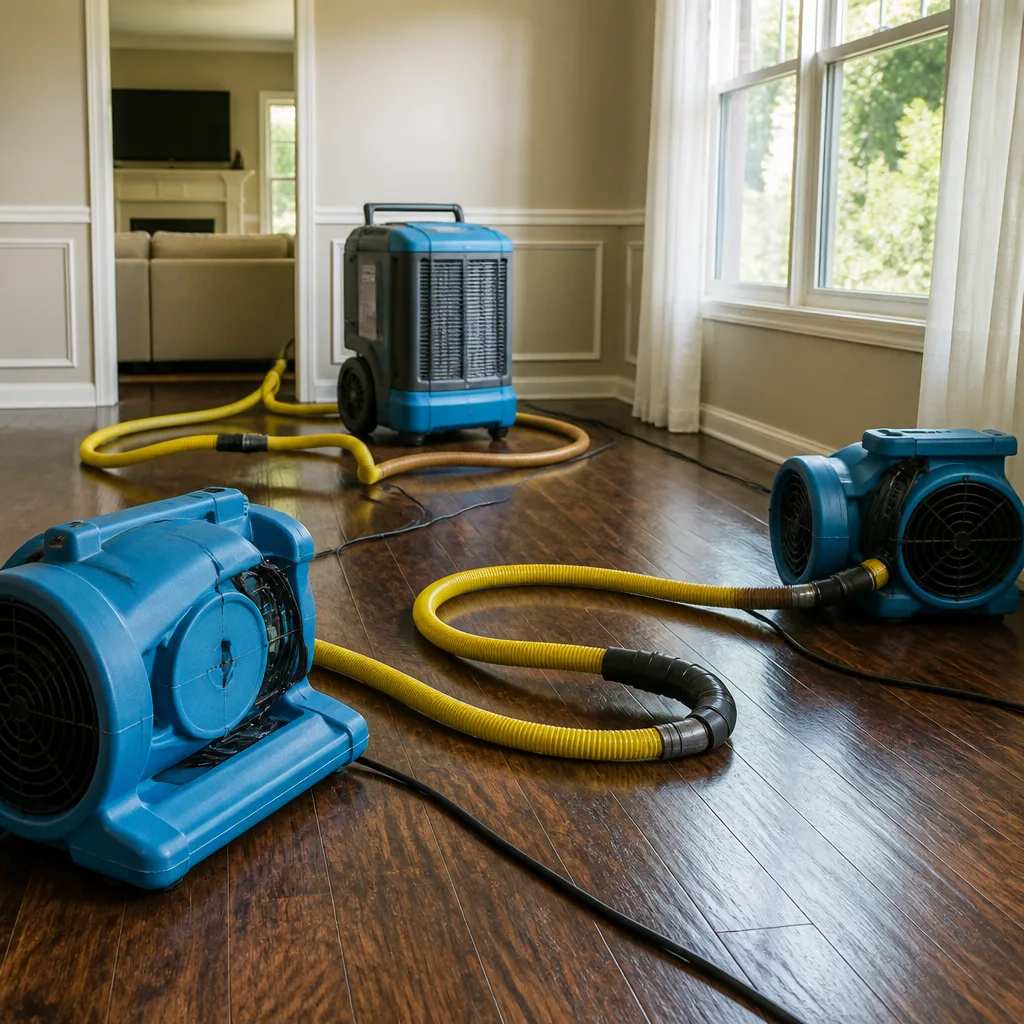

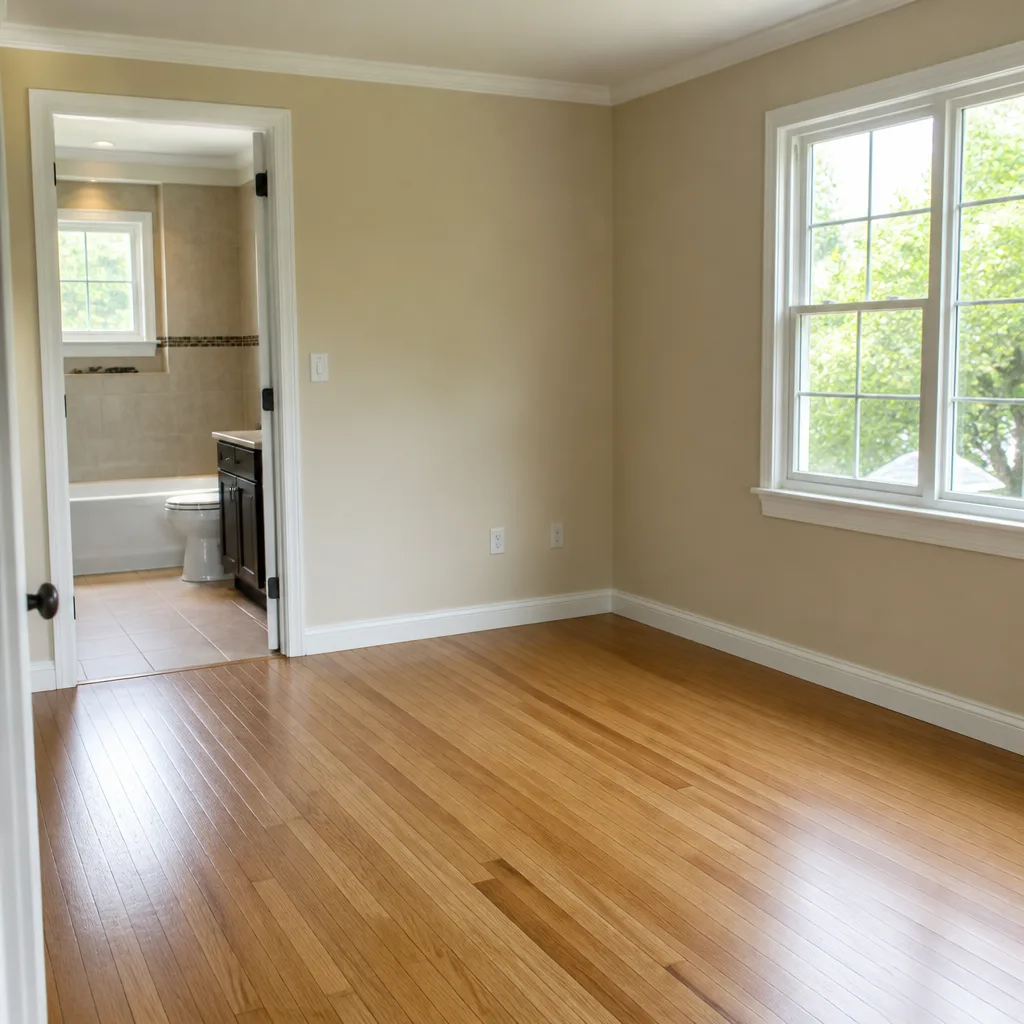
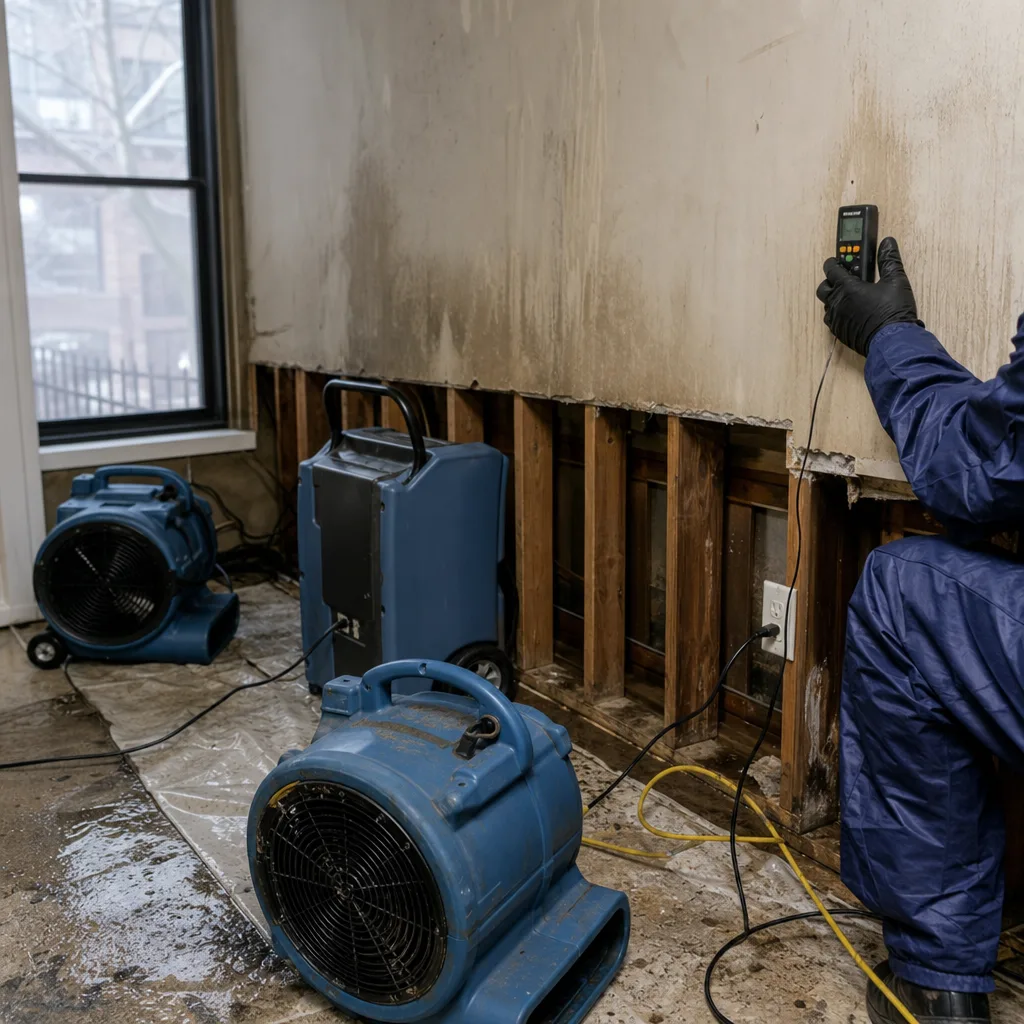 Before
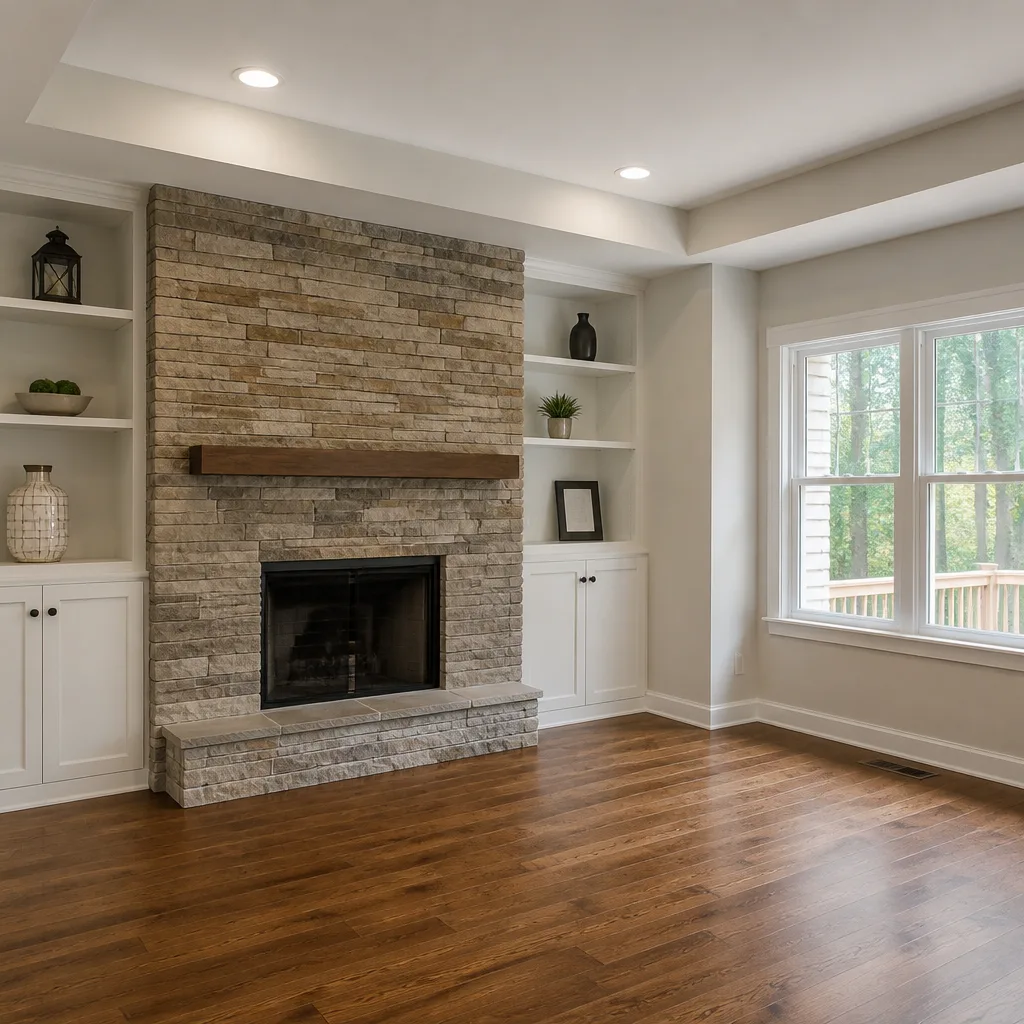
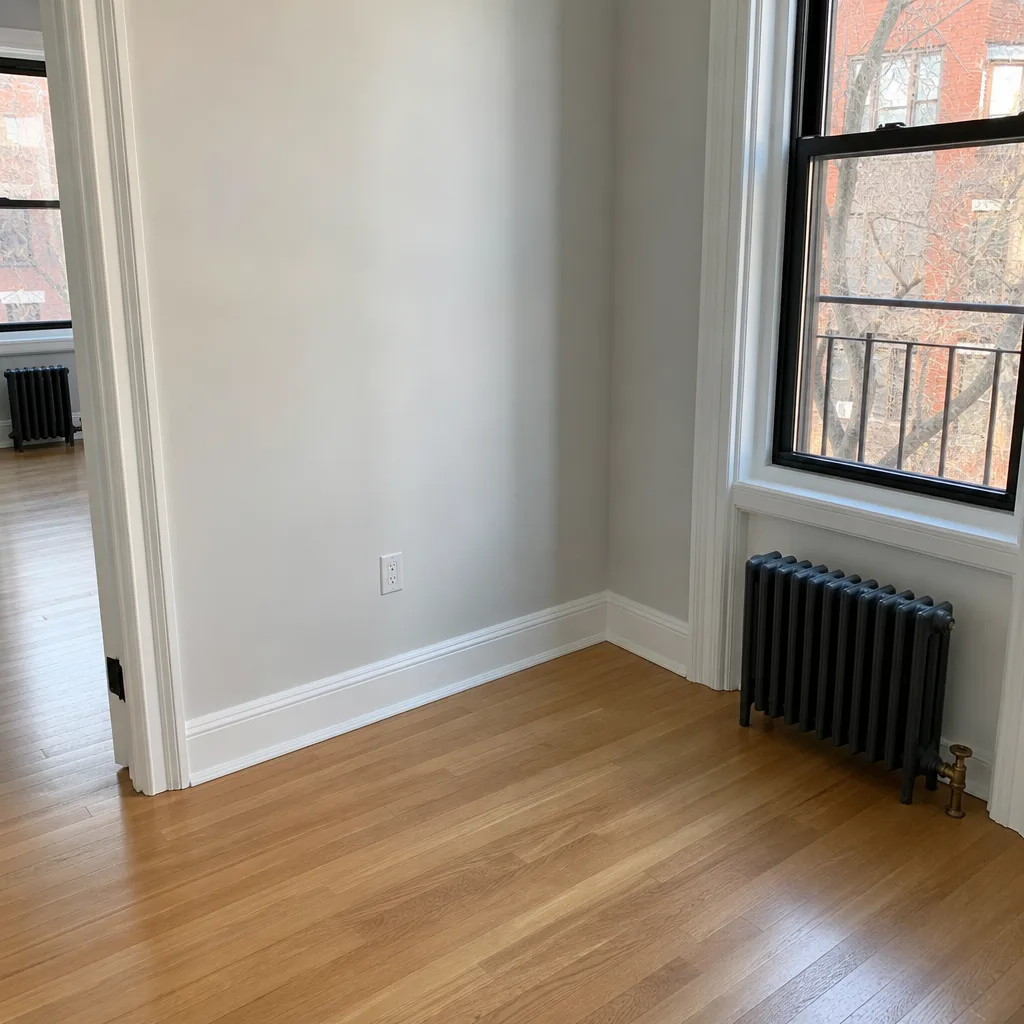 After
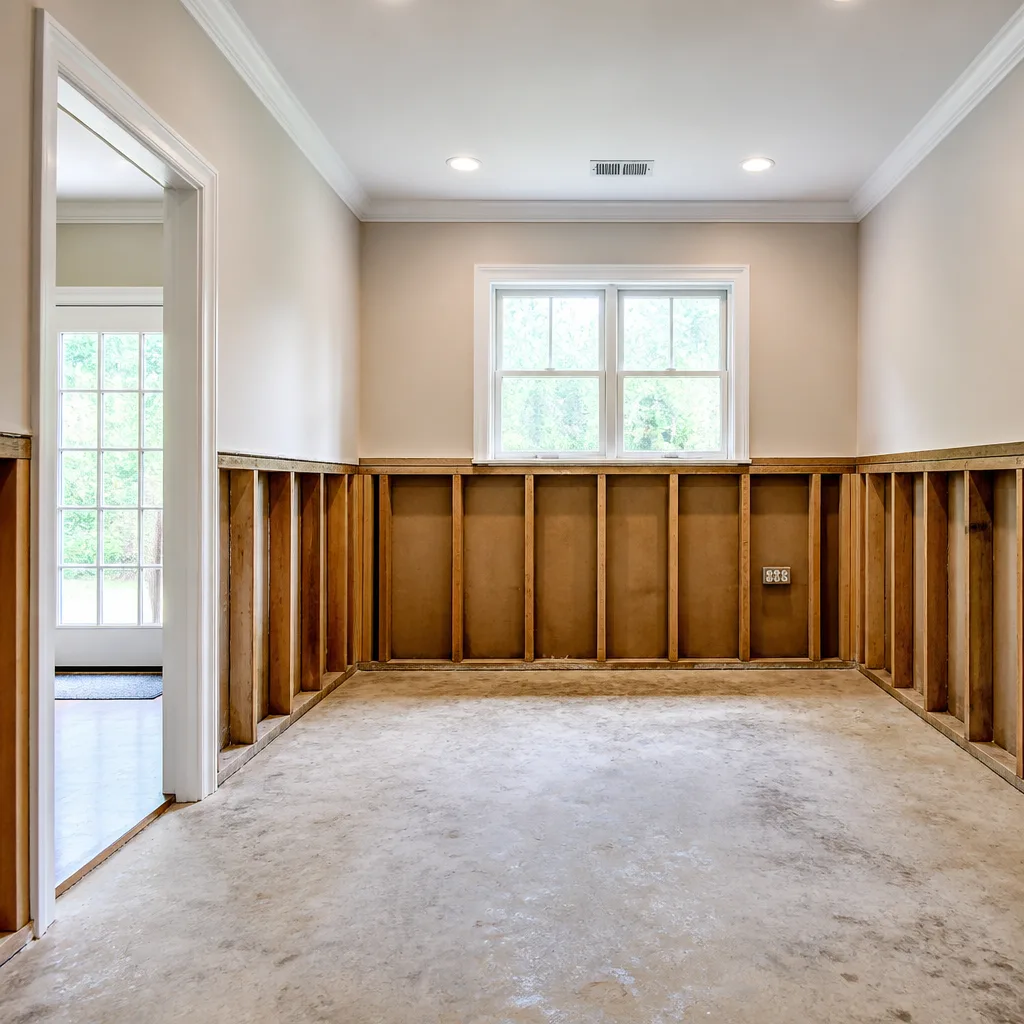
After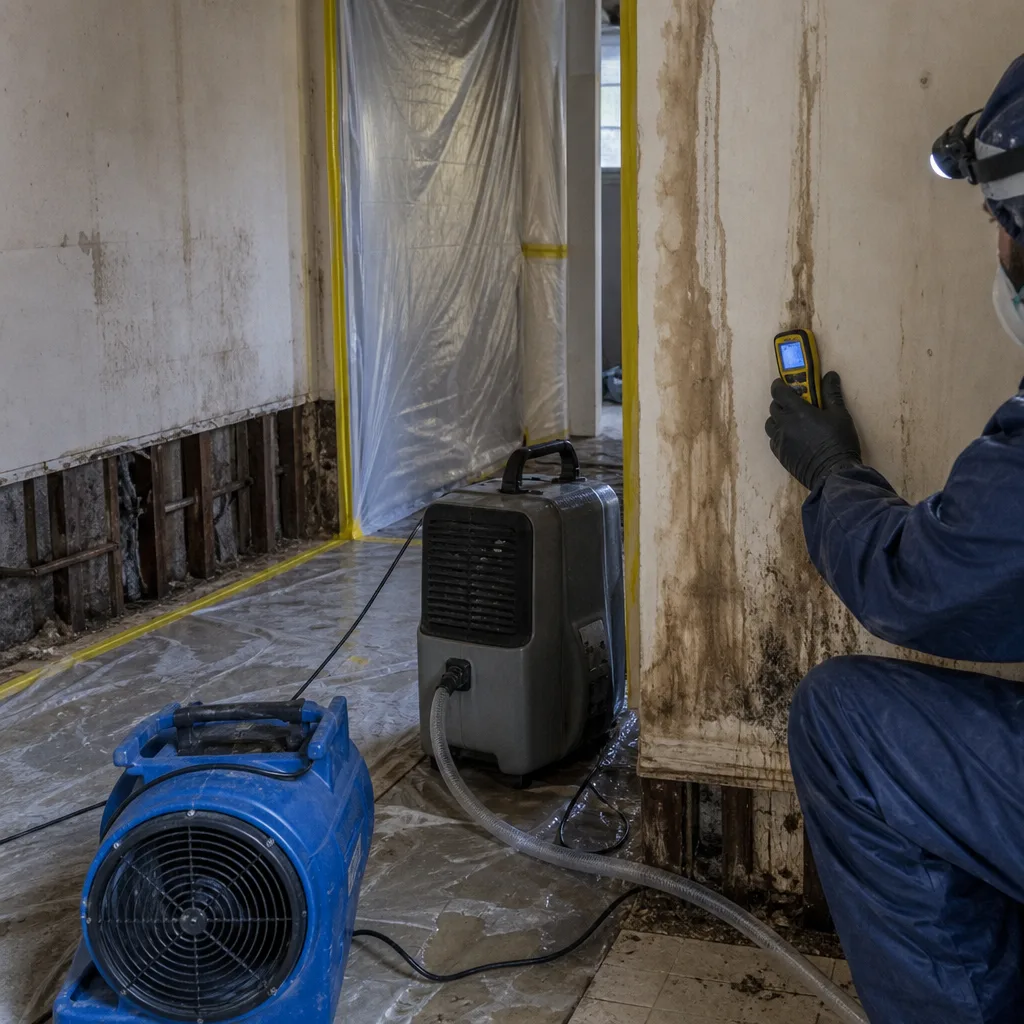 Before
 After
After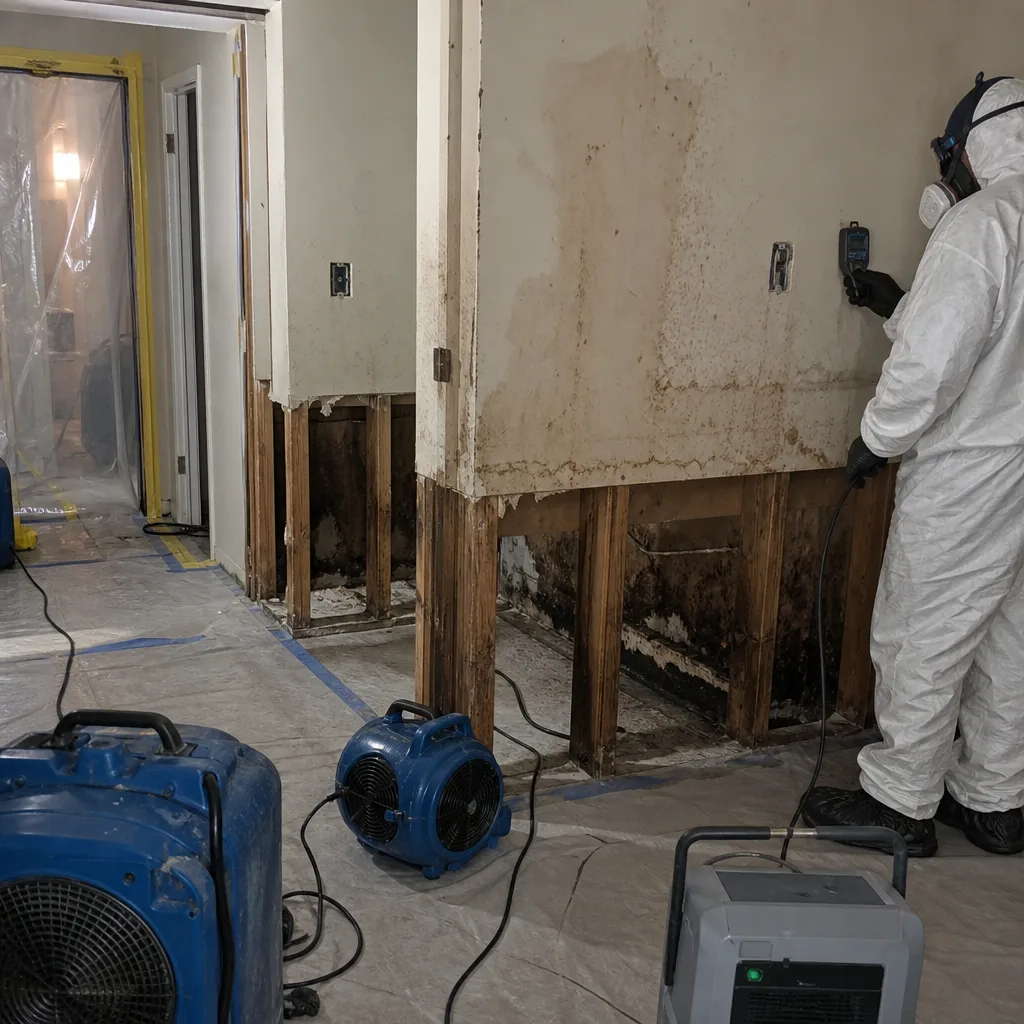 Before
 After
After24/7 Emergency Fire & Smoke Damage Restoration in Kew Gardens
A kitchen fire in a Kew Gardens co-op rarely stays in one apartment. Smoke moves through shared wall cavities and old cast-iron stacks, soot settles into original plaster, and within hours the odor spreads to units two and three floors below. We answer the phone live at (917) 924-4221 around the clock, and our crews reach Kew Gardens fast enough to start containment before the damage migrates further. The first hour matters because soot residue is acidic. Left on plaster, brass fixtures, or appliance surfaces, it etches and corrodes within days. Our team arrives with HEPA air scrubbers and negative air containment ready for pre-war interiors, and the visual inspection is free. You’ll know exactly what needs to happen, in what sequence, before anyone touches a wall.
Understanding Fire & Smoke Damage Restoration Severity in Kew Gardens Properties
Kew Gardens presents a specific challenge: most of the housing stock dates from the 1920s through the 1940s, with original plaster-and-lath walls that absorb smoke like a sponge. Fire damage here breaks into severity tiers that matter to the restoration sequence. Light soot residue from a contained stove fire behaves differently than wet smoke from smoldering synthetics, which leaves a sticky, lacquer-like film. Protein smoke from burned food is nearly invisible but penetrates paint and plaster with an odor that lingers for months without proper treatment. In Kew Gardens’s pre-war buildings, the wall cavities themselves act as chimneys. Smoke pushes into them, travels vertically, and exits through gaps around baseboards and electrical boxes in other units. We assess residue type, measure smoke migration paths, and test wall cavities before deciding between soda blasting, dry-ice blasting, or targeted sealant applications. The severity is rarely about the room where the fire started. It’s about where the smoke went.
Why Kew Gardens Property Owners Choose Floodline Restoration Co. of Manhattan
- 45-minute response commitment - When you call, a live dispatcher confirms the address in Kew Gardens and routes the nearest crew. We run a dispatch board, not a sales desk.
- 24/7 live answer, never an automated system - At 2 a.m., a real person picks up. A recording can’t assess urgency, and it can’t start mitigation.
- IICRC-certified crews - Our technicians hold FSRT (Fire and Smoke Restoration Technician) and OCT (Odor Control Technician) certifications, with WRT cross-training for water-related fire suppression damage.
- Free visual inspection - Before any work begins, we walk the loss site with you, explain what we’re seeing, and put the scope in writing.
- Direct insurance billing - We bill your carrier directly and coordinate with the adjuster. You don’t play messenger.
- One team from the first hour to the finished rebuild - The same certified crew that sets up containment handles the final coat of paint. No mid-job handoffs, no inherited strangers.
Our Fire & Smoke Damage Restoration Process
Inspection & Assessment
We identify the soot residue type, map smoke migration through wall cavities and shared chaseways, and test original plaster for asbestos where disturbance is required. You get a detailed scope of work in writing before we start.
Emergency Board-Up & Containment
We secure openings with board-up and tarping, then set up negative air pressure and HEPA air scrubbers to stop smoke from migrating further through the building. In multi-unit Kew Gardens co-ops, this step protects neighbors’ units from ongoing contamination.
Water Extraction & Drying
Fire suppression water pools in plaster, flooring, and subfloors. We extract what we can and deploy Dri-Eaz and Phoenix air movers with dehumidifiers, logging moisture readings daily with hygrometers until the dry standard is met.
Soot & Smoke Removal
Dry-ice blasting, soda blasting, and manual cleaning with professional-grade HEPA vacuums remove soot from original plaster, woodwork, and hard surfaces. We work carefully on Kew Gardens’s vintage plaster and lath, which standard abrasive methods damage.
Odor Removal & Deodorization
Thermal fogging, hydroxyl generators, and ozone treatment (where unoccupied) neutralize smoke odor in wall cavities, behind baseboards, and inside the cast-iron waste stack penetrations. Original plaster gets sealed only after the odor source is fully addressed.
Repairs & Restoration
The same crew rebuilds what was opened. Plaster patching, repainting, flooring, cabinetry, trim. We hand you a restored space and a complete moisture and drying log for your co-op board and insurance carrier.
Need Emergency Fire & Smoke Damage Restoration in Kew Gardens Now?
Crews minutes away, answering live 24 hours a day. The sooner we start, the less it costs.
Working With Your Insurance Company
Insurance claims for fire damage in Kew Gardens co-ops get complicated quickly. There’s the unit owner’s policy, the co-op corporation’s building policy, and sometimes the neighbor’s carrier if migration crossed property lines. We’ve handled all of it. Our team documents the loss from the first hour with room-by-room photos, moisture readings, and a line-item scope written to the standard insurance carriers accept in New York City. We communicate directly with your adjuster, your co-op board, and the building’s insurance representative. You don’t chase paperwork. You don’t argue over line items. You don’t explain restoration sequencing to a claims office. We present it to the carrier with the technical documentation they recognize, and we bill them directly.
What We Provide Your Insurer
- Thorough documentation of the loss
- Photos of all damage, room by room
- Moisture readings and drying logs
- A detailed, line-item scope of work
- Direct coordination with your carrier
Built for Kew Gardens’s Loss Calendar
Kew Gardens fire losses follow a seasonal pattern shaped by the neighborhood’s pre-war building systems and central Queens weather. January and February produce the highest volume of electrical fires, driven by space heaters overloading original wiring in Tudor Revival buildings, and by aging knob-and-tube circuits in detached homes that were never designed for modern loads. Summer months bring cooking fires, air-conditioner overloads, and the occasional transformer burnout during heat waves. Nor’easters in the fall and winter push wind-driven rain into flat-section roofs and deteriorated mortar joints, leading to water intrusion that shorts wiring and, in some cases, sparks fire. The common thread across all of it: original plaster-and-lath construction and shared wall cavities make every fire a multi-unit concern in a way newer construction simply doesn’t. We plan for that reality. Our crews understand the building systems on Queens Boulevard, Austin Street, and the residential blocks off Lefferts Boulevard.
Fire & Smoke Damage Restoration Across Kew Gardens’s Neighborhoods
The building stock changes block by block, and so does the restoration approach. In the co-op heavy corridor along Kew Gardens Road and near the courthouse district, sixth- and seventh-floor units mean smoke travels downward through stacked plumbing chases, and a fifth-floor kitchen fire becomes a fourth-floor and third-floor odor problem. Around Forest Park Crescent and the quieter streets near Maple Grove Cemetery, detached Tudor Revival homes with slate roofs and original masonry foundations require a different containment strategy - no shared walls, but often balloon framing that lets smoke race from basement to attic in minutes. The apartment buildings near Austin Street in the Richmond Hill border area carry mixed construction details; some have been renovated, some untouched since the 1940s, and we can’t assume anything about the wall cavities until we open a small inspection point. North of Queens Boulevard toward Forest Hills, brick courtyard buildings with communal stairwells create smoke-migration routes through corridors and elevator shafts that single-family homes never see. Every one of these areas is inside our normal response radius for Kew Gardens.
Specialized Fire & Smoke Damage Restoration Services We Offer in Kew Gardens
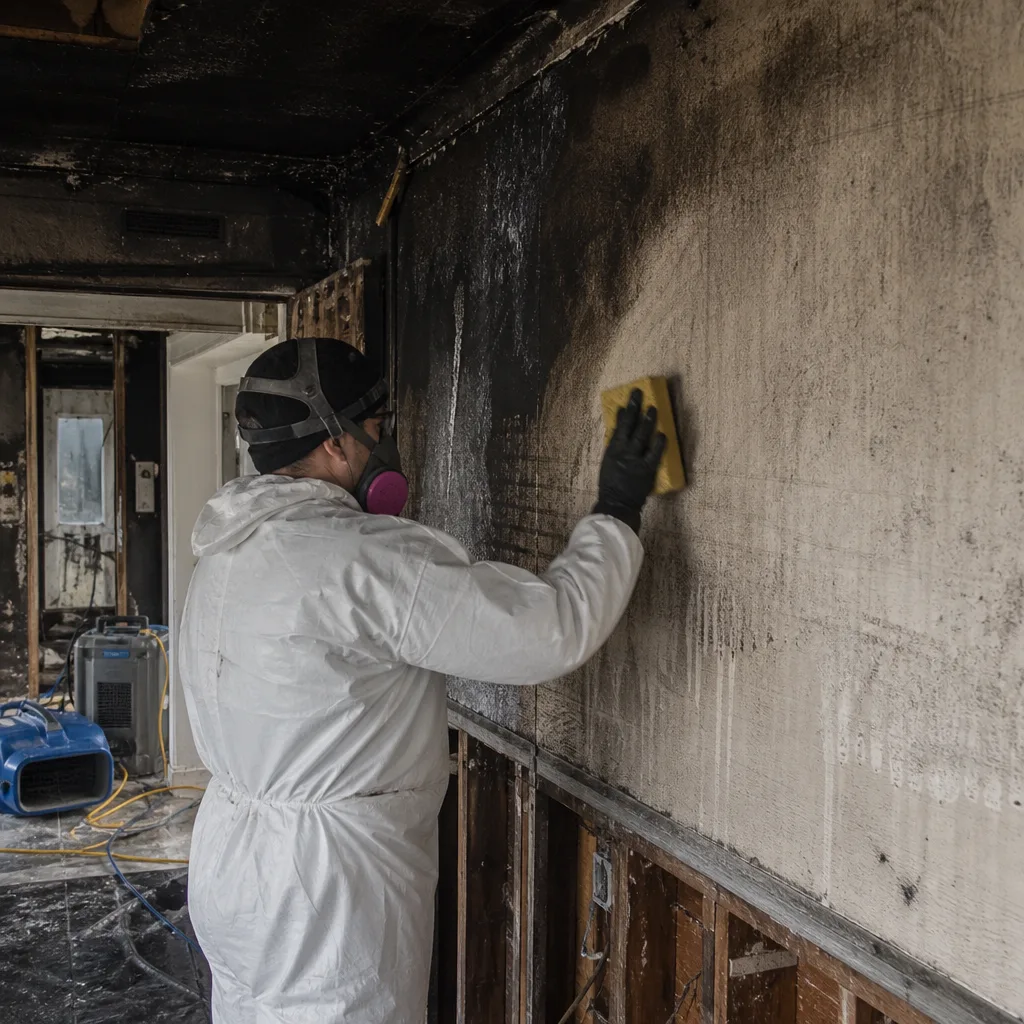
Fire Damage Cleanup
Structural cleaning begins after the soot type is identified. Wet smoke residue from smoldering synthetics gets a different cleaning protocol than dry soot from a clean-burning fire. We remove charred material, HEPA-vacuum every surface, and clean original plaster without water-blasting vintage walls into ruin.
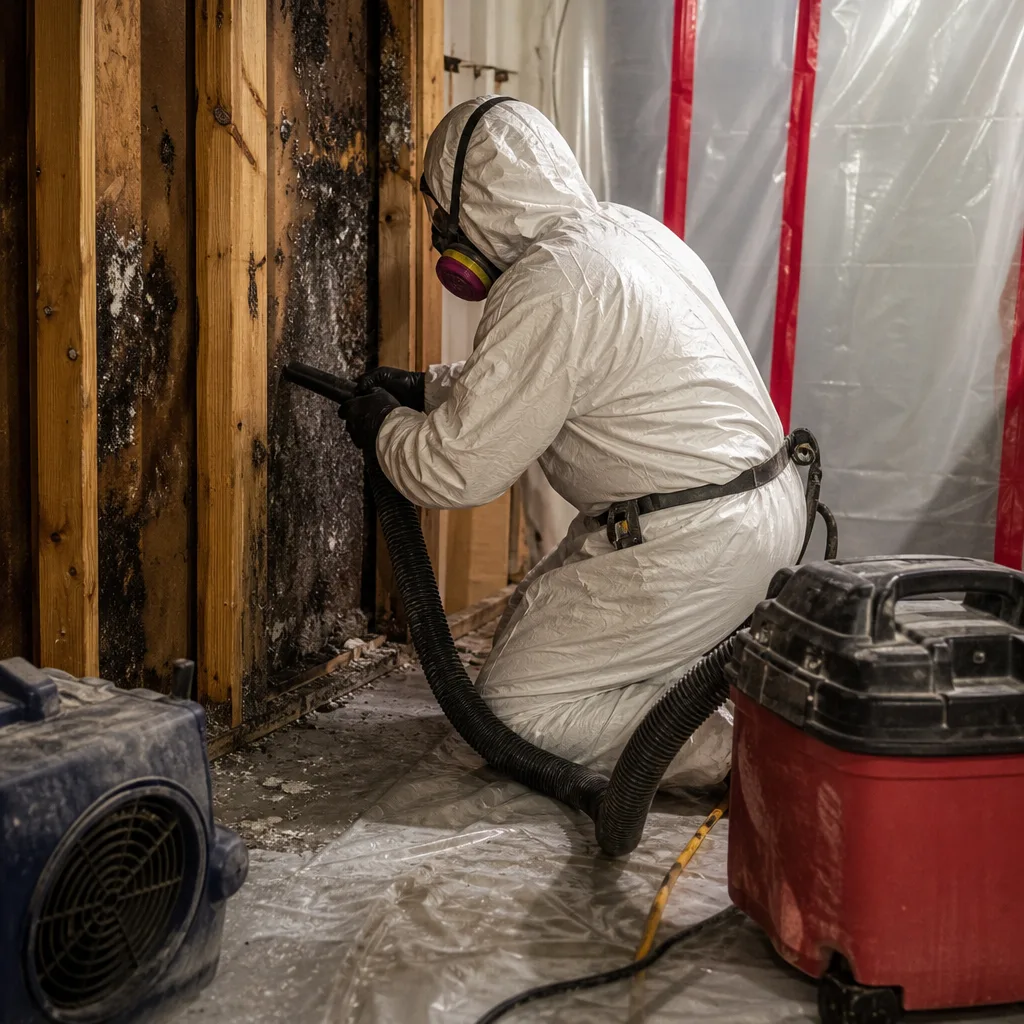
Smoke & Soot Removal
Soot is acidic and works into porous surfaces within hours. On Kew Gardens’s original plaster-and-lath walls, we use dry-ice blasting where the plaster is stable, and gentler soda blasting where it’s friable. Brass fixtures, hinges, and original woodwork get manual cleaning with conservation-grade techniques. The goal is smoke-free, not surface-clean.
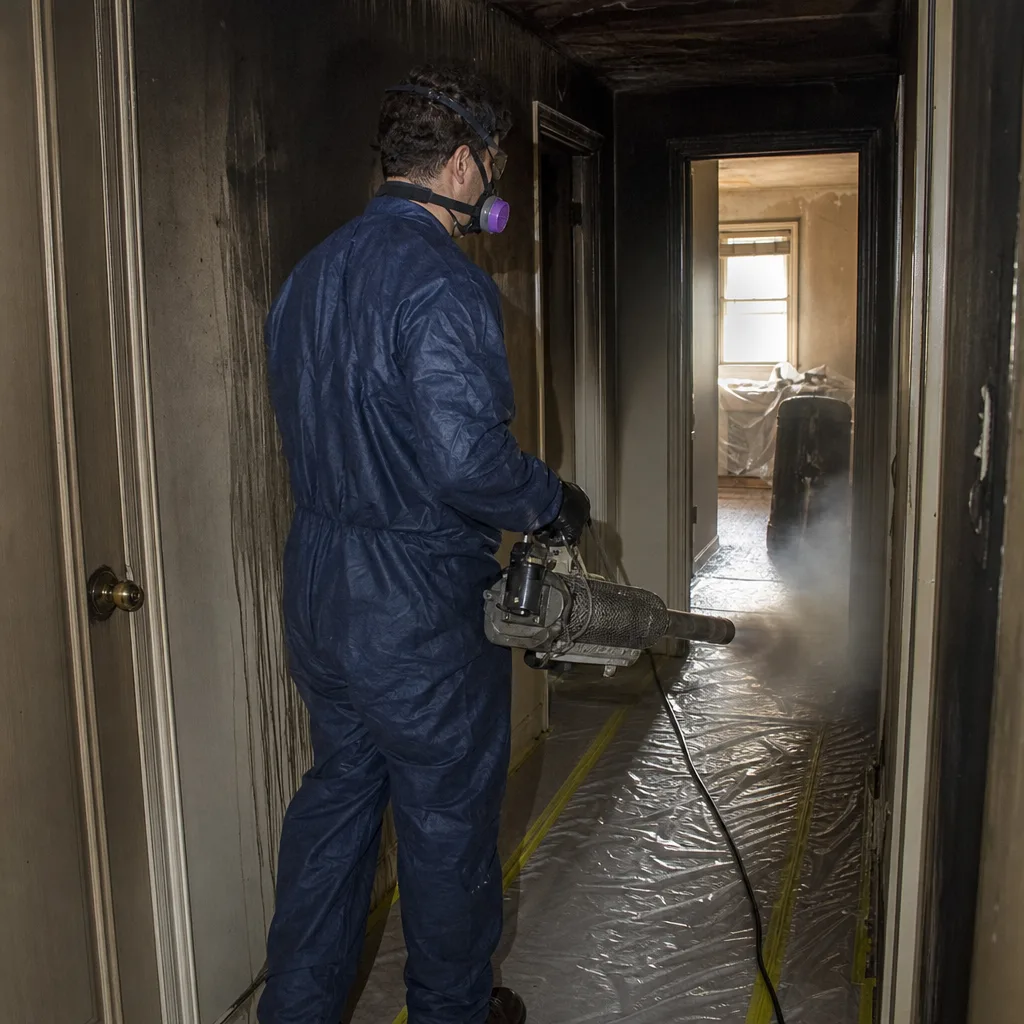
Odor Removal & Deodorization
Smoke odor in pre-war co-ops lives inside wall cavities, behind original baseboards, and in the cast-iron waste stack penetrations between floors. Ozone alone won’t reach those spaces. We combine thermal fogging with hydroxyl generation for occupied units, and targeted cavity sealing only after the source is gone. A unit that smells clean but still has smoke residue in the walls will re-odor in weeks.
Contents Cleaning & Pack-Out
When asbestos abatement or structural work requires the unit to be emptied, we pack out contents to our secure storage facility, catalog every item, and restore salvageable belongings through ultrasonic cleaning for hard goods and specialized dry cleaning for textiles. In Kew Gardens co-ops, board requirements often make pack-out mandatory before abatement begins. We handle coordination with the board and the carrier.
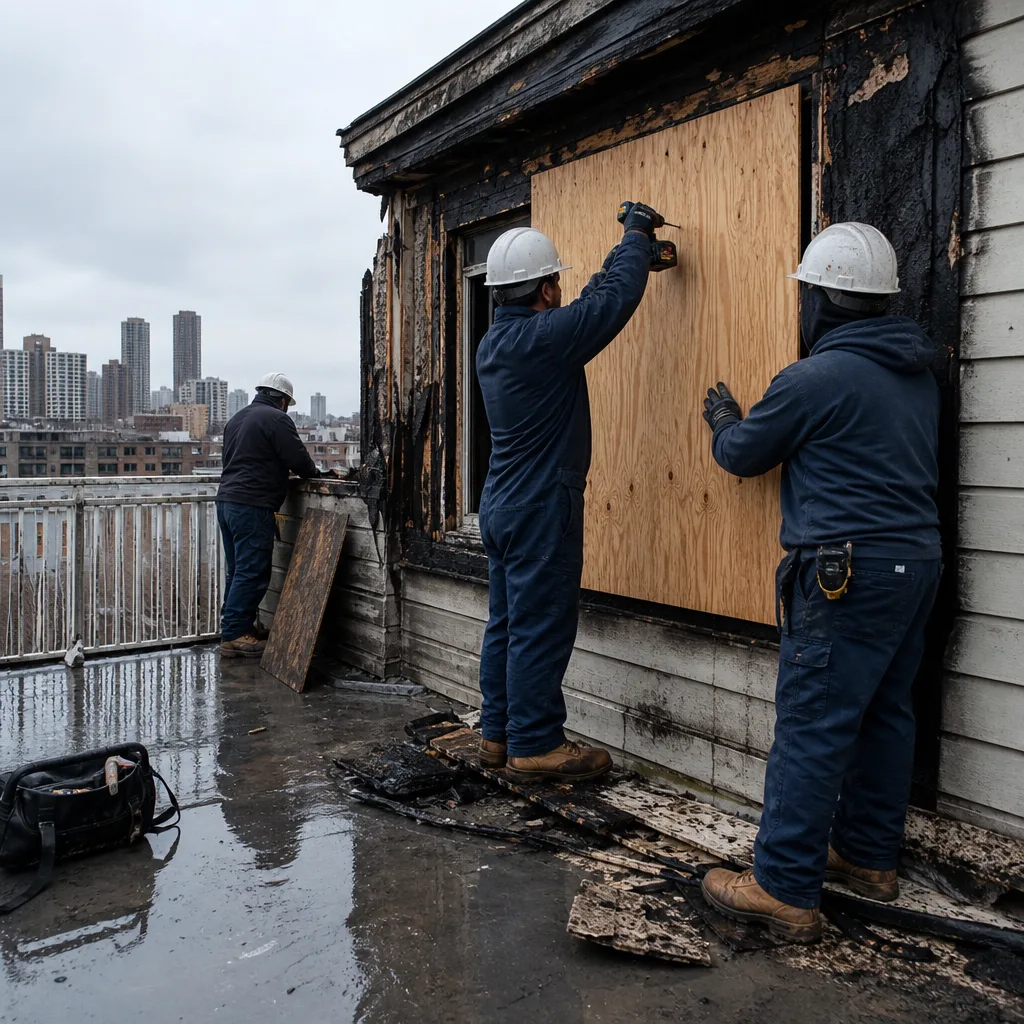
Emergency Board-Up & Tarping
A burned window or a compromised roof assembly leaves a Kew Gardens co-op unit or detached Tudor exposed. We board openings, tarp the roof, and secure the space the same visit. In multi-unit buildings, this also protects neighboring units from weather and unauthorized entry while the restoration sequence moves forward.
What happens when you call
- 1
A real person answersNo phone trees - you reach a local pro.
- 2
You get an upfront price rangeHonest numbers before anyone is dispatched.
- 3
A background-checked tech heads outLicensed & insured, dispatched right away.
- 4
You approve before work beginsNothing starts until you say go.
Fire & Smoke Damage Restoration Costs in Kew Gardens, NY
Here’s what fire restoration actually runs in Kew Gardens. A small contained kitchen fire with moderate soot in one unit typically lands between $3,800 and $9,500 for full soot removal, odor treatment, and repainting. Smoke damage that migrated through shared wall cavities into three or four units pushes the range to $18,000-$45,000 depending on the building’s construction and the extent of cavity sealing needed. Full contents pack-out, cleaning, and storage adds $4,000-$15,000. Asbestos abatement on pre-1980 plaster or pipe insulation, which NYC DEP mandates before disturbance, runs $8,000-$30,000 and is generally covered under the building’s policy or the unit owner’s policy, depending on the co-op bylaws. What moves the price: the residue type, the number of units affected, whether the original plaster tests positive for asbestos, and whether the co-op board requires full abatement clearance before reconstruction. The free visual inspection gives you a written scope and a firm number before any work starts. No surprises on the bill. Call (917) 924-4221 for an exact quote.
We Also Serve Cities Near Kew Gardens
Our crews work throughout central Queens. Beyond Kew Gardens, we provide Fire & Smoke Damage Restoration in Richmond Hill and South Richmond Hill, with their own pre-war co-op stock and multi-unit migration patterns; Forest Hills, where the 1920s co-op buildings share Kew Gardens’s plaster-and-lath construction and asylum-era masonry issues; and Woodhaven, with its line of older attached homes and shared wall systems.
Serving Kew Gardens, NY - Our Local Coverage Area
We’re based in the Kew Gardens area and know this community well. Use the map below to see our service coverage - if you’re nearby, we can almost certainly help.
Kew Gardens Fire & Smoke Damage Restoration Questions, Answered
How does fire damage restoration differ in a Kew Gardens pre-war co-op versus a single-family home?
In a co-op, smoke travels through shared wall cavities, original plaster, and cast-iron waste stacks into units above and below the fire source, so restoration becomes a multi-unit project with building-wide containment and often board-level approvals before work can be sequenced. Single-family homes keep the problem within one footprint, but Kew Gardens’s detached Tudors still have balloon framing that sends smoke from basement to attic fast.
Why do fire restoration jobs in Kew Gardens often take longer than elsewhere in Queens?
The pre-war construction is the reason. When original plaster, floor tile, or pipe insulation tests positive for asbestos, NYC DEP requires bulk sampling and abatement clearance before any disturbance, which adds two to four weeks to the timeline. A job that looks like a two-day smoke cleanup becomes a multi-week containment and abatement sequence before structural drying starts.
Can you remove smoke odor from original plaster walls in a Kew Gardens Tudor without replacing them?
Yes. We remove soot from the plaster with dry-ice or soda blasting, treat the wall cavities with thermal fogging or hydroxyl technology, and seal the plaster only after the odor source is addressed. Replacing original plaster is almost never necessary for odor; it’s the smoke inside the wall cavity that keeps re-odorizing the surface.
What happens to my belongings during a fire cleanup in a Kew Gardens co-op if asbestos abatement is required?
We pack out your contents to our secure storage facility before abatement begins. Every item is cataloged, photographed, and logged. Salvable hard goods go through ultrasonic cleaning; textiles go through specialized dry cleaning. When the space is cleared for occupancy, we return the contents and reset them where they belong, all documented for your insurer.
Does Floodline Restoration Co. of Manhattan handle the co-op board and insurance paperwork for fire damage in Kew Gardens?
We coordinate with the co-op board, the building’s property manager, and the insurance carriers involved. We provide the board with the scope of work, abatement documentation, and drying logs they need. We bill your carrier directly, and we communicate with the adjuster so you’re not caught between them. Call (917) 924-4221 and we’ll start that coordination on the first visit.
How fast can you actually get to a Kew Gardens fire loss?
We commit to 45 minutes for emergency response in Kew Gardens. Our dispatchers are live 24/7, and our crews are positioned to reach central Queens fast. The faster we set up containment and HEPA scrubbing, the fewer units are affected by smoke migration.
Will my insurance cover fire and smoke restoration in a Kew Gardens co-op?
Most homeowners policies cover fire and smoke damage, including contents cleaning and odor remediation. In co-ops, the building’s policy typically covers the structure and shared systems, while the unit owner’s policy covers the interior and personal property. Asbestos abatement coverage depends on the policy language and the co-op bylaws. We document everything in a format carriers accept and bill them directly.
What should I do in the first 30 minutes after a fire in my Kew Gardens unit?
Call 911 if you haven’t already, then call us at (917) 924-4221. Don’t wipe soot off walls; you’ll grind it into the plaster. Don’t run the HVAC system; it spreads smoke through the ductwork. Don’t plug in any electronics that were in the affected rooms. Open windows only if the fire is fully out and it’s safe to do so, and keep people out of the space until containment is set up.
Written by Curt Bowman, Owner at Floodline Restoration Co. of Manhattan, serving Kew Gardens and all of central Queens. For the 42 years we’ve been in this trade, the standard has never changed: done right, and backed in writing.