
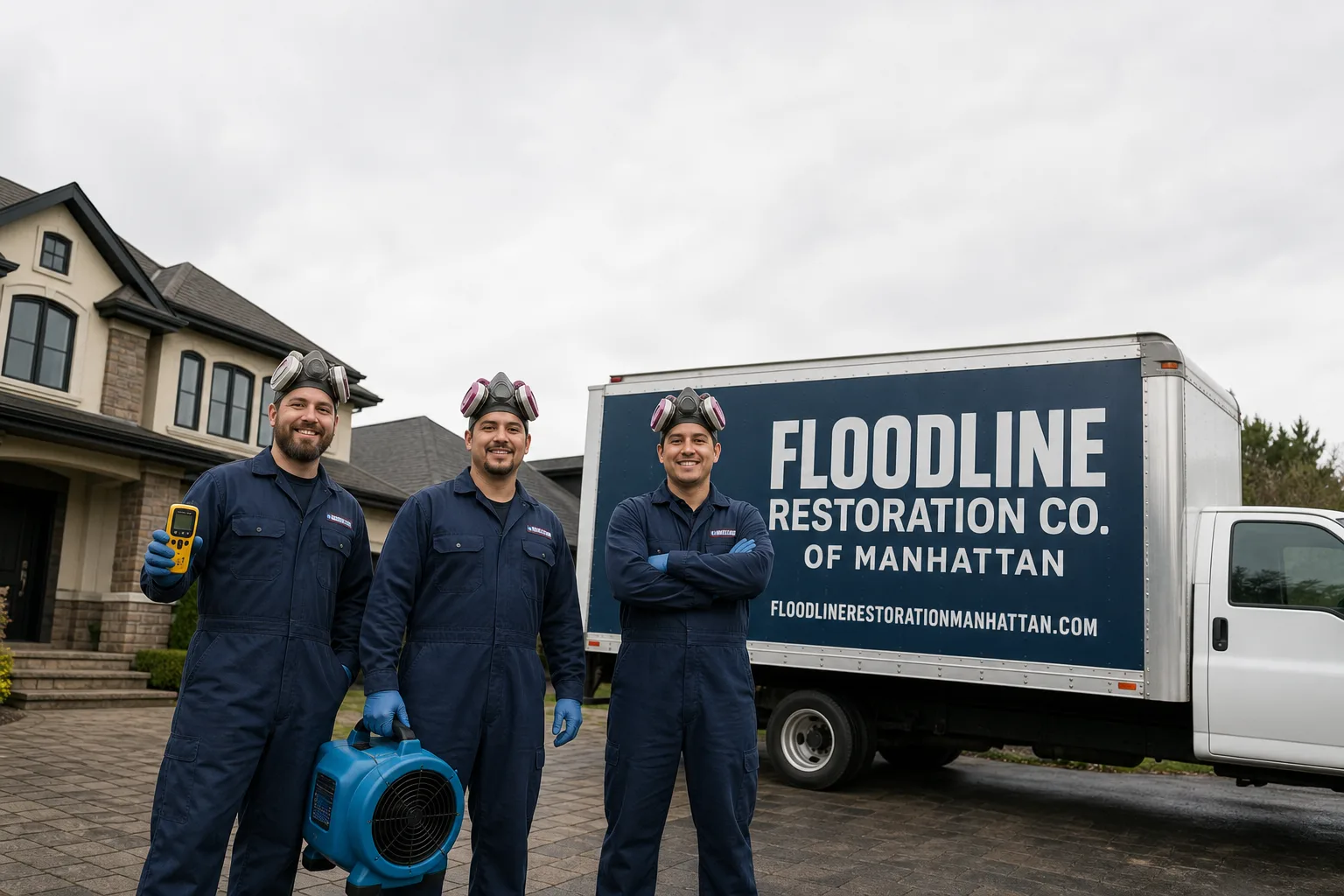
Free visual inspection and a written scope of work before any mitigation begins - photos, moisture readings, and drying logs go in your claim file
The scope we write is the scope we bill. Anything new gets shown to you, in writing, before we touch it.






 Before
 After
After Before
 After
After Before
 After
After24/7 Emergency Fire & Smoke Damage Restoration in Long Island City
A kitchen fire in a converted Hunters Point loft spreads smoke through an open floor plate faster than most people realize. Within minutes, soot is coating brick, timber, and every surface in adjacent units. Floodline Restoration Co. of Manhattan answers live at (917) 924-4221 around the clock. We dispatch crews to Long Island City immediately, with a 45-minute response commitment for fire and smoke calls because every hour that soot sits on original brick and finished surfaces, the deeper it etches in and the harder the odor is to remove. Our first step is a free visual inspection to document visible damage, map smoke migration, and tell you straight what needs to happen. The first hour matters more with fire and smoke than any other damage type: acidic soot residues begin corroding metal fixtures and permanently staining porous masonry within days, not weeks.
Understanding Fire & Smoke Damage Restoration Severity in Long Island City Properties
Fire and smoke damage restoration is not a single event. It is a chain reaction that begins with flame contact and continues through smoke, soot, and water from suppression efforts. The restoration trade classifies damage by soot residue types and smoke migration paths. Dry soot forms in fast-burning, high-oxygen fires inside less-enclosed spaces: what you find in a loft that burns hot and quick. Oily soot comes from slower, lower-temperature smoldering fires in enclosed rooms or within wall cavities, and it bonds aggressively to finished surfaces. Protein residue is the invisible one, left behind by kitchen fires that produce almost no visible flame damage but coat cabinetry, stone, and painted surfaces with a nearly transparent film that smells for months. We use this taxonomy because Long Island City’s housing stock is unusually demanding. Converted pre-war lofts have wide-open floor plates that let smoke migrate laterally across entire floors. Original heavy-timber beams absorb soot into grain and pores. Masonry walls wick smoke odor deep. None of this behaves like a modern compartmentalized apartment building. The assessment must be equally uncompromising.
Why Long Island City Property Owners Choose Floodline Restoration Co. of Manhattan
- 45-minute response commitment to Long Island City. We’ll be there when we say, with a crew staged locally and a live dispatcher tracking the call from first ring to arrival.
- 24/7 live answer, never an automated system. A real person picks up at 3 a.m. A real person gives you a straight answer about when the truck rolls.
- IICRC-certified crews. Our technicians carry FSRT (Fire & Smoke Restoration Technician) and WRT (Water Restoration Technician) certifications, trained to handle the heat, soot, and water damage that arrive together.
- Free visual inspection. Before any work is authorized, we document scope, map smoke travel, and give you a written plan with a line-item estimate. No pressure, no surprises.
- Direct insurance billing. We deal with your carrier directly, send photos and moisture logs from the first day, and keep you out of the adjuster-back-and-forth.
- One team from extraction to reconstruction. No mid-job handoff. The crew that mitigates is the crew that rebuilds, led by Curt Bowman’s standard: done right and backed in writing.
Our Fire & Smoke Damage Restoration Process
Inspection & Assessment
We document every affected surface, using thermal imaging to find heat migration hidden in wall cavities and moisture meters to map where suppression water has traveled. In a loft with an open floor plate, this means walking the full footprint, not just the fire room.
Extraction & Stabilization
Standing water from firefighting gets extracted with professional-grade truck-mounted and portable units. We board up and tarp openings the same visit so weather and unauthorized access don’t add to the loss.
Drying & Dehumidification
Suppression water hides in subfloors, plaster, and masonry. We run Dri-Eaz dehumidifiers and XPOWER air movers on a moisture map, taking daily readings until the dry standard is met and logged.
Cleaning & Sanitization
Soot removal is surface-specific. Original brick gets dry sponge and HEPA vacuuming, never sandblasting. Finished millwork gets precise hand cleaning. Every surface is treated according to its material and patina.
Odor Removal & Deodorization
We deploy hydroxyl generators and HEPA air scrubbers to pull smoke particulate out of the air and off surfaces, targeting the proteins and volatile compounds that cause persistent odor in Long Island City lofts with open floor plans.
Repairs & Restoration
Structural repair, finish matching, and rebuild are part of the same job. From subfloor to trim, we restore the property to pre-loss condition and back it with the 90-Day Done Right Promise in writing.
Need Emergency Fire & Smoke Damage Restoration in Long Island City Now?
Crews minutes away, answering live 24 hours a day. The sooner we start, the less it costs.
Working With Your Insurance Company
Insurance claims after fire and smoke damage in Long Island City are won or lost on documentation. Your carrier needs to see what we saw, when we saw it, and what we measured. That starts in the first hour with a comprehensive photo record of every affected surface, room by room, before anything is moved or cleaned. Our crews photograph and log everything: smoke staining on beams, soot on contents, water saturation in subflooring. We write a detailed, line-item scope of work using industry-standard estimating software that adjusters recognize. We then coordinate directly with your carrier, sending adjusters our moisture readings, drying logs, and itemized contents inventories as they are produced. You are never asked to carry messages between us and an insurance desk. Curt Bowman built the company on a dispatch board, not a sales desk, and the same philosophy applies to claims: a square deal, documented, with no surprises on the bill.
What We Provide Your Insurer
- Thorough documentation of the loss
- Photos of all damage, room by room
- Moisture readings and drying logs
- A detailed, line-item scope of work
- Direct coordination with your carrier
Built for Long Island City’s Loss Calendar
Long Island City’s fire and smoke damage season does not look like the rest of northern Queens. The neighborhood’s converted industrial stock and waterfront position create a distinct loss calendar. Winter months bring space-heater fires in older loft units with insufficient HVAC, and electrical overload in buildings where original wiring predates modern load demands. The East River frontage channels nor’easter storm surge directly into sub-grade mechanical rooms, and a flooded boiler room can short out equipment and create a fire risk before water damage is even addressed. Deep-freeze events in January and February burst supply lines that then soak walls, ceilings, and electrical panels, creating conditions where moisture can reach wiring and start a fire days or weeks after the freeze. Spring brings groundwater intrusion into basement-level units. Summer thunderstorm flash flooding hits the low-lying blocks near the waterfront hard, and any water event in a building with aging electrical systems invites fire risk behind walls. In this neighborhood, water and fire damage are often the same job. We handle both under one crew.
Fire & Smoke Damage Restoration Across Long Island City’s Neighborhoods
We work every corner of Long Island City. In Hunters Point, the converted pre-war industrial lofts along 47th Avenue and 49th Avenue demand careful soot removal from original brick and heavy timber; our crews take response routes down Jackson Avenue and up 21st Street to reach them fast. Around Court Square, the mix of pre-war walkups and newer mid-rise buildings means we adapt our approach by building type, often arriving via Queens Plaza or the Pulaski Bridge approaches. Over near Queensbridge and the Long Island City waterfront, post-Sandy resilience rules complicate restoration work: mechanical rooms rebuilt in flood Zone AE must be elevated above base flood elevation, so our fire and water restoration jobs here often require pulling in a structural engineer to document compliance before reconstruction can pass DOB inspection. In the blocks around Vernon Boulevard and Gantry Plaza State Park, the newer glass-and-steel high-rises present a different challenge: impressive architectural materials that demand exacting finish matching when smoke or soot compromises ceilings and common areas. And along the Dutch Kills section north of Queens Plaza, older auto-body and industrial buildings turning residential mean mechanical fires in converted workshops, where decades of absorbed oils and solvents in floors and walls make smoke odor removal especially demanding. Our familiarity with each district means we arrive knowing what we are walking into.
Specialized Fire & Smoke Damage Restoration Services We Offer in Long Island City
Fire Damage Cleanup
We remove charred structural material, water-soaked drywall, and burned contents, then stabilize what remains. In LIC’s converted lofts, this often means preserving original timber elements while removing only what is truly destroyed. A kitchen fire in an open floor plate means board-by-board assessment, not wholesale demolition.
Smoke & Soot Removal
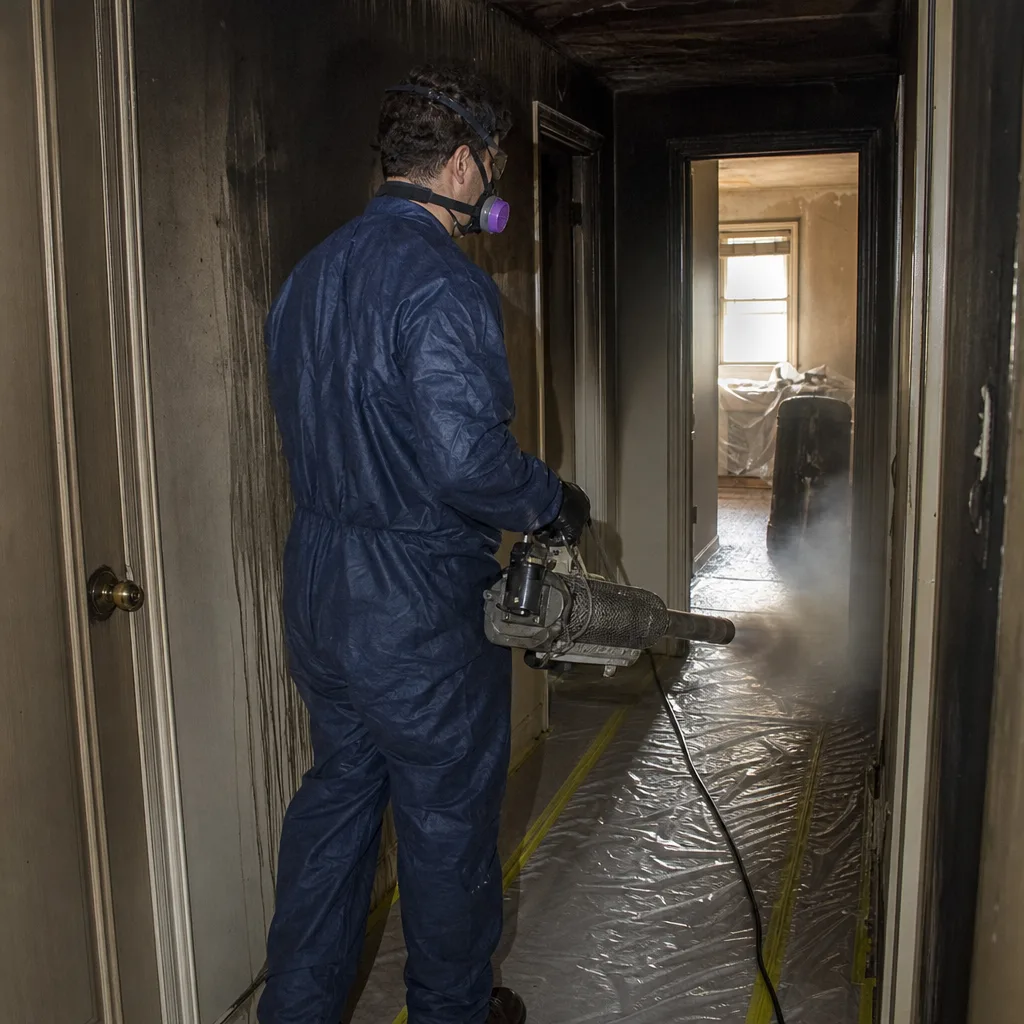
Soot behaves differently on original brick, painted plaster, and factory-finished steel. We match the cleaning method to the material: dry chemical sponge on porous masonry, HEPA vacuuming on raw wood, precise solvent-free hand cleaning on sealed surfaces. This is the difference between a restored loft and one that looks scrubbed clean but still holds residue. Our Fire & Smoke Damage Restoration team treats this as craft work.
Odor Removal & Deodorization
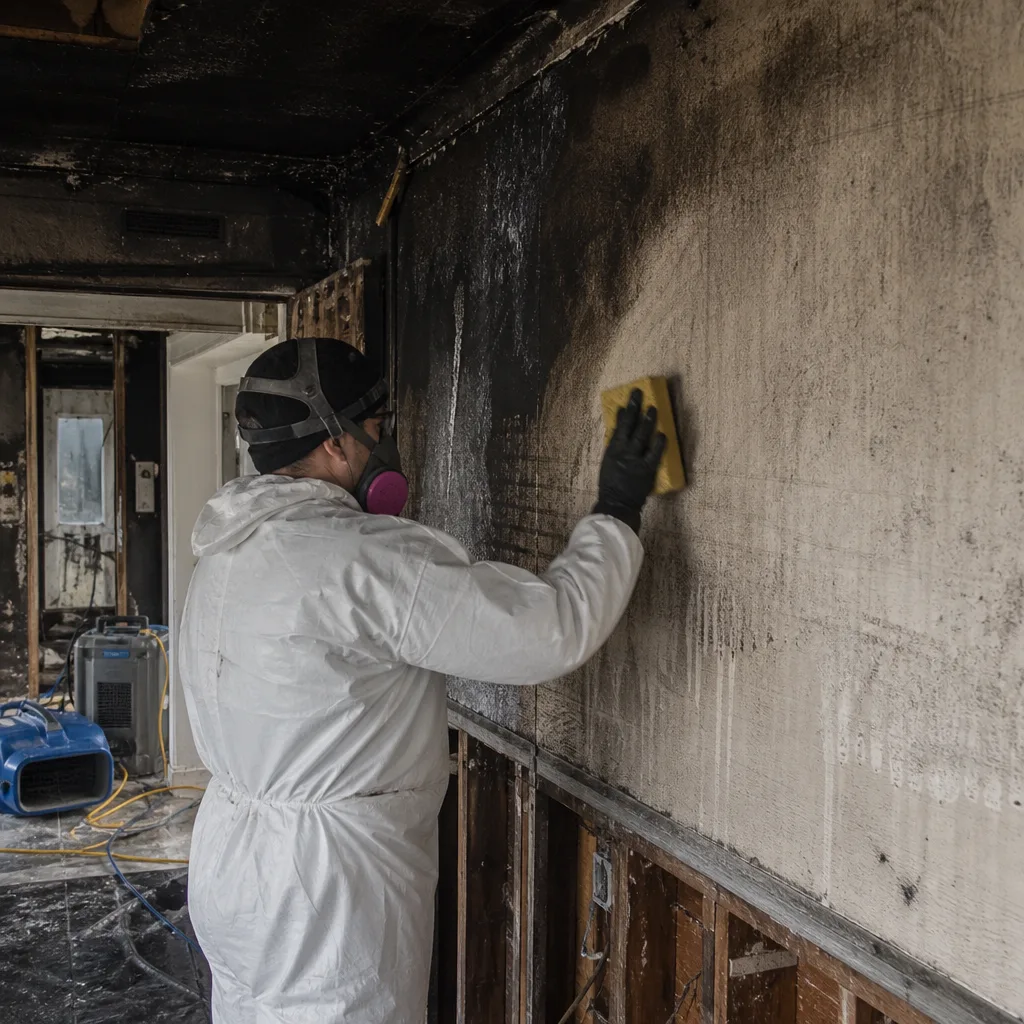
Smoke odor in a loft with an open floor plan travels to apartments 100 feet away from the fire. We deploy hydroxyl generators, not masking agents, to chemically neutralize odor molecules embedded in brick, timber, and textiles. Treatment continues until an independent sniff test passes, not until the equipment timer runs out.
Contents Cleaning & Pack-Out
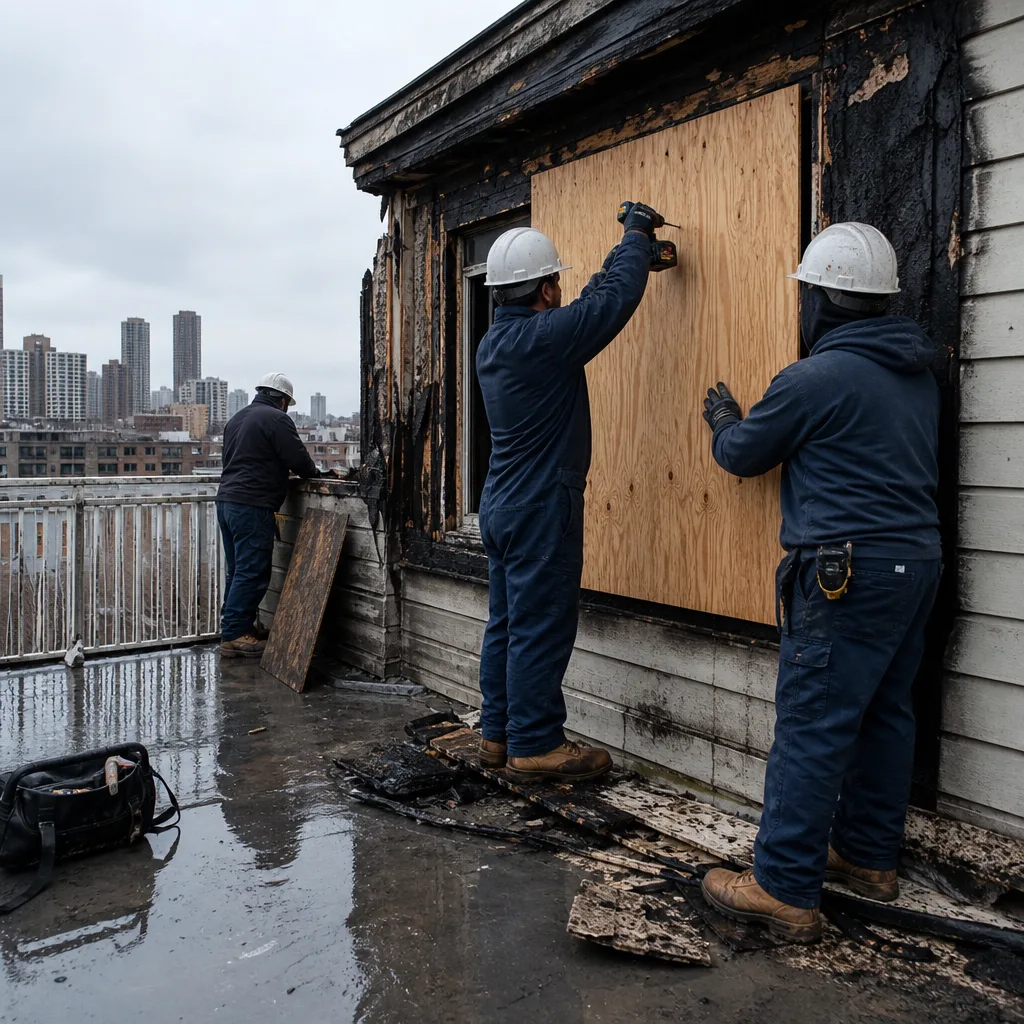
High-end furniture, electronics, and original millwork in Long Island City lofts require more than an off-the-shelf wipe-down. We inventory, photograph, pack, and transport contents to a climate-controlled facility where each item gets matched to the right cleaning protocol. Electronics get specialized soot removal to prevent corrosion and later failure.
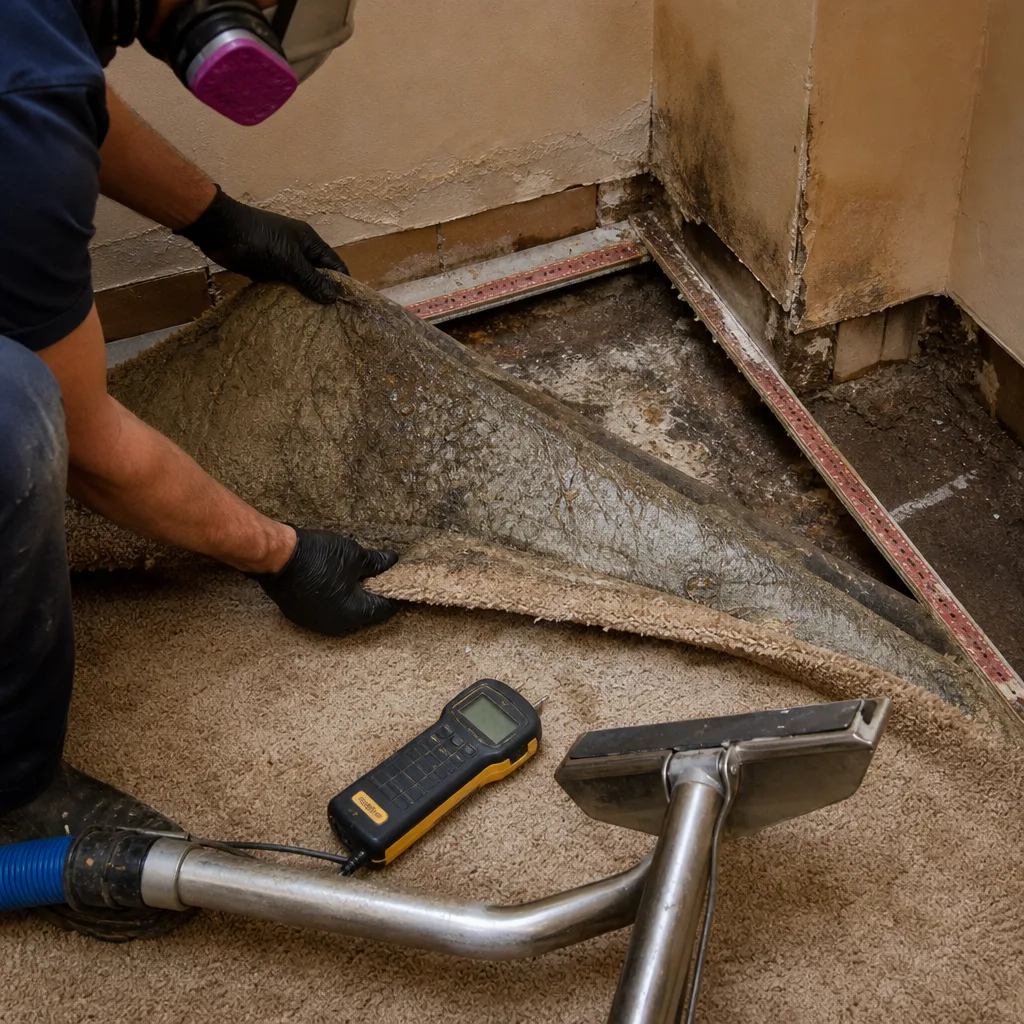
Emergency Board-Up & Tarping
A fire-damaged building on a dense LIC street is a liability until it is secured. We board up broken windows, tarp compromised sections of roof, and lock every opening the same visit. This protects against weather, vandalism, and the additional insurance complications that come from a secondary loss. In a neighborhood where properties sit lot-line to lot-line, securing the perimeter is non-negotiable.
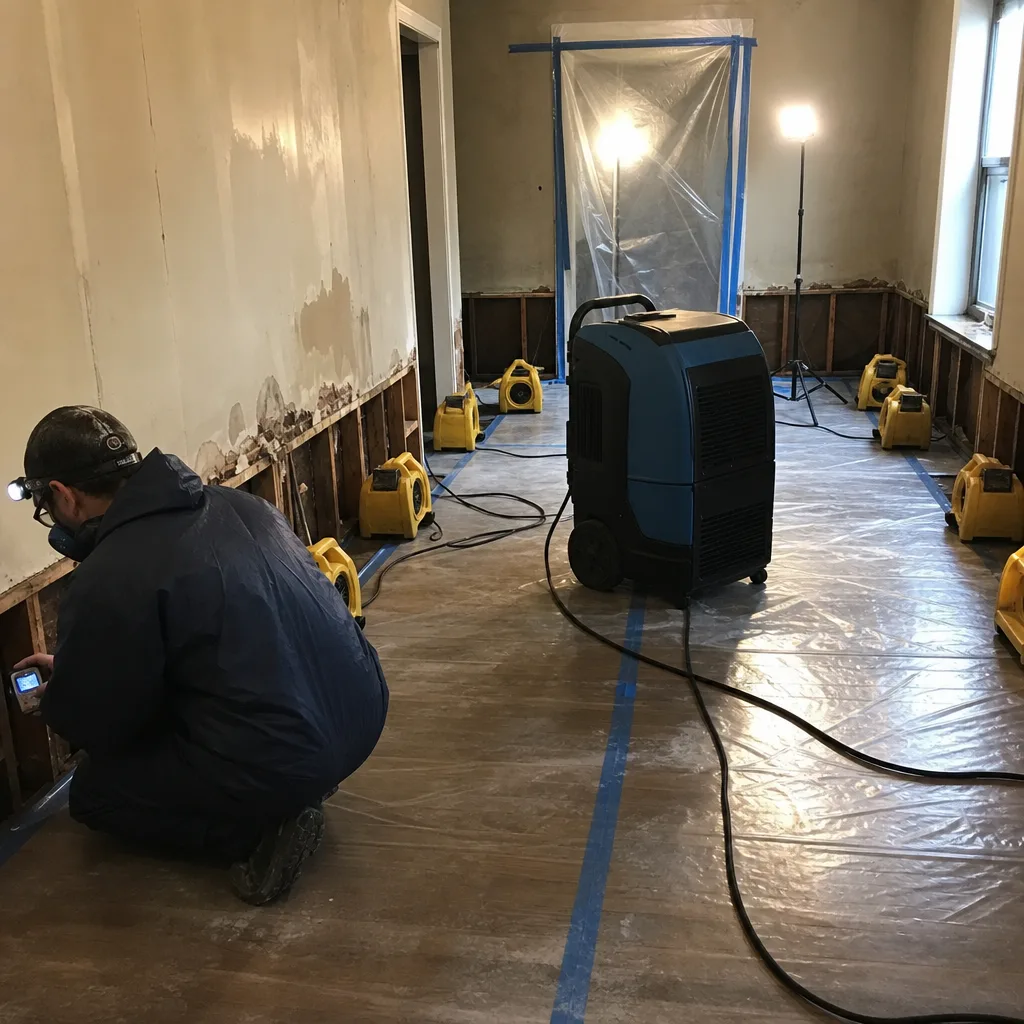
What happens when you call
- 1
A real person answersNo phone trees - you reach a local pro.
- 2
You get an upfront price rangeHonest numbers before anyone is dispatched.
- 3
A background-checked tech heads outLicensed & insured, dispatched right away.
- 4
You approve before work beginsNothing starts until you say go.
Fire & Smoke Damage Restoration Costs in Long Island City, NY
A typical smoke and soot cleanup in a Long Island City loft where the fire was contained to one room runs $2,800 to $6,500. When open floor plates let smoke migrate across an entire floor or into adjacent units, odor removal and deodorization push the total to $8,000 to $18,000. Kitchen fires with structural damage to cabinetry, subflooring, and mechanical systems typically fall between $15,000 and $45,000 depending on the extent of suppression-water damage and the finish level of the materials being replaced. What moves the price: the size of the smoke plume, whether original brick and timber need hand cleaning, whether contents require pack-out and off-site treatment, and whether below-grade mechanical rooms flooded as part of the event. Most Long Island City fire and smoke losses involve insurance. Your policy covers fire damage, smoke damage, and the water damage caused by firefighting, less your deductible. The best path to a firm number is a free visual inspection: we document scope, write a line-item estimate, and submit it to your carrier. Call (917) 924-4221 and we’ll schedule it the same day.
We Also Serve Cities Near Long Island City
Floodline Restoration Co. of Manhattan serves the neighborhoods immediately around Long Island City, including Sunnyside, Woodside, Astoria, and Maspeth. If you are in one of these nearby Queens neighborhoods, call the same live line at (917) 924-4221 and a certified crew will head your way.
Serving Long Island City, NY - Our Local Coverage Area
We’re based in the Long Island City area and know this community well. Use the map below to see our service coverage - if you’re nearby, we can almost certainly help.
Long Island City Fire & Smoke Damage Restoration Questions, Answered
How fast can you get to Long Island City for a fire damage emergency?
We commit to a 45-minute response for fire and smoke calls in Long Island City. A live dispatcher takes your call 24/7 and a crew stationed near the neighborhood is dispatched immediately. Call (917) 924-4221 and we’ll be there when we say.
Will my insurance cover fire and smoke damage in a converted LIC loft?
Yes, standard homeowner and condo policies cover fire, smoke, and the water damage caused by firefighting, subject to your deductible. The key is documentation from the first hour, which we provide to your carrier directly. We bill insurance directly so you are never asked to play messenger with an adjuster.
Do I need full remediation or just a cleaning after a small kitchen fire?
Even a small fire in a Long Island City loft with an open floor plate can push smoke into every room on the floor. If you smell smoke in a room the fire never reached, you need full odor remediation, not surface cleaning. Our free visual inspection maps soot and odor migration and tells you exactly what the scope should be.
What happens to high-end furniture and electronics in an LIC loft after a fire?
We inventory and photograph each item, then pack out and transport contents to a climate-controlled cleaning facility. Electronics get specialized soot removal because acidic soot corrodes circuit boards if left untreated. Furniture gets material-matched cleaning. You receive a written contents inventory for your carrier. Call (917) 924-4221 and we’ll start the contents pack-out within the first 24 hours.
How long does fire and smoke restoration take in Long Island City?
A contained kitchen fire with moderate smoke damage usually takes 5 to 10 working days from mitigation to final cleaning. Lodging restrictions on a broader loft floor plate, or moisture in subflooring that requires structural drying, can extend that to 2 to 4 weeks. Your written scope will include a timeline, and we update you daily.
Can we stay in our home during fire and smoke restoration?
It depends on the severity of smoke migration and whether suppression water compromised structural components. In many cases, homeowners can stay in unaffected units or rooms once containment is set. We assess air quality with HEPA monitoring and give you a straight answer on the first visit.
Are your technicians certified for fire and smoke restoration?
Yes. Our crews carry IICRC certifications including FSRT (Fire & Smoke Restoration Technician) and WRT (Water Restoration Technician). They are background-checked, uniformed, and trained to IFA standards. Curt Bowman has held the team to that standard since founding Floodline Restoration Co. in 2010.
What should I do in the first 30 minutes after a fire in Long Island City?
Call 911 if it is an active emergency, then call us at (917) 924-4221. Do not touch or wipe soot off surfaces, as improper cleaning can drive it deeper into masonry and timber. Do not turn on any electrical system until it has been inspected. Open no windows if winds are pushing smoke further. We’ll walk you through the next steps on the phone and have a crew dispatched immediately.
Fire and smoke damage does not wait, and neither do we. If your Long Island City property has taken fire, soot, or odor damage, call (917) 924-4221 now. A live person answers, every hour of every day, and a certified crew will be at your door with a plan. Done right, and backed in writing.
Written by Curt Bowman, Owner at Floodline Restoration Co. of Manhattan, serving Long Island City with fire, smoke, water, and mold restoration since 2010.