
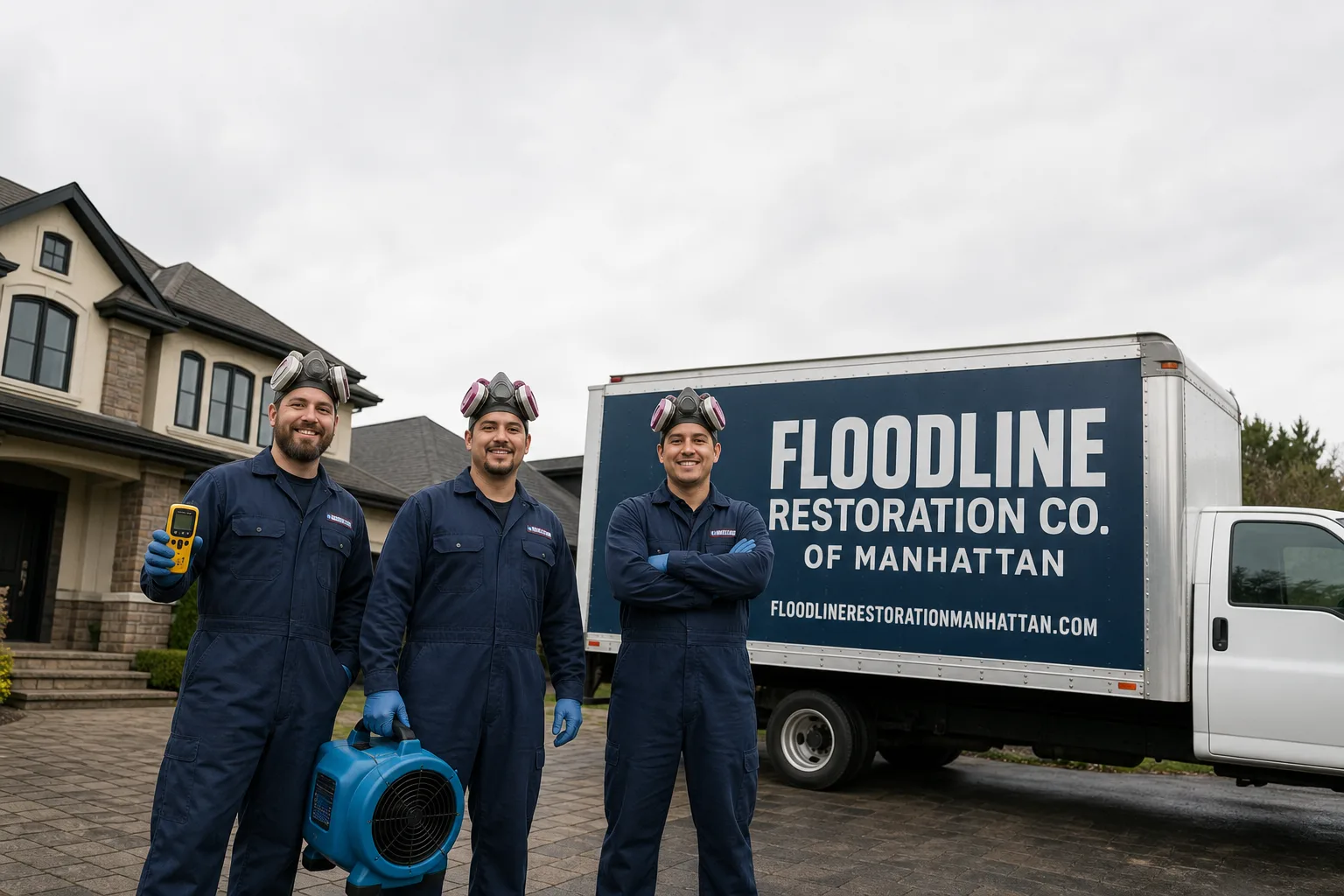
Free visual inspection and a written scope of work before any mitigation begins - photos, moisture readings, and drying logs go in your claim file
The scope we write is the scope we bill. Anything new gets shown to you, in writing, before we touch it.






 Before
 After
After Before
 After
After Before
 After
After24/7 Emergency Fire & Smoke Damage Restoration in Queens Village
Fire and smoke damage in Queens Village moves fast, and so do we. A kitchen fire in a 1930s brick twin on 219th Street doesn’t just affect one side of the shared party wall - smoke migrates, soot settles into plaster, and the water used to knock down the flames soaks through finished basement ceilings. That’s why our crews answer live at (917) 924-4221 around the clock and dispatch into Queens Village within 45 minutes. The first hour determines whether we’re cleaning surfaces or gutting walls. Free visual inspection, thermal imaging on arrival, and a written scope before we touch anything. We’re Floodline Restoration Co. of Manhattan, and this is the work we’ve done since Curt Bowman founded the company in 2010.
Understanding Fire & Smoke Damage Restoration Severity in Queens Village Properties
Not all fire damage is equal, and Queens Village’s housing stock makes severity assessment harder than in newer construction. Light kitchen fires leave a thin layer of dry soot - mostly carbon from burned proteins and oils - that responds well to chemical sponge cleaning and HEPA air scrubbing. But when fire burns synthetic materials, the residue becomes a greasy, acidic film that etches chrome, corrodes wiring, and bonds to plaster-and-lath walls within 72 hours. Queens Village homes built between 1925 and 1955 with plaster interiors absorb smoke differently than drywall: the porous lime-and-gypsum substrate traps odor at depth, which is why surface cleaning alone never works on a Colonial Revival twin. And because so many of these attached homes share an un-flashed masonry party wall, smoke and soot from one side routinely penetrate the neighbor’s side through electrical chase openings and floor joist pockets. We classify damage on arrival: light surface soot, moderate embedded residue, or heavy char plus water intrusion from fire suppression. Each level dictates a different equipment line - from B-Air air scrubbers to full containment with HEPA air movers.
Why Queens Village Property Owners Choose Floodline Restoration Co. of Manhattan
- 45-minute response commitment: We tell you when the crew leaves the shop, and we show up inside that window. A live dispatcher tracks every truck heading into Queens Village.
- 24/7 live answer, never a recording: At 2 a.m. you reach a person who knows fire restoration, not an automated menu.
- IICRC-certified crews: Our technicians hold FSRT (Fire & Smoke Restoration) and WRT (Water Damage Restoration) certifications, which matters when the same job involves both fire and fire-suppression water.
- Free visual inspection: Before any work starts, we walk the property with you and explain what we see. No charge, no obligation.
- Direct insurance billing: We send the scope, photos, and drying logs straight to your carrier. You never play messenger.
- One team from board-up to rebuild: The same certified crew that secures the property on night one handles odor removal, contents cleaning, and structural repair. Nobody hands your house off to a subcontractor.
Our Fire & Smoke Damage Restoration Process
Inspection & Assessment
We arrive with thermal imaging cameras and moisture meters, mapping exactly where fire, smoke, and suppression water traveled. In Queens Village attached homes, this means checking both sides of the party wall - even if the fire never crossed the property line on paper.
Emergency Stabilization
Crews board up openings, tarp the roofline, and cut off utilities that compromise safety. We also set up initial air movement to keep soot from settling deeper into plaster and upholstery.
Water Extraction & Structural Drying
Fire suppression water often causes more damage than the fire itself in these finished-basement homes. We extract standing water immediately and place Dri-Eaz dehumidifiers and XPOWER air movers, tracking moisture with daily hygrometer readings until the dry standard is met.
Soot & Residue Cleaning
We use chemical sponges for dry soot, wet-scrub techniques for greasy residue, and HEPA vacuuming on every surface from studs to ceiling joists. Hardwood floors under 1950s-era carpet get special attention.
Odor Removal & Deodorization
Smoke in plaster-and-lath walls doesn’t leave without treatment. We run hydroxyl generators and thermal fogging where appropriate, and seal semi-porous surfaces with odor-blocking coatings when the plaster itself has absorbed combustion byproducts.
Structural Repair & Reconstruction
From replacing charred joists on Hollis Avenue-adjacent blocks to re-plastering walls near 94th Avenue, the same backgrounds-checked crew finishes the rebuild. Your 90-Day Done Right Promise is in writing before we start.
Need Emergency Fire & Smoke Damage Restoration in Queens Village Now?
Crews minutes away, answering live 24 hours a day. The sooner we start, the less it costs.
Working With Your Insurance Company
Fire claims in Queens Village get complicated fast, especially when a shared party wall means two carriers, two adjusters, and two scopes of work. That’s why our documentation starts the moment we walk in: photos of every affected surface, thermal imaging to show what the naked eye can’t see, and a line-item scope that holds up under carrier review. We speak adjuster, and we handle direct communication with your insurer from first inspection through final invoice. Our Fire & Smoke Damage Restoration team has managed hundreds of dual-claim jobs in attached housing, and we know how to present a scope that doesn’t leave you fighting for coverage on the neighbor’s side of the wall.
What We Provide Your Insurer
- Thorough documentation of the loss
- Photos of all damage, room by room
- Moisture readings and drying logs
- A detailed, line-item scope of work
- Direct coordination with your carrier
Built for Queens Village’s Loss Calendar
Queens Village doesn’t burn on a schedule, but certain patterns repeat. January deep freezes burst supply lines inside toe-kick spaces and basement ceilings, and when those pipes let go, the water finds the same path the smoke did during the fire that started the whole mess. Spring thaw pushes groundwater against old fieldstone foundations and tests the limits of perimeter drains that were installed when Eisenhower was president. Summer convective storms hit the neighborhood hard, and the combined sewer system backs up into finished basements across Queens Village with regularity. None of this surprises us. When we’re called for fire restoration in these older attached homes, we check the basement sump, the water heater flue, and the electrical panel - because a fire that starts in one system rarely leaves the others untouched.
Fire & Smoke Damage Restoration Across Queens Village’s Neighborhoods
The character of the job changes block by block. Along 219th Street between Jamaica Avenue and 94th Avenue, rows of brick twins share masonry walls and rooflines, which means smoke from one attic fire can spread through the common eave space into three connected units before anyone notices. Around the Springfield Boulevard corridor, larger detached Colonials with cedar shake siding under vinyl present a different challenge: fire smolders behind the vinyl, hidden from view, and by the time it breaks through, the sheathing underneath is gone. East toward the Cross Island Parkway, post-war capes with finished basements bring basement-level fire suppression water into play immediately. Near Martin Van Buren High School, pre-war co-ops and attached homes demand HEPA containment that protects the building’s shared hallways from soot. We run these routes every week, and our dispatchers know which crews to send where based on building type alone.
Specialized Fire & Smoke Damage Restoration Services We Offer in Queens Village
Fire Damage Cleanup
We remove charred structural members, clean salvageable framing with wire brushes and chemical agents, and prep every surface for either refinishing or replacement. In older Queens Village homes, this often means careful work around original plaster ceilings and unpainted brick that owners want preserved.
Smoke & Soot Removal
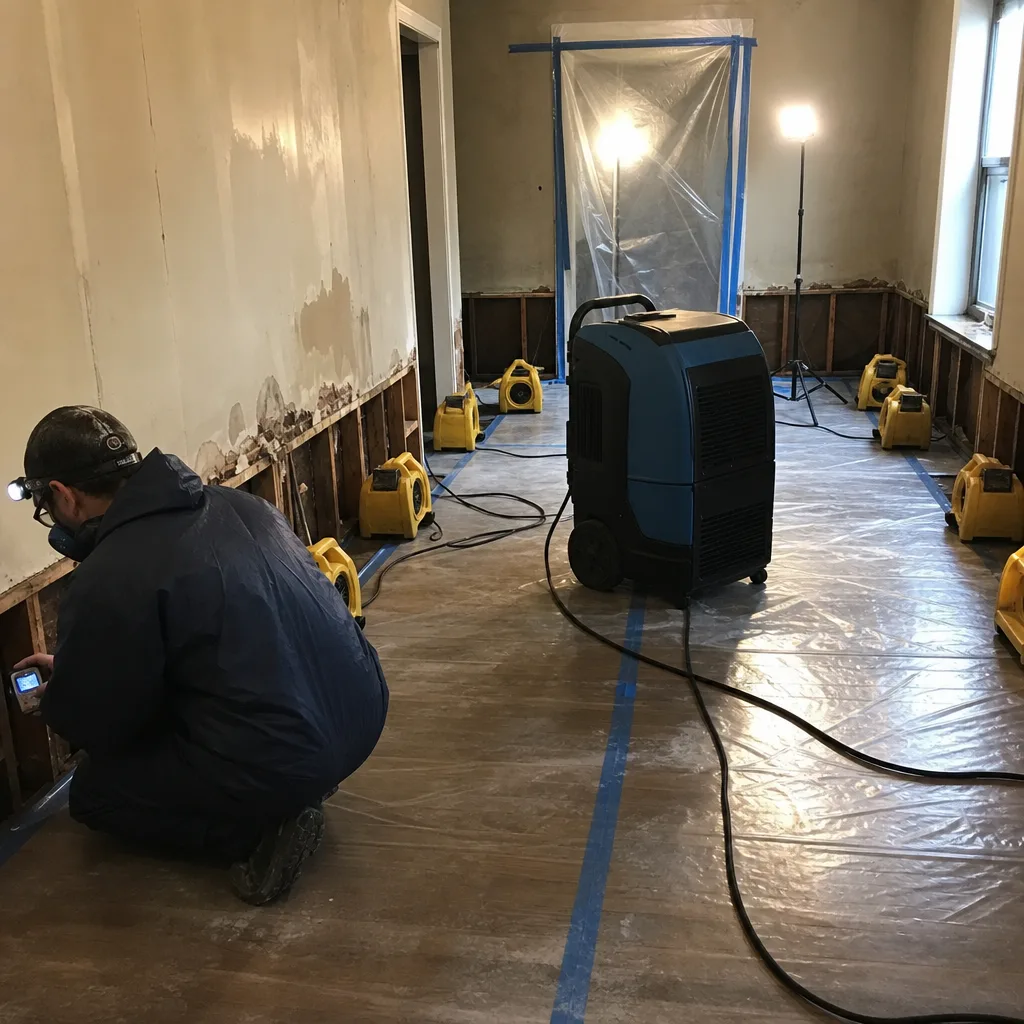
Soot composition varies by what burned. Wood leaves a dry, brushing residue. Synthetics leave an oily film that needs wet-scrubbing. We identify the source material on arrival and match the cleaning method to the residue type, wall by wall and room by room, including both sides of the shared party wall in attached twins.
Odor Removal & Deodorization
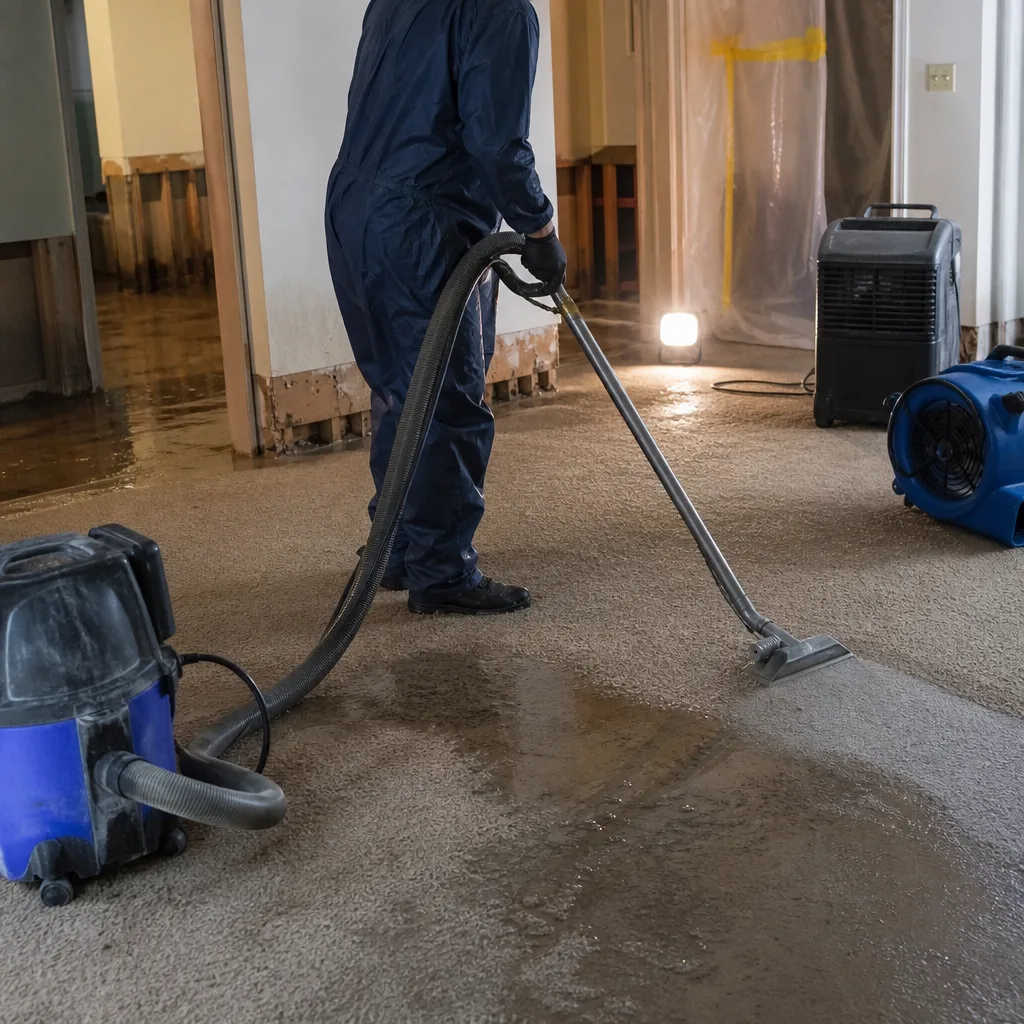
This is where national franchises routinely fail in Queens Village. Odor in plaster-and-lath walls doesn’t clear with a fogger. We run hydroxyl generators for days when necessary, and seal semi-porous surfaces when the plaster has absorbed too much to clean. We document every reading so the job has a finish line you can see.
Contents Cleaning & Pack-Out
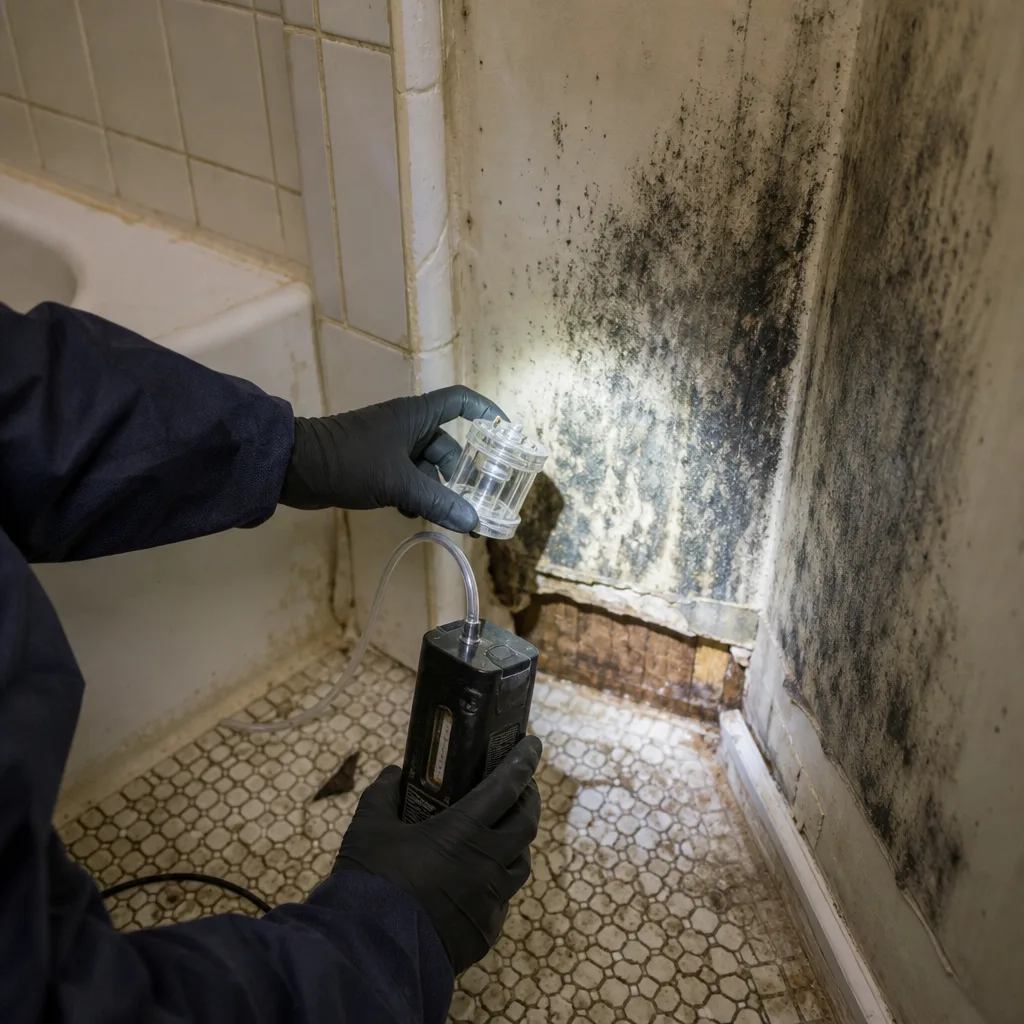
We photograph, inventory, and pack out salvageable contents to our cleaning facility. In dual-claim situations where one homeowner’s carrier covers pack-out and the neighbor’s doesn’t, we produce separate inventories so each claim stays clean. Items come back cleaned, deodorized, and boxed with a manifest.
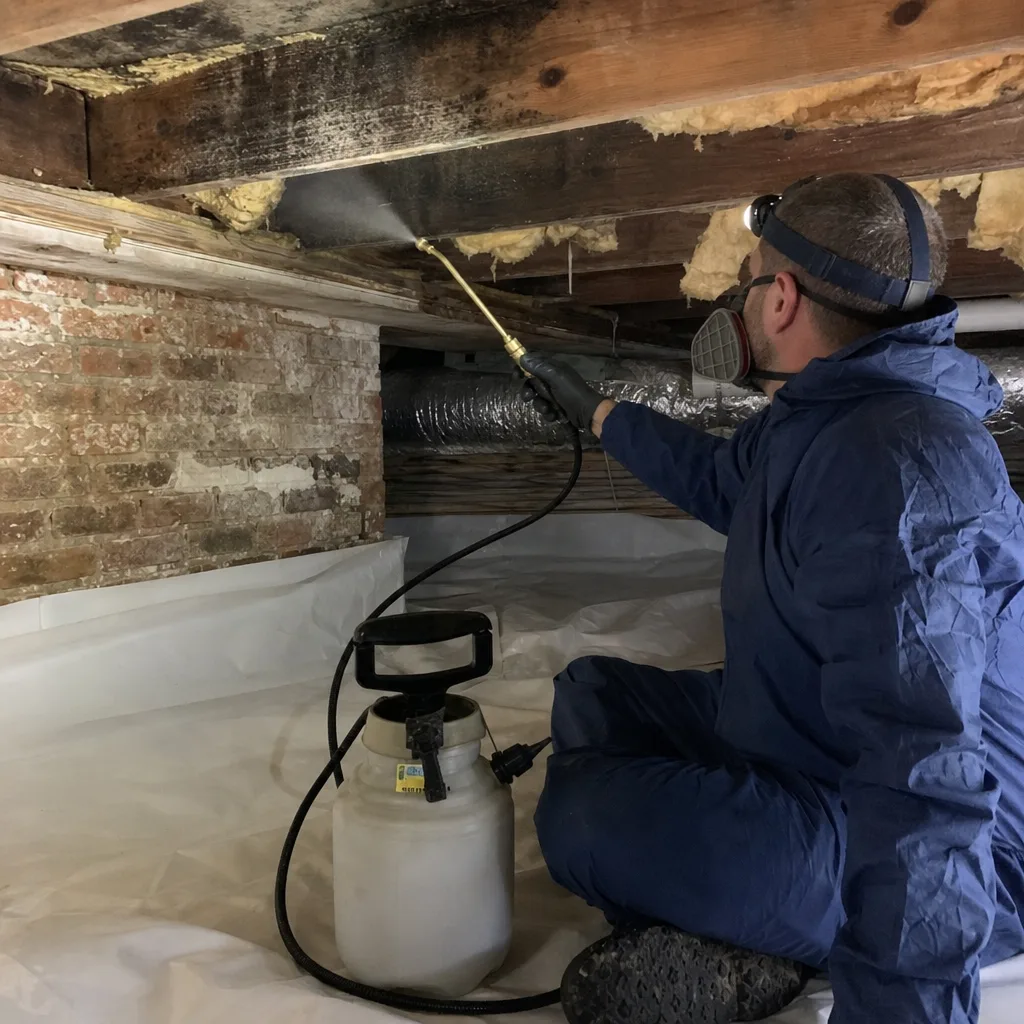
Emergency Board-Up & Tarping
After a fire, your house is open to weather, animals, and the street. We board windows with plywood and seal roof breaches with heavy-duty tarps the same night we’re called. In attached homes, we also check the shared roofline so the neighbor’s side isn’t exposed to the same rain event.
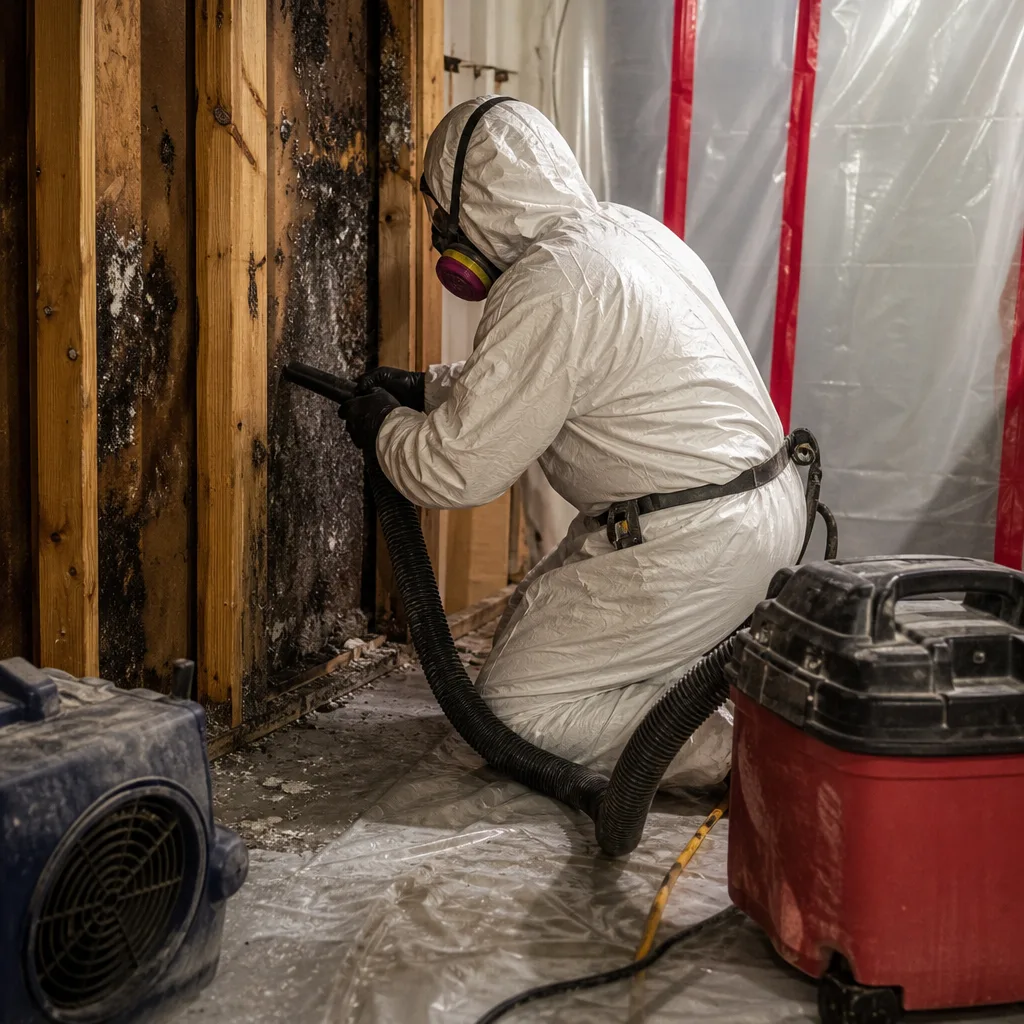
What happens when you call
- 1
A real person answersNo phone trees - you reach a local pro.
- 2
You get an upfront price rangeHonest numbers before anyone is dispatched.
- 3
A background-checked tech heads outLicensed & insured, dispatched right away.
- 4
You approve before work beginsNothing starts until you say go.
Fire & Smoke Damage Restoration Costs in Queens Village, NY
Here’s what you can expect to pay in Queens Village’s market. Minor smoke and soot cleanup after a grease fire in a small kitchen runs $1,800-$3,500, including HEPA air scrubbing and surface cleaning. A moderate fire with water damage in a finished basement pushes the job to $7,000-$15,000 because of extraction, structural drying, and content cleaning. A serious fire in an attached twin requiring board-up, full containment, and structural rebuild typically lands between $25,000 and $60,000, depending on whether the party wall itself requires masonry repair. What moves the price: whether the fire reached the attic (shared attics in twins nearly double containment costs), whether asbestos-containing plaster must be sealed or abated, and whether the fire suppression water went to a finished basement as category 3 sewage from a backed-up combined sewer line. Insurance coverage changes everything - many Queens Village policies cover the full scope less deductible, especially when we document the secondary water and smoke migration. Call (917) 924-4221 for a free inspection and a written scope before you decide anything.
We Also Serve Cities Near Queens Village
Our restoration crews cover the neighboring communities of Oakland Gardens, Hollis, Bellerose, and Floral Park with the same live dispatch and 90-Day Done Right Promise. The housing stock, the insurance realities, and the stakes are the same - we know these blocks.
Queens Village Fire & Smoke Damage Restoration Questions, Answered
Does a fire in one side of a Queens Village semi-detached home affect the neighbor’s insurance claim?
It almost always does. Smoke and soot migrate through the un-flashed party wall, which means the neighbor files a claim even though the fire never touched their side. The two carriers then fight over subrogation, and that’s where our documentation saves you months of back-and-forth. We produce separate scopes, separate drying logs, and separate photo files for each side so each adjuster has exactly what they need without borrowing from the other. Call (917) 924-4221 and we’ll walk you through what your policy likely covers.
How soon after a kitchen fire in a 1940s brick Tudor in Queens Village should structural drying begin to prevent mold?
Within 24 hours, and faster is better. The fire suppression water soaks into plaster, hardwood, and the subfloor immediately. If the basement is finished - which most Queens Village Tudors are - the water reaches the drywall and insulation within hours. Mold starts in 24-48 hours. We arrive within 45 minutes, extract the water, and place Dri-Eaz dehumidifiers and air movers the same visit. The dry standard isn’t guessed; it’s measured with daily hygrometer readings until the structure hits the IICRC dry standard.
Why do Queens Village fire restoration jobs often need containment on both sides of a party wall?
Because the shared masonry wall isn’t sealed at the top or sometimes even at the floor joist lines. Air moves between the two sides, carrying soot and smoke with it. If we contain and clean only the fire side, the neighbor’s unit re-contaminates the work within days. We set up containment with negative air pressure on both sides simultaneously, scrub the air in both units, and keep that pressure differential running until odor readings bottom out. Miss this, and the job never actually ends - the smell just keeps coming back.
Can smoke odor in a 1930s attached brick home in Queens Village be removed without gutting the plaster walls?
Often yes, but it depends on how long the smoke sat and what burned. Fresh smoke from a light grease fire is surface-level and clears with chemical cleaning, thermal fogging, and hydroxyl treatment. But if the fire burned synthetics - vinyl flooring, polyester carpet, plastic laminate - the acidic residue penetrates the plaster’s lime matrix. In those cases, sealing with a vapor-barrier primer after aggressive cleaning works in maybe 60% of the homes we see. The other 40% need selective demolition of the worst plaster sections. We’ll tell you which path you’re on during the free inspection, with photos and readings to back it up.
What happens when a burst pipe during a fire suppression floods a finished basement in Queens Village’s older homes?
You get a fire claim and a water claim at the same time, and the water is often worse. In these 1925-1955 homes, finished basements are built tight against the foundation, with no drainage clearance and decades-old framing. The water from a burst supply line or a broken standpipe floods the entire floor, and when the combined sewer backs up at the same time - which happens during the same storms that knock out power and start fires - you’re dealing with category 3 black water. That triggers full containment, antimicrobial treatment, and often partial demolition before drying starts. Our WRT-certified team handles the water with the same equipment we use on the fire: Dri-Eaz, Phoenix, and XPOWER running until the structure is dry and verified.
How fast can you actually get to a fire in Queens Village?
We aim for 45 minutes from the time you call (917) 924-4221. The dispatcher who answers is a person sitting in our New York City office, and she knows which trucks are in the area. A board-up crew comes first for security, followed by the inspection team and equipment. If you’re on 94th Avenue near 219th Street, you’ll see us faster than if you’re in the far eastern blocks near the Cross Island, but we run 24/7 so the wait is always short.
Do I really need full restoration, or just a cleaning?
That depends on three things: what burned, how hot, and how long the smoke sat. A small stovetop fire contained quickly usually needs only surface cleaning and HEPA air scrubbing. But fires that burned plastics, foam, or synthetic carpeting release chlorine and ammonia compounds that etch metal and corrode wiring permanently. That’s a restoration, not a cleaning, and skipping it leaves your house smelling like smoke on humid July nights for years. We’ll show you the difference in person, with a thermal camera and a scope that separates cleaning from restoration so you only pay for what’s actually needed.
Are your technicians certified for fire restoration?
Yes. Our crews hold IICRC FSRT certification for fire and smoke restoration and WRT certification for the water damage that comes with every fire suppression event. They’re background-checked, uniformed, and trained to RIA and IFA standards as well. Curt Bowman has run this company since 2010 with a simple rule: the person who reads the moisture map on day one runs the drying plan through day seven. We don’t hand your house to a rotation of strangers.
Serving Queens Village, NY - Our Local Coverage Area
We’re based in the Queens Village area and know this community well. Use the map below to see our service coverage - if you’re nearby, we can almost certainly help.
One Fire, Two Policies: How Queens Village Party Walls Change the Job
Here’s the part no generic fire restoration guide tells you. In Queens Village, semi-detached brick twins built from 1925 to 1955 share an un-flashed masonry party wall that doesn’t stop smoke. When a fire on one side drives soot into the shared wall cavity, the neighbor’s side shows residue along baseboards, around electrical outlets, and in closets facing the wall. That neighbor opens a claim with their own carrier, even though the fire never touched their unit. Now you have two adjusters, two scopes, two deductible arguments, and a restoration contractor trying to get paid by two insurance companies that don’t want to cover the same wall. We do this work weekly. We containment both units at the party wall, run HEPA air movers and Dri-Eaz dehumidifiers on both sides simultaneously, and produce two separate documentation packages so each carrier pays for what their insured lost. We were called to a Colonial Revival twin on 94th Avenue near 219th Street after a kitchen fire in one unit left heavy smoke residue and heat damage in the non-origin side. Our crew set up full containment at the shared party wall, ran HEPA air movers in both units, and used moisture mapping to confirm the fire suppression water had not entered the neighboring plaster-over-lath walls. Because both homeowners had different carriers and pre-loss condition clauses, we produced two separate scopes with drying logs and packed out the neighbor’s contents for off-site cleaning - ending the job with both adjusters signing off on the same afternoon.
The point is simple: in Queens Village, a one-unit fire is rarely a one-claim job. If you own one side of a twin and your neighbor has a fire, call us even if you don’t see damage yet. We’ll inspect your side for free, document what we find, and help you decide whether to file at all. If you had the fire, we’ll handle the neighbor’s side with the same care, because the fastest way to end your own claim is to stop the smoke on both sides of the wall at once. The 90-Day Done Right Promise applies to both units, in writing, no arguing. Curt Bowman built this company on that standard, and it’s backed by the K.E.Y.S. code: Krafted right, Every time, Your home first, Standing behind it.
If you’re standing in a smoky kitchen in Queens Village right now, call (917) 924-4221. A live dispatcher answers, a crew heads toward your block, and you’ll have a written scope and a clear plan before the insurance adjuster returns your call. We also offer $50 off any repair over $250, an $89 seasonal tune-up for your fire safety systems, and a standing 5% discount for seniors and veterans. Done right - and backed in writing.
Written by Curt Bowman, Owner at Floodline Restoration Co. of Manhattan, serving Queens Village with fire and smoke restoration, board-up, and reconstruction.