
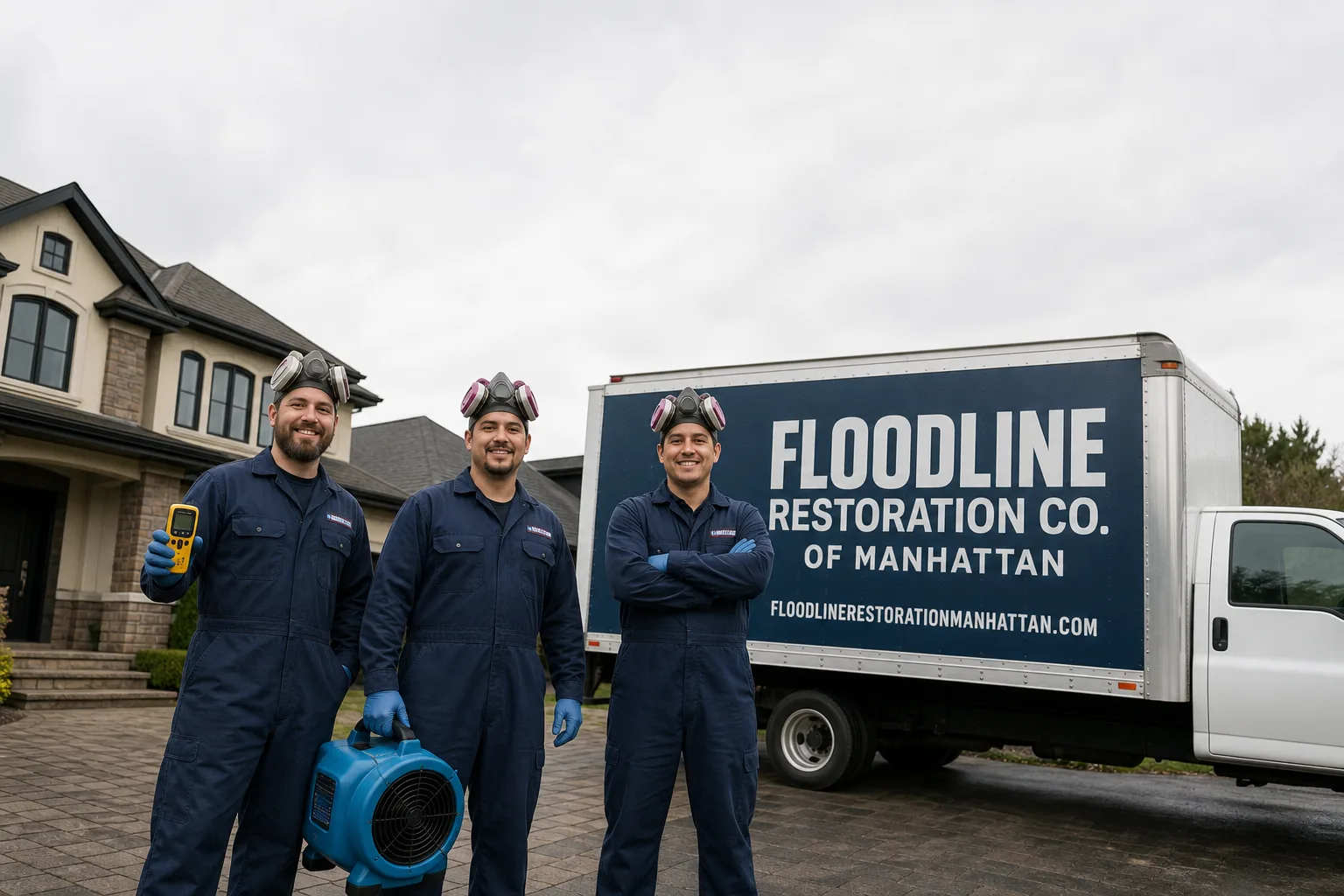
Free visual inspection and a written scope of work before any mitigation begins - photos, moisture readings, and drying logs go in your claim file
The scope we write is the scope we bill. Anything new gets shown to you, in writing, before we touch it.






 Before
 After
After Before
 After
After Before
 After
After24/7 Emergency Fire & Smoke Damage Restoration in Verplanck
When a fire hits a home in Verplanck, every hour that passes lets soot work deeper into plaster, framing, and fabric. Our crews are on call around the clock, and a live person answers at (917) 924-4221 no matter the hour. We dispatch certified technicians to Verplanck immediately, run a free visual inspection, and start stabilization in the first visit. Smoke from a kitchen fire in a 1930s bungalow migrates differently than smoke in a newer sheetrock build, and we read that difference before we touch a wall. In a hamlet where tidal water already sits in old foundations, fire damage compounds fast when moisture and soot occupy the same cavities. The first hour is not about saving time. It’s about saving the plaster, the floor assembly, and the framing behind them.
Understanding Fire & Smoke Damage Restoration Severity in Verplanck Properties
Fire and smoke damage in Verplanck runs on a different severity curve than it does inland. Most homes here were built between the 1920s and 1950s on small riverfront lots, with stone or poured-concrete block foundations and original plaster over wood lath. Soot from a structural fire in these houses is rarely just surface staining. It drives into the porous plaster, the unsealed crawl space framing, and the same wall cavities that have absorbed decades of Hudson River humidity and occasional storm surge. We classify soot by residue type: dry protein soot, oily synthetic soot, and the hard carbon deposits that come off oil-burner backdrafts. Each requires a different cleaning agent and a different pressure. Smoke migration follows framing channels, plumbing chases, and old balloon framing that runs from sill to attic with no fire blocking. That means an odor that starts in a Verplanck kitchen can surface two floors up through baseboard gaps the next morning. We read every job with thermal imaging and moisture meters before we set a scope, because in this hamlet, the water history of the house is always part of the fire story.
Why Verplanck Property Owners Choose Floodline Restoration Co. of Manhattan
- 45-minute response commitment: When you call from Verplanck, a crew is moving toward your street within the hour, not the next business day.
- 24/7 live answer: A real person picks up at 2 a.m. Not a recording. Not a callback service. You get a dispatcher who can send help that night.
- IICRC-certified crews: Our technicians hold FSRT and WRT certifications, which matters here because Verplanck fires almost always mix fire damage with water damage from fire suppression.
- Free visual inspection: We walk the damage with you, explain what we see, and hand you a written assessment before any work is authorized.
- Direct insurance billing: We bill your carrier directly and speak with the adjuster ourselves, so you are not the messenger between two parties who don’t talk to each other.
- One team from first call to final coat: Extraction, drying, smoke sealing, and rebuild stay with the same certified crew. No mid-job handoff, no subcontracted stranger walking your Verplanck hallway.
Floodline Restoration Co. was founded in 2010 by Curt Bowman. Our crews are background-checked, uniformed, and trained. Every job carries the 90-Day Done Right Promise in writing. If something isn’t right, we come back and make it right. No arguing, no paperwork battle.
Our Fire & Smoke Damage Restoration Process
Inspection & Assessment
We map the full damage: soot type, smoke path, moisture content in framing, and any pre-existing water intrusion from Verplanck’s tidal pattern. You get a written scope, not a verbal guess.
Emergency Stabilization & Water Extraction
Most Verplanck fires are suppressed with FDNY lines, which means Category 3 water in the same spaces that later need smoke sealing. We extract and treat those cavities first.
Drying & Dehumidification
We run professional-grade Dri-Eaz and Phoenix dehumidifiers with air movers and Injectidry panels on saturated joist bays. Daily moisture readings are logged until the dry standard is met.
Cleaning & Sanitization
HEPA air scrubbers run throughout. Soot-stained plaster, framing, and contents are cleaned with methods matched to the residue type. We don’t paint over odor. We remove it.
Smoke & Odor Treatment
Thermal fogging, hydroxyl generation, or ozone where appropriate. We seal the smoke path and treat the source, not the symptom. Verplanck homes with older plaster get special attention because the material re-emits odor if sealed while still damp.
Repairs & Restoration
The same crew that extracted and dried now repairs. Structural fire repair, drywall, paint, and finish work. One name on the door from the first call to the final walkthrough.
Need Emergency Fire & Smoke Damage Restoration in Verplanck Now?
Crews minutes away, answering live 24 hours a day. The sooner we start, the less it costs.
Working With Your Insurance Company
Insurance claims for fire damage fail when the documentation is thin. We build your file from the first hour: photos of every affected room, thermal and moisture readings, and a line-item scope that your adjuster can actually work with. Because Verplanck homes often carry months of hidden moisture from prior tidal intrusion, the adjuster needs to see that history alongside the fire damage, or the claim gets under-scoped. That’s why our documentation ties water findings to the fire loss explicitly. We coordinate directly with your carrier and bill them directly. You don’t chase paperwork. You don’t argue about line items. You get a square deal and a written guarantee behind the work. Floodline Restoration Co. has handled claims for over a decade across the metro, and we know what an adjuster in Westchester will accept the first time.
What We Provide Your Insurer
- Thorough documentation of the loss
- Photos of all damage, room by room
- Moisture readings and drying logs
- A detailed, line-item scope of work
- Direct coordination with your carrier
Built for Verplanck’s Loss Calendar
Fire and smoke damage in Verplanck does not happen on a random schedule. It clusters around the seasons that also push water into old foundations. Deep winter freezes stress aging oil-burner systems in uninsulated basements, and a delayed ignition or backdraft sends soot through every register. Spring brings the thaw, when saturated ground pressure against stone foundations coincides with the first humid stretch of the year. A small electrical fire in a damp basement smells different in May than it does in January. Summer thunderstorm season and hurricane season bring the tidal surge that Verplanck knows too well. When flood water rises on the low-lying blocks near the Hudson, it reaches furnaces, water heaters, and wiring in crawl spaces and cellars. A shorted furnace pilot in floodwater does not just create smoke. It creates smoke inside a house that is also soaked. Fall nor’easters bring wind-driven rain and the same tidal pattern. In Verplanck, fire damage and water damage share a calendar, and any restoration plan that treats one without the other is incomplete.
Fire & Smoke Damage Restoration Across Verplanck’s Neighborhoods
The response routes through Verplanck are simple: in from Broadway, down toward the river, and out toward the smaller residential streets that angle off toward the water. Homes along the waterfront blocks, those closest to the Verplanck docks and the river’s edge, sit on the lowest ground. Their foundations hold tidal moisture longer than homes two blocks up, and fire restoration there almost always includes a crawl space reading. The side streets running toward the river, like the blocks near the old brickyard sites, are mostly 1920s and 1930s single-family homes with plaster walls and narrow stairwells. Smoke climbs those stairwells fast and settles into plaster ceilings. Up on the higher ground near the western edge of the hamlet, the homes are slightly newer, with better drainage, but the framing still runs on old lumber that holds odor. Our crews know the difference between a riverfront basement that has held an inch of Hudson water for a week and a hillside cellar that drains fast. Both need fire smoke cleaning. Only one needs the antimicrobial and structural sequencing that comes with a saturated foundation. Verplanck is small, but the fire response is not one-size.
Specialized Fire & Smoke Damage Restoration Services We Offer in Verplanck
Smoke & Soot Removal
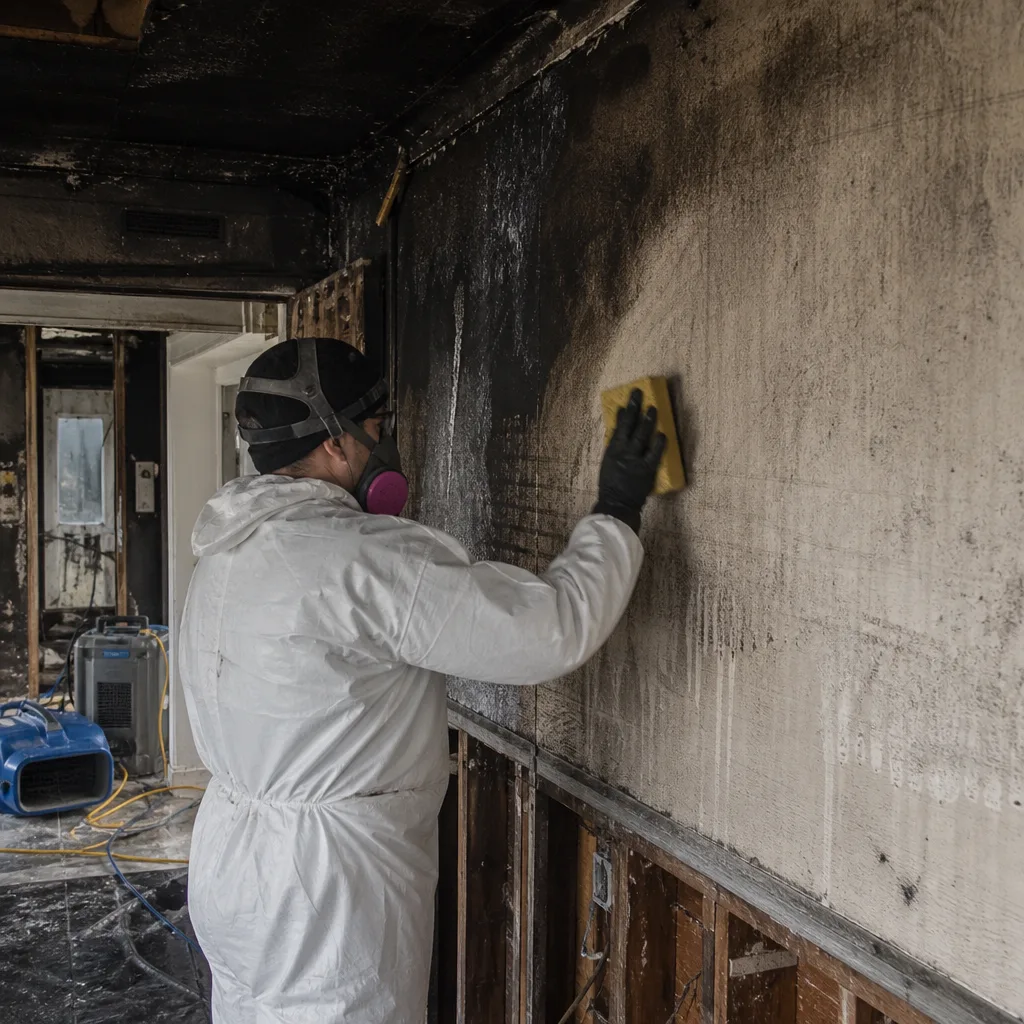
Soot in a Verplanck home is not a surface problem. It gets into the pores of original plaster, into the grain of old fir flooring, and into the fiberglass insulation in the attic. We remove it with dry sponges, HEPA vacuuming, and chemical action matched to the soot type. Painting over it without removal just seals the problem behind fresh latex, and the odor comes back within weeks. This is not a shortcut job. It’s a process.
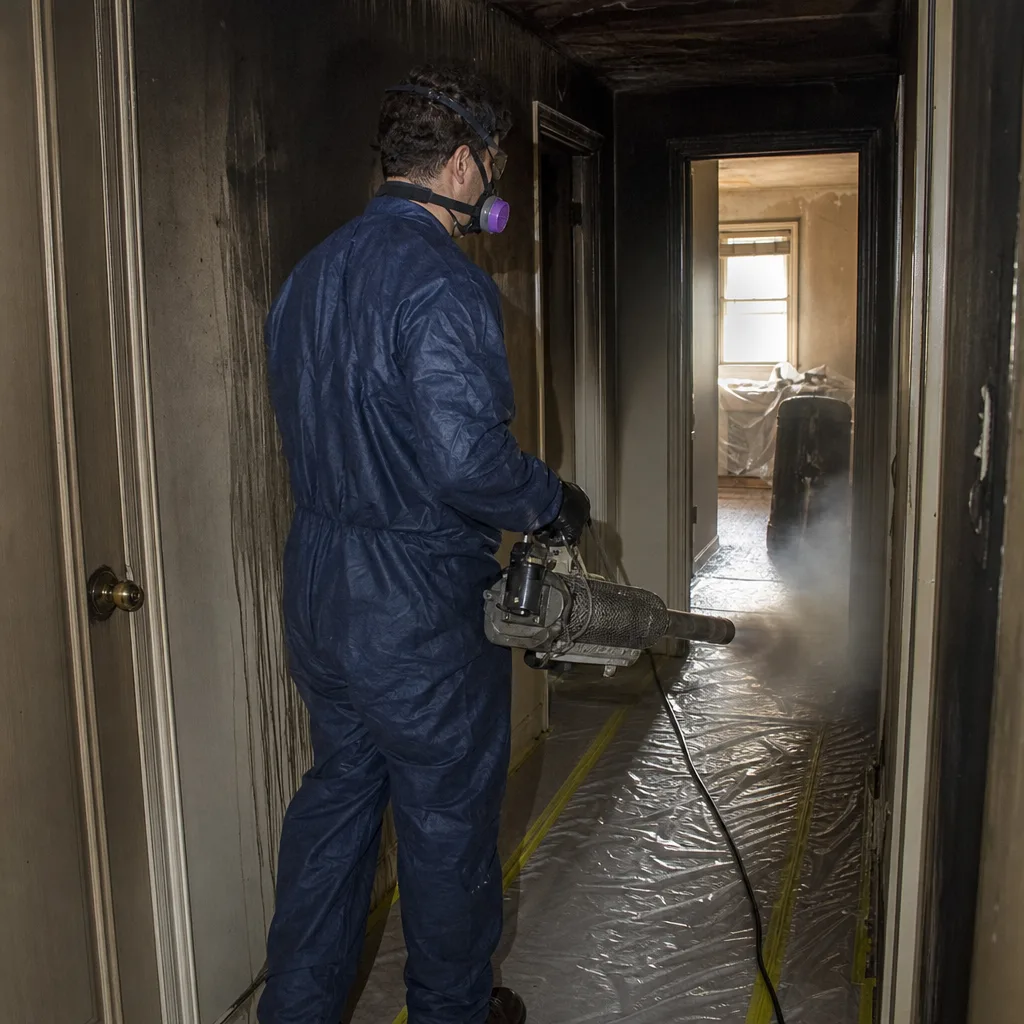
Odor Removal & Deodorization
Odor is the complaint that lingers longest after a fire, and in Verplanck it has an extra enemy: the slow moisture that lives in older wall cavities near the river. We treat odor at the source with thermal fogging and hydroxyl equipment, never with masking sprays. A house that smells clean but isn’t clean is a house that gets re-opened. We would rather spend an extra day than explain a recurrence. Our Fire & Smoke Damage Restoration team has seen too many homeowners burned twice.
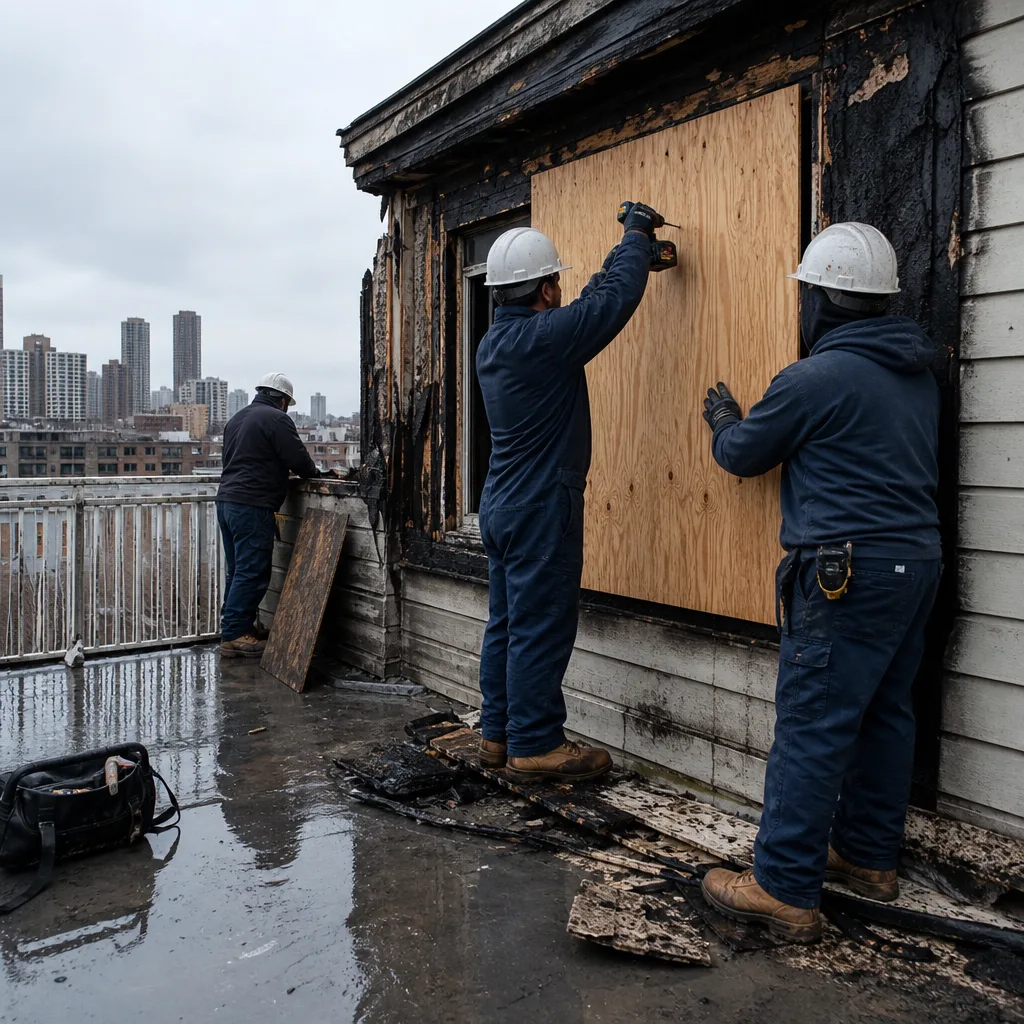
Emergency Board-Up & Tarping
After a fire in Verplanck, an open window or a missing section of roof means raccoons, rain, and trespassers. We board up and tarp the same night, whether the fire was a kitchen flare-up or a full structural event. On the riverfront blocks, wind off the Hudson will tear a loose tarp off in an afternoon, so we anchor everything for real weather. The goal is simple: keep the house closed, keep the elements out, and keep the damage from growing while the claim is processed. Call (917) 924-4221 and we will have a crew out the same night.
What happens when you call
- 1
A real person answersNo phone trees - you reach a local pro.
- 2
You get an upfront price rangeHonest numbers before anyone is dispatched.
- 3
A background-checked tech heads outLicensed & insured, dispatched right away.
- 4
You approve before work beginsNothing starts until you say go.
Fire & Smoke Damage Restoration Costs in Verplanck, NY
Honest numbers for Verplanck, in today’s market. Smoke and soot removal on a contained kitchen fire in a small bungalow generally runs $2,800 to $5,500, depending on how far the soot traveled and whether plaster walls need soda blasting or full sealing. Odor removal with thermal fogging and hydroxyl treatment adds $1,200 to $2,400 for a typical 1,000 to 1,500 square foot home. Board-up and tarping after a structural fire runs $800 to $1,800 the first night, depending on openings and roof damage. Full structural fire repair, where framing is charred and drywall is removed, starts around $9,000 and climbs based on what the fire ate. In Verplanck, the wild card is hidden water from previous tidal surges inside old foundations. If our moisture mapping finds framing above 20% behind the smoke path, that gets added to the scope before any sealing happens, because sealing over moisture is how mold gets a head start. Your insurance may cover most of it. We will write the claim documentation to make sure they do. The free visual inspection gives you a firm number before anything starts.
We Also Serve Cities Near Verplanck
Our crews run the same routes through Fire & Smoke Damage Restoration in Verplanck and the surrounding river towns. That includes Montrose, Buchanan, Stony Point, and Peekskill. Same live dispatch, same certified crews, same written guarantee.
Serving Verplanck, NY - Our Local Coverage Area
We’re based in the Verplanck area and know this community well. Use the map below to see our service coverage - if you’re nearby, we can almost certainly help.
Verplanck Fire & Smoke Damage Restoration Questions, Answered
In Verplanck, after a fire near the river, how long do we have before hidden moisture from past storm surge turns smoke odor into a mold problem?
About two to three weeks in the humid months, and faster if the fire happened during a stretch when the Hudson was running high. In a riverfront Verplanck home where the crawl space or sills have been wet from a prior surge, the combination of soot-laden framing and 20% or higher moisture content starts visible mold colonization within 14 to 21 days. That’s why we run moisture mapping on the first visit, not a month later. If you suspect old water is still in your foundation, call (917) 924-4221 now. Waiting costs more every day.
We had a small kitchen fire and the floor feels dry, but your crew mentioned Category 3 water. What does that mean for our Verplanck home?
Category 3 water is grossly contaminated. In a fire, it’s the water from the FDNY suppression line mixed with soot, ash, and whatever burned. The floor can feel dry to the touch while the framing underneath is saturated. In an older Verplanck home with a crawl space, that Category 3 water sits in the joist bays and sill plates. It has to be extracted, treated with antimicrobial, and dried to the standard before any smoke sealing happens. Ignoring it means the odor comes back and mold shows up behind the baseboards.
Why does smoke smell come back weeks after a fire in our Verplanck neighborhood, even though the cleanup looked complete?
Because the smoke path was sealed or painted over while the framing behind it was still holding moisture from a previous tidal surge or from the fire suppression itself. The moisture reactivates the soot residue, and the odor wicks back into the living space. In Verplanck, this is more common than inland because the slow tidal recession keeps riverfront framing wet longer than moisture meters on upper floors suggest. The fix is not another coat of paint. It’s drying the cavity to pre-loss moisture content, cleaning the residue, and then sealing. We will show you the moisture readings before we start. Call for a free inspection.
Our house on the waterfront has original plaster walls and an old stone foundation. How does that change fire and smoke restoration compared to a newer inland home?
Original plaster is porous and absorbent. Soot gets deep into it. A newer drywall home can be sealed or replaced in sheets; a Verplanck plaster wall has to be cleaned, dried, and often soda blasted before sealing or painting. The stone foundation below is even more involved. Stone holds moisture for weeks, and if it was already wet from tidal intrusion before the fire, the smoke odor will keep re-emitting from the basement level. We treat stone foundations as part of the smoke restoration, not as a separate waterproofing job for later. That sequencing is specific to old riverfront homes, and it matters more than most homeowners expect.
After a fire in Verplanck, should we board up and tarp even if the roof looks intact and the fire was small?
Yes. A small kitchen fire can leave a window broken by the fire department, a vent melted open, or a soffit gap you won’t see from the ground. Raccoons, rain, and wind off the Hudson will find those openings within a day. Board-up costs less than the damage an open house takes on. We can be there the same night and button everything up before the next weather system rolls through.
How fast can Floodline Restoration actually get to a Verplanck address after we call?
We commit to a 45-minute response for emergency fire and smoke calls in Verplanck. A live person answers the phone immediately, and a crew is dispatched from our metro office right then. Not a recording, not a next-day window. If it’s 3 a.m. and your kitchen just flashed, you’ll still get a person and a crew moving.
Will my insurance cover fire and smoke restoration for a Verplanck home that also has old flood damage?
That depends on your policy and how the claim is documented. Fire damage from a covered event is generally covered. The complication in Verplanck is when the adjuster finds pre-existing moisture from a prior surge and tries to exclude it. We handle that by documenting the fire loss, the water history, and the current moisture readings as one connected file, with photos and drying logs. We speak directly with your adjuster and bill your carrier directly. Most Verplanck homeowners end up with a significantly better outcome than if they’d tried to coordinate the claim themselves. Call us and we’ll walk you through what your policy language actually says.
After a fire, can we stay in our Verplanck home during the restoration?
Sometimes. A contained kitchen fire with soot in one room and dry framing may allow you to stay while we work. But in older Verplanck homes where smoke migrated through balloon framing into bedrooms, or where the crawl space holds Category 3 water, you’re better off out for a few days. Soot and fire suppression water create an environment that isn’t safe to breathe until containment and air scrubbing are running. We’ll give you an honest answer on the first visit.
What should I do in the first 30 minutes after a small fire in my Verplanck house?
Stay out of the smoke, shut off the HVAC so soot isn’t pulled through the ducts, and don’t touch or wipe any soot-stained surfaces. Dry wiping pushes residue deeper into paint and plaster. Call (917) 924-4221. A live dispatcher will walk you through the next 30 minutes and get a crew to your door.
Written by Curt Bowman, Owner at Floodline Restoration Co. of Manhattan, serving Verplanck and the surrounding Hudson River communities.