
Free visual inspection and a written scope of work before any mitigation begins - photos, moisture readings, and drying logs go in your claim file
The scope we write is the scope we bill. Anything new gets shown to you, in writing, before we touch it.
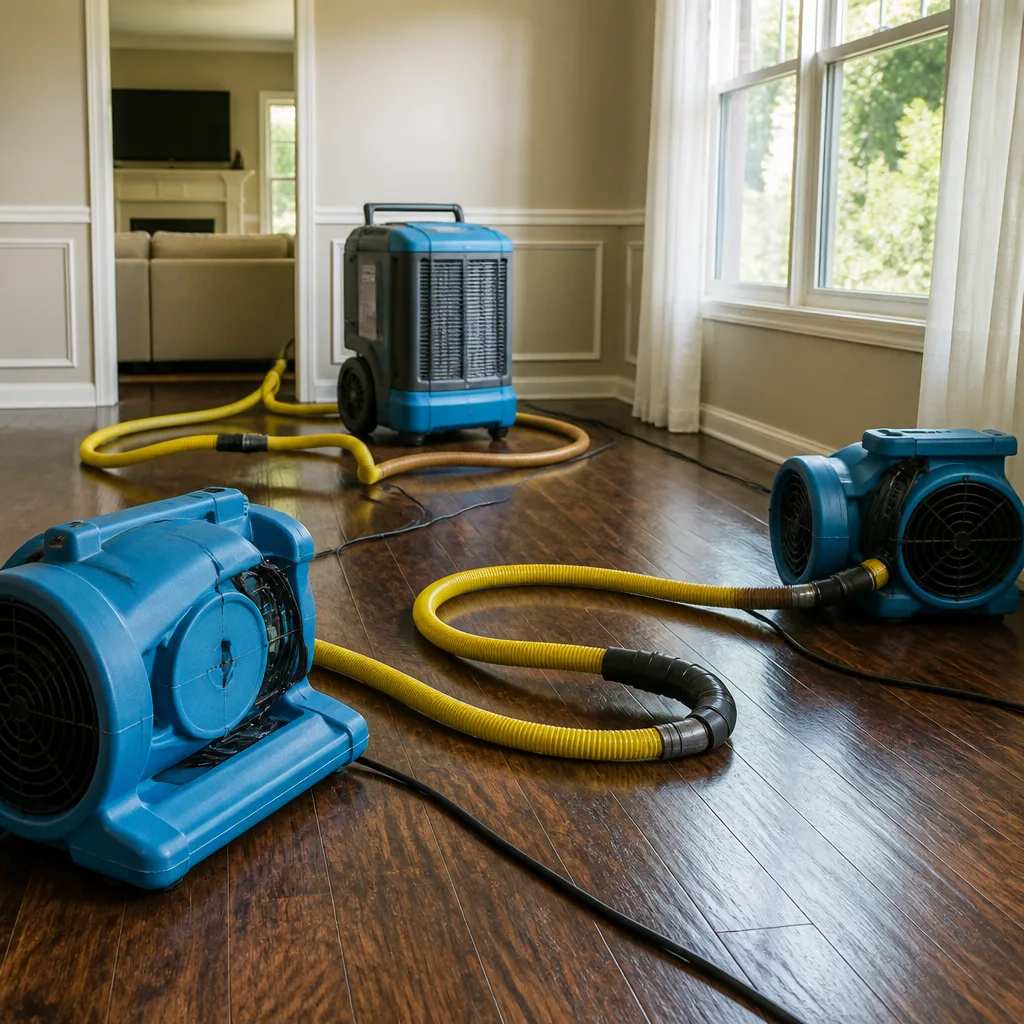
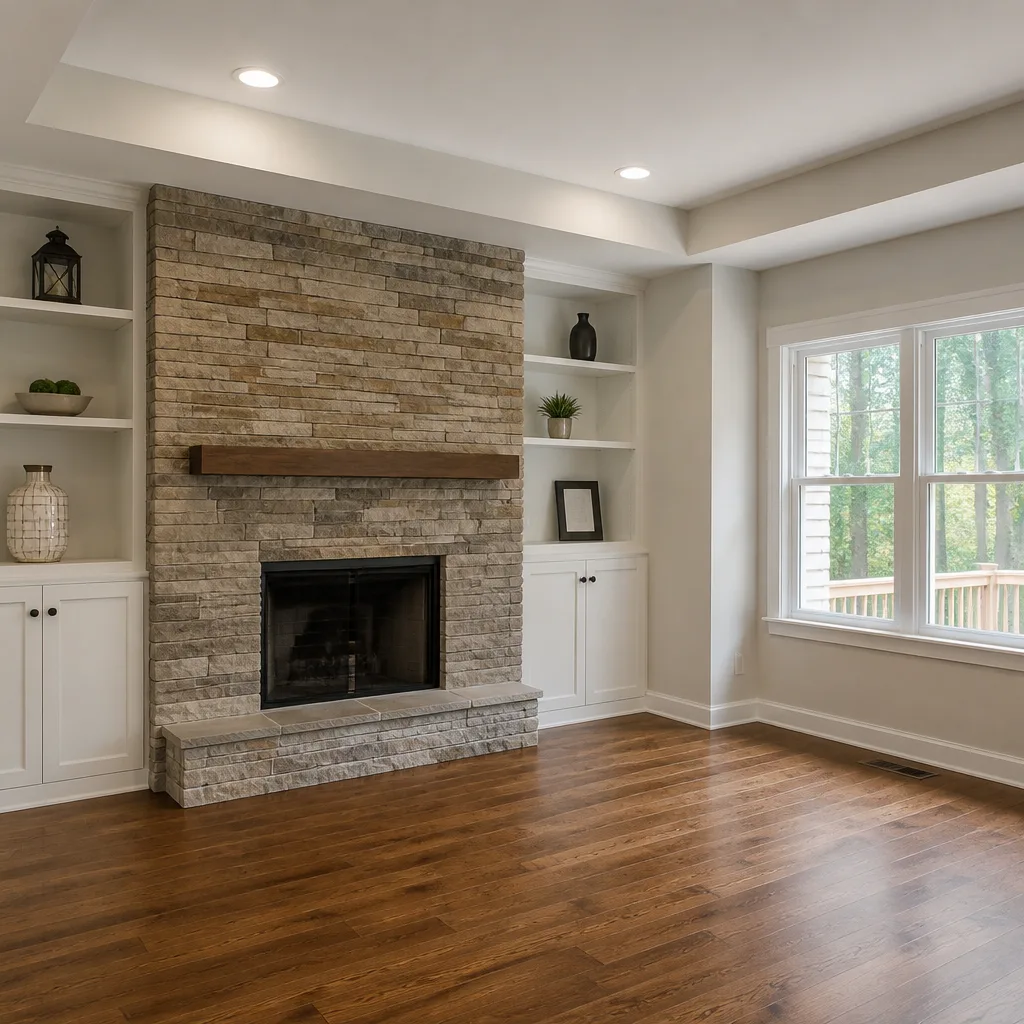
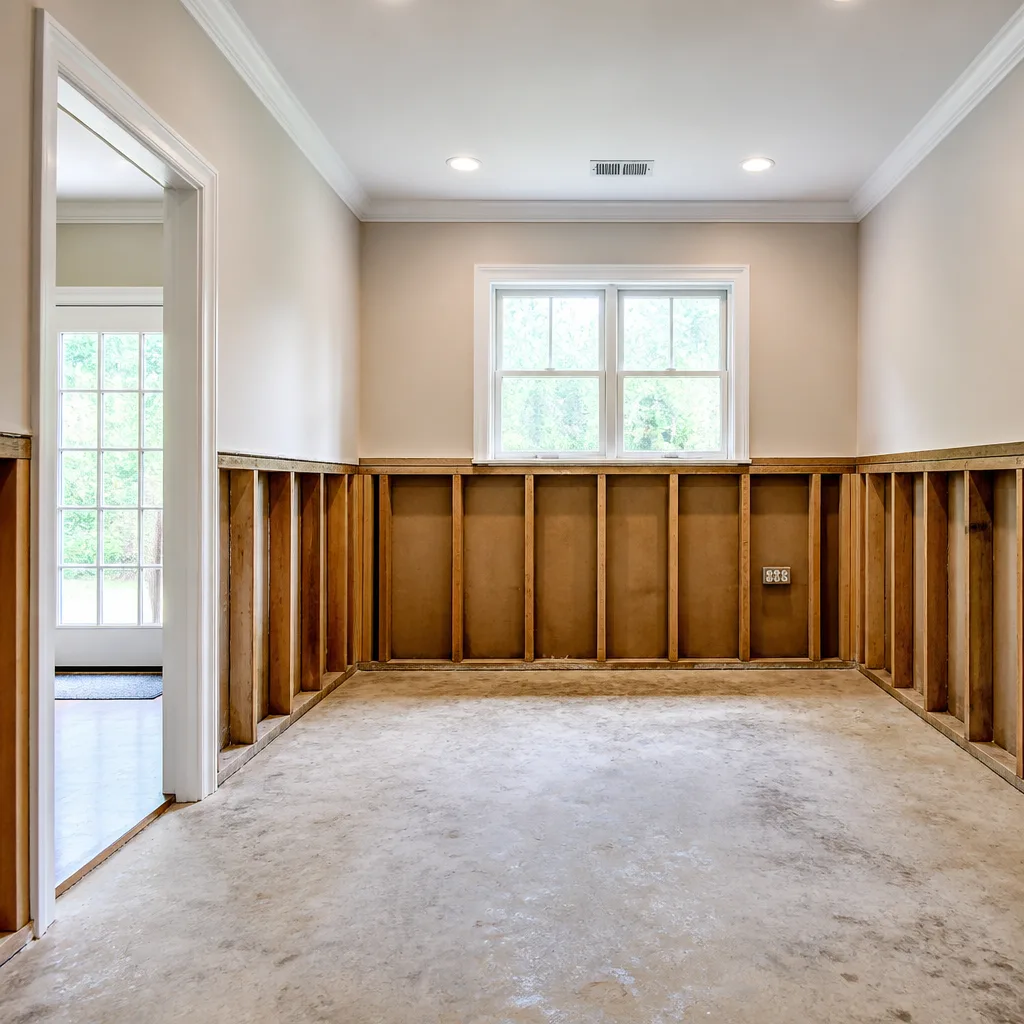
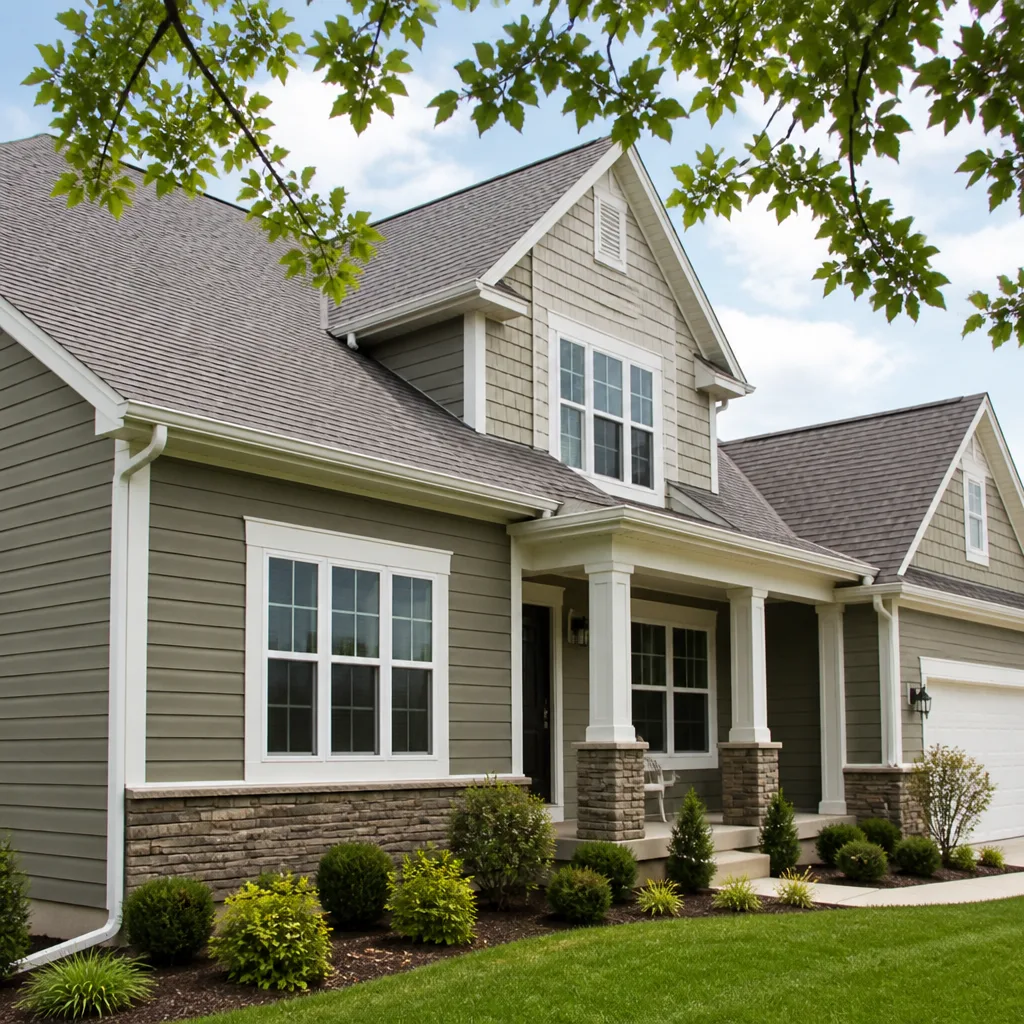
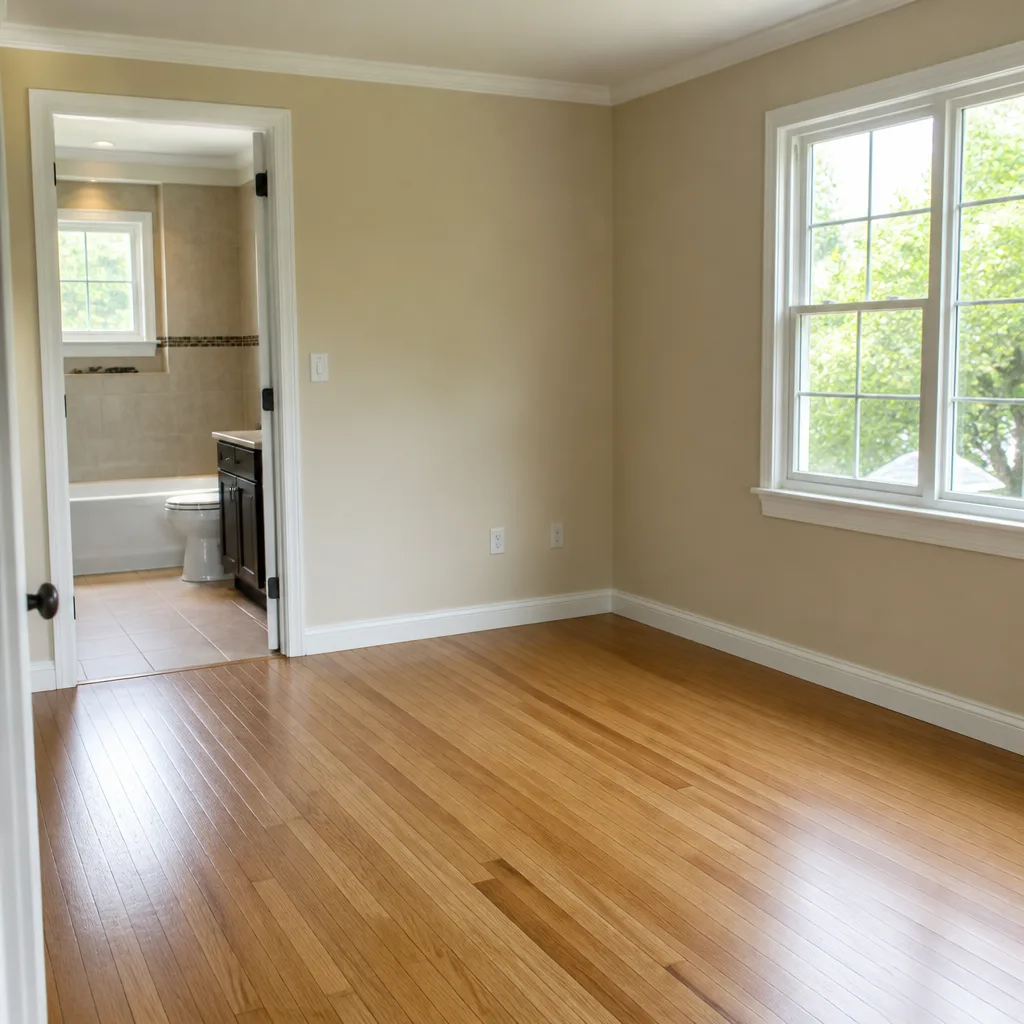
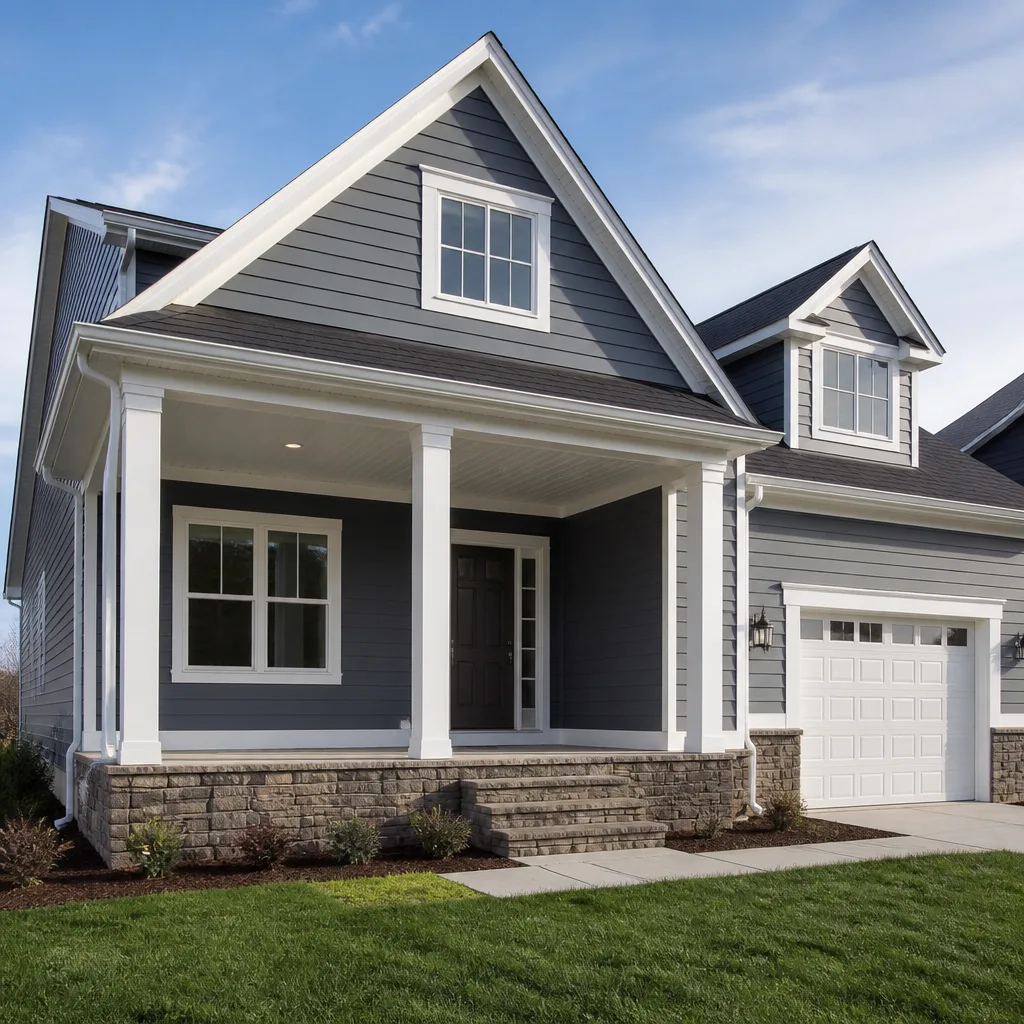
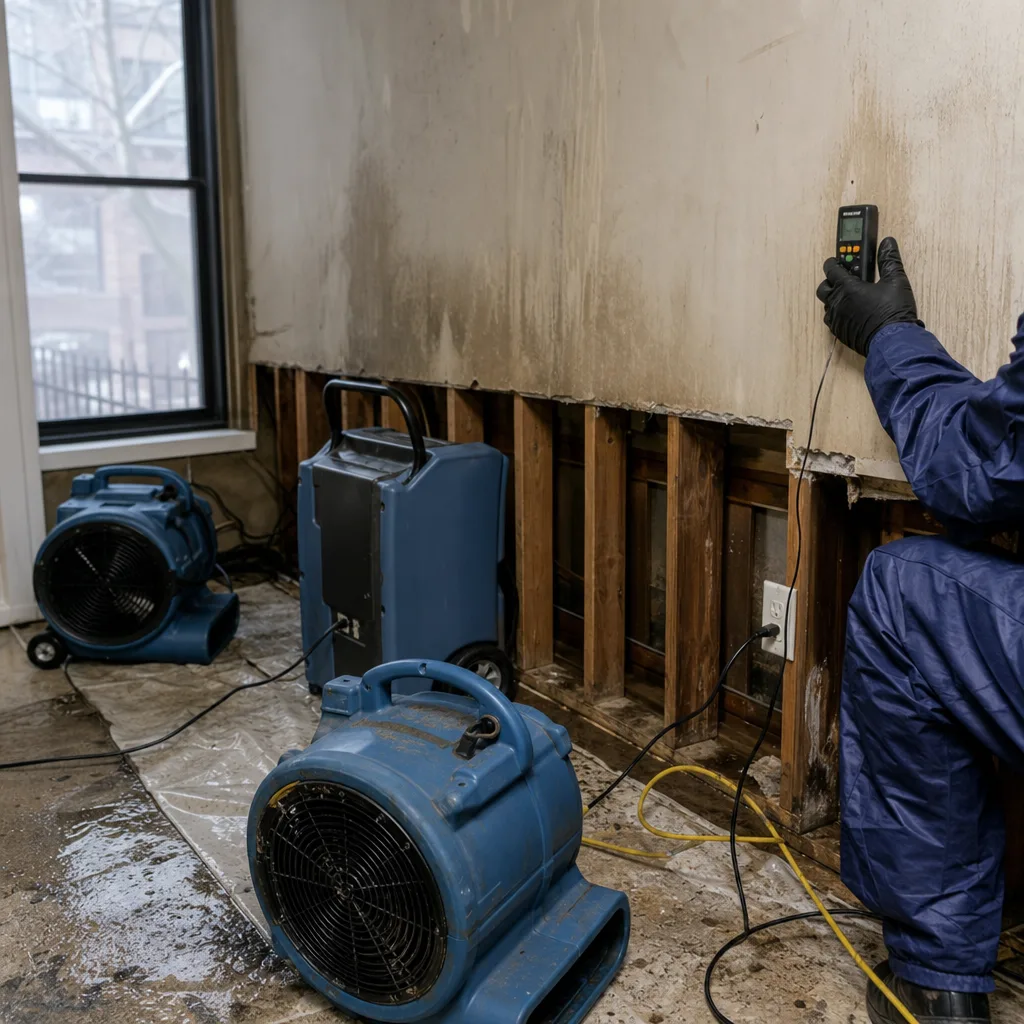 Before
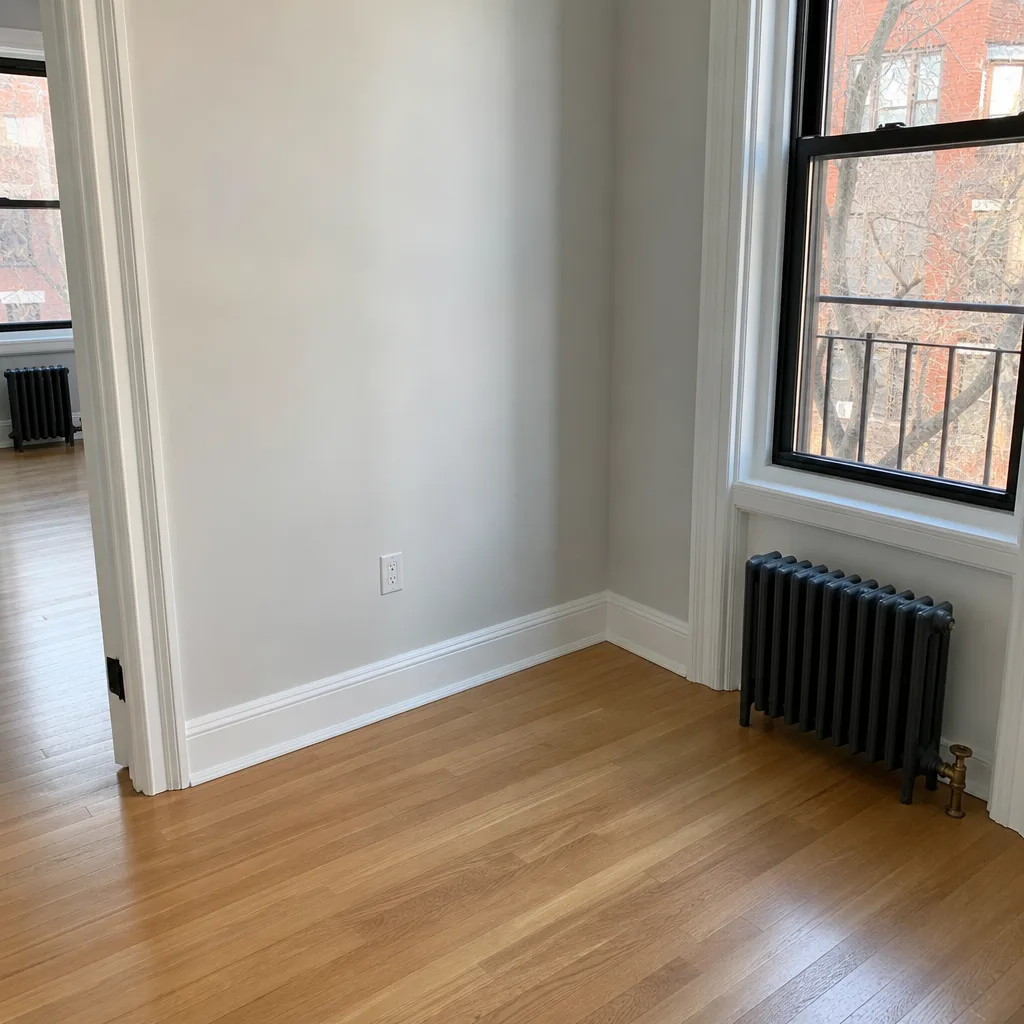 After
After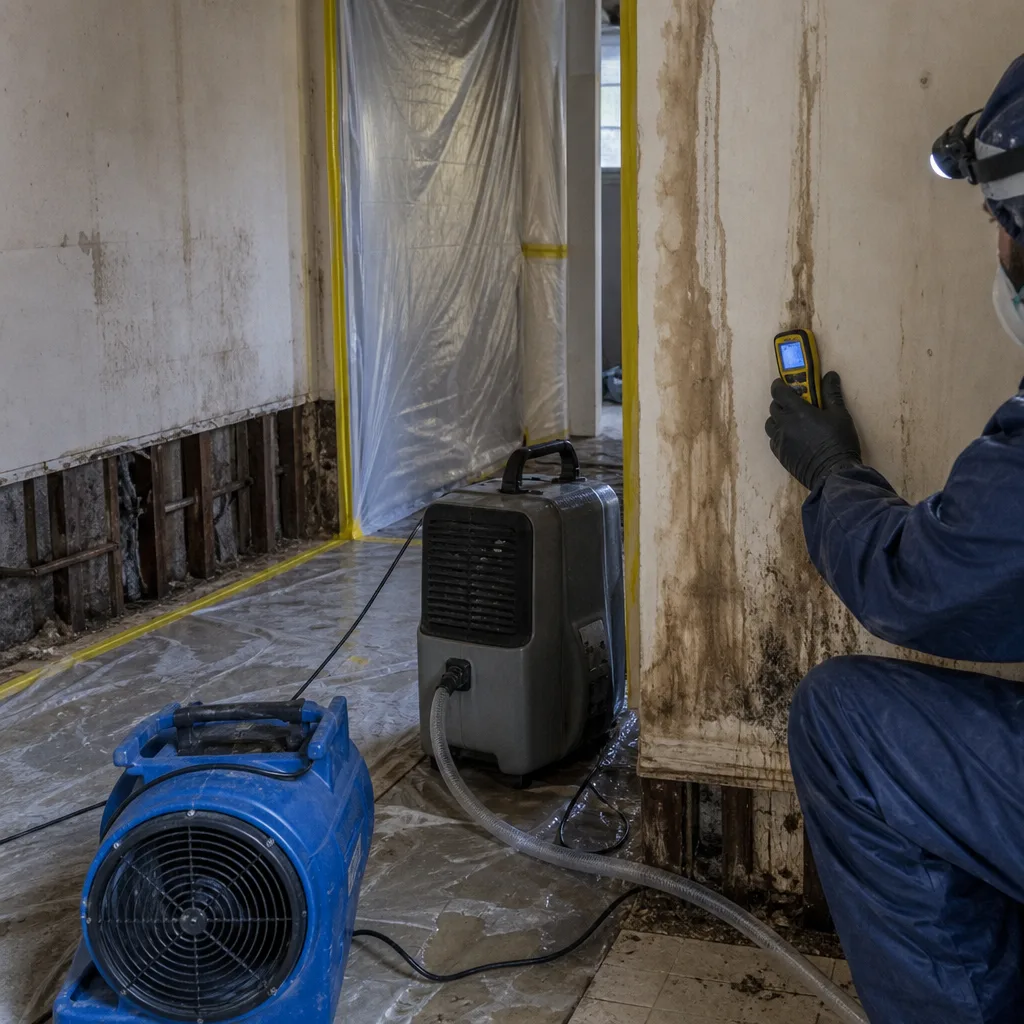 Before
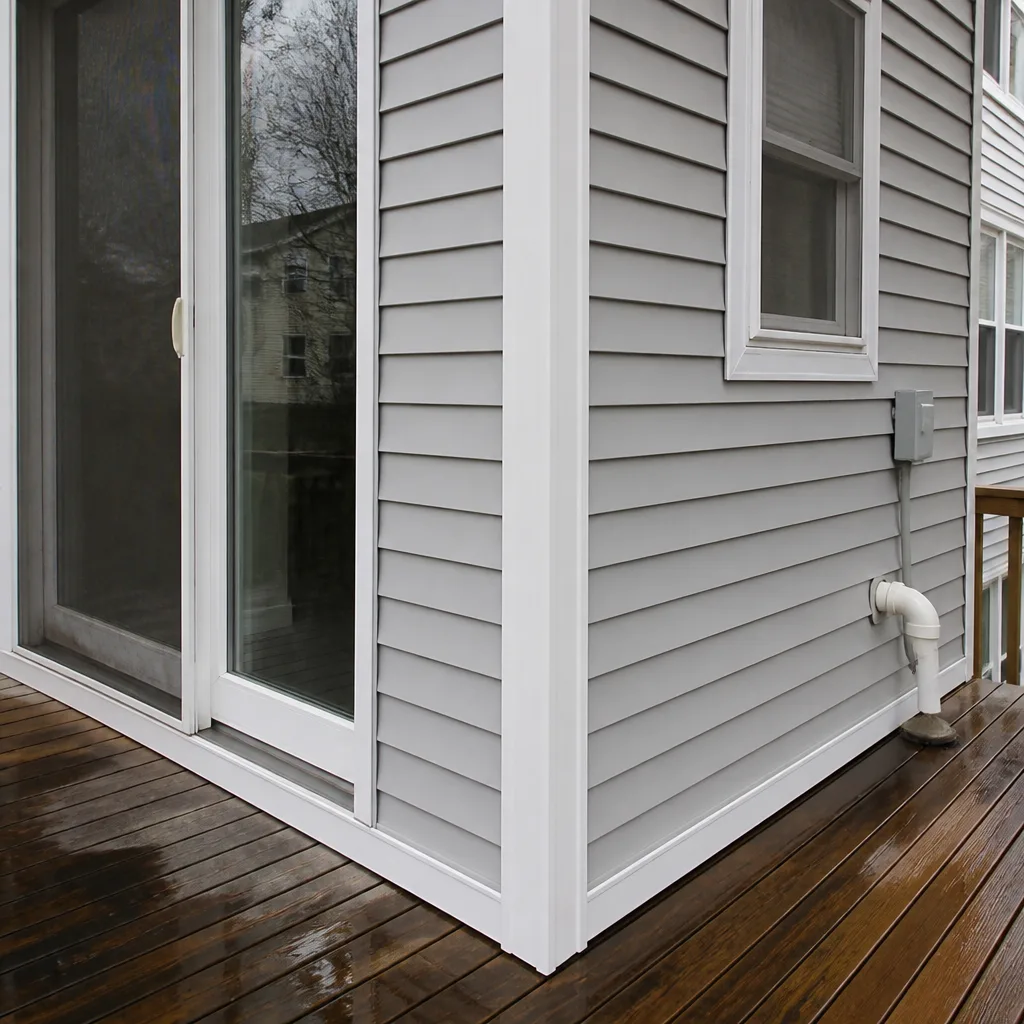 After
After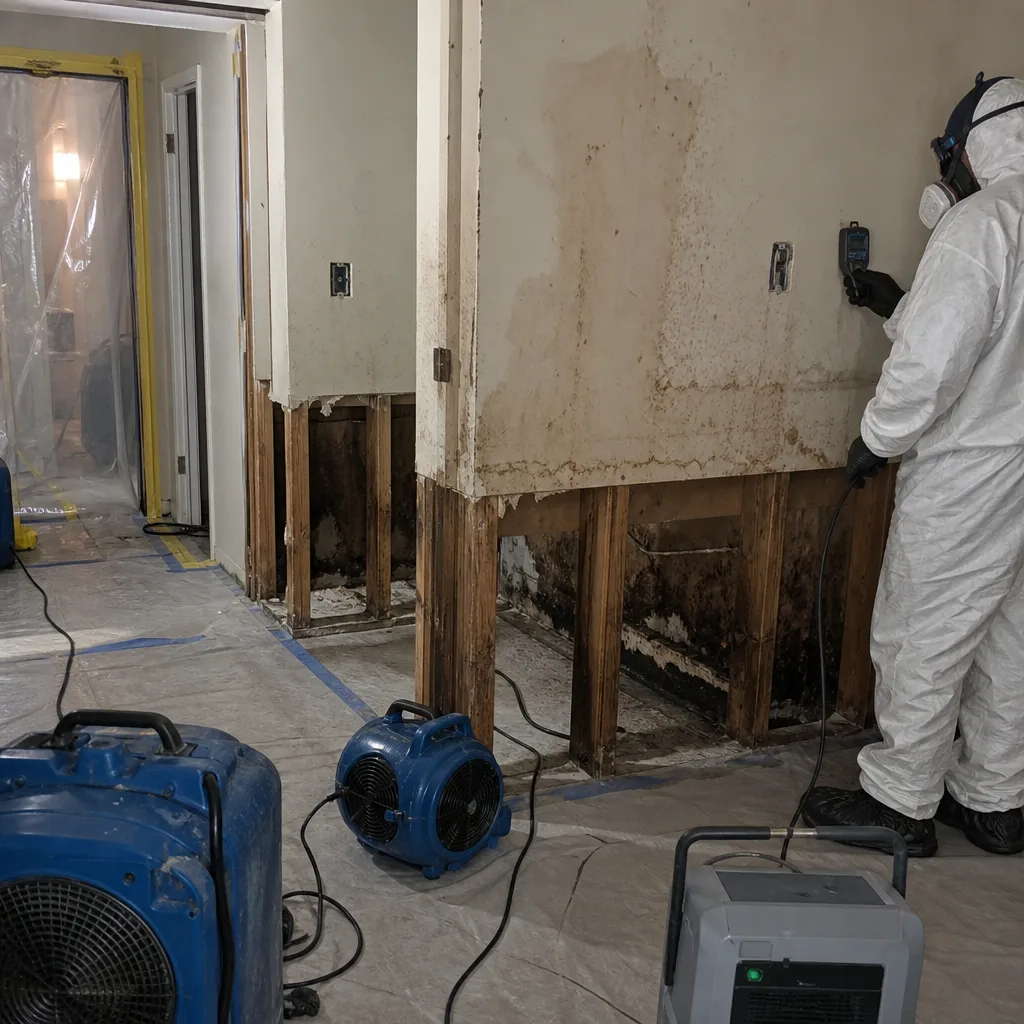 Before
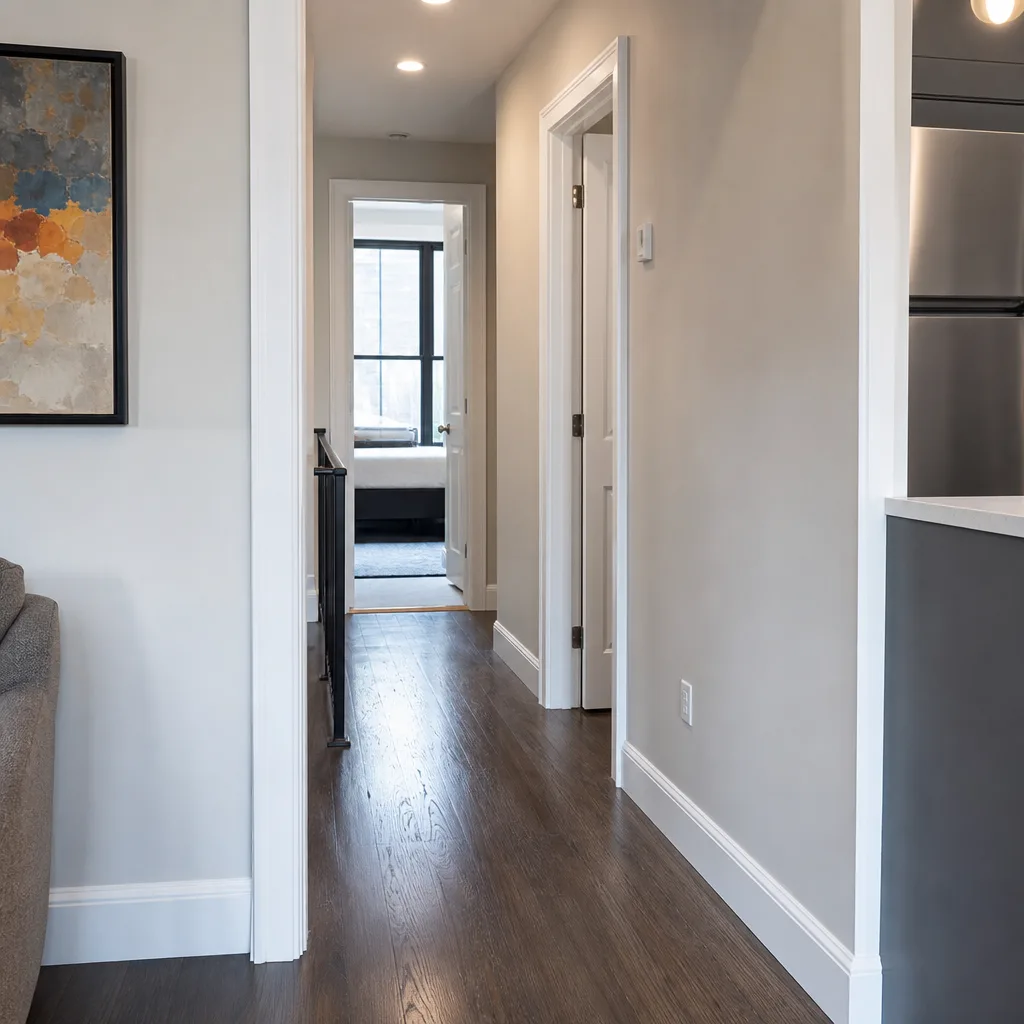 After
After24/7 Emergency Fire & Smoke Damage Restoration in Westwood
Fire and smoke damage in Westwood needs a response now, not in the morning. Our crews are dispatched around the clock, every day of the year, and we answer the phone with a live person who can have technicians rolling toward your block within 45 minutes. Call (917) 924-4221 the moment the fire department clears the scene. Every hour smoke sits in wall cavities and ductwork, soot becomes harder to remove and acidic residues eat deeper into finishes, wiring, and framing. We arrive with a free visual inspection, a written scope of work, and the equipment to start board-up and air scrubbing on the first visit. Done right, and backed in writing.
Understanding Fire & Smoke Damage Restoration Severity in Westwood Properties
Not every fire leaves the same damage behind. A grease fire contained to a kitchen leaves different residue than a slow-smoldering electrical fire inside a wall. Restoration crews classify smoke damage by the type of soot produced. Wet soot from smoldering fires is sticky and acidic, bonding to surfaces and corroding metal fixtures if left untreated. Dry soot from fast-burning fires settles as a fine powder that migrates through HVAC returns and behind baseboards. Protein residues from kitchen fires are nearly invisible but carry a harsh odor that returns weeks later if not chemically neutralized. In Westwood’s 1950s and 1960s colonials and cape cods, smoke travels through original plaster walls, open floor joists, and cellulose insulation that holds odor like a sponge. That housing stock, built before modern compartmentalization and firestopping, often allows smoke to reach rooms the fire never touched. Severity assessment here means tracing smoke migration through old framing, not just cleaning the visible burn area.
Why Westwood Property Owners Choose Floodline Restoration Co. of Manhattan
- We’ll be there when we say. Our 45-minute response commitment means a live dispatcher confirms your address, a crew is assigned, and you get a call when the truck is moving. No answering services, no callbacks later.
- A real person answers, 24/7. At 2 a.m. you reach a dispatcher who knows the trade and can describe what to do in the first 30 minutes while the crew travels.
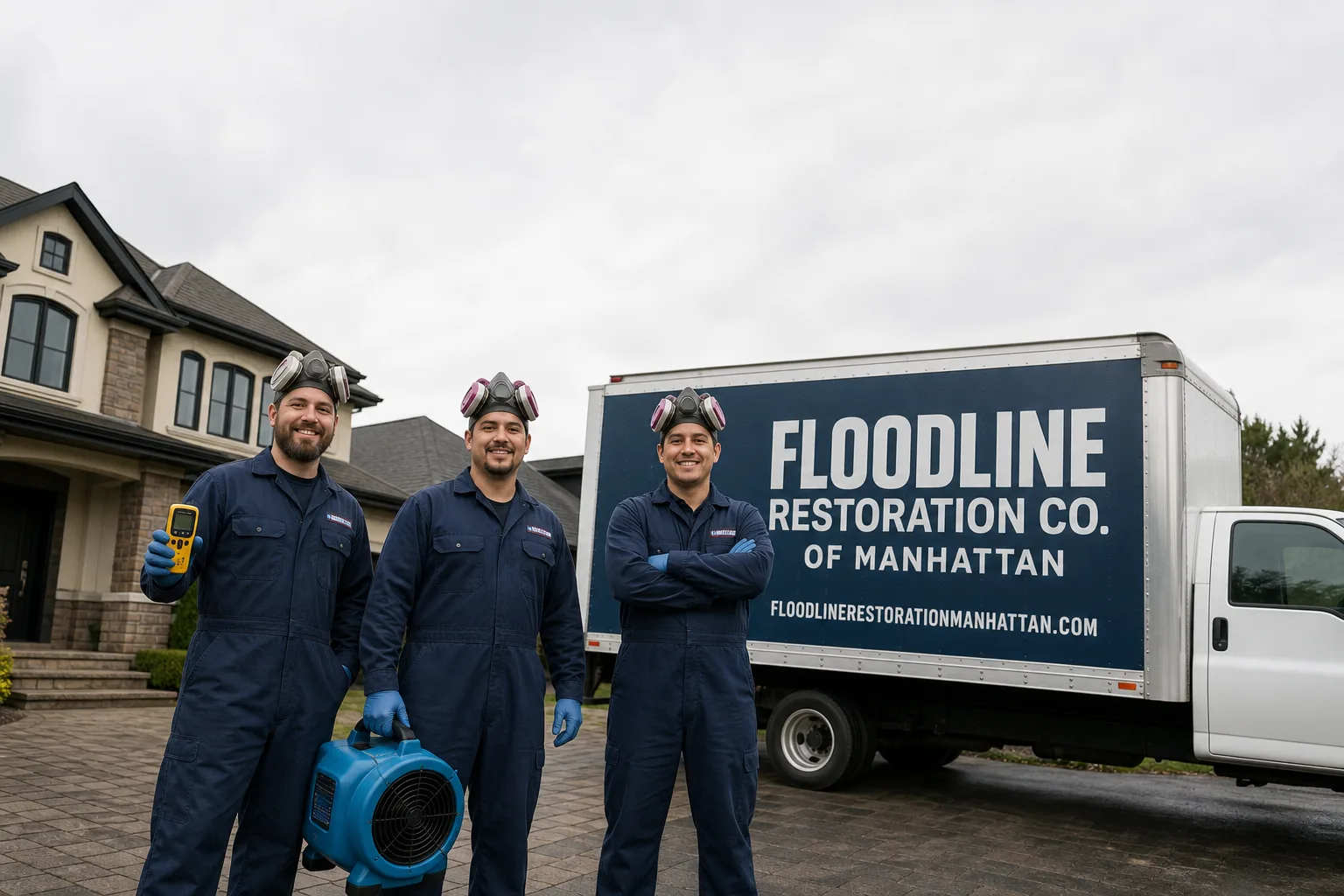
- IICRC-certified crews. Our technicians hold IICRC certifications in Fire and Smoke Restoration (FSRT) and Odor Control (OCT), with training through RIA and IFA. Uniformed, background-checked, and accountable by name.
- Free visual inspection. We walk your Westwood property, mark the damage, and hand you a written scope before any work begins. No pressure, no obligations.
- Direct insurance billing. We document the loss from the first hour, photograph every affected room, and talk to your adjuster directly so you aren’t playing messenger.
- One team, start to finish. From emergency board-up through final reconstruction, the same Floodline crew handles your job. No mid-job handoff to a subcontractor you’ve never met.
Our Fire & Smoke Damage Restoration Process
Inspection & Assessment
We walk every room, including the attic and basement, and use thermal imaging to find heat migration through Westwood’s original framing. We identify soot type, smoke travel paths, and any water damage from firefighting. You get a written scope and a firm price before we start.
Emergency Board-Up & Stabilization
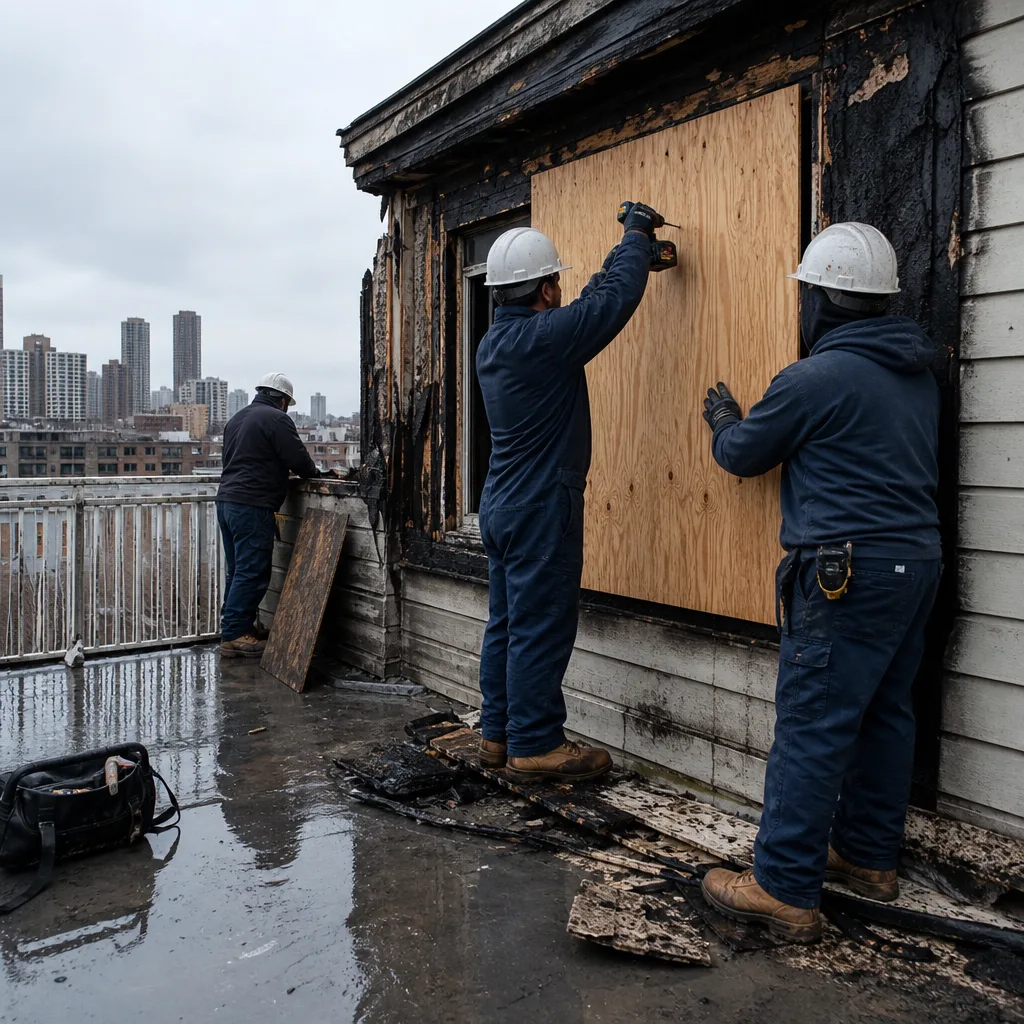
We secure broken windows, damaged roofs, and open entry points with plywood, tarps, and weather seals. In older Westwood homes with original window frames, we anchor board-up without causing further damage to wood sash or masonry.
Smoke & Soot Removal
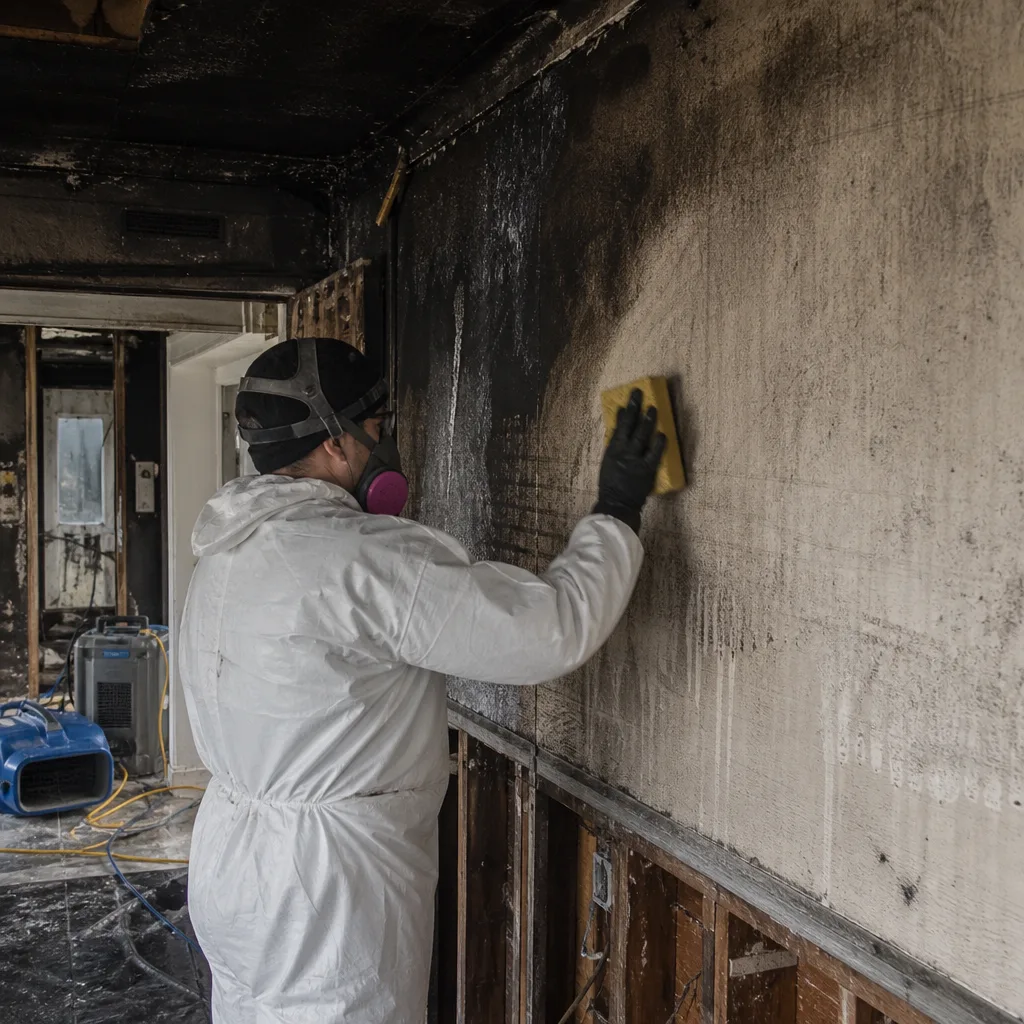
We use dry-ice blasting, chemical sponges, and HEPA vacuuming to remove soot from walls, ceilings, and contents. Wet soot needs different chemistry than dry soot, and we treat them separately.
Odor Removal & Deodorization
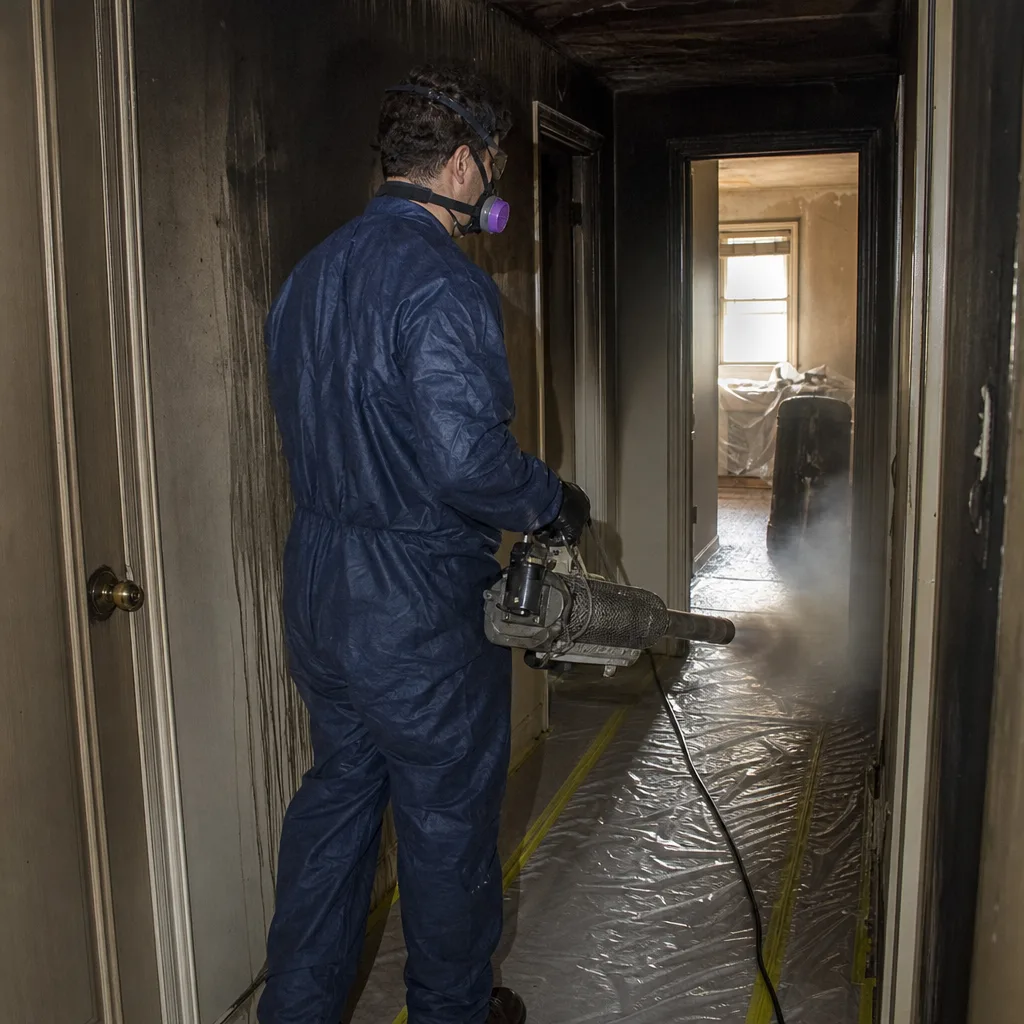
HEPA air scrubbers run continuously to pull airborne particles while we deploy thermal fogging and hydroxyl generators to neutralize smoke odor trapped in cellulose insulation, plaster, and ductwork. In basements with full floods and smoke, we treat odor at the source, not with masking sprays.
Contents Cleaning & Pack-Out
Every item gets photographed and logged before it leaves the house. We clean salvageable contents at our facility, store them, and return them after reconstruction. Pre-loss condition is documented to support your claim.
Repairs & Restoration
We rebuild what the fire damaged: drywall, framing, flooring, paint, trim, and electrical. The same crew that extracted and dried your home handles the rebuild, and the 90-Day Done Right Promise covers the finished job.
Need Emergency Fire & Smoke Damage Restoration in Westwood Now?
Crews minutes away, answering live 24 hours a day. The sooner we start, the less it costs.
Working With Your Insurance Company
Most Westwood fire and smoke claims involve two kinds of damage: the fire itself and the water used to fight it. Both get documented, photographed, and scoped line by line. We handle the adjuster communication from day one, so you aren’t chasing paperwork while your house sits open. Our crews know what carriers need to approve supplements on older homes with legacy materials. When a claim involves original plaster, cellulose insulation, or cast-iron drain lines, we document the pre-loss condition before demolition starts, which prevents the carrier from disputing whether damage existed before the fire. Fire & Smoke Damage Restoration carried by one team means the documentation stays consistent from extraction to rebuild.
What We Provide Your Insurer
- Thorough documentation of the loss
- Photos of all damage, room by room
- Moisture readings and drying logs
- A detailed, line-item scope of work
- Direct coordination with your carrier
Built for Westwood’s Loss Calendar
Westwood’s fire and smoke losses follow the seasons. Winter brings space heaters, overloaded outlets, and older panel boxes working harder than they were designed to in 1950s and 1960s homes. Freeze-thaw cycles stress the same basement walls that carry original cast-iron drain lines, and a cracked line behind a wall can turn a small kitchen fire into a Category 2 water event once the fire department gets involved. Spring thaws and heavy rain push groundwater into basements that were never waterproofed to modern code, and when electrical systems in those basements get wet, the result is often a smoldering arc rather than a clean breaker trip. Summer thunderstorms and nor’easters knock out power, and Westwood’s tree-lined blocks mean downed branches and generator misuse both lead to fire losses. Through it all, the same rule applies: the faster smoke gets treated and water gets extracted, the less the rebuild costs.
Fire & Smoke Damage Restoration Across Westwood’s Neighborhoods
Westwood’s residential blocks run in quiet grids between the Arthur Kill corridor and the higher ground toward the center of the neighborhood. The homes closest to the water, along the southwestern edge, tend to be 1950s colonials with full basements that flood repeatedly. Those basements hold the electrical panels, the oil tanks, and the utility rooms where many of the fires we respond to start. Further north and east, the cape cods and split-levels sit on slightly higher ground but carry the same original insulation and galvanized plumbing. The streets near Bloomingdale Park and the stretch beyond Huguenot Avenue see older one-piece doors, original windows, and chimneys that haven’t been relined since construction, all of which change how smoke exits during a house fire and where soot settles afterward. Crews responding to Westwood calls know that the neighborhood’s post-Sandy rebuilds changed some homes dramatically while leaving others untouched, and both types of houses appear on the same block.
Specialized Fire & Smoke Damage Restoration Services We Offer in Westwood
Emergency Board-Up & Tarping
After a fire in Westwood, your house may sit open to rain, animals, and trespassing. We board up broken windows and damaged roofs the same visit we arrive, using weather-rated plywood and secure anchors that don’t further damage original window frames. A tarp over a fire-damaged roof buys time for your carrier to approve the full scope without additional water entering the structure.
Smoke & Soot Removal
Soot from a Westwood house fire carries acid that etches glass, pits metal fixtures, and permanently stains painted surfaces within days. We use dry chemical sponges on painted walls, dry-ice blasting on framing and masonry, and HEPA vacuums on every horizontal surface. Ceilings in older colonials often need more than one pass because soot sinks into decades of paint layers.
Odor Removal & Deodorization
Smoke odor in Westwood homes settles into cellulose insulation, original plaster, and forced-air ductwork. Thermal fogging penetrates those cavities with a deodorizing vapor that bonds to odor molecules at the source. Hydroxyl generators run for days in occupied homes, and HEPA air scrubbers pull particles out of the air continuously while we work. If the smell comes back after the rebuild, the 90-Day Done Right Promise covers it.
Contents Cleaning & Pack-Out
We photograph and log every item before it leaves your Westwood home. Salvageable contents go to our cleaning facility, where they get individually treated for soot and odor. Items too damaged to save get documented with photos and logged on your claim inventory. Pre-loss condition is recorded before pack-out, which matters when your claim involves original panel boxes or legacy insulation that complicate the adjuster’s review.
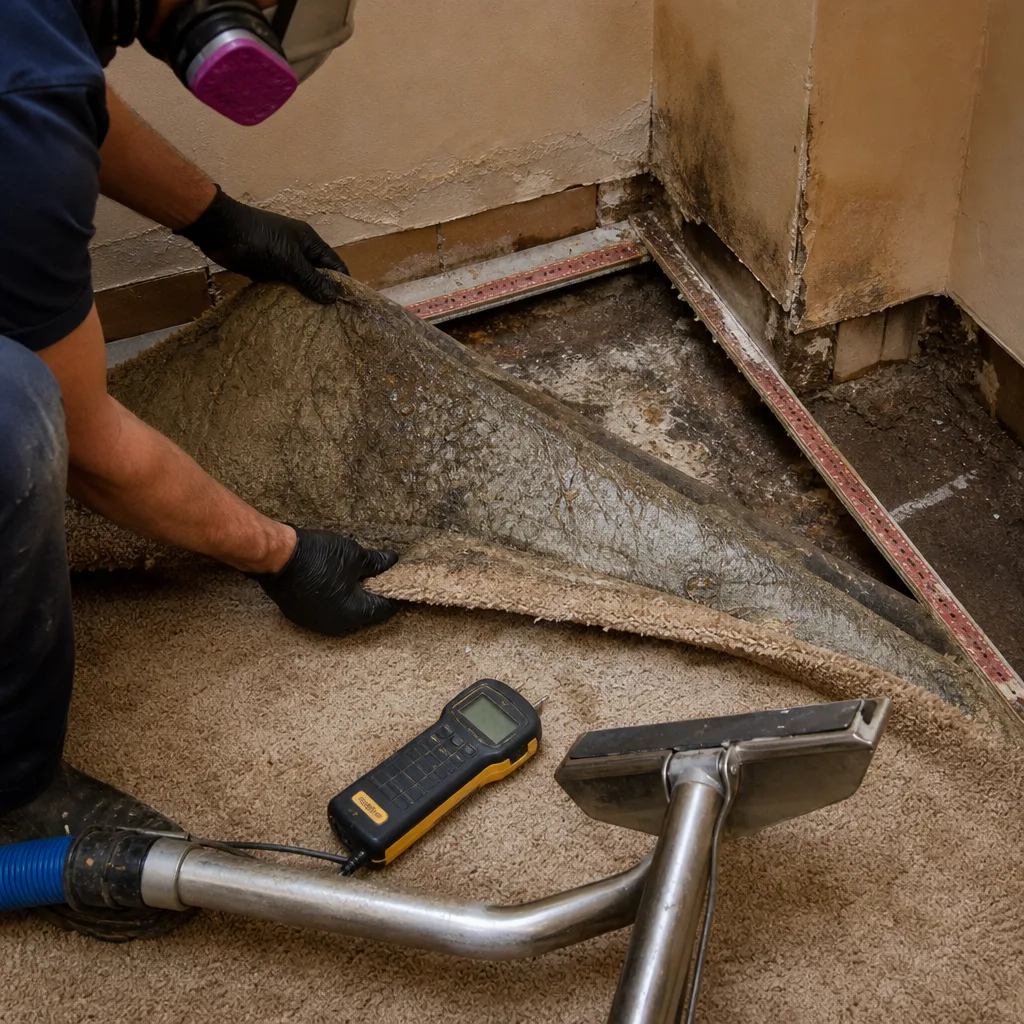
Structural Fire Repair
Once cleaning and mitigation are complete, we rebuild. That means framing, drywall, trim, paint, flooring, and electrical. In Westwood’s older homes, we match original profiles and materials where possible so the repaired rooms don’t look like additions. The same crew that handled your emergency handles the rebuild, and the finished work is covered by the 90-Day Done Right Promise.
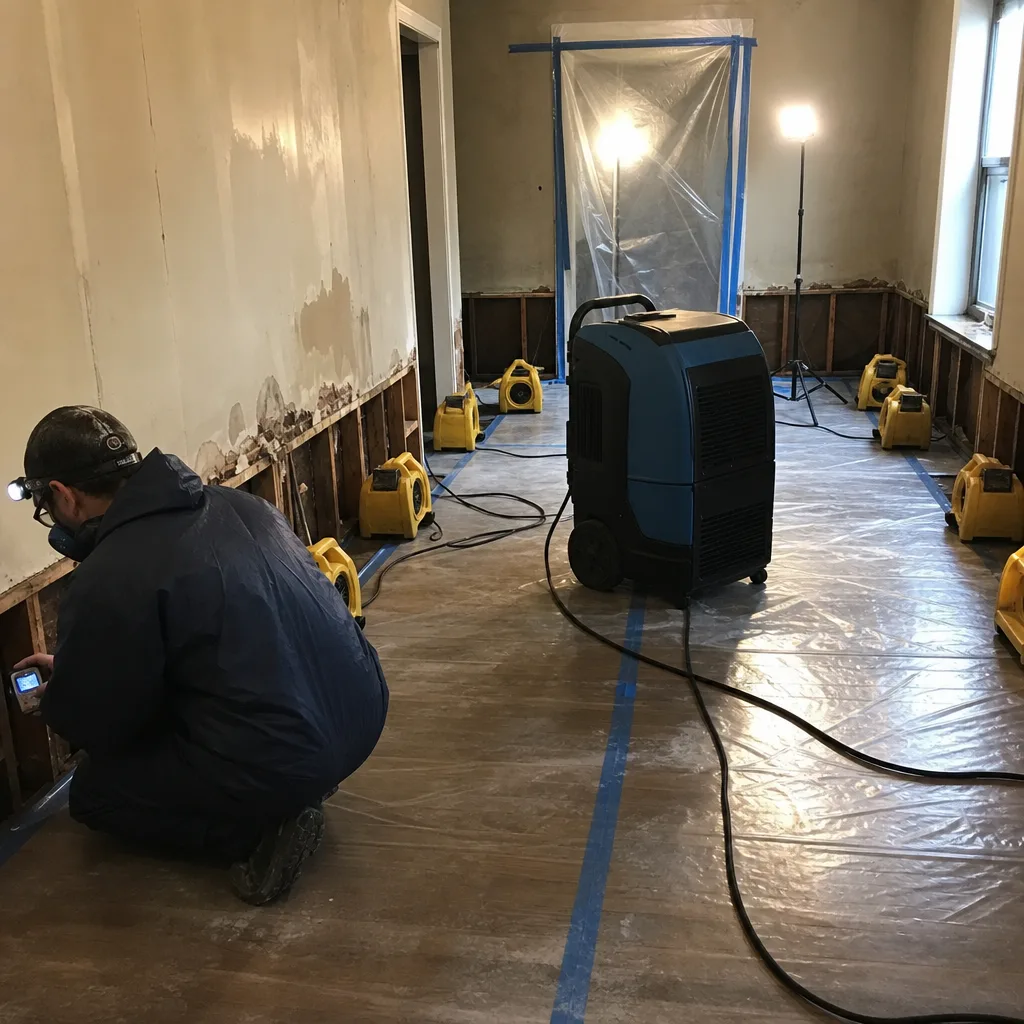
What happens when you call
- 1
A real person answersNo phone trees - you reach a local pro.
- 2
You get an upfront price rangeHonest numbers before anyone is dispatched.
- 3
A background-checked tech heads outLicensed & insured, dispatched right away.
- 4
You approve before work beginsNothing starts until you say go.
Fire & Smoke Damage Restoration Costs in Westwood, NJ
What you’ll pay depends on how far the smoke traveled and how much water the fire department used. A small kitchen fire with light soot on one floor typically runs $2,800 to $5,500 in Westwood. A basement electrical fire with smoke throughout the house and Category 2 water in the foundation usually falls between $8,000 and $18,000. Full-house smoke damage with contents pack-out, structural drying, and rebuild work commonly ranges from $20,000 to $60,000 or more. Odor removal alone runs $800 to $2,500 depending on square footage and whether duct cleaning is required. Board-up and tarping on the first night costs $500 to $1,500. Most Westwood homeowners go through their insurance carrier, and we bill directly so you see the scope and the supplement approvals without handling the money yourself. Call (917) 924-4221 for a free visual inspection and a written estimate, no obligation.
We Also Serve Cities Near Westwood
Floodline Restoration Co. of Manhattan runs crews across Bergen County and the surrounding area. We regularly respond to fire and smoke damage calls in Harrington Park, Hillsdale, Park Ridge, and Norwood, with the same 45-minute response commitment and live 24/7 dispatch. If your home sits in one of these neighboring towns, the phone number is the same: (917) 924-4221.
Serving Westwood, NJ - Our Local Coverage Area
We’re based in the Westwood area and know this community well. Use the map below to see our service coverage - if you’re nearby, we can almost certainly help.
Westwood Fire & Smoke Damage Restoration Questions, Answered
How does Westwood’s FEMA flood zone affect fire and smoke restoration after a storm-related electrical fire?
Westwood’s location in the tidal flood corridor near the Arthur Kill means many homeowners carry FEMA flood policies with ICC coverage, and fire claims after storm-related electrical damage often get reviewed alongside flood-zone documentation. Your insurer may ask the restoration contractor to prove that smoke and soot cleanup didn’t disturb flood-elevation work or compromise floodproofing measures. We document pre-loss condition before any demolition and photograph every step so the carrier sees that elevation work remained undisturbed. That documentation is the difference between a clean supplement and a denied one.
My Westwood cape cod has original cellulose insulation soaked by fire hoses. Does it always need to come out?
If cellulose insulation stayed wet for more than 48 hours, it almost always needs removal. Cellulose holds moisture against framing and breaks down into a mat that promotes mold growth and keeps drying equipment from reaching the structural wood. In homes where the insulation stayed dry but absorbed smoke odor, we can sometimes treat it in place with thermal fogging and hydroxyl generation, but wet insulation is a tear-out and replace job. We log moisture readings every 4 hours to prove to your carrier that the removal was necessary.
What should a Westwood homeowner do about smoke smell trapped in a full basement that also floods?
Treat the water first, then the odor. A flooded basement that also carries smoke damage needs extraction, drying, and dehumidification before any deodorization work makes sense. Running air scrubbers while the basement is still wet wastes time and money. Once moisture readings hit the dry standard, we treat smoke odor at the source with thermal fogging and hydroxyl generators, then run HEPA scrubbers to clear airborne particles. Call (917) 924-4221 and we’ll start with a moisture map and a written drying plan.
Is board-up different for older Westwood colonials with original windows after a fire?
Yes. Original wood sash windows in 1950s and 1960s homes have frames and trim that don’t match modern standard sizes, and anchoring plywood over them with the wrong fasteners can split the wood or crack the surrounding plaster. We use pre-drilled anchors and weather seals that hold securely without wrecking the original frames. If the window itself is too damaged to save, we document it, remove it carefully, and board the opening until replacement windows arrive.
How do I prove pre-loss condition for contents when my Westwood home has no digital inventory?
Most homeowners don’t have a digital inventory, and carriers know this. What matters is what the adjuster sees on site before pack-out: photographs, video walkthroughs, and our written log of every item’s condition before it moves. Our crew records the state of each room and each damaged item before cleaning or removal, and that documentation becomes part of your claim file. If a dispute arises later, the pre-loss photos and our written scope are what settles it.
How fast can you actually get to a Westwood address after a fire?
Our commitment is 45 minutes from the time you call. The dispatcher confirms your address, assigns the nearest available crew, and calls you when the truck is moving. Westwood is within our regular response area, so most calls get a crew on site well inside that window. Call (917) 924-4221 and a live person will give you an ETA right then.
Are your technicians certified for fire and smoke restoration work?
Yes. Our technicians hold IICRC certifications in Fire and Smoke Restoration (FSRT) and Odor Control (OCT), with additional training through RIA and IFA. They are background-checked, uniformed, and work under a written scope of work from the first visit. The 90-Day Done Right Promise backs the finished job.
What should I do in the first 30 minutes after a fire in Westwood?
Don’t re-enter the structure until the fire department clears it. Once you’re allowed back, don’t touch anything, don’t turn on HVAC, and don’t try to wipe soot off walls; wiping pushes soot deeper into the finish. Don’t plug in any electronics. Call us at (917) 924-4221 and we’ll tell you exactly what to do while the crew travels to your address. The first hour determines how much of your home can be saved.
A fire in Westwood means three jobs at once: board up the structure, stop the smoke damage from spreading, and start the insurance documentation before anything gets moved. Our crews handle all three. We’ve worked the tidal corridor homes near the Arthur Kill long enough to know which basements flood every few years and which panel boxes should have been replaced a decade ago. When a 1960s colonial near the water had a basement electrical fire smolder behind original cellulose insulation, we contained the smoke with poly sheeting, ran HEPA air scrubbers, and pulled wet drywall that had wicked Category 2 water from the firefighting. Moisture readings were logged every 4 hours, the homeowner’s ICC elevation project stayed untouched, and our scope of work documented pre-loss condition before pack-out. The insurance supplement cleared without a challenge. That’s the way it should go, every time.
Call (917) 924-4221 for a free visual inspection and a written estimate. A live person answers, day or night. Done right, and backed in writing.
Written by Curt Bowman, Owner at Floodline Restoration Co. of Manhattan, serving Westwood since 2010.