
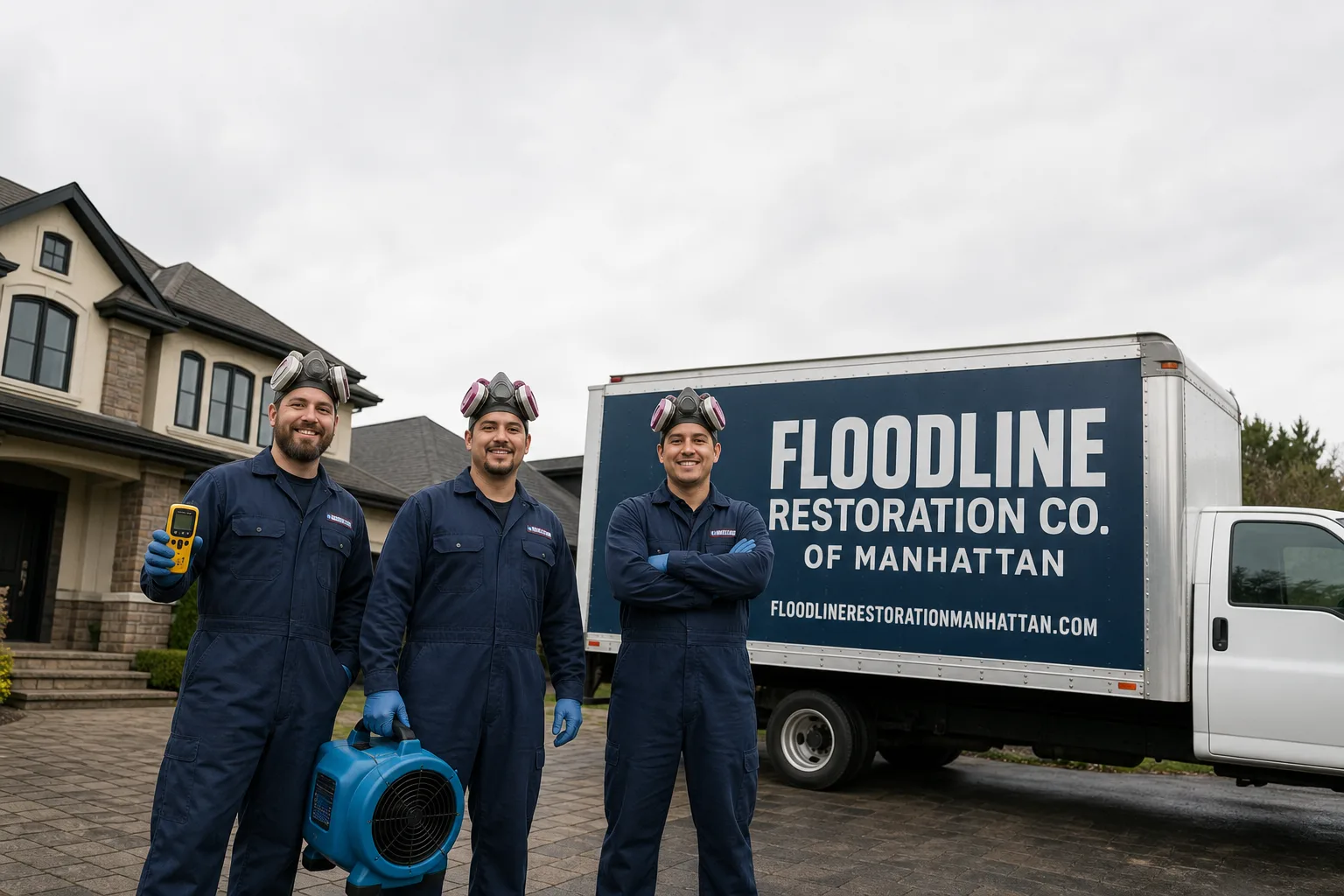
Free visual inspection and a written scope of work before any mitigation begins - photos, moisture readings, and drying logs go in your claim file
The scope we write is the scope we bill. Anything new gets shown to you, in writing, before we touch it.
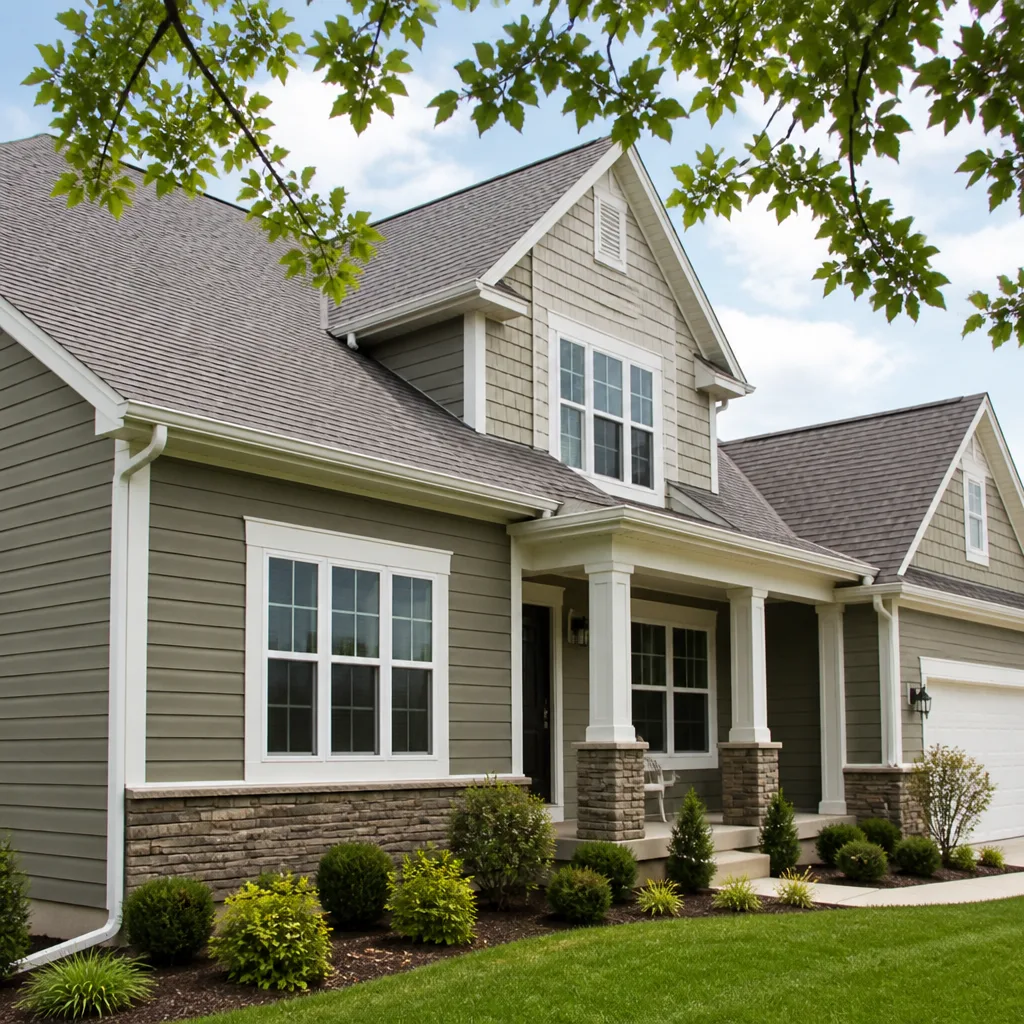
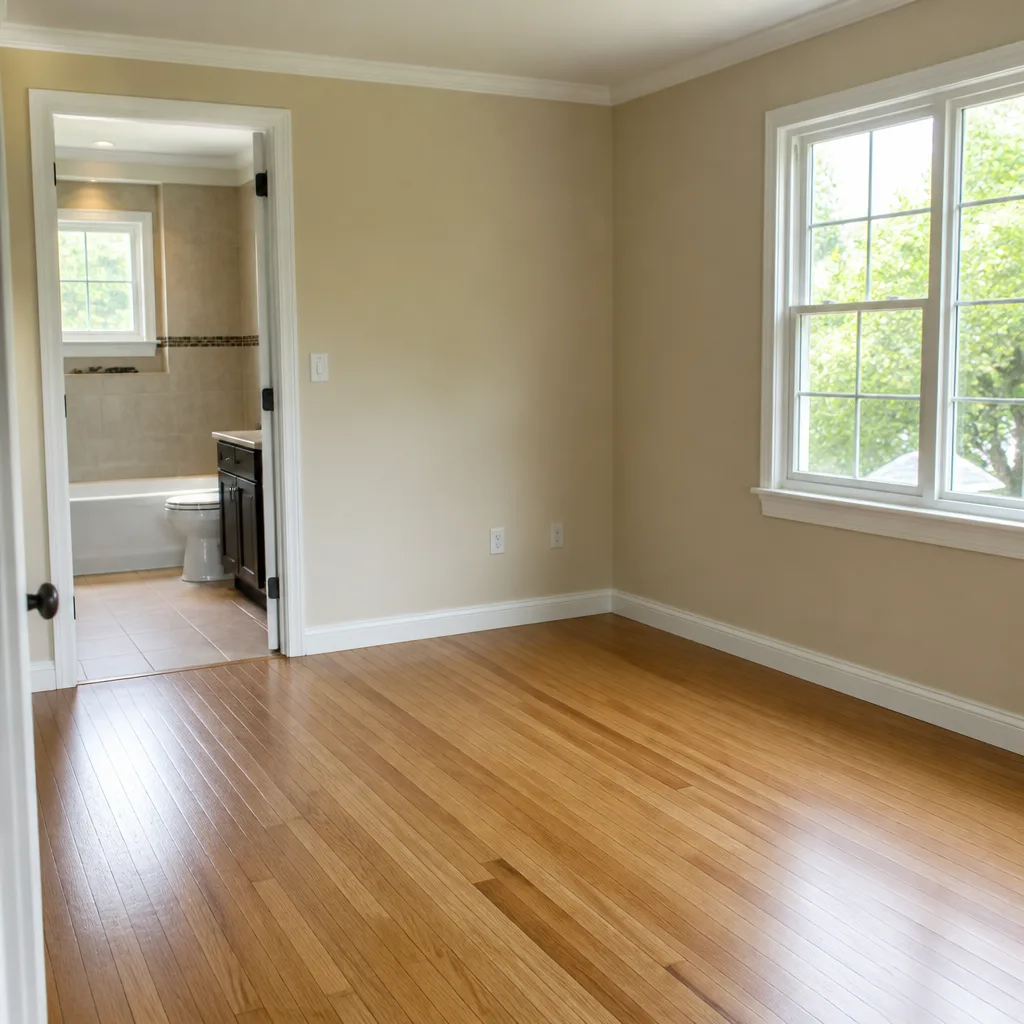
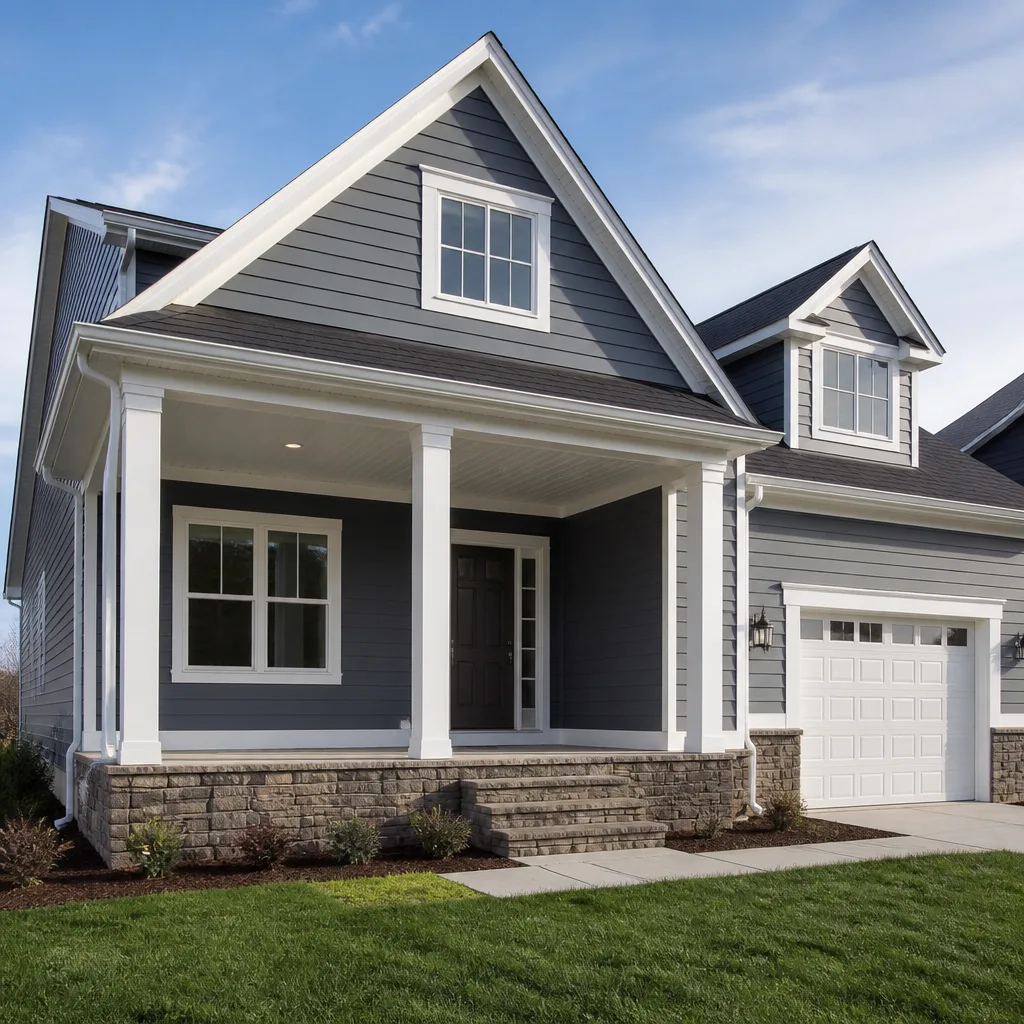
 Before
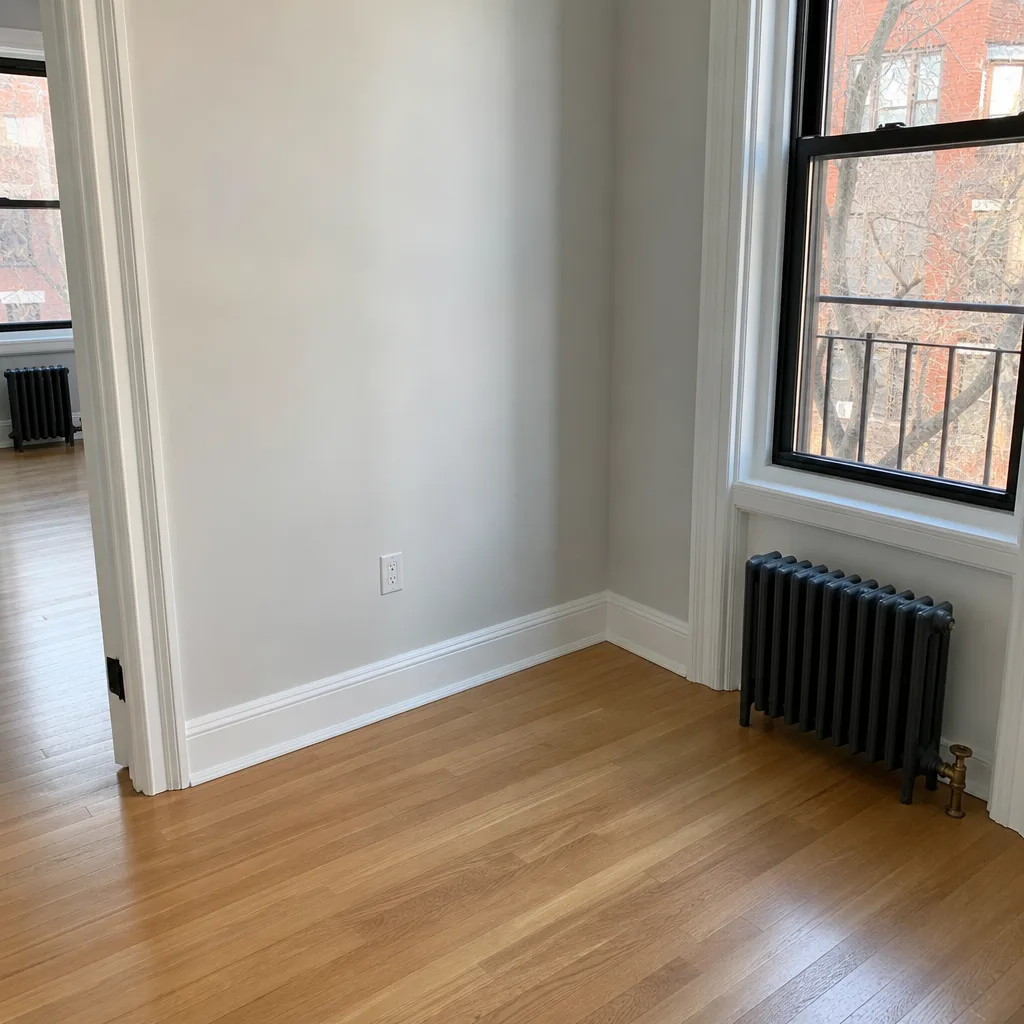 After
After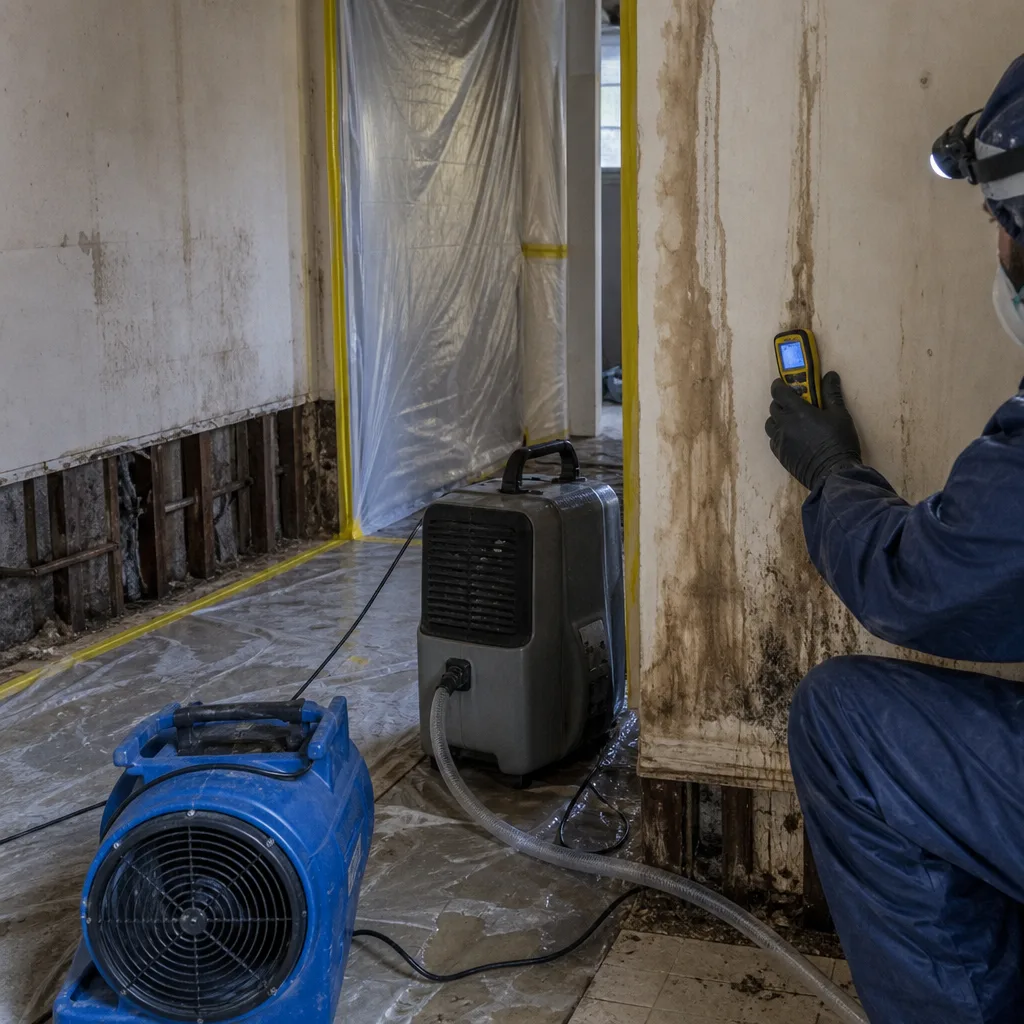 Before
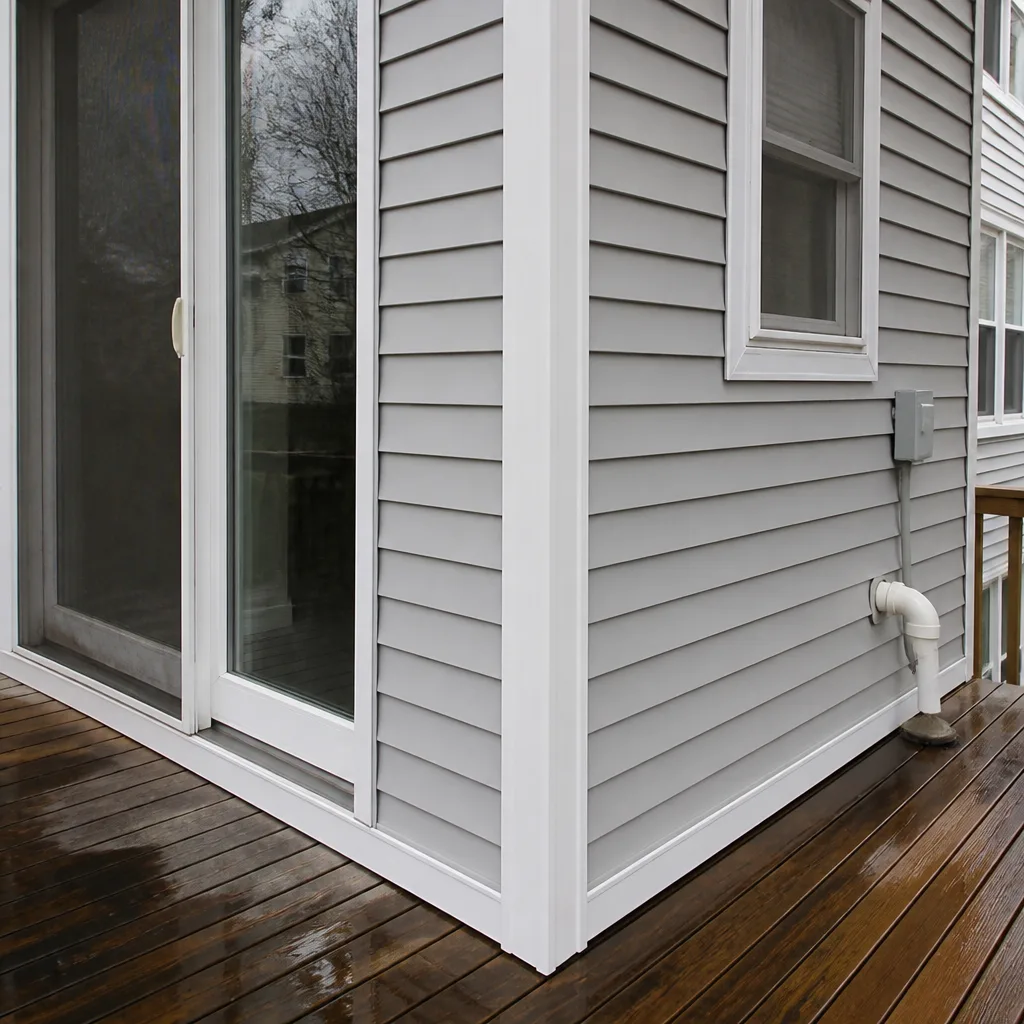 After
After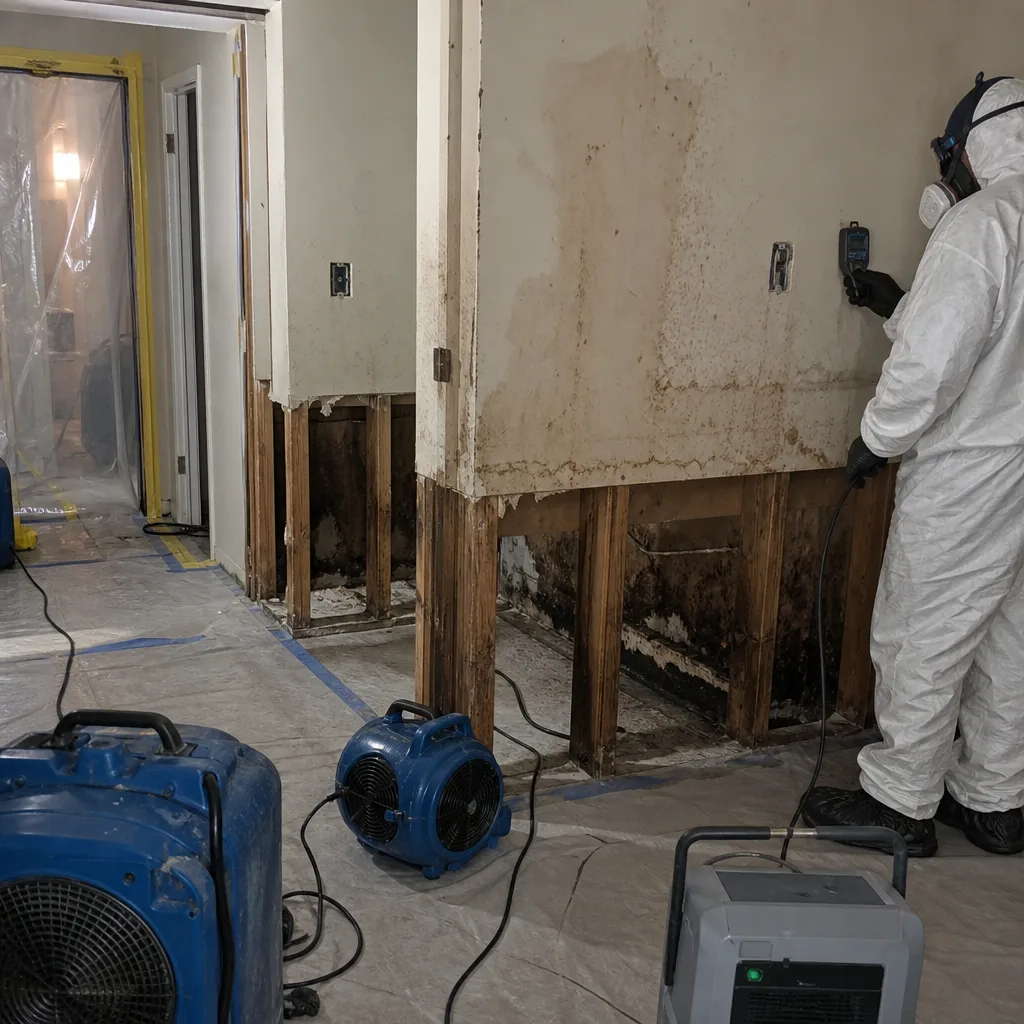 Before
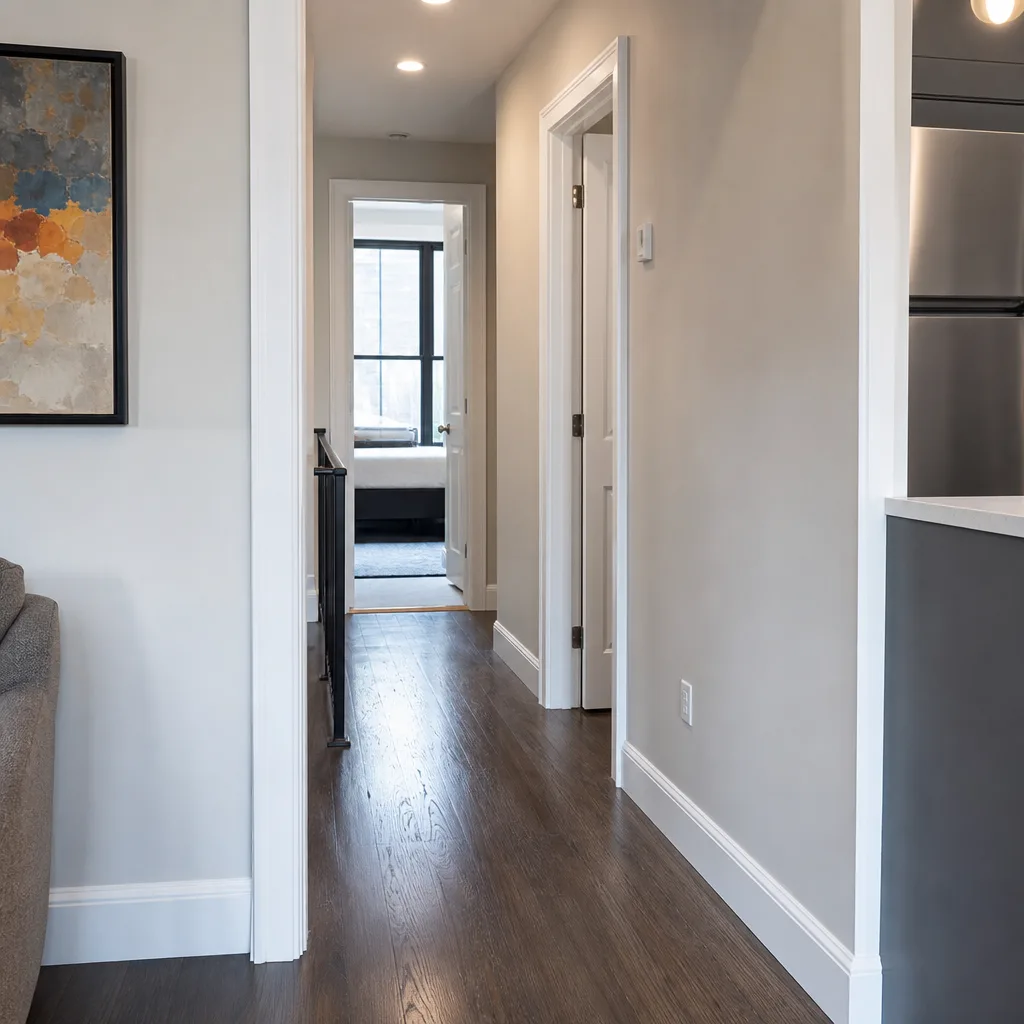 After
After24/7 Emergency Mold Remediation in Briarcliff Manor
Mold remediation in Briarcliff Manor typically requires containment of the affected area, air scrubbing with HEPA filtration, removal of colonized materials, and verification that moisture levels have returned to normal. For older homes with plaster-and-lath walls, the first 48 hours determine whether we can dry the assembly in place or need to open sections of original wainscoting. Our crews answer live around the clock and can reach most Briarcliff Manor addresses from Ossining through Scarborough Road in under an hour. If you see water staining spreading across a ceiling or smell must in a finished basement, call (917) 924-4221 before the colony spreads behind finished surfaces.
Understanding Mold Remediation Severity in Briarcliff Manor Properties
Mold in a 1920s Tudor off Long Hill Road is not the same project as mold in a 1990s colonial in Ossining. The difference comes down to wall assembly. Pre-WWII Briarcliff Manor homes use lime-based plaster over wood lath, typically three coats thick, with no vapor barrier. That assembly holds moisture differently than modern drywall. Water from a failed cast-iron steam pipe or an ice-storm roof leak gets absorbed into the plaster keys and the lath itself, and a drywall moisture meter pushed against the surface can read “dry” while the cavity behind still sits at 70% relative humidity. That is how colonies grow invisibly behind original wainscoting for months before a homeowner notices a stain on the coffered ceiling.
We classify remediation by the size and location of the colony, not just the square footage of visible growth. Surface mold on plaster, under 10 square feet, often responds to HEPA vacuuming, antimicrobial treatment, and source-moisture correction. Mold that has penetrated the lath, spread through a crawl space, or colonized insulation hidden in a wall cavity requires full containment, negative air pressure, and clearance testing afterward. In Briarcliff Manor, the deciding factors are usually: how long the leak ran before discovery, whether the wall assembly includes original plaster with a textured coat, and whether the moisture source is a recurring one like a spring seepage event rather than a one-time pipe failure.
Why Briarcliff Manor Property Owners Choose Floodline Restoration Co. of Manhattan
- Fast local response: Our Briarcliff Manor dispatch typically has a crew en route within 45 minutes of your call, day or night. A live dispatcher answers the phone, not an answering service.
- 24/7 live answer: You will not leave a message at 2 a.m. or 3 a.m. A person picks up, takes your address, and starts the dispatch. Every day of the year.
- IICRC-certified crews: Our technicians hold IICRC designations including AMRT (Applied Microbial Remediation Technician) and WRT (Water Damage Restoration Technician). They have worked on plaster-and-lath homes for years, not months.
- Free visual inspection: Before any scope is written up, we walk the area with you and explain what we are seeing. No charge, no obligation.
- Direct insurance billing: We bill your carrier directly and coordinate with your adjuster from the first moisture reading through final clearance.
- One team, start to finish: The same Floodline crew that sets containment and air scrubbers also performs the structural drying, plaster repair, and final rebuild. No mid-job handoff to a subcontractor you have not met.
Our Mold Remediation Process
Inspection & Assessment
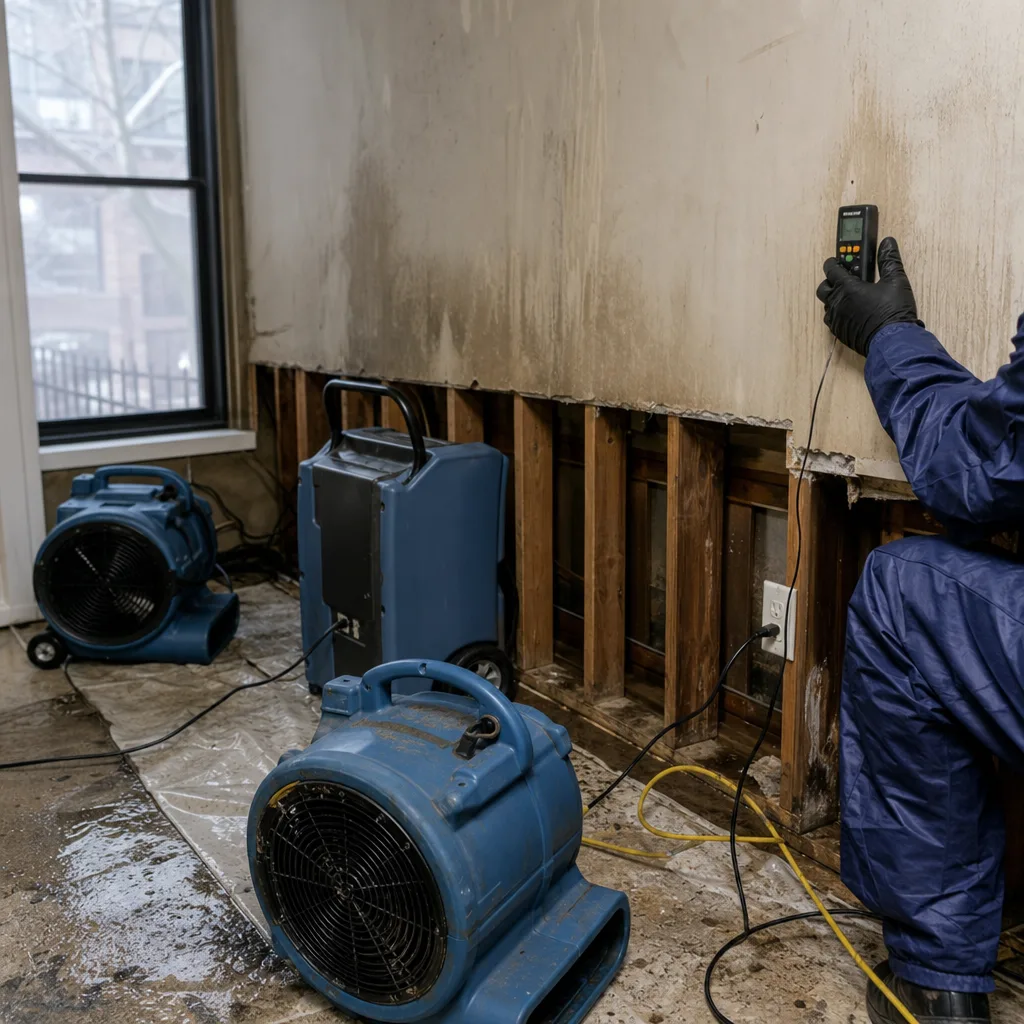
We start with a full visual inspection of the affected room, adjacent wall cavities, and the basement or crawl space below. Thermal imaging helps us find moisture differences in plaster assemblies. We use Dri-Eaz sensors and hygrometers to take actual moisture content readings from the lath, not just the plaster surface.
Containment & Stabilization
Before we disturb any colonized material, we set up containment barriers around the work area and run HEPA-filtered negative air machines to prevent spore spread into the rest of the house. If the colony is inside a wall assembly, we stabilize any loose plaster first so the repair stays straight.
Drying & Dehumidification
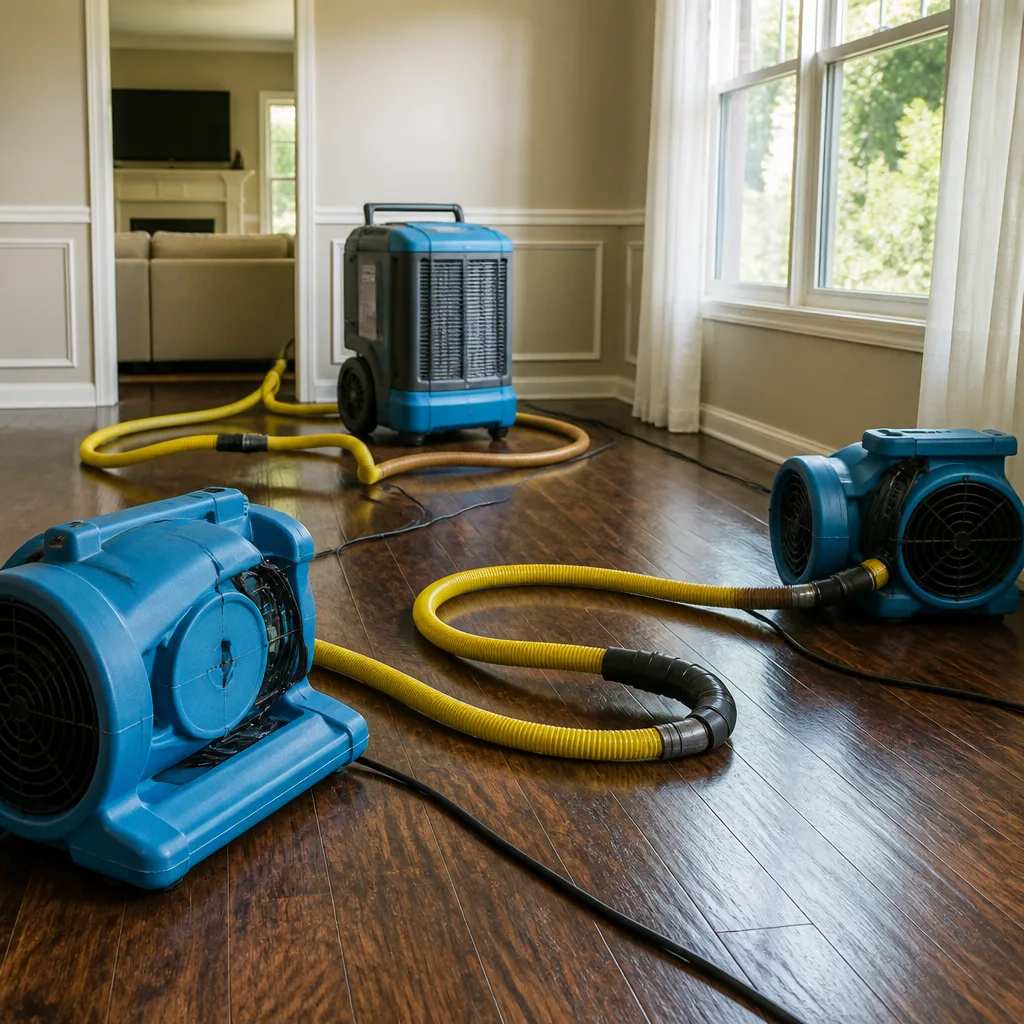
We position XPOWER air movers and Dri-Eaz dehumidifiers to dry the wall cavity and any structural framing. For plaster-and-lath assemblies, this often means drilling small drying ports behind baseboards and wainscoting so dry air moves through the cavity without tearing out original finishes.
Cleaning & Sanitization
HEPA vacuuming removes settled spores from surfaces and the air. Antimicrobial treatments are applied to remaining materials that can be saved. Any material that cannot be dried or cleaned, such as colonized insulation or failed lath, is removed and bagged for disposal.
Plaster-Specific Treatment
This is where Briarcliff Manor work differs from most of Westchester. When we remove damaged sections, we match the original lime plaster and texture. Where an original textured coat is present, we test for asbestos before disturbing it, which is common in pre-WWII estate homes and protects everyone in the house during the work.
Repairs & Restoration
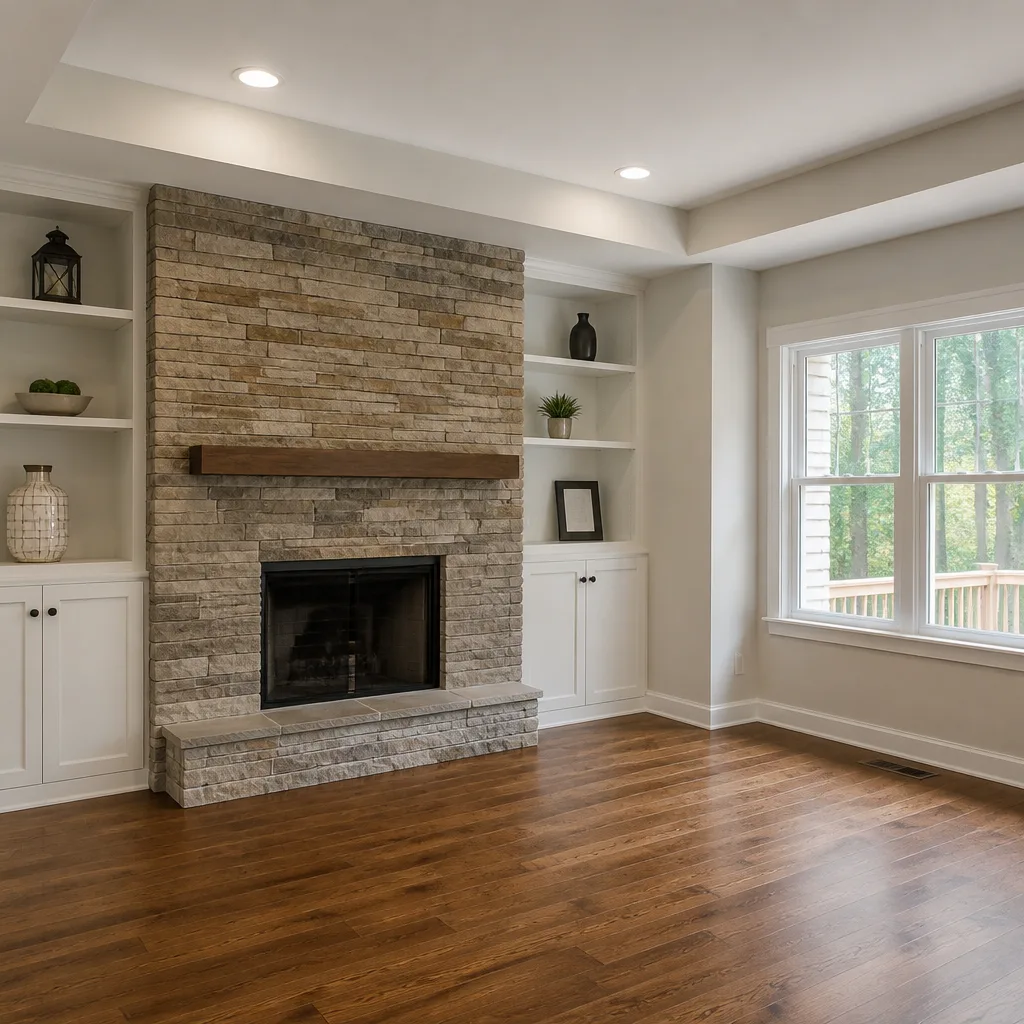
After clearance testing confirms acceptable spore levels, we rebuild what we opened. Plaster patch, wainscoting reinstallation, paint match, recaulking. The homeowner gets a written drying log showing daily moisture readings and the final clearance report.
Need Emergency Mold Remediation in Briarcliff Manor Now?
Crews minutes away, answering live 24 hours a day. The sooner we start, the less it costs.
Working With Your Insurance Company
Mold claims in Briarcliff Manor get scrutinized more closely than standard water damage claims because the colony itself may be the slow consequence of a covered event, or it may be excluded depending on the policy language and the length of time between the original leak and the claim. Our job is to document everything from the first hour so the carrier has a clear picture: the moisture readings in the lath, the thermal images showing the size of the wet cavity, and the scope of the loss as we find it, not as we assume it. We write industry-standard estimates and speak to your adjuster directly. The homeowner never has to carry a message between us and the carrier.
What We Provide Your Insurer
- Thorough documentation of the loss
- Photos of all damage, room by room
- Moisture readings and drying logs
- A detailed, line-item scope of work
- Direct coordination with your carrier
Built for Briarcliff Manor’s Loss Calendar
Briarcliff Manor’s mold season does not look like mold season in White Plains or Yonkers. The village sits on ridge-and-valley terrain at the edge of the Hudson Highlands, and that topography channels nor’easter moisture and snowmelt toward foundations and window wells. January and February bring deep freezes that burst steam heating pipes inside 1920s wall assemblies, where water runs silently through plaster for days before anyone sees a stain. March and April bring the thaw, and with it, basement seepage in homes built into hillsides off Long Hill and Scarborough Roads. Summer thunderstorms dump water onto clay-tile roofs with cracked flashing, sending water behind wainscoting in rooms that never showed a problem before. And October through December brings the ice storms that load the hardwood canopy until branches take out slate roof sections and gutters. Every one of those events is a mold starter if the wet materials are not dried properly in the first few days.
Mold Remediation Across Briarcliff Manor’s Neighborhoods
The village is not one uniform housing type. The estate properties along Scarborough Road and around the Briarcliff Lodge site are the Tudors and Arts and Crafts homes built between 1900 and 1940, with steep slate roofs, original chimneys, and plaster walls three coats deep. Those homes hide water inside wall cavities longer, and the mold damage often shows up first as musty odor from a closet or a dark stain working up a wall from a failed steam pipe. Homes along Pleasantville Road and the streets running toward the Pocantico River are a mix of mid-century ranches and colonials with lower foundations and more basement exposure during spring thaw. Crawl space mold is more common there, tied to ventilation problems and seasonal groundwater. The neighborhoods off Chappaqua Road and near the Scarborough station often sit on sloping lots with walk-out basements and window wells that collect stormwater from the uphill side. We route our crews to all of these areas with a mental map of which failure mode is most likely in each drainage pattern, because it changes how we inspect.
Specialized Mold Remediation Services We Offer in Briarcliff Manor
Mold Inspection & Testing
We inspect the entire moisture profile of the room, not just the visible stain. For a Briarcliff Manor Tudor with recent ice-storm roof damage, that means pulling thermal images of the ceiling bays, checking for moisture trapped behind plaster keys, and taking air samples where the smell says mold but the surface looks clean. We help identify whether what you are seeing is surface staining or a colony that has penetrated the lath.
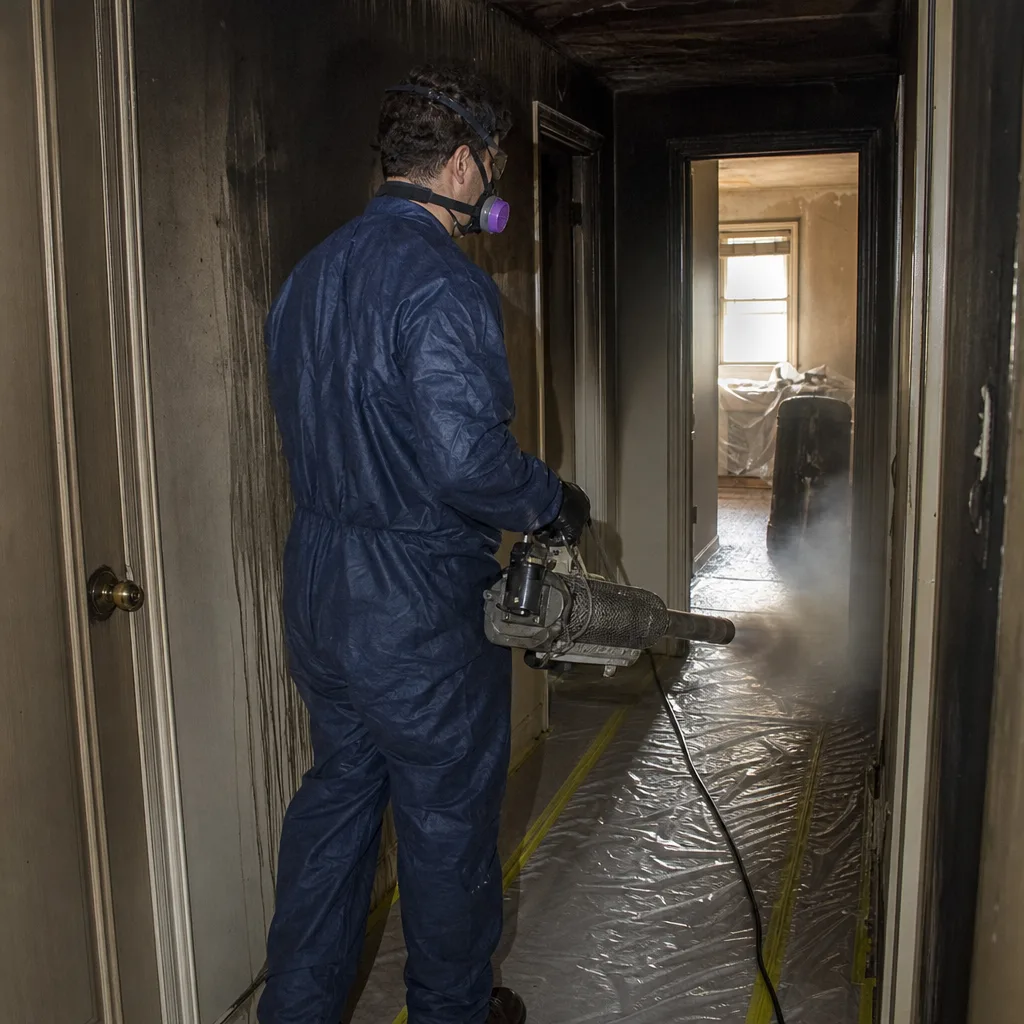
Mold Removal
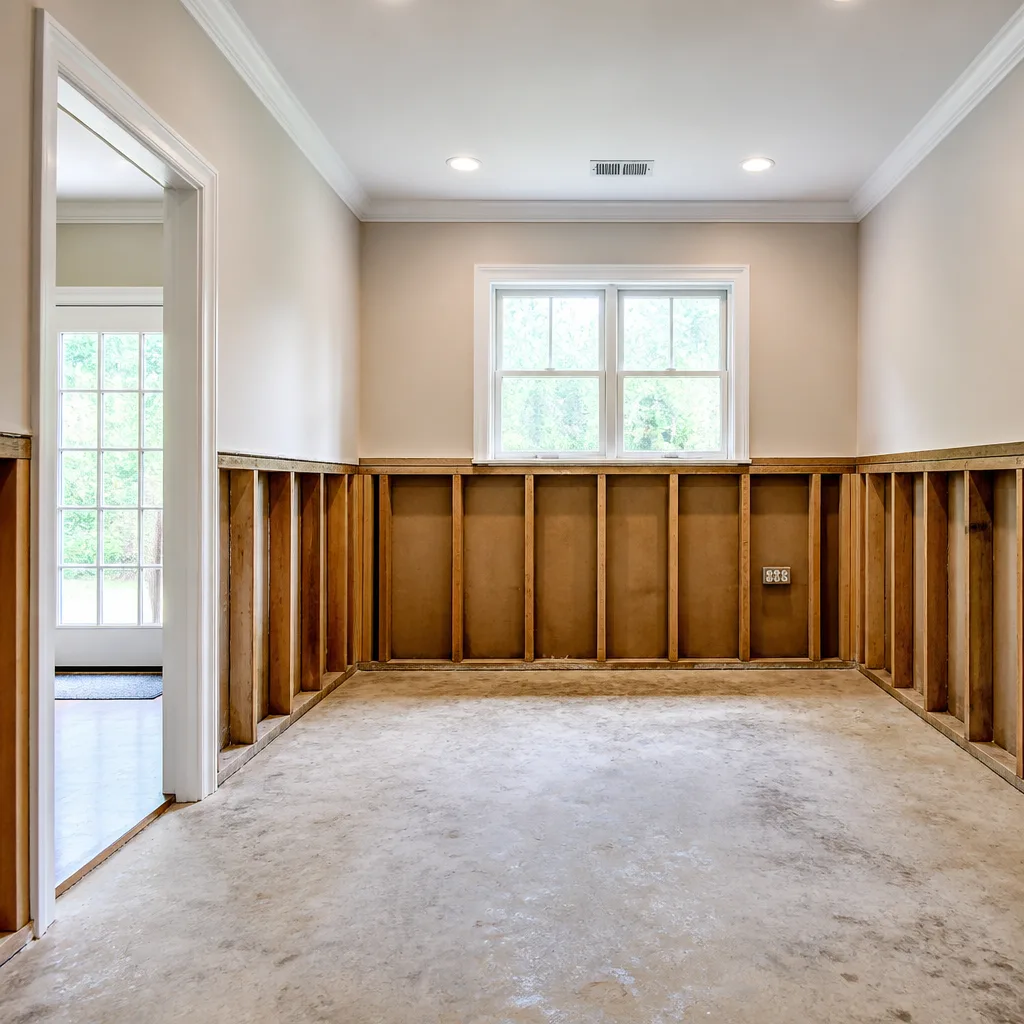
Removal is more than scrubbing. Surface mold on painted plaster can sometimes be cleaned in place. Mold that has colonized lath, insulation, or wood framing behind wainscoting must be physically removed under containment. We remove what cannot be saved and treat what can. Complete Mold Remediation for a single room may take two to four days depending on wall access and plaster repair time.
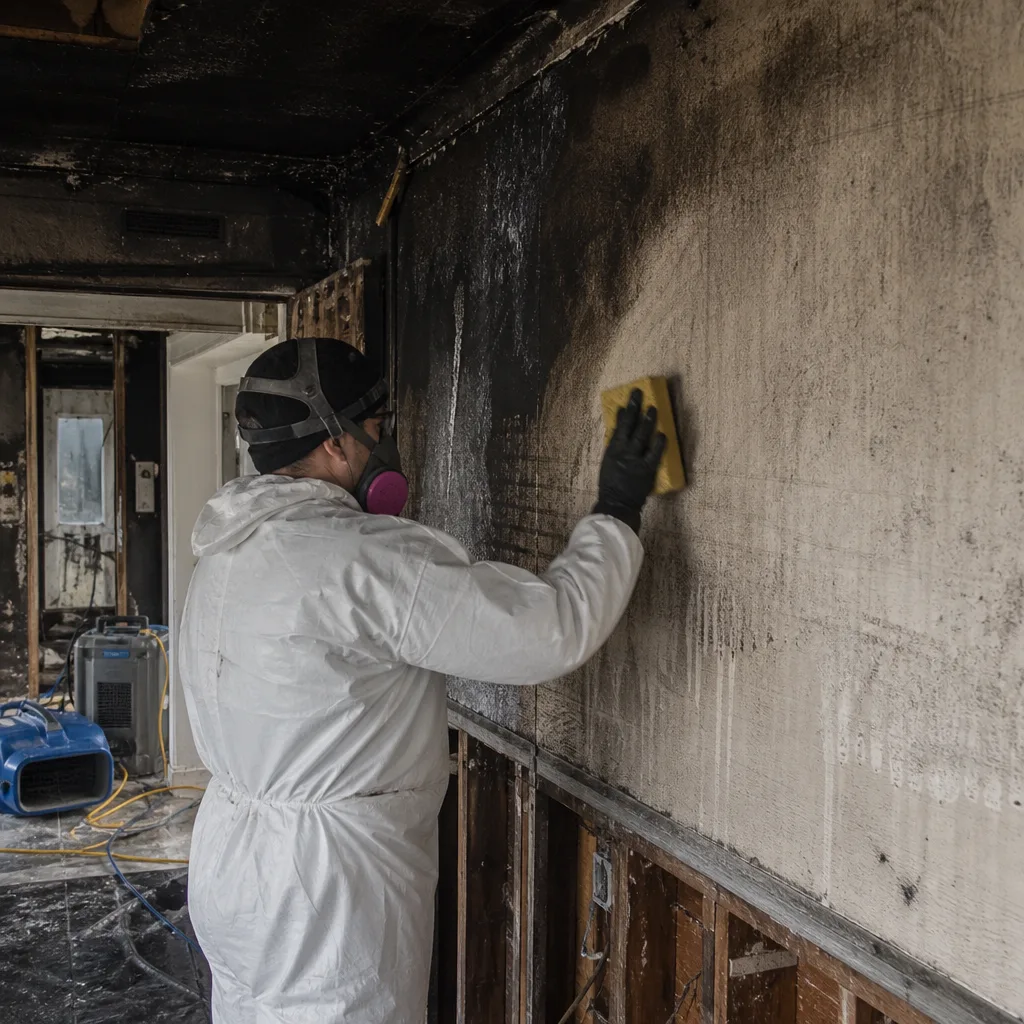
Black Mold Remediation
Black mold, typically Stachybotrys, grows where materials have been wet for days or weeks, which is exactly what happens inside a plaster cavity after a cast-iron pipe lets go while a family is away in January. It is toxic when spore counts are high and disturbed. We handle it under full containment with negative air, and clearance testing is part of the job. No shortcuts.
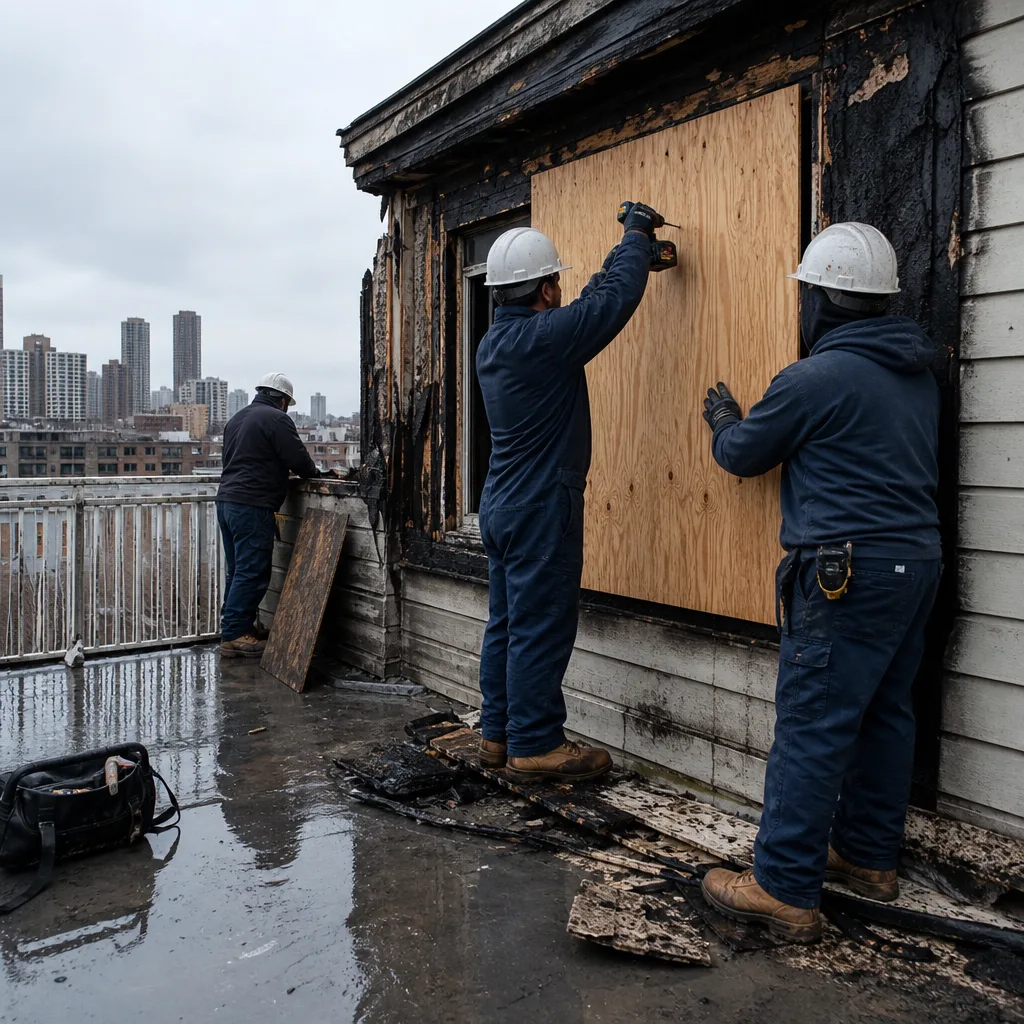
Air Quality Restoration
After the source is removed and the cavity is dry, the air in the home still carries spores and musty odor until we run HEPA air scrubbers for one to two days. In older homes, this is especially important because forced air ducts from later additions often pull air through the same wall cavities where the mold lived. We run the scrubbers room by room and give you the clearance numbers.
Crawl Space Treatment
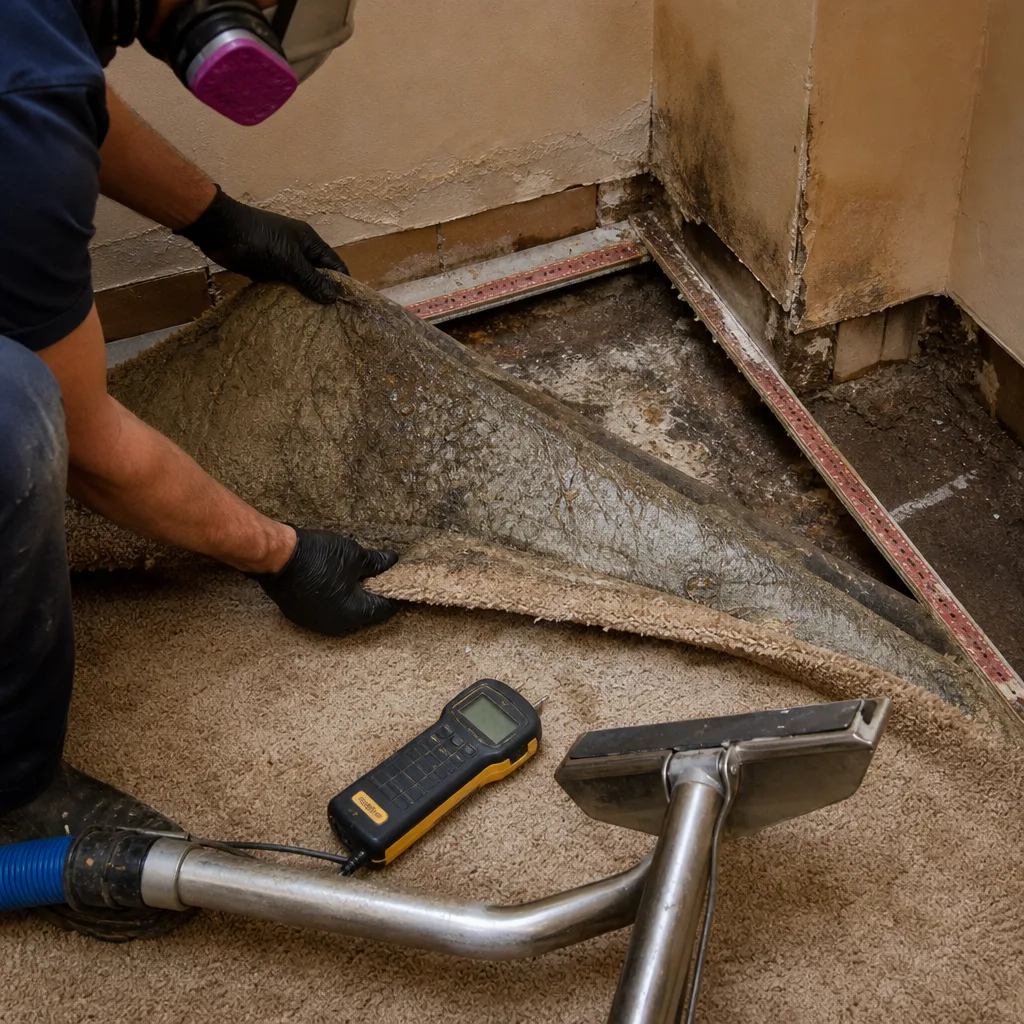
If the crawl space is damp for part of every year, the mold upstairs will come back no matter how well we clean it. We find crawl spaces throughout the hill-side neighborhoods of Briarcliff Manor with vented foundations that never dry out between March and June. We dry them, treat the framing, and advise on moisture control. The fix is often ventilation, a vapor barrier, and drainage correction, not just fungicide.
Moisture & Humidity Control
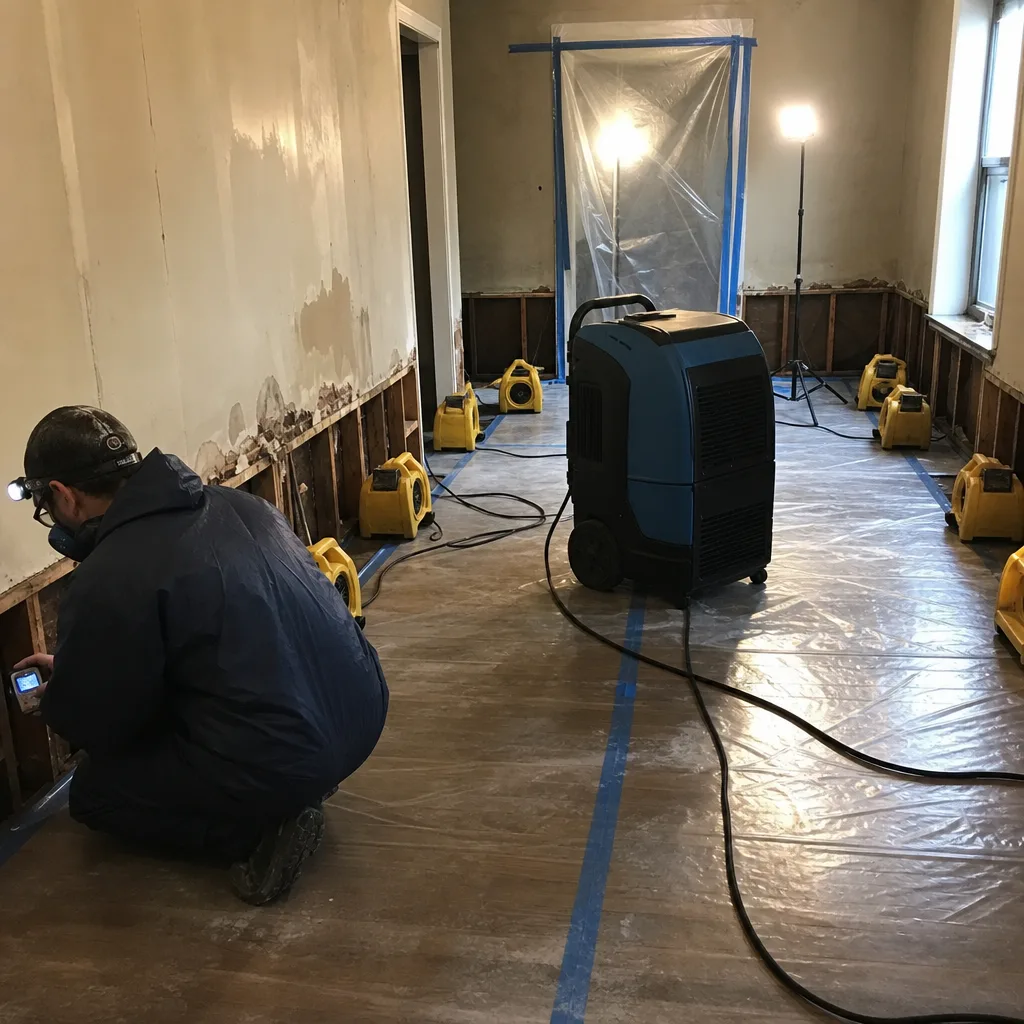
For homeowners in Briarcliff Manor who have lived in the same house for 30 years and are tired of the seasonal mustiness, we set up dehumidification strategies that work with the house rather than against it. That includes crawl space encapsulation where appropriate, improved drainage around the foundation, and baseline humidity monitoring in the months when the ground is wet.
What happens when you call
- 1
A real person answersNo phone trees - you reach a local pro.
- 2
You get an upfront price rangeHonest numbers before anyone is dispatched.
- 3
A background-checked tech heads outLicensed & insured, dispatched right away.
- 4
You approve before work beginsNothing starts until you say go.
Mold Remediation Costs in Briarcliff Manor, NY
A mold inspection with air sampling in Briarcliff Manor typically runs $350 to $700. A small surface mold removal in a single room runs $900 to $2,500. A larger remediation project that requires containment, opening a plaster wall, removing colonized lath and insulation, drying the cavity, and then restoring the plaster match will run $4,000 to $12,000 and up depending on the size of the wall and the need for period-appropriate finish matching. Crawl space treatment starts around $1,800 and can exceed $8,000 if the space is large and needs encapsulation. What moves the price most is how long the leak ran before discovery, whether asbestos testing is needed on the textured plaster coat, and how much original finish the owner wants preserved. The free inspection is how you get a firm written scope instead of a phone estimate; call us and we will walk it with you before anything gets opened.
We Also Serve Cities Near Briarcliff Manor
Our crews handle mold and water damage work throughout this corner of Westchester County: Ossining, Pleasantville, Hawthorne, and Thornwood. Many of those homes share the same pre-war plaster construction and spring seepage patterns, and we know the roads between them well.
Briarcliff Manor Mold Remediation Questions, Answered
How do you dry out mold inside a Briarcliff Manor plaster wall without tearing out the original wainscoting?
We dry the cavity through access points that preserve the wainscoting, usually by drilling small ports behind baseboards or through the lath from an unfinished side. Moisture is drawn out with dehumidifiers and air movers rather than by pulling the finish material off the wall. If the cavity is too wet or the lath too colonized, sections do come out, but we match the original plaster and reinstall the wainscoting. Call us at (917) 924-4221 and we will tell you which approach fits your wall.
Why does mold keep coming back in my Briarcliff Manor basement every spring?
Because the water source has not been stopped. A recurring spring mold problem means seasonal groundwater or snowmelt is entering the basement or crawl space through the foundation, and killing the surface mold only resets the clock. Until the drainage around the foundation or the ventilation in the crawl space is corrected, the mold will return every year. We find this pattern often in hillside homes along the village’s ridge roads.
Can you remove black mold from original slate-roof attic sheathing in a 1920s Arts and Crafts home?
Yes. Attic sheathing mold usually starts with a roof leak that has been running down a rafter and wetting the sheathing from above. We set containment in the attic space, scrub and treat the sheathing where it can be saved, and replace sections that have rotted or are too deeply colonized. The roof fix itself may be handled by a roofing contractor, but we can dry and restore the interior side of the assembly.
What is the difference between mold remediation in Briarcliff Manor vs. drywall homes in Ossining?
It comes down to the wall assembly. Briarcliff Manor’s pre-WWII homes use plaster over wood lath, which absorbs water deeply and hides it from surface moisture meters, while Ossining has a larger share of drywall construction that wets predictably and dries faster once opened. In plaster, mold often lives behind the original wainscoting and coffered ceilings, so the scope must be written for cavity access and period finish matching, not drywall replacement.
How quickly can mold grow after an ice-storm roof leak in a Briarcliff Manor Tudor?
Mold growth begins within 48 to 72 hours in a warm wall cavity after water intrusion, and in a heated home with wet lath and insulation, colonization can be visible within a week. The clock starts at the moment the leak saturates the wood, not when you notice the ceiling stain. If an ice storm has sent a branch through your slate roof, get the water stopped and the cavity dried immediately.
How fast can you get to my home in Briarcliff Manor?
Our typical response time to most parts of Briarcliff Manor is 45 to 60 minutes from your call. A live dispatcher answers the phone, routes the nearest crew, and a certified technician arrives with the equipment needed to start containment and drying on the same visit. We are not tied to a storefront or a call center queue.
Will my insurance cover mold remediation?
It depends on the cause of the mold and the terms of your policy. Mold caused by a sudden and accidental covered water loss, such as a burst pipe, is often covered, including the resulting remediation. Mold from long-term seepage or deferred maintenance usually is not. We document the loss and work with your adjuster directly so the coverage determination is based on evidence, and we bill the carrier directly for covered work.
Should we stay in the house during mold remediation?
For a small surface mold cleaning in a single room, yes, typically. For larger remediation that involves opening wall cavities, disturbing colonized materials, or running negative air containment, we usually recommend staying elsewhere for the one to three days the work takes, especially if you have allergies, asthma, or young children. We will tell you what is reasonable before we start.
Serving Briarcliff Manor, NY - Our Local Coverage Area
We’re based in the Briarcliff Manor area and know this community well. Use the map below to see our service coverage - if you’re nearby, we can almost certainly help.
Plaster-and-Lath Mold Is a Different Job
The truth most national franchises will not tell you is that a $1.5M Tudor in Briarcliff Manor cannot be treated like a 2004 colonial in Hawthorne. The plaster-and-lath wall assembly changes everything: where the water collects, how the mold travels, what the moisture meter actually tells you, and what the repair scope looks like at the end. You need a crew that knows not to trust a drywall meter on an 80-year-old wall. You need a team that checks the pre-WWII texture coat for asbestos before they even think about opening the wall. You need plaster matching that respects original lime plaster and mahogany wainscoting, because that is what keeps the house a Briarcliff Manor home instead of a drywall-covered imitation of one.
We learned this on a ridge-side Colonial Revival off Scarborough Road. A homeowner called about a persistent musty smell in a first-floor study with original coffered ceilings. Our techs traced it to a failing cast-iron steam pipe inside a plaster wall assembly, which had been weeping into the lath for months. We ran Dri-Eaz moisture sensors and thermal imaging to map the wet cavity, set containment with XPOWER air scrubbers and air movers, and after structural drying, we matched the original lime plaster instead of swapping in drywall. The owner told us the coffered ceiling was non-negotiable. He was right. It stayed.
That is the job here. It is more expensive than a drywall patch, and it should be. The alternative is hidden mold behind original wainscoting and a scope fight with a homeowner who knows exactly what the house is worth. Done right, and backed in writing, from the first moisture reading to the final plaster match.
Written by Curt Bowman, Owner at Floodline Restoration Co., serving Briarcliff Manor and surrounding Westchester communities.